Introduction
Through the millions of years of life on earth, a continuous process of mutual evolution has taken place between plant and animal species and the various organisms that feed on them. Insects face numerous toxins (xenobiotics) as they go through their life cycle. Host plants produce some toxins naturally (allelochemicals) and humans produce others (insecticides). Host plants have evolved defensive mechanisms, including chemical repellents and toxins (secondary metabolites; Wink, Reference Wink2003), for exploiting the weaknesses of attacking organisms. Many classes of insect repellents and toxic substances, including iso-flavonoids, furanocoumarins, terpenoids, alkaloids and cyanogenic glycosides, are synthesized in plants (Whittaker and Feeny, 1971; Wink and Waterman, Reference Wink and Waterman1999). Biosynthetic pathways leading to these allelochemicals are continually evolving to generate new secondary metabolites (Wink, Reference Wink2003). In turn, attacking organisms have evolved mechanisms that enable them to resist the defensive chemicals of their hosts (Willinger and Dobler, Reference Wink2001; Musser et al., Reference Musser, Hum-Musser, Eichenseer, Peiffer, Ervin, Murphy and Felton2002). A variety of defence mechanisms, including enzymatic detoxification systems (carboxylesterases, glutathione S-transferases (GSTs) and cytochrome P450 monooxygenases), physiological tolerance and behavioural avoidance, protect insect herbivores from these hazardous compounds (Yang et al., Reference Yang, Margolies, Zhu and Buschman2001). Insect pests have evolved mechanisms to degrade metabolically (enzymatically) or otherwise circumvent the toxic effect of many types of chemicals that are synthesized as modern insecticides. The extent to which insects can metabolize and thereby degrade these toxic or otherwise detrimental chemicals is of considerable importance for their survival in a unfriendly chemical environment (Johnson, Reference Johnson1999; Yang et al., 2001). These mechanisms continue to evolve as insects attempt to colonize new plant species or encounter newer molecules of synthetic insecticides.
Among sucking insect herbivores, the actual food used, i.e. digested whole tissue, particularly parenchyma (as in Helopeltis sp.), cell content (thrips) and phloem (Empoasca sp.), influences both feeding mechanism and feeding behaviour (Bernays, Reference Bernays1998). While chewing insects cause extensive damage, sucking insects cause modest to barely perceptible damage. However, sucking insects, particularly phloem and digested tissue feeders, provide an additional challenge to plants, as this action depletes photosynthates, vectors viruses and introduces chemical and protein effectors that alter plant defence mechanisms (signalling) and development (Kaloshian and Walling, Reference Kaloshian and Walling2005). When these attributes are combined with a broad host range, breeding strategies that promote invasiveness, highly evolved feeding strategies, the ability to adapt to a wide range of plant habitats and the emergence of insecticide resistance, it is not surprising that sucking insects cause heavy losses in agriculture and horticulture (Goggin, Reference Goggin2007).
Resistance of insects to insecticides has a history of about 100 years, but its greatest increase and strongest impact have occurred during the last 70 years, following the discovery and extensive use of synthetic organic insecticides (Mullin and Scott, 1992). The evolution of resistance to insecticides is an example of evolutionary process. The insecticide is a selection pressure, which creates a very strong fitness differential between susceptible and resistant genotypes (Dominguez-Gil and McPheron, Reference Dominguez-Gil and McPheron1999). The survival and subsequent reproduction of resistant individuals lead to a change in the frequency of alleles conferring resistance over time. While selection pressure acts to change allele frequencies within pest populations, the phenotype upon which selection operates is a function of both genotypes and the environment (Dominguez-Gil and McPheron, Reference Dominguez-Gil and McPheron1999). Recent studies in insect detoxifying enzymes have revealed further versatility in the adaptation of insects to their environment by the phenomenon of induction. This is the process in which a chemical stimulus enhances the activity of detoxification enzyme systems by the production of additional enzymes that metabolize toxic chemical substances (Terriere, Reference Terriere1984). So the influence of environmental factors, such as the continuous use of insecticides and the chemical constituents (allelochemicals) of host plants, in the case of phytophagous insects can have a great impact on inducing the enzymatic detoxification systems of insects, thereby affecting insecticide resistance mechanisms (Yu, 1983, 1986; Zeng et al., 2007a, b).
While all insects possess detoxifying ability, the magnitude can be expected to vary among the species with the nature of their recent environment and feeding ecology (Mullin, 1985, Reference Mullin1988; Hung et al., Reference Hung, Kao, Liu, Lin and Sun1990; Fragoso et al., Reference Fragoso, Guedes, Picanco and Zambolim2002; Després et al., Reference Després, David and Gallet2007; John and Graeme, Reference John and Graeme2008). The level and type of detoxifying mechanisms differ greatly, which, therefore, result in varying toxicity among different stages, species and populations. Variation in detoxifying enzyme activity is responsible, in part, at least for the selective toxicity of different insecticides, the development of resistance to insecticides and the selection of host plants (Maymó et al., Reference Maymó, Cervera, Sarabia, Martínez-Pardo and Garcera2002, Reference Maymó, Cervera, Garcerá, Bielza and Martínez-Pardo2006; Claudianos et al., Reference Claudianos, Ranson, Johnson, Biswas, Schuler, Berenbaum, Feyereisen and Oakeshott2005; Li et al., Reference Li, Schuler and Berenbaum2007). Overexpression of these detoxifying enzymes, capable of metabolizing insecticides, can result in higher levels of metabolic tolerance/resistance to synthetic insecticides (Wu et al., Reference Wu, Yang, Yuan, Campbell, Teese, Russell, Oakeshott and Wu2011). Increased expressions of genes encoding major xenobiotic-metabolizing enzymes are the most common cause of insecticide resistance in insects (Komagata et al., Reference Komagata, Kasai and Tomita2010).
Three important sucking pests of tea
Tea is a gift of nature and is the most widely used non-alcoholic beverage all over the world, prepared from the tender leaves and buds of Camellia sinensis (L.) O. Kuntze (Theaceae). It is one of the most important agro-industrial crops in India, and the tea industry sustains a large number of people in North-East India. Tea originated from the borders of Assam and Myanmar in Southeast Asia (specifically around the intersection of latitude 29°N and longitude 98°E). The indigenous tea in India was used as a medicinal plant from early times, but its commercial cultivation did not begin until the 19th century. The first viable plantations in Assam date back to around 1835, and the first crops were sold in 1838. During the latter part of the 19th century, entomologists, working at the Indian Museum, Kolkata, were involved in the identification and publishing of information on insects associated with tea.
Being a perennial and intensively managed monoculture plantation crop, tea provides the congenial microclimate as well as the continuous supply of food to a number of arthropods. According to recent estimates, more than a thousand (1034) arthropods are associated with tea plantations (Muraleedharan, Reference Muraleedharan2007). The dynamic adaptations of insects have enabled them to attack every part of a tea plant with a maximum number of pests occurring on the foliage, resulting in 11–55% loss in yield if left uncontrolled (Reference Rattan, Wilson and CliffordRattan, 1992a; Hazarika et al., Reference Hazarika, Bhuyan and Hazarika2009). Among the insect orders, Lepidoptera is the largest, containing 32% of the pest species, followed by Hemiptera with 27% (Muraleedharan, Reference Muraleedharan2007). As the tea crop is derived from the young foliage and maximum production is achieved by enhancing the leaf cover through pruning, it is not surprising that the major pests of the crop are those associated with the foliage. The sucking insect pests damage the young foliages, the most economically important part of the plant.
The study of insects associated with tea, i.e. tea entomology (or temology), is relatively recent. Early accounts of tea pests in India and Sri Lanka include Notes on Tea in Darjeeling published in 1888, Insect Pests of the Tea Plant by E. E. Green, covering pests found in Sri Lanka, in 1890 and An Account of the Insects and Mites which Attack the Tea Plant in India by C. E. Cotes in 1894. Watt and Mann produced a good account of Indian tea insects in their book The Pests and Blights of the Tea Plant published in 1898, with a second expanded edition in 1903. They bring together scattered information from different sources such as The Tropical Agriculturist which began publication in 1881 and is still being published, the Tea Cyclopaedia also published in 1881, and Indian Museum Notes published annually in Calcutta between 1889 and 1903, which replaced two previous issues of Notes on Economic Entomology in 1903.
The most important groups of sucking insect pests, the tea mosquito bug Helopeltis theivora (Heteroptera: Miridae), the yellow tea thrips Scirtothrips dorsalis (Thysanoptera: Thripidae) and the tea jassid Empoasca flavescens (Homoptera: Cicadellidae), are common in almost all the sub-Himalayan tea plantations in North-East India.
Helopeltis theivora Waterhouse (tea mosquito bug)
One of the earliest disorders of tea recorded in India was the leaf spotting and dieback caused by H. theivora, the most important sucking pest until today, commonly known as tea mosquito bug. This was first noticed in Cachar, Assam in 1865 and was at first thought to be a fungal disease. It was not until around 1873 that it was found to be caused by the feeding of H. theivora described by Waterhouse in 1886. Species of Helopeltis have been recorded on tea from most of the tea-growing countries in Asia and Africa, apart from Japan and Korea.
Systematic position
● Order: Hemiptera
● Intraorder: Cimicomorpha
● Superfamily: Miroidea
● Family: Miridae
● Subfamily: Bryocorinae
● Tribe: Dicyhini
● Subtribe: Monaloniina
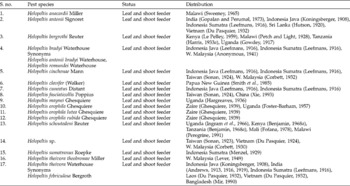
All over the world, 35 different species of mirids are associated with tea, out of which 18 are different species of the genus Helopeltis (Table 1).
Different species of Helopeltis associated with tea all over the world

Nymphs and adults of Helopeltis suck the sap of young leaves, buds and tender stems and, while doing so, inject toxic saliva that causes the breakdown of tissues surrounding the puncture (Das, 1965). Within 2–3 h of sucking, a circular spot is formed around the sucking point and within 24 h, the area becomes translucent and light brownish, which eventually develops dark brown, sunken spots and dries up. A single fully grown nymph (fifth instar) is the most voracious feeder among the life stages, producing the most and largest feeding lesions (Bhuyan and Bhattacharyya, Reference Bhuyan and Bhattacharyya2006). Further, an adult could make 150 feeding spots in a day (Hainsworth, Reference Hainsworth1952). A single female can produce lesions over an area of 412.43 mm2/day (Kalita et al., Reference Kalita, Handique, Singh and Hazarika1995). The damage to tender stems is not only due to sucking but also to oviposition. Cohen-Stuart (Reference Cohen-Stuart1922) studied the mechanism of feeding by Helopeltis sp. and noticed that the proboscis penetrates the edidermal tissue, resulting in the collapse of parenchymal tissue. Leach (Reference Leach1935) noticed that primary lesions could be recognized before the insect stops feeding, indicating that an extremely active feeding process and salivary secretions are phytotoxic. This rapidity in feeding was, of course, associated with the extensive damage inflicted by small populations of Helopeltis sp.
Empoasca flavescens Fabricius (tea jassid/green fly)
Systematic position
● Order: Homoptera
● Intraorder: Auchenorrhyncha
● Superfamily: Cicadoidea
● Family: Cicadellidae ( = Jassidae)
● Subfamily: Typhlocybinae
● Tribe: Empoascini ( = Helionini)
The tea jassid E. ( = Amrasca) flavescens Fabricius (Homoptera: Jassidae/Cicadellidae) is an important sucking insect pest of tea, generally during the first and second flush (March to June) in tea plantations of North-East India. It is commonly known as ‘tea green fly’, ‘tea jassid’ or ‘tea leafhopper’. The pest remains active at various levels of intensity throughout the season. The insect sucks the sap of growing shoots and leaves. In the Darjeeling district, there is a common belief that it improves the quality of made tea. Empoasca flavescens also attacks tea in Bangladesh, China, Japan, Indonesia and Vietnam (Zhao et al., Reference Zhao, Chen and Cheng2000) but are rarely seen on tea in south India. Nymphs and adults of E. flavescens are the most important stages that damage the tea plant (Zhu et al., Reference Zhu, Kuang, Hu, Tao and Zhu1993; Zeiss and Braber, Reference Zeiss and Braber2001) and are mainly phloem feeders. Sucking of the sap of young leaves and tender shoots causes the main damage. The nymphs are responsible for greater damage than the adults. During feeding, the rostrum is inclined downwards and the stylets are inserted into the plant tissue. They feed on the contents of the phloem vessels and reach this tissue through cortical cells. Once penetration has started, saliva is injected into the plant. The injury to the plant is probably the combined effect of feeding in the vascular tissue and the action of certain enzymes present in the saliva. The plant sap is drawn into the alimentary canal by the activity of the cibarial sucking pump that is provided with strong dialator muscles. The attacked leaves become dry, uneven and usually curl downwards, getting inverted and boat-shaped. The margins turn brown and subsequently dry up. This characteristic symptom is known as ‘rim blight’ or ‘hopperburn’ (Das, 1965). The midrib and veins of the affected leaf also show somewhat brownish discolorations. Leaf structure and texture of clones determine the tolerance level against Empoasca spp. Because Empoasca spp. suck the sap from the phloem, their stylets must traverse the cuticle, upper epidermis, palisade tissue and spongy mesophyll. Therefore, the thickness of the palisade tissues, subepidermis and collenchymas under the main vein has a significant negative correlation with leafhopper density in tea (Hazarika et al., Reference Hazarika, Bhuyan and Hazarika2009). Thick and spongy cells physically prevent the probing of the leaf tissues by Empoasca spp. Feeding may induce the salicyclic acid and reactive oxygen species pathways, and two jasmonic acid/ethylene-dependent defence signalling pathways (Jin and Baoyu, Reference Jin and Baoyu2007). The ‘hopperburn’ and other symptoms are caused mainly by interference with the translocation of food materials and water due to the physical plugging of the xylem and the destruction of the phloem cell (DeLong, Reference DeLong1971). According to Medler (Reference Medler1941), plant injury is a combination of feeding in vascular tissue and the action of a specific compound injected during the feeding process. Salivary secretion causes hypertrophy of the affected phloem cells, which, in turn, causes an interruption of the translocation of photosynthetic materials from the leaves to a degree that causes plasmolysis of parenchymal cells resulting in ‘hopperburn’. Then, the other secondary symptoms appear, the red and yellow coloration of leaves, stunting and curling of leaves, etc. Normally, the attack is confined to the undersurface of young leaves. There is hardly any sign of puncture marks but occasionally faint brownish specks can be seen later under a microscope at the site of feeding. Feeding is mainly concentrated in the middle area of the leaves, but the effect of damage is reflected at the periphery where the leaves curl downwards and not at the site of feeding. Occasionally, the leaf may curl upwards, and this is due to feeding on the upper surface.
Too much rain or too dry weather is not favourable for the development of the insect (Zhu et al., Reference Zhu, Kuang, Hu, Tao and Zhu1993; Widayat and Winasa, Reference Widayat and Winasa2006). Empoasca is most damaging during the period between the dry and rainy seasons (Zeiss and Braber, Reference Zeiss and Braber2001). In plains, the insect appears during February to March and causes considerable damage to the first and second flush. The damage becomes quite visible during May to June at the time of the third flush. In hills, the insect may be present for a considerable period of time. If a severe attack occurs on a pruned section early in the season, the growth of the shoots is arrested and the leaves remain stunned, dry up and eventually fall off. For newly planted tea, especially when less than 5 months old, leafhoppers can cause the drying out of new shoots, with the plant becoming stunted and growing more slowly (Zeiss and Braber, Reference Zeiss and Braber2001).
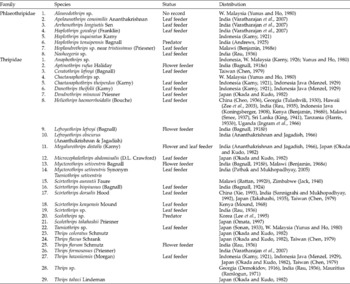
Different species of jassids associated with tea all over the tea-growing countries are summarized in Table 2. A total of 21 different species have been recorded in the tea ecosystem, out of which six species are of Empoasca (Table 2).
Different species of jassids associated with tea all over the world

Scirtothrips dorsalis Hood (Assam/yellow tea thrips)
Systematic position
● Order: Thysanoptera
● Suborder: Terebrantia
● Family: Thripidae
Scirtothrips dorsalis has long been a pernicious pest of various vegetable crops, cotton, citrus and other fruit and ornamental crops in its principal range in southern Asia (Ananthakrishnan, Reference Ananthakrishnan1993). The pest has been documented to attack more than 150 hosts (Mound and Palmer, Reference Mound and Palmer1981; Seal et al., Reference Seal, Klassen and Kumar2010) where it may kill newly emerged seedlings, severely distort leaves and scar on the surface of fruits of its favoured hosts. In India, S. dorsalis is a serious pest of tea. Scirtothrips dorsalis feeds on the meristems of host plants' terminals and on other tender above-ground parts, creating feeding scars, distortion of leaves and discoloration of buds, flowers and young fruit. It does not feed on mature tissue. Scirtothrips dorsalis causes damage by sucking the contents out of individual epidermal cells, which leads to necrosis of the tissue. During feeding on a young leaf, it makes small slits by inserting the stylets and sucking the sap oozing through the wound. The sucking marks are made one after one, forming thin pale lines on the underside of leaves parallel to the main vein. Initially, such tissue has a silvery sheen, but soon, the damaged areas turn brown or black. In heavily infested tea plantations, it causes ‘silvered’ or ‘sand papery lines’. Damaged leaves become thicker and harder than the normal ones, duller with darker green colour, and often puckered or deformed (Das, 1965). In pepper fields, the appearance of the plants is known as ‘chilli leaf curl’. Heavy feeding causes the tender leaves and buds to become brittle, and total defoliation and severe crop loss may occur. Different species of thrips associated with tea in India and all over the world are summarized in Table 3.
Different species of thrips of the families Phlaeothripidae and Thripidae associated with tea all over the world

Management problems and insecticide resistance in three sucking pests of tea
In sub-Himalayan tea plantations of North-East India, different management practices are followed to protect the tea crop against different insect pests. Most plantations are managed conventionally, i.e. using different organo-synthetic insecticides, whereas some organic plantations use herbal and microbial insecticides. In conventional tea plantations, organo-synthetic insecticides of different functional groups (organochlorines (OCs), organophosphates (OPs), synthetic pyrethroids (SPs) and neonicotinoids (NNs)) are routinely applied round the year to keep the insect (sucking and other) pest populations under control (Sannigrahi and Talukdar, Reference Sannigrahi and Talukdar2003; Gurusubramanian et al., Reference Gurusubramanian, Rahman, Sarmah, Roy and Bora2008a), which is a burden to planters as well as to the environment, and can result in the resurgence of primary and (Sivapalan, Reference Sivapalan and Jain1999) secondary pest outbreak (Cranham, Reference Cranham1966), resistance development (Georghiou, Reference Georghiou1972; Kawai, Reference Kawai1997; Roy et al., Reference Roy, Gurusubramanian and Mukhopadhyay2010a, Reference Roy, Mukhopadhyay and Gurusubramanianb) and environmental contamination including undesirable residues in made tea (Chaudhuri, Reference Chaudhuri and Jain1999). Continuous use of insecticides has led to the development of higher levels of tolerance or resistance to insecticides in many insects (Scharf et al., Reference Scharf, Neal and Bennett1998; Martin et al., Reference Martin, Chandre, Ochou, Vaissayre and Fournier2002, Reference Martin, Chandre, Ochou, Vaissayre and Fournier2003; Yu et al., Reference Yu, Nguyen and Abo-Elghar2003; Yang et al., Reference Yang, Wu, Chen, Devine, Denholm, Jewess and Moores2004; Markussen and Kristensen, Reference Markussen and Kristensen2010; Komagata et al., Reference Komagata, Kasai and Tomita2010).
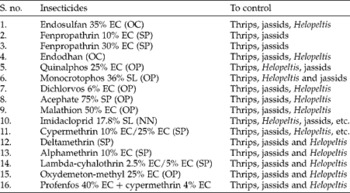
Literature review has suggested that from the early 1940s onwards, DDT (Dichloro Diphenyl Trichloro ethane) (OC) was routinely used to combat the problem of H. theivora, a major sucking pest (Das, Reference Das1962, Reference Das1963). Endosulfan (a cyclodiene OC pesticide) was introduced in Dooars tea plantations in 1968 in the form of Thiodan 35 EC (Mukerjea, Reference Mukerjea1968). At present, in the conventional tea plantations of North-East India, endosulfan, quinalphos, monocrotophos, chlorpyriphos, deltamethrin, imidacloprid and cypermethrin are extensively used to control sucking insects (Barbora and Biswas, Reference Barbora and Biswas1996; Sannigrahi and Talukdar, Reference Sannigrahi and Talukdar2003; Roy et al., Reference Roy, Mukhopadhyay and Gurusubramanian2008a; Gurusubramanian et al., Reference Gurusubramanian, Rahman, Sarmah, Roy and Bora2008a; Table 4).
Different insecticides used for controlling sucking pests in conventional tea plantations of Terai and the Dooars (data collected from different conventional tea plantations through personal communications)

An average of 7.5 L/ha of insecticides is used per year in Dooars tea plantations (Roy et al., Reference Roy, Mukhopadhyay and Gurusubramanian2008a) wherein endosulfan is the most common accounting for 73.5% but found to be ineffective in controlling the pests in different parts of Dooars tea plantations (Roy et al., Reference Roy, Mukhopadhyay and Gurusubramanian2010b). A decrease in the susceptibility to different classes of insecticides may be one of the causes for the resurgence of pests and persistence on tea crop (Rahman et al., Reference Rahman, Sarmah, Phukan, Roy, Sannigrahi, Borthakur, Gurusubramanian, Barooah, Borthakur and Kalita2005; Sarmah et al., Reference Sarmah, Rahman, Phukan and Gurusubramanian2006; Bora et al., Reference Bora, Rahman, Sarmah and Gurusubramanian2007; Gurusubramanian and Bora, Reference Gurusubramanian and Bora2008; Gurusubramanian et al., Reference Gurusubramanian, Senthilkumar, Bora, Roy and Mukhopadhyay2008b; Roy et al., Reference Roy, Mukhopadhyay and Gurusubramanian2008b). A major problem in the control of H. theivora is its potential to develop resistance rapidly to regularly used insecticides (Gurusubramanian and Bora, Reference Gurusubramanian and Bora2008). Their high reproductive potential and numerous annual generations, combined with continued and repeated use of an array of active insecticide substances on tea cultivations for many years, have limited the control of H. theivora populations by killing natural enemies, leading to resurgences in bug populations (Roy et al., Reference Roy, Mukhopadhyay and Gurusubramanian2008a, Reference Roy, Gurusubramanian and Mukhopadhyay2010a, Reference Roy, Mukhopadhyay and Gurusubramanianb). In recent days, the situation has further worsened, as it has developed resistance to many commonly used insecticides leading to control failures (Dzolkhifli et al., Reference Dzolkhifli, Khoo, Muhamad and Ho1986; Liew et al., Reference Liew, Dzolkhifli and Muhamad1992; Mukhopadhyay and Roy, Reference Mukhopadhyay, Roy, Ramamurthy, Gupta and Puri2009; Roy et al., Reference Roy, Mukhopadhyay and Gurusubramanian2011). Such failures have been reviewed for the OC, OP and SP groups of pesticide compounds and, more recently, for the newer compounds, for instance NNs (Gurusubramanian and Bora, Reference Gurusubramanian and Bora2007; Gurusubramanian et al., Reference Gurusubramanian, Senthilkumar, Bora, Roy and Mukhopadhyay2008b; Roy et al., Reference Roy, Mukhopadhyay and Gurusubramanian2008b, Reference Roy, Mukhopadhyay and Gurusubramanian2011). The resistance developed in H. theivora populations in North-East India to different classes of insecticides ranged from 1.47 to 62.99-fold for males and from 1.25 to 62.82-fold for females (Gurusubramanian and Bora, Reference Gurusubramanian and Bora2008). Variations in relative toxicity to commonly used insecticides have been observed in H. theivora populations from Jorhat, Assam (Gurusubramanian and Bora, Reference Gurusubramanian and Bora2007), Darjeeling (Bora et al., Reference Bora, Rahman, Sarmah and Gurusubramanian2007) and the sub-Himalayan Dooars region of North-East India (Roy et al., Reference Roy, Mukhopadhyay and Gurusubramanian2008b). A variation in relative toxicity to the tested insecticides was also observed between male and female populations of Jorhat and Darjeeling and among the populations of H. theivora collected from different sub-districts of Dooars (Rahman et al., Reference Rahman, Sarmah, Phukan, Roy, Sannigrahi, Borthakur, Gurusubramanian, Barooah, Borthakur and Kalita2005; Bora et al., Reference Bora, Rahman, Sarmah and Gurusubramanian2007; Gurusubramanian and Bora, Reference Gurusubramanian and Bora2008). A comparison of the expected effective dose of 13 insecticides against the tea mosquito bug based on their LC50 (lethal concentration) values with the recommended dose revealed a pronounced shift in the level of susceptibility of H. theivora to all the chosen insecticides except acephate (Gurusubramanian et al., Reference Gurusubramanian, Senthilkumar, Bora, Roy and Mukhopadhyay2008b). Gurusubramanian and Bora (Reference Gurusubramanian and Bora2008) observed that the Nagrakata population of the Dooars region showed a high level of resistance to endosulfan than the Jorhat population of Assam in both males (7.998-fold in Jorhat and 8.522-fold in Nagrakata) and females (4.739-fold in Jorhat and 8.326-fold in Nagrakata) during 2006–2007. Higher basal levels of different detoxifying enzyme (general esterase, GST and cytochrome P450 monooxygenase) activities and their relation to the susceptibility against different synthetic insecticides have been reported by Sarker and Mukhopadhyay (Reference Sarker and Mukhopadhyay2006a) and Saha et al. (Reference Saha, Roy and Mukhopadhyay2012c, Reference Saha, Mukhopadhyay and Bahadure) from different sub-Himalayan tea plantations of North-East India.
Like Helopeltis, insecticides have also been used for the management of other sucking insects such as thrips, targeting S. dorsalis Hood (Thysanoptera: Thripidae) in conventional tea plantations. In India, S. dorsalis populations have become resistant to a range of OC (DDT, BHC (benzene hexachloride) and endosulfan), OP (acephate, dimethoate, phosalone, methyl-O-demeton and triazophos) and carbamate insecticides (carbaryl) in the chilli ecosystem (Reddy et al., Reference Reddy, Prasad and Rao1992). Vanisree et al. (Reference Vanisree, Upendhar and Rajasekhar2011) have shown that S. dorsalis has developed a high degree of resistance to various insecticides, namely monocrotophos, acephate, dimethoate, phosalone, carbaryl and triazophos. Recently, Seal et al. (Reference Seal, Ciomperlik, Richards and Klassen2006, Reference Seal, Klassen and Sabines2007) tested several insecticides against S. dorsalis in the chilli ecosystem in the USA and found limited success with chlorfenapyr, spinosad and imidacloprid. Novaluron, abamectin, spiromesifen, cyfluthrin, methiocarb and azadirachtin failed to provide an effective control of this pest (Doğramaci et al., Reference Doğramaci, Arthurs, Chen, McKenzie, Irrizary and Osborne2011). To date, there is no report of the development of insecticide resistance of S. dorsalis in the tea ecosystem. Though there are reports of control failure of S. dorsalis in the tea ecosystem (Gurusubramanian et al., Reference Gurusubramanian, Rahman, Sarmah, Roy and Bora2008a), a high basal level of the activity of insecticide resistance-related enzymes has been reported in the tea ecosystem from North-East India (Saha et al., Reference Saha, Mukhopadhyay and Mahadur2010, Reference Saha, Roy and Mukhopadhyay2012b). Such a metabolic resistance to synthetic insecticides has also been reported in western flower thrips, Frankliniella occidentalis (Pergande) (Thysanoptera: Thripidae) (Jensen, Reference Jensen2000; Maymó et al., Reference Maymó, Cervera, Sarabia, Martínez-Pardo and Garcera2002, Reference Maymó, Cervera, Garcerá, Bielza and Martínez-Pardo2006).
There is no report of insecticide resistance in the tea ecosystem from North-East India in another emerging sucking insect pest of tea, E. flavescens Fabricius (Homoptera: Cicadellidae). However, there are reports of repeated control failure of E. flavescens in sub-Himalayan tea plantations of North-East India (Gurusubramanian et al., Reference Gurusubramanian, Rahman, Sarmah, Roy and Bora2008a), and a high level of the activity of insecticide resistance-related enzymes have been reported in the tea ecosystem (Saha and Mukhopadhyay, Reference Saha and Mukhopadhyay2008; Saha et al., Reference Saha, Mukhopadhyay, Mahadur and Varatharajan2012a, Reference Saha, Roy and Mukhopadhyayb). Synthetic chemical insecticides, including fenvalerate, cyfluthrin, cypermethrin and imidacloprid, have been used to control leafhoppers as frequently as seven times annually or even more frequently in China (Tao et al., Reference Tao, Hu, She, Zhu and Luo1996; Shi et al., Reference Shi, Shang, Chen, Yu and Zhang2001). In China, a high level of resistance to many insecticides has been reported in allied species, Empoasca vitis (Nian Wu et al., Reference Nian-wu, Jin-han, Zheng, Hui, Ling-ling and Xiong2004). In E. vitis, resistance was highest to thiamethoxam and lowest to cypermethrin. In the Fujian province of China, Zhuang et al. (Reference Jia-Xiang, Jian-Wei, Qing-Quan, Jian-Yu and Zhi-Xiong2009) found a regional diversity of resistance to eight insecticides in E. vitis in the tea ecosystem and reported a higher resistance to bifenthrin, acetamiprid, imidacloprid, cartap and chlorfenapyr.
Insecticide resistance mechanisms in sucking insects of tea
Herbivorous insect groups are significantly more diverse than their non-herbivorous sister groups (Mitter et al., Reference Mitter, Farrell and Futuyma1991). The role of plants in promoting diversification in insects has occurred through coevolutionary arms races (Ehrlich and Raven, Reference Ehrlich and Raven1964). This diversification could also have been a result of insects ‘tracking’ plant phylogenies, with minor chemical changes in plants allowing the evolving populations of insects to change and speciate, which probably occurred long after chemical changes in plants (Bernays, Reference Bernays1998). Evolution of herbivory proceeded via mixed feeding on reproductive parts or spores, dead tissues of plants and animals, and fungi. This progression implies that omnivory preceded generalized herbivory, and the evolution of specialization on specific plant taxa was a later accomplishment (Dethier, Reference Dethier1954).
Development of resistance is an example of ‘microevolution’. Variation within a population may include individuals with genetic traits that make them better adapted to survive in exposure to an insecticide. If these individuals survive in insecticide exposure, then resistance traits can be passed on to the next generation, thereby enriching the gene pool with those genes of better adaptability. The subject of this part of the review is the resulting mechanisms of genetic alterations that give rise to resistance. The mechanisms of insecticide resistance can be divided into four levels:
(1) behaviour – avoidance of contact with the insecticide;
(2) barrier tissues – reduced penetration of the insecticide;
(3) detoxification – metabolism of the insecticide;
(4) alteration – at the target site for the insecticide.
The first level, at which resistance can develop, is when the insect encounters an insecticide. An altered behaviour can help the insect to avoid coming into contact with the insecticide. Once the insect has come into contact with the insecticide, a delayed penetration through the integument reduces the effect of the insecticide at the target site. Inside the insect, the insecticide may be metabolized and thereby inactivated. At this third level of insecticide resistance mechanisms, three systems of detoxification enzymes operate: carboxylesterases, GSTs and cytochrome P450-dependent monooxygenases. Increased activity of one of these enzyme systems in inactivating insecticides will result in resistance development in the concerned insect pest. Alterations at the target site for the insecticide are the last level of resistance mechanisms. The different classes of insecticides bind to specific target sites. Reduced binding at the target site or increased number of target site molecules may also confer insecticide resistance.
Behavioural resistance
Behavioural resistance mechanisms are the least studied resistance mechanisms in insects, although behavioural resistance is not less significant. Sparks et al. (Reference Sparks, Lockwood, Byford, Graves and Leonard1989) reviewed the role of behaviour in resistance. They defined behavioural resistance as ‘evolved behaviours that reduce an insect's exposure to toxic compounds or that allow an insect to survive in what would otherwise be a toxic and fatal environment’. Behavioural resistance has been shown in more than 30 species of insects (Sparks et al., Reference Sparks, Lockwood, Byford, Graves and Leonard1989). Avoidance is the first step in the evolution of behavioural resistance (Brattsten, Reference Brattsten, Barbosa and Letourneau1988). This kind of resistance has been noticed in H. theivora (Roy and Mukhopadhyay, Reference Roy and Mukhopadhyay2011). Helopeltis theivora shows a different egg-laying strategy to avoid insecticide exposure. Empoasca flavescens does not like direct sunlight and therefore prefers to stay on the underside of leaves. This behaviour of E. flavescens protects it from the direct insecticide exposure in conventional tea plantations during spraying (Simanjuntak, Reference Simanjuntak2002). No studies on resistance due to behavioural mechanisms in S. dorsalis have yet been reported.
Reduced penetration
Reduced penetration of insecticides through barrier tissues of insects is one way in which an insect can modify the effective dose of the insecticide at the target site. The mechanism may not prevent the insecticide from eventually entering the insect, but it can reduce the rate at which the insecticide reaches the target site. Reduced penetration has been shown to function as a resistance mechanism to many different insecticides, and, by the nature of this mechanism, cross-resistance is often found (Price, Reference Price1991). The rate of penetration of insecticides through the cuticle or other barriers depends on the physicochemical properties of the insecticide and the barrier. For example, reduced penetration can contribute to DDT resistance in the tobacco budworm Heliothis virescens F. (Lepidoptera: Noctuidae). Vinson and Law (Reference Vinson and Law1971) showed that DDT-resistant larvae had an altered composition of the cuticle – the protein and lipid contents were greater in the cuticle of the resistant larvae, and, furthermore, the cuticle of the resistant larvae probably had a higher degree of sclerotization. In Musca domestica (L.) (Diptera: Muscidae), two resistant strains, with reduced penetration as one of the resistance mechanisms, also showed increased cuticular lipid content – more total lipids, monoglycerides, fatty acids, sterols and phospholipids were present in the resistant strains compared with a susceptible strain (Patil and Guthrie, Reference Patil and Guthrie1979). Reduced penetration has been documented as a resistance mechanism only at the level of the insect cuticle, but any biological membrane may serve as a barrier and thereby give resistance (Scott, Reference Scott, Roush and Tabashnik1990). As a single resistance mechanism, it usually confers only low levels (<3-fold) of resistance (Scott, Reference Scott, Roush and Tabashnik1990). Reduced penetration has been shown to function as a resistance mechanism to many different insecticides, including insecticides of the three major classes, OPs, carbamates and pyrethroids. Reduced penetration of OPs through the cuticular barrier has been reported, e.g. for diazinon in M. domestica (Forgash et al., Reference Forgash, Cook and Riley1962), azinphos-methyl in the pear psylla Psylla pyricola Foerster (Hemiptera: Psyllidae) (Van de Baan and Croft, Reference Van de Baan and Croft1991) and profenofos in H. virescens Fabricius (Lepidoptera: Noctuidae) (Kanga and Plapp, Reference Kanga and Plapp1995).
However, by slowing the penetration rate of insecticides, this mechanism reduces the risk of the insects' detoxification systems becoming overloaded and the dose of the insecticide reaches a fatal level at the target site. In female H. theivora, a higher level of body fat effectively reduces the penetration of the insecticide to the target site (Roy et al., Reference Roy, Gurusubramanian and Mukhopadhyay2008c). No studies on resistance due to reduced penetration in E. flavescens and S. dorsalis have been reported. Mutero et al. (Reference Mutero, Pralavorio, Bride and Fournier1994) and Martinez-Torres et al. (Reference Martinez-Torres, Foster, Field, Devonshire and Williamson1999) suggested that when different resistance mechanisms are combined in the same individuals, a synergistic effect, resulting in a high level of resistance, may arise. Therefore, even a small degree of reduced penetration may contribute significantly to the overall resistance of the insect.
Metabolic detoxification
Metabolic detoxification of insecticides is an important toxicokinetic mechanism for insects to reduce the toxic effects of insecticides (Mullin and Scott, 1992). Carboxylesterases, glutathione S-transferases (GSTs) and cytochrome P450-mediated monooxygenases are the three principal enzymes that facilitate insects to metabolize different kinds of toxins (Feyereisen, Reference Feyereisen1999). These large enzyme families contain multiple forms with overlapping substrate specificities. Knowledge of insecticide detoxification helps in understanding the mechanism of insecticide resistance, hence the development of a sound resistance management strategy. Detoxification can be divided into phase I (primary) and phase II (secondary) processes.
Phase I reactions consist of oxidation, hydrolysis and reduction. Phase I metabolites are sometimes polar enough to be excreted, but are usually further converted by phase II reactions. In phase II reactions, polar products are conjugated with a variety of endogenous compounds such as sugars, sulphate, phosphate, amino acids or glutathione, and subsequently excreted. Phase I reactions are usually responsible for decreasing the biological activity of toxins, and, therefore, the enzymes involved are rate limiting with respect to toxicity. The most important function of biotransformation is to decrease the lipophilicity of insecticides, so that they can be quickly excreted (Li et al., Reference Li, Schuler and Berenbaum2007).
OPs, OCs, carbamates and pyrethroids are generally hydrophobic compounds, and detoxification enzymes transform the insecticides to more hydrophilic and less biologically active compounds that can be eliminated by excretion. Increased detoxification of insecticides has often been reported in many resistant populations (Soderland and Bloomquist, Reference Soderland, Bloomquist, Roush and Tabashnik1990). Three enzyme systems are generally recognized as the major detoxification systems involved in insecticide resistance in insects. These are esterases, cytochrome P450-dependent monooxygenases and GSTs (Soderland and Bloomquist, Reference Soderland, Bloomquist, Roush and Tabashnik1990). Therefore, detoxification of insecticides is an important mechanism for insect pests to tolerate regularly applied insecticides (Brown and Brogdon, Reference Brown and Brogdon1987; Scharf et al., Reference Scharf, Neal and Bennett1998; Yu et al., Reference Yu, Nguyen and Abo-Elghar2003; Wu et al., Reference Wu, Yang, Yuan, Campbell, Teese, Russell, Oakeshott and Wu2011).
Alteration at the target site for the insecticide
Insecticides of the four major classes – OPs, carbamates, OCs and pyrethroids – have receptors in the nervous system as the site of action. OPs and carbamates have a single enzyme as the target, acetylcholinesterase, and pyrethroids and DDT have the voltage-gated sodium channel of the nerve membrane as the target. Other target sites for neurotoxic insecticides are the γ-aminobutyric acid (GABA)-receptor (Casida, Reference Casida1993; Narahashi, 1996) and the nicotinic acetylcholine receptor (Sattelle, 1985; Narahashi, 1996). The GABA-receptor is the target for cyclodienes (e.g. dieldrin and endosulfan), γ-HCH (lindane) and fipronil, and the nicotinic acetylcholine receptor is the target for nicotinyl insecticides (imidacloprid and nicotine). Alteration at the target site, to a less sensitive target for neurotoxic insecticides, is an important toxicodynamic resistance mechanism in insects. Altered GABA-receptor, as a resistance mechanism, has been reviewed (Soderland and Bloomquist, Reference Soderland, Bloomquist, Roush and Tabashnik1990; Feyereisen, Reference Feyereisen1995).
The target for OPs and carbamates is the enzyme acetylcholine esterase (AChE) (EC 3.1.1.7). The function of AChE is to break down acetylcholine in the synaptic cleft. Acetylcholine is an excitatory neurotransmitter that transmits a signal from a presynaptic to the postsynaptic neurone. Upon binding to the receptor, acetylcholine ultimately causes the development of an action potential in the postsynaptic neurone. For proper function at the cholinergic synapse, acetylcholine must be rapidly broken down in the synaptic cleft to restore the resting potential of the postsynaptic membrane. This is achieved by AChE that hydrolyses acetylcholine to acetate and choline.
OPs and carbamates are potent inhibitors of AChE. These compounds act by forming a stable covalent intermediate with AChE, thus preventing the enzyme from hydrolysing acetylcholine. An accumulation of acetylcholine leaves the cation channel of the receptor permanently open, which eventually is lethal. OPs and carbamates are quasi-irreversible inhibitors of AChE; OPs phosphorylate and carbamates carbamylate the active site serine in AChE (Eldefrawi, Reference Eldefrawi, Kerkut and Gilbert1985). The time of reactivation of phosphorylated or carbamylated AChE is generally long but carbamylated AChE generally reactivates faster than phosphorylated AChE (Eldefrawi, Reference Eldefrawi, Kerkut and Gilbert1985).
Reduced sensitivity of AChE to inhibition by OPs and carbamates is an important resistance mechanism in insects and is often referred to as altered or insensitive AChE. This mechanism has been found in several insect populations resistant to these compounds, and several extensive reviews have covered this topic of altered AChE as a resistance mechanism (Hama, Reference Hama, Georghiou and Saito1983; Fournier and Mutero, Reference Fournier and Mutero1994).
The presence of insensitive AChE conferring resistance was first suggested by Smissaert (Reference Smissaert1964), from a study on OP-resistant mites, Tetranychus urticae Koch (Acari: Tetranycidae). Inhibition of AChE activity in vitro by diazoxon and paraoxon was assayed in resistant and susceptible mites, and AChE activity of resistant mites had reduced sensitivity to inhibition by two OPs. Fournier and Mutero (Reference Fournier and Mutero1994) listed 25 examples of insensitive AChE in the species of Hemiptera, Coleoptera, Diptera and Acarina. Insensitive AChE has been reported in the greenbug Schizaphis graminum (Siegfried and Ono, Reference Siegfried and Ono1993), the peach-potato aphid Myzus persicae and the tobacco aphid Myzus nicotianae Blackman (Hemiptera: Aphididae) (Moores et al., Reference Moores, Devine and Devonshire1994), and the pear psylla Cacopsylla pyri L. (Hemiptera: Psyllidae) (Berrada et al., Reference Berrada, Fournier, Cuany and Nguyen1994).
The level of AChE activity may differ in susceptible and resistant populations. Increased AChE activity in the California red scale Aonidiella aurantii (Hemiptera: Coccoidae) is associated with chlorpyriphos resistance (Levitin and Cohen, Reference Levitin and Cohen1998); in the greenbug Schizaphis graminum Rondani (Homoptera: Aphididae), three resistant populations all showed increased AChE activity (Zhu and Gao, Reference Zhu and Gao1999); in the lesser grain borer Rhyzopertha dominica, all of the 15 resistant populations tested had higher AChE activity than the susceptible population (Guedes et al., Reference Guedes, Zhu, Kambhampati and Dover1997); in the tobacco budworm H. virescens, nine of the 10 resistant strains showed significantly increased AChE activity (Harold and Ottea, Reference Chen1997); in the fruit fly Drosophila melanogaster, selection for resistance to parathion and fenthion was accompanied by a correlated increase in AChE activity (El-Abdin Salam and Pinsker, Reference El-Abdin Salam and Pinsker1981; Jensen, Reference Jensen1998, Reference Jensen2000), and in several resistant strains of the housefly M. domestica, increased V max (maximum initial rate of an enzyme reaction) of AChE has been shown (Tripathi and O'Brien, Reference Tripathi and O'Brien1973; Voss, Reference Voss1980).
Sarker and Mukhopadhyay (Reference Sarker and Mukhopadhyay2006b) reported a higher level of AChE activity in H. theivora populations from conventional tea plantations than from organic tea plantations, indicating the development of insecticide resistance in conventional tea ecosystems. There is no report on S. dorsalis and E. flavescens in conventional tea ecosystems. However, such kind of resistance has been reported in Frankliniella occidentalis (Jensen, Reference Jensen2000) and Bemisia tabaci (Vassiliou et al., Reference Vassiliou, Emmanouilidou, Perrakis, Morou, Vontas, Tsagkarakou and Roditakis2011).
Detoxifying enzymes and insecticide metabolism
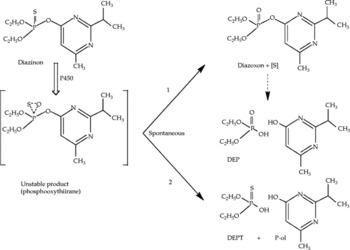
The metabolism of insecticides by P450 enzymes is very often a key factor in determining toxicity to insects and to non-target species. The importance of monooxygenases in insecticide resistance became evident in the early 1960s, when it was shown that resistance to carbaryl could be abolished by the P450 inhibitor sesamex (Eldefrawi et al., 1960). Monooxygenase-mediated detoxification is frequently a major mechanism of resistance, and unlike target site resistance, detoxification has the potential to confer cross-resistance to toxins independent of their target sites (Agosin, Reference Agosin, Gilbert and Kerkut1985; Oppenoorth, Reference Oppenoorth, Kerkut and Gilbert1985; Scott, Reference Scott and Pimental1991). Most cases of monooxygenase-mediated resistance result from an increase in detoxification. However, in cases where the parent insecticide must undergo monooxygenase-mediated bioactivation, as is the case for many OPs, it is also possible that resistance could be achieved through decreased activation. Although this has been reported once (Konno et al., Reference Konno and Dauterman1989), it does not appear to be a common mechanism of resistance. This may explain why esterases are relatively more common than monooxygenases in resistance to some OPs (Oppenoorth, Reference Oppenoorth, Kerkut and Gilbert1985; Scott, Reference Scott and Pimental1991). A classical example is probably the metabolism of phosphorothioate insecticides (Fig. 1). In many cases, the active ingredients of organophosphorus insecticides are phosphorothioate (P = S) compounds (also known as phosphorothionates), whereas the molecule active at the acetylcholinesterase target site is the corresponding phosphate (P = O) (Fig. 1).
Metabolism of diazinon by cytochrome P450. Following an insertion of oxygen into the substrate, a reactive intermediate collapse (1) by desulphuration or (2) by the cleavage of the ester linkage. DEP, diethylphosphate; DEPT, diethylphosphorothioate; P-ol, 2-isopropoxy-4-methyl-6-hydroxypyrimidine; [S], reactive form of sulphur released during the reaction (Feyereisen, Reference Feyereisen and Gilbert2012).

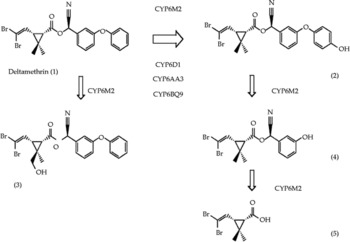
P450 enzymes that metabolize OPs can metabolize other insecticides as well, and this sometimes leads to potentially useful interactions. Thus, enhanced detoxification of dicofol in spider mites can lead to enhanced chlorpyriphos activation, and hence negative cross-resistance (Hatano et al., Reference Hatano, Scott and Dennehy1992). Similarly, permethrin resistance in horn flies is suppressible by piperonyl butoxide, and negatively related to diazinon toxicity (Cilek et al., Reference Cilek, Dahlman and Knapp1995). In Helicoverpa armigera populations from West Africa, triazophos showed negative cross-resistance with pyrethroids, and in this case, synergism shown by OP towards pyrethroid appeared due to an enhanced activation to the oxon form (Martin et al., Reference Martin, Chandre, Ochou, Vaissayre and Fournier2003). Organophosphorus compounds such as disulfoton and fenthion can also be activated by thioether oxidation (formation of sulphoxide and sulphone). Pyrethroid metabolism by P450 enzymes is well known in insects. Hydroxylations and further metabolism make pyrethroid metabolism, which has been shown for the single enantiomer of deltamethrin (Fig. 2).
Metabolism of deltamethrin by insect P450 enzymes: (1) deltamethrin; (2) 4′-hydroxydeltamethrin; (3) trans-hydroxymethyl-deltamethrin; (4) cyano (3-hydroxyphenyl) methyl deltamethrate; (5) deltamethric acid (Feyereisen, Reference Feyereisen and Gilbert2012)

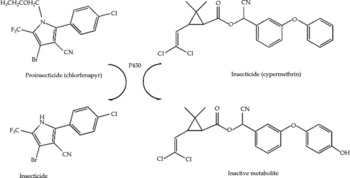
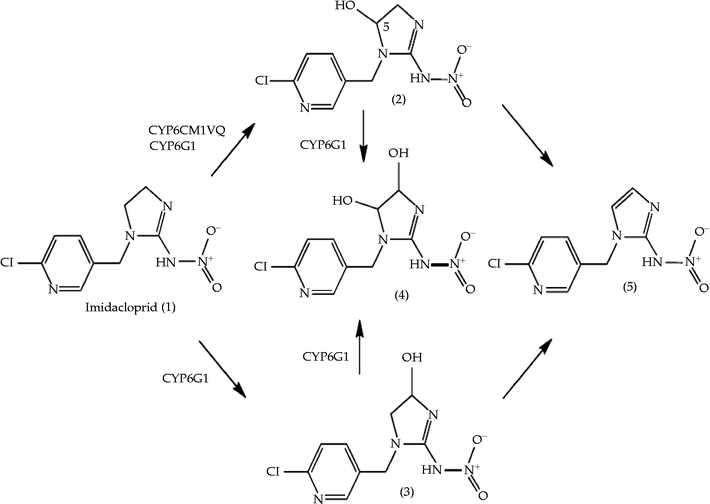
The currently banned cyclodiene insecticides aldrin, heptachlor and isodrin are epoxidized by P450 enzymes to the environmentally stable, toxic epoxides, dieldrin, heptachlor epoxide and endrin, respectively (Drabek and Neumann, Reference Drabek, Neumann, Huston and Roberts1985). Recombinant housefly CYP6A1 catalyses the activation of chlorfenapyr. In H. virescens, toxicity of chlorfenapyr is negatively correlated with cypermethrin toxicity (Pimprale et al., Reference Pimprale, Besco, Bryson and Brown1997) (Fig. 3). The metabolism of imidacloprid is also of interest, particularly in relation to resistance. Piperonyl butoxide can synergize the toxicity of imidacloprid, and two P450 enzymes, CYP6G1 of D. melanogaster and CYP-6CM1vQ of B. tabaci, have been shown to metabolize this NN (Karunker et al., Reference Karunker, Benting, Lueke, Ponge, Nauen, Roditakis, Vontas, Gorman, Denholm and Morin2008, Reference Karunker, Morou, Nikou, Nauen, Sertchook, Stevenson, Paine, Morin and Vontas2009). Hydroxylations at the four and five positions can lead to the olefinic metabolite or to the dihydroxylated metabolite. In the whitefly, the 5-hydroxy metabolite is not toxic, but the 4-hydroxy metabolite is as toxic as the parent compound, so region selectivity may be of importance (Fig. 4).
Chlorfenapyr and cypermethrin metabolism by insect P450 enzymes. The same P450 in Heliothis virescens probably activates pyrrole and inactivates pyrethroid, resulting in negative cross-resistance (Feyereisen, Reference Feyereisen and Gilbert2012)

Metabolism of imidacloprid by insect P450 enzymes: (1) imidacloprid; (2) 5-hydroxyimidacloprid; (3) 4-hydroxyimidacloprid; (4) dihydroxyimidacloprid; (5) non-enzymatically derived dehydroimidacloprid (Feyereisen, Reference Feyereisen, Gilbert, Iatrou and Gill2005)

Despite the continuous use of insecticides, there are repeated failures in controlling sucking insect pest species in recent years (Rahaman et al., 2006; Gurusubramanian et al., Reference Gurusubramanian, Rahman, Sarmah, Roy and Bora2008a, Reference Gurusubramanian, Senthilkumar, Bora, Roy and Mukhopadhyayb; Roy et al., Reference Roy, Mukhopadhyay and Gurusubramanian2008b) in different conventional tea plantations of Terai, the Dooars and Darjeeling foothill regions. Such a failure occurs due to a change in the susceptibility level of the pest species to the applied insecticides. The susceptibility level changes mainly due to the metabolic detoxification of insecticides through a higher level of activity of some insecticide detoxifying enzymes under the stress of different management practices (Sarker and Mukhopadhyay, Reference Sarker and Mukhopadhyay2003, Reference Sarker and Mukhopadhyay2006a, Reference Sarker and Mukhopadhyayb; Saha et al., Reference Saha, Roy and Mukhopadhyay2012c, Reference Saha, Mukhopadhyay and Bahadure). A strong correlation between fenvalerate toxicity and cytochrome P450 activity in H. armigera Hubner (Lepidoptera: Noctuidae) has also been reported by Chen et al. (Reference Chen, Yang and Wu2005). When piperonyl butoxide was synergized with insecticides, there was an increase in the susceptibility level of H. theivora, indicating the involvement of cytochrome P450-mediated metabolism of insecticides (Roy et al., Reference Roy, Mukhopadhyay and Gurusubramanian2009).
In another mirid pest, Lygus lineolaris, metabolic resistance to insecticides due to an enhanced level of activity has been reported (Zhu et al., Reference Zhu, Snodgrass and Ming Shun Chen2004, Reference Zhu, West, Snodgrass and Luttrell2011).
Saha and Mukhopadhyay (Reference Saha and Mukhopadhyay2008) and Saha et al. (Reference Saha, Mukhopadhyay and Mahadur2010, Reference Saha, Mukhopadhyay, Mahadur and Varatharajan2012a, Reference Saha, Roy and Mukhopadhyayb) reported that there are higher basal levels of activity of three principal detoxifying enzymes (general esterase, GSTs and cytochrome P450 s) in S. dorsalis and E. flavescens collected from conventional tea plantations. This indirectly advocates the presence of insecticide metabolic detoxification systems in these two sucking pests. Similarly, in western flower thrips, Frankliniella occidentalis, such type of metabolic detoxification of insecticides has been reported (Ferrari et al., Reference Ferrari, Morse, Georghiou and Sun1993). In B. tabaci, metabolic resistance due to the enhanced activity of insecticide resistance-related enzymes has been reported (Vassiliou et al., Reference Vassiliou, Emmanouilidou, Perrakis, Morou, Vontas, Tsagkarakou and Roditakis2011).
Host allelochemicals, induction of detoxifying enzymes and insecticide resistance
Plants and insects have had coexisting relationships for a long time. Insects are suppressed either by other insects or toxins or by plant defence mechanisms to create a balance between the insect pest population and the host. Each plant species has a unique set of defence traits ranging from morphological to phytochemical parameters that have behavioural and physiological ramifications for a potential herbivore consumer (Wink and Waterman, Reference Wink and Waterman1999; Glendinning, Reference Wink2002; Wink, Reference Wink2003).
Induction of insect detoxifying enzyme activities by plant allelochemicals is a clear manifestation of biochemical phenotypic plasticity and has been documented in several instances (Brattsten et al., Reference Brattsten, Wilkinson and Eisner1977; Dominguez-Gil and McPheron, Reference Dominguez-Gil and McPheron2000; Francis et al., Reference Francis, Vanhaelen and Haubruge2005). Many of the theories and some of the experiments implicitly or explicitly deal with the insect's ability to metabolize plant secondary metabolites by P450 and other enzymes (Lee, Reference Lee1991; Feyereisen, Reference Feyereisen1999; Karunker et al., Reference Karunker, Benting, Lueke, Ponge, Nauen, Roditakis, Vontas, Gorman, Denholm and Morin2008). In the case of detoxification, however, the landmark paper of Krieger et al. (Reference Krieger, Feeny and Wilkinson1971) can be seen as echoing the Fraenkel (1959) paper, by exposing the role of P450 enzymes. They stated that higher activities of midgut microsomal oxidase enzymes in polyphagous species than in monophagous species indicate that the natural function of these enzymes is to detoxify natural insecticides present in the larval food plants. Aldrin epoxidation was measured in gut homogenates of last instar larvae from 35 species of Lepidoptera. Polyphagous species had on average a 15 times higher activity than monophagous species. This trend was seen in sucking insects as well. A 20-fold lower aldrin epoxidase activity was found in the oleander aphid Aphis nerii when compared with the potato aphid Myzus euphorbiae or the green peach aphid M. persicae (Mullin, Reference Mullin, Brattsten and Ahmad1986). The former is a specialist feeder on two plant families, Asclepiadaceae and Apocyanaceae, whereas the latter two are generalists found on 30–72 plant families. The concept extended to other detoxification enzymes – for example, in mites, where the predatory mite has a five times lower aldrin epoxidase activity than its herbivorous prey (Mullin et al., 1982).
In addition to insecticides, insect hydrolases also metabolize glycosides (plant allelochemicals). β-Glucosidase is active towards a variety of glucosides in fall armyworms, corn earworms, cabbage loopers and velvetbean caterpillars. The p-nitrophenyl β-d-glucoside, 4-methylumbelliferyl-β-d-glucoside, d(+)-cellobiose, d-amygdalin and helicon were preferred substrates, whereas sinigrin, phloridzin, α-solanine, tomatine and linamarin were poor substrates. There was no correlation between the degree of herbivore polyphagy and β-glucosidase activity among these species (Yu, 1989). β-Glycosidases have been shown to play important roles in the survival of certain phytophagous insects. The ability of the larvae of the peach tree borer Synanthedon exitiosa (Say) (Lepidoptera: Sesiidae) to survive well on the prunasin-containing peach tree is because they can metabolize cyanogenic glycosides through β-glucosidase and detoxify the released cyanide by β-cyanoalanine synthase, thereby allowing them to utilize peach trees (Reilly et al., Reference Reilly, Gentry and McKay1987). Another example is the larvae of the tiger swallowtail Papilio glaucus L. (Lepidoptera: Papilionidae), which feed on quaking aspen that contains various phenolic glycosides (e.g. salicortin). These larvae hydrolyse glycosides by β-glucosidase and detoxify the released phenolic aglycone by a highly active esterase, thereby allowing them to survive on aspen (Lindroth et al., Reference Lindroth, Scriber and Hsia1988; Lindroth, Reference Lindroth1989).
GSTs are also involved in the metabolism of toxic allelochemicals including α, β-unsaturated carbonyl compounds (e.g. trans-cinnamaldehyde, trans-2-hexanal), isothiocyanates (e.g. allyl isothiocyanate, benzyl isothiocyanate) and organo-thiocyanates (e.g. benzyl thiocyanate) in lepidopteran insects (Yu, Reference Yu2008). These transferase activities in the specialist velvetbean caterpillar are lower than in the generalist fall armyworm; the activity towards isothiocyanates in the crucifer-adapted cabbage looper was 2- to 6-fold higher than that in the fall armyworm. The results suggest that GSTs play an important role in allelochemical resistance in phytophagous Lepidoptera (Wadleigh and Yu, Reference Wadleigh and Yu1987, Reference Wadleigh and Yu1988).
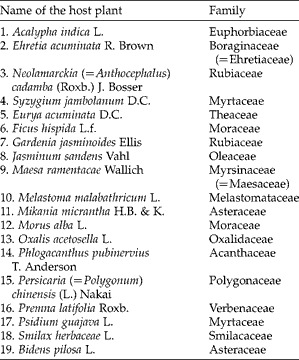
Helopeltis theivora, E. flavescens and S. dorsalis are all polyphagous. Helopeltis theivora feeds on at least 16 different plant families (Awang et al., Reference Awang, Muhamad and Chong1988; Roy, 2010; Saha et al., Reference Saha, Mukhopadhyay and Bahadur2012d; Table 5). In H. theivora, when fed on different host plants, an enhanced level of activity of detoxifying enzymes has been reported (Saha et al., Reference Saha, Mukhopadhyay and Bahadur2012d). Similarly, E. flavescens is also polyphagous (DeLong, Reference DeLong1971). Scirtothrips dorsalis attacks more than 150 hosts from at least 40 different plant families (Mound and Palmer, Reference Mound and Palmer1981; Ananthakrishnan, Reference Ananthakrishnan1993). So, these pests are exposed to a wide variety of plant allelochemicals of diverse groups having the potential to induce the activity of these resistance-related enzymes.
Alternative hosts of Helopeltis theivora

Acknowledgements
The authors express their sincere thanks to the Head, Department of Zoology, University of North Bengal, for providing laboratory space. The authors also express their sincere appreciation to those scientists and authors based on whose concept, hypothesis and work, the present review has been developed. The authors also express their thanks to University of North Bengal for providing uninterrupted LAN (Local Area Network) that has immensely helped in searching and collection of information.