The lifelong public health impact of child maltreatment in the United States is estimated at $124 billion (Fang, Brown, Florence, & Mercy, Reference Fang, Brown, Florence and Mercy2012) with psychiatric morbidity serving as a primary driver of healthcare utilization and costs in this population (Yanos, Czaja, & Widom, Reference Yanos, Czaja and Widom2010). Major depressive disorder (MDD) is among the most commonly diagnosed psychiatric disorders in the child maltreatment population (Fergusson, Boden, & Horwood, Reference Fergusson, Boden and Horwood2008; MacMillan et al., Reference MacMillan, Fleming, Streiner, Lin, Boyle and Jamieson2001) with a lifetime prevalence rate of 25.0% (Widom, DuMont, & Czaja, Reference Widom, DuMont and Czaja2007), considerably higher than the 16.6% and 11.7% rates found in the general adult (Kessler et al., Reference Kessler, Berglund, Demler, Jin, Merikangas and Walters2005) and adolescent populations (Merikangas et al., Reference Merikangas, He, Burstein, Swanson, Avenevoli and Cui2010), respectively. There is broad support establishing child maltreatment as a risk factor for subsequent MDD (Gilbert et al., Reference Gilbert, Widom, Browne, Fergusson, Webb and Janson2009). Recent research suggests that the effect size magnitude of child maltreatment on subsequent MDD is larger than initially anticipated once contamination, or the presence of child maltreatment in a comparison condition, is controlled (Scott, Smith, & Ellis, Reference Scott, Smith and Ellis2010; Shenk, Noll, Peugh, Griffin, & Bensman, Reference Shenk, Noll, Peugh, Griffin and Bensman2015). While the risk child maltreatment poses for MDD is clear, the etiological processes involved in the onset of this disorder remain largely unknown. For instance, not every child who is maltreated will develop MDD or MDD symptoms (Collishaw et al., Reference Collishaw, Pickles, Messer, Rutter, Shearer and Maughan2007), suggesting the presence of unique risk pathways that lead to disorder onset for some and not others. Furthermore, MDD is highly comorbid with other psychiatric disorders in the child maltreatment population, namely, posttraumatic stress disorder and substance dependence (Putnam, Harris, & Putnam, Reference Putnam, Harris and Putnam2013; Widom et al., Reference Widom, DuMont and Czaja2007), suggesting that child maltreatment affects transdiagnostic risk pathways that lead to taxonomically distinct yet functionally related psychiatric outcomes (Nolen-Hoeksema & Watkins, Reference Nolen-Hoeksema and Watkins2011). In addition to a greater understanding of the etiology of MDD in the child maltreatment population, efforts to identify risk pathways serve an important translational need where preventative and clinical interventions targeting identified pathways can be developed or modified in an effort to reduce the incidence of MDD and resulting healthcare costs.
A multiple levels of analysis approach (Cicchetti & Blender, Reference Cicchetti and Blender2004; Cicchetti & Dawson, Reference Cicchetti and Dawson2002), where researchers incorporate knowledge on candidate risk pathways across scientific disciplines, such as neurobiology and behavioral science, is a useful framework to advance a more complete perspective on the etiology of MDD in the child maltreatment population. In this vein, allostatic load (McEwen & Wingfield, Reference McEwen and Wingfield2003) has been advanced as a comprehensive framework for how chronic or severe stress, such as child maltreatment, alters the functioning of multiple interconnected, biological stress-mediating pathways that in turn lead to an increased risk for various psychiatric outcomes later in development (Juster, Bizik, et al., Reference Juster, Bizik, Picard, Arsenault-Lapierre, Sindi and Trepanier2011). The neuroendocrine and autonomic systems are the primary biological systems responding to environmental challenge (Chrousos & Gold, Reference Chrousos and Gold1992), and prior research has demonstrated that child maltreatment alters key markers of both neuroendocrine and autonomic activity (Gordis, Granger, Susman, & Trickett, Reference Gordis, Granger, Susman and Trickett2008). Cortisol, a glucocorticoid biomarker of neuroendocrine functioning, has been examined extensively in the child maltreatment population with evidence suggesting that child maltreatment results in both hypersecretion and hyposecretion profiles during rest (Cicchetti & Rogosch, Reference Cicchetti and Rogosch2001; Trickett, Noll, Susman, Shenk, & Putnam, Reference Trickett, Noll, Susman, Shenk and Putnam2010) and laboratory challenge (Carpenter et al., Reference Carpenter, Carvalho, Tyrka, Wier, Mello and Mello2007; Heim et al., Reference Heim, Newport, Heit, Graham, Wilcox and Bonsall2000). Children who experience maltreatment and have greater depressive symptoms also exhibit changes in the diurnal profile of cortisol, yielding an attenuated or flattened profile that prolongs exposure to increased cortisol levels throughout the day (Cicchetti, Rogosch, Gunnar, & Toth, Reference Cicchetti, Rogosch, Gunnar and Toth2010). Although not always (MacMillan et al., Reference MacMillan, Georgiades, Duku, Shea, Steiner and Niec2009), various cortisol profiles, in particular the hypersecretion profile (Gillespie & Nemeroff, Reference Gillespie and Nemeroff2005), have been linked to an increased risk for MDD (Gotlib, Joormann, Minor, & Hallmayer, Reference Gotlib, Joormann, Minor and Hallmayer2008; Miller, Chen, & Zhou, Reference Miller, Chen and Zhou2007), suggesting that dysregulation of the neuroendocrine system may be a risk pathway to MDD in the child maltreatment population.
Dysregulation of the sympathetic nervous system, a branch of the autonomic nervous system, may also serve as a candidate risk pathway to MDD in the child maltreatment population given its role in the short-term stimulation of physiological resources and organic activity following environmental challenge (Cacioppo, Reference Cacioppo1994). Salivary α-amylase is a noninvasive, surrogate biomarker of sympathetic activity (Ditzen, Ehlert, & Nater, Reference Ditzen, Ehlert and Nater2014; Granger, Kivlighan, el-Sheikh, Gordis, & Stroud, Reference Granger, Kivlighan, el-Sheikh, Gordis and Stroud2007; Nater & Rohleder, Reference Nater and Rohleder2009) indicative of adrenergic stimulation (Allwood, Handwerger, Kivlighan, Granger, & Stroud, Reference Allwood, Handwerger, Kivlighan, Granger and Stroud2011; van Stegeren, Rohleder, Everaerd, & Wolf, Reference van Stegeren, Rohleder, Everaerd and Wolf2006). While research on a specific child maltreatment related salivary α-amylase profile is still developing, existing studies have demonstrated that samples exposed to chronic or severe stress, including child maltreatment, exhibit dysregulation of salivary α-amylase performance (Gordis, Granger, Susman, & Trickett, Reference Gordis, Granger, Susman and Trickett2006; Gordis et al., Reference Gordis, Granger, Susman and Trickett2008; Rudolph, Troop-Gordon, & Granger, Reference Rudolph, Troop-Gordon and Granger2011) with dysregulated profiles, specifically the hypersecretion profile, occurring more often in those with MDD (Schumacher, Kirschbaum, Fydrich, & Strohle, Reference Schumacher, Kirschbaum, Fydrich and Strohle2013). Although not always (Juster, Sindi, et al., Reference Juster, Sindi, Marin, Perna, Hashemi and Pruessner2011), this research suggests that exposure to severe or chronic stress such as child maltreatment may lead to dysregulation of autonomic activity that in turn serves as a useful biomarker of MDD (Tanaka et al., Reference Tanaka, Ishitobi, Maruyama, Kawano, Ando and Okamoto2012).
One particular challenge in establishing neuroendocrine and autonomic pathways to MDD is the extent to which dysregulation in these systems functions uniquely and independently from alternative processes also affected by exposure to child maltreatment and related to MDD. For instance, child maltreatment increases the overall presence and intensity of negative affect (Bradley et al., Reference Bradley, DeFife, Guarnaccia, Phifer, Fani and Ressler2011), subjective distress experienced across a variety of aversive states, such as anger, sadness, disgust, guilt, fear, and nervousness (Watson, Clark, & Tellegen, Reference Watson, Clark and Tellegen1988), which are hallmark features of MDD (American Psychiatric Association, 2013). However, changes in negative affect during and after stress exposure often co-occur with changes in neuroendocrine and autonomic functioning (Waugh, Muhtadie, Thompson, Joormann, & Gotlib, Reference Waugh, Muhtadie, Thompson, Joormann and Gotlib2012), making it difficult to know which pathway, biological or affective, is most influential in the onset of subsequent MDD. It is also unknown whether the presence or intensity of negative affect is a more potent risk pathway than one's ability to manage or regulate such affect. Emotion dysregulation, or the difficulty in deploying behavioral strategies that effectively modulate the form, frequency, or magnitude of an affective response (Gross, Reference Gross1998), is also a candidate risk pathway given its role in influencing a variety of affective states and moods common to different forms of psychopathology (Kring, Reference Kring2010; Southam-Gerow & Kendall, Reference Southam-Gerow and Kendall2002). A substantial amount of research has established the temporal relations between child maltreatment and subsequent emotion dysregulation (Kim & Cicchetti, Reference Kim and Cicchetti2010; Shields & Cicchetti, Reference Shields and Cicchetti2001; Shipman, Zeman, Penza, & Champion, Reference Shipman, Zeman, Penza and Champion2000) with emotion dysregulation playing a central role in the etiology and clinical presentation of MDD in children and adolescents (Aldao, Nolen-Hoeksema, & Schweizer, Reference Aldao, Nolen-Hoeksema and Schweizer2010; Kring & Werner, Reference Kring and Werner2004; Rottenberg, Gross, & Gotlib, Reference Rottenberg, Gross and Gotlib2005; Silk, Steinberg, & Morris, Reference Silk, Steinberg and Morris2003). Recent evidence indicates that emotion dysregulation mediates the relationship between psychological maltreatment in childhood and current MDD symptoms in young adult women (Coates & Messman-Moore, Reference Coates and Messman-Moore2014). However, there is no indication whether emotion dysregulation continues to function as a mediator of MDD symptoms in the child maltreatment population when other co-occurring pathways, including biological and affective pathways, are included in the same mediational model.
The current study adopted a multiple levels of analysis approach to test whether neuroendocrine, autonomic, affective, and emotion regulation pathways explain the relationship between child maltreatment and subsequent MDD symptoms. Female adolescents with a recently documented history of child maltreatment were recruited to participate in a prospective, longitudinal study examining the effects of child maltreatment on subsequent risk pathways and MDD symptoms. Child maltreatment occurring in adolescence was examined because it exerts strong effects on a variety of health outcomes in later adolescence (Flaherty et al., Reference Flaherty, Thompson, Dubowitz, Harvey, English and Proctor2013; Thornberry, Ireland, & Smith, Reference Thornberry, Ireland and Smith2001). Female adolescents were selected because they are more likely to experience multiple forms of child maltreatment (US Department of Health and Human Services, 2012), particularly sexual abuse (Sedlak et al., Reference Sedlak, Mettenburg, Basena, Petta, McPherson and Greene2010), and are at a greater risk for MDD when compared to males (Merikangas et al., Reference Merikangas, He, Burstein, Swanson, Avenevoli and Cui2010). Testing several candidate pathways simultaneously has the advantage of assessing the cumulative effect of child maltreatment while minimizing the risk of attributing causal status to a single pathway when other relevant co-occurring pathways are omitted from the analysis. A simultaneous test of multiple pathways also allows each individual pathway to compete for variance in a specified outcome, leading to more rapid and effective identification of the putative risk pathways responsible for the development of MDD symptoms in the child maltreatment population. A final important advantage of this approach is that results have direct clinical utility for prevention and intervention programs. Identifying one or more risk pathways prioritizes clinical resources toward those pathways most influential in increasing the risk of subsequent MDD symptoms. This study tested (a) whether the total indirect effect, or the sum of the specific indirect effects of each proposed pathway, mediated the relationship between child maltreatment and subsequent MDD symptoms; and (b) whether each proposed pathway constituted a specific indirect effect of the relationship between child maltreatment and MDD symptoms when simultaneously estimating the other risk pathways and after controlling relevant covariates.
Method
Sample
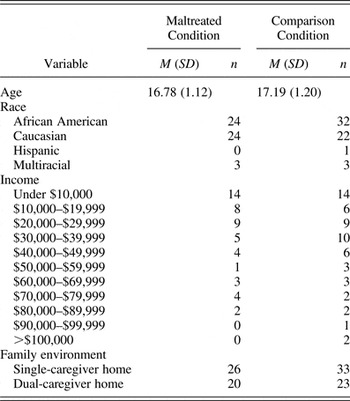
One hundred ten adolescent females between the ages of 14 and 19 years of age participated in this study. A child maltreatment condition (n = 51) was recruited from Child Protective Service (CPS) agencies investigating allegations of physical neglect or contact physical or sexual abuse. With the assistance of CPS caseworkers, a consecutive referral process identified families who had a child with a substantiated case of maltreatment occurring within the prior 12 months. A comparison condition where all members denied prior CPS involvement during an initial eligibility screen (n = 59) was recruited using posted flyers in a primary care outpatient medical clinic serving at-risk adolescent females. The mean age of the total sample at study entry was 17.00 years (SD = 1.17), 58% of the adolescents were from single-caregiver homes, the median family income level was $20,000–$29,000, and the sample was 42% Caucasian, 51% African American, 1% Hispanic, and 6% multiracial. Demographic information is presented by condition membership in Table 1.
Demographic and study related information at study entry

Procedure
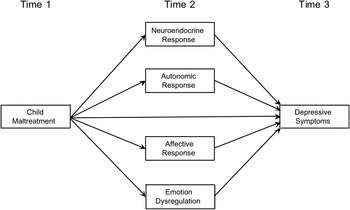
All study procedures were approved by the local institutional review board prior to data collection. Causal inferences about risk pathways assessed in observational research are strengthened when there is proper temporal ordering of events that follow a logical or theoretical pattern (Maxwell & Cole, Reference Maxwell and Cole2007; Preacher & Hayes, Reference Preacher and Hayes2008). As such, adolescent females who experienced substantiated child maltreatment and a comparison condition were recruited to participate in an assessment of several candidate risk pathways of MDD symptoms. This same cohort was followed approximately 18 months later to determine whether the set of risk pathways, as well as individual pathways, exerted significant indirect effects on subsequent MDD symptoms measured at the transition to adulthood (M age = 18.66; SD = 0.66). To illustrate the actual temporal relationships among study-related variables, child maltreatment is presented as Time 1, the assessment of risk pathways as Time 2, and the subsequent assessment of MDD symptoms as Time 3 (see Figure 1).
Conceptual model for the multiple levels of analysis approach.

Time 1: Determination of child maltreatment
Child maltreatment was determined by a CPS investigation that resulted in a primary substantiated/indicated designation of child maltreatment. All substantiated/indicated designations of child maltreatment were made prior to the onset of this study. Of the 51 participants in the child maltreatment condition, 49% experienced sexual abuse, 45% experienced physical abuse, and 16% experienced physical neglect, with 10% experiencing more than one type of maltreatment. Comparison females were screened for a history of child maltreatment by searching substantiated/indicated designations of child maltreatment in CPS records as well as through self-report of child maltreatment at each study visit. Cases of child maltreatment in the comparison condition (n = 29) were identified and controlled in statistical analyses by creating a dummy-coded variable that indicated the presence of contamination (yes = 1, no = 0) in the comparison condition.
Time 2: Assessment of risk pathways
All appointments were scheduled between 11 a.m. and 5 p.m. Participants completed a general interview about current health habits, self-report measures assessing emotion dysregulation and MDD symptoms, and a laboratory stressor measuring reactivity in the neuroendocrine, autonomic, and affective systems. The laboratory stressor involved participants completing a 5-min resting condition where each participant sat comfortably in a chair while listening to soft music and watching slow-moving images on a computer screen. Participants then completed a combined stressor task to elicit reactivity across different physiological and affective systems. A combined performance and interpersonal stressor was chosen given varying neuroendocrine and autonomic responses to different stressor types (Stroud et al., Reference Stroud, Foster, Papandonatos, Handwerger, Granger and Kivlighan2009). The performance aspect of the stressor paradigm involved each participant completing a series of affect recognition tasks (Porges, Cohn, Bal, & Lamb, Reference Porges, Cohn, Bal and Lamb2007). Participant responses were timed, and each participant was asked to identify the expressed emotion as quickly as possible while not making any mistakes before the time elapsed. The average length of time to complete the affect recognition tasks was 7.45 min (SD = 1.19). The interpersonal stressor involved participants viewing a series of video clips of parent–adolescent conflict. The time required to view all videos was 8 min.
Time 3: Assessment of subsequent MDD symptoms
Approximately 18 months following Time 2, study participants were recontacted to complete the same measure of MDD symptoms at the transition to young adulthood. Five percent (n = 6) of the original sample was unable to complete the subsequent MDD symptoms assessment, indicating a 95% retention rate throughout the course of the study.
Measures
General demographics and health habits form
Demographic information was assessed via self-report and caregiver report and included age, race, family income, and family constellation (single-caregiver vs. dual-caregiver homes). Health habits were measured at Time 2 to control their potential influence on neuroendocrine and autonomic activity. Specific health habits assessed were pregnancy status; use of steroids (topical, oral, or inhaled), cigarettes, or over the counter (aspirin or ibuprofen) and prescription drugs (psychotropic, seasonal allergies, or oral contraceptive); whether participants ate anything 1 hr prior to their appointment; and whether participants exercised or drank caffeine on the day of their appointment.
Cortisol and salivary α-amylase
Cortisol and salivary α-amylase reactivity were assessed across five, whole-saliva samples to obtain resting and stress response estimates for each biomarker. Each participant was instructed not to eat or drink anything 1 hr prior to participation. Upon arrival, participants were asked to rinse their mouth with water prior to beginning their appointment. The first sample was collected approximately 25 min (M = 25.30, SD = 0.24) after participants began their study appointment to give them time to acclimate to the research environment and procedures. Samples two through five were collected 5-, 10-, 20-, and 30-min poststressor to detect response to the combined stressor task. Unstimulated saliva was obtained in 20-mL polypropylene vials and stored at –80 °C until assayed. Cortisol was assayed in duplicate using a commercially available, high-sensitivity enzyme immunoassay (Salimetrics ® ). The test has a lower limit sensitivity of <0.003 μg/dl and average intra- and interassay coefficients of variation 3.35%–3.65% and 3.75%–6.41%, respectively. Saliva samples were also assayed for salivary α-amylase using a commercially available kinetic reaction assay (Salimetrics ® ) with intra- and interassay coefficients of variation ranging from 2.5% to 7.2% U/ml and 3.6% to 5.8% U/ml, respectively.
Positive and Negative Affect Schedule (PANAS)
The PANAS (Watson et al., Reference Watson, Clark and Tellegen1988) is a 20-item self-report questionnaire assessing the subjective intensity of current positive and negative affective states. Reliability of the PANAS indicates the measure has strong internal consistency in both the positive (α = 0.89) and negative affect scales (α = 0.85) with good concurrent validity with measures of depressive symptoms (Crawford & Henry, Reference Crawford and Henry2004). Intensity ratings for the negative affect scale of the PANAS were collected in the current study to assess changes in current affect across four different measurements at Time 2: immediately before the resting condition, immediately after the combined stressor task, 30 min poststressor, and 40 min poststressor. Total scores obtained from the negative affect scale of the PANAS were examined in statistical analyses given their relevance to affective reactions to stress and depressive symptoms. Internal consistency of the PANAS negative affect scale in the current sample ranged from α = 0.71 to 0.84.
Difficulties in Emotion Regulation Scale (DERS)
The DERS (Gratz & Roemer, Reference Gratz and Roemer2004) is a 36-item, self-report questionnaire assessing several aspects of emotion dysregulation: nonacceptance of emotions, difficulties engaging in goal-oriented behavior, difficulties with impulse control, lack of emotional awareness, limited access to emotion regulation strategies, and lack of emotional clarity. The DERS has excellent internal consistency (α = 0.93) and strong construct validity with other measures of emotion regulation in young adult (Gratz & Roemer, Reference Gratz and Roemer2004) and adolescent samples (Weinberg & Klonsky, Reference Weinberg and Klonsky2009). Internal consistency for the DERS in the current sample is α = 0.93. Total scores obtained from the DERS were used in statistical analyses and represent an individual's overall difficulty in regulating emotions, with higher scores reflecting greater emotion dysregulation.
The Beck Depression Inventory—II (BDI-II)
The BDI-II (Beck, Steer, & Brown, Reference Beck, Steer and Brown1996) is a 21-item, well-established measure of depressive symptoms in adolescence and adulthood. The BDI-II was administered at Time 2 and Time 3 with αs ranging from 0.90 to 0.96. Total BDI-II scores at Time 3 were used as the primary outcome in statistical analyses and indicate overall MDD symptom severity subsequent to child maltreatment.
Data analytic strategy
A multiple-mediator model (Preacher & Hayes, Reference Preacher and Hayes2008) was employed to identify the total and specific indirect effects of neuroendocrine, autonomic, affective, and emotion dysregulation pathways when explaining the relationship between child maltreatment and subsequent MDD symptoms. To do so, the area under the curve with respect to ground (AUCg; Pruessner, Kirschbaum, Meinlschmid, & Hellhammer, Reference Pruessner, Kirschbaum, Meinlschmid and Hellhammer2003) was calculated for cortisol (CortAUCg), salivary α-amylase (α-amylaseAUCg), and negative affect (PANASAUCg) to obtain a single estimate that reflects the total output of each pathway across all repeated measurements, including resting and stress response. DERS total scores were estimated simultaneously with all other pathways. The multiple-mediator model was performed using PROCESS v2.13 within SPSS v22. PROCESS is a regression-based, path analytic approach to testing the indirect effects of several proposed mediators simultaneously (Hayes, Reference Hayes2013). This method of testing mediation is particularly useful in the current study because it tests the indirect effects of each proposed mediator simultaneously through the use of bootstrapping. Bootstrapping is a nonparametric, resampling procedure for estimating indirect effects and their corresponding confidence intervals with optimal accuracy (MacKinnon, Lockwood, & Williams, Reference MacKinnon, Lockwood and Williams2004). By randomly sampling from n observations and estimating indirect effects k times with replacement of observations, estimates of the total and specific indirect effects, and their corresponding confidence intervals, can be obtained. There is also the opportunity to enter variables into the multiple-mediator model as covariates, allowing for statistical control of variables affecting both mediators and outcomes. Results of the current multiple mediator model are based on k = 5,000 bootstrap samples with bias-corrected, 95% confidence intervals (BC 95% CI) and address two important hypotheses: (a) whether the total indirect effect, or sum of indirect effects, mediates the relationship between child maltreatment and subsequent MDD symptoms; and (b) whether there are specific indirect effects that constitute individual mediation of subsequent MDD symptoms.
Results
Data screening
Participants who reported being pregnant (n = 6) were excluded from statistical analyses. Chi-squared and serial analysis of variance tests were used to evaluate differences between child maltreatment and comparison conditions on all demographic and health-related variables measured at Time 2 that might affect risk pathways, particularly cortisol and salivary α-amylase. The results indicated significant between-group differences on the use of prescribed steroid medication (steroid use = 1; no steroid use = 0), χ2 (1) = 5.27, p = .02, ϕ = 0.23, and cigarette use (cigarette use = 1; no cigarette use = 0), χ2 (1) = 7.81, p = .01, ϕ = 0.28, with the child maltreatment condition using steroid medication and cigarettes more often than the comparison condition. There were no significant differences between groups on race, income, family constellation, medication use (prescription or over the counter), the use of caffeine prior to the study, whether participants exercised on the day of their appointment, or ate in the hour prior to the study. The analysis of variance for participant age indicated that the child maltreatment condition was marginally younger than the comparison condition at the Time 2 assessment, F (1, 102) = 3.37, p = .069, η2 = 0.03. There was no significant group difference in the time of day the first saliva sample was collected. Of note, there was a significant zero-order correlation between child maltreatment status and BDI-II scores obtained at the Time 3 assessment (r = .21, p = .037).
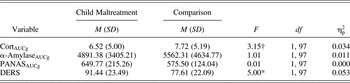
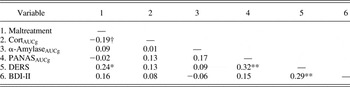
Cortisol concentrations continue to decline throughout the afternoon and into the evening (Kiess et al., Reference Kiess, Meidert, Dressendorfer, Schriever, Kessler and Konig1995). As such, the relationship between the time the first saliva sample was collected and corresponding cortisol concentrations was examined. Although there was no significant difference between the child maltreatment and comparison conditions as to the time of day when the first saliva sample was obtained, the time of day when the first sample was collected was systematically related to the cortisol concentrations obtained in the first sample (r = –.22, p = .024). This result indicated that samples collected later in the day had cortisol estimates that were lower than samples collected earlier in the day. Because age, steroid use, and cigarette use were either marginally or significantly different between groups at Time 2, and because the time of day in which the first cortisol sample was collected was related to observed cortisol concentrations, each of these variables was used as a covariate in subsequent statistical analysis. A multivariate analysis of covariance assessing group differences on each proposed mediator after controlling for each of the aforementioned covariates, the dummy-coded indicator variable controlling contamination, and baseline MDD symptoms, is presented in Table 2. A partial correlation matrix of child maltreatment, proposed mediators, and subsequent MDD symptoms after accounting for all identified covariates is presented in Table 3.
Multivariate analysis of covariance testing for group differences on mediational pathways

Note: Cort, Cortisol; AUCg, area under the curve with respect to ground; PANAS, Positive and Negative Affect Schedule; DERS, Difficulties in Emotion Regulation Scale. Covariates in the model are age, steroid use, cigarette use, time of day first saliva sample was collected, contamination, and baseline depressive symptoms. All variables in the model were assessed at Time 2.
†p < .08. *p < .05.
Partial correlation matrix for variables used in multiple mediator analysis

Note: Age, steroid use, cigarette use, time of day first saliva sample was collected, contamination, and baseline depressive symptoms measured at Time 2 were controlled in matrix. Maltreatment was coded as 0 = comparison, 1 = maltreatment. Cort, Cortisol; AUCg, area under the curve with respect to ground; PANAS, Positive and Negative Affect Schedule; DERS, Difficulties in Emotion Regulation Scale; BDI-II, Beck Depression Inventory—II measured at Time 3.
†p < .08. *p < .05. **p < .01.
Manipulation check
Paired-sample t tests were performed to examine whether significant change occurred between resting estimates of cortisol, salivary α-amylase, and negative affect and the maximum subsequent estimate obtained following the stressor task. Results indicated that the t test for cortisol did not achieve statistical significance, t (101) = 0.69, p = .495, suggesting that the stressor did not activate the neuroendocrine system. However, previous research indicates that children who have been maltreated can display a hypocortisol profile in response to challenge and in contrast to controls (e.g., Hart, Gunnar, & Cicchetti, Reference Hart, Gunnar and Cicchetti1995), thereby potentially obscuring main effect changes in response to a stressor task. The relationship between child maltreatment status and resting and maximum cortisol estimates was therefore examined to determine whether this phenomenon occurred in the present study. Correlations between child maltreatment status and cortisol estimates obtained during rest (r = –.19, p = .062) and the maximum subsequent estimate obtained in response to the stressor (r = –.23, p = .024) revealed that children who were maltreated did have a response to the stressor task, but in a manner consistent with the hypocortisol response observed in prior research. The paired-sample t tests for salivary α-amylase, t (102) = 6.90, p < .001, and PANAS, t (103) = 2.70, p = .008, did achieve statistical significance, demonstrating that the combined stressor task elicited changes in the expected directions for these candidate risk pathways.
Multiple-mediator model of subsequent depressive symptoms
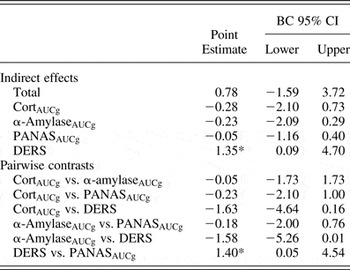
Covariates in the multiple-mediator model were age, steroid use, cigarette use, the time of day the first saliva sample was collected, contamination, and Time 2 BDI-II scores. The first hypothesis tested whether the set of potential mediators mediated the relationship between child maltreatment and subsequent MDD symptoms. As shown in Table 4, the estimate of the total indirect effect was not significantly different from zero (point estimate = 0.78, BC 95% CI = –1.59–3.72), indicating that the set of proposed variables did not mediate the relationship between child maltreatment and subsequent MDD symptoms. However, the significance of the total indirect effect can be influenced by variation in the directionality of each specific indirect effect, whereas nonsignificant total indirect effects are more likely to occur when specific indirect effects confer risk for subsequent MDD symptoms in different ways (Preacher & Hayes, Reference Preacher and Hayes2008). Thus, inspection of the significance of each specific indirect effect is needed to determine whether an individual mediator accounts for the relationship between child maltreatment and MDD symptoms.
Results of multiple mediator analysis

Note: BC 95% CI, Bias-corrected 95% confidence interval; Cort, cortisol; AUCg, area under the curve with respect to ground; PANAS, Positive and Negative Affect Schedule; DERS, Difficulties in Emotion Regulation Scale.
*p < .05.
As such, the multiple-mediator model also tested whether CortAUCg, α-amylaseAUCg, PANASAUCg, and DERS scores each constituted a specific indirect effect of the relationship between child maltreatment and subsequent MDD symptoms. The results demonstrated that the confidence interval around the point estimate for the specific indirect effect of the DERS did not include zero (point estimate = 1.35, BC 95% CI = 0.09–4.70), indicating that the DERS was a significant indirect effect of the relationship between child maltreatment and subsequent MDD symptoms when simultaneously estimating the contributions of CortAUCg, α-amylaseAUCg, and PANASAUCg. Inspection of the unstandardized beta coefficients indicates that child maltreatment significantly predicted higher DERS scores at the Time 2 assessment (β = 13.32, p = .029), with higher DERS scores significantly predicting increased BDI-II scores at the Time 3 assessment (β = 0.10, p = .046). The specific indirect effects for CortAUCg, α-amylaseAUCg, and PANASAUCg were not significantly different from zero.
Pairwise contrasts comparing the strength of each specific indirect effect relative to all other indirect effects in the model were estimated for each proposed mediator. The results demonstrated that the BC 95% CI around the contrast comparing the indirect effects for the DERS and PANASAUCg was statistically significant (point estimate = 1.40, BC 95% CI = 0.05–4.54), indicating that the indirect effect for the DERS was significantly stronger when compared to the indirect effect of PANASAUCg. There were no other pairwise contrasts that achieved statistical significance.
Clinical levels of MDD symptoms
Average BDI-II scores measured at Time 3 were 11.84 (SD = 10.85) for the child maltreatment condition and 7.77 (SD = 8.12) for the comparison condition. A score of 21 or higher on the BDI-II was used to identify clinical levels of MDD symptoms at Time 3, consistent with prior research demonstrating that a BDI-II total score of 21 or higher provided maximal clinical efficiency in distinguishing adolescents with and without MDD (Kumar, Steer, Teitelman, & Villacis, Reference Kumar, Steer, Teitelman and Villacis2002). Using this cutoff, 20.0% of those in the child maltreatment condition experienced clinical levels of MDD symptoms at the final study assessment compared to 7.6% of those in the comparison condition. These rates are comparable to previous studies examining MDD in the child maltreatment population that range from 14.2% to 15.1% for past-year prevalence of MDD in a maltreated group and 7.8% to 10.6% in a comparison condition (Scott et al., Reference Scott, Smith and Ellis2010; Widom et al., Reference Widom, DuMont and Czaja2007), especially when considering the higher rates of sexual and physical abuse in the current study's child maltreatment condition. However, its important to note that the 7.6% rate of clinical levels of MDD symptoms in the comparison condition reduces to 0.0% when contamination is controlled by removing cases of child maltreatment from the comparison condition.
Discussion
The need for multiple levels of analysis research on the etiology of psychiatric disorders in child maltreatment population coincides with recent changes at the NIMH, where funding priorities are being given to basic science research on genomics, neuroscience, pathophysiology, and behavioral processes in an effort to identify the putative mechanisms and pathways involved in the onset of psychiatric outcomes (Cuthbert & Insel, Reference Cuthbert and Insel2010; Insel et al., Reference Insel, Cuthbert, Garvey, Heinssen, Pine and Quinn2010). This effort takes an agnostic, bottom-up approach to developing a framework of psychiatric disorders that is focused on the identification of transdiagnostic risk pathways that lead to multiple psychiatric conditions, unlike existing taxonomies, such as the Diagnostic and Statistical Manual of Mental Disorders, that take a top-down approach by first arbitrarily defining individual disorders based on symptom presentation and then attempting to identify etiological pathways unique to each disorder. A particular advantage of any bottom-up approach is that the identification of risk pathways affecting one or more psychiatric outcomes serves an important translational need. Specifically, risk pathways affecting the onset of one or more psychiatric disorders then become the focus of interventions aimed at preventing or treating those outcomes in the most effective and efficient manner possible. This approach not only connects basic science research to clinical intervention but also avoids the inherent paradox in existing taxonomies of needing to develop a unique intervention for each distinct psychiatric disorder when in practice one intervention can be used to treat multiple disorders, such as exposure and response prevention (Foa & Rothbaum, Reference Foa and Rothbaum1998; Franklin & Foa, Reference Franklin, Foa, Nathan and Gorman2002). Thus, focusing on identifying the common, transdiagnostic risk pathways of psychiatric outcomes in basic research with the child maltreatment population holds considerable promise in more effectively and efficiently optimizing interventions through the direct targeting of etiological pathways.
The current study adopted a multiple levels of analysis approach across neuroendocrine, autonomic, affective, and emotion regulation pathways to identify transdiagnostic mechanisms leading to MDD symptoms in the child maltreatment population. Selecting several candidate pathways provides a strong theoretical and empirical test that increases the likelihood of identifying one or more pathways after accounting for the indirect effects of other, related pathways. Results of this study add to a robust literature on the role emotion dysregulation plays in the onset of MDD (Aldao et al., Reference Aldao, Nolen-Hoeksema and Schweizer2010; Silk et al., Reference Silk, Steinberg and Morris2003) with particular relevance to the child maltreatment population (Coates & Messman-Moore, Reference Coates and Messman-Moore2014). After accounting for the indirect effects of neuroendocrine, autonomic, and affective pathways, child maltreatment predicted higher subsequent rates of emotion dysregulation. Examination of emotion dysregulation scores across the child maltreatment and comparison conditions in this study indicated that the comparison condition had scores that were comparable to those obtained in normative, female adolescent samples (Weinberg & Klonsky, Reference Weinberg and Klonsky2009), whereas the child maltreatment condition had significantly higher emotion dysregulation scores. These higher scores of emotion dysregulation predicted a greater severity of MDD symptoms approximately 18 months later or over 2 years after the child maltreatment allegation was substantiated, on average. Thus, emotion dysregulation appears to play a critical role in the onset of MDD symptoms for adolescent females who experienced child maltreatment and are entering young adulthood. It is important to note that this indirect effect for emotion dysregulation was detected after adjusting for relevant covariates, including MDD symptom severity at study entry, and accounting for each of the other indirect effects included in the model. This suggests that the key risk pathway to MDD for maltreated females lies in their ability to engage in behaviors that modulate, change, or accept aversive affective experiences, and not in the neuroendocrine, autonomic, or affective changes following an environmental challenge. In other words, changes in stress physiology or even increases in negative affect per se play a less critical role in the expression of subsequent MDD symptoms in the child maltreatment population than do behavioral pathways responsible for the overall management of emotional experience. This has important implications for bottom-up approaches of classifying psychiatric disorders, where including and estimating key behavioral processes in etiological models are essential for identifying putative risk pathways.
Contrary to expectations, neuroendocrine, autonomic, and affective pathways did not exert significant indirect effects in this study. One explanation for this may come from longitudinal research showing that women who were sexually abused have higher resting cortisol concentrations during childhood, comparable estimates to peers who were not sexually abused during adolescence, and significantly lower concentrations in adulthood (Trickett et al., Reference Trickett, Noll, Susman, Shenk and Putnam2010). Thus, an adjustment of neuroendocrine functioning across development may be occurring in samples experiencing child maltreatment with profiles assessed in younger and older developmental stages tied more strongly to MDD symptoms. Like cortisol, there is variation in findings reported across studies examining the relationship between salivary α-amylase and MDD using child and adolescent samples experiencing early life trauma, including child maltreatment (Gordis et al., Reference Gordis, Granger, Susman and Trickett2008; Rudolph et al., Reference Rudolph, Troop-Gordon and Granger2011). Thus, there may be a similar adjustment in autonomic processes during adolescence that may make detection of a relationship between child maltreatment and MDD symptoms difficult. It is also possible that salivary α-amylase is not a useful biomarker for distinguishing chronic stress groups or increasing one's risk for MDD symptoms in the child maltreatment population (Juster, Sindi, et al., Reference Juster, Sindi, Marin, Perna, Hashemi and Pruessner2011). Another explanation may be that the stressor used in this study had mixed effects in achieving levels of reactivity, particularly in activating the neuroendocrine response. Main-effect tests indicated that salivary α-amylase and negative affect did change significantly from resting to stressor conditions, while cortisol did not. However, closer inspection revealed that the maltreated group displayed a hypocortisol profile during the stressor condition when compared to the control group, consistent with previous research (Hart et al., Reference Hart, Gunnar and Cicchetti1995) and therefore providing an adequate test of the neuroendocrine pathway to subsequent MDD symptoms.
Several limitations must also be considered when interpreting the results of this study. First, mediational modeling was used to examine the contributions of several variables in a single statistical model to identify risk pathways to MDD symptoms following child maltreatment. While these variables have both theoretical and empirical relevance for child maltreatment and MDD symptom development, additional pathways likely exist yet were not tested in this study. Alternative models testing emotion dysregulation with other potential mediators, such as quality of parenting (Collishaw et al., Reference Collishaw, Pickles, Messer, Rutter, Shearer and Maughan2007), hold considerable promise in future research. Second, the effects of child maltreatment in this sample are limited to those with a substantiated case of maltreatment. Thus, results cannot necessarily generalize to other methods of assessing child maltreatment. Third, the sample for this study consists entirely of females, with the maltreated group experiencing higher rates of sexual abuse than the general maltreatment population. This study targeted females specifically to identify pathways of MDD symptom development in the subpopulation of child maltreatment at greatest risk for MDD. It is important to emphasize that the findings of this study therefore only generalize to the adolescent female subpopulation, and the extent to which the current results generalize to males who have been maltreated can only be determined by future research. Fourth, time of waking and timing within the menstrual cycle was not assessed yet can influence hormone concentrations, particularly cortisol.
Future directions
Results from this study contribute to the growing effort to identify the relevant etiological pathways for those at greatest risk of psychiatric disorders in the child maltreatment population. In addition to emotion dysregulation, there are likely other person-specific factors that moderate or mediate the effects of child maltreatment on the risk for MDD and related disorders. For example, recent findings from the Psychiatric Genetics Consortium appear to support a bottom-up approach to the classification of psychiatric disorders and describe shared genetic etiology across a variety of psychiatric disorders (Cross-disorder Group of the Psychiatric Genomics Consortium, 2013). Prior research has shown specific genetic polymorphisms moderate the effects of child maltreatment on later mental health (Kim-Cohen et al., Reference Kim-Cohen, Caspi, Taylor, Williams, Newcombe and Craig2006). MDD may also be a complex trait where specific polymorphisms across multiple genetic networks, namely, the serotonin transporter linked polymorphic region gene (5-HTTLPR) and the corticotrophin-releasing hormone type 1 receptor gene (CRHR1), determine rates of internalizing symptomatology subsequent to child maltreatment (Cicchetti, Rogosch, & Oshri, Reference Cicchetti, Rogosch and Oshri2011). The molecular basis of such Gene × Environment effects has been well characterized for the glucocorticoid cochaperone FK506 binding protein 5 gene (FKBP5; Klengel et al., Reference Klengel, Mehta, Anacker, Rex-Haffner, Pruessner and Pariante2013). A history of child maltreatment predicts FKBP5 DNA methylation in an allele-specific manner, which in turn predicts symptoms of glucocorticoid insensitivity and a range of clinical phenotypes, suggesting that epigenetic processes may serve as candidate risk pathways in future mediational analyses. Likewise, marked differences in genome-wide DNA methylation and gene expression have been described between diagnostically similar groups of posttraumatic stress disorder patients with and without a history of child maltreatment (Mehta et al., Reference Mehta, Klengel, Conneely, Smith, Altmann and Pace2013). Such results suggest that existing diagnostic classifications alone may not be informative for understanding pertinent biological processes of relevance for psychopathology. The challenge then becomes to determine how other sources of data, both molecular and behavioral, can be integrated into prediction models to identify those at greatest risk and in need of direct clinical intervention.
Clinical and translational implications
There are clear implications for the development and implementation of evidence-based behavioral interventions for maltreated females resulting from this study. Universal prevention of child maltreatment remains a topic public health priority (World Health Organization, 2014). However, child maltreatment continues to affect 1.2 million children each year in the United States alone (Sedlak et al., Reference Sedlak, Mettenburg, Basena, Petta, McPherson and Greene2010). Thus, selective prevention programs (Institute of Medicine, 1994), especially those aiming to reduce the incidence of psychiatric disorders, represent the earliest form of intervention available for this population. This study indicates that such selective prevention programs are likely to have optimal therapeutic effect when a specific emphasis is made to improve and utilize emotion regulation abilities following the investigation and substantiation of child maltreatment. Commonly used treatment components, such as psychoeducation and relaxation, are likely to provide a benefit for the acute physiological reactions following such a trauma. However, prevention of MDD and related psychiatric disorders will occur most effectively by targeting the emotion dysregulation pathway explicitly, either through individual skill building or by including caregivers or both. Evidence-based, selective prevention programs for children exposed to trauma exist (Berkowitz, Stover, & Marans, Reference Berkowitz, Stover and Marans2011); however, the mechanisms of action for these programs, and whether they target emotion dysregulation in particular, remain unknown. Research supporting the modification of existing or the development of new selective prevention programs with a specific focus on emotion dysregulation is likely to provide optimal benefit to children experiencing maltreatment through the targeting of this risk pathway; a mission consistent with treatment optimization priorities at NIMH (National Advisory Mental Health Council's Workgroup, 2010). Similarly, treating MDD in the child maltreatment population is likely to have the greatest effect when emotion dysregulation is minimized though improved changes in regulatory functioning that can be achieved and maintained in an interpersonal or familial context. There are several well-established, transdiagnostic behavioral interventions that target emotion dysregulation in adult populations (Barlow, Allen, & Choate, Reference Barlow, Allen and Choate2004; Linehan, Reference Linehan1993) and adaptations of these interventions for those with a trauma or child maltreatment history (Bohus et al., Reference Bohus, Dyer, Priebe, Kruger, Kleindienst and Schmahl2013; Geddes, Dziurawiec, & Lee, Reference Geddes, Dziurawiec and Lee2013), and in significantly reducing depressive symptoms among adolescents (Bilek & Ehrenreich-May, Reference Bilek and Ehrenreich-May2012; Mehlum et al., Reference Mehlum, Tormoen, Ramberg, Haga, Diep and Laberg2014), have a growing empirical base. Thus, continued adaptation of these evidence-based approaches focusing on emotion dysregulation as a core, transdiagnostic pathway to MDD and comorbid conditions has the potential to optimize the efficacy of behavioral interventions for females experiencing child maltreatment.