Introduction
The order Arthoniales represents one of the largest groups of lichenized Ascomycetes. It comprises fruticose, foliose and crustose taxa and occurs in most ecosystems of the world, reaching its highest diversity in subtropical coastal habitats with a Mediterranean- or desert-type climate (Ertz & Tehler Reference Ertz and Tehler2011). The group has had a chequered taxonomic history but the most recent classification (Ertz & Tehler Reference Ertz and Tehler2011) recognized six families, including the Roccellaceae. This large family, estimated to comprise 28–42 genera and c. 300 species (Jaklitsch et al. Reference Jaklitsch, Baral, Lücking and Lumbsch2016), includes taxa with (inter alia) a trentepohlioid photobiont, rounded ascomata with a thalline margin and reduced excipulum, cylindrical to clavate asci, and ascospores that lack a gelatinous sheath (Ertz et al. Reference Ertz, Tehler, Irestedt, Frisch, Thor and van den Boom2015). Features of the Roccellaceae as currently circumscribed are its high degree of species endemism and the relatively large number of small or monotypic genera, one of which is Ocellomma Ertz & Tehler, based on the Mediterranean taxon O. picconianum (Bagl.) Ertz & Tehler. Within the family, Ocellomma is characterized by a crustose, ecorticate thallus, erumpent, sessile, pruinose ascomata containing calcium oxalate, and hyaline, 3-septate ascospores, and was recognized as a distinct lineage on the basis of DNA sequence data (Ertz et al. Reference Ertz, Tehler, Irestedt, Frisch, Thor and van den Boom2015). In this paper, we record the North American species Schismatomma rediuntum (‘rediunta’) (Stizenb. ex Hasse) Tehler for southern Australia and Tasmania, and transfer it to the genus Ocellomma (O. rediuntum (Stizenb. ex Hasse) Kantvilas et al. comb. nov.) on the basis of morphological and anatomical data. Molecular data were also obtained and indicated that the widely separated Australian populations were conspecific.
Whilst taxon sampling and support values were insufficient to categorically confirm the placement of this species within Ocellomma, they suggested a close affinity between it and O. picconianum. The remarkable disjunction between North American and Australian populations is discussed in the context of the ecology of the species.
Materials and Methods
Anatomy, morphology and chemistry
The study is based chiefly on material collected by the first author in South Australia (Kangaroo Island) and Tasmania, and on herbarium material housed in AD, BM, FH, HO, MEL and S. Anatomical and morphological observations were undertaken using light microscopy, with thin hand-cut sections mounted in water, 10% KOH, lactophenol cotton blue, Lugol's iodine after pretreatment with dilute KOH, and ammoniacal erythrosin. Ascospore measurements are presented in the format: 5th percentile–average–95th percentile, with outlying values given in brackets and n being the number of measurements. Routine chemical analyses using thin-layer chromatography followed standard methods (Elix Reference Elix2014). Calcium oxalate was observed by eluting thin sections in 20% sulphuric acid, which induces the precipitation of clusters of needle-like crystals. Terminology of asci follows Torrente & Egea (Reference Torrente and Egea1989) as illustrated by Kantvilas (Reference Kantvilas2004).
Comparative specimen of Ocellomma picconianum examined.
Italy: Calabria, Crotone, near mouth of the River Neto, 39°13′N, 17°08′E, 5 m alt., on bark of Eucalyptus, 14 v 1989, D. Puntillo (Lichenotheca Graecensis 3, 57 (1996)) (BM).
DNA extraction, amplification and sequencing
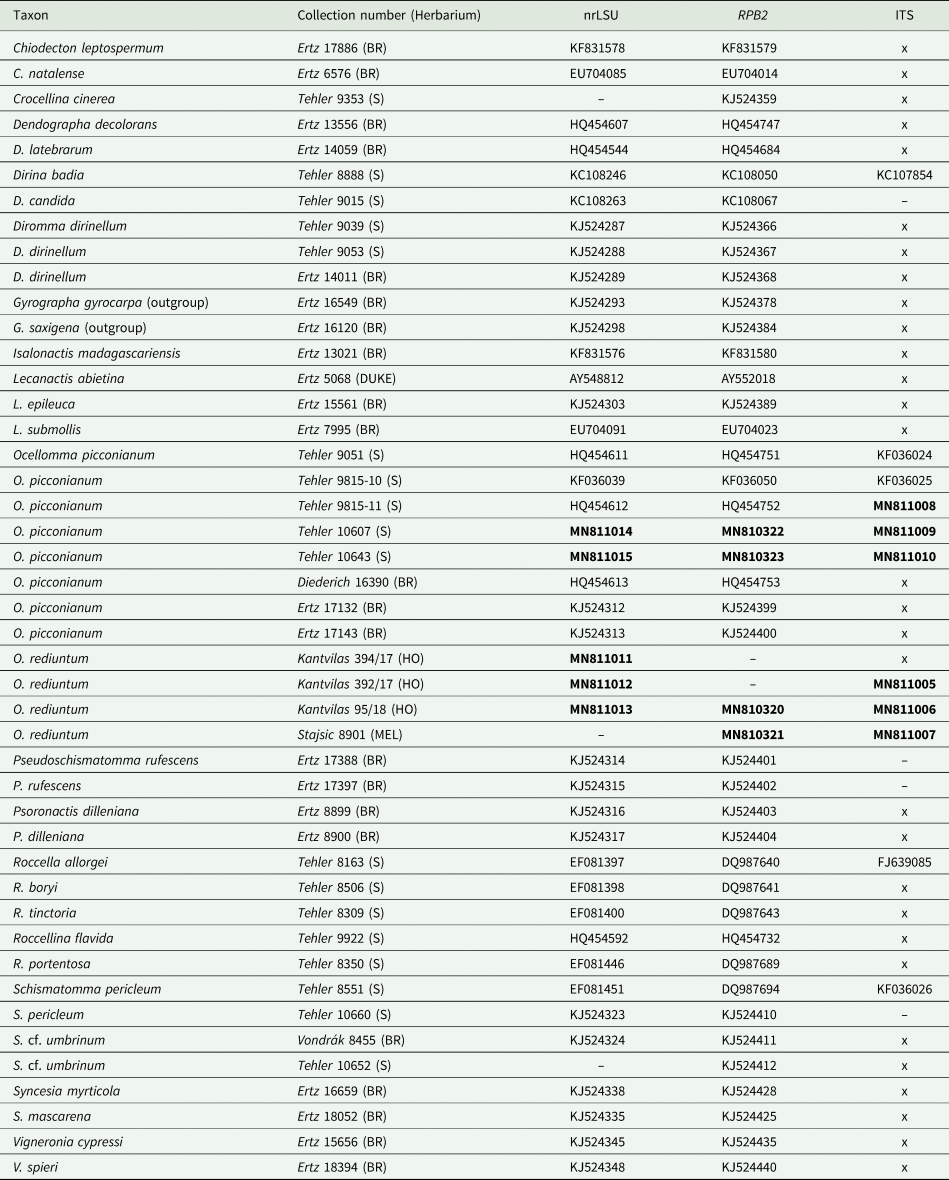
Four Australian specimens of Ocellomma rediuntum (three from Tasmania and one from Victoria) were newly sequenced (Table 1). Lichen material was detached from the substratum using clean tweezers and transferred to an Eppendorf tube. Genomic DNA was obtained using a phenol-chloroform-based protocol modified from Zolan & Pukkila (Reference Zolan and Pukkila1986), as described in Gueidan et al. (Reference Gueidan, Roux and Lutzoni2007). Three markers were amplified: the region including the 5.8S subunit of the nuclear ribosomal RNA gene and the internal transcribed spacers 1 and 2 (ITS), the large subunit of the nuclear ribosomal RNA gene (nrLSU), and the second largest subunit of the RNA polymerase II gene (RPB2).
Taxon sampling for the two phylogenetic analyses. The combined nrLSU and RPB2 dataset included a total of 45 taxa and the combined ITS and RPB2 dataset 15 taxa. Newly published sequences are indicated in bold. Dashes correspond to missing data and, for ITS, x indicates taxa not included in the dataset.

The primers used for amplification were: ITS1F and ITS4 for the ITS region (White et al. Reference White, Bruns, Lee, Taylor, Innis, Gelfand, Sninsky and White1990; Gardes & Bruns Reference Gardes and Bruns1993), LR0R and LR5 for nrLSU (Vilgalys & Hester Reference Vilgalys and Hester1990) and RPB2-7cF and RPB2-11aR for RPB2 (Liu et al. Reference Liu, Whelen and Hall1999). For the nuclear ribosomal regions, 1 μl of genomic DNA was added to a master mix comprising 5 μl of MyFi buffer (Bioline, London, UK), 1 μl of each primer, 1 μl of MyFi polymerase and 16 μl of water. For RPB2, the master mix was modified to include 2 μl of each primer. Amplifications were carried out on a Mastercycler Pro S thermocycler (Eppendorf, Hamburg, Germany) using standard PCR programs. PCR products were sent to Macrogen (Seoul, Korea) for purification and sequencing. Mixed and weak PCR products were cloned using a TOPO-TA cloning kit (Invitrogen, Thermo Fisher Scientific, Waltham, MA, USA) according to the manufacturer's instructions. Additional ITS, nrLSU and RPB2 sequences were obtained for Ocellomma picconianum following previously described protocols (Tehler & Irestedt Reference Tehler and Irestedt2007; Tehler et al. Reference Tehler, Irestedt, Bungartz and Wedin2009a, Reference Tehler, Irestedt, Wedin and Ertzb, Reference Tehler, Irestedt, Wedin and Ertz2010).
Phylogenetic analysis
Sequences were assembled using Sequencher v.5.4.6 (Gene Codes Corporation, Ann Arbor, MI, USA). RPB2 and nrLSU sequences were aligned manually in Mesquite v.3.51 (Maddison & Maddison Reference Maddison and Maddison2017), together with previously published sequences from various genera within Roccellaceae (mostly from Ertz et al. Reference Ertz, Tehler, Irestedt, Frisch, Thor and van den Boom2015) and some new sequences of Ocellomma picconianum (Table 1). For the combined nrLSU-RPB2 analysis, two species of Gyrographa were used as an outgroup. The ingroup included our four Australian specimens of O. rediuntum, as well as 39 Roccellaceae taxa. To test for congruence, each locus (nrLSU and RPB2) was first subjected to a separate tree search and bootstrap analysis using maximum likelihood (ML) (RAxML VI-HPC v.8.2.9; Stamatakis et al. Reference Stamatakis, Ludwig and Meier2005, Reference Stamatakis, Hoover and Rougemont2008), as implemented on the CIPRES Web Portal (http://www.phylo.org; Miller et al. Reference Miller, Pfeiffer and Schwartz2010). A GTRCAT model was applied to the two markers. Support values were obtained using a fast bootstrap analysis of 1000 pseudoreplicates. Resulting topologies were compared for a potential conflict among loci using a 70% reciprocal bootstrap criterion (Mason-Gamer & Kellogg Reference Mason-Gamer and Kellogg1996). Because no conflict was detected, the two gene regions were concatenated, and the combined dataset analyzed using MrBayes v.3.2.6 (Ronquist et al. Reference Ronquist, Teslenko, van der Mark, Ayres, Darling, Höhna, Larget, Liu, Suchard and Huelsenbeck2011).
The combined dataset had four partitions: RPB2 first codon position, RPB2 second codon position, RPB2 third codon position and nrLSU. The models were estimated for each partition using MrModeltest v.2 (Nylander Reference Nylander2004). Two runs of four chains were carried out for 5 000 000 generations and trees were sampled every 500 generations. The convergence of parameters was checked with the program Tracer v.1.7.1 (Rambaut et al. Reference Rambaut, Suchard, Xie and Drummond2014). The convergence of the average likelihood scores and topologies of all runs were also verified. A burn-in sample of 5000 trees was discarded for each run. The remaining 10 000 trees were used to estimate the posterior probabilities with the ‘compute consensus’ command in PAUP* v.4.0a (build 163) (Swofford Reference Swofford2002). The most likely tree was computed with the sumt command in MrBayes and visualized in PAUP*. Additional support values were obtained using a fast bootstrap analysis of 1000 pseudoreplicates with RAxML, using the four previously described partitions.
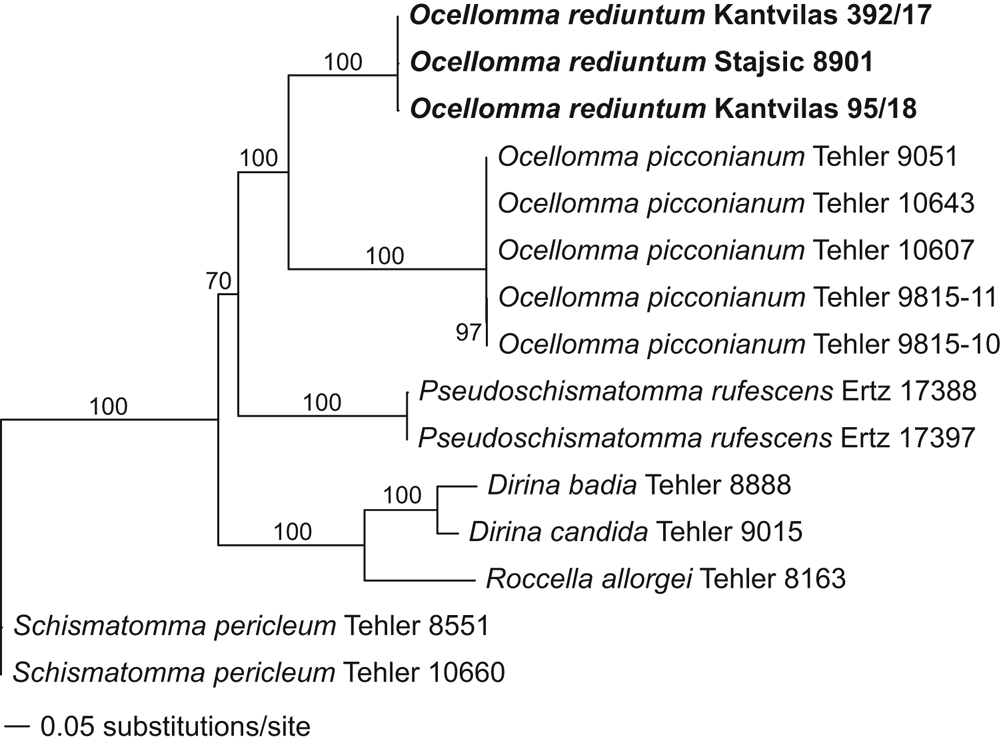
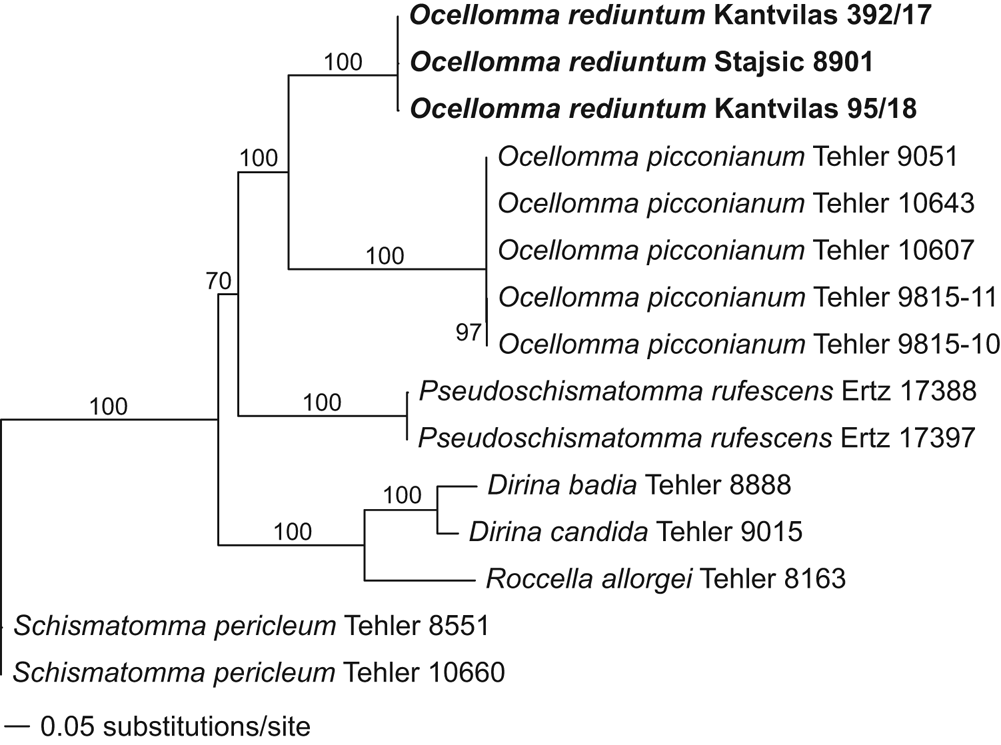
Published and newly generated ITS sequences were also aligned using Mesquite but for a much smaller dataset due to the high variability of this locus across the Roccellaceae. This small dataset was combined with RPB2 data with the aim of confirming the sister relationship between O. rediuntum and O. picconianum. For the ITS-RPB2 dataset, two specimens of Schismatomma pericleum were used as an outgroup and the ingroup included O. rediuntum (3 specimens), O. picconianum (5 specimens), Pseudoschismatomma rufescens (2 specimens), two species of Dirina, and Roccella allorgei. A maximum likelihood tree search and bootstrap analysis were performed using RAxML as described above. Both LSU-RPB2 and ITS-RPB2 trees were visualized in PAUP* and edited with Illustrator (Adobe Systems, San Jose, CA, USA). The datasets were deposited in TreeBASE (25482).
Results
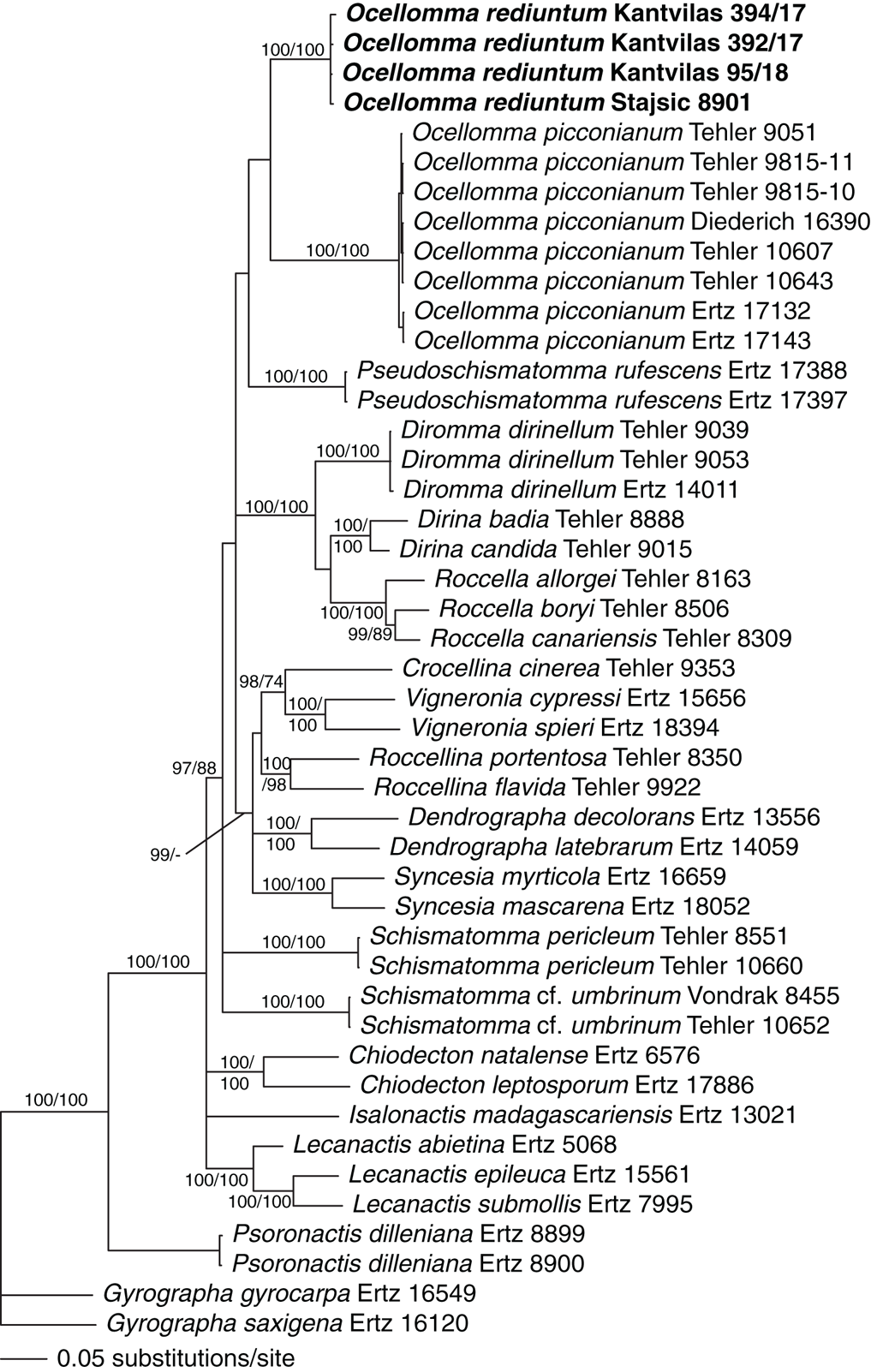
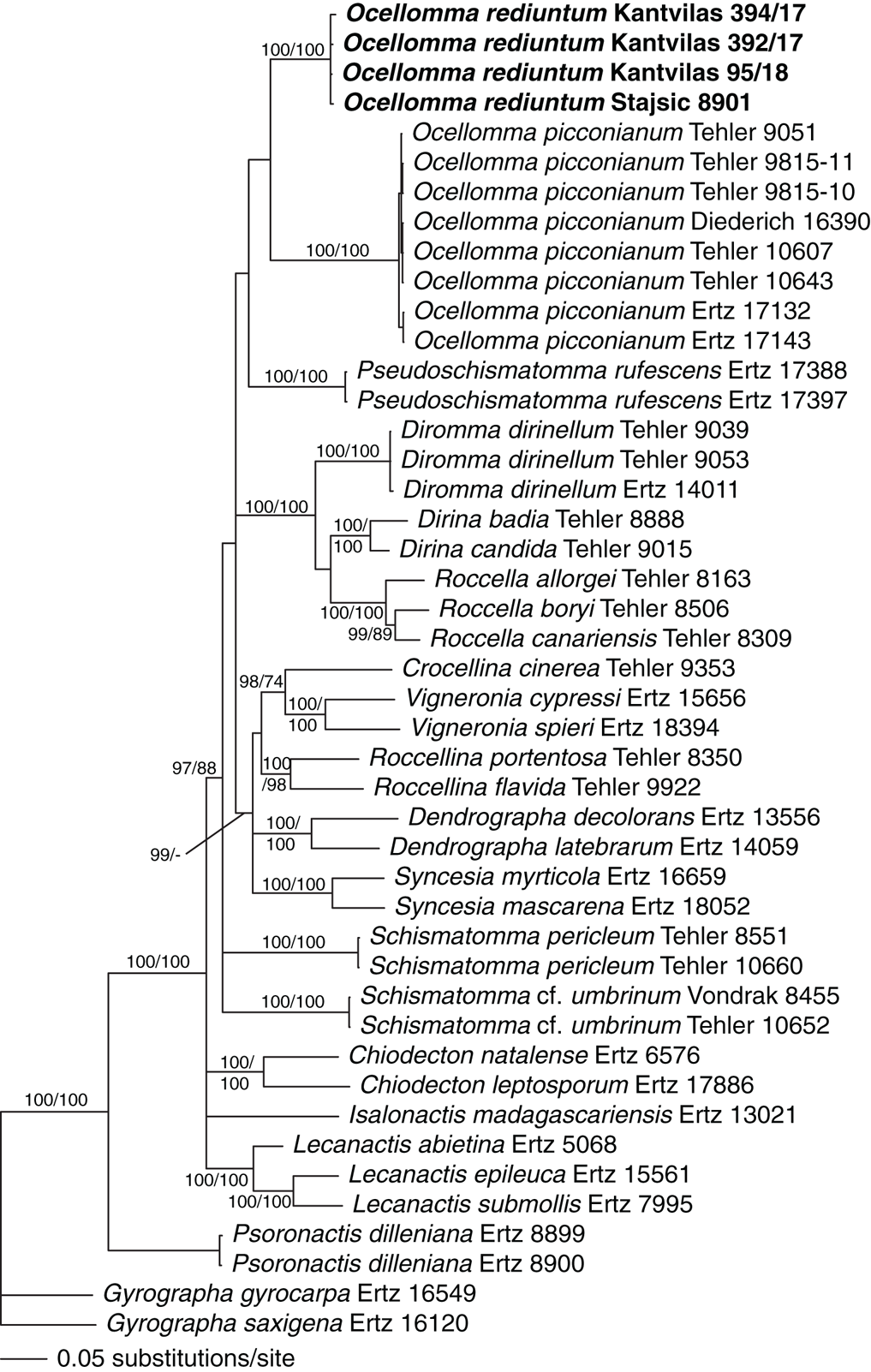
With the congruence test showing no conflict, the two markers nrLSU and RPB2 were concatenated into a combined dataset. The resulting phylogeny is presented in Fig. 1, with posterior probabilities and bootstraps as support values. The recovered relationships were largely in agreement with the phylogeny of Ertz et al. (Reference Ertz, Tehler, Irestedt, Frisch, Thor and van den Boom2015), with Psoronactis, Lecanactis, Isalonactis and Chiodecton forming early diverging groups. Roccellina clusters together with Crocellina, Vigneronia, Dendrographa and Syncesia (99% PP and ≤ 70% BS), and the lineage that includes Diromma, Dirina and Roccella is well supported (100% PP and BS). The four specimens of Ocellomma rediuntum form a monophyletic group (100% PP and BS). This species is resolved as sister to O. picconianum but the relationship is not supported (< 95% PP and ≤ 50% BS). Similarly, Pseudoschismatomma is resolved as sister to the lineage that includes O. rediuntum and O. picconianum, but this relationship is not supported (< 95% PP and ≤ 50% BS). The placement of the generic type of Schismatomma (S. pericleum) is neither resolved nor supported. The results of the combined ITS-RPB2 analysis is shown in Fig. 2. This smaller dataset recovered full bootstrap support for the sister relationship between O. rediuntum and O. picconianum (100% BS), but insignificant support for Pseudoschismatomma rufescens as sister to these taxa (70% BS).
Phylogenetic placement of Ocellomma rediuntum within the Roccellaceae. Bayesian consensus tree of the combined nrLSU and RPB2 dataset, with posterior probabilities and bootstrap values (PP/BS) above the branches. The outgroup consists of Gyrographa spp. and specimen information is presented in Table 1.
Phylogenetic relationships between Ocellomma rediuntum and O. picconianum. Most likely tree obtained with a combined ITS-RPB2 dataset. RAxML bootstrap values are indicated above the branches. The outgroup consists of Schismatomma pericleum and specimen information is presented in Table 1.
Taxonomy
Ocellomma rediuntum (Stizenb. ex Hasse) Kantvilas, Gueidan & Tehler comb. nov.
MycoBank No.: MB 833703
Lecanora rediunta Stizenb. ex Hasse, Bull. Torrey Bot. Club 24, 446 (1897).—Dirina rediunta (Stizenb. ex Hasse) Zahlbr., Ann. Naturhist. Mus. Wien 16, 82 (1901).—Schismatomma rediuntum (‘rediunta’) (Stizenb. ex Hasse) Tehler, Lichenologist 17, 211 (1985); type: USA, California, Los Angeles Co., Santa Catalina Island, on Heteromeles, January 1895, Hasse (lecto, fide Tehler (Reference Tehler1985)—UC; isolecto—UPS, US, W).
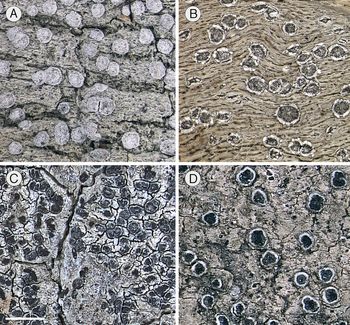
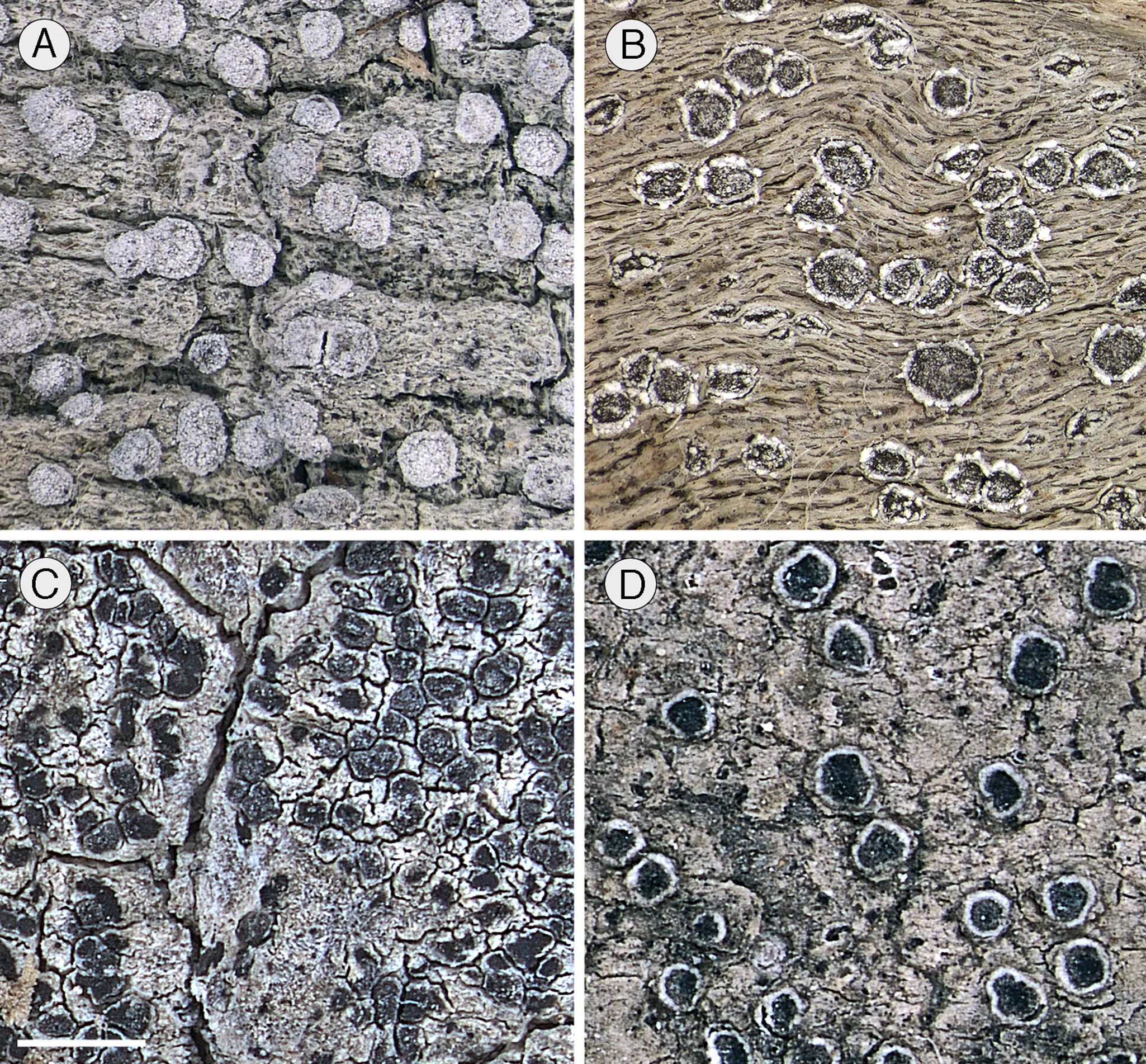
Morphology of Ocellomma rediuntum showing regional variation. A, Tasmania; B, Kangaroo Island; C, Victoria; D, California. Scale = 1 mm. Photographs: Jean Jarman. In colour online.
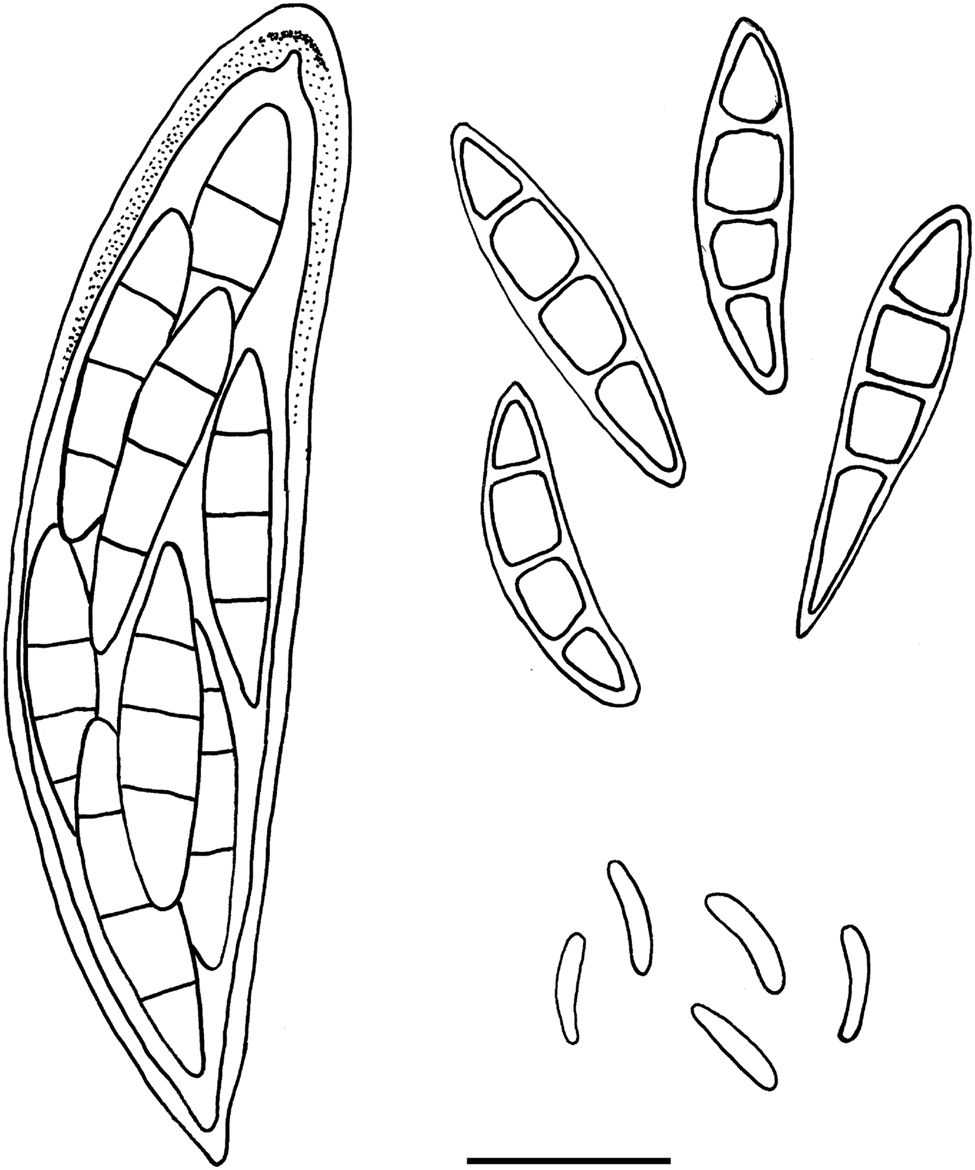
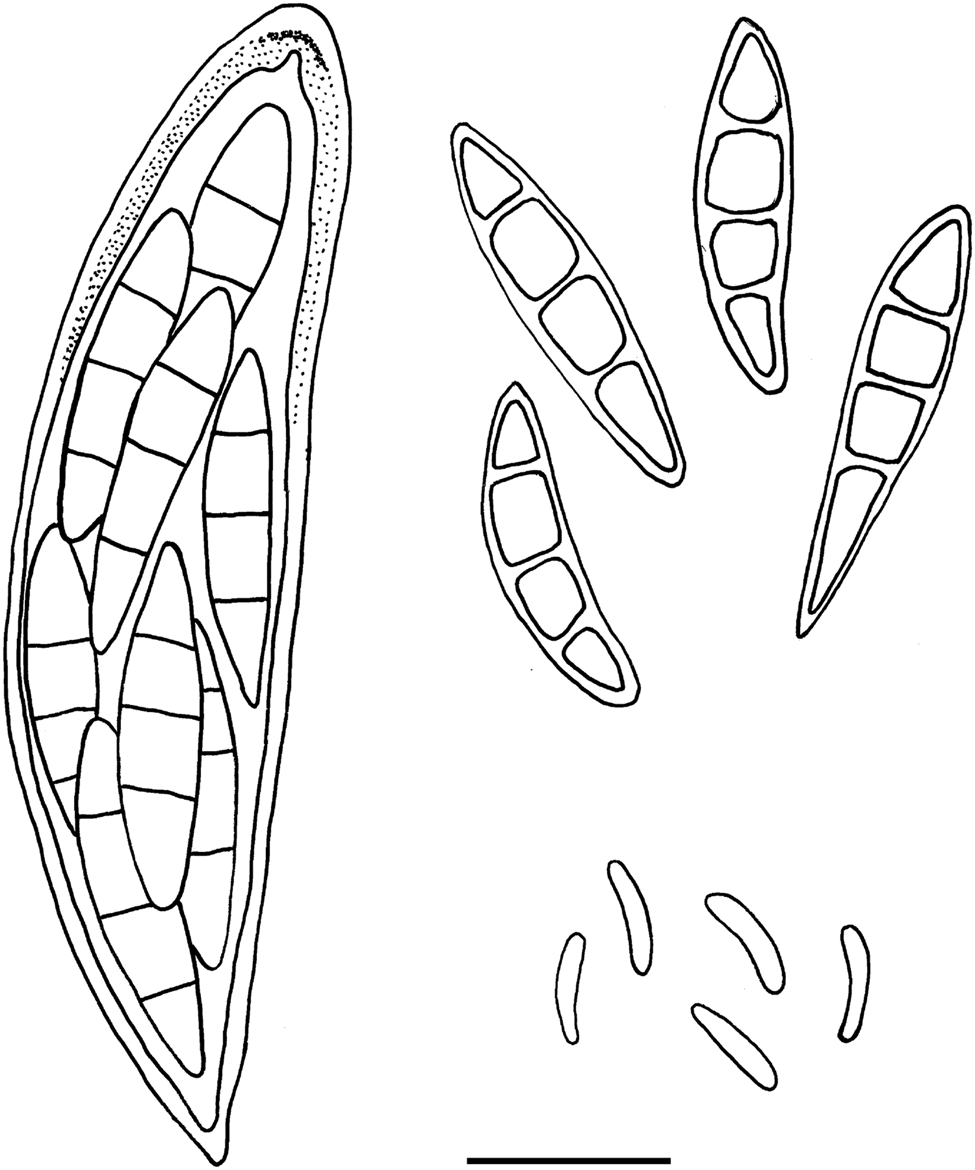
Ocellomma rediuntum. Asci, ascospores and conidia, with amyloid tissues (after pretreatment with 10% KOH) stippled. Scale = 10 μm.
Thallus crustose, pale grey-white, scurfy, esorediate, ecorticate, rather patchy and uneven, at most to 80–100 μm thick, undelimited, containing calcium oxalate; medulla patchily KI+ pale violet; photobiont Trentepohlia, with cells coccoid, 10–20 μm diam.
Apothecia numerous, scattered, roundish, 0.2–0.5 mm wide, erumpent, broadly adnate, containing calcium oxalate; disc black, coarsely grey-pruinose, plane at first, later becoming convex; margin white, rather ragged and exfoliating in young apothecia, becoming somewhat excluded in the oldest, most convex apothecia, in section 10–15(–25) μm thick, lacking photobiont cells although sometimes with some thallus fragments adhering at the outer edge, dark brown, ±unchanged in K at the edge, somewhat paler within, KI−. Hypothecium 40–60(–90) μm thick, dark reddish brown, K+ olive, sometimes a little paler and patchily KI+ pale violet in the upper part. Hymenium hyaline, KI+ blue, 60–80 μm thick, overlain by a brownish epithecium to c. 20 μm thick, composed of minute granules that do not dissolve in K. Asci 50–65 × 13–20 μm, of the myrticola-type, typically 8-spored but sometimes with 2 spores aborted in mature asci. Paraphyses sparingly branched and anastomosed, 1–1.5 μm thick, with the apices minutely spinulose, barely expanded to c. 2–2.5 μm. Ascospores hyaline, non-halonate, 3-septate, fusiform, straight or curved, mostly a little attenuate at the distal end, (16–)17–20.9–25 × 4–4.6–5.5 μm (n = 60).
Pycnidia usually numerous, visible as black, semi-immersed specks 0.05–0.1 mm wide; conidia bacilliform, straight or curved, 5–7 × 1–1.5 μm.
Chemistry
No substances detected by TLC.
Remarks
The above description is based exclusively on the Australian collections. It compares favourably with the description of Tehler (Reference Tehler1993), based on North American collections, and our observations of a selection of these specimens. The morphology of the ascomata is variable. While the Tasmanian specimens have broadly adnate, superficial, discoid apothecia, specimens from the other provenances show apothecia ranging from neatly discoid to rather misshapen, and from semi-immersed to superficial (Fig. 3). However, no anatomical differences between these forms were observed. Ascospore size can vary from specimen to specimen and from section to section, but generally those spores retained in the ascus are smaller with thin walls and septa.
The affinities of the Australian collections to the genus Ocellomma were initially recognized on the basis of morphological and anatomical comparisons with herbarium material of O. picconianum. In his monograph of the genus Schismatomma, Tehler (Reference Tehler1993) treated eight taxa, including those that were subsequently transferred to Ocellomma and other genera. Using this publication, the Australian specimens were identified to Schismatomma rediuntum on the basis of their esorediate thallus, erumpent, adnate, circular ascomata with a thin excipulum and pigmented hypothecium, 3-septate ascospores and bacilliform conidia. With respect to the general anatomy of the thallus, ascomata, asci and ascospores, these specimens also compared favourably with reference herbarium material of O. picconianum, a taxon which Tehler (Reference Tehler1993) treated as a synonym of Schismatomma dirinellum but which Ertz et al. (Reference Ertz, Tehler, Irestedt, Frisch, Thor and van den Boom2015) later placed in the separate genus Diromma Ertz & Tehler. Schismatomma rediuntum is a rare Californian species and no material could be included in the phylogenetic study of Ertz et al. (Reference Ertz, Tehler, Irestedt, Frisch, Thor and van den Boom2015). Ocellomma picconianum differs from that species chiefly by having a hyaline to pale hypothecium and by containing roccellic acid.
Distribution and ecology
Ocellomma rediuntum has been collected in Tasmania and Victoria, and on Kangaroo Island, South Australia, representing a remarkable range extension for a species hitherto known only from southern California (Tehler Reference Tehler1993).
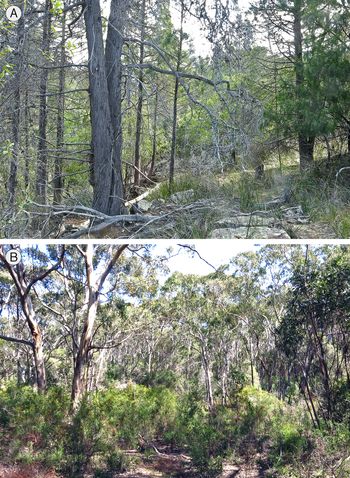
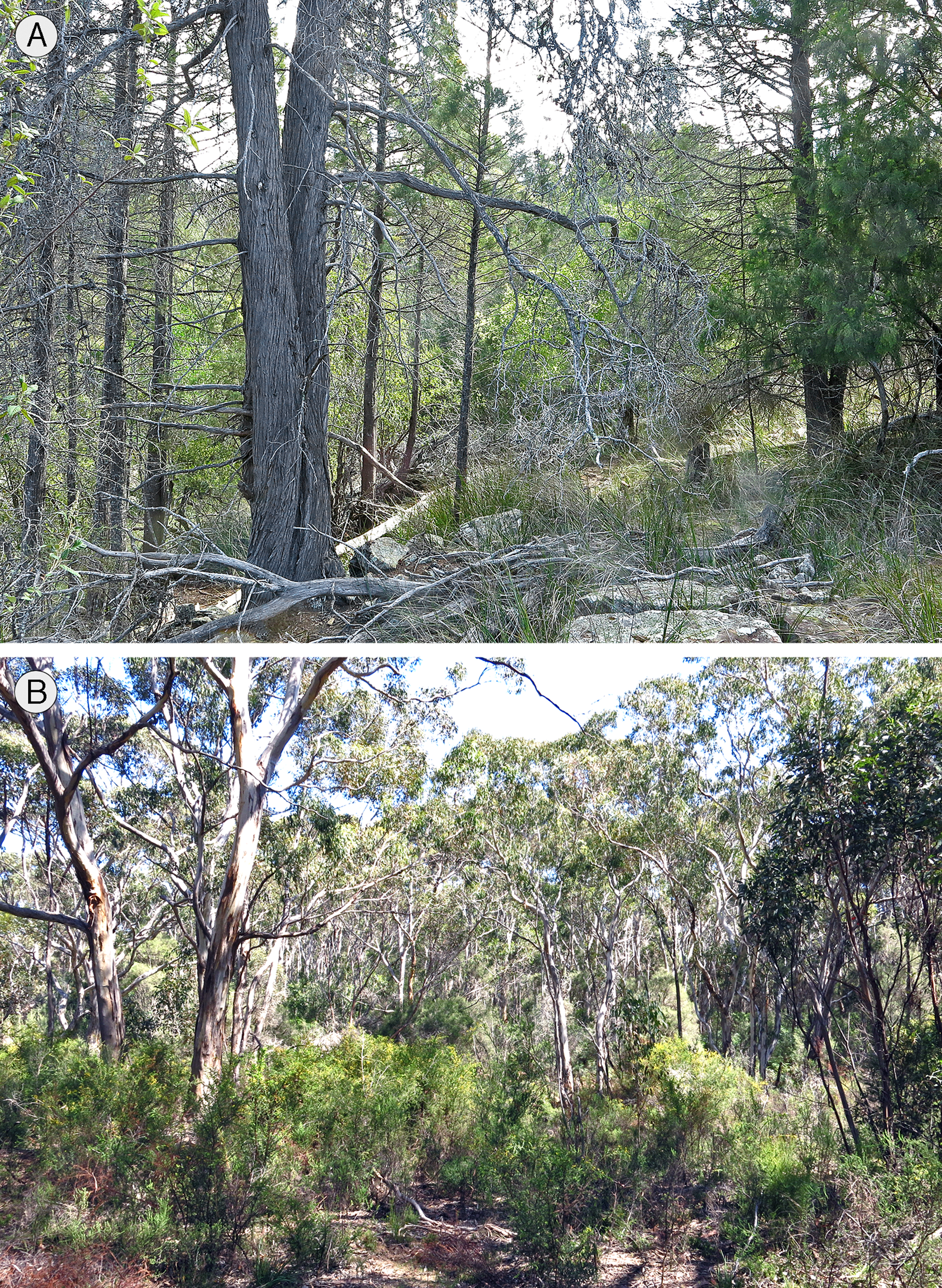
In Tasmania, the species is known from three, widely separated localities. At one, on the island's east coast, it is locally very abundant on Callitris rhomboidea R. Br. ex Rich. in a narrow remnant stand along a seasonal creek (Fig. 5A). Although C. rhomboidea is a common and widespread tree in drier parts of Tasmania, small ‘stands’ where this species dominates are far less common. The stand where the Ocellomma was found is highly fragmented but is nevertheless of sufficient size to retain a rather unique complement of relatively unusual lichens on the oldest trunks and on some of the fallen logs (see also Baker et al. Reference Baker, Grove, de Salas, Byrne, Cave, Bonham, Moore and Kantvilas2019). Indeed, several species previously unrecorded for Tasmania were found here, emphasizing the ecological significance of this vegetation type. These included Hypocenomyce tinderryensis Elix, Lecanora casuarinophila Lumbsch, Ramboldia arandensis (Elix) Kalb et al., Rinodina confusa H. Mayrhofer & Kantvilas and Usnea scabrida Taylor subsp. scabrida (Baker et al. Reference Baker, Grove, de Salas, Byrne, Cave, Bonham, Moore and Kantvilas2019; Elix et al. Reference Elix, McCarthy, Kantvilas and Archer2019). The Ocellomma thalli form extensive patches, tens of centimetres across, on the bark and wood of the oldest trunks as well as on smaller branches of old trees. It appears to favour somewhat drier microsites, where it is associated with Schismatomma occultum (C. Knight & Mitt.) Zahlbr., Chrysothrix xanthina (Vain.) Kalb, Buellia reagenella Elix, incipient thalli of Austroparmelina conlabrosa (Hale) A. Crespo et al. and Usnea species, and an unidentified species of Opegrapha.
Habitat of Ocellomma rediuntum. A, Callitris rhomboidea-dominated relict woodland, Tasmania; B, mature Eucalyptus-dominated mallee woodland, Kangaroo Island.
The other Tasmanian localities are in Melaleuca ericifolia-dominated, swampy, coastal woodlands, a highly fragmented vegetation type of very significant conservation value for lichens (see Pérez-Ortega & Kantvilas Reference Pérez-Ortega and Kantvilas2018). Here, Ocellomma rediuntum grew on loose, papery Melaleuca bark; remarkably, at one site, it grew on the highly sheltered surface facing inwards towards the trunk (as distinct from outwards-facing). It was associated with Bacidia septosior (Nyl.) Zahlbr., Cliostomum griffithii (Sm.) Coppins and Megalaria grossa (Pers. ex Nyl.) Hafellner.
On Kangaroo Island, this lichen also displays a restricted and highly localized distribution. It was found in old stands of mallee and dry sclerophyll forest, where the abundance of large-stemmed dominant eucalypts and the diverse understorey of lesser trees and shrubs suggests that disturbance has been minimal and occurred a long time ago (Fig. 5B). Ocellomma rediuntum was found on the dead wood of old trunks, associated with Cliostomum griffithii, Lecanora saligna (Schrad.) Zahlbr., Mycocalicium victoriae (C. Knight ex F. Wilson) Tibell, Opegrapha niveoatra (Borrer) J. R. Laundon and an unidentified species of Arthonia. These collections were initially misidentified as Schismatomma dirinellum (Nyl.) Zahlbr. and reported under this name by Kantvilas (Reference Kantvilas2018).
Naturally occurring, dry, sclerophyllous woodlands in temperate Australia are generally perceived to be a vegetation type where disturbance, especially in the form of frequent fires, is common. Often, they are also woodlands where clearing, grazing, firewood cutting and other human activities have occurred frequently. Thus it is a rather poignant reminder that these woodlands can and do have old-growth characteristics, and that here the crustose Roccellaceae and their relatives can serve as indicators of ecological continuity, in much the same way as they do in forest types such as cool temperate rainforest, where other species of Roccellaceae (e.g. Sagenidium molle Stirt., Lecanactis abietina (Ach.) Körb., L. latispora Egea & Torrente, Cresponea plurilocularis (Nyl.) Egea & Torrente and Lecanographa nothofagi Kantvilas) tend to be closely associated with old trees and old forests (Kantvilas Reference Kantvilas2004).
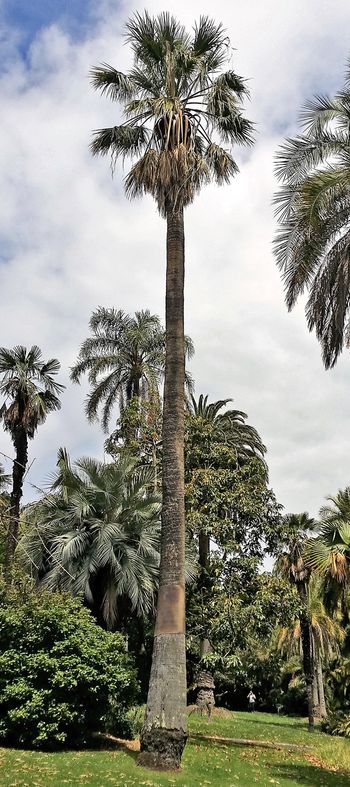
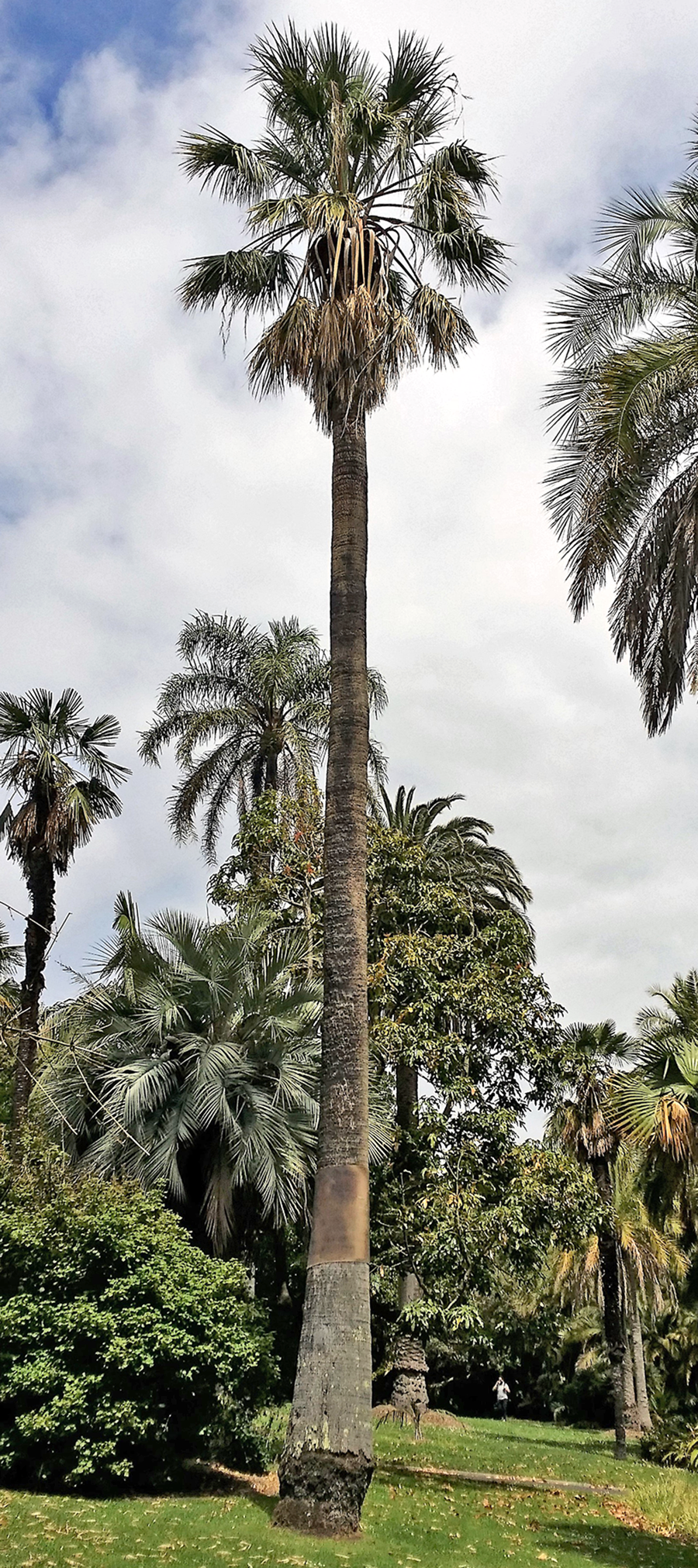
The third Australian locality for O. rediuntum is also the most unusual in that here the lichen grew very abundantly on the bark of the exotic palm, Washingtonia filifera H. Wendl., in the National Botanic Gardens in urban Melbourne, Victoria (Fig. 6).
Habitat of Ocellomma rediuntum. Mature Washingtonia growing in the Royal Botanic Gardens, Melbourne. Photograph: Val Stajsic.
Additional specimens examined
Australia: South Australia, Kangaroo Island: the old cannery, American River, c. 1 km SW of Ballast Head, 35°46′S, 137°48′E, 3 m, 2013, G. Kantvilas 351/13 & B. de Villiers (HO); ibid., 30 m, 2015, G. Kantvilas 487/15 (AD, HO); Grassdale Lagoon, 36°00′S, 136°53′E, 20 m, 2015, G. Kantvilas 346/15 & B. de Villiers (AD, HO, S). Tasmania: Stony Point, 40°45′S, 144°59′E, 2 m, 2016, G. Kantvilas 276/16 (HO); Wind Song Property, Callitris Gully, 42°21′S, 147°55′E, 40 m, 2017, G. Kantvilas 392/17 (BM, CANB, FH, HO, S); ibid., G. Kantvilas 394/17 (HO, S); ibid., 2018, G. Kantvilas 95/18 (CANB, HO); Cape Portland, Musselroe Wind Farm, northern end of Musselroe Bay, 40°48′36″S, 148°06′41″E, sea level, 2019, G. Kantvilas 243/19 (HO). Victoria: Royal Botanic Gardens, Melbourne, 37°49′52″S, 144°58′52″E, 2008, V. Stajsic 4862 (HO, MEL); ibid., 2018, V. Stajsic 8901 (CANB, HO, MEL).—USA: California: Santa Monica Mountains, St Yuez Canyon, 1900, H. H. Hasse (FH); Santa Monica Mountains, Topanga Canyon, 1907, H. H. Hasse (FH); Catalina Island, 1906, H. H. Hasse (FH); ibid., 1914, H. H. Hasse (FH); Santa Cruz Island, Prisoner's Harbor, 1994, A. Tehler 7411 (S); ibid., along the track to Pelican Bay, 1994, A. Tehler 7376 (S).
Discussion
Our study yielded morphological, anatomical and chemical data for discrete populations of Ocellomma rediuntum (from Kangaroo Island, Tasmania, Victoria and California) that supported the hypothesis that a single species is involved. Molecular data could be derived only from the Tasmanian and Victorian collections but supported their conspecificity. As noted by Tehler (Reference Tehler1993), localities in the mainland Santa Monica Mountains in California have been impacted by urbanization and the species may well now be extinct in those areas; all other collections of O. rediuntum were made in the Channel Islands in the late 19th century and the beginning of the 20th century. Only two recent specimens from the Channel Islands are known, both collected by A. Tehler in 1994 from stands of Quercus agrifolia and Q. dumosa on Santa Cruz Island. Two other recent collections (San Clemente Island, 2014, K. Knudsen (UPS-L-691922); Monterey, 1998, S. Tucker 35997 (LSU-00149509)) were found to be misidentifications of Lecanographa lyncea (Sm.) Egea & Torrente s. lat. and Dendrographa franciscana (Zahlbr.) Ertz & Tehler, respectively.
Wide disjunctions and broad distribution patterns are not uncommon amongst lichens in general, although there are also examples where such apparent distributions have had to be reassessed as new data become available. Thus, Australasian populations of the seemingly cosmopolitan, intertidal lichen, Lichina confinis (O. F. Müll.) C. Agardh, were found by Schultz (Reference Schultz2017) to represent a different taxon, L. intermedia (C. Bab.) M. Schultz. At the same time, however, Muggia et al. (Reference Muggia, Pérez-Ortega, Fryday, Spribille and Grube2013) concluded that Tephromela atra (Huds.) Hafellner is indeed widespread, even though it displayed some infraspecific differentiation in various parts of the globe. Many widely distributed species are also rather weedy and opportunistic, for example Amandinea punctata (Hoffm.) Coppins & Scheid., Gyalidea hyalinescens (Nyl.) Vězda, Lecanora dispersa (Pers.) Sommerf., Lecidella stigmatea (Ach.) Hertel & Leuckert and Peltigera didactyla (With.) J. R. Laundon. Perhaps the best studied of these is Xanthoria parietina (L.) Beltr., and although Kondratyuk et al. (Reference Kondratyuk, Kärnefelt, Elix and Thell2007) described the Australian entity as X. coomae S. Y. Kondr. & Kärnefelt, Arup et al. (Reference Arup, Søchting and Frödén2013) remain equivocal as to whether this taxon is truly distinct. There are also well-known examples of bipolar species (e.g. Alectoria nigricans (Ach.) Nyl. and Cetraria aculeata (Schreb.) Fr.) and pan-temperate species (e.g. Cliostomum griffithii (Sm.) Coppins and Thelotrema lepadinum (Ach.) Ach.). The distribution of these is interpreted as being linked to a discrete climatic zone (e.g. boreal versus austral), or habitat (e.g. old-growth forests). It remains to be seen whether these distributions and taxonomic interpretations stand up to detailed molecular investigation but, for the present, there is no suggestion that the separate geographical populations should be recognized as different taxa. Other widely distributed species, especially those with asexual propagules, are often seen as examples of long-distance dispersal by wind, birds and other vectors. Numerous austral lichen distributions have been interpreted in this way by Jørgensen (Reference Jørgensen1983) and Galloway (Reference Galloway and Bramwell1979).
Perhaps of greatest interest are disjunct or widely distributed species that are also very rare and/or have narrow ecological niches. A good example is Culbersonia nubila (Moberg) Essl., which was first described from East Africa and Saudi Arabia (Moberg Reference Moberg1980), then found in Tasmania (Kantvilas Reference Kantvilas1991), and is now recorded more widely, chiefly in the dry subtropics (Obermayer et al. Reference Obermayer, Kalb, Sipman and Nash2009). Although widely distributed, this species cannot be considered common and is linked to a very discrete microhabitat.
In the light of this discussion, the distribution of O. rediuntum is highly curious. Disjunctions of the magnitude proposed here for this species have not been described previously for any species in the Roccellaceae. Perhaps one of the more remarkable examples from this family is that of Lecanographa uniseptata Ertz et al., which is known to occur only in Gabon, Central Africa, and Guatemala, Central America (Ertz et al. Reference Ertz, van den Boom, Tehler and Degreef2010). Another interesting case is the genus Angiactis, known only from southern Australia, Bermuda and the Galapagos, but in this case, the three widely separate populations are accorded species rank, albeit on the basis of rather subtle differences (Aptroot et al. Reference Aptroot, Sparrius, LaGreca and Bungartz2008). A disjunct occurrence between Kangaroo Island, Tasmania and California could be interpreted as a relict pattern of an old-growth dependent species in a Mediterranean, perhaps circum-Pacific setting. Several species of the saxicolous foliose genus Xanthoparmelia Hale exhibit American-Australian disjunctions (Nash & Elix Reference Nash, Elix, Nash, Ryan, Gries and Bungartz2004). The occurrence of Ocellomma rediuntum on Kangaroo Island and Tasmania is certainly suggestive of an old-growth species surviving in a relict vegetation type. Whilst it is not possible to reconstruct its Californian ecology, the habitat as described by Tehler (Reference Tehler1993) could also be a relict dry forest. However, the Victorian locality in the Royal Botanic Gardens in urban Melbourne poses the most interesting question. The provenance and history of the individual host plant is unknown but, coincidentally, Washingtonia is native to California. Perhaps the epiphytic Ocellomma is an accidental introduction that arrived with its host? However, if this were the case, it is impossible to imagine that the Kangaroo Island and Tasmanian populations could be derived from this ‘pioneer’ source. Introductions are neither infrequent nor impossible in plants but the organism involved usually remains either limited to its locus of arrival or becomes adventive and spreads widely. The fact that O. rediuntum is not known from anywhere else in Australia (yet it is relatively conspicuous) does not suggest a weedy or adventive species. In the same way, it seems inconceivable that Ocellomma spread from natural woodland to a planted, urban Washingtonia without also establishing somewhere else. Thus, the distribution of this enigmatic species remains a mystery and awaits the discovery and analysis of further populations. Of particular interest would be North American collections that might yield molecular data.
Acknowledgements
We thank Val Stajsic for collecting material of the Victorian population of O. rediuntum, the provision of Fig. 6, and his enthusiastic investigations into the exact provenance and time of planting of the Washingtonia in Melbourne. Jean Jarman provided Fig. 3 and prepared all illustrations for publication. We also thank Lan Li (Australian National Herbarium, Canberra) for her help with the molecular work.