




No CrossRef data available.
Article contents
The impact of sexual selection on Corynosoma magdaleni (Acanthocephala) infrapopulations in Saimaa ringed seals (Phoca hispida saimensis)
Published online by Cambridge University Press: 01 March 2004
Abstract
In free-living animals sexual selection is a central force shaping the spatial distribution of individuals in a population as well as sexual size dimorphism. We studied the influence of sexual selection on spatial distribution, female-to-male body size ratio, and female mating success of acanthocephalans in a natural host population of Saimaa ringed seal (Phoca hispida saimensis) harbouring a single intestinal helminth species, Corynosoma magdaleni. The acanthocephalans were always found along the full length of the small intestine; however, the site selection varied among the individual seals according to the age of the infection. The distribution of male acanthocephalans was not random with respect to females, with larger males tending to aggregate around non-mated females. A higher proportion of C. magdaleni females had copulated in seals with relatively more male worms. Male–male competition for access to females can be intense in C. magdaleni infrapopulation and may select for large males. We found that the larger the infrapopulation size, the smaller the males compared to females. In addition, the greater the female bias in the infrapopulation, the smaller the testes of males. Our study shows that sexual selection may be an important determinant of spatial distribution, male body size and female mating success of C. magdaleni in Saimaa ringed seal.
Keywords
Information
- Type
- Research Article
- Information
- Copyright
- 2004 Cambridge University Press
INTRODUCTION
Within natural helminth communities in the digestive tracts of vertebrates, the size of infrapopulations (i.e. all parasites of the same species in the same host individual), as well as their spatial distributions within the host gut and the mean size of individual worms, are under the influence of extrinsic factors. For instance, the influence of other helminth species is often considered to be the key determinant of the size and spatial distribution of any helminth infrapopulation. There is a wealth of field and experimental evidence showing that the presence of one or more helminth species can modify the choice of attachment sites by another species (Holmes, 1961, 1973; Crompton, 1973; Patrick, 1991). There is also solid evidence that the presence of other helminth species modulates the numbers and mean body size of helminths within infrapopulations (see review by Poulin, 1998). In contrast, little is known about the influence of factors acting within the infrapopulation on the spatial distribution of its members or their mean sizes. We know more, in other words, about species–species interactions than about within-species interactions with respect to infrapopulation size and spatial distribution.
In free-living animals, sexual selection is a central force shaping many population features. For example, the spatial distribution of individuals in a population, into either territories, small mating groups such as harems, or displaying groups such as leks, is a by-product of sexual selection (Andersson, 1994). Studies of the influence of sexual selection processes on the structure and dynamics of helminth populations are rare. In taxa such as acanthocephalans, however, sexual selection processes could be important. Sex ratios of acanthocephalan infrapopulations are typically female-biased (Valtonen, 1983; Crompton, 1985; Poulin, 1997). In certain acanthocephalan species the adult worms form a sexual congress, aggregating within small groups in the intestine of their host (Richardson, Martens & Nickol, 1997).
Male worms have a more active role in copulation than females (Parshad & Crompton, 1981); they can seek females, and even mate with several females (Crompton, 1974, 1985). This leads to a situation where we may expect both competition among males for access to females, and mate choice by one or both sexes. There is indirect evidence for both phenomena in acanthocephalans (Lawlor et al. 1990; Sasal et al. 2000). For instance, while they did not measure mate choice per se, Lawlor et al. (1990) showed that insemination of female Moniliformis moniliformis was not random with respect to either size or their position in the host intestine. This kind of evidence suggests that sexual selection may play a role in determining the spatial distribution of acanthocephalans within the host gut. It also suggests that this distribution may be dynamic, with males always seeking new mating opportunities and thus moving towards new females. In addition, the sex ratio of worms within an infrapopulation can affect the strength of sexual selection, with consequences for mating success of females or the optimal size of males relative to females, among other things. Distinguishing between the effects of sexual selection acting within an infrapopulation, and pressures from other helminth species coming from outside the infrapopulation, is not easy under natural conditions, however. Here, we studied a natural host population which harbours a single intestinal helminth species, a situation that excludes the confounding influence of interspecific interactions.
The Baltic ringed seal (Phoca hispida botnica) population was cut off from the stock of the Arctic ringed seal (Phoca hispida hispida) 11000 years ago and has lost most of the parasites of the marine seals (see Dailey, 1975; Valtonen & Helle, 1988). Saimaa ringed seals became landlocked from the Baltic Sea 3000 years later and since that time an endemic subspecies of Phoca hispida saimensis (Hyvärinen & Nieminen, 1990) has developed in the freshwater environment. At present, the population consists of 220–250 individuals (Hyvärinen et al. 1999; Kunnasranta, 2001); it is highly threatened, and has been protected since 1955. A single helminth species, the acanthocephlan Corynosoma magdaleni, has been able to persist in the seals of Lake Saimaa (see Sinisalo, Kunnasranta & Valtonen, 2003). We take advantage of this unusual host–parasite system to test the influence of sexual selection on the spatial distribution, female-to-male body size ratio, and female mating success of acanthocephalan infrapopulations.
MATERIALS AND METHODS
Intestinal metazoan parasites were examined from 61 Saimaa ringed seals (Phoca hispida saimensis Nordquist, 1899) in Lake Saimaa in eastern Finland. The seals have been found recently dead during the years 1981–2001 (Sinisalo et al. 2003). Only 35 harboured intestinal worms, all of which were C. magdaleni (Acanthocephala) (see Sinisalo et al. 2003). Because most infected seals only harboured very few worms, for most analyses we selected only the 13 most heavily infected seal individuals, the age of which varied between 1 and 35 years, to study the infrapopulation structure of C. magdaleni, i.e. their location in the intestine and their mating success.
The total length of the intestines of the ringed seals ranged from 760 cm to 1470 cm (mean 1056·8 cm S.D.±202·79). The intestines were kept at approximately 20 °C until dissection and examination. The small intestine, caecum, large intestine and rectum were cut open and all worms were collected and preserved individually in 70% ethanol according to their exact position (to the nearest centimeter) in the intestine. The relative position of each worm was recorded as its distance from the pylorus, in cm, divided by the total length of the intestine; this gave a position ranging from 0 (at the beginning of the intestine) to 1 (at the very end of the intestine), allowing values from different seals to be pooled, regardless of differences in the lengths of their intestines. All worms were stained with Mayer's carmalum, dehydrated in ethanol, cleared in xylene, and mounted in Canada balsam. The trunk of C. magdaleni specimens was measured under 63× magnification from the base of the proboscis to the widest point of the body trunk. We included only worms for which the body length could be measured (n=1354). All worms were sexed and the developmental stage of the females was determined by dividing them into non-mated females and mated females (i.e. containing at least some acanthors). We measured the testes length from 20 randomly chosen males in each infrapopulation (n=11) and calculated the ratio of testes length to male length. All C. magdaleni individuals in 1 seal were considered as 1 infrapopulation.
It has been shown (Helle & Valtonen, 1980) that a high proportion of males and non-mated females in the same seal indicates a more recent infection. Actually Helle & Valtonen (1981) suggested that the proportion of non-mated females of Corynosoma worms is a more sensitive criterion for estimating the age of the infection than is the proportion of males. Without professing that every infection with a high proportion of non-mated females is a fresh infection, we, however, categorized the infrapopulations as either ‘fresh’ infections if the proportion of non-mated females out of all females was more than 20%, and as ‘old’ infections if the proportion was less than 20%. The median of the distribution of the worms in the fresh and in the old infection were compared by a non-parametric Mann–Whitney U-test.
The following variables were recorded for 12 infrapopulations (there was not sufficient data for the remaining one): the number of all worms, the female-to-male mean body length ratio, the female-to-male sex ratio, the mean male testes length/body length ratio (for 11 infrapopulations only), and the variability in male size. To measure the variability in male body size we used the coefficient of variation (standard deviation×100% divided by the mean), for each infrapopulation. Some variables (sex ratio, number of worms and number of males) had to be log-transformed to meet the assumptions of parametric tests. We performed pairwise correlations using simple product moment correlation coefficients among the variables. The number of males and the ratio of non-mated females to all females were recorded for 7 infrapopulations (the only ones with at least 20 males and females). We also divided the intestines of each seal into 10 sections of equal length within each seal and recorded, for each section, the proportion of mated females out of all females and the sex ratio. We pooled all sections of intestine from the 13 seals including only sections that contained at least 1 worm of each sex. We could thus include data from 65 sections out of a maximum of 130. As before, the sex ratio needed to be log transformed and the proportion of mated females needed to be arcsin square-root transformed. Three seals with the sufficient number of worms of all 3 sex types, were chosen for examination of the number and the length of the males in close proximity to females (infrapopulation sizes; n=139, n=133 and n=112). The numbers of males close to either non-mated or mated females were compared by a non-parametric Mann–Whitney U-test. The mean lengths of males close to non-mated or mated females were compared using an unpaired t-test including only females that had males attached within 5 cm of their own attachment site. The statistical analyses were performed using SPSS (SPSS 10.1 Inc. Chicago, IL, USA).
RESULTS
In total, 1585 C. magdaleni were recovered (mean intensity 121·9, range 39–347) from the 13 ringed seals in Lake Saimaa (Table 1). The proportion of non-mated and mated females varied among the infrapopulations. Fresh infections were found in 5 seals, where the proportion of non-mated females out of all females was 35·2% on average. In 7 seals the proportion of non-mated females was less than 10% and in 1 seal it was 17·1%. In the pooled sample of these 8 seals with old infections, non-mated females represented 6·1% of all females. The percentage of males varied among the seals (average 35·4%, range 4·3–51·6%) (Table 1).

The location of the worms along the digestive tract varied among the individual seals. However, C. magdaleni individuals were always found in the small intestine and could be found along its full length (Fig. 1). When considering the site selection more precisely, the medians of the distributions were always located in the area between positions 0·2 and 0·6, i.e. 20% and 60% along the length of the intestine, after the pylorus of the small intestine (Fig. 1). However, 31·5% of all 130 sections of intestines examined (each representing 10% of the intestine) were totally empty.
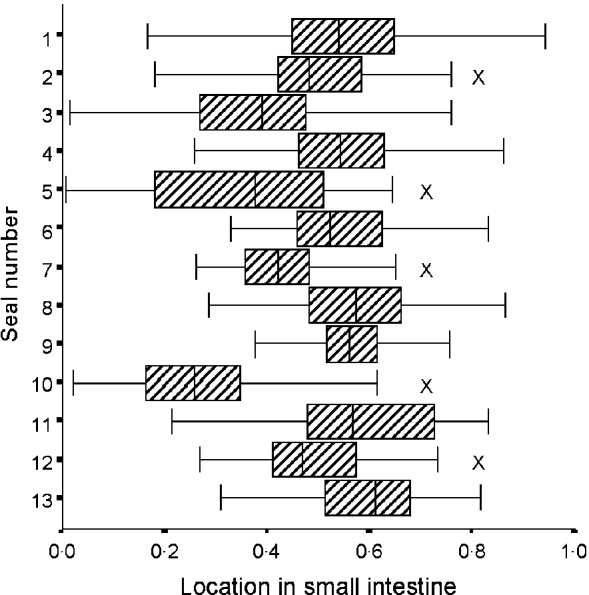
Fig. 1. Medians, 25% and 75% quartiles, minimum and maximum location of Corynosoma magdaleni (males and females) in the intestine of the ringed seals from Lake Saimaa (n=13). Location in small intestine is shown as the relative site attachment, i.e. distance along the intestine divided by the total length of the intestine. Fresh infections (in which the proportion of non-mated females >20%) are indicated by (X).
In fresh infections the worms were slightly more anteriorly located than in older infections (Mann–Whitney U-test, Z=−13·282, P<0·001) (Fig. 1). The median of the distribution in fresh infections was in position 0·42 (S.D.=0·16) compared to 0·52 (S.D.=0·16) for old infections. This is seen clearly when 2 typical seals are compared, one with a fresh infection (the proportion of non-mated females 56%) and another seal with an old infection (proportion of non-mated females 8·8%) (Fig. 2). However, the distribution within all seals was generally unimodal for mated females and males, the fifth section of intestine being preferred (Fig. 3). The non-mated females were located quite evenly between sections 4 and 7.

Fig. 2. The distribution of worms in two infrapopulations (the fresh infection in seal no. 2 and old infection in seal no. 13) in ringed seals from Lake Saimaa.

Fig. 3. The distribution of Corynosoma magdaleni non-mated females, mated females and males among the sections in the intestines of the ringed seals from Lake Saimaa (n=35).
Sex ratio did not correlate with infrapopulation size significantly but there was a hint of a negative relationship (R2=−0·503, P=0·08). However, the proportion of non-mated females out of all females was negatively correlated with the number of males (R2=0·924, P=0·003), among the 7 seals with at least 20 males and females (Fig. 4). This is also seen on a smaller, local scale when studying the same relationship among intestinal sections: the proportion of mated females decreased when the relative number of males in the section decreased (R2=0·320, P=0·010) (Fig. 5).
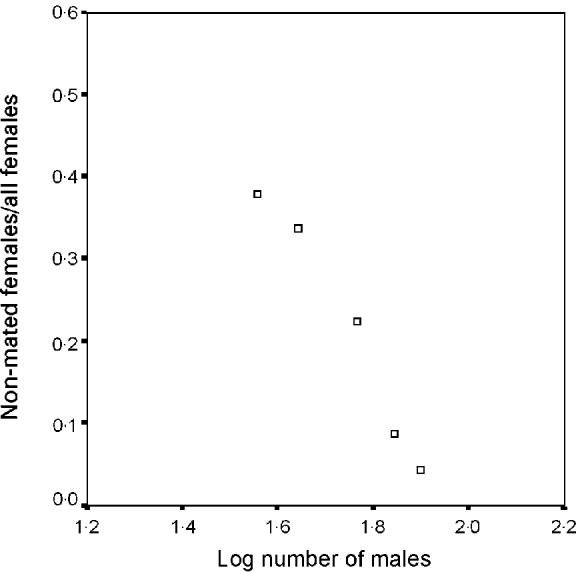
Fig. 4. Relationship between the number of males and the proportion of non-mated females out of all females in the ringed seals from Lake Saimaa (n=7 seals).

Fig. 5. Relationship between female-to-male sex ratio and the proportion of mated females in the ringed seals from Lake Saimaa, among all intestinal sections with at least one male and one female (non-mated or mated) (n=65 sections).
There was no difference between the number of males within 5 cm of non-mated females and that within 5 cm of mated females (Mann–Whitney U-test, Z=−1·436, P=0·151). However, males within 5 cm of non-mated females were on average significantly larger than males close to mated females (t=2·399, D.F.=131, P=0·0179) (Fig. 6).
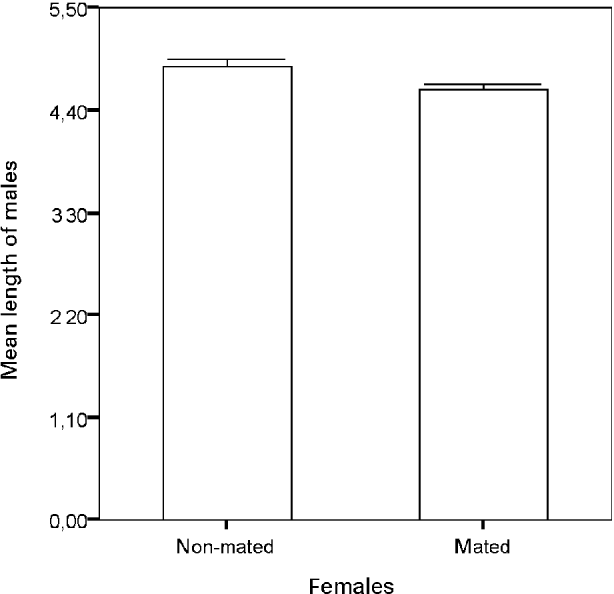
Fig. 6. The mean length (±S.E.) of Corynosoma magdaleni males within 5 cm of non-mated and mated females.
There was no strong tendency for the variability in male size to decrease as the sex ratio became more female biased among seals (R2=−0·412, P=0·183) (Fig. 7). A positive relationship between the number of C. magdaleni per seal (n=12) and the ratio of female and male body size was found (R2=0·758, P=0·004). The larger the infrapopulation size, the smaller the males compared to females (Fig. 8). The average male testes length/body length ratio correlated negatively with sex ratio (Spearman rank correlation because a log transformation did not normalize the data: R2=−0·725, n=11, P=0·012): the greater the female bias in the infrapopulation, the smaller the testes of males. However, the testes length/body length ratio did not correlate with the female/male body size ratio (P=0·536).

Fig. 7. Variability of male size in relation to the sex ratio of Corynosoma magdaleni in seals from Lake Saimaa (n=12 seals).
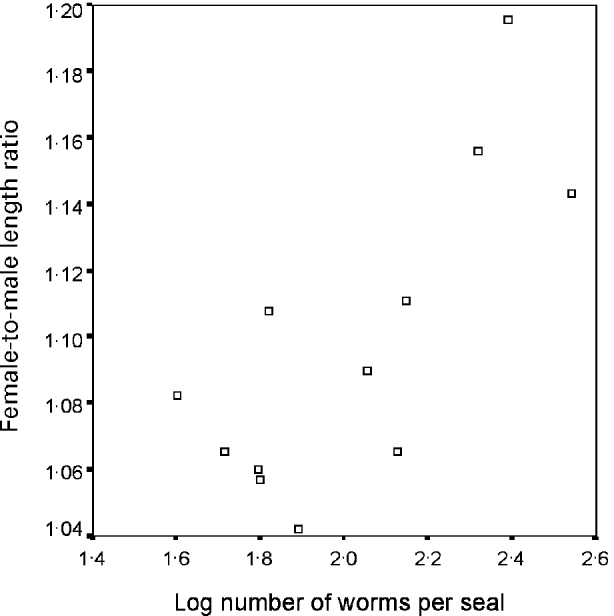
Fig. 8. Body size ratio of female and male worms as a function of infrapopulation size in 12 seals of Lake Saimaa.
DISCUSSION
Corynosoma magdaleni was always found along the full length of the small intestine of the Saimaa ringed seals (P. hispida saimensis), never in the large intestine, caecum or rectum. In the Baltic Sea Corynosoma species are segregated in the digestive tract of the ringed seals (P. hispida botnica) and grey seals (Halichoerus grypus) such that the majority of C. semerme specimens are located in the rectum and in the large intestine (Valtonen & Helle, 1988; Nickol, Valtonen & Helle, 2002). The distributions of both C. strumosum and C. magdaleni in the Baltic Sea overlapped in the small intestine (Valtonen & Helle, unpublished observations; Nickol et al. 2002). Thus, the site preference of C. magdaleni in the small intestine of the Baltic seals may have been influenced by competition with other Corynosoma species in the past (see Kennedy, 1990) leading to a selective site segregation (see Holmes, 1973) that has been maintained after the seals were isolated from the Baltic population into the lake.
The preferred sites of C. magdaleni in Lake Saimaa seals were in the middle sections of the small intestine, indicating an apparent adaptation to these sites. This may be determined, for instance, by physiological gradients correlated with glucose concentration or other factors associated with host nutrition (Starling, 1985). However, the site selection varied among the individual seals. The present results do not support the finding of Helle & Valtonen (1980) that the proportion of mated females gradually increases towards the posterior part of the small intestine, expected if mated females spent a longer period in that part of the alimentary canal. Our findings suggest that the proportion of non-mated females in single infrapopulations may be a more sensitive indicator of the age of the infection than the proportion of males (see Helle & Valtonen, 1980, 1981); however, this suggestion would need confirmation using an independent calibration of infection age. In our study the distribution of the worms in fresh infections (proportion of non-mated females over 20% of all females) and old infections (proportion of non-mated females less than 20% of all females) differed significantly, being more anterior in fresh infections. We suggest that copulation occurs mainly in the anterior part of the small intestine where males and females mate as soon as they arrive into the intestine. While worms are moving posteriorly in the small intestine the acanthors develop so that the majority of them are not seen until females reach the middle sections of the small intestine. Eggs of C. semerme took 14 days to mature in the intestine of rats (Valtonen & Helle, 1982), which supports our suggestion. The cell division of the fertilized ova begins already when it is still attached to the ovarian balls (Parshad & Crompton, 1981). Later on the embryo is detached from the ovarian ball to join the assorted population of eggs in different stages of development within the body cavity of the female worm (see Whitfield, 1973). At this stage the eggs can be seen only by electron microscopy but later the eggs synthesize and lay down 3 or 4 more envelopes and they can become visible under the light microscope (Parshad & Crompton, 1981).
According to Lawlor et al. (1990) acanthocephalan males choose their mate, and they choose females which are larger and located anteriorly in the intestine. The present results show that the mating success of a female C. magdaleni is associated with the availability of males close to her, but not exactly as in Lawlor et al.'s (1990) study. Instead, we found that larger males appear to be the first to approach non-mated females. Female mating success was also found to co-vary with the sex ratio, with a higher proportion of C. magdaleni females having copulated in seals with relatively more male worms. The distribution of C. magdaleni within the host gut indicates that sexual selection plays a key role with males always seeking new mating opportunities.
Large males are commonly favoured by sexual selection (Andersson, 1994). Also, among polygamous acanthocephalans, male body size seems to be important during mating as larger males have been shown to have greater access to females (Parshad & Crompton, 1981). In C. magdaleni infrapopulations in the ringed seals, males were found in equal numbers close to non-mated and mated females, but the males close to non-mated females were larger than those close to mated females. Thus, we suggest that the male–male competition for access to mating may be intense in C. magdaleni infrapopulations and may select for large males. This is supported by our finding that in C. magdaleni, as in other acanthocephalans (Sasal et al. 2000), investment in large testes is only favoured when the number of males increases relative to females, a situation that should intensify contests among males for access to females. In addition, there is no clear tendency for the variability in male size to decrease as the sex ratio becomes more female biased. We found a significant positive correlation between the number of C. magdaleni per seal and the ratio of female and male body size. Competition for females may thus become weaker as infrapopulation size increases. The males of C. magdaleni may allocate their resources to reproduction instead of growth when the infrapopulation is larger. The competition for mates is not so intense when the sex ratio is more female biased.
Our study shows that sexual selection is an important determinant in shaping the small-scale spatial distribution and body size of male worms, and the mating success of female C. magdaleni in the small intestine of the Saimaa ringed seal. Because our results are based mainly on the 13 most heavily infected seals, it may be that sexual selection only becomes an important factor in high-density infrapopulations. Nevertheless, although this may sometimes be logistically difficult, sexual selection processes shoud be considered in tandem with interspecific competition in studies of spatial distribution of helminths in infracommunities consisting of more than one species.
We thank Markku Raatikainen for his indispensable assistance in the dissection of the seal intestines in the laboratory. We are grateful to Professor Heikki Hyvärinen and Dr Mervi Kunnasranta in the University of Joensuu for providing us with alimentary tracts of Saimaa seals and for their comments on the manuscript especially behaviour of Saimaa ringed seals. R. Poulin was supported by a James Cook Research Fellowship from the Royal Society of New Zealand.
References
REFERENCES
ANDERSSON, M.
(1994). Sexual Selection.
Princeton University Press,
Princeton, NJ, USA.
CROMPTON, D. W. T.
(1973).
The sites occupied by some parasitic helminths in the alimentary tract of vertebrates.
Biological Reviews of the Cambridge Philosophocal Society 48, 27–83.CrossRefGoogle Scholar
CROMPTON, D. W. T.
(1974).
Experiment on insemination in Moniliformis dubius (Acanthocephala).
Parasitology 68, 229–238.Google Scholar
CROMPTON, D. W. T.
(1985).
Reproduction. In
Biology of the Acanthocephala
(ed. Crompton, D. W. T. &
Nickol, B. B.), pp. 213–272. Cambridge University Press,
Cambridge.
DAILEY, M. D.
(1975).
The distribution and intraspecific variation of helminth parasites in Pinnipeds. Rapport et Proces-verbaux des Réunions de la Commission internationale pour L'Exploration Scientifique de la Mer Mediterranée 169, 338–352.Google Scholar
HELLE, E. & VALTONEN, E. T.
(1980).
On the occurrence of Corynosoma spp. (Acanthocephala) in ringed seals (Pusa hispida) in the Bothnian Bay, Finland.
Canadian Journal of Zoology 58, 298–303.Google Scholar
HELLE, E. & VALTONEN, E. T.
(1981).
Comparison between spring and autumn infection by Corynosoma (Acanthocephala) in the ringed seal Pusa hispida in the Bothnian Bay of the Baltic Sea. Parasitology 82, 287–296.CrossRefGoogle Scholar
HOLMES, J. C.
(1961). Effects of concurrent infections on Hymenolepis diminuta (Cestoda) and Moniliformis dubius (Acanthocephala). I. General effects and comparison with crowding. Journal of Parasitology 47, 209–216.Google Scholar
HOLMES, J. C.
(1973). Site selection by parasitic helminths: interspecific interactions, site segregation, and their importance to the development of helminth communities. Canadian Journal of Zoology 51, 333–347.CrossRefGoogle Scholar
HYVÄRINEN, H. &
NIEMINEN, M.
(1990). Differentiation of the ringed seal in the Baltic Sea, Lake Ladoga and Lake Saimaa. Finnish Game Research 47, 21–27.Google Scholar
HYVÄRINEN, H.,
SIPILÄ, T.,
KOSKELA, J. &
KUNNASRANTA, M.
(1999). The Saimaa ringed seal. In Saimaa a Living Lake
(ed. Kuusisto, E.
), pp. 126–136.
Tammi,
Helsinki.
KENNEDY, C. R.
(1990). Helminth communities in freshwater fish: structured communities or stochastic assemblages? In Parasite Communities: Patterns and Processes
(ed. Esch, G.,
Bush, A. & Aho, J.), pp. 131–156. Chapman and Hall,
London.
KUNNASRANTA, M.
(2001). Behavioural biology of two ringed seal (Phoca hispida) subspecies in the Large European lakes Saimaa and Ladoga. Ph.D. thesis, University of Joensuu, Ph.D. Dissertations in Biology, No. 7, p. 33.
LAWLOR, B. J.,
READ, A. F.,
KEYMER, A. E.,
PARVEEN, G. &
CROMPTON, D. W. T.
(1990). Non-random mating in a parasitic worm: mate choice by males? Animal Behaviour 40, 870–876.Google Scholar
NICKOL, B. B.,
VALTONEN, E. T. &
HELLE, E.
(2002). Corynosoma magdaleni in grey seals from SW Finland Baltic Sea, with ememded description of C. magdaleni and C. strumosum. Journal of Parasitology 88, 1222–1229.Google Scholar
PARSHAD, V. R. &
CROMPTON, D. W. T.
(1981). Aspects of acanthocephalan reproduction. Advances in Parasitology 19, 73–138.Google Scholar
PATRICK, M. J.
(1991). Distribution of enteric helminths in Glaucomys volans L. (Sciuridae): a test for competition. Ecology 72, 755–758.Google Scholar
POULIN, R.
(1997). Population abundance and sex ratio in dioecious helminth parasites. Oecologia 111, 375–380.CrossRefGoogle Scholar
POULIN, R.
(1998). Evolutionary Ecology of Parasites.
Chapman and Hall,
London.
RICHARDSON, D. J.,
MARTENS, J. K. &
NICKOL, B. B.
(1997). Copulation and sexual congress of Leptorhynchoides thecatus (Acanthocephala). Journal of Parasitology 83, 542–543.CrossRefGoogle Scholar
SASAL, P.,
JOBET, E.,
FALIEX, E. & MORAND, S.
(2000). Sexual competition in an acanthocephalan parasite of fish. Parasitology 120, 65–69.CrossRefGoogle Scholar
SINISALO, T.,
KUNNASRANTA, M. & VALTONEN, E. T.
(2003). Intestinal helminths of a landlocked ringed seal (Phoca hispida saimensis) population in the Eastern Finland. Parasitology Research 91, 40–45.CrossRefGoogle Scholar
STARLING, J. A.
(1985). Feeding, nutrition and metabolism. In Biology of the Acanthocephala
(ed. Crompton, D. W. T. &
Nickol, B. B.
), pp. 125–212. Cambridge University Press,
Cambridge.
VALTONEN, E. T.
(1983). On the ecology of Echinorhynchus salmonis and two Corynosoma species (Acanthocephala) in the fish and seals. Acta Universitatis Ouluensis Series A, No. 156, Biologica No. 22, p. 48.
VALTONEN, E. T. &
HELLE, E.
(1982). Experimental infection of laboratory rats with Corynosoma semerme (Acanthocephala). Parasitology 85, 9–19.CrossRefGoogle Scholar
VALTONEN, E. T. &
HELLE, E.
(1988). Host–parasite relationship between two seal populations and two species of Corynosoma (Acanthocephla) in Finland. Journal of Zoology 214, 361–371.Google Scholar
WHITFIELD, P. J. (1973). The egg envelopes of Polymorphus minutus (Acanthocephala). Parasitology 66, 387–403.CrossRefGoogle Scholar

Table 1. The proportion of non-mated and mated Corynosoma magdaleni females of all sexed females and the proportion of males in the ringed seals in Lake Saimaa (n=13)

Fig. 1. Medians, 25% and 75% quartiles, minimum and maximum location of Corynosoma magdaleni (males and females) in the intestine of the ringed seals from Lake Saimaa (n=13). Location in small intestine is shown as the relative site attachment, i.e. distance along the intestine divided by the total length of the intestine. Fresh infections (in which the proportion of non-mated females >20%) are indicated by (X).
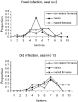
Fig. 2. The distribution of worms in two infrapopulations (the fresh infection in seal no. 2 and old infection in seal no. 13) in ringed seals from Lake Saimaa.

Fig. 3. The distribution of Corynosoma magdaleni non-mated females, mated females and males among the sections in the intestines of the ringed seals from Lake Saimaa (n=35).

Fig. 4. Relationship between the number of males and the proportion of non-mated females out of all females in the ringed seals from Lake Saimaa (n=7 seals).

Fig. 5. Relationship between female-to-male sex ratio and the proportion of mated females in the ringed seals from Lake Saimaa, among all intestinal sections with at least one male and one female (non-mated or mated) (n=65 sections).

Fig. 6. The mean length (±S.E.) of Corynosoma magdaleni males within 5 cm of non-mated and mated females.

Fig. 7. Variability of male size in relation to the sex ratio of Corynosoma magdaleni in seals from Lake Saimaa (n=12 seals).

Fig. 8. Body size ratio of female and male worms as a function of infrapopulation size in 12 seals of Lake Saimaa.
 You have
Access
- 15
- Cited by