Introduction
This article describes how Taiwanese farmers adopted irrigation pumps to enhance their livelihoods under the contradictory relationship between sugar and rice production in the late colonial period. Rice and sugarcane were the two major commercial crops in Taiwan since the Qing era, and sugar companies came to be protected and promoted by the colonial government. With procurement districts granting exclusive purchasing rights over sugarcane, each sugar company, primarily financed by Japanese capital, maintained substantial influence over the sugarcane cultivation of Taiwanese farming households.Footnote 1 However, with the spread of Penglai rice and the import of new agricultural implements, including pumps, the situation farmers faced changed significantly. By the 1930s, due to serious problems in the sugar industry caused by economic depression and rising rice prices, farmers adopted a variety of pumps to switch from sugarcane to rice cultivation.Footnote 2 According to a report from the Taiwan Power Company, farmers were ‘seized with an irresistible impulse’ and ‘rushed to install’ pumps.Footnote 3 Landlords and wealthy farmers were enthusiastic about employing motor pumps, while poorer farmers constructed wind pumps by combining newly introduced parts with older techniques.
By tracing the introduction and utilization of pumps in colonial Taiwan, this article will explore farmers’ efforts to make a living and prosper within the established order of Japanese colonial rule. The farmers movement and other anti-colonialist movements, enlivened by the leadership of Taiwanese nationalist and leftist groups, developed through the 1920s. However, these were put to an end with tremendous pressure from the colonial government by the early 1930s.Footnote 4 Under the new, highly repressive regime in colonial Taiwan, farmers could work to survive and prosper only without directly confronting the state. As an articulated market economy had been developing in Taiwan since the Qing era, farmers attempted to improve the profitability of their farms by adopting a variety of commercial technologies in the colonial era. In the 1930s, it was the adoption of pumps that allowed many farmers to convert to more profitable rice farming. Moreover, pump owners used pumps within the context of rural communities. As they distributed a portion of their pump capacity through selling and sharing, a broad stratum of farmers was able to make this transition.
Taiwanese farmers’ adoption of pumps under colonial restraints is worth dwelling on for several reasons. By focusing on the introduction and use of technology, Taiwanese farmers’ struggles within the context of expanding commodity relations can be brought into clearer focus. Although previous studies have demonstrated the expansion of the market economy in the colonial era,Footnote 5 details of farmers’ lives and how they sought prosperity remain unclear. The proliferation of commercial technologies, such as chemical fertilizers and new varieties of crops, further enhanced the importance of commodity relations in family-based agricultural production;Footnote 6 however, scholars have assumed that the way farmers employed these technologies was insignificant. Since farmers often adapted technologies to meet their individual needs, we cannot simply infer the growth of business interests’ influence over farming households from the spread of commercial technologies. As the diffusion of pumps was at the crux of the contradictory relationship between rice and sugar production, this case study can help overcome limitations within current historiography.
Through the history of the adoption of agricultural technologies, we can also come to a thorough description of the social processes incipient to the spread of technologies to and among Taiwanese farmers. The farmers decided which technologies to adopt and how and when to use them. Factors including colonial government policy, the influence of commercial interests and changing crop prices all affected their decisions. So, it is essential to focus on the social dynamics surrounding farmers’ adoption of technologies in addition to their attempts to profit per se. Moreover, this history shows that the significance of agricultural technology is not determined only by rates of adoption or increases in productivity. Studies of technological history have revised such innovation-centric views by focusing on elaborate power relations surrounding technologies.Footnote 7 However, innovation-centric and diffusionist perspectives are still rarely challenged in studies of Japanese colonial history, as Lee Jung argued in her recent article.Footnote 8 Scholars have provided simplistic portrayals of technology transfer to the colonies as initiated by Japanese government and business interests and have overlooked the intricate political interactions between government, business, engineers and recipients of technology.Footnote 9 Although some recent studies of Japanese colonialism have attempted to revise such views by focusing on locally or environmentally sensitive dimensions of technology policies,Footnote 10 the social processes implicated in farmers’ adoption of technology have rarely been examined.
Furthermore, as pumps owners used pumps within the context of rural communities, we can describe the cohesion demonstrated by farming households as agriculture increasingly commercialized. Scholars have assumed that reciprocal ties between households in rural communities were severed in the process of agricultural commercialization while the local landlord class was weakened through government intervention, thus atomizing farming households in the late colonial period. Because it was difficult for family smallholdings, which were linked only through the market, to take organized action, scholars have described them as politically vulnerable and easily exploited through market controls.Footnote 11 However, distribution of pump capacity through both sales and sharing shows that Taiwanese farmers sought to maintain an informal yet significant cohesion through the late colonial period.
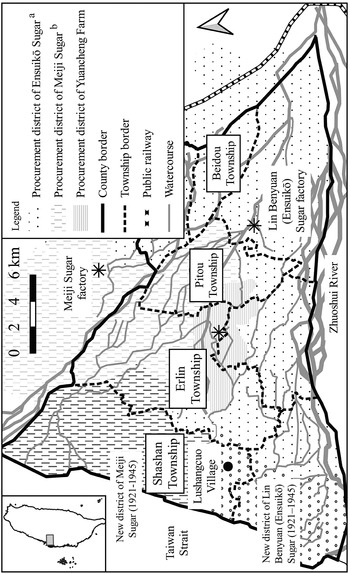
Micro-analysis is required to observe the conditions behind the proliferation and use of technologies. This study focuses on Beidou County, Taichung Province (see Figure 1),Footnote 12 which was at the time a centre of sugarcane production in central Taiwan. Like southern sugarcane producing regions, dry fields were originally prevalent due to the lack of stable water supply. Taking advantage of the difficulties sugarcane farmers faced in converting their land to paddies, sugar companies implemented cost-cutting measures during the Great Depression. In turn, farmers pioneered the use of pumps for commercial rice cultivation as rice prices increased across Taiwan during the late colonial period.Footnote 13
Beidou County and sugar company procurement districts.

The history of pumps in colonial Taiwanese agriculture can now be explored as the Records of the Taiwan Power Company (RTPC) held at the University of Tokyo Library of Economics were made available to researchers in 2011. The Taiwan Power Company was the largest electric power provider in Taiwan and essentially monopolized the supply of electricity on the island under Japanese colonial rule. As the company promoted electric motor pumps in rural areas, its records include details on their spread and some information concerning their use by farmers. This study also examines official reports and statistics, daily newspapers, and sugar industry and water management magazines as these describe the economic background of farmers who adopted pumps in the 1930s. Additionally, as there is still not much textual material on the use and transfer of pumps at the village level, I also gathered information through fieldwork and interviews.Footnote 14
An analysis of agricultural conditions and irrigation in Beidou County before the proliferation of motor and wind pumps follows this introduction. The next section describes the development of the sugar industry under the auspices of the colonial government as well as the proliferation of Penglai rice and improved agricultural implements across the island in the 1920s. From there, I discuss the rapid adoption of a variety of pumps used by Beidou County farmers to convert to rice farming, a process which continued despite a prohibition by the colonial government in the 1930s. Finally, I examine the distribution of pump capacity through sales and sharing, which allowed a broad stratum of farmers to convert to rice cultivation.
Agricultural conditions and irrigation in Beidou County
Taichung Province was in the mid-western part of Japanese-ruled Taiwan, and Beidou County stretched across its southernmost section. The county had a total area of 460 square kilometres nestled along the northern edge of the lower Zhuoshui River, which flowed from the Central Mountain Range into the Taiwan Strait. The two largest cities of Taichung Province, Taichung and Changhua, were far from Beidou County. Moreover, the county had poor rail access as tracks only passed by at the foot of the mountains, delaying commercial and industrial development. Consequently, agriculture and crop processing were the main industries throughout the colonial period.
In 1930, the total population of Beidou County was 113,000, of which Han Taiwanese made up 99 per cent. Throughout the colonial era, Japanese colonizers resided in Taiwan, but in Beidou County, they accounted for no more than 1 per cent of the population due to the limited development of non-agricultural industries. The ancestors of the Han Taiwanese residents migrated from the mainland, beginning in the eighteenth century; 92 per cent of the Han Taiwanese were of Hoklo descent with ancestral homes in southern Fujian. The rest were Hakka, whose ancestral homes were in Fujian and Guangdong.Footnote 15 Farming households constituted 76 per cent of all households in the county. Of these, 21 per cent owned the land they farmed, 38 per cent owned and rented land and 41 per cent rented all their land.Footnote 16 According to a statistical survey conducted by the colonial administration in 1932, small family farms were in the majority: 55 per cent of working farms were family run and less than one jia Footnote 17 and 21 per cent were family run and between one and two jia. From these statistics, we can also infer that there was economic disparity, as 3 per cent of farming households, who we can assume to be landlords, owned more than 10 jia of land.Footnote 18 As in other parts of Taiwan, rent on paddies was fixed and in kind—usually rice and nearly half of the harvest—while rent on dry fields was fixed in cash.Footnote 19
According to an island-wide government survey on rice and sugarcane farming households, tax payments constituted on average 15 per cent of production costs for owner-cultivators growing rice and 10 per cent for owner-cultivators growing sugarcane.Footnote 20 Though there were minimal data collected on the income and expenditures of Beidou County farming households specifically, what there are indicate that there would not have been a large degree of variation from the island-wide average.Footnote 21 Japanese colonizers held the high posts of the Beidou County Office, but the colonial government employed Taiwanese for local positions such as township heads. Most of the Taiwanese employed in these roles belonged to the landlord class of the Qing era, indicating that they continued to hold a certain amount of political power after colonialization.Footnote 22
The Zhuoshui River, the longest river in Taiwan, broadly defined the lives of Beidou County residents. The county was located at the centre to the end of the alluvial fan formed by the river. Before the government built a levee at the end of the 1910s, the area was prone to flooding. Although these floods sometimes severely impacted the lives of residents, the river was also a major source of water for irrigation and allowed the construction of paddies in the county since the Qing era.Footnote 23
Due to the lay of the Zhuoshui River, wet-rice cultivation began earlier in the eastern part of the county. For example, in Tianwei Township in the east, paddies accounted for 70 per cent of total arable land in 1930, but in Shashan Township in the west, this number was as low as 10 per cent.Footnote 24 This disparity was mainly due to two reasons: First, residents of the eastern, upstream area drew a large amount of water from the river ahead of farmers in the west. Second, frequent flooding devastated water intake facilities and canals used for irrigation in the west.Footnote 25 The Beidou Irrigation Association, established in 1923, was a semi-official organization in charge of Zhuoshui River water management subject to the local government. However, the association basically did not intervene in the distribution of the limited water supply and instead focused on the collection of association dues and waterwork repairs.Footnote 26 There were certain customs and rules of ownership from the Qing era dictating the distribution of water supply. The association and local government were prudent in their interventions, utilizing local rules and customs in water management.Footnote 27 Hence, the marked disparity of water supply in the county was not resolved during the colonial era.
Though the western part of the county largely lacked a stable source of water, a certain amount of land was still irrigated. Drainage that flowed down from the inland area was used for this purpose, though its availability was inconsistent. According to records from the latter half of the 1920s, land irrigated by water drawn from the Zhuoshui River amounted to 7,200 jia, nearly one-tenth of which was irrigated with drainage.Footnote 28 In addition, drawing groundwater was relatively easy in the western part of the county, especially near the coast, where the depth of the water table was only 1.2–2.1 metres. The water table was so near the surface that sometimes groundwater flowed out naturally into irrigation canals. Residents commonly dug wells for domestic use and would also use bamboo pipe, sometimes more than 100 metres long, to channel artesian water—groundwater forced to the surface by underground pressure—to their fields. An artesian well could typically irrigate about 0.3 jia. Since installation costs were very low, these systems were installed not only by owner-cultivators but also by tenant farmers.Footnote 29 The initiative shown by the farmers of Beidou County in utilizing available water continued as new varieties of pumps were introduced in the 1930s.
In addition to an insufficient water supply, the monsoon, which blows strongly from the sea during autumn and winter, and poor soil quality negatively affected agriculture in the western part of the county. Not only was a large amount of sand deposited by the Zhuoshui River, the soil there was also alkaline. The negative impact of wind and poor soil on rice and sugarcane were so severe that the western part of the county was known across the island for its poor agricultural conditions.Footnote 30
Like the rest of the western plains, sugarcane cultivation, sugar manufacturing and rice production had been important industries in Beidou County since the Qing period, especially in the eastern section. In the early years of the colonial era, Taiwanese entrepreneurs were still involved in sugar manufacturing. In fact, in the eastern part of Beidou County, there were more than 20 small, traditional mills run by Taiwanese landowners, who purchased sugarcane from nearby farmers. As paddies were common here, many farmers also produced rice, which they planted twice each year.Footnote 31 While rice in Taiwan was also cultivated for household consumption, the proportion of rice sold on the market was quite high since the Qing era and reached almost 50 per cent by the 1900s.Footnote 32 Though concrete data on this ratio in Beidou County are unavailable, we can safely assume that a considerable amount of rice cultivated was put on the market by the early colonial period as is indicated in one official investigative report.Footnote 33 The western part of the county, however, had unfavourable conditions for rice and sugarcane production due to the lack of water for irrigation, strong monsoon winds and poor soil quality. So, compared with the east, rice production was relatively limited and there were few sugar refineries and sugarcane-growing households at the beginning of the colonial period. Potatoes, peanuts and wheat, which were much less profitable than rice and sugarcane, were instead the primary crops until the 1910s.Footnote 34
Sugarcane, rice, and agricultural technology
The colonial sugar industry and rice production
In the early colonial era, with the protectionist policy and financial support of the Office of the Governor-General, modern sugar factories proliferated across Taiwan and the sugar industry entered a new phase of expansion. Rice production developed rapidly beginning in the 1920s especially due to the introduction of Penglai rice. In this section, I will examine the development of sugarcane and rice production in Beidou County and discuss the spread of new agricultural implements in the 1920s that substantially benefited farmers.
The Japanese government began to encourage the development of the sugar industry in Taiwan immediately after establishing control over the island. In the 1890s, sugar refining continued to develop in Japan, but it was dependent largely on imports of raw sugar, which caused a huge outflow of foreign currency.Footnote 35 In order to become self-sufficient in sugar production, the government promoted sugarcane cultivation and raw sugar production in colonial Taiwan. It protected Taiwanese sugar in the Japanese market by increasing tariffs on foreign sugar and financially assisting sugar manufacturers in Taiwan.Footnote 36
The colonial government believed that the Taiwanese sugar industry, which was defined by small traditional mills and partially modernized traditional mills, needed to be drastically reformed. Aiming to develop the production of low-cost raw sugar of consistent quality for markets in Japan, the government made every effort to encourage the construction of modern, large-scale sugar factories with Japanese capital. In 1905, the colonial government promulgated the Restrictive Measures for Sugar Factories, which allocated each new-style sugar factory a procurement district with exclusive purchasing rights over sugarcane while eliminating small-scale sugar mills run by local Taiwanese.Footnote 37 Under these measures, factories still had to acquire sugarcane largely via contractual arrangements with small family farms as there were far fewer plantations than in tropical colonies such as Cuba and Hawaii. Local farmers could almost entirely control their own agricultural production and chose which crops they cultivated. However, as economic historian Ka Chih-ming has shown, farmers were forced to sell any sugarcane that they grew to the company to which their land was tied. As these companies held monopolies over purchasing rights in their own districts, they had substantial leverage over the price of sugarcane.Footnote 38 The Restrictive Measures for Sugar Factories were implemented in Beidou County, and by 1910, only Lin Benyuan Sugar Company, Gu Xianrong Sugar Refinery, and Yuancheng Farm, all with modern sugar factories, were allocated procurement districts. There were originally more than 20 small traditional mills run by Taiwanese landlords in the county, but they were all shut down and given compensatory payments by the government around 1910.Footnote 39
Among the three companies in the county, the processing capacities of Lin Benyuan Sugar Company and Gu Xianrong Sugar Refinery were the largest, amounting to 740 tons and 520 tons per day. They were managed respectively by the Lin family and the Gu family, the most influential Taiwanese capitalist families, though they were based outside Beidou County. Lin Benyuan Sugar was subject to management by the Office of the Governor-General, so the influence of the Lin family over its operations was limited. Yuancheng Farm was held by Japanese capital, but it was much smaller, having a processing capacity of no more than 80 tons per day. Each sugar company constructed railways in their districts for logistical support, and manufactured raw sugar was mostly exported to the Japanese metropole.Footnote 40
Like other sugar companies in Taiwan, Lin Benyuan Sugar and Gu Xianrong Sugar dominated their procurement districts by integrating established power structures.Footnote 41 Lin Benyuan Sugar divided its procurement district into six parts and appointed influential landlords in each to be material managers in the 1910s. These managers were responsible for encouraging farmers in their villages to plant sugarcane and utilize new technologies including commercial fertilizers and new crop varieties. Moreover, the managers played an intermediary role between the sugar companies and village farmers. They earned income by undertaking company jobs such as harvesting and transportation of sugarcane to the railways.Footnote 42 According to an important study on the landlord system in colonial Taiwan, apart from rent payments changing from in kind to cash, the relationship between landlords and tenant farmers in sugarcane farming did not change after the establishment of modern factories.Footnote 43 As elsewhere in Taiwan, sugar companies in Beidou County did not transform original power structures but established a complicit relationship with local landlords by providing economic and other incentives.
Rice production, the other main agricultural industry in Taiwan, differed considerably. As rice was also a common crop in the Japanese metropole and the Japanese market preferred Japanese rice, Taiwanese rice was initially unable to capture a share of the Japanese market. Because of this, Japanese business interests were reluctant to invest in the Taiwanese rice industry and the colonial government did not support its development. Unlike sugarcane, the milling and circulation of rice were not monopolized but left to local miller-merchants, who bought and sold rice within the Taiwanese market.Footnote 44 In Beidou County, there were more than 20 small miller-merchants by the mid-1910s and their number continued to increase.Footnote 45 Japanese capital only maintained influence over the export of rice and did not become involved in rice production and circulation within the confines of the island. Miller-merchants began installing motorized rice threshers in the 1910s and competed intensely for small margins, sometimes making rice cultivation more profitable than sugarcane for farmers. Moreover, while producing one crop of sugarcane took more than a year, rice could be planted twice per year, providing additional flexibility to farmers.Footnote 46
The contradictory relationship between sugarcane and rice production, which is one of the most discussed topics in Taiwanese economic history, influenced the price-setting mechanism of sugarcane and merits explanation.Footnote 47 Although each sugar company held a monopoly over purchasing rights in their own districts, purchase prices could not be set too low as farmers could cultivate other crops if they became more profitable than sugar. So, to secure enough sugarcane, sugar companies had to account for the income that could be generated from different crops when deciding purchase prices. In areas where paddies were common, sugar companies put into practice measures for balancing the prices of rice and sugar. These measures accounted for the potential income from rice cultivation and typically allowed sugar companies to set a purchase price, which they announced each year before the planting season began, that would secure the desired amount of cane.Footnote 48 The price of Taiwanese rice, as it was partly a subsistence crop, remained relatively low and yields did not increase before the 1920s, so sugar companies were able to maintain low purchase prices and ship raw sugar to Japan at a large markup. However, the situation fundamentally changed beginning in the mid-1920s with the spread of Penglai rice and increasing productivity.
In Beidou County, sugar companies also took into account possible income from other crops. As paddies only made up 50 per cent of the arable land in Beidou County procurement districts in 1918,Footnote 49 other dryland crops were a significant concern for the sugar companies. These crops, however, were much less profitable than rice, so purchase prices could be set lower than other areas. Still, the situation in the western part of the county differed considerably: not only was the volume of rice production lower, it remained largely void of procurement districts until the 1910s because sugar companies saw limitations on the acreage that could be used for sugarcane cultivation due to unfavourable environmental conditions.Footnote 50
Recession and the diffusion of Penglai rice and new agricultural implements in the 1920s
The situation of Beidou County farmers changed significantly in the 1920s due to transformations in the sugar industry and rice production. The sugar industry in Taiwan experienced an unprecedented boom from the latter half of the 1910s to the early 1920s and thereafter entered a prolonged recession. The spread of Penglai rice, a set of newly developed varieties, led to greater exports of Taiwanese rice to the metropole and improved the profitability of rice cultivation in Taiwan.
The soaring price of sugar on the world market during the First World War and in the post-war period contributed to the expansion of sugarcane cultivation in Taiwan. Sugar companies took advantage of increasing prices by rapidly expanding sugar manufacturing and the acreage allocated to sugarcane cultivation. Profits were large in this period since the monopoly that power sugar companies maintained through the procurement district system meant that they did not need to raise sugarcane purchase prices as the price of sugar soared.Footnote 51 In 1920, Gu Xianrong Sugar merged with Meiji Sugar, one of the largest Japanese sugar companies, which subsequently took over its recently constructed sugar factory near Beidou County.Footnote 52 Still, the expansionary policy of the sugar companies supplied farmers in the western part of Beidou County with substantial economic opportunity. Previously outside the procurement district system due to unsuitable agricultural conditions, it was finally split between Lin Benyuan Sugar and Meiji Sugar in 1921. Farmers here had an incentive to allot large shares of their plots to sugarcane as its cultivation was much more profitable than other dryland crops. Moreover, following the guidance of the company and collaborating influential landlords, farmers in the Lin Benyuan Sugar district employed commercial fertilizers so intensively that the average yield of sugarcane per acre in 1923 was one of the highest on the island.Footnote 53
However, when sugar prices fell soon after this, the sugar companies drastically reduced purchase prices. Lin Benyuan Sugar additionally tried to weed out cultivators whose quality of sugarcane and production performance were relatively poor. This pressure was strongly directed at farmers who could not afford to invest in intensive farming practices and farmers in the western part of Beidou County, where environmental conditions were less favourable. These drastic measures took advantage of the fact that sugarcane was still the most easily cultivated dryland crop for numerous farmers in the area. Consequently, many were forced to accept the demands of the sugar company to whose district they belonged.Footnote 54
This situation eventually led to a dispute between Lin Benyuan Sugar and the Sugarcane Farmers Union. The union was organized by farmers in the western part of the county under the leadership of young Taiwanese elites, all of whom were sons of landlords in the area. Although Lin Benyuan Sugar had so far worked together with landlords in its procurement district as mentioned above, these landlords broadly supported the union, which implies that the relationship between the company and the landlords was still in flux. The union made extreme demands on Lin Benyuan Sugar and the government from the beginning of 1925 such as a huge increase in the purchase price of sugarcane and the abolition of the procurement district system. Negotiations quickly fell apart. The disagreement ended with a violent clash in October 1925, during which farmers attacked sugar company employees and police who attempted to harvest sugarcane without approval from the union. The clash came to be known as the Erlin Sugarcane Farmers Incident and is an important event in Taiwanese political history. As the first violent clash of considerable size initiated by Taiwanese farmers in the 1920s, it influenced the farmers movement that developed across the island through the rest of this decade.Footnote 55 Lin Benyuan Sugar ceased its efforts to eliminate unproductive sugarcane lands soon after the clash, but the colonial administration continued to apply police pressure to suppress the movement and any political activity among the farmers.
In 1927, due to financial difficulties, Lin Benyuan Sugar merged with Ensuikō Sugar, one of the largest Japanese sugar companies. Now, the three sugar companies in Beidou County were all owned by Japanese capital. Although the farmers movement brought a brief respite from despotic sugar company policy, the domination of sugar companies in collaboration with landlords continued and dry-field farmers remained vulnerable.Footnote 56
The productivity of rice cultivation increased during this period due to the spread of Penglai rice. Penglai rice was developed in the early 1920s by Iso Eikichi, an agricultural engineer in the research arm of the Office of the Governor-General. As its taste was closer to that of rice grown in Japan and the central government began encouraging the import of rice from the colonies to achieve self-sufficiency, Penglai rice came to be cultivated across Taiwan in the mid-1920s for the Japanese market. Penglai rice was a set of high-yielding varieties that were very responsive to fertilizer. Because its cultivation was highly profitable, it spread rapidly among Taiwanese farmers with the increasing use of commercial fertilizer.Footnote 57 It was an export commodity, since as much as 70 per cent was destined for Japan in the latter half of the 1920s and 80 per cent in the 1930s.Footnote 58 Moreover, rent on paddies did not increase proportionally with income from rice cultivation but stayed at pre-1920 levels, which made possible a broad diffusion of the economic surplus created by Penglai rice. Hence, previous studies of Taiwanese economic history have reasoned that the expansion of rice production contributed largely to the increase in living standards of Taiwanese farming households beginning in the latter half of the 1920s.Footnote 59 The changes brought to agriculture by Penglai rice created new economic opportunities that directly benefited Taiwanese farmers.
Because sugar companies often set the purchase price of sugarcane in proportion to potential earnings from rice, the enhanced profitability of rice cultivation significantly affected sugar company policy. Companies in areas where paddies were common could now not secure enough sugarcane without increasing purchase prices. This competitive relationship between sugarcane and rice production became more intense as the rice price continued to increase in the 1930s. The spread of Penglai rice beginning in the 1920s exposed this weak point of the sugar companies’ price setting mechanism, which had until then taken advantage of the unchanging, low potential earnings of rice cultivation.Footnote 60
In Beidou County, paddies accounted for no more than 40 per cent of arable land in the 1920s, so only a limited number of farmers could benefit from the newly introduced Penglai rice.Footnote 61 However, the increased profitability the new varieties lent to rice cultivation was already so clear that the construction of irrigation facilities quickly became much more appealing and feasible for dryland farmers. Though many farmers in the county could not immediately begin to grow Penglai rice, the foundation for the diffusion of pumps and expansion of rice cultivation of the next decade was already established in the 1920s.
In conjunction with commercial fertilizers and new varieties of crops, improved agricultural implements from Japan, such as deep ploughs, foot threshers, and pumping equipment, also began to spread across Taiwan in the 1920s. According to trade statistics, up to the mid-1920s, agricultural implements from Japan had a total import value of about 200,000–300,000 yen annually. By the end of the decade, this value consistently exceeded 400,000 yen.Footnote 62 Moreover, as small combustion engine and single-phase electric motor manufacturing developed in Japan through the 1920s,Footnote 63 these items became available in rural Taiwan. In Taichung Province, motors began to be used for irrigation pumps at the end of the 1920s.Footnote 64 Most of these imported agricultural implements were distributed through intermediary agents and dealers in urban areas of Taiwan.Footnote 65 Additionally, for relatively simple new implements, such as ploughs, Taiwanese craftsmen provided cheap imitations and altered local devices, which rapidly replaced the more expensive originals.Footnote 66 The import and proliferation of improved implements were significant given that they allowed farmers to adopt substantially changed approaches to agriculture, for instance larger-scale irrigation and deep-ploughing, which were often difficult or totally impossible with previously available tools.
By the early 1930s, imported implements as well as their imitations made their way to Beidou County despite its location in the periphery of Taichung Province. Records detailing how farmers in the county accessed these new resources are scarce, but they seem to have made connections with agents and dealers in urban areas or the metropole. According to a survey by the Taipei Imperial University Department of Agriculture at the beginning of the 1930s, farmers in counties neighbouring Beidou typically ‘purchased new types of agricultural implements, such as deep ploughs, from dealers in Taiwan or the homeland’ or ‘from [shops] in Taichung City or Changhua through farmers unions in their villages’.Footnote 67 Farmers in Beidou County would have made purchases through similar channels.
This and the previous section described the agricultural and economic conditions facing the farmers of Beidou County. Each sugar company managed its own procurement districts and secured requisite amounts of sugarcane by integrating pre-existing, local power structures. But due to the poor state of the sugar industry in the 1920s, farmers could not earn the profits they expected by continuing to cultivate sugarcane. At the same time, Penglai rice and improved agricultural implements began to proliferate across the island. By the 1930s, as the contradictory relationship between sugar and rice developed, farmers in Beidou County were able to improve their plight by changing their approach to agriculture.
The pump rush and the transition to rice cultivation
The introduction of motor pumps
This section describes the adoption of motor and wind pumps by farmers in Beidou County. Due to cost-cutting measures enacted by sugar companies faced with economic depression and rising rice prices in the 1930s, many Taiwanese sugarcane farmers wished to transition to rice cultivation. With encouragement from the Taiwan Power Company, they adopted pumps to make this shift, a process which continued even after a prohibition was placed on the construction of irrigation facilities by the colonial government.
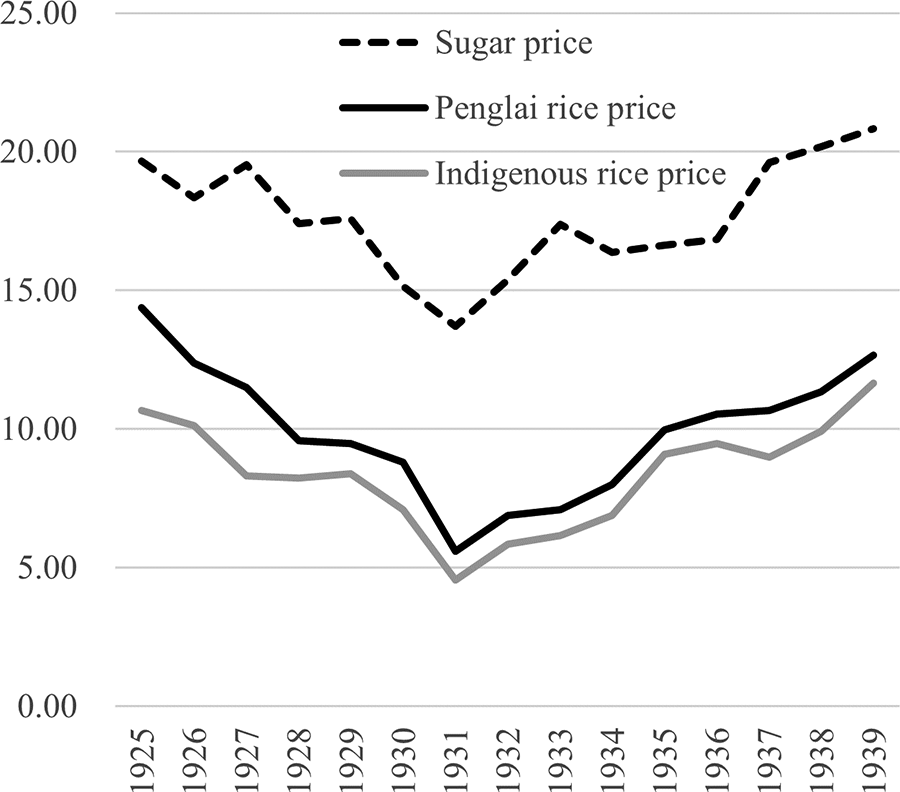
The late 1920s to the early 1930s was a difficult period for the Taiwanese sugar industry due to the plummeting price of sugar (Figure 2). Sugar companies confronted this crisis by cutting expenditures on sugarcane as it accounted for 50–70 per cent of production costs.Footnote 68 Both Ensuikō Sugar and Meiji Sugar thoroughly implemented cost-cutting measures in Beidou County, and by 1931 they had already begun lowering purchase prices. Price reductions in 1933 enacted to limit sugar production were particularly significant as they amounted to a 20–30 per cent drop on prices of the previous year.Footnote 69
Sugar and rice prices, 1925–1939 (yen per 100 jin).
Note: The Penglai rice price is for unhulled rice in Keelung Harbour and the indigenous rice price is for unhulled rice in Kaohsiung harbour. The sugar price is for Taiwanese sugar in Tokyo, which includes the sugar excise tax.

The sugar companies also lowered costs by further rationalizing sugarcane production. They mainly did this by improving the sugar content of sugarcane through minute scheduling of harvesting and crushing operations. Ensuikō Sugar pushed these changes on farmers with particular determination. The spread of the refractometer, a device which could easily measure the sugar content of sugarcane still in the ground, made this scheduling possible. However, postponing the harvest concentrated the workload and placed a heavy burden on farmers, who were forced to abide by the new schedules. Material managers, who were usually influential village landlords, were also put in a difficult position, because as intermediaries of the companies they had to directly face farmers’ discontent. Sugarcane farmers in the western part of the county suffered most severely from these policies. As improvements in measuring equipment brought to light the low sugar content of sugarcane they produced, the sugar companies reduced purchase prices there even further. In Beidou County, the sugar industry’s economic difficulties during the depression were passed onto sugarcane farmers, especially those in the western area.Footnote 70
If prices were cut this way in the 1920s, it would have led to an intense dispute between the companies and the farmers. But organized opposition to capital and the colonial government became difficult for farmers beginning around 1930 due to the advent of a highly repressive and fascist regime across the Japanese empire. The leftist Taiwanese nationalist movement led by the Taiwanese Communist Party and the Taiwanese Peasants Union was forced into collapse around 1930 under tremendous pressure from the government.Footnote 71 The channels left open to farmers for making complaints and demands to the government and sugar companies were thus considerably reduced.
It was precisely in this context that farmers of Beidou County began to install a variety of pumps to facilitate a transition to rice cultivation. In the early 1930s, Penglai rice accounted for around 30 per cent of the acreage devoted to rice production in the county and farmers were already aware that these new varieties were highly profitable. Moreover, on top of the recovery of rice prices after 1931,Footnote 72 the diffusion of pumping equipment and electric motors imported from the metropole made the construction of paddies more feasible. Although sugar prices also began to recover, there was not a direct increase in sugarcane purchase prices due to the workings of the procurement district price-setting mechanism.Footnote 73
The quasi-official Taiwan Power Company played an active role in popularizing electric motor pumps among landlords and wealthy farmers in Beidou County. With the support of the colonial government, the company constructed a large hydroelectric power plant at Sun Moon Lake, which was expected to propel Taiwan’s industrialization. However, the demand for electricity on the island was still low, and in the early 1930s, the company urgently needed to find consumers for an excess supply of electricity.Footnote 74 The company directed its city branches to find new customers. The branches mainly promoted electric lights for shops and houses, but they also advertised motor pumps, specifically centrifugal pumps with attached electric motors, which were manufactured in Japan.Footnote 75 As the company had already built a new distribution power line in Beidou County around 1930 to provide electricity for lights,Footnote 76 the conditions were set for the introduction of motor pumps.
Motor pumps were extremely costly to install and operate but were able to irrigate large areas, while conventional artesian wells required only simple drilling and the insertion of a bamboo pipe. Artesian wells cost as little as 25 yen to install and could irrigate around 0.3 jia. The motor pumps promoted by the Taiwan Power Company, however, not only required the purchase of pumping equipment and an electric motor but also a brick well measuring 6 metres in diameter and 9 metres in depth to collect groundwater. Total costs for purchase and installation amounted to 2,400–4,300 yen depending on the power of the motor. Electricity fees, which were annually no less than 10 yen for each jia irrigated, made the cost even higher. Though the cost was immense compared with conventional wells, the area that could be irrigated was overwhelmingly greater at 30–50 jia.Footnote 77 Due to the high cost of motor pumps, the Taiwan Power Company originally expected that only organizations of considerable size, such as sugar companies and semi-official irrigation associations, would install pumps and in fact encouraged them to do so before mid-1931.Footnote 78
Despite these expectations, it was two landlords who first contracted to purchase and install electric motor pumps. In mid-1931, Cai You (1890–1966) and Zhang Qingfeng (1898–1982) both installed pumps in their native Lukoucuo Village, which was in the middle part of the county where paddies were relatively scarce. This unexpected development pointed to wide demand for electricity in agriculture, so the Taiwan Power Company recorded in some detail these landlords’ adoption of pumps.Footnote 79 According to these records, Cai You first employed engine pumps but then switched to electric motors due to frequent trouble with the engines and the high price of oil.Footnote 80 Cai You and Zhang Qingfeng had previously been appointed material managers by Ensuikō Sugar and intensively farmed more than 50 jia of sugarcane on their own lands and fields they rented from the company. They did not participate in farmers’ actions against the sugar companies in the 1920s. In early to mid-1932, Cai installed five pumps and Zhang three, allowing them to transition to rice cultivation.
Responding to this unexpected demand, the Taiwan Power Company soon began to promote pumps to landlords in the county while surveying groundwater resources and constructing a new electrical substation in Erlin.Footnote 81 Thereafter, rice prices continued to increase, further incentivizing other landlords and wealthy farmers in the county to install pumps. Farmers in neighbouring counties soon followed suit. Many of them had previously committed to intensive sugarcane farming and were uninvolved in the farmers movements of the 1920s. Their transition to rice cultivation reflects the serious difficulties of growing sugarcane and the huge incentive created by the spread of Penglai rice and rising rice prices during this period.Footnote 82 Pump marketing and adoption were so successful that an executive of the Taiwan Power Company lauded them as a model for the utilization of electricity in Taiwan.Footnote 83 Since it was rare for individual farmers to install electric motor pumps throughout the Japanese empire, pump installation in Beidou County was reported in daily newspapers across Taiwan.Footnote 84
Moreover, the Taiwan Power Company attempted to achieve even wider utilization of motor pumps by offering a cheaper option that employed older techniques for well construction. As the cost of the company’s initial offerings was excessively high, landlords could afford to purchase motor pumps but most farmers could not. The new option consisted of a smaller motor pump that could be paired with a pipe for drawing groundwater. These pipes were the same as those used in artesian wells: they were woven from thin bamboo strips, and the lower sections where groundwater entered were wrapped with leaves of hemp-palm to prevent sand from clogging the tiny chinks between the strips. Through this design, installation costs were almost halved. Though still unaffordable for most farmers individually, it was sometimes feasible for farmers to install this new offering collectively.Footnote 85 Without farmers’ significant input into methods of installation, the company would not have offered this cheaper plan. The following remark by the general manager of the Taiwan Power Company Taichung Sales Office illuminates farmers’ involvement in methods of installation:
Finding the pumps to have such a high capacity, farmers in the county were seized with an irresistible impulse and tried to contrive better methods of construction for this and that. Now, they are so convinced of the pumps that they are in a rush to install them.Footnote 86
Though the Taiwan Power Company’s encouragement played a significant role in the proliferation of electric motor pumps, it was through interaction between the company and farmers that pumps spread rapidly and broadly in Beidou County.
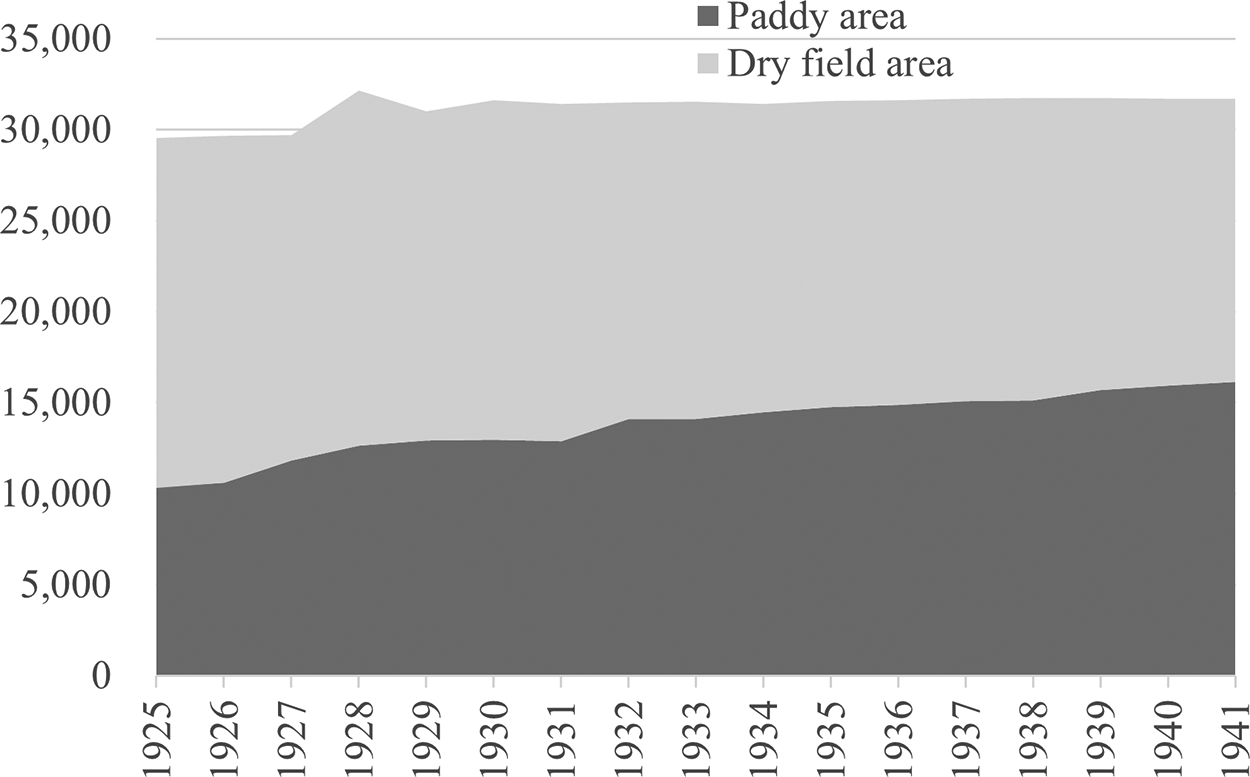
By 1933, there were close to 40 electric motor pumps in the county that could irrigate a total of about 1,400 jia.Footnote 87 The effect of their installation can be seen in the growth of total paddy area (Figure 3). In the early 1920s, after the Zhuoshui River revetments were completed, paddy area expanded with the development of reclamation work for a few years, but there was still only around 13,000 jia in the late 1920s. Paddy area increased by approximately 1,200 jia in 1932, a 9.5 per cent increase on the total of the previous year, and continued to increase through the 1930s. By introducing motor pumps, landlords and wealthy farmers of Beidou County were able to change their approach to agriculture and make economic gains.
Total area of paddies and dry fields in Beidou County, 1925–1941 (in jia).

The continuing proliferation of pumps under their prohibition
The colonial government prohibited further installation of irrigation facilities, including a variety of pumps, in mid-1933. This was partly due to sugar companies’ opposition to the expansion of paddies and rice cultivation in Taiwan,Footnote 88 but the central government’s policy of maintaining the rice price in the metropole had a more decisive impact. Under the prolonged depression, as rural relief emerged as a policy agenda in the metropole during the early 1930s, the central government attempted to reverse a decrease of the rice price from oversupply by expanding governmental purchases. But, the resulting increase, or recovery, of the rice price in the metropole caused increased exports of rice to Japan from the colonies, which further contributed to the popularization of Penglai rice and rising rice prices in Taiwan.Footnote 89 As farmers began to produce Penglai rice for export, they purchased indigenous rice for consumption, which caused the sales rate of indigenous rice to increase in tandem. Increased imports of colonial rice placed greater financial burden on the Japanese government as it continued to purchase the excess supply of rice in the metropole.Footnote 90 Hence, soon after, the Office of the Governor-General expanded the Regulations on Public Water Use in Taiwan, prohibiting further installation of the irrigation facilities that had allowed the expansion of rice production.Footnote 91
The broad alliance of power benefiting from increased Taiwanese rice production made it impossible for the colonial government to establish monopolistic pricing for rice production as it did for sugar beginning in the 1900s. The alliance was mainly comprised of the Taiwanese landlords and miller-merchants who controlled rice production and circulation within the island and the Japanese business interests that exported rice to the metropole. The alliance had already formed by the 1930s in a period when the colonial government had made only minimal effort to control the rice industry. By the time the government wished to intervene in the 1930s, the alliance’s control over rice production was so firm that it would have caused significant conflict. Also, in the metropole, rice merchants and industrial capitalists supported increased imports of colonial rice as they could thereby lower labour costs.Footnote 92 Moreover, the Japanese government had to face not only colonial Taiwan, but also colonial Korea, as the amount of rice Korea exported to Japan was nearly twice that of Taiwan.Footnote 93 Faced with this broad alliance and concerned for the security of its rule, the colonial government could not directly intervene in Taiwanese rice production through methods such as production limits or price ceilings. Though the colonial government possessed overwhelming power and was increasingly repressive beginning in the early 1930s, it could only indirectly manage rice production through a prohibition on the installation of irrigation facilities.
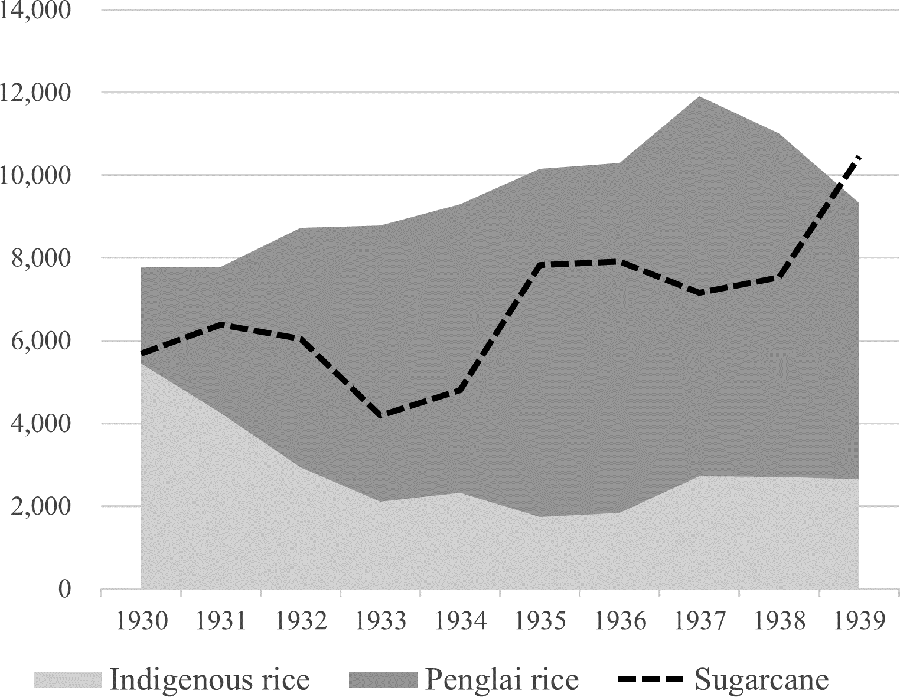
However, even after the prohibition was enacted, the farmers of Beidou County continued to install pumps and convert land to paddies. Total paddy area continued to increase until the latter half of the 1930s and the acreage devoted to Penglai rice increased through 1937 (Figure 4). One reason for this is that rice prices continued to rise in the 1930s due to the continuing expansion of rice exports to the metropole. More fundamentally, pump installation was still possible because the governments of Beidou County and Taichung Province granted tacit permission. Although the reasons for this are unclear due to the lack of records, the broader agricultural policy of these governments was likely significant. The Taichung Provincial Government began promoting the expansion of paddy land well before the 1930s to develop agricultural production.Footnote 94 In 1934, the provincial government surveyed groundwater and geological features in Beidou County for the construction of irrigation facilities at some undefined point in the future though the prohibition was already in place. Clearly, the local governments of Taichung Province and Beidou County strongly hoped to promote rice cultivation despite contrary central government policy.Footnote 95 Continued proliferation of pumps contrary to the prohibition occurred not only in Beidou County but across Taiwan.Footnote 96 According to official records, high-level bureaucrats of the colonial government repeatedly demanded lower-ranking, local officials to more thoroughly implement the prohibition, which shows that it was often only loosely enforced by local governments.Footnote 97
Total area devoted to rice and sugarcane production in Beidou County, 1930–1939 (in jia)
Note: The area shown for rice production is that of the first crop each year.

Local governments were probably reluctant to enforce the prohibition because rice farmers in general as well as local landlords, miller-merchants, and Japanese exporters backed the further expansion of rice production. It is possible that the Taiwan Power Company was able to continue selling pumps and supplying pump owners with electricity under the prohibition for the same reason. In addition, though it was a quasi-official company and often cooperated with the colonial government, Taiwan Power enjoyed considerable independence in its management.Footnote 98 Since finding consumers for electricity supplied by newly constructed power plants continued to be important for the company, it is not surprising that it did not cooperate with the prohibition.
Moreover, as the price of oil, high in the first half of the 1930s, returned to its previous levels by 1935, engine pumps became an appealing option for farmers.Footnote 99 Compared with electric motor pumps, which required farmers to enter a contract with Taiwan Power and often even install power lines and poles themselves, installation of engine pumps was much simpler.
The following report from mid-1938, when the prohibition was finally tightened,Footnote 100 provides a good illustration of farmers’ continued eagerness to install pumps and transition to rice cultivation:
One thing that struck us as peculiar when we went to inspect Beidou County was the large number of water pumps and wind pumps used for irrigation. The county reminded me of scenery in the Netherlands. This is a strange phenomenon caused by high rice prices since 1935. Rice farming has become so popular among farmers in general that no matter whether the land has sufficient water supply, they plant rice even if only on a small corner, as if they think that rice is the only crop worth planting. Hence, the construction of wind pumps has ballooned. This situation, of course, has created some trouble due to the disorder of water management, and the county has begun to thoroughly regulate to decrease rice production and achieve diversified agricultural management. So, more than 90 motors were ordered removed. However, irrigation without permission of this kind has yet to be eradicated.Footnote 101
When the prohibition was announced in mid-1933, there were only about 40 electric motor pumps in the county, and even when engine pumps are included, the total does not exceed 60. So, it is quite remarkable that more than 90 new motor pumps were installed in the five years that followed despite the prohibition. According to other reports, it was mainly farmers in the western part of the county, where unfavourable growing conditions led to a particularly low purchase price for sugarcane, who installed pumps under the prohibition. One landowner who had farmland in Erlin Township noted, ‘There are many pumps here. Installing a 10-horsepower pump costs about 3,500 yen, but farmers have begun using them one after another.’Footnote 102 Additionally, a newspaper reported that there were dozens of fields in the western part of the county where farmers pumped up drainage from Meiji Sugar fields to irrigate paddies without obtaining permission from the Taichung Provincial Government.Footnote 103 Although drainage was usually a less reliable source of irrigation than groundwater, farmers could avoid the costs of constructing and maintaining wells.Footnote 104
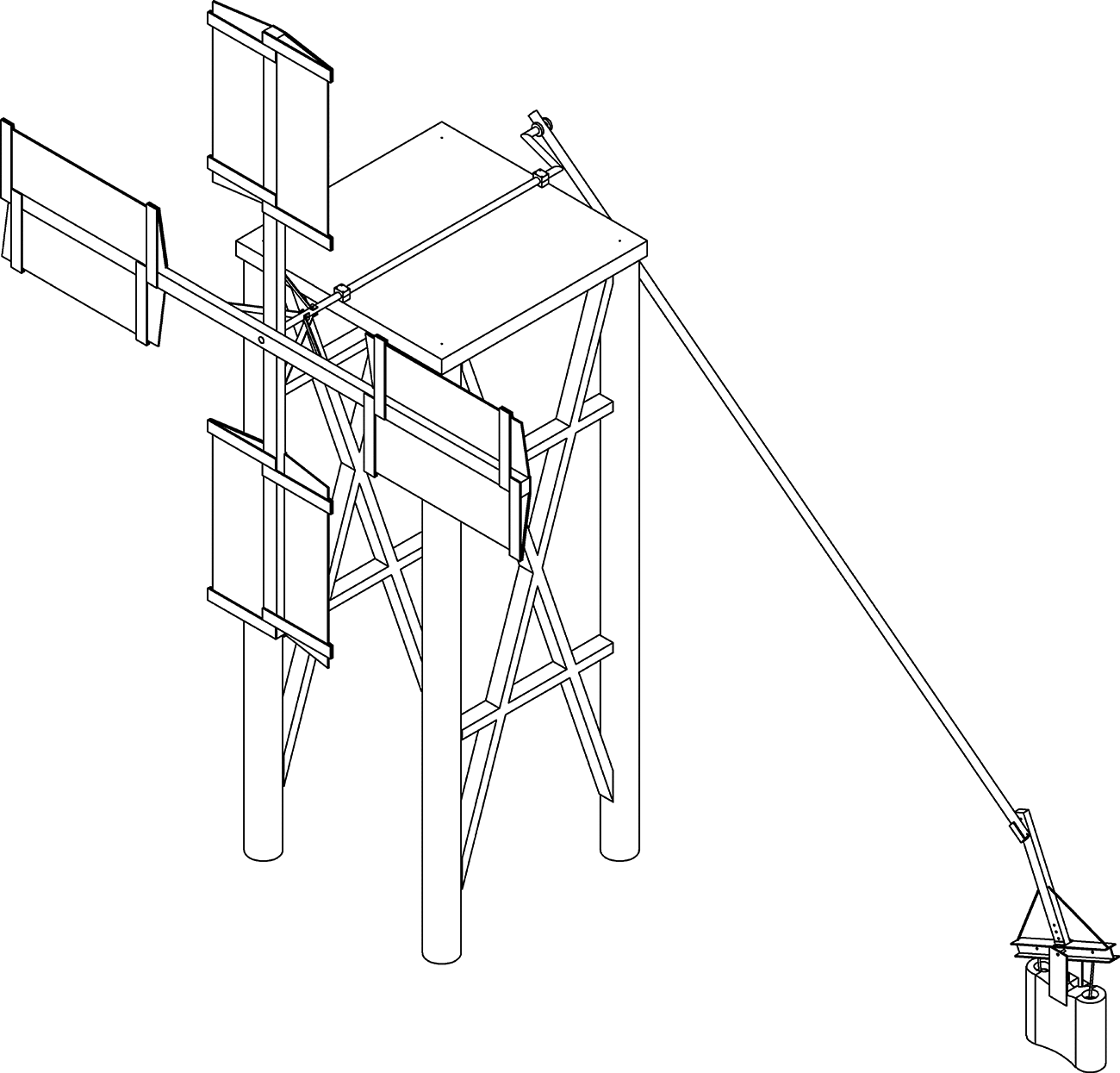
The widespread use of wind pumps, which the above quotation describes as creating scenes reminiscent of the Netherlands, is worth exploring in detail. Wind pumps were designed to utilize monsoon winds, which were strong in the western littoral of the island and harmful to agriculture. By converting rotary motion made by a propeller into linear motion through a crank, these pumps could draw water whenever there was wind. Although much smaller than the well-known Dutch windmills, their propellers were over 4 metres tall, which must have made them quite remarkable in rural areas during this period (Figure 5).Footnote 105 According to a report, wind pumps were used in Beidou County by 1933 at the latest.Footnote 106 Each wind pump could irrigate a maximum of 0.3 jia, but their influence should not be underestimated given their prevalence at the time. Because wind pumps were much cheaper than motor pumps, they were installed by tenant farmers as well as owner-cultivators.Footnote 107
This model of a wind pump was created by Zhang Hongwen according to descriptions given to me by Mr Xie Liu.

Compared with motor pumps, farmers could be more creatively involved in the construction and use of wind pumps. Farmers constructed wind pumps independently with ready-made parts and handicrafts. Iron piston pumps, cranks, and bearings could be bought from traders in neighbouring cities.Footnote 108 It is likely that farmers could acquire these parts due to the expanding imports of agricultural implements and parts as mentioned in the previous section. Wooden propellers and towers were crafted by farmers themselves. They also constructed wells by digging holes in the soil with iron pipes and then inserting pipes made of bamboo strips. As wind speeds were variable, careful management was necessary. For instance, if wind speeds were too high, quick rotations could damage the pumps, requiring farmers to adjust the number and size of blades.Footnote 109
The irrigation technologies used by Taiwanese farmers were remarkably diverse in the 1930s, as the spread of new-style pumps did not replace older technologies such as chain pumps and artesian wells.Footnote 110 As we can see in the next section, these continued to be important implements for irrigation into the late colonial period. Sometimes, older techniques were supplemented with new technologies. According to a report held in the RTPC, 30 chain pumps powered by electric motors were installed in Beidou County during this period.Footnote 111
The continuing expansion of rice production in Beidou County pushed sugar companies to increase sugarcane purchase prices, which caused the acreage devoted to sugarcane to recover in the mid-1930s.Footnote 112 As mentioned in the previous section, under the procurement district system, the price of sugarcane was set against the potential income from other crops. Because farmers could now grow Penglai rice, sugar companies had to increase purchase prices substantially, including a 16–17 per cent increase in 1935.Footnote 113 As the rate of increase of the rice price slowed during this year, the acreage devoted to sugarcane cultivation in Beidou County came to exceed the acreage before the depression.Footnote 114 The expansion of rice production juxtaposed with the recovery of sugarcane cultivation demonstrates that farmers who had previously grown less commercial crops, such as potatoes and peanuts, began to allocate more acreage to rice and sugarcane and invest increasingly in commercial farming.
It was not until 1938 that the governments of Beidou County and Taichung Province thoroughly implemented the prohibition, five years after it was enacted. When the Japanese government issued the National Mobilization Law in March 1938 in preparation for total war, the Office of the Governor-General began to plan and control the development of each industry in Taiwan and intervene directly in the distribution of a variety of resources including irrigation water. Many irrigation facilities of considerable size had been constructed without official permission in Taichung Province, some with motor pumps, but the colonial government now believed that these facilities put water management in disarray and intervened more directly.Footnote 115 In Beidou County, such facilities were forcibly transferred to the semi-official Beidou Irrigation Association to be removed or used for planned agricultural production.Footnote 116 Despite persistent central government demands for a huge decrease in Taiwanese rice production since the first half of the 1930s, it was only wartime mobilization and the creation of a planned economy that finally pushed the colonial government to thoroughly intervene in farmers’ use of water.
Due to sugar companies’ cost-cutting measures and an increasing rice price, Beidou County dryland farmers shifted to rice cultivation by installing pumps. As previous studies of Taiwanese economic history have shown, Penglai rice required more fertilizer than indigenous rice, drawing farmers deeper into commodity relations.Footnote 117 Their installation of high-cost irrigation facilities makes this even more true. As farming was increasingly directed by commodity relations, farmers were under pressure to employ new technologies and invest in production to enhance productivity and survive in the increasingly competitive market; they had become more vulnerable to failures in cultivation.Footnote 118 However, for those unable to irrigate and shift to rice production, there was nearly no choice but to plant sugarcane, even though purchase prices were set according to the wishes of the sugar companies. As it became possible for farmers to switch to rice, sugar companies were compelled to increase purchase prices to obtain requisite amounts of cane. The market for sugarcane was arbitrarily manipulated, so the adoption of commercial technologies to shift to rice, which was traded in a freer market, allowed farmers to maximize their potential livelihoods, even though this move incorporated them further into deepening commodity relations.
Distribution through selling and sharing
While farmers adopted pumps to achieve economic gain within broader economic and political conditions, they used them in the context of rural communities. The number of farmers who could afford their own motor pump was limited. Wind pumps and other traditional pumps were much cheaper, but poor farmers often could not even afford to install these. Faced with these circumstances, pump owners not only irrigated their land and converted to rice farming individually but distributed pump capacity through sales and sharing. This shows that Taiwanese farmers sought to maintain an informal yet significant cohesion throughout the process of agricultural commercialization.
From the moment motor pumps were first adopted in Beidou County, it was common for their owners to sell water to other farmers around their villages. In addition to irrigating his own lands, Cai You, one of the two landlords of Lukoucuo Village who led the way in the adoption of electric motor pumps, sold water through a small firm he established.Footnote 119 Pump owners in Lukoucuo Village usually irrigated their own lands first and then sold excess water to other nearby farmers. It was, in fact, essentially required that pump owners sell a portion of their water. As landowning farmers’ fields were often separated into several areas scattered in and around their villages, pump owners usually had to pass water through other farmers’ lands to irrigate each of their own parcels. By custom, pump owners were required to sell irrigation water to the owners of the fields through which their water passed.Footnote 120 In other words, the farmers who offered parts of their land to channel irrigation water gained the right to buy water from pump owners for their own plots.
The water was sold at a high price by pump owners. According to an interview with an elderly resident of Lukoucuo Village, the price of irrigating 0.1 jia of land with water drawn by motor pump was 90 jin of unhulled rice per season, which converted to cash would have been 4 yen in 1932. This was quite costly considering that the average yield from a plot this size was no more than 500 jin per season.Footnote 121 As installation and maintenance of motor pumps and the associated electric fees were quite expensive, setting a high price for irrigation water was not without reason. According to the RTPC, it cost 3–5 yen per 0.1 jia of land for a farmer to purchase an electric motor pump with a seven-year loan if he irrigated the maximum acreage advertised for the pump. But owners could often only irrigate half of the maximum acreage for reasons such as environmental conditions.Footnote 122 So, the cost of pumps per unit of land could have been even more, making it necessary for pump owners to sell water at a high price. Hence, there is some substance to irrigation association reports’ occasional criticisms of pump owners exploitatively handling water sales.Footnote 123
Though pump owners set high prices for irrigation water, purchasers could secure considerable revenue by cultivating Penglai rice. As detailed economic records on colonial period farming households are scarce,Footnote 124 it is impossible to precisely measure the impact that high costs of irrigation had on household accounts. The fact that pump owners had to consider possible income from sugarcane when setting water prices deserves close attention. Profits from rice farming with pumped irrigation water had to be larger than profits of sugarcane cultivation on the same plot, otherwise farmers would not have irrigated and instead grown sugarcane. As discussed in the previous section, profitability of sugarcane cultivation recovered and acreage devoted to sugarcane in Beidou County increased beginning in the mid-1930s. Therefore, we can assume that purchasers of pump water still earned more from rice cultivation than they would have from sugarcane cultivation, even though it was also increasingly lucrative. Moreover, though pump owners had to offer irrigation water to the owners of fields through which their water passed, they offered no discounts, selling water at the standard rate of 90 jin of unhulled rice per 0.1 jia.Footnote 125 That these transactions occurred clearly indicates that profits from rice exceeded profits from sugarcane even when irrigation water was purchased. The contradictory relationship between rice and sugarcane mattered. While the rising rice price compelled sugar companies to increase sugarcane purchase prices, the recovering profitability of sugarcane cultivation prevented pump owners from abusing their power and setting extortionate prices for water.
Pump owners also distributed economic surplus to other farming households through sharing. If we only look at government and company records, it appears that water sales were the only method by which the owners distributed pump capacity. However, interviews with people alive at the time reveal that it was also shared.Footnote 126 Here, I examine the case of a farming household in Lushangcuo Village, Shashan Township, located in the western part of Beidou County.Footnote 127 Most of the male village residents, whose common ancestors migrated from Fujian to Taiwan in the mid-eighteenth century, shared the surname Xie 謝. As was common among Han Taiwanese, the villagers maintained a custom of exogamy, in which daughters were married to lineages of other surnames, usually outside Lushangcuo Village. By the 1930s, as 3–4 generations had passed since first settlement, the Xie lineage had divided into about eight sub-lineages, which were loosely connected by ancestral rituals.Footnote 128 The head of the household examined here, Xie Jing (1891–1986), was a farmer owning around 1.2 jia of arable land in the village. This Xie family was a little better off than the average village family but far poorer than the motor pump owners discussed above. However, Xie Jing was still able to acquire the use of a motor pump, chain pump, and wind pumps in the 1930s. The following passage is primarily based on a series of interviews that I conducted with Xie Jing’s nonagenarian son, Xie Liu (1925–), who was engaged in his family’s farming from an early age. Certainly, these interviews do not provide a complete picture of pump use in Beidou County, but they do provide rich information concerning sharing among farming households, which is rarely seen in archival sources.
Xie Jing was first offered co-ownership of an electric motor pump by his wealthy agnatic relative, Xie Zong (1899–1974). This pump was jointly purchased and operated by farmers themselves, most of whom belonged to the same Xie sub-lineage. Xie Zong, a member of this sub-lineage, made the biggest contribution as he had the most area to be irrigated. Xie Zong was one of the largest landowners in the village, possessing more than 50 jia of land, and had political influence inside and outside the village through a complicit relationship with colonial authorities.Footnote 129 In fact, he long served as the deputy mayor of Shashan Township and a material manager for Ensuikō Sugar.Footnote 130 Xie Zong covered the costs of the pump in advance on behalf of the other co-owners including payments on the loan used to purchase the pump and operating expenses. Poorer co-owners, including Xie Jing, who were chronically short of cash and capital, reimbursed Xie Zong according to the size of their irrigated fields when they had the funds, which was usually after harvest.Footnote 131 It would have been more profitable for Xie Zong to independently install a motor pump and sell water as he would have earned much more.Footnote 132 However, Xie Zong offered co-ownership to poorer relatives of his sub-lineage.Footnote 133
Other co-owners did not feel indebted to Xie Zong because his offer was presumed obligatory as a wealthy close relative. Though most of them would have been unable to own a motor pump without Xie Zong’s help, they did not acknowledge any debt to Xie Zong and paid him nothing in return. Even in recent interviews, Xie Liu told me that Xie Zong was obliged to offer this investment opportunity to his close relatives, so there was no need for gratitude.Footnote 134 Unilateral support often generates a sense of indebtedness in the recipient, which can be the beginning of a vertical relationship as numerous anthropological studies of gift giving and reciprocity have shown.Footnote 135 However, as other co-owners assumed such an offer was not unilateral support but the obligation of this wealthy relative, such feelings were absent. It is unclear whether Xie Zong really thought it was his duty to offer co-ownership or that poorer co-owners need not offer him recompense. Still, as Xie Zong did not dare withhold the offer that the other farmers presumed was his duty, they did not feel indebted to him. In this case, the right of co-ownership was unilaterally distributed, but the giver and the recipients remained on equal footing.
Wooden chain pumps, a type of non-motorized pump operated by one or two people, were sometimes transferred in a similar manner. Xie Jing obtained a chain pump from his older sister, Xie Yin (b. 1888), who had married into the Chen family of Caohu Village in the same township. The Chens were one of the wealthiest families in the western part of the county,Footnote 136 and Chen Jianzi, husband of Xie Yin, was a wealthy farmer owning more than 10 jia of land.Footnote 137 Perhaps because the Chen family installed four electric motor pumps from 1932–1933,Footnote 138 likely replacing chain pumps, Xie Yin gave her brother a chain pump in the mid-1930s. This transfer is noteworthy because Xie Yin could have sold the chain pump as they were expensive compared with other traditional implements.Footnote 139 It also could have been used or sold as fuel, given that fuel was in short supply in littoral areas due to the lack of forest resources.Footnote 140 Xie Yin continued to have a close relationship with her brother after she left the Xie lineage through her marriage into the Chen family; Xie Jing sometimes went to Xie Yin’s village to help plough the Chens’ fields for pay. But, as they belonged to different households according to Han custom, Xie Yin was not obligated to give the chain pump to Xie Jing. Interestingly, Xie Jing did not recompense his sister for the pump, nor did he feel indebted to her, as he presumed that the chain pump was unused and had no value to Xie Yin’s family. According to Xie Jing’s son, his father could accept the pump without hesitation and without incurring any debt to his sister’s family.Footnote 141 Although it is unclear whether Xie Yin’s family really thought the pump was of no value and could be taken by Xie Jing without recompense, Xie Jing could accept the pump free of obligation under such a presumption. The chain pump was unilaterally transferred, but both sides retained a politically equal relationship.
Xie Jing learned to construct wind pumps from a nearby villager also without any repayment or feeling of indebtedness. Xie Jing made two wind pumps for pumping groundwater by imitating the design of Xie Fanping, whose fields were nearby. As Fanping was not only a farmer but also a craftsman adept at carpentry and building bamboo houses, he was the first to construct wind pumps in the village. Soon, neighbouring farmers, including Xie Jing, imitated his design, constructing eight wind pumps, but they were rather crude compared with those built by Fanping. As Xie Jing’s chain pump only pumped neighbours’ drainage, he built his wind pumps on the same plot to ensure a stable supply of water for his paddies.Footnote 142 In this case, Xie Jing and the other farmers did not recompense Fanping, nor did they feel indebtedness to him. According to Xie Jing’s son, constructing the wind pump was ‘tshoo khang-khuè’, a Taiwanese phrase meaning simple, rough handwork. Thus, his father and other farmers could imitate the wind pump without Fanping’s permission, and they were not required to recompense him for his design.Footnote 143 Because of this presumption, Xie Jing was free of the obligation to provide something in return, just as when he acquired the chain pump and co-ownership of the motor pump.
In each of the three cases of sharing discussed above, pump capacity was distributed without imposing a feeling of indebtedness on the recipient. A sense of indebtedness, which gift giving often generates, can create or enhance hierarchical order between giver and recipient. By denying or obscuring the value of the object transferred, for instance by regarding sharing as the duty of a wealthy relative or the object shared as useless to its owner, no sense of indebtedness was imposed upon the recipient in these unilateral transfers and politically equal relationships were maintained.
In the case of Lushangcuo Village, owners distributed the economic surplus generated by pumps both through selling and sharing. Though sharing of pump capacity was common as seen in the above three cases, commercial transactions for water also took place between farmers. For instance, water drawn by motor pumps was sold for irrigation in Lushangcuo Village. It is said there were five motor pumps in the village in the latter half of the 1930s, and water from at least two of them, each installed by landowners, was sold. For each planting, irrigation with water drawn by motor pump is said to have cost 100 jin of unhulled rice per 0.1 jia, almost as high as in the above-mentioned Lukoucuo Village, and prices remained at this level into the post-war period.Footnote 144 I uncovered no sales of motor pump co-ownership in interviews I conducted in Lushangcuo Village, but this practice occurred in the other villages of Beidou County.Footnote 145 In Caohu Village, where the Chen family resided and played a dominant role, we can assume that the Chens distributed water from their four motor pumps through sale, since the Chens were known for their eagerness for large-scale, commercial farming.Footnote 146 On the other hand, in Lukoucuo Village, where landlords adopted motor pumps and sold water relatively early, a chain pump was transferred even though the recipient offered no return to the giver.Footnote 147 According to the data that we have, it was common for pump owners to distribute pump capacity both through selling and sharing in Beidou County.
The prevalence of sharing deserves further exploration as it was seemingly contrary to the expansion of commodity relations among farming households in the county. In this period, there were no community or lineage ties among people in Beidou County that forced redistribution of wealth.Footnote 148 There was significant economic disparity between farming households in the county since the Qing era, including among households of the same lineage, and redistribution of wealth was rarely demanded by villagers in the colonial era. Even during the farmers movements of the 1920s, Beidou County farmers, who struggled against the despotic policy of sugar companies and the colonial government, mostly accepted the huge economic gap between households.Footnote 149 Though there were certain kinship relationships between the owners and recipients in the above three cases of sharing, we cannot conclude that these ties were what compelled the owners to share. In fact, interviewees said that the chain pump and wind pump owners shared not because the recipients were relatives, but due to the shared items’ lack of value.Footnote 150 Though the motor pump was co-owned mostly by members of the same sub-lineage, it was not understood by villagers as demonstrating strong familial solidarity; rather, the overwhelming wealth of one landlord and the marked poorness of the other co-owners were more important.Footnote 151 It is most likely that kinship ties in the Lushangcuo Village were a kind of social capital which farmers could use to draw favours from others, including the sharing of pumps and pump capacity, though they could not be used to directly compel action. Farmers could choose to sell and sharing was not obligatory as a rule. Commercial transactions, which are profit seeking, were allowed and mutual aid was not compulsory within each village or among relatives.
To understand the owners’ decisions to share during the expansion of commercial farming, we need to focus on the fact that owners wished to maintain a casual and open cohesion between themselves and other independent farming households.Footnote 152
Even though sharing was not obligatory as a rule, pump owners could not seek to achieve higher profit without limit as the casual relationships and connections they developed with other farming households were important. If a wealthy party declined to share and instead offered sale, this might imply ignorance or even sever connections with poorer neighbours or relatives. Hence, if there was some connection between the two parties or the situation of the recipient was severe, pump owners would have been even more likely to share than to sell. In fact, the relationships between the givers and Xie Jing, the recipient in the above three examples, were closer than those between typical villagers. Moreover, Xie Jing was poor compared with Xie Zong and his sister. As they desired to maintain connections or were compelled by casual and informal relationships with other farmers, owners frequently hesitated to rely on commercial transactions and instead chose to share a part of their pump capacity.
Moreover, the prevalence of selling and sharing illustrates that farmers preferred working together as mutually independent and politically equal beings while fundamentally accepting economic disparity. When owners shared, they only shared limited pump capacity and never sought to substantially reduce the economic gap between themselves and the recipients. We cannot romanticize this sharing as the aim of sharing for owners was not so much the redistribution of wealth but the maintenance or establishment of connections. Nevertheless, as the givers (sellers) did not impose a feeling of indebtedness on the recipients (purchasers), we can assume that they sought to remain on equal footing and create horizontal relationships. It is especially worth noting that owners did not sell pumped irrigation water and pump equipment at discounted prices. As in the example of collective purchase and management of the motor pump, landlords could have achieved higher profits while still supporting poorer relatives if they instead sold water at discounted prices. Also, in the case of the chain pump transfer, Xie Yin could have achieved financial gain and supported her brother by selling the pump at a discounted price; however, she charged him nothing. Though selling, sharing, and discounting all imply a distribution of economic surplus, only with selling and sharing is no sense of indebtedness engendered in the recipient. By avoiding discounted sales and only selling and sharing, farmers sought to maintain politically equal relationships.
While concerned with broader economic and political conditions, pump owners employed their pumps according to a casual and informal cohesion with other farmers in their rural communities. The spread of commercial technologies did not have a uniformly weakening effect on the connections between Taiwanese farming households as they came to increasingly depend on commodity relations. While fundamentally accepting economic disparity, Taiwanese farmers sought to work together by distributing commercial opportunity within the expansion of the market economy.
Conclusion
After regulations on Taiwanese rice exports were enacted in 1939, the colonial government began to directly manipulate rice prices. The government simultaneously rescinded the prohibition on irrigation facility construction as there was no longer any need for such indirect control of rice production.Footnote 153 Moreover, due to prolonged war with China, the Japanese government attempted to create a planned economy in which each village was required to grow certain crops according to the needs of the Japanese empire.Footnote 154 The government controlled the supply of many essential commodities such as oil and agricultural implements. Thus, it became difficult for Taiwanese farmers to profit by adopting new technologies as they did before. On the other hand, the colonial government itself planned many irrigation facilities across the island, including huge motor pumps for drawing groundwater, to increase rice production as a part of its provisions policy. But the government made only limited progress due to a wartime shortage of materials and destruction from bombings by the US Air Force.Footnote 155
Under the Kuomintang regime that began in 1945, while the sugar industry was placed under national management, Taiwanese farmers again began using a variety of pumps to access groundwater for irrigation. As the regime was strongly supported by the US government, Taiwan acquired drilling rigs that could be used to construct huge, solid wells through US aid programmes. Concurrently, local installers of small motor-pump wells used since the Japanese era increased in number through the 1950s in response to the increasing demand of farmers. Because most farmers had small parcels, they usually preferred the smaller pumps.Footnote 156 Moreover, local farmers continued to use older technologies such as wind pumps and chain pumps. According to a survey in the latter half of the 1950s, across the plains of the lower Zhuoshui River, where Beidou County was located, over 10,000 small motor-pump wells and artesian wells were being used for irrigation while more than 1,000 of the new, large wells had been constructed.Footnote 157 Today, each plot in the area usually has at least one motor pump, so farmers have a stable water supply, though risks of groundwater exhaustion and subsidence are growing.
The rural landscape of Taiwan was drastically transformed by the expansion of irrigation over the last century. This change is sometimes simply attributed to large government projects such as the Chianan Irrigation Project.Footnote 158 But, the persistent utilization of small pumps by Taiwanese farmers also played an important and previously underestimated role.
By dwelling on farmers’ adoption of pumps in late colonial Taiwan, I hope to illuminate three historiographic issues: The first is Taiwanese farmers’ struggle to survive and prosper within the prevailing order through the utilization of commercial technology. While this increased Taiwanese farming households’ dependence on commodity relations, it did not immediately enhance the influence that business interests held over them. Farmers did not just passively adopt newly introduced technologies but made use of them intelligently and creatively according to broader economic conditions, especially the changing conditions of sugar and rice production. By highlighting Taiwanese farmers’ utilization of technology, their agency within the growing market economy becomes more visible.
The second historiographic issue highlighted in this article is the social dynamics surrounding the spread of agricultural technologies. By focusing on the social processes incipient to the dispersion of new technologies, we can define more clearly farmers’ ability to maximize their potential livelihoods. Moreover, while the impact of new agricultural technologies transferred to colonial Taiwan is undeniable, the significance of those technologies cannot be understood when focusing solely on processes of technological innovation and diffusion. With no stable source of irrigation, many Taiwanese farmers in Beidou County initially had no choice but to accept the demands of the government-supported sugar oligopoly. As Penglai rice and improved agricultural implements became available in the 1920s, farmers were able to improve their plight through the shifting relationship between rice and sugar. It was in this economic and political context that farmers attempted to profit by installing pumps to irrigate fields and shift to rice cultivation.
The third issue is the cohesion demonstrated by farming households as agriculture became increasingly commercialized. Distribution of pump capacity through both sales and sharing shows that Taiwanese farmers sought to maintain cohesion through the late colonial period. We cannot romanticize this cohesion because pump owners never sought to substantially reduce the economic gap between themselves and recipients; however, the manner in which pumps were adopted and employed clearly shows that the spread of commercial technologies did not simply sever social connections.
By distributing commercial opportunities, Taiwanese farmers sought to work together as mutually independent and politically equal beings within the context of the expanding market economy. The cohesion of Taiwanese farming households was directed towards their efforts to live and prosper. One may regard this orientation as a compromise because it did not aim to reduce economic disparity among farming households nor transform the colonial regime. This cohesion was in sharp contrast with Taiwanese national or class solidarity, which laid the foundations for the island-wide, anti-colonialist movement of the 1920s.Footnote 159 However, faced with a repressive and developmental regime, a situation that continued under the Kuomintang to nearly the end of the 20th century, it was this informal but substantial cohesion that mattered to farmers’ everyday struggles.
Acknowledgements
I am grateful to Hiromi Mizuno for her constructive comments on a draft of this article. Comments from my reviewers were very beneficial to the development of my argument. My gratitude also goes to Tyler Bennett for his meticulous editing. Research for this article was supported by JSPS KAKENHI Grant Numbers, JP19H01319, JP19J00189, JP20K22017.