INTRODUCTION
Heterostyly is a reproductive system that involves the reciprocal placement of sexual organs in flowers of the same plant species. It has been proposed that selection to promote outcrossing and to reduce sexual interference underlies the evolution of this floral polymorphism (Barrett Reference BARRETT1990, Darwin Reference DARWIN1877, Webb & Lloyd Reference WEBB and LLOYD1986). In most heterostylous species, avoidance of illegitimate pollination is accomplished by the action of a genetic self-incompatibility system that precludes fertilization by pollen of the same morph (Barrett & Cruzan Reference BARRETT, CRUZAN, Williams, Clarke and Knox1994). In distylous species, typically represented by a long-styled morph (i.e. pin), and a short-styled morph (i.e. thrum), self-incompatibility restricts the number of potential mates, since only crosses between different morphs produce fertile offspring (Barrett Reference BARRETT2002). Therefore, external pollen vectors are essential for successful seed production.
Darwin (Reference DARWIN1877) proposed that distyly evolved to facilitate reciprocal pollen transfer between morphs (i.e. disassortative pollination). According to this hypothesis, pollinators should pick up pollen and contact stigmas with a particular part of their body at each stigma/anther level, ensuring outcross pollination. Pollinators have been recognized as important selective agents in the evolution of heterostyly (Pérez-Barrales et al. Reference PÉREZ-BARRALES, VARGAS and ARROYO2006), and reciprocal pollen transfer has been documented in a number of heterostylous species (Lau & Bosque Reference LAU and BOSQUE2003, Ree Reference REE1997); however, some species show asymmetric pollen flow, i.e. greater pollen deposition on stigmas of either pin or thrum individuals (Brys & Jacquemyn Reference BRYS and JACQUEMYN2010, García-Robledo Reference GARCÍA-ROBLEDO2008). When asymmetric pollen flow is associated with asymmetric seed set and seed sired, gender specialization may be favoured by natural selection. Under this scenario, reproductive success is expected to vary among morphs, with one morph specializing in pollen receipt and the other morph specializing in pollen donation (Lloyd Reference LLOYD1979).
The Rubiaceae are one of the few plant families containing heterostylous and dioecious species in several different genera, suggesting that breeding system evolution has been labile within the family (Barrett & Shore Reference BARRETT, SHORE and Franlin-Tong2008, Hamilton Reference HAMILTON1990, Sakai & Wright Reference SAKAI and WRIGHT2008). Variation in patterns of pollen transfer and functional gender of pin and thrum morphs has been reported in Rubiaceae species with various pollination systems (Wolff & Liede-Schumann Reference WOLFF and LIEDE-SCHUMANN2007), including species that have evolved functional dioecy (Li et al. Reference LI, WU, ZHANG and BARRETT2010). Nonetheless, the selective forces underlying the evolution of gender specialization in lineages containing heterostylous and sexually dimorphic species are still not well understood. In particular, studies that evaluate the potential influence of pollinator visitation, effectiveness and behaviour on pollen transfer patterns in distylous species are scarce.
This study evaluates the role of floral morphology and pollination effectiveness on female reproductive success in the Neotropical shrub Palicourea tetragona (Donn. Sm.) C.M. Taylor & Lorence (Rubiaceae). We expected that if P. tetragona exhibits reciprocity in the positioning of reproductive organs, isoplethic morph ratios and equal pollinator visitation and effectiveness, pin and thrum morphs should have equal female reproductive success. Thus, the goals of this study were: (1) to assess the distribution of floral variation within and between morphs, (2) to document population morph ratios, (3) to quantify the frequency of pollinator visitation and the rate of assortative and disassortative pollen deposition on stigmas of both morphs (4) to quantify variation in fruit production among floral morphs.
METHODS
Study site and species
This study was conducted at La Selva Biological Station during the months of July–September 2010. This site is a tropical rain forest located in the Sarapiquí region, Heredia, Costa Rica (10°26′N, 83°59′W; 30–140 m asl; McDade & Hartshorn Reference MCDADE, HARTSHORN, McDade, Bawa, Hespenheide and Hartshorn1994). Mean annual precipitation is 4260 mm and mean annual temperature 26 °C (Posada & Schuur Reference POSADA and SCHUUR2011).
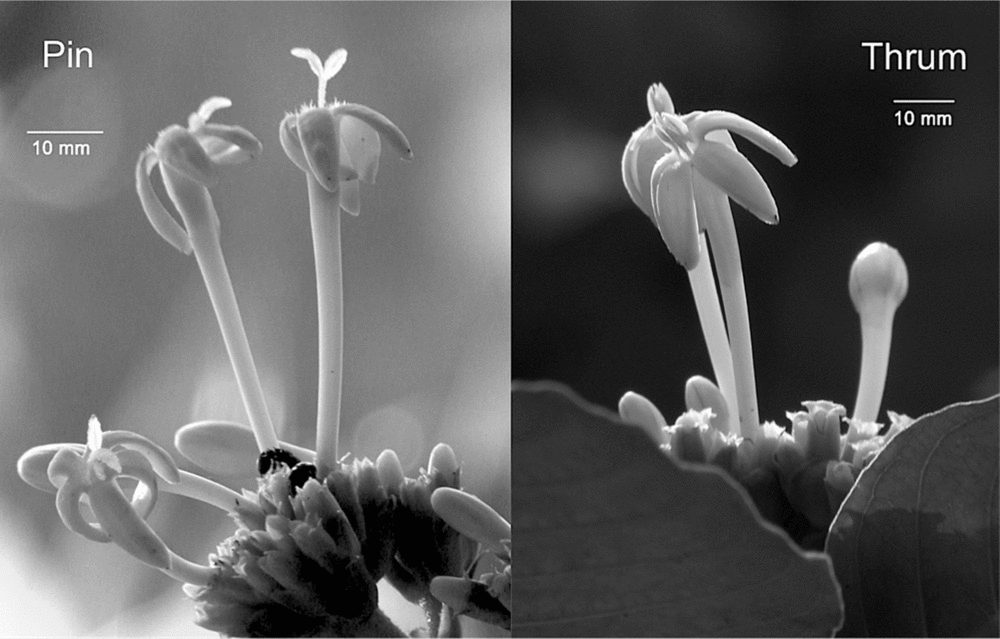
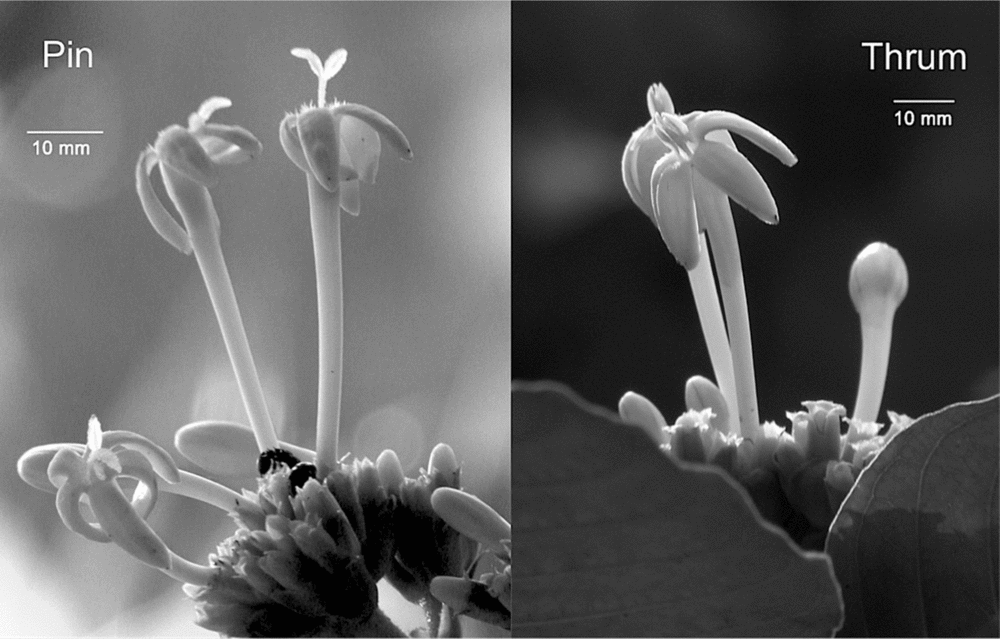
Palicourea tetragona (syn. Psychotria chiapensis) is distributed from sea level to 1400 m asl, from Mexico to Panama; it is an understorey tree 5–10 m tall that occurs in moist forest along forest trails and river edges. Inflorescences are thyrses that measure up to 6 cm long. Palicourea tetragona has white, tubular flowers, up to 3 cm long (Figure 1). Anthesis starts at 20h00 to 21h00 and lasts 12–15 h. Nectar is produced at the base of the corolla tube. Fruits are purple-black drupes with two seeds each. The species blooms June–July, and fruiting occurs in September–November. Like most heterostylous species, P. tetragona exhibits a genetic self- and intramorph incompatibility system; thus, only crosses between different morphs are viable (Bawa & Beach Reference BAWA and BEACH1983).
Pin and thrum flowers of Palicourea tetragona from La Selva Biological Station, Costa Rica.
Morph ratio
Morph ratios are known to influence pollen flow in heterostylous species. We determined the morph ratio of the study population by surveying all flowering plants found along the trails Arriera Zompopa (SAZ), and Tres Ríos (STR) at La Selva Biological Station during July 2010; morphs were identified as pin if stigmas were exerted above the corolla mouth, and as thrum if anthers were exerted. Deviation from a 1:1 morph ratio was determined using a two-tailed binomial test.
Floral variation
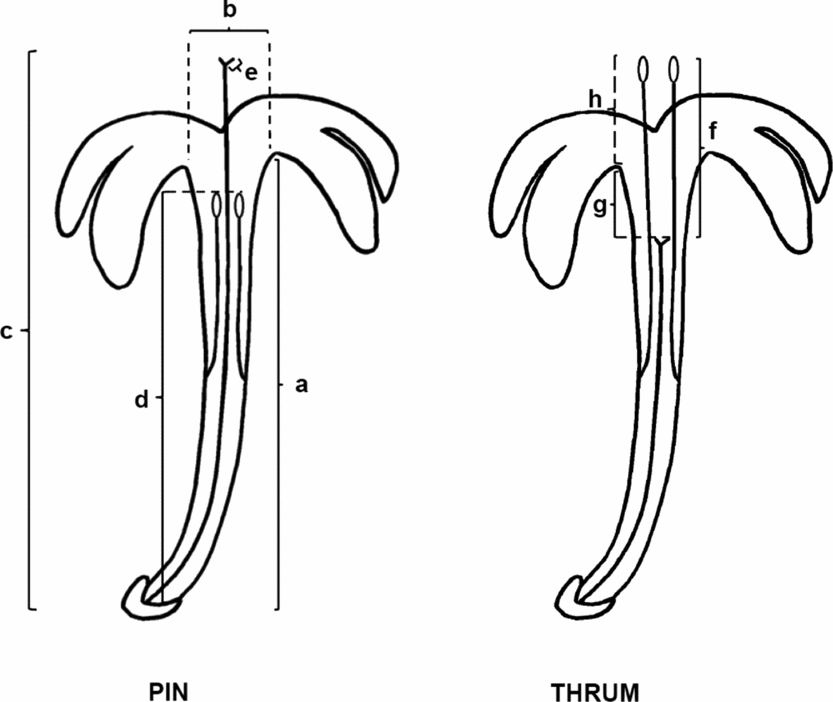
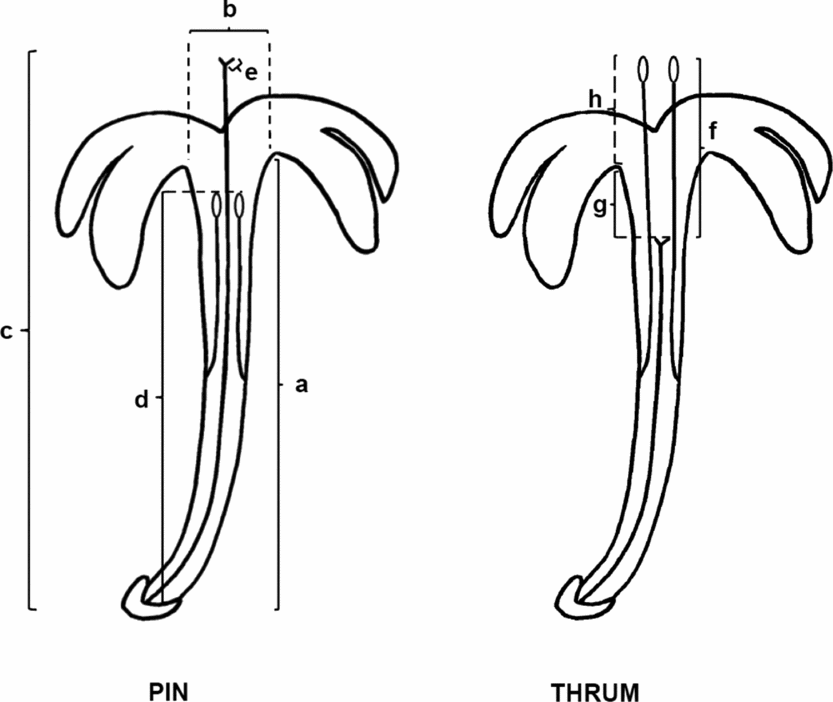
In order to determine if floral variation corresponds with a distylous system, we measured three to seven flowers from 66 plants for a total 305 flowers. We measured the following floral traits (Figure 2): (1) corolla tube length, (2) corolla tube width, (3) stigma height, (4) anther height, (5) stigma lobe length, (6) stigma–anther separation, (7) corolla–stigma distance and (8) corolla–anther distance. Differences in individual floral traits between morphs were evaluated with PROC MIXED in SAS v. 9.2. The model includes morph as a fixed factor, plant nested within morph as a random factor, and each morphological trait as the response variable. We also estimated correlations among traits using PROC CORR in SAS v. 9.2. To avoid pseudoreplication, we averaged the values of all flowers sampled from the same plant and used a single value per plant for each trait to run the correlations. In order to evaluate the reciprocity between the reproductive organs of pin and thrum morphs (i.e. the reciprocal placement of pistils of pin flowers with anthers of thrum flowers, and pistils of thrum flowers with anthers of pin flowers), we calculated the index of reciprocity proposed by Sánchez et al. (Reference SÁNCHEZ, FERRERO and NAVARRO2013) in its most recent version, RECIPRO (http://webs.uvigo.es/plantecology/software.en.html). The index compares distances between the stigmas of each flower to same-level anthers of all flowers of the opposite morph sampled in the population. Index values range from 0 to 1, with 0 indicating no reciprocity and 1 indicating complete reciprocity (Sánchez et al. Reference SÁNCHEZ, FERRERO and NAVARRO2013).
Schematic representation of pin and thrum flowers showing floral traits measured of Palicourea tetragona at La Selva Biological Station, Costa Rica.
Pollinator visitation and effectiveness
To characterize the pollination system of P. tetragona, we observed flowers of 56 individuals during 2–28 July 2010. Observations were conducted from 20h00 to 5h30 for periods of 1 h. For each 1-h period we observed a different plant; we had a total of 56 observation hours. We recorded the identity of the flower visitor, the number of flowers visited, contact with the reproductive organs and time spent in the flower. We conducted nocturnal observations using three Sony Camcorder video cameras (50 observation hours), and with a Motion Sensor camera RM45 RapidFire™ (six observation hours); the four cameras had infrared light sources for night vision and visitation frequencies did not differ between the two recording devices. Different cameras were set on pin and thrum individuals simultaneously. The number of flowers observed was recorded for later calculation of visitation rates. We also conducted observations during the morning 6h00–10h00 for 12 periods of 15 min. Flowers started senescing during this period and occasional floral visitors were never observed contacting stigmas; therefore, no further diurnal observations were conducted.
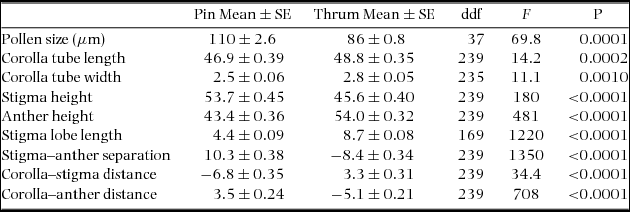
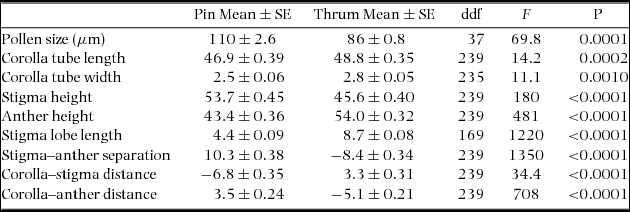
To quantify pollen deposition on stigmas, we bagged flower buds on the 56 plants with mesh net bags to prevent visitation and damage. This was conducted on inflorescences reached with the help of a ladder. Bags were removed prior to observation to expose virgin flowers to natural pollination. Flowers were observed with video cameras for 1 h as described above, after which stigmas were collected and mounted in fuchsine jelly (Dafni et al. Reference DAFNI, KEVAN and HUSBAND2005). The number of pin and thrum pollen grains were counted on each stigma using a light microscope on at least three flowers of each plant. Differences between pin and thrum pollen grains were first determined by estimation of pollen grain size. To do this, we mounted pollen from flowers of each morph and estimated size differences using a micrometre under a Leitz Laborlux 11 microscope. Mean pollen grain size was significantly greater in thrum plants than pin plants (t = 69.8, P < 0.0001, Table 1).
Least Square Means (± SE) and nested ANOVA results comparing floral traits in 60 pin and thrum individuals of Palicourea tetragona at La Selva Biological Station. Denominator degrees of freedom (ddf) are indicated for each trait. Measurements are in mm for all traits except for pollen size (μm). Negative measurements indicate exerted stigmas or anthers.
Pollinator effectiveness was estimated as the number of legitimate pollen grains counted on stigmas that were exposed to moth visitation for 1 h. Given that observations were conducted with video cameras at night time, we had no control over the number of visits received by flowers during the 1-h recording period; therefore, we included the number of pollinator visits per flower as a covariate in the analysis.
All analyses were conducted using PROC GLIMMIX in SAS v. 9.2. The model included morph and pollen type as fixed factors, plant nested within morph as a random factor and the number of pollinator visits per flower as a covariate. The numbers of legitimate, illegitimate and total pollen grains on stigmas were used as response variables. Because these variables were not normally distributed, we specified a Poisson distribution for legitimate and illegitimate pollen, and a Gamma distribution for the total number of pollen grains. To obtain back-transformed least square means, we used the ilink option under the LSMEANS statement. Least square means and standard errors are reported below.
Reproductive success
To determine the rate of fruit initiation and fruit set, we randomly selected one inflorescence per plant on 60 individuals, 25 pin and 35 thrum. Inflorescences have on average 22 ± 1.5 flowers and mean number of flowers per inflorescence does not differ between pin and thrum plants (t = 0.356, P = 0.55). We quantified flower production, number of initiated fruits and fruit set by checking infructescences every 2 wk. Aborted fruits were also counted; these fruits were distinguished because they turned dark and wrinkled, and eventually decayed. Fruit-set variation between pin and thrum morphs was analysed using PROC GLIMMIX in SAS v.9.2. For all variables, we specified a binomial distribution with a logit link function.
RESULTS
Morph ratios
Morph abundances in the study population of P. tetragona did not differ from a 1:1 ratio indicating isoplethy (Z = −0.18; P > 0.05). Overall we counted 58 pin individuals and 61 thrum individuals within the study area. Shrubs were generally well separated, often with neighbouring individuals being different morphs; thus there was no indication of clonal propagation in this species.
Floral variation
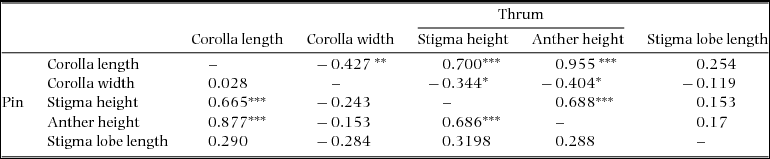
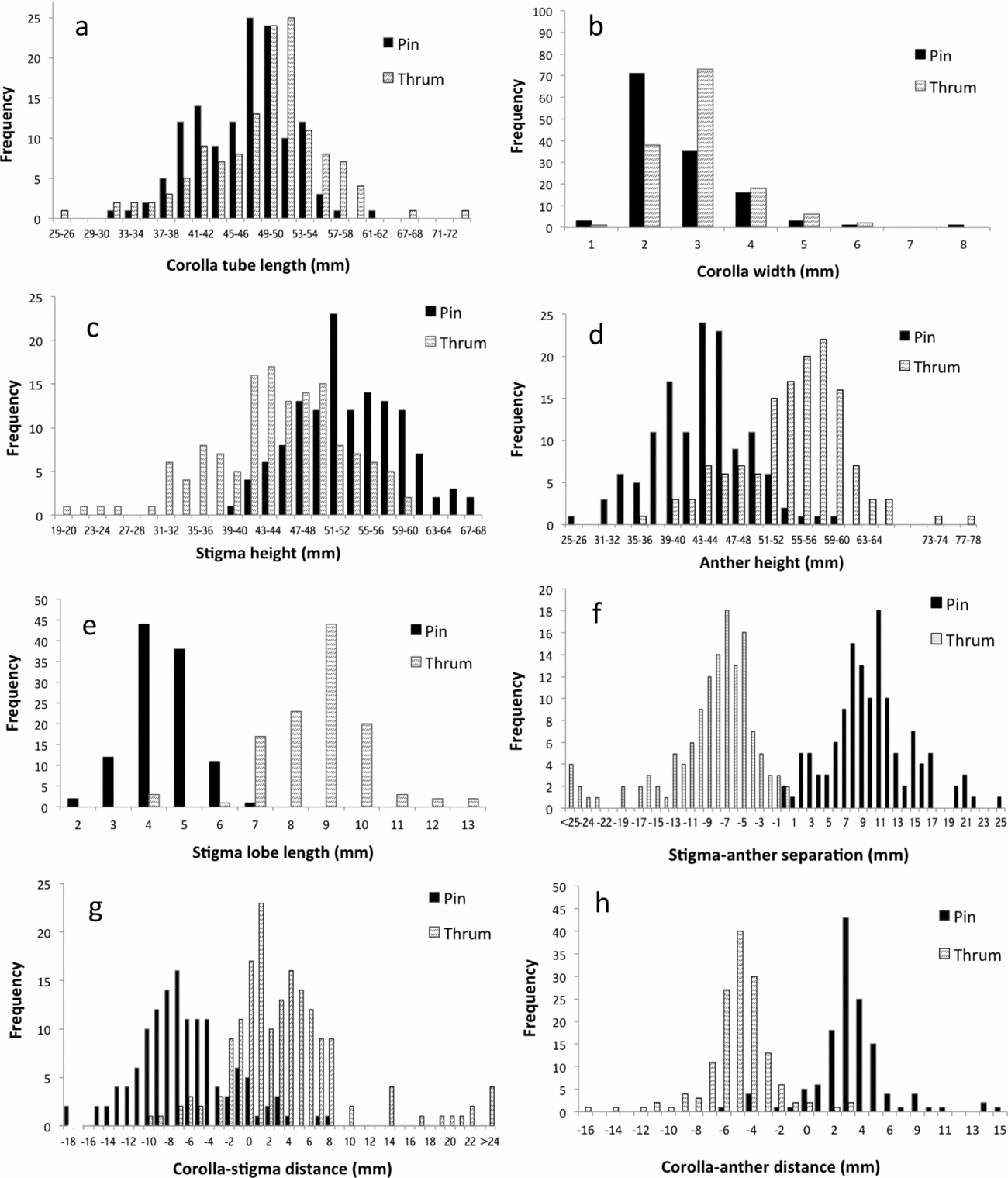
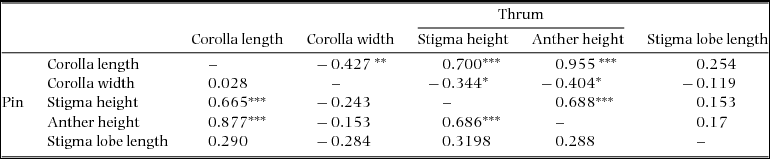
Pin and thrum plants of P. tetragona differed in all floral traits that typically describe heterostyly, i.e. height of the reproductive organs and ancillary traits (Table 1). Stigma height and corolla–stigma distance were significantly greater in pin flowers, while corolla tube length and width, anther height, stigma lobe length and corolla–anther distance were greater in thrum flowers (Table 1). Although we did not measure stigma width or area, it is worth mentioning that stigma shape varies considerably among morphs, pin flowers have shorter and broader stigma lobes compared with the long narrow lobes of thrum flowers. Correlations among floral traits had the same patterns for pin and thrum individuals; the highest associations were between corolla tube length and the heights of stigmas and anthers (Appendix 1).
The distribution of floral variation differed among traits. The frequency distributions of corolla tube length and width were similar and overlapped between morphs, although larger values were biased towards the thrum morph (Figure 3). Anther height and stigma height tended to bimodality but there was substantial overlap between pin and thrum morphs (Figure 3). Stigma lobe length, stigma-anther separation, corolla-stigma distance and corolla-anther distance followed bimodal distributions (Figure 3).
Frequency distributions of floral traits of Palicourea tetragona at La Selva Biological Station, Costa Rica: corolla tube length (a), corolla tube width (b), stigma height (c), anther height (d), stigma lobe length (e), stigma–anther separation (f), corolla–stigma distance (g), corolla–anther distance (h). Negative distances indicate cases where stigmas or anthers are exerted.
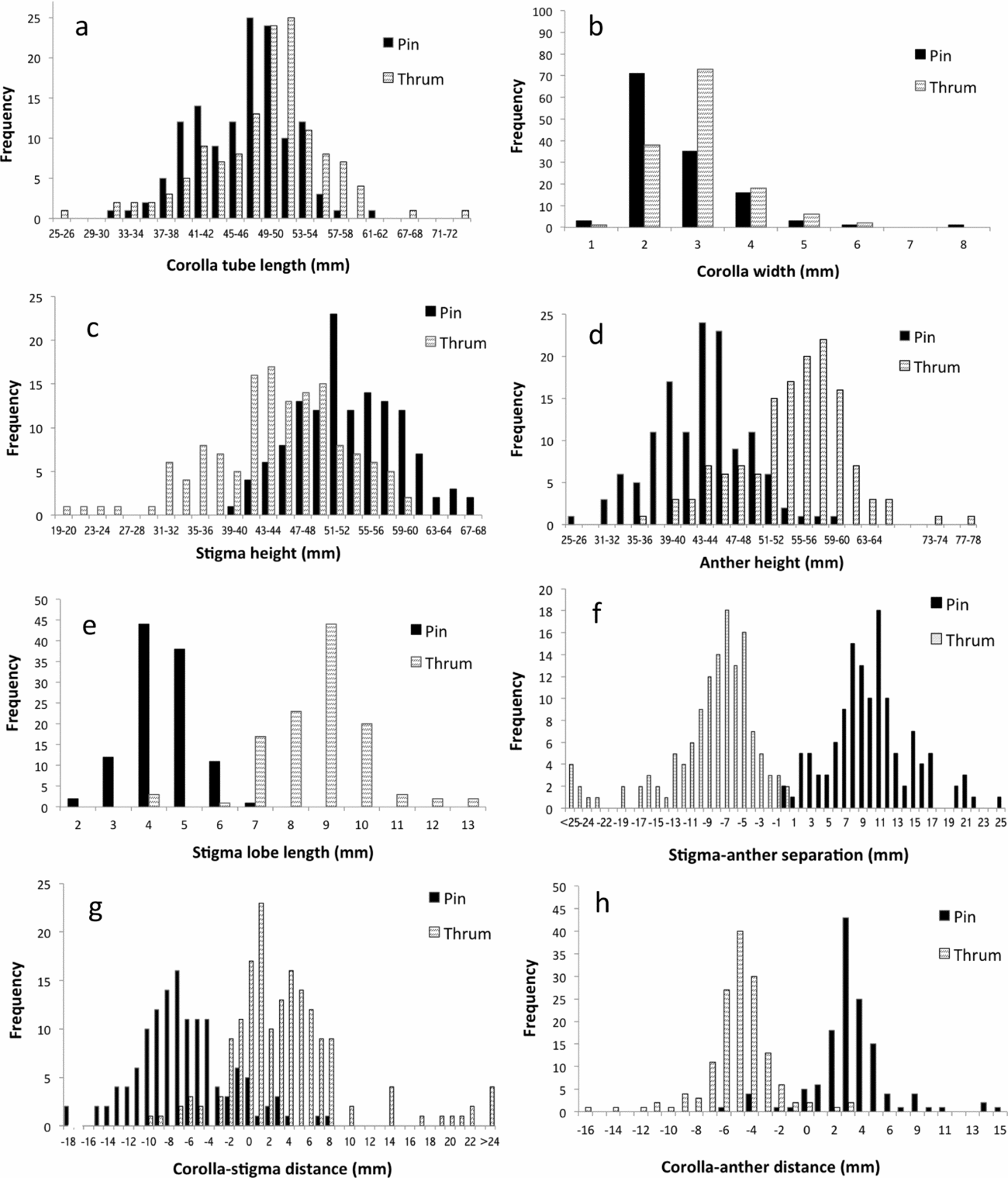
The index of reciprocity for P. tetragona was 0.74. The length difference (mean ± SD) between short stigmas and short anthers was 0.151 ± 0.13 mm, and the length difference between long stigmas and long anthers was 0.158 ± 0.11 mm.
Pollinator visitation and effectiveness
The primary pollinators of P. tetragona were hawkmoths (family Sphingidae) that visited flowers between 20h00 and 5h00. The two most common species to both pin and thrum flowers were Eumorpha labruscae and Manduca occulta (Sphingidae), both of which have long proboscides. These moths probed flowers for nectar in visits of less than 1 s and they visited multiple flowers within a plant (Supplementary material 1). A third unidentified smaller moth species was infrequently observed (less than 10% of the visits); this species had a shorter proboscis and moved faster during feeding. Visitation ranged 0–4 visits per flower h−1 for both morphs. Mean ± SE hawkmoth visitation rates were 1.5 ± 0.37 visits per flower h−1 for pin individuals, and 1.7 ± 0.32 visits per flower h−1 for thrum individuals. There were no significant differences in visitation rates between morphs (Mann-Whitney U-test Z = −0.906; P = 0.365; N = 56).
Daytime floral visitors included bees (Hymenoptera), flies (Syrphidae: Ornidia sp.) and beetles (Scarabaeidae) that collected leftover pollen during morning hours. These insects were observed feeding from the exerted anthers of thrum flowers and they were never observed visiting pin flowers. Occasional visitors included a praying mantis, ants and spiders.
Reproductive success
Pollinator effectiveness – measured as the number of pollen grains deposited on stigmas in 1-h periods – differed among pin and thrum plants. The total number of pollen grains deposited on stigmas was higher for thrum (153 ± 24.0) than for pin flowers (89 ± 19.1), although the values were not significant (F(1,21) = 4.24, P = 0.052). However, there was an effect of the covariate number of pollinator visits (F(1,84) = 4.0, P = 0.048), indicating that pollen loads deposited on stigmas were partly dependent on pollinator visitation frequency. Likewise, illegitimate pollen loads were significantly greater on thrum (87 ± 38.6) than on pin stigmas (7 ± 4.6) with a large effect of the covariate (F(1,21) = 10.3, P = 0.0042, covariate F(1,84) = 81.8, P < 0.0005). There was a trend for higher legitimate pollen loads on stigmas of pin than thrum flowers, but the differences were not significant (P = 0.09). The number of heterospecific pollen grains was low for both morphs (33% of pin and 46% of thrum flowers had up to four heterospecific pollen grains).
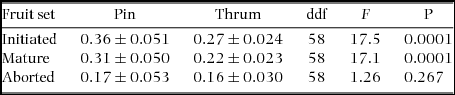
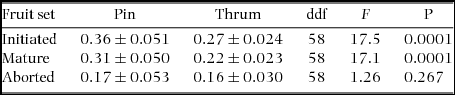
Fruit production differed among pin and thrum morphs for all stages of fruit development. Pin individuals had a higher fruit initiation and final fruit set than thrum individuals (Table 2). Fruits that did not develop to maturity were either aborted or predated. Fruit abortion (aborted/initiated fruit) did not differ between pin and thrum individuals (Table 2). Fruit predation occurred on developing green fruits; these fruits had bite marks and remnant parts were attached to the pedicel. Overall, 2.9% of the initiated fruits had predation marks in both morphs. Seed production ranged between one and two seeds and seed set did not differ between morphs (F(1,41) = 0.051, P = 0.822).
Least square means ± 1SE for the proportion fruit set (initiated or mature fruit/flowers), and aborted (aborted fruit/initiated fruit) for pin and thrum individuals of Palicourea tetragona at La Selva Biological Station, Costa Rica. Denominator degrees of freedom (ddf) are indicated for each trait.
DISCUSSION
Distyly is characterized by the reciprocal placement of stigmas and anthers in two floral morphs that also exhibit bimodal variation in a number of ancillary traits (Barrett & Shore Reference BARRETT, SHORE and Franlin-Tong2008). An earlier study conducted at La Selva suggested that floral variation in stigma height in P. tetragona was continuous, and that two distinct morphs could not be clearly distinguished (treated as Psychotria chiapensis in Faivre & McDade Reference FAIVRE and MCDADE2001). However, two previous studies (Bawa & Beach Reference BAWA and BEACH1983, Faivre Reference FAIVRE2002) documented a self-incompatibility mechanism typically associated with distyly in P. tetragona. In our study, the two floral morphs of P. tetragona show bimodal variation in reciprocal herkogamy, as well as a number of ancillary traits. However, there was overlap in stigma height between morphs, a phenomenon also documented in various distylous Rubiaceae (Faivre Reference FAIVRE2002, Naiki & Kato Reference NAIKI and KATO1999). We also found asymmetric pollen deposition and fruit set suggesting that the pin morph obtains greater gains in reproductive success through the female function than the thrum morph.
Deviations from disassortative mating in distylous plant species have been attributed to variation in morph abundance or pollen production, the breakdown of self-incompatibility, and variation in floral traits among morphs (Barrett & Shore Reference BARRETT, SHORE and Franlin-Tong2008, Ganders Reference GANDERS1979). In P. tetragona the study population is isoplethic (1:1 morph ratio), and both morphs have a functioning self-incompatibility system (Bawa & Beach Reference BAWA and BEACH1983). Therefore, we examine the role of other floral traits and interactions with pollinators as potential determinants of pollen-transfer effectiveness and female reproductive success.
In addition to the variation in style and stamen length, floral-trait dimorphisms in distylous plants have been reported for corolla size, pollen size, pollen quantity, pollen exine sculpturing, stigma shape and stigmatic papillae (Dulberger Reference DULBERGER and Barrett1992); however, patterns of floral variation differ across species. For example, within the family Rubiaceae corollas may be uniform in size or, as in P. tetragona, they may be larger in the thrum morph (Wolff & Liede-Schumann Reference WOLFF and LIEDE-SCHUMANN2007). Ganders (Reference GANDERS1979) proposed that differences in flower size might enhance attraction to the morph showing a disadvantage in pollen receipt. In P. tetragona, pollinator visitation did not differ between morphs, indicating that the small size differences observed in flower size provide no particular advantages in pollinator attraction.
Differences in pollen size and quantity may also be related to variation in pollen transfer in distylous species. The general trend is that thrum flowers produce a smaller number of larger pollen grains than pin flowers, although some species show no differences between morphs (Darwin Reference DARWIN1877, Wolff & Liede-Schumann Reference WOLFF and LIEDE-SCHUMANN2007). In P. tetragona, thrum pollen grains were larger in size than pin pollen grains (Table 1), but preliminary counts showed no differences in pollen production among morphs (unpubl. data). Recent research has revealed that nutrient provisioning in the pollen is related to pollen grain size or mass (Roulston et al. Reference ROULSTON, CANE and BUCHMANN2000); however, a general relationship between pollen size and style length remains controversial (Cruden Reference CRUDEN2009, Roulston et al. Reference ROULSTON, CANE and BUCHMANN2000). More research is necessary to evaluate if thrum pollen tubes perform better during the initial stages of growth through the stigma, when development is fully dependent on nutrients contained within the pollen grain (i.e. autotrophic phase of pollen-tube growth, Stephenson et al. Reference STEPHENSON, TRAVERS, MENA-ALI and WINSOR2003).
Another trait that showed inter-morph variation in P. tetragona is stigma shape. In most Rubiaceae species, thrum stigmas have longer lobes than pin stigmas (Dulberger Reference DULBERGER and Barrett1992, Ganders Reference GANDERS1979) but in the genus Palicourea, this trend is reversed (Ornelas et al. Reference ORNELAS, JIMÉNEZ, GONZÁLEZ and HERNÁNDEZ2004). The long stigmatic lobes in thrum flowers are thought to increase the area exposed to the pollinator's proboscides within tubular corollas (Lau & Bosque Reference LAU and BOSQUE2003). In P. tetragona, thrum stigmas received higher pollen loads than pin stigmas; however, most of the pollen was illegitimate, as has been reported in other distylous species (García-Robledo Reference GARCÍA-ROBLEDO2008, Lau & Bosque Reference LAU and BOSQUE2003). It is thus possible that the evolution of long narrow stigmas is more related to space constraints associated with fitting into extremely slender corollas than with selection to increase legitimate pollen reception; however, this idea needs to be experimentally evaluated.
Darwin (Reference DARWIN1877) proposed that heterostyly evolved to facilitate disassortative pollen transfer between reproductive organs of corresponding heights on different parts of the pollinator's body. Other researchers suggested that reciprocal herkogamy should reduce sexual interference and avoid pollen wastage on illegitimate crosses (Baker Reference BAKER1964, Webb & Lloyd Reference WEBB and LLOYD1986). Thus, one of the traits expected to characterize distylous systems is reciprocity, i.e. the correspondence in the heights of stigmas and anthers of the same level between pin and thrum morphs. Sánchez et al. (Reference SÁNCHEZ, FERRERO and NAVARRO2013) developed an index for heterostylous species that measures the degree of reciprocity ranging from 0 (no reciprocity) to 1 (complete reciprocity). In P. tetragona, the index was 0.74, a value that is within the range of what has been reported for other dioecious species (0.2–0.9; Sánchez et al. Reference SÁNCHEZ, FERRERO and NAVARRO2013). Incomplete reciprocity in P. tetragona possibly reflects the variation and overlap in the height of the reproductive organs between morphs, which may have facilitated transfer of mixed pollen loads.
High amounts of self- or intra-morph pollen may have caused stigma clogging and prevented legitimate pollen tubes from reaching the ovules in P. tetragona. Interestingly, illegitimate pollen loads were higher on thrum than on pin stigmas, although flowers of both morphs received a sufficient number of pollen grains to develop all ovules (two). An experiment conducted on Palicourea fendleri revealed that hummingbirds deposited more self-pollen on thrum than on pin stigmas (Lau & Bosque Reference LAU and BOSQUE2003), but it has not been evaluated whether moths may cause the same bias in pollen deposition. In P. tetragona, geitonogamous visits by hawkmoths occurred in all cases when more than one flower was observed; thus, it is possible that the long narrow stigmatic lobes contained within slender corollas, combined with frequent geitonogamous visitation, facilitated deposition of self-pollen by moths, increasing sexual interference in thrum flowers and causing asymmetric fruit set.
In the Rubiaceae, asymmetric pollen flow and fruit set have been documented in a number of species belonging to different genera (Pailler & Thompson Reference PAILLER and THOMPSON1997, Ree Reference REE1997, Stone Reference STONE1995). Most species are morphologically and functionally distylous but show greater pollen deposition and/or fruit set in either the pin (Bernucci Virillo et al. Reference BERNUCCI VIRILLO, RAMOS, CASTRO and SEMIR2007, Feinsinger & Busby Reference FEINSINGER and BUSBY1987, Liu et al. Reference LIU, LUO, WU, BAI and ZHANG2012) or the thrum morph (Valois-Cuesta et al. Reference VALOIS-CUESTA, SORIANO and ORNELAS2011, Wolff & Liede-Schumann Reference WOLFF and LIEDE-SCHUMANN2007). The floral visitors of these species include hummingbirds, bees, flies and lepidopterans, indicating that particular pollinators are not responsible for causing pollen transfer asymmetries in one or the other direction. However, the limited information available for this large plant family suggests that species pollinated by moths and butterflies have exclusively pin-biased female reproductive success (Li et al. Reference LI, WU, ZHANG and BARRETT2010, Naiki & Kato Reference NAIKI and KATO1999, Pailler et al. Reference PAILLER, HUMEAU, FIGIER and THOMPSON1998). In lepidopteran-pollinated species, reproductive interference might disrupt the proper functioning of disassortative pollination between short-level organs promoting asymmetric pollen flow due to extremely narrow corollas. An alternative explanation proposed for functionally dioecious species of Mussaenda is that upward-facing hairs in the inner corolla tube, which possibly evolved to prevent visits by illegitimate pollinators, prevent pollen from entering thrum corollas (Naiki & Kato Reference NAIKI and KATO1999). Future studies of moth-pollinated Rubiaceae should evaluate how particular floral traits influence pollen transfer patterns.
Species with asymmetric pollen transfer should compensate losses in female reproductive success in one morph with gains through the male function in the opposite morph. Thus, with heteromorphic self-incompatibility, asymmetric pollen transfer could lead to changes in the functional gender of heterostylous species. This could in some cases lead to the evolution of separate sexes (Lloyd & Webb Reference LLOYD, WEBB and Barrett1992). Some authors have proposed that shifts from distyly to dioecy are driven by transitions from long-tongued nectar-feeding pollinators to short-tongued pollen-feeding pollinators (Beach & Bawa Reference BEACH and BAWA1980, Vuilleumier Reference VUILLEUMIER1967). However, pollen transfer asymmetries and functional dioecy occur in species with long tubular flowers pollinated by hawkmoths and hummingbirds, such as P. tetragona and other Rubiaceae species. Avoidance of sexual interference has been recognized as one of the most important selective factors underlying the evolution and maintenance of distyly (Lloyd & Webb Reference LLOYD, WEBB and Barrett1992). However, where interference avoidance is not fully effective, stigma clogging could provide a selective force promoting gender specialization in distylous plant lineages. Future studies of distylous species need to address how geographical and temporal variation in pollinator service and floral morphology are related to variation in pollen transfer and plant reproductive success.
ACKNOWLEDGEMENTS
We thank two anonymous reviewers for helpful comments to an earlier version of this manuscript. We thank Gumersindo Montoya for technical assistance, Daniel McDonnell for assistance conducting fieldwork, and Orlando Vargas, Danilo Brenes and La Selva Biological Station for logistical support. Funding was provided by the Organization for Tropical Studies (OTS), by CONACyT, Mexico (grants 2009-C01-0597 to MQ, 2010-155016 to SMR) and by Programa de Apoyo a Proyectos de Investigación e Innovación (PAPIIT IN201011).
SUPPLEMENTARY MATERIALS
For supplementary material for this article, please visit http://dx.doi.org/10.1017/S0266467413000588
Supplementary material 1_video. Visit by Manduca occulta (Sphingidae) to flowers of P. tetragona at La Selva, Costa Rica, July 2010.
Pearson (r) correlation coefficients for floral traits of pin (lower diagonal) and thrum (upper diagonal) individuals in Palicourea tetragona at La Selva Biological Station, Costa Rica. Asterisks indicate significance levels, *<0.05 ≥ 0.01, ** <0.01 ≥ 0.0001, ***< 0.0001.