BACKGROUND
Prostate cancer (PC) is the most common male cancer and radical radiotherapy (RRT) is a key treatment option available for localised and locally advanced disease. 1 Recent advances such as intensity-modulated radiation therapy, fractionated delivery regimens and volumetric modulated arc therapyReference Viani, Rossi, Suguikawa, Zuliani and Stefano 2 , Reference Andreyev, Wotherspoon, Denham, Hauer-Jensen and Hauer-Jensen 3 aim to reduce toxicity. However, both late and acute symptoms and side effects can still occur and impact on quality of life (QOL).Reference Boledras, Santora and Gutierrez 4 , Reference Lehto, Helanders, Taari and Aromaa 5 Therefore, robust plans to ensure patients’ supportive needs are met both during treatment and beyond need to be implemented.Reference Bekelman, Zelefsky, Jang, Basch and Schrag 6 , Reference Wootten, Abbott and Meyer 7
To enable patient coping it is important to offer both information and support (IAS) however, often these needs are left unmetReference Owens and White 8 – Reference Ream, Quennell and Fincham 10 particularly regarding information about treatment, psychological, sexual issues and logistics of the health care setting.Reference Boberg, Gustafson and Hawkins 11 , Reference Cockle-Hearne, Charnay-Sonnek and Denis 12
Patients were more likely to feel their needs were unmet where they had limited access to health professionals (HPs) both during and after treatment.Reference Cockle-Hearne, Charnay-Sonnek and Denis 12 Certainly, in a large Finnish sample half of the patients undergoing treatments for PC were dissatisfied with their IAS and if inadequate at baseline a significant predictor of QOL at 5 years.Reference Ulla-Sisko, Helander, Taari and Aromma 13 Recommendations to improve supportive care suggest that a comprehensive understanding of individual patient need along with staff training may ultimately facilitate decision making between HPs and patientsReference Rüesch, Schaffert and Fischer 9 and a key role for the nurse specialist is recommended to facilitate this.Reference Cockle-Hearne, Charnay-Sonnek and Denis 12
However, with limited resources it is challenging to meet the IAS needs of patients and sustain them over time.Reference Chien, Lui and Lui 14 One way to encourage patients to share experiences and coping skills is though group support.Reference Owens and White 8
A conversational group support for men with PC proved successfulReference Öster, Hedestig, Johansson, Klingstedt and Lindh 15 in that men felt supported and were positive about airing concerns (including impotence) this ultimately resulted in a greater understanding of PC and its side effects. Indeed, an end of treatment group psycho-educational intervention in breast cancer (BC) patients to address IAS and psychosocial needs found it effective resulting in patients reporting enhanced knowledge.Reference Jones, Cheng and Jackman 16 A recent pilot study in Leeds Teaching Hospitals Trust (LTHT) radiotherapy (RT) department in BC patients found no significant differences in QOL between patients assigned to an individual or a group-based treatment review (GBTR)Reference Albutt, Wem, Copeland, Gardner, Velikova and Holch 17 suggesting this may be a credible alternative for some patients to improve patient satisfaction and compliance.
In order to deliver changes in practice to meet patient IAS needs government initiatives and publications have stressed the need for practitioners to review service delivery to take account of patient needs, make timely and information accessible to enable informed decision making with HPs. 1 , 18 , 19
The majority of studies report unmet IAS around diagnosis or follow-upReference Owens and White 8 , Reference Rüesch, Schaffert and Fischer 9 , Reference Ulla-Sisko, Helander, Taari and Aromma 13 with less focus during treatment. However, addressing key needs and enabling signposting to relevant services during treatment (when patients are in close contact with HPs), could bridge the gap between diagnosis and follow-up. Here we explore the IAS provision in patients undergoing treatment within the LTHT RT department from their individual review with a doctor or UN specialist. Further, as there is limited research on group support for patients undergoing RRT for PC and with literature suggesting this could be beneficial for patients the aims of this service evaluation project are to:
∙ Establish the effectiveness of the current service in relation to patient’s information and support needs including their individual treatment review.
∙ To identify opportunities for service improvement and in particular the value of GBTR.
METHOD
Participants and recruitment
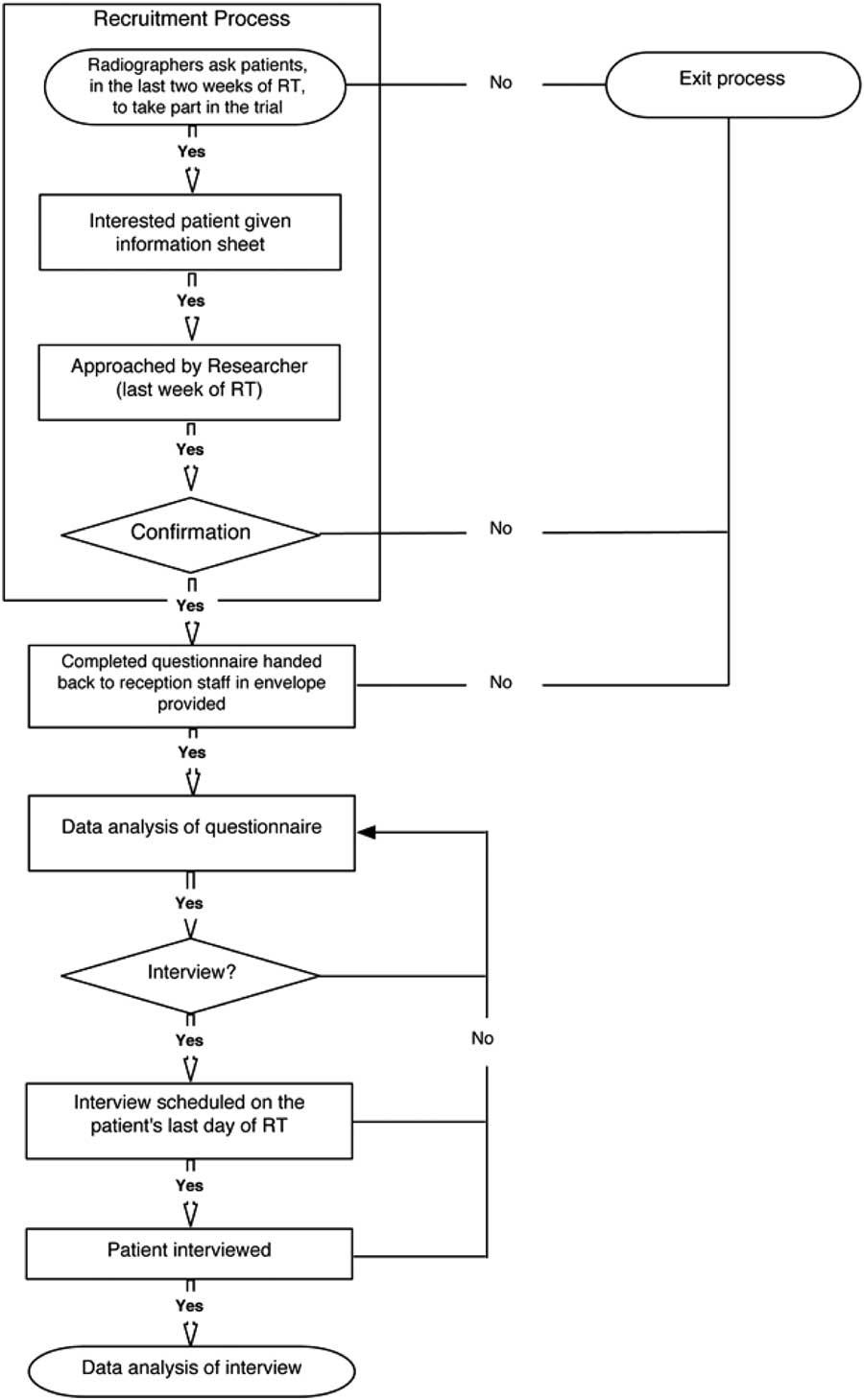
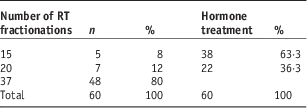
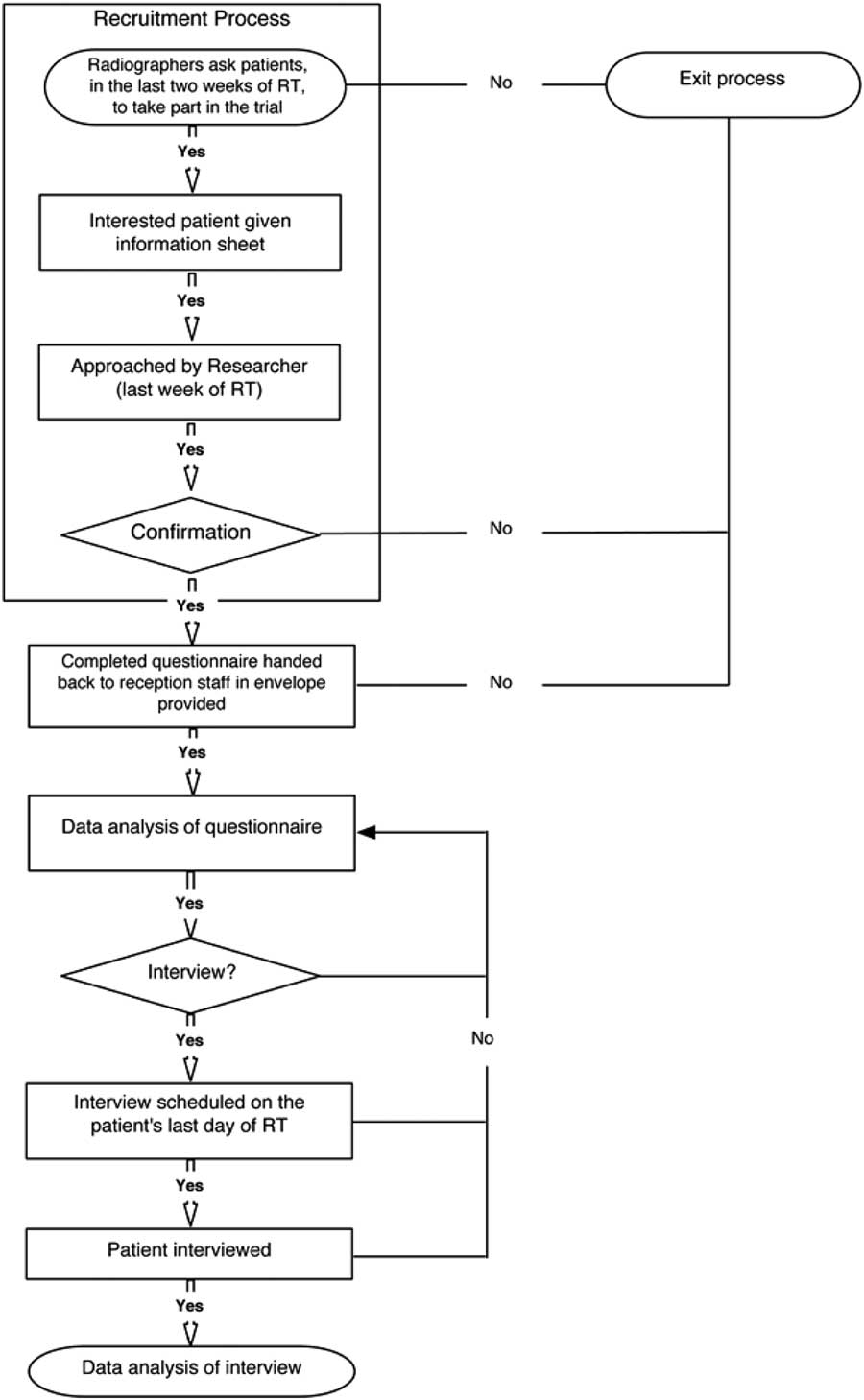
A convenience sample of eligible patients who had PC, treated with RRT (±concomitant chemotherapy, hormone therapy and surgery) and completing treatment were recruited. Exclusion criteria deemed patients should not exhibit overt psychopathology or serious cognitive dysfunction. Using a cross sectional design 68t patients were approached and 60 agreed to take part (mean age 70 range 47–79). For patient RT fractions see Table 1. Patients were identified through Mosaiq® (Elekta, Stockholm, Sweden) the department’s radiation management system and recruited between June and August 2015 and asked 2 weeks before completing RT if they would like to take part. Information sheets were given and informed consent obtained. Of those who agreed to be interviewed a convenience sample was selected. See Figure 1 for data collection and recruitment flow chart.
Recruitment and data collection flow chart.
Treatment details of participants (n=60)

MATERIALS
Questionnaire
A 16-item questionnaire was constructed following guidelinesReference Mathers, Fox and Hunn 20 to explore patient experiences of RT and their IAS needs (including treatment review and enema and bladder filling). The questionnaire comprised mainly closed-response questions, for example Do you feel there was any additional information you required prior to your initial appointment? YES/NO, a free text box underneath each question enabled patients to expand on their answers.
Procedure
Research governance and ethics
The study was deemed service evaluation not requiring NHS ethical approval 21 ; however, Trust Research and Development department was obtained alongside Sheffield Hallam University ethics committee approval. The authors assert that this work complies with ethical standards of the Helsinki Declaration of 1975 (revised in 2008), the data protection act 22 and good clinical practice guidelines. 23
Self-reported questionnaire
Typically, questionnaires were completed in a quiet area of the RT department or at home and posted back in a pre-paid envelope.
Semi-structured interview
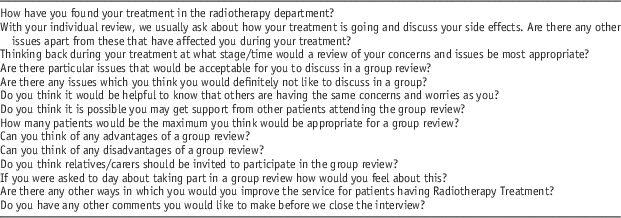
Patients (n=11) were interviewed on their final day of treatment in a private room in the RT department. Interviews were audio-recorded, took ~30–45 minutes and were subsequently transcribed. Patient anonymity was maintained by allocating study numbers to participants and supplying pseudonyms, HPs were referred to by letters, for example doctor/nurse X/Y/Z. See Table 2 for interview schedule.
Semi-structured interview schedule

Analysis
Self-reported questionnaire
Descriptive data (frequencies and percentages) were computed using IMB SPSS v20 and qualitative data forming the free text comments (FTC), for example ‘please explain your answer’, were categorised according to the questions.
Semi-structured interview
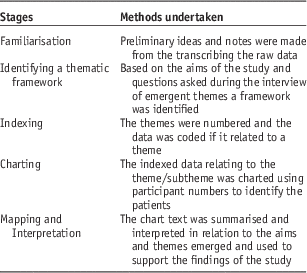
Thematic framework analysis was applied to the interview data (see Table 3).Reference Ritchie, Spencer, Bryman and Burgess 24 Two researchers individually identified a thematic framework enabling indexing, coding and charting of data. Interpretation of coding was discussed and where differences occurred these were resolved via consensus to ensure inter-rater reliability.
Stages of thematic ‘Framework’ analysisReference Ritchie, Spencer, Bryman and Burgess 24

RESULTS
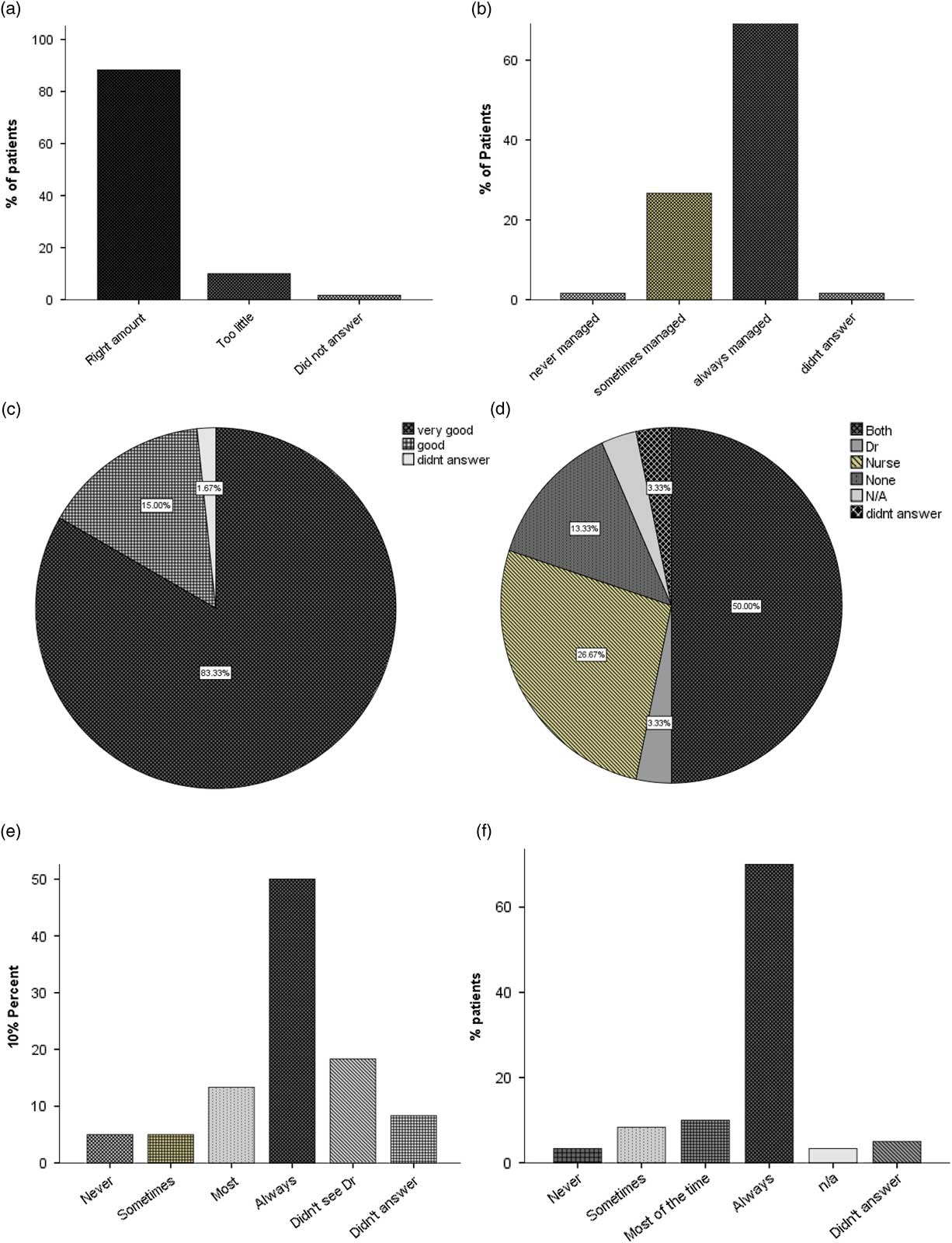
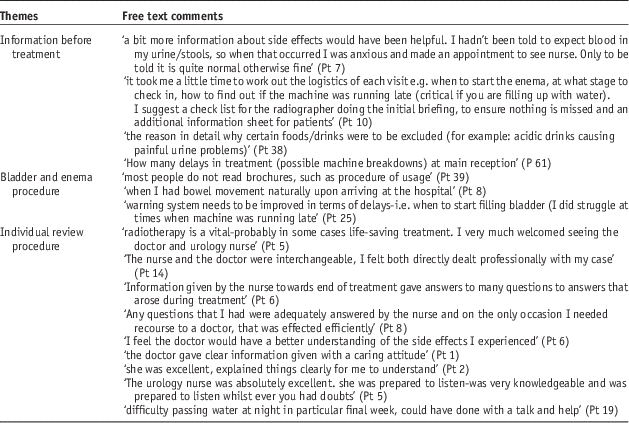
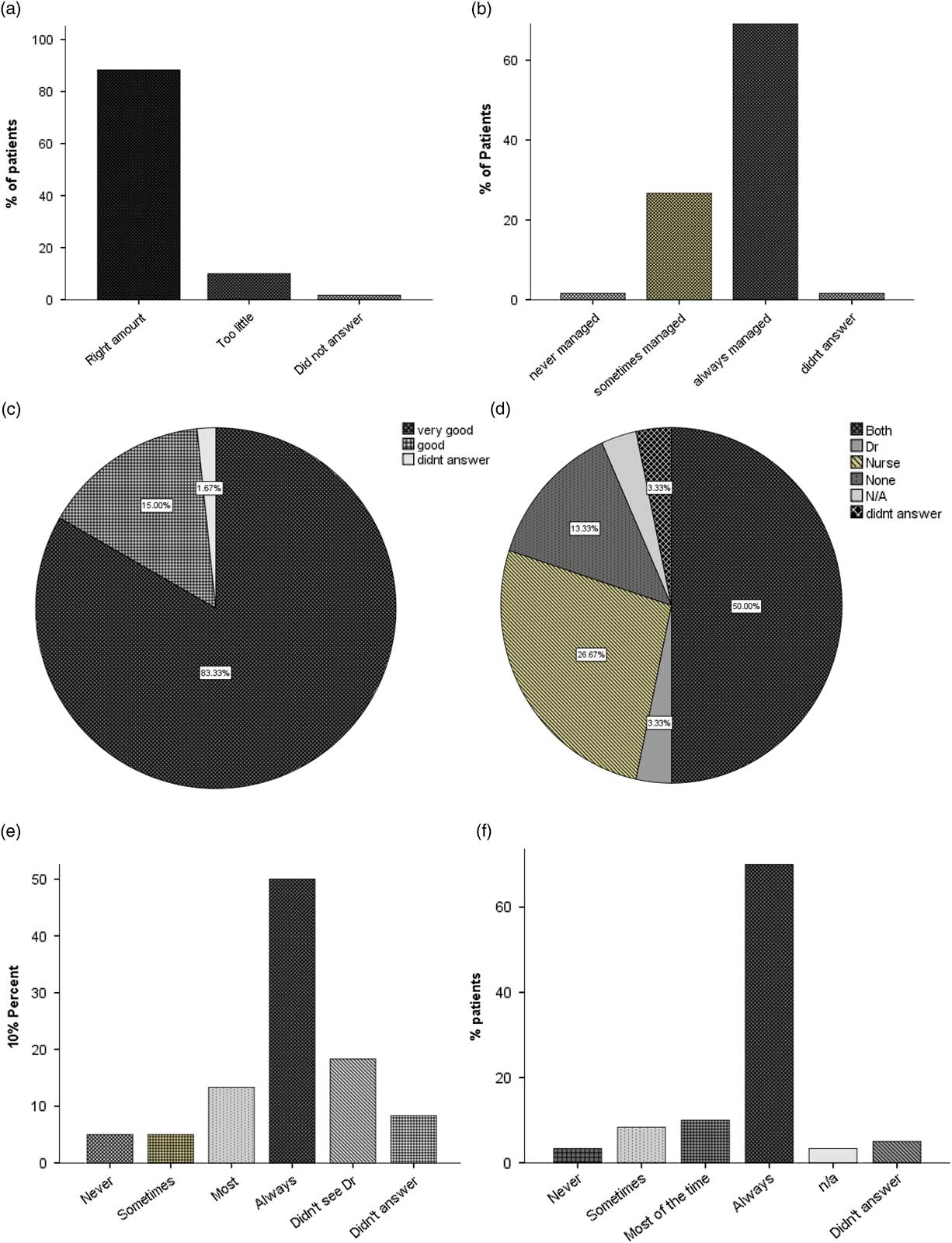
The topics emerging from the proportional data and FTC (Table 4) include satisfaction with information provision before and during treatment; bladder filling and enema procedures (including reasons for non-compliance) and individual treatment reviews including patient preference for HP, timing of appointments and whether concerns were addressed. Please see Figure 2a–2f for summary of these data.
(a) The proportion of patients who felt they got the right or too little information on symptoms and side effects before treatment. (b) The proportion of patients who managed bladder filing by following the procedure. (c) Overall experience of the IAS given by the radiographers. (d) Patient preference on review by either the doctor or urology nurse or both. (e) The extent to which patient concerns were addressed by the doctor. (f) The extent to which the patient concerns were addressed by the urology nurse.
Free text comments from the self-report questionnaire

Information provision
In general, 87% of patients felt they were given the ‘right amount’ of information ranging from 90 to 93% for bowel preparation and bladder filling, respectively. In all, 82% of patients felt that the IAS given by treatment radiographers was ‘very good’ (Figure 2c). Overall 10% of patients stated they needed extra information this was particularly true before commencing RT (15%) (Figure 2a). Most patients (77%) did not require any additional support from the doctor or UN; however, 6% required more information for the enema procedure suggesting verbal emphasis from the HCP would be useful (see Table 4).
Bladder and enema procedure
A total of 20% of patients described occasions where they did not use the enema due to them having a natural bowel movement and 26% said they only ‘sometimes’ managed to follow the procedure and 2% never managed (Figure 2b). Treatment delays were the most common reason for not being able to maintain a full bladder and patients suggested improved communication could obviate this in future.
Individual review
The doctor and UN were seen as having very similar roles (Table 4) and 49% of patients preferred to be reviewed by both; 26% of patients preferred to see the UN and 3% the doctor (Figure 2d); 79% of patients thought scheduled appointments were ‘about right’ for the UN and 64% for the doctor. With 10 and 7% stated they needed more appointments with the doctor and UN, respectively (21% stated they did not see a doctor); 70% of participants ‘always’ felt their concerns were addressed by the UN and 49% with the doctor (Figure 2e and 2f). A small number (5%) felt their concerns were ‘never’ addressed by the doctor and 3% felt the same about the UN (Table 4). However, the overall experience with the doctor and/or UN was either ‘very good’ (62%) or ‘good’ (23%).
Semi-structured interviews
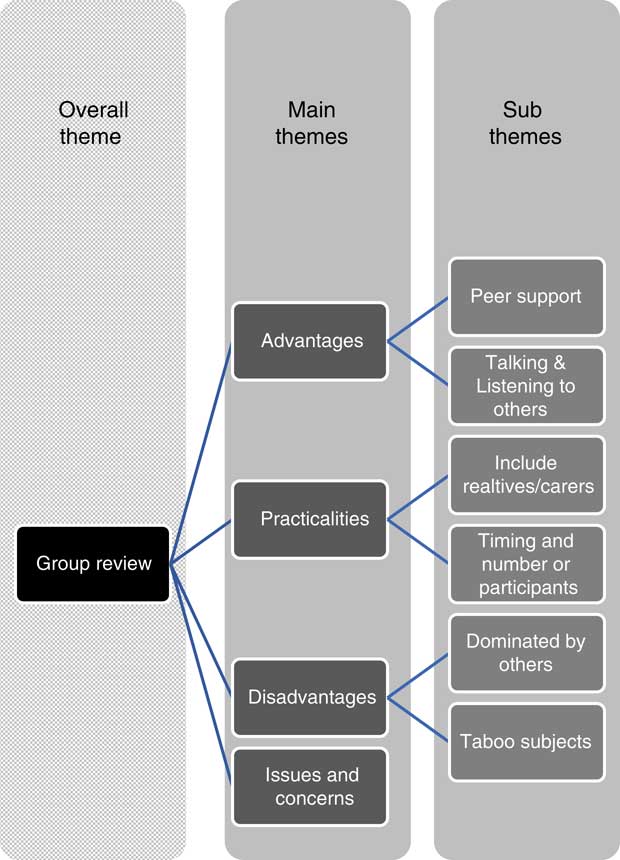
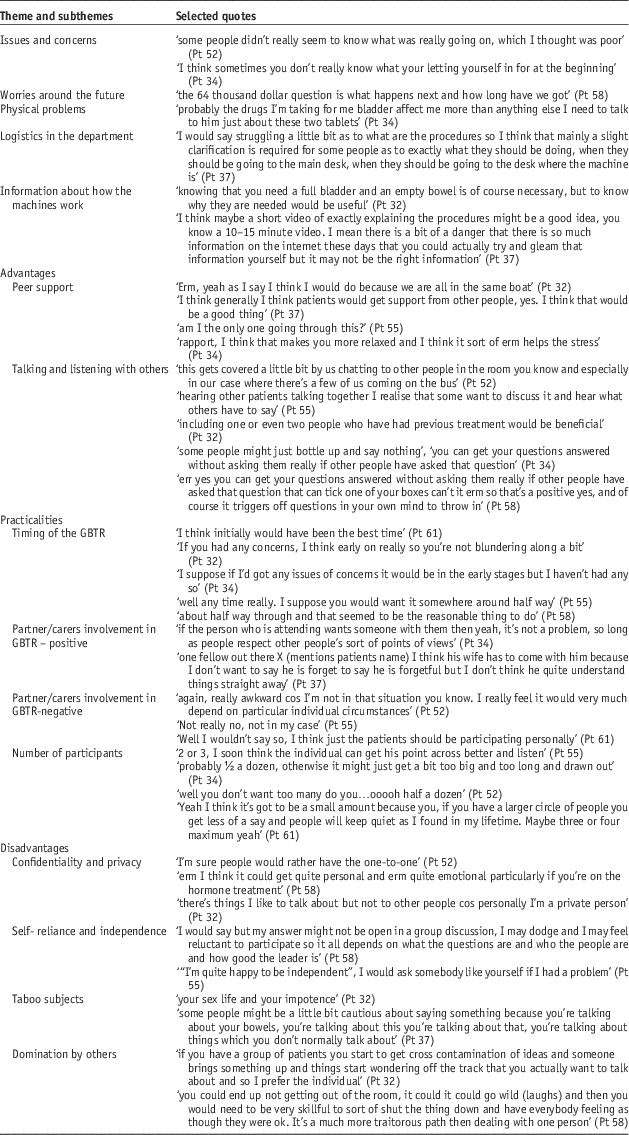
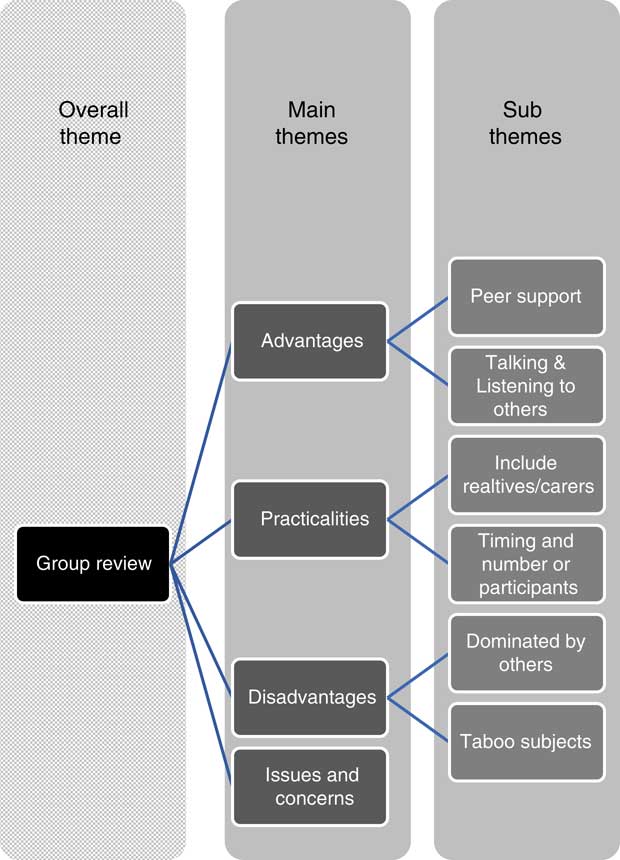
Here emergent themes and subthemes are presented (Figure 3) and illustrated with supporting quotes (Table 5). The mean age of patients was 70 (range 60–80) and 60% were in receipt of hormone therapy.
Overall themes, main and subordinate themes from the thematic framework analysis.
Themes, subthemes and selected quotes form the semi-structured interviews

Abbreviation: Pt, patient (number).
Summary of themes
Issues and concerns
These were generally related to information provision, physical problems, medication, logistics of the department and survivorship. Some patients felt they would benefit from more information about how RT works, and the rationale for prepping procedures (bladder filling and enema) and suggested this information could be presented visually.
Advantages
Peer support
One of the main potential advantages of GBTR was that peer support could inform and alleviate patient issues or concerns.
Talking and listening to others
Patients felt it would be beneficial to know what other patients are going through and to learn from others experience. A GBTR could give patients the opportunity to access information, ideas or questions they may have been too afraid (or had forgotten) to ask.
Practicalities
Timing: Some patients thought it would be useful at the beginning of treatment; however, others thought it most beneficial in the middle.
Partner or carer involvement
Several patients recognised that relatives or carers may need to be involved for practical reasons alternatively others were less positive suggesting this would make them feel inhibited.
Number of participants
Proposed numbers ranged from 2 to 3 to 6 which was seen as the ideal.
Disadvantages
Privacy and independence
Some patients felt they and (potentially others) would not attend a GBTR citing concerns around confidentiality and privacy and others felt they would not attend because of their strong sense of self-reliance and independence.
Taboo subjects
Patients highlighted that some subjects would not be amenable to a GBTR including sex life/impotence and bodily functions including diarrhoea. However, it was also acknowledged it would be difficult to discuss these issues individually.
Domination by others
There were concerns from patients that a GBTR had the potential to become dominated by others and that careful facilitation could avoid this.
DISCUSSION
This study explored the effectiveness of the IAS for men receiving RRT to the prostate, and opportunities for service improvement, in particular the value of GBTR.
The majority of patients felt they received the right amount of information before their initial appointment although as in previous research some would have appreciated more information on diet and side-effects.Reference Öster, Hedestig, Johansson, Klingstedt and Lindh 15 , Reference Sinfield, Baker, Agrawal and Tarrant 25 Our findings suggest that before commencing RT more detailed and varied information should be delivered via a variety of means including the internet, audio tapes and orientation visits to increase retention and satisfaction.Reference Boledras, Santora and Gutierrez 4 , Reference Flynn, Van Schaik and Van Wersch 26 However, we acknowledge not all patients can take in information before treatment due to anxiety over treatment and diagnosis (40) and therefore IAS should be accessible throughout the treatment trajectory. A recent pilot study recommends the use of videos or VERT (Virtual environment of a RT treatment room) to enable a flexible way to deliver IAS.Reference Sulé-suso, Finney and Bisson 27
Some patients did not use enema procedures (against department protocol) and had bladder-filling problems due to treatment delays. Indeed, the interviews highlighted the need for the staff to communicate better about treatment disruption and preparation procedure. Indeed, conflicting information can result in loss of confidence in the treatment team.Reference Long, Friedrich-Nel and Joubert 28
Around half of patients were happy to be reviewed by either the doctor and/or UN; however, the majority stated their concerns were addressed by the UN consistent with literature showing the significant impact of the UN role in RT treatment review.Reference Sinfield, Baker, Agrawal and Tarrant 25 , Reference Wallace and Storms 29 , Reference Wells, Donnan, Sharp, Ackland, Fletcher and Dewar 30 Less than half of patients reported their concerns were ‘always’ addressed by the Doctor reflecting current research.Reference Sinfield, Baker, Agrawal and Tarrant 25 The overall patient experience with radiographers was very high in comparison to the doctor and UN reflecting previous findings.Reference Sinfield, Baker, Agrawal and Tarrant 25 Perhaps the rapport built over time with radiographers by frequent visits is better than a time limited appointment which can inhibit help seeking behaviour and disempower patients.Reference Rees, Ford and Sheard 31 , Reference Sinfield, Baker, Agrawal and Tarrant 25 These findings suggest a coordinated approach from all members of the multi-disciplinary team (MDT) is needed to deliver comprehensive IAS to patients.
Generally, patients were positive about a GBTR with peer support seen as factor a major factor to enable patients to come to terms with their situation in line with previous research.Reference Öster, Hedestig, Johansson, Klingstedt and Lindh 15 However, as in previous researchReference Boledras, Santora and Gutierrez 4 not all our patients were certain, most patients felt difficult or embarrassing experiences should not be discussed in contrast to previous research where these issues had been successfully discussed in a group situation.Reference Öster, Hedestig, Johansson, Klingstedt and Lindh 15 Another suggested disadvantage was the potential for individuals to dominate so other voices may not be heard; indeed, strong leadership is recommended for group facilitation.Reference Öster, Hedestig, Johansson, Klingstedt and Lindh 15 , Reference Oliffe, Han, Lohan and Bottorf 32 Views were mixed in terms of whether relatives or significant others should be included, the timing of the sessions and the optimum number of participants. Earlier research has stated groups of 6 or more are of limited value to patients.Reference Wallace and Storms 29
The study was a cross sectional snapshot of local service provision thus the findings may not be generalisable to other departments. Similarly, the interviews formed a small sample not necessarily representative of others with PC. For future use the questionnaire will be adapted to give options to state whether they saw the Doctor or UN as this may have influenced results.
CONCLUSION
This study has highlighted the need to co-ordinate approaches with members of the MDT particularly radiographers and the UN) to deliver IAS to patients. In terms of RT practice this could include using a variety of means to advise patients on the rationale for treatment preparation and ensuring treatment delays are cascaded efficiently. Future work will develop a pilot study working with patients and staff to explore the feasibility and acceptability of a GBTR including stratifying patients on need, preference and suitability. Other options include embracing new technologies to augment patients IAS needs. Patients with low level concerns could be signposted to an electronic patient reported outcome (ePROM) self-management system (eRAPID) which is being piloted in the LTHT RT department.Reference Holch, Warrington and Bamforth 33 , Reference Holch, Davidson and Routledge 34
Acknowledgements
The authors would like to thank patients for their contribution to the study and the staff at the St James’s Institute of Oncology Radiotherapy Department for their ongoing support.
Financial support
This research received no specific grant from any funding agency, commercial or not-for-profit sectors.
Conflicts of Interest
None.