Introduction
Disasters have varied characteristics, usually sudden and unexpected, with magnitudes capable of causing a large range of damages.Reference Quarantelli1 According to the United Nations Office for Disaster Risk Reduction (UNISDR; Geneva, Switzerland), Brazil is among the ten countries on the list with the highest number of people affected by disasters between the years of 1995 and 2015.2
Dealing with emergencies requires cooperation in many levels, among several organizations, and it also demands a very well-defined flow of processes. Previous experiences usually provide legacies and constitute important sources of information for decision making.Reference Schächinger and Nerlich3 The health sector has an important role in disaster response as physical and emotional traumas, infectious diseases, and worsening of chronical disorders are common in these situations.Reference Giorgadze, Maisuradze and Japaridze4 In this context, pharmaceutical services (PS) is fundamental, as medicines are essential for promoting, protecting, and recovering of health. Preparedness of PS, centered in availability of quality-assured medicines, promotes rational use and favors disasters response.Reference Miranda, Osorio-de-Castro, Luiza and Castilho5
The military participation in humanitarian operations and disaster response is a common and ancient phenomenon due to the organizational and logistical capacity of these organizations.Reference Heaslip, Sharif and Althonayan6,Reference Apte7 Health care is one of the subsidiary military operational competencies which has been extensively required in the last years due to the increase of disaster situations all over the world.Reference Mahmood, Riley and Bennett8–Reference Johnson10 In Brazil, the armed forces have had history in providing humanitarian aid and support to affected populations, through their field hospitals, with medical and dental care, image and laboratorial exams, as well as PS.11–Reference Pinto13
Therefore, the objectives of this work are to analyze the preparedness of PS in humanitarian aid and disaster response operations supported by military units in an institution of the Brazilian Armed Forces, to identify the main difficulties faced, and to propose a framework to structure the preparedness of PS in operational medicine.
Methods
An investigation of a cross-sectional design was performed in combination with case studies. Elements of the external context and components of implementation and performance of PS were investigated. The evaluation approach consisted in the adaptation of the logic model, indicators, and data collection instruments proposed by Miranda and colleagues.Reference Miranda and Fitzgerald14
The research included three military units within the same armed force. All investigated units have as one of their main functions the action in disaster and humanitarian aid. Despite being part of the same military institution, each unit was independently investigated as they constitute the structure of health emergency response in an isolated manner. These units were identified as A, B, and C.
Data Collection
Field research encompassing interviews with key stakeholders involved in the management of PS, documental research, and good storage practices (GSP) assessment in each unit were done.
Interviews were based on questionnaires divided into two parts: Part 1 with semi-structured questions originated from the indicators of preparedness of PS;Reference Miranda and Fitzgerald14,Reference Pimenta-de-Souza and Miranda15 and Part 2, open-ended questions to explore experiences and opinions of all professionals involved in managing PS in operations of peace, disaster response, and humanitarian aid.
All interviews were recorded, upon the authorization of the participants, and transcribed afterwards. The documental research consisted of searching for institutional publications, internal documents, and operational reports of pharmaceutical areas.
Data Analysis
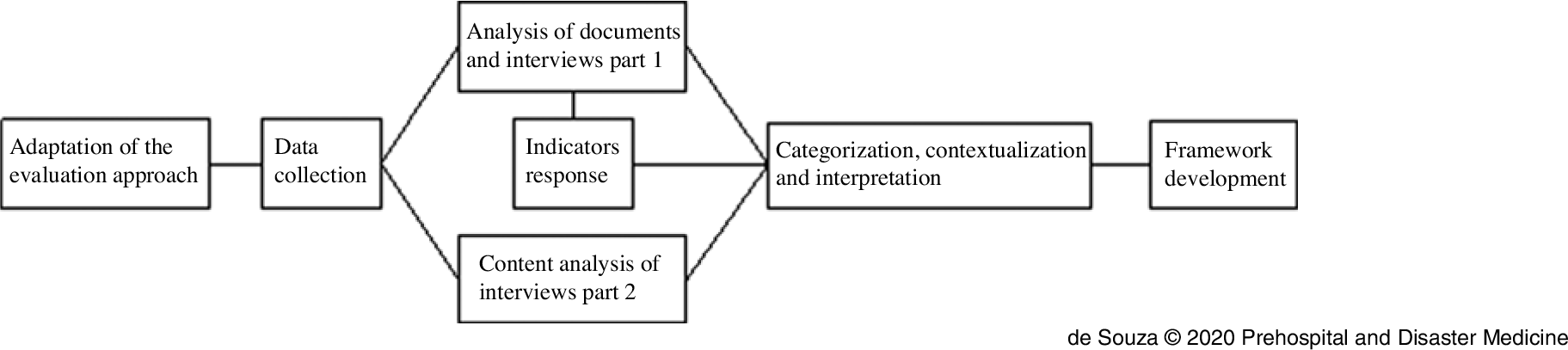
Analyses was performed in three steps; the first one contemplated answering the indicators. This was achieved based on the first part of the interviews and with the information gathered in documental research. Both interviews and documents could complement, reinforce, or oppose each other. Technical and normative criteria concerning PS were used to judge the data.Reference Miranda and Fitzgerald14,16,17
The second step consisted of content analyses of the second part of each interview, using the methodology proposed by Bardin,Reference Bardin18 to examine the speech of participants systematically and objectively.
Finally, a literature-based categorization, contextualization, and interpretation of all information gathered were performed. This provided a framework for interventions to improve the preparedness of PS in disaster response operations and humanitarian aid supported by military organizations.
A flow diagram showing the stages of the research is presented in Figure 1.
Flow Diagram of the Research Stages.

This research was approved by Ethics Research Committee of the Fluminense Federal University (CAAE nº 87413718.0.0000.5243; Niterói, Rio de Janeiro, Brazil). All participants were asked to sign an informed consent. Results are presented with no identification of respondents, respecting privacy and confidentiality. The authors state no conflicts of interests.
Results
In the period from August through September in 2018, three pharmacists and two nurses were interviewed. This corresponds to 100% of the contingent directly responsible for managing PS. The three investigated units may operate in groups or separately, depending on the complexity of the event.
All interviewees had experience in disaster response ranging from one to nine years of activity. Their responsibilities included development of documents, selection of medicines and medical supplies, training implementation, planning, and practice in operational medicine.
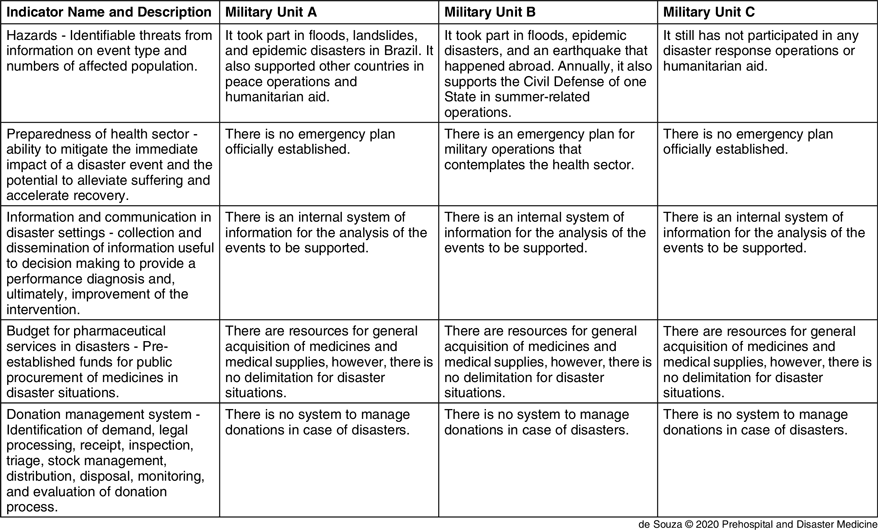
Overall, 19 indicators were proposed, five of external context and 14 related to activities of PS. The first set of indicators related to external context were operational experience, preparedness of health sector, information and communication in disaster settings, budget for PS, and management system for donations. These elements provided a basis for the establishment of PS. The answers to these indicators are summarized in Table 1.
External Context of Pharmaceutical Services for Disasters in Military Units of Three Units of a Brazilian Armed Force, Brazil 2018

Except for the military unit C, all units acted in disasters and emergencies in the latest years, such as the earthquake in Chile (2010), landslides in the mountain region in the State of Rio de Janeiro (2011), and the dengue fever epidemic in Rio de Janeiro (2011). Moreover, the military unit B participated every year in summer-related operations, along with the Civil Defense of the State of Rio de Janeiro, including response actions to floods, landslides, and epidemics, all common in this season. Since March 2018, the institution has also offered aid to Venezuela refugees sending health professionals to Roraima State to assemble a field hospital established there.
The military units A and C informed existence of preparedness plans; however, analysis proved the documents consisted in instructions for field hospitals operation and health team’s deployment. These documents could not be considered a preparedness plan, since the data were not presented in a systematic and articulated way. Nevertheless, unit B presented a plan organized by tasks, with instructions for coordination, a logistical strategy, and a communication scheme, including procedures in the health care sector.
The three units reported the existence of an internal system for situational analysis of the event to be supported. This used data gathered through the intelligence system established in the organization. It received information from several sources to compose an overview of the necessities to determine the response in terms of health care. Overall, it was obtained information regarding affected population, prevalence and incidence of diseases, and environmental and geographical parameters for the establishments of teams in the field, besides socio-economical aspects, number, and location of health care facilities in the region. The local Civil Defense was a complementary source of information for the units A and B, whereas unit C did not give an answer if it would receive information from the Civil Defense regarding support in case of disasters.
Military unit B reported receiving donations of medicine, although there were no specific procedures for the management of the items. Concerning the budget for PS, all military units informed that there were resources directed to the acquisition of medicines and medical supplies, but there was no delimitation of these funds for the purchase in case of disasters or emergency situations.
Indicators of PS encompassed specific activities - selection, forecasting, procurement, stock management, distribution, and medicines utilization - and human resources as dimensions.
The selection of medicines was observed by the existence of an essential medicines list, meant to serve the necessities in disasters and emergencies that military units act more frequently. The list should be observed at health facility level or procurement sector. For these indicators, two units informed that there was a list which contemplates 118 medicines, 191 surgical and medical supplies, four sanitizers, six radiological materials, and 23 laboratorial supplies. It was elaborated with the support of specialized personnel from hospital facilities within the armed forces. This list was used as a basis for forecasting and procurement. However, those who were interviewed reported that health professionals designated to take part in the operations usually were not aware of such list.
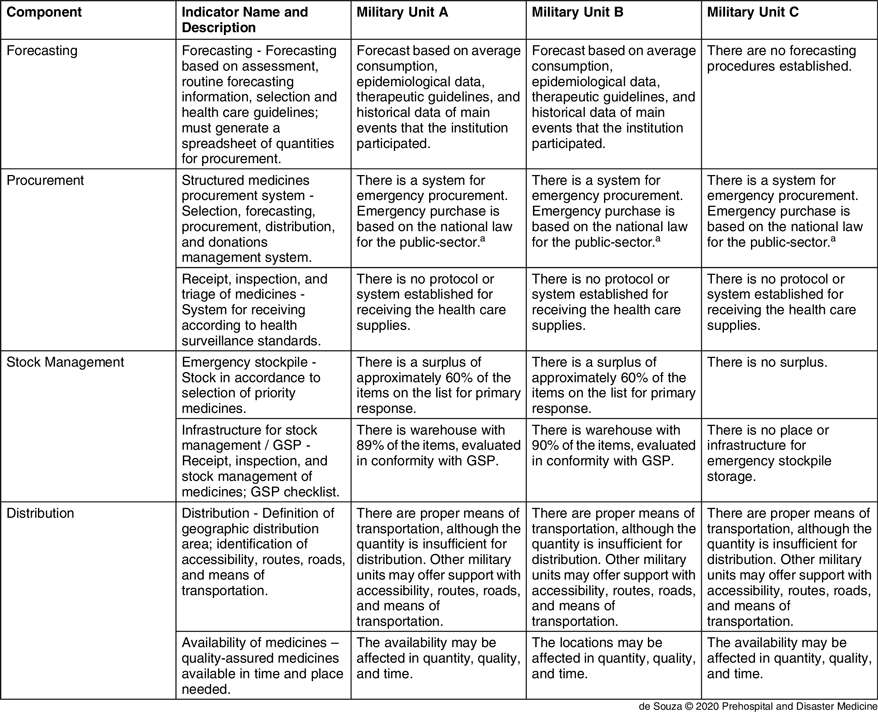
Table 2 summarizes name, description, and answers for each indicator related to logistics of PS, including the dimensions of forecasting, procurement, stock management, and distribution of medicines.
Preparedness of Pharmaceutical Services for Disasters in Military Units of an Institution in the Brazilian Armed Forces - Logistic, Brazil 2018

Abbreviation: GSP, good storage practices.
a Brasil. Lei nº 8666, de 21 de Junho de 1993.
Forecasting was made based on the list of selected medicines for a 30-day stock. According to the interviewees in military units A and B, forecast was based on an average consumption and upon epidemiological data of the events previously supported, as well as in therapeutic guidelines.
The three units informed that, when it was necessary, emergency purchases of some items could be made. All those who were interviewed mentioned the legislation that grants all public institutions in Brazil purchases without bidding, in cases of emergency,19 when it is characterized the urgency of the assistance, and the risk of damage to the security of the people and assets, public or private. However, they stated that the emergency purchases do not happen in a speedy manner, due to bureaucratic administrative procedures. Usually, units borrowed medicines and health care supplies from one another. All the military units also informed the adoption of procedures for receiving and inspecting purchased supplies, according to health surveillance standards.
A surplus stock in accordance to selection of priority medicines was still not completely formed. Approximately 60% of the items were available for use in units A and B. The other remaining items, as they were not selected for regular use in the armed forces, were acquired by demand; this was a restricting factor for the performance of the military units in case of disasters and humanitarian aid. The military unit C informed that there was no surplus stock.
The military units A and B counted with specific locations for receiving, inspecting, and storing surplus; although there were no internal procedures to guide GSP, interviewees mentioned that health surveillance standards were obeyed. The observation of GSP identified clean and well-conserved locations, with controlled and monitored temperature, with the presence of fire extinguishers, and a system for monitoring the storage. Some aspects, as systematically and orderly storage of the various categories of materials and products and protection against direct sunlight incidence, were not observed in the visited locations. Unit C did not have a space for surplus stock.
All interviewees described the existence of adequate means of transportations with controlled temperature and humidity, although the number wasn’t enough, creating the need to resort to other military units requiring support for transportation. Therefore, there could be some loss for supply regarding adequacy of quantity, quality, and opportunity in time.
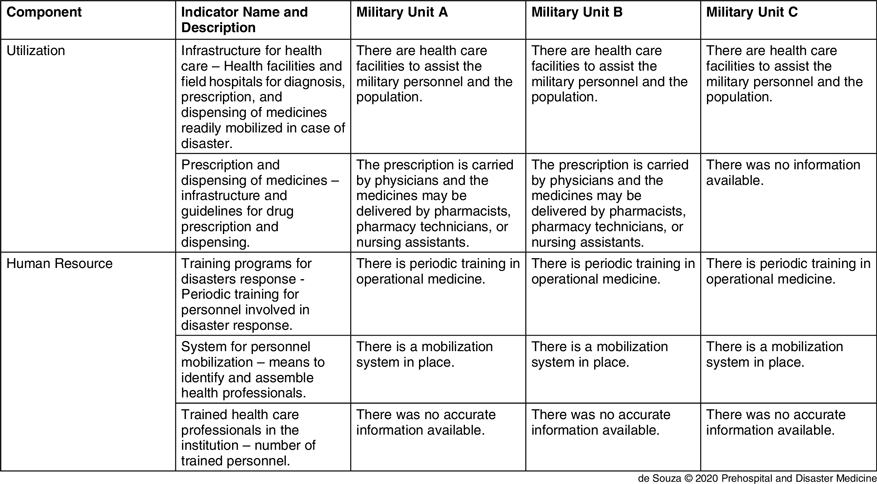
The five indicators of utilization of medicines and the related human resource are listed in Table 3.
Preparedness of Pharmaceutical Services for Disasters in Military Units of an Institution in the Brazilian Armed Forces – Utilization and Human Resource, Brazil 2018

All military units had their own locations for health care, such as tents, field hospitals, and mobile hospital units, with adequate spaces for prescriptions, medicine storage, and dispensing. All interviewees stated that only physicians could prescribe. As for the dispensing, pharmacists and nursing assistants were cited as acting in disasters and emergencies.
Training programs in military units included maneuvering, training missions, exercises, and courses which addressed operational medicine and nursing, such as tactical prehospital assistance, first aid, accidents with multiple victims, immobilizations, transport of wounded victims, and health care logistics. These programs happened periodically, aiming to build military capacity enrolling physicians, nurses, dentists, pharmacists, psychologists, nursing assistants, and laboratory technicians of several military units in the armed forces. However, none of those who were interviewed could say exactly the percentage of qualified personnel able to act.
The armed forces had plans and systems implemented for staff deployment. All units had the means to identify and assemble health professionals; normally, they receive a phone call to inform location and date of departure.
To explore opportunities of improvements in the quality of PS, interviewees were also asked to freely speak about difficulties faced in previous missions and ways to improve the quality of PS in operational medicine. The content analysis made it possible to determine categories and sub-categories, their modal contents and frequencies, representing the experiences and cognitions of interviewees.
When assessing the opinion of the informants about what they judged necessary to improve the quality of PS, the availability of medicines and health supplies came up as a unanimous aspect to create a positive impact in health care:
Having medical supplies, equipment, and qualified staff available to act. This is our great challenge. (Interviewee 4)
Build human resource capacity by including pharmacists and nurses in training activities, as in many cases, professionals without any experience in this disaster response are called to missions. (Interviewee 2)
As main difficulties faced in previous response operations to disasters and emergencies, the lack of financing to acquire health supplies was pointed out by all the interviewees. Other sub-categories as deficiencies in transportation and training could also be observed through the speeches of the informants:
Financial difficulties for the acquisition of medicines and supplies, especially when an emergency purchase is needed. Many times, we depend on other units to be able to get a vehicle, and it takes a while, because not always there is one available at the moment. […] Training of the military staff is also an important aspect that we can improve. (Interviewee 2)
Without a doubt, the acquisition of medicines is one of our great difficulties. As the list does not have all the items available for use, in case there is some emergency, we have to make an emergency purchase, or even borrow it. (Interviewee 4)
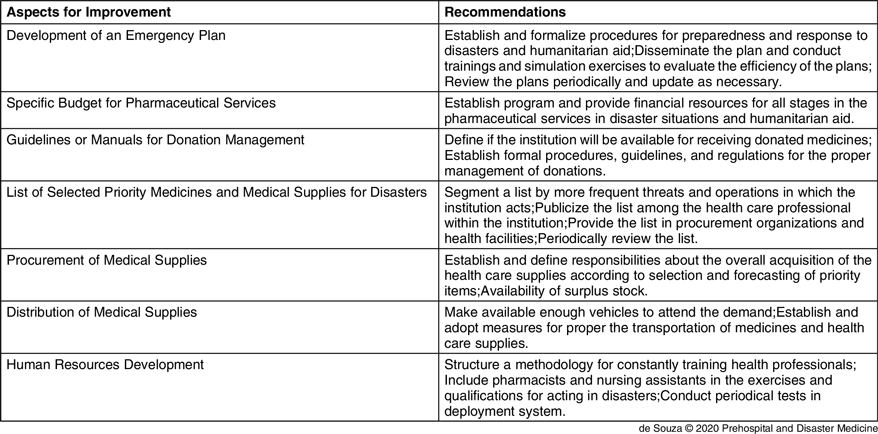
In face of all these findings, it was possible to observe how the preparedness of PS were in the studied military units, as well as determining the main challenges met while preparing for response operations. Recommendations were made to optimize the organization of the health care service in disaster response operations and humanitarian aid performed by military agencies. Table 4 summarize these proposals for improvement. Seven main aspects were considered, and recommendations were made for each one.
Framework for Interventions to Improve Preparedness of Pharmaceutical Services for Disasters and Humanitarian Aid

Discussion
Emergency plans consist of a set of procedures that must be used as guidelines to deal with disasters, establishing responsibilities, and outlining material and human resources needed.Reference McCabe, Barnett and Taylor20 It is extremely important for organizing activities in case of operations related to disaster response and humanitarian aid. Despite having procedures of deployment and systems for operations and logistics, there’s no structured document that incorporates all actions and resources in a concerted manner.
Collection and analysis of information on previous missions is essential for review procedures. Erlich and colleaguesReference Erlich, Shinal and Segall9 indicate that data such as destination, environment, endemic diseases, sanitary conditions, and culture are important during the team preparedness phase to minimize circumstances that may affect the accomplishment of the mission. The affected population and capacity of health systems are also aspects to be considered in the analysis of the event to be covered.16 In the studied units, these reports are produced and passed on in briefings for the teams that will act. However, none of the interviewees could inform a specific period for elaborating these reports, which may cause delays or reduction of the operational capacity.
Despite the evident need for resources destined to PS activities and functions, there is no budget directed to the management of medicines in cases of disasters. It was observed also in Brazilian municipalities were disasters frequently occur.Reference Pimenta-de-Souza and Miranda15
Even with most of the interviewees stating that the military units do not receive medicine donations, it was reported that, in a previous action, the local population offered items with close expiration dates to a field hospital. Thus, it becomes necessary to establish protocols for the management of donations. Quality, needs, adequacy, and heath surveillance approval are some of the principles that must be considered for receiving donations. Unfortunately, there are many cases in which donations bring more disorders than solutions.21
The last operations supported by the military units involved health care emergencies and response to natural disasters, in national territory and abroad. In 2018, with the refugee crisis faced in the North of Brazil, military units were deployed to offer health care in the area. The world is going through an intense migration process; this population requires accessible and culturally appropriate health services.Reference Abubakar and Zumla22 A well-prepared armed forces may offer adequate response to health needs, including PS, acting in a complementary manner to the health sector.23
The selection process is the basis of the PS, initiating the activities to provide an efficient management of medicines. Therefore, it is fundamental in this process. That presented by two of the studied military units has a total of 342 items. When compared to a kit proposed by the Ministry of Health, it seems to have excess of items. Though this is a list destined to supply field hospitals and mobile hospital units, which contain a surgical ward, intensive care unit, and laboratory for medical and radiological tests, these are areas with more complexity and that demand a higher quantity of health care supplies. On the other hand, the emergency kit of the Ministry of Health is proposed to support 500 displaced and homeless people for three months, and was developed to attend disasters related to rain, wind, and hail.24
Despite being developed internally, by the staff with experience in previous operations, it was possible to notice that physicians, pharmacists, and nurses, who could act in loco in disaster situations, have no previous knowledge of its content; this may impair health care. A suggestion to rationalize the quantity of the supplies would be dividing the list by operations, where, for each type of case to be covered, there would be a specific relation, whether it is by the kind of disaster being faced, humanitarian aid, or sanitary emergency. Then, the listing would be more oriented, and an overload in the transportation and storage of unnecessary items would be avoided. The World Health Organization (WHO; Geneva, Switzerland) has developed standardized health kits of medicines and medical supplies to meet different health needs in humanitarian emergencies and disasters. Kits are organized to be delivered considering the profile of the health professional available; for example, Trauma Backpack is only provided for medical doctors.25
In case of public health emergency and disaster, the waiver of bidding is allowed, aiming to provide promptness in the acquisition process.19 However, it is known that even with this “convenience,” the purchase process does not happen quickly enough, which may affect the availability of the health supplies. Moreover, this kind of purchase is commonly uneconomical, since the offered prices are usually higher than what is generally charged in this sector, due to the urgency of the situation.Reference Britto26 Even though this is a standard practice, the requirement for borrowing medicines and health care supplies from other military units does not bring assurance of access to the items needed; besides, it may cause shortage in the supplying unit.
There was no surplus stock for emergency response available. The maintenance of a surplus based on selected medicines and in the stages of forecasting and procurement could avoid losses or shortages.Reference Miranda, Osorio-de-Castro, Luiza and Castilho5 Keeping these storages may be an exhausting and costly service, due to the expiration dates and low probability of use of these items.Reference El Sayed, Tamim and Mann27 To overcome the difficulties in managing surplus stock, the establishment of long-term agreements with suppliers enables rapid delivery wherever medical supplies are needed. This is the experience of WHO that have pre-positioned emergency kits in strategic locations to be quickly mobilized when needed.25
Health care supplies, especially medicines, need GSP to assure quality and security. Consequently, monitoring reception, storage, and distribution is mandatory.Reference Osorio-de-Castro, Luiza and Castilho28 The units have procedures compatible with the GSP, but some aspects must be improved, such as the adoption of a system to organize and facilitate the localization of products, and equipment for blocking the direct sunlight incidence.
A rational distribution of health care supplies must assure proper quantities with the desired quality, speed in the delivery system, and an adequate safe transportation. Then, the use of vehicles with controlled temperature and humidity, for example, is essential for the operations.Reference Dolinskaya, Besiou and Guerrero-Garcia29 In disaster situations, the capacity for transportation is usually limited, or even non-existent, causing a logistical restriction, compromising the distribution of the inputs, depending on its organization and availability.Reference Costa, Bandeira and Campos30
Medicine utilization contemplates prescription and dispensing stages before arriving at the ultimate use by the patients. Field hospitals are the main mobile medical units, and the most well-known, counting with adaptable modules and various scenarios.31 The presence of clinics and pharmacies in these structures is a positive aspect for the utilization stage. Furthermore, it is important for the pharmacist to stay ahead in the process of medicine dispensing, especially in out-patient cases. In the studied military units, nursing professionals end up assuming the dispensing activities many times, due to the working demand and shortage of available pharmacists, a condition that should change given the contribution of pharmacists to promote the rational use of medicine.32
Considering capacity building, the Brazilian Ministry of Defense promoted a course in medical response to disasters involving military personnel and civil servants from the health care area.33 Not only physicians and nurses, but also other health professionals, must take part in medical trainings for disasters and emergencies, as well as logistics and dispensation of medicines in critical environments. Other areas like pharmaceutical care, health education, and health promotion can also be included in the training of these professionals, with the intent to qualify them to respond in the most efficient way in a future event.Reference Alkhalili, Ma and Grenier34,Reference Vardanyan, Mosegui and Miranda35 It is important to keep records of the trainings. From these data, it is possible to follow the quantity of qualified personnel, and to plan training activities.
The Brazilian Armed Forces have a Military Mobilization Doctrine which establishes principles for the preparedness and execution of the military deployments and disengagements, from ordinary conditions to crisis situations and posterior return to normalcy.36 Despite the fact that all units count with a calling plan for the activation of the involved military personnel, it is important to have trainings or some periodical simulations to test this system.
Pharmaceutical services were also analyzed through the perspective of the key informants. The interviewees consider availability of health care supplies and training of staff the most important elements for the provision of PS. This can also be attested by the indicators “Budget for pharmaceutical services in disasters” and of “Training programs for disasters response.”
These and other challenges were also found in a review conducted by Costa and colleagues,Reference Costa, Bandeira and Campos30 which analyzed the logistical processes adopted in natural disasters that occurred in several countries, demonstrating that the lack of coordination and/or training in the preparedness phase may cause inefficient results. The access to health care items, as the ones cited by those interviewed, is many times handicapped, but it must be prioritized in emergencies so that the burden of the damages and diseases that follow disasters can be reduced.Reference Dolinskaya, Besiou and Guerrero-Garcia29
Limitations
The study relies on a relatively small number of interviewees; notwithstanding, these were representative due to their strategic positions in the military units. Furthermore, a documental research was conducted for extracting more information from internal documents, but documents classified as confidential could not be thoroughly explored.
Conclusions
This study offers continuity to the application of the evaluation model in the preparedness of the PS for disasters, currently in the context of Brazilian military organizations.
The studied units present some pronounced flaws in the preparedness of the PS. With experience in previous participations in disaster response operations and humanitarian aid, some strong aspects could also be observed. Although efforts should be done to develop preparedness plans and guidelines for management of procurement storage and donations, defined budgets and a list of selected priority medicines and medical supplies for disasters and humanitarian response improve means of distribution of medical supplies and develop training programs for developing human resources capacity.
It is expected that the recommendations based in this study promote an improvement in the efficacy and the quality of the health care offered by armed forces.
Acknowledgments
The authors would like to thank Professor Dr. Geraldo Renato de Paula for his insights for this article.
Conflicts of interest
none