EDUCATION AND TRAINING INITIATIVES FROM THE COLD WAR TO TODAY
Cold War Era
International Committee of the Red Cross (ICRC)
No international body has been more forward thinking in the education and training of humanitarian health care providers than the ICRC. The ICRC is the custodian of the Geneva Conventions (GCs), their Additional Protocols, its statutes, and those of the International Red Cross and Red Crescent Movement. Since its creation in 1863 as an impartial, neutral, and independent international organization, the ICRC has had a permanent mandate under international law to protect the lives and dignity of victims of war and provide them with assistance.
1
In 1986, the ICRC, in partnership with the World Health Organization (WHO) and the University of Geneva, began the HELP (Health Emergencies in Large Populations) course, a multidisciplinary training for prospective ICRC delegates and coordinators on managing humanitarian operations in disasters, armed conflicts, and other crises.
2
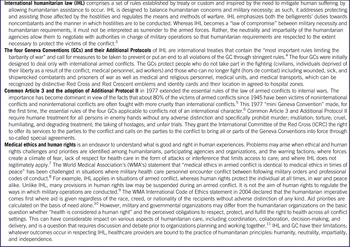
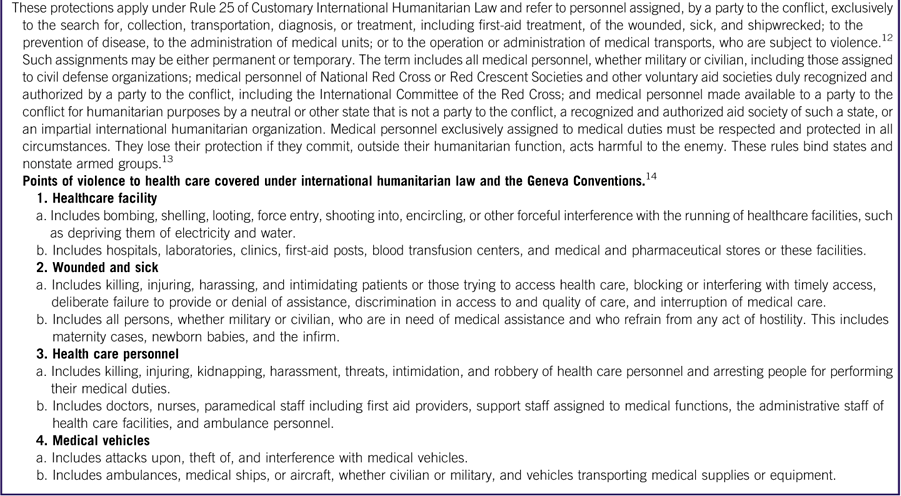
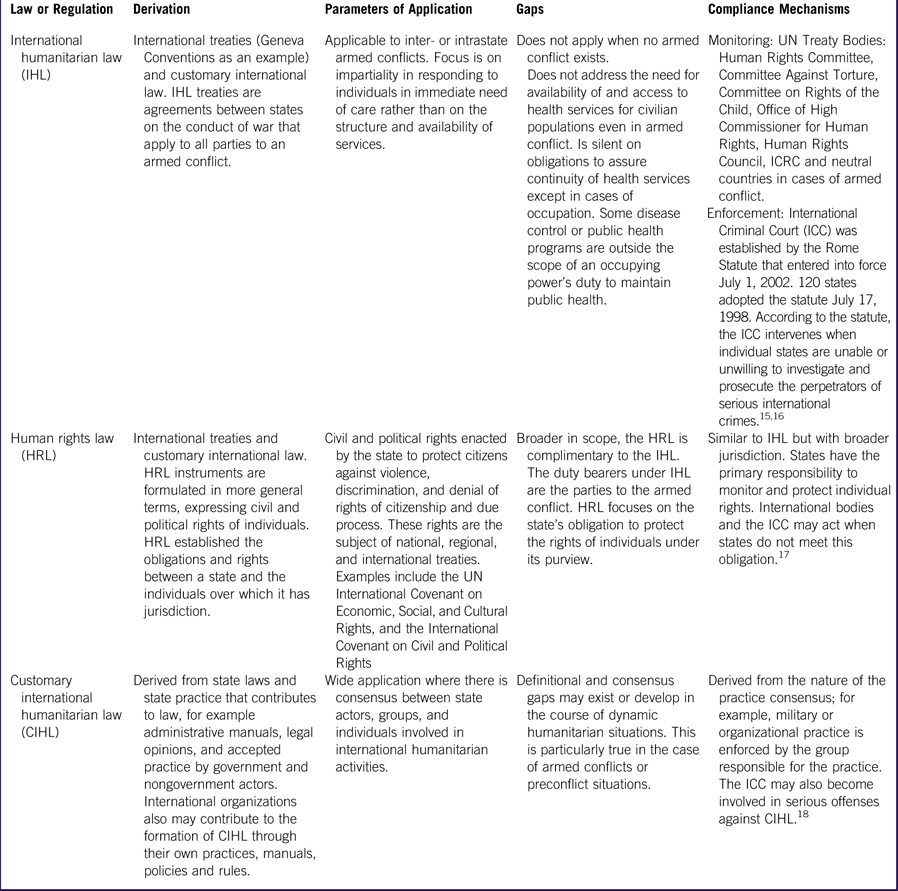
The curriculum, a mixture of lectures, practical case studies, and examples of individual and team-based deployment challenges, provided a wide base of understanding for the complex humanitarian emergency (CHE) landscape and its demands encountered in war and armed conflict. A primary emphasis was placed on ensuring that health care trainees obtain an operational working knowledge base of what was necessary to protect both victims of armed conflict and health providers, starting with international humanitarian law (IHL) and the GCs, especially Common Article 3 and its Additional Protocol II, the unique protections afforded medical personnel under IHL, and the identification of moral, ethical, and human rights issues. Case studies discussed the operational application of these protections to the delivery of health care, security and protection, negotiations and mitigation of conflict, and the reporting and management of violations, threats, or challenges. These key topics unique to the initial ICRC HELP course are as relevant today as they were during the Cold War (Tables 1-3).
Table 1Brief Summaries on the Background Content of Key International Committee of the Red Cross–HELP Topics
Table 2Protections Afforded to Medical Personnel
The objective was to professionalize the delivery of humanitarian assistance during emergencies and to promote professional ethics and humanitarian principles. Most HELP trainees designated as potential ICRC delegates had prior experience in war and armed conflict and sought HELP’s unique focus and detail on IHL/GC, including ethics and human rights presented in lectures and case study format. The original Geneva-based course was 3 weeks in length, and the last week was dedicated to the study of protection of victims of armed conflict under IHL and humanitarian ethics detailed in the ICRC Handbook on War and Public Health.
Reference Perrin
19
For years only ICRC/International Federation of the Red Cross (IFRC) personnel with previous field experience had access to this training. A certificate of attendance, granted upon completion of HELP, could be converted into a diploma after further study and presentation of a “dissertation giving account of specific field situations dealing with the subjects covered in the course” through the University of Geneva, ICRC’s academic partner. For example, author FMB, an IFRC delegate, studied an additional week at the University of Geneva and obtained a diploma after publication of an operational war study 2 years later. No military personnel were allowed, and FMB, as a US Navy Reserve Officer, had his acceptance to HELP delayed until he showed proof of resignation from his military commission.
HELP also became obligatory for those delegates destined to become ICRC Heads of Delegation and coordinators of the different assistance departments. Coordinators would serve in several field missions for a year or two before getting further training in the more advanced negotiation skills; but if they had been observant during their missions, they would have likely already picked up considerable operational skill sets.
In addition, ICRC held several “integration” courses in Geneva every year for new delegates before deployment on their first mission. Before new delegates arrived for the course, they received a compact disc that contained a bibliography on IHL, security, radio communications, and other practical issues. No delegate went into the field without having passed through this advanced course (2 weeks, 1 week extra for those delegates who would do prison visits). The course was then “expatriated,” and took place in Sri Lanka, Nairobi, and elsewhere, but remained focused on general delegates and future coordinators. The course included multiple real-life simulations that helped prepare participants for operational realities such as compromised hospital locations; berated delegates; combatants who did not respect medical neutrality; victims who were tortured, starving, or displaced; and separated families, to name but a few. This simulation training helped prepare delegates for the worst that they would see in the field.
Today, the integration course has been replaced by the multi-phase Staff Integration Program: Phase 1, an online course to learn essential ICRC knowledge and meet fellow participants; Phase 2, a face-to-face, 2 week course to reinforce online learning along with practical simulated operational exercises to prepare for the field and work-based learning; and Phase 3, a work-based learning through three virtual exchanges of experience, access to a virtual library, and a digital toolkit. Since 2016, the Staff Integration Program no longer takes place in Geneva, but only in field locations (Amman, Bangkok, Bogota, Dakar, and Nairobi). These occur during a delegate’s first mission, although one may deploy beforehand and not necessarily have the Staff Integration Program prior to deployment.
Since 1990, the Geneva War Surgery Seminar prepared surgeons, anesthesiologists, and operating room nurses to work in unique field conditions with limited resources, including clinical training in triage management and an introduction to IHL for medical personnel. No surgeon was deployed without having attended this seminar, and, even then, the first mission would take place under the guidance of a senior surgeon who had experience in war surgery including craniotomies and cesarean sections. Today, recruitment problems, common to all humanitarian organizations, have resulted in many surgeons being deployed on ICRC missions without prior war surgery training, the exception being those who have already been on missions with other organizations and then were recruited to the ICRC. The ICRC is attempting to rectify this situation, and the Geneva War Surgery Seminar continues to attract interested personnel.
While the original ICRC Geneva War Surgery Seminar was designed for surgeons going on a first ICRC mission, the ICRC also conducted, first in 1993 and more frequently since 2000, field-based war surgery seminars for surgeons in countries afflicted by armed conflict who were seeing war-related surgical pathology for the first time. This initiative attempts to improve local national competency and expertise. Today, about 20 such seminars take place every year. In 2004, an Emergency Room Trauma Course was developed, similar to Advanced Trauma Life Support, but for weapon-wounded patients in conditions of limited resources. This is also offered in the field to national emergency room personnel, nurses, and doctors. Furthermore, postgraduate modules of war surgery training for residents have been established in faculties of medicine in a number of countries: starting in 2010, 10 faculties in French-speaking sub-Saharan Africa through the supranational coordinating body for academic studies called CAMES (Conseil African et Malgache pour l’enseignement superior); Colombia, 2012; since 2015, a postgraduate diplôme universitaire offered in conjunction with the University of Lebanon for surgeons from the Middle East; a war trauma diploma at Egypt’s Military Medical Academy in 2017; and additional courses planned for Syria and Gaza in 2018.
Médecins Sans Frontières
MSF, founded in 1971, is an international, independent, medical humanitarian organization that delivers emergency aid to people affected by armed conflict, epidemics, and natural disasters. According to its charter, MSF’s actions are guided by “medical ethics and the principles of neutrality and impartiality.”
20
In 1988, MSF leadership attended the ICRC HELP course, where the operational differences between ICRC and MSF became immediately evident. While both institutions have similar operational agendas and share in the need to support their field personnel under IHL, MSF objected to ICRC’s “culture of silence” regarding management of violations of IHL by parties to the conflict. This policy rift began during the Biafra Civil War (1967-1970), when physicians of the French Red Cross broke away to denounce what they had witnessed, initiating a mandate to “bear witness” as well as provide medical assistance. This counters ICRC, which under its fundamental treaty obligations and interpretation of its mandate must first report suspected violations only to the offending party involved in order to begin the process of negotiation, mitigation, and prevention before moving to public declarations in the form of appeals to warring parties.Reference Brauman
21
As such, only ICRC is mentioned in international treaties of IHL, which describe ICRC’s exclusive role in visiting POWs and security detainees in prisons. This is the case not only with respect to the difference in approach of MSF, but also Amnesty International and Human Rights Watch. Whereas Amnesty International must denounce the abhorrent treatments, it is exclusively the ICRC that is provided access to see the prisoners. Also, only two organizations have an institutional and treaty mandate and responsibility to “protect and assist”: the ICRC (for victims of war) and the United Nations (UN) High Commissioner for Refugees (for refugees). Both are mandated by respective Conventions negotiated in Geneva.
In contrast, when MSF “witnesses acts of violence against individuals or groups they may speak out publically in an effort to bring crisis to public attention.”
22
MSF’s brand became “first speak out, denounce the assailants, and stand up for victims.”Reference Brauman
21
Whereas MSF does not have a formal entry-level training program similar to HELP, they usually require mission-specific predeployment training. In addition, over the years, MSF has sent surgeons to attend the ICRC War Surgery Seminar and has developed its own clinical training programs.
Post–Cold War Era
In responding to global changes, the HELP course expanded its enrollment to include UN agencies, nongovernmental organizations (NGOs), and ministries of health and academic institutions worldwide. Military medical services personnel were now encouraged to apply, but only ICRC instructors provided the IHL/GC course material and only on a neutral setting. HELP has shifted to a 2 week format in part because of economic factors, inability of trainees to take so much time off, and the fact that the required technical knowledge was now widely available outside the formal coursework. One of 2 annual HELP-sponsored courses by Johns Hopkins University (USA) remains 3 weeks in length where IHL issues are expanded upon. This HELP course stresses the safety of humanitarian workers along with imperatives of IHL. It also provides an overview of the various stages of the planning process primarily related to SODs, PHEICs, and CHEs, with emphasis on key concepts of “public health tools, humanitarian principles, professional ethics, and effective decision-making in crises,” as well as the Sphere Project Humanitarian Charter and Minimum Standards in Humanitarian Response, a topic now included in all humanitarian courses.
2
Both ICRC and MSF have established themselves as the major providers of health care in war and armed conflict. Hopgood considers ICRC and MSF as “gatekeepers” in the field of human rights and humanitarianism; “if they do not adopt an issue, its chances of reaching a global audience are slim.”Reference Hopgood
23
Both experience frequent targeting of their field health facilities and injuries and deaths of their personnel.Reference Comminos
24
MSF insists that “only highly trained, experienced staff can work in conflict situations. Each mission has specific safety regulations, and MSF is safest when everyone in a conflict zone knows we are independent, neutral, and impartial.”
25
ICRC also has mission-specific safety regulations and is generally known in the humanitarian world as being the most professional and the most strict when It comes to security.
Common Challenges for ICRC and MSF
Over the years, ICRC and MSF have experienced similar access and operational failures and successes common to war and armed conflict, yet both find themselves “close in terms of their origins, their culture of action in armed conflict situations, and the concern that they keep their distance from political ambitions of the various forces operating in the places where they work.”Reference Brauman
21
In 1998, MSF promoted the Practical Guide to Humanitarian Law, which was regularly updated with material on rights of victims and humanitarian organizations in times of conflict, tension, and crisis.Reference Bouchet-Saulnier
26
Despite their differences with regard to publically reporting IHL and human rights violations during the Cold War, the MSF and the ICRC have similar educational, training, and operational agendas and share in the need to support their field personnel under IHL. Case studies reveal that MSF, with the “collapse of the bipolar world order and the development of international criminal and so-called humanitarian wars,” has often opted to sacrifice its freedom of speech, keeping a low profile with regard to going public, as it did with bombings in Yemen, the consequences of the war in Sri Lanka, and the constraints the Myanmar regime was imposing on their field operations.Reference Magone, Neuman and Weissman
27
Benoit Leduc emphasizes that “everything is open to negotiation” and “no parameter is fixed from the outset, including the safety of personnel, the presence of expatriates, MSF’s intervention priorities, the quality of the assistance provided, and control over resources. They are all the result of concessions, some justified by harsh realities.”Reference Allie
28
Thus, MSF has little by little taken a more ICRC-like approach with regard to discretion in the attempt to maintain access to the victims of armed conflict.
Ensuring security of their teams requires talent in negotiating agreements by all parties to the conflict, even those that are stateless. Negotiating skills emphasize and explore cultural commonalities in ethics and human rights among the warring parties. These skill sets are considered basic expertise necessary for personnel security and for access to vulnerable populations. MSF does utilize ICRC assets for training in IHL, but has not developed a specific, competency-driven curriculum in IHL such as HELP. MSF differs from ICRC in publishing their instructive annual International Activity Reports that recaps its field, financial, and operational information and, most importantly, the major challenges they faced during the preceding year.
29
In Humanitarian Negotiations Revealed: The MSF Experience, MSF takes a critical look at how its teams have negotiated access to populations in need of life-saving assistance in the 40 years since it was founded.
29
MSF also became an essential driver in preparing newly arrived NGO teams in crucial public health skills during the 2014-2016 West African Ebola virus epidemic.Reference Arie
30
-
Reference Lartey, Puplampu, Seneadza, Oliver-Commey, Amoah and Ohene
32
Nurses, along with other first responders and security staff, make up approximately 70% or more of humanitarian health workers. Nurses function as triage officers in ICRC field hospitals and are often first to witness the direct challenges and threats of violence. They have a long history of respecting IHL and their operational mandates. In 1984, the International Council of Nurses developed a Code of Ethics for Nurses to reconfirm their commitment to take concrete actions to assure that their members fully understand what is expected of nurses in conflict situations. They also prepared an educational package on the GCs and the principles of humanitarian law, which emphasized that “when confronted with a dilemma in a conflict situation, they must remember that they are accountable for their own professional actions and as such must be aware of patient/client rights and of their rights and obligations under the terms of the GC.”
33
Today the International Council of Nurses works with ICRC’s Health Care in Dangers project to ensure ethical and professional competencies during conflict situations.
34
,
Reference Kusano
35
Academia-Based Educational and Training Offerings
Beginning in the late 20th century, qualitative successes in humanitarian care, primarily fostered by academia, were attainable through the influence and basic design of education and training programs that included emerging advances in crisis research and captured best practices of both career humanitarians and those returning from voluntary humanitarian missions. Programs designed with general entry-level evidenced-based curricula and influenced by the rudiments of disaster science that emphasized independent field epidemiology research and outcome accountability attempted to address new challenges in an ever-changing humanitarian landscape that included major SODs and PHEICs as well as CHEs. This direction has flourished among schools of public health and medicine, with Massachusetts General Hospital, Harvard, and Stanford University developing their own deployable teams, primarily for health care and recovery after SODs. While many humanitarian NGOs initially rebuffed these offerings, they eventually began to coordinate and collaborate with academia, especially in crisis population and outcomes research, confirmation of basic skill training in resource-poor settings in developing countries, and as an entry portal for expanding humanitarian and disaster relief employment opportunities.
The spread of academically based educational and research opportunities in natural and conflict-based crises since the turn of the century has been dramatic. Currently, the large majority of courses available today remain survey/entry level courses that provide basic information on organizational issues and common operational challenges in SODs, PHEICs, and CHEs. While IHL/GC lectures are sometimes offered, there is no accompanying operational level “skill set training.” The HELP course has consistently provided introductory lectures on “The Red Cross and Red Crescent Movement and the ICRC,” “International Humanitarian Law,” “Ethics in Humanitarian Action,” and “Access to Health Care in Contexts of Violence” with added emphasis on IHL in reference to refugees and human rights law.
2
Other academic courses provide broader entry-level training. For example, since 1994 the London based Society of Apothecaries has offered an 11-month part-time course to fulfill the requirements for the Diploma in the Medical Care of Catastrophes, first designed for new recruits to the Army Medical Corps who were required to provide a medical and surgical response to major man-made and natural disasters; this was later extended to civilian physicians, surgeons, dentists, and nurse candidates.
36
Other examples in the United Kingdom include University College of London and Liverpool’s Diploma in Humanitarian Assistance and the United State’s Master’s Degree in Humanitarian Studies at Fordham University. An attempt to standardize health education and training in North America came from the 2009 formation of the Professional Association of Academic Training Centers in Humanitarian Aid (PAATCHH), which included 14 academia-sponsored education and training programs.Reference Burkle, Walls, Heck and Sorensen
37
,
Reference Ingrassia, Foletti, Djalali and Scarone
38
UK-Med, an NGO founded in 1995, recruits and trains health care volunteers and deploys them to natural disasters overseas. It received UK Department for International Development support for its training courses in 2011, and has added UK international medical and public health registers to its original International Emergency Trauma Register. It has a memorandum of understanding with, and is physically housed within, the Humanitarian and Conflict Response Institute of the University of Manchester, which itself runs a range of academic degrees in humanitarian, peace, and conflict studies, to “ensure that deployments inform the academic research, education and training mandate” and vice versa.
39
UK-Med also works with the royal medical colleges to develop its additional specialist training courses. The Humanitarian and Conflict Response Institute, as a WHO Collaborating Center for Emergency Medical Teams (EMTs) and Emergency Capacity Building, provides experts for WHO’s mentoring of fledgling pre-hospital systems including those in China. This model needs to be replicated worldwide.
Similarly, since 2007 the Università del Piemonte Orientale, a Italian public university, and its Research Center in Emergency and Disaster Medicine (CRIMEDIM), an official WHO Collaborating Center since 2016, organize research and educational activities in disaster and humanitarian health with special focus on application of new simulation technologies. Uniquely, it offers the European Master of Science in Disaster Medicine, organized by CRIMEDIM and the Research Group on Emergency and Disaster Medicine of the Vrije Universiteit Brussel and supported by the European Society for Emergency Medicine, WHO, and MSF. The European Master of Science in Disaster Medicine consists of a 1-year e-learning course; a 2-week residential course in Novara, Italy; a final online examination; and a defense of a written Master’s thesis based on a research study.
40
Whereas the European Master of Science in Disaster Medicine curriculum has been eclectic, they, like most educational programs, focus on SODs, PHEICs, and humanitarian efforts in postconflict countries. However, a new course unit on CHEs was added in 2015, with contributions from WHO, the University of Geneva, MSF, and ICRC, also addressing basic knowledge of IHL and GC. In 2015, CRIMEDIM operationally launched “Humanitarian Medic” in collaboration with MSF-Italy. Restricted to 20 physicians selected by merit from training programs worldwide in their final years of training in anesthesia and critical care medicine, emergency medicine, and pediatrics, it is designed to prepare the participants in “transversal competencies” essential to work in “multicultural contexts and stressful situations, strong motivation to work in austere and unstable environments, war and armed conflict zones, and sudden onset disasters.” This program includes distance learning through an e-learning platform for 3 months; a 6-day residential course in Novara, Italy; and a 3-month apprenticeship in the field with MSF to experience operational challenges.
41
Additionally, the Center for Research on Health Care in Disasters at Karolinska Institute, a WHO Collaborating Center, focuses on monitoring disasters and emerging crises. It provided management expertise and consultancy in the Ebola epidemic in West Africa, the Nepal earthquake, and, recently, during the war in Mosul, Iraq. The Institute is part of a consortium, with the Unit for Research in Emergency and Disaster at the University of Oviedo (Spain) and the Center for Research and Epidemiology in Disasters at the Université Catholique de Louvain (Belgium), that offers a Master’s Program in Public Health in Disasters. The center also contributed expert knowledge when the WHO drew up its guidelines for international field hospitals in disaster areas.
42
In 2016, the American University of Beirut announced the launch of a Conflict Medicine Program that takes an interdisciplinary approach to the consequences of war as part of a wider strategic reshaping of health care provision by the Issam Fares Institute, the Faculty of Health Sciences, the ICRC, and MSF. In addition to providing treatment, research, and advanced clinical services, the Conflict Medicine Program provides training to health professionals “treating war injuries and to the health systems coping with extraordinary numbers of admissions.”
43
The Harvard Humanitarian Initiative provides in-person courses through the Humanitarian Academy at Harvard
44
; degree programs on Humanitarian Studies, Ethics and Human Rights at the Harvard T.H. Chan School of Public Health
45
; professional education through the Humanitarian Response Intensive Course
46
; the online course Building a Better Response Unit 5: International Law and Humanitarian Standards, which strengthens the NGO community Capacity and Engagement in the International Humanitarian Coordination System
47
; and the 5-week massive open online Harvard EdX course Humanitarian Response to Conflict and Disaster.
48
Rethinking Education and Training in War and Conflict
In a 2014 report citing crises in Syria, the Democratic Republic of the Congo, South Sudan, and the Central African Republic, MSF admitted that “while the humanitarian system has grown massively in recent years and has more means and resources at its disposal and greater know-how than ever before, this has not led to a proportionate improvement in performance during emergencies.”
50
This report directly reflects current lack of educational offerings as well as field training and management while criticizing the UN for inhibiting good decision-making, flexibility, and effectiveness. If the global humanitarian response community is to improve relevant education and training, it needs to know where the deficits are: is this a lack of technical performance, ethical lapses due to the utter complexity of the situations, or something we need to study more? In looking for answers, we can first look at observations gained from existing courses.
For example, the 10 HELP courses can have varied curricula with differences in content and emphasis on IHL. In HELP-Hawaii, where a greater percentage of attendees are military personnel new to the humanitarian milieu, defining civil–military issues relative to the distinction between humanitarian, political, and military actors should be particularly highlighted. This is especially important because these lines have become increasingly blurred, as when armed forces are perceived to be humanitarians, civilians are embedded into military structures, and there is a perception that humanitarian actors are integrated into conflict management or nation-building agendas. Military trainee feedback such as “while the IHL lectures were interesting they weren’t relevant” or “IHL lectures could be eliminated” disturbingly reflect a biased notion that IHL does not apply to them. Disappointingly, IHL presentations often receive the lowest participant approval scores, even when completely presented with suitable exercises. Efforts must be made to ensure that the information is relevant to the participant’s interest, experience, or future field needs. IHL legal language tends to be abstract, and, as a consequence, is difficult to relate without specific examples. Concrete field examples and strategies dealing with how violations have been dealt with have eased the confusion and led to the declaration, “now I understand.” In part, the confusion stems from the understandable reluctance of ICRC to make any listing of violations public because of GC treaty obligations. Data on violations since World War II are archived by ICRC but have never been classified or counted, nor have trends been reported. At the end of the 1990s, a collection of medical mission violations was gathered by a Colombian university, but then the project was terminated. A decade ago, a database was once again started, but this effort also failed and no additional resources have been placed against any new data collection. This teaching tool advantage could be reversed with more scenario-based or context-oriented case studies.
In 2013, both MSF and ICRC, concerned that the hors de combat (out of combat) sick and injured were still being seen as enemy combatants, sought “to expose the scale and the consequences of the threat to health care” and condemn acts that are “deliberately aimed to distort medical action and deny health care,” such as “armed men in hospitals; harassing patients; health facilities used to identify and apprehend enemies; clinics abandoned and hospitals destroyed; medical staff in terror of reprisals for having provided care for a patient; ambulances blocked from accessing the wounded or held up for hours at checkpoints.”Reference Maurer
51
The Safeguarding Health in Conflict Coalition reported in 2016 that attacks on health workers, including threats, harassment, intimidation, assaults, and kidnapping, occurred in 23 countries in the first 6 months of 2017.
52
With the rapidly changing humanitarian landscape, recent violations represent appropriate examples for predeployment negotiation skill set training, discussion, and debates. IHL/GC is critical, even life-saving, to any field training.
Additional concerns were raised during the concluding lecture of a recent HELP-Hawaii course, when trainees discovered, by chance, that not all their fellow trainees agreed that health is a human right, a fundamental absolute crucial to proper civil–military planning, collaboration, and coordination. These moments are opportunities to introduce further ethical and human rights discussions, especially among mixed civilian–military participants, to explore the range of health care rights that exist in the laws of various nation states. Rather than excluding IHL from course discussions, a stronger link must be made between human rights and traditional IHL and GC presentations. Additionally, whereas all entry-level courses provide a broad and necessary introduction to humanitarianism on the whole, it is also an appropriate time to ensure that the trainees gain the necessary operational skill sets before future deployments, and expert educators actively provide various entry portals for that process, especially in one’s specialty area.
MSF has ventured into meeting these challenges, threats, and health access violations in their monthly MSF Analysis, a platform for sharing critical analysis on the politics of health and humanitarianism. The website platform is candid and direct, utilizing communication technologies that are advancing rapidly.
53
RECOMMENDATIONS
Advanced Training in Clinical Skills
Sudden-Onset Disasters
In 2016, with an increasing number of international EMTs deployed to assist disaster-affected populations worldwide, there was increasing criticism that those teams were “ill-adapted for care, preparedness and for not coordinating with the affected country healthcare system.”Reference Amat Camacho, Hughes and Burkle
54
The WHO EMT initiative, as part of the Global Health Emergency Workforce program, took on the task of addressing these shortcomings by focusing on improved EMT coordination and mechanisms to ensure quality and accountability of national and international EMTs. An essential component of reaching this goal was appropriate education and training. Recommendations led to a global operational learning framework that supports a three-stage approach: full specialist training in one’s parent specialty, adaption training, and deployment team training.Reference Amat Camacho, Hughes and Burkle
54
In the United Kingdom, deployed EMTs must have completed their own specialist training, then their predeployment and deployment training, plus specialist clinical training for the austere environment. Health care providers, especially those from emergency medicine, nursing, and surgical specialties with trauma experience, can usually adapt rapidly to SOD clinical demands but could additionally benefit by just-in-time training on the country, culture, team preparation, and triage management. The WHO EMT Initiative for SODs “requires evidence of their training pathway, training programs, how members are assessed and how an EMT checks a provider’s qualifications,”
55
but does not require verification of a responder’s education and training in IHL/GC.
Public Health Emergencies of International Concern (PHEICs)
With the Ebola epidemic, MSF organized predeployment training for other NGOs, playing a critical role in mitigating the risk of higher infection rates among expatriate responders who generally lacked knowledge and skills about full-barrier nursing.Reference Burkle
56
-
Reference Vetter, Dayer, Schibler and Pittet
58
Today, the Global Outbreak Alert and Response Network (GOARN), a technical partnership established in 2000 by the WHO, is the key mechanism to engage the resources of technical agencies for rapid identification, confirmation, and response to major PHEICs and to build a predictable and interoperable multidisciplinary outbreak response capacity that is well prepared to international standards. GOARN Tier 1 training programs are designed according to the competencies and subsequent behavioral indicators of the GOARN Competency Model for GOARN partners deployed as team members in an outbreak response. GOARN partners are encouraged to undertake these courses to develop and test the necessary skills, attributes, and behaviors to effectively support and respond to national and international outbreaks and public health emergencies. Successful completion of the mandatory courses is an obligatory requirement for all representatives of GOARN partners volunteering for deployment.
59
War, Armed Conflict, and CHEs
While the degrees of necessity to improve education in training drove SODs post-Haiti and GOARN predeployment during Ebola, a current leap of rationale from SOD operational preparedness to that of war and conflict is inappropriate. Many expatriate providers dependent on electronic monitoring and easy access to radiographic and laboratory studies in their normal lives or those offered in SOD EMTs have been considered a liability upon deployment to war and armed conflict settings, especially because they lack triage management skill sets as they apply to resource poor settings.Reference Burkle
60
Effective humanitarian surgeons require skills in general surgery, obstetrics and gynecology, orthopedics, and urology. With increasing specialization, it is unclear whether general surgery residents trained in industrialized societies are receiving exposure to these disparate fields. Current surgical training in the United States, Europe, Japan, Hong Kong, and Singapore is poorly aligned with typical MSF and ICRC surgical caseloads, particularly in obstetrics and gynecology and orthopedics. New mechanisms for obtaining relevant surgical skills should be developed to better prepare surgical trainees from industrialized countries interested in humanitarian work.Reference Lin, Dahm, Kushner and Kuwayama
61
As such, knowledge of the surgical skills required to adequately respond to humanitarian emergencies is essential to prepare surgeons and plan for interventions. MSF’s review of required surgical skills urgently called for a basic skill set that any aspiring volunteer surgeon needs to be familiar with in resource-limited humanitarian emergency settings,Reference Wong, Trelles, Dominguez, Gupta, Burnham and Kushner
62
and much of that basic skill set is also the basis for the ICRC War Surgery Seminar. Although interest in practicing surgery in resource-constrained settings is on the rise among graduating surgical residents worldwide, there is ongoing debate about the optimal humanitarian skill sets for surgeons. The variety of surgical cases among graduating surgical residents has decreased over the past decade, especially in those areas thought to be essential in resource-constrained settings. Residents who intend to work in such environments may need to craft individualized residency experiences or pursue postgraduate training in specialty surgery courses to best prepare for such work.Reference Trudeau, Swaroop and Rothstein
63
In 2015, Wong and colleagues addressed for the first time the need for surgical competencies for crisis response, including procedures deemed important by experienced personnel. Ninety-nine percent of 147 responding surgeons from 22 countries felt that control of intra-abdominal hemorrhage, abdominal packing for trauma, and wound debridement were considered the crucial surgical competencies.Reference Wong, Razek and Elsharkawi
64
Together with the Japanese Red Cross, ICRC helped facilitate a training program for their surgeons in 3 of their 92 Japanese Red Cross hospitals where they have international delegates who speak English. The program includes rotations among different surgical departments, including obstetrics and gynecology. Recognizing that “many general surgeons do not have substantial trauma experience or have only minimal trauma training and concerned with what skills the military surgeon needs in addition to civilian surgery and trauma surgery,” the Definitive Surgical Trauma Course developed a military module to supplement the regular Definitive Surgical Trauma Course that delivers continuing education for surgeons in the management of major trauma. This module included a military orientation to the current practice of war surgery and humanitarian surgery required on military deployments, particularly in peacekeeping operations where humanitarian medical aid is provided as a component of the mission.Reference Rosenfield
65
The new, 90-hour course on Humanitarian Surgery in Austere Environments offered by the University of Louvain includes 75 hours of war surgery training and 15 hours of IHL training (as an ICRC online course).
66
The authors recommend that these academically based courses, and those of the faculties of medicine offered by ICRC in low-income countries, should be multiplied and disseminated, especially at the postgraduate level, throughout each WHO Regional Organization.
Advanced Training in IHL/GC
Operational-level skill sets that are often lacking range from predeployment ethics and human rights and IHL negotiating skills to the recognition of the impact the nuances of the culture, country, and religion will have on the ability to manage civilian and military health care and security challenges. In current Middle East conflicts, we have witnessed an over 2000-year-old cultural custom to kill family members and relatives in order to prevent reprisals generations later; these types of culturally ingrained events threaten all survivors, including health care providers, in any civilian- or military-led field hospital. Collective punishment, as stated in the Hague Regulations, is a war crime.
67
Much of current entry-level curriculum topics can be assumed by ICRC, MSF, and academically affiliated online/e-learning and massive open online courses (MOOC) to be competency-based, expert designed, and performance measured training that offer student-centered computerized, multimedia, and telematic technologies. These offerings have the potential to free up HELP course time for more detailed learning experiences, especially in much-needed teaching related to IHL/GC. In addition, many examples of advanced accredited distance learning courses through e-learning platforms that offer more substantive IHL and/or negotiations skills are provided by the Geneva-based Center for Education and Research in Humanitarian Action
68
; the Harvard Humanitarian Initiative’s Advanced Training Program on Humanitarian Action’s International Humanitarian Law Distance Learning Series, which examines IHL implementation and enforcement mechanisms, transitional justice, and the challenges of humanitarian engagement with implementation and enforcement of IHL
69
; Harvard Humanitarian Initiative/Center for Education and Research in Humanitarian Action’s Advanced Regional Workshops on Frontline Humanitarian Negotiations
70
; The Peace Operations Training Institute’s IHL and Law of Armed Conflict course that deals with complex legal and military issues
71
; ICRC’s online and video training on the Law of Armed Conflict for Non-State Actors (the video designed for the Middle East highlights the basic elements of the law of armed conflict and specifically focuses on the conduct of hostilities and on the protection afforded to civilians, civilian objects, and other protected persons and objects)
72
; and the London School of Hygiene & Tropical Medicine’s Health in Humanitarian Crises free online course.
73
Advanced Training in Competency-Based Skill Sets
While currently there are no data that determine the impact of entry-level courses on operational success or failure, it must be made universally clear that completion of entry-level courses does not qualify anyone for deployment in war and armed conflict, nor does training focused on SODs. Taking cues from the original ICRC advanced courses for delegates and coordinators, it is strongly recommended that ICRC, MSF, and WHO collaborate to supplement entry-level courses with focused, face-to-face, competency-based advanced courses for specific skill set development. The following skill sets are recommended for those assuming leadership/coordination functions in health:
1. Operational applications of IHL and the GCs, in particular Common Article 3 and Additional Protocol II, which are applicable in noninternational armed conflict and include the responsibilities and protections afforded medical personnel under IHL; the interplay between IHL and applicable human rights provisions in conflict settings; and the moral, ethical, and legal principles relevant to the provision of humanitarian and medical assistance in conflict settings
2. Appropriate skills in negotiation, mitigation, mediation, and resolution, including negotiating the “parameters of intervention” such as humanitarian access, security, and modes of operation
3. Proper documentation and reporting of violations, including attacks, threats, and restrictions on health care
4. The design and management of health services to provide protection and equitable access to vulnerable populations
Clinicians require an adapted, scaled-down, and appropriate introduction to items (1) and (3) and an adaptation of negotiation skills that focuses primarily on hostile combatants or civilians in the hospital itself. Operational aspects of the culture, the country, and team preparation are required for all medical and nonmedical field hospital personnel.
There is often confusion as to what is practical in different contexts. Access and security of medical staff remain the greatest barriers to bringing treatment to the wounded. Coupland notes, from experiences in Afghanistan and Somalia, that the traditional military approach of echeloned care has limited relevance. He emphasizes an epidemiological approach where the nature of modern conflicts alone precludes adequate care for most people in wars. A high operative mortality occurred when surgery and anesthesia were not supervised by expatriates from either MSF or ICRC, and many patients, even those with severe injuries, do not necessarily require surgery to survive for many days or even weeks. Appropriate surgical skill and equipment are expensive, require an enormous input of staff relative to the number who benefit from it, are difficult to import, and may not be useable under dangerous circumstances. Inadequate surgery is worse than nothing, and a basic level of nursing care and first aid could achieve much. The Medical Division of the ICRC learned that when there are limited resources or access barriers to a conflict zone, surgical action alone might be inappropriate because many more lives are saved by providing clean drinking water, food, and shelter, or by merely protecting the population’s access to health services that would otherwise be denied. Respect for the Geneva conventions was the major factor affecting their outcome.Reference Perrin
74
In support of this concept, the UN has further identified needs and organization for immediate assistance developed through a cluster approach with specified goals.Reference Krin, Giannou and Seppelt
75
Giannou and Baldan’s text War Surgery: Working with Limited Resources in Armed Conflict and other Situations of Violence, emphasizes that different “war surgeries” are practiced according to the context and the level of socioeconomic development of the belligerents. The attempt to implement medical care beyond the local capacities and the specific context is hubristic at best, criminal at worst. Wounded patients are transferred along a chain of medical care, beginning with simple “life- and limb-saving” first aid procedures and continuing to ever-greater levels of sophistication.Reference Giannou and Baldan
76
The system requires planning ahead of time: an assessment of the tactical circumstances must be made and an analysis of the physical limitations and human resources must be carried out before the plan is implemented.Reference Krin, Giannou and Seppelt
75
Reflecting on 35 years as an ICRC surgeon, Giannou in 2017 observed that “access to victims has become more difficult; the security of humanitarian workers in general, and medical teams in particular, more problematic.” Citing examples of the assassination of 6 ICRC medical staff in a hospital in Chechnya in December 1996 and the recent bombings of MSF and public hospitals in Afghanistan, Yemen, Syria, and South Sudan as reminders that the challenge of combatant compliance with IHL remains.Reference Giannou
77
MSF and academia-affiliated institutions (eg, PAATCHH, UK-MED, CRIMEDIM, the Karolinska Institute) who have been key in developing and delivering entry-level courses and training national and international EMTs have the capacity to assist ICRC in providing experienced faculty for advanced, secondary-level courses that focus primarily on the multidisciplinary skill sets required in a variety of crises. The initiative for this process should originate with WHO and their Global Health Workforce Initiative. The academic organizations representing WHO’s regional organizations should partner in developing mutually agreed-upon standardized and validated competency-based multidisciplinary curricula and courses for each of the 3 topic areas (SODs, PHEIC, CHEs) and share in identifying and supporting experienced, operationally qualified faculty. Since existing academic institutions already jointly collaborate on research projects and share faculty in each other’s courses, a global organization that represents the interests of academic institutions, similar to the original North American PAATCHH model, offering these specialized courses will probably arise in the future in partnership with ICRC, MSF, and WHO’s technical training working group. Organizations such as GOARN and others (eg, REHAB NGOs, Specialty Burn Centers) and relevant professional associations such as the International Association for the Surgery of Trauma and Surgical Intensive Care should continue partnerships with academia, ICRC, and WHO to ensure the continuation of updated operational instructions and research advances that these specialty areas demand, such as guidelines for amputations.
78
For WHO EMTs looking to deploy to war and armed conflict, the process should mimic that of SODs: first an application to WHO, followed by a WHO verification process that confirms they meet minimum standards (yet to be determined for war and armed conflict) and have the skills and equipment they claimed when they registered. If WHO is to support operational deployment of EMTs in war and armed conflict in the future, they must do so properly, keeping historical lessons in mind, and ensure the shared knowledge-base that is needed to keep pace with conflict-specific operational challenges including operational challenges of IHL.
Multidisciplinary operational research, including a sound evidence base and best practices, has advanced sufficiently to ensure a competency-based standardized and validated curriculum. For example, while some researchers concentrate on the humanitarian legal framework, others explore how aid is getting into some of the most challenging and insecure environments.
79
Given the rapid changes in humanitarian crises, and the emerging new ones, field research is not translating into curricula in time. Attempts to influence the “behavior of parties to a noninternational armed conflict will be most effective if they are all part of the process of engagement.”
79
Whereas the authors are promoting an unprecedented collaboration and coordination of education and training skill sets, any accomplishments in this direction should translate into a “systems” approach that is universally shared and expected by all parties.
79
This opens up opportunities for parties to strategically discuss IHL/GC, including issues such as “the party’s political will and capacity to comply with the law,” as a critical first step in eliminating risk for repeated proportionality crises—steps which today are seen as the “only viable option” for the warring factions but also as opportunities to prevent civilian deaths.
80
Curricula must be updated periodically in the light of academic operational research and policy advances in collaboration with WHO. Country-based EMTs must ensure that their roster personnel, serving under registered and verified EMTs, have the skill sets and specialty accreditation (health and nonhealth), and that both training and documentation of completion of instruction are sufficiently updated.
Arising from the ashes and struggles of Haiti and Ebola, the WHO EMT Initiative and its EMT Coordination Cell training are designed to build local capacity to lead and manage national and international EMTs providing direct medical care in an affected country for SODs. Coordinators and other functions of the EMT Coordination Cell are nominated by the country or provided by WHO. They are trained on how to mobilize, register, and organize the logistical arrangements for their arrival and assign these teams to their locations in a systematic manner.
81
The EMT Coordination Cells should see their relationship expanding with academically placed courses for war, armed conflict, and CHEs. Whereas there is a wide array of both entry-level and advanced courses, some of which do not provide all the critical skills/knowledge needed, one could argue for accrediting or certifying courses so that critical skills are taught properly. The WHO regional organizations, academic institutions, and, in certain countries, professional associations (College of Physicians and Surgeons, Medical Councils, etc.) may find it necessary to confirm the names and skill sets of those trained. The responsibility, however, for ensuring what core elements must be included should fall within the WHO. Academic institutions must develop relationships with NGOs, military, governmental organizations, WHO regional organizations, and WHO-verified EMTs to learn of operational research advances, new operational challenges, successes and failures, and changes in required skill set instructions.
CONCLUSIONS
In light of the 2015 US Department of Health and Human Services Assistant Secretary of Global Affairs post-Ebola statement that “the WHO that we have is not the WHO we need,” one of the most respected accomplishments since has been the WHO EMT Initiative. Another crucial lesson has been that the required skill sets for SODs, PHEIC, and war, armed conflict, and CHE are quite different. While the overall character of these events interlink administratively like an unbalanced Venn diagram, the operational and legal requirements are and will remain distinct. Practitioners and health care decision-makers worldwide must advocate for a re-evaluation of the educational and operational requirements for health care in war, armed conflicts, and CHEs, guided first by IHL and the GCs. The authors do not find fault in any one organization. All aspects of crisis management are growing rapidly to catch up with the undeniable fact that the reasons for humanitarian crises and the way the world responds to them indeed do change dramatically every 10 to 15 years or sooner. Education and training must keep pace with that reality. In this regard, collectively we must petition the ICRC to take heed of the analysis of Bussman and Schneider who show that the ratification of the GCs and Protocols, the presence of the ICRC in conflict zones, and the ICRC training seminars do not have the desired operational effects. The more time that has passed since GC ratification, the larger the risk of mass killings. However, in no way does this study question the importance of IHL/GC information for the public.Reference Bussmann and Schneider
82
We must reexamine our roles as educators and whether the myriad of current educational opportunities is meeting the desired operational expectations of those who respond. We agree that the UN must work closely with WHO and ICRC in reevaluating ICRC’s original policy of impartiality and neutrality and whether this policy of discretion has become self-defeating in a world of instant communications.
83
The ICRC must become a publically supported entity where countries, as they did in the post–Cold War era, begin the education of grade school children in the merits of IHL and the GC and its Protocols that helped make lifetime moral and ethical impressions. Last-minute education is not able to socialize military commanders and their militias with respect for the civilian population, nor can it educate the victims as to their rights under IHL/GC.Reference Bussmann and Schneider
82
Admittedly, there are no ready solutions. However, the initial decline and then delay of ICRC and MSF to participate in Mosul because they could not obtain assurances under IHL/GC from ISIS and the similar decline from existing WHO-registered EMTs, as well as refusals from other governmental military medical units, leading to the final decision to embed non–conflict trained NGOs whose only experience had been in SODs, should have set off alarms regarding the educational, operational, and security preparedness of these NGOs (see Part I). Whereas the Iraqi and Coalition military were ordered to provide abundant security to these 3 NGOs, this example may not be reproducible or secure in other conflicts. Additionally, the rush to resolve humanitarian health crises in Iraq and Syria has little relevance to the more common ongoing conflicts in the Democratic Republic of the Congo, South Sudan, and the Central African Republic, for example. First, there must be a noncompetitive strategic and systematic approach which has IHL and GC as its fundamental and operational base. Gone are single-agency dictates in war and armed conflict. WHO has redeemed itself since Ebola,Reference Burkle
84
and while the current model for war and armed conflict is not yet complete, it does call for reexamination of cherished relationships with the ICRC, MSF, academia, and multiple NGOs and militaries worldwide. The world is slowly becoming globalized, and the new educational and operational requirements for the health care specialties within each WHO Regional Organization must reflect this reality.





 You have
Access
“At the end of training the trainees may have only learned to mask their ignorance; understanding comes with experience”
Hospitals for War-Wounded, International Committee of the Red Cross, 1996
INTRODUCTION
From the latter half of the 20th century onward, operational level education and training for humanitarian health providers in war and armed conflict has primarily been the focus of the International Committee of the Red Cross (ICRC) and Médecins Sans Frontières (MSF), although increasingly since the end of the 20th century academically supported educational initiatives have emerged in greater numbers, first to address sudden onset disasters (SODs) and public health emergencies of international concern (PHEICs), and most recently to tackle war and armed conflict operational issues. With the reasons for world crises and the way the world must respond to them changing every 10 to 15 years or less, the skill sets for preparing health care providers for humanitarian missions have been lax or insufficient to the required tasks. This review piece will first educate the reader in the history of education and training initiatives covering war and armed conflict and then provide blueprint recommendations for meeting the required stringent multidisciplinary skill sets for future health care deployments.
EDUCATION AND TRAINING INITIATIVES FROM THE COLD WAR TO TODAY
Cold War Era
International Committee of the Red Cross (ICRC)
No international body has been more forward thinking in the education and training of humanitarian health care providers than the ICRC. The ICRC is the custodian of the Geneva Conventions (GCs), their Additional Protocols, its statutes, and those of the International Red Cross and Red Crescent Movement. Since its creation in 1863 as an impartial, neutral, and independent international organization, the ICRC has had a permanent mandate under international law to protect the lives and dignity of victims of war and provide them with assistance. 1
In 1986, the ICRC, in partnership with the World Health Organization (WHO) and the University of Geneva, began the HELP (Health Emergencies in Large Populations) course, a multidisciplinary training for prospective ICRC delegates and coordinators on managing humanitarian operations in disasters, armed conflicts, and other crises. 2 The curriculum, a mixture of lectures, practical case studies, and examples of individual and team-based deployment challenges, provided a wide base of understanding for the complex humanitarian emergency (CHE) landscape and its demands encountered in war and armed conflict. A primary emphasis was placed on ensuring that health care trainees obtain an operational working knowledge base of what was necessary to protect both victims of armed conflict and health providers, starting with international humanitarian law (IHL) and the GCs, especially Common Article 3 and its Additional Protocol II, the unique protections afforded medical personnel under IHL, and the identification of moral, ethical, and human rights issues. Case studies discussed the operational application of these protections to the delivery of health care, security and protection, negotiations and mitigation of conflict, and the reporting and management of violations, threats, or challenges. These key topics unique to the initial ICRC HELP course are as relevant today as they were during the Cold War (Tables 1-3).
Brief Summaries on the Background Content of Key International Committee of the Red Cross–HELP Topics
Protections Afforded to Medical Personnel
Major Laws
The objective was to professionalize the delivery of humanitarian assistance during emergencies and to promote professional ethics and humanitarian principles. Most HELP trainees designated as potential ICRC delegates had prior experience in war and armed conflict and sought HELP’s unique focus and detail on IHL/GC, including ethics and human rights presented in lectures and case study format. The original Geneva-based course was 3 weeks in length, and the last week was dedicated to the study of protection of victims of armed conflict under IHL and humanitarian ethics detailed in the ICRC Handbook on War and Public Health. Reference Perrin 19 For years only ICRC/International Federation of the Red Cross (IFRC) personnel with previous field experience had access to this training. A certificate of attendance, granted upon completion of HELP, could be converted into a diploma after further study and presentation of a “dissertation giving account of specific field situations dealing with the subjects covered in the course” through the University of Geneva, ICRC’s academic partner. For example, author FMB, an IFRC delegate, studied an additional week at the University of Geneva and obtained a diploma after publication of an operational war study 2 years later. No military personnel were allowed, and FMB, as a US Navy Reserve Officer, had his acceptance to HELP delayed until he showed proof of resignation from his military commission.
HELP also became obligatory for those delegates destined to become ICRC Heads of Delegation and coordinators of the different assistance departments. Coordinators would serve in several field missions for a year or two before getting further training in the more advanced negotiation skills; but if they had been observant during their missions, they would have likely already picked up considerable operational skill sets.
In addition, ICRC held several “integration” courses in Geneva every year for new delegates before deployment on their first mission. Before new delegates arrived for the course, they received a compact disc that contained a bibliography on IHL, security, radio communications, and other practical issues. No delegate went into the field without having passed through this advanced course (2 weeks, 1 week extra for those delegates who would do prison visits). The course was then “expatriated,” and took place in Sri Lanka, Nairobi, and elsewhere, but remained focused on general delegates and future coordinators. The course included multiple real-life simulations that helped prepare participants for operational realities such as compromised hospital locations; berated delegates; combatants who did not respect medical neutrality; victims who were tortured, starving, or displaced; and separated families, to name but a few. This simulation training helped prepare delegates for the worst that they would see in the field.
Today, the integration course has been replaced by the multi-phase Staff Integration Program: Phase 1, an online course to learn essential ICRC knowledge and meet fellow participants; Phase 2, a face-to-face, 2 week course to reinforce online learning along with practical simulated operational exercises to prepare for the field and work-based learning; and Phase 3, a work-based learning through three virtual exchanges of experience, access to a virtual library, and a digital toolkit. Since 2016, the Staff Integration Program no longer takes place in Geneva, but only in field locations (Amman, Bangkok, Bogota, Dakar, and Nairobi). These occur during a delegate’s first mission, although one may deploy beforehand and not necessarily have the Staff Integration Program prior to deployment.
Since 1990, the Geneva War Surgery Seminar prepared surgeons, anesthesiologists, and operating room nurses to work in unique field conditions with limited resources, including clinical training in triage management and an introduction to IHL for medical personnel. No surgeon was deployed without having attended this seminar, and, even then, the first mission would take place under the guidance of a senior surgeon who had experience in war surgery including craniotomies and cesarean sections. Today, recruitment problems, common to all humanitarian organizations, have resulted in many surgeons being deployed on ICRC missions without prior war surgery training, the exception being those who have already been on missions with other organizations and then were recruited to the ICRC. The ICRC is attempting to rectify this situation, and the Geneva War Surgery Seminar continues to attract interested personnel.
While the original ICRC Geneva War Surgery Seminar was designed for surgeons going on a first ICRC mission, the ICRC also conducted, first in 1993 and more frequently since 2000, field-based war surgery seminars for surgeons in countries afflicted by armed conflict who were seeing war-related surgical pathology for the first time. This initiative attempts to improve local national competency and expertise. Today, about 20 such seminars take place every year. In 2004, an Emergency Room Trauma Course was developed, similar to Advanced Trauma Life Support, but for weapon-wounded patients in conditions of limited resources. This is also offered in the field to national emergency room personnel, nurses, and doctors. Furthermore, postgraduate modules of war surgery training for residents have been established in faculties of medicine in a number of countries: starting in 2010, 10 faculties in French-speaking sub-Saharan Africa through the supranational coordinating body for academic studies called CAMES (Conseil African et Malgache pour l’enseignement superior); Colombia, 2012; since 2015, a postgraduate diplôme universitaire offered in conjunction with the University of Lebanon for surgeons from the Middle East; a war trauma diploma at Egypt’s Military Medical Academy in 2017; and additional courses planned for Syria and Gaza in 2018.
Médecins Sans Frontières
MSF, founded in 1971, is an international, independent, medical humanitarian organization that delivers emergency aid to people affected by armed conflict, epidemics, and natural disasters. According to its charter, MSF’s actions are guided by “medical ethics and the principles of neutrality and impartiality.” 20 In 1988, MSF leadership attended the ICRC HELP course, where the operational differences between ICRC and MSF became immediately evident. While both institutions have similar operational agendas and share in the need to support their field personnel under IHL, MSF objected to ICRC’s “culture of silence” regarding management of violations of IHL by parties to the conflict. This policy rift began during the Biafra Civil War (1967-1970), when physicians of the French Red Cross broke away to denounce what they had witnessed, initiating a mandate to “bear witness” as well as provide medical assistance. This counters ICRC, which under its fundamental treaty obligations and interpretation of its mandate must first report suspected violations only to the offending party involved in order to begin the process of negotiation, mitigation, and prevention before moving to public declarations in the form of appeals to warring parties.Reference Brauman 21 As such, only ICRC is mentioned in international treaties of IHL, which describe ICRC’s exclusive role in visiting POWs and security detainees in prisons. This is the case not only with respect to the difference in approach of MSF, but also Amnesty International and Human Rights Watch. Whereas Amnesty International must denounce the abhorrent treatments, it is exclusively the ICRC that is provided access to see the prisoners. Also, only two organizations have an institutional and treaty mandate and responsibility to “protect and assist”: the ICRC (for victims of war) and the United Nations (UN) High Commissioner for Refugees (for refugees). Both are mandated by respective Conventions negotiated in Geneva.
In contrast, when MSF “witnesses acts of violence against individuals or groups they may speak out publically in an effort to bring crisis to public attention.” 22 MSF’s brand became “first speak out, denounce the assailants, and stand up for victims.”Reference Brauman 21 Whereas MSF does not have a formal entry-level training program similar to HELP, they usually require mission-specific predeployment training. In addition, over the years, MSF has sent surgeons to attend the ICRC War Surgery Seminar and has developed its own clinical training programs.
Post–Cold War Era
In responding to global changes, the HELP course expanded its enrollment to include UN agencies, nongovernmental organizations (NGOs), and ministries of health and academic institutions worldwide. Military medical services personnel were now encouraged to apply, but only ICRC instructors provided the IHL/GC course material and only on a neutral setting. HELP has shifted to a 2 week format in part because of economic factors, inability of trainees to take so much time off, and the fact that the required technical knowledge was now widely available outside the formal coursework. One of 2 annual HELP-sponsored courses by Johns Hopkins University (USA) remains 3 weeks in length where IHL issues are expanded upon. This HELP course stresses the safety of humanitarian workers along with imperatives of IHL. It also provides an overview of the various stages of the planning process primarily related to SODs, PHEICs, and CHEs, with emphasis on key concepts of “public health tools, humanitarian principles, professional ethics, and effective decision-making in crises,” as well as the Sphere Project Humanitarian Charter and Minimum Standards in Humanitarian Response, a topic now included in all humanitarian courses. 2
Both ICRC and MSF have established themselves as the major providers of health care in war and armed conflict. Hopgood considers ICRC and MSF as “gatekeepers” in the field of human rights and humanitarianism; “if they do not adopt an issue, its chances of reaching a global audience are slim.”Reference Hopgood 23 Both experience frequent targeting of their field health facilities and injuries and deaths of their personnel.Reference Comminos 24 MSF insists that “only highly trained, experienced staff can work in conflict situations. Each mission has specific safety regulations, and MSF is safest when everyone in a conflict zone knows we are independent, neutral, and impartial.” 25 ICRC also has mission-specific safety regulations and is generally known in the humanitarian world as being the most professional and the most strict when It comes to security.
Common Challenges for ICRC and MSF
Over the years, ICRC and MSF have experienced similar access and operational failures and successes common to war and armed conflict, yet both find themselves “close in terms of their origins, their culture of action in armed conflict situations, and the concern that they keep their distance from political ambitions of the various forces operating in the places where they work.”Reference Brauman 21 In 1998, MSF promoted the Practical Guide to Humanitarian Law, which was regularly updated with material on rights of victims and humanitarian organizations in times of conflict, tension, and crisis.Reference Bouchet-Saulnier 26 Despite their differences with regard to publically reporting IHL and human rights violations during the Cold War, the MSF and the ICRC have similar educational, training, and operational agendas and share in the need to support their field personnel under IHL. Case studies reveal that MSF, with the “collapse of the bipolar world order and the development of international criminal and so-called humanitarian wars,” has often opted to sacrifice its freedom of speech, keeping a low profile with regard to going public, as it did with bombings in Yemen, the consequences of the war in Sri Lanka, and the constraints the Myanmar regime was imposing on their field operations.Reference Magone, Neuman and Weissman 27 Benoit Leduc emphasizes that “everything is open to negotiation” and “no parameter is fixed from the outset, including the safety of personnel, the presence of expatriates, MSF’s intervention priorities, the quality of the assistance provided, and control over resources. They are all the result of concessions, some justified by harsh realities.”Reference Allie 28 Thus, MSF has little by little taken a more ICRC-like approach with regard to discretion in the attempt to maintain access to the victims of armed conflict.
Ensuring security of their teams requires talent in negotiating agreements by all parties to the conflict, even those that are stateless. Negotiating skills emphasize and explore cultural commonalities in ethics and human rights among the warring parties. These skill sets are considered basic expertise necessary for personnel security and for access to vulnerable populations. MSF does utilize ICRC assets for training in IHL, but has not developed a specific, competency-driven curriculum in IHL such as HELP. MSF differs from ICRC in publishing their instructive annual International Activity Reports that recaps its field, financial, and operational information and, most importantly, the major challenges they faced during the preceding year. 29 In Humanitarian Negotiations Revealed: The MSF Experience, MSF takes a critical look at how its teams have negotiated access to populations in need of life-saving assistance in the 40 years since it was founded. 29 MSF also became an essential driver in preparing newly arrived NGO teams in crucial public health skills during the 2014-2016 West African Ebola virus epidemic.Reference Arie 30 - Reference Lartey, Puplampu, Seneadza, Oliver-Commey, Amoah and Ohene 32
Nurses, along with other first responders and security staff, make up approximately 70% or more of humanitarian health workers. Nurses function as triage officers in ICRC field hospitals and are often first to witness the direct challenges and threats of violence. They have a long history of respecting IHL and their operational mandates. In 1984, the International Council of Nurses developed a Code of Ethics for Nurses to reconfirm their commitment to take concrete actions to assure that their members fully understand what is expected of nurses in conflict situations. They also prepared an educational package on the GCs and the principles of humanitarian law, which emphasized that “when confronted with a dilemma in a conflict situation, they must remember that they are accountable for their own professional actions and as such must be aware of patient/client rights and of their rights and obligations under the terms of the GC.” 33 Today the International Council of Nurses works with ICRC’s Health Care in Dangers project to ensure ethical and professional competencies during conflict situations. 34 , Reference Kusano 35
Academia-Based Educational and Training Offerings
Beginning in the late 20th century, qualitative successes in humanitarian care, primarily fostered by academia, were attainable through the influence and basic design of education and training programs that included emerging advances in crisis research and captured best practices of both career humanitarians and those returning from voluntary humanitarian missions. Programs designed with general entry-level evidenced-based curricula and influenced by the rudiments of disaster science that emphasized independent field epidemiology research and outcome accountability attempted to address new challenges in an ever-changing humanitarian landscape that included major SODs and PHEICs as well as CHEs. This direction has flourished among schools of public health and medicine, with Massachusetts General Hospital, Harvard, and Stanford University developing their own deployable teams, primarily for health care and recovery after SODs. While many humanitarian NGOs initially rebuffed these offerings, they eventually began to coordinate and collaborate with academia, especially in crisis population and outcomes research, confirmation of basic skill training in resource-poor settings in developing countries, and as an entry portal for expanding humanitarian and disaster relief employment opportunities.
The spread of academically based educational and research opportunities in natural and conflict-based crises since the turn of the century has been dramatic. Currently, the large majority of courses available today remain survey/entry level courses that provide basic information on organizational issues and common operational challenges in SODs, PHEICs, and CHEs. While IHL/GC lectures are sometimes offered, there is no accompanying operational level “skill set training.” The HELP course has consistently provided introductory lectures on “The Red Cross and Red Crescent Movement and the ICRC,” “International Humanitarian Law,” “Ethics in Humanitarian Action,” and “Access to Health Care in Contexts of Violence” with added emphasis on IHL in reference to refugees and human rights law. 2
Other academic courses provide broader entry-level training. For example, since 1994 the London based Society of Apothecaries has offered an 11-month part-time course to fulfill the requirements for the Diploma in the Medical Care of Catastrophes, first designed for new recruits to the Army Medical Corps who were required to provide a medical and surgical response to major man-made and natural disasters; this was later extended to civilian physicians, surgeons, dentists, and nurse candidates. 36 Other examples in the United Kingdom include University College of London and Liverpool’s Diploma in Humanitarian Assistance and the United State’s Master’s Degree in Humanitarian Studies at Fordham University. An attempt to standardize health education and training in North America came from the 2009 formation of the Professional Association of Academic Training Centers in Humanitarian Aid (PAATCHH), which included 14 academia-sponsored education and training programs.Reference Burkle, Walls, Heck and Sorensen 37 , Reference Ingrassia, Foletti, Djalali and Scarone 38 UK-Med, an NGO founded in 1995, recruits and trains health care volunteers and deploys them to natural disasters overseas. It received UK Department for International Development support for its training courses in 2011, and has added UK international medical and public health registers to its original International Emergency Trauma Register. It has a memorandum of understanding with, and is physically housed within, the Humanitarian and Conflict Response Institute of the University of Manchester, which itself runs a range of academic degrees in humanitarian, peace, and conflict studies, to “ensure that deployments inform the academic research, education and training mandate” and vice versa. 39 UK-Med also works with the royal medical colleges to develop its additional specialist training courses. The Humanitarian and Conflict Response Institute, as a WHO Collaborating Center for Emergency Medical Teams (EMTs) and Emergency Capacity Building, provides experts for WHO’s mentoring of fledgling pre-hospital systems including those in China. This model needs to be replicated worldwide.
Similarly, since 2007 the Università del Piemonte Orientale, a Italian public university, and its Research Center in Emergency and Disaster Medicine (CRIMEDIM), an official WHO Collaborating Center since 2016, organize research and educational activities in disaster and humanitarian health with special focus on application of new simulation technologies. Uniquely, it offers the European Master of Science in Disaster Medicine, organized by CRIMEDIM and the Research Group on Emergency and Disaster Medicine of the Vrije Universiteit Brussel and supported by the European Society for Emergency Medicine, WHO, and MSF. The European Master of Science in Disaster Medicine consists of a 1-year e-learning course; a 2-week residential course in Novara, Italy; a final online examination; and a defense of a written Master’s thesis based on a research study. 40 Whereas the European Master of Science in Disaster Medicine curriculum has been eclectic, they, like most educational programs, focus on SODs, PHEICs, and humanitarian efforts in postconflict countries. However, a new course unit on CHEs was added in 2015, with contributions from WHO, the University of Geneva, MSF, and ICRC, also addressing basic knowledge of IHL and GC. In 2015, CRIMEDIM operationally launched “Humanitarian Medic” in collaboration with MSF-Italy. Restricted to 20 physicians selected by merit from training programs worldwide in their final years of training in anesthesia and critical care medicine, emergency medicine, and pediatrics, it is designed to prepare the participants in “transversal competencies” essential to work in “multicultural contexts and stressful situations, strong motivation to work in austere and unstable environments, war and armed conflict zones, and sudden onset disasters.” This program includes distance learning through an e-learning platform for 3 months; a 6-day residential course in Novara, Italy; and a 3-month apprenticeship in the field with MSF to experience operational challenges. 41
Additionally, the Center for Research on Health Care in Disasters at Karolinska Institute, a WHO Collaborating Center, focuses on monitoring disasters and emerging crises. It provided management expertise and consultancy in the Ebola epidemic in West Africa, the Nepal earthquake, and, recently, during the war in Mosul, Iraq. The Institute is part of a consortium, with the Unit for Research in Emergency and Disaster at the University of Oviedo (Spain) and the Center for Research and Epidemiology in Disasters at the Université Catholique de Louvain (Belgium), that offers a Master’s Program in Public Health in Disasters. The center also contributed expert knowledge when the WHO drew up its guidelines for international field hospitals in disaster areas. 42 In 2016, the American University of Beirut announced the launch of a Conflict Medicine Program that takes an interdisciplinary approach to the consequences of war as part of a wider strategic reshaping of health care provision by the Issam Fares Institute, the Faculty of Health Sciences, the ICRC, and MSF. In addition to providing treatment, research, and advanced clinical services, the Conflict Medicine Program provides training to health professionals “treating war injuries and to the health systems coping with extraordinary numbers of admissions.” 43 The Harvard Humanitarian Initiative provides in-person courses through the Humanitarian Academy at Harvard 44 ; degree programs on Humanitarian Studies, Ethics and Human Rights at the Harvard T.H. Chan School of Public Health 45 ; professional education through the Humanitarian Response Intensive Course 46 ; the online course Building a Better Response Unit 5: International Law and Humanitarian Standards, which strengthens the NGO community Capacity and Engagement in the International Humanitarian Coordination System 47 ; and the 5-week massive open online Harvard EdX course Humanitarian Response to Conflict and Disaster. 48
Rethinking Education and Training in War and Conflict
In a 2014 report citing crises in Syria, the Democratic Republic of the Congo, South Sudan, and the Central African Republic, MSF admitted that “while the humanitarian system has grown massively in recent years and has more means and resources at its disposal and greater know-how than ever before, this has not led to a proportionate improvement in performance during emergencies.” 50 This report directly reflects current lack of educational offerings as well as field training and management while criticizing the UN for inhibiting good decision-making, flexibility, and effectiveness. If the global humanitarian response community is to improve relevant education and training, it needs to know where the deficits are: is this a lack of technical performance, ethical lapses due to the utter complexity of the situations, or something we need to study more? In looking for answers, we can first look at observations gained from existing courses.
For example, the 10 HELP courses can have varied curricula with differences in content and emphasis on IHL. In HELP-Hawaii, where a greater percentage of attendees are military personnel new to the humanitarian milieu, defining civil–military issues relative to the distinction between humanitarian, political, and military actors should be particularly highlighted. This is especially important because these lines have become increasingly blurred, as when armed forces are perceived to be humanitarians, civilians are embedded into military structures, and there is a perception that humanitarian actors are integrated into conflict management or nation-building agendas. Military trainee feedback such as “while the IHL lectures were interesting they weren’t relevant” or “IHL lectures could be eliminated” disturbingly reflect a biased notion that IHL does not apply to them. Disappointingly, IHL presentations often receive the lowest participant approval scores, even when completely presented with suitable exercises. Efforts must be made to ensure that the information is relevant to the participant’s interest, experience, or future field needs. IHL legal language tends to be abstract, and, as a consequence, is difficult to relate without specific examples. Concrete field examples and strategies dealing with how violations have been dealt with have eased the confusion and led to the declaration, “now I understand.” In part, the confusion stems from the understandable reluctance of ICRC to make any listing of violations public because of GC treaty obligations. Data on violations since World War II are archived by ICRC but have never been classified or counted, nor have trends been reported. At the end of the 1990s, a collection of medical mission violations was gathered by a Colombian university, but then the project was terminated. A decade ago, a database was once again started, but this effort also failed and no additional resources have been placed against any new data collection. This teaching tool advantage could be reversed with more scenario-based or context-oriented case studies.
In 2013, both MSF and ICRC, concerned that the hors de combat (out of combat) sick and injured were still being seen as enemy combatants, sought “to expose the scale and the consequences of the threat to health care” and condemn acts that are “deliberately aimed to distort medical action and deny health care,” such as “armed men in hospitals; harassing patients; health facilities used to identify and apprehend enemies; clinics abandoned and hospitals destroyed; medical staff in terror of reprisals for having provided care for a patient; ambulances blocked from accessing the wounded or held up for hours at checkpoints.”Reference Maurer 51 The Safeguarding Health in Conflict Coalition reported in 2016 that attacks on health workers, including threats, harassment, intimidation, assaults, and kidnapping, occurred in 23 countries in the first 6 months of 2017. 52 With the rapidly changing humanitarian landscape, recent violations represent appropriate examples for predeployment negotiation skill set training, discussion, and debates. IHL/GC is critical, even life-saving, to any field training.
Additional concerns were raised during the concluding lecture of a recent HELP-Hawaii course, when trainees discovered, by chance, that not all their fellow trainees agreed that health is a human right, a fundamental absolute crucial to proper civil–military planning, collaboration, and coordination. These moments are opportunities to introduce further ethical and human rights discussions, especially among mixed civilian–military participants, to explore the range of health care rights that exist in the laws of various nation states. Rather than excluding IHL from course discussions, a stronger link must be made between human rights and traditional IHL and GC presentations. Additionally, whereas all entry-level courses provide a broad and necessary introduction to humanitarianism on the whole, it is also an appropriate time to ensure that the trainees gain the necessary operational skill sets before future deployments, and expert educators actively provide various entry portals for that process, especially in one’s specialty area.
MSF has ventured into meeting these challenges, threats, and health access violations in their monthly MSF Analysis, a platform for sharing critical analysis on the politics of health and humanitarianism. The website platform is candid and direct, utilizing communication technologies that are advancing rapidly. 53
RECOMMENDATIONS
Advanced Training in Clinical Skills
Sudden-Onset Disasters
In 2016, with an increasing number of international EMTs deployed to assist disaster-affected populations worldwide, there was increasing criticism that those teams were “ill-adapted for care, preparedness and for not coordinating with the affected country healthcare system.”Reference Amat Camacho, Hughes and Burkle 54 The WHO EMT initiative, as part of the Global Health Emergency Workforce program, took on the task of addressing these shortcomings by focusing on improved EMT coordination and mechanisms to ensure quality and accountability of national and international EMTs. An essential component of reaching this goal was appropriate education and training. Recommendations led to a global operational learning framework that supports a three-stage approach: full specialist training in one’s parent specialty, adaption training, and deployment team training.Reference Amat Camacho, Hughes and Burkle 54 In the United Kingdom, deployed EMTs must have completed their own specialist training, then their predeployment and deployment training, plus specialist clinical training for the austere environment. Health care providers, especially those from emergency medicine, nursing, and surgical specialties with trauma experience, can usually adapt rapidly to SOD clinical demands but could additionally benefit by just-in-time training on the country, culture, team preparation, and triage management. The WHO EMT Initiative for SODs “requires evidence of their training pathway, training programs, how members are assessed and how an EMT checks a provider’s qualifications,” 55 but does not require verification of a responder’s education and training in IHL/GC.
Public Health Emergencies of International Concern (PHEICs)
With the Ebola epidemic, MSF organized predeployment training for other NGOs, playing a critical role in mitigating the risk of higher infection rates among expatriate responders who generally lacked knowledge and skills about full-barrier nursing.Reference Burkle 56 - Reference Vetter, Dayer, Schibler and Pittet 58 Today, the Global Outbreak Alert and Response Network (GOARN), a technical partnership established in 2000 by the WHO, is the key mechanism to engage the resources of technical agencies for rapid identification, confirmation, and response to major PHEICs and to build a predictable and interoperable multidisciplinary outbreak response capacity that is well prepared to international standards. GOARN Tier 1 training programs are designed according to the competencies and subsequent behavioral indicators of the GOARN Competency Model for GOARN partners deployed as team members in an outbreak response. GOARN partners are encouraged to undertake these courses to develop and test the necessary skills, attributes, and behaviors to effectively support and respond to national and international outbreaks and public health emergencies. Successful completion of the mandatory courses is an obligatory requirement for all representatives of GOARN partners volunteering for deployment. 59
War, Armed Conflict, and CHEs
While the degrees of necessity to improve education in training drove SODs post-Haiti and GOARN predeployment during Ebola, a current leap of rationale from SOD operational preparedness to that of war and conflict is inappropriate. Many expatriate providers dependent on electronic monitoring and easy access to radiographic and laboratory studies in their normal lives or those offered in SOD EMTs have been considered a liability upon deployment to war and armed conflict settings, especially because they lack triage management skill sets as they apply to resource poor settings.Reference Burkle 60 Effective humanitarian surgeons require skills in general surgery, obstetrics and gynecology, orthopedics, and urology. With increasing specialization, it is unclear whether general surgery residents trained in industrialized societies are receiving exposure to these disparate fields. Current surgical training in the United States, Europe, Japan, Hong Kong, and Singapore is poorly aligned with typical MSF and ICRC surgical caseloads, particularly in obstetrics and gynecology and orthopedics. New mechanisms for obtaining relevant surgical skills should be developed to better prepare surgical trainees from industrialized countries interested in humanitarian work.Reference Lin, Dahm, Kushner and Kuwayama 61 As such, knowledge of the surgical skills required to adequately respond to humanitarian emergencies is essential to prepare surgeons and plan for interventions. MSF’s review of required surgical skills urgently called for a basic skill set that any aspiring volunteer surgeon needs to be familiar with in resource-limited humanitarian emergency settings,Reference Wong, Trelles, Dominguez, Gupta, Burnham and Kushner 62 and much of that basic skill set is also the basis for the ICRC War Surgery Seminar. Although interest in practicing surgery in resource-constrained settings is on the rise among graduating surgical residents worldwide, there is ongoing debate about the optimal humanitarian skill sets for surgeons. The variety of surgical cases among graduating surgical residents has decreased over the past decade, especially in those areas thought to be essential in resource-constrained settings. Residents who intend to work in such environments may need to craft individualized residency experiences or pursue postgraduate training in specialty surgery courses to best prepare for such work.Reference Trudeau, Swaroop and Rothstein 63 In 2015, Wong and colleagues addressed for the first time the need for surgical competencies for crisis response, including procedures deemed important by experienced personnel. Ninety-nine percent of 147 responding surgeons from 22 countries felt that control of intra-abdominal hemorrhage, abdominal packing for trauma, and wound debridement were considered the crucial surgical competencies.Reference Wong, Razek and Elsharkawi 64 Together with the Japanese Red Cross, ICRC helped facilitate a training program for their surgeons in 3 of their 92 Japanese Red Cross hospitals where they have international delegates who speak English. The program includes rotations among different surgical departments, including obstetrics and gynecology. Recognizing that “many general surgeons do not have substantial trauma experience or have only minimal trauma training and concerned with what skills the military surgeon needs in addition to civilian surgery and trauma surgery,” the Definitive Surgical Trauma Course developed a military module to supplement the regular Definitive Surgical Trauma Course that delivers continuing education for surgeons in the management of major trauma. This module included a military orientation to the current practice of war surgery and humanitarian surgery required on military deployments, particularly in peacekeeping operations where humanitarian medical aid is provided as a component of the mission.Reference Rosenfield 65 The new, 90-hour course on Humanitarian Surgery in Austere Environments offered by the University of Louvain includes 75 hours of war surgery training and 15 hours of IHL training (as an ICRC online course). 66 The authors recommend that these academically based courses, and those of the faculties of medicine offered by ICRC in low-income countries, should be multiplied and disseminated, especially at the postgraduate level, throughout each WHO Regional Organization.
Advanced Training in IHL/GC
Operational-level skill sets that are often lacking range from predeployment ethics and human rights and IHL negotiating skills to the recognition of the impact the nuances of the culture, country, and religion will have on the ability to manage civilian and military health care and security challenges. In current Middle East conflicts, we have witnessed an over 2000-year-old cultural custom to kill family members and relatives in order to prevent reprisals generations later; these types of culturally ingrained events threaten all survivors, including health care providers, in any civilian- or military-led field hospital. Collective punishment, as stated in the Hague Regulations, is a war crime. 67
Much of current entry-level curriculum topics can be assumed by ICRC, MSF, and academically affiliated online/e-learning and massive open online courses (MOOC) to be competency-based, expert designed, and performance measured training that offer student-centered computerized, multimedia, and telematic technologies. These offerings have the potential to free up HELP course time for more detailed learning experiences, especially in much-needed teaching related to IHL/GC. In addition, many examples of advanced accredited distance learning courses through e-learning platforms that offer more substantive IHL and/or negotiations skills are provided by the Geneva-based Center for Education and Research in Humanitarian Action 68 ; the Harvard Humanitarian Initiative’s Advanced Training Program on Humanitarian Action’s International Humanitarian Law Distance Learning Series, which examines IHL implementation and enforcement mechanisms, transitional justice, and the challenges of humanitarian engagement with implementation and enforcement of IHL 69 ; Harvard Humanitarian Initiative/Center for Education and Research in Humanitarian Action’s Advanced Regional Workshops on Frontline Humanitarian Negotiations 70 ; The Peace Operations Training Institute’s IHL and Law of Armed Conflict course that deals with complex legal and military issues 71 ; ICRC’s online and video training on the Law of Armed Conflict for Non-State Actors (the video designed for the Middle East highlights the basic elements of the law of armed conflict and specifically focuses on the conduct of hostilities and on the protection afforded to civilians, civilian objects, and other protected persons and objects) 72 ; and the London School of Hygiene & Tropical Medicine’s Health in Humanitarian Crises free online course. 73
Advanced Training in Competency-Based Skill Sets
While currently there are no data that determine the impact of entry-level courses on operational success or failure, it must be made universally clear that completion of entry-level courses does not qualify anyone for deployment in war and armed conflict, nor does training focused on SODs. Taking cues from the original ICRC advanced courses for delegates and coordinators, it is strongly recommended that ICRC, MSF, and WHO collaborate to supplement entry-level courses with focused, face-to-face, competency-based advanced courses for specific skill set development. The following skill sets are recommended for those assuming leadership/coordination functions in health:
1. Operational applications of IHL and the GCs, in particular Common Article 3 and Additional Protocol II, which are applicable in noninternational armed conflict and include the responsibilities and protections afforded medical personnel under IHL; the interplay between IHL and applicable human rights provisions in conflict settings; and the moral, ethical, and legal principles relevant to the provision of humanitarian and medical assistance in conflict settings
2. Appropriate skills in negotiation, mitigation, mediation, and resolution, including negotiating the “parameters of intervention” such as humanitarian access, security, and modes of operation
3. Proper documentation and reporting of violations, including attacks, threats, and restrictions on health care
4. The design and management of health services to provide protection and equitable access to vulnerable populations
Clinicians require an adapted, scaled-down, and appropriate introduction to items (1) and (3) and an adaptation of negotiation skills that focuses primarily on hostile combatants or civilians in the hospital itself. Operational aspects of the culture, the country, and team preparation are required for all medical and nonmedical field hospital personnel.
There is often confusion as to what is practical in different contexts. Access and security of medical staff remain the greatest barriers to bringing treatment to the wounded. Coupland notes, from experiences in Afghanistan and Somalia, that the traditional military approach of echeloned care has limited relevance. He emphasizes an epidemiological approach where the nature of modern conflicts alone precludes adequate care for most people in wars. A high operative mortality occurred when surgery and anesthesia were not supervised by expatriates from either MSF or ICRC, and many patients, even those with severe injuries, do not necessarily require surgery to survive for many days or even weeks. Appropriate surgical skill and equipment are expensive, require an enormous input of staff relative to the number who benefit from it, are difficult to import, and may not be useable under dangerous circumstances. Inadequate surgery is worse than nothing, and a basic level of nursing care and first aid could achieve much. The Medical Division of the ICRC learned that when there are limited resources or access barriers to a conflict zone, surgical action alone might be inappropriate because many more lives are saved by providing clean drinking water, food, and shelter, or by merely protecting the population’s access to health services that would otherwise be denied. Respect for the Geneva conventions was the major factor affecting their outcome.Reference Perrin 74 In support of this concept, the UN has further identified needs and organization for immediate assistance developed through a cluster approach with specified goals.Reference Krin, Giannou and Seppelt 75
Giannou and Baldan’s text War Surgery: Working with Limited Resources in Armed Conflict and other Situations of Violence, emphasizes that different “war surgeries” are practiced according to the context and the level of socioeconomic development of the belligerents. The attempt to implement medical care beyond the local capacities and the specific context is hubristic at best, criminal at worst. Wounded patients are transferred along a chain of medical care, beginning with simple “life- and limb-saving” first aid procedures and continuing to ever-greater levels of sophistication.Reference Giannou and Baldan 76 The system requires planning ahead of time: an assessment of the tactical circumstances must be made and an analysis of the physical limitations and human resources must be carried out before the plan is implemented.Reference Krin, Giannou and Seppelt 75
Reflecting on 35 years as an ICRC surgeon, Giannou in 2017 observed that “access to victims has become more difficult; the security of humanitarian workers in general, and medical teams in particular, more problematic.” Citing examples of the assassination of 6 ICRC medical staff in a hospital in Chechnya in December 1996 and the recent bombings of MSF and public hospitals in Afghanistan, Yemen, Syria, and South Sudan as reminders that the challenge of combatant compliance with IHL remains.Reference Giannou 77
MSF and academia-affiliated institutions (eg, PAATCHH, UK-MED, CRIMEDIM, the Karolinska Institute) who have been key in developing and delivering entry-level courses and training national and international EMTs have the capacity to assist ICRC in providing experienced faculty for advanced, secondary-level courses that focus primarily on the multidisciplinary skill sets required in a variety of crises. The initiative for this process should originate with WHO and their Global Health Workforce Initiative. The academic organizations representing WHO’s regional organizations should partner in developing mutually agreed-upon standardized and validated competency-based multidisciplinary curricula and courses for each of the 3 topic areas (SODs, PHEIC, CHEs) and share in identifying and supporting experienced, operationally qualified faculty. Since existing academic institutions already jointly collaborate on research projects and share faculty in each other’s courses, a global organization that represents the interests of academic institutions, similar to the original North American PAATCHH model, offering these specialized courses will probably arise in the future in partnership with ICRC, MSF, and WHO’s technical training working group. Organizations such as GOARN and others (eg, REHAB NGOs, Specialty Burn Centers) and relevant professional associations such as the International Association for the Surgery of Trauma and Surgical Intensive Care should continue partnerships with academia, ICRC, and WHO to ensure the continuation of updated operational instructions and research advances that these specialty areas demand, such as guidelines for amputations. 78 For WHO EMTs looking to deploy to war and armed conflict, the process should mimic that of SODs: first an application to WHO, followed by a WHO verification process that confirms they meet minimum standards (yet to be determined for war and armed conflict) and have the skills and equipment they claimed when they registered. If WHO is to support operational deployment of EMTs in war and armed conflict in the future, they must do so properly, keeping historical lessons in mind, and ensure the shared knowledge-base that is needed to keep pace with conflict-specific operational challenges including operational challenges of IHL.
Multidisciplinary operational research, including a sound evidence base and best practices, has advanced sufficiently to ensure a competency-based standardized and validated curriculum. For example, while some researchers concentrate on the humanitarian legal framework, others explore how aid is getting into some of the most challenging and insecure environments. 79 Given the rapid changes in humanitarian crises, and the emerging new ones, field research is not translating into curricula in time. Attempts to influence the “behavior of parties to a noninternational armed conflict will be most effective if they are all part of the process of engagement.” 79 Whereas the authors are promoting an unprecedented collaboration and coordination of education and training skill sets, any accomplishments in this direction should translate into a “systems” approach that is universally shared and expected by all parties. 79 This opens up opportunities for parties to strategically discuss IHL/GC, including issues such as “the party’s political will and capacity to comply with the law,” as a critical first step in eliminating risk for repeated proportionality crises—steps which today are seen as the “only viable option” for the warring factions but also as opportunities to prevent civilian deaths. 80
Curricula must be updated periodically in the light of academic operational research and policy advances in collaboration with WHO. Country-based EMTs must ensure that their roster personnel, serving under registered and verified EMTs, have the skill sets and specialty accreditation (health and nonhealth), and that both training and documentation of completion of instruction are sufficiently updated.
Arising from the ashes and struggles of Haiti and Ebola, the WHO EMT Initiative and its EMT Coordination Cell training are designed to build local capacity to lead and manage national and international EMTs providing direct medical care in an affected country for SODs. Coordinators and other functions of the EMT Coordination Cell are nominated by the country or provided by WHO. They are trained on how to mobilize, register, and organize the logistical arrangements for their arrival and assign these teams to their locations in a systematic manner. 81 The EMT Coordination Cells should see their relationship expanding with academically placed courses for war, armed conflict, and CHEs. Whereas there is a wide array of both entry-level and advanced courses, some of which do not provide all the critical skills/knowledge needed, one could argue for accrediting or certifying courses so that critical skills are taught properly. The WHO regional organizations, academic institutions, and, in certain countries, professional associations (College of Physicians and Surgeons, Medical Councils, etc.) may find it necessary to confirm the names and skill sets of those trained. The responsibility, however, for ensuring what core elements must be included should fall within the WHO. Academic institutions must develop relationships with NGOs, military, governmental organizations, WHO regional organizations, and WHO-verified EMTs to learn of operational research advances, new operational challenges, successes and failures, and changes in required skill set instructions.
CONCLUSIONS
In light of the 2015 US Department of Health and Human Services Assistant Secretary of Global Affairs post-Ebola statement that “the WHO that we have is not the WHO we need,” one of the most respected accomplishments since has been the WHO EMT Initiative. Another crucial lesson has been that the required skill sets for SODs, PHEIC, and war, armed conflict, and CHE are quite different. While the overall character of these events interlink administratively like an unbalanced Venn diagram, the operational and legal requirements are and will remain distinct. Practitioners and health care decision-makers worldwide must advocate for a re-evaluation of the educational and operational requirements for health care in war, armed conflicts, and CHEs, guided first by IHL and the GCs. The authors do not find fault in any one organization. All aspects of crisis management are growing rapidly to catch up with the undeniable fact that the reasons for humanitarian crises and the way the world responds to them indeed do change dramatically every 10 to 15 years or sooner. Education and training must keep pace with that reality. In this regard, collectively we must petition the ICRC to take heed of the analysis of Bussman and Schneider who show that the ratification of the GCs and Protocols, the presence of the ICRC in conflict zones, and the ICRC training seminars do not have the desired operational effects. The more time that has passed since GC ratification, the larger the risk of mass killings. However, in no way does this study question the importance of IHL/GC information for the public.Reference Bussmann and Schneider 82 We must reexamine our roles as educators and whether the myriad of current educational opportunities is meeting the desired operational expectations of those who respond. We agree that the UN must work closely with WHO and ICRC in reevaluating ICRC’s original policy of impartiality and neutrality and whether this policy of discretion has become self-defeating in a world of instant communications. 83 The ICRC must become a publically supported entity where countries, as they did in the post–Cold War era, begin the education of grade school children in the merits of IHL and the GC and its Protocols that helped make lifetime moral and ethical impressions. Last-minute education is not able to socialize military commanders and their militias with respect for the civilian population, nor can it educate the victims as to their rights under IHL/GC.Reference Bussmann and Schneider 82
Admittedly, there are no ready solutions. However, the initial decline and then delay of ICRC and MSF to participate in Mosul because they could not obtain assurances under IHL/GC from ISIS and the similar decline from existing WHO-registered EMTs, as well as refusals from other governmental military medical units, leading to the final decision to embed non–conflict trained NGOs whose only experience had been in SODs, should have set off alarms regarding the educational, operational, and security preparedness of these NGOs (see Part I). Whereas the Iraqi and Coalition military were ordered to provide abundant security to these 3 NGOs, this example may not be reproducible or secure in other conflicts. Additionally, the rush to resolve humanitarian health crises in Iraq and Syria has little relevance to the more common ongoing conflicts in the Democratic Republic of the Congo, South Sudan, and the Central African Republic, for example. First, there must be a noncompetitive strategic and systematic approach which has IHL and GC as its fundamental and operational base. Gone are single-agency dictates in war and armed conflict. WHO has redeemed itself since Ebola,Reference Burkle 84 and while the current model for war and armed conflict is not yet complete, it does call for reexamination of cherished relationships with the ICRC, MSF, academia, and multiple NGOs and militaries worldwide. The world is slowly becoming globalized, and the new educational and operational requirements for the health care specialties within each WHO Regional Organization must reflect this reality.