Introduction
The course of illness of obsessive–compulsive disorder (OCD) varies significantly between patients. Some patients with OCD achieve full remission of symptoms after a single illness episode. Other patients go through two or more illness episodes that are separated by symptom-free intervals, following a course that is characterized by remission and relapse. Finally, there are patients whose symptoms do not remit over a prolonged period of time. These patients chronically suffer from debilitating obsessions and compulsions. A chronic course of illness in OCD has been associated with poorer quality of life in patients and affected families and caregivers and with substantial direct and indirect costs for society (Hollander et al. Reference Hollander, Doernberg, Shavitt, Waterman, Soreni and Veltman2016). Despite the clinical relevance of course variations in OCD, determinants of chronicity in OCD have been scarcely studied. The Netherlands Obsessive Compulsive Disorder Association (NOCDA) study, in which the present study is embedded, is an ongoing naturalistic cohort study that was specifically designed to identify clinical predictors of course variations in OCD.
The aims of the present study are: (a) to quantify course variations with respect to chronicity in OCD over a period of 2 years; (b) to assess the clinical impact of a chronic course of illness in patients with OCD; and (c) to identify factors involved in inducing and in maintaining a chronic course of illness in OCD. Identifying those patients at risk of becoming or remaining chronically ill is an important first step towards more personalized preventative and treatment strategies for OCD.
Methods
Design and setting
The NOCDA study is a multicenter naturalistic cohort study on the course and outcome of OCD (Schuurmans et al. Reference Schuurmans, van Balkom, van Megen, Smit, Eikelenboom and Cath2012). Participants of NOCDA were recruited from seven Dutch mental health care centers with a longstanding history of collaborative efforts in studying OCD and anxiety disorders. The study included persons aged 18 years and over with a lifetime diagnosis of OCD, as determined by the administration of the Structured Clinical Interview for DSM-IV Axis I Disorders (SCID-I) (First et al. Reference First, Spitzer, Gibbon and Williams1999). As the NOCDA study is a naturalistic study, exclusion criteria were limited to an inadequate understanding of the Dutch language for the purposes of the completion of interviews and self-report questionnaires. All participants that were included at baseline were contacted at 2-year follow-up, irrespectively of their treatment status. For the present study, data from baseline (collected between 2005 and 2009) and 2-year follow-up were used. The study was approved by the Medical Ethical Committee of the VU-University Medical Centre. The design and performance of the NOCDA study and the preparation of this manuscript followed the guidelines of the STROBE statement (von Elm et al. Reference von Elm, Altman, Egger, Pocock, Gøtzsche and Vandenbroucke2008).
Participants
After intake at one of the contributing mental health care centers, 687 patients with a lifetime diagnosis of OCD were asked to participate in the NOCDA study. Of these, 419 patients (60.9%) gave written informed consent and enrolled in the study. A comparison on basic demographic characteristics between patients that did (n = 419) and did not (n = 268) agree to participate yielded no significant differences. For the present analyses, we excluded 37 of the 419 subjects because they did not meet the criteria for a current (1-month) diagnosis of OCD at baseline. Of the remaining 382 participants at baseline, 278 were willing to participate in the 2-year follow-up assessment. Compared with the subjects that refused participation at follow-up (n = 104), the subjects that did participate at follow-up (n = 278) were somewhat older, and had a slightly higher educational status and employment status. No other significant differences were found, indicating that attrition was not critically influenced by baseline chronicity status or baseline severity of OCD. Finally, eight subjects were excluded because data with regard to course of illness at follow-up were lacking, leaving a final study sample for the present analyses of 270 subjects. During the follow-up period, participants received treatment as usual that was based on Dutch multidisciplinary guidelines.
Definition and assessment of chronicity and course trajectories
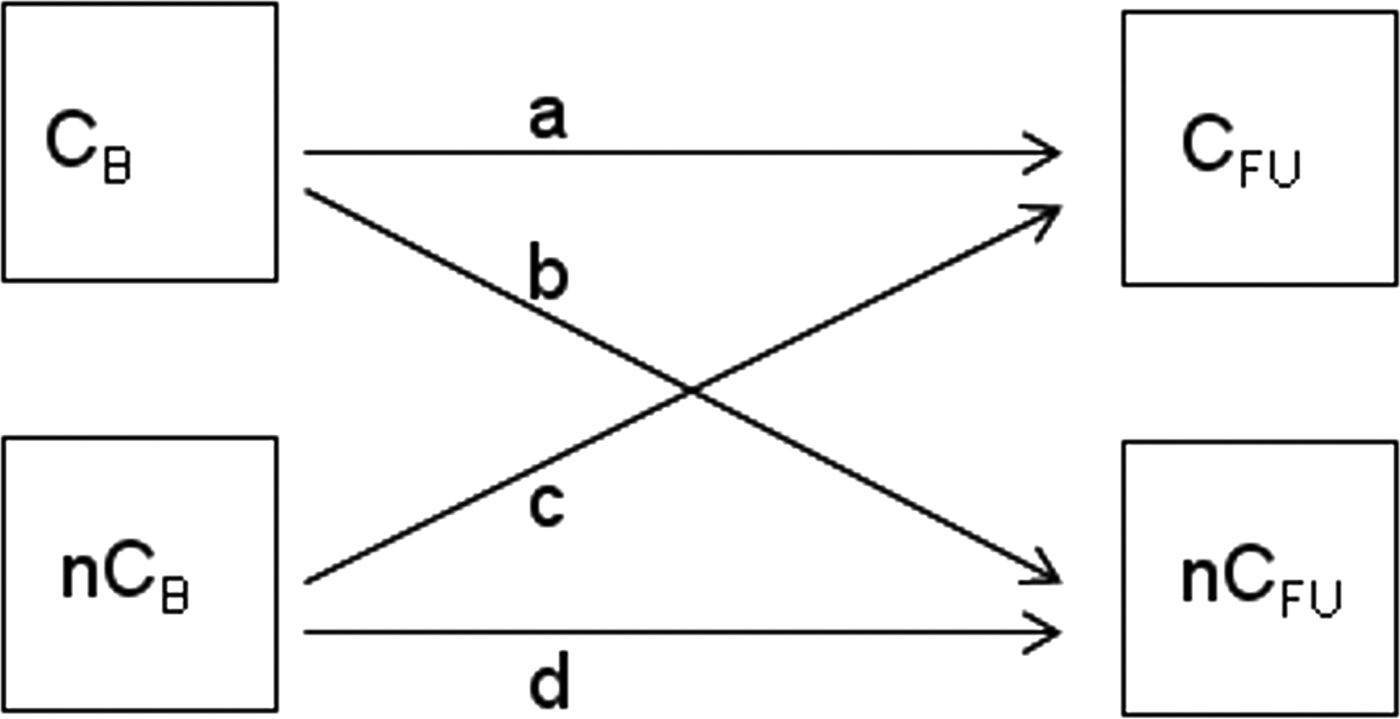
Previous studies on the course of illness in OCD have used different definitions of chronicity (Ravizza et al. Reference Ravizza, Maina and Bogetto1997; Tükel et al. Reference Tükel, Oflaz, Ozyildirim, Aslantaş, Ertekin and Sözen2007; Visser et al. Reference Visser, van Oppen, van Megen, Eikelenboom and van Balkom2014). In this study, we adopted the relatively strict definition by Visser et al. (Visser et al. Reference Visser, van Oppen, van Megen, Eikelenboom and van Balkom2014), namely the continuous presence of at least moderately severe obsessive–compulsive (OC) symptoms during a period of at least 2 years. The presence of chronicity at baseline was retrospectively determined with a life-chart interview (LCI) (Lyketsos et al. Reference Lyketsos, Nestadt, Cwi, Heithoff and Eaton1994). The methodology of LCI has shown high validity and reliability (Warshaw et al. Reference Warshaw, Keller and Stout1994). This instrument uses a calendar method (with help of age and calendar-linked personal memory cues) to determine the course of life history and OCD during the past 2 years. The respondents were provided with a clear definition of OCD. Duration could vary from (0) no OCD symptoms during the examined year, to (1) a small part of the year, (2) half of the year, (3) the majority of the year, or (4) the whole year. Severity of the OC symptoms was rated on a five-point scale [not to be confused with the Yale-Brown Obsessive Compulsive Severity Scale (Y-BOCS)], with (1) no OC symptoms, (2) minimally severe, (3) moderately severe, (4) severe, or (5) very severe OCD. The LCI thus yielded four variables: two ordinal variables that represent the duration of symptoms, one for the first year and one for the second (range 0–4), and two ordinal variables that represent the severity of symptoms, one for the first and one for the second year (range 1–5). The definition of chronic OCD was operationalized as the combination of a rating of 4 on the duration subscale and a rating of 3 or higher on the severity subscale, for two consecutive years. Assessment of chronicity at follow-up proceeded in a similar vein: the patients that met the criteria for OCD according to the SCID-I and met the criteria for chronicity on the LCI were labelled ‘chronic’, and all other patients were labelled ‘non-chronic’. Based on their chronicity status at baseline and at follow-up, patients were assigned to one of four course trajectories (see Fig. 1):
(a) Patients with a chronic course of illness at baseline and a chronic course at follow-up were labelled ‘CB–CFU’;
Fig. 1.Course trajectories based on chronicity status at baseline and at follow-up. CB, chronic at baseline; nCB, non-chronic at baseline; CFU, chronic at 2-year follow-up; nCFU, non-chronic at 2-year follow-up; a = CB–CFU; b = CB–nCFU; c = nCB–CFU; d = nCB–nCFU.

(b) patients with a chronic course of illness at baseline and a non-chronic course at follow-up were labelled ‘CB–nCFU’;
(c) patients with a non-chronic course of illness at baseline and a chronic course at follow-up were labelled ‘nCB–CFU’;
(d) patients with a non-chronic course of illness at baseline and a non-chronic course at follow-up were labelled ‘nCB–nCFU’.

Impact of chronicity: assessments at follow-up
Four parameters at follow-up served as indicators of the clinical impact of the different course trajectories. The severity of OC symptoms was measured with the Y-BOCS (range 0–40) (Goodman et al. Reference Goodman, Price, Rasmussen, Mazure, Fleischmann and Hill1989). The severity of comorbid depressive symptoms was measured with the self-rated 21-item Beck Depression Inventory (BDI; range 0–63) (Beck et al. Reference Beck, Ward, Mendelson, Mock and Erbaugh1961). The severity of comorbid anxiety symptoms was measured with the Beck Anxiety Inventory (BAI; range 0–63) (Beck et al. Reference Beck, Epstein, Brown and Steer1988). Quality of life was assessed with the EuroQol, yielding a utility score ranging from −0.59 to 1.00 (EuroQol Group, 1990).
Determinants of chronicity: assessments at baseline
In addition to demographic characteristics (sex, age, education, employment status, partner status), we assessed a number of predictors related to OCD, to comorbidity and to stress and support.
OCD-related
A diagnosis of OCD in first-degree relatives indicated a positive family history of OCD (yes/no) and was established with a family tree, based on information provided by the participants. The age at which participants first fulfilled DSM-IV criteria for OCD was established with the SCID-I and marked as the age at onset. Illness duration was defined as the difference between the age at baseline and the age at onset of OCD. Current severity of OC symptoms was assessed as described above. A self-report version of the Yale-Brown Obsessive-Compulsive Scale symptom checklist (Y-BOCS-SC) was used to establish the lifetime presence of four OCD symptom dimensions (yes/no): aggression/checking (20 items), symmetry/ordering (10 items), contamination/washing (nine items), and hoarding (two items) (Anholt et al. Reference Anholt, van Oppen, Emmelkamp, Cath, Smit and van Dyck2009). OCD-related cognitions were assessed using the Interpretation of Intrusions Inventory (Triple-III) (range 0–3100) (Obsessive Compulsive Cognitions Working Group, 2003).
Comorbidity
The current number of comorbid DSM-IV diagnoses (psychotic disorder, bipolar and unipolar depressive disorder, anxiety disorders, substance-related disorders, somatoform disorders, and eating disorders) was assessed with the SCID-I (Spitzer et al. Reference Spitzer, Williams, Gibbon and First1992). Since tic disorders, attention-deficit hyperactivity disorder (ADHD) and autism are not diagnosed with the SCID-I, a proxy diagnosis was derived from the following three assessor-ratings: the Yale Global Tic Severity Scale (YGTSS) (Leckman et al. Reference Leckman, Riddle, Hardin, Ort, Swartz and Stevenson1989), the ADHD rating scale-IV (Kooij et al. Reference Kooij, Buitelaar, van den Oord, Furer, Rijnders and Hodiamont2005) and the Autism-Spectrum Quotient (ASQ) (Baron-Cohen et al. Reference Baron-Cohen, Wheelwright, Skinner, Martin and Clubley2001). The severity of comorbid depressive and anxiety symptoms was measured as described above. The severity of psychotic symptoms was measured using the psychosis subscale of the assessor-rated Comprehensive Psychopathological Rating Scale (CPRS; range 0–72) (Goekoop et al. Reference Goekoop, Knoppert-Van der Klein, Hoeksema, Klinkhamer, Van Gaalen and Van der Velde1991).
Stress and support
The degree of social support was measured with the Social Support Inventory (SSI) (Brown et al. Reference Brown, Brady, Lent, Wolfert and Hall1987). The level of expressed emotion was measured with the Level of Expressed Emotion scale (LEE) (Cole & Kazarian, Reference Cole and Kazarian1988). The number of different categories of childhood physical and/or sexual abuse was inventoried with the Structured Trauma Interview (STI) (Draijer & Langeland, Reference Draijer and Langeland1999). The number of negative life events in the past year was assessed with a list of 12 negative life events, based on previous epidemiological research (De Graaf et al. Reference De Graaf, Bijl, Ravelli, Smit and Vollebergh2002).
Treatment status
To be able to investigate the relation between treatment status and course variations, patients were asked at follow-up about their current use of medication and their contact with health care professionals in the period between baseline and follow-up.
Statistical analyses
To assess the clinical impact of the different course trajectories, we compared the means of the four outcome variables at follow-up for the corresponding subgroups, using one-way analysis of variance with post hoc group comparisons, correcting for multiple comparisons. The predictive value of baseline chronicity with regard to chronicity at follow-up was determined with a bivariate logistic regression analysis. We then assessed the predictive value of the baseline variables described above with regard to OCD chronicity at follow-up. To investigate factors involved in inducing chronicity, we considered the subgroup of patients with a non-chronic course at baseline and we regressed chronicity status at follow-up on the predictors using bivariate and multivariate logistic regression with a backward stepwise entry method. To investigate factors involved in maintaining chronicity, we performed similar analyses for the subgroup of patients with a chronic course at baseline. The threshold for inclusion of predictor variables in the multivariate analyses was set at 0.10. As chronicity could be the result of a lack of treatment, we investigated whether the patients that became or remained chronic had a lower chance of having contact with mental health professionals and/or using medication than the patients that remained or became non-chronic, using χ2-tests.
Results
Baseline characteristics
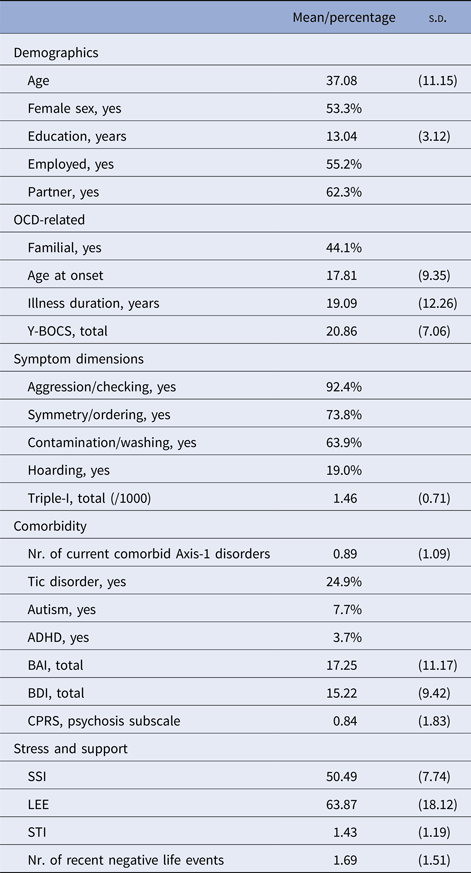
The characteristics of the 270 participants included in this study are presented in Table 1. The sample included 144 females (53.3%), subjects had a mean age of 37.08 years (s.d. = 11.15) and a mean educational level of 13.04 years (s.d. = 3.12 years). About half of the participants (55.2%) was employed and 62.3% had a partner. The mean score on the Y-BOCS was 20.86 (s.d. = 7.06) reflecting a moderate mean severity of OCD. The mean age at onset of OCD was 17.81 years (s.d. = 9.35). The mean number of current comorbid Axis I mental disorders was 0.89 (s.d. = 1.09).
Baseline characteristics of the total study sample (n = 270)
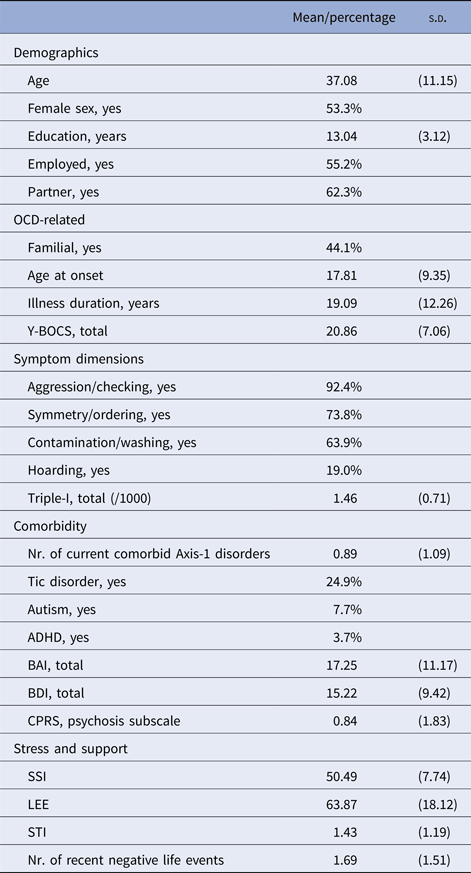
Y-BOCS, Yale-Brown Obsessive Compulsive Scale; Triple-I, Interpretation of Intrusions Inventory; ADHD, attention-deficit/hyperactivity disorder; BAI, Beck Anxiety Inventory; BDI, Beck Depression Inventory; CPRS, Comprehensive Psychiatric Rating Scale; SSI, Social Support Inventory; LEE, Level of Expressed Emotion; STI, Structured Trauma Interview.
Course trajectories
Of the 270 subjects, 100 (37.0%) had a non-chronic course at baseline. Of these 100 subjects, 21 met the criteria for chronicity at follow-up and thus became chronic (nCB–CFU), whereas 79 subjects retained their non-chronic course (nCB–nCFU). Of the 170 subjects with a chronic course at baseline, 78 met the criteria for chronicity at follow-up and thus remained chronic (CB–CFU), whereas 92 subjects entered a non-chronic course (CB–nCFU). Baseline chronicity status was a significant predictor of chronicity status at follow-up (Wald-statistic z = 4.00, p < 0.001). The odds of having a chronic course at follow-up were 3.19 times higher for the subjects with a chronic course at baseline compared with the subjects with a non-chronic course at baseline [95% confidence interval (CI) 1.81–5.63, p < 0.001, McFadden pseudo-R 2 = 0.050]. These results show that baseline chronicity is an important predictor of chronicity at follow-up.
Impact of chronicity
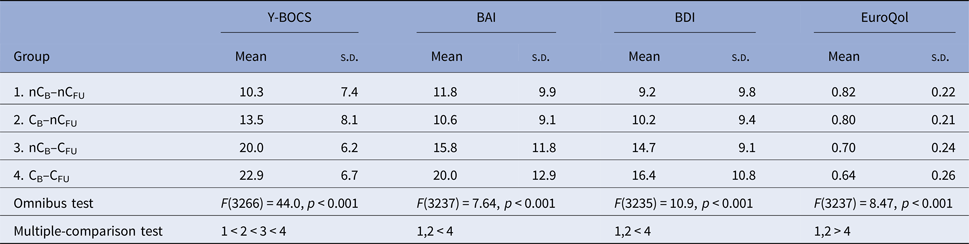
Findings regarding the clinical impact of chronicity are presented in Table 2. As follows from this table, there is a clear gradient in all four outcome variables (Y-BOCS, BAI, BDI, EuroQol), with the most favorable outcome for the nCB–nCFU subgroup, followed by the CB–nCFU subgroup, the nCB–CFU subgroup and finally the CB–CFU subgroup.
Clinical impact of course variations – mean scores of Y-BOCS, BAI, BDI, and EuroQol at follow-up

CB, chronic at baseline; nCB, non-chronic at baseline; CFU, chronic at 2-year follow-up; nCFU, non-chronic at 2-year follow-up; Y-BOCS, Yale-Brown Obsessive Compulsive Scale; BAI, Beck Anxiety Inventory; BDI, Beck Depression Inventory.
‘1 < 2’ indicates that the mean of group 1 is significantly smaller than the mean of group 2 using a two-sided test with α = 0.05 and using Bonferroni correction.
Predictors of chronicity
Factors involved in inducing chronicity
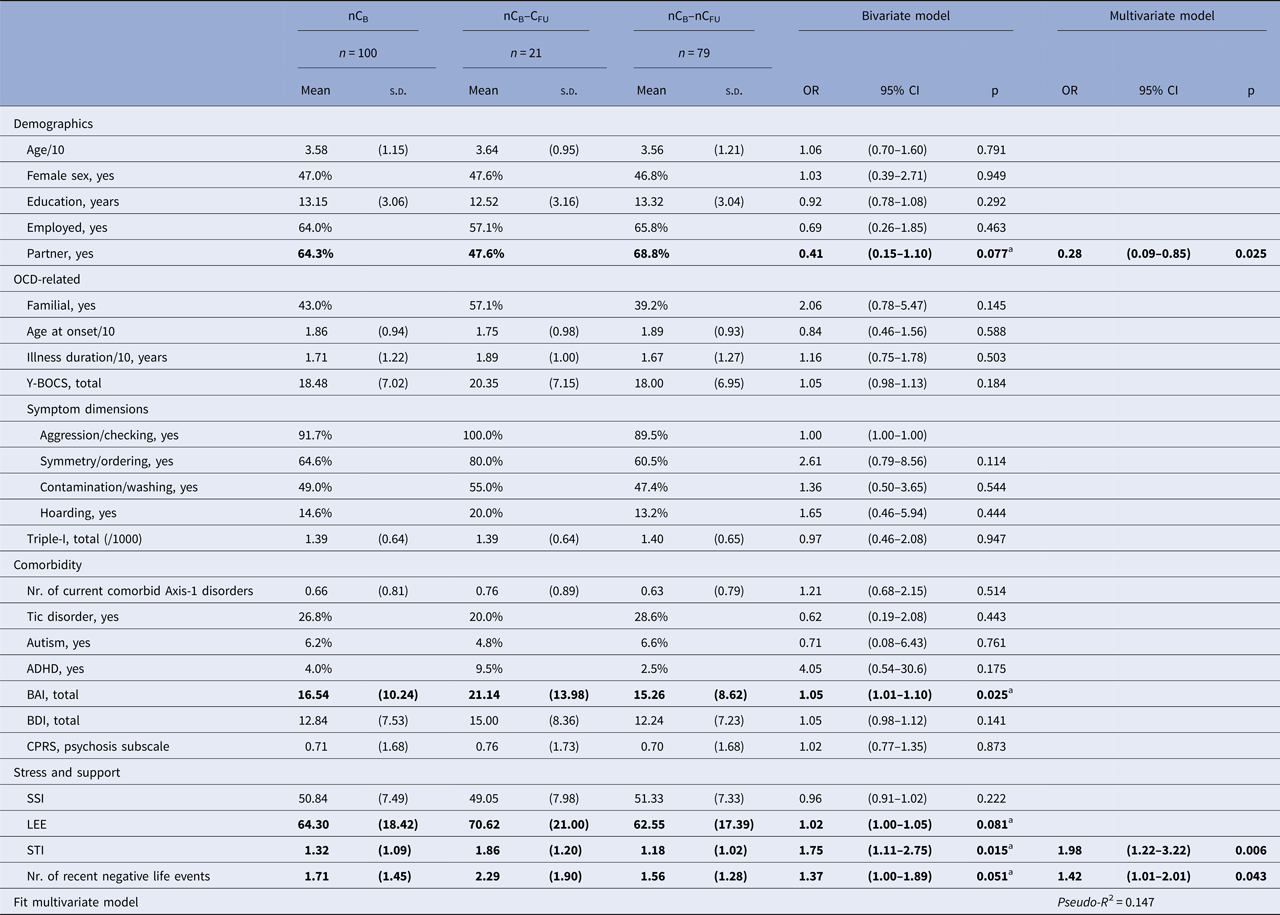
Based on the results of the bivariate analyses on the subgroup of patients with a non-chronic course at baseline, the following variables were entered into the multivariate model (see Table 3): presence/absence of a partner, severity of comorbid anxiety, the level of expressed emotion, the number of negative life events in the past year and the number of different categories of adverse childhood experiences. A higher number of negative life events in the past year and a higher number of different categories of adverse childhood experiences were independently associated with a higher risk of meeting the criteria for chronicity at follow-up (and thus of entering a chronic course of illness) [life events: odds ratio (OR) 1.42, CI 1.01–2.01, p = 0.043; trauma: OR 1.98, CI 1.22–3.22, p = 0.006], whereas having a partner was associated with a lower risk of becoming chronic (OR 0.28, CI 0.09–0.85, p = 0.025). The predictive value of the total model, expressed as the McFadden pseudo-R 2, amounted to 0.147.
Factors associated with inducing chronicity – results of bivariate and multivariate regression analyses
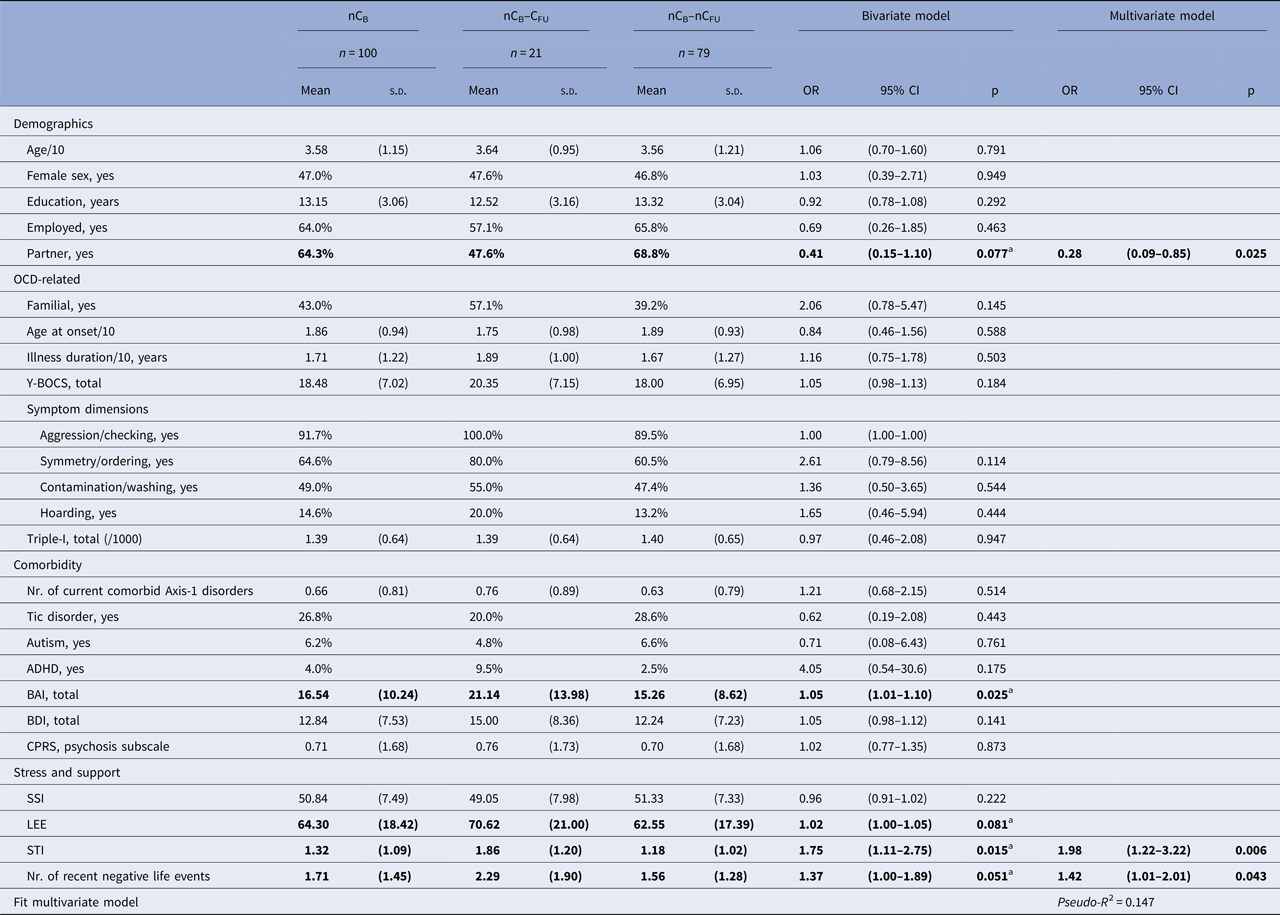
CB, chronic at baseline; nCB, non-chronic at baseline; CFU, chronic at 2-year follow-up; nCFU, non-chronic at 2-year follow-up; Y-BOCS, Yale-Brown Obsessive Compulsive Scale; Triple-I, Interpretation of Intrusions Inventory; ADHD, attention-deficit/hyperactivity disorder; BAI, Beck Anxiety Inventory; BDI, Beck Depression Inventory; CPRS, Comprehensive Psychiatric Rating Scale; SSI, Social Support Inventory; LEE, Level of Expressed Emotion; STI, Structured Trauma Interview. Bold indicates a significance of p < 0.1.
a Variable was considered to construct a predictive (multivariate) model.
Factors involved in maintaining chronicity
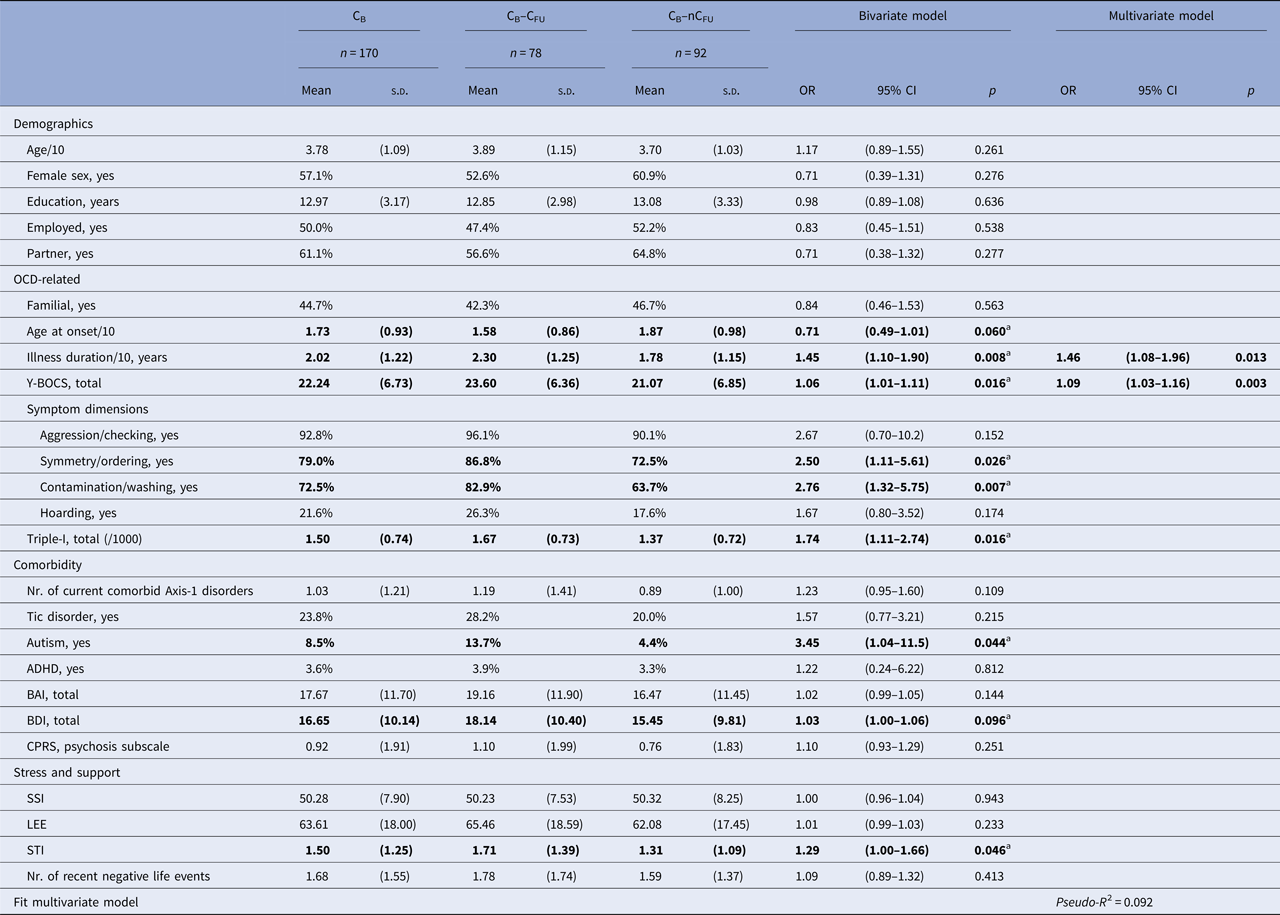
For the subgroup of patients with a chronic course at baseline, the following variables were entered into the multivariate model (see Table 4): age at onset of OCD, illness duration, severity of OCD symptoms, the presence of symmetry/ordering symptoms, the presence of contamination/washing symptoms, the intensity of OCD-related cognitions, the presence of comorbid autism, the severity of comorbid depressive symptoms, and the number of different categories of adverse childhood experiences. A longer duration of illness and a higher severity of OCD symptoms were independently associated with a higher risk of meeting the criteria for chronicity at follow-up, and thus of remaining in a chronic course of illness (illness duration: OR 1.46, CI 1.08–1.96, p = 0.013; severity: OR 1.09, CI 1.03–1.16, p = 0.003). The predictive value of the total model, expressed as the McFadden pseudo-R 2, was 0.092.
Factors associated with maintaining chronicity – results of bivariate and multivariate regression analyses

CB, chronic at baseline; nCB, non-chronic at baseline; CFU, chronic at 2-year follow-up; nCFU, non-chronic at 2-year follow-up; Y-BOCS, Yale-Brown Obsessive Compulsive Scale; Triple-I, Interpretation of Intrusions Inventory; ADHD, attention-deficit/hyperactivity disorder; BAI, Beck Anxiety Inventory; BDI, Beck Depression Inventory; CPRS, Comprehensive Psychiatric Rating Scale; SSI, Social Support Inventory; LEE, Level of Expressed Emotion; STI, Structured Trauma Interview.
a Variable was considered to construct a predictive (multivariate) model.
Effect of treatment status
The patients that became chronic did not have a lower chance of having contact with mental health professionals and using medication than the patients that remained non-chronic [contact: 95.2% v. 86.1%, χ2(1) = 1.32, p = 0.251; medication: 50% v. 39.1%, χ2(1) = 0.75, p = 0.385]. The patients that remained chronic had a (significantly) higher, not a lower chance of having contact with mental health professionals and using medication than the patients that became non-chronic [contact: 96.2% v. 88.0%, χ2(1) = 3.67, p = 0.055; medication: 63.2% v. 45.8%, χ2(1) = 4.58, p = 0.032]. Therefore, it seems unlikely that lack of treatment played a role in inducing or maintaining chronicity.
Discussion
In this study, we set out to describe course variations in OCD with respect to chronicity, to assess the clinical impact of chronicity in OCD and to identify predictors of a chronic course of illness in OCD. Baseline chronicity appeared to be an important predictor of future chronicity. Subjects with a chronic course of illness had a significantly worse outcome with respect to severity of OC symptoms, severity of comorbid anxiety and depressive symptoms and quality of life compared with those with a non-chronic course. A higher number of negative life events in the past year and a higher number of different categories of adverse childhood experiences were independently associated with a higher risk of entering a chronic course of illness, whereas having a partner appeared to be protective of developing chronic symptoms. For those patients that already had a chronic course of illness, a longer duration of illness and a higher severity of OCD symptoms were independently associated with a higher risk of remaining in that chronic course.
Course trajectories
Our finding that baseline chronicity is an important predictor of future chronicity is consistent with the classical study on the long-term course of OCD by Skoog and Skoog (Skoog & Skoog, Reference Skoog and Skoog1999), in which baseline chronicity emerged as one of the important predictors of long-term outcome. Still, more than half of the patients in our study that met the criteria for chronicity at baseline managed to enter a non-chronic course in the two subsequent years, which is consistent with the results of a recent study by Garnaat et al. (Reference Garnaat, Boisseau, Yip, Sibrava, Greenberg and Mancebo2015). Other long-term studies on the natural course of OCD, however, show lower rates of improvement during this timeframe (Steketee et al. Reference Steketee, Eisen, Dyck, Warshaw and Rasmussen1999; Marcks et al. Reference Marcks, Weisberg, Dyck and Keller2011), but these differences can at least in part be explained by the fact that these studies used the stricter requirement of partial or full remission as the main outcome parameter. The relatively high rate of improvement after 2 years of chronic symptoms in our study does raise the question of whether our timeframe of 2 years [based on the study by Visser et al. (Reference Visser, van Oppen, van Megen, Eikelenboom and van Balkom2014)] is adequate in delineating a chronic course of illness, or whether a longer timeframe would be more appropriate. In their 5-year follow-up study, Garnaat et al. (Reference Garnaat, Boisseau, Yip, Sibrava, Greenberg and Mancebo2015) showed that marked improvement was rare after 3 years of severe illness. Marcks et al. (Reference Marcks, Weisberg, Dyck and Keller2011), however, showed that the recovery rate for OCD keeps increasing (albeit slowly and modestly) over a 15-year period of time. The appropriate timeframe for delineating chronicity in OCD, therefore, remains open to debate.
Clinical impact of chronicity
A chronic course of illness in OCD appears to have a significant impact on clinical outcome and quality of life. These results, however, have to be interpreted with some caution. The presence of a chronic course of illness between baseline and follow-up was retrospectively assessed at follow-up, at the same time as the assessment of the outcome variables. Retrospective assessments open up the possibility of state-dependent recall bias. In the case of our study, for example, a current state of depression at follow-up could lead to an overestimation of severity of OC symptoms between baseline and follow-up. Notwithstanding these concerns, these findings, combined with the fact that chronicity itself is an important predictor of future chronicity, underline the importance of identifying factors that increase the risk of chronicity in OCD.
Factors involved in inducing and maintaining chronicity
The results presented in Tables 3 and 4 show that different factors are involved in inducing and in maintaining chronicity. The factors involved in inducing chronicity can be categorized as predisposing (number of categories of childhood trauma), precipitating (number of recent negative life events), and protective (presence of a partner). With every category of childhood trauma endorsed, the odds of entering a chronic course of illness almost doubled. Previous research has shown that rates of childhood trauma are higher in subjects with OCD than in normal controls (Grisham et al. Reference Grisham, Fullana, Mataix-Cols, Moffitt, Caspi and Poulton2011; Lafleur et al. Reference Lafleur, Petty, Mancuso, McCarthy, Biederman and Faro2011), that the presence of childhood trauma is associated with a higher severity of OC symptoms (Cromer et al. Reference Cromer, Schmidt and Murphy2007), and that the association between trauma and OCD might be partly mediated by comorbid depressive and anxiety disorders and by personality factors (Mathews et al. Reference Mathews, Kaur and Stein2008; Vidal-Ribas et al. Reference Vidal-Ribas, Stringaris, Rück, Serlachius, Lichtenstein and Mataix-Cols2015). As there was no bivariate association in our study between baseline severity of comorbid depressive symptoms and the risk of becoming chronic, we did not include this predictor in the multivariate analysis. Severity of comorbid anxiety symptoms, however, did predict chronicity when considered on its own and was therefore included in the multivariate analysis, but then failed to account for the association between trauma and OCD chronicity. As we did not include predictors related to personality in our study, we cannot rule out their potential role as mediating factor. Having a partner reduced the odds of developing chronic symptoms more than threefold. The protective role of having a partner against developing chronic OC symptoms is consistent with a number of previous studies (Steketee et al. Reference Steketee, Eisen, Dyck, Warshaw and Rasmussen1999; Boschen et al. Reference Boschen, Drummond, Pillay and Morton2010; Marcks et al. Reference Marcks, Weisberg, Dyck and Keller2011). As the association was corrected for the severity of OC symptoms, this association does not appear to be spurious but likely points to a genuine effect of social support provided by the partner in addressing symptoms and bringing about change. However, it is also possible that partners accommodate to the illness behavior of the patient, thereby leading to a perceived reduction of illness burden that translates into a lower (but not a genuinely lower) score on the chronicity scale (Steketee et al. Reference Steketee, Eisen, Dyck, Warshaw and Rasmussen1999; Marcks et al. Reference Marcks, Weisberg, Dyck and Keller2011). With each recent negative life event, the odds of entering a chronic course increased with 42%. It is possible that the general stress that usually accompanies these types of events deprives the patient of energy resources that are necessary to resist obsessions and compulsive behavior, thereby contributing to the downward spiral of negative reinforcement that characterizes OCD.
For those patients that already had a chronic course of illness, the nature of the relevant predictors for future chronicity shifted from external influences to illness-related factors. The odds of remaining chronic increased by 46% with every 10-year increase in illness duration and by 9% for every point increase on the Y-BOCS. A substantial amount of studies have identified both illness duration (Ravizza et al. Reference Ravizza, Maina and Bogetto1997; Catapano et al. Reference Catapano, Perris, Masella, Rossano, Cigliano and Magliano2006; Dell'Osso et al. Reference Dell'Osso, Benatti, Buoli, Altamura, Marazziti and Hollander2013; Eisen et al. Reference Eisen, Sibrava, Boisseau, Mancebo, Stout and Pinto2013; Mancebo et al. Reference Mancebo, Boisseau, Garnaat, Eisen, Greenberg and Sibrava2014) and baseline severity of OC symptoms (Catapano et al. Reference Catapano, Perris, Masella, Rossano, Cigliano and Magliano2006; Kempe et al. Reference Kempe, van Oppen, de Haan, Twisk, Sluis and Smit2007; Tükel et al. Reference Tükel, Oflaz, Ozyildirim, Aslantaş, Ertekin and Sözen2007; Eisen et al. Reference Eisen, Pinto, Mancebo, Dyck, Orlando and Rasmussen2010, Reference Eisen, Sibrava, Boisseau, Mancebo, Stout and Pinto2013) as important predictors of long-term outcome in OCD. The predictive value of illness duration in maintaining chronicity stresses the importance of early detection and treatment of OCD. The fact that baseline symptom severity (as assessed with the Y-BOCS) was associated with the chance of remaining chronic can partly be explained by the fact that our definition of chronicity also included a measure of symptom severity (severity subscale of the LCI). Still, the association could also point to the importance of rigorous treatment of those patients that are most ill. From our limited analysis of the relation between treatment status and course of illness, it follows that it is unlikely that chronicity in our sample was due to a lack of treatment. However, as NOCDA is a naturalistic cohort study, it is not designed to systematically investigate the impact of treatment on course of illness. Whether symptom severity and chronicity were related to treatment resistance could therefore not be assessed. The fact that the patients that remained chronic had a higher chance of having contact with professional mental health care and using medication than the patients that became non-chronic is probably a spurious finding due to a treatment bias effect, in which subjects with more severe and/or long-standing pathology tend to receive more treatment. It is an effect that is often observed in naturalistic cohort studies (Steketee et al. Reference Steketee, Eisen, Dyck, Warshaw and Rasmussen1999; Eisen et al. Reference Eisen, Pinto, Mancebo, Dyck, Orlando and Rasmussen2010, Reference Eisen, Sibrava, Boisseau, Mancebo, Stout and Pinto2013; Marcks et al. Reference Marcks, Weisberg, Dyck and Keller2011). The fact that baseline chronicity in OCD predicts future chronicity, combined with the fact that factors involved in maintaining a chronic course of illness might be difficult to modify, points to the importance of preventing chronicity from occurring in the first place. Our results suggest that OCD patients with a traumatic history, patients without a partner, and patients that have recently experienced one or more negative life events have an increased risk of entering a chronic course of illness. Therapeutic strategies aimed at alleviating event-related stress and at boosting social support might aid in reducing the risk of chronicity for these patients.
Strengths and limitations
The main strengths of our study are the relatively large size of the cohort, its extensive clinical phenotyping and its representativeness, which follows from the fact that the demographic and clinical characteristics of our sample closely resemble those of OCD study samples from other countries (LaSalle et al. Reference LaSalle, Cromer, Nelson, Kazuba, Justement and Murphy2004; Pinto et al. Reference Pinto, Mancebo, Eisen, Pagano and Rasmussen2006; Samuels et al. Reference Samuels, Riddle, Greenberg, Fyer, McCracken and Rauch2006). Several limitations of the study have to be addressed. The fact that all participants were treatment-seeking limits the generalizability of our findings, as patients with poor or absent insight who do not consider themselves to be ill are probably under-represented in our sample. Secondly, our array of clinical predictors did not include a validated measure of insight. Lack of insight has been related to a poorer outcome in OCD (Catapano et al. Reference Catapano, Perris, Fabrazzo, Cioffi, Giacco and De Santis2010). Several variables, such as chronicity status, the age at onset of OCD, and the presence of childhood adverse events were assessed retrospectively, which opens up the possibility of recall bias. Differences in the predictors involved in inducing and in maintaining chronicity could also be influenced by a lack of statistical power, as the nCB–CFU subgroup was relatively small (n = 21) compared with the CB–CFU subgroup (n = 78).
Future directions
This study is based on the largest sample thus far when compared with previous studies on the course of illness in OCD and incorporated most of the predictors that have been investigated before. Despite these facts, the total predictive values of our models with respect to chronicity are relatively low. This raises the interesting question of what it is that we have missed in our models. The large array of clinical predictors that we included essentially represents the information that is gathered during routine diagnostic work-up in everyday practice. If the inclusion of all these variables only amounts to a limited predictive value, it seems important to broaden the scope of predictors (Bernardini et al. Reference Bernardini, Attademo, Cleary, Luther, Shim and Quartesan2016). Promising avenues for future research might be the inclusion of neurobiological variables (Ball et al. Reference Ball, Stein and Paulus2014; Göttlich et al. Reference Göttlich, Krämer, Kordon, Hohagen and Zurowski2015) or within-person, overtime symptom dynamics as assessed with experience sampling methodology (Höhn et al. Reference Höhn, Menne-Lothmann, Peeters, Nicolson, Jacobs and Derom2013).
Conclusion
The present study shows that the presence of a chronic course of illness in OCD predicts future chronicity, and that chronicity is associated with a poor clinical outcome. As factors involved in maintaining chronicity (illness duration and severity) are potentially difficult to modify, attention and care should be devoted to prevent chronicity from occurring in the first place. Therapeutic strategies aimed at alleviating event-related stress and at boosting social support might aid in achieving this goal.
Acknowledgements
The research infrastructure needed to complete the baseline measurements (including personnel and materials) is financed almost exclusively by the participating organizations (Academic department of Psychiatry, VU Medical Center/GGZ inGeest, Amsterdam; Marina de Wolf Centre for Anxiety Research, Ermelo; Centre for Anxiety Disorders ‘Overwaal’, Lent; Dimence, GGZ Overijssel; Department of Psychiatry, Leiden University Medical Center, Leiden; Mental Health Care Centre Noord- en Midden-Limburg, Venray; Academic Anxiety Centre, PsyQ Maastricht, Maastricht University, Division Mental Health and Neuroscience). The fieldwork coordinator was financed for 1 year by a research grant from the Stichting Steun VCVGZ.
Declaration of interest
None.
Contributions
• Conception and design/analysis and interpretation of data: LvO, ME, HvM, AH, PvO, AvB;
• Drafting/revising article: LvO, ME, HvM, HV, KS, GH, NvdW, AH, PvO, AvB;
• Final approval: LvO, ME, HvM, HV, KS, GH, NvdW, AH, PvO, AvB.