Introduction
The genus Lenonchium is a rare dorylaimid (order Dorylaimida) taxon, often found in semi-aquatic habitats (rice fields, river banks, etc.) and/or associated with tropical crops (banana, coconut, pulse). Originally proposed by Siddiqi (Reference Siddiqi1965), with L. oryzae from India as its type and only species, it currently includes five valid species plus one species inquirenda (Vinciguerra, Reference Vinciguerra, Eyualem-Abebe, Traunspurger and Andrássy2006). Its taxonomy was the subject matter of several contributions (Ahmad & Jairajpuri, Reference Ahmad and Jairajpuri1988; Swart & Heyns, Reference Swart and Heyns1991; Jairajpuri & Ahmad, Reference Jairajpuri and Ahmad1992; Loof, Reference Loof1999; Vinciguerra, Reference Vinciguerra, Eyualem-Abebe, Traunspurger and Andrássy2006) in which new species were described, its diagnosis was revised and updated lists of species were provided as well keys to their identification.
The taxonomic position of Lenonchium has undergone significant changes. Siddiqi (Reference Siddiqi1965) classified it under Dorylaimidae de Man, 1876 (see also Ferris, Reference Ferris and Zuckerman1971) and later (1969) under Thornenematidae Siddiqi, Reference Siddiqi1969. Vinciguerra (Reference Vinciguerra1976) transferred it to the family Nordiidae Jairajpuri & Siddiqi, 1964, and Eliava (Reference Eliava1978) created the subfamily Lenonchiinae Eliava, Reference Eliava1978, to accommodate it under Nordiidae – an action followed by Ahmad & Jairajpuri (Reference Ahmad and Jairajpuri1988). Jairajpuri & Ahmad (Reference Jairajpuri and Ahmad1992), however, regarded Lenonchiinae as a synonym of Pungentinae Siddiqi, 1969, and this opinion was accepted in subsequent contributions (Vinciguerra, Reference Vinciguerra, Eyualem-Abebe, Traunspurger and Andrássy2006; Andrássy, Reference Andrássy2009). Evolutionary relationships of the genus were, however, not explored yet, mainly due to the absence of molecular data for its representatives.
A population of Lenonchium was collected in the course of a general nematological survey conducted in west Iran. Its detailed studied revealed its belonging to a non-described form. Thus, the aim of this contribution is to characterize it, and to provide new insights into the taxonomy and the phylogeny of the genus, with an integrative approach combining morphological and molecular information.
Materials and methods
Sampling and processing of nematodes
Soil samples were collected from wet sand at the riverside of Zarrin River in Zanjan province, Iran, in May 2017. Nematodes were extracted using the tray method (Whitehead & Hemning, Reference Whitehead and Hemning1965), handpicked under a stereomicroscope, heat-killed by adding boiling 4% formalin solution, transferred to anhydrous glycerine according to De Grisse (Reference De Grisse1969) and mounted on permanent glass slides to allow handling and observation.
Observation and study with light microscopy (LM)
Nematodes were observed and measurements taken using a LeitzDialux 22 (Sttutgart, Germany) light microscope. Morphometrics include Demanian indices and the usual measurements. The position of the pharyngeal gland nuclei was calculated according to Loof & Coomans (Reference Loof and Coomans1970), and spicule terminology follows Peña-Santiago et al. (Reference Peña-Santiago, Abolafia and Álvarez-Ortega2014). Line illustrations and pictures were obtained using a Nikon Eclipse 80i (Tokyo, Japan) microscope equipped with a Nikon DS digital camera and camera lucida. Raw photographs were edited using Adobe® Photoshop® CS.
Scanning electron microscopy (SEM)
Selected specimens preserved in glycerol were processed for observation under SEM following the protocol of Abolafia (Reference Abolafia2015). Nematodes were hydrated in distilled water, dehydrated in a graded ethanol-acetone series, critical point dried, coated with gold and observed with a Zeiss Merlin (Jena, Oberkochen, Germany) microscope (5 kV).
DNA extraction, polymerase chain reaction (PCR) and sequencing
Nematode DNA was extracted from single individuals, protocols for DNA extraction were followed as described by Tanha Maafi et al. (Reference Tanha Maafi, Subbotin and Moens2003) and DNA extracts were stored at −20°C until used as PCR template. Two overlapping fragments of SSU rDNA (~1600 bp were amplified from each specimen using primer sets 1096F (5′-GGTAATTCTGGAGCTAATAC–3′) and 1912R (5′-TTTACGGTYAGAACTAGGG–3′) for the first fragment, and 1813F (5′-CKGCGYKAGAGGTGAAAT–3′), 2646R (5′- GCTACCTTGTTACGACTTTT–3′) for the second fragment (Holterman et al., Reference Holterman, Rybarczyk, van den Elsen, van Megen, Mooyman, Peña-Santiago, Bongers, Bakker and Helder2008). The D2–D3 expansion segments of 28S rDNA were amplified using the forward D2A (5′–ACAAGTACCGTGAGGGAAAGT–3′) and reverse D3B (5′–TCGGAAGGAACCAGCTACTA–3′) primers (Subbotin et al., Reference Subbotin, Sturhan, Chizhov, Vovlas and Baldwin2006). The 30 µl PCR contained 15 µl 2× Taq DNA polymerase mix (Ampliqon, Denmark), 1 µl (10 pmol µl−1) each of forward and reverse primers, 2 µl of DNA template and 11 µl double-distilled water. This mixture was placed into a Hybaid Express (Thomas Scientific, Swederboro, New Jersey, USA) thermal cycler. The thermal cycling profile was denaturation at 95°C for 4 min, then 33 cycles of denaturation at 94°C for 30 s, annealing at 54°C for 30 s (SSU) and 57°C for 30 s (LSU), and extension at 72°C for 90 s. A final extension was performed at 72°C for 10 min. The quality of PCR was checked by electrophoresis of 4 µl of the PCR reaction in 1% agarose gel containing ethidium bromide. Products were visualized and photographed under ultraviolet light. The length and concentration of each PCR product was measured by comparison with a low DNA mass ladder (Invitrogen, Carlsbad, CA). The PCR product was purified and sequenced directly for both strands using the same primers with an ABI 3730XL sequencer (Bioneer, Seoul, South Korea). The newly obtained sequence was submitted to the GenBank database under accession numbers MK089266 for the 18S region and MK089267 for the 28S region.
Phylogenetic analyses
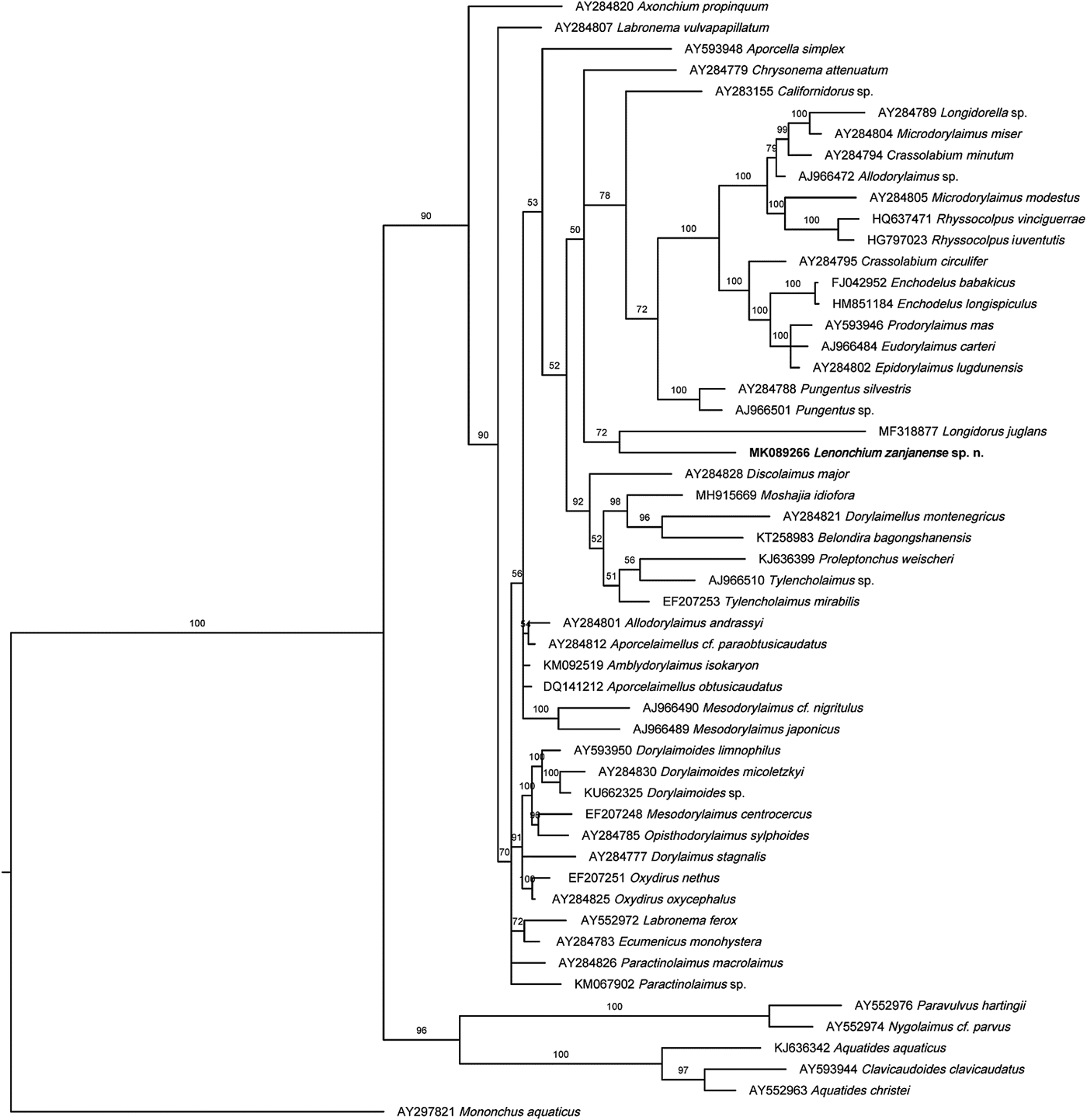
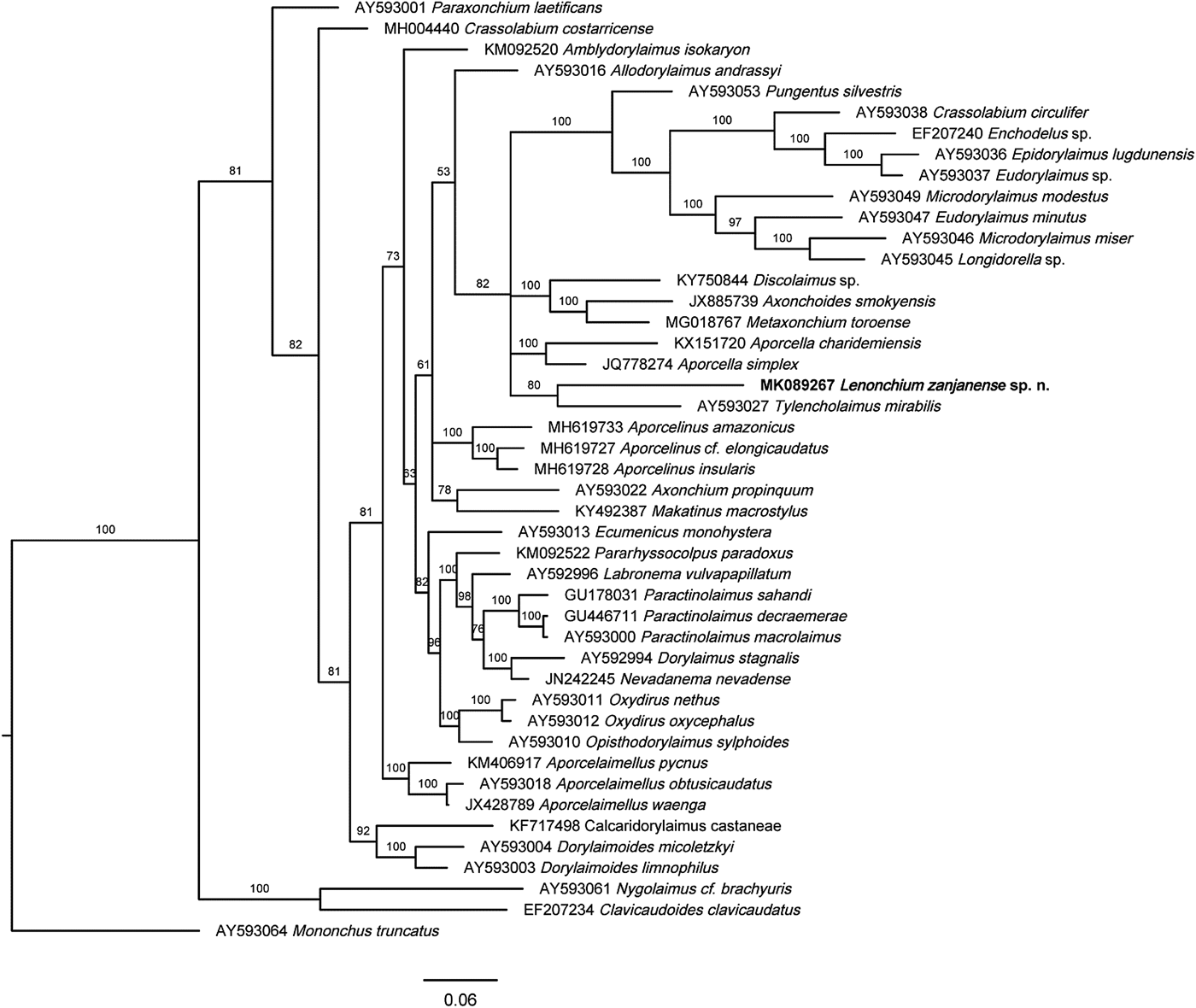
For phylogenetic relationships, analyses were based on 18S and 28S rDNA. The newly obtained sequences were edited using BioEdit and aligned with other segments of 18S or 28S rRNA gene sequences available in GenBank using the ClustalW alignment tool implemented in the MEGA7 (Kumar et al., Reference Kumar, Stecher and Tamura2016). The ambiguously aligned parts and divergent regions were known using the online version of Gblocks 0.91b (Castresana Reference Castresana2000; http://molevol.cmima.csic.es/castresana/Gblocks_server.html) and were removed from the alignments using MEGA7. The best-fit model of nucleotide substitution used for the phylogenetic analysis was statistically selected using jModelTest 2.1.10 (Darriba et al. Reference Darriba, Taboada, Doallo and Posada2012). A phylogenetic tree was generated with the Bayesian inference method using MrBayes 3.2.6 (Huelsenbeck & Ronquist, Reference Huelsenbeck and Ronquist2001; Ronquist et al., Reference Ronquist, Teslenko and van der Mark2012). Mononchus aquaticus (AY297821) and M. truncatus (AU593064) were chosen as the outgroup for the 18S and the 28S trees, respectively. The analysis under the GTR + I + G model was initiated with a random starting tree and run with the Markov Chain Monte Carlo for 1 × 10⁶ generations. The tree was visualized and saved with FigTree 1.4.3 (Rambaut, Reference Rambaut2014) and edited with Adobe® Acrobat® XI Pro 11.0.1.
Results
Lenonchium zanjanense sp. n.
Material examined
Six females and 11 males from one location; in general, in good state of preservation.
Description
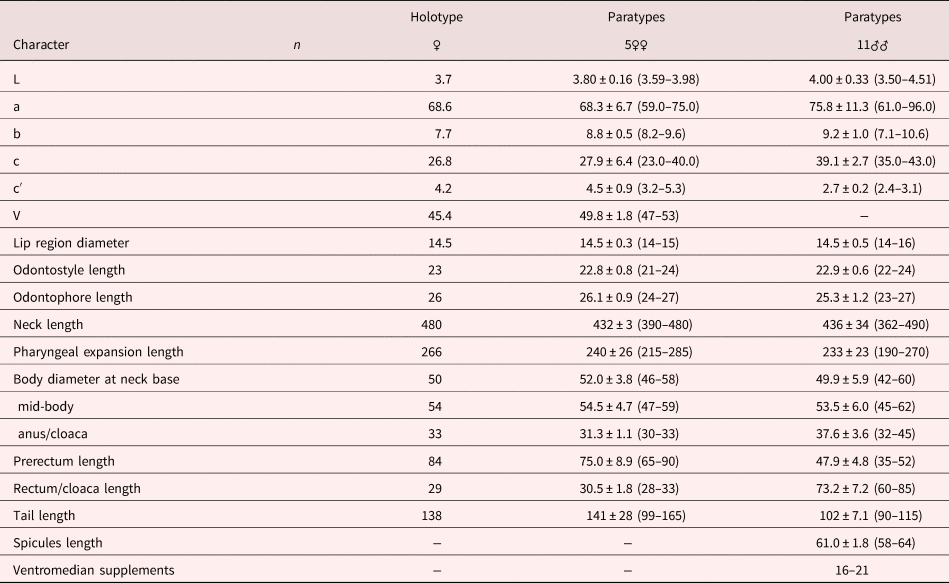
Measurements. See table 1.
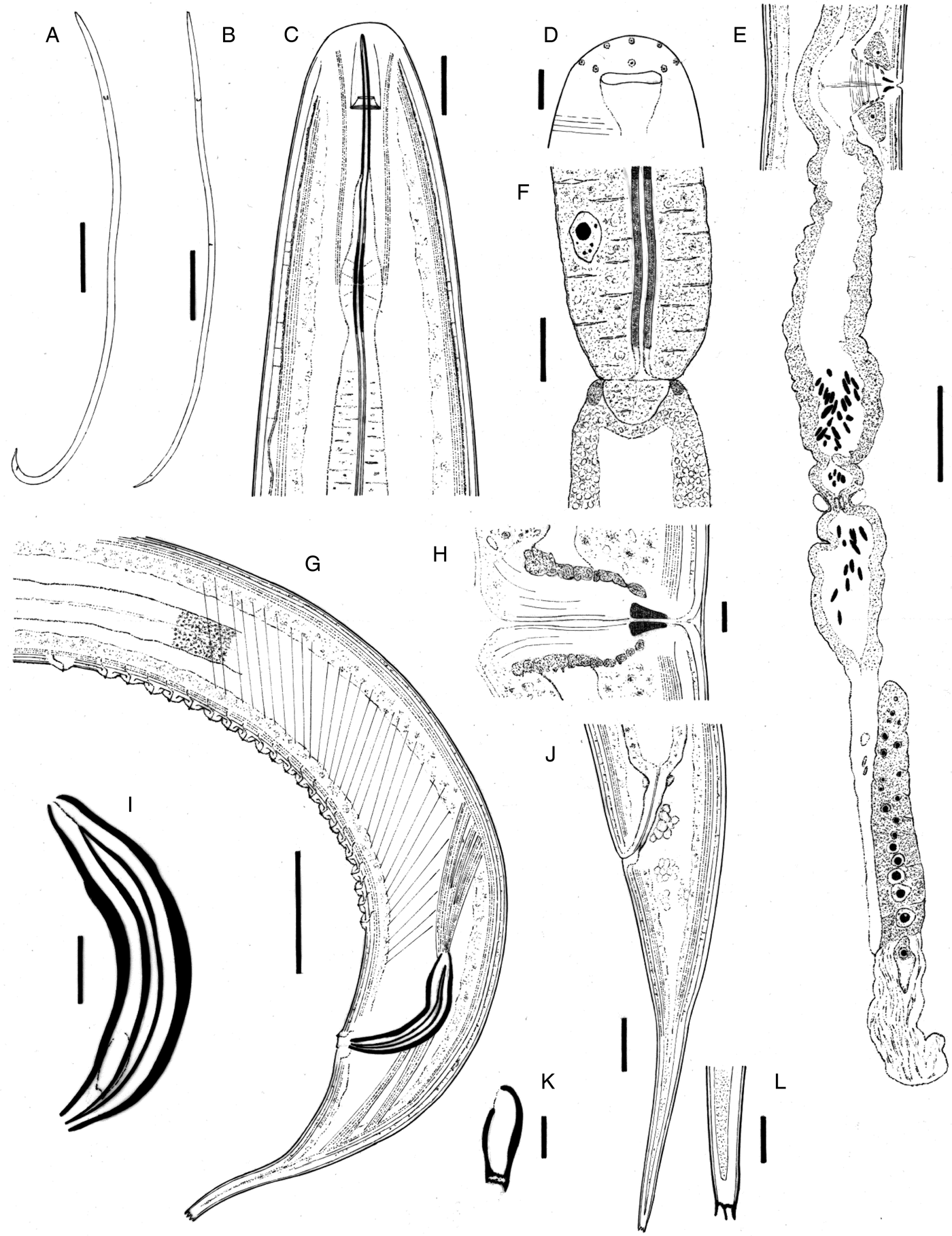
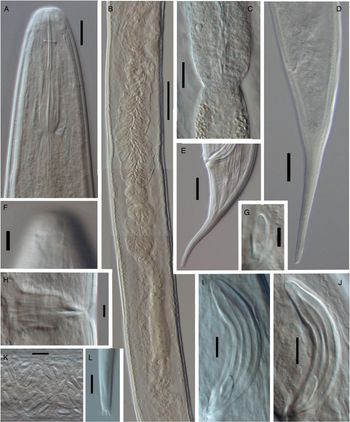
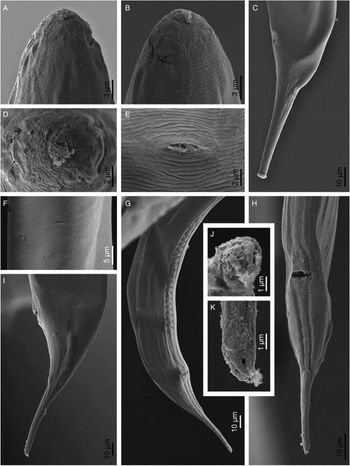
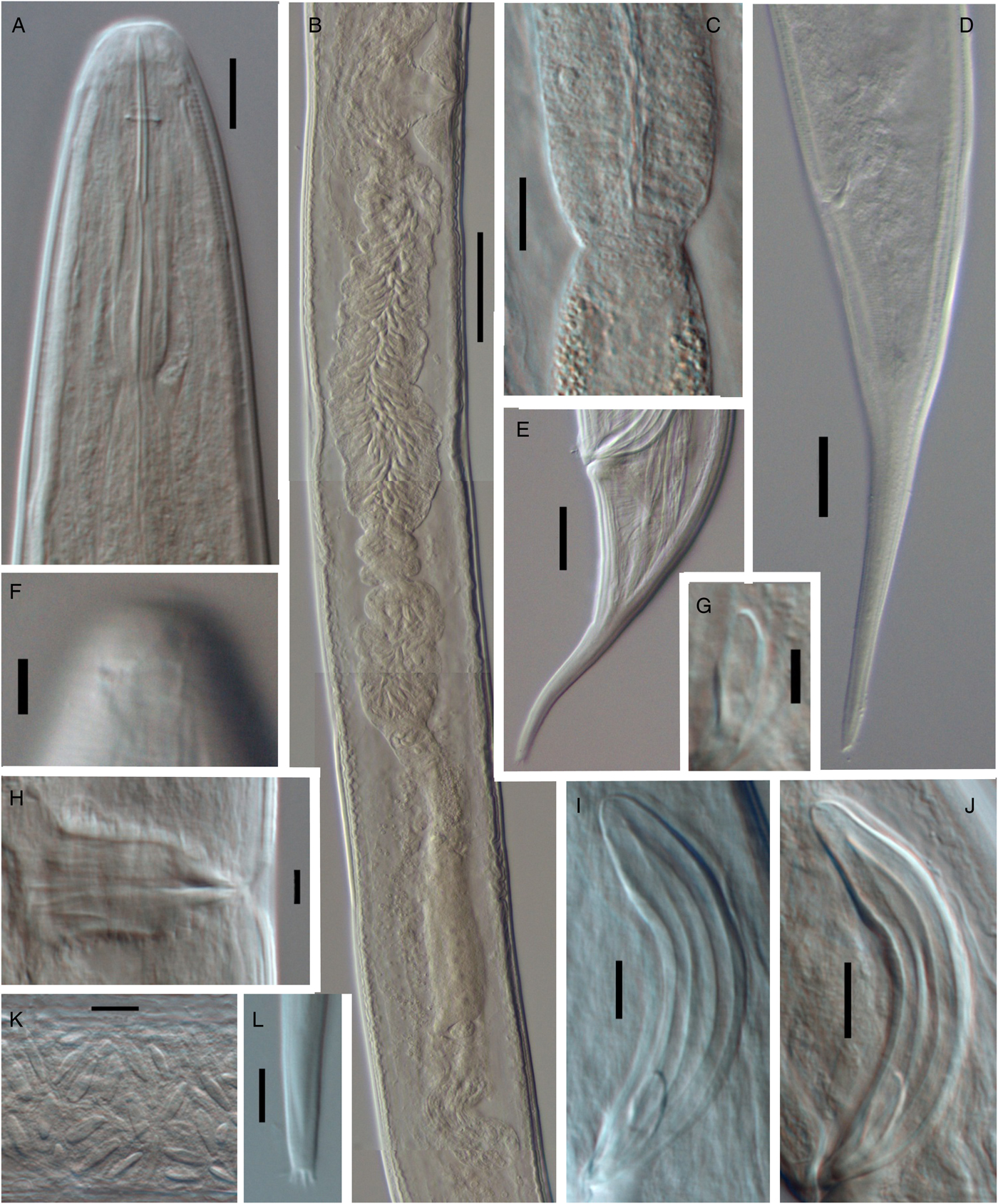
Adult. See figs 1–3. Very slender nematodes (a = 59–96) of large size, 3.50–4.51 mm long. Body cylindrical, tapering towards both ends. Upon fixation, habitus very slightly curved ventrad, J-shaped in males. Cuticle complex, resembling the tylencholaimid pattern, 1.5–2.0 µm thick at anterior region, 1.5–2.5 µm in mid-body and 1.5–2.0 µm on tail: outer layer bearing very fine transverse striation, inner layer showing irregular outline and loose from the outer one, with distinct radial refractive elements throughout the body. Lip region nearly continuous with the adjacent body, rounded and somewhat asymmetrical as the ventral side is barely higher than the dorsal one, 2.3–3.0 times as broad as high and one-fourth to one-third (24–33%) of body diameter at neck base; SEM observations: lips totally fused, with low labial and cephalic papillae hardly protruding, cuticle striation somewhat irregular, apparently without a definite pattern, oral field relatively small as inner labial papillae are located about midway the distance from oral aperture to outer labial papillae. Lateral chord 21–27 µm wide at mid-body, occupying approximately one-fourth of body diameter. Seven cervical pores are usually visible at both dorsal and ventral sides, two at level of odontophore and five behind this. Amphids cup-shaped, its aperture 7.5–10 µm or one-half to two-thirds (51–68%) of lip region diameter. Odontostyle typical of the genus, very slender, but with distinct lumen and aperture, 1.5–1.7 times longer than lip region diameter and 0.51–0.64% of body length. Odontophore rod-like but with its basal part becoming visibly thickened and slightly refractive, 1.7–1.9 times longer than lip region width. Guiding double, located at 13–15 µm from anterior end. Pharynx consisting of a slender but muscular anterior section, gradually enlarging into the basal expansion that is 10–15 times as long as wide, 4.0–5.5 times as long as body diameter and occupies 50–59% of total neck length. Pharyngeal gland nuclei located as follows (n = 1): DN = 49–51; S1N1 = 66; S1N2 = 75; S2N = 91. Nerve ring located at 35–39% of neck length from anterior end. Cardia short, rounded conoid, 6–13 × 10–15 µm, surrounded by intestinal tissue. Prerectum 1.5–2.8, rectum 0.8–1.5 times the anal-body diameter long. Tail similar in both sexes, conical-elongate to filiform, tapering more abruptly at its anterior half, then very gradually resulting in a nearly cylindrical posterior half; inner core almost reaching the tail tip, with a nearly inexistent hyaline portion; tip mucronate, with three or four short terminal projections.
Female. Reproductive system didelphic–amphidelphic, with both branches equally and well developed, the anterior 382–620 µm or 10–17% of body length, the posterior 410–620 µm or 11–17% of body length. Reflexed ovaries variably sized, anterior 172–290 µm and posterior 182–320 µm long, with oocytes arranged in two or more rows in the germinative zone and a single row in the maturation zone. Oviduct 190–300 µm long or 3.2–5.5 times the corresponding body diameter, consisting of tubular part made of prismatic cells and well-developed pars dilatata with visible lumen often containing sperm cells inside. Sphincter present at oviduct–uterus junction. Uterus has a tube-like structure, 185–320 µm long or 3.4–5.9 times corresponding body diameter, almost always containing sperm cell 4.0 × 1.5 µm sized; a small distal spherical differentiation is appreciable in some especially well-preserved specimens. Vagina extending inwards 31–35 µm or one-half to three-fourths (54–66%) of body diameter: pars proximalis 23–25 × 16–20 µm, with slightly convex walls surrounded by moderately developed musculature, pars refringens with two small, close together, triangular to drop-shaped sclerotized pieces measuring 4–6 × 2–3 µm and with a combined width of 5–6 µm, and pars distalis 4–5 µm long. Vulva a short, transverse slit.
Male. Genital system diorchic, with opposed testes. Sperm cells rather stout, spindle-shaped. In addition to ad-cloacal pair, located at 7–9 µm from cloacal aperture, there is a series of 16–21 mammiform, contiguous ventromedian supplements, the posteriormost of which situated at 36–57 µm from cloacal aperture at about the level of spicule anterior, a hiatus being perceptible. Spicules dorylaimoid, relatively robust, curved ventrad, 4.9–6.4 times as long as wide and 1.4–1.9 anal-body diameter long: curvature 111–120°; dorsal side regularly convex, ventral one bearing weak hump and hollow; head 4–6 × 2–4 µm, occupying 6.6–10.1% of total length, with both sides slightly curved; median piece slender, 17.0–25.2 times as long as wide, occupying less than one-fourth (20–30%) of spicule maximum width, reaching the posterior tip; posterior end 3–4 µm wide. Lateral guiding pieces 11.5–15 µm long, comparatively robust (approximately thrice longer than broad).
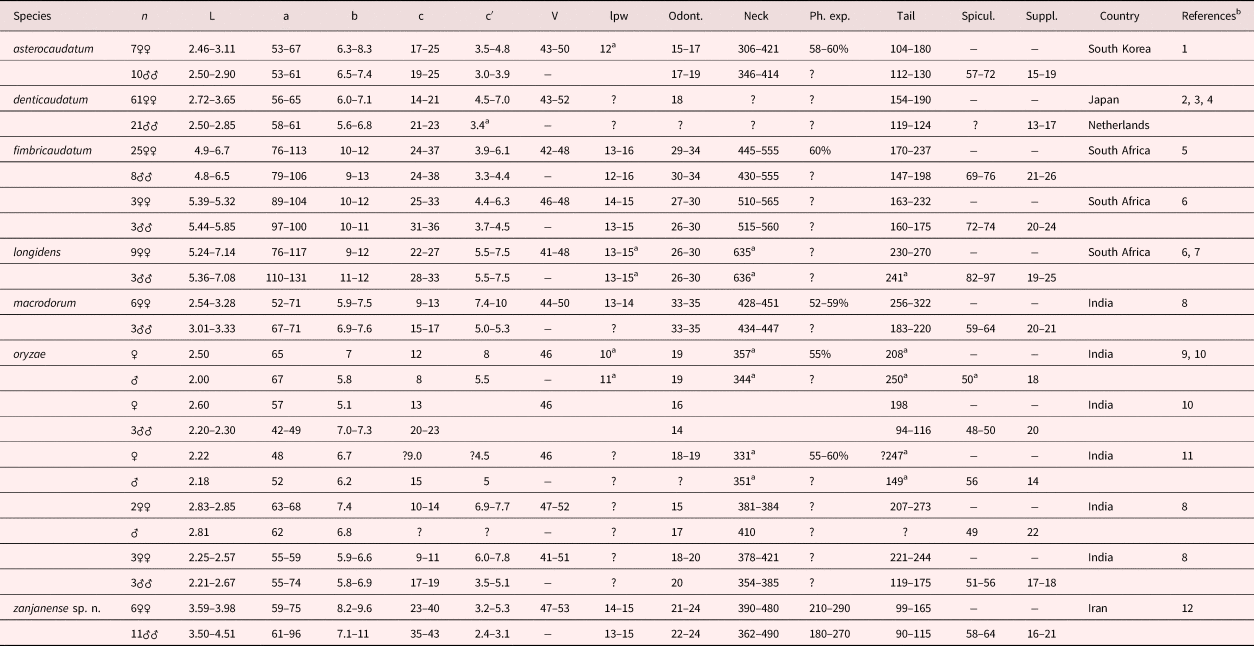
Morphometrics of Lenonchium zanjanense sp. n. All measurements in μm except L in mm, and in the form: mean ± standard deviation (range).

Lenonchium zanjanense sp. n. from Iran: (A) female, entire; (B) male, entire; (C) anterior region in lateral, median view; (D) lip region in lateral, surface view; (E) female, posterior body region; (F) pharyngo–intestinal junction; (G) male, posterior body region; (H) vagina; (I) spicule; (J) female, caudal region; (K) lateral guiding piece; (L) male, tail tip. Scale bars: (A, B) 500 µm; (C, F, I) 10 µm; (D, H, K) 5 µm; (E, F) 50 µm; (J, L) 20 µm.

Lenonchium zanjanense sp. n. from Iran (LM): (A) anterior region in lateral, median view; (B) female, posterior genital branch; (C) pharyngo–intestinal junction; (D) female, caudal region; (E) male, caudal region; (F) lip region in lateral, surface view; (G) lateral guiding piece; (H) vagina; (I, J) spicule; (K) sperm cell; (L) male, tail tip. Scale bars: (A, C, I–K) 10 µm; (B) 50 µm; (D, E, L) 20 µm; (F–H) 5 µm.
Lenonchium zanjanense sp. n. from Iran (SEM): (A) lip region, ventral view; (B) lip region, sublateral view; (C) female, caudal region; (D) lip region, in face view; (E) vulva, ventral view; (F) female tail tip; (G) body surface; (H) male posterior body region, lateral view; (I) male posterior body region, ventral view; (J) male caudal region; (K) male tail tip.

Molecular characterization
After sequencing and editing, four sequences were obtained: two 1605-bp nearly full length of SSU rRNA (18S) (GenBank accession no. MK089266), and two 791-bp-long D2–D3 of LSU rRNA (28S) (MK089267).
Diagnosis and relationships
The new species is characterized by its 3.50–4.51 mm long body, lip region rounded, continuous and 13.5–15.5 µm broad, odontostyle 21–24 µm long, neck 362–490 µm long, guiding ring double, pharyngeal expansion 190–285 µm or 50–59% of total neck length, female genital system didelphic–amphidelphic, uterus simple and 185–320 µm long or 3.4–5.9 times corresponding body diameter, vulva nearly equatorial (V = 45–53), tail conical elongated to filiform (90–165 µm, c = 23–43, c′ = 2.4–5.3) with three or four mucro-like projections at the tip, spicules 58–64 µm long and 16–21 contiguous ventromedian supplements ending at the level of the anterior end of the spicules.
Lenonchium zanjanense sp. n. resembles L. asteromucronatus, L. denticaudatus and L. oryzae in having a body less than 4.50 mm long and odontostyle under 30 µm long, but it is easily distinguishable from them in its larger general size (body 3.50–4.51 vs. up to 3.5 mm long) and odontostyle (21–24 vs. up to 20 µm long) (see also table 2).
Compendium of species belonging to the genus Lenonchium Siddiqi, Reference Siddiqi1965. Measurements in μm except L in mm.

a Calculated from illustrations or other measurements.
b References: 1, Choi & Jairajpuri (Reference Choi and Jairajpuri1998); 2, Imamura (Reference Imamura1931); 3, Thorne & Swanger (Reference Thorne and Swanger1936); 4, Loof (Reference Loof1999); 5, Swart & Heyns (Reference Swart and Heyns1991); 6, Botha & Heyns (Reference Botha and Heyns1991); 7, Furstenberg & Heyns (Reference Furstenberg and Heyns1966); 8, Ahmad & Jairajpuri (Reference Ahmad and Jairajpuri1988); 9, Siddiqi (Reference Siddiqi1965); 10, Jairajpuri (Reference Jairajpuri1967); 11, Jana & Baqri (Reference Jana and Baqri1985); 12, present paper.
Type locality and habitat
Iran, Zanjan province, c. 10 km from Zarrin Abad town (36°41′61″N, 48°24′69″E; elevation 1638 m above sea level), associated with Phragmites sp. in wet sand of the Zarrin river banks, collected on May 20, 2017.
Type material
Female holotype, two female and five male paratypes (slides 9606A-C) deposited with nematode collection of the University of Jaén, Spain. Four female and six male paratypes (slides 9606D-G) in Nematode Collection of the Faculty of Agriculture, University of Zanjan, Zanjan, Iran.
Etymology
The specific epithet refers to Zanjan, the Iranian province where the new species was originally collected from.
Evolutionary relationships of Lenonchium
As mentioned in the introductory section, Lenonchium comes from being classified under the subfamily Pungentinae in the family Nordiidae on the basis of a traditional (morphological) approach, in particular its attenuate odontostyle. Molecular data have repeatedly suggested that Nordiidae are not a monophyletic taxon (Holterman et al., Reference Holterman, Rybarczyk, van den Elsen, van Megen, Mooyman, Peña-Santiago, Bongers, Bakker and Helder2008; Pedram et al., Reference Pedram, Pourjam, Robbins, Ye and Peña-Santiago2011; Elshishka et al., Reference Elshishka, Lazarova, Radoslavov, Hristov and Peneva2015, Reference Elshishka, Lazarova, Radoslavov, Hristov and Peneva2017; Peña-Santiago et al., Reference Peña-Santiago, Guerrero, Liébanas, García, Palomeque and Lorite2015). Thus, phylogeny of the genus remains skimpily elucidated. The first sequences of both 18S and 28S genes are herein provided for a representative of Lenonchium for the first time, and the results derived from the analyses of these sequences are presented in the molecular trees of figs 4 and 5. Both trees show a tangled scenario to unravel its evolutionary relationships. First, more closely related taxa are Longidorus juglans (18S tree), a member of Longidoridae, and Tylencholaimus mirabilis (28S tree), a member of Tylencholaimidae, in both cases with low support. Second, Lenonchium sequences form part of larger groups, including representatives of several families too, but neither reach significant support. Therefore, and unfortunately, the available information does not allow us to go much further on this matter, but the belonging of Lenonchium to Nordiidae is seriously questioned. Besides, present results show once more that Nordiidae are polyphyletic and confirm the intricate phylogeny and systematics of dorylaims.
Bayesian inference tree from known and the newly sequenced Lenonchium zajanense sp. n. based on sequences of the 18S rDNA region. Bayesian posterior probabilities (%) are given for each clade.

Bayesian inference tree from known and the newly sequenced Lenonchium zajanense sp. n. based on sequences of the 28S rDNA region. Bayesian posterior probabilities (%) are given for each clade. Scale bar shows the number of substitutions per site.

Taxonomy of Lenonchium
Diagnosis
Medium-sized to very large nematodes 2.21–7.14 mm long. Cuticle tylencholaimid, with distinct radial refractive elements and loose inner layer. Lip region rounded and nearly continuous with the adjacent body, with amalgamate lips. Amphidial fovea large, cup-like. Odontostyle attenuate, with very narrow lumen and small aperture, 15–35 µm long. Guiding ring double, weak. Odontophore rod-like but slightly thickened at its posterior part, nearly as long as odontostyle. Pharynx consisting of slender but muscular anterior section, and cylindrical basal expansion often occupying more than one half (50–59%) of total neck length; DN close to pharyngeal enlargement. Female genital system didelphic–amphidelphic: uterus a simple tube-like structure, pars refringens vaginae present, vulva transverse or longitudinal. Tail similar in both sexes, conical elongate to filiform, typically truncate and bearing mucro-like projections at the tip. Spicules dorylaimoid. Thirteen to 25 contiguous ventromedian supplements very often ending at level of anterior end of spicules, with hiatus.
Other species
Lenonchium denticaudatum (Imamura, Reference Imamura1931) Siddiqi, 1969
= Dorylaimus denticaudatus Imamura, Reference Imamura1931
= Oxydirus denticaudatus (Imamura, Reference Imamura1931) Andrássy, 1960
= Lenonchium asterocaudatum Choi & Jairajpuri, Reference Choi and Jairajpuri1998, syn. n.
Lenonchium fimbricaudatum Swart & Heyns, Reference Swart and Heyns1991
Lenonchium longidens (Furstenberg & Heyns, Reference Furstenberg and Heyns1966) Jairajpuri, Reference Jairajpuri1967
= Dorylaimoides longidens Furstenberg & Heyns, Reference Furstenberg and Heyns1966
Lenonchium macrodorum Ahmad & Jairajpuri, Reference Ahmad and Jairajpuri1988
Lenonchium zanjanense sp. n.
Key to the species of Lenonchium
1 Larger general size (body more than 4.5 mm long); vulva longitudinal ….……..………………..… 2
Smaller general size (body less than 4.5 mm long); vulva transverse ….……..………………..… 3
2 Tail of both sexes with a distinct terminal hyaline portion; spicules 69–76 µm long ….……..………………..… fimbricaudatum
Tail of both sexes without terminal hyaline portion; spicules 82–97 µm long ….……..………………..… longidens
3 Odontostyle 33–35 µm long ….……..………………..… macrodorum
Odontostyle less than 30 µm long ….……..………………..… 4
4 Larger general size (body 3.5–4.5 mm long), odontostyle 21–24 µm long ….……..………………..… zanjanense sp. n.
Body length up to 3.5 mm long, very exceptionally more; odontostyle up to 20 µm long ….……..………………..… 5
5 Longer female tail (198–273 µm, c = 9–14) ….……..………………..… oryzae
Shorter female tail (104–190 µm, c = 14–25) ….……..………………..… denticaudatum
Table 2 presents a compendium of species morphometrics for comparative purposes too.
Proposal of a new synonymy
Morphometrically, L. asteromucronatum, only known to occur in South Korea, is nearly identical to L. denticaudatum, originally described from Japan, interestingly both collected in the same habitat, rice fields. It is remarkable that, when describing L. asteromucronatum, Choi & Jairajpuri (Reference Choi and Jairajpuri1998) did not compare their new species with the Japanese one. Assuming that the original description of L. denticaudatum is not very complete, there are several reasons (similar morphology and morphometry, same biogeographical origin, identical type habitat) to regard them as identical. Therefore, L. asteromucronatum is herein proposed as a junior synonym of L. denticaudatum. Ahmad & Jairajpuri (Reference Ahmad and Jairajpuri1988) regarded L. denticaudatum as species inquirenda, but the available information about this species is enough to establish its identity with some certainty.
Author ORCIDs
R. Peña-Santiago, https://orcid.org/0000-0003-1125-5490
Acknowledgements
The authors thank Eng. Majid Panahi for his assistance in the sampling and processing of nematodes. SEM pictures were obtained with the assistance of technical staff (Amparo Martínez-Morales) and the equipment of the ‘Scientific and Technical Instrumentation Center’, University of Jaén, Spain.
Financial support
This work was supported by the scientific project ref. Action 1-PAIUJA 2017–2018: EI-RNM02-2017, University of Jaén.
Conflict of interest
None.