Introduction
The Argentine hake Merluccius hubbsi Marini, 1933 inhabits the shelf and upper continental slope of the South-west Atlantic Ocean (SWAO) from south-eastern Brazil (21°S) to southern Argentina (55°S) (Arkhipkin et al., Reference Arkhipkin, Laptikhovsky, Barton and Arancibia2015), at depths between 50–500 m (mainly 100–200 m) (Cohen et al., Reference Cohen, Inada, Iwamoto and Scialabba1990). Hake has long been the major catch in Uruguayan and Argentinean trawl fisheries (Lorenzo & Defeo, Reference Lorenzo, Defeo and Arancibia2015; Irusta et al., Reference Irusta, Macchi, Louge, Rodrigues, D’Atri, Villarino, Santos and Simonazzi2016), whereas in Brazil it became an important component in the landings in the early 2000s, when commercial fleets began to target shelf break and upper continental slope fishing grounds (Vaz-dos-Santos & Rossi-Wongtschowski, Reference Vaz-dos-Santos, Rossi-Wongtschowski, Cergole, Ávila-da-Silva and Rossi-Wongtschowski2005). In recent years, Rio de Janeiro state has concentrated Argentine hake landings in south-eastern Brazil; between 2011–2012, the species was the most important resource in volume landed by industrial trawlers, with a peak of 1455 tons (Fiperj, 2013).
Merluccius hubbsi is carnivorous throughout its life cycle (Belleggia et al., Reference Belleggia, Figueroa, Irusta and Bremec2014 and references therein), with a diet that varies along its migratory route, resulting in latitude and seasonal-related variation in diet (Stott, Reference Stott1982). In Argentinean waters, adults feed primarily on crustaceans, squid and fish (Prenski & Angelescu, Reference Prenski and Angelescu1993; Belleggia et al., Reference Belleggia, Figueroa, Irusta and Bremec2014). As prey, the species is one of the main contributors to the diet of top predators in the SWAO (Eder & Lewis, Reference Eder and Lewis2005), including elasmobranchs (Koen-Alonso et al., Reference Koen-Alonso, Crespo, Garcia, Pedraza, Mariotti, Vera and Mora2001), cephalopods (Gasalla et al., Reference Gasalla, Rodrigues and Postuma2010), marine mammals (Loizaga de Castro et al., Reference Loizaga de Castro, Saporiti, Vales, García, Cardona and Crespo2016) and seabirds (Sala et al., Reference Sala, Wilson, Frere and Quintana2012).
In Brazilian waters, Argentine hake is considered a keystone species in the demersal community of the outer shelf and upper slope between 22–27°S (Nascimento et al., Reference Nascimento, Velasco, Okey, Christensen and Amaral2012), as well as between 20–23°S (Costa et al., Reference Costa, Mincarone, Braga, Martins, Lavrado, Haimovici and Falcão2015). Despite the importance of M. hubbsi in the demersal ecosystem, its trophic relationships have been poorly understood. Previous records correspond to Haimovici et al. (Reference Haimovici, Martins and Teixeira1993) that analysed stomachs obtained from commercial landings and research cruises in southern Brazil, and to Muto & Soares (Reference Muto and Soares2011) that studied diet and stable isotope signatures in two regions with high primary production in south-east Brazil.
Stomach contents analysis (SCA) has been traditionally used to study diets and food habits of fish (Hyslop, Reference Hyslop1980). Although it provides detailed taxonomic resolution of prey, limitations arise due to the snapshot nature of recently consumed prey and differential digestion rates of prey (Yasue et al., Reference Yasue, Doiuchi and Takasuda2014). Stable isotope analysis (SIA) has shown that the isotopic composition of a predator is similar to that of its prey (Peterson & Fry, Reference Peterson and Fry1987) and has proven to be a powerful tool for describing the trophic ecology of organisms (Bearhop et al., Reference Bearhop, Adams, Waldron, Fuller and MacLeod2004). The bioaccumulation of mercury along a food web makes it a good indicator of the trophic level of organisms. These tools can provide complementary data, and thus studies including a multiple approach can give a better understanding of how different groups participate in fish diets. SCA describes and quantifies the diet, but it does not take into account the assimilation of food items. This information can be obtained through SIA, influenced by turnover and fractionation rates.
Dietary studies allow the inference of trophic linkages between organisms that often form the backbone of ecosystem models (Okey et al., Reference Okey, Banks, Born, Bustamante, Calvopiña, Edgar, Espinoza, Fariña, Garske, Reck, Salazar, Shepherd, Toral-Granda and Wallem2004). Moreover, the calculation of metrics such as dietary overlap and niche width can highlight important ecological factors including ontogenetic variation (Muñoz & Ojeda, Reference Muñoz and Ojeda1998). Ontogenetic diet shifts are typical of hake species (Garrison & Link, Reference Garrison and Link2000) and have been associated either with changes in depth distribution or the attainment of sexual maturity (Carpentieri et al., Reference Carpentieri, Colloca, Cardinale, Belluscio and Ardizzone2005).
Size-related trends in the diet of M. hubbsi have been previously reported in Brazilian waters (Haimovici et al., Reference Haimovici, Martins and Teixeira1993; Muto & Soares, Reference Muto and Soares2011), but the trophic ecology of the species is still uncertain. In this study, the combination of multiple tools (SCA, SIA, mercury determination) with niche metrics allows a comprehensive approach that has seldom been applied in the SWAO to explore M. hubbsi trophic preferences. We postulate that ontogenetic changes in M. hubbsi diet also occur along the northernmost limit of its distribution and our hypothesis is that methodologies applied here are equally effective to detect these changes.
Materials and methods
Sampling
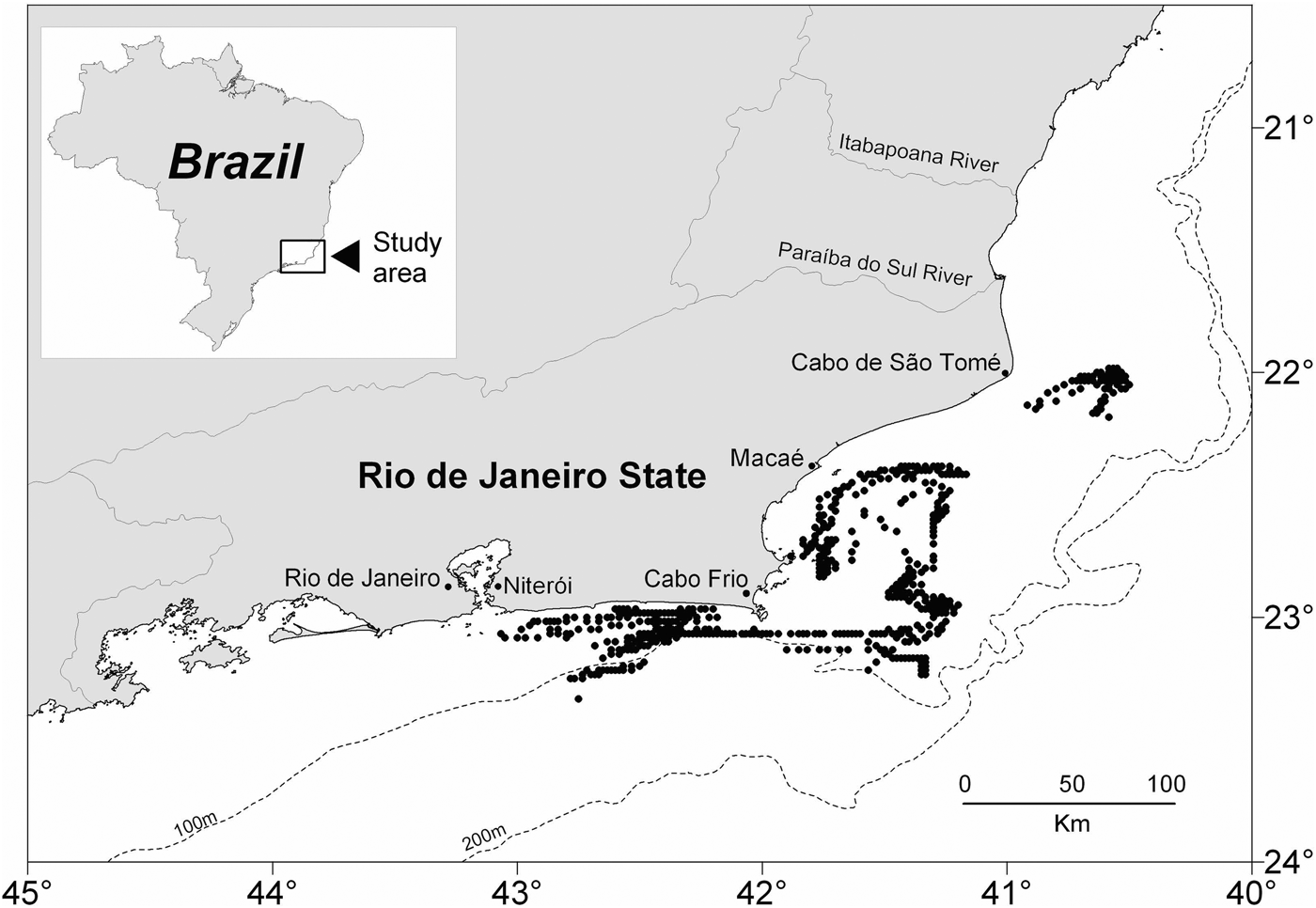
Samples of M. hubbsi were obtained monthly from industrial double-rig trawl landings at the fish harbour of Ilha da Conceição (Niterói-Rio de Janeiro, Brazil) between May 2013 and April 2014. Hake were randomly sampled from landings of six ships, that operated between 38 and 110 m depth. The ships ranged between 19.5–23.3 m in size, 72–87 gross tonnage and 240–374 HP engines. The nets used had 90 mm mesh-size in the codend, 17.4–28.2 m in headline length and 19.4–31.5 m in footrope length. Data on the fishing grounds of sampled trips were obtained from the Brazilian National Program of Vessels Monitoring by Satellite – PREPS (Figure 1), provided directly by vessel owners. Each fish was measured to the nearest mm for total length (Lt), weighed to the nearest 0.1 g for total mass (Wt), sexed and eviscerated. Stomachs were removed, weighed to the nearest 0.001 g, fixed in 10% formalin for 24 h, and subsequently transferred and preserved in 70% alcohol for later analysis. A fragment (0.5 mg) of the dorsal muscle of each specimen was collected, freeze-dried, macerated and homogenized for isotopic analysis and total mercury determination.
Map of Rio de Janeiro coast, showing the location of Merluccius hubbsi fishing grounds during 2013–2014. The points refer to the geographic coordinates of satellite signals during fishing operations.

Stomach contents analysis (SCA)
Stomach contents were examined under stereomicroscope. Food items were identified to the lowest possible taxonomic level, counted and weighed to the nearest 0.001 g. Diet composition was evaluated according to Pinkas et al. (Reference Pinkas, Oliphant and Iverson1971), where the importance of each type of prey was assessed through its relative frequency of occurrence (%F), relative numerical frequency (%N) and percentage wet weight (%W). These parameters were used to estimate the Index of Relative Importance (%IRI) = %F (%N + %W), expressed as a percentage as suggested by Cortés (Reference Cortés1997). Hierarchical cluster analysis, based on Bray–Curtis similarity (Clarke & Warwick, Reference Clarke and Warwick1994) and on the %IRI were used for determining size-related grouping of data. Analysis of Similarities (ANOSIM) was used to determine significant differences between the groups (Clarke, Reference Clarke1993), obtaining a global R value and considering groups as highly separated if R > 0.75, overlapped if R > 0.5 and poorly separated if R < 0.25. Identification of prey responsible for dissimilarity between groupings has been done with Similarity Percentage analysis (SIMPER).
Stable isotope analysis (SIA)
The muscle tissue of each sample was weighed and analysed on a continuous-flow mass spectrometer (Thermo Finningan Delta V Plus) coupled with an elemental analyser and a Thermo Conflo III interface. Delta notation (δ13C and δ15N) was expressed in parts per thousand (‰) for the stable isotope values. The ratio of the stable isotope in the sample is compared to the ratio in international standards (Pee Dee Belemnite for carbon and atmospheric nitrogen standard for nitrogen) by the following equation: δ13C and δ15N = [(Rsample/Rstandard) − 1] × 1000, where R is the ratio of 13C/12C and 15N/14N. Lipid contents, which may interfere in the measurement of δ13C values in tissues, were not extracted prior to analysis, as samples presented a low lipid content (C:N ≤ 3.5) (Post et al., Reference Post, Layman, Arrington, Takimoto, Quattrochi and Montaña2007).
Total mercury determination
The digestion of tissue samples was performed in a digestion block (60 °C, 4 h) with a mixture of 3 ml HNO3:H2SO4 (1:1) and 1 ml of concentrated H2O2 and allowed to stand overnight. The addition of 5 ml of 5% KnMnO4 and subsequent 30 min of heating were followed by titration with hydroxylamine hydrochloride (HONH3Cl + NaCl 12%) (Bastos et al., Reference Bastos, Malm, Pfeiffer and Cleary1998). Total mercury determination (THg) was performed with a QuickTrace M-7500 CETAC-VARIAN (CV-AAS). Coefficient of variation between replicates was lower than 10% and digestion efficiency was verified using the certified reference material DORM-2, with per cent recovery higher than 90%. The detection limit was 0.25 ng g−1.
Data analysis
Differences in the isotopic values (δ13C and δ15N) among length classes were tested separately with a non-parametric analysis of variance (Kruskal–Wallis), followed by a posteriori Dunn test. Linear regressions were performed to check for a possible relationship between variables (Lt × δ15N, Lt × THg, δ15N × THg). Results were considered significant at P < 0.05. All statistical analyses were conducted using Statistica 8.0 and the supplement ActionStat for Microsoft Excel.
Isotopic niche width was quantified for each length class using the standard ellipse area (SEA), with a 95% confidence ellipse (Jackson et al., Reference Jackson, Inger, Parnell and Bearhop2011). An ellipses overlap analysis via Bayesian model based on maximum likelihood estimation was also performed among length classes.
Six community-wide metrics as proposed by Layman et al. (Reference Layman, Arrington, Montana and Post2007) were used to compare the trophic niche of the SCA length classes as follows: (1) the δ15N Range (NR) is the difference between the species with the most enriched and most depleted δ15N values and is a measure of trophic position within a food web; (2) the δ13C Range (CR) is the difference between the individuals with the most enriched and most depleted δ13C and is a measure of basal resource diversity; (3) the total area (TA) of the δ13C and δ15N bi-plot space describes the total space occupied by a population, and is an indicator for the total extent of trophic diversity in a food web; (4) the mean distance to the δ13C-δ15N centroid (CD) provides a measure of trophic diversity; (5) the mean nearest neighbour distance (MNND) is the mean of the Euclidean distances to each species' nearest neighbour in bi-plot space and thus a measure of the overall density of species packing. Small MNND suggests increased trophic redundancy; (6) the standard deviation of nearest neighbour distance (SDNND) is a measure of the evenness of species packing in bi-plot space. Low SDNND values indicate a more even distribution of trophic niches.
One-way ANOVA was used to assess differences and interactions considering CD and MNND. The statistic SDNND, being a standard deviation, was compared between groups by an F-ratio test. The P values were interpreted as strengths of evidence toward null hypotheses, rather than on the dichotomic scale of significance testing (Hurlbert & Lombardi, Reference Hurlbert and Lombardi2009). All community metrics, SEA and overlap percentages were calculated with the SIBER package (Stable Isotope Bayesian Ellipses tool in R, Jackson et al., Reference Jackson, Inger, Parnell and Bearhop2011), one-way ANOVA and F-ratio test were tested using R version 3.4.4 (15 March 2018, ‘Someone to Lean on’) for Windows in the RStudio software (Version 1.1.383) (R Development Core Team, 2018).
Results
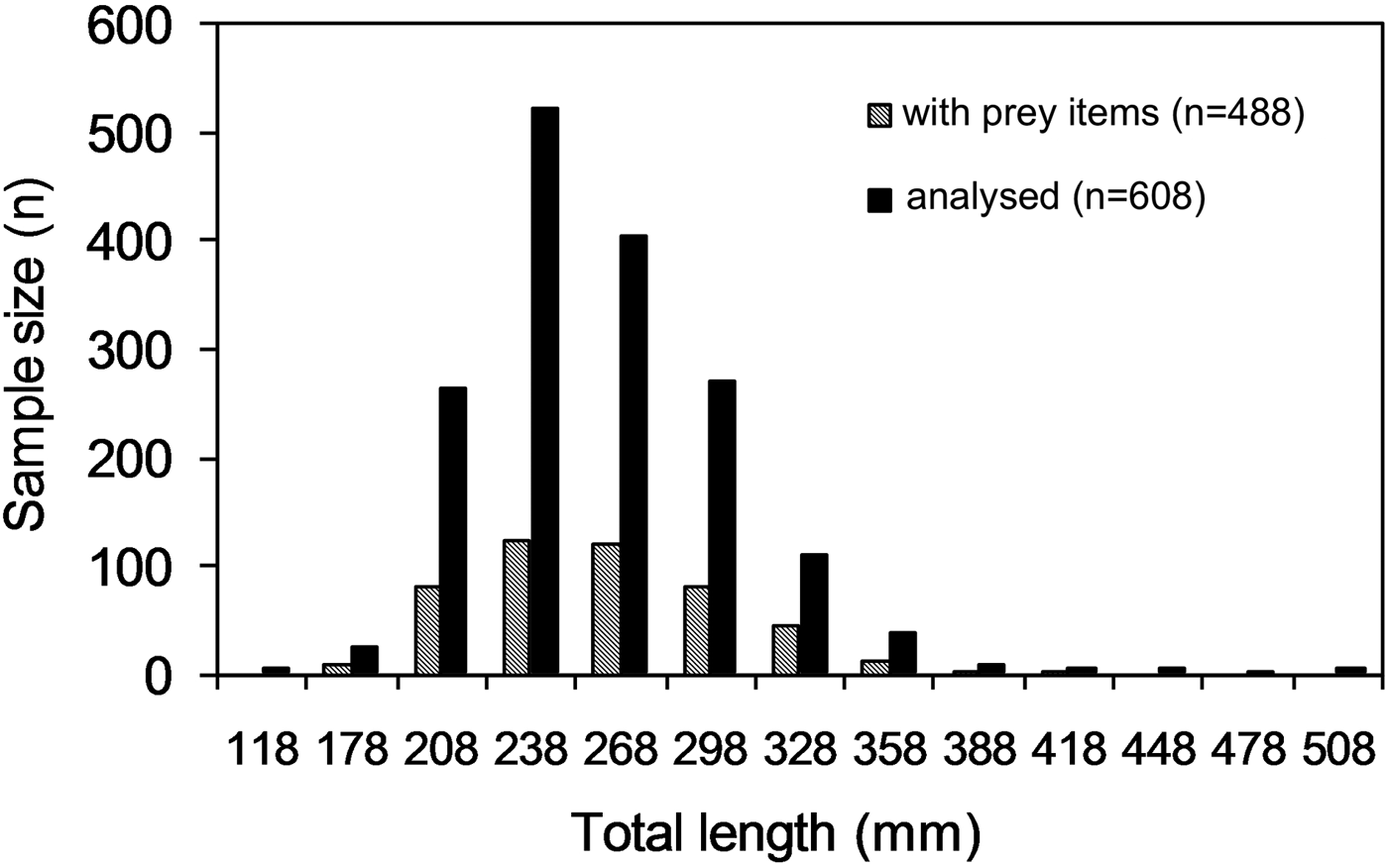
Hake ranged from 118–519 mm Lt (mean Lt = 278.0 ± 45.4 mm) and from 51–1074.0 g in total weight (mean Wt = 175.2 ± 104.1 g). The size distribution of all specimens is given in Figure 2. Over 608 stomachs were analysed, 105 were empty (17%) and only 15 stomachs were everted (6%). Empty and everted stomachs were excluded from the analysis. In the remaining 488 (80%) at least one prey item was found. Out of 488 specimens with some food in their stomachs, 300 were females (61%), 162 were males (33%) and 26 could not be sexed (5%). Females ranged from 191–519 mm Lt (mean Lt = 278.1 ± 45 mm). Males ranged from 118–335 mm Lt (mean Lt = 266.7 ± 32 mm).
Length-frequency distribution of Merluccius hubbsi landed in Niterói-Rio de Janeiro, Brazil, between May 2013 and April 2014 and used in stomach contents analysis.

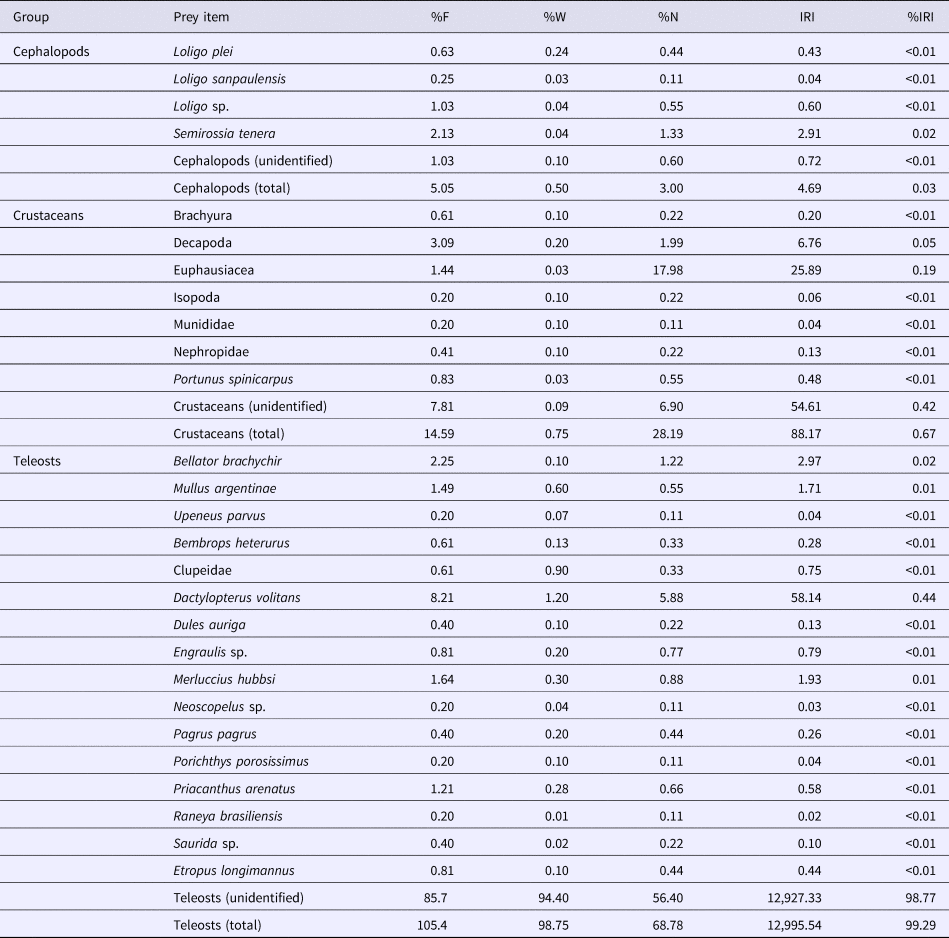
Among 27 prey items identified in M. hubbsi stomach contents (16 fish, 7 crustaceans, 4 cephalopods), 50% were recorded occasionally (%F ≤ 0.2). The collection was composed of 901 individual items, and represented a total wet weight of 16 kg (Table 1).
Relative importance of the most frequent and abundant prey of Merluccius hubbsi landed in Niterói-Rio de Janeiro, Brazil, between May 2013 and April 2014

Per cent in frequency of occurrence (%F), per cent by weight (%W), per cent by number (%N), index of relative importance (IRI), per cent index of relative importance (%IRI).
The flying gurnard, Dactylopterus volitans, was the first in importance by %IRI and %F, and the second by %N. Crustaceans of the order Euphausiacea were the first in importance by %N, followed by decapods (mainly Dendrobranchiata) and the sepiolid Semirossia tenera. Identified prey items that mostly contributed by %W included fish (D. volitans, clupeids, Mullus argentinae, M. hubbsi (cannibalism)) and cephalopods (Loligo plei). Although teleosts were the most important prey item, the advanced state of digestion of gut contents frequently made it impossible to identify prey further than higher taxonomic grouping. With respect to %IRI, 21 from 27 prey items contributed with less than 0.01% (Table 1).
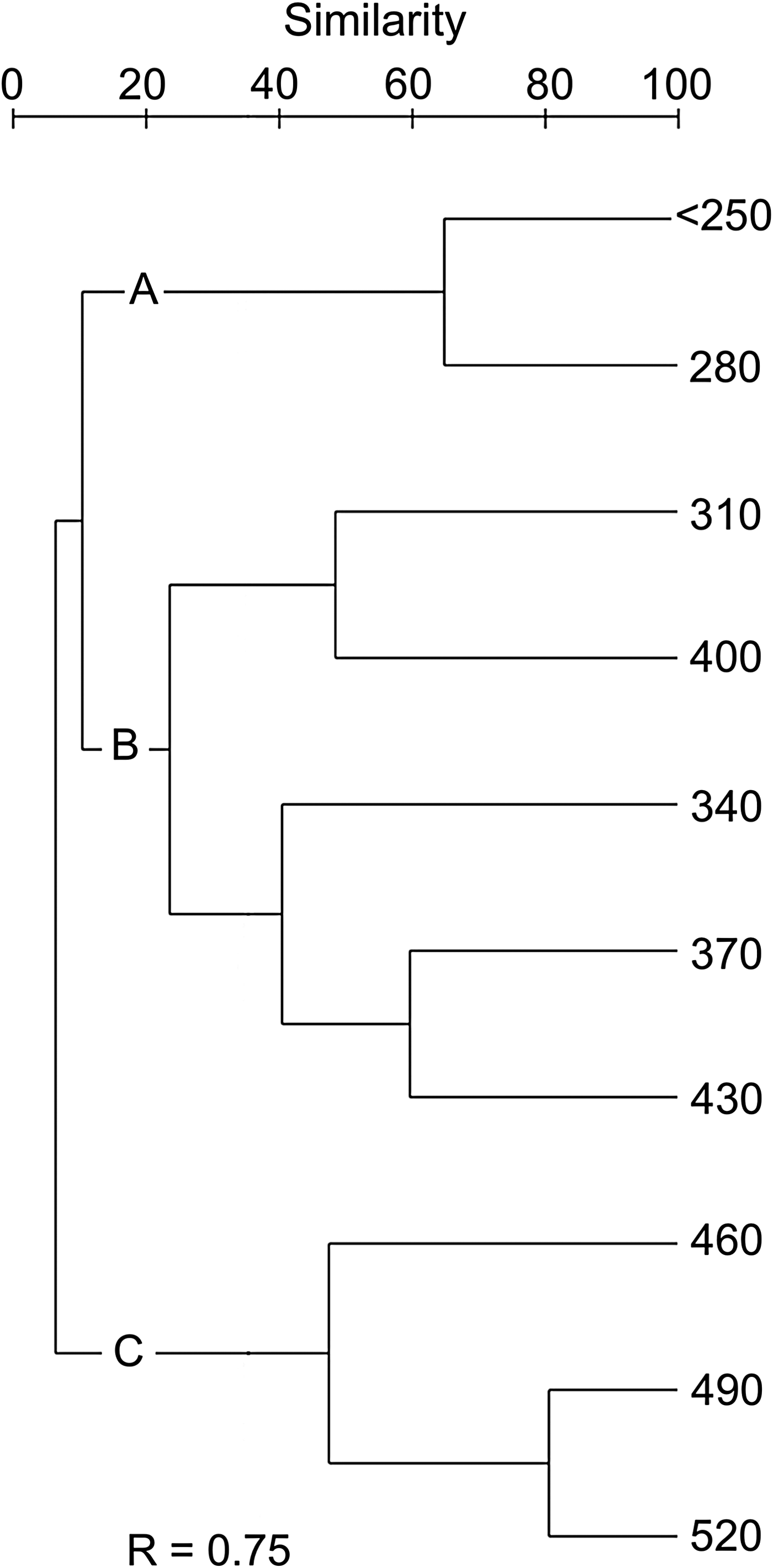
Cluster analysis based on the similarity in hake diet composition indicated the existence of three size-related groups (Figure 3). Some degree of overlap between the groups was expected according to the global R value obtained in ANOSIM (R = 0.75, P = 0.02). SIMPER analysis indicated that prey responsible for dissimilarity between groupings included engraulids (30%) and loliginid squids (20%) in group A, D. volitans (80%) and Priacanthus arenatus (6%) in group B, D. volitans (100%) in group C.
Dendrogram based on %IRI values of M. hubbsi size classes (Lt, mm) using group-average clustering from Bray–Curtis similarity on diet data. R = Sample statistic associated to ANOSIM analysis.

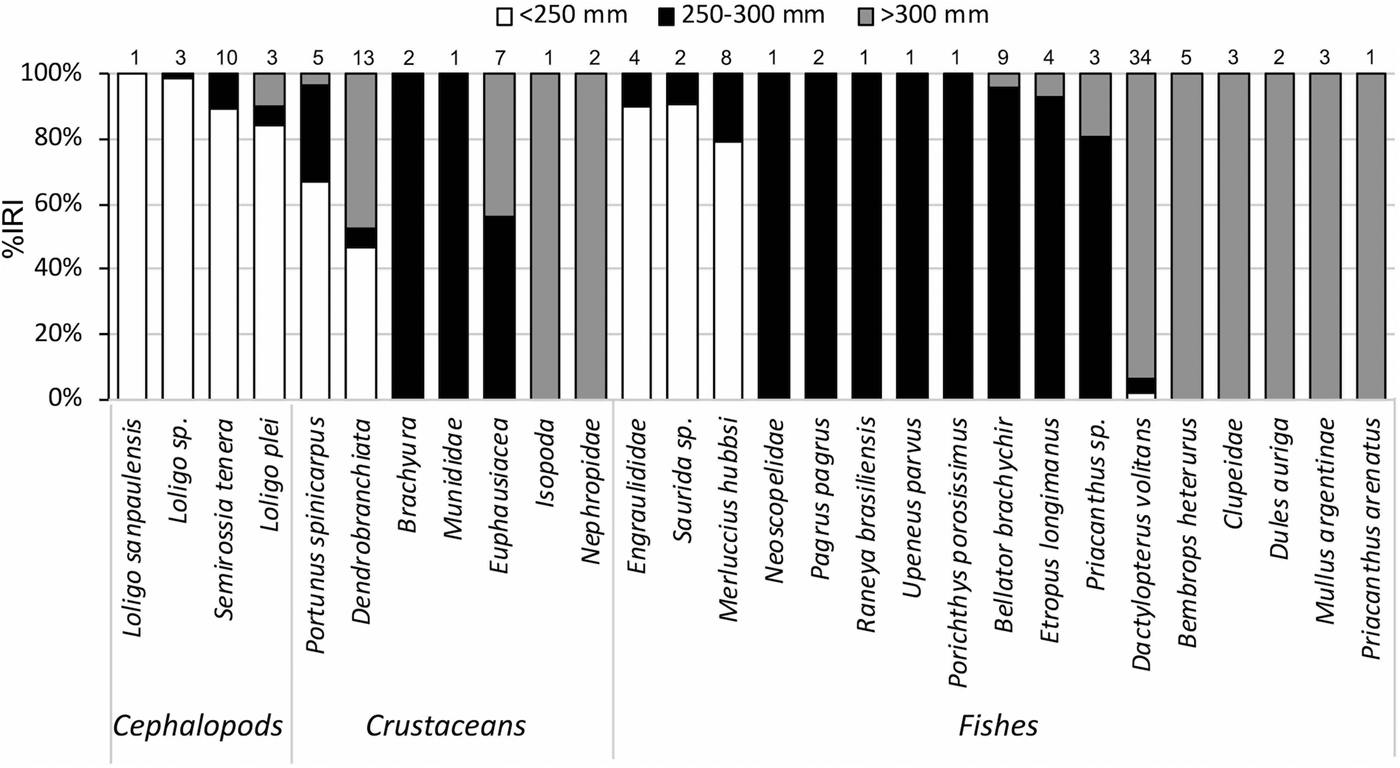
Contribution to %IRI of all identified prey were analysed according to three size groups (<250, 250–300, >300 mm Lt), defined to provide a more detailed description of tendencies observed in cluster analysis (Figure 4). Dominant prey in the stomach of smaller hake (<250 mm Lt) were cephalopods, mainly the sepiolid S. tenera (89.45%IRI), decapod crustaceans such as Portunus spinicarpus (67.09%IRI) and Dendrobranchiata (47.14%IRI) and engraulid fish (89.96%IRI). Cannibalism was a more prominent feature in smaller hake (79.17%IRI) and was not evident in larger hake. The importance of fish in the diet increased with size. Mid-sized hake (250–300 mm Lt) fed mostly on benthic fish such as Bellator brachychir (95.63%IRI) and secondarily on a variety of occasional prey, mostly represented by euphausiids (56.46%IRI). Larger hake (>300 mm Lt) fed heavily on the benthic Dactylopterus volitans (94.80%IRI) and occasionally, on a variety of other teleosts (Bembrops heterurus, Dules auriga, Mullus argentinae, Priacanthus arenatus). Dactylopterus volitans was the only teleost eaten by hake of all sizes and explains most of the overlap between the size groups.
Size-preference of identified prey according to their relative importance (%IRI) in 488 stomach contents of the three M. hubbsi size groups (<250 mm, 250–300 mm, >300 mm Lt). Numbers above columns indicate the absolute frequency of occurrence.

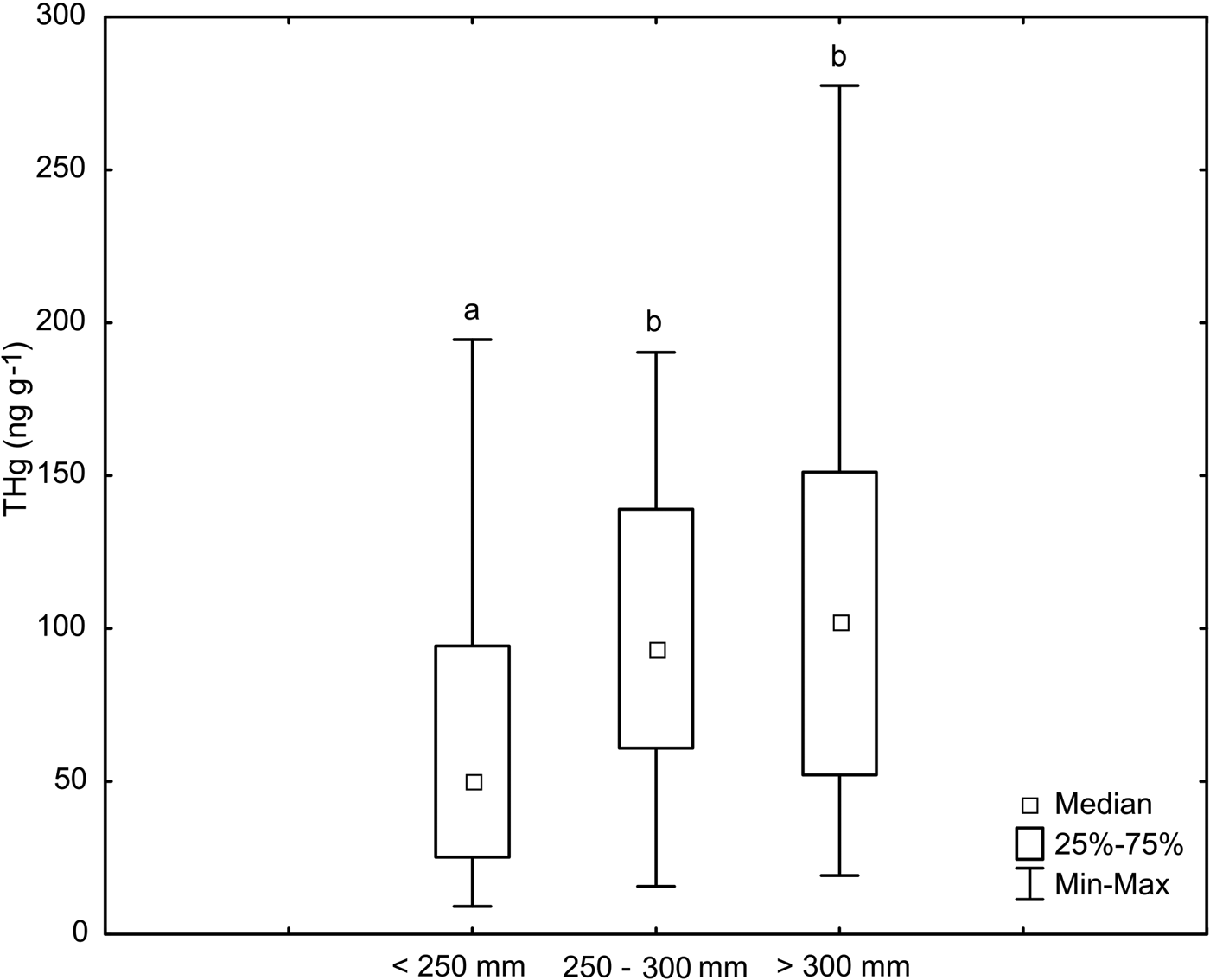
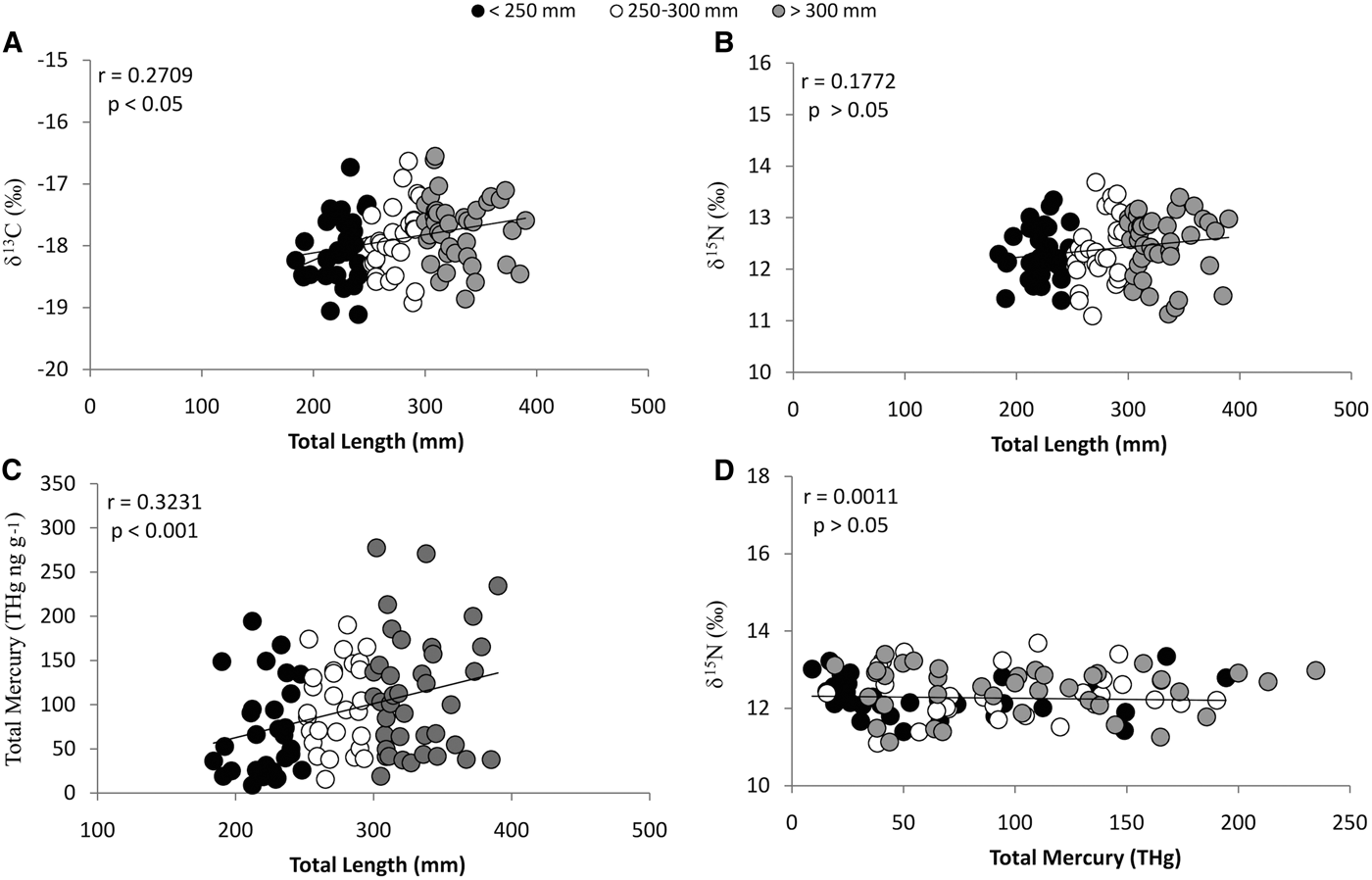
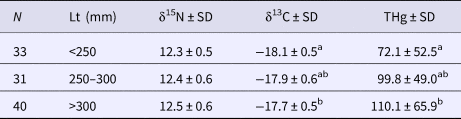
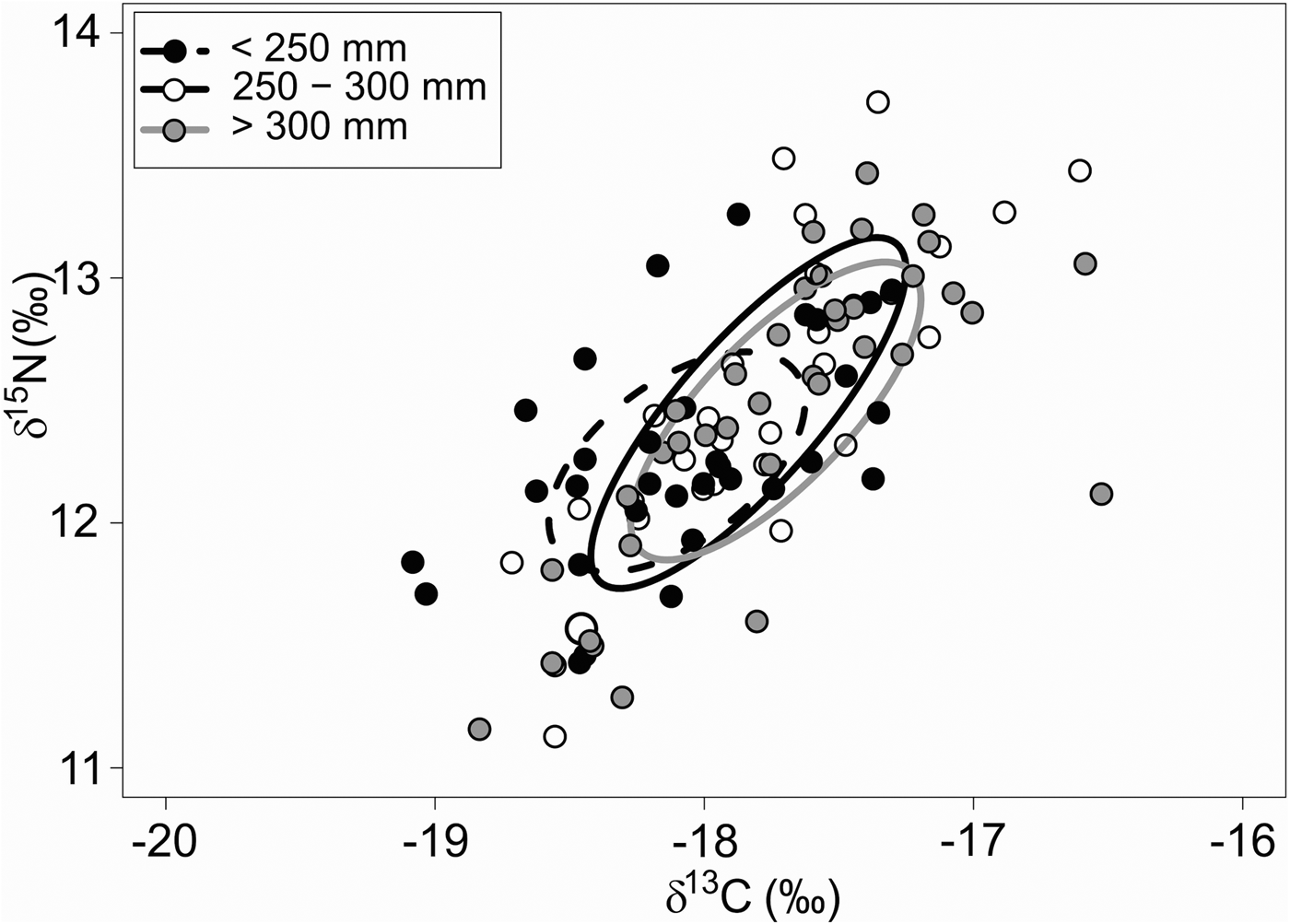
Overall, 101 muscle samples were analysed for δ13C, δ15N and THg representing the three size groups defined in the present study. The δ13C, δ15N, THg mean values were lowest in smaller hake (<250 mm Lt), with a tendency of increasing mean values with size (Table 2). Significant differences between smaller and larger hake were observed in δ13C (ANOVA, MS = 1.05, df = 2, P < 0.05). A significant difference between the smaller hake and the other two length classes was observed in THg (ANOVA, MS = 10,405.6, d.f. = 2, P < 0.05) (Table 2, Figure 5). Correlations between δ13C and hake size (slope = 0.0029, adjusted r = 0.2709, F 1,99 = 7.79, P < 0.05) and between total mercury and hake size (slope = 0.3856, adjusted r = 0.3231, F 11,54 = 1.99, P < 0.001) were significant (Figure 6A–C), whereas no correlation was observed between δ15N and hake size or δ15N and total mercury (Figure 6B–D). The SEAs of the three M. hubbsi length classes were rather similar in position in both axes, δ13C and δ15N (Figure 6B–D).
Box plot of THg concentrations (ng g−1) for each length class of M. hubbsi landed in Niterói-Rio de Janeiro, Brazil, between May 2013 and April 2014. Letters indicate significant differences among length classes (P < 0.05).

Correlation between total length (mm) and δ13C (‰) (A), total length (mm) and δ15N (‰) (B), total length (Lt, mm) and total mercury (THg, ng g−1) (C) and total mercury (THg) and δ15N (‰) (D) of the three M. hubbsi size groups.

Number of specimens analysed (N), length classes (Lt) and mean ± standard deviation (SD) of δ13C (‰), δ15N (‰) and THg levels of the three M. hubbsi size groups
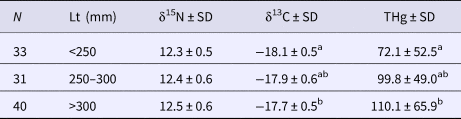
Superscript letters indicate significant differences among length classes (P < 0.05).
The SEAs of the three M. hubbsi length classes were rather similar in position in both axes, δ13C and δ15N (Figure 7). Nevertheless, specimens >300 mm Lt are suggested to have a larger feeding plasticity due to the combination of SEA value and the highest TA value (Table 3).
Stable isotope values of the three M. hubbsi size groups (Lt, mm). Lines depict the standard ellipse (the 95% confidence interval) for the isotopic niches.

Quantitative niche metrics of the three M. hubbsi size groups (Lt, mm) NR, δ15N range; CR, δ13C range; TA, total occupied niche area; CD, distance to centroid; MNND, mean nearest neighbour distance; SDNND, standard deviation of nearest neighbour distances; SEA, standard ellipse area

Superscript letters indicate significant differences (P < 0.05) between size groups.
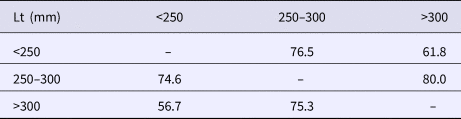
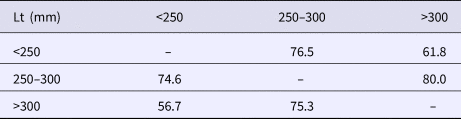
Length classes were comparable in terms of variability of food sources (δ13C range). Specimens between 250–300 mm Lt exhibited a wider δ15N range and probably were not comparable as consumers to other size groups. Moreover, the SDNND value of the intermediate sizes was significantly lower compared either to smaller (F-test, P < 0.01) or larger (F-test, P < 0.001) sizes, indicating a more even isotopic niche. CD (ANOVA, MS = 0.11, df = 2, P = 0.52) and MNND (ANOVA, MS = 0.01, df = 2, P = 0.76) values were not significantly different among length classes, indicating the same degree of trophic diversity and trophic redundancy among them. There was a high level of isotopic niche overlap (>50%) in all length classes (Table 4). Overlap was strongest between intermediate and highest sizes (80%).
Overlap proportions (%) between the three M. hubbsi size groups (Lt, mm)
Discussion
Along the northernmost limit of its distribution in the South-western Atlantic, M. hubbsi reaches sexual maturity at 273–274 mm (males – females: Costa et al., Reference Costa, Braga, Vieira, Martins, São-Clemente and Couto2018); hence, both juveniles (<250 mm Lt) and adults (>300 mm Lt) were represented in our samples. Previous studies on the diet of M. hubbsi in Brazilian waters covered a broader range of sizes than ours (Haimovici et al. (Reference Haimovici, Martins and Teixeira1993): 50–800 mm Lt; Muto & Soares (Reference Muto and Soares2011): <100–400 mm Lt). About 73% of stomachs analysed by Muto & Soares (Reference Muto and Soares2011) from samples obtained in Rio de Janeiro waters (N = 182) corresponded to fish smaller than 200 mm Lt, lengths that were poorly represented in our samples. Nevertheless, the main food sources identified for Argentine hake in this study (cephalopods, crustaceans, fish) are in accordance with those indicated by the aforementioned authors, although they occurred in different proportions. Fish presented a much greater importance in prey biomass herein (99.3%) rather than the 74% reported by Haimovici et al. (Reference Haimovici, Martins and Teixeira1993) in Rio Grande do Sul, or the 67.4% in Cabo Frio shelf (Muto & Soares, Reference Muto and Soares2011), confirming that the size range analysed in this study mainly corresponded to the M. hubbsi piscivorous phase. As also reported by Muto & Soares (Reference Muto and Soares2011), unidentified fish were an important component of the diet. Among cephalopods and fish, only 10 prey items have been previously reported in M. hubbsi stomachs in Brazil (Illex argentinus, L. sanpaulensis, L. plei, Engraulis anchoita, M. hubbsi, Trachurus lathami, Trichiurus lepturus, Cynoscion striatus, Symphurus sp., Bregmaceros sp.) (Haimovici et al., Reference Haimovici, Martins and Teixeira1993; Muto & Soares, Reference Muto and Soares2011). The first record of the sepiolid Semirossia tenera and several fish in M. hubbsi stomachs in this study (D. volitans, Bellator brachychir, B. heterurus, Etropus longimanus, Priacanthus arenatus, M. argentinae, Saurida sp., P. pagrus, R. brasiliensis, U. parvus, P. porosissimus, D. auriga, P. arenatus) hence widens its prey spectrum in Brazilian waters.
The flying gurnard D. volitans was mostly important as prey for larger hake that have attained sexual maturity (>300 mm Lt). This species lives in the epipelagic zone when juvenile (2–8 cm) but settles down in coastal waters when adult (Vaske et al., Reference Vaske, Travassos, Hazin, Tolotti and Barbosa2012). Prey selection is often proportional to prey availability in the environment (Link & Garrison, Reference Link and Garrison2002), and preference for D. volitans could be attributed to its abundance in the study area, since it occurs at great densities along the shelf between 20–23°S (Costa et al., Reference Costa, Mincarone, Braga, Martins, Lavrado, Haimovici and Falcão2015). Moreover, the protein content of D. volitans (22.3%) is above the levels of 16 ± 3% reported for pelagic fish (Abbey et al., Reference Abbey, Glover-Amengor, Atikpo and Howell2017). The increased consumption of larger and highly energetic prey during ontogeny matches the energy needs for oocyte development, and in adult European hake reproduction needs were considered a possible trigger for a later diet shift (Lopez-Lopez et al., Reference Lopez-Lopez, Bartolino and Preciado2015).
Cephalopods were the dominant prey of small hake in this study, either represented by species that can be found throughout the water column (e.g. Loligo plei: Gasalla et al., Reference Gasalla, Rodrigues and Postuma2010) or that maintain a strong connection with the bottom (Loligo sanpaulensis: Santos & Haimovici, Reference Santos and Haimovici1998; Semirossia tenera: Vecchione et al., Reference Vecchione, Roper, Sweeney and Lu2001). Semirossia tenera is also reported to be an important prey in the diet of common dolphins along south-eastern and southern Brazil (Santos & Haimovici, Reference Santos and Haimovici2001). Conversely, Muto & Soares (Reference Muto and Soares2011) reported crustaceans (mainly euphausiids) as the dominant prey for hake <200 mm Lt in the Cabo Frio shelf. These differing patterns possibly result from the limited representation of age-1+ hake (198–223 mm Lt: Costa et al., Reference Costa, Braga, Vieira, Martins, São-Clemente and Couto2018) in our samples (10%). Merluccius hubbsi remain pelagic for their first year of life and undergo a transitional period that involves a shift from a pelagic to a demersal habitat utilization, with concurrent morphological, physiological, ecological and behavioural changes (Temperoni et al., Reference Temperoni, Viñas and Buratti2013). In this study, euphausiids were important crustacean prey for mid-sized and larger hake. A high consumption of euphausiids is a common pattern observed in hake species (Mahe et al., Reference Mahe, Amara, Bryckaert, Kacher and Brylinski2007; Cartes et al., Reference Cartes, Hidalgo, Papiol, Massutí and Moranta2009; Iitembu et al., Reference Iitembu, Miller, Ohmori, Kanime and Wells2012; Temperoni et al., Reference Temperoni, Viñas and Buratti2013), due to their elevated energetic content (Harmelin-Vivien et al., Reference Harmelin-Vivien, Mahé, Bodiguel and Mellon-Duval2012). This fact highlights the importance of this group as a key energetic link between phytoplankton and large predatory animals (Belleggia et al., Reference Belleggia, Figueroa, Irusta and Bremec2014).
Hake are known to be highly cannibalistic and the contribution of conspecifics to the diet of M. hubbsi varies greatly (Ocampo Reinaldo et al., Reference Ocampo Reinaldo, González and Romero2011; Belleggia et al., Reference Belleggia, Figueroa, Irusta and Bremec2014). Although negligible in previous studies in Brazilian waters (Haimovici et al., Reference Haimovici, Martins and Teixeira1993; Muto & Soares, Reference Muto and Soares2011), cannibalism in this study was mainly observed in fish smaller than 250 mm Lt. This contrasts with what has often been reported for the species in the literature, with the predominance of cannibalism in large fish (>30 cm; Ocampo Reinaldo et al., Reference Ocampo Reinaldo, González and Romero2011). Our results confirm ontogenetic dietary shift and a general progression toward piscivory in larger individuals, as previously reported for the species in Brazilian (Muto & Soares, Reference Muto and Soares2011) and Argentinean waters (Belleggia et al., Reference Belleggia, Figueroa, Irusta and Bremec2014).This pattern of increasing importance of fish prey in the diet at larger sizes was also reported in offshore hake and silver hake (M. albidus and M. bilinearis: Garrison & Link, Reference Garrison and Link2000), Pacific hake (M. productus: Rexstad & Pikitch, Reference Rexstad and Pikitch1986), cape hake (M. capensis and M. paradoxus: Iitembu et al., Reference Iitembu, Miller, Ohmori, Kanime and Wells2012) and European hake (M. merluccius: Carpentieri et al., Reference Carpentieri, Colloca, Cardinale, Belluscio and Ardizzone2005; Mahe et al., Reference Mahe, Amara, Bryckaert, Kacher and Brylinski2007).
The significant correlation of δ13C and length in M. hubbsi suggests that the dietary carbon source shifts during growth. Euphausiids, engraulids and squid (−21.3 to −16.7‰) (Di Beneditto et al., Reference Di Beneditto, Santos, Rosa and Siciliano2014; Muto et al., Reference Muto, Soares, Sarkis, Hortellani, Petti and Corbisier2014; Soares et al., Reference Soares, Muto, Lopez, Clauzet and Valiela2014) are gradually replaced by more δ13C enriched prey, mainly fish (−17.9 to −14.7‰) (Bisi et al., Reference Bisi, Lepoint, Azevedo, Dorneles, Flach, Das, Malm and Lailson-Brito2012; Soares et al., Reference Soares, Muto, Lopez, Clauzet and Valiela2014). Stomach contents analysis herein indicated that main prey items shift from pelagic to demersal with increasing predator size. This shift is probably followed by a change in the primary sources utilized, which might influence the carbon values of M. hubbsi. Benthic primary sources are generally more δ13C enriched than their pelagic counterparts, due to boundary-layer effects that decrease fractionation (Bouillon et al., Reference Bouillon, Conolly, Gillian, Polanski and McLusky2011). Although prey were not analysed in this study, lower δ13C values were obtained for smaller hake (−18.1 ± 0.5), as also reported by Muto et al. (Reference Muto, Soares, Sarkis, Hortellani, Petti and Corbisier2014) (−18.6 ± 0.1) and Soares et al. (Reference Soares, Muto, Lopez, Clauzet and Valiela2014) (−17.7 ± 0.36). In contrast, there was no evidence of M. hubbsi size-based feeding from δ15N values in this study. Despite the observed trend of increment in tissue THg with increasing fish size, the lack of correlation between THg and δ15N prevented the use of THg concentration as a trophic level indicator as elsewhere (Kehrig et al., Reference Kehrig, Fernandes, Malm, Seixas, Di Beneditto and Souza2009; Di Beneditto et al., Reference Di Beneditto, Souza, Kerigh and Rezende2011; Fry & Chumchal, Reference Fry and Chumchal2012).
Excluding the possible change in trophic level, a higher mean THg value observed for larger individuals seems to be two-fold: first, a fish with a piscivorous habit generally shows higher mercury concentration than omnivore or invertivore representatives (Treiman & Adams, Reference Treiman and Adams2012); second, an accumulation of THg during M. hubbsi lifespan indeed happens, as evidenced by the significant correlation (P < 0.05) between Lt and THg. Some authors suggest that larger and/or older fish have a higher THg concentration due to longer exposure and the difficulty of eliminating mercury (Sackett, Reference Sackett, Cope, Rice and Aday2013; Chouvelon et al., Reference Chouvelon, Caurant, Cherel, Simon-Bouhet, Spitz and Bustamente2014).
Besides the higher THg mean values, a large range of THg concentration observed for each length class (Figure 5), especially among the specimens >300 mm Lt, may be a consequence of an omnivorous feeding habit, as evidenced in the SCA (Bezerra et al., Reference Bezerra, Lacerda, Rezende, Franco, Ameida, Macedo, Pires, Rostán and Lopez2015). In addition, different contributions of pelagic and demersal/benthic prey during M. hubbsi ontogeny may explain the large THg range in each length class. Distinct dynamic processes of methylation of THg in sediment and water column will influence the concentration of methylmercury (mercury in its organic form) that will be available to the potential benthic/pelagic prey and, ultimately, to Argentine hake (Cossa et al., Reference Cossa, Harmelin-Vivien, Mellon-Duval, Loizeau, Averty, Crochet, Chou and Cadiou2012).
The considerable isotopic niche overlap (>50%) of the three hake size groups coupled with niche metrics (SEA, CD, MNND) indicated that differences are negligible regarding niche width, trophic diversity and trophic redundancy in the system (Layman et al., Reference Layman, Arrington, Montana and Post2007). However, SDNND indicated a more even distribution of 250–300 mm Lt hake in the trophic niche space. The trophic evenness reveals a more homogeneous feeding strategy among medium-sized fish, which might minimize the intraspecific competition.
This study confirms previous findings on the feeding habits of M. hubbsi, as ontogenetic changes in the diet were observed. Our initial hypothesis on the equivalence of methodologies to detect these changes was partially accepted. Cluster analysis based on the similarity in hake diet composition in the stomach contents indicated the existence of size-related groups with some degree of overlap. Stable isotopic results suggest that diet shift evidenced by stomach analysis were not followed by a change in trophic level during its lifetime, possibly because the main prey assimilated by each size group have similar δ15N values and belong to the same trophic level.
Fishery management of Argentine hake in Brazil is non-existent (Vaz-dos-Santos & Schwingel, Reference Vaz-dos-Santos, Schwingel and Arancibia2015) and as yet there is no regulated length minimum size for the species (Costa e t al., Reference Costa, Braga, Vieira, Martins, São-Clemente and Couto2018). Argentine hake >300 mm Lt along the northernmost limit of its distribution in the South-western Atlantic fed mainly on the flying gurnard fish D. volitans, a generalized carnivore (Segadilha et al., Reference Segadilha, Nascimento, Mauro, Serejo, Ramos, Cardoso, Martins and Costa2018) that has been a major component of bottom-trawl and pelagic-trawl by-catch in the area (Alleman, Reference Alleman2013). Changes in hake abundance due to differing fishing pressure may possibly affect D. volitans population size in the area. Results on the trophic status of Argentine hake are also of primary importance for future management of fish assemblages where this species plays an important predatory role. Moreover, future studies regarding Brazilian M. hubbsi stocks should address THg determination in the main prey, in order to elucidate the trend of THg bioaccumulation herein suggested.
Author ORCIDs
Paulo A. S. Costa, 0000-0002-7939-6428.
Acknowledgements
We would like to thank the vessel owners for providing detailed data on the industrial double-rig fishery locations from the Brazilian National Programme of Monitoring Fishing Vessels by Satellite – PREPS and anonymous referees for their critical reviews and suggested changes to the manuscript.
Financial support
This research has benefited from funds of two grants from Fundação Carlos Chagas Filho de Amparo à Pesquisa do Estado do Rio de Janeiro – FAPERJ (Costa PAS, grant E-26/111.578/2014; Malavolti, GS, grant 200.871/2015). Likewise, this research study was financed in part by the Coordenação de Aperfeiçoamento de Pessoal de Nível Superior – Brasil (CAPES) – Finance Code 001.