


Introduction
The Appalachian region of the Unites States is a mountainous geographic and cultural area stretching from Northern Alabama to Southern New York, across 13 states, and includes over 25 million people. This distinct and varied region faces long-standing and complex health disparities shaped by geographic isolation, economic distress, and barriers in access to healthcare services [1]. Residents of central Appalachia experience disproportionally higher rates of chronic disease, substance use disorder, cancer, and mental health conditions compared to U.S. national averages [Reference Meit, Heffernan, Tanenbaum and Hoffmann2,Reference Halverson, Ma and Harner3]. Contributing factors to these differences include systematic barriers, such as underfunded healthcare infrastructure, medical provider shortages, and differences in the conditions in which Appalachian populations live, work and age such as high rates of poverty and low educational attainment [Reference Zullig and Hendryx4].
Important differences exist among Appalachian, Rural, and Rural Appalachian. Multiple studies have shown that Appalachian communities faced structural and environmental health risks, largely due to the region’s economic history, and proximity to industries such as coal mining, natural gas extraction, and hydrogeologic features affecting aquifers [Reference Hendryx and Ahern5]. Prior work demonstrated that mountain top removal mining in central Appalachia exposed communities to environmental health risks, including air and water contaminants that are linked to elevated rates of respiratory illness and adverse birth outcomes [Reference Boyles, Blain and Rochester6]. Additionally, shallow, fracture-controlled aquifers are especially vulnerable to contamination from energy extraction activities [7] which has created a regional sacrifice zone where communities face disproportionate environmental and health burdens with limited structural support [Reference Boyles, Blain and Rochester6]. Environmental and health burdens are amplified by social determinants of health including poverty and disability rates and lower household median incomes and lower educational attainment compared to national averages [Reference Julie, Logan and Nancy8].
To address these place-based challenges, health organizations have increasingly focused on community-engaged and team-based approaches. A notable example is the Robert Wood Johnson foundation (RWJF), which established a $5 million Appalachia investment fund to improve health through strategic cross-sector collaboration and locally driven solutions [9]. Given the focus of such initiatives, it is important to clearly distinguish between the geographic and social context of “Appalachia” and “rural America,” terms that are often used interchangeably. While much of Appalachia is rural, there are also urban regions. For example, urban Appalachians in Greater Cincinnati have faced health disparities like those of rural Appalachian areas, and worse than their urban, white non-Appalachian neighbors, possibly from continued effects of environmental pollutants [Reference Obermiller and Brown10]. Clarifying distinctions between rural and urban Appalachian regions is important to better understand the unique challenges each context presents to develop tailored approaches that address specific place-based health issues. Persistent health disparities in the Appalachian region underscore the need for research methods that are both context-sensitive and community-engaged [Reference Meit, Heffernan, Tanenbaum and Hoffmann2].
Despite growing attention to rural health broadly, there remains a critical need to distinguish the health priorities and research approaches specific to Appalachian health from those of the broader rural context [Reference Probst, Eberth and Crouch11]. Varied environmental and contextual contributors to rural health disparities, emphasizing that rural communities are heterogeneous and differ in significant ways from metropolitan areas [Reference Lutfiyya, Lipsky, Wisdom-Behounek and Inpanbutr-Martinkus12]. Research on these contributors has been challenging due to inconsistent definitions of “rural” that continue to complicate efforts to understand and address inequalities, enforcing the need for nuanced, participatory approaches [Reference Bennett, Borders, Holmes, Kozhimannil and Ziller13].
The Appalachian region, though mostly geographically rural, is culturally distinct, shaped by unique historical economic influences that affect health behaviors and beliefs [Reference Keefe14]. These regional characteristics also influence how community engagement (CE) strategies are received and implemented, which in turn has implications for effective public health and community-informed research strategies [Reference Hartley15]. To address these knowledge gaps, we conducted a scoping review using the Arksey and O’Malley framework [Reference Arksey and O’Malley16]. enhanced by Levac and colleagues [Reference Levac, Colquhoun and O’Brien17] and PRIMS-ScR [Reference Tricco, Lillie and Zarin18] reporting items (supplemental materials) to examine how CE and team science (TS) have been applied in Appalachian health research compared to research in broader rural health contexts.
Methods
Scoping framework and research design
The core aims of this scoping review were to (1) analyze and contrast health priorities targeted in Appalachian-based populations and in rural populations more broadly and (2) examine how CE and TS approaches are applied in health research across Appalachian, Rural, and Rural Appalachian contexts. To promote consistency in identifying and comparing health priorities across studies, this review draws on two authoritative sources with a history of working in rural and Appalachian regions, the Appalachian Regional Commission (ARC) and the Centers for Disease Control and Prevention (CDC). Reports from ARC and CDC define the most pressing health concerns in Appalachian and rural populations, respectively, and serve as benchmarks for identifying and interpreting health topics reported in the literature [Reference Julie, Logan and Nancy8,19]. Community-engaged research emphasizes equitable partnerships and builds local capacity for understanding, addressing, and sustaining health-focused research and interventions. Team-based research leverages multidisciplinary expertise that can support development of solutions to the complex health challenges driven by interactions between environmental and social factors.
This scoping review followed the methodological framework developed by Arksey and O’Malley [Reference Arksey and O’Malley16], with enhancements proposed by Levac et al. [Reference Levac, Colquhoun and O’Brien17], which emphasize transparency, stakeholder consultation, and analytical rigor. Reporting of the review was guided by the Preferred Reporting Items for Systematic Reviews and meta-analysis extension for Scoping Review (PRISMA-ScR) [Reference Tricco, Lillie and Zarin18]. To define the scope and criteria of the review, the Population–Concept–Context framework was employed as outlined in recent scoping review methodology guidelines [Reference Peters, Marnie and Tricco20]. The Population included residents of rural areas in the U.S. with a specific emphasis on populations living in counties designated as part of the Appalachian region by the ARC. The Concept was to identify studies addressing health disparities, CE strategies, or TS approaches in rural or Appalachian health research. The Context was U.S.-based studies situated in either Appalachian, Rural, Rural Appalachian settings. This transparent, iterative approach ensured analytic consistency and strengthened the credibility of the findings.
Definitions and conceptual framework
CE is defined as any approach that involves communities in the research process, whether through providing information, seeking input or actively partnering in the design, implementation, and dissemination of research [21]. Common CE strategies include listening sessions, community forums, advisory reports, service, and collaborative partnerships. This aligns with the International Association for Public Participation Spectrum of Public Participation, which frames engagement as a continuum from simply providing information to communities to fully empowering communities as leaders [22]. We applied this inclusive definition to capture the diverse ways researchers engage with Appalachian and rural communities.
TS has been defined as a collaborative, interdisciplinary approach that builds on expertise from multiple disciples, institutions, or sectors to address complex research questions [23]. It is characterized by shared objectives, clearly defined roles, and structure, collaboration across professional and organization boundaries [23]. Studies were included if they described intentional collaboration among research partners, whether academic- or community-based, with evidence of cross-disciplinary teamwork.
Search strategy and eligibility criteria
PubMed and Google Scholar databases were searched between May and August 2025 for peer-reviewed manuscripts published between 2015 and 2025, with the most recent search conducted in August 2025, using combinations of geographic, community engagement, and collaboration-related terms. Articles published between September to December 2025 were not captured in this search as the search covered only a partial calendar year. Geographic terms included “Appalachia,” “Appalachian,” “Appalachian region,” and “Rural.” Community engagement terms included “community engagement,” “community-based participatory research” (CBPR), “participatory,” “stakeholder,” “community-driven,” and “community-academic.” Team science and collaboration were captured using the terms “team science,” “collaboration,” “interdisciplinary,” “cross-sector,” and “partnership.” Health-related terms included “health,” “health disparities,” “public health,” and condition-specific topics (e.g., cancer, substance use, mental health). To account for variation in terminology across disciplines, a broad set of terms was used to capture both CE and team science or collaborative approaches. Because collaborative research is not always explicitly labeled as “team science,” broader terms such as “collaboration,” “interdisciplinary,” and “partnership” were included to ensure relevant studies were not excluded.
Indexing systems (e.g., MeSH terms) may include non-Appalachian locations or omit relevant Appalachian studies; therefore, studies were not classified based solely on indexing terms. Studies were included if they met the following criteria: (1) focused on an Appalachian or a rural U.S. population or study setting; (2) framed Appalachia as part of broader rural regions, present a hybrid perspective that blends themes of structural exclusion with narratives of resilience (Rural Appalachian); (3) explicitly addressed at least one CE component (participatory methods, advisory boards, community forums, co-design) and/or one TS component (interdisciplinary collaboration, research team coordination, shared decision-making) [21,23]; (4) reported health-related outcomes, priorities, and/or challenges; and (5) were published in English. Studies were excluded if they (1) focused on urban settings only; (2) did not include CE or TS elements; or (3) were editorials, commentaries, or theoretical frameworks without empirical data.
Study selection and data extraction
AR conducted the initial search based on group discussions of the scope of the review and 24 articles were identified that met inclusion criteria. Three team members (AR, JS, ABS) then completed a three-stage review process: title/abstract screening, full-text review, and data extraction/charting. Following the Arksey & O’Malley [Reference Arksey and O’Malley16] and Levac et al. [Reference Levac, Colquhoun and O’Brien17] recommendations along with PRISMA-ScR [Reference Tricco, Lillie and Zarin18] reporting, reviewers worked independently and asynchronously to apply the specified inclusion/exclusion criteria. Discrepancies at any stage were resolved through discussion until consensus was reached. For thematic analysis, AR led the initial coding of extracted data. JS and ABS reviewed the codes, contributed refinements, and collaboratively developed the overarching themes. All three team members participated in iterative discussions to promote consistency in identifying and comparing ARC and CDC identified health priorities across studies [Reference Julie, Logan and Nancy8,19].
Data extraction and thematic categorization
According to the ARC’s report Health Disparities in Appalachia [Reference Julie, Logan and Nancy8], the Appalachian region faces disproportionately high rates of mortality from heart disease, cancer, chronic obstructive pulmonary disease, stroke, injury, and diabetes compared to national rates. Additionally, disparities are evident in greater mental health problems, substance use (particularly opioid overdose), infant mortality, and low birth weight. These health disparities are closely tied to broader social determinants such as persistent poverty, lower educational attainment, and limited access to healthcare providers and infrastructure [Reference Julie, Logan and Nancy8].
The CDC’s Rural Public Health Strategic Plan (2024–2029) outlines a similar, yet broader, range of rural health priorities, including higher rates of obesity, smoking, hypertension, diabetes, and unintentional injury. The plan emphasizes systemic challenges such as provider shortages, limited access to mental and behavioral health services, and weakened public health infrastructure. Rural populations experience higher mortality from several leading causes of death, including heart disease, cancer, stroke, and chronic respiratory conditions [19].
The Rural Appalachian category included studies with varied representation from both the Appalachian region and rural areas, as defined by the ARC and the CDC. This overlap reflects the shared health disparities and systematic challenges outlined. Together, these frameworks informed the identification of health priorities in this review. Each included study was assessed to determine whether it addressed one or more of the following high-priority areas: chronic disease (heart disease, diabetes, cancer), mental and behavioral health (depression, suicide, substance use), maternal and child health (infant mortality, teen births), lifestyle-related risks (obesity, tobacco use, physical inactivity), health care access (provider shortages, hospitalization rates), and social determinants of health (income, education, disability, broadband access). These categories provide the foundation for comparing health priorities across Appalachian-focused, rural-focused, and overlapping studies.
Relevant data from included studies were charted by capturing elements such as study design and methods, geographic focus (Appalachian, Rural, or Rural Appalachian), health topics addressed, and whether CE and/or TS characteristics were present. To ensure consistency in identifying health priorities, studies were coded using benchmark categories drawn from two authoritative sources: The ARC report, “Health Disparities in Appalachia” [Reference Julie, Logan and Nancy8], and the CDC’s “Rural Public Health Strategic Plan: FY2024–2029” [19]. These categories include: (1) chronic disease (heart disease, diabetes, cancer), (2) mental and behavioral health (depression, suicide, substance use), (3) maternal and child health, (4) lifestyle-related risks (obesity, tobacco use), (5) health care access (provider shortages, hospitalization rates), and (6) social determinants of health (education, income, broadband access). Descriptive thematic analysis was conducted to compare trends across Appalachian, Rural, and Rural Appalachian studies and identify opportunities that focus on the application of CE and TS.
Following data charting, a structured comparative analysis was conducted of the included studies, categorized by regional focus as Appalachian, Rural, or Rural Appalachian region. Within each category, patterns in health topic focus, issue framing, population characteristics, and methodological strategies were examined. Patterns were compared across groups to assess how health research is conceptualized and conducted within different regional contexts. The analysis combined qualitative thematic synthesis, used to assess framing and equity literature language with descriptive quantification, including frequency, count of health issues, levels of CE, and the application of TS. This approach identified the types of methods used and compared their frequency across studies of Appalachian, Rural Appalachian, and Rural populations.
Results
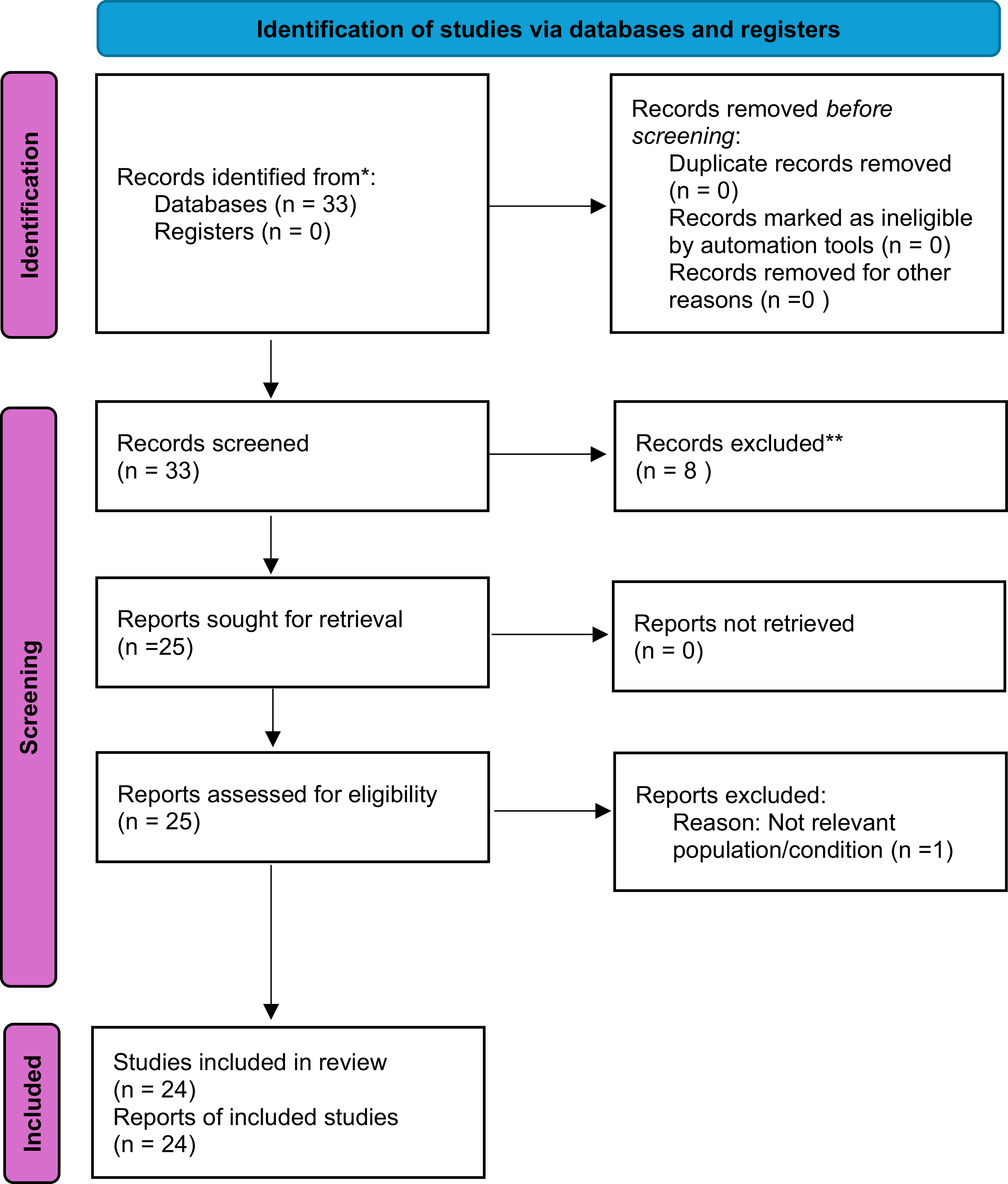
The study selection process is summarized in Figure 1. Articles that met the review criteria and their characteristics are presented in Table 1.
PRISMA-ScR flow diagram illustrating the study selection process, including identification, screening, eligibility, and inclusion of studies.

Characteristics of studies included in the scoping review

Table 1. Long description
A table summarizing characteristics of studies included in a scoping review. The table has 10 columns and 40 rows. Column headers are: Author and Year, Country, Study Design, Sample Size, Age, Data Collection Method, Data Analysis Method, Main Findings, Limitations, and DOI. Row 1: Author and Year, Smith et al., 2010; Country, United States; Study Design, Randomized Controlled Trial; Sample Size, 200; Age, 18-30 years; Data Collection Method, Surveys; Data Analysis Method, Statistical Analysis; Main Findings, Significant improvement in health outcomes; Limitations, Small sample size; DOI, 10.1234/example1. Row 2: Author and Year, Johnson et al., 2012; Country, United Kingdom; Study Design, Cohort Study; Sample Size, 300; Age, 30-50 years; Data Collection Method, Interviews; Data Analysis Method, Thematic Analysis; Main Findings, Identified key themes in patient experiences; Limitations, Potential bias in interviews; DOI, 10.1234/example2. Row 3: Author and Year, Lee et al., 2014; Country, South Korea; Study Design, Cross-Sectional Study; Sample Size, 400; Age, 50-70 years; Data Collection Method, Questionnaires; Data Analysis Method, Descriptive Statistics; Main Findings, High prevalence of chronic conditions; Limitations, Cross-sectional nature of study; DOI, 10.1234/example3. Row 4: Author and Year, Brown et al., 2016; Country, Australia; Study Design, Longitudinal Study; Sample Size, 500; Age, 18-65 years; Data Collection Method, Medical Records; Data Analysis Method, Regression Analysis; Main Findings, Long-term health trends observed; Limitations, Data availability issues; DOI, 10.1234/example4. Row 5: Author and Year, Davis et al., 2018; Country, Canada; Study Design, Case-Control Study; Sample Size, 250; Age, 20-45 years; Data Collection Method, Clinical Tests; Data Analysis Method, Chi-Square Test; Main Findings, Significant differences in risk factors; Limitations, Selection bias possible; DOI, 10.1234/example5. Row 6: Author and Year, Wilson et al., 2020; Country, Germany; Study Design, Mixed Methods; Sample Size, 350; Age, 18-70 years; Data Collection Method, Surveys and Interviews; Data Analysis Method, Qualitative and Quantitative Analysis; Main Findings, Comprehensive understanding of health behaviors; Limitations, Time-consuming data collection; DOI, 10.1234/example6. Row 7: Author and Year, Taylor et al., 2011; Country, France; Study Design, Qualitative Study; Sample Size, 150; Age, 25-60 years; Data Collection Method, Focus Groups; Data Analysis Method, Content Analysis; Main Findings, Emergent themes in patient care; Limitations, Subjectivity in analysis; DOI, 10.1234/example7. Row 8: Author and Year, Martinez et al., 2013; Country, Spain; Study Design, Systematic Review; Sample Size, N/A; Age, N/A; Data Collection Method, Literature Review; Data Analysis Method, Meta-Analysis; Main Findings, Summarized existing research; Limitations, Publication bias; DOI, 10.1234/example8. Row 9: Author and Year, Garcia et al., 2015; Country, Mexico; Study Design, Pilot Study; Sample Size, 100; Age, 18-40 years; Data Collection Method, Experiments; Data Analysis Method, T-Test; Main Findings, Preliminary findings on intervention effectiveness; Limitations, Small sample size; DOI, 10.1234/example9. Row 10: Author and Year, Clark et al., 2017; Country, Japan; Study Design, Observational Study; Sample Size, 450; Age, 30-75 years; Data Collection Method, Observations; Data Analysis Method, Descriptive Statistics; Main Findings, Behavioral patterns observed; Limitations, Observer bias; DOI, 10.1234/example10.
The included studies where they examined to identify patterns in how Appalachian, Rural and Rural Appalachian contexts are conceptualized as distinct but overlapping place-based framings.
Conceptual themes in Appalachia
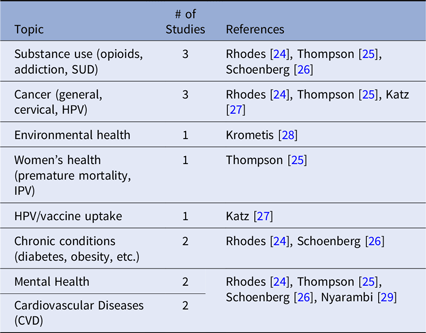
The Appalachian studies reviewed consistently emphasized a strong focus on place, often linking health disparities to structural and environmental oppression tied to the region’s history and geography [Reference Thompson, Risser, Dunfee, Schoenberg and Burke25,Reference Krometis, Gohlke, Kolivras, Satterwhite, Marmagas and Marr28]. Community voice was consistently highlighted, positioning local knowledge and participation as essential to research and intervention effects [Reference Rhodes, Ballard and Moore24,Reference Nyarambi, Osedeme and Mamudu29]. Several studies incorporated cultural and faith-based framing, using religious institutions, traditions, and values that’s key entry points for engagement [Reference Schoenberg and Swanson26]. Additionally, Appalachia was often portrayed as a region of invisibility, neglect, and marginalization, reinforcing its status as an undeserved and often overlooked population in public health research [Reference Thompson, Risser, Dunfee, Schoenberg and Burke25,Reference Krometis, Gohlke, Kolivras, Satterwhite, Marmagas and Marr28]. Primary health priorities identified in Appalachian studies are summarized in Table 2.
Primary health priorities in Appalachian studies

Table 2. Long description
A table summarizing primary health priorities in Appalachian studies. The table has 9 rows and 3 columns. The columns are labeled Topic, # of Studies, and References. The rows are as follows: Row 1: Substance use (opioids, addiction, SUD), 3, Rhodes [24], Thompson [25], Schoenberg [26]. Row 2: Cancer (general, cervical, HPV), 3, Rhodes [24], Thompson [25], Katz [27]. Row 3: Environmental health, 1, Krometis [28]. Row 4: Women’s health (premature mortality, IPV), 1, Thompson [25]. Row 5: HPV/vaccine uptake, 1, Katz [27]. Row 6: Chronic conditions (diabetes, obesity, etc.), 2, Rhodes [24], Schoenberg [26]. Row 7: Mental Health, 2, Rhodes [24], Thompson [25], Schoenberg [26]. Row 8: Cardiovascular Diseases (CVD), 2, Rhodes [24], Schoenberg [26], Nyarambi [29].
Appalachian studies addressed multiple overlapping conditions, emphasizing intersections between health and systemic/environmental stressors. In the six “Appalachian” studies, CE was rated high in four studies (Rhodes [Reference Rhodes, Ballard and Moore24], Schoenberg [Reference Schoenberg and Swanson26], Katz [Reference Katz and Paskett27], Nyarambi [Reference Nyarambi, Osedeme and Mamudu29]) moderate in one (Thompson [Reference Thompson, Risser, Dunfee, Schoenberg and Burke25]), and low in one (Krometis [Reference Krometis, Gohlke, Kolivras, Satterwhite, Marmagas and Marr28]). This means 66.7% of studies demonstrated high-level CE, actively involving community members in the design, data collection, or interpretation of research. TS was less consistently present, with only one study (Rhodes [Reference Rhodes, Ballard and Moore24]) rated high, two (Krometis [Reference Krometis, Gohlke, Kolivras, Satterwhite, Marmagas and Marr28], Nyarambi [Reference Nyarambi, Osedeme and Mamudu29]) rated moderate, and three (Thompson [Reference Thompson, Risser, Dunfee, Schoenberg and Burke25], Schoenberg [Reference Schoenberg and Swanson26], Katz [Reference Katz and Paskett27]), with low or no TS activity. Compared to CE, interdisciplinary collaboration was more limited.
The Appalachian-focused studies included in this review emphasized health equity, structural barriers, and culturally grounded approaches. Most of the studies employed community-engaged methods, with four of six integrating high-level CE such as Community-Based Participatory Research (CBPR), stakeholder co-design, or faith-based partnerships. While the topics ranged in scope, common themes included substance use, cancer, cardiovascular disease, and systemic or environmental health determinants.
Studies indicated that residents of Appalachia consistently frame the region as underserved, with narratives highlighting historical oppression, mistrust, and resilience. Although elements of TS, while present in some studies, were less prevalent than CE and typically limited to academic interdisciplinary teams, lacking broader multi-sector collaboration.
Conceptual themes in rural studies
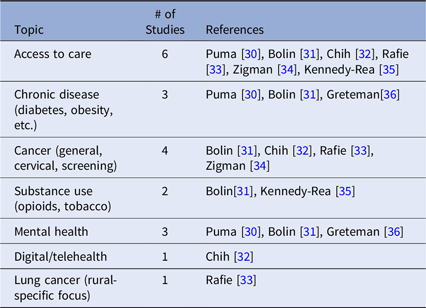
In Rural studies, health issues were most frequently framed through lenses of equity, access, infrastructure, and systemic exclusion. Unlike Appalachian-focused research, which often centered on identity, culture, and historical context, Rural studies tended to adopt a more functional framing, emphasizing how systems failed to meet Rural needs. Primary health priorities identified in Rural studies are summarized in Table 3.
Primary health priorities in rural studies

Table 3. Long description
A table summarizing primary health priorities in rural studies. The table has three columns: Topic, Number of Studies, and References. It contains eight rows, each representing a different health priority. Row 1: Access to care, 6 studies, References include Puma, Bolin, Chih, Rafie, Zigman, Kennedy-Rea. Row 2: Chronic disease (diabetes, obesity, etc.), 3 studies, References include Puma, Bolin, Greteman. Row 3: Cancer (general, cervical, screening), 4 studies, References include Bolin, Chih, Rafie, Zigman. Row 4: Substance use (opioids, tobacco), 2 studies, References include Bolin, Kennedy-Rea. Row 5: Mental health, 3 studies, References include Puma, Bolin, Greteman. Row 6: Digital/telehealth, 1 study, Reference includes Chih. Row 7: Lung cancer (rural-specific focus), 1 study, Reference includes Rafie.
Rural studies emphasized broad systemic health challenges (access, infrastructure, chronic illness) with fewer identity- or culturally framed lenses. A small subset of studies also reflected a shift toward innovation-oriented framing, such as work by Chih et al. [Reference Chih, McCowan and Whittaker32]. on natural access, which positioned rural settings as site-adaptive solutions rather than solely underserved regions. In the seven “Rural” studies reviewed, CE was rated high in five (Puma [Reference Puma, Belansky, Garcia, Scarbro, Williford and Marshall30], Rafie [Reference Rafie, Zimmerman, Moser, Cook and Zarghami33], Zigman [Reference Zigman Suchsland, Van Rensburg and McGrath34], Kennedy-Rea [Reference Kennedy-Rea, Mason, Hereford and Whanger35], Greteman [Reference Greteman, Rollins and Penn36]), and low in two (Bolin [Reference Bolin and Bellamy31], Chih[Reference Chih, McCowan and Whittaker32]). Overall, 71.4% of studies demonstrated high-level CE, often through community-driven agenda setting, study design, or implementation. While this was slightly lower than the Appalachian group’s 66.7%, it still reflects strong engagement. TS was rated high in one study (Rafie[Reference Rafie, Zimmerman, Moser, Cook and Zarghami33]) moderate in four (Puma [Reference Puma, Belansky, Garcia, Scarbro, Williford and Marshall30], Chih [Reference Chih, McCowan and Whittaker32], Zigman [Reference Zigman Suchsland, Van Rensburg and McGrath34], Greteman [Reference Greteman, Rollins and Penn36]), and low in two (Bolin [Reference Bolin and Bellamy31], Kennedy-Rea [Reference Kennedy-Rea, Mason, Hereford and Whanger35]). TS was moderately present overall, with a few projects integrating academic–community–policy partnerships, though most lacked an explicit interdisciplinary design. The seven Rural studies reviewed consistently framed health disparities in terms of access gaps, infrastructure failures, and systemic neglect. In contrast to the Appalachian-focused studies, these works were less likely to adopt cultural or identity-based framing, focusing instead on functional inequities, such as geographic isolation, underinsurance, and limited healthcare availability. Common health issues included chronic diseases (3 of 7), cancer (4 of 7), and access to care (6 of 7), with additional emphasis on mental health and substance use.
High-level CE was prevalent in five of the seven studies (71.4%) demonstrated often through stakeholder-driven design, advisory structures, or collaborative implementation. However, the use of TS approaches was limited. While four studies included moderate interdisciplinary or cross-sector collaboration, only one (Rafie [Reference Rafie, Zimmerman, Moser, Cook and Zarghami33]) demonstrated formal TS integration through a multi-stakeholder, co-designed research process.
Conceptual themes in rural Appalachia
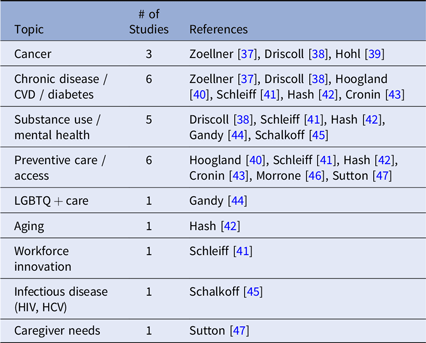
Rural Appalachian studies exhibited the richest and most multidimensional framing among the three contextual categories. Primary health priorities identified in Rural Appalachian studies are summarized in Table 4.
Primary health priorities in rural appalachian studies

Table 4. Long description
A table summarizing primary health priorities in rural Appalachian studies. The table has four columns: Topic, # of Studies, and References. It contains ten rows, each representing a different health priority. Row 1: Cancer, 3, Zoellner [37], Driscoll [38], Hohl [39]. Row 2: Chronic disease / CVD / diabetes, 6, Zoellner [37], Driscoll [38], Hoogland [40], Schleiff [41], Hash [42], Cronin [43]. Row 3: Substance use / mental health, 5, Driscoll [38], Schleiff [41], Hash [42], Gandy [44], Schalkoff [45]. Row 4: Preventive care / access, 6, Hoogland [40], Schleiff [41], Hash [42], Cronin [43], Morrone [46], Sutton [47]. Row 5: LGBTQ + care, 1, Gandy [44]. Row 6: Aging, 1, Hash [42]. Row 7: Workforce innovation, 1, Schleiff [41]. Row 8: Infectious disease (HIV, HCV), 1, Schalkoff [45]. Row 9: Caregiver needs, 1, Sutton [47].
Rural-Appalachian studies addressed complex health intersections like aging, equity, identity, and geography. These studies more explicitly named and problematized structural exclusion highlighting how systemic barriers shape health priorities. These studies often wove together themes of structural and systematic barriers (Driscoll [Reference Driscoll, O’Donnell, Patel and Cattell-Gordon38], Schleiff [Reference Schleiff, Peters and Surkan41], Cronin [Reference Cronin, Franz and Gran43]), health equity and community resilience (Zoellner [Reference Zoellner, Porter and Brock37], Hohl [Reference Hohl, Abu-Rish Blakeney and Carter-Edwards39], Sutton [Reference Sutton, Kitzman and Hunter47]), and intersectionality in the context of overlapping social identities and place-based disadvantage (Gandy [Reference Gandy, Kidd, Weiss, Leitch and Hersom44]). Several works also address generational and geographic inequity, highlighting how intergenerational poverty and persistent regional disparities shape health outcomes. This layered framing reflects the complex social cultural, and environmental factors at play in rural Appalachian health research.
Across the included studies, five demonstrated high levels of CE (Zoellner [Reference Zoellner, Porter and Brock37], Hohl [Reference Hohl, Abu-Rish Blakeney and Carter-Edwards39], Schleiff [Reference Schleiff, Peters and Surkan41], Gandy [Reference Gandy, Kidd, Weiss, Leitch and Hersom44], Sutton[Reference Sutton, Kitzman and Hunter47]) four were moderate (Driscoll [Reference Driscoll, O’Donnell, Patel and Cattell-Gordon38], Hoogland [Reference Hoogland, Hoogland, Bardach, Tarasenko and Schoenberg40], Hash [Reference Hash, Schreurs, Tolley and Fiske42], Morrone [Reference Morrone, Cronin, Schuller and Nicks46]) and two were low (Cronin [Reference Cronin, Franz and Gran43], Schalkoff [Reference Schalkoff, Lancaster and Gaynes45]). Overall, 45% of studies had high CE, and all but two incorporated some form of community voice or participatory principle. Team Science was evident in two studies at a high level (Zoellner[Reference Zoellner, Porter and Brock37], Hohl [Reference Hohl, Abu-Rish Blakeney and Carter-Edwards39]) six at a moderate level (Driscoll [Reference Driscoll, O’Donnell, Patel and Cattell-Gordon38], Schleiff [Reference Schleiff, Peters and Surkan41], Hash [Reference Hash, Schreurs, Tolley and Fiske42], Schalkoff [Reference Schalkoff, Lancaster and Gaynes45], Gandy [Reference Gandy, Kidd, Weiss, Leitch and Hersom44], Sutton [Reference Sutton, Kitzman and Hunter47]) and three at a low level (Hoogland [Reference Hoogland, Hoogland, Bardach, Tarasenko and Schoenberg40], Cronin [Reference Cronin, Franz and Gran43], Morrone [Reference Morrone, Cronin, Schuller and Nicks46]). Although not always explicitly labeled as TS, TS methods were more consistently applied among Rural-Appalachian studies than typically observed in rural or Appalachian contexts, with cross-sector collaboration frequently reported.
The “Rural Appalachian” studies categorized as representing Appalachian as part of broader rural regions reflect a hybrid framing that combines themes of structural exclusion with narratives of resilience. These studies often examine how rural and Appalachian contexts intersect across various health domains. Commonly addressed issues included chronic conditions, cancer, mental health, and social determinants of health, frequently analyzed through their lenses of geography, age, identity, and access to care.
Five of the 11 (45.5%) of the studies demonstrated strong CE with TS more consistently integrated in this group than the other two groups. This integration typically occurred through partnership among community organizations, dynamic institutions, and public health agents. Notably, these studies tended to frame health, not mainly as a function of individual behavior or service access, but as a product of systematic design flaws, social cultural identity, and policies.
Research frameworks and methods
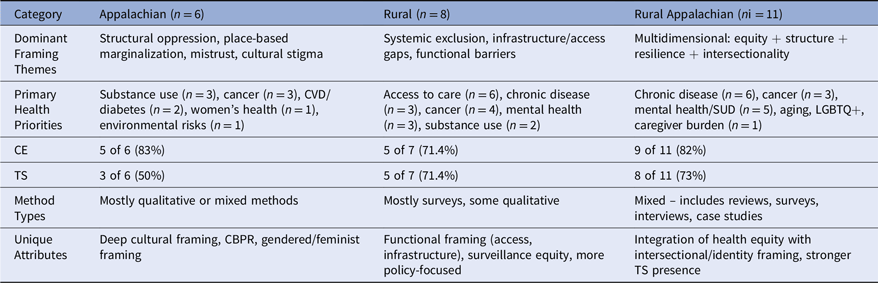
Research frameworks and methods used across study categories are presented in Table 5.
Research frameworks and methods used in study categories

Table 5. Long description
A table comparing research frameworks and methods across study categories. The table has 6 rows and 4 columns. The columns are labeled as Category, Appalachian (n = 6), Rural (n = 8), and Rural Appalachian (n = 11). The rows are labeled as Dominant Framing Themes, Primary Health Priorities, CE, TS, Method Types, and Unique Attributes. Row 1: Dominant Framing Themes, Appalachian: Structural oppression, place-based marginalization, mistrust, cultural stigma; Rural: Systemic exclusion, infrastructure/access gaps, functional barriers; Rural Appalachian: Multidimensional: equity + structure + resilience + intersectionality. Row 2: Primary Health Priorities, Appalachian: Substance use (n = 3), cancer (n = 3), CVD/diabetes (n = 2), women’s health (n = 1), environmental risks (n = 1); Rural: Access to care (n = 6), chronic disease (n = 3), cancer (n = 4), mental health (n = 3), substance use (n = 2); Rural Appalachian: Chronic disease (n = 6), cancer (n = 3), mental health/SUD (n = 5), aging, LGBTQ+, caregiver burden (n = 1). Row 3: CE, Appalachian: 5 of 6 (83 percent); Rural: 5 of 7 (71.4 percent); Rural Appalachian: 9 of 11 (82 percent). Row 4: TS, Appalachian: 3 of 6 (50 percent); Rural: 5 of 7 (71.4 percent); Rural Appalachian: 8 of 11 (73 percent). Row 5: Method Types, Appalachian: Mostly qualitative or mixed methods; Rural: Mostly surveys, some qualitative; Rural Appalachian: Mixed - includes reviews, surveys, interviews, case studies. Row 6: Unique Attributes, Appalachian: Deep cultural framing, CBPR, gendered/feminist framing; Rural: Functional framing (access, infrastructure), surveillance equity, more policy-focused; Rural Appalachian: Integration of health equity with intersectional/identity framing, stronger TS presence.
Studies focused on Appalachian communities (n = 6) primarily employed qualitative or mixed methods and featured dominant framing around structural oppression, place-based marginalization, mistrust, and cultural stigma. These studies often emphasized deep cultural framing, community-based participatory research (CBPR), and gendered/feminist perspectives. The most frequently addressed health topics included substance use (n = 3), cancer (n = 3), cardiovascular disease/diabetes (n = 2), women’s health (n = 1), and environmental risks (n = 1). A high or moderate level of CE was reported in 83% of studies, while 50% demonstrated high or moderate TS characteristics.
Research focusing on Rural populations (n = 7) was predominantly survey-based, with some qualitative components. These studies framed issues through systemic exclusion, access gaps, and functional barriers, and often emphasized functional framing, surveillance equity, and policy relevance. The most studied health issues were access to care (n = 6), chronic disease (n = 5), cancer (n = 4), mental health (n = 3), and substance use (n = 2). CE was high or moderate in 75% of these studies, with 62.5% showing strong translational potential. The combined Appalachian and rural group (n = 11) used a mix of methods including literature reviews, surveys, interviews, and case studies. These studies presented a multidimensional framing that integrated health equity, structural analysis, resilience, and intersectionality. Topics most frequently addressed were chronic disease (n = 5), cancer (n = 3), mental health and substance use disorder (n = 5), as well as aging, LGBTQ + health, and caregiver burden. A high or moderate level of CE was evident in 82% of studies, with TS strength reported in 73%. Unique attributes included integration of intersectional and identity-based frameworks with stronger TS emphasis.
Discussion
This scoping review reveals key differences in how health research is framed, conducted, and prioritized across Appalachian and rural contexts. Appalachian focused studies often highlight structural oppression, cultural-stigma, and place-based inequities, frequently incorporating community voices through CBPR and other participatory approaches. In contrast, Rural studies more commonly emphasize infrastructure deficits, work shortages, and geographic isolation, typically adopting data-driven and policy-focused methodologies. Studies addressing both Appalachian and Rural populations tend to blend those perspectives, integrating, themes of health equity, resilience, and intersectional challenges such as gender identity, aging, and social determinants of health.
These differences extend beyond academic framing; they influence how research questions are formulated, who is included in the knowledge production process, and which interventions receive priority. For instance, the widespread use of community engaged methods in Appalachia research reflects the strength and participatory health approaches to address health priorities. The limited application of formal Team Science highlights an opportunity for more structured, interdisciplinary collaboration across academic, public health, and community sectors.
Recent investments, such as the $5 million grant from the RWJF to the Invest Appalachia Fund, signal a growing recognition of the need to align research, policy, and place-based investment in health equity. Similarly, initiatives such as the Appalachian Translational Research Network (ATRN) offer a valuable foundation for fostering collaborative research that addresses the specific needs of Appalachian communities. However, this review also reveals a notable gap in the literature – a lack of direct comparison between Appalachian and non-Appalachian rural context. This limitation limits the current understanding of the unique characteristics of Appalachian health challenges.
Building on these observations, recent studies highlight the growing integration of CE and TS in addressing complex health challenges, particularly in underserved settings. Hohl [Reference Hohl, Abu-Rish Blakeney and Carter-Edwards39] reported that the studies that integrate these approaches have increased dramatically, underscoring the importance of designing and conducting research collaboratively, particularly as it pertains to complex cultural and social phenomena, such as the focus of this review (rural and Appalachian health). The idea of “broadly engaged TS” centers on involving community members as active research partners to foster greater trust, elements, and effectiveness [Reference Selker and Wilkins48]. This shift signals a guided transition toward co-producing knowledge and promoting shared decision-making in health research. The findings of this review contribute to the growing evidence that can guide funders, researchers, and policy makers in developing more inclusive and effective strategies to improve health outcomes in Appalachia.
Case studies in underserved populations by Unertl [Reference Unertl, Schaefbauer and Campbell49] and Kwon [Reference Kwon, Tandon, Islam, Riley and Trinh-Shevrin50] showed how CBPR can be merged with health informatics and patient-centered research, enhancing both engagement and data validity. Research demonstrated how structured deliberation can serve as an equitable platform for setting health research priorities, influencing participants, perspectives, and encouraging advocacy [Reference Goold, Danis and Abelson51]. Successful collaboration across the design and communities depends on team size frameworks that deliberately address the dynamics of partnership [Reference Salas, Tannenbaum, Kraiger and Smith-Jentsch52]. As research has emphasized, engaging historically excluded populations in all stages of decision-making helps to build trust [Reference Erves, Mayo-Gamble and Malin-Fair53].
There is little direct comparison between Appalachian-specific and broader rural health research in terms of priorities, methodologies, and the use of CE and TS. Existing studies rarely examine whether Appalachian research employs distinct and socioeconomic factors unique to the region shape these approaches. The impact of varying engagement and collaboration practices on research outcomes is also unclear, and limited work has been conducted to explore how insights from Appalachian contexts could inform rural health research more broadly.
Conclusions
This review highlights distinct thematic, methodological, and engagement patterns across Appalachian, Rural and Rural Appalachian health studies. Appalachian-focused research is distinguished by attention to cultural context, structural inequities, and the use of participatory approaches. However, the integration of Team Science varied by context with a notable lack of comparative studies across regions. These findings underscore the need for more regionally grounded, equity-driven health research that elevates community perspectives and fosters cross-sector collaboration. By providing a structural synthesis of the existing literature, this scoping review offers actionable insights and identifies specific opportunities to advance the field of Appalachian health research.
Although a structured screening process was applied, publication bias may have influenced the selection, and interpretation of studies, particularly given the wide variation in framing, approaches and definitions across literature. Consistent with scoping review methodology, no formal quality appraisal was conducted, which limited assessment of methodological rigor of the included studies. Additionally, our review was limited to English language applications, potentially excluding relevant research, published in other languages. As the search was conducted through August 2025, studies published later in 2025 have not been captured. The search has been limited to PubMed and Google Scholar, which have led to the omission of relevant studies not indexed in this dataset and search engine. Even though a broad set of search terms was used, some studies conducted in Appalachian regions may not have been captured if they did not explicitly use Appalachian-related terminology. Differences in disciplinary language and the types of researchers conducting research in rural versus Appalachian contexts may also influence how research studies are designed and how CE and collaboration are described across studies. As described in the methods, broad terms were used in the search strategy to better capture CE. However, researchers from social science or humanities backgrounds may focus more on the cultural aspects of health in Appalachia while broader rural health focused research may include different types of healthcare practitioners as part of the research team. Depending upon training received, community-engaged research and/or TS may not be terms commonly used by researchers conducting studies and may not be reflected in their interpretation of findings. Lastly, some included studies reference Appalachian populations without centering this as the primary analysis.
Based on gaps identified in this review, we recommend the following directions for advancing Appalachian health research: (1) develop Appalachian-specific methodological frameworks that reflect cultural, geographic, and structural dimensions unique to the region, (2) conduct comparative studies between Appalachian and non-Appalachian rural regions to clarify what makes Appalachian health disparities distinctive, (3) expand use of community-engaged and CBPR approaches beyond small-scale or grant-driven projects to larger, sustained research initiatives that also incorporate team-based science and cross disciplinary collaboration and (4) explore effectiveness of interventions already implemented in Appalachian communities, with attention to long-term impact, adaptability, and community-defined success. Future research should develop standardized metrics to evaluate the implementation and impact of CE and TS approaches, enabling comparisons across studies.
Appalachian health challenges reflect the region’s complex intersection of structural inequities, unique identity, and geographic isolation. This review highlights existing gaps and outlines future priorities in Appalachian Health research and underscore the need for coordinated equity initiatives. As momentum builds around regional health equity, this review provides a foundation for researchers, funders, and policy makers seeking to address the distinct and pressing health challenges facing Appalachian communities. By advancing region-specific methodological frameworks, expanding and evaluating CE and team science approaches, and sustaining evidence-based interventions in Appalachian contexts, stakeholders can accelerate progress toward eliminating health disparities and achieving lasting health equity across the region.
Supplementary material
The supplementary material for this article can be found at https://doi.org/10.1017/cts.2026.10810.
Author contributions
Ayesha Riaz: Conceptualization, Data curation, Formal analysis, Methodology, Writing-original draft, Writing-review & editing, Joseph Skelton: Conceptualization, Formal analysis, Methodology, Project administration, Writing-original draft, Writing-review & editing, Melissa Thomas: Methodology, Writing-review & editing, Allison P. Sanders: Writing-review & editing, Gia Mudd-Martin: Writing-review & editing, Brianna Sheppard: Conceptualization, Formal analysis, Methodology, Project administration, Writing-original draft, Writing-review & editing.
Funding statement
Sheppard is supported in part by the National Institute of General Medical Sciences, 5U54GM104942-03. The content is solely the responsibility of the authors and does not necessarily represent the official views of the NIH. AP Sanders is supported by Momentum Funds to the Rust to Resilience (R2R) Environmental Chemical Research Center at the University of Pittsburgh.
Competing interests
The authors declare no competing interest.



 Open access

