Endoscopic retrograde cholangiopancreatography (ERCP) is considered the gold standard for imaging of the bile ducts and pancreatic duct. It is widely available and enables immediate therapeutic intervention if necessary, but it is associated with procedure-related complications (11). Pancreatitis, hemorrhage, and cholangitis are the most common serious complications of ERCP (12). Although complications are more common after therapeutic ERCP procedures, they may also occur after diagnostic ERCP and can be life-threatening. Two large prospective studies have reported complication rates after diagnostic ERCP at 1 to 3 percent (18;19), and another study has reported pancreatitis rates at 5.1 percent, similar to the rate observed for therapeutic ERCP (6.9 percent) (13).
Patients with a high likelihood of pathologic condition amenable to treatment by ERCP are most appropriately managed using initial ERCP and immediate treatment, if the diagnosis is confirmed. However, in some patients, particularly those with a low to moderate a priori likelihood of requiring therapeutic ERCP, less invasive imaging techniques may offer advantages over ERCP in terms of effectiveness and cost-effectiveness. For these patients, the less invasive imaging modalities may avoid the procedural morbidity and costs associated with ERCP. Magnetic resonance cholangiopancreatography (MRCP) is a non-invasive imaging technique for which there is good evidence of comparable accuracy to ERCP for the pancreatobiliary tract (17;20;21).
We conducted a cost-effectiveness analysis that compared the health outcomes, costs, and cost-effectiveness of MRCP and ERCP as an initial diagnostic test in postcholecystectomy patients with suspected biliary pathologic state. This patient group was chosen as expert advice indicated these are patients commonly seen in whom MRCP may be of clinical value. This analysis was conducted to inform policy decisions and takes the perspective of the health care system.
METHODS
Overview of Analysis
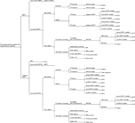
Cost-effectiveness of the alternative diagnostic strategies was estimated using a modeled Monte Carlo simulation constructed in TreeAge Pro (TreeAge Software Williamstown, MA). The model compared the costs and health outcomes of two strategies for the management of postcholecystectomy patients with suspected biliary obstruction: (i) MRCP followed with ERCP if positive, and then management based on ERCP; and (ii) ERCP only. Figure 1 indicates a simplified version of the decision tree. The full tree is available from the authors upon request.

Model of postcholecystectomy patients with suspected biliary pathologic state. ERCP, endoscopic retrograde cholangiopancreatography; ER, emergency room; CBD, common bile duct; MRCP, magnetic resonance cholangiopancreatography; IBS, irritable bowel syndrome; Fn, false negative; TN, true negative; TP, true positive; FP, false positive.
The model considered the following differential diagnoses in postcholecystectomy patients presenting with pain and/or abnormal liver function tests (LFTs): common bile duct stones (CBDS); strictures; and, in patients with normal ducts: irritable bowel syndrome; biliary spasm; chronic pancreatitis; peptic ulcer. In addition, the model also considered the potential complications and adverse events from diagnosis and treatment of these conditions.
The model assumes that patients either underwent MRCP as the initial diagnostic test followed by ERCP if MRCP indicated the presence of CBDS, with management directed by ERCP, or surgery if MRCP indicated the presence of strictures; or they underwent ERCP as the only diagnostic test, with subsequent management. Patients with false-positive results on MRCP underwent ERCP with the potential for a false-positive result on ERCP and potential for ERCP-related complications. Patients with a false-negative result were dealt with as described in the Assumptions section. Discounting was not performed because of the short time horizon to outcomes for the majority of patients.
Assumptions of the Model
Our model was based on the following assumptions: (i) Life expectancy of patients is based on the sex-weighted life expectancy of patients with a median age of 50 years, with a range from 25 to 80 years; (ii) Patients with no biliary pathologic condition identified at prior imaging are at a higher risk of morbidity from ERCP than those with biliary pathologic conditions (13) (relative risk [RR] = 2.5; range, 1.0–4.0); (iii) a proportion of the total ERCP cost has been assigned to the diagnostic and therapeutic use of ERCP (80 percent diagnostic, 20 percent therapeutic); (iv) all strictures are benign strictures, as the likelihood of malignant strictures is very low in this patient population; (v) false-negative (for CBDS) cases are treated per Scheiman et al. (22). Eighty percent of patients present to the emergency room with continuing symptoms, and 10 percent present with cholangitis or pancreatitis. All go on to have an ERCP that is successful and where stones are detected and treated; (vi) after an unsuccessful ERCP, patients have either a laparoscopic or open common bile duct exploration (CBDE). The proportion who have an open CBDE is based upon the reported probability of conversion from laparoscopic to open CBDE (24); (vii) in patients with normal ducts the differential diagnoses considered are irritable bowel syndrome, biliary spasm, chronic pancreatitis, peptic ulcer; estimated lifetime treatment costs and quality of life implications for these differential diagnoses have been included.
Diagnostic Accuracy and Transition Probabilities
Diagnostic accuracy estimates were obtained from a systematic review of the literature (20). Searches were carried out on the following databases: MEDLINE, Pre-MEDLINE, EMBASE, Current Contents, The Cochrane Library (Controlled Trials Register and Database of Systematic Reviews), National Health Service Center for Reviews and Dissemination (Database of Abstracts of Reviews of Effects, health technology assessment [HTA], Economic Evaluation Database), and a comprehensive selection of HTA databases (listing available from authors). Search strategies and inclusion/exclusion criteria are reported elsewhere (20).
A total of 2,815 non-duplicate abstracts were identified, and 2,767 were excluded. The included studies comprised three systematic reviews and forty-five primary studies. The outcome of interest was test accuracy (sensitivity and specificity).
Transition probabilities between health states were also identified from the literature. The transition probabilities between health states (Table 1) and test performance characteristics (Table 2) were derived from the literature.


Health State Utilities
Health state utilities (quality of life estimates) for differential diagnoses and intermediate and outcome health states (ranging from zero, representing death, to one, representing full health) were obtained from a search of the Harvard database of cost–utility analyses supplemented by additional searches of the literature. Where the utility for a specific state was not available from these sources, an assumption was made to assign the utility of another state of similar severity or intensity. A combination of the estimated life expectancy of the population and the quality weighted time spent in each health state were used to estimate quality-adjusted life years (QALYs) for each diagnostic strategy. Health state utilities and sources are presented in Table 1.
Costs
The model takes the perspective of the health care funder and includes all direct health care costs and health-related consequences associated with using either MRCP or ERCP as a diagnostic test in postcholecystectomy patients with suspected biliary pathologic state. The average total cost calculated by the model for each strategy includes the cost of the diagnostic test, plus downstream costs of tests and treatments for all test outcomes (true-positive, true-negative, false-positive, and false-negative test outcomes). This cost represents the average total cost to the health care system of using either MRCP or ERCP as the initial diagnostic test in postcholecystectomy patients.
As no micro-level costing data were available, aggregate health system costs were used. Inpatient costs were based on the average costs for relevant diagnosis-related group (DRG) codes from Australian national hospital data (9). Outpatient imaging costs were derived from the Australian Medicare reimbursement rates adjusted to include facility fees (8). Outpatient pharmaceutical costs were based on the government reimbursed prices (10) (Table 1).
Assessment of Outcomes
The primary health outcome measure was the QALYs associated with each diagnostic strategy.
Estimation of Cost-Effectiveness Ratios
Cost utility analysis was used. Estimates of incremental cost per QALY gained were calculated by obtaining the estimates of costs and QALYs for each diagnostic strategy from the model.
Sensitivity Analyses
A probabilistic analysis was used to capture the overall uncertainty associated with all variables in the model, by assigning a statistical distribution to variable values. Values for probabilities and utilities were sampled from beta distributions, whereas costs were sampled from gamma distribution. Details of the distributions used are available from the authors.
A Monte Carlo simulation was used, with the values for variables being sampled from the underlying statistical distribution assigned. Results are presented in the form of a cost-effectiveness acceptability curve, where the likelihood of MRCP being cost-effective is plotted against various values for decision makers' willingness to pay for an additional QALY. One-way sensitivity analyses were also conducted on the prior probability of CBDS and for the test characteristics (sensitivity and specificity) of MRCP.
RESULTS
Deterministic Analysis
The base model estimates that the initial use of MRCP would be both cost-saving and more effective in postcholecystectomy patients who have a low to moderate probability of stones.
QALY Estimates
The strategy of MRCP first was more effective than ERCP as an initial diagnostic test in this patient group. MRCP had an average effectiveness of 31.63 QALYs, compared with ERCP with an average effectiveness of 31.1 QALYs in postcholecystectomy patients who have a low to moderate probability of stones.
Cost Estimates
The average total cost calculated by the model for each diagnostic strategy includes the cost of the diagnostic test, plus downstream costs of tests and treatments for all test outcomes (true-positive, true-negative, false-positive, and false-negative test outcomes). This cost represents the average total cost to the health care system of using either MRCP or ERCP as the diagnostic test of choice in postcholecystectomy patients. In postcholecystectomy patients, the strategy of using MRCP first, followed by ERCP if MRCP is positive, has an average total health system cost of $6,305, compared with the strategy of using ERCP first with an average total health system cost of $7,004.
Cost-Effectiveness Estimates
As the model indicates that the strategy of MRCP first is both more effective (in terms of QALYs gained), and less expensive (cost saving) compared with ERCP as an initial diagnostic test, we do not calculate an estimate of cost per QALY gained. In the base case analysis, MRCP is dominant over ERCP, i.e., MRCP as an initial test is both cost-saving and more effective than ERCP in this patient group.
Sensitivity Analyses: Prior Probability of CBDS and Test Characteristics of MRCP
From a prior probability of CBDS of 0.10 to 0.60, MRCP remained the least costly strategy. Above a probability of 0.60, ERCP became the least costly strategy. From a probability of CBDS of 0.10 to a probability of 0.68, MRCP remained the more effective strategy, that is, it generated more QALYs than the ERCP strategy. Above a probability of 0.68, ERCP became the more effective strategy, although the absolute magnitude of difference was very small.
Over the range specified by the confidence intervals of the sensitivity and specificity of MRCP for stones, MRCP remained the least costly and the more effective strategy. When a threshold analysis was conducted over the range of 0.5 to 1.0, ERCP was less costly than MRCP when the specificity of stones was less than 0.66. Above this threshold, MRCP became the least costly strategy. ERCP was more effective than MRCP only when the sensitivity for stones was less than 0.595, or the specificity for stones was less than 0.74. This finding is likely due to the disutility associated with unnecessary diagnostic and therapeutic ERCPs.
Probabilistic Analysis
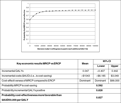
The key results of the Monte Carlo simulation and probabilistic analysis are presented in Figure 2. Results indicate that there is a 59.2 percent probability that MRCP is cost-saving, with an expected cost saving of $1,043. In addition, there is an 82.8 percent probability that MRCP is more effective than ERCP (i.e., generates more QALYs), with an expected average gain of 0.05 QALYs.

Key cost-effectiveness results for magnetic resonance cholangiopancreatography (MRCP, Australian dollars). QALY, quality-adjusted life year; ERCP, endoscopic retrograde cholangiopancreatography; CI, confidence interval.
The cost-effectiveness acceptability curve in Figure 2 provides a visual representation of the likelihood that MRCP is cost-effective from the Monte Carlo simulation. The horizontal axis shows the maximum amount [in Australian dollars (AUD)] a decision maker is willing to pay for an additional QALY gained from $0 to $100,000 per QALY. On the vertical axis is the probability that MRCP is cost-effective at a given willingness to pay.
If a decision maker is not willing to pay anything for an additional QALY (only accepting interventions that are cost-saving), then there is approximately a 59.2 percent probability that MRCP will be considered cost-effective according to this decision criteria. If a decision maker is willing to pay AUD$50,000 per additional QALY, there is approximately an 83 percent chance that MRCP will be considered cost-effective according to these decision criteria.
DISCUSSION
This study has presented the results of a modeled cost-effectiveness analysis of MRCP and ERCP as the initial imaging modality in postcholecystectomy patients presenting with pain and/or abnormal LFTs. The results of the base case indicated that MRCP was dominant (i.e., more effective and less costly) as an initial test in this patient group. Probabilistic sensitivity analyses indicated that there was approximately a 60 percent chance that MRCP would be cost-saving, and an 83 percent chance that it would be cost-effective at a threshold of AUD $50,000 per QALY.
Our results are largely consistent with previous models, although these models evaluated different patient groups, not postcholecystectomy patients. Kaltenthaler (17) conducted a systematic review and cost-effectiveness analysis for NICE and concluded that the “estimated clinical and economic impacts of diagnostic MRCP versus diagnostic ERCP” were favorable. Their baseline estimate was that MRCP may lead to both reduced costs and improved quality of life outcomes compared with diagnostic ERCP. Arguedas (2) conducted a decision analysis to examine MRCP, endoscopic ultrasonography, and ERCP in the evaluation of patients with acute biliary pancreatitis. They concluded that at probabilities above 45 percent, ERCP is the most cost-effective strategy. Total costs and cost-effectiveness of the strategies are dependent upon the prior probability of stones.
In interpreting the results from this study, we need to be aware of the potential limitations of our analyses. First, our analysis considers the average postcholecystectomy patient and the most common differential diagnoses. The pattern of costs and consequences may be different for a patient group with additional co-morbidities or other differential diagnoses. Second, diagnostic accuracy estimates are based upon all patients, not only postcholecystectomy patients. A regression analysis conducted by Romangnuolo (21) indicated that MRCP accuracy may be higher for patients with a broad spectrum of possible pathologic conditions; however, the reasons for this observation are unclear. Other studies have indicated that MRCP accuracy for CBDS detection is lower in particular populations, for example patients with suspected primary sclerosing cholangitis (1).
The reliance on aggregate costing data (DRGs), rather than patient level costs is also a potential limitation, with some assumptions required because of the way that International Classification of Diseases-10 codes are aggregated to form DRGs. In addition, the probabilities of differential diagnoses in patients with normal biliary ducts (irritable bowel syndrome, biliary spasm, chronic pancreatitis, peptic ulcer) were not available from the published literature or from health care system data. This necessitated the use of expert advice, based on clinical experience, when ideally epidemiological data (e.g., cohort) from postcholecystectomy patients is best.
CONCLUSIONS
The deterministic model indicates that the initial use of MRCP would be both cost-saving and more effective (in terms of QALYs gained) in average postcholecystectomy patients with a low to moderate probability of stones. Furthermore, our results suggest that, as predicted, the optimal test is dependent upon the pretest probability of CBDSs. MRCP is the least costly diagnostic strategy in patients with low to moderate risk of stones (up to 60 percent probability); above this range, ERCP became less costly. Similarly MRCP was also the most effective strategy in patients with a low to moderate risk of CBDSs (up to 68 percent probability); with higher likelihood of stones, ERCP became the optimal diagnostic strategy.
There is considerable uncertainty regarding the maximum incremental cost-effectiveness ratio acceptable to decision makers, and this threshold is likely to vary depending on the condition and the intervention. Commonly cited values for a cost-effectiveness threshold fall within the range of $20,000 to $100,000 for each additional year of survival or quality adjusted survival. Probabilistic analysis indicates that, if a decision maker is willing to pay AUD$20,000 per additional QALY, there is approximately an 80 percent chance that MRCP will be considered cost-effective according to these decision criteria. At a willingness to pay of AUD$50,000 per QALY, there is an 83 percent chance that MRCP is cost-effective.
POLICY IMPLICATIONS
This analysis supports the availability of MRCP for diagnostic evaluation in postcholecystectomy patients presenting with pain and/or abnormal LFTs for which there is a low to moderate probability of CBDSs. It is this group in whom, a priori, we might expect the largest advantage of MRCP over ERCP. The number of patients who would be required to undergo therapeutic ERCP after MRCP is small, compared with the number who would avoid potential morbidity and mortality associated with ERCP, if MRCP was available as an initial diagnostic test. This balance tips in favor of ERCP being the optimal test as the likelihood for subsequent intervention increases, that is, as the pretest probability of CDBS increases.
For an individual patient, the decision between MRCP and ERCP will be made after careful consideration of the possibility of stones, together with comorbidities and the likelihood of other differential diagnoses.
CONTACT INFORMATION
Kirsten Howard, MAppSci, MPH, MHlthEcon (kirstenh@health.usyd.edu.au), Senior Lecturer, School of Public Health, University of Sydney, Edward Ford Building (A27), New South Wales 2006, Australia
Sarah J. Lord, MBBS, MS (slord@ctc.usyd.edu.au), Research Fellow, NHMRC Clinical Trials Centre, The University of Sydney, 88 Mallett Street, Camperdown, New South Wales 2006, Australia
Anthony Speer, BE, MBBS (tony.speer@mh.org.au), Gastroenterologist, Department of Gastroenterology, Royal Melbourne Hospital, Grattan Street, Parkville, Victoria 3050, Australia
Robert N. Gibson, MBBS, MD (r.gibson@unimelb.edu.au), Professor, Department of Radiology, University of Melbourne; Staff Radiologist, Department of Radiology, Royal Melbourne Hospital, Grattan Street, Parkville, Victoria 3050, Australia
Robert Padbury, MBBS, PhD (rob.padbury@flinders.edu.au), Senior Lecturer, Flinders University; Director, Division of Surgery and Specialty Services, Flinders Medical Center, Adelaide, South Australia 5000, Australia
Brendon Kearney, MBBS (brendon.kearney@imvs.sa.gov.au), Professor, Faculty of Medicine, Adelaide University; Director, Institute of Medical and Veterinary Science, North Terrace, Frome Road, Adelaide, South Australia, 5000, Australia
This work was supported by the Commonwealth Department of Health and Ageing, Australia, for the Medical Services Advisory Committee, Australia. The expertise and assistance of other members of the Advisory Panel for magnetic resonance cholangiopancreatography are gratefully acknowledged.