Introduction
A range of epidemiological and experimental studies in humans, rats or sheep have shown that exposure of the oocyte and/or embryo to poor maternal nutrition results in poor cardiovascular outcomes in postnatal life.Reference Edwards and McMillen1–Reference Roseboom, van der Meulen and Osmond8 Furthermore, maternal undernutrition during early gestation resulted in a higher incidence and earlier occurrence of coronary heart disease and a higher atherogenic lipid profile at 50–58 years of age.Reference Roseboom, van der Meulen and Osmond8–Reference Painter, de Rooij and Bossuyt10 Left ventricular hypertrophy is the strongest predictor for progressive heart disease.Reference Levy, Garrison, Savage, Kannel and Castelli11 In addition, alterations in cardiac metabolism for instance in diabetic patients can lead to the development of cardiac dysfunction such as cardiomyopathy.Reference Mandavia, Aroor, DeMarco and Sowers12 There have been no studies, however, that have determined whether exposure to poor maternal nutrition around the time of conception can alter cardiac growth and metabolism, which may underlie the increased risk for cardiovascular diseases in adult life, as previously observed.
Insulin-like growth factor-1 (IGF-1) and IGF-2 both act through the IGF-1 receptor (IGF-1R) and play an important role in the proliferation of cardiomyocytes through activation of downstream signalling molecules, including protein kinase B (PKB/Akt) and the cyclin-dependent kinase-4 (CDK-4)/cyclin D1 complex, which is inhibited by p27.Reference Brooks, Poolman and Li13–Reference Sundgren, Giraud and Schultz16 IGF-2 receptor (IGF-2R) has traditionally been viewed as a clearance receptor for IGF-2.Reference Kornfeld17 Recent studies, however, have shown that IGF-2R activates protein kinase C alpha (PKCα), Ca2+–calmodulin-dependent protein kinase II (CaMKII) and p44/42 MAP kinase [extracellular-signal-regulated kinase (ERK)], leading to pathological hypertrophy,Reference Chu, Tzang and Chen18, Reference Wang, Brooks, Thornburg and Morrison19 as indicated by an increased expression of atrial natriuretic peptide (ANP).Reference Dietz, Haass and Kübler20, Reference Nishikimi, Maeda and Matsuoka21 Furthermore, physiological cardiac hypertrophy can also be caused by enhanced protein synthesis, which is regulated by the mammalian target of rapamycin (mTOR), which inactivates the eukaryotic initiation factor 4E-binding protein type 1 (4EBP1), resulting in the release and thus activation of the eukaryotic initiation factor-4E (eIF4E).Reference Pause, Belsham and Gingras22–Reference Kang, Chemaly, Hajjar and Lebeche24 mTOR also phosphorylates p70 ribosomal protein S6 kinase (P70S6K)Reference Brown, Beal and Keith25 and ribosomal protein S6 (RPS6) to increase the translation of mRNA, which encodes for ribosomal protein,Reference Kawasome, Papst and Webb26 therefore increasing the capacity for protein synthesis.
Maternal undernutrition during mid-gestation (28–78 days) in sheep also leads to an enlarged left ventricle and increased IGF-1R and IGF-2R gene expression at 78 days of gestation, and increased ventricular wall thickness at 135 days of gestation.Reference Dong, Ford and Fang27 Furthermore, maternal undernutrition in early gestation (1–35 days) resulted in elevated blood pressure, as well as increased left ventricular wall thickness and mass.Reference Bertram, Khan and Ohri28 However, it is not known whether this increase in left ventricular mass is due to an increase in proliferation or hypertrophy of cardiomyocytes. Furthermore, it is not known whether alterations in cardiac growth can change the metabolic status of the heart or whether nutritional perturbations in early gestation can alter cardiac metabolism, independent of the changes in cardiac growth.
In the fetal heart, glucose oxidation is the main source of energy.Reference Lopaschuk and Jaswal29 The insulin-independent glucose transporter-1 (GLUT-1) predominates in fetal life; however, after birth, glucose uptake is facilitated by the insulin-dependent glucose transporter-4 (GLUT-4),Reference Hay30 regulated by the activation of the insulin receptor (IR), insulin receptor substrate-1 (IRS-1), and phosphatidylinositol 3-kinase (PI3K), which in turn phosphorylates 3-phosphoinositide-dependent protein kinase-1 (PDPK-1), and/or Akt. Phosphorylation of PDPK-1 leads to the phosphorylation of the atypical protein kinase C zeta (PKCζ), whereas phosphorylation of Akt leads to the phosphorylation of the Akt substrate 160 kDa (AS160). Phosphorylated PKCζ and AS160 each play an important role in the translocation of GLUT-4 to the plasma membrane to facilitate glucose uptake.Reference Taniguchi, Emanuelli and Kahn31
At birth, there is a transition to fatty acid oxidation as the main source of cardiac energy. Fatty acid oxidation in the heart is regulated by the phosphorylation of AMP-activated protein kinase (AMPK) and acetyl CoA carboxykinase (ACC).Reference Pineiro, Iglesias and Gallego32–Reference Park, Gammon and Knippers34 Fatty acid β-oxidation in the heart is also regulated by peroxisome proliferator-activated receptor (PPARα) and carnitine palmitoyltransferase-1 (CPT-1), which facilitates fatty acid transport into the mitochondria,Reference Lopaschuk and Gamble35–Reference Kadowaki and Yamauchi37 as well as pyruvate dehydrogenase kinase-4 (PDK-4), which promotes cardiac fatty acid β-oxidation by inhibiting glucose oxidation through inhibition of pyruvate dehydrogenase complex (PDH).Reference Wu, Sato and Zhao38, Reference Sugden and Holness39
In the current study, we have therefore investigated the separate effects of maternal undernutrition in the periconceptional period (PCUN: for at least 2 months before and 1 week after conception) or the preimplantation period (PIUN: for 1 week after conception) on the mRNA expression and protein abundance of key factors regulating cardiac hypertrophy and proliferation, as well as regulators of cardiac glucose uptake and fatty acid β-oxidation in singleton and twin fetal sheep in late gestation at ∼137 days of gestation, at a time when the heart contains both proliferative and hypertrophic cardiomyocytes.Reference Burrell, Boyn and Kumarasamy40, Reference Jonker, Zhang and Louey41
Materials and methods
All procedures were approved by The University of Adelaide and the Primary Industries and Resources South Australia Animal Ethics Committees.
Nutritional management
South Australian Merino ewes were fed a diet, which consisted of lucerne chaff and pellets containing cereal hay, lucerne hay, barley, oats, almond shells, lupins, oat bran, lime and molasses (Johnsons & Sons Pty. Ltd, Kapunda, South Australia, Australia). Eighty percent of the total energy requirements were obtained from the lucerne chaff (8.3 MJ/kg metabolizable energy, 193 g/kg of crude protein and contained 85% dry matter) and 20% of the energy requirements from the pellet mixture (8.0 MJ/kg metabolizable energy, 110 g/kg of crude protein and contained 90% dry matter). All ewes received 100% of nutritional requirements to provide sufficient energy for the maintenance of a non-pregnant ewe as defined by the Agricultural and Food Research Council in 1993.
At the end of an acclimatization period, ewes were randomly assigned to one of the three feeding regimes:
i) Control (C, n = 12): the Control ewes received 100% of the nutritional requirements from around 60 days before mating until 6 days after mating.
ii) Periconceptional undernutrition (PCUN, n = 13): the PCUN ewes received 70% of the control allowance from ∼60 days before mating until 6 days after mating. All of the dietary components were reduced by an equal amount in the restricted diet.
iii) Preimplantation undernutrition (PIUN, n = 9): the PIUN ewes received 70% of the control diet from mating until 6 days after mating. All of the dietary components were reduced by an equal amount in the restricted diet.
From day 7 after conception, all ewes were fed 100% of requirements.
Mating and pregnancy
Ewes were mated and individually housed. The day of mating was defined as 0 day. Ewes were weighed weekly after commencing the feeding regime until postmortem. Pregnancy and fetal number were estimated by ultrasound between 40 and 80 days of gestation.
All ewes (n = 34) were humanely killed with an overdose of sodium pentobarbitone between 136 and 138 days of gestation and the utero-placental unit was delivered by hysterectomy. Fetuses (singleton: C, n = 6; PCUN, n = 8; PIUN, n = 3; Twin: C, n = 11; PCUN, n = 8; PIUN, n = 11) were weighed and the heart was collected, weighed and samples of the left ventricle were snap-frozen in liquid nitrogen and stored at −80°C until molecular analyses.
Quantification of mRNA expression
RNA was extracted from ∼80 mg of the left ventricle tissue using Trizol reagent (Invitrogen, Groningen, The Netherlands) from singleton and twin fetuses (singleton: C, n = 6; PCUN, n = 7; PIUN, n = 3; Twin: C, n = 11; PCUN, n = 5; PIUN, n = 10). RNA was purified using the RNeasy Mini Kit (Qiagen, Basel, Switzerland). cDNA was synthesized using the purified RNA and Superscript 3 reverse transcriptase (Invitrogen) with random hexamers.
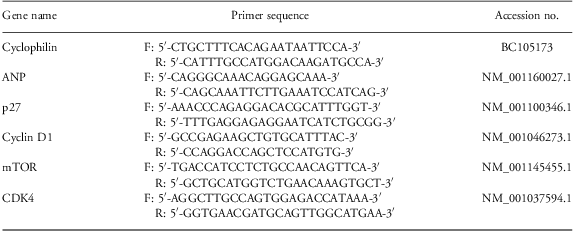
The relative mRNA expression of IGF-1, IGF-2, IGF-1R, IGF-2R, ANP, p27, cyclin D1, mTOR, CDK-4 and a stable reference gene, cyclophilin, in the left ventricle was measured by qRT-PCR using Fast SYBR® Green in a ViiA7 Fast Detection system (Applied Biosystems, Foster City, CA, USA). Primer sequences were validated for use in sheep in this (Table 1) or prior studies.Reference MacLaughlin, Walker and Kleemann4 Each qRT-PCR well contained 3 μl Fast SYBR® Green Master Mix (Applied Biosystems), forward and reverse primer (0.6 μl), water (0.8 μl) and 50 ng/μl cDNA (1 μl) to give a total volume of 6 μl. The abundance of each mRNA transcript was measured and expression relative to cyclophilin was calculated using the comparative threshold cycle (C t) method (Q-gene qRT-PCR analysis software).
Primer sequences for qRT-PCR

ANP, atrial natriuretic peptide; mTOR, mammalian target of rapamycin; CDK4, cyclin-dependent kinase-4.
Quantification of protein abundance
Protein abundance was determined using Western blot analysis. Briefly, left ventricle tissue samples (∼80 mg) from singleton and twin fetuses (singleton: C, n = 4; PCUN, n = 4; PIUN, n = 3; twin: C, n = 4; PCUN, n = 4; PIUN n = 5) were sonicated in 800 μl lysis buffer (50 mM Tris HCL pH 8.0, 150 mM NaCl, 1% NP-40, 1 mM Na3VO4, 30 mM NaF, 10 mM Na4P2O7, 10 mM EDTA, 1 protease inhibitor tablet) and centrifuged at 12,400 rpm at 4°C for 15 min to remove insoluble material. Protein content of the clarified extracts was quantified using micro bicinchoninic acid (microBCA) protein assay. Before Western blot analysis, samples (10 μg protein) were subjected to sodium dodecyl sulfate–polyacrylamide gel electrophoresis (SDS–PAGE) and stained with Coomassie blue reagent (Thermo Fisher Scientific, Rockford, IL, USA) to ensure equal loading of the proteins. A volume of 20 μg of protein was subjected to SDS–PAGE. The proteins were transferred onto a PolyScreen® Polyvinylidene Difluoride Hybridization (PVDF) transfer membrane (PerkinElmer, Waltham, MA, USA) using a semi-dry blotter (Hoefer Inc., Holliston, CA, USA). The membranes were blocked with 5% BSA in Tris-buffered saline with 1% Tween-20 (TBS-T) at room temperature for 1 h and then incubated overnight with primary antibody (1:500 diluted in TBS-T with 5% BSA) against PKCζ (cat# sc-216), GLUT-1 (cat# sc-7903), CPT-1 (cat# sc-98834), PPARα (cat# sc-9000), phospho-CaMKII (22B1) (cat# sc-32289) and phospho-PKCα (pT638.35) (cat# sc-136018) (Santa Cruz Biotechnology, Santa Cruz, CA, USA); p110α (cat# 4255S), Akt1 (cat# 2967), Akt2 (cat#3063), total phospho-Akt (Ser473) (cat# 4060), PDPK-1 (cat# 5662), phospho-PDPK-1 (Ser241) (cat# 3438), phospho-PKCζ (Thr410) (cat# 9378), AS160 (cat# 2670) and phospho-AS160 (Thr642) (cat# 4288), IGF-1R (cat# 3027), mTOR (cat# 2972), phospho-mTOR (Ser2448) (cat# 2971), phospho-P70S6K (Thr389) (cat# 9205), RPS6 (cat# 2217), phospho-RPS6 (Ser235-236) (cat# 2211), phospho-4EBP1 (Thr70 cat# 9455 and Ser65 cat# 9451), eIF4E (cat# 9742), AMPK (cat# 2603), phospho-AMPK (Thr172) (cat# 2535), ACC (cat# 3662), phospho-ACC (Ser79) (cat# 3661), ERK (cat# 4696), phospho-ERK (Thr202-Tyr204) (cat# 4376), CaMKII (cat# 3362), PKCα (cat# 2056) and PCNA (cat# 2586) (Cell Signalling, Danvers, MA, USA); IRS-1 (cat# 06-248) and p85 (cat# 06-195) (Merck Millipore, Billerica, MA, USA), insulin receptor IRβ (cat# ab69508), GLUT-4 (cat# ab654), PDK-4 (cat# ab89295) and ANP (cat# ab76743) (Abcam, Cambridge, UK) and IGF-2R (cat# 610950) (BD Transduction Laboratories, San Jose, CA, USA). Membranes were washed and bound antibody was detected using anti-rabbit or anti-mouse (cell signalling) horseradish peroxidase-conjugated secondary IgG antibodies (1:1000 in TBS-T with 5% BSA) at room temperature for 1 h. Enhanced chemiluminescence reagents SuperSignal® West Pico Chemiluminescent Substrate (Thermo Fisher Scientific) and ImageQuant™ LAS 4000 (GE Healthcare, Rydalmere, NSW, Australia) was used to detect the protein:antibody complexes. AlphaEaseFC (Alpha Innotech Corporation, Santa Clara, CA, USA) was utilized to quantify specific bands of the target proteins identified at the correct molecular weight according to the antibodies’ manufacturer.Reference Wang, Brooks, Thornburg and Morrison19 Protein abundance was calculated by subtracting the density of the target band by the individual background.
Statistical analyses
All data are presented as mean ± s.e.m. Two-way analysis of variance (ANOVA) was used to determine the effects of maternal nutritional treatment (C, PCUN or PIUN) and fetal number (singleton or twin) on mRNA expression and protein abundance in the left ventricle. When there was an interaction between the effects of nutritional treatment and fetal number, data from singletons and twins were split and the effects of nutritional treatment determined using a one-way ANOVA. The Duncans post-hoc test was used to determine the level of significant difference in mean values between nutritional treatment groups. A probability level of 5% (P < 0.05) was considered significant.
Results
Impact of PCUN and PIUN on the weight of the heart and left ventricle
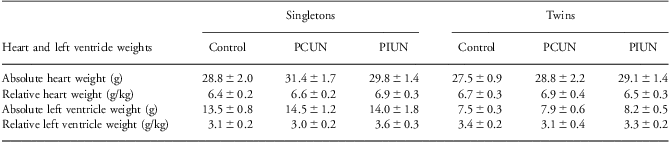
There was no effect of treatment or fetal number on absolute or relative heart weight or left ventricular weight (Table 2).
Impact of PCUN and PIUN on fetal heart and left ventricle weights
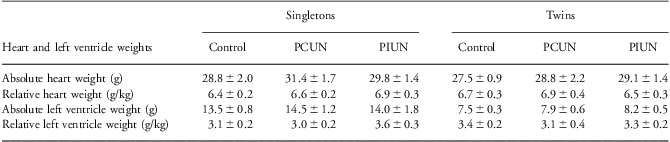
PCUN, periconceptional undernutrition; PIUN, preimplantation undernutrition.
Data presented as mean ± s.e.m.
Impact of PCUN and PIUN on the mRNA expression and protein abundance of factors regulating cardiac hypertrophy and proliferation in late gestation
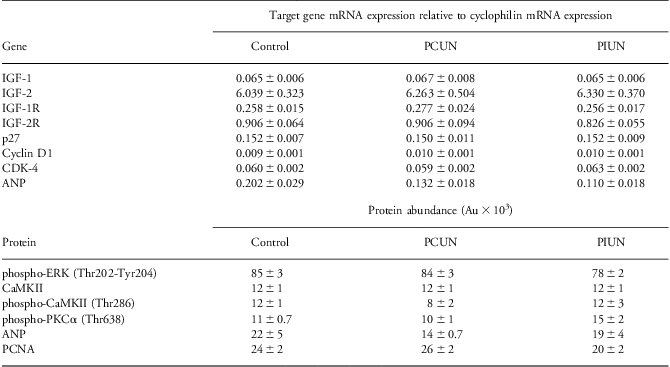
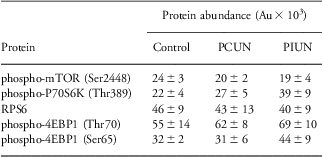
There was no effect of PCUN or PIUN on cardiac mRNA expression of IGF-1, IGF-2, IGF-1R, IGF-2R, p27, cyclin D1, CDK-4 and ANP, as well as the protein abundance of PCNA (Table 3). The abundance of phospho-ERK (Thr202-Tyr204), CaMKII, phospho-CAMKII (Thr286), phospho-PKCα (Thr638) and ANP was also not different in the hearts of the PCUN and PIUN fetal sheep when compared with controls (Table 3). There was no effect of PCUN or PIUN on the cardiac abundance of phospho-mTOR (Ser2448), phospho-P70S6K (Thr389), RPS6 and phospho-4EBP1 (Thr70 and Ser65) in singletons and twins (Table 4).
Impact of PCUN and PIUN on mRNA expression and protein abundance of factors regulating cardiac hypertrophy and proliferation in late gestation
PCUN, periconceptional undernutrition; PIUN, preimplantation undernutrition; IGF, insulin-like growth factor; CDK-4, cyclin-dependent kinase-4; ANP, atrial natriuretic peptide; PKCα, protein kinase C alpha; PCNA, proliferating cell nuclear antigen.
Data presented as mean ± s.e.m.
Impact of PCUN and PIUN on protein abundance of factors regulating cardiac protein synthesis in late gestation
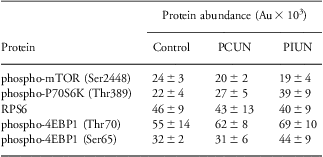
PCUN, periconceptional undernutrition; PIUN, preimplantation undernutrition; mTOR, mammalian target of rapamycin.
Data presented as mean ± s.e.m.
Singletons
The abundance of IGF-2R (P < 0.05) and PKCα (P < 0.05) in the fetal heart was lower in the PCUN and PIUN groups, whereas the abundance of ERK was lower (P < 0.05) only in the PIUN group compared with controls (Fig. 1). The cardiac abundance of mTOR was also lower (P < 0.05) in the PCUN and PIUN groups compared with controls, whereas the abundance of phospho-RPS6 (Ser235–236) and eIF4E was not different compared with controls (Fig. 2).
Cardiac protein abundance of insulin-like growth factor (IGF-2R), extracellular signal-regulated kinase (ERK) and protein kinase C alpha (PKCα) in singletons (a, b, c) and twins (d, e, f) in the periconceptional undernutrition (PCUN) and preimplantation undernutrition (PIUN) groups compared with controls. Immunoblots of IGF-2R (g), ERK (h) and PKCα (i) in the control, PCUN and PIUN groups in singletons and twins. Different alphabetical subscripts denote significant differences between treatment groups compared with controls in singletons and twins.
Cardiac protein abundance of mammalian target of rapamycin (mTOR), phospho-RPS6 (Ser235-236) and eukaryotic initiation factor-4E (eIF4E) in singletons (a, b, c) and twins (d, e, f) in the periconceptional undernutrition (PCUN) and preimplantation undernutrition (PIUN) groups compared with controls. Immunoblots of mTOR (g), phospho-RPS6 (Ser235-236) (h) and eIF4E (i) in the control, PCUN and PIUN groups in singletons and twins. Different alphabetical subscripts denote significant differences between treatment groups compared with controls in singletons and twins.
Twins
The abundance of PKCα and mTOR was lower in the hearts of control twins (P < 0.01) compared with control singletons (Figs 1 and 2). Cardiac abundance of IGF-2R (P < 0.01) and PKCα (P < 0.05) was higher in the PCUN and PIUN groups, whereas the abundance of ERK was higher (P < 0.01) only in the PIUN group compared with controls (Fig. 1). Cardiac abundance of phospho-RPS6 (Ser235–236) was higher (P < 0.05) in the PCUN group, whereas the abundance of eIF4E was higher (P < 0.05) in the PIUN group compared with controls (Fig. 2).
Impact of PCUN and PIUN on the protein abundance of factors regulating cardiac glucose uptake in late gestation
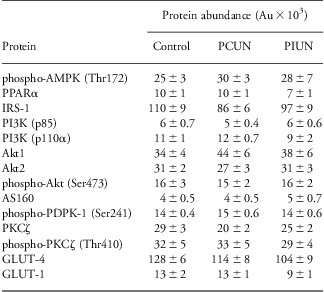
There was no difference, however, in the abundance of IRS-1, PI3K (p85 and p110α), Akt1, Akt2, phospho-Akt (Ser473), AS160, phospho-PDPK-1 (Ser241), PKCζ, phospho-PKCζ (Thr410), GLUT-4 and GLUT-1 in singletons or twins in either treatment group (Table 5).
Impact of PCUN and PIUN on protein abundance of factors regulating cardiac metabolism in late gestation
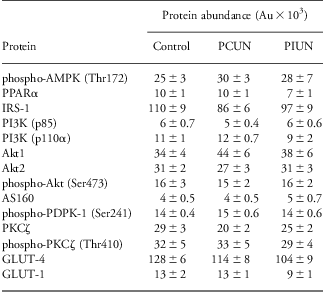
PCUN, periconceptional undernutrition; PIUN, preimplantation undernutrition; PPARα, peroxisome proliferator-activated receptor; IRS-1, insulin receptor substrate-1; PDPK, phosphoinositide-dependent protein kinase-1; PKCζ, protein kinase C zeta; GLUT, glucose transporter.
Data presented as mean ± s.e.m.
Singletons
Cardiac abundance of IRβ was lower (P < 0.05) in the PCUN group alone, whereas the abundance of PDPK-1 was lower (P < 0.05) in both PCUN and PIUN groups compared with controls. There was no difference, however, in the abundance of phospho-AS160 (Thr642) in either treatment group (Fig. 3).
Cardiac protein abundance of insulin receptor β (IRβ), phosphoinositide-dependent protein kinase 1 (PDPK-1) and phospho-AS160 (Thr642) in singletons (a, b, c) and twins (d, e, f) in the periconceptional undernutrition (PCUN) and preimplantation undernutrition (PIUN) groups compared with controls. Immunoblots of IRβ (g), PDPK-1 (h) and phospho-AS160 (Thr642) (i) in the control, PCUN and PIUN groups in singletons and twins. Different alphabetical subscripts denote significant differences between treatment groups compared with controls in singletons and twins.
Twins
Cardiac abundance of IRβ (P < 0.05) and phospho-AS160 (Thr642) (P < 0.001) was higher in the PIUN group compared with controls (Fig. 3). The abundance of PDPK-1 was not different in either treatment groups, however, PDPK-1 abundance in control twins was lower (P < 0.05) than control singletons.
Impact of PCUN and PIUN on the protein abundance of factors regulating cardiac fatty acid β-oxidation in late gestation
The abundance of phospho-AMPK (Thr172) and PPARα was not different between treatment groups in both singletons and twins (Table 5).
Singletons
Cardiac protein abundance of AMPK (P < 0.05) and phospho-ACC (Ser79; P < 0.01) was lower, whereas the abundance of ACC was higher (P < 0.01) in the PCUN and PIUN groups compared with controls (Fig. 4). The abundance of CPT-1 was not changed; however, the abundance of PDK-4 was lower (P < 0.05) in the PCUN and PIUN groups compared with controls (Fig. 5).
Cardiac protein abundance of AMPK, ACC and phospho-ACC (Ser79) in singletons (a, b, c) and twins (d, e, f) in the PCUN and PIUN groups compared with controls. Immunoblots of AMP-activated protein kinase (AMPK) (g), acetyl CoA carboxykinase (ACC) (h) and phospho-ACC (Ser79) (i) in the control, periconceptional undernutrition (PCUN) and preimplantation undernutrition (PIUN) groups in singletons and twins. Different alphabetical subscripts denote significant differences between treatment groups compared with controls in singletons and twins.
Cardiac protein abundance of carnitine palmitoyltransferase-1 (CPT-1) and pyruvate dehydrogenase kinase-4 (PDK-4) in singletons (a, b) and twins (c, d) in the periconceptional undernutrition (PCUN) and preimplantation undernutrition (PIUN) groups compared with controls. Immunoblots of CPT-1 (e) and PDK-4 (f) in the control, PCUN and PIUN groups in singletons and twins. Different alphabetical subscripts denote significant differences between treatment groups compared with controls in singletons and twins.
Twins
In twins, cardiac abundance of ACC in the control group was higher (P < 0.01), whereas the abundance of phospho-ACC (Ser79) in the control group was lower (P < 0.05) compared with control singletons (Fig. 4). Cardiac protein abundance of ACC was lower (P < 0.01) in the PCUN and PIUN groups (Fig. 4), whereas the abundance of CPT-1 was higher (P < 0.01) only in the PIUN group compared with controls (Fig. 5). There was no difference, however, in the abundance of AMPK and phospho-ACC (Ser79) between treatment groups (Fig. 4). The cardiac abundance of PDK-4 in twins was higher (P < 0.05) in the PIUN group compared with the PCUN group; however, there was no difference in the cardiac abundance of PDK-4 in the PCUN or PIUN groups when compared with controls (Fig. 5).
Discussion
In this study, we have shown that maternal undernutrition around the time of conception did not change absolute or relative heart weight, left ventricular weight or the expression and abundance of factors regulating cardiac proliferation. We have shown for the first time, however, that PCUN and/or PIUN result in alterations in the abundance of key factors regulating cardiac hypertrophy and metabolism and that these effects are different in singletons and twins.
Impact of PCUN and PIUN on key regulators of cardiac hypertrophy
In the present study, we found no impact of either PCUN or PIUN on relative heart or left ventricular weight in singleton or twin fetuses. However, in the singleton fetuses, there was a decrease in cardiac IGF-2R, PKCα and mTOR protein abundance in the PCUN and PIUN groups and a decrease in ERK in the PIUN group only. However, there was no change in the abundance of the phosphorylated forms of PKCα, ERK or mTOR or in the abundance of the key factors that regulate cardiomyocyte proliferation in the PCUN or PIUN singletons. Interestingly, the imposition of maternal undernutrition in the twin pregnancy results in an increase in the cardiac abundance of IGF-2R and PKCα in the PCUN and PIUN groups; however, ERK and eIF4E increased only in the PIUN group, whereas phospho-RPS6 (Ser235–236) increased in the PCUN group. Therefore, the impact of maternal undernutrition around the time of conception may limit cardiac growth in singletons, but increase cardiac growth capacity in twins. The impact of maternal undernutrition in a twin pregnancy may protect heart growth when there is a predicted further decrease in fetal nutrition. It is also noteworthy that the increase in IGF-2R, ERK, PKCα and eIF4E in the PCUN and PIUN twins result in levels of these key proteins, which are similar to those present in the control singleton. Furthermore, it is interesting that the abundance of PKCα and mTOR was lower in the hearts of control twins compared with singletons. One possibility is that the hormonal environment of the early twin pregnancy may program similar responses in the twin embryo to those that are recruited by undernutrition in the singleton embryo. We have previously reported that periconceptional undernutrition in the sheep results in an increase in mean systolic and diastolic blood pressure and rate pressure product during mid and late gestation in twin but not singleton fetuses.Reference Edwards and McMillen1 Similarly, exposure to a low protein diet during the periconceptional period in the polytocus rat or mouse also results in the emergence of hypertension in the offspring in postnatal life.Reference Kwong, Wild, Roberts, Willis and Fleming2, Reference Watkins, Lucas, Wilkins, Cagampang and Fleming42 Epidemiological studies in adults that were exposed in utero to the nutritional impact of the Dutch winter Hunger Famine also found that there is an increase in the incidence of coronary heart disease in those people exposed to the famine in early gestation.Reference Roseboom, Painter, van Abeelen, Veenendaal and de Rooij43 It would be interesting to determine whether the increased abundance of a suite of factors in the hypertrophic pathway within the heart, coupled with the increased blood pressure of the twin fetuses shown in previous studies, results in an enhanced vulnerability to cardiac hypertrophy after birth.
Impact of PCUN and PIUN on protein abundance of the key regulators of cardiac metabolism
Insulin resistance and glucose intolerance have been implicated in the development of left ventricular hypertrophy.Reference Rutter, Parise and Benjamin44 It is not clear, however, whether maternal undernutrition around the time of conception can alter cardiac metabolism independent of whole-body insulin sensitivity. In this study, we found significant changes in the protein abundance of key regulators of cardiac insulin signalling and fatty acid β-oxidation, which were different in singletons and twins in late gestation. In singleton fetuses, there was a decrease in cardiac IRβ abundance following PCUN and a decrease in PDPK-1 in the PCUN and PIUN groups. There was no change, however, in the abundance of cardiac GLUT-4. Cardiac-specific PDPK-1 knockout mice have impaired glucose uptake despite a doubling of GLUT-4 expression.Reference Mora, Sakamoto, McManus and Alessi45 This supports the view that singleton fetuses may adapt to decreased cardiac glucose uptake following maternal undernutrition around the time of conception. In addition, the cardiac abundance of key regulators of fatty acid β-oxidation, AMPK, phospho-ACC and PDK-4 were also decreased, and there was an increase in ACC in the PCUN and PIUN groups. AMPK is essential for cardiac fatty acid β-oxidation.Reference Stride, Larsen and Treebak46 A deficiency in AMPK leads to decreased ACC phosphorylation, exacerbating high-fat diet-induced cardiac hypertrophy and contractile dysfunction.Reference Turdi, Kandadi and Zhao47 Furthermore, a mutation in the PDK-4 gene in dogs is associated with dilated cardiomyopathy characterized by altered mitochondrial functionReference Meurs, Lahmers and Keene48 and therefore impaired oxidative production of ATP.Reference Lopes, Solter, Sisson, Oyama and Prosek49 The decrease in key regulators of cardiac glucose uptake and fatty acid β-oxidation in the PCUN or PIUN groups in singletons may therefore result in decreased oxidative energy production, and thus lead to impaired cardiac contractility.
In contrast, in twins, there was an increase in the protein abundance of IRβ and phospho-AS160 in the PIUN group. Activation of insulin signalling through IR and AS160 resulted in the recruitment of GLUT-4 or fatty acid translocase (CD36), therefore facilitating cardiac glucose or fatty acid uptake.Reference Samovski, Su, Xu, Abumrad and Stahl50, Reference Ginion, Auquier and Benton51 This adaptation in the twin fetuses was consistent with the increased abundance of cardiac growth factors in response to prevailing substrate supply around the time of conception, perhaps to ensure adequate cardiac growth and thus long-term survival of the fetus. This adaptation is also consistent with the decrease in the cardiac abundance of ACC in the PCUN and PIUN groups, thus limiting malonyl CoA production and an increase in CPT-1 in the PIUN group. Therefore, in twins, glucose uptake and oxidative energy production may be enhanced, but only following exposure to maternal undernutrition confined to the preimplantation period.
This study showed that exposure of either the singleton or the twin to maternal undernutrition during the 1st week of life is sufficient to result in alterations in some of the key proteins regulating cardiac growth and metabolism. This suggests that the preimplantation period is a critical period for the transduction of maternal nutritional signals on future heart growth and metabolic processes. It is well established that epigenetic marks are erased and re-established during the periconceptional period and that this process is sensitive to nutritional perturbations.Reference Waterland and Michels52 Therefore, alterations in the re-establishment of epigenetic marks may underlie the changes found in this study. However, epigenetics regulate the mRNA expression of the target gene, although in this study there was no change in the mRNA expression of our targets of interest. MicroRNAs have been implicated in the development of metabolic diseases following nutritional perturbations during early fetal development.Reference Guay, Roggli, Nesca, Jacovetti and Regazzi53, Reference Rottiers, Najafi-Shoushtari and Kristo54 Therefore, microRNAs may be appropriate targets that mediate the effect of periconceptional and/or preimplantation undernutrition by their ability to alter protein translation independent of the putative mRNA expression.Reference Bartel55 Further studies are required to investigate the potential role of microRNAs in underlying the increased risk of cardiovascular diseases following nutritional perturbations around the time of conception.
In summary, maternal undernutrition around the time of conception programs a decrease in the abundance of key factors regulating cardiac fatty acid β-oxidation and glucose uptake in the left ventricle in singleton fetuses, which may lead to decreased energy production, and thus impaired cardiac contractility and left ventricular hypertrophy. In twins, however, PCUN and PIUN resulted in a programming effect, which increased the abundance of key factors associated with pathological hypertrophy. Therefore, twin fetuses may have an increased risk of developing pathological left ventricular hypertrophy in adult life, following maternal undernutrition during the periconceptional period, which may be exacerbated by elevated blood pressure.Reference Edwards and McMillen1 Findings from this study provide evidence that poor maternal nutrition around the time of conception resulted in altered abundance of key factors regulating cardiac growth and metabolism at ∼130 days after nutrition supply was restored to 100%. Therefore, poor maternal nutrition around the time of conception may result in a programming effect that persist into postnatal life and underlie the increased risk for cardiovascular disease in adult life. Further studies investigating the impact of periconceptional and preimplantation undernutrition in postnatal life is required to confirm this hypothesis.
Acknowledgements
The authors gratefully acknowledge the research assistance provided by Anne Jurisevic and Laura O'Carroll during the course of this study.
Financial Support
The animal component of this study was supported by funding from the Australian Research Council (CMcM, CTR and SKW). The molecular component of this study and JLM were funded by a South Australian Cardiovascular Research Network Fellowship (CR10A4988). CTR is supported by a National Health and Medical Research Council Senior Research Fellowship (APP1020749).
Conflicts of Interest
None.
Ethical Standards
All procedures were approved by The University of Adelaide and the Primary Industries and Resources South Australia Animal Ethics Committees.