INTRODUCTION
Mixed grazing, having more than one species of livestock on the same pasture, is quite common and has existed for many years (Nolan & Connolly Reference Nolan and Connolly1977; Nicol Reference Nicol, Buchanan-Smith, Bailey and McCaughey1997). The majority of studies published on mixed grazing systems involve sheep and cattle, with benefits demonstrated for sheep both in terms of production and in a reduction of the impact of gastrointestinal nematodes. Studies based on mixing goats and cattle are scarce, but suggest that there could be large benefits for goats (Hoste et al. Reference Hoste, Sotiraki, Landau, Jackson and Beveridge2010). Mixed grazing systems have been proposed as an appropriate strategy to increase meat production at pasture while reducing parasitism through the dilution of gastrointestinal nematodes between the two species (Hoste et al. Reference Hoste, Guitard and Pons2003; Jackson et al. Reference Jackson, Bartley, Bartley and Kenyon2009). This grazing strategy may have the potential to take advantage of the interactions between animal species on the same pasture and their complementary selective grazing behaviours (Marion et al. Reference Marion, Smith, Swain, Davidson and Hutchings2008), which induce an increase in the feeding value of the pasture and/or a reduction in residual biomass (Nolan et al. Reference Nolan, Pulina, Sikosana and Connolly1999). In addition, this strategy may minimize residues in food and the environment through reductions in the use of anthelmintics (Rinaldi et al. Reference Rinaldi, Veneziano and Cringoli2007).
The advantage of mixed grazing may vary depending on climate, the physiological state of animals, grazing pressure and the ratio between sheep and cattle. Therefore, it is often difficult to evaluate quantitatively the effectiveness of mixed grazing systems and thus to provide some arguments to the stockbreeders to adopt this alternative strategy, although the scientific literature of mixed grazing has been well documented (Nolan & Connolly Reference Nolan and Connolly1977; Nolan Reference Nolan1996; Barger Reference Barger1997; Cabaret et al. Reference Cabaret, Bouilhol and Mage2002). Indeed, the diversity of studies with different variables (such as parasitic, botanical, forage and performance data) makes it difficult to achieve an overall picture. The improved performance of sheep or cattle under mixed grazing is most likely to be the result of a combination of factors tested, rather than a response to one particular parameter (Fraser et al. Reference Fraser, Davies, Vale, Hirst and Wright2007).
Meta-analysis is a priori one method relevant for the analysis and quantification of this complex phenomenon by taking into account a large number of publications (Sauvant et al. Reference Sauvant, Schmidely, Daudin and St-Pierre2008). Therefore, the objective of the current work was to apply a meta-analysis to extract and test the major advantages of mixed grazing in liveweight gain of sheep and cattle compared with mono-grazing, and test the main factors that could affect that interest.
MATERIALS AND METHODS
Selection of papers and description of the database
A literature survey was carried out to identify those publications reporting mixed grazing systems with small ruminants and cattle. The selection of publications began with research on the Internet using the current databases available (Web of Science, CAB abstracts, Prod INRA and Science Direct). The term ‘mixed grazing’ is somewhat ambiguous because many of the 8044 references found on this subject area did not concern mixed grazing at pasture. Other keywords such as ‘sheep’ or ‘goats’ and ‘cattle’, ‘grazing management’, ‘together’, ‘gastrointestinal nematodes’, ‘alternative strategies’, ‘rotational’ and ‘alternate grazing’ were therefore included to refine the search. The references quoted in the papers selected at this stage were also consulted. After a screening by reading the abstract, 117 publications were found concerning mixed grazing with different animal species. Inclusion of an article in the database built for the current paper was decided based on the existence of various criteria. Six publications on the association of goats, sheep and cattle were discarded because they did not consider controls for each species or because the study did not include the average daily gain (ADG, g/day). Twelve publications on the association of sheep and goats, i.e. without the inclusion of cattle, were also discarded. Moreover, all the publications selected had a control treatment (Ctrt) corresponding to each mixed treatment (Mtrt), where animals of each species were grazed alone in the same conditions (physiological status, sex, period, year, sward condition), resulting in the removal of three more publications. Unfortunately, many publications on parasitological data, studied in the same experimental context, were discarded because the growth performances were not measured. For those with growth performances, other variables were also considered regarding herbage and parasitism.
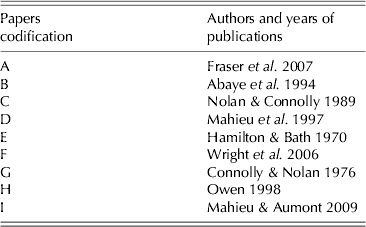
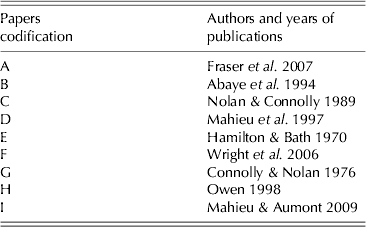
Each selected publications included several different experiments and/or replications (different years and periods); each replication included various stocking rates (SRs), physiological statuses and sward heights of the pasture. Each observation was the average for given animal species at a given physiological status and for a given treatment (Ctrt or Mtrt). In order to take all these factors, representing the meta-design, into account, codes were assigned to each experiment, replication and treatment (see later). This resulted in a database of nine publications reporting 16 experiments, with a total of 179 treatments comparing controls with sheep or cattle alone v. mixed grazing with sheep and cattle (Table 1). These nine publications were classified by temperate or hot climate based on the latitude and longitude of the experiment. The same breeds and physiological status of the sheep and cattle were considered to compare Ctrt and Mtrt.
Publications selected for the meta-analysis
Pre-analysis calculation of variables
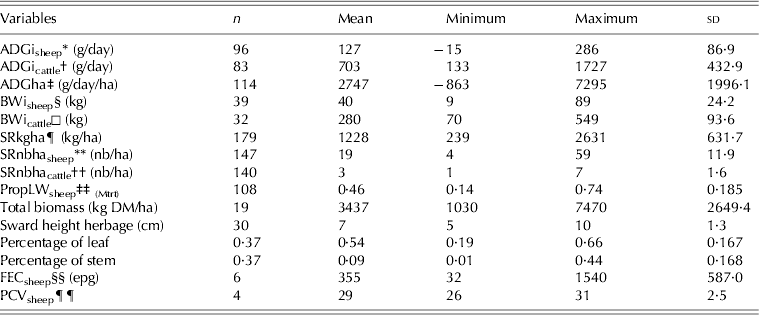
In the publications selected, the growth performance indicator was ADG, considered individually for sheep and cattle, at each physiological status for one period and 1 year (Table 2). The benefit of mixed pasture was considered in two ways: (1) The individual gain for each species, being sheep reared alone or mixed (ADGisheep, Ctrt v. Mtrt) or cattle reared alone or mixed (ADGicattle, Ctrt v. Mtrt); (2) as a total ADG per hectare (ADGha) corresponding to all the animals per hectare, grazing alone (Ctrt, being sheep or cattle) or grazing together (Mtrt). In this case, ADGha was the sum of the ADG of the two species per hectare and was compared with a ‘theoretical gain’ ADGha-Theo calculated as:
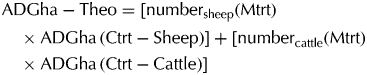 $$\eqalign{ \tab{\rm ADGha} - {\rm Theo}= [{\rm number}_{{\rm sheep}} ({\rm Mtrt})\cr\tab\quad \times {\rm ADGha}\,({\rm Ctrt} - {\rm Sheep})]+ [{\rm number}_{{\rm cattle}} ({\rm Mtrt}) \cr \tab\quad\times {\rm ADGha}\,({\rm Ctrt} - {\rm Cattle})]$$
The difference between ADGha and ADGha-Theo was calculated in order to evaluate the relative benefit of ADGha. The initial bodyweight (BWi) of each animal, considered individually and the total bodyweight of all sheep or cattle in a treatment were detailed in the database. The stocking rate (SRkgha, kg/ha) was calculated by multiplying the BWi by the number of animals per hectare, in addition to the classical SR expressed in number of heads per hectare (SRnbhaSheep and SRnbhaCattle). The latter was widely considered in the publications, although they did not allow comparisons between different species and studies.
Descriptive variables including all treatments Control and Mixed

* Individual gain for sheep.
† Individual gain for cattle.
‡ Gain of all the animals per hectare.
§ Initial bodyweight of sheep.
□ Initial bodyweight of cattle.
¶ Stocking rate in kg per hectare.
** Number of heads of sheep per hectare.
†† Number of heads of cattle per hectare.
‡‡ Proportion of sheep in liveweight in the association.
§§ Faecal egg count for sheep.
¶¶ Pack cell volume for sheep.
The proportion of liveweight in the mixed grazing system that was composed of sheep (PropLWsheep) was calculated as the weight of sheep divided by the total weight of all animals in the system (sheep and cattle), varying from 0 to 1·00. This proportion was considered instead of the ratio, calculated in numerous publications as the number of sheep divided by the total number of animals per hectare.
Some other variables, documented in several publications, were reported in the database: herbage variables as herbage biomass (kg DM/ha, in three publications), sward height (cm, in two publications), and the leaf and stem percentage of herbage (in four other publications). With regard to parasitism, variables such as the faecal egg count (FEC, eggs per gramme) and the pack cell volume (PCV) were included (two publications). These variables, however, did not yield enough data to be analysed (4–37 values). Moreover, when they were cited they represented a global, descriptive variable of the experimental context.
Meta-design and statistical analysis
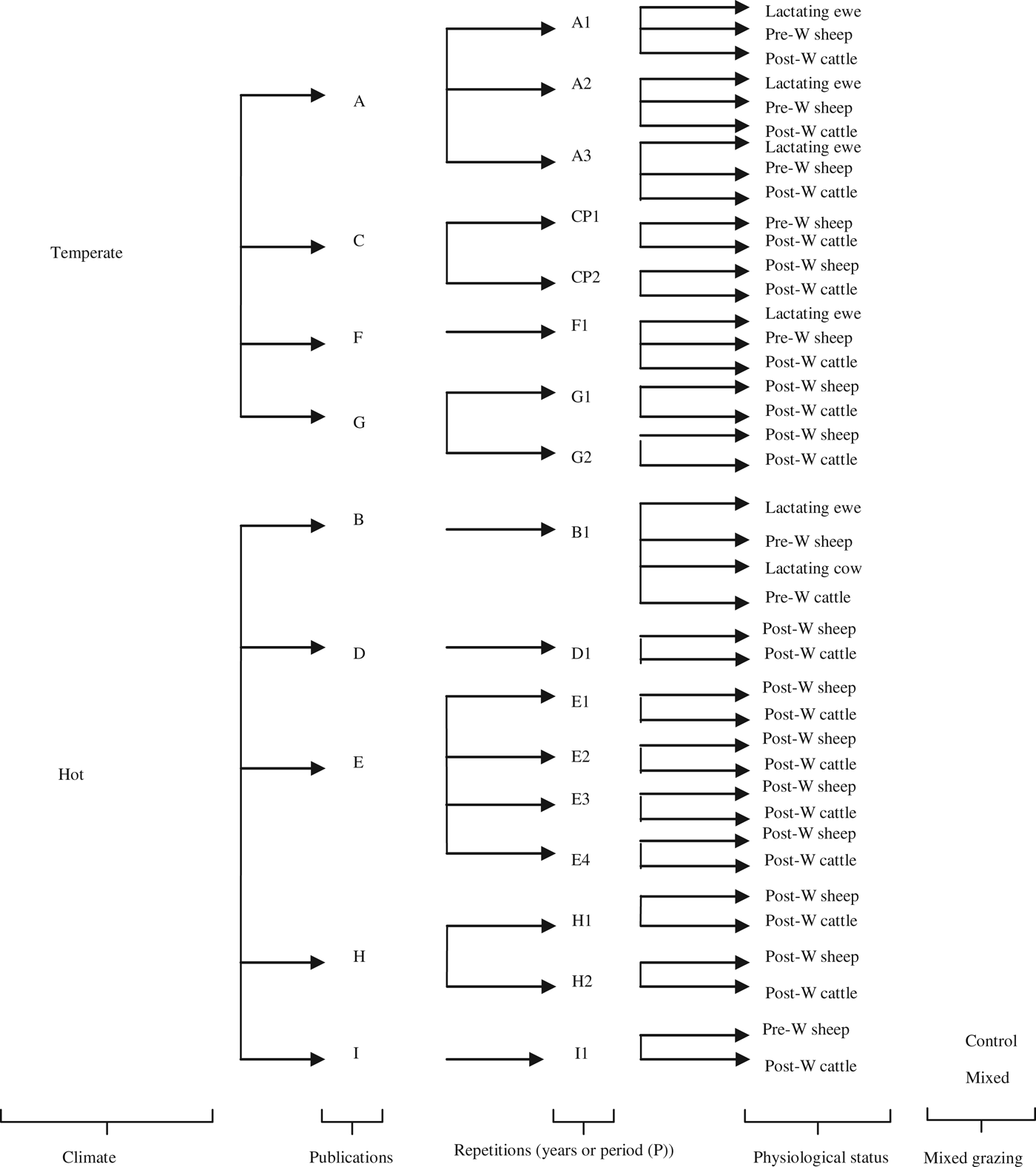
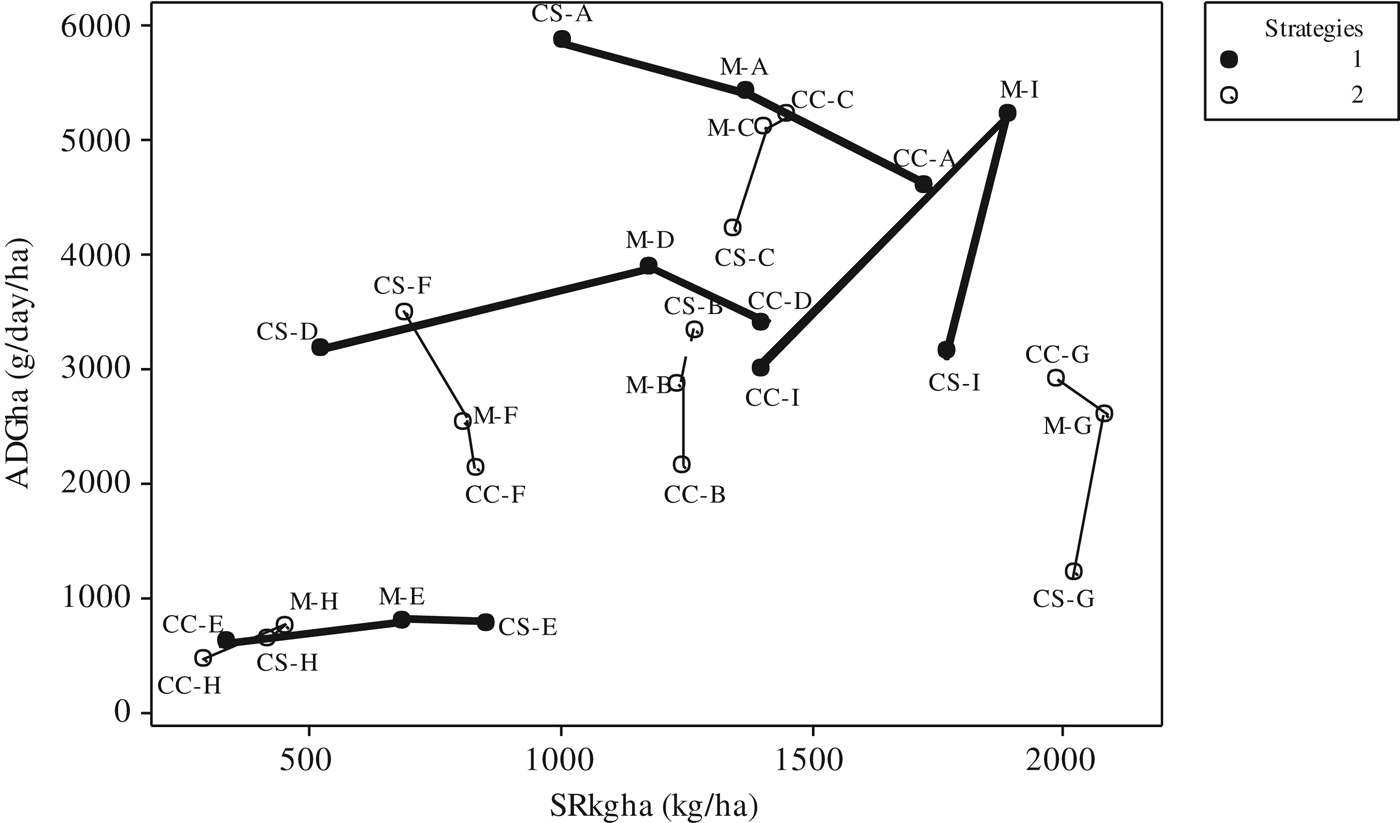
The database was analysed using MINITAB 16. The different variables (ADGisheep (Ctrt v. Mtrt), ADGicattle (Ctrt v. Mtrt) and ADGha (Ctrt-sheep, Ctrt-cattle and Mtrt)) were analysed according to the meta-design, which consisted of a hierarchical organization of different factors of variation studied in the set of publications (Fig. 1). These were, successively: (i) the climate (temperate v. hot), (ii) the publications within each climate, (iii) the years of experiment which were considered as replications in some publications, (iv) the physiological status of each species (lactating, pre or post-weaning), nested in each replication and (v) the treatment effect (Ctrt v. Mtrt), in which two levels of mixed grazing for ADGisheep and ADGicattle (Ctrt v. Mtrt) and three levels of mixed grazing for ADGha (Ctrt-sheep, Ctrt-cattle and Mtrt) were considered. In some papers, the same control was used to compare different mixed treatments, which explains the different number of data for ADGisheep or ADGicattle, compared with ADGha (Table 2). Considering the low number of publications, those factors were introduced in the model as a fixed effect (publication effect), as it could not be guaranteed that all the practical contexts were covered (Sauvant et al. Reference Sauvant, Schmidely, Daudin and St-Pierre2008). Tests of significance were performed by considering both the ultimate residual variations (as provided by Minitab) and also by testing each factor within the immediately nested one. To improve the power of the tests, some relevant covariates were considered: BWi, SRkgha, SRnbhaSheep, Res-SRnbhaCattle and PropLWsheep. To be sure of their independence from the variables related to the ADG, they were treated individually with the hierarchic model of the meta-design and the residuals were kept and added as covariates in the model (Res-BWi, Res-SRkgha, Res-SRnbhaSheep, Res-SRnbhacattle and Res-PropLWsheep). The variation of ADGha according to SR underlines two types of experimental strategies: firstly where SR varied between treatments, being higher for Ctrt-sheep (for publications A, D and E, Table 1) or for Ctrt-cattle (publication I, Table 1), compared with Mtrt treatment and secondly where there was a very small change of SR between the three treatments, i.e. between Ctrt-sheep, Ctrt-cattle and Mtrt (for publications B, C, F, G and H, Table 1).These two strategies were coded to assess their impact on ADGha. The PropLWsheep and the SRkgha were tested as covariates for the individual and the total liveweight gains: BWi was tested only for ADGisheep and ADGicattle, whereas the SRnbhaSheep and the strategies were tested only for the ADGha. The different covariates tested were kept in the model when they were significant.
Hierarchic model of variation factors in the meta-design. Publications: A: Fraser et al. Reference Fraser, Davies, Vale, Hirst and Wright2007; B: Abaye et al. Reference Abaye, Allen and Fontenot1994; C: Nolan & Connolly Reference Nolan and Connolly1989; D: Mahieu et al. Reference Mahieu, Aumont, Michaux, Alexandre, Archimède, Boval and Theriez1997; E: Hamilton & Bath Reference Hamilton and Bath1970; F: Wright et al. Reference Wright, Jones, Davies, Davidson and Vale2006; G: Connolly & Nolan Reference Connolly and Nolan1976; H: Owen Reference Owen1998; I: Mahieu & Aumont Reference Mahieu and Aumont2009; Pre-W: pre-weaning; Post-W: post-weaning.
RESULTS
Individual performances of sheep and cattle
The different variables of the database represented a wide range of values going up to 2·25 times the average ADGi value for sheep or up to 2·45 times the average ADGi for cattle (Table 2).
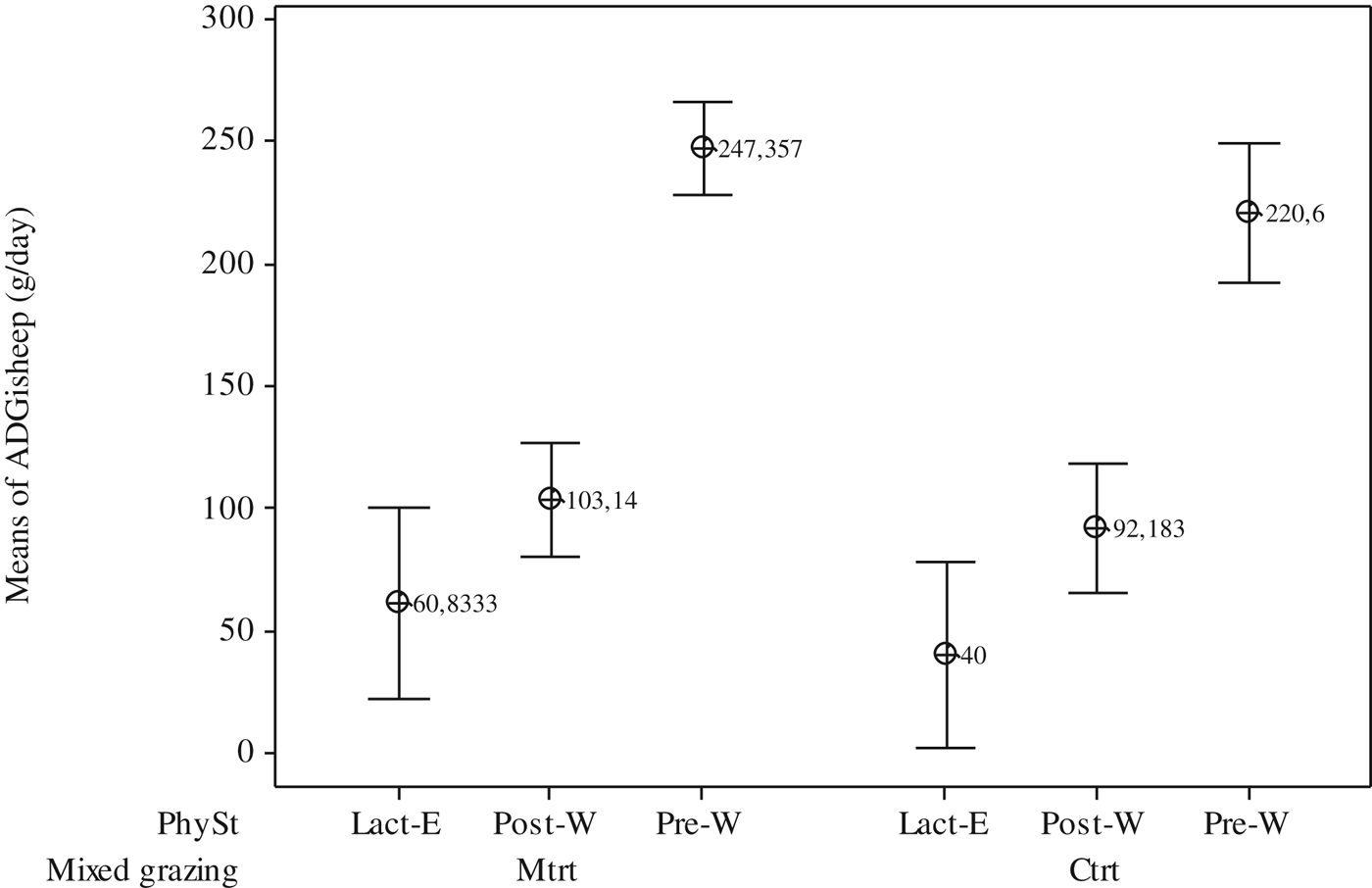
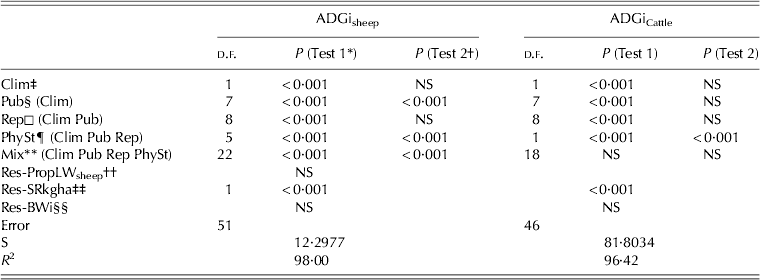
The ADGisheep was greater in mixed treatments with gains >14·5 g/day compared with the Ctrt (Table 3 and Fig. 2). These performances varied according to the physiological status of sheep. Pre-weaning lambs had the strongest growth, by an average of 12% in mixed grazing, compared with grazing alone (220·6 v. 247·36 g/day, P<0·001, Fig. 2). Post-weaning lambs had better performance, also by 12% when they were mixed (92·18 v. 103·14 g/day, respectively in Ctrt and Mtrt). Lactating ewes, which generally had the lowest growth, also showed a trend for gains in Mtrt compared with Ctrt (40·00 v. 60·83 g/day). There was a study effect (publication effect) and also an effect of SRkgha on the individual performances of sheep, which decreased by 0·047 per kg increase in liveweight/ha. No effect of climate or BWi was identified.
Means of individual performances of sheep (ADGisheep) reared mixed (Mtrt) or not (Ctrt) depending on the physiological status. PhySt: physiological status; Lact-E: lactating ewe; Post-W: post-weaning sheep; Pre-W: pre-weaning sheep.
The effect of different factors on individual growth of sheep and cattle
* Test with the ultimate residual variations with statistical significance.
† Test with testing each factor within the nested one with statistical significance.
‡ Climate.
§ Publication.
□ Repetition year or period.
¶ Physiological status.
** Mixed grazing.
†† Residual of the PropLWsheep.
‡‡ Residual of the SRkgha.
§§ Residual of the BWi.
The ADGicattle was not significantly different in Ctrt and Mtrt (Table 3). Only the physiological status was significant (P<0·001) on individual performances of cattle (Table 3). Best performances were recorded for pre-weaning cattle with an ADGicattle of c. 890 g/day. The mean ADGicattle for post-weaning cattle and lactating cows were 712 and 169 g/day, respectively. As with sheep, no significant effect of climate was found.
Total gain of sheep and cattle per hectare
Considering the global performances per hectare, the sheep and cattle reared alone had a similar ADGha (2423 g/day/ha and 2491 g/day/ha for Ctrt-sheep and Ctrt-cattle, for average SR values of 1033 and 1050 kg/ha). They were smaller compared with Mtrt with an average value of c. 3117 g/day/ha (for average SR of 1350 kg/ha); this represented a gain in mixed pasture of 28·6 and 25·1% respectively compared with Ctrt-sheep and Ctrt-cattle for relative increases in SR of 30·7 and 28·6%.
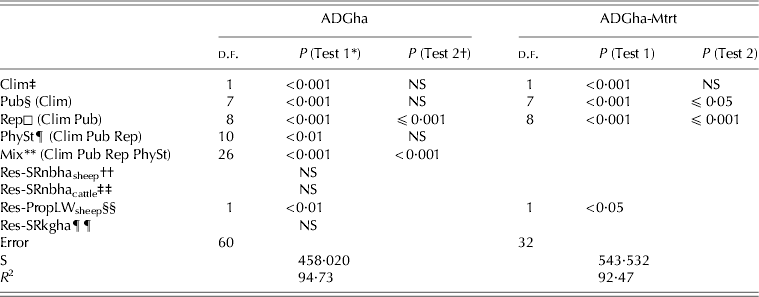
The different effects tested are shown in Table 4 and details of the various effects are illustrated in Figs 3 to 6. The effect of replication was significant (P⩽0·001, test 2, Table 4) but this was not the case for PropLWsheep and SR. Considering the experimental strategies, total gain was, on average, 25% more with the first strategy compared with the second (3337 v. 2667 kg/day/ha, Fig. 3), but this difference was not significant.
The variations of the stocking rate (SRkgha) and of the total average daily gain (ADGha, g/day/ha) across the treatments (CS: control sheep; CC: control cattle; M: mixed) and the publications (A: Fraser et al. Reference Fraser, Davies, Vale, Hirst and Wright2007; B: Abaye et al. Reference Abaye, Allen and Fontenot1994; C: Nolan & Connolly Reference Nolan and Connolly1989; D: Mahieu et al. Reference Mahieu, Aumont, Michaux, Alexandre, Archimède, Boval and Theriez1997; E: Hamilton & Bath Reference Hamilton and Bath1970; F: Wright et al. Reference Wright, Jones, Davies, Davidson and Vale2006; G: Connolly & Nolan Reference Connolly and Nolan1976; H: Owen Reference Owen1998; I: Mahieu & Aumont Reference Mahieu and Aumont2009). Strategy 1: the SR has varied between treatments carried out in each publication (publications A, D, E and I). Strategy 2: there was a very small change of SR between the three treatments within each publication (publications B, C, F, G and H).
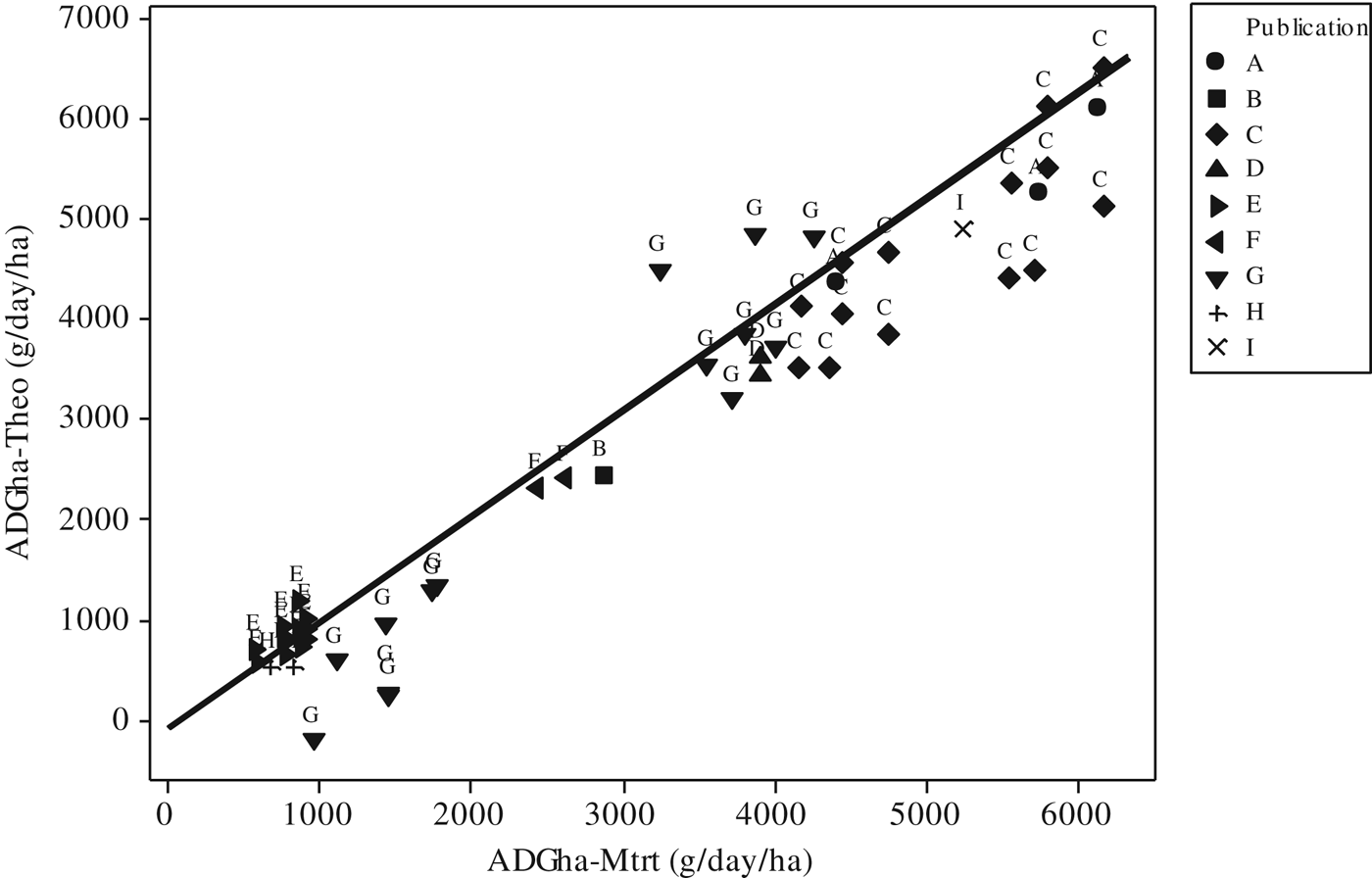
Relation between average daily gains per ha in mixed grazing (ADGha-Mtrt, g/day/ha) and the theoretical average daily gains per ha (ADGha-Theo, g/day/ha) for the different publications (A: Fraser et al. Reference Fraser, Davies, Vale, Hirst and Wright2007; B: Abaye et al. Reference Abaye, Allen and Fontenot1994; C: Nolan & Connolly Reference Nolan and Connolly1989; D: Mahieu et al. Reference Mahieu, Aumont, Michaux, Alexandre, Archimède, Boval and Theriez1997; E: Hamilton & Bath Reference Hamilton and Bath1970; F: Wright et al. Reference Wright, Jones, Davies, Davidson and Vale2006; G: Connolly & Nolan Reference Connolly and Nolan1976; H: Owen Reference Owen1998; I: Mahieu & Aumont Reference Mahieu and Aumont2009).
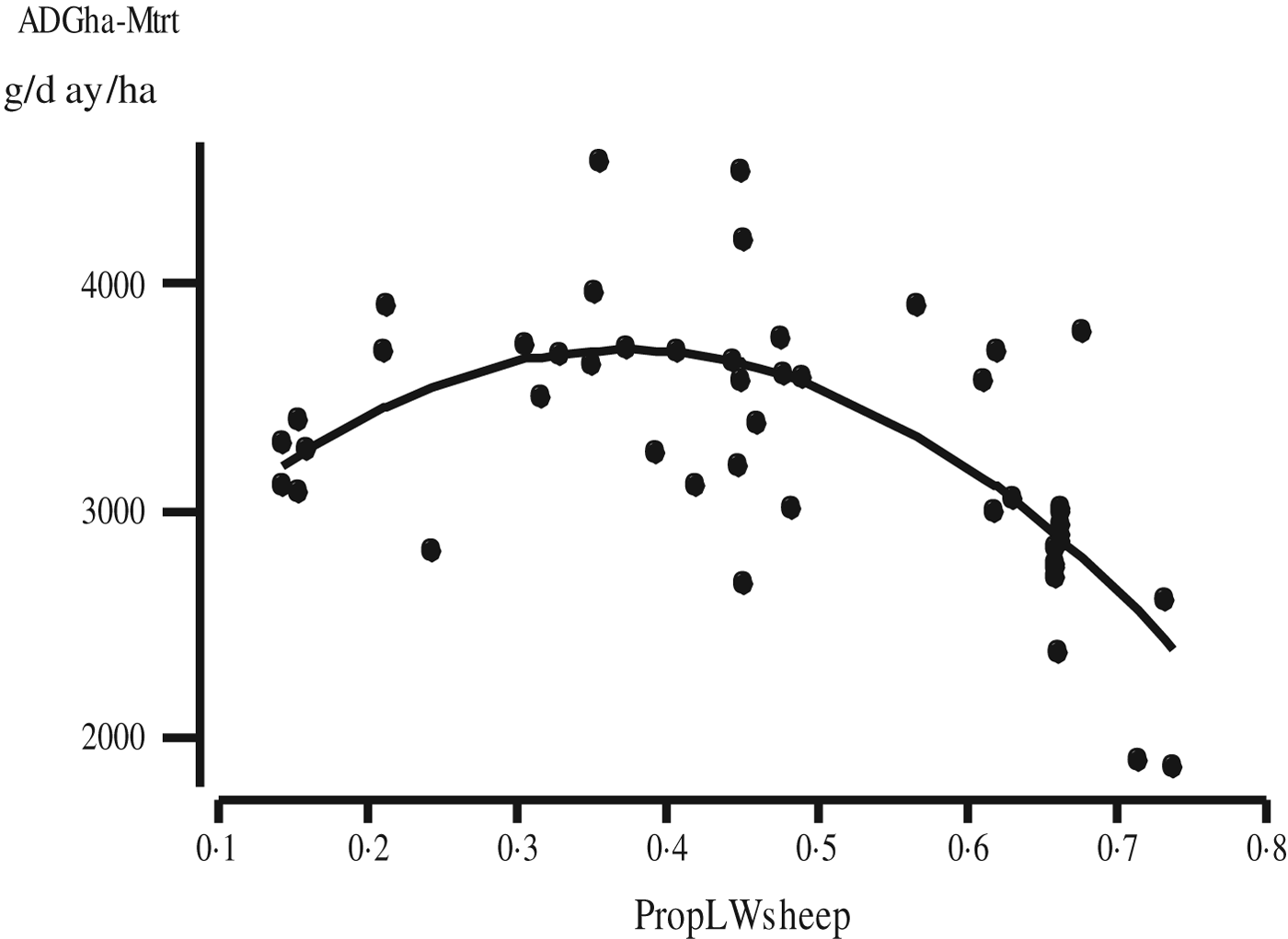
Average daily gains per ha in mixed grazing (ADGha-Mtrt, g/day/ha) according to the proportion of liveweight of sheep in the association (PropLWsheep).
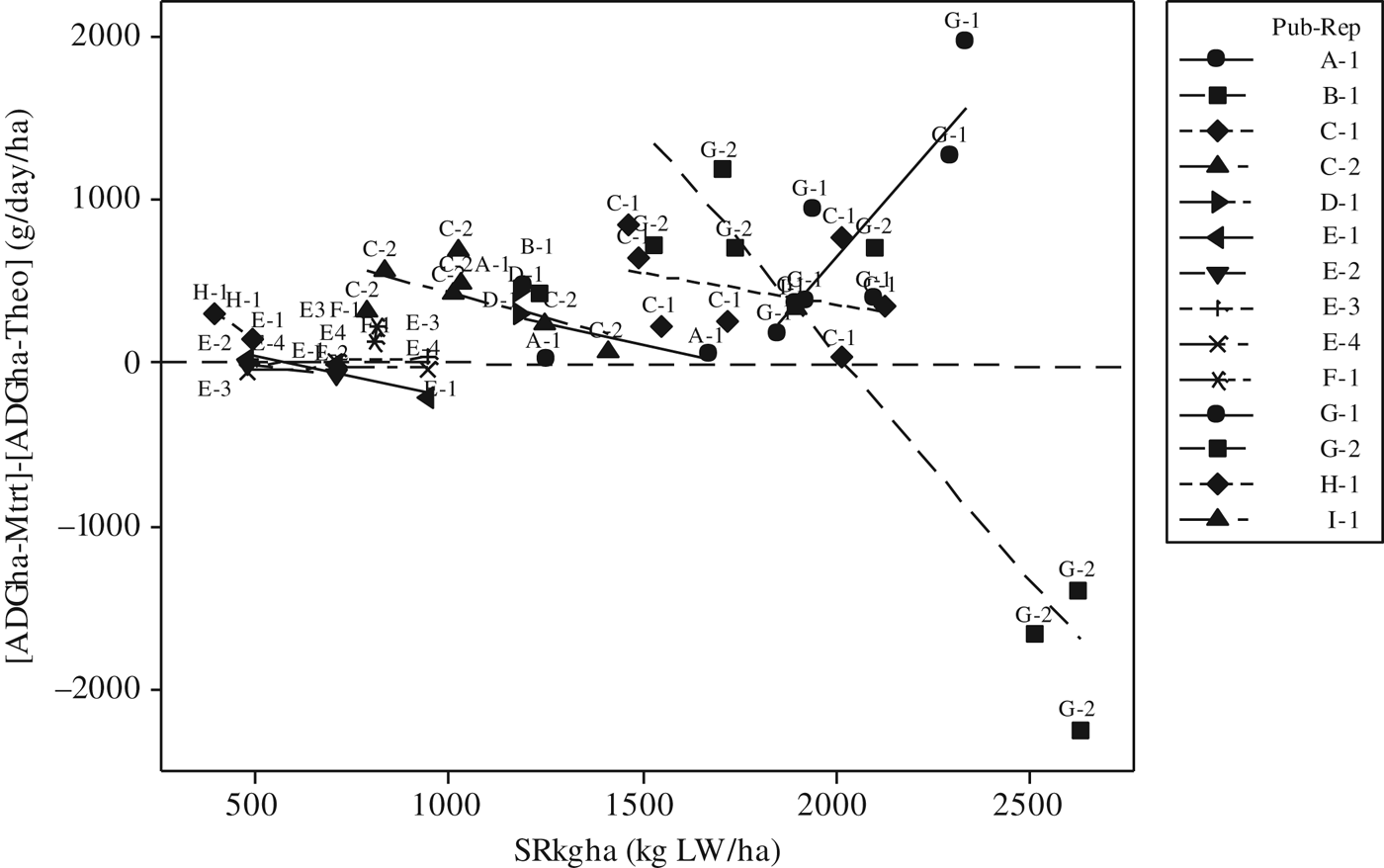
Average daily gains per ha in mixed grazing (ADGha-Mtrt, g/day/ha) compared with the theoretical average daily gains per ha (ADG-Theo, g/day/ha), according to the stocking rate (SRkgha, kg LW/ha) for the different publications (Pub: A: Fraser et al. Reference Fraser, Davies, Vale, Hirst and Wright2007; B: Abaye et al. Reference Abaye, Allen and Fontenot1994; C: Nolan & Connolly Reference Nolan and Connolly1989; D: Mahieu et al. Reference Mahieu, Aumont, Michaux, Alexandre, Archimède, Boval and Theriez1997; E: Hamilton & Bath Reference Hamilton and Bath1970; F: Wright et al. Reference Wright, Jones, Davies, Davidson and Vale2006; G: Connolly & Nolan Reference Connolly and Nolan1976; H: Owen Reference Owen1998; I: Mahieu & Aumont Reference Mahieu and Aumont2009) and their replications (Rep: 1 to 4).
The effect of different factors on the total gain of sheep and cattle per hectare reared alone (ADGha, g/day/ha) or mixed with the other species (ADGha-Mtrt)
* Test with the ultimate residual variations with statistical significance.
† Test with testing each factor within the nested one with statistical significance.
‡ Climate.
§ Publication.
□ Repetition year or period.
¶ Physiological status.
** Mixed grazing.
†† Residual of the SRnbhaSheep.
‡‡ Residual of the SRnbhaCattle.
§§ Residual of the PropLWsheep.
¶¶ Residual of the SRkgha.
For overall gain in the mixed treatment (ADGha-Mtrt), the amount of gain from production of sheep was 41% lower compared with that of sheep reared alone (1438 g/day/ha v. 2423 g/day/ha, P<0·001, for average SR of 621 and 1033 kg/ha, lower by 40%). The gain linked to cattle only was also lower, by 32%, than the gain recorded for cattle reared alone (1687 v. 2491 g/day/ha, for average SR of 724 and 1050 kg/ha, lower by 31%). There was no effect of climate or SRkgha on their performances.
Compared with the theoretical gain calculated, the gain in Mtrt for the majority of the publications was 236 g/day/ha higher on average, the maximum gain being 1215 g/day/ha (located below the line representing the bisector, Fig. 4). This higher ADGha compared with ADGha-Theo represents a relative increase of 8% with a significant study and replication effect (P<0·001, Table 3). Only a few treatments had a better ADGha-Theo and corresponded to three of the Mtrt treatments of publication G, for the second year (G2 points, Fig. 4); for these treatments, SR was notably higher compared with G1 and the other papers. This choice was justified by the authors because they wanted to obtain a response to SR and remedied by a greater spread of SR in G2.
The gain in mixed grazing and factors of variation
The gain measured in Mtrt varied between the study and the replication (P<0·05, Table 4). It varied also with the proportion of sheep in the association, by increasing slightly to a value of 0·36, after which it decreased (Fig. 5).
The SR was not a significant factor for ADGha-Mtrt (Table 4). However, ADGha-Mtrt, compared with ADGha-Theo, decreased with SR by −1·25 on average for all the publications. The calculated ADGha-Theo, especially in the first year (points G1, Fig. 6), was influenced strongly by a very small number of sheep Mtrt (compared with the number of sheep-Ctrt), therefore impacting the gap between ADGha-Theo and ADGha-Mtrt and explaining the artificial increase of ADGha with SR for this replication. However, the gap between the values for ADGha-Mtrt and ADGha-Theo remained generally positive, above zero.
DISCUSSION
Features of the database
The number of publications on mixed grazing is important. However, most of these papers were excluded from the database built for the current paper because they did not consider common criteria and therefore could not be pooled together in the meta-analysis. Indeed, many articles focused on the issue of anthelmintic resistance in parasitic nematodes, where mixed grazing could be an effective alternative method to the use of anthelmintics (Torres-Acosta & Hoste Reference Torres-Acosta and Hoste2008; Jackson et al. Reference Jackson, Bartley, Bartley and Kenyon2009; Knox et al. Reference Knox, Besier, Le Jambre, Kaplan, Torres-Acosta, Miller and Sutherland2012; Torres-Acosta et al. Reference Torres-Acosta, Sandoval-Castro, Hoste, Aguilar-Caballero, Càmara-Sarmiento and Alonso-Diaz2012). Other papers focused mainly on the pasture characteristics, notably botanic aspects, in order to build improved grazing ecosystems (Bedell Reference Bedell1973; Nolan Reference Nolan1996). Therefore, to assess the growth performance of sheep and cattle by comparing the benefits of mixed grazing with Ctrt treatments, both for sheep and cattle, the analysis was limited to c. 0·10 of the available documents relating to grazing mixed. Despite the low number of papers, they were well distributed in temperate and hot areas and most of them had replications. Moreover, different physiological statuses were represented for each species, allowing identification of an almost balanced hierarchical meta-design that was used to control and explain a large part of the variations. It also allowed analysis of some key variables as covariables. In addition, the selected publications covered a diverse range of contexts and data. Indeed, most of the experiments were based mainly on the association between sheep and cattle from different breeds due to temperate v. hot climates. The range of initial liveweights was also relatively wide for both sheep (9–89 kg) and cattle (70–550 kg), taking into account the various physiological stages considered in the literature. The SR also presented a wide range of variation, from 238 kg/ha to nearly ten times more.
Unfortunately, the publications selected did not contain common data, or index, on the degree of infestation, which would allow explanation of some of the variations studied, due to mixed grazing. Also, the data on sward characteristics were not sufficient for analysis in order to highlight other determining factors explaining the effect of mixed grazing.
Greater individual performance with mixed grazing
The meta-analysis allowed quantification of how much, from a set of papers, the combination of sheep and cattle improved growth performance, whether in temperate or hot conditions. Such gains had already been reported in individual papers (Cook et al. Reference Cook, Harris and Young1967; Hamilton Reference Hamilton1975) but without global quantification through a set of papers as shown in the current paper, with an average gain of 14·5% for individual sheep. This value is within the range of that reported for the sheep in a qualitative review of Hoste et al. (Reference Hoste, Guitard and Pons2003), ranging from 10 to 30% (Jordan et al. Reference Jordan, Phillips, Morrison, Doyle and McKenzie1988; Nolan & Connolly Reference Nolan and Connolly1988; Niezen et al. Reference Niezen, Charleston, Hodgson, Mackay and Leathwick1996) (not included in the database). In addition, in the current database the differences in the various physiological statuses were highlighted, having both an inter- and within-studies approach. For lambs, pre- and post-weaning gain represents almost 30% of their initial bodyweight. Even for lactating ewes, with an average growth rate much lower than younger sheep, had a tendency to grow twice as fast when mixed with cattle. This benefit may be applied for improving the performance of ewes at this time, when parasite infection tends to be more severe (Cobon & O'Sullivan Reference Cobon and O'Sullivan1992; Schichowski et al. Reference Schichowski, Moors and Gauly2010).
For cattle, in contrast to sheep, the individual gain was not significantly different in mixed grazing compared with the control. Some authors found no benefit in grazing cattle on mixed pasture (Bennett et al. Reference Bennett, Morley, Clark and Dudzinski1970) (not included in the database), (Wright et al. Reference Wright, Jones, Davies, Davidson and Vale2006) and some even registered less profit (15–20% less; Culpin et al. Reference Culpin, Evans and Francis1964) (not included in the database). However, other authors did report a positive ADG for steers: Nolan & Connolly (Reference Nolan and Connolly1989) reported gains of 3·4–6·6% while Ocokoljic et al. (Reference Ocokoljic, Trajic, Resanovic and Pavlovic1969), not included in the database, found gains of c. 10%. Brelin (Reference Brelin1979) (not included) reported a positive tendency but did not quantify it. However, although a gain was measured for cattle in some studies, it was lower than for the sheep, which seem to better exploit the complementarities between the two species.
Greater global gain with mixed grazing systems
Mixed grazing also has benefits over mono-grazing at a larger scale than for individual animals and for the same grazing surface. Mixed grazing led to improved performance: liveweight gain per hectare increased by 28·6% for sheep over sheep grazing alone, and by 25% for cattle. However, no individual gain for cattle was observed. The impact of physiological status was confirmed again at this upper level. In turn, contrary to the individual level, no significant effect of SR was observed, regardless of its mode of expression. And even with the experimental strategies based on variation of SR, the effect was also not significant on ADGha. The effect of SR was investigated thoroughly, as it often appears as an essential parameter to consider, but the meta-analysis did not highlight any significant effect either between or within the publications. The main explanation for this apparent contradiction with common observations is that, across publications, publication G does not follow the relationship between ADGha and SR. Moreover, within publications one strategy is based on large differences in SR of animals in Ctrt without any effect on ADGha. In contrast, a second strategy is based on large differences of ADGha between Ctrt, with little or no difference in SR. The outcome of this is a lack of relationship between ADGha and SR; however, this lack of correlation between ADGha and SR facilitated the statistical tests.
Profit for overall production, as shown by ADGha, is increased by an average 236 g/day/ha compared with the theoretical gain, i.e. c. 8% more. This comparison with ADG-Theo is really based on the same number of sheep and cattle, considered as reared alone or mixed, and therefore actually at an equivalent loading.
Therefore, mixed pasture was shown to have a significant benefit when considering production per hectare, whatever the basis for comparison, related to sheep or cattle alone, or compared with a theoretical gain. This result is new compared with other works, which have not really identified a significant overall gain per ha (Walker Reference Walker1954; Ebersohn Reference Ebersohn1966; Reynolds et al. Reference Reynolds, Bond, Carson, Jackson, Hart and Lindhal1971). In addition, Wright et al. (Reference Wright, Jones, Davies, Davidson and Vale2006) did not find a significantly higher total output of liveweight per ha in mixed grazing, even if the liveweight gain of the lamb was higher in the association, when no gain was seen for cattle.
It should be noted that for farmers interested in sheep production only, the gain per hectare seen in sheep under mixed grazing is 41% less than for sheep reared alone. However, this low gain for sheep on mixed grazing is simply due to the decreasing number of sheep per hectare, where cattle are also added on the same surface as compared with the mono-grazing. For farmers concerned with cattle production only, the gain is also 32% lower compared with mixed grazing. However, farmers may use different types of production in mixed systems, both sheep and cattle, and may also take seasonal and market variations into account to optimize their overall performance. In addition, mixed grazing can improve the management of gastrointestinal nematodes and further increase the benefit of this strategy (Mahieu et al. Reference Mahieu, Aumont, Michaux, Alexandre, Archimède, Boval and Theriez1997; Marley et al. Reference Marley, Fraser, Davies, Rees, Vale and Forbes2006; Torres-Acosta & Hoste Reference Torres-Acosta and Hoste2008).
How can ADG be increased in mixed grazing?
One of the first parameters tested for improving the benefit of mixed pasture was the proportion of sheep, which induces a decrease in ADG in mixed pastures beyond a value of 0·36. This threshold value represents an approximate ratio of five sheep: one cow, close to the ratio of 4/1 most commonly reported in the literature (Hamilton & Bath Reference Hamilton and Bath1970) (included in the database). This effect of the proportion of sheep was also reported for individual gain (Malherbe Reference Malherbe1971; Nolan & Connolly Reference Nolan and Connolly1976) (not included in the database): the best ratio defines the balance between satisfying individual needs while limiting competition between individuals within and between species.
In contrast to the proportion of sheep, the role of SR in increasing weight gain in mixed grazing is not obvious from the current analysis (see above). However, when given an experimental context (publication or replication) and when SR effect on ADG is considered compared with the theoretical gain (which gives an idea of the relative benefit of the mixed grazing, Fig. 6), SR induces a reduction of the benefit. For an increase of ADG of 100 kg, the decrease is c. 125 kg per ha and per kg of additional SR, even if the benefit remains nevertheless fairly positive in most situations.
The impact of SR and of the proportion of sheep appears to be closely linked, but a few articles in the database have varied the SR for similar ratios of sheep or vice versa. This relationship seems complex and it is probably essential to understand it in order to manage the mixed grazing well. However, from the set of publications analysed, no further explanation can be provided for the management of each one. Connolly & Nolan (Reference Connolly and Nolan1976) were the first researchers to suggest this link and to describe the weaknesses inherent in focusing only on the sheep/cattle ratio, as it is more currently practised in the studies. Some authors have stressed the importance of overall charge rate (Hamilton & Bath Reference Hamilton and Bath1970; Jones & Sandland Reference Jones and Sandland1974; Nolan & Connolly Reference Nolan and Connolly1989), and have also sought to determine the optimal ratio between the two species in their mixed grazing situations. Unfortunately, quantitative data are too few to help clarify this point with the current meta-analysis.
CONCLUSION
The global analysis reported an overall picture of published studies, and a quantitative evaluation of mixed grazing. The advantage of mixing species lies in individual performance, mainly for the goats, and also for the overall gain per hectare, considering the two species. By taking into account the plot level and various interacting parameters, the current meta-analysis provides arguments and useful information for farmers regarding the use of a mixture of grazing species, rather than a single one, for increasing production levels per unit area. The overall benefit is essential for farmers, including the economic standpoint (which can vary depending on the price of meat from goats and cattle, respectively), of the dietary habits and geographical area. Mixed grazing may also have benefits for the environment and for the quality of products, by reducing parasitism and the use of anthelminthics, which can motivate still more farmers to adopt such a strategy for management of pastures.