1. Introduction
Foreign aid – Official Development Assistance (ODA) provided by donor governments – is considered indispensable for eradicating poverty, reducing inequality, and promoting sustainable development. However, foreign aid is plagued by a plethora of collective action problems. For instance, despite high-level donor pledges to design aid interventions sustainably, organizational incentives within donor agencies, strategic interests, and limited transparency often give rise to inefficient spending, with negative repercussions on aid effectiveness (Monkam, Reference Monkam2012). In bilateral aid relationships, recipient governments often fail to follow through with promised reforms while donor countries disburse aid nonetheless due to conflicting motives (Swedlund, Reference Swedlund2017). In multilateral aid, individual donors may renege on their promise to share a collective financing burden for joint development programs (Mascarenhas and Sandler, Reference Mascarenhas and Sandler2006). In all the above cases, actors are unable to make credible commitments because effective institutions that would allow them to do so are missing. In addition, actors have limited information as to whether aid interventions really work, which prevents a more effective allocation of aid resources.
In this article, I explore the potential of blockchain technology to enhance the effectiveness of foreign aid governance. Blockchain technology – a cryptographically linked digital ledger of transactions distributed across all participants of a peer-to-peer network – has enabled “trustless” interactions among individuals without the need for a central authority. The blockchain is basically a giant spreadsheet that sequentially records transactions among users and distributes this ledger across the entire network, which ensures that all actors have secure access to an immutable transaction record. The sanctity of the data is achieved by decentralized consensus – a mechanism whereby network participants agree on a shared set of data and continually record valid changes to that data (Baliga, Reference Baliga2017; Buterin, Reference Buterin2014; Valkenburgh, Reference Valkenburgh2016).
Blockchain technology may affect aid governance in two distinct ways. On the one hand, it may be used to enhance aid effectiveness within the current system of aid intermediaries, which includes governments, international organizations, and non-governmental organizations (NGOs). This is a likely scenario because blockchain technology offers tangible benefits to these actors without challenging their role as central authorities. On the other hand, blockchain technology may enable peer-to-peer systems of charitable giving that circumvent governments as aid providers altogether. The disintermediation of aid governance is a less likely scenario, because not only will aid intermediaries resist it but also they are often needed to fulfill vital tasks that the blockchain cannot deliver, such as validation of real-world events, policy deliberation, and the provision of technical assistance.
Taking a positivist view, the paper focuses on the first scenario. Its point of departure is that existing institutions – the systems of social rules that structure social interactions (Hodgson, Reference Hodgson2006) – are only partly effective. An important example of an institution in foreign aid is the practice of “conditionality,” whereby donors provide funding for development only when recipients satisfy certain conditions. However, conditionality is often not credible because the donors are also driven by considerations other than development need, while recipient countries may renege on reform commitments in the face of opposition from powerful domestic constituencies (Swedlund, Reference Swedlund2017). To some extent, multilateral organizations such as the United Nations, the World Bank, and the International Monetary Fund provide these actors with a credible commitment device and thereby uphold the rules governing complex aid relationships (Dreher and Voigt, Reference Dreher and Voigt2011). Multilateral organizations are the most centralized institutions in world politics that have the authority to collect information, verify compliance, and authorize sanctions to enforce state commitments. While centralization helps allay some collective action dilemmas in aid governance, it often generates additional costs related to excessive bureaucracy and “agency slack” (Martens et al., Reference Martens, Mummert, Murrell and Ostrom2003; Nielson and Tierney, Reference Nielson and Tierney2003; Vaubel, Reference Vaubel2006).
Blockchain technology can enhance the effectiveness of current aid governance institutions in at least three ways. First, blockchain technology allows states to make more credible commitments. To that end, countries would need to encode all aid contracts as “smart contracts” on a blockchain to import guaranteed execution when predefined conditions are fulfilled. Smart contracts are effective only when states have staked actual resources upon the commitments that these contracts entail. Their efficiency gains are greatest for complete contracts that leave no ambiguity about how their terms should be interpreted. The potential pitfalls of smart contracts are that they are more rigid than semantic contracts and that guaranteed enforcement is limited to the blockchain itself while central authorities are still necessary to enforce transactions involving exchanges of actual property (Sklaroff, Reference Sklaroff2017). Second, blockchain technology can be used to leverage hitherto untapped sources of information to verify compliance and to make better-informed policy decisions. In particular, blockchain-based prediction markets provide reliable information about real-world events underpinning aid relations governed by smart contracts. This application of blockchain technology is particularly useful where individuals (such as aid beneficiaries) are able to make accurate reports on events and where central authorities do not have the capacity, willingness, or incentives to report accurately.
By showing how blockchain technology may affect aid governance, my article contributes to several debates in the social-scientific literature. First, it casts light on the economic ontology of blockchain, providing evidence of its institution-like properties (Davidson et al., Reference Davidson, de Filippi and Potts2018). Specifically, the benefit of blockchain is to make established institutions – such as markets, firms, the state, and relational contracts (Hodgson, Reference Hodgson2015) – more effective and efficient, or even to offer an alternative organizational mechanism to reach agreement about economic facts (Davidson et al., Reference Davidson, de Filippi and Potts2018: 11). The ontology of blockchain ultimately depends on the purposes for which stakeholders will use it because technological objects have a dual nature – a physical structure (how its constituent parts fit together) and a social purpose (the technical identity and the function assigned to it by the community that uses it) (Faulkner and Runde, Reference Faulkner and Runde2013). In the most-likely scenario, blockchains remain a technology that enhances the effectiveness of existing institutions, as donor organizations will use blockchains for efficiency improvements in the aid delivery chain, for example by securely sharing information across organizations, automatically settling transactions, and circumventing financial sector intermediaries. In a utopian scenario, blockchains become social institutions themselves, as they take over core functions of existing organizations (including donor aid agencies) such as coordinating aid programs based on beneficiary demand, verifying state behavior, and enforcing complex aid contracts.
Second, I also cast light on the relationship between blockchain technology and existing institutions (Davidson et al., Reference Davidson, de Filippi and Potts2018; Hendrickson and Luther, Reference Hendrickson and Luther2017; Hendrickson et al., Reference Hendrickson, Hogan and Luther2016). How does blockchain technology interact with traditional institutions? Does it coexist with these institutions, or does it challenge their primacy? My analysis suggests that on balance it is complementary rather than substitutive. It is substitutive for complete contracts, which are more efficiently handled by smart contracts, while also holding the promise of reducing the cost of verification (Wright and de Filippi, Reference Wright and de Filippi2015). Conversely, blockchain technology is complementary to current multilateral organizations, which are better placed to handle contingencies that arise under incomplete contracting (Maskin and Tirole, Reference Maskin and Tirole1999). The discussion about how blockchain technology affects the existing actors in the aid system is absent from policy-oriented studies. Reflecting growing interest from official donors, studies have analyzed use cases in aid delivery, such as conditional cash transfers, digital identity, remittances, supply chain management, communal energy exchanges, and property rights (DANIDA, 2017; GSMA, 2017; IDRC, 2017; KfW, 2018; Wigley and Cary, Reference Wigley and Cary2017). Blockchain technology in these areas is useful as it remedies the relative shortage of institutions under conditions of asymmetric information (Ostrom et al., Reference Ostrom, Gibson, Shivakumar and Andersson2002: 7). However, discussions about how blockchain technology may disrupt aid governance are not covered in these studies. In fact, blockchains could potentially diminish the existing aid intermediaries because they allow secure transactions between charitable givers and ultimate beneficiaries without the need for a trusted intermediary.Footnote 1
Third, I contribute to a voluminous literature on the determinants of aid effectiveness and the effectiveness of international organizations more generally. Scholars have examined the various ways in which foreign aid can be made more effective, emphasizing aid allocation modalities in this regard. However, all aid modalities – such as project aid, program aid, and budget support – have tradeoffs in that they address some agency problem but inadvertently create others (Bigsten and Tengstam, Reference Bigsten and Tengstam2015; Easterly, Reference Easterly2005; Knack and Rahman, Reference Knack and Rahman2007; Martens, Reference Martens2005; Molenaers et al., Reference Molenaers, Dellepiane and Faust2015). While circumventing recipient governments is considered to be another alternative (Dietrich, Reference Dietrich2013), it tends to shift the locus of agency problems to the non-governmental sector. Blockchain technology has the potential to enhance the effectiveness of all preexisting aid governance mechanisms. Others have examined how multilaterals can become more effective (Gutner and Thompson, Reference Gutner and Thompson2010; Lall, Reference Lall2017; Tallberg et al., Reference Tallberg, Sommerer, Squatitro and Lundgren2016), emphasizing the need for agent autonomy (Gulrajani, Reference Gulrajani2017; Honig, Reference Honig2018; Lall, Reference Lall2017). While centralization fosters autonomy (Abbott and Snidal, Reference Abbott and Snidal1998), it may also create undesirable outcomes and organizational dysfunction (Barnett and Finnemore, Reference Barnett and Finnemore1999). Blockchain-based aid governance – as a decentralized solution – may avoid the pitfalls of centralization while removing possibilities for manipulation.
In the remainder of this article, I proceed as follows. Section 2 introduces blockchain technology through the lens of New Institutional Economics and discusses the conditions under which it is most beneficial compared to existing solutions. Section 3 discusses common challenges to effective foreign aid delivery and how existing institutions are meant to address these challenges. Section 4 probes the potential for blockchain technology to improve foreign aid governance, reviewing existing applications, and outlining potential applications. Section 5 discusses the findings and concludes. The supplemental appendix introduces the mechanics of blockchain technology and presents use cases for development unrelated to governance issues.
2. Blockchain technology and New Institutional Economics
One of the central insights of New Institutional Economics (NIE) – departing from neoclassical economics – is that transactions are not costless; hence, the form in which they occur matters to socioeconomic outcomes (Harris et al., Reference Harris, Hunter and Lewis1995; Khan, Reference Khan, Harris, Hunter and Lewis1995; Williamson, Reference Williamson1979). Transaction costs can be defined as the costs of agreeing a contract – including measuring all the attributes relevant for the exchange – and the cost of enforcing a contract – including the costs of detecting infringement, policing, and punishing (North, Reference North1990: 27). In the NIE view, under-development persists because societies lack the institutions that would enable them to pursue mutually beneficial transactions. But where institutions to reduce information asymmetry and to mitigate commitment problems have evolved – the Maghribi trade coalition provides a historical example (Greif, Reference Greif1993) – societies thrive.
The optimal form of an institution depends on the level of uncertainty, the frequency of interactions, and the degree to which actors make durable asset-specific investments (Williamson, Reference Williamson1979: 247). The market is the most efficient institution for recurrent exchanges of fairly homogeneous products. In contrast, for frequent transactions of specific assets, a transaction-specific governance structure is preferable. One such governance structure is the firm (Coase, Reference Coase1937). In the realm of political exchanges, international organizations can be understood as centralized authorities that exist to remove transactions from the political market to integrate them under a hierarchical structure. Another governance modality refers to bilateral structures that preserve the autonomy of the contracting parties. Most intergovernmental exchanges do not involve international organizations but are governed by bilateral contracts. In reality, none of these contracts is complete, as they cannot specify all contingencies.
From an NIE perspective, blockchain technology is theoretically attractive because it can reduce transaction costs. In particular, blockchain technology allows actors to securely share resources – money, information, or other assets – in a fully transparent manner but without the need for a centralized clearinghouse. It thus offers a new method for managing relationships under incomplete trust (Nelson, Reference Nelson2018: 4). In essence, the blockchain is a giant spreadsheet that sequentially records transactions among users and distributes this ledger across the entire network (IDRC, 2017). Adding new data requires consensus among participants to ensure that only one canonical blockchain exists at any given moment.
Blockchain technology also facilitates so-called “smart contracts” – pieces of code that run on top of a blockchain (Diedrich, Reference Diedrich2016; Swan, Reference Swan2015; Szabo, Reference Szabo1994). Smart contracts can bind parties more effectively than conventional contracts because they cannot be stopped (since they run on top of a blockchain, all participants run them simultaneously). Smart contracts can reduce uncertainty in relational contracting under two conditions. First, parties must have staked resources upon their commitments. The prospect of losing the stake if a party does not follow through on its promise provides an incentive for compliant behavior. Second, evaluating whether a party complies with the terms of an agreement must be verifiable. While blockchain technology “itself does nothing to improve the reliability of inputs” (Pisa, Reference Pisa2018: 2), it can be used to create incentive systems for truthful reporting of non-digital real-world events. In particular, blockchain-based prediction markets provide a mechanism for bringing trusted data onto the blockchain, even though for some applications third-party judgment will still be necessary for verification.
Blockchain technology, notably smart contracts, promise to reduce transactions costs by allowing for automated execution. Arguably, these efficiency gains are highest where parties interact frequently and with homogeneous assets, such as digital currency (Wright and de Filippi, Reference Wright and de Filippi2015). Blockchain technology entails little efficiency gain for incomplete contracts, which require a governance mechanism as a contract completion device.Footnote 2 While almost all contracts are incomplete (Hart and Moore, Reference Hart and Moore1999), they are incomplete in many ways – and blockchain technology can address specific kinds of contract incompleteness. As discussed above, it can reduce uncertainty around contract enforcement, while also reducing information asymmetry by providing an impeachable record of transactions.
To be sure, blockchain technology is no panacea. While it can enhance the functioning of existing institutions (and sometimes replace them), it also generates additional costs related to the complexity that decentralized solutions necessarily introduce. The need to foster consensus before adding new data on the blockchain makes these systems slow. Furthermore, there also is a need for several layers of encryption to control “who can see what,” which is important for reasons of data privacy. A final challenge is the regulatory uncertainty around so-called permissionless blockchains (Pisa, Reference Pisa2018: 2). The disadvantages of blockchain technology can be mitigated by appropriate design. Complexity costs are highest for permissionless blockchains, where anyone can write consensus data; the need for proof of work, which is required to ensure the sanctity of the data, implies a waste of energy (Truby, Reference Truby2018).Footnote 3 In contrast, permissioned blockchains are not subject to the same problems, as they restrict write-access to pre-authenticated users and thus reduce computational complexity (Baliga, Reference Baliga2017). Users also need not store all data on the blockchain, but referring to them on the blockchain through a cryptographic hash – a small bit-string that cryptographically represents data of arbitrary size – creates an immutable record. With minimal data actually stored on the blockchain, storage requirements and associated costs remain manageable.
In sum, blockchain technology will likely break through, specifically where the current systems for trusted exchange are slow, inefficient, or expensive and where demand for transparency is high. It is particularly beneficial where transaction frequency is high and where assets are digitally representable.
3. Principal–agent problems in foreign aid
Foreign aid is transaction-heavy as it involves a myriad of actors who must contribute specific resources to achieve sustainable development outcomes. Foreign aid is plagued by numerous principal–agent problems along its chain of delivery (Martens, Reference Martens2005; Svensson, Reference Svensson2006; Vaubel, Reference Vaubel2006). In this framework, a “principal” delegates implementation responsibility to an “agent,” who may possess specific expertise and local knowledge that hold promise to make aid more effective (Nielson and Tierney, Reference Nielson and Tierney2003). However, information asymmetry and divergent interests create agency slack, whereby the agent exploits its discretion for private gain. The principal seeks to address this problem by making precautionary arrangements, such as ex-ante contract design and ex-post controls (McCubbins and Schwartz, Reference McCubbins and Schwartz1984; Martens, Reference Martens2005; Moe, Reference Moe1984) – but these arrangements are costly to the principal and thus undermine the gains from delegation. In the following, I identify the most important principal–agent relationships along the aid delivery chain and describe how current institutions seek to address these problems.
Donor-country citizens may wish to support development abroad through private charitable giving (Andreoni, Reference Andreoni1990; Mastromatteo and Russo, Reference Mastromatteo and Russo2017; Nunnekamp et al., Reference Nunnenkamp, Öhler and Schwörer2013). Private charitable giving involves an information problem: a potential donor may not know about a potential recipient who has specific needs that the donor wishes to address. An even bigger problem is that beneficiaries cannot prove that they are really in need.
Non-governmental organizations exist as a solution to these dilemmas. NGOs often develop expertise in a single development issue and have in-country presence that allows them to identify potential beneficiaries and verify actual need. By pooling contributions from individual donors with similar preferences, NGOs can afford the fixed costs of screening potential beneficiaries and monitoring beneficiaries during project implementation. While NGOs have incentives for truthful reporting to uphold their reputation with donors, they also operate in a competitive environment that incentivizes them to under-emphasize project failures, mobilize funding only for highly publicized challenges, and divert resources to fundraising rather than project implementation (Cooley and Ron, Reference Cooley and Ron2002).
Donor governments – acting through bilateral donor agencies – centralize aid finance within a donor nation by levying taxes from citizens and distributing the funds to recipient countries. They essentially exist as a solution to a collective action problem among donor-country citizens with heterogeneous aid preferences (Martens, Reference Martens2005). But donor governments may divert aid from its intended purpose, for instance to bribe recipient governments in exchange for political favors (de Mesquita and Smith, Reference de Mesquita and Smith2009). Donor governments thus cannot credibly commit to disburse aid as the taxpayers would want them to. To tie their hands, governments must surrender control over how aid is disbursed, for instance by delegating it to multilateral organizations (Milner, Reference Milner, Hawkins, Lake, Nielson and Tierney2006). Nonetheless, donor countries sometimes intervene into multilateral aid allocation, notably when their salient geopolitical interests are at stake. For example, at the behest of powerful donor countries, the World Bank increases its aid disbursements to recipient countries when they serve as temporary members at the UN Security Council (Dreher et al., Reference Dreher, Sturm and Vreeland2009).
In theory, multilateral organizations promise to address collective action problems among several donor governments. The joint funding of development programs may be plagued by cheating – as individual contributions are near-perfect substitutes for each other (Mascarenhas and Sandler, Reference Mascarenhas and Sandler2006; Olson and Zeckhauser, Reference Olson and Zeckhauser1966; Sandler, Reference Sandler2005). Donor governments may be unable to uphold their commitment to fully disburse promised funds, for instance when political ideology changes. Multilateral organizations allow governments to keep their promises and to lock in policy, notably by establishing burden-sharing mechanisms. In practice, however, multilateral agencies can do little to enforce funding pledges of recalcitrant donors, as the historical UN experience of the United States withholding funds illustrates (Graham, Reference Graham2017).
Even when donors have already contributed their share of the funding burden, they face a coordination dilemma of where to engage and in what ways. Ill-coordinated aid imposes additional costs on stretched state administrations of recipient countries, which have to deal with several hundreds of donor missions every year (Acharya et al., Reference Acharya, Fuzzo de Lima and Moore2006; Knack and Rahman, Reference Knack and Rahman2007). Informal institutions such as “lead donorship” have done little to remedy this problem (Steinwand, Reference Steinwand2015). Hence, donors might use multilateral organizations to allay such coordination problems (Annen and Knack, Reference Annen and Knack2015). For instance, the European Union has a role in coordinating bilateral aid activities to avoid phenomena such as “aid darlings” and “aid orphans” (Bigsten and Tengstam, Reference Bigsten and Tengstam2015). In practice, however, aid coordination remains limited, as multilateral organizations cannot compel bilateral donors to abandon isolated activities and instead channel funds multilaterally.
Most types of foreign aid are handed out to recipient governments, which are the custodians of funds for ultimate beneficiaries. Recipient governments are interested in effective aid delivery – especially if they are directly accountable to local beneficiaries – but they also face incentives to re-purpose aid for their own advantage. Hence, rather than providing public goods, recipient governments may siphon off aid flows for private consumption, to buy military equipment, or to support their ethnic kin. In short, recipient governments face commitment problems to use aid only for development purposes. Historical examples of foreign aid propping up brutal dictators abound (Bader and Faust, Reference Bader and Faust2014; Coyne and Ryan, Reference Coyne and Ryan2009; Molenaers et al., Reference Molenaers, Dellepiane and Faust2015).
Donor agencies with pro-development interests have developed several ways to avoid such misuse of aid. On the one hand, donors may “bypass” recipient governments altogether. When recipient governments are corrupt, donors bypass them and channel aid through NGOs as a more trustworthy intermediary (Dietrich, Reference Dietrich2013). While this strategy has short-term advantages, it deprives donors of the possibility of building more capable states through direct engagement. Furthermore, bypassing simply shifts the agency problem to NGOs, whose preferences may not be fully aligned with those of the donor. On the other hand, donors have developed a host of aid delivery modalities to address agency problems – but all aid modalities also create new problems. For instance, in project aid – the most commonly used modality – donors plan specific interventions and tightly control their implementation. This eliminates aid capture by minimizing agent discretion but foregoes recipient-country ownership and inflates administrative costs within the donor agency. As an alternative to project aid, results-based aid disburses upon delivery of predefined outputs, but raises issues about verifying results and dealing with adverse shocks beyond the control of the recipient. While these aid modalities invariably mitigate incentive problems, they require donors to resolve tradeoffs between ex-ante transaction costs and ex-post uncertainty (Martens, Reference Martens2005). Ex-ante costs are highest for project aid, which involves screening recipients, identifying contractors, and preparing project documents. Ex-post uncertainty is highest for unconditional aid transfers, which give recipients considerable flexibility as regards the use of funds. In such circumstances, donors need to maintain the capacity to monitor recipient behavior and sanction violations (Svensson, Reference Svensson2006).
A widespread donor practice to address agency problems is “conditionality,” whereby donors promise to disburse funds when the recipient satisfies certain conditions. While ex-ante conditionality screens out recipients that do not meet certain conditions, ex-post conditionality punishes recipients for non-compliance after they received the funds. In practice, donors combine both approaches by disbursing aid in tranches upon implementation of agreed reforms (Mussa and Savastano, Reference Mussa and Savastano2000). Conditionality is not without its own problems. First, donor agencies and recipient governments may not agree on whether certain actions reflect a breach of contractual conditions. Monitoring recipient behavior and verifying breaches with agreed conditions are also not easy, and even where monitoring is possible, it is costly and reduces the resources available for alleviating development needs. Second, conditionality is often not credible because donor governments have additional motivations besides alleviating development needs. Anticipating “Good Samaritan” donor behavior, the recipient will receive the aid and violate conditions because it need not fear aid suspensions (Svensson, Reference Svensson2006). Multilateral organizations are better able to enforce conditionality (Rodrik, Reference Rodrik1995), as they dilute the influence of any individual donor. But since these organizations also must cater to the interests of their most powerful shareholders, they remain imperfect solutions to the problem of credibly enforcing conditionality (Stone and Steinwand, Reference Stone and Steinwand2008).
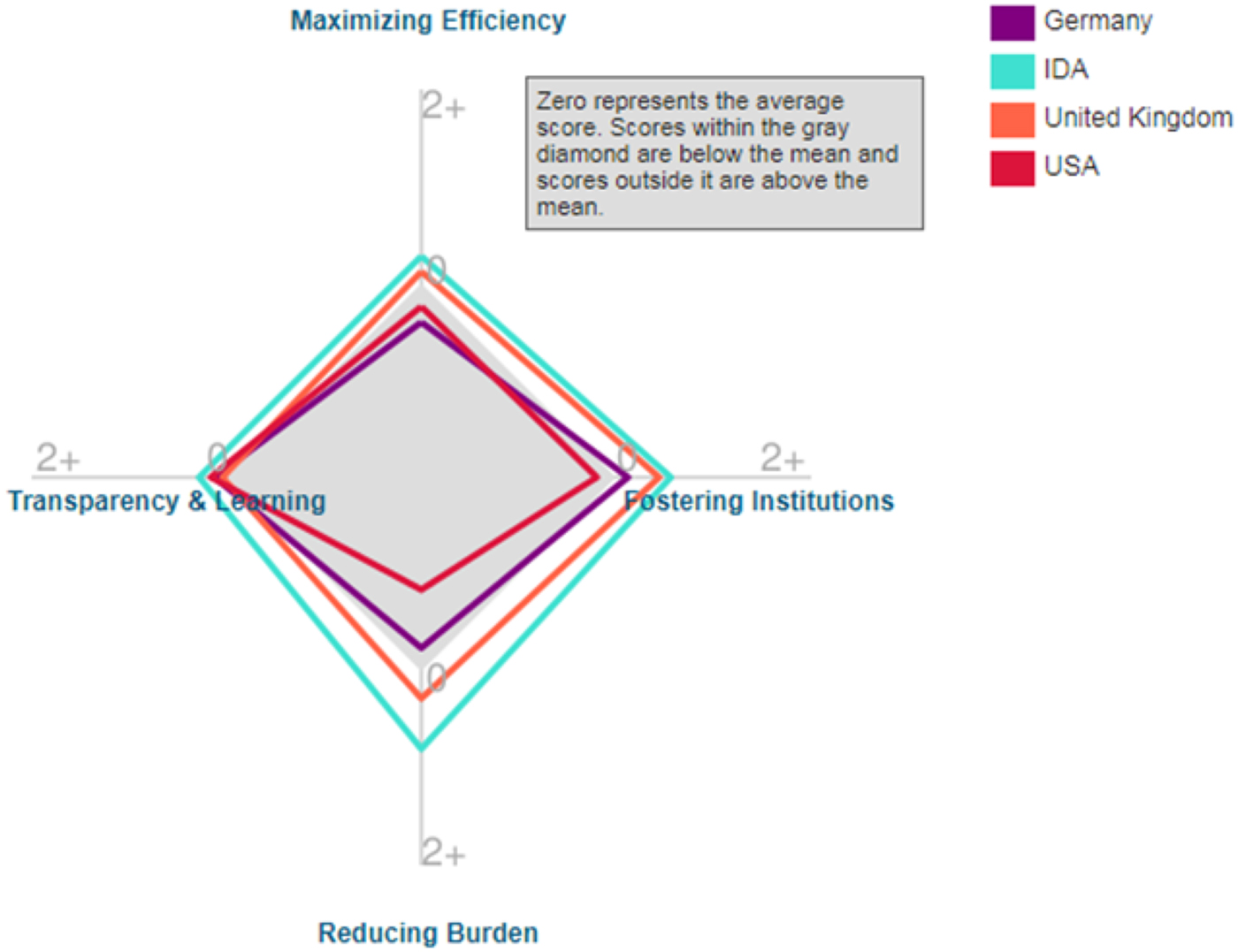
As the above discussion illustrates, multilateral organizations currently are the best available solution to asymmetric information, transaction costs, and incentive problems in aid governance. They allow countries to obtain more information, make more credible commitments, and coordinate aid policy (Annen and Knack, Reference Annen and Knack2015; Dreher and Voigt, Reference Dreher and Voigt2011; Rodrik, Reference Rodrik1995). As actors in their own right, they are also more development-oriented than their bilateral counterparts (Headey, Reference Headey2008; Knack et al., Reference Knack, Rogers and Eubank2011; Minoiu and Reddy, Reference Minoiu and Reddy2010). Aid ratings such as the QuODA illustrate this finding (Figure 1). All selected bilateral donors fare worse than the International Development Association in terms of maximizing efficiency, fostering institutions, reducing burdens, and transparency.
QuODA ranking of selected donor agencies

However, multilateral organizations are not without challenges either. They create administrative costs related to bureaucracy. More than 230 multilaterals exist (Kharas, Reference Kharas2007), with overheads of around 35% not being unusual. To make matters worse, multilaterals also generate agency costs for donors, beyond the inevitable loss of control resulting from multilateral delegation. Thanks to their local presence in almost all countries, they have informational advantages that they may exploit to benefit their own agendas, for example by focusing on interventions that undermine the human rights of the poor (Easterly, Reference Easterly2014). Such multilateral agency drift is particularly pronounced when donor countries have diverging aid preferences (Nielson and Tierney, Reference Nielson and Tierney2003). Donor countries may contain agency drift by ex-ante measures and ex-post controls, which increase the cost of delegation. Ex-ante measures pertain to the design of agency contract(s), for instance the provision of earmarked funding with much narrower delegated mandates than unearmarked funding (Reinsberg, Reference Reinsberg2017). Ex-post measures emphasize control of agent behavior, including measures such as shadow bureaucracies (Dijkstra, Reference Dijkstra2014), reviews of reports on the formal governing bodies (Nielson and Tierney, Reference Nielson and Tierney2003), and reliance on signals from watchdog organizations such as NGOs (Weaver, Reference Weaver2007).
The subsequent section probes the extent to which blockchain technology can improve aid governance under the current aid system (with a range of agencies intermediating aid giving from individual donors to ultimate beneficiaries). In the existing use cases, blockchain technology enhances the functioning of existing institutions by reducing information asymmetries and mitigating commitment problems. In a potential set of cases, it may even replace existing organizations, to the extent that it performs similar functions at a lower cost.
4. Can blockchain technology improve aid governance?
Asymmetric information
Blockchain technology can prevent fraud in charitable giving. The current aid governance architecture – with its numerous aid intermediaries – exists to create a “feedback loop” between individual donors and ultimate beneficiaries (Svensson, Reference Svensson2006). But this system of intermediaries is inefficient: each intermediary operates its own database with the personal records of beneficiaries. Under a blockchain-based aid system, individual beneficiaries would have a unique digital identity, securely stored on a blockchain and verifiable for every service provider that requires proof of identity in the delivery of aid. The blockchain makes the data tamper-proof and trusted by all participants and reduces the need for intermediaries for charitable giving once beneficiaries have been validated as legitimate recipients of aid.
Blockchain technology for cross-border charitable payments is already operational. For example, AID:Tech developed a blockchain-based platform for ensuring “the integrity of charitable contributions and social welfare programs” (Wellisz, Reference Wellisz2018). In partnership with the Irish Red Cross, the company delivered aid to 500 Syrian refugees in Lebanon using blockchain technology. The refugees obtained a unique identifier recorded on the blockchain, which they could use to buy products in local partnering stores. The system is said to work even when refugees are not connected to the internet as their voucher cards have a QR code stamped on it (AID:Tech, 2018: 6).
According to its whitepaper, the AID:Tech platform “enables entitlements such as welfare, remittances, donations, aid, and healthcare to be digitized and transparently delivered to end-users using blockchain technology in a completely transparent manner” (AID:Tech, 2018: 6). Aid fraud is likely minimized because assets can be traced instantly and beneficiaries have their unique digital identifiers stored on the blockchain. While beneficiaries self-identify on the platform as potential aid recipients, an intermediary (such as Irish Red Cross) is still necessary to verify that they are needy. Once beneficiaries are recorded on the blockchain, all transactions are traceable and they can receive assets without the need for verification.
In many developing countries, mobile phone providers are uniquely positioned to act as validators, as customers pre-register with them and settle most of their transactions through mobile money. BanQu is an example of a platform providing blockchain-based digital identity based on network credentials from mobile phone companies as validators (GSMA, 2017: 17). The benefit of this blockchain-based solution is that aid intermediaries may no longer be necessary to verify individual need – depending on how reliably such need can be assessed through the network credentials alone. While aid intermediaries may become less important, some other type of intermediary – such as a mobile phone provider – must provide proof of identity.
Foreign aid goes beyond financial payments to ultimate beneficiaries, as it commonly involves contractual relationships in which a donor agency pays a service provider for delivery of certain outputs. Under the current system, such procurement processes may be plagued by bribery and bid rigging (Wellisz, Reference Wellisz2018). Contractor relationships should thus be encoded as smart contracts that automate the entire process and make fraud less likely. Even though possibilities for fraud remain when assets are not digitally traceable, the transparency of a blockchain-powered procurement platformFootnote 4 enables big data analysis on procurement data to detect likely fraud. Furthermore, the “Internet of Things” facilitates low-cost verification of transactions. For instance, a smart contract might release funds to a contractor only if a tamper-proof smart meter indicates that a certain amount of energy has actually been consumed.
Transaction costs
Blockchain technology also promises to reduce the actual transaction costs of aid delivery. In the current system, transaction costs are unavoidable given the need for intermediaries. Aid intermediaries – NGOs, bilateral aid agencies, and multilateral organizations – produce administrative costs to the ultimate donor, while non-aid intermediaries, such as commercial banks, charge transaction fees for every donation. Blockchain technology can help reduce such costs because it relies less on intermediaries (if not making them redundant).
Currently available solutions have delivered transaction cost savings by minimizing the involvement of non-aid intermediaries. For instance, the World Food Programme (WFP) uses blockchains to make assistance disbursements to Syrian refugees in Jordan faster, cheaper, better traceable, and more secure. To that end, it has developed Building Blocks, a blockchain-based platform giving each refugee a unique digital identifier and linking it to the biometric data from UNHCR. A recipient with an entitlement from WFP can self-identify through an iris scan at the point of sale of participating retailers and the transaction will be recorded on the blockchain. Since this transaction record can be trusted, WFP can use the information to pay the retailer directly. The auditability of the blockchain ensures that all aid funds are accounted for and traceable in real time. Compared to the current solution involving money transfers to bank accounts for each refugee, WFP saves transaction fees (which are around 3.5% of the average aid transaction) and capital cost as it has drastically reduced its advances to the bank (GSMA, 2017: 25).
Disberse is a fund management platform for aid finance that is available to a wider set of donors.Footnote 5 Powered by the Ethereum blockchain, Disberse acts as an electronic money provider to guarantee, issue, and distribute the funds more transparently and at lower cost than via traditional non-aid intermediaries. The platform receives donor funds in fiat currency and holds them in escrow. It then tokenizes the funds and disburses them as e-money to all stakeholders involved in a given project through their blockchain wallet. The transaction is ultimately settled with a financial partner. Disberse implemented its first pilot in 2017, involving funding by a UK NGO to a Swazi NGO and onto four local schools. In addition to tracking the funds from end to end in real time, the donor saved 2.5% on their transfer fees (GSMA, 2017: 20–21).Footnote 6
To harness real transaction cost savings using blockchain technology, the above cases use permissioned blockchains, which involve lower computational costs and smaller latency than permissionless ones.Footnote 7 The price of these benefits, however, is that donors must trust the people who designed the blockchain, the platform owners, and those organizations that verify the data recorded on the blockchain.
Commitment problems
Some obstacles to effective aid delivery are more fundamental than corrupt contractors and transaction fees. These obstacles relate to a lack of credible commitment by governments. While donor governments cannot commit to disburse funds that they have promised, recipient governments cannot commit to implement reforms once they receive aid funds (Swedlund, Reference Swedlund2017). Under the current aid governance architecture, a host of aid modalities are meant to address these problems, specifically on the recipient side. But these remedies remain necessarily imperfect.
Albeit not a current use case, blockchain-based aid governance could allow states to make more credible commitments, thereby enhancing aid effectiveness. To that end, states would need to replicate all (existing) aid contracts on a permissioned blockchain. Only states would initially be allowed to write consensus data on the blockchain; entrusted third parties such as multilateral organizations could be added. Their roles would be to control access rights to the permissioned blockchain and to validate that states have honored their obligations specified in smart contracts. For example, a smart contract may specify that a donor government transfer a specified amount to a recipient government if the latter improves its public financial management (PFM) system. To verify that PFM improvements actually occurred, states could invite the World Bank as an entrusted third party to validate PFM reform. Following a seal of approval written onto the blockchain, the smart contract would release donor funds automatically.
As the PFM example illustrates, verification is critical. Smart contracts can evaluate some conditions without the need for third-party validation and prediction markets, especially digital assets. However, real-world events off the blockchain must be digitally represented at first. In particular, to judge whether or not policy reforms are implemented requires human judgment that third parties such as multilateral organizations, independent evaluators, and NGOs are positioned to fulfill. However, no such validator may exist when verification is prohibitively costly, or these intermediaries may not be trustworthy either, for instance because they want to extract rents from donors. To reduce reliance on third parties, blockchain-based prediction markets such as Augur – a permissionless blockchain to foster consensus about specific events – may be useful. These prediction markets are tamper-proof because participants stake money on their predictions and no central authority can censor them. In the case of Augur, reporters receive half of the fees in the system multiplied by the token shares they own. Because participants of the prediction market have an incentive not to undermine the value of the token, they have an incentives to report truthfully. For their part, reporters need not worry about payments, which are being guaranteed by smart contracts.Footnote 8 In the context of aid delivery, blockchain-based prediction markets are particularly useful for verifying those recipient-country behaviors that relate to their interactions with citizens. For instance, citizens can report on the level of public goods they obtained from their government, or the level of respect for human rights. Recorded directly on the blockchain, these reports affect the disbursement of aid funds from the donor to the recipient government.
Donor–recipient relations governed by smart contracts have advantages over current approaches, which involve a combination of different strategies to mitigate agency problems – policy conditionality, project aid, and bypass aid. Smart contracts drastically reduce – if not eliminate – possibilities for cheating. Neither donors nor recipients can shirk on their commitments as the code is executed when predefined conditions are met. But it is important to understand the limitations of smart contracts. First, guaranteed enforcement only applies to the blockchain. While the blockchain ensures execution of transfer of claims to property, it requires an intermediary to physically transfer property between parties (Arruñada, Reference Arruñada2018). Hence, enforcement is guaranteed only for digital assets. Second, for smart contracts to have actual bite, governments must stake real resources upon their promises that would be lost if governments were to renege on their promises. The challenge then becomes how to get governments to make such stakes. In this regard, the blockchain may be helpful because it makes empty promises transparent, thereby increasing the effectiveness of peer pressure and naming-and-shaming by NGOs. Similarly, as every participant in the blockchain network has the same information at any point in time, broken promises are immediately visible to everyone, making attempts to manipulate this information unsuccessful. Third, smart contracts are most effective for governing complete contracts while having little benefit for incomplete contracts, which require parties to renegotiate key aspects of their aid relationship as circumstances change. While incomplete contracts may be a deliberate design choice – allowing parties to adapt to changing circumstances in a flexible manner (Rosendorff and Milner, Reference Rosendorff and Milner2001) – complete contracts may be the preferred choice when participants have incentives to tie their hands, for example when a donor has a long-term ODA/GNI target that it wishes to maintain even when the fiscal situation deteriorates.Footnote 9 The existing aid governance architecture would not allow governments to make commitments of comparable credibility – not even through multilateral organizations, which have only limited possibilities for enforcement, such as suspension of voting rights as last resort.
Blockchain technology also has the potential to address cooperation problems among donor governments related to the collective financing of development programs. Current multilateral organizations were established with the role of policing burden-sharing arrangements among donor countries, but the punishments they can mobilize often do not suffice to ensure donor compliance. A blockchain solution may address this problem. New financing targets could be defined following a so-called “multi-party escrow” requiring n out of N countries to agree on a specific aid target. A multi-party escrow can also be used to insure donors against under-compliance among their peer donors, specifying that aid dollars leave the national treasury only when n out of N other countries have paid their agreed share. These conditions can be coded easily as smart contracts. Again it is important to note a limitation. While the technology helps donor governments that prefer a high-contribution scenario but are worried about cheating to cooperate, it is ineffective in cases where donors prefer the low-contribution equilibrium. Hopes are that to counter highly reluctant donor governments, non-state actors with progressive development preferences could become literal “stakeholders” – essentially providing for the missing stake – but even this would not be possible without the consent of the respective donor government.
Coordination problems
Even if all donors agree to support development, they often fail to coordinate on a portfolio of activities that operationalize their goal. Current multilateral organizations strike a balance among donors with heterogeneous aid preferences (Annen and Knack, Reference Annen and Knack2015). With well-functioning multilateral organizations, there is little potential for blockchain technology to further improve donor coordination.
In recent years, donors have intensified their efforts to evaluate aid projects that reflect their desire to reduce information asymmetries and to transfer aid to where it is demonstrably most effective. But evaluation is costly and often fraught with error, as aid success is hard to quantify. Much evaluation effort also is duplicated, as relevant information is often not shared across organizations. Blockchain technology can enhance the evaluation functions of aid agencies and thus help increase the share of result-based aid in development budgets. In particular, the technology would provide an efficient way for agencies to share their evaluations securely and in a fully transparent way.
Blockchain technology could also improve the accuracy of project evaluations. Under the current system, project managers self-evaluate their projects, complemented by re-evaluations from evaluation departments. A blockchain-based evaluation system would rely on prediction markets that allow for real input from ultimate beneficiaries. All stakeholders have incentives to participate in this market. Donors want to report back concrete results to their communities and should hence be willing to invest into reliable information (Buntaine, et al., Reference Buntaine, Parks and Buch2017). Local beneficiaries have incentives to participate in this market and to report truthfully. As they have local information to predict project success, they can invest in shares reflecting the likelihood of project success and earn a profit when project success becomes publicly known. As holders of the natural token in the prediction market, they have incentives for truthful reporting. While recipient governments may have incentives to exaggerate project success – for example because their aid receipt depends on results – they would need to compete against the aggregate verdict of the public prediction. The less successful a project really is, the costlier it is for the government to manipulate the prediction market outcome. Ideally, it would be prohibitively costly to do so.
5. Discussion and conclusion
Foreign aid is often considered to play an important role in promoting development – initially, by providing capital to boost investment in physical infrastructure, and subsequently, by helping to build institutions that “counteract the many perverse incentives likely to occur” in human interaction (Ostrom et al., Reference Ostrom, Gibson, Shivakumar and Andersson2002: 4). And yet foreign aid is subject to collective action problems that limit its effectiveness. Consequently, donor aid agencies have explored the potential of blockchain technology to address some of these problems and to enhance the efficiency of aid delivery. But the use cases they examine – digital identity, aid supply chain management, and aid payments without financial intermediaries – remain within the confines of the existing aid governance architecture, with aid agencies occupying a central role as intermediaries (DANIDA, 2017; GIZ, 2018; GSMA, 2017; IDRC, 2017; KfW, 2018; Wigley and Cary, Reference Wigley and Cary2017).Footnote 10
While reviewing such blockchain-based applications for aid delivery, this paper is the first to discuss potential applications in aid governance. This involves semi-trusted environments in which official donors and recipient governments negotiate foreign aid contracts, a group of donors seeks to finance development programs collectively, or donor agencies enter into contractual relationships with local service providers. In all these cases, blockchain technology provides a platform to support smart contracts that make transactions practically unstoppable when predefined conditions are fulfilled (Diedrich, Reference Diedrich2016). Using blockchain technology, donors would be less likely to renege on aid commitments, while recipients would be more likely to follow through with policy reforms. Blockchain technology may also remedy information problems, for example by facilitating prediction markets that can verify whether certain events have occurred (Swan, Reference Swan2015).
The use of smart contracts for governing foreign aid relations is a most-likely case of adoption of blockchain technology because it generates tangible benefits for all stakeholders while preserving the role of existing organizations in the aid governance architecture. For donors, blockchain technology guarantees that recipients enact policy reforms, thus providing leverage against aid critics at the domestic level. But blockchains also allow recipient governments to demonstrate commitment to reforms, while non-state actors would support the blockchain as it makes aid flows more transparent and hence governments more accountable. In other words, the above minimal scenario has low “transition costs” and hence a good chance of adoption because it preserves the existing political arrangements (Khan, Reference Khan, Harris, Hunter and Lewis1995).
In a more radical scenario, states would establish a decentralized autonomous organization (DAO) for development, in which all stakeholders – donor governments, recipient governments, multilateral organizations, NGOs, and individuals – would participate and interact via smart contracts. This would imply the end of ODA, as the emergent ecosystem would be governed by a natural token underpinned by aid donations. Tokens can be used to pay anyone in the ecosystem for service delivery and event validation. Aid agencies and multilateral organizations would be among many other providers in this regard. To deal with the problem of incomplete contracts, DAO stakeholders would reformulate governance rules as deemed necessary, for instance by a (qualified) majority of votes.
The potential benefit of a development DAO is that aid would become more demand-driven, in line with the Paris Declaration commitment. For example, recipient governments could formulate development plans (‘Poverty Reduction Strategy Papers’) as smart contracts to which donors can pledge resources. Further, beneficiary communities could directly leverage smart contracts to propose potential projects at low cost and find like-minded partners to implement these projects, with the DAO providing the overarching institutional framework. The smart contract might specify that a certain quorum of donors must be found to ensure its financial viability, while the funds from supporting donors would be held in escrow and disbursed only when the required quorum is actually achieved. Overall, a development DAO would help repair the “broken feedback loop” (Svensson, Reference Svensson2006) in aid governance.
The drawback of a development DAO is that it is unlikely to come into existence without support from governments. In principle, peer-to-peer donations through a permissionless blockchain are possible but introducing them imports the undesirable properties of such chains. In practice, the DAO must be based on a permissionless blockchain to be economically viable, which would require governments to police the platform (however, this is a task that they could delegate to multilateral organizations). How likely is this to happen? On the one hand, aid agencies may obstruct a development DAO because it threatens to undermine their role as aid intermediaries. Individual donors could provide aid directly, without aid agency intermediaries, because identities, assets, and transactions are trusted once recorded on the blockchain. Rather than lobbying their donor governments, non-governmental donors – such as diasporas wishing to support their ethnic kin abroad (Anwar and Michaelowa, Reference Anwar and Michaelowa2006) – can do so directly using smart contracts and blockchain-based identity services, similar to blockchain-based payment systems that already allow for an efficient transfer of remittances (Wigley and Cary, Reference Wigley and Cary2017). On the other hand, aid agencies may support the DAO to the extent that the increased transparency of aid provision and the demand-driven allocation boost aid donations from non-government actors that also benefit these aid agencies as providers of technical expertise and entrusted validators.
What are the implications for existing multilateral organizations? In the most-likely scenario, multilateral organizations may not be significantly affected but will change their character. In particular, their transactional functions may become redundant because blockchains can enact transactions (subject to agreed conditionality) more cheaply. But multilaterals will continue to play a role in monitoring behavior and verifying results, even though competitive pressure from prediction markets challenges their dominant position. Multilaterals will also expand their role in policy deliberation and technical assistance in the implementation of development policy. Under the less likely scenario, however, the traditional model of multilateral aid provision would topple. If states were to implement the far-reaching proposal of a development DAO, the traditional governance role of multilaterals would no longer be needed. However, they would be well-positioned actors to police the platform, to act as think-tanks and agenda-setters, validators of real-world events, and capacity builders.
My preliminary analysis suggests that foreign aid is an issue area in which blockchain technology has undeniable benefits and is already being used to make aid delivery more effective. But blockchain technology is no panacea – its benefits outweigh its costs only under certain conditions. A number of issues remain for future research. First, as a relatively new innovation, blockchain technology must prove its full functionality, reliability, and sustainability in real-world applications before states will be ready to adopt it. For example, blockchain-based prediction markets are relatively new and their resilience to manipulation by actors with high stakes in prediction outcomes is yet unknown. In that regard, multilateral organizations would be an ideal regulator for these markets to ensure their proper functioning. Second, researchers may examine how the availability of blockchain technology will alter the relative attractiveness of different aid modalities. Theoretically, to the degree that smart contracts make cheating less attractive, donors may resuscitate aid modalities that were prone to moral hazard. In other words, project aid may become less important, to the benefit of program aid. In addition, blockchain-based prediction markets will boost results-based aid because they enlarge the set of outcomes that are digitally verifiable. Third, these possible changes will have repercussions for aid effectiveness. Once blockchain-based aid governance has come to fruition, researchers should assess the extent to which the technology has made aid more effective compared to a business-as-usual case.
Author ORCIDs
Bernhard Reinsberg 0000-0001-7382-413X.
Acknowledgments
I am particularly grateful to Giorgio Caselli, Simon Deakin, John Rapley, and Jochen Runde for fruitful discussions and valuable comments. The author declares no conflict of interest.