1. Introduction
Most advanced industrialized countries have faced rapidly changing labor market conditions over the past few decades, represented by structural shifts from a manufacturing-based economy to a service-centered one, a decline of labor demand in an economic slowdown, and an increase of labor market flexibility. These labor market situations have seriously deteriorated employment and working conditions for all the population, resulting in far more intensive competition for decent jobs than before. Yet, young people with less or no experience or lack of education have confronted far more difficult challenges for finding stable jobs compared with prime-age workers (those between 25 and 54 years old).Footnote 1 Thus, youth has been considered the most vulnerable group in the labor market, especially in economic distress, requiring the government to develop more specific policy measures for this group (Scarpetta et al., Reference Scarpetta, Sonnet and Manfredi2010).
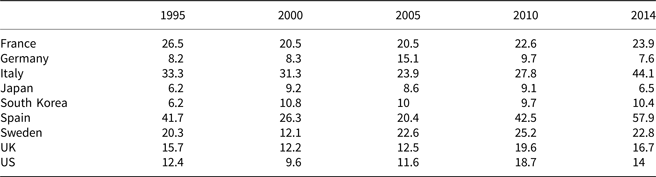
As shown in Table 1, most advanced industrialized countries have experienced high levels of youth unemployment during the past two decades, although some countries (e.g., Italy and Spain) have suffered from much higher degrees of youth unemployment than others, demonstrating more severe youth problems in the labor market. It is not surprising to see that the youth unemployment rate for those aged 15–24 is higher than the country's overall unemployment rate. Young people are more likely to change their jobs in their early ages as they search for the right ones. This tendency may lead to a status of unemployment in the short-term, or they may need to receive additional education and vocational training for more experience or higher skills before entering the labor market. Nevertheless, the employment gap between youth and the rest of the population has increased over time across advanced industrialized countries. Relative unemployment rate between youth (aged 15–24) and adult (aged 25–54) population, which is calculated by the ratio of the youth unemployment rate to the adult population's unemployment rate, has increased from 2.5 to 2.7 in Organization for Economic Cooperation and Development (OECD) countries between 1999 and 2009 (OECD, 2010: 51, Table 2–1). In addition, an economic recession (e.g., the 2008 global financial crisis) has contributed to the rapid rise in long-term unemployment for youth than that for prime-age workers, which suggests more negative prospects of youth career development in economic hard times (O'Higgins, Reference O'Higgins2012).
Youth unemployment rate in selected OECD countries

Source: World Bank (http://data.worldbank.org/indicator/SL.UEM.1524.ZS, accessed 26 September 2016).
Note: The unemployment rate is a modeled ILO estimate; youth is defined as those aged 15–24.
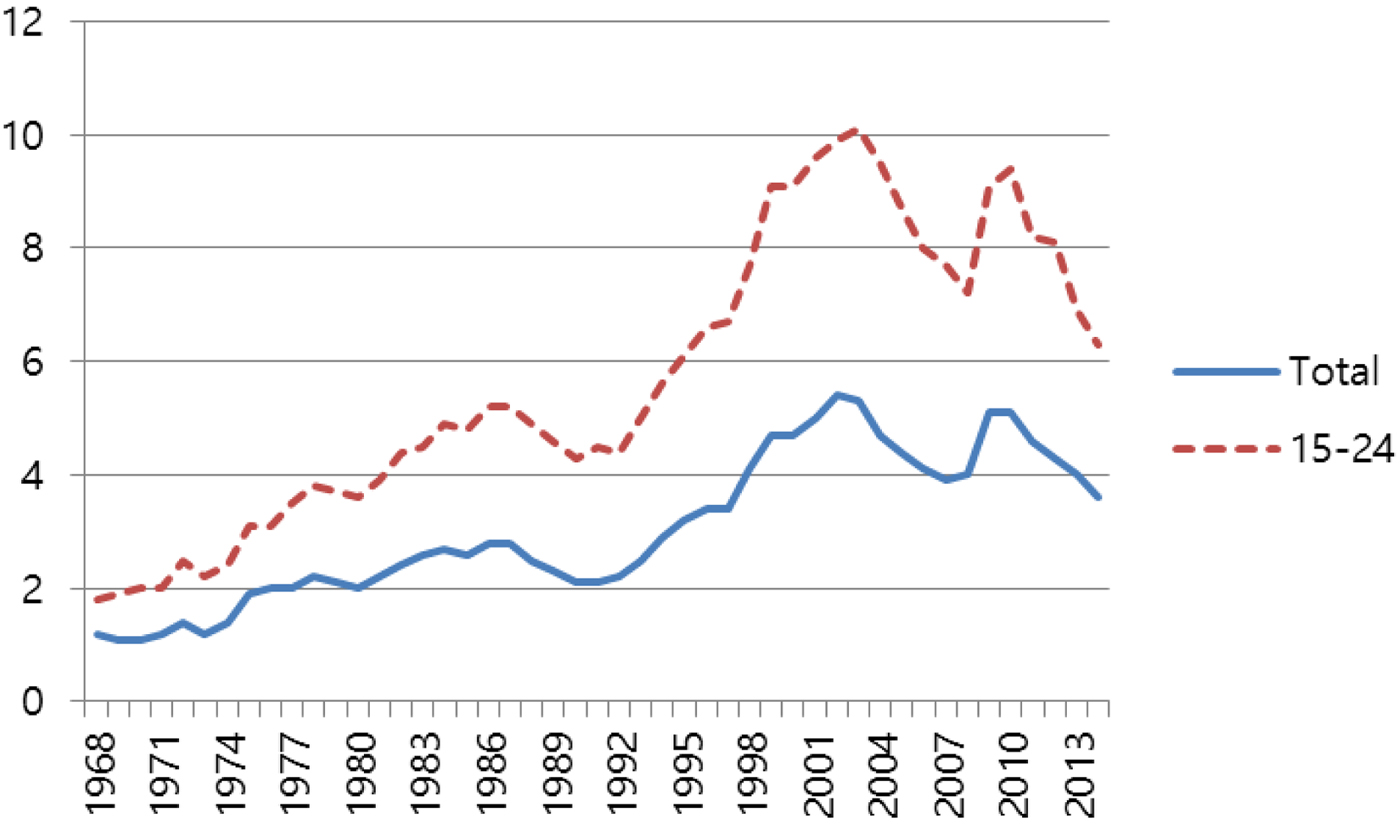
Even Japan, well-known for its strong job security and low unemployment in the postwar period, has also confronted the problems of rising youth unemployment and young workers in precarious employment like other advanced industrialized countries have. As shown in Fig. 1, Japan's youth unemployment has increased far more drastically after the collapse of the bubble economy in the early 1990s, and the magnitude of the changes in unemployment has been much greater for the young workforce than for the entire workforce. In addition, a growing number of the young workforce has extreme difficulties with finding stable jobs (e.g., regular employment positions) in the labor market, trapped in the vicious cycle of the frequent transition from one precarious job to another precarious one.
Japan's unemployment and youth unemployment

During the high growth period, Japan's school-to-work transition system was regarded as one of the most important and well-functioning institutional arrangements for companies to secure the stable supply of the young workforce and for youth (especially high school graduates) to find decent jobs, even for those with low educational attainment. However, Japan's economic doldrums and firms’ shifts in human resource management practices have imposed severe pressure on the school-to-work transition system over the past two decades (Brinton, Reference Brinton2011). Although Japanese companies have expressed their commitments to the continuation of permanent employment practices for the core workforce, they have rapidly expanded the hiring of non-regular workers (e.g., part-time, temporary, fixed-term contract, or dispatched workers), most of whom are excluded from the privileges of job security, high pay, and generous social welfare benefits.Footnote 2 The percentage of Japan's non-regular workers more than doubled from 16.4 to 37.5% between 1985 and 2015.Footnote 3 Since the mid-1990s, in particular, Japan has experienced a rapid increase in the proportion of the non-regular workforce (Japan Institute for Labor Policy and Training (JILPT), 2014: 48–49).
Considering the fact that the entry employment status is a key determinant of later employment status in the Japanese labor market, young workers, who have not been able to find regular employment positions at the time of graduation or within few years after graduation at latest, are more likely to be stuck in perennial precarious employment in their 30s or 40s (OECD, 2009: 59). Such job insecurity of young people, especially males, has indeed contributed to low marriage rates, marriage postponement, and declining fertility rates, as they lack the stable income to form a family and raise a child (JILPT, 2014: 14–15; Miyoshi, Reference Miyoshi2014). According to the government statistics, only 27% of male non-regular workers in their 30s were married in 2015, compared with 66% of male regular workers in the same age group (Hoenig and Obe, Reference Hoenig and Obe2016). Japan's imminent sociodemographic challenges, represented as an aging society and declining fertility rates, have imposed far more pressing concerns on its policymakers to cope with youth unemployment and young workers in precarious work, compared with those in other advanced industrialized countries.
This paper examines the deterioration of employment and labor market conditions for Japan's youth after the collapse of the asset bubble in the early 1990s and the government's policy efforts to address these concerns, especially since the early 2000s, a period during which its policymakers have advanced important measures for them. It analyzes a series of youth employment and labor market policies, ranging from the job search support program and the counseling program to the education and training program, with an emphasis on the target groups and goals of these programs. This paper argues that while the government has promoted various tools to help young people become economically and socially independent individuals, it has gradually shifted its policy focus toward human capital development for growth and industrial competitiveness as a way of revitalizing Japan's troubling economy.
This paper proceeds as follows. Section 2 elaborates different types of Japan's youth employment problems in the labor market, focusing on non-regular workers (e.g., freeters, contract workers, dispatched workers, or entrusted workers), and NEETs (i.e., youth not in education, employment, or training). Section 3 analyzes the development of the government's youth employment policies since the early 2000s, a period during which the government began to seriously respond to youth problems in the labor market. It compares with a series of policy measures for youth unemployment, underemployment, and inactive youth and reviews the characteristics and effectiveness of these programs. In addition, it examines the current Abe government's youth employment and labor market policies, highlighting the dimension of human capital investment for economic resuscitation and competitiveness. Section 4 summarizes the main findings of the paper and provides some implications for Japan's youth employment.
2. Japan's youth employment problems in the labor market
Under the pressure of Japan's protracted recession, young people have been exposed to a high risk in the labor market, such as fierce job competition, precarious work, and unemployment. This section analyzes Japan's youth employment problems, focusing on non-regular workers (e.g., freeters) and workless youth (i.e., NEETs).
2.1 Young non-regular workers
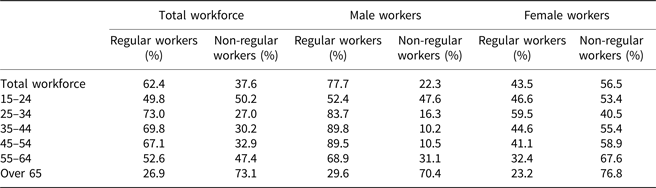
Since the early 1990s, Japan has experienced an increasing number of non-regular workers with job insecurity, low pay, meager social welfare benefits, and very limited career prospects.Footnote 4 Not only Japan's economic recession but also the structural transition from the manufacturing-based economy to the service economy has contributed to an increase in the number of non-regular workers, and the decline of hiring young regular workers (Honda, Reference Honda2005: 12). A large proportion of the young workforce has been employed as non-regular workers as shown in Table 2 since most Japanese companies prefer to retain middle-aged full-time regular workers even during economic downturns, while saving labor costs through the hiring of the non-regular workforce, most of whom are young, old, and female workers. For the young workforce aged 15–34, the largest proportion of non-regular workers are part-time workers and casual hourly/temporary workers (or Arbeit). Yet, there have been a growing number of dispatched workers (or haken shain) and fixed-term contract workers (Japanese Ministry of Health, Labor, and Welfare (MHLW), 2009b: 22; JILPT, 2014: 53, Fig. II–27; Statistics Bureau of Japan, http://www.stat.go.jp/data/roudou/longtime/03roudou.htm, Table 1–2, accessed 29 June 2017).
Composition of the Japanese workforce by gender and age (as of March 2015)

Source: Statistics Bureau, Japanese Ministry of Internal Affairs and Communications (http://www.stat.go.jp/english/data/roudou/lngindex.htm, Historical Data 1, Table b–2, accessed 23 May 2015).
In addition, labor market dualism along the lines of employment status between regular and non-regular workers has further exacerbated the problems of human capital investment. Thus, non-regular workers have rarely had a chance to improve their skills applicable for regular jobs, resulting in fewer career prospects for job transition to regular workers or positions with higher wages (JILPT, 2014: 14). The MHLW's document has reported that 72% of Japanese companies offered in-house off-the-job training to regular workers, whereas only 38% of them provided similar training programs to non-regular workers. Similarly, 53.9% of Japanese companies provided in-house on-the-job training to regular workers, while 32.2% of them offered some kinds of the on-the-job training to non-regular workers (OECD, 2009: 85, Fig. 2.13). These disparities in human capital investment have further enlarged the economic gaps between regular and non-regular workers and have negatively affected career prospects for non-regular workers. Thus, the Japanese government has developed a wide range of employment and labor market policies for youth that would facilitate them to find stable jobs at the time of graduation (or soon after graduation) and to make a smooth transition from precarious work to regular employment positions in their 20s.
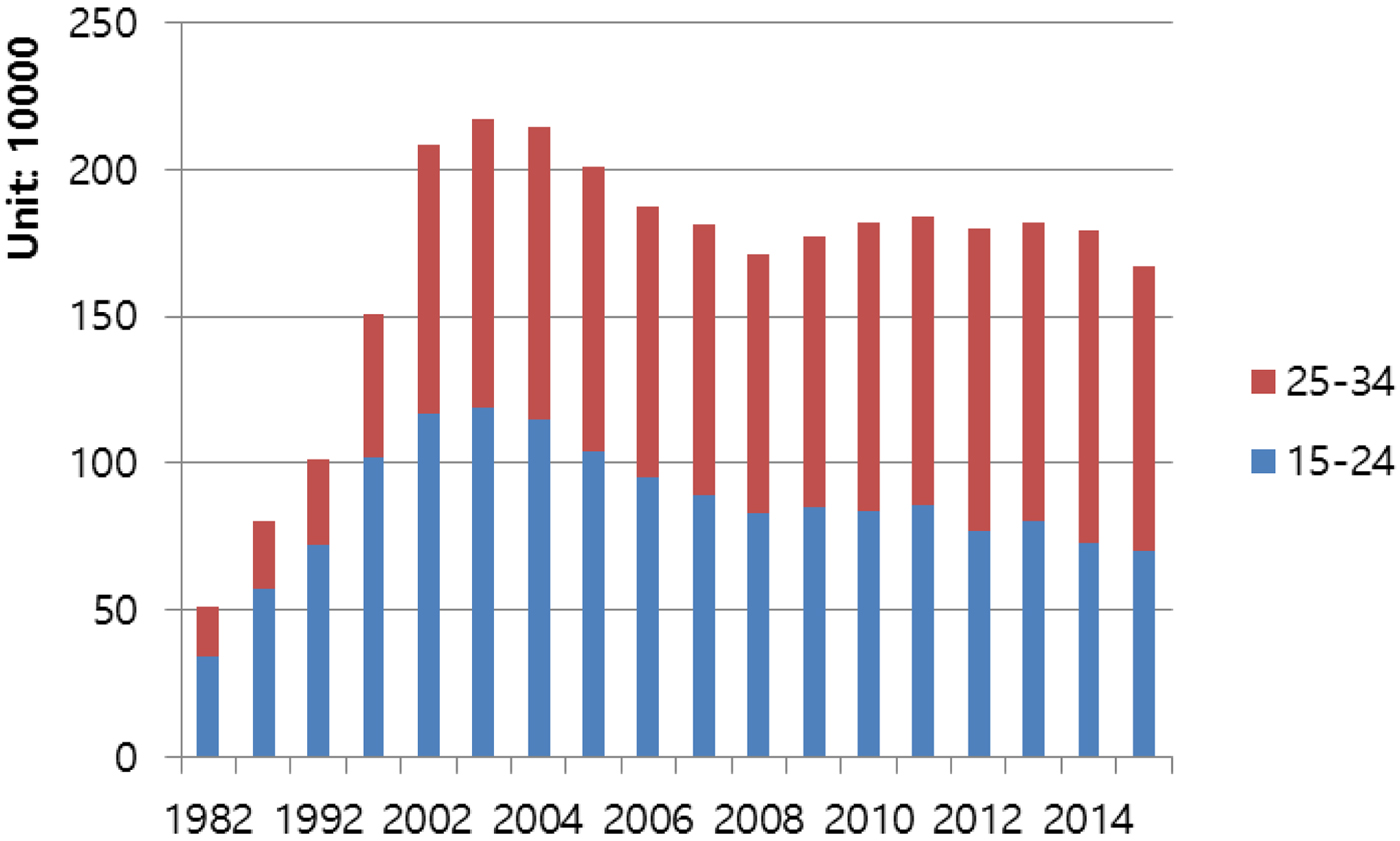
Among several different types of non-regular workers, freeters (or job-hopping young part-time or casual hourly/temporary workers) have received enormous policy and scholarly attention since the early 2000s.Footnote 5 They have emerged in the Japanese labor market since the 1980s, a period during which the country experienced an economic boom (Hamaguchi, Reference Hamaguchi2013: 152–153). In the beginning, freeters referred to young people who did not want to follow Japan's traditional employment practices, known as permanent employment practices, but rather chose to work as part-time or casual hourly/temporary workers as a transitional status toward professionals in the fields of music or art (Kosugi, Reference Kosugi2006).Footnote 6 While freeters were originally portrayed as young Japanese who had different views on jobs and work, this term has represented the deterioration of job market for youth (e.g., involuntary part-timers) after the collapse of the asset bubble (Inui et al., Reference Inui, Sano and Hiratsuka2007: 75; Toivonen, Reference Toivonen2013: 12–14). According to the government statistics, there were about 1,670,000 freeters between the ages of 15 and 34 as of 2015, accounting for 6.4% of the young population between 15 and 34 years old (Cabinet Office of Japan, 2016: 231). As illustrated in Fig. 2, the number of freeters slightly declined since its peak of 2,170,000 in 2003. However, the number of freeters aged 25–34 increased from 910,000 to 970,000 between 2002 and 2015 (7.0% of the population aged 25–34), while the number of freeters aged 15–24 decreased from 1,170,000 to 700,000 during the same period (5.7% of the population aged 15–24).
Number of freeters in the Japanese labor market

In particular, Japan's strong internal labor market, whose system is based on the hiring of fresh graduates from high schools or colleges/universities and the provision of internal job training for newly hired workers, has made it extremely difficult for freeters to find stable jobs, especially those who have not been able to secure regular employment positions a few years after graduation. Thus, freeters are more likely to remain as job-hopping middle-aged part-time or casual hourly/temporary workers with little or no chance of changing their employment status to full-time regular workers, unless they make a transition to stable employment in their late 20s or early 30s at latest (Higuchi and Ōnishi, Reference Higuchi, Ōnishi and Higuchi2013: 19, Fig. 13). In other words, if freeters are incapable of changing their employment status until their late 20s, they are more likely to work as freeters at a later stage of the life course, which raises serious concerns for Japan's policymakers with respect to social and economic stability for aging workers in precarious employment. In this regard, it has become more critical for ʻoldʼ freeters aged 25–39 to find stable jobs as early as possible. As a result, a series of government policy packages has been put forward to support ʻoldʼ freeters’ job transition to regular employment positions, such as the New Employment Strategy introduced in April 2008 (MHLW, 2009b: 27–28).
2.2 NEETs
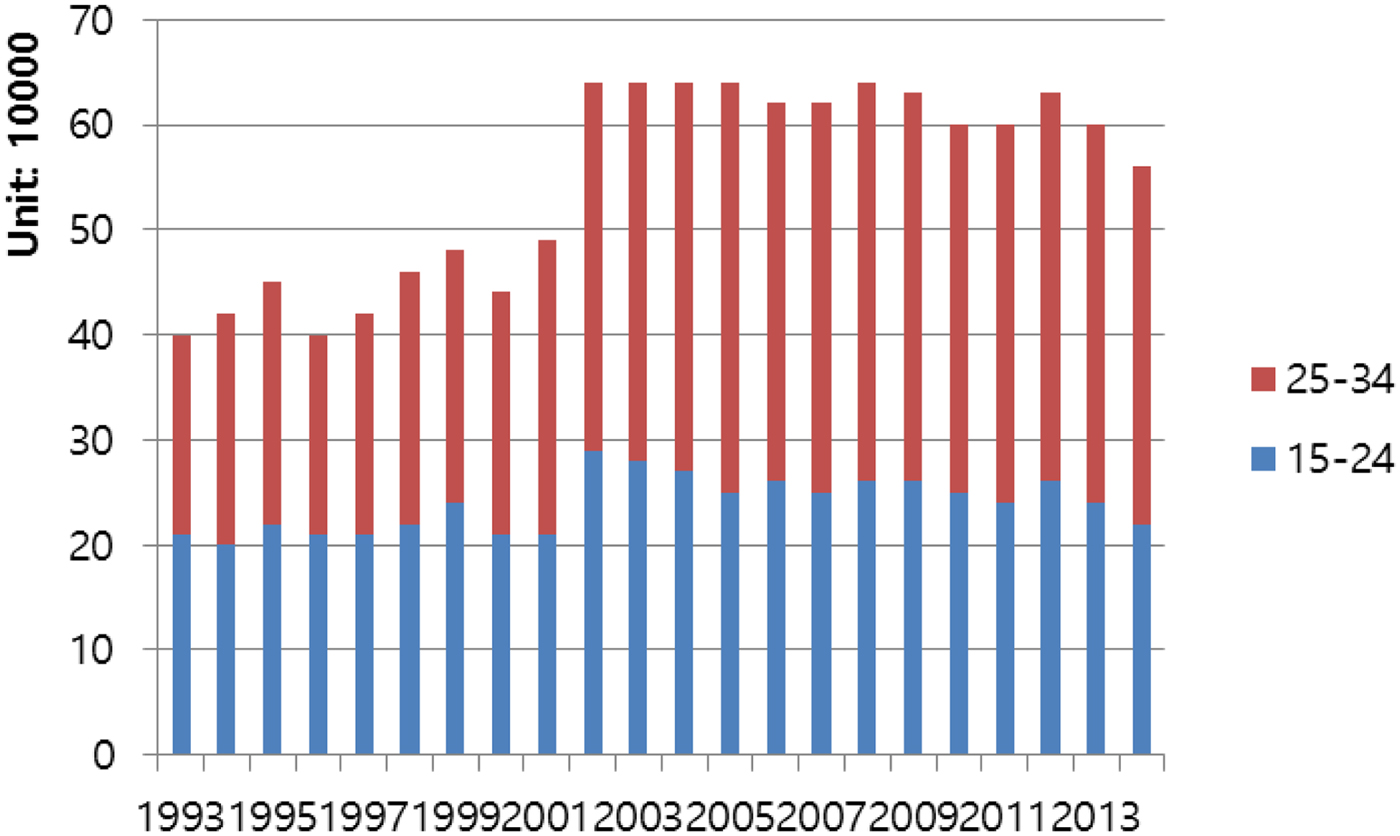
NEETs, whose term originated in the UK, have turned out to be another serious youth problem in Japan since the early 2000s.Footnote 7 In contrast to freeters working as part-time or casual hourly/temporary workers, NEETs have been regarded as a more troublesome youth since they rarely have motivation for employment and job search with less or no prior work experience, which makes it more difficult for policymakers to propose support programs for these young people. The number of NEETs rose from 400,000 to 560,000 between 1993 and 2014, whose proportion counted for 2.1% of the population aged 15–34 as of 2014 (Cabinet Office of Japan, 2015: 38; see Fig. 3). Regarding the characteristics of NEETs, Genda has argued that these young people do not have any confidence in themselves and they lack social networks, such as families and friends (Genda, Reference Genda2013a, Reference Genda2013b). His description indicates that it is important to provide employment and job training assistance as well as other kinds of social and moral support programs for them, both of which would be relevant not only for their employment and labor market conditions but also for their social interactions. Thus, Japan's policymakers have provided various policy measures to help them find jobs in the labor market and to encourage them to participate in other social activities as local community members, whose point will be further elaborated below.
Number of NEETs in the Japanese labor market

2.3 Youth employment problems and socioeconomic disparities in the labor market
Japan's youth has been more severely hit by the economic recession than any other age groups, exemplified by the term, ʻice age of employment,ʼ especially referring to harsh labor market conditions for new hiring positions in the 1990s (JILPT, 2011: 33–34). In response to these challenges, the government has endeavored to solve the problems of youth employment: rising youth unemployment, an increasing number of young non-regular workers, economically inactive young people with little or no work experience, and frequent job changes. Not surprisingly, youth problems are closely related to other social and economic concerns in Japan. During the late 1990s, Japan experienced a drastic decline of the construction and manufacturing jobs, resulting in a less number of jobs, especially for male workers with low educational attainment (Author's interview with a labor economist in Tokyo, Japan, 21 January 2015). A large number of freeters and NEETs are those with low educational attainment (e.g., secondary school graduates or dropouts), mostly from economically and socially disadvantaged families (Inui et al., Reference Inui, Sano and Hiratsuka2007: 91; Kosugi, Reference Kosugi and Mouer2008: 6–9; OECD, 2009: 48, Fig. 1.8). Since the level of educational attainment is highly correlated with workers’ employment status in the Japanese labor market (as illustrated in Table 3), the provision of the education and vocational training programs at schools and firms seems to be more important for young workers, especially those with low educational attainment, in finding stable jobs.Footnote 8 These problems have led its policymakers to focus on the provision of youth employment and labor market policies at the intersection of the education and industrial policies, resulting in close cooperation among the Japanese Ministry of Economy, Trade, and Industry (METI), the Japanese Ministry of Education, Culture, Sports, and Science and Technology (MEXT), and the Japanese Ministry of Health, Labor, and Welfare (MHLW). By doing so, the government hoped to enable young people to improve their ʻemployabilityʼ in the labor market by upgrading skills and broadening their career experience (Arai et al., Reference Arai, Ichimura and Kawaguchi2014). The following section analyzes a series of youth policy measures since the 2000s and the effectiveness and limitations of them in response to Japan's youth problems in the labor market.
Share of non-regular young workers by educational attainment (2006)

Source: Organization for Economic Cooperation and Development (OECD) (2009: 55, Table 1.2).
3. Government's policy efforts for youth employment in Japan
This section examines the development of Japan's youth employment and labor market policies since the early 2000s, a period during which the government has proposed a series of policy measures to deal with youth problems. It elaborates on the characteristics of various support packages for youth along the lines of the policy targets and goals.
3.1 Overview of Japan's youth employment and labor market policies
Most advanced industrialized countries have developed a wide array of employment and labor market policies over the past few decades in response to the problems of youth unemployment and precarious employment. Meanwhile, in marked contrast to its strong emphasis on the employment and labor market policies for middle-aged and old workers (aged over 55 years old), there was no explicit youth employment policy in Japan until the early 2000s. Japan's postwar economic development and the well-institutionalized system of the school-to-work transition (especially for high school graduates) weakened the necessity for formulating youth employment and labor market policies (Hamaguchi, Reference Hamaguchi2013: 19–20; JILPT, 2014: 55 and 149–152; Komikawa, Reference Komikawa2015: 14). Yet, its economic malaise and industrial transformation have imposed severe pressure on the labor market, leading to various youth employment problems: weakening (if not a collapse) of the school-to-work transition system, growing precarious work for youth, and economically inactive young people (Brinton, Reference Brinton2011: 88–97; Higuchi and Ōnishi, Reference Higuchi, Ōnishi and Higuchi2013: 7).
Acknowledging the seriousness of youth problems in the labor market, the government has proposed youth employment policies, with an emphasis on the promotion of self-confidence and work ethics for inactive young people as well as the provision of the education and vocational training programs for young workers, especially for non-regular workers (Komikawa, Reference Komikawa2015: 13–14; OECD, 2009: 55). It has formulated a different set of policy programs for specific groups of youth: (1) students who are at the time of graduation; (2) young non-regular workers in precarious work (e.g., freeters); and (3) inactive young people in the labor market (e.g., NEETs).
For the first and second groups, the government has adopted the human capital development and investment strategies by implementing various education and training programs at schools, companies, and public vocational training facilities in close cooperation with several government agencies and ministries, private companies, schools, and non-governmental organizations (NGOs). It intended to help these young people find decent jobs at the time of graduation or right after graduation and make a smooth transition from precarious work to stable one, facilitating the move-out of a vicious cycle of perennial non-regular employment. Since the early 2000s, career education, career advancement, and skills building and upgrading have become a focal point of Japan's youth employment policies (Hamaguchi, Reference Hamaguchi2013: 132–136; Higuchi and Ōnishi, Reference Higuchi, Ōnishi and Higuchi2013: 17). With respect to the utilization of an increasing number of non-regular workers, Genda has claimed a specific type of non-regular workers, so-called ʻordinary non-regular workersʼ (those with employment contract terms longer than 1 year), different from temporary or daily non-regular workers (those with employment contract terms less than 1 year), can solve the problems of labor shortage of the skilled workforce (Genda, Reference Genda2015). Since it is important for employers to keep competent workers as long as possible, firms are more likely to retain ordinary non-regular workers, especially those with high performance, within firms, compared with temporary or daily non-regular workers, and provide an opportunity for these workers to make a career transition to regular employment positions.
Therefore, employers tend to have much stronger incentives for making a human capital investment in non-regular workers with longer employment contract terms for career development, and these non-regular workers would also want to improve occupational skills and knowledge, expecting to have a higher chance of changing employment status to regular positions. In fact, the government survey also provides evidence that firms offer more career development opportunities for contract or entrusted workers (with relatively longer employment contract terms) than for part-time or casual hourly/temporary workers (with shorter employment contract terms).Footnote 9 Thus, human capital investment through the career development and occupational skill-up programs for young people has been regarded as one of the most important youth employment strategies. Meanwhile, with respect to the third group, the government has promoted a wide range of moral support programs for these young people to gain confidence in themselves and build social networks for families and friends by utilizing the youth counseling program and the job search support program (Toivonen, Reference Toivonen2013: 100–163). It has aimed to help these young people participate in the labor market and join the society as members of the local community.
All in all, Japan's policymakers have made efforts to improve young people's employment conditions and activate discouraged young people with little or no motivation to work by implementing various youth employment policies: the job search support program, the counseling program, education and vocational training, and the provision of social safety nets. These policies have been designed to enhance the employability of these young people (Hamaguchi, Reference Hamaguchi2013: 173–174; Jones and Urasawa, Reference Jones and Urasawa2011: 24; OECD, 2009: 10–11; Prime Minister's Office of Japan, 2013: 87). Such policy efforts were materialized as the Youth Independence and Challenge Plan in 2003, the first comprehensive youth policy in Japan.
3.2 Critical turning point for Japan's youth employment policies: the Youth Independence and Challenge Plan
Traditionally, youth independence was regarded as the responsibility of parents in Japan. Yet, imminent youth problems have posed policy challenges for its policymakers, making them take social and political responsibilities for youth independence more seriously and propose a wide range of support programs for these young people to become socially and economically independent individuals (Cabinet Office of Japan, 2005: 3–6; Toivonen, Reference Toivonen2013: 87). Based on these changes, the Japanese government announced the Youth Independence and Challenge Plan (Wakamono Jiritsu Chōsen Plan) in 2003, the first comprehensive policy for young people, in order to cope with the problems of youth employment, caused not only by structural changes in the Japanese political economy (e.g., changes in the labor market, education system, and employment relations), but also by a lack of self-confidence and motivation to work (Kamimura and Soma, Reference Kamimura and Soma2013: 50). Led by the inter-ministerial coordination of the METI, the MEXT, the MHLW, and the Cabinet Secretariat, the government attempted to respond to youth problems, hoping to change young people's attitudes toward jobs and work as well as to improve their qualifications and skills for decent jobs (Cabinet Office of Japan, 2005: 5; OECD, 2009: 114; Ota, Reference Ota2004; MEXT, http://www.mext.go.jp/a_menu/ikusei/wakamono/index_h17.htm, accessed 15 July 2016).
As demonstrated in its policy measures for youth employment and activation (e.g., the Job Café system, the Japanese dual system, and the Youth Independence Camp), the Youth Independence and Challenge Plan highlighted the following: (1) the education and training programs; (2) the promotion of self-confidence and motivation for work; and (3) the development of the linkage among the local industry, the school system, and youth with a top policy priority over the problems of freeters and NEETs (Japanese Ministry of Economy, Trade, and Industry (METI), 2003, 2006). Illustrating its emphasis on the Youth Independence and Challenge Plan, the government proposed to allocate JPY 49.4 billion for the fiscal year 2004 to this youth policy, whose amount almost doubled from JPY 27.4 billion for the fiscal year 2003. In particular, the proposal to turn 250,000 freeters to regular workers (introduced in 2005) under the Youth Independence and Challenge Plan, which received almost one-third of the proposed budget for the fiscal year 2006 (JPY 33.8 billion out of JPY 90.1 billion), was designed to assist old freeters (those over late 20s) in finding stable jobs and to decrease the number of freeters to 80% of its peak in the mid-2000s (METI, 2004; MHLW, 2007/2008).
Although the Youth Independence and Challenge Plan was the first important step to tackle Japan's youth problems, it has also been criticized for focusing too much on the provision of education and vocational training for youth and youth activation in the labor market, while less stressing employers’ efforts to improve the capacity and skills of youth (Honda, Reference Honda2005: 21–22). In addition, Komikawa has pointed out that Japan's education and vocational training programs for youth are based on the assumption that regular employment itself is a more desirable job for youth, without any serious consideration on the job description and other important matters in the process of job search (Komikawa, Reference Komikawa2015: 19–20). Nevertheless, since the introduction of the Youth Independence and Challenge Plan in 2003, the government has made efforts to achieve several policy goals for youth: the promotion of self-confidence and motivation for work, and the improvement of employability of youth.
3.3 Boosting morale of young people: the Youth Independence Camp and the Local Youth Support station
Based on a government survey that revealed that NEETs with less or no prior work experience lacked self-confidence in their knowledge and skills and tended to have pessimistic attitudes toward employment, Japan's policymakers put an emphasis on the promotion of motivation for life and work and provided career and life counseling for them as an effective tool for activating NEETs (JILPT, 2005: 10).Footnote 10 Two specific programs for NEETs – the Youth Independence Camp and the Local Youth Support Station – were introduced in 2005 and 2006, respectively for activating NEETs. The Youth Independence Camp (Wakamono Jiritsu Juku) focused on providing moral support for inactive and discouraged youth by offering a 3-month-long residential training program (whose management was run by NGOs with the financial support of the MHLW) that would change individuals’ work attitudes and behaviors and enhance their work motivation and self-confidence (Toivonen, Reference Toivonen2013: 16). In 2006, there were 25 camps around the country and approximately 700 young people participated in the program (OECD, 2009: 115). However, after the Democratic Party of Japan (DPJ)-led government came into power in 2009, the Youth Independence Camp was terminated based on the program evaluation system (jigyō shiwake or the public budget deliberation), resulting in the development of other types of policy support programs for NEETs, such as the job training program under the policy framework of the Local Youth Support Station (MHLW, 2009b: 30; Toivonen, Reference Toivonen2013: 98; MHLW, http://www.mhlw.go.jp/sinsei/chotatu/chotatu/kikaku/2015/01/dl/kk0120-01_16.pdf and http://www.mhlw.go.jp/general/saiyo/kokka1/dl/saiyo141017_04.pdf, accessed 1 August 2016).
As another important policy support for NEETs, the Local Youth Support Station was designed to offer more tailored services for counseling, intensive training for NEETs, and the building of local youth support networks (Cabinet Office of Japan, 2013: 71; Ito, Reference Ito2008: 13–14; MHLW, 2009b: 30; Toivonen, Reference Toivonen2013: 16). By doing so, it aimed to provide relevant services for young people to find stable jobs and to maintain self-sufficiency in employment by taking advantage of the local support network (MHLW, 2007/2008). While these local youth support stations have provided social and emotional support for NEETs, there has been no substantial evaluation on the system, which makes it difficult to assess the effectiveness of the system with respect to the activation of youth.
Between 2003 and 2006, a period during which the government actively promoted the Youth Independence and Challenge Plan, both freeters and NEETs were the primary policy targets of youth employment. Since the late 2000s, however, the government's focus on youth employment has gradually changed toward freeters and graduates with no formal job offers, despite the continuing policy development for NEETs. After the termination of the Youth Independence Camp in 2009, the Local Youth Support Station program has continued to serve as the primary support program for NEETs. Meanwhile, there has been no increase in the number of the local youth support stations since 2013, whose number remained at 160 (as of 2016), although the government rapidly increased the number of the stations from 25 to 160 during the period 2006–2013 (MHLW, 2016: 159; MHLW, http://www.mhlw.go.jp/file/06-Seisakujouhou-1180000-Shokugyonouryokukaihatsukyoku/0000167388.pdf, accessed 29 June 2017). In addition, there was no substantial increase in the amount of the budget for the programs for NEETs during the period 2010–2012, whose budget stayed at JYP 2 billion, while the government had expanded the amount of the budget for the problems of NEETs (especially the Local Youth Support Station program) from JPY 0.32 to JYP 2 billion between 2006 and 2010 (MHLW, http://www.mhlw.go.jp/wp/yosan/yosan/, accessed 5 July 2017).Footnote 11 In terms of the coverage of the Local Youth Support Station program, 22,885 people registered at the stations in 2016, whose number was approximately 3% of the NEETs population aged 15–39 (estimated to be 770,000 as of 2016), indicating the relatively low coverage of the program (MHLW, 2016: 80; http://www.mhlw.go.jp/file/06-Seisakujouhou-1180000-Shokugyonouryokukaihatsukyoku/0000167388.pdf, accessed 29 June 2017). Although the government has not disregarded youth employment policies for NEETs, Japan's youth employment policy emphasis has been gradually moving toward young people with motivations to work. Related to this policy shift, Japan's youth policies have evolved not only into the employment and labor market policies but also into the education and industrial policies under the pressure of rapidly changing business and economic environments.
3.4 Enhancing the employability of young people
Over the past few decades, Japan's businesses have been suffering from skills mismatch in the process of the industrial restructuring and transformation. Meanwhile, young people have had difficulties in making a smooth transition from school-to-work and finding stable jobs. Confronting these problems, its policymakers decided to take a more active role in promoting the education and vocational training programs for young people from an early age such as those in junior or senior high schools.Footnote 12 As a result, the terms such as career education and career advancement began to appear in various government documents relevant to employment, labor market, and education policies beginning in the late 1990s and early 2000s (Komikawa, Reference Komikawa2015: 17). Learning from the experiences and lessons of other advanced industrialized countries, the government also introduced many innovative policy programs in response to youth problems, with a specific emphasis on strengthening the employability of young people.
First, emulating the UK's ʻConnexionsʼ centered on a local community-driven policy to promote young people's transition from school-to-work, the Japanese government established the Job Café system (a one-stop regional job placement service center) under the Youth Independence and Challenge Plan, which has offered various employment services for youth who are relatively employable (e.g., freeters) (JILPT, 2005: 2; Toivonen, Reference Toivonen2013: 46–49). These job cafés have been managed by three different types of organizations – local non-profit organizations, prefectural governments, and prefectural small business associations. All these actors have been interested in providing special job placement services (e.g., counseling services and job fairs) by professional staffs, which has facilitated a transition of employment status from non-regular workers in precarious employment (e.g., freeters) to regular workers (JILPT, 2007: 6–7; OECD, 2009: 115, Table 4.1). As of April 2014, 110 job cafés in 46 prefectures were operating (OECD, 2015: 170).
This Job Café system, overseen by the METI, has developed in parallel with Hello Work (or the public employment security office) under the jurisdiction of the MHLW, at the request of the prefectural governments in order to provide young people with employment counseling and job placement services that would fit well with local economic and business circumstances (Cabinet Office of Japan, 2013: 70; MHLW, 2007/2008; Ota, Reference Ota2004: 4). In particular, the MHLW established Hello Work for New Graduates all across the country (57 locations as of 1 April 2013), targeting students and graduates who have not yet been employed at the time of graduation (JILPT, 2014: 162). These regional employment service centers have been offering recruit information, job placement services, job matching services, and other job search assistance programs with the help of job supporters and clinical psychologists (Cabinet Office of Japan, 2013: 69). By utilizing the Job Café system and Hello Work, Japan's policymakers have intended to enhance the employability of young people and to contribute to their capacity building for job search.
Second, highlighting the importance of skills for youth, the MHLW developed the Japanese dual system in 2004, under the Youth Independence and Challenge Program, in cooperation with the MEXT. Targeting young people under the age of 35, especially those looking for employment after graduation, jobless youth, and freeters, the dual system intended to launch education and vocational training courses by integrating the job training in companies with classroom training at vocational schools (MHLW, 2007/2008; Ota, Reference Ota2004: 4). When the government introduced the dual system with the hope of benefiting from the German model of the vocational training system, it primarily utilized the public vocational training system that provided a short-term training program (usually for 5 months) and a long-term training program (for the period of 1–2 years). Yet, since 2005, it has increased the role of the private sector in the provision of vocational training for young people, highlighting a more active role of employers and companies in building and upgrading the skills for youth. After the first year of the Japanese dual system, about 23,000 young people participated in the short-term training program, and 69.2% of them found jobs; hence, the system was evaluated as a quite effective tool for youth employment (MHLW, 2005a: 273).
As part of the vocational training program, in April 2008, the job card system was also introduced for inexperienced young workers, especially those participating in the dual system, in order to help them to enhance their qualifications for job application (Cabinet Office of Japan, 2013: 67; JILPT, 2014: 177; MHLW, 2009b: 29; OECD, 2009: 11). This card includes important information of job applicants, such as their educational background, the company's evaluation on their vocational skills after the completion of the training program, and their employment history, enabling employers to assess the qualifications of young workers. The job card system offers advantages for both young workers and employers: more decent employment opportunities for the former and clear evaluation criteria for the latter. Since its introduction in 2008, the number of job card holders has continued to increase from 65,169 to 1,429,312 between 2008 and 2015 (Cabinet Office of Japan, 2016: 56).
Finally, the Japanese government has implemented the trial employment system since 2001, which had covered freeters under the age of 40, but later extended to those under the age of 45 in 2012. It has provided a financial subsidy of JPY 40,000 per person per month for employers who hire freeters on a trial basis for a maximum 3 months (MHLW, 2014a: 19–20). Following an introduction of workers by Hello Work, companies usually offer employment for 3 months on a trial basis, which enables employers to judge the vocational aptitudes and abilities of young people with little or no experience (JILPT, 2014: 148; OECD, 2009: 19–20). A large proportion of young people (approximately 80%) participating in the trial employment program, whose participant number ranged between 42,000 and 70,000 during the period 2007–2010, were able to find employment status from non-regular jobs to regular ones (Higuchi and Ōnishi, Reference Higuchi, Ōnishi and Higuchi2013: 27, Fig. 20). In the face of problems of graduates with no jobs, Hello Work offices introduced the New Trial Employment Program for New Graduates, a new form of the employment support system, in February 2010. This program has provided 1-month-long trial employment for unemployed graduates to allow them to experience different types of jobs with financial subsidies (JPY 80,000) for employers (OECD, 2009: 90).
By introducing a series of youth employment and labor market policies with an emphasis on the employability of youth, Japan's policymakers have endeavored to improve a possibility of youth to find decent and stable jobs. As shown just above, some policy measures have assisted young workers searching for jobs or shifting to better employment and working positions. Nonetheless, they have not fully addressed to the problems of youth employment in the labor market, such as unemployment, precarious employment, and inactive youth. In conjunction with the new economic reform strategy under Prime Minister Abe Shinzo, Japan's youth employment and labor market policies have taken a critical shift toward human capital investment for economic resuscitation and industrial competitiveness.
3.5 Youth employment policies under the framework of Japan's Revitalization Strategy
Over the past few years, there have been policy changes or policy change attempts regarding the employment protection for regular and non-regular workers and youth labor market policies. With respect to non-regular workers, the DPJ-led government enhanced protection for dispatched workers through the revision of the Worker Dispatch Law, enacted on March 2012, by restricting the hiring of daily dispatched workers (Democratic Party of Japan (DPJ), 2012). When the Liberal Democratic Party (LDP) came into power in December 2012, however, there have been several policy debates and efforts that would further liberalize the hiring of dispatched workers (e.g., the revision of the Worker Dispatch Law in 2015) and weaken employment protection for regular workers under the Abe government (December 2012–present) in order to enhance Japan's industrial competitiveness (Japanese Industrial Competitiveness Council, various years).
Regarding youth employment and labor market policies, during the reign of the DPJ-led coalition (September 2009–December 2012), the government continued to focus on the development of youth employment policies for freeters and NEETs, extending from the Youth Independence and Challenge Plan. In October 2011, the DPJ-led government introduced the Support System for Job Seekers, which would provide public vocational training and vocational training benefits for job seekers not eligible for unemployment benefits (DPJ, 2012; JILPT, 2014: 146). It also announced the Youth Employment Strategy in June 2012, which was designed to enhance career development and skills building of young people as a way of solving skills mismatch problems and established the Council on Youth Employment Strategy Development (Cabinet Secretariat of Japan, 2012: 52–53 and 107). This strategy aimed to reduce the number of freeters to 1,650,000 (as a mid-term goal) and 1,240,000 (as a long-term goal) and to activate NEETs up to 60,000 (as a mid-term goal) and 100,000 (as a long-term goal) (Cabinet Secretariat of Japan, 2012: 52). While some of the policy agendas were inherited by the following LDP government, the DPJ's youth policy programs were not fully materialized after the electoral defeat in December 2012.
Despite its continuing concerns for the problems of NEETs, the LDP-led government has put more emphasis on economic growth and industrial competitiveness through career advancement and skills building of young people, which was materialized as the Labor Policy for Growth in June 2013 (JILPT, 2014: 15). The announcement of Japan's Revitalization Strategy, a comprehensive economic revitalization policy proposed by Prime Minister Abe Shinzo in June 2013, became another critical turning point for youth employment policies. In the face of demographic challenges, intensified global competition, and industrial transformation, the Abe government has underlined not only the stable supply of the workforce but also the improvement of labor productivity (Prime Minister's Office of Japan, 2013: 29; Prime Minister's Office of Japan, 2015: 13–15). In particular, its policymakers have highlighted youth employment policies that are expected to resuscitate the sluggish economy and reinforce the industrial competitiveness, leading to more decent and stable employment opportunities for young people (MHLW, 2014b, 2015). By implementing various policy supports for youth employment promotion and career development, the government has endeavored to assist young non-regular workers (e.g., freeters) in finding more stable jobs and accumulating human capital in response to globalization and industrial transformation (Prime Minister's Office of Japan, 2013: 30 and 37–38; Prime Minister's Office of Japan, 2014: 35–39 and 47). The Japan Business Federation has also pointed out the importance of the public job training system for youth as a way of maintaining or resuscitating Japan's economic productivity (Japan Business Federation, 2015a). Meanwhile, the policy support for NEETs (e.g., job search assistance, counseling, or consultation) was very briefly addressed in the government documents without any further elaborations (Prime Minister's Office of Japan, 2013: 35–36; Prime Minister's Office of Japan, 2014: 47).
Under the framework of Japan's Revitalization Strategy, the government has prioritized the activation of the workforce who has not participated in the labor market in order to boost its economic productivity, especially confronting the labor shortage in workplaces, derived from sociodemographic challenges (e.g., an aging society and declining fertility rates). Although young people have been one of the primary policy targets for economic activation, the government has stressed the activation of women, known as the term of ʻwomenomicsʼ (Author's interview with a staff at the Japan Business Association in Tokyo, Japan, 17 January 2015; Author's interview with a labor sociologist in Tokyo, Japan, 5 February 2015). Old and foreign workers have also been pointed out as the critical target of employment and labor market policies (Japan Business Federation, 2015b: 33–44; JILPT, 2014: 55–58, 65 and 74).
Recently, the Abe government has pointed out the importance of productivity increase (or ʻproductivity revolutionʼ) and the improvement of the quality of labor through the reinforcement of human capital in preparation for the future (JILPT, 2017: 124; Prime Minister's Office of Japan, 2015: 14–15, 33–34). In September 2015, the Abe government announced a policy slogan of ʻThe Japan's Plan for Dynamic Engagement of All Citizensʼ (or Nippon Ichioku Sōkatsuyaku Plan), which encompasses a wide array of policy proposals to promote Japan's sustainable economic growth and social development under the severe pressure of demographic challenges, especially an aging society. Departing from its earlier focus on the three arrows of Abenomics (i.e., monetary easing, fiscal stimulus, and structural reform), the Abe government has proposed the three new arrows – strong economy, better childcare support, and stable social security system – to achieve the ambitious policy goal of activating all Japanese population in its economy. As part of its policy agenda, the government has addressed the importance of job stability and better working conditions for young non-regular workers in precarious employment and proposed the facilitation of smooth job transition, the reform of work style, and the provision of various education and training programs (Prime Minister's Office of Japan, Nippon Ichioku Sōkatsuyaku Plan, http://www.kantei.go.jp/jp/singi/ichiokusoukatsuyaku/dai8/siryou2.pdf, accessed 2 July 2017).
In order to assist young workers in searching for decent jobs, most of whom do not have much information and knowledge about workplaces and labor conditions, the Abe government has initiated several important policy changes for them. The introduction of the Youth Employment Promotion Law (in October 2015) – the first employment law targeting youth – intended to achieve the two main policy goals: (1) the promotion of efforts for helping young people make smooth job placement and (2) the support for career development and improvement of skills.Footnote 13 By doing so, the government anticipated that young workers would access more precise information about job tasks, working conditions, companies as well as have a chance to participate in more training and education programs.
The two additional legislative changes – the revisions of the Labor Contract Law (2013) and the Worker Dispatch Law (2015) – were introduced to accommodate the rising number of non-regular workers. In response to the increasing demand of non-regular workers for employment stability, the Abe government revised the Labor Contract Law that would guarantee permanent (or indefinite) employment contract terms for fixed-term contract workers if they work more than 5 years and request the employers (MHLW, http://www.mhlw.go.jp/stf/seisakunitsuite/bunya/koyou_roudou/roudoukijun/keiyaku/kaisei/, accessed 1 June 2017). The revision of the Worker Dispatch Law in 2015 would allow employers to hire dispatched workers for one specific position up to 3 years on conditions of labor unions’ opinion, which would provide greater flexibility for employers, while improving employment stability of dispatched workers by imposing more responsibilities on temp agencies (MHLW, http://www.mhlw.go.jp/file/06-Seisakujouhou-11650000-Shokugyouanteikyokuhakenyukiroudoutaisakubu/0000098917.pdf, accessed 1 June 2017). Through these regulatory frameworks, the government has endeavored to improve employment and working conditions for young non-regular workers. Despite such policy efforts, there have been some concerns about the possibility of the termination of employment contract before the limit of the 5-year rule in the case of contract workers and the easy hiring and firing practices for dispatched workers (Okunuki, Reference Okunuki2015, Reference Okunuki2016). Contrary to the government's expectation, these legislative changes might not drastically improve employment and working conditions for young non-regular workers in precarious employment.
During the Abe government, Japan's youth employment policies – especially the education and vocational training programs and the internship programs – have focused more on reinforcing its economic competitiveness and productivity. These LDP-led policy measures have been promoted as part of the revitalization of Japan's troubling economy as well as the government's prompt policy response to demographic challenges and structural transformation of the economy, not much focusing on youth employment itself. The Abe government has changed its primary policy focus from maintaining employment to promoting job changes as well as from providing employment adjustment subsidies to offering labor mobility support, departing from its principle of strong employment security at least for full-time regular workers (JILPT, 2014: 15). Although these policy changes have been more relevant for middle-aged regular workers who are already in the labor market, the government's youth policies have been under pressure for changes. Since such policy changes seem to further enhance labor market flexibility, these changes would affect the employment and working conditions for young people more severely, who are regarded as the most vulnerable group.
4. Conclusion
During the period of Japan's protracted recession, the ice age of employment has been a buzzword. In particular, young people have been confronting far more serious employment problems in the labor market than other age groups. A growing number of youth have been working as freeters with no job security, low wages, and less generous social welfare benefits and some of them have not been participating in the labor market at all with no desire to work. Despite the introduction of various innovative policy programs for youth since the early 2000s, the government has not been able to alleviate the distress of youth employment, as demonstrated in a large number of freeters and skills mismatch between companies and young job applicants. Since the Abe government has implemented a series of ambitious fiscal and monetary policy packages, so-called ʻAbenomics,ʼ Japanese economy has been resuscitated and its labor market conditions have been improving over the past few years. While the mass media has covered good employment conditions for newly graduates (mostly college and university graduates), it is not clear whether or not the effects of Abenomics and his following policy proposal for the labor market have improved employment and working conditions for young workers in precarious employment, especially those with low educational attainment and little or no employment experience.
Jiyeoun Song received her Ph.D. in Political Science from Harvard University (Cambridge, USA) and she is an Associate Professor at the Graduate School of International Studies, Seoul National University (Seoul, Korea). Professor Song is the author of Inequality in the Workplace: Labor Market Reform in Japan and Korea (Ithaca, NY: Cornell University Press, 2014) and her recent articles have been published in several academic journals, such as Governance, Social Policy & Administration, Asian Survey, Journal of East Asian Studies, and Asian Perspective.