In recent years, growing research interest and clinical focus have been placed on individuals at ultra-high risk (UHR) for psychosis. This is because 6–17% of UHR individuals develop psychosis during the observational window (Cannon et al., Reference Cannon, Yu, Addington, Bearden, Cadenhead, Cornblatt, Heinssen, Jeffries, Mathalon, McGlashan, Perkins, Seidman, Tsuang, Walker, Woods and Kattan2016; Carrión et al., Reference Carrión, Cornblatt, Burton, Tso, Auther, Adelsheim, Calkins, Carter, Niendam and Sale2016), and this risk is significantly higher when individuals are not identified early to receive intervention services (Simon and Umbricht, Reference Simon and Umbricht2010; Fusar-Poli et al., Reference Fusar-Poli, Cappucciati, Rutigliano, Schultze-Lutter, Bonoldi, Borgwardt, Riecher-Rossler, Addington, Perkins, Woods, McGlashan, Lee, Klosterkotter, Yung and McGuire2015). Furthermore, psychiatric comorbidities are highly prevalent within this population (73% had comorbid axis I diagnoses; 40% had comorbid depressive disorders (Fusar-Poli et al., Reference Fusar-Poli, Nelson, Valmaggia, Yung and McGuire2014)). Thus, it is important to understand what predisposes these vulnerable individuals to psychosis.
There are two validated criteria used to identify UHR individuals: the clinical high risk (CHR) criteria, assessed using the Structured Interview for Prodromal Syndromes Criteria (SIPS) (Miller et al., Reference Miller, McGlashan, Rosen, Somjee, Markovich, Stein and Woods2002) and the UHR criteria assessed using the Comprehensive Assessment of At-Risk Mental States (CAARMS) (Yung et al., Reference Yung, Yung, Yuen, Mcgorry, Phillips, Kelly, Dell'olio, Francey, Cosgrave, Killackey, Stanford, Godfrey and Buckby2005). These individuals are identified if they meet criteria for any of the three categories of risk: Attenuated Psychotic Symptoms (APS) refer to the onset or worsening of subthreshold psychotic symptoms in the prior 12 months; Brief Limited Intermittent Psychotic Symptoms (BLIPS) refer to the onset of transient psychotic symptoms for less than 1 week; Genetic Risk and Deterioration (GRD) refers to genetic risk conferred by present schizotypal personality disorder or having a first-degree relative with a psychotic disorder, accompanied with a decrease in functioning within the past year.
Multiple genetic and environmental factors have been found to be linked to an increased risk of psychosis (Matheson et al., Reference Matheson, Shepherd, Laurens and Carr2011). Exposure to childhood adversities and environmental factors have been found to be associated with an increased risk of psychosis (Matheson et al., Reference Matheson, Shepherd, Pinchbeck, Laurens and Carr2013; Fusar-Poli et al., Reference Fusar-Poli, Tantardini, De Simone, Ramella-Cravaro, Oliver, Kingdon, Kotlicka-Antczak, Valmaggia, Lee, Millan, Galderisi, Balottin, Ricca and McGuire2016). These childhood adversities typically include childhood trauma (emotional abuse, physical abuse, sexual abuse, emotional neglect and physical neglect), peer bullying and parental separation or loss.
The evidence surrounding the association between childhood adversities and psychosis has been consistent. According to a recent meta-analysis, 86.8% of UHR individuals reported having prior exposure to childhood trauma (Kraan et al., Reference Kraan, Velthorst, Smit, de Haan and van der Gaag2015b). Individuals exposed to various adversity subtypes had 2–4 times increased odds of psychosis (Morgan and Gayer-Anderson, Reference Morgan and Gayer-Anderson2016). Patients with psychosis were 2.38–3.40 more likely to have been exposed to sexual abuse, physical abuse, emotional abuse, bullying or neglect than controls (Varese et al., Reference Varese, Smeets, Drukker, Lieverse, Lataster, Viechtbauer, Read, van Os and Bentall2012). Victims of bullying had more than two times the odds of developing psychotic symptoms (Cunningham et al., Reference Cunningham, Hoy and Shannon2016).
A better understanding of how specific childhood adversities are associated with psychosis can improve the prediction algorithms for risk stratification among UHR individuals (Gee and Cannon, Reference Gee and Cannon2011), as well as improve the effectiveness of interventions in reducing the transition to psychosis (TTP) risk. In addition, a pertinent and unanswered question to address is how much childhood adversities influence the risk of TTP. Most systematic reviews were conducted on individuals with psychotic disorders (Read et al., Reference Read, Agar, Argyle and Aderhold2003; Morgan and Fisher, Reference Morgan and Fisher2007; Bonoldi et al., Reference Bonoldi, Simeone, Rocchetti, Codjoe, Rossi, Gambi, Balottin, Caverzasi, Politi and Fusar-Poli2013; de Sousa et al., Reference de Sousa, Varese, Sellwood and Bentall2014), or specifically in people with schizophrenia (Matheson et al., Reference Matheson, Shepherd, Pinchbeck, Laurens and Carr2013). Some reviews broadened the scope to include both psychotic disorders and any psychotic experiences (Varese et al., Reference Varese, Smeets, Drukker, Lieverse, Lataster, Viechtbauer, Read, van Os and Bentall2012), while others included studies that report only the severity of psychotic experiences in the general population (van Dam et al., Reference van Dam, van der Ven, Velthorst, Selten, Morgan and de Haan2012; Trotta et al., Reference Trotta, Murray and Fisher2015) or the UHR population (Fusar-Poli et al., Reference Fusar-Poli, Borgwardt, Bechdolf, Addington, Riecher-Rossler, Schultze-Lutter, Keshavan, Wood, Ruhrmann, Seidman, Valmaggia, Cannon, Velthorst, De Haan, Cornblatt, Bonoldi, Birchwood, McGlashan, Carpenter, McGorry, Klosterkotter, McGuire and Yung2013, Reference Fusar-Poli, Tantardini, De Simone, Ramella-Cravaro, Oliver, Kingdon, Kotlicka-Antczak, Valmaggia, Lee, Millan, Galderisi, Balottin, Ricca and McGuire2016; Kraan et al., Reference Kraan, Velthorst, Smit, de Haan and van der Gaag2015b; Brew et al., Reference Brew, Doris, Shannon and Mulholland2017).
A systematic review by Brew et al. (Reference Brew, Doris, Shannon and Mulholland2017) narratively summarised significant associations between sexual abuse and TTP among those at high risk based on one study site in Melbourne; however, more recent studies not included in their review did not find any associations between all subtypes of childhood abuse and TTP (Kraan et al., Reference Kraan, van Dam, Velthorst, de Ruigh, Nieman, Durston, Schothorst, van der Gaag and de Haan2015a; Stowkowy et al., Reference Stowkowy, Liu, Cadenhead, Cannon, Cornblatt, McGlashan, Perkins, Seidman, Tsuang, Walker, Woods, Bearden, Mathalon and Addington2016). To date, no meta-analyses have investigated childhood adversities and TTP among the UHR population.
The present systematic review and meta-analysis seek to update the literature linking childhood adversities to the development of psychosis. The aims are twofold; to investigate (a) the severity and prevalence of childhood adversities among UHR individuals as compared with controls, and (b) whether childhood adversities increase the risk of TTP among UHR individuals. Whenever possible, meta-analyses were conducted.
Methods
This review followed the Preferred Reporting Items for Systematic Review and Meta-analysis (PRISMA) statement (Liberati et al., Reference Liberati, Altman, Tetzlaff, Mulrow, Gøtzsche, Ioannidis, Clarke, Devereaux, Kleijnen and Moher2009). The protocol was registered in PROSPERO (https://www.crd.york.ac.uk/PROSPERO/display_record.asp?ID=CRD42017054884; registration number: CRD42017054884).
Search strategy
Three databases were searched: PsycINFO, EMBASE and PubMed. The first search was on 16 November 2016 and the final re-run was on 25 September 2018. The following search themes were used: (1) populations which were at UHR or CHR (‘ultra-high risk’, ‘clinically high risk’, ‘high clinical risk’, ‘prodromal psychosis’, ‘basic symptoms’, ‘at risk mental state’, ‘prodrome’, ‘UHR’, ‘CHR’, ‘attenuated symptoms’, ‘psychosis risk syndrome’, ‘psychosis risk symptoms’, ‘prodromal’ or ‘clinical high risk’); (2) exposure to childhood adversities (‘trauma’, ‘life event’, ‘abuse’, maltreat*, bully*, ‘bullied’, ‘parental loss’ OR ‘parental death’); and (3) schizophrenia (‘psychosis’, ‘psychotic disorder’, ‘psychotic’, schizo* OR schizophren*). The Boolean operator ‘and’ was used to join these search themes within a single search. Medical Subject Heading (MeSH) terms were also utilised to expand the database search. Publication types were restricted to published articles and articles in press whenever possible, i.e. abstracts were excluded.
The titles and the abstracts of publications were screened concurrently. Next, relevant full articles were screened by two independent authors, one of whom is a content expert in the field. Reference lists of eligible articles were hand-searched for any additional articles. Disagreements about the inclusion of a study were resolved through discussions with the third author.
Inclusion and validity
Population
All studies must have recruited individuals at high risk of psychosis, as determined by the following criteria: (i) CHR, as assessed by SIPS (Miller et al., Reference Miller, McGlashan, Rosen, Somjee, Markovich, Stein and Woods2002), or (ii) UHR, as assessed by the CAARMS (Yung et al., Reference Yung, Yung, Yuen, Mcgorry, Phillips, Kelly, Dell'olio, Francey, Cosgrave, Killackey, Stanford, Godfrey and Buckby2005). Participants could have been identified in early intervention clinics, hospitals or detected in a cohort recruitment from a geographical region. Individuals with current or previous psychotic disorder, intellectual disability, history of substance dependence or neurological disorders were excluded. Studies that only measured the levels of psychotic experiences among participants but did not use the above-mentioned criteria to define UHR were also excluded.
Measures of childhood adversity
Types of childhood adversities include (i) childhood trauma, (ii) bullying victimisation and (iii) parental separation or loss. An eligible study would have measured any of these three types of adversities before the age of 18. Studies that only reported adversities after childhood were excluded. Prevalence was measured by the percentage of individuals who reported the adversity, while severity was measured by the magnitude of quantitative scores (i.e. higher scores suggest higher severity of exposure).
Types of studies
Observational studies (case–control, cross-sectional and cohort designs) were included. The prevalence of childhood adversities among participants was measured retrospectively in a cross-sectional design or prospectively in a longitudinal study. The reported statistic could be dichotomous (exposed to adversity or not) or continuous (scores rating the severity of exposure). Only longitudinal studies were able to capture the TTP among UHR over at least two assessment time points. Studies were published from January 1990 onwards. There were no language restrictions. Only published journal articles were included.
Critical appraisal
The risk of bias (RoB) in case–control and longitudinal studies was assessed using the Strengthening the Reporting of Observational Studies in Epidemiology (STROBE) as a guideline (von Elm et al., Reference von Elm, Altman, Egger, Pocock, Gotzsche and Vandenbroucke2007); the RoB in cross-sectional prevalence studies was assessed using the tool developed by Hoy et al. (Reference Hoy, Brooks, Woolf, Blyth, March, Bain, Baker, Smith and Buchbinder2012). Each study was assigned a score to determine if there was ‘low’, ‘moderate’ or ‘high’ RoB at the outcome level. This rating process was performed independently by two authors and inter-rater reliability was calculated using Cohen's κ (κ > 0.80). Discrepancies were discussed between the authors and a consensus rating was assigned. These ratings were used to evaluate if the study quality substantially modified some of our findings. Studies with high RoB were not included in this review.
Data extraction and analysis
Relevant data were extracted from each publication (see Supplementary Materials S1 for the data extraction form). Comparisons were made between UHR and healthy controls: the exposure to (a) childhood trauma and trauma subtypes, (b) bullying victimisation and (c) parental separation or loss. A second set of analyses was conducted to investigate the effect of childhood adversities on TTP.
In the case of overlapping samples being reported in multiple publications, one publication was selected for a meta-analysis based on its sample size, relevance of findings, and the availability of a control group.
Odds ratios (OR) and hazard ratios (HR) were meta-analysed using random effects (DerSimonian and Laird), inverse-variance methods. When raw data were presented, Hedges’ g and ORs were computed for continuous data and dichotomous data, respectively.
Heterogeneity among effect size estimates was assessed using the I 2 statistics obtained from a χ2 test. Sensitivity and subgroup analyses were conducted when the studies within each meta-analytic calculation differed widely in their RoB ratings, when a group of studies used a specific trauma instrument, or when there were obvious outliers. Publication biases were calculated when there were at least ten studies in a particular meta-analytic calculation. All meta-analyses were conducted in Review Manager 5.3 (http://community.cochrane.org/tools/review-production-tools/revman-5).
Other information associating childhood adversities with positive symptoms and with social and occupational functioning among the UHR were also summarised qualitatively. Any mediating variables linking adversities with UHR was also reported.
Effort was made to contact some authors when more information was required; only 30.7% of them replied with clarifications. However, all authors did not have the requested data. Contact details of some authors were not available or updated. Details can be available upon request.
Results
Search results
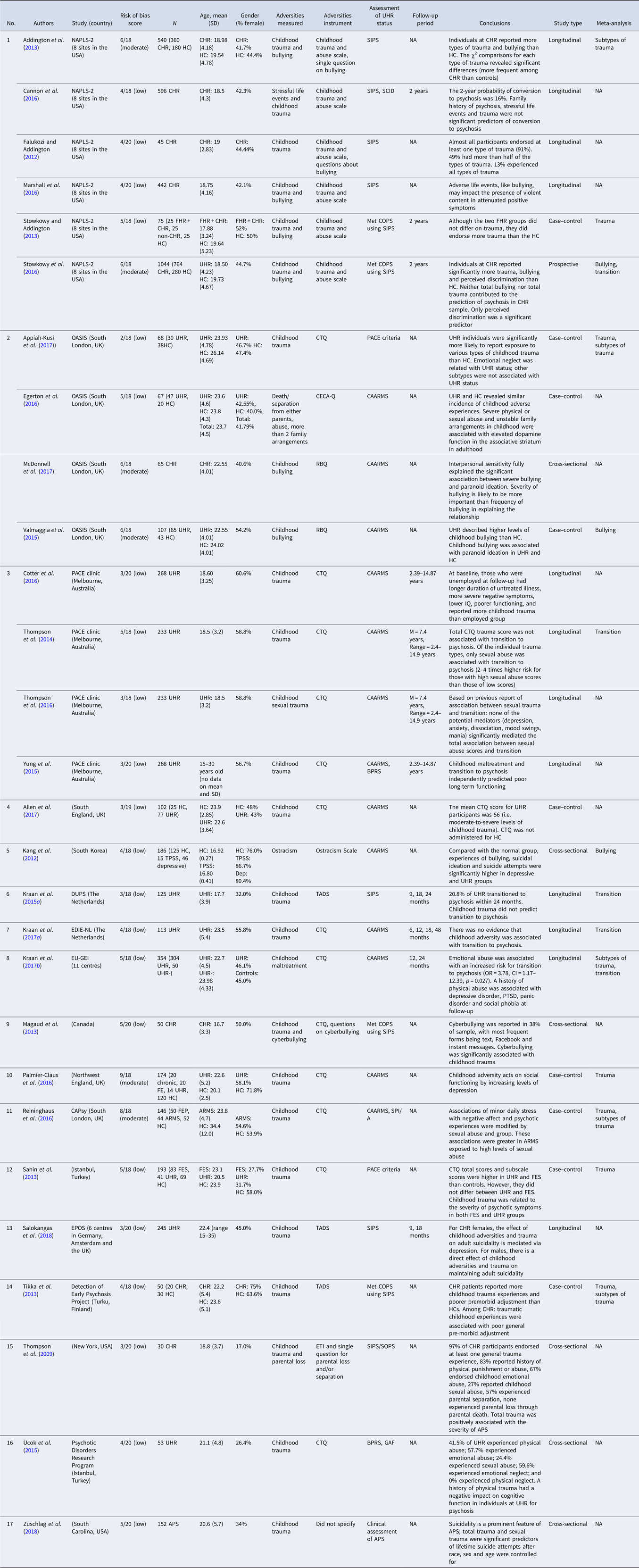
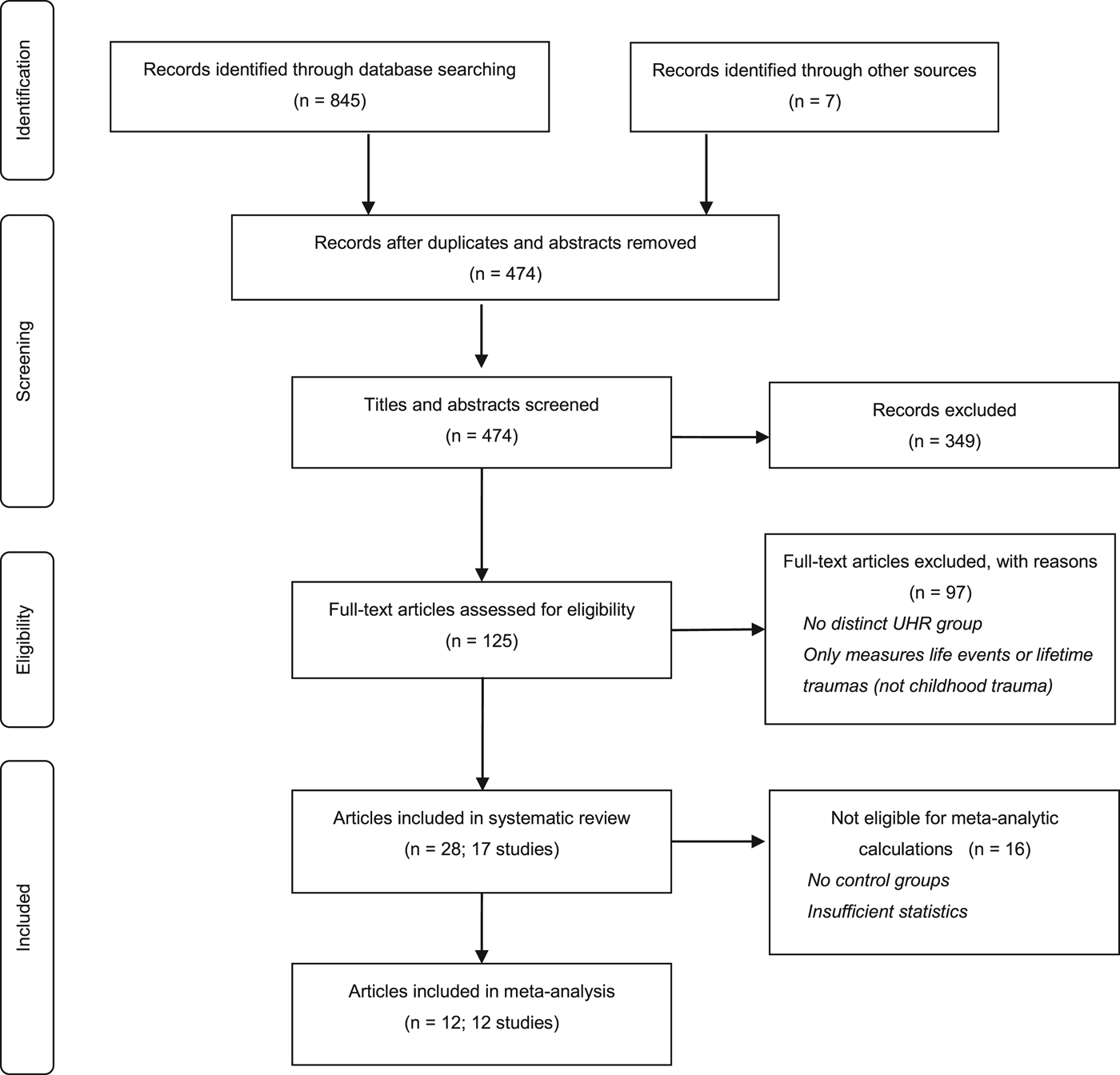
Figure 1 shows the PRISMA flowchart of the search results. Duplicates and abstracts were excluded from the 852 records found. Out of the 474 unique publications found, 17 studies (28 publications) were included in the systematic review (Table 1). Of the 17 studies, 10 recruited control groups and were eligible for meta-analytic calculations. Other studies were summarised qualitatively. Forest plots of all meta-analyses are presented in Supplementary Materials (S2–S6). There was a high average inter-rater reliability for RoB among the two authors (95% agreement, κ = 0.89, 95% CI 0.85–0.93). None of the studies had high RoB ratings (Table 1).
PRISMA flow chart of search strategy.
Study characteristics (sorted according to study site)
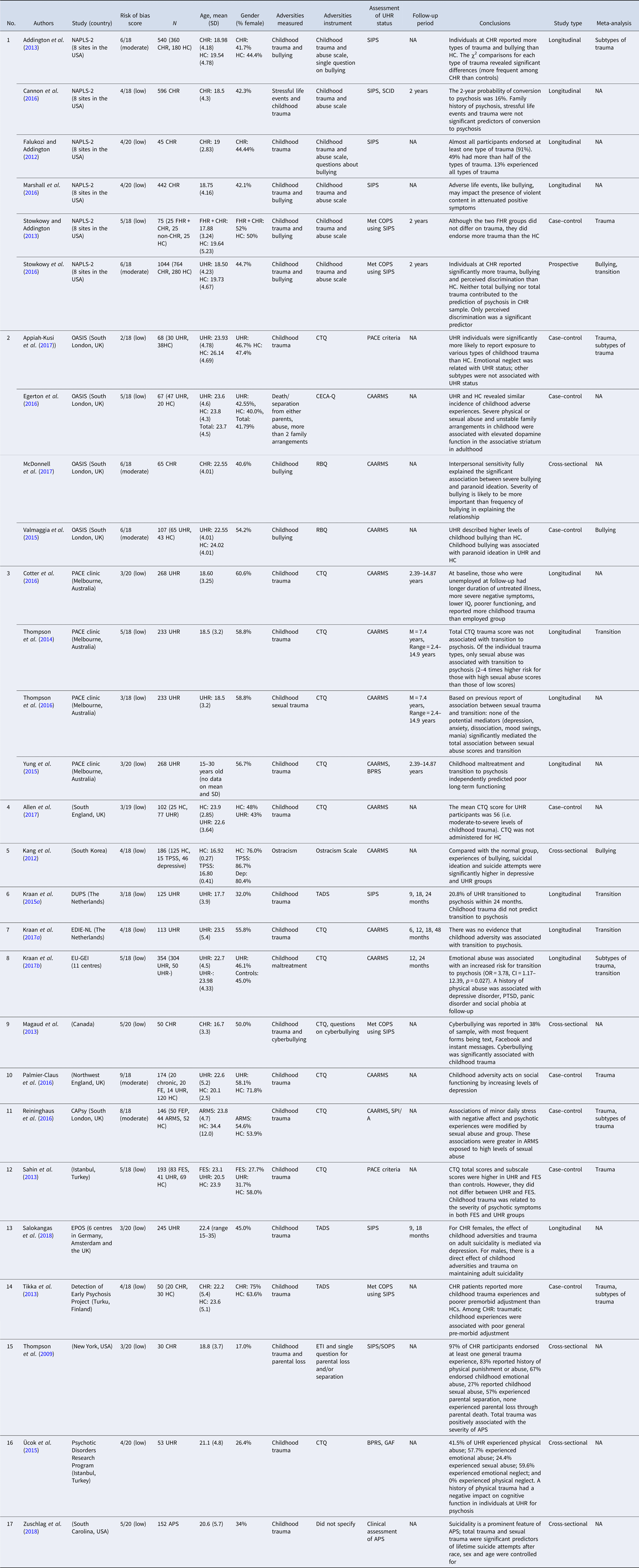
APSS, attenuated psychotic symptom syndrome; APS, attenuated psychotic symptoms; CAPsy, Childhood Adversity and Psychosis; CHR, clinical high risk; COPS, Criteria of Prodromal Symptoms; DUPS, Dutch Prediction of Psychosis Study; EDIE-NL, Early Detection and Intervention Evaluation; EPOS, European Prediction of Psychosis Study; ETI, Early Trauma Inventory; EU-GEI, EUropean network of national schizophrenia networks studying Gene-Environment Interactions; FHR, family high risk; FES, first episode schizophrenia; HC, healthy controls; OASIS, Outreach and Support in South London; PACE, Personal Assessment and Crisis Evaluation; SIPS, Structured Interview for Prodromal Symptoms; TADS, Trauma and Distress Scale; TPSS, Thought Perception-Sensitivity Symptoms.
Childhood trauma
Sixteen studies retrospectively measured childhood trauma using the Childhood Trauma Questionnaire (CTQ), Trauma and Distress Scale (TADS), Childhood Trauma & Abuse Scale, Early Trauma Inventory (ETI), or Childhood Experience of Care and Abuse Questionnaire (CECA-Q).
Severity of childhood trauma
Higher total trauma scores suggested more severe childhood trauma exposure. In studies that administered the CTQ to UHR individuals only, moderate-to-severe levels of childhood trauma were reported in South England (Allen et al., Reference Allen, Azis, Modinos, Bossong, Bonoldi, Samson, Quinn, Kempton, Howes, Stone, Calem, Perez, Bhattacharayya, Broome, Grace, Zelaya and McGuire2017), London (Appiah-Kusi et al., Reference Appiah-Kusi, Fisher, Petros, Wilson, Mondelli, Garety, McGuire and Bhattacharyya2017) and Australia (Cotter et al., Reference Cotter, Lin, Drake, Thompson, Nelson, McGorry, Wood and Yung2016).
UHR participants reported significantly higher total trauma scores than controls (Hedges’ g = 1.38; 95% CI 0.92–1.84, Z = 5.92, p < 0.001), suggesting that UHR experienced more severe childhood trauma. In view of the high heterogeneity (I 2 = 77%), a sub-group analysis was conducted by separating studies into their RoB scores. Although studies with moderate-risk tend to produce larger effect sizes (Hedges’ g = 1.95, 95% CI 1.43–2.46, p < 0.001, I 2 = 33%) than studies with low-risk (Hedges’ g = 1.06, 95% CI 0.74−1.38, p < 0.001, I 2 = 44%), both reported similar findings (supplementary materials S2).
A sensitivity analysis comprising only of studies using CTQ was conducted (n = 4). The overall effect size did not change substantially (Hedges’ g = 1.40, CI 0.74–2.16, p < 0.001), which suggests that across-study differences were not likely due to the choice of instruments.
Prevalence of childhood trauma
Childhood trauma exposure among UHR ranged from 54% (Kraan et al., Reference Kraan, Velthorst, Themmen, Valmaggia, Kempton, McGuire, van Os, Rutten, Smit, de Haan and van der Gaag2017b) to more than 90% (Thompson et al., Reference Thompson, Kelly, Kimhy, Harkavy-Friedman, Khan, Messinger, Schobel, Goetz, Malaspina and Corcoran2009; Falukozi and Addington, Reference Falukozi and Addington2012; Tikka et al., Reference Tikka, Luutonen, Ilonen, Tuominen, Kotimaki, Hankala and Salokangas2013).
Childhood trauma subtypes
Severity of trauma subtypes exposure
UHR individuals reported significantly higher scores for emotional abuse and physical abuse in all three studies (Sahin et al., Reference Sahin, Yuksel, Guler, Karadayi, Akturan, Gode, Ozhan and Ucok2013; Tikka et al., Reference Tikka, Luutonen, Ilonen, Tuominen, Kotimaki, Hankala and Salokangas2013; Reininghaus et al., Reference Reininghaus, Gayer-Anderson, Valmaggia, Kempton, Calem, Onyejiaka, Hubbard, Dazzan, Beards, Fisher, Mills, McGuire, Craig, Garety, van Os, Murray, Wykes, Myin-Germeys and Morgan2016). However, only Tikka et al. (Reference Tikka, Luutonen, Ilonen, Tuominen, Kotimaki, Hankala and Salokangas2013) reported significantly higher scores for sexual abuse and emotional neglect among UHR individuals. Both Sahin et al. (Reference Sahin, Yuksel, Guler, Karadayi, Akturan, Gode, Ozhan and Ucok2013) and Tikka et al. (Reference Tikka, Luutonen, Ilonen, Tuominen, Kotimaki, Hankala and Salokangas2013) reported higher scores for physical neglect among UHR individuals as compared with controls.
Prevalence of trauma subtypes exposure
UHR were 5.06 times as likely to report emotional abuse (OR = 5.06, 95% CI = 1.55–16.58, p = 0.007), and 3.19 times as likely to report physical abuse (OR = 3.19, 95% CI = 1.05–9.75, p = 0.04) (Table 2). Emotional neglect was the most prevalent trauma subtype reported in Turkey (Ucok et al., Reference Ucok, Kaya, Ugurpala, Cikrikcili, Ergul, Yokusoglu, Bulbul and Direk2015), and this finding was consistent among both genders in a six-site study in Europe (Salokangas et al., Reference Salokangas, Patterson, Hietala, Heinimaa, From, Ilonen, von Reventlow, Schultze-Lutter, Juckel, Linszen, Dingemans, Birchwood, Klosterkotter and Ruhrmann2018). However, in our meta-analysis, no significant differences were found in the prevalence of sexual abuse, emotional neglect and physical neglect across participant groups (supplementay materials S3).
Results of separate meta-analyses comparing the prevalence of childhood trauma subtypes between UHR and controls

*Significant at 0.05 level.
High heterogeneity was observed within the abuse subtypes. This may be explained by the different trauma assessments used, which probed slightly different aspects of trauma. For example, the 43-item TADS included questions on bullying and distress items (e.g. self-esteem, guilt) which were not captured in the 28-item CTQ.
Bullying victimisation and psychosis
Bullying victimisation data were collected from the Retrospective Bullying Questionnaire (RBQ), Ostracism Scale, or specific questions that were part of a larger interview (Childhood Trauma and Abuse Scale). The exposure was recorded as a dichotomous measure (ever bullied or never bullied).
In this meta-analysis (n = 3, 844 UHR, 448 controls), UHR individuals were 3.09 times as likely to report bullying victimisation than controls (OR = 3.09, 95% CI = 2.23–4.30; Z = 6.72, p < 0.001) (supplementary materials S4). There was little evidence of heterogeneity (I 2 = 7%). Across all three countries, the prevalence of bullying among UHR was varied, at 33.3% in South Korea (Kang et al., Reference Kang, Park, Yang, Oh, Shim and Chung2012), 53.3% in America (Stowkowy et al., Reference Stowkowy, Liu, Cadenhead, Cannon, Cornblatt, McGlashan, Perkins, Seidman, Tsuang, Walker, Woods, Bearden, Mathalon and Addington2016) and 66.7% in the UK (Valmaggia et al., Reference Valmaggia, Day, Kroll, Laing, Byrne, Fusar-Poli and McGuire2015).
The type of bullying experienced was analysed differently across studies. When bullying was sub-categorised according to the length of exposure, a higher proportion of UHR (42.9%) than controls (27.3%) were prolonged victims (Valmaggia et al., Reference Valmaggia, Day, Kroll, Laing, Byrne, Fusar-Poli and McGuire2015). In the NAPLS-2 study, 60.5% of UHR experienced psychological bullying (v. 36.1% in controls), while 29.8% of UHR were physically bullied (v. 14.7% of controls) (Addington et al., Reference Addington, Stowkowy, Cadenhead, Cornblatt, McGlashan, Perkins, Seidman, Tsuang, Walker, Woods and Cannon2013). Bullying may take place in less traditional forms, such as cyberbullying. Out of 50 UHR participants in Canada, 38% of them experienced cyberbullying, with the most frequent medium being text (30%), followed by Facebook (28%) (Magaud et al., Reference Magaud, Nyman and Addington2013).
Parental loss or separation and psychosis
Data on parental loss or separation were collected from CECA-Q or as a separate additional question. Egerton et al. (Reference Egerton, Valmaggia, Howes, Day, Chaddock, Allen, Winton-Brown, Bloomfield, Bhattacharyya, Chilcott, Lappin, Murray and McGuire2016) found that a higher proportion of UHR individuals (67%) reported death of or separation from either parental figure than healthy controls (50%). However, the association between parental loss and UHR state was not significant. Thompson et al. (Reference Thompson, Kelly, Kimhy, Harkavy-Friedman, Khan, Messinger, Schobel, Goetz, Malaspina and Corcoran2009) reported that 57% of UHR experienced parental separation but none experienced loss of parents through parental death. It is worthy to note that in both studies, UHR sample sizes were small (n = 45 and n = 30).
Childhood trauma and TTP
When the association between total childhood trauma and later TTP among UHR individuals was investigated, the effect size was not significant (HR = 1.01, 95% CI 0.99–1.03; Z = 1.34, p = 0.18). All trauma subtypes did not reveal significant associations with TTP, except for sexual abuse (HR = 1.05, 95% CI = 1.01–1.09, Z = 2.62, p = 0.010) (Table 3). There was no evidence for heterogeneity (I 2 = 0%) (supplementary materials S5). The follow-up times ranged from 6 months to 14.9 years. The follow-up rates ranged from 36.9% to 80.2%; all studies except for one had at least 50% follow-up rate.
Results of separate meta-analyses investigating the association between trauma and TTP among UHR

*Significant at 0.05 level.
Sensitivity analysis revealed that the association between sexual abuse and TTP became non-significant when Thompson et al. (Reference Thompson, Nelson, Yuen, Lin, Amminger, McGorry, Wood and Yung2014)’s study was removed from the analysis, which suggests that the significant relationship was mainly driven by a single large study. When the association between sexual trauma and TTP was adjusted for mood, anxiety and dissociation, it remained significant (Thompson et al., Reference Thompson, Marwaha, Nelson, Wood, McGorry, Yung and Lin2016).
Notably, the effect size reported here is HR, which is a time-to-event estimate. A non-significant finding suggests that childhood trauma and its subtypes do not significantly affect the time taken for TTP to occur. In the only study that reported ORs, UHR individuals with a history of emotional abuse had 3.78 times increased risk for TTP (OR = 3.78, 95% CI = 1.17–12.39, p = 0.027) (Kraan et al., Reference Kraan, Velthorst, Themmen, Valmaggia, Kempton, McGuire, van Os, Rutten, Smit, de Haan and van der Gaag2017b). However, the increased psychiatric risk of abuse was not specific to psychosis – physical abuse was linked with 2–5 times increased risk of transition to depressive disorder, post-traumatic stress disorder, panic disorder and social phobia.
When the contribution of several predictors (social functioning, verbal learning, cognition, age, stressful life events, family history of psychosis, traumas) were analysed in multivariate cox regressions, childhood trauma and family history of psychosis were not significant in predicting TTP (Cannon et al., Reference Cannon, Yu, Addington, Bearden, Cadenhead, Cornblatt, Heinssen, Jeffries, Mathalon, McGlashan, Perkins, Seidman, Tsuang, Walker, Woods and Kattan2016).
Bullying and TTP
Total bullying did not significantly contribute to TTP among CHR individuals in Stowkowy et al. (Reference Stowkowy, Liu, Cadenhead, Cannon, Cornblatt, McGlashan, Perkins, Seidman, Tsuang, Walker, Woods, Bearden, Mathalon and Addington2016)’s study. No significant associations were found between psychological bullying and TTP, and between physical bullying and TTP.
Childhood adversities and symptoms or functioning
Multiple studies reported links between childhood adversities and the severity of psychotic symptoms among the UHR. First, greater childhood trauma exposure was positively associated with the severity of APS in UHR samples in various regions of America and the Netherlands (Thompson et al., Reference Thompson, Kelly, Kimhy, Harkavy-Friedman, Khan, Messinger, Schobel, Goetz, Malaspina and Corcoran2009; Falukozi and Addington, Reference Falukozi and Addington2012; Kraan et al., Reference Kraan, van Dam, Velthorst, de Ruigh, Nieman, Durston, Schothorst, van der Gaag and de Haan2015a; Marshall et al., Reference Marshall, Deighton, Cadenhead, Cannon, Cornblatt, McGlashan, Perkins, Seidman, Tsuang, Walker, Woods, Bearden, Mathalon and Addington2016). Second, severe bullying victimisation was found to be significantly associated with paranoid ideation (Valmaggia et al., Reference Valmaggia, Day, Kroll, Laing, Byrne, Fusar-Poli and McGuire2015), and this relationship was fully explained by heightened interpersonal sensitivity (McDonnell et al., Reference McDonnell, Stahl, Day, McGuire and Valmaggia2017).
Childhood trauma predicted poorer social and occupational functioning outcomes among UHR in Australia and the Netherlands (Kraan et al., Reference Kraan, van Dam, Velthorst, de Ruigh, Nieman, Durston, Schothorst, van der Gaag and de Haan2015a, Reference Kraan, Ising, Fokkema, Velthorst, van den Berg, Kerkhoven, Veling, Smit, Linszen, Nieman, Wunderink, Boonstra, Klaassen, Dragt, Rietdijk, de Haan and van der Gaag2017a; Yung et al., Reference Yung, Cotter, Wood, McGorry, Thompson, Nelson and Lin2015). The severity of childhood trauma was significantly associated with employment status at baseline and 2–14 years later (Cotter et al., Reference Cotter, Lin, Drake, Thompson, Nelson, McGorry, Wood and Yung2016). Total childhood trauma and sexual trauma were significant predictors of adult suicide attempts (Zuschlag et al., Reference Zuschlag, Korte and Hamner2018).
Affective variables may have a mediating role in the relationship between childhood adversities and functioning. Among UHR, the relationship between childhood adversity and social functioning was mediated by more severe depression (Palmier-Claus et al., Reference Palmier-Claus, Berry, Darrell-Berry, Emsley, Parker, Drake and Bucci2016). Worse depression was more common among those with greater exposure to childhood abuse (Addington et al., Reference Addington, Stowkowy, Cadenhead, Cornblatt, McGlashan, Perkins, Seidman, Tsuang, Walker, Woods and Cannon2013), particularly physical abuse and emotional neglect (Kraan et al., Reference Kraan, Ising, Fokkema, Velthorst, van den Berg, Kerkhoven, Veling, Smit, Linszen, Nieman, Wunderink, Boonstra, Klaassen, Dragt, Rietdijk, de Haan and van der Gaag2017a). Childhood adversities were associated with lower self-esteem, which mediated the relationship between emotional neglect and the UHR state (Appiah-Kusi et al., Reference Appiah-Kusi, Fisher, Petros, Wilson, Mondelli, Garety, McGuire and Bhattacharyya2017).
Publication bias
There were insufficient studies in each meta-analysis to formally assess publication bias.
Discussion
This review had two aims. The first aim was to compare the severity and prevalence of childhood adversities between UHRs and controls. Generally, UHR individuals reported more severe and more prevalent childhood adversities than controls. The second aim was to investigate the link between childhood trauma and subsequent TTP among the UHR population. There was no evidence of an association between childhood trauma and TTP; however, a link was found between childhood sexual trauma and TTP.
Prevalence and severity of childhood adversities
UHR individuals reported significantly more frequent and severe childhood trauma than controls. Emotional and physical abuse were significantly more prevalent among UHR individuals; UHR experienced more severe exposure across all abuse subtypes. Bullying victimisation was also significantly associated with the UHR state.
The traumagenic neurodevelopmental model is one of the many theories explaining the relationship between childhood adversities and psychosis. The model integrates the evidence on the psychological processes triggered by childhood adversities (e.g. formation of negative schemas about the self) with the evidence on stress dysregulation, memory impairment and prefrontal/hippocampal structural changes that have been observed in patients with psychosis (Read et al., Reference Read, Perry, Moskowitz and Connolly2001, Reference Read, Fosse, Moskowitz and Perry2014).
The differential effects of childhood trauma subtypes reported here corroborate previous findings. Compared with other types of abuse, emotional abuse had the strongest associations with negative psychiatric outcomes (Barbosa et al., Reference Barbosa, Quevedo, da Silva, Jansen, Pinheiro, Branco, Lara, Oses and da Silva2014; de Araujo and Lara, Reference de Araujo and Lara2016; Schmidt et al., Reference Schmidt, Schultze-Lutter, Bendall, Groth, Michel, Inderbitzin, Schimmelmann, Hubl and Nelson2017), hypothalamic–adrenal–pituitary axis dysregulation (Braehler et al., Reference Braehler, Holowka, Brunet, Beaulieu, Baptista, Debruille, Walker and King2018) and suicidality (Anestis and Joiner, Reference Anestis and Joiner2011; Schmidt et al., Reference Schmidt, Schultze-Lutter, Bendall, Groth, Michel, Inderbitzin, Schimmelmann, Hubl and Nelson2017). It seems that emotional trauma amplifies the negative feelings of perceived burdensome and the lack of sense of belonging, more so than other types of adversities (Anestis and Joiner, Reference Anestis and Joiner2011). Our findings emphasise the importance of analysing specific relationships between trauma subtypes and psychosis.
Relationship between childhood trauma and TTP
Total childhood trauma was not significantly related to increased risk of TTP. When the overall trauma was stratified into its subtypes, the results revealed that sexual abuse was significantly associated with TTP; however, the finding was largely driven by a single study. Overall, the current findings suggest that exposure to childhood adversities alone may not be sufficient to bring about a higher TTP rate among UHR individuals.
This non-significant relationship may be due to the non-specific effects of childhood trauma. Adverse childhood experiences can predispose individuals to develop a range of mental health problems, including depression, anxiety, self-harm (Lereya et al., Reference Lereya, Copeland, Costello and Wolke2015) or a combination of symptoms from various domains (van Nierop et al., Reference van Nierop, Viechtbauer, Gunther, van Zelst, de Graaf, Ten Have, van Dorsselaer, Bak, Genetic and van Winkel2015). It is likely that childhood trauma interacts with or contributes additively with other risk factors [such as cannabis use (Harley et al., Reference Harley, Kelleher, Clarke, Lynch, Arseneault, Connor, Fitzpatrick and Cannon2010)] to increase the risk of TTP.
However, there are several caveats to take note of. First, the overall effect size was small because it was computed based on the change HR for a one-point difference in the trauma scores. When Thompson et al. (Reference Thompson, Nelson, Yuen, Lin, Amminger, McGorry, Wood and Yung2014) recomputed the HRs such that comparisons were made between a high-exposure (to sexual abuse) or moderate-exposure group with a low-exposure group (CTQ scores of 25 or 15 v. 5), the HRs of TTP were four and two times, respectively. This method may be more useful clinically than the regular cox regression, and future studies might consider reporting it for more interpretable results.
Second, the tracking of TTP may not be accurate. Most studies recruited individuals who were <35 years old; however, late-onset psychosis is found to be more prevalent than previously expected (Simon et al., Reference Simon, Coleman, Yarborough, Operskalski, Stewart, Hunkeler, Lynch, Carrell and Beck2017): age of onset was beyond the age of 40 in more than 22% of schizophrenia patients (Selvendra et al., Reference Selvendra, Baetens, Trauer, Petrakis and Castle2014). Thus, psychosis may have developed after the maximum follow-up duration of 2 years, causing TTP rate to be under-reported.
Limitations
Potential confounders
Most studies did not match participants on key variables during recruitment as it was difficult to control them in clinical research. These variables included cannabis use, gender, education level, comorbid psychiatric disorders and age – variables previously found to be significant moderators or mediators of psychosis (Sideli et al., Reference Sideli, Mule, La Barbera and Murray2012).
These factors were also not statistically adjusted in most of the studies. It could therefore explain the differential findings of lower risk studies and moderate-risk studies in the meta-analysis of the severity of childhood trauma. The larger effect sizes observed by moderate-risk studies were likely influenced by uncontrolled variables like gender, unemployment and education levels (Palmier-Claus et al., Reference Palmier-Claus, Berry, Darrell-Berry, Emsley, Parker, Drake and Bucci2016; Reininghaus et al., Reference Reininghaus, Gayer-Anderson, Valmaggia, Kempton, Calem, Onyejiaka, Hubbard, Dazzan, Beards, Fisher, Mills, McGuire, Craig, Garety, van Os, Murray, Wykes, Myin-Germeys and Morgan2016). Thus, this constitutes a bias in the UHR literature, which could be addressed in the future through multivariate analyses.
When confounds were statistically controlled for, unadjusted and adjusted estimates did not differ in their conclusions: three studies reporting the association between childhood trauma and TTP statistically controlled for cannabis use, gender and age (Kraan et al., Reference Kraan, van Dam, Velthorst, de Ruigh, Nieman, Durston, Schothorst, van der Gaag and de Haan2015a, Reference Kraan, Ising, Fokkema, Velthorst, van den Berg, Kerkhoven, Veling, Smit, Linszen, Nieman, Wunderink, Boonstra, Klaassen, Dragt, Rietdijk, de Haan and van der Gaag2017a, Reference Kraan, Velthorst, Themmen, Valmaggia, Kempton, McGuire, van Os, Rutten, Smit, de Haan and van der Gaag2017b); comorbid psychiatric problems (Thompson et al., Reference Thompson, Marwaha, Nelson, Wood, McGorry, Yung and Lin2016) or functioning, age, gender and educational level (Thompson et al., Reference Thompson, Nelson, Yuen, Lin, Amminger, McGorry, Wood and Yung2014) were controlled for in the Personal Assessment and Crisis Evaluation (PACE) study.
Other limitations
As the actual rates of TTP are low among UHR (Cannon et al., Reference Cannon, Yu, Addington, Bearden, Cadenhead, Cornblatt, Heinssen, Jeffries, Mathalon, McGlashan, Perkins, Seidman, Tsuang, Walker, Woods and Kattan2016), and the sample sizes of UHR who eventually experience psychosis are small, it becomes more difficult to detect statistical associations between childhood adversities and TTP. Furthermore, many studies recruited UHR individuals from prodromal or early-intervention services, which have been found to capture only a small proportion of individuals who are at high risk of psychosis (Ajnakina et al., Reference Ajnakina, Trotta, Oakley-Hannibal, Di Forti, Stilo, Kolliakou, Gardner-Sood, Gaughran, David, Dazzan, Pariante, Mondelli, Morgan, Vassos, Murray and Fisher2016). Thus, findings constrained to the UHR population may only be generalisable to a small proportion of individuals at high risk for psychosis.
The range of instruments reporting the prevalence of adversities may have contributed to more heterogeneity among studies. Synthesising the findings became difficult as each instrument consisted of slightly different assessment criteria for the specific type of adversity being investigated.
The exclusion of unpublished studies may introduce a publication bias. However, the inclusion criteria for articles in this meta-analysis aimed to prioritise the rigorousness of the review at the expense of exhaustiveness.
Other considerations for future research
There are some important considerations to be made in future analyses. First, the length of exposure to childhood adversities is an important variable as it could directly affect the extent of neurodevelopmental or psychological changes experienced by UHR individuals. Reporting and analysing this information could reveal dose–response relationships. For example, frequent bullying typically has more severe impact on a child's well-being than short-term bullying, and should be analysed as separate categories of exposure.
Second, it is worthwhile to consider the severity and frequency of negative symptoms during risk assessment, as the CHR and UHR assessment criteria largely focus on positive symptoms. Significant associations between childhood neglect and the severity of negative symptoms were found among schizophrenia patients (Bailey et al., Reference Bailey, Alvarez-Jimenez, Garcia-Sanchez, Hulbert, Barlow and Bendall2018). It would be interesting to further explore relationships between childhood adversities and negative symptoms among the UHR.
Third, the cross-sectional nature of data collection does not eliminate the possibility that UHR individuals may become more susceptible to adversities after illness onset or cognitive and functional declines. Thus, longitudinal designs can help establish the direction of causality.
Implications and future directions
To date, this is the first meta-analysis that has quantitatively summarised the associations between childhood adversities and TTP among UHR individuals, and between specific abuse subtypes and the UHR state. As many studies in this field are small in nature, with the exception of a few, this meta-analysis seeks to overcome the problem of small samples.
Overall, our findings support the association between childhood adversities and the UHR state; however, these adversities alone may not be sufficient to cause UHR to convert into psychosis. There is a need to investigate the role of childhood adversities in relation to other risk factors, in order to elucidate any additive effects, gene–environment or environment–environment interactions.
Nevertheless, our review supports the need to screen for childhood adversities among the UHR population in early intervention services. It is important to assess any previous trauma which may predispose or perpetuate current symptoms. Targeted and individualised therapy can therefore be provided more effectively for better clinical outcomes.
Supplementary material
The supplementary material for this article can be found at https://doi.org/10.1017/S003329171800394X.
Author ORCIDs
Oon Him Peh 0000-0002-7124-0568
Financial support
This research was supported by the National Medical Research Council under the Clinician-Scientist Individual Research Grant New Investigator Grant (Grant number: NMRC/CNIG/1150/2016).
Conflict of interest
None.