




No CrossRef data available.
Article contents
Anatomy of a Rally Effect: George W. Bush and the War on Terrorism
Published online by Cambridge University Press: 25 April 2017
Abstract
The “rally-round-the-flag effect” sparked by the September 11, 2001, attacks on New York and Washington and by President George W. Bush's prompt launching of the War on Terrorism cries out for the kind of timely analysis that political scientists sometimes can provide. A rally effect is the sudden and substantial increase in public approval of the president that occurs in response to certain kinds of dramatic international events involving the United States. The September 11 rally effect is distinctive for at least three reasons. First, of all the recorded rally effects, it is the largest. Bush's approval rating soared in the Gallup Poll from 51% on September 10 to 86% on September 15.The president's approval rating is the percentage of survey respondents who answer “approve” to the question: “Do you approve or disapprove of the job [name] is doing as president?” This 35-point increase nearly doubles the previous record, the 18-point boost triggered by his father's launch of Operation Desert Storm in January 1991. Second, the further increase in Bush's approval rating to 90% on September 22 represents the highest rating ever recorded for a president (Morin 2001). Third, the September 11 rally effect has lasted longer than any in the history of polling. As of November 10, 2002, Bush's approval rating was 68%—22 points below its peak but still much higher than his rating 13 months earlier.
Information
- Type
- FEATURES
- Information
- Copyright
- 2003 by the American Political Science Association
Although the existence of the rally effect has long been taken for granted by scholars and journalists,2
it received its first systematic treatment in John Mueller's landmark War, Presidents, and Public Opinion (1973), a work that spawned a cottage industry of related studies.3See, especially, Bowen (1989); Brody and Shapiro (1991); Callaghan and Vertanen (1993); Edwards and Swenson (1997); Kernell (1978, 1993); Krosnick and Brannon (1993); MacKuen (1983); and Sigelman and Conover (1981).
Mueller's three-part definition of the rally effect has been widely accepted by other scholars. His five-category list of rally-inducing events has not stood up as well. When Richard Brody (1991) extended the historical time frame to include the Nixon, Ford, Carter, and Reagan administrations, he found that events in the latter two of Mueller's five categories—namely, major military developments in ongoing wars and U.S.-Soviet summits—were as likely to be followed by decreases in presidential approval as by increases. Mueller's first three categories of rally events—sudden U.S. military interventions, major diplomatic actions, and dramatic technological developments—fared considerably better in Brody's analysis. More than three-fourths of the 45 events in these categories sparked rallies. So, we now know, does a fourth kind of event that Mueller and Brody's lists predated: September 11-style attacks on the United States.
Although a scholarly consensus seems to have formed concerning what the rally effect is and the kinds of events that trigger it, other disagreements have emerged. We have sorted these disagreements into two questions, each of which we address in the context of the September 11 rally effect. First, what accounts for the origin and duration of the rally effect—what are its causes? Second, what are the consequences of rally effects for presidential approval, support of the president's party, and trust in government? When appropriate, in addressing these questions we compare the September 11 rally effect with those sparked by two other perceived foreign policy successes, the 1962 Cuban Missile Crisis and the 1991 Gulf War.
Causes
Two schools of thought have emerged concerning the causes of the rally effect. The view of what we call the patriotism school is embedded in Mueller's term “rally-round-the-flag.” This school holds that in times of international crisis Americans rally to the president as the anthropomorphic symbol of national unity—a kind of living flag. As Jong Lee (1977, 253) argued, the “president becomes the focus of national attention in times of crisis…symbolizing national unity and power.…The average man's reaction will include a feeling of patriotism in supporting presidential actions.”
Brody (1991, 61–67) criticized the patriotism school as both theoretically ungrounded and undermined by counter-examples. Claiming that a patriotism- based theory could not explain, for example, why the 1975 Mayaguez incident had sparked a rally and the 1968 Pueblo seizure had not, Brody argued that rally effects occur only when “opposition opinion leaders,” primarily in Congress, “refrain from comment [on the president's conduct] or make cautiously supportive statements.” According to the opinion leadership school, leaders' unwillingness to criticize leaves journalists with nothing to report—and citizens with nothing to read, see, or hear—that is not supportive of the president. “When [opinion leaders] rally to the president or run for cover,” Brody concluded, “the public will be given the implied or explicit message, ‘appearances to the contrary notwithstanding, the president is doing his job well”’ (66).
As with the patriotism school, Brody's case for opinion leadership is less than conclusive. Why did the public rally to Ford in 1975 but not to Johnson in 1968? Surely, because Ford sent Marines to rescue the Mayaguez while Johnson allowed the Pueblo to remain captive. In Mueller's terms, Ford acted in a way that aroused the public's feelings of patriotism; Johnson did not. As for opposition opinion leaders’ reluctance to criticize a presidential action, to offer this as the cause of a rally is to risk circular reasoning. Support or silence from opposition leaders is typically a response to the rally itself: they hold their tongues because they are convinced that the public supports the president.
The exceptions in this regard support the rule. When Republican presidential candidate John Connally criticized President Carter the day after the 1979 Iranian hostage seizure, the adverse public response was so great that Connally reversed himself, saying “we have only one president. Now is the time to rally behind him and show a solid front to Iran and the world.” The same thing happened after Reagan invaded Grenada: Democratic congressional leaders attacked the president for “gunboat diplomacy,” were greeted with a strong and hostile public response, and promptly retreated into silence or support.4
Brody (1991) cites these incidents but interprets them differently.
Although the opinion leadership school seems less persuasive than the patriotism school in accounting for the origins of rally effects,5
Brody (2001) now concedes this point with regard to the Iraqi invasion of Kuwait in August 1990 and predicts, “It is likely that future analyses of the rally following the attacks on the towers of the World Trade Center and the Pentagon will also find that both patriotism and opinion leadership affected public support for President Bush.”
So, of course, does the eventual success or failure of the president's approach to the event that triggers the rally. For example, Carter's approval rating rose high after the 1979 Iranian hostage seizure but fell steeply when his efforts to free the hostages were for so long unsuccessful.
In theoretical terms, what accounts for the success of the patriotism school in explaining the origin of the rally effect and of the opinion leadership school in explaining its duration? Arguably, the explanation lies in the constitutional design of the presidency, which lodges the normally separate roles of chief of government and chief of state in one office. As chief of government, the president is called on to act as a partisan political leader in the manner of, for example, the British prime minister. As chief of state, the president is the equivalent of the British monarch: the ceremonial leader of the nation and the living symbol of national unity.
The significance of the chief of state role has little to do with the insignificant formal powers that accompany it or the activities it requires. Rather, it lies in the emotions the role arouses in citizens. Long before they have any knowledge of what the president does, young children already have positive feelings about his seemingly boundless power and benevolence (Greenstein 1960). The death of a president causes adults to react in an equally emotional way. Surveys taken shortly after the Kennedy assassination found Americans displaying symptoms of grief that otherwise appear only at the death of a close friend or family member. Similar outpourings seem to have accompanied the deaths in office, whether by assassination or natural causes, of all presidents, whether they were young or old, popular or unpopular (Sheatsley and Feldman 1964). In Great Britain, it is royal deaths, such as King George V's in 1936 and Princess Diana's in 1997, that occasion such deep emotions. It is the monarch whom children think of as powerful and good, not the prime minister (Greenstein 1975).
The public's attachment to the president as chief of state has strong implications for his standing with the people. The honeymoon of high public approval that new presidents typically enjoy is, in a sense, an affirmation of faith in the office as the embodiment of national unity. (Vice presidents who become president through succession receive the highest and broadest approval ratings of all.) The rally-round-the-flag effect is another way in which the president benefits politically from being the nation's living symbol of unity. Indeed, Mueller included the start of each presidential term as a rally point in his research, partly for technical reasons but mostly because the start of a new term is a “unifying and cathartic experience” for the nation (1973, 211–212).
Although the president's constitutional status as chief of state strengthens executive authority for relatively brief periods (hence the terms “honeymoon” and “rally”), the passage of time brings more sober-minded public evaluations of the president's performance as chief of government. As Brody suggests, these evaluations are shaped in large part by the willingness of opposition leaders to criticize the president's conduct. Changes in media priming—that is, news organizations’ shifting emphases from the rally event to other matters—also affect public evaluations (Krosnick and Brannon 1993). In sum, a proper understanding of the constitutional nature of the presidency offers a relatively complete account of the causes of rally events, both their origin and their duration.
Consequences
How far reaching are the effects of rally events? In this section, we invoke the Cuban Missile Crisis and Gulf War rallies in exploring the consequences of the September 11 rally for presidential approval, trust in government, and party identification.

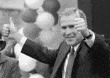
Hail to the Chief. The rally-round-the-flag effect is another way in which President Bush has benefitted politically from being the nation's living symbol of unity. Photo: AP Photo/Eric Gay
Presidential Approval
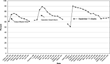
As noted earlier, the pattern of George W. Bush's approval surge is unprecedented in the survey era for both its size and its duration. The rally experienced by George Bush after Operation Desert Storm, which is charted in the center of Figure 1, comes closest to matching the September 11 rally. Although their peaks were about the same, George Bush's rally started from a baseline of 61% approval, several percentage points higher than George W. Bush's pre-September 11 rating. As for the Cuban Missile Crisis, even though the foreign threat was arguably greater in 1962 than in 1991 or 2001, both Bushes experienced much larger rallies than Kennedy did. Kennedy's approval increased only half as much as George Bush's and roughly a third as much as George W. Bush's. But the pattern of Kennedy's rally, pictured on the left side of Figure 1, resembles that of the first Bush, with approval dropping to nearly pre-crisis levels in six to eight months.

Percent Approving of the President During Three Successful Foreign Crises
The pattern of George W. Bush's rally is much different. After reaching his 90% peak on September 22, 2001, nearly six months passed before Bush's approval rating dropped even to 80%. In early November 2002, he still registered 68% approval.
The people who rallied to Bush are also different from what the scholarly literature might have predicted. Although George Edwards and Tami Swenson (1997) found that those already predisposed to support the president were most likely to rally during the Gulf War, Democrats and Independents rallied in much greater numbers than Republicans to rally in response to the War on Terrorism. A ceiling effect probably accounts for this disparity. In a Gallup poll taken a month before the September 11 attacks, 89% of Republicans already approved of Bush, compared with 53% of Independents and 28% of Democrats. On September 21, however, 98% of Republicans approved (a gain of 9 points), along with 91% of Independents (+38 points) and 84% of Democrats (+56 points). With the United States facing a seemingly powerful foreign threat, patriotism was clearly at the root of Bush's early surge of approval.
The hesitancy of Democratic leaders to criticize the president's conduct of the War on Terrorism helps to explain the duration of the September 11 rally effect. But these leaders’ willingness to take Bush to task on domestic policy has gradually reduced the magnitude of the rally. By early October 2002, 95% of Republicans still approved of Bush's performance as president, down only 3 points from their peak level of support. The president's approval rating among Democrats, however, had fallen to 45%, still considerably higher than the 28% who approved of his performance a month before the terrorist attacks, but down 39 points from his post-September 11 peak.
Trust in Government
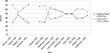
Presidential approval is not the only area of public opinion in which rallies occur. Suzanne Parker (1995) demonstrated that during the Gulf War public support for a number of government institutions increased. We focus here on general trust in government. Despite the intelligence and security failure that September 11 represented, a Washington Post poll taken two weeks after the terrorist attacks showed that trust had surged to a level not seen since the mid-1960s. Sixty-four percent of respondents indicated that they trusted the government to do what was right “just about always” or “most of the time” and only 36% said they trusted the federal government “only some of the time” or “never.” On March 10, 2001, the nearest occasion prior to September 11 that a survey organization asked Americans the trust question, only 30% gave trusting responses. The pre-and post-rally numbers, which appear on the right side of Figure 2, portray a near mirror image.

Changes in Trust in Government
Although no survey organization asked the trust question regularly during the Kennedy years, public opinion before and after Operation Desert Storm reveals a similar surge in trust, which we present on the left side of Figure 2. Before the start of the Gulf War, less than 30% of Americans provided trusting responses. By the end of the war, however, this percentage had risen to nearly 50. Although the trust rally for George Bush was significantly smaller than for George W. Bush, it was still quite large.
In contrast to their approval ratings, neither of the Bushes’ rally events sustained heightened levels of trust for long, although George W. Bush again preserved the gains longer than his father did. Trust returned to pre-rally levels within seven months of the end of the Gulf War. The deterioration in trust after September 11 was initially rapid, stabilized for several months, then declined to near pre-September 11 levels in July 2002. Specifically, between September and December 2001, the percentage of trusting responses fell to 49%, a drop of 15 points. Trust then held steady through April 2002, but the percentage of trusting responses decreased by another 13 points between April and July, leaving trust at a level close to when Bill Clinton left the White House.
Why are rally-induced surges in trust so short-lived? An ABC News poll taken on January 9, 2002, provides the basis for an explanation. Instead of just asking the standard trust question, this poll prefaced it with two different phrases. In one, people were asked “When it comes to handling social issues like the economy, health care, Social Security, and education, how much of the time do you trust the government…?” In the other, people were asked, “When it comes to handling national security and the War on Terrorism, how much of the time do you trust the government…?” When primed to consider the activities that people normally think of the federal government as doing—that is, handling “social” issues—only 38% provided trusting responses, not much higher than the 30% who had done so in March 2001. When primed to think about the War on Terrorism, however, 69% provided trusting responses, even more than the 64% in the Post poll on general trust taken right after the attacks. In short, the increased trust numbers that accompany a rally are a function of people evaluating government according to crisis-induced criteria, and the subsequent decrease results from people returning to their usual criteria.
Party Identification
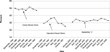
Another potential consequence of a rally event is an increase in identification with the president's party. The data on the right side of Figure 3, however, suggest that September 11 did not cause such a change. In early 2001, Republicans picked up a few more identifiers, increasing their share from 31% in early-January to 35% in mid-February. After the September 11 attacks, Republican identification actually held steady at 32%, the same as it was the month before. Republican identification did increase to 36% in April 2002, but it seems a stretch to attribute this change to the terrorist attacks, which occurred six months earlier. Moreover, Republican identification returned to its usual spot in the low 30s by June 2002.

Changes in Identification with the President's Party
Data from the Cuban Missile Crisis and Gulf War rallies, which appear in the left and center sections of Figure 3, tell a similar story. Although the Democrats experienced a surge in identifiers between December 1962 and January 1963, their gains evaporated by February. The Gulf War surveys show that Republican identification increased about 5 points between January and April 1991. But the change did not endure, dropping below pre-Gulf War levels by the end of the year.
Conclusion
Although the September 11 rally event has been extraordinary in its size and duration, the political advantages it has imparted have been personal to George W. Bush. Our analysis of the rally's causes offers partial support for both the patriotism and opposition leadership schools, the former in explaining why rallies occur and the latter in explaining how long they last. In our view, the underlying cause of rallies may be traced to the constitutional nature of the presidency as both chief of state and chief of government.

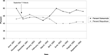
Support for Republican and Democratic Congressional Candidates, June 2001–April 2002
The changes in other important political variables proved either fleeting, as with trust in government, or nonexistent, as with party identification. The findings indicate that although the rally has been extraordinary in its political benefits to President Bush, its effect on public attitudes concerning the other matters we have examined has been negligible.
In this context, the results of the 2002 midterm election may be seen as an exception that supports the rule. The results were historic: not since 1934 has a president's party gained seats in both houses of Congress in a first-term midterm election, and not since 1882 has a midterm election transformed a divided party government into a united one. But the results owed almost entirely to the effort Bush made—unprecedented among American presidents —to transform the midterm into a referendum on his presidency: recruiting challengers to Democratic incumbents, raising campaign funds ardently, and campaigning tirelessly (Nelson 2003). In other words, Bush's personal popularity affected the voting for Republican congressional candidates because he put that popularity on the line7
An election-eve CBS News poll indicated that 50% of the voters were basing their decision on their opinion of the president, many more than the 34% who had done so in 1990 or the 37% who had done so in 1998. Of these 50%, 31% were pro-Bush and only 19% opposed him. (Nagourney and Elder 2002). An election-eve Gallup Poll reported that 53% would be using their vote “in order to send a message that you support [or oppose] George W. Bush.” Of these, 35% said they would vote to support him and 18% said they would vote to express their opposition. In 1998 the last midterm election in which the president's party gained seats, the split was 23% to 23% among the 46% who said they were using their vote to express their attitude toward President Clinton (Moore and Jones 2002).
References
Bowen Gordon L.1989 Presidential Action and Public Opinion about U.S. Nicaraguan Policy: Limits to the Rally Round the Flag Syndrome PS: Political Science and Politics 22 793 800Google Scholar
Brody Richard A.2002 The American People and President Bush The Forum www.bepress.com/forum/vol1/iss1/art5Google Scholar
Brody Richard A.Catherine R. Shapiro1991 The Rally Phenomenon in Public OpinionAssessing the President: The Media, Elite Opinion, and Public SupportBrodyStanfordStanford University Press
Callaghan Karen J.Simon Virtanen1993 Revised Models of the Rally Phenomenon: The Case of the Carter Presidency Journal of Politics 55 756 764Google Scholar
Edwards George C.1990 Presidential Approval: A SourcebookBaltimoreJohns Hopkins University Press
Edwards George C.Tami Swenson1997 Who Rallies? The Anatomy of a Rally Event Journal of Politics 59 200 212Google Scholar
Greenstein Fred1960 The Benevolent Leader: Children's Images of Political Authority American Political Science Review 54 934 944Google Scholar
Greenstein Fred1975 The Benevolent Leader Revisited: Children's Images of Political Leaders in Three Democracies American Political Science Review 69 1371 1398Google Scholar
Kernell Samuel1978 Explaining Presidential Popularity American Political Science Review 72 506 522Google Scholar
Kernell Samuel1993 Going Public: New Strategies of Presidential LeadershipWashington, DCCQ Press
Krosnick Jon A.Laura A. Brannon1993 The Impact of the Gulf War on the Ingredients of Presidential Evaluations: Multidimensional Effects of Political Involvement American Political Science Review 87 963 975Google Scholar
Lee Jong R.1977 Rally Around the Flag: Foreign Policy Events and Presidential Popularity Presidential Studies Quarterly 7 252 256Google Scholar
MacKuen Michael B.1983 Political Drama, Economic Conditions, and the Dynamics of Presidential Popularity American Journal of Political Science 27 165 192Google Scholar
Moore David W.Jeffrey M. Jones2002 Late Shift Toward Republicans in Congressional Vote www.gallup.com/poll/releases/pro21104.asp?Version=p.November 4Google Scholar
Morin Richard2001 He Has the Public's Approval Washington Post National Weekly Edition September 24–30 8Google Scholar
Mueller John E.1973 War, Presidents, and Public OpinionNew YorkWiley
Nagourney AdamJanet Elder2002 In Poll, Americans Say Both Parties Lack VisionNew YorkTimes, November 3
Nelson Michael2003 George W. Bush and Congress: The Electoral ConnectionConsidering the Bush PresidencyMark J. RozellGary L. GreggNew YorkOxford University Press (in press)
Parker Suzanne L.1995 Toward an Understanding of Rally Effects: Public Opinion in the Persian Gulf War Public Opinion Quarterly 59 526 546Google Scholar
Polsby Nelson W.Congress and the Presidency1964 Englewood CliffsNJPrentice-Hall
Rossiter Clinton1960 The American PresidencyNew YorkNew American Library
Sheatsley Paul BJacob J. Feldman1964 The Assassination of President Kennedy: Public Reactions Public Opinion Quarterly 28 189 215Google Scholar
Sigelman LeePatricia Johnston Conover1981 The Dynamics of Presidential Support During International Conflict Situations Political Behavior 3 303 318Google Scholar
Waltz Kenneth N.1967 Electoral Punishment and Foreign Policy CrisesDomestic Sources of Foreign PolicyJames N. RosenauNew YorkFree Press
Wicker Tom1967 In the Nation: Peace, It's WonderfulNew YorkTimes, July 4
Hail to the Chief. The rally-round-the-flag effect is another way in which President Bush has benefitted politically from being the nation's living symbol of unity. Photo: AP Photo/Eric Gay
Percent Approving of the President During Three Successful Foreign Crises
Changes in Trust in Government
Changes in Identification with the President's Party
Support for Republican and Democratic Congressional Candidates, June 2001–April 2002
 You have
Access
- 245
- Cited by