INTRODUCTION
Common wheat (Triticum aestivum L.) is one of the most widely cultivated food crops in the world and is grown over a wide range of elevations, climatic conditions and soil fertilities (Bushuk Reference Bushuk1998). Wheat undergoes several developmental stages from germination to maturity throughout its life and each individual stage is controlled by some significant genetic factors. The wide adaptability of wheat is governed mainly by three groups of genes, vernalization (Vrn) genes (vernalization requirement), photoperiod (Ppd) genes (photoperiod sensitivity) and genes controlling earliness per se (Eps) (Kato & Yamagata Reference Kato and Yamagata1988). These genes act together to determine wheat developmental phenotype. Different genetic combinations at Vrn, Ppd and Eps loci occur in different environmental conditions (Worland Reference Worland1996; Worland et al. Reference Worland, Börner, Korzun, Li, Petrovíc and Sayers1998). The Eps genes also control developmental rate independently of vernalization and photoperiod genes. However, because of the difficulty in mapping and assessing its effect, there are fewer reports on Eps than for the others. So far, most research has focused on the genes controlling vernalization and photoperiod sensitivity, Vrn and Ppd, for their important roles in regulating wheat development such as jointing, booting, heading, flowering and maturity (Laurie et al. Reference Laurie, Pratchett, Snape and Bezant1995; Snape et al. Reference Snape, Sarma, Quarrie, Fish, Galiba and Sutka2001b; Kane et al. Reference Kane, Danyluk, Tardif, Ouellet, Laliberté, Limin, Fowler and Sarhan2005; Dubcovsky et al. Reference Dubcovsky, Loukoianov, Fu, Valárik, Sanchez and Yan2006; Hemming et al. Reference Hemming, Peacock, Dennis and Trevaskis2008).
Vernalization has the largest effects on flowering time, including both genetic and non-genetic factors such as temperature, light, nutrient supply and wheat age. Vernalization genes determine growth habits: based on this, common wheat is generally divided into two typical market classes of winter wheat and spring wheat. Winter wheat differs from spring wheat due to its requirement for a long period of low temperatures in order to become competent to flower. This process, vernalization, prevents damage of the cold-sensitive flower meristem during winter. Winter wheat cultivars are adapted mainly to areas with average January temperatures of –7 to 4 °C, whereas spring cultivars are adapted to areas with average January temperatures below or above this range (Iwaki et al. Reference Iwaki, Nakagawa, Kuno and Kato2000).
Law et al. (Reference Law, Worland and Giorgi1976) and Tranquilli & Dubcovsky (Reference Tranquilli and Dubcovsky2000) found that most of the variations in vernalization requirement in the economically important polyploid species of wheat are controlled by the VRN1 locus, which is critical in polyploid wheats for their adaptation to autumn sowing (Yan et al. Reference Yan, Loukoianov, Tranquilli, Helguera, Fahima and Dubcovsky2003). The response to vernalization is mainly controlled by homoeologous genes of Vrn-A1 (Vrn1), Vrn-B1 (Vrn2), and Vrn-D1 (Vrn3) on wheat chromosomes 5A, 5B and 5D, respectively (Pugsley Reference Pugsley1971; Law et al. Reference Law, Worland and Giorgi1976; Worland Reference Worland1996; Barrett et al. Reference Barrett, Bayram, Kidwell and Weber2002; Yan et al. Reference Yan, Loukoianov, Tranquilli, Helguera, Fahima and Dubcovsky2003), as well as Vrn-B3 on chromosome arm 7BS (Law & Wolfe Reference Law and Wolfe1966; Yan et al. Reference Yan, Fu, Li, Blechl, Tranquilli, Bonafede, Sanchez, Valarik and Dubcovsky2006). The Vrn alleles at these gene loci are epistatic to the vrn alleles, and Vrn-A1 is epistatic to Vrn-B1 and Vrn-D1; therefore, the winter habit is observed only when all the gene loci have recessive alleles (Pugsley Reference Pugsley1971, Reference Pugsley1972; Kosová et al. Reference Kosová, Prášil and Vitámvás2008). While the dominant Vrn-A1 allele completely reduces vernalization requirement in hexaploid wheat, cultivars carrying a single dominant Vrn-B1 or Vrn-D1 alleles usually only have minimum vernalization requirement (Kosová et al. Reference Kosová, Prášil and Vitámvás2008). Three dominant alleles, Vrn-A1a, Vrn-A1b and Vrn-A1c, have been found at the Vrn-A1 locus, in which Vrn-A1a exerts the strongest effect on vernalization response, resulting in complete elimination of vernalization requirement (Pugsley Reference Pugsley1971). There are also two genes, Vrn-D3 and Vrn-D4, on chromosomes 7D and 5D, respectively (Wang et al. Reference Wang, Carver and Yan2009; Yoshida et al. Reference Yoshida, Nishida, Zhu, Nitcher, Distelfeld, Akashi, Kato and Dubcovsky2010). Specific primer sets for identification of different alleles at loci Vrn-A1, Vrn-B1, Vrn-D1 and Vrn-B3 have been developed (Yan et al. Reference Yan, Helguera, Kato, Fukuyama, Sherman and Dubcovsky2004, Reference Yan, Fu, Li, Blechl, Tranquilli, Bonafede, Sanchez, Valarik and Dubcovsky2006; Fu et al. Reference Fu, Szücs, Yan, Helguera, Skinner, von Zitzewitz, Hayes and Dubcovsky2005) and this is a useful facility for Vrn genotyping. The wheat Eps gene has not been cloned yet; however, Mot1 and FtsH4 are completely linked to the earliness per se phenotype in the Triticum monococcum L. They are assumed to be candidates for Eps-Am1 (Faricelli et al. Reference Faricelli, Valárik and Dubcovsky2010) so the wheat Eps locus can be assessed based on this information.
It is well known that the vernalization genes have major effects on the rate of spike primodia production, while the photoperiod genes affect the timing of terminal spikelet production: they act together to determine the heading date (Snape et al. Reference Snape, Butterworth, Whitechurch and Worland2001a). The genes Ppd-D1 (previously designated Ppd1), Ppd-B1 (Ppd2) and Ppd-A1 (Ppd3) on the short arms of chromosomes 2D, 2B and 2A, respectively, play important roles in photoperiod response and determining heading date (Welsh et al. Reference Welsh, Keim, Pirasteh, Richards, Sears and Sears1973; Law et al. Reference Law, Sutka and Worland1978). The Ppd-D1a allele for photoperiod insensitivity is generally considered the most potent, followed by Ppd-B1a and Ppd-A1a (Scarth & Law Reference Scarth and Law1984). However, Tanio & Kato (Reference Tanio and Kato2007) showed that the effect of Ppd-B1a could be as strong as that of Ppd-D1a. Beales et al. (Reference Beales, Turner, Griffiths, Snape and Laurie2007) demonstrated that the photoperiod insensitivity determined by the Ppd-D1a locus in wheat was due to a 2089 bp upstream fragment deletion in the coding region and subsequently designed a pair of gene-specific primers for detecting allelic variation at this locus (Iqbal et al. Reference Iqbal, Shahzad and Ahmed2011). Other genes such as Ppd-A1 and Ppd-B1 may also play important roles in cultivar adaptation (Beales et al. Reference Beales, Turner, Griffiths, Snape and Laurie2007). Diagnostic markers can be used to assist the transfer of Ppd-A1a alleles into hexaploid wheat to investigate their effects and interactions with photoperiod insensitive Ppd-B1a and Ppd-D1a alleles, and there was clearly a need for further studies (Wilhelm et al. Reference Wilhelm, Turner and Laurie2009).
The effects of vernalization and photoperiod response on the whole wheat developmental stage have always been unclear and there appeared to be pleiotropic effects of these gene loci on different developmental stages in wheat. This situation may stem from the fact that most winter wheat cultivars are sensitive to short days and reach maturity late, so they have been discarded from breeders’ nurseries. However, cultivars insensitive to long days mature quite early when sown at the normal sowing date. It has been noticed that several winter wheat cultivars contrasted with spring cultivars in their tolerance to severe early spring frost. This frost occurred before ear emergence and severely damaged the stem tissues of the spring cultivars (Pugsley Reference Pugsley1971). The adaptability of current cultivars needs to be widened by a combination of different Vrn genes, to enable the cultivars to avoid or resist early spring frost.
Determining the effects of each Vrn allele and their combinations in wheat germplasm is useful for breeding cultivars to accommodate different agricultural regions. Researchers have paid more attention to discovering new genes affecting vernalization and clarified the effect of the most potent Vrn-A1, but reports on the Vrn-D1 locus are limited. The current study is to assess the effect of the Vrn-D1 locus in wheat. It will be valuable for wheat molecular breeding to improve cultivar adaptability, especially in Henan, the most important wheat production province in China, the largest wheat producer and consumer country in the world.
MATERIALS AND METHODS
Plant materials
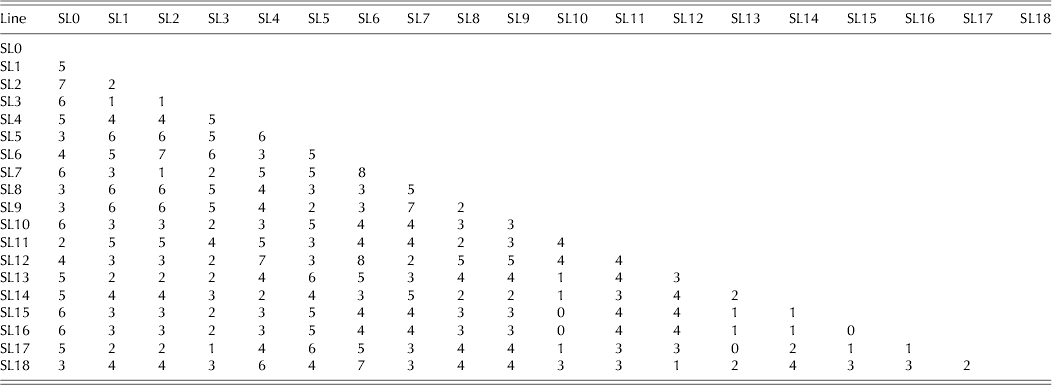
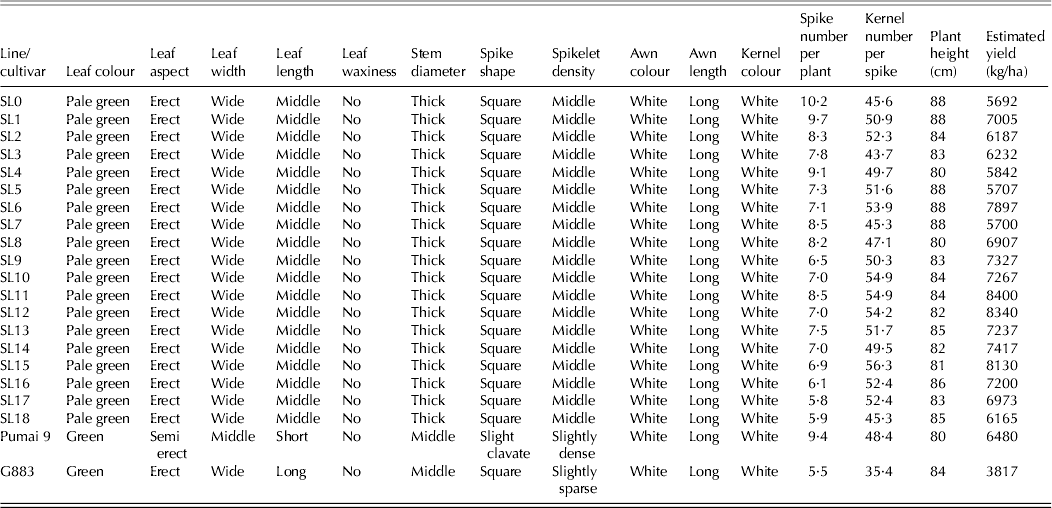
The plant material used in the current study included a tender spring cultivar ‘Pumai 9’ (Gao Reference Gao2010), a semi-winter growth habit line ‘G883’ with high powdery mildew resistance obtained from Henan Academy of Agricultural Sciences in China and 19 sister lines (SLs) selected from the cross of ‘G883’/'Pumai 9’. The 19 F7 SLs were selected from 200 F4 lines derived from an F3 line of the cross of ‘G883’/'Pumai 9’ and numbered as SL0–SL18. The molecular and agronomic characteristics of the SLs were investigated to evaluate the similarity of their genetic backgrounds: they were assessed using 187 pairs of simple sequence repeats (SSR) universal primers of wheat. It was found that 95·72–100% of the primers gave the same products between each pair of SLs, the average being 98·06% (Table 1). The biological traits of the 19 SLs were highly similar, including leaf, stem, spike, glume, awn, kernel, plant height and the yield components. Though the agronomic traits were affected by different alleles at the vernalization locus, the yield components of the SLs were also similar. These data demonstrated that SLs used in the current study shared high similarity of genetic background (Table 2). All accessions were available at the National Centre of Engineering and Technological Research for Wheat, China.
The numbers of the primers which amplified different product between every pair of sister lines (SLs)

Major agronomy traits of the sister lines (SLs) when sown at normal sowing date (12 October 2009)
Genotyping of loci Vrn, Ppd, Mot1 and FtsH4
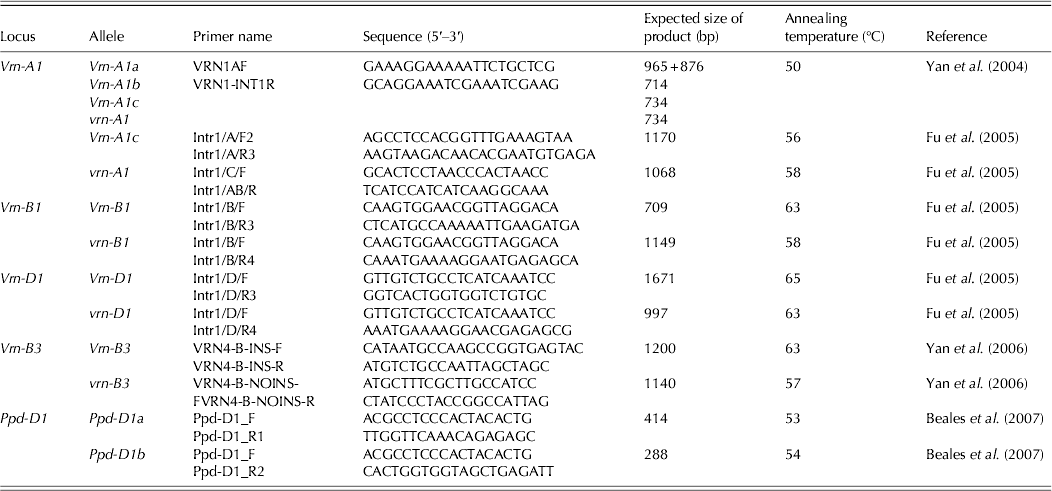
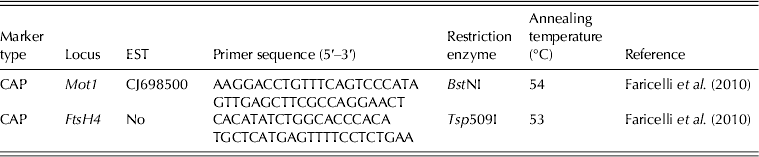
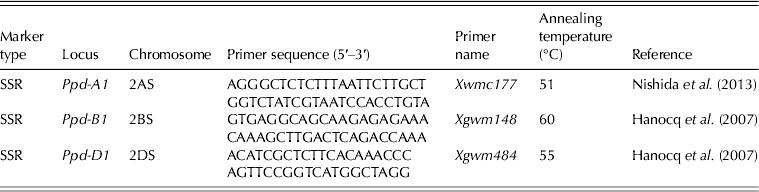
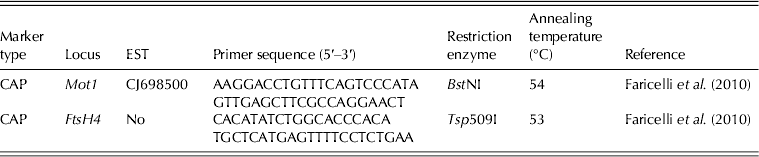
Genomic DNA was extracted from seeds of the samples following the procedure of Gale et al. (Reference Gale, Ma, Zhang, Rampling, Hill, Appels, Morris, Morrel, Eastwood, Hollamby, Rathjen and Gororo2001). Allelic specific polymerase chain reaction (PCR) primers for Vrn, Ppd, Mot1, FtsH4 and SSR markers Xwmc177 (2AS), Xgwm148 (2BS) and Xgwm484 (2DS), closely linked to Ppd-A1, Ppd-B1 and Ppd-D1 primers, were synthesized as reported previously (Yan et al. Reference Yan, Helguera, Kato, Fukuyama, Sherman and Dubcovsky2004, Reference Yan, Fu, Li, Blechl, Tranquilli, Bonafede, Sanchez, Valarik and Dubcovsky2006; Fu et al. Reference Fu, Szücs, Yan, Helguera, Skinner, von Zitzewitz, Hayes and Dubcovsky2005; Beales et al. Reference Beales, Turner, Griffiths, Snape and Laurie2007; Hanocq et al. Reference Hanocq, Laperche, Jaminon, Lainé and Le Gouis2007; Faricelli et al. Reference Faricelli, Valárik and Dubcovsky2010; Nishida et al. Reference Nishida, Yoshida, Kawakami, Fujita, Long, Akashi, Laurie and Kato2013). Genes Mot1 and FtsH4 in ‘Pumai 9’ and ‘G883’ were analysed by specific cleavage amplified polymorphism (CAP) markers (Faricelli et al. Reference Faricelli, Valárik and Dubcovsky2010). The detailed information is given in Tables 3–5.
DNA sequences of the primers for genotyping Vrn-A1, Vrn-B1, Vrn-D1, Vrn-B3 and Ppd-D1
DNA sequences of the primers for genotyping Mot1 and FtsH4
DNA sequences of the primers for genotyping Ppd-A1, Ppd-B1 and Ppd-D1
The PCR mixture contained 1×PCR buffer with 1·5 mmol/l of magnesium chloride (MgCl2), 150 μmol/l of each deoxynucleotide triphosphate (dNTPs), 2 pmol/l of each primer, 1 unit of Taq DNA polymerase (Tiangen Biotech Co., Beijing, China) and 50–100 ng of template DNA in 20 μl of final volume. The amplification programme was as follows: initial denaturation at 94 °C for 5 min, 35 cycles of 94 °C for 45 s, annealing at 50–65 °C (depending on the primers) for 45 s, 72 °C for 45 s, and with a final extension at 72 °C for 10 min. The optimal annealing temperatures for each pair of primers are listed in Tables 3–5. The amplified DNA fragments were separated on 1% agarose gel at 5 V/cM for 30–40 min, stained with ethidium bromide, and visualized using ultraviolet (UV) light.
Growing season surveying and recording
The experiment was carried out at the Experimental Farm of Henan Agricultural University (34°51′N, 113°35′E, 95 m a.s.l.) in the 2010/11 and 2011/12 wheat growing seasons. A pre-experiment was completed in the 2010/11 wheat growing season. In 2011/12, the experiment was systematically designed with four sowing date treatments: the first treatment was sown on 6 October, the second on 11 October, the third on 31 October 2011 and the fourth on 23 February 2012. The cultivars/lines were sown in plots 2 m long and 1·5 m wide. About 150 seeds of each cultivar/line were sown in two rows, with four replications. The order of varieties in the plot was random. Many wheat developmental parameters of the cultivars/lines were observed and recorded according to the Zadoks scale (Zadoks et al. Reference Zadoks, Chang and Konzak1974), including growth stage (GS)10, GS21, GS31, GS41, GS51, GS61 and GS93. Three key traits related to vernalization and photoperiod, spike differentiation process (Vahamidis et al. Reference Vahamidis, Karamanos, Economou and Fasseas2014), heading date and final leaf number on the main stem, were recorded in detail. After GS33, plants were sampled to observe spike differentiation at 3–7 day intervals to find the divergence of SLs in developmental process from spike primordium to plume formation stage, using a dissecting microscope/anatomical lens. Heading date was recorded at GS58 (McMaster Reference McMaster and Carver2009). Twelve individuals from each cultivar/line were taken for the registration of leaf numbers on the main stem at weekly intervals until final leaf number on the main stem was fixed. The new leaf was recorded when it stretched out of the stem and its length was longer than 3 cm. Fertilizer and weed management were the same among the four replications. Cultivation and fertilizer application were based on local practice and generally, plots were managed in order to avoid the effects of fungal disease, pests and weeds on growth and yield. There were no deleterious factors that would have affected wheat development.
Data analysis
All bar and line charts were drawn using the Microsoft Excel software using the data obtained from three replicate plots, the first, second and fourth treatments. Comparisons between the dominant Vrn-D1 allele and the recessive vrn-D1 allele were performed with a 2-tailed t test conducted to evaluate the significant differences between Vrn-D1 alleles according to average heading date and final leaf number on the main stem values.
RESULTS
Genotypes of ‘G883’, ‘Pumai 9’ and the sister lines at loci Vrn, Ppd, Mot1 and FtsH4
Amplification of the same 734-bp product with primers VRN1AF and VRN1R (Vrn-A1) in all cultivars/lines showed that they carry the winter habit allele vrn-A1: although no Vrn-A1a and Vrn-A1b spring habit alleles were detected. The absence of 1170-bp PCR product with primers Intr/A/F2 and Intr/A/R3 indicated the absence of Vrn-A1c, 1068-bp product with primers Intr1/C/F and Intr1/AB/R demonstrated the presence of the recessive vrn-A1 allele.
The absence of PCR product with primers Intr1/B/F and Intr1/B/R3 (for Vrn-B1 identification) indicated the absence of spring habit allele Vrn-B1 in all cultivars/lines and the presence of winter habit allele vrn-B1 was confirmed using primers Intr1/B/F and Intr1/B/R4. Polymerase chain reaction primers VRN4-B-INS-F and VRN4-B-INS-R failed to amplify a product in any cultivar/lines, which indicated the absence of spring habit allele at the Vrn-B3 locus. This was further confirmed with primers VRN4-B-NOINS-F and VRN4-B-NOINS-R that amplified a DNA fragment of approximately 1140-bp in all cultivars/lines.
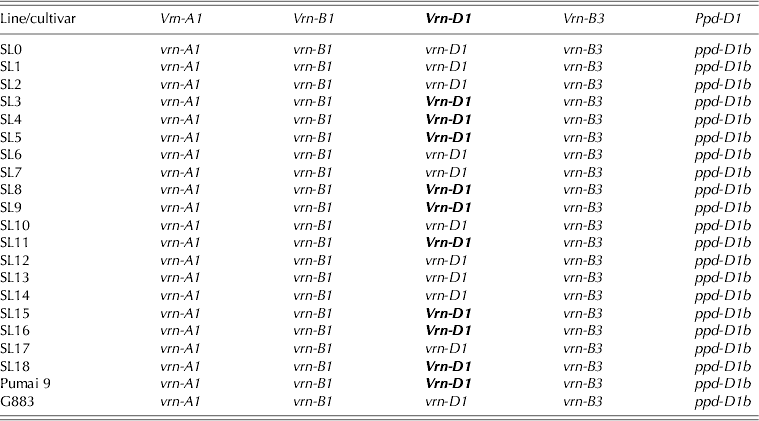
The Vrn difference among the cultivars/lines exists at Vrn-D1. ‘Pumai 9’ and 9 SLs amplified a 1650-bp fragment with primers Intr1/D/F and Intr1/D/R3 (for Vrn-D1 identification), which indicated the presence of spring habit allele Vrn-D1; no product in ‘G883’ and the other 10 SLs indicated the presence of winter habit allele vrn-D1. The presence of winter habit allele vrn-D1 was also confirmed using primers Intr1/D/F and Intr1/D/R4, which produced a 997-bp fragment (Fig. 1).
Amplification using primers Intr1/D/F and Intr1/D/R3 (Vrn-D1; A); Intr1/D/F and Intr1/D/R4 (vrn-D1; B). Lane 1, SL0; 2, SL1; 3, SL2; 4, SL3; 5, SL4; 6, SL5; 7, SL6; 8, SL7; 9, SL8; 10, SL9; 11, SL10; 12, SL11; M, DNA marker 2000; 13, SL12; 14, SL13; 15, SL14; 16, SL15; 17, SL16; 18, SL17; 19, SL18; 20, ‘Pumai 9’; 21, ‘G883’; 22, water.
No samples amplified a 414-bp PCR product with primers Ppd-D1_F and Ppd-D1_R1, indicating the absence of the Ppd-D1a allele, and all samples gave a 288-bp fragment with Ppd-D1_F and Ppd-D1_R2, which indicated the presence of the photoperiod-sensitive Ppd-D1b allele. Genotyping with SSR markers Xwmc177 (2AS), Xgwm148 (2BS) and Xgwm484 (2DS) closely linked to Ppd-A1, Ppd-B1 and Ppd-D1, respectively, demonstrated that the alleles of Ppd-1 were the same among the 19 SLs.
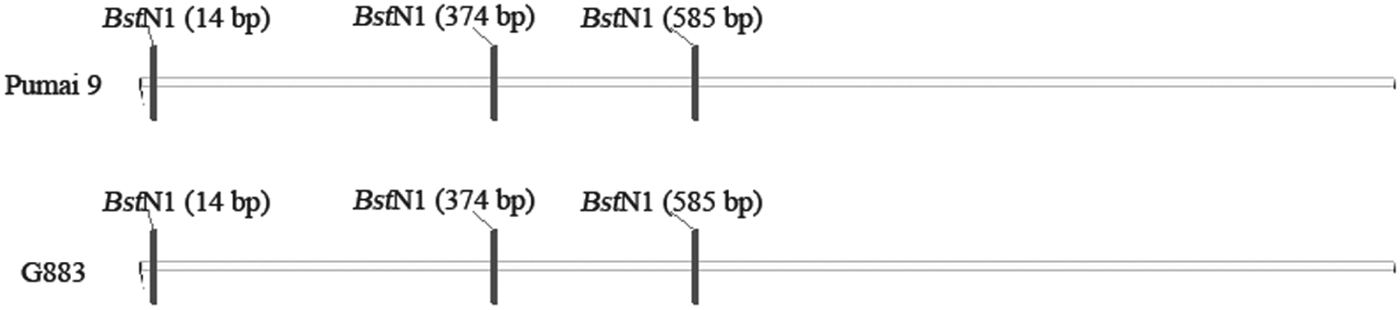
Genes Mot1 and FtsH4 were analysed by specific CAP markers in ‘Pumai 9’ and ‘G883’: the restriction fragments were the same and no differences existed between ‘Pumai 9’ and ‘G883’. The PCR products from the Mot1 locus in ‘Pumai 9’ and the consistency were further confirmed (Fig. 2).
Sequence comparison of Mot1 locus in ‘Pumai 9’ and ‘G883’.
In summary, the alleles of Vrn-A1, Vrn-B1, Vrn-D1, Vrn-B3, Ppd-1, Mot1 and FtsH4 in plant material were detected. All the loci were the same in all 19 SLs except the Vrn-D1 locus (Table 6).
Genotypes of ‘G883’, ‘Pumai 9’ and the sister lines (SLs) at loci of Vrn and Ppd
The effect of Vrn-D1 on spike differentiation
Vrn-D1 carrier cultivar ‘Pumai 9’ and SLs SL3, SL4, SL5, SL8, SL9, SL11, SL15, SL16 and SL18 blossomed c. 3 days earlier than vrn-D1 carrier lines of ‘G883’ and the other 10 SLs. Taking the Vrn-D1 carrier SL3 and vrn-D1 carrier SL12 as an example: the spike differentiation stages (according to Vahamidis et al. Reference Vahamidis, Karamanos, Economou and Fasseas2014) for samples in the first sowing date treatment, SL3 was at stage 4; meanwhile, SL12 reached stage 3 on 4 March 2012, c. 2 days early. When SL3 was at stage 5, SL12 was at stage 3 on 4 March 2012 in the second sowing date treatment, c. 3 days early. On 19 May 2012, SL3 entered into stage 20 while SL12 was at stage 19, about 2 days early. The same difference occurred in the fourth sowing date treatment: SL3 and SL12 were observed on 23 April 2012 and were at stages 9 and 8, respectively, i.e. c. 7 days early (Fig. 3).
Spike differentiations of SL3 and SL12 in the second sowing date treatment (observed on the same days). (A) The spike of SL12 was at stage 3 (Vahamidis et al. Reference Vahamidis, Karamanos, Economou and Fasseas2014); (B) the spike of SL3 was at stage 5 (observed on 4 March 2012); (C) the spike of SL12 was at stage 19 and (D) the spike of SL3 was at stage 20 (observed on 19 April 2012). Colour available online.
The effect of Vrn-D1 on heading date
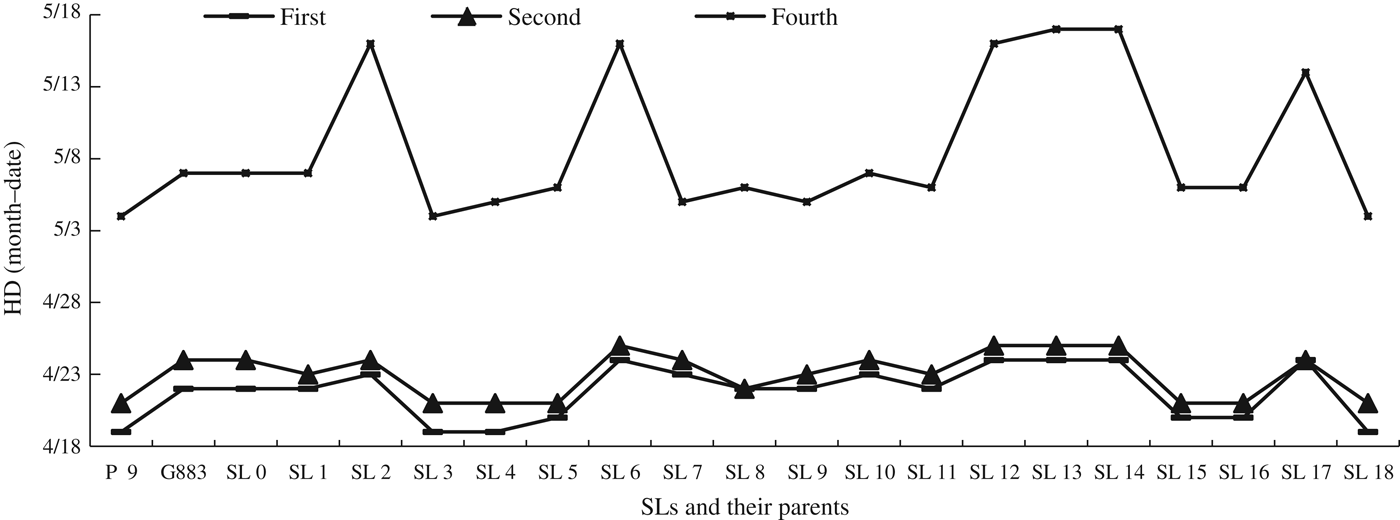
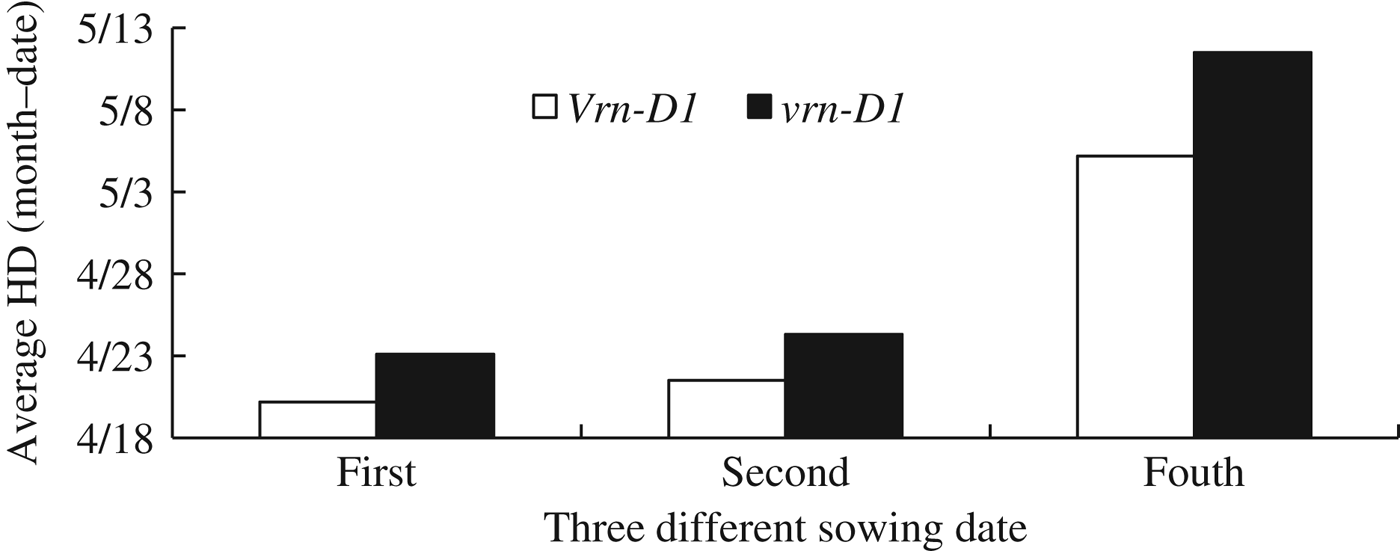
The Vrn-D1 carrier cultivar ‘Pumai 9’ and the SLs headed c. 3 days earlier than vrn-D1 carrier ‘G883’ and the SLs in the first and second sowing treatments and, on average, 7 days earlier in the fourth treatment (Figs 4 and 5). The heading date fluctuation range was consistent between the first and second sowing treatments, while the significant difference occurred in the fourth treatment, on 23 February 2012. The heading dates of SL2 and SL6 were far behind the others in the fourth sowing date treatment. The SL2, SL6 and SL12 dropped behind the earliest line by 12 days, SL13 and SL14 by 13 days, SL18 by 10 days. However, the heading date difference was only 1 to 5 days in the first and second sowing date treatments. The cultivars/lines were classed into two groups based on Vrn-D1 alleles. The 2-tailed t test showed that Vrn-D1 locus affected heading date (P<0·001 in the three sowing date treatments).
Heading dates of different SLs and their parents in three sowing date treatments. ‘Pu9’: ‘Pumai 9’.
Average heading dates of cultivar/lines carrying the same allele at Vrn-D1 in three sowing date treatments.
Only one pair out of the 187 primer pairs amplified different products between SL2 and SL3, SL14 and SL15, SL16 and SL17, the genetic background similarity reached 99·47% in every pair of SLs. The heading date of SL2 was 12 days behind SL3, heading date of SL14 was 11 days behind SL15 and SL17 headed 8 days later than SL16 in the fourth treatment. The SLs SL3, SL15 and SL16 carried the dominant Vrn-D1 allele and SL2, SL14 and SL17 carried the recessive vrn-D1 allele. These data clearly showed the crucial effect of Vrn-D1 on wheat heading date.
The effect of Vrn-D1 on final leaf number on the main stem
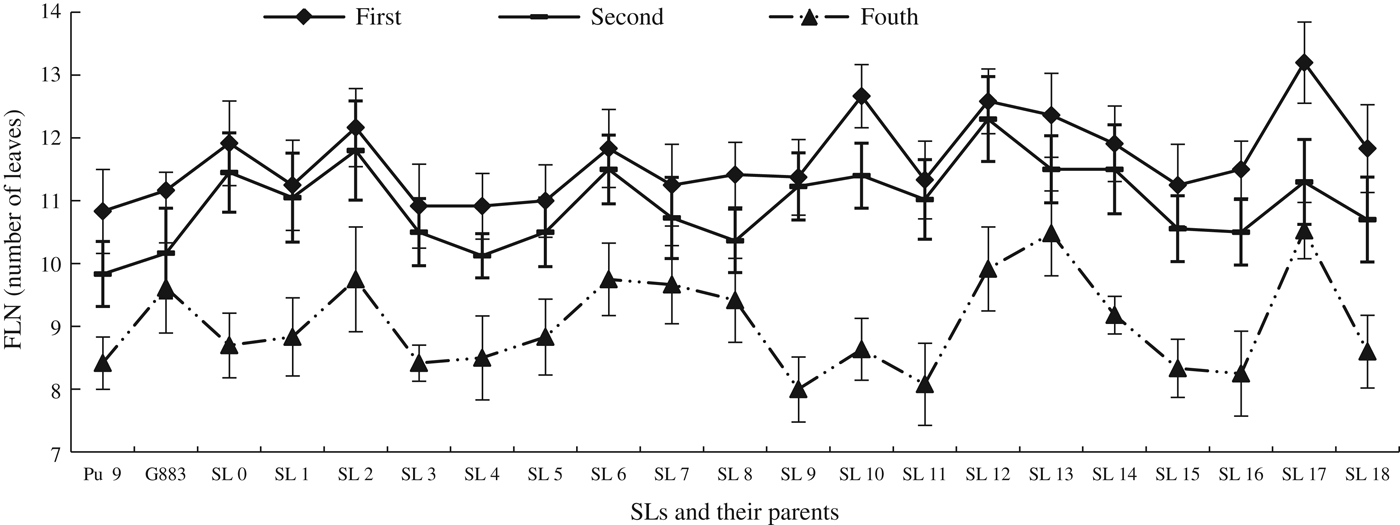
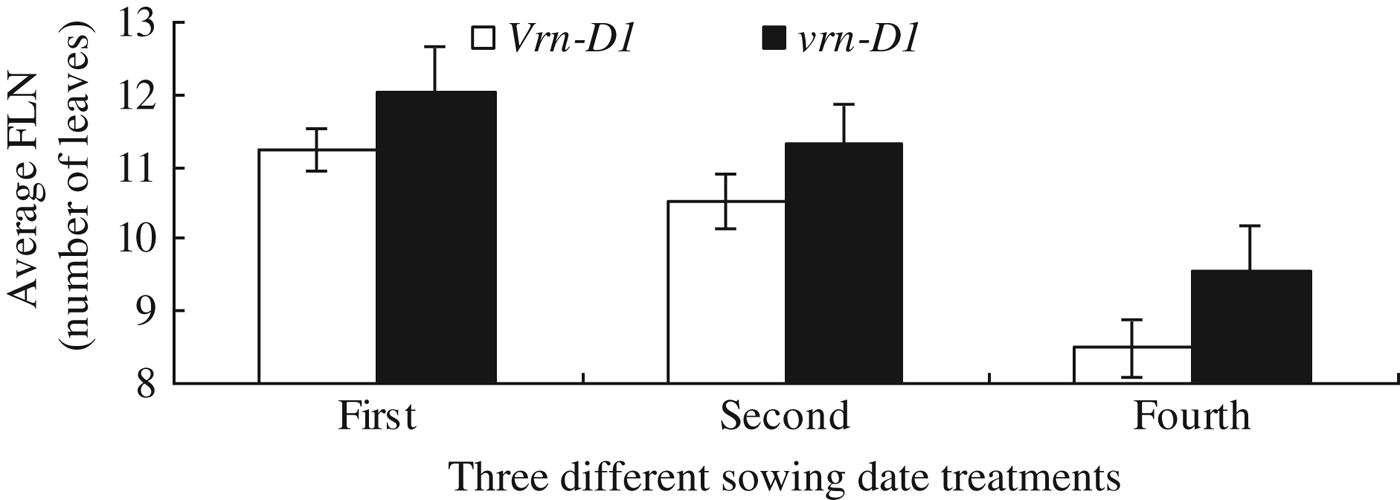
Stable leaf numbers on the main stems of the cultivars/lines were investigated in May (Figs 6 and 7). The Vrn-D1 carrier cultivar ‘Pumai 9’ and the SLs had fewer final leaf number on the main stem than carriers of vrn-D1 ‘G883’ and the SLs, by 1–3 leaves in the first, second and fourth treatments. The cultivars/lines were classed into two groups based on different Vrn-D1 alleles. The 2-tailed t test showed that Vrn-D1 locus affected final leaf number on the main stem (P<0·01 for the first sowing date treatment and P<0·001 for the last two). The final leaf number on the main stem of SL2 was 1·4 leaves more than that of SL3, the final leaf number on the main stem of SL14 was 0·9 leaves more than that of SL15 and the final leaf number on the main stem of SL17 was 2·2 leaves more than that of SL16 in the fourth treatment.
Final leaf number on the main stem values ±standard error (s.e.) of different sister lines and their parents in three sowing date treatments. ‘Pu9’: ‘Pumai 9’.
Average final leaf number on the main stem values ±standard error (s.e.) of cultivar/lines carrying the same allele at Vrn-D1 in three sowing date treatments.
DISCUSSION
Sister lines derived from a cross at advanced generations are appropriate materials for gene function assessment
Isogenic lines, mutants and transgenic plants are ideal material for gene functional assessment. However, it is very difficult or even impossible to get these materials for most of the important agricultural traits, especially in a short time. In the current paper, the effect of Vrn-D1 locus on wheat spike differentiation process, heading date and final leaf number on the main stem was successfully assessed for the first time using F7 SLs derived from an F3 individual plant. Self-pollination of generations after the initial cross will gradually ensure that each individual of the offspring has an identical genetic background. Most gene loci among SLs will be identical if they are selected from relatively advanced generations such as F3, F4 or F5: these lines can almost be used as near-isogenic lines. The research of a trait using grouped SLs according to genotype or phenotype is similar to bulk segregant analysis (BSA) (Niu et al. Reference Niu, Wang, Wang, Cao, Qi and Shen2008), and it is more advanced when combined with SLs derived from individual plant at advanced generations. The current authors consider that advanced generation SLs derived from an individual plant at advanced generations are appropriate materials for gene function assessment, especially for the most important agricultural traits in wheat breeding. For example, Gazza et al. (Reference Gazza, Sgrulletta, Cammerata, Gazzelloni, Perenzin and Pogna2011) assessed the effects of alleles Pina-D1a and Pinb-D1a on durum wheat pastamaking and breadmaking quality, using six F8 SLs derived from F6 progeny hemizygous for Pina-D1a and Pinb-D1a.
Vrn-D1 locus significantly affects spike differentiation process and heading date
It is well known that heading date and anthesis are the significant signs of the transition from vegetative to reproductive phases in wheat and there is also a significant correlation between heading date and maturity time. Spike differentiation process is the base and positively associated with heading date and maturity time. The current study showed that the spike differentiation process was c. 3 days quicker in Vrn-D1 carrier cultivars/lines than in vrn-D1 carrier cultivars/lines, which demonstrated that the Vrn-D1 affected wheat spike differentiation significantly. Similarly, heading date and maturity time were earlier by an average of c. 4 and 5 days respectively, demonstrating that the Vrn-D1 locus significantly affected wheat heading date and maturity time. Evidently, Vrn-D1 accelerates wheat reproductive development, while vrn-D1 retards it.
Vrn-D1 locus significantly affects final leaf number on the main stem
Previous research has suggested that final leaf number on the main stem of winter cultivars was more than that of spring cultivars because of long vernalization stage and extended vegetative GSs (Cao et al. Reference Cao, Li, Wang and Wu1990). A similar result was found in the present study: the Vrn-D1 carrier cultivar/line ‘Pumai 9’ and the SLs had fewer final leaf numbers on the main stem, and showed tender spring habit. The vrn-D1 carrier cultivar/line ‘G883’ and the SLs had more final leaf number, and showed a semi-winter habit. The average divergence was c. two leaves. These data demonstrate that the Vrn-D1 locus is an important element to control wheat growth habit.
The key function period of Vrn-D1 alleles
Chen et al. (Reference Chen, Carver, Wang, Cao and Yan2010) considered that the VRN-A1 locus had stable effects on wheat from stem elongation to physiological maturity. The effect of the PPD-D1 locus was minor at stem elongation but increased at heading date and maturity, indicating that this locus started to have an effect later than the VRN-A1 locus. The function of the VRN-D3 locus was not detected at stem elongation but reached its maximum effect at physiological maturity. Yan et al. (Reference Yan, Fu, Li, Blechl, Tranquilli, Bonafede, Sanchez, Valarik and Dubcovsky2006) reported that wheat orthologue VRN-B3 had a critical role in determination of the timing of the developmental transition from vegetative to reproductive growth.
It was curious that the Vrn-D1 locus significantly affected physiological maturity, the evidence derived from field performance in different sowing date treatments, including spike differentiation, final leaf number on the main stem and heading date. The cultivar/lines carrying Vrn-D1 headed earlier than lines carrying vrn-D1 by an average of 3 days in the first and second sowing treatments and 7 days in the fourth treatment. The significant divergence occurred in the fourth treatment, on 23 February 2012. It was clear that Vrn-D1 locus affected wheat heading date as well as physiological maturity: the later a plant was sown, the stronger was the effect. The function of the Vrn-D1 locus was seen in the whole wheat life-cycle, although the key period may be at the early stage of spike differentiation. However, the major stage of the Vrn-D1 allele effect was unclear and further investigation of the Vrn-D1 locus may provide the precise action stage and a broad explanation.
Vrn-D1 is a key locus for determining requirement of wheat vernalization
The biggest divergence in spike differentiation process, heading date and final leaf number on the main stem occurred in the fourth treatment: it was sown on 23 February 2012 when spring had already reached Henan and temperatures were becoming higher and higher, with a mean temperature above 10 °C. The Vrn-D1 carrier lines only need a minimum vernalization requirement, but vrn-D1 carrier lines need a fundamental vernalization. In this case, the maximal phenotypic difference of genotypes Vrn-D1 and vrn-D1 appeared. These data definitely showed the crucial effect of Vrn-D1 on wheat vernalization.
Vrn-D1 is an important locus for molecular breeding
The effects of sowing date on wheat developmental process were studied previously by Green et al. (Reference Green, Paulson and Ivins1985). Kirby et al. (Reference Kirby, Spink, Frost, Sylvester-Bradley, Scott, Foulkes, Clare and Evans1999) suggested that vernalization was a major factor affecting the duration of the phase from sowing to double ridge stage for winter wheat varieties. Miralles et al. (Reference Miralles, Ferro and Slafer2001) suggested that extending the duration of the stem elongation phase in wheat would produce more fertile florets per spikelets. Sowing date affects the duration of developmental stages, final leaf number on the main stem, spike floret fertility and grain yield. The results of the current study revealed a genetic factor for these appearances and the Vrn-D1 locus significantly affected these traits. Some data indicated that the strength of the dominant spring Vrn-1 alleles can be ranked as Vrn-A1>Vrn-B1>Vrn-D1: Vrn-B3 resulted in the earliest heading date in combination with other dominant Vrn-1 alleles (Zhang et al. Reference Zhang, Xiao, Zhang, Xia, Dubcovsky and He2008). Stelmakh (Reference Stelmakh1993) showed that the Vrn-B1 allele was associated with the latest heading time, Vrn-A1 with the earliest, and Vrn-D1 with intermediate values. The current study proved that Vrn-D1 alleles play an important role in wheat vernalization, spike differentiation, heading date, final leaf number on the main stem and so on: all the effects were significant.
‘Pumai 9’, carrying Vrn-D1, is a tender spring cultivar in Henan, China. ‘G883’, carrying vrn-D1, is a semi-winter growth habit line. Their offspring of the 19 SLs could be clearly classed into tender spring habit and semi-winter growth habit by genotypes at the Vrn-D1 locus. Many wheat cultivars in the Huang-Huai Wheat Zone carry Vrn-D1 or vrn-D1, which is the most diverse locus in Vrn genes in this region (Yuan et al. Reference Yuan, Li, Meng, Ren, Niu and Yin2009; Zhao et al. Reference Zhao, Hu, Zhan, Wang, Ma and Wang2010). This suggested the important status of Vrn-D1 locus in wheat cultivars in Henan, China, and Vrn-D1 is an important locus for molecular breeding, at least in the most important Huang-Huai Wheat Zone in China.
This project was supported by National 863 program (2012AA101105) and Henan key scientific and technological project (122101110200). We are grateful to the anonymous reviewers for their constructive comments on revision of the manuscript.