Introduction
Depression is common in later life (Luppa et al. Reference Luppa2010), is a major public health problem and one of the leading causes of disease burden worldwide (Whiteford et al. Reference Whiteford2013). Prevalence rates in people aged 75 years and over range from 4.6% to 9.3% for major depression defined using the Diagnostic and Statistical Manual of Mental Disorders (DSM-IIR or DSM-IV), and from 4.5% to 37.4% with a broader definition of depressive disorders using case definitions on depression symptom scales (Luppa et al. Reference Luppa2010). Depressive symptoms, with or without major depressive disorder, impair functional ability and wellbeing as much as the most common chronic medical conditions such as diabetes, chronic lung disease and heart disease (Whiteford et al. Reference Whiteford2013). Late-life depression is associated with increased morbidity and all-cause mortality (Diniz et al. Reference Diniz2013; Jeong et al. Reference Jeong2013; White et al. Reference White2015) and similarly sub-clinical symptoms of depression have been associated with increased morbidity and mortality (White et al. Reference White2015). This increased risk of mortality with depression in later life is largely explained by differences in physical activity, long-term conditions and impairments in physical and cognitive functioning (White et al. Reference White2015).
There is evidence that late-life depression can be effectively treated with anti-depressants (Nelson et al. Reference Nelson, Delucchi and Schneider2008; Kok et al. Reference Kok, Nolen and Heeren2012; Thorlund et al. Reference Thorlund2015) and psychological therapies such as Cognitive Behavioural Therapy (CBT) and Problem Solving Therapy (PST) (Gould et al. Reference Gould, Coulson and Howard2012; Cuijpers et al. Reference Cuijpers2014). Guidelines also suggest that GPs can consider (alongside other options) augmentation with antipsychotics when depression has not responded to initial anti-depressant treatment (National Institute for Health and Care Excellence (NICE), 2009). Hypnotics/benzodiazepines are not however recommended for treatment augmentation in depression (NICE, 2009). In Randomised Controlled Trials (RCTs) of treatment with anti-depressants in older people, there was significantly higher odds of improvement with anti-depressants compared with placebo (OR 1.78; 95% CI 1.42–2.24) with Numbers Needed to Treat (NNT) of 6.7 (95% CI 4.8–10), and no significant differences between type of anti-depressant (Kok et al. Reference Kok, Nolen and Heeren2012). In RCTs of psychological therapies compared with treatment as usual in older people there are also significant improvement in symptoms for both CBT (14 trials, effect size −0.57; 95% CI −0.80 to −0.34) (Gould et al. Reference Gould, Coulson and Howard2012) and PST (3 trials, effect size 0.46; 95% CI 0.18–0.74) (Cuijpers et al. Reference Cuijpers2014). Combining all psychotherapies compared with treatment as usual in 44 trials, the effect size is 0.64 (95% CI 0.47–0.80), corresponding to a NNT of 3.
However evidence from the UK has suggested older people are less likely to attend psychological therapies (de Lusignan et al. Reference de Lusignan2012; Royal College of Psychiatrists, 2013) and limited older evidence, mainly from North America, suggests they may be less likely to be treated in any modality (Unützer et al. Reference Unützer2000; Crystal et al. Reference Crystal2003; Harman et al. Reference Harman, Edlund and Fortney2004; Kessler et al. Reference Kessler2005). It is not known if there are additional inequalities in treatment in older people living in more deprived or more rural areas, although there is some evidence that poorer older people may receive less treatment, in particular less psychotherapy (Crystal et al. Reference Crystal2003). A greater understanding of the variation in treatment patterns for depression in primary care by age is required to identify whether there is evidence of inequitable access to care in contemporary practice. We have investigated the variation by age, gender, deprivation and neighbourhood in recorded primary care treatment for depression and symptoms of depression in older adults in England.
Methods
Study design
Population-based longitudinal cohort study.
Data source
We used data from The Health Improvement Network (THIN) UK primary care database (http://www.csdmruk.imshealth.com/), which contains the medical records of nearly 12 million patients from across the UK. This database is broadly representative of the UK population (Blak et al. Reference Blak2011) and includes information on consultations, symptoms, diagnoses, investigations, health measurements, demographics, prescriptions, surgical procedures and referrals. Information on medical conditions is entered using Read Codes (Booth, Reference Booth1994), a hierarchical coding system including diagnoses (which map into ICD-10 codes) and symptom codes. THIN data are linked to UK Census data using the individuals postal (zip) code, which provides measures of area deprivation, and the type of neighbourhood for example urban or rural. We restricted our sample to 373 practices from England, where we had available information on their linked Index of Multiple Deprivation (IMD) score (Department for Communities and Local Government, 2010) and where standard data quality criteria had been met (Horsfall et al. Reference Horsfall, Walters and Petersen2013). THIN has been used extensively in epidemiological research, including depression (Rait et al. Reference Rait2009; Harris et al. Reference Harris2012) and the recorded prevalence of depression is broadly in line with large epidemiological studies of attendees to General Practice in Europe (King et al. Reference King2008). In the UK, General Practitioners are responsible for drug prescriptions issued in the community within the National Health Service (NHS), so information on anti-depressant and other psychotropic drug use is well recorded (Centre HaSCI, 2012).
Study population
We included all patients aged 55 years or older who were permanently registered for at least 18 months with a participating practice between 01 January 2009 and 31 December 2013, and had at least one diagnosis of depression or depression symptoms recorded in their GP medical record between 1 January 2009 and 30 June 2013. We extracted two cohorts, one with new depression diagnoses, and one with new depression symptoms. These were not mutually exclusive, as multiple episodes of depression diagnoses or symptoms were possible in the same individual, as long as they met criteria for separate episodes specified below.
The start of the follow-up was the latest of the following: 1 January 2009, 6 months after the patient's date of registration with the practice, the patient's 55th birthday and the date the practice achieved an acceptable level of data quality (Horsfall et al. Reference Horsfall, Walters and Petersen2013). The end of the follow-up was the earliest of 31 December 2013, the patient's date of death, the patient's transfer out of the practice or the last date the practice contributed data to THIN. The records for the 6 months immediately following a new registration with a GP were excluded to avoid pre-existing prevalent cases appearing to be new episodes of diagnosed depression or depressive symptoms (Lewis et al. Reference Lewis2005).
Depression diagnoses and symptoms of depression definitions
GPs record depression in different ways, using both diagnostic codes and symptom codes (e.g. ‘low mood’) and these coding practices have changed over time (Rait et al. Reference Rait2009). Thus we included both groups in these analyses. Code lists were created for (a) depression diagnoses and (b) depression symptoms using standard methods (Davé & Petersen, Reference Davé and Petersen2009) and approved by a general practitioner and psychiatrist. Entries for depression symptoms were identified using Read codes related to depression but are too vague or uncertain to be classed as diagnoses, such as ‘low mood’ or ‘C/O – feeling depressed’. As depression is often a recurrent disorder occurring over a lifetime we allowed patients to have multiple episodes of depression during follow-up. We defined a ‘new episode’ of depression diagnoses or symptoms as one where in the prior 12 months (‘washout’ period) the patient was not prescribed any anti-depressant drug nor had any entry in the database for symptoms or diagnoses of depression.
Study variables
Outcomes
We determined the initiation of treatment recorded in GP records within 6 months from the onset of a new episode of diagnosed depression or depression symptoms in terms of:
i. anti-depressant drugs
ii. hypnotics and anxiolytics drugs
iii. anti-psychotics drugs
iv. referrals to psychological therapies including counselling
Records for drug treatment prescriptions were extracted using the British National Formulary (BNF) codes (Joint Formulary Committee, 2013). Prescriptions of amitriptyline for less than 50 mg per day were excluded as low doses of this drug are usually indicated for chronic pain rather than for treating depression. Anti-depressant drugs include Tricyclic and related anti-depressants, Monoamine-oxidase inhibitors, Selective Serotonin Reuptake Inhibitors and other anti-depressant drugs. Hypnotics and anxiolytics include benzodiazepines, ‘z-drugs’ (zaleplon, zolpidem, zopiclone), clomethiazole, melatonin and buspirone. Anti-psychotics include both first and second generation oral anti-psychotics. Further details are reported in the BNF (Joint Formulary Committee, 2013).
Explanatory variables
We estimated the effect of gender, age at onset of new episode of depression/symptoms, socio-economic status and type of neighbourhood on the treatment outcomes.
Age was initially treated as a continuous variable and handled via restricted cubic splines (Durrleman & Simon, Reference Durrleman and Simon1989). Based on our preliminary exploratory analysis, and to facilitate practical interpretation, we then categorised age into 8 groups: 55–59, 60–64, 65–69, 70–74, 75–79, 80–84, 85–89 and 90+ years.
Socio-economic status was defined using the Index of Multiple Deprivation (2010), a measure at the small area level including 38 separate indicators accounting for seven types of deprivation ‒ income, employment, health, education, barriers to housing and services, living environment and crime, classified into quintiles. Type of neighbourhood was measured at the small area level using the postcode linked to the Office of National Statistics (ONS) classification of areas in the UK population census, grouped into three categories: urban, town/fringe and rural (village, hamlet or isolated dwelling).
Analyses
We focussed on patients who had at least one new episode of diagnosed depression or depressive symptoms during the follow-up. For each of the new episodes we then determined whether or not treatment was initiated within 6 months from the onset. Since the data were clustered (multiple episodes are nested within patients, who in turn are clustered within practices), we used a generalized estimating equations approach with a logistic link function and a working independence correlation structure (Zeger et al. Reference Zeger, Liang and Albert1988). This consists of fitting logistic models as if the observations were independent but then accounting for the lack of independence by using a robust sandwich estimator for the standard errors (Huber, Reference Huber1967; Royall, Reference Royall1986).
All the models were adjusted for gender, age, deprivation quintile and type of neighbourhood. Since for a few of the treatment outcomes we observed significant interactions between gender and some of the other covariates, we stratified our analysis by gender. No important interactions between age groups and deprivation were found. Some patients, especially the older and frailer ones, did not survive or were not in the study long enough to be started on treatment. Patients who died within 6 months from episode onset without starting treatment were included in the analysis as not receiving the treatment. For patients who left the study alive (e.g. by moving GP practice) within 6 months from episode onset without starting treatment we carried out extensive sensitivity analyses to evaluate the robustness of our results to this type of loss to follow-up. In particular, we evaluated how our inferential conclusions were affected under alternative hypothetical scenarios, such as assuming that the treatment was always initiated (best case scenario) or never initiated (worst case scenario) when a patient had missing information on treatment initiation. Analysis was conducted using Stata version 13. Given multiple comparisons and the increased chance of a type I error, one should be cautious regarding interpretations of p values between 0.01 and 0.05.
Results
Sample characteristics
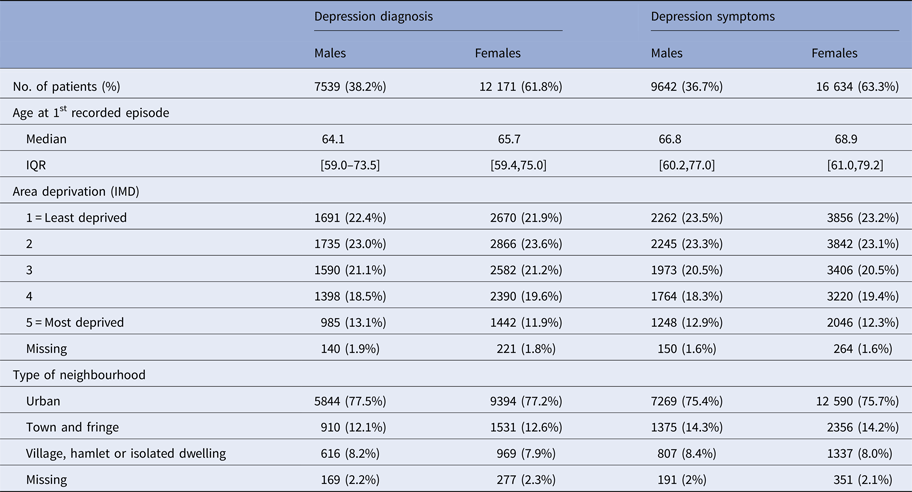
There were 20 225 recorded new episodes of depression diagnoses in 19 710 registered patients aged 55 years and over within the period 1 January 2009 to 30 June 2013. There were 27 396 recorded new episodes of depressive symptoms from 26 276 patients in the same period. Just under two thirds of the study population were women, the median age at first episode was 64–69 years (depending on diagnosis and gender) and the majority lived in urban neighbourhoods (Table 1). For most episodes of depression diagnoses (95.9%) and depression symptoms (93.9%) there was a complete 6 months follow-up.
Characteristics of the study population with diagnoses and symptoms of depression

The majority of the study population only had a single episode of diagnosed depression (97.4%) or depression symptoms (95.9%) recorded during the study period. A few (2.6%) had two recorded episodes and six individuals had three episodes of diagnosed depression. Similarly 4.0% had two recorded episodes of depression symptoms and 31 individuals had three episodes of depression symptoms.
Treatment initiation (all ages)
Anti-depressants were the most common treatment initiated in the 6 months following a newly recorded episode of depression or depression symptoms. For each new recorded episode of depression in GP records, the majority (87.1%) were treated with an anti-depressant within 6 months (Supplementary Table 1), and the majority of these (89.8%) were initiated on the same day as the diagnosis was first recorded. For each new recorded episode of symptoms of depression in GP records, more than half (58.7%) were treated with an anti-depressant within 6 months, and the majority of these (77.4%) were initiated on the same day as the symptom was first recorded. All other treatment modalities were much less common. For those with a new recorded diagnosis of depression 14.2% were initiated on an hypnotic drug, 9.2% on an anxiolytic, and 2.7% on an anti-psychotic drug. Similarly for newly recorded symptoms of depression 13.4% were initiated on a hypnotic, 8.4% on an anxiolytic, and 2.7% on an anti-psychotic drug. For both diagnosis and symptoms of depression, anxiolytics and antipsychotics were initiated more often between 1 and 6 months after the first episode. With overall high prescribing of antidepressants, co-prescribing rates were very high, such that for depression diagnoses 90.6% of people prescribed hypnotics and anxiolytics were also prescribed an anti-depressant, and 87.2% of these prescribed anti-psychotics were also prescribed an anti-depressant. For symptoms 68.5% of those prescribed hypnotics and anxiolytics and 68.4% of those prescribed an anti-psychotic were also prescribed an anti-depressant.
Recorded referrals to psychological therapies including counselling were low; only 3.5% of new episodes of depression diagnoses and 3.4% new episodes of depression symptoms had a code indicating a referral had been made within 6 months of presentation (Supplementary Table 1).
Variation in treatment by age, gender, deprivation, and type of neighbourhood
Depression diagnoses
Pharmacological treatments
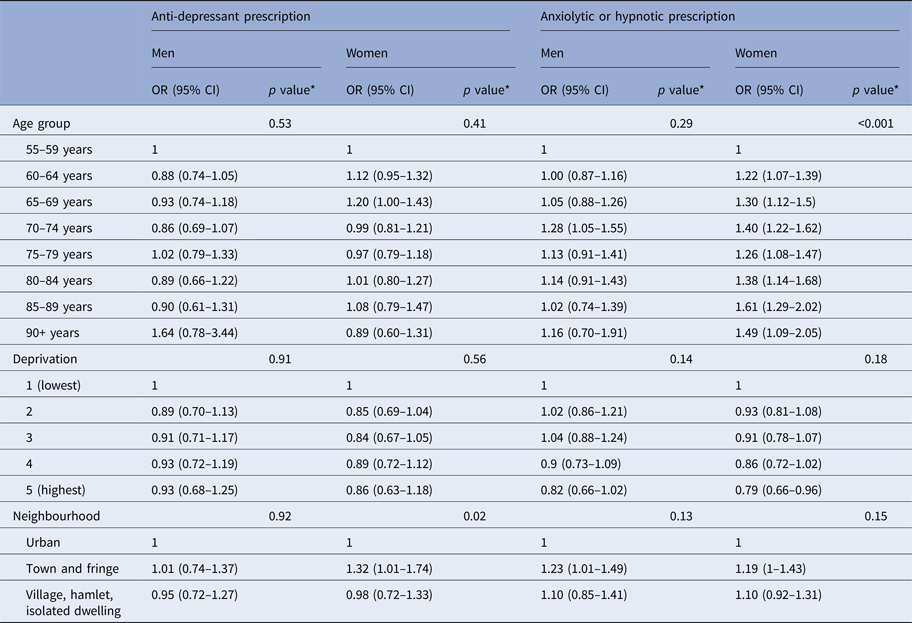
Among patients with a diagnosis of depression there were no significant differences in the odds of being prescribed an anti-depressant by age group (Table 2). Similarly there were no differences in prescribing in older people by area deprivation, or by neighbourhood for men. There were some differences in anti-depressant prescribing by neighbourhood for women, with an increase in anti-depressant prescribing in women living in town and fringe (suburban areas in outskirts of cities) neighbourhoods (OR 1.32, 95% CI 1.01–1.74) in comparison with those living in urban neighbourhoods.
Odds ratios of drug treatment for recorded new episodes of depression diagnoses in men and women by age, deprivation and neighbourhood

*From Wald test for heterogeneity.
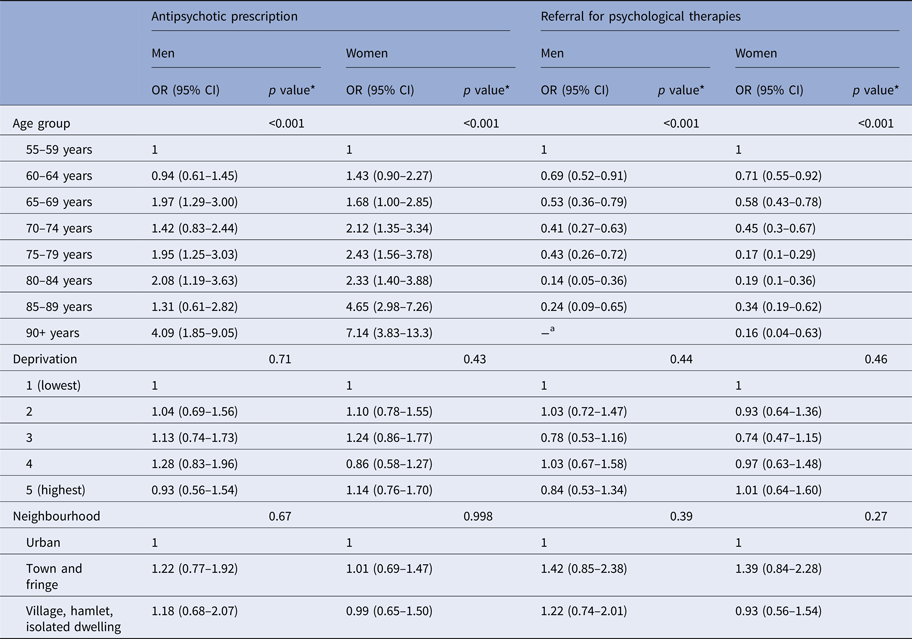
There was no significant difference by age in anxiolytic and hypnotic prescribing for men, however for women prescribing increased with increasing age, with the highest prescribing at age 85–89 (OR 1.61, 95% CI 1.29–2.02). There were no differences in anxiolytic or hypnotic prescribing by deprivation or neighbourhood. Anti-psychotic prescribing in people with depression increased with age for both men and women, particularly in the oldest age group aged 90 and over, in both men (OR 4.09, 95% CI 1.85–9.05) and women (OR 7.14, 95% CI 3.83–13.30) in comparison with those aged 55–59 years (Table 3). There were no differences in anti-psychotic prescribing by either deprivation or type of neighbourhood.
Odds ratios of drug treatment and referrals for recorded new episodes of depression diagnoses in men and women by age, deprivation and neighbourhood

*From Wald test for heterogeneity.
a The regression coefficient could not be estimated.
Non-pharmacological treatments
The odds of recorded referral for psychological therapies including counselling reduced steadily with increasing age for both men and women (see Table 3). For example women aged 75–79 years were around six times less likely (OR 0.17, 95% CI 0.1–0.29) to be referred than those aged 55–59 years, and men aged 80–84 years were around seven times less likely (OR 0.14, 95% CI 0.05–0.36) to be referred than men aged 55–59 years. There was no differences in recorded referrals for psychological therapies by either deprivation or type of neighbourhood.
Depression symptoms
Pharmacological treatments
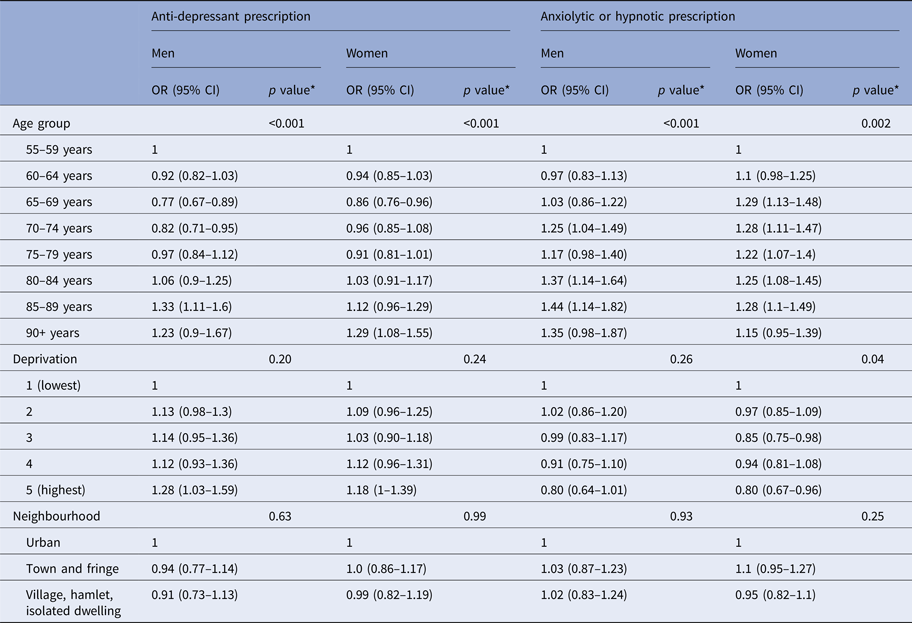
There was a J-shaped pattern for prescribing of anti-depressants for older people with new recording of depression symptoms by age group, with a reduction in prescribing for those in their 60s and 70s followed by an increase in those over 85 years (see Table 4). There were no significant differences in prescribing of anti-depressants by deprivation or type of neighbourhood.
Odds ratios of drug treatment for newly recorded depression symptoms in men and women by age, deprivation and type of neighbourhood

*From Wald test for heterogeneity.
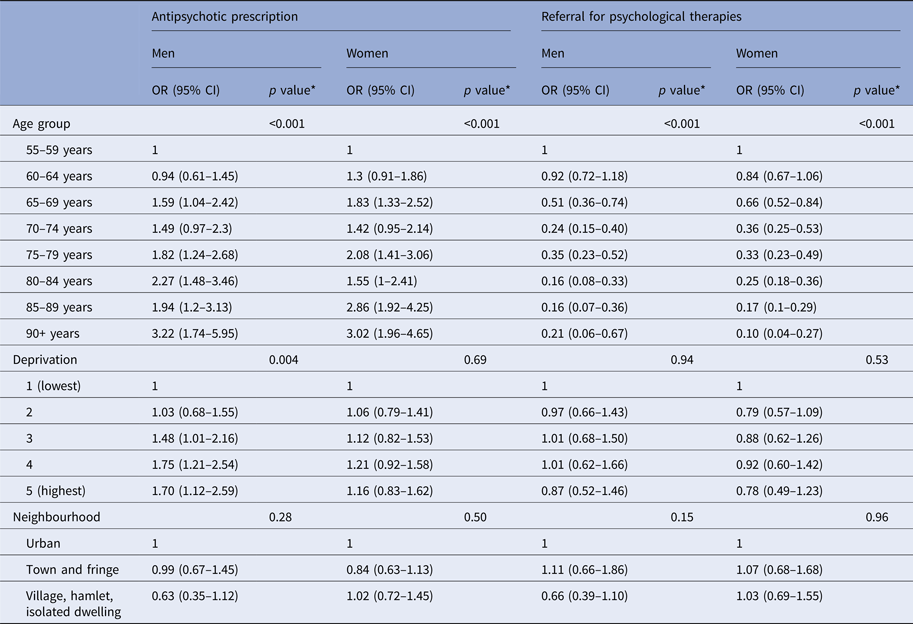
Anxiolytic and hypnotic prescribing increased with increasing age (Table 4). There was a significant difference in prescribing of anxiolytics and hypnotics by deprivation for women but not men, with lower rates of prescribing for women living in the most deprived neighbourhoods (OR 0.80, 95% CI 0.67–0.96). There were significant increases in prescribing of anti-psychotics with increasing age, rising to a more than three-fold increase in prescribing for those aged 90 or more in both men (OR 3.22, 95% CI 1.74–5.95) and women (OR 3.02, 95% CI 1.96–4.65) compared with those 55–59 years (Table 5). There was higher prescribing of anti-psychotics in those living in the most deprived neighbourhoods in men but not women. There were no significant differences by type of neighbourhood.
Odds ratios of drug treatment and referrals for newly recorded depression symptoms in men and women by age, deprivation and type of neighbourhood

*From Wald test for heterogeneity.
Non-pharmacological treatments
As with those with depression diagnoses, recorded referrals for psychological therapies for older people with depression symptoms decreased steadily with increasing age (Table 5). For example, men aged 80–84 had six times lower odds of a referral recorded than men aged 55–59 years (OR 0.16, 95% CI 0.08–0.33) and women aged 80–84 years had four times lower odds of a recorded referral than women aged 55–59 years (OR 0.25, 95% CI 0.18–0.36). There were no significant differences in referrals for psychological therapies by either deprivation or type of neighbourhood.
Sensitivity analysis
We explored the impact of differential drop-out by age, as more people left the dataset without 6 months follow-up in the oldest age groups. This showed that using the best (all people who leave the practice are treated) and worst (no people are treated) case scenarios had little impact on the findings for most outcomes, with overlapping confidence intervals. The exception was referrals to psychological therapies for those aged 80 or more, where our observed findings were close to the worst case scenario (those leaving the practice within 6 months are not referred), and significantly lower than the best case scenario (that all people who leave the practice with depression are referred for psychological therapies within 6 months from the onset of their depression/symptom recording), however this scenario is very unlikely in practice.
Discussion
Treatment rates with anti-depressants are high across all ages for older adults recorded with a new episode of both depression diagnoses and symptoms, and with the majority treatment is initiated on the same day as the diagnosis or symptom is first recorded. There is little variation in initiation of anti-depressant drugs by age for those with a new recorded depression diagnosis – the majority of people are started on an anti-depressant regardless of age, gender, deprivation or neighbourhood. A J-shaped variation in treatment with anti-depressants by age is seen, however, for those with recorded new symptoms of depression (e.g. ‘low mood’), with lowest prescribing in those 65–69 years and higher rates in age 85+ years in both men and women. Prescribing of anxiolytics, hypnotics and antipsychotics all increased with increasing age, particularly for anti-psychotics, where prescribing was much higher in the oldest age groups. Overall recorded referrals for psychological therapies including counselling were low, and steadily decreased with increasing age, for those with both new recorded episodes of depression diagnoses and symptoms, and those in the older age groups (e.g. 80 years or more) were much less likely to have a recorded referral.
Treatment rates with anti-depressants for older people in our study are much higher than previous research on primary care prescribing (Harman et al. Reference Harman, Veazie and Lyness2006) and the fact that treatment was commonly initiated on the same day the depression diagnosis was first entered, suggests that formal coding for depression diagnoses in GP records may be driven in part by decisions to prescribe anti-depressants. It was also striking that anti-depressant treatment rates, while lower than for depression diagnoses, are still high for those coded with symptoms only (e.g. ‘low mood’), suggesting that GPs are either opting to use less specific codes for people they feel have significant depression, or that they are prescribing anti-depressants for people with milder symptoms who may not meet criteria for a major depressive episode. Anti-depressant prescribing for this potentially milder group with a recorded depression symptom increases in the oldest age groups (e.g. 85+ years), despite some evidence suggesting that in older people efficacy of anti-depressants declines with increasing age, and with lower severity (Calati et al. Reference Calati2013). Most trials of the effectiveness of anti-depressants in older people have been conducted with a ‘younger old’ population, with a mean age of around 71 years, and thus our knowledge of efficacy for the oldest age groups is limited (Benraad et al. Reference Benraad2016). The different patterns of prescribing with age for those with depression diagnoses and symptoms suggests that where symptoms are severe enough to record a depression diagnosis GPs prescribe anti-depressants regardless of age, but for potentially milder episodes recorded only as symptoms of low mood, age, and contextual factors related to age (e.g. employment, or frailty with increasing age) may influence decisions to prescribe.
Our findings are also consistent with other work demonstrating that prescribing of hypnotics increases with increasing age (Olfson et al. Reference Olfson, King and Schoenbaum2015) and anti-psychotic prescribing in people without documented severe mental illness is high and rises with age (Marston et al. Reference Marston2014). We did not exclude those with co-morbid psychosis, and so some prescribing may be appropriate for this indication. Some of this might be explained by prescribing of anti-psychotics for co-morbid conditions such agitation in dementia, however due to the risk of adverse side effects such as stroke in older people (Douglas & Smeeth, Reference Douglas and Smeeth2008) anti-psychotic prescribing is rarely indicated for this group. Similarly hypnotics have been associated with increased risk of adverse effects including cognitive impairment (Tannenbaum et al. Reference Tannenbaum2012), fractures (Xing et al. Reference Xing2014) and death (Parsaik et al. Reference Parsaik2016) and so continued increased use in this older age group is concerning. The decline in referrals for psychological therapies including counselling with increasing age is consistent with other evidence, which has demonstrated low treatment rates in older age groups (Unützer et al. Reference Unützer2000; Crystal et al. Reference Crystal2003; Harman et al. Reference Harman, Edlund and Fortney2004; Kessler et al. Reference Kessler2005; de Lusignan et al. Reference de Lusignan2012), and low self-reported use of psychological therapies in older people in the general population in the recent Adult Psychiatric Morbidity Survey in England (Lubian et al. Reference Lubian2016). This is despite evidence suggesting that CBT has similar effectiveness in later life (Gould et al. Reference Gould, Coulson and Howard2012), and that once in therapy older people have high levels of adherence (Serfaty et al. Reference Serfaty2009). Our study demonstrated a particularly steep decline in recorded referrals for psychological therapies with increasing age, suggesting that some of the low self-reported use of psychological therapies by older people is explained by low referrals from their GP.
This is the first study to our knowledge to explore variations in primary care treatment for new depression diagnoses/depression symptoms by age across all modalities, in a large nationally representative dataset. There are several potential limitations with this work. Depression is under-recognised at all ages in primary care settings, with a sensitivity of 50% for unassisted diagnoses of depression by GPs (Mitchell et al. Reference Mitchell, Vaze and Rao2009). This may be slightly worse for older age groups (Mitchell et al. Reference Mitchell, Rao and Vaze2010). Our analysis therefore only represents the treatment for those with diagnoses and symptoms recorded in their medical records, and is therefore not generalisable to all depression in the community, including those who may benefit from treatment but are not or mis-diagnosed. The accuracy of GP recorded depression diagnoses is higher, with a specificity of 81% against diagnostic instruments (Mitchell et al. Reference Mitchell, Vaze and Rao2009). We do not know the accuracy or validity of GP recorded depression symptoms. We defined new episodes of depression as having no entry for any depression diagnosis or symptom codes or prescriptions for anti-depressant treatment in the previous 12 months. GPs do not consistently enter data on when a patient has recovered from their depression, and it is possible that some people may have continuing depression while having no recorded contact with their GP for this problem. However the majority (97.4%) only had a single recorded episode during follow-up, so this is unlikely to have affected our findings.
Common to all studies on primary care data, there will be some missing data. Prescription data are well recorded (Bourke et al. Reference Bourke, Dattani and Robinson2004; Lewis et al. Reference Lewis2007), and the psychotropic drugs of interest are not available without a prescription. These data represent a record of medicines issued, and the patient may not be taking the medication as prescribed, however it does represent the doctor's treatment strategy, our key measurement of interest. There were low recorded rates of referrals for psychological therapies in comparison with evidence from other countries such as the USA (Harman et al. Reference Harman, Veazie and Lyness2006), however our data is consistent with other UK data from local pilot sites of the Increasing Access to Psychological Therapies (IAPT) programme (de Lusignan et al. Reference de Lusignan2012). Nonetheless recorded referrals are likely to reflect an under-recording of true rates, as not all referrals will be formally coded on GP systems. GP records would not include self-referrals to psychological therapies, though as evidence suggests that uptake of IAPT services is low in older people (Royal College of Psychiatrists, 2013), this is unlikely to explain the lower recorded GP referral rates. We do not know whether any such under-recording systematically varies by age, so our results may be consistent with, under or over-estimated the true differences. There were fewer people in our sample in the oldest age category of 90 years or more (340 people with new recorded depression and 964 people with new symptoms), affecting the precision of our estimates for this group. A small proportion of people had less than 6 months of follow-up data due to death (2% of those with depression diagnoses, 3.6% of those with symptoms) or leaving the practice (2% of those with depression diagnoses, 2.5% if those with symptoms), however this attrition was higher in the oldest age groups. Our sensitivity analysis suggested that this is unlikely to have had a significant impact on our results.
Our findings suggest that there are opportunities to improve how GPs in the UK may treat depression in older adults. Hypnotics/anxiolytics and anti-psychotics appear to be over-utilised and prescribing rates rise with increasing age. Recording of referrals for psychological therapies was low and decreased substantially with increasing age. The differences in choice of therapy in older adults across all ages are stark; for depression 87% are prescribed anti-depressants, and only 3.5% referred to psychological therapies within 6 months. This is despite evidence of the benefit of psychological therapies in older people with a lower NNT (3 v. 6.7 for antidepressants). There was no evidence that GPs were more reluctant to initiate anti-depressants in the oldest age groups with more complex co-morbidities; prescribing of anti-depressants was slightly higher in the oldest age groups for those with new depression symptoms. The prevalence of co-morbidities, frailty and disability increase greatly in the very old (Collard et al. Reference Collard2012), and that this may limit accessibility of psychological therapies, which may be driving the reduced referrals and compensatory increases in drug prescribing in depression. In addition this age group has a lower use of information technology, limiting access to low intensity computer-based psychological therapies that are now widely available for milder depression. GPs may therefore use anti-depressants and other drugs more often due to a perceived or real lack of alternative options to manage low mood in the oldest age groups. Other possible explanations for lower referrals to psychological therapies may include the prioritisation of physical over mental health needs (Murray et al. Reference Murray2006) and a view that feeling low is a natural consequence of ageing and loneliness that does not need treatment (Murray et al. Reference Murray2006; Corcoran et al. Reference Corcoran2013). These would not however explain the high rates of anti-depressant prescribing in older age groups. Commissioners should consider how they can ensure that those with low mood in this group have access to non-drug treatment. Further research should understand why older people are referred less often for psychological therapies, and evaluate the cost-effectiveness of alternatives for psychological support of the oldest age groups.
Supplementary material
The supplementary material for this article can be found at https://doi.org/10.1017/S0033291717003014
Acknowledgements
This study was funded by the National Institute for Health Research (NIHR), School for Public Health Research (SPHR-10043), UK. The views and opinions expressed therein are those of the authors and do not necessarily reflect those of the School for Public Health Research, NIHR, NHS or the Department of Health. The funder had no role in the study design; in the collection, analysis, and interpretation of data; in the writing of the report; and in the decision to submit the article for publication.
Declaration of Interest
None.
Details of contributors
KW and YBS conceived the study, all authors designed the study and developed the protocol, MF extracted and analysed the data, all authors contributed to interpretation of the findings, KW drafted the paper, all authors made significant contributions to drafts of the paper and approved the final draft. KW is the guarantor for the study.
Ethical review
The National Health Service (NHS) South-East Multicentre Research Ethics Committee approved THIN's provision of anonymous patient data to researchers in 2002. We obtained scientific approval for this study from CSD Medical Research's Scientific Review Committee in Nov 2014.
Data sharing
Statistical code is available from the corresponding author at k.walters@ucl.ac.uk
No additional data available due to the nature of the dataset (healthcare records).