Introduction
For many years the production of goose meat accounted for a small percentage of the global production of poultry meat, however, in some countries (Central Europe, South-Eastern Asia) production of this meat is substantial (Elminowska-Wenda et al., Reference ELMINOWSKA-WENDA, ROSIŃSKI, KŁOSOWSKA and GUY1997; Romanov, Reference ROMANOV1999; Elmali and Demir, Reference ELMALI and DEMIR2012; Mazanowski, Reference MAZANOWSKI2012). At present, Poland is one of the largest goose producers in Europe. Meat consumption in Poland amounts to about 700 tonnes, whereas goose meat exports to the German market constitute about 18-20,000 tonnes annually. The intensive launch of marketable culinary goose meat in recent years in Poland has enhanced its consumption (Adamski and Wencek, Reference ADAMSKI and WENCEK2012; Gornowicz et al., Reference GORNOWICZ, WĘGLARZY and BEREZA2012). Consumers expect carcasses with a high yield of meat and a relatively low fat content (Rosiński et al., Reference ROSIŃSKI, SKRABKA-BŁOTNICKA, WOŁOSZYN, PRZYSIĘŻNA and ELMINOWSKA-WENDA1999b; Janicki et al., Reference JANICKI, ROSINSKI, ELMINOWSKA-WENDA, BIELINSKA and GRONEK2000). The most important carcass components for consumers are the breast and leg (Bochno et al., Reference BOCHNO, MURAWSKA and BRZOSTOWSKA2006; Murawska and Bochno, Reference MURAWSKA and BOCHNO2008).
Goose meat is a rich source of high-quality protein with a small amount of collagen (0.39-0.91%). The meat shows a low fat content with relatively high levels of unsaturated fatty acids and low cholesterol (52-76 mg/100 g). According to many authors (Belinsky and Kuhnlein, Reference BELINSKY and KUHNLEIN2000; Gardzielewska et al., Reference GARDZIELEWSKA, JAKUBOWSKA, KARAMUCKI, RYBARCZYK and NATALCZYK-SZYMKOWSKA2009; Bełkot and Pyz-Łukasik, Reference BEŁKOT and PYZ-ŁUKASIK2011; Liu et al., Reference LIU, WANG, YANG, WANG, XU, ZHANG and WANG2011; Okruszek, Reference OKRUSZEK2011; Reference OKRUSZEK2012; Okruszek et al., Reference OKRUSZEK, WOŁOSZYN, HARAF, ORKUSZ and WEREŃSKA2013), it is a rich source of vitamins A, B1, B2, B3, and B6 and the minerals Ca, Cu, Fe, Mg, P, K and Na. Additionally, goose meat quality is enhanced by fine-fibre meat with a predominance of oxidative fibre that has a favourable effect on the tenderness and texture of the meat (Adamski and Wencek, Reference ADAMSKI and WENCEK2012). Goose meat is very tasty, the fat is useful in cooking other foods and both have a high nutritional value (Rosiński et al., Reference ROSIŃSKI, SKRABKA-BŁOTNICKA, WOŁOSZYN, PRZYSIĘŻNA and ELMINOWSKA-WENDA1999a; Reference ROSIŃSKI, SKRABKA-BŁOTNICKA, WOŁOSZYN, PRZYSIĘŻNA and ELMINOWSKA-WENDA1999b). The fat is considered to be relatively safe for consumers due to its low level of saturated fatty acids (Janicki et al., Reference JANICKI, ROSINSKI, ELMINOWSKA-WENDA, BIELINSKA and GRONEK2000; Wężyk et al., Reference WĘŻYK, ROSIŃSKI, BIELIŃSKA, BADOWSKI and CYWA-BENKO2003; Pomianowski and Dajnowiec, Reference POMIANOWSKI and DAJNOWIEC2009). Additionally, goose fat shows a high (93%) level of digestive tolerance (Karpińska and Batura, Reference KARPIŃSKA and BATURA1998).
There are few differentiated breeds and varieties of geese in Poland (Mazanowski and Kisiel, Reference MAZANOWSKI and KISIEL2004; Mazanowski, Reference MAZANOWSKI2012). The introduction of the more efficient White Italian goose from Denmark in 1962, and its intensive selection has gradually eliminated the domestic goose from production (Reference MAZANOWSKI, ADAMSKI, KISIEL and URBANOWSKIMazanowskiet al., Reference MAZANOWSKI, BERNACKI and KISIEL2004; Reference MAZANOWSKI, BERNACKI, ADAMSKI and KISIEL2006b). Breeding programmes at the Experimental Station of the Research Institute of Animal Production in Kołuda Wielka since 1963 has resulted in the production of two strains of oat geese, W11 and W33, which are commercially referred to as the White Kołudzka® goose. It accounts for about 95% of the total goose population kept in Poland. Such a considerable popularisation of this goose is closely related to its performance value – both in terms of meat content-related traits and reproduction. Geese have high vigour and good muscle development resulting in a high dressing percentage. The birds show high resistance to disease and good feed conversion rates on diets with a high content of raw fibre. They are easy to rear and perfectly adapted to native environmental conditions (Badowski, Reference BADOWSKI2010). Their selection is based on the above-mentioned institute's own breeding programme, which has resulted in the genetic improvement of two strains, W11 and W33. In the first (female), reproductive traits are improved along with a stabilisation of the meat traits, while in the second (male), meat traits (body weight, musculature, feed conversion rate, growth rate) are improved along with the stabilisation of reproduction traits. The aim of the programme is not only to improve the breeding and performance value of these strains, but to produce, via cross breeding, good quality commercial meat and fat in the form of the W31 strain, which is allocated to the production of young slaughter geese that fulfil current market requirements (Rosiński et al., Reference ROSIŃSKI, SKRABKA-BŁOTNICKA, WOŁOSZYN, PRZYSIĘŻNA and ELMINOWSKA-WENDA1999a; Rosiński, Reference ROSIŃSKI2000; Szwaczkowski et al., Reference SZWACZKOWSKI, WĘŻYK, STANISŁAWSKA-BARCZAK, BADOWSKI, BIELIŃSKA and WOLC2007; Biesiada-Drzazga, Reference BIESIADA-DRZAZGA2008).
Goose meat production in Poland is connected with the oat fattening of White Kołudzka® geese, since it is the feed that increases the value of the goose meat and fat (Badowski Reference BADOWSKI2010; Gornowicz et al., Reference GORNOWICZ, WĘGLARZY and BEREZA2012). The birds are fed in a semi-intensive system up to the 16th - 17th week of age. Their nutritional intake up to the 14th week of age is mostly green forage and cereal grain with a small addition of concentrate feeds. From the 15th week of age, the geese are freely fattened with whole oat grain for a period not less than 21 days (Czechlowska and Bielińska, Reference CZECHLOWSKA and BIELIŃSKA1993). Other geese reared abroad, especially in China (Liu et al., Reference LIU, WANG, YANG, WANG, XU, ZHANG and WANG2011; Lu et al., Reference LU, KONG, WANG, YANG, ZHANG and ZOU2011), Turkey (Isguzar and Pingel, Reference ISGUZAR and PINGEL2003; Saatci, Reference SAATCI2008; Sahin et al., Reference SAHIN, TILKI, KAYA, UNAL and ELMALI2008; Tilki et al., Reference TILKI, ŞACHIN, SARI, IŞIK and SAATCI2009; Ismael, Reference ISMAEL2011) or Ukraine (Yanovych et al., Reference YANOVYCH, CZECH and ZASADNA2013) are reared in intensive systems up to the 10th - 12th week of age. In Poland this production option is not popular due to the general belief that the meat of young geese is of poorer nutritional value (Biesiada-Drzazga, Reference BIESIADA-DRZAZGA2006a; Reference BIESIADA-DRZAZGA2006b).
Goose meat is commonly consumed globally, and consumer requirements regarding carcass quality are becoming more demanding. In recent years the increased marketing of goose meat has resulted in higher consumer demand and for more research into the meat's nutritional value. This paper concerns mostly the results of rearing, slaughter value as well as the quality of meat and fat in Polish geese kept in semi-intensive systems.
Body weight and measurements
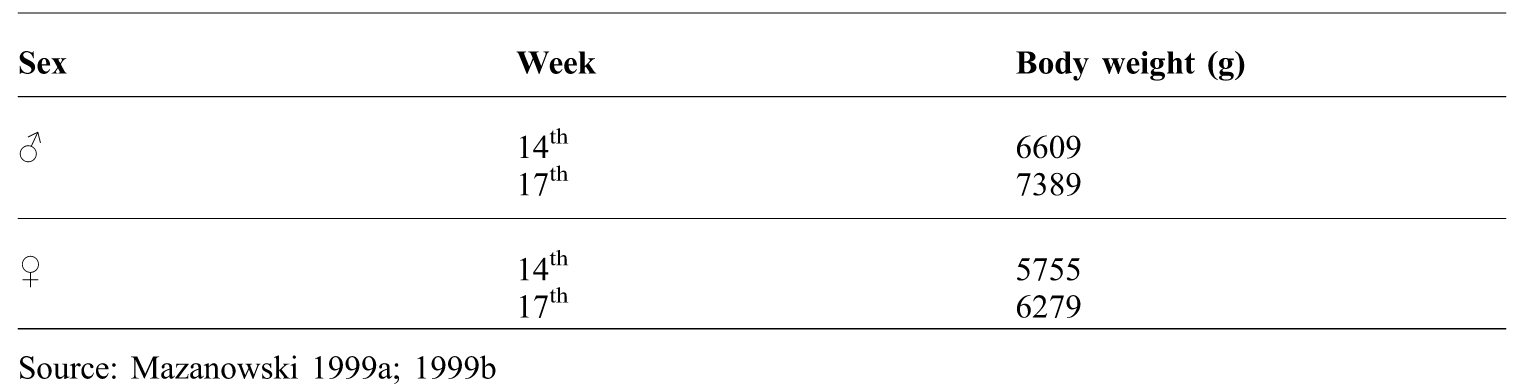
The effect of sex and origin on the final body weight has been extensively researched by many authors (Biesiada-Drzazga, Reference BIESIADA-DRZAZGA2008; Łukaszewicz et al., Reference ŁUKASZEWICZ, ADAMSKI and KOWALCZYK2008; Reference ŁUKASZEWICZ, KOWALCZYK and JERYSZ2011; Kłos et al., Reference KŁOS, SOKOŁOWICZ, BADOWSKI and BIELIŃSKA2010; Kapkowska et al., Reference KAPKOWSKA, GUMUŁKA, RABSZTYN, POŁTOWICZ and ANDRES2011), who have demonstrated that the body weight in males is greater than in females with a clear sex dimorphism makes the males heavier than the females by about 450-1110 g. Kapkowska et al. (Reference KAPKOWSKA, GUMUŁKA, RABSZTYN, POŁTOWICZ and ANDRES2011) showed that commercial goose crossbreds W31 produce higher body weights as compared with the native breed. Having completed rearing in the 14th week of age, W31 geese weigh, on average, 6.167 kg; however, after having completed the oat fattening phase in the 17th week of age, they reach an average weight of 6.814 kg (Table 1). Body weight increases from the 12th to the 14th week of age in crossbreds W31 are just under 500g, while from the 15th to the 17th week they are about 139 g (Mazanowski, Reference MAZANOWSKI1999a; Reference MAZANOWSKI1999b). Kłos et al. (Reference KŁOS, SOKOŁOWICZ, BADOWSKI and BIELIŃSKA2010) and Wężyk et al. (Reference WĘŻYK, ROSIŃSKI, BIELIŃSKA, BADOWSKI and CYWA-BENKO2003) showed that male and female geese representing strain W33 show greater body weights than W11, i.e. 293-258 g and 200-314 g, respectively. This sex dimorphism has been confirmed by the body dimensions in W31 in the 17th week of rearing, which differ significantly (p<0.05) between sexes, with the exception of thickness of muscles and skin with subcutaneous fat (Łukaszewicz et al., Reference ŁUKASZEWICZ, ADAMSKI and KOWALCZYK2008). Łukaszewicz et al. (Reference ŁUKASZEWICZ, KOWALCZYK and JERYSZ2011) reported significantly (p<0.05) greater body dimensions of males than females in W31 geese. Kłos et al. (Reference KŁOS, SOKOŁOWICZ, BADOWSKI and BIELIŃSKA2010) reported variation in most of the goose body dimensions depending on strain and sex. In the 17th week of age, all of the body dimensions in the males of the W33 strain, as compared with the females of the W11 strain, with the exception of the length of shank and shank circumference, were significantly greater (p<0.01). Bigger body dimensions in W33 females as compared to females of the W11 strain were significant (p<0.01) with regard to length of breastbone, length of forearm, breast circumference, shank length and thickness of breast muscles.
Average body weight of crossbreds W31 depending on sex.

Source: Mazanowski Reference MAZANOWSKI1999a; Reference MAZANOWSKI1999b
Feed conversion ratio
Two-strain crossbreds of White Kołudzka® W31 geese consume about 4 kg of concentrate feed and about 3.5 kg of green forage per bird during the first four weeks of life. During successive weeks of rearing, from the 5th to 8th week, total concentrate feed consumption is about 6.5-7.3 kg, and green forage intake is about 19 kg per animal. In the period from the 9th to 14th week of age, the birds should consume about 9.2 to 10.9 kg of concentrate feed and about 42 kg of green forage each (Badowski, Reference BADOWSKI2010). Total consumption of feed mixture by a single bird is about 33.54-33.90 kg (Mazanowski, Reference MAZANOWSKI1999b; Mazanowski and Szukalski, Reference MAZANOWSKI and SZUKALSKI2000). W31 crossbred geese consume about 1 kg of total protein per kg of body weight from the 1st to the 17th week of age (Mazanowski, Reference MAZANOWSKI1999a; Reference MAZANOWSKI1999b). Feed conversion ratio during rearing is about 5.4 kg for males and 4.5 kg for females. For oats during the fattening period (from the 15th to the 17th week of age) birds consume approximately 1.04 kg oats per kg of body weight (Mazanowski, Reference MAZANOWSKI1999a; Reference MAZANOWSKI1999b; Mazanowski and Szukalski, Reference MAZANOWSKI and SZUKALSKI2000; Łukaszewicz et al., Reference ŁUKASZEWICZ, KOWALCZYK and JERYSZ2011; Kapkowska et al., Reference KAPKOWSKA, GUMUŁKA, RABSZTYN, POŁTOWICZ and ANDRES2011). During fattening with whole oat grain, which lasts from 21-24 days, grain consumption is about 700 g daily, and for the entire period it is about 14.7-16.8 kg per bird (Badowski, Reference BADOWSKI2010; Kapkowska et al., Reference KAPKOWSKA, GUMUŁKA, RABSZTYN, POŁTOWICZ and ANDRES2011). The Index of Rearing Effectiveness is about 617-810 for White Kołudzka® geese (Mazanowski, Reference MAZANOWSKI1999b; Mazanowski and Szukalski, Reference MAZANOWSKI and SZUKALSKI2000; Kapkowska et al., Reference KAPKOWSKA, GUMUŁKA, RABSZTYN, POŁTOWICZ and ANDRES2011). Mortality and health-related culling range from 3.6 to 12.5% (Mazanowski, Reference MAZANOWSKI1999b; Mazanowski and Szukalski, Reference MAZANOWSKI and SZUKALSKI2000).
Dressing percentage
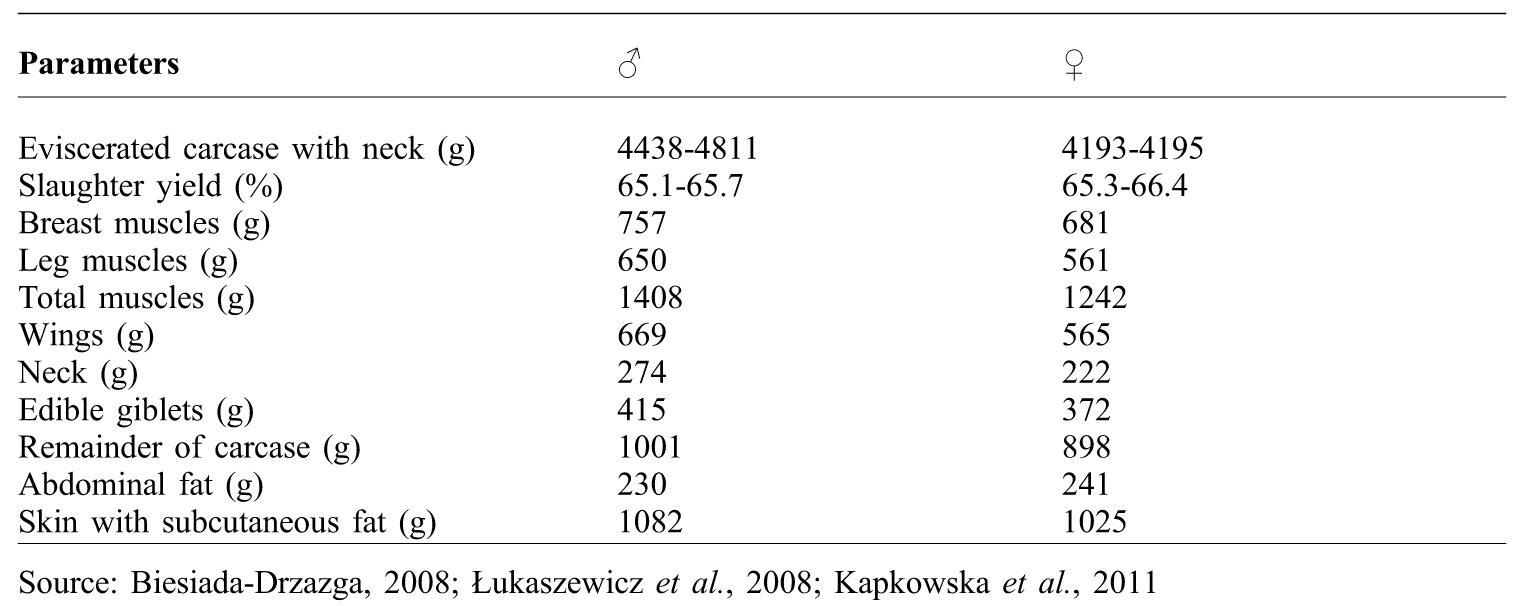
Dressing percentage, as weight and carcass tissue composition, is dictated by genotype and environmental factors (Wężyk et al., Reference WĘŻYK, ROSIŃSKI, BIELIŃSKA, BADOWSKI and CYWA-BENKO2003; Mazanowski et al., Reference MAZANOWSKI, BERNACKI, ADAMSKI and KISIEL2006b; Biesiada-Drzazga, Reference BIESIADA-DRZAZGA2008; Kłos et al., Reference KŁOS, SOKOŁOWICZ, BADOWSKI and BIELIŃSKA2010). The dressing percentage of White Kołudzka® geese fattened with oats ranges from 65.2-66.1%. A slightly higher yield is seen for females as compared to males (Table 2; Biesiada-Drzazga, Reference BIESIADA-DRZAZGA2008; Łukaszewicz et al., Reference ŁUKASZEWICZ, ADAMSKI and KOWALCZYK2008; Kapkowska et al., Reference KAPKOWSKA, GUMUŁKA, RABSZTYN, POŁTOWICZ and ANDRES2011). It was shown that 17-week-old W33 strain male and female geese showed a greater dressing percentage than W11 strain males and females by ~ 1.07% and 2.84%, respectively (Biesiada-Drzazga, Reference BIESIADA-DRZAZGA2008; Kłos et al., Reference KŁOS, SOKOŁOWICZ, BADOWSKI and BIELIŃSKA2010). Reports by Wężyk et al. (Reference WĘŻYK, ROSIŃSKI, BIELIŃSKA, BADOWSKI and CYWA-BENKO2003) showed a similar dressing percentage in males and females of both strains, while the level of abdominal fat in W33 male and female carcasses was 0.5% lower than in W11 birds (Wężyk et al., Reference WĘŻYK, ROSIŃSKI, BIELIŃSKA, BADOWSKI and CYWA-BENKO2003). According to many authors (Biesiada-Drzazga, Reference BIESIADA-DRZAZGA2008; Łukaszewicz et al., Reference ŁUKASZEWICZ, ADAMSKI and KOWALCZYK2008; Kapkowska et al., Reference KAPKOWSKA, GUMUŁKA, RABSZTYN, POŁTOWICZ and ANDRES2011), male oat geese reared under semi-intensive systems provide higher carcass weight than female geese (Table 2). The difference in variability of carcass weight between males and females is due to the higher fat levels in the males. According to Łukaszewicz et al. (Reference ŁUKASZEWICZ, ADAMSKI and KOWALCZYK2008), White Kołudzka® goose males show a significantly (p<0.05) higher weight of breast and leg muscles compared to females. The mean weight of skin with subcutaneous fat (1054 g) and its proportion as total carcass weight (23.8%) is significantly higher (p<0.05) in the carcasses of males as compared to the females. The abdominal fat weight for both sexes was similar, on average 236 g. However, the percentage share of abdominal fat in the female carcass (5.8%) is significantly higher than in males (4.9%), with similar differences seen in wing weight, neck, offal and the remaining carcass part (Table 2).
Average values of slaughter yield and carcase tissue composition of oat-fattened White Kołudzka geese at 17 weeks of age.
Source: Biesiada-Drzazga, Reference BIESIADA-DRZAZGA2008; Łukaszewicz et al., Reference ŁUKASZEWICZ, ADAMSKI and KOWALCZYK2008; Kapkowska et al., Reference KAPKOWSKA, GUMUŁKA, RABSZTYN, POŁTOWICZ and ANDRES2011
Reports Biesiada-Drzazga (Reference BIESIADA-DRZAZGA2008) and Kapkowska et al. (Reference KAPKOWSKA, GUMUŁKA, RABSZTYN, POŁTOWICZ and ANDRES2011) showed that, in the carcasses of W31 two-strain crossbreds, the share of skin with subcutaneous and abdominal fat ranged from 28.6 to 35.9%, in the breast muscles from 17.4 to 17.5%, and in the legs from 15.3 to 16.3%. W31 crossbreds showed higher muscle content but, at the same time, greater fat content than in native breeds. Reports by Łukaszewicz et al. (Reference ŁUKASZEWICZ, ADAMSKI and KOWALCZYK2008) demonstrated that increased selection pressure in the goose flock strain resulted in negative coefficients of correlation between the length of breastbone and the weight of skin with subcutaneous fat, which should result in a decrease of fat content in carcasses from the W31 crossbreds of the White Kołudzka® breed. In order to decrease the fat content and to increase the values of performance traits in geese, birds kept in reserve flocks and conservation flocks may be used to produce triple and quadruple crossbreds with a share of genetics from Greyleg geese and White Kołudzka® geese (Mazanowski, Reference MAZANOWSKI1999a; Reference MAZANOWSKI1999b; Reference MAZANOWSKI1999c; Mazanowski and Szukalski, Reference MAZANOWSKI and SZUKALSKI2000; Mazanowski and Dziadek, Reference MAZANOWSKI and DZIADEK2002; Mazanowski et al., Reference MAZANOWSKI, DZIADEK and ADAMSKI2002; Reference MAZANOWSKI, BERNACKI and KISIEL2004; Reference MAZANOWSKI, BERNACKI and KISIEL2005).
Physicochemical properties of meat
The chemical composition of the respective muscles determines the nutritional value of the meat (Biesiada-Drzazga, Reference BIESIADA-DRZAZGA2008). The breast muscles of 17-week-old W31 geese contain about 21.7-22.9% of total protein, 2.8-3.1% of crude fat and 1.2-1.3% of ash (Table 3), while the leg muscles contain 20.7-20.8%, 4.2-5.2% and 1.08-1.1%, respectively (Gumułka et al., Reference GUMUŁKA, KAPKOWSKA, BOBROWIEC, RABSZTYN and POŁTOWICZ2006; Gardzielewska et al., Reference GARDZIELEWSKA, JAKUBOWSKA, KARAMUCKI, RYBARCZYK and NATALCZYK-SZYMKOWSKA2009). The breast muscles of W31 geese have slightly more protein (21.95%) and less fat (5.21%) and ash (1.10%) than those in W11 strain females (21.04, 6.01 and 1.17%, respectively). Similar tendencies were found in the leg muscles, with those from W31 crossbreds containing 20.38% of protein, 7.49% of fat and 1.09% of ash (Biesiada-Drzazga, Reference BIESIADA-DRZAZGA2008). The chemical composition of breast muscles in the W11 and W33 strains is similar, with the exception of fat, which is significantly (p<0.05) higher (males 6.5%, females 6.3%) in the breast muscles from birds from W11 strain (Rosiński et al., Reference ROSIŃSKI, SKRABKA-BŁOTNICKA, WOŁOSZYN, PRZYSIĘŻNA and ELMINOWSKA-WENDA1999a).
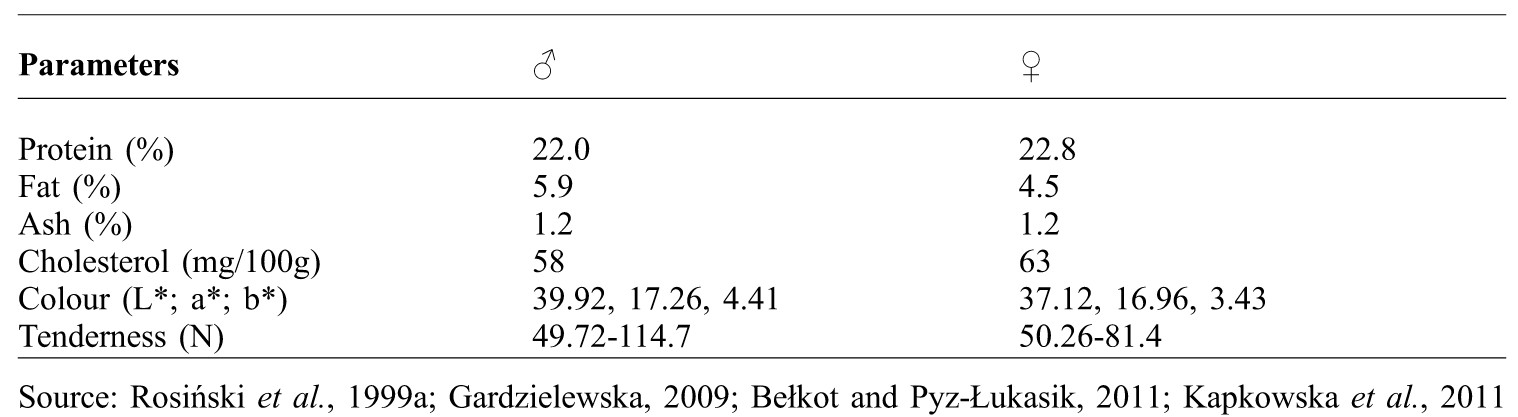
The cholesterol content in the breast muscles of males (58 mg/100 g) and females (73 mg/100 g) differs significantly (p<0.05) within the W33 genotype. The lowest cholesterol content was shown to be in the muscles of male (52 mg/100 g) and female geese (57 mg/100 g) of the W11 strain. Among W31 two-strain crossbreds, slightly less cholesterol was found in the breast muscles of the males than the females (Table 3). Significant differences (p<0.05) in the cholesterol content of the breast muscles in both W11 and W33 strain geese point to genetic differences. The greater cholesterol content in W33 strain geese as compared with W11 strain geese may come from a greater fat content in the carcasses and lower egg-yields, as cholesterol is mostly excreted from the bird's body in the egg yolk (Rosiński et al., Reference ROSIŃSKI, SKRABKA-BŁOTNICKA, WOŁOSZYN, PRZYSIĘŻNA and ELMINOWSKA-WENDA1999a). However, reports by Wężyk et al. (Reference WĘŻYK, ROSIŃSKI, BIELIŃSKA, BADOWSKI and CYWA-BENKO2003) showed a significantly higher content of cholesterol in breast muscles in males and females from strain W11 (58 and 68 mg/100 g, respectively) as compared with the W33 strain (51 and 53 mg/100 g, respectively). Conversely, no relationship was noted between the content of fat and cholesterol in the breast muscles of White Kołudzka® geese (Rosiński et al., Reference ROSIŃSKI, SKRABKA-BŁOTNICKA, WOŁOSZYN, PRZYSIĘŻNA and ELMINOWSKA-WENDA1999a). Differences in the cholesterol content in the breast muscles of geese may be due to timing of the assessment and to a differentiated system of maintenance.
Colour parameters L* (lightness), a* (share of red colour), b* (share of yellow colour) of breast muscles in crossbreds W31 are 38.55, 16.72 and 3.43, respectively for leg muscles have been reported as 40.54, 16.36 and 4.38, respectively. Breast muscles from W31 geese are significantly (p≤0.01) lighter in colour (L*) than leg muscles (Gumułka et al., Reference GUMUŁKA, WOJTYSIAK, KAPKOWSKA, POŁTOWICZ and RABSZTYN2009). Breast muscles in males (Kapkowska et al., Reference KAPKOWSKA, GUMUŁKA, RABSZTYN, POŁTOWICZ and ANDRES2011) show slightly greater values of colour parameters as compared with the females (Table 3). A high content of myoglobin in goose muscles shows a greater share of red colour in the meat as well as a considerable share of red fibres that are small in diameter and affect meat tenderness. Breast muscles contain about 4.74 Mb and 1.71 Hb mg/g, while leg muscles contain 2.66 and 1.14 mg/g, respectively (Mazanowski, Reference MAZANOWSKI2012).
Chemical composition of breast muscle crossbreds W31 depending on sex.
Source: Rosiński et al., Reference ROSIŃSKI, SKRABKA-BŁOTNICKA, WOŁOSZYN, PRZYSIĘŻNA and ELMINOWSKA-WENDA1999a; Gardzielewska, 2009; Bełkot and Pyz-Łukasik, 2011; Kapkowska et al., Reference KAPKOWSKA, GUMUŁKA, RABSZTYN, POŁTOWICZ and ANDRES2011
When meat is heated and protein denaturation takes place, this is followed by a thermal drip from the meat in the form of water containing dissolved proteins. This thermal drip depends on the water holding capacity of meat before heat treatment and on treatment parameters (time and temperature level). These parameters are affected by, among other things, the juiciness of the meat. Breast muscles in W31 crossbreds (Gumułka et al., Reference GUMUŁKA, WOJTYSIAK, KAPKOWSKA, POŁTOWICZ and RABSZTYN2009; Kapkowska et al., Reference KAPKOWSKA, GUMUŁKA, RABSZTYN, POŁTOWICZ and ANDRES2011) demonstrate good water holding capacity (18.83-19.63%), low thermal drip (29.55-30.35%) and less drip loss24h (0.50-0.51%). Breast muscles in male geese demonstrate a greater water holding capacity and thermal drip than those from female geese. A significantly lower water holding capacity and thermal drip were found in the breast muscles of W31 crossbred females as compared with the W11 and W33 strains. The lowest values of these parameters were recorded in W31 females (15.6 and 18.4%, respectively). Breast muscles in crossbreds, as compared with W11 and W33 strains, showed a similar or lower thermal drip (Rosiński et al., Reference ROSIŃSKI, SKRABKA-BŁOTNICKA, WOŁOSZYN, PRZYSIĘŻNA and ELMINOWSKA-WENDA1999a). Breast muscles in W31 crossbreds (Gumułka et al., Reference GUMUŁKA, WOJTYSIAK, KAPKOWSKA, POŁTOWICZ and RABSZTYN2009) showed a significantly (p≤0.01) higher water holding capacity (19.63%) than the leg muscles (14.00%).
Cooked breast muscles from geese have a fresh and natural smell and a specific taste with a high level of acceptance, irrespective of the genotype and sex. However, the flexibility, tenderness and juiciness of the breast muscles depend on the sex and genotype. Breast muscles in male geese from strains W11, W33 and W31 were evaluated as highly desirable. The tenderness and juiciness of breast muscles in W33 and W31 females were determined as desirable and the flexibility was determined as highly desirable. The lowest juiciness score was recorded for breast muscles in W11 females (acceptable), while tenderness and flexibility were determined as desirable. Breast muscles have a firm and flexible consistency with a high degree of consumer acceptance (Rosiński et al., Reference ROSIŃSKI, SKRABKA-BŁOTNICKA, WOŁOSZYN, PRZYSIĘŻNA and ELMINOWSKA-WENDA1999a).
Meat tenderness depends on the content, composition and structure of the intramuscular connective tissue, as well as on the degree of the post-slaughter degradation of proteins of the myofibrils and cytoskeleton muscle fibres. In muscles containing white fibres (fast shrinking), fracturing processes take place faster than in the red fibres (slow shrinking), although the differences are inconsiderable (Janicki and Buzała, Reference JANICKI and BUZAŁA2013). According to published data (Gardzielewska et al., Reference GARDZIELEWSKA, JAKUBOWSKA, KARAMUCKI, RYBARCZYK and NATALCZYK-SZYMKOWSKA2009; Bełkot and Pyz-Łukasik, 2011), goose meat contains an inconsiderable share of collagen (0.39-0.91%). The cutting force of cooked breast muscles in W31 males is 49.72-114.7 N, and in females it is 50.26-81.4 N (Rosiński et al., Reference ROSIŃSKI, SKRABKA-BŁOTNICKA, WOŁOSZYN, PRZYSIĘŻNA and ELMINOWSKA-WENDA1999a; Kapkowska et al., Reference KAPKOWSKA, GUMUŁKA, RABSZTYN, POŁTOWICZ and ANDRES2011). A significantly greater cutting force, however, is found in the breast muscles of W33 females (22.08 N/cm2) than W11 females (16.57 N/cm2). The differences were non-significant in the males of those strains (Wężyk et al., Reference WĘŻYK, ROSIŃSKI, BIELIŃSKA, BADOWSKI and CYWA-BENKO2003). The lowest resistance of the cutting force effect was reported for breast muscles in W31 females, and the highest in the muscles of W31 male geese. It was found that, except for the W11 geese, a greater force must be applied to cut muscles in males than in females. In male geese, a significant, negative correlation was reported between cooked breast muscle tenderness and the cutting force, while in females the relationship was non-significant (Rosiński et al., Reference ROSIŃSKI, SKRABKA-BŁOTNICKA, WOŁOSZYN, PRZYSIĘŻNA and ELMINOWSKA-WENDA1999a).
Research by Elminowska-Wenda et al. (Reference ELMINOWSKA-WENDA, ROSIŃSKI, KŁOSOWSKA and GUY1997) showed that the nutrition of geese increases the diameter of the muscle fibres, however, no significant differences in the percentage share of fibre types were noted. A greater share of muscle fibres, depending on glycolytic metabolism and greater diameters in the White Italian goose, point to their higher growth rate as compared with native breeds. The factors differentiating the proportions of fibre types and their diameters, besides the genotype, include rearing system (Kłosowska et al., Reference KŁOSOWSKA, ELMINOWSKA-WENDA, LUTHER, ROSIŃSKI, BAÉZA, GUY and SALICHON1998). Muscle type I fibres account for the greatest share in the breast muscle. There are three-fold more of these compared to type IIB fibres. In the leg muscles there was a greater share of type IIB fibres. Similarly, a significantly (p≤0.01) greater share of type IIB muscle fibres was shown in the leg muscles as compared with the breast muscles in White Kołudzka® geese (Gumułka et al., Reference GUMUŁKA, WOJTYSIAK, KAPKOWSKA, POŁTOWICZ and RABSZTYN2009). The share of red fibres (βW) in W33 bird breast muscles was reported to be greater than in W11 birds, while the share of white fibres (αW) in W33 and W11 males was 22.1 and 20.9%, and in females 22.5 and 25.9%, respectively. W11 birds also demonstrated a greater red and white fibre diameter as compared with W33 birds (Wężyk et al., Reference WĘŻYK, ROSIŃSKI, BIELIŃSKA, BADOWSKI and CYWA-BENKO2003). According to Gumułka et al. (Reference GUMUŁKA, WOJTYSIAK, KAPKOWSKA, POŁTOWICZ and RABSZTYN2009), an increase in the share of type IIB muscle fibres in goose breast muscles had a negative effect on meat acidity immediately after slaughter. The pH15 and pH24 value for breast muscles in White Kołudzka® geese was 6.30-6.38 and 6.10-6.12, respectively, while for leg muscles it was 6.70 and 6.59, respectively (Gumułka et al., Reference GUMUŁKA, WOJTYSIAK, KAPKOWSKA, POŁTOWICZ and RABSZTYN2009; Kapkowska et al., Reference KAPKOWSKA, GUMUŁKA, RABSZTYN, POŁTOWICZ and ANDRES2011). The results show an adequate pattern of glycolysis after slaughter, and thus good meat quality. A decrease in pH significantly increases conductivity in the breast muscles (Okruszek et al., Reference OKRUSZEK, KSIĄŻKIEWICZ, WOŁOSZYN, HARAF, ORKUSZ and SZUKALSKI2008). It has been shown that emulsion stability of meat homogenate depends on the genotype and sex of the goose. Breast muscles in the crossbred, as compared with the W11 and W33 strains, show similar or greater emulsion stability (Rosiński et al., Reference ROSIŃSKI, SKRABKA-BŁOTNICKA, WOŁOSZYN, PRZYSIĘŻNA and ELMINOWSKA-WENDA1999a).
All of the above reports (Elminowska-Wenda et al., Reference ELMINOWSKA-WENDA, ROSIŃSKI, KŁOSOWSKA and GUY1997; Rosiński et al., Reference ROSIŃSKI, SKRABKA-BŁOTNICKA, WOŁOSZYN, PRZYSIĘŻNA and ELMINOWSKA-WENDA1999a; Reference ROSIŃSKI, SKRABKA-BŁOTNICKA, WOŁOSZYN, PRZYSIĘŻNA and ELMINOWSKA-WENDA1999b; Rosiński, Reference ROSIŃSKI2000; Gumułka et al., Reference GUMUŁKA, KAPKOWSKA, BOBROWIEC, RABSZTYN and POŁTOWICZ2006; Biesiada-Drzazga, Reference BIESIADA-DRZAZGA2008; Gardzielewska et al., Reference GARDZIELEWSKA, JAKUBOWSKA, KARAMUCKI, RYBARCZYK and NATALCZYK-SZYMKOWSKA2009; Kapkowska et al., Reference KAPKOWSKA, GUMUŁKA, RABSZTYN, POŁTOWICZ and ANDRES2011; Wężyk et al., Reference WĘŻYK, ROSIŃSKI, BIELIŃSKA, BADOWSKI and CYWA-BENKO2003) confirm that the meat of Polish White Kołudzka® geese fattened with whole oat grain is of the highest quality.
Physicochemical fat properties
The genetic tendency for the accumulation of considerable amounts of reserve subcutaneous fat of varied thickness (preferably about 4 mm) and in the abdominal cavity as abdominal fat is characteristic of waterfowl (Karpińska and Batura, Reference KARPIŃSKA and BATURA1998; Skrabka-Błotnicka et al., Reference SKRABKA-BŁOTNICKA, ROSIŃSKI, PRZYSIĘZNA, WOŁOSZYN and ELMINOWSKA-WENDA1999; Janicki et al., Reference JANICKI, ROSINSKI, ELMINOWSKA-WENDA, BIELINSKA and GRONEK2000; Badowski, Reference BADOWSKI2010). Poultry nutrition is one way to facilitate a quantitative and qualitative change in carcass fat. Geese grazing on pasture and fed a varied feed with a low share of concentrate mixture take in more polyunsaturated fatty acids (PUFA) than other poultry species (Skrabka-Błotnicka et al., Reference SKRABKA-BŁOTNICKA, ROSIŃSKI, PRZYSIĘZNA, WOŁOSZYN and ELMINOWSKA-WENDA1999; Janicki et al., Reference JANICKI, ROSINSKI, ELMINOWSKA-WENDA, BIELINSKA and GRONEK2000; Wężyk et al., Reference WĘŻYK, ROSIŃSKI, BIELIŃSKA, BADOWSKI and CYWA-BENKO2003). A greater share of unsaturated fatty acids decreases the goose fat melting temperature to as little as 26–34°C, which is lower than for fats from other animal species (Romanov, Reference ROMANOV1999). This diet affects very high digestive tolerance (93%) in the human body (Karpińska and Batura, Reference KARPIŃSKA and BATURA1998).
Fat type is an essential factor affecting the chemical composition, fatty acid profile and odour of goose fat. The level of subcutaneous fat together with the skin and the carcass accounts for 21-25.5% depending on bird sex, while abdominal fat accounts for 4.9-5.8% (Bełkot and Pyz-Łukasik, 2011; Łukaszewicz et al., Reference ŁUKASZEWICZ, ADAMSKI and KOWALCZYK2008). Abdominal fat in White Kołudzka® geese, irrespective of the sex, has a smooth surface and is shiny with a low number of blood vessels clusters, and the smell is typical for goose fat, which has a solid consistency, is soft and flexible with a high level of sensory desirability (Rosiński et al., Reference ROSIŃSKI, SKRABKA-BŁOTNICKA, WOŁOSZYN, PRZYSIĘŻNA and ELMINOWSKA-WENDA1999b; Pomianowski and Dajnowiec, Reference POMIANOWSKI and DAJNOWIEC2009). W31 goose fat is white with a light pink or cream shade. The colour of fat from W33 birds is white with a shade of light pink or a shade of light cream. Research has shown that abdominal fat in W11 strain male and female geese is white in colour with a shade of light pink (Rosiński et al., Reference ROSIŃSKI, SKRABKA-BŁOTNICKA, WOŁOSZYN, PRZYSIĘŻNA and ELMINOWSKA-WENDA1999b; Skrabka-Błotnicka et al., Reference SKRABKA-BŁOTNICKA, ROSIŃSKI, PRZYSIĘZNA, WOŁOSZYN and ELMINOWSKA-WENDA1999).
Fat in the diet of a healthy person should meet the daily requirements of the body's needs for soluble vitamins and essential unsaturated fatty acids, which maintains an adequate ratio between saturated and unsaturated fatty acids. At present, fat with a high content of monounsaturated fatty acids is preferred, especially oleic acid (C18:1) with a low share of saturated fatty acids (Rosiński et al., Reference ROSIŃSKI, SKRABKA-BŁOTNICKA, WOŁOSZYN, PRZYSIĘŻNA and ELMINOWSKA-WENDA1999b; Skrabka-Błotnicka et al., Reference SKRABKA-BŁOTNICKA, ROSIŃSKI, PRZYSIĘZNA, WOŁOSZYN and ELMINOWSKA-WENDA1999). Depending on the age, genotype, nutrition and environmental conditions, the level of abdominal fat in White Kołudzka® geese ranges from about 20.0 to 62.0 g/kg of total body weight. The share of unsaturated fatty acids in abdominal fat in geese accounts for 68.43 to 71.96%. The dominant fatty acid is oleic acid, which accounts for 50-60% of the content of all the fatty acids. Adamski and Kuźniacka (Reference ADAMSKI and KUŹNIACKA2010) reported that fattening with oats increases the share of oleic acid by 0.6 percentage points in abdominal fat. With increasing age of the goose, the share of monounsaturated fatty acids in the abdominal fat decreases (Skrabka-Błotnicka et al., Reference SKRABKA-BŁOTNICKA, ROSIŃSKI, PRZYSIĘZNA, WOŁOSZYN and ELMINOWSKA-WENDA1999; Rosiński et al., Reference ROSIŃSKI, SKRABKA-BŁOTNICKA, WOŁOSZYN, PRZYSIĘŻNA and ELMINOWSKA-WENDA1999b; Janicki et al., Reference JANICKI, ROSINSKI, ELMINOWSKA-WENDA, BIELINSKA and GRONEK2000). Sex does not affect the profile of the fatty acids, except for linoleic acid (C18:2). As reported by Rosiński et al. (Reference ROSIŃSKI, SKRABKA-BŁOTNICKA, WOŁOSZYN, PRZYSIĘŻNA and ELMINOWSKA-WENDA1999b), the highest share of this fatty acid was found in the abdominal fat of W33 and W31 male geese. Linoleic acid is an omega-6 fatty acid which is essential as it is not synthesised by the human body. Abdominal fat in White Kołudzka® goose males contains more linoleic acid as compared with the females (Skrabka-Błotnicka et al., Reference SKRABKA-BŁOTNICKA, ROSIŃSKI, PRZYSIĘZNA, WOŁOSZYN and ELMINOWSKA-WENDA1999). Janicki et al. (Reference JANICKI, ROSINSKI, ELMINOWSKA-WENDA, BIELINSKA and GRONEK2000) found a slightly higher concentration of saturated fatty acids in abdominal fat of geese fed semi-intensively. In subcutaneous fat, the share of saturated fatty acids accounted for 24.1%, monounsaturated for 47.3%, and polyunsaturated for 12.95%, while in the abdominal fat these are 24.3%, 45.0% and 11.8%, respectively (Bełkot and Pyz-Łukasik, 2011). The profile of fatty acids for all of the genotypes and sex types evaluated was favourable in terms of human nutrition (Rosiński et al., Reference ROSIŃSKI, SKRABKA-BŁOTNICKA, WOŁOSZYN, PRZYSIĘŻNA and ELMINOWSKA-WENDA1999b; Skrabka-Błotnicka et al., Reference SKRABKA-BŁOTNICKA, ROSIŃSKI, PRZYSIĘZNA, WOŁOSZYN and ELMINOWSKA-WENDA1999).
In human nutrition, attention is paid to the amount of cholesterol, the daily consumption of which should be about 300 mg (Chizzolini et al., Reference CHIZZOLINI, ZANARDI, DORIGONI and GHIDINI1999; Dinh et al., Reference DINH, THOMPSON, GALYEAN, BROOKS, PATTERSON and BOYLAN2011). Abdominal fat from geese is more favourable than subcutaneous fat due to its lower cholesterol content (Pikuł, Reference PIKUŁ1996). Significant differences between cholesterol content in the abdominal fat of males and females were seen in the W11 and W33 strains and in W31 crossbreds. The highest content of cholesterol was recorded for W11 strain females (105 mg/100 g) and the lowest (81 mg/100 g) for the W33 strain (Rosiński et al., Reference ROSIŃSKI, SKRABKA-BŁOTNICKA, WOŁOSZYN, PRZYSIĘŻNA and ELMINOWSKA-WENDA1999b). Skrabka-Błotnicka et al. (Reference SKRABKA-BŁOTNICKA, ROSIŃSKI, PRZYSIĘZNA, WOŁOSZYN and ELMINOWSKA-WENDA1999) reported that, depending on the diet applied, a greater cholesterol content in abdominal fat was found in males from the W33 strain (81-88 mg/100 g) than in females (71-93 mg/100 g). The results of Rosiński et al. (Reference ROSIŃSKI, SKRABKA-BŁOTNICKA, WOŁOSZYN, PRZYSIĘŻNA and ELMINOWSKA-WENDA1999a; Reference ROSIŃSKI, SKRABKA-BŁOTNICKA, WOŁOSZYN, PRZYSIĘŻNA and ELMINOWSKA-WENDA1999b) show that, irrespective of the genotype and sex, the amount of cholesterol was higher in abdominal fat than in breast muscles in geese (81-105 vs. 52-76 mg/100 g). In a research study reported by Skrabka-Błotnicka et al. (Reference SKRABKA-BŁOTNICKA, ROSIŃSKI, PRZYSIĘZNA, WOŁOSZYN and ELMINOWSKA-WENDA1999), the content of cholesterol in abdominal fat (97-71 mg/100 g) and breast muscles (92-74 mg/100 g) in W33 strain geese was at a comparable level.
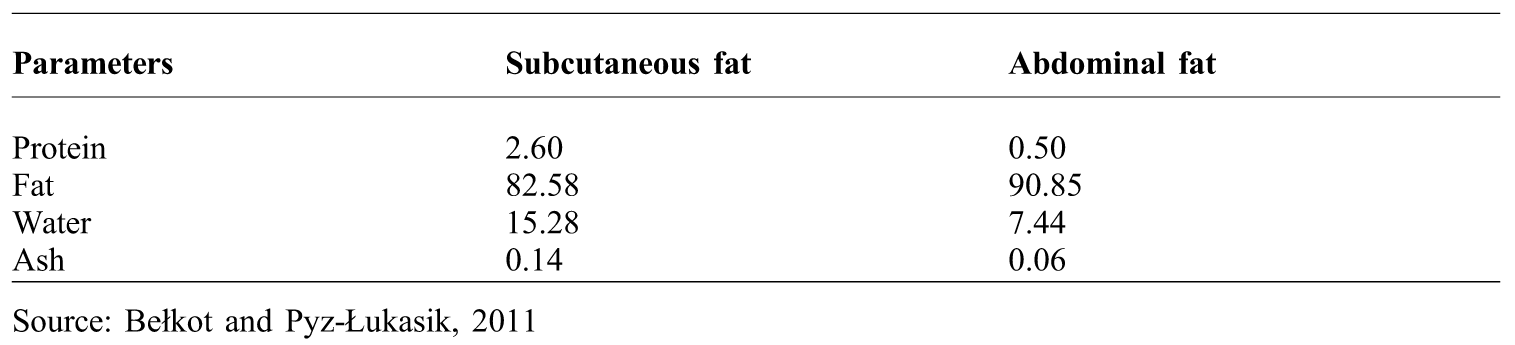
In a study by Bełkot and Pyz-Łukasik (2011), abdominal and subcutaneous fat from White Kołudzka® geese aged between the 16th - 18th weeks differed significantly in protein, fat, water and ash content. A lower share of fat and more protein, water and ash were found in the subcutaneous fat than in the abdominal fat (Table 4). The effect of sex on the content of fat in the abdominal fat has been shown in W11 strain geese. Females, in general, have more fat as compared with males (Rosiński et al., Reference ROSIŃSKI, SKRABKA-BŁOTNICKA, WOŁOSZYN, PRZYSIĘŻNA and ELMINOWSKA-WENDA1999b). Adding green forage ad libitum to the feed mixture significantly increases the content of fat and water in the abdominal fat (Skrabka-Błotnicka et al., Reference SKRABKA-BŁOTNICKA, ROSIŃSKI, PRZYSIĘZNA, WOŁOSZYN and ELMINOWSKA-WENDA1999).
Chemical composition of fat of crossbred W31 (%).
Source: Bełkot and Pyz-Łukasik, 2011
Conclusions
Breeding work with Italian-sourced geese raised as Polish oat geese, referred to as White Kołudzka® geese, has accelerated the initial growth rate, improved the feed conversion efficiency and increased muscle weight in the carcass. W31 two-strain crossbreds demonstrate good results in rearing and a high dressing percentage. Goose meat and fat show a high nutritional and sensory quality due to the specific nutrition, including oat grain feeding, as well as the conditions in which the geese are kept in, i.e. with the use of open-air runs and pasture. With these aspects in mind, the White Kołudzka® goose is appreciated by consumers in the European market.