Introduction
Binge-eating disorder (BED), the most prevalent formal eating disorder (Udo & Grilo, Reference Udo and Grilo2018), is characterized by recurrent binge-eating episodes (i.e. eating unusually large amounts of food while experiencing loss of control) without weight-compensatory behaviors that define bulimia nervosa (American Psychiatric Association, 2013). Epidemiological work has shown that BED, like other eating disorders, has high lifetime comorbidity (range 79–93%) with other psychiatric disorders (Hudson, Hiripi, Pope, & Kessler, Reference Hudson, Hiripi, Pope and Kessler2007; Udo & Grilo, Reference Udo and Grilo2019). Studies of treatment-seeking patients in diverse clinical settings (Grilo, White, Barnes, & Masheb, Reference Grilo, White, Barnes and Masheb2013a; Grilo, White, & Masheb, Reference Grilo, White and Masheb2009; Wilfley et al., Reference Wilfley, Friedman, Dounchis, Stein, Welch and Ball2000) and non-treatment-seeking community samples (Javaras et al., Reference Javaras, Pope, Lalonde, Roberts, Nillni, Laird and Hudson2008) similarly report high rates of psychiatric comorbidity. Across these recruitment sources, mood and anxiety disorders are the most common psychiatric comorbidities (Grilo et al., Reference Grilo, White and Masheb2009, Reference Grilo, White, Barnes and Masheb2013a; Hudson et al., Reference Hudson, Hiripi, Pope and Kessler2007; Javaras et al., Reference Javaras, Pope, Lalonde, Roberts, Nillni, Laird and Hudson2008; Udo & Grilo, Reference Udo and Grilo2019; Wilfley et al., Reference Wilfley, Friedman, Dounchis, Stein, Welch and Ball2000).
Treatment guidelines in the USA (American Psychiatric Association, 2006) and the UK (National Institute for Health and Care Excellence, 2017) highlight assessing for and including comorbid psychiatric conditions in treatment plans for BED. This aspect of the clinical guidelines is based, nearly entirely, on findings of high comorbidity rates and ‘expert’ clinical opinion that psychiatric comorbidity is a negative prognostic indicator. Clinical lore is that psychiatric comorbidity, if currently present in patients with BED, signals the need for specialized (e.g. cognitive-behavioral therapy over ‘generalist’ behavioral weight loss) or more intensive (e.g. combining pharmacological and psychological methods) treatment. Strikingly, there is a dearth of empirical data available that speak to such clinical practice. The available evidence, which is extremely limited, suggests little-to-no overall advantage for adding pharmacotherapy to either behavioral or cognitive-behavioral therapy (Reas & Grilo, Reference Reas and Grilo2020). The question of how to treat BED when psychiatric comorbidity is present (i.e. which available treatments or combination approaches to use) is critical for the field.
A recent systematic review revealed very little research on whether general psychopathology predicts treatment outcomes for BED and even less research examining the prognostic significance of psychiatric comorbidity (Vall & Wade, Reference Vall and Wade2015). All three available prospective studies on BED (e.g. Grilo, Masheb, & Crosby, Reference Grilo, Masheb and Crosby2012; Masheb & Grilo, Reference Masheb and Grilo2008; Wilfley et al., Reference Wilfley, Friedman, Dounchis, Stein, Welch and Ball2000) reported that lifetime psychiatric comorbidity neither predicted nor moderated any treatment outcome; two studies that examined specific comorbidities also reported that lifetime comorbidity of mood, anxiety and substance use disorders (Wilfley et al., Reference Wilfley, Friedman, Dounchis, Stein, Welch and Ball2000) and major depressive disorder (Grilo et al., Reference Grilo, Masheb and Crosby2012) neither predicted nor moderated any outcomes. Importantly, these prior studies had small samples (ranging from 90 to 162) and only one (Grilo et al., Reference Grilo, Masheb and Crosby2012) included a treatment condition that combined pharmacotherapy and psychological treatment. Thus, studies were perhaps underpowered or unable to address primary questions asked by clinicians treating BED: does current psychiatric comorbidity predict patient outcomes and is there an advantage to multi-modal treatment? Understanding whether psychiatric comorbidity predicts or moderates BED treatment outcomes is essential to inform clinical decision-making regarding treatment prescriptions (Kraemer, Wilson, Fairburn, & Agras, Reference Kraemer, Wilson, Fairburn and Agras2002).
Identifying predictors and moderators of BED treatment outcomes also has important implications for informing research efforts to enhance or refine treatments for BED (Wilson, Grilo, & Vitousek, Reference Wilson, Grilo and Vitousek2007). Although some specific psychological (Grilo, Reference Grilo2017) and pharmacological (McElroy, Reference McElroy2017) treatments have demonstrated efficacy for BED, their overall clinical effectiveness is limited; indeed, even in the treatment studies with the ‘best’ outcomes, a substantial proportion of patients (roughly 50%) do not remit fully (i.e. achieve abstinence from binge eating) (Hilbert et al., Reference Hilbert, Petroff, Herpertz, Pietrowsky, Tuschen-Caffier, Vocks and Schmidt2019). If psychiatric comorbidity were found to moderate treatment outcomes for BED, that would provide important insight into the heterogeneity of BED treatment outcomes, which in turn could inform studies to improve treatments and to examine mechanisms of change (Kraemer et al., Reference Kraemer, Wilson, Fairburn and Agras2002; Wilson et al., Reference Wilson, Grilo and Vitousek2007).
The present study examined psychiatric comorbidity as a predictor and moderator of BED treatment outcomes using an aggregated dataset of treatments delivered in the context of randomized-controlled trials (RCTs). Importantly, data came from one treatment center that used highly-similar methods of recruitment, screening and diagnostic assessment, as well as similar inclusion and exclusion criteria, across treatment studies. This approach allows for examination of psychiatric comorbidities as predictors and moderators of BED outcomes for several types of interventions – including psychological [cognitive-behavioral therapy (CBT), behavioral weight loss (BWL)], and multi-modal (psychological plus pharmacological) – and a treatment comparison group comprising placebo and/or inactive control conditions. Treatment outcomes were binge-eating remission and episode frequency, global eating-disorder psychopathology, and weight loss. Because prior studies of patients with BED have found that the presence of psychiatric comorbidity (Grilo et al., Reference Grilo, White and Masheb2009, Reference Grilo, White, Barnes and Masheb2013a; Wilfley et al., Reference Wilfley, Friedman, Dounchis, Stein, Welch and Ball2000) and affective disturbance (Grilo, Masheb, & Wilson, Reference Grilo, Masheb and Wilson2001b) were associated with a more disturbed profile comprising greater eating-disorder psychopathology, we hypothesized that comorbidity would be associated with poorer outcomes in eating-disorder psychopathology. We further hypothesized that psychiatric comorbidity would moderate treatment outcomes and signal a potential advantage for multi-modal treatment.
Methods
Participants (N = 636) were patients in psychological and pharmacological RCTs for BED (Grilo & Masheb, Reference Grilo and Masheb2005; Grilo, Masheb, & Salant, Reference Grilo, Masheb and Salant2005a; Grilo, Masheb, & Wilson, Reference Grilo, Masheb and Wilson2005b; Grilo, Masheb, Wilson, Gueorguieva, & White, Reference Grilo, Masheb, Wilson, Gueorguieva and White2011; Grilo, White, Gueorguieva, Barnes, & Masheb, Reference Grilo, White, Gueorguieva, Barnes and Masheb2013b; Grilo et al., Reference Grilo, Masheb, White, Gueorguieva, Barnes, Walsh and Garcia2014, Reference Grilo, White, Masheb, Ivezaj, Morgan and Gueorguieva2020b).
Two of these RCTs previously published data on overall (‘any’) lifetime psychiatric comorbidity as a predictor and moderator of BED treatment outcomes (Grilo et al., Reference Grilo, Masheb and Crosby2012; Masheb & Grilo, Reference Masheb and Grilo2008); those data, however, do not speak to the primary question of concern to clinicians, addressed by the present study (i.e. current psychiatric comorbidity and relation to outcomes for several classes of intervention approaches).
All treatment studies occurred at an urban, medical school-based program in the northeastern USA. Participants were 18–65 years old and met full DSM-IV (American Psychiatric Association, 2004) criteria for BED. Participants were excluded if they were pregnant, had medical conditions that influenced eating/weight (e.g. uncontrolled hypothyroidism), were taking medications that could influence eating/weight, had a severe mental illness that could interfere with clinical assessment (e.g. psychosis), or were receiving concurrent treatment (psychosocial or pharmacological) for eating or weight concerns. Similar procedures were used across the aggregated RCTs to maximize methodological rigor and minimize potential bias around randomization, concealment of randomization assignments, and blinding outcome assessors. Within each RCT, participants were randomized to treatments (including control conditions) in the exact order they were determined to meet eligibility requirements after completing all evaluations. Randomization schedules were developed by biostatisticians in varied block sizes to protect the blind and reduce secular trends. In RCTs testing pharmacological treatments, study medications (active and placebo) were provided in identical-appearing capsules prepared by the Yale Investigational Drug Service, dosed identically in terms of frequency, and were delivered in double-blind fashion. In RCTs testing psychological interventions, randomization assignment was kept blind from participants until they started treatment (session one). Assessors performing outcome evaluations at posttreatment were kept blinded with respect to whether participants received any psychological treatment (and/or which one) and participants were reminded prior to meetings not to disclose to assessors any details about which treatments (including control conditions) they received.
All studies received approval from the Yale Institutional Review Board and all participants provided written informed consent prior to study assessments.
Treatments
Treatments were two evidence-based psychological treatments (CBT or BWL), multi-modal combination treatments (pharmacotherapy plus either CBT or BWL), and control conditions (placebo in all trials with pharmacological interventions or unguided self-help or inert attention-for-control condition in trials with behavioral interventions). Treatments align with the literature on psychological (Grilo, Reference Grilo2017) and pharmacological (McElroy, Reference McElroy2017) treatments for BED. Detailed descriptions of each RCT has been published (Grilo & Masheb, Reference Grilo and Masheb2005; Grilo et al., Reference Grilo, Masheb and Salant2005a, Reference Grilo, Masheb and Wilson2005b, Reference Grilo, Masheb, Wilson, Gueorguieva and White2011, Reference Grilo, White, Gueorguieva, Barnes and Masheb2013b, Reference Grilo, Masheb, White, Gueorguieva, Barnes, Walsh and Garcia2014, Reference Grilo, White, Masheb, Ivezaj, Morgan and Gueorguieva2020b); thus, only brief overviews of treatments are below.
Treatments (including control conditions) were between 3 and 6 months. These durations parallel BED research literature and treatment recommendations (American Psychiatric Association, 2006; Grilo, Reference Grilo2017; McElroy, Reference McElroy2017; National Institute for Health and Care Excellence, 2017). To standardize the amount of data contributed across protocols, baseline, month one, month two, and end-of-treatment (‘posttreatment’) assessment timepoints were included in the aggregated dataset. In all RCTs, outcomes assessments were performed by doctoral-level research evaluators who were blinded to both medication and psychological treatment randomization assignments.
Psychological treatments
Two leading evidence-based psychological treatments (CBT and BWL) were examined. CBT has been highlighted as the psychological treatment of choice for BED (American Psychiatric Association, 2006; Grilo, Reference Grilo2017; National Institute for Health and Care Excellence, 2017) and is widely used in BED clinical trials (e.g. Wilfley et al., Reference Wilfley, Welch, Stein, Spurrell, Cohen, Saelens and Matt2002; Wilson, Wilfley, Agras, & Bryson, Reference Wilson, Wilfley, Agras and Bryson2010). Manualized CBT, based on Fairburn (Reference Fairburn2008), was delivered by trained and monitored doctoral-level study clinicians. CBT provides education about binge eating and teaches specific behavioral strategies (e.g. self-monitoring and goal-setting) to help patients identify problematic eating patterns and make their eating more regular. CBT also uses cognitive restructuring to modify maladaptive cognitive processes specific to eating disorders and their maintenance.
Manualized BWL, based on Brownell (Reference Brownell2000) and used in clinical trials for BED (e.g. Devlin, Goldfein, Petkova, Liu, & Walsh, Reference Devlin, Goldfein, Petkova, Liu and Walsh2007; Wilson et al., Reference Wilson, Wilfley, Agras and Bryson2010) and obesity (e.g. Wadden et al., Reference Wadden, Foreyt, Foster, Hill, Klein, O'Neil and Dunayevich2011), was delivered by trained and monitored doctoral-level study clinicians. BWL teaches individuals to make gradual behavioral lifestyle changes to nutrition and exercise using collaborative goal-setting, self-monitoring, and social support. Goals included moderate caloric restriction and increases in physical activity, consistent with federal recommendations.
Multi-modal treatment
Multi-modal treatment included pharmacological treatment combined with psychological treatment (either BWL or CBT). Pharmacological treatment was managed by trained study physicians who monitored patients regarding ongoing medication compliance and side effects. Medications (across studies) were sibutramine (serotonin and norepinephrine reuptake inhibitor anti-obesity medication), orlistat (lipase inhibitor anti-obesity medication), or fluoxetine (selective serotonin reuptake inhibitor anti-depressant medication), which have varied levels of empirical support for BED (and/or features associated with BED such as obesity) as either mono- or combination-therapy (Grilo, Reas, & Mitchell, Reference Grilo, Reas and Mitchell2016; McElroy, Reference McElroy2017).
Control conditions
In RCTs testing pharmacotherapy, the control condition was placebo-administered double-blind; placebo pills had matched frequency and were visually identical to active medications. In RCTs testing behavioral interventions, control conditions were either (a) unguided self-help treatment or (b) daily self-monitoring forms only, without feedback or intervention. In unguided self-help treatments, patients were given a copy of a self-help book (Overcoming Binge Eating by Fairburn) and were asked to read the book and follow its self-help recommendations; clinicians did not provide any additional intervention or guidance.
Measures
Research clinicians conducted assessments of potential participants to determine eligibility. BED diagnosis was determined using the Structured Clinical Interview for DSM-IV Axis I Disorders (SCID; First, Spitzer, Gibbon, & Williams, Reference First, Spitzer, Gibbon and Williams1997) and confirmed using the Eating Disorder Examination interview (EDE; Fairburn & Cooper, Reference Fairburn, Cooper, Fairburn and Wilson1993), a semi-structured, investigator-based interview. Research clinicians had doctoral-level training, had additional training in these specific assessment instruments, and were supervised to protect against drift.
Structured Clinical Interview for DSM-IV Axis I Disorders
The SCID is a well-established structured interview that assesses diagnostic criteria for Axis I psychiatric disorders, both current and lifetime (First et al., Reference First, Spitzer, Gibbon and Williams1997). Research clinicians administered the full SCID to capture the range of psychiatric disorders. All Axis I psychiatric disorders were assessed and included in a broad category (‘any psychiatric disorder’). Consistent with BED psychiatric comorbidity prevalence reported in epidemiological and treatment-seeking studies, we focused present analyses on psychiatric conditions with the highest comorbidity with BED: mood and anxiety disorders.
Eating Disorder Examination-Questionnaire (EDE-Q)
The EDE-Q is the self-report version of the EDE (Fairburn & Beglin, Reference Fairburn and Beglin1994). Self-report and interview versions have been found to converge adequately among patients with BED (Grilo, Masheb, & Wilson, Reference Grilo, Masheb and Wilson2001a; Lydecker, White, & Grilo, Reference Lydecker, White and Grilo2016). The EDE-Q assesses binge-eating episodes in the past 28 days and generates a global eating-disorder psychopathology score that reflects eating concerns, weight concerns, shape concerns, and dietary restraint. The EDE-Q has excellent test-retest reliability among patients with BED (Reas, Grilo, & Masheb, Reference Reas, Grilo and Masheb2006).
Percent weight loss
Research clinicians measured participants' weight to calculate percent weight loss (difference between baseline weight and a later weight, divided by baseline weight; negative values indicate weight loss).
Statistical analyses
Separate models were estimated for each psychiatric comorbidity variable (any psychiatric disorder, any mood disorder, any anxiety disorder) in relation to each BED treatment outcome; analyses included all treatment groups (including the control condition). Results for current psychiatric comorbidity are presented in the text below; online Supplemental Tables summarize parallel results for lifetime psychiatric comorbidity.
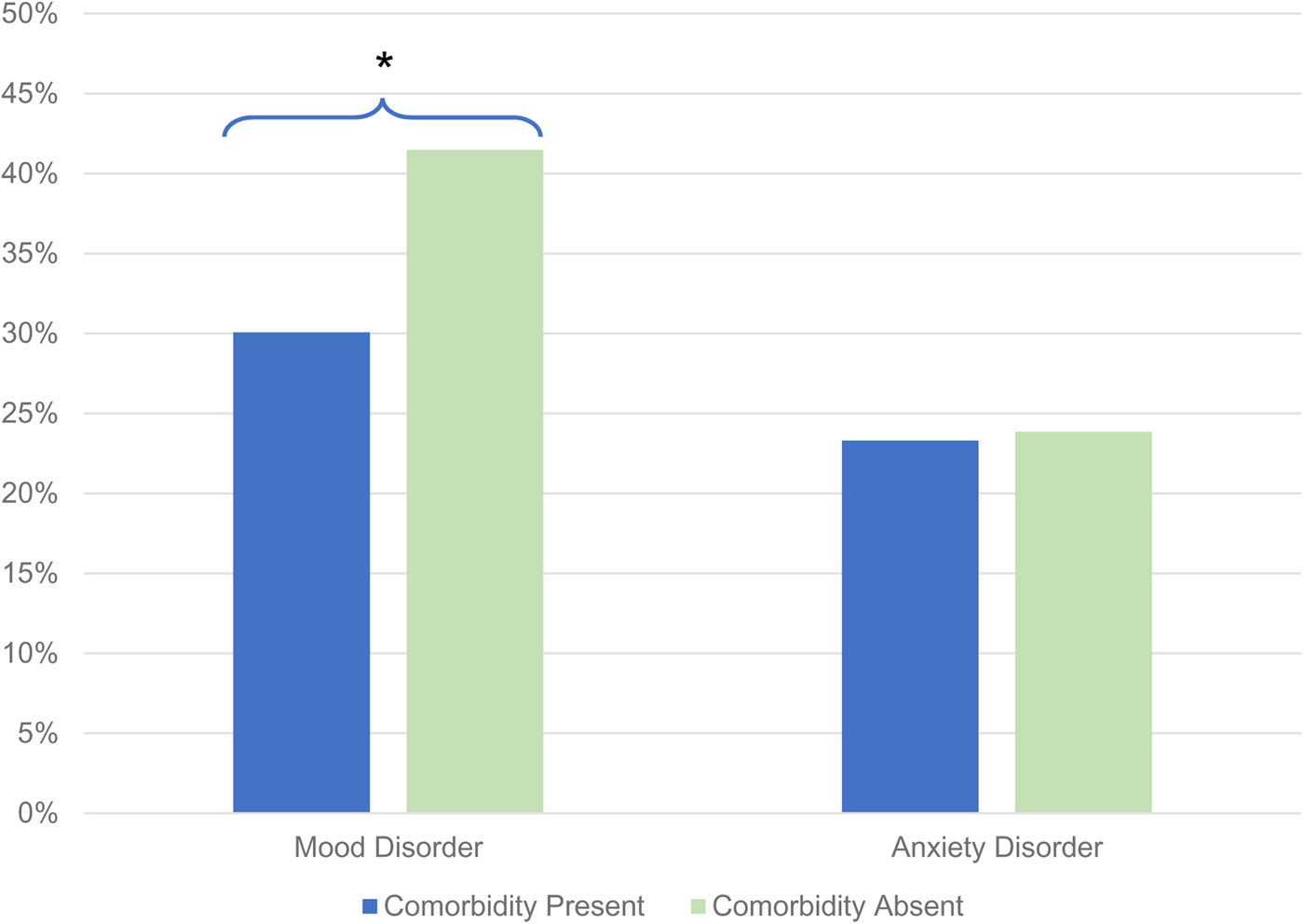
Binge-eating remission at Post; Caption: Mood disorder comorbidity, but not anxiety disorder comorbidity, predicted significantly lower proportion of binge-eating remission at posttreatment.

Analyses, which included all randomized participants (intent-to-treat) with at least one post-baseline measure, compared participants with and without each psychiatric comorbidity on treatment outcomes that are essential to test in BED treatment research: binge-eating episodes both continuously (frequency) and categorically (remission), weight both continuously (percent loss) and categorically (attainment of 5% loss), as well as global eating-disorder psychopathology. Because the aggregated treatments (including control conditions) ranged from 3 to 6 months, analyses used all available data from baseline, month 1, month 2 and posttreatment. Descriptive statistics were evaluated prior to statistical analyses and distributions of all outcome variables were examined. Log-transformation was applied to binge-eating episode frequency prior to analyses due to violated assumptions of normality. ‘Remission’ from binge eating was defined as zero binge-eating episodes during the previous 28 days. For binge-eating remission and 5% weight loss, analyses were performed with failure imputed for missing data and on all available data. All tests were considered significant at 0.01 to account for multiple comparisons.
Continuous outcome variables were compared using mixed models (SAS PROC MIXED), making use of all available data. In mixed models, fixed effects were psychiatric comorbidity, treatment condition (CBT, BWL, multi-modal, or control), time (baseline, month 1, month 2, and post) and all possible interactions. Baseline was not included as a time point in analyses of percent weight loss, as change is calculated from baseline values. For each model, different variance–covariance structures (unstructured, compound symmetry, compound symmetry heterogeneous with and without a random effect for protocol) were evaluated and best-fitting structure was selected based on Schwartz Bayesian information criterion. Models tested whether psychiatric comorbidity predicted the amount (main effect of comorbidity) or the rate (comorbidity-by-time effect) of change across all treatment conditions and also tested whether psychiatric comorbidity interacted with specific treatment groups to moderate the amount (interaction of comorbidity-by-treatment) or rate (interaction of comorbidity-by-treatment-by-time) of change for each outcome. Least square means were estimated from all models and compared to explain significant effects in models.
Categorical binge-eating remission and 5% weight loss variables were analyzed using generalized estimating equations (GEE) models with binomial response distribution and logit link at posttreatment. Psychiatric comorbidity and treatment condition (CBT, BWL, multi-modal, or control) were included as variables in models that used imputed data (with failure, i.e. non-remission, imputed for missing data) and those that used all available data.
Results
Participants' mean age was 46.19 years (s.d. = 9.63) and mean BMI was 37.61 kg/m2 (s.d. = 6.11); 74.3% (n = 470) were women and 25.8% (n = 163) were men. Participants reported their race/ethnicity as: White (73.3%, n = 462), Black (17.3%, n = 109), Hispanic (5.6%, n = 35), Asian (1.3%, n = 8), Native American (0.2%, n = 1), or other (2.4%, n = 15). Participants reported their education level as: high school or less (17.7%, n = 111), some college (34.1%, n = 214), or a college degree or more (48.3%, n = 303).
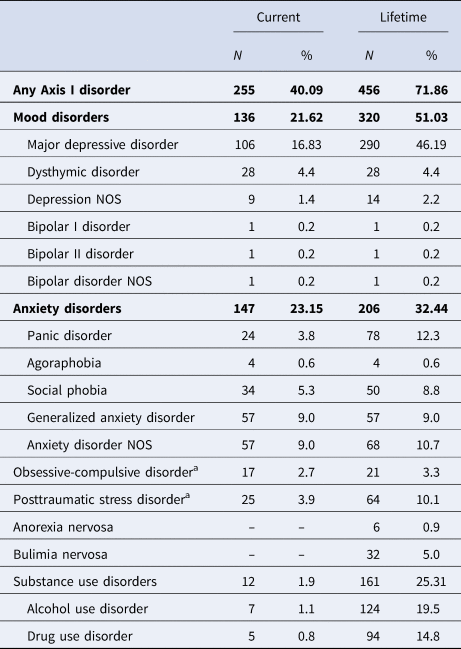
Overall, 255 (40.1%) of the 636 patients met the criteria for at least one additional current psychiatric disorder and 457 (71.9%) had at least one lifetime psychiatric comorbidity. Table 1 summarizes current and lifetime psychiatric comorbidities.
Current and lifetime DSM-IV psychiatric disorders in patients with BED (N = 636)

All patients met the current binge-eating disorder (BED) criteria. Bolded disorders were included in the current analyses.
a Not included in overarching ‘anxiety disorders’ domain because these disorders were included in other domains in the DSM-5.
Psychiatric comorbidity and sociodemographic characteristics
Participants with and without psychiatric comorbidity did not differ significantly in proportions of men and women: 38.7% of men (n = 63) had psychiatric comorbidity compared to 40.6% of women [n = 191; χ2 (1, N = 633) = 0.20, p = 0.66]. Race/ethnicity also did not differ by psychiatric comorbidity: 40.7% of White (n = 188), 37.6% of Black (n = 41), 40.0% of Hispanic (n = 14), 37.5% of Asian (n = 3) participants had a psychiatric comorbidity [χ2 (5, N = 630) = 1.31, p = 0.93]. Age did not differ significantly between those with (M = 46.2 years, s.d. = 9.6) and without [M = 46.1 years, s.d. = 9.6; t(641) = −0.13, p = 0.90] psychiatric comorbidity. BMI at baseline did not differ significantly between those with (M = 37.7 kg/m2, s.d. = 6.7) and without [M = 37.5 kg/m2, s.d. = 5.7; t(513.54) = −0.42, p = 0.68] psychiatric comorbidity. However, education differed significantly: 54.1% of individuals with a high school education or less (n = 60) had psychiatric comorbidity, which was significantly higher than those with some college education (41.6%, n = 89, p = 0.03), and those with at least a college degree [34.0%, n = 103, p < 0.001; χ2 (2, N = 628) = 13.90, p = 0.001].
Predictors and moderators of continuous treatment outcomes
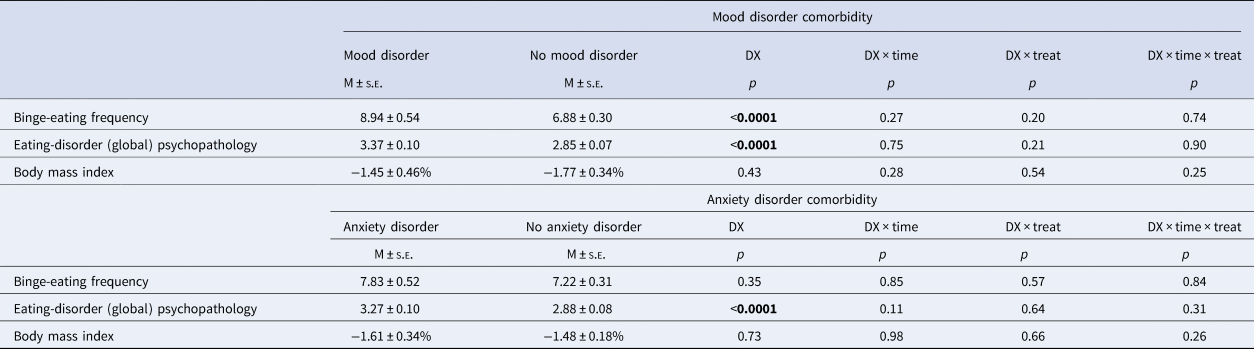
Table 2 summarizes the results of mixed-model analyses testing psychiatric comorbidity as predictors and moderators of the BED treatment outcomes (binge-eating episode frequency, global eating-disorder psychopathology, percent weight loss).
Current psychiatric comorbidities predicting and moderating treatment outcomes

Non-transformed means (estimates) and standard errors are reported for ease of interpretations; estimates and standard errors are across timepoints and significant differences are indicated by p DX < 0.01.
Models used log-transformation for binge-eating episode frequency. Bolded values indicate significant findings.
DX = psychiatric comorbidity predicts (main effect) the amount of change; DX × time = psychiatric comorbidity predicts the rate of change; DX × treat = psychiatric comorbidity moderates the amount of change; DX × time × treat = psychiatric comorbidity moderates the rate of change.
Psychiatric disorders (any, mood, or anxiety categories) did not significantly predict nor moderate the amount of change or the rate of change in percent weight loss.
Patients with any psychiatric comorbidity had more frequent binge-eating episodes (M = 8.63, s.d. = 9.02) than patients without any psychiatric comorbidity (M = 6.88, s.d. = 8.48, p = 0.0002) throughout treatment. Patients with a mood disorder had more frequent binge-eating episodes (M = 9.37, s.d. = 9.33) than patients without mood disorders (M = 7.07, s.d. = 8.52, p < 0.0001) whereas anxiety disorders did not significantly predict binge-eating frequency (p = 0.35). Psychiatric comorbidity (any, mood, or anxiety) did not predict the rate of change nor moderate amount or rate of change in binge-eating frequency by treatment groups.
Patients with any psychiatric comorbidity had greater global eating-disorder psychopathology (M = 3.22, s.d. = 1.07) than patients without psychiatric comorbidity (M = 2.75, s.d. = 1.02, p < 0.0001). Patients with mood comorbidity had greater global eating-disorder psychopathology (M = 3.38, s.d. = 1.05) than patients without mood disorders (M = 2.80, s.d. = 1.03, p < 0.0001). Patients with anxiety disorders had greater global eating-disorder psychopathology (M = 3.22, s.d. = 1.10) than patients without anxiety disorders (M = 2.85, s.d. = 1.04, p < 0.0001). Psychiatric comorbidity (any, mood, or anxiety) did not predict the rate of change in global eating-disorder psychopathology nor moderate amount or rate of change in global eating-disorder psychopathology by treatment groups.
Predictors and moderators of categorical end-point treatment outcomes
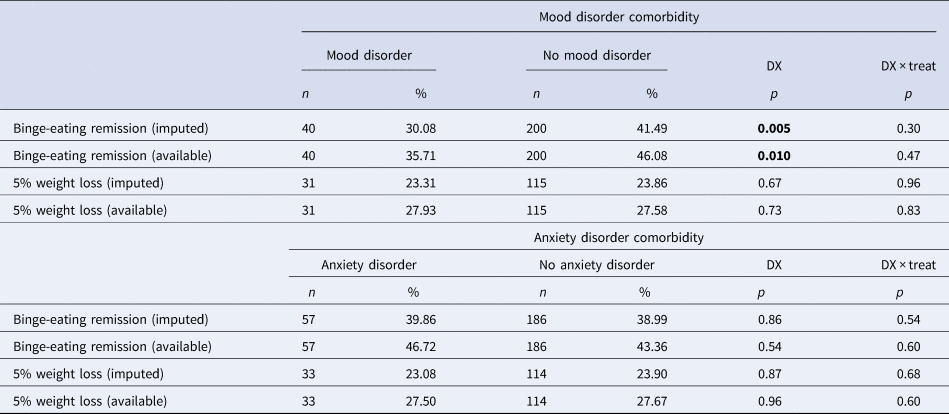
Table 3 summarizes the results of GEE models testing psychiatric comorbidity as the predictors and moderators of categorical end-point BED treatment outcomes (binge-eating remission and clinically-significant weight loss). These analyses were intent-to-treat and in cases of missing data imputed failure (i.e. non-remission or not attaining 5% weight loss); parallel analyses used all available data without imputation.
Current psychiatric comorbidities predicting and moderating remission from binge eating and 5% weight loss at posttreatment

n and % reflect the number of participants experiencing remission or 5% weight loss with or without each psychiatric comorbidity. Bolded values indicate significant findings.
DX = psychiatric comorbidity predicts (main effect) the amount of change; DX × treat = psychiatric comorbidity moderates the amount of change.
Mood disorder comorbidity predicted a significantly lower proportion of binge-eating remission at posttreatment [30.1% (n = 40) of patients with mood disorders v. 41.5% (n = 200) of patients without mood disorders (p = 0.005)]. Parallel analyses without imputation revealed similar findings (p = 0.01). Having any psychiatric comorbidity or having an anxiety disorder did not significantly predict binge-eating remission at posttreatment. Psychiatric comorbidity (any, mood, anxiety) did not significantly moderate the effect of specific treatment groups on binge-eating remission.
Psychiatric comorbidity (any, mood, or anxiety) neither predicted nor moderated the attainment of 5% weight loss at end-of-treatment.
Discussion
Psychiatric comorbidity predicted more severe eating-disorder psychopathology throughout treatment and at the end of treatment but did not moderate outcomes of specific treatment groups for BED. Psychiatric comorbidity neither predicted nor moderated weight loss. Regarding prediction, current overall psychiatric disorder comorbidity and current mood disorder comorbidity predicted more frequent binge-eating episodes and higher global eating-disorder psychopathology across timepoints compared with patients with BED without psychiatric comorbidity. Patients with mood disorder comorbidity were less likely to experience remission from binge eating at end-of-treatment than those with BED without mood disorders. Anxiety disorder comorbidity predicted greater global eating-disorder psychopathology across timepoints compared to patients with BED without anxiety disorders. Although psychiatric comorbidity consistently predicted the amount of change of treatment outcomes (less improvement), it did not predict the rate of change in any treatment outcome.
Our findings fill an important gap regarding treatment planning for patients with BED who present with additional psychiatric disorders. Our studies did not exclude most forms of psychiatric comorbidity and we observed psychiatric comorbidity among many of our study participants with BED (approximately 40% had additional current psychiatric comorbidity and 72% had additional lifetime psychiatric comorbidity). The high proportion of psychiatric comorbidity in our clinical trials is consistent with the clinical presentation of patients with BED in non-research settings and thus points to the likely generalizability of our findings for clinical practice. We note, for example, that epidemiological research (Udo & Grilo, Reference Udo and Grilo2019) reports high rates of comorbidity in individuals with BED, yet many RCTs exclude most forms of psychiatric comorbidity (e.g. Grilo et al., Reference Grilo, McElroy, Hudson, Tsai, Navia, Goldman and Loebel2020a; Hudson, McElroy, Ferreira-Cornwell, Radewonuk, & Gasior, Reference Hudson, McElroy, Ferreira-Cornwell, Radewonuk and Gasior2017).
Treatment guidelines (American Psychiatric Association, 2006; National Institute for Health and Care Excellence, 2017) highlight the need to assess for and to consider psychiatric comorbidity in treatment planning but they offer no specific suggestions. Clinical lore suggests specialized interventions or combining pharmacological and psychological approaches for patients with psychiatric comorbidities. Our findings suggest that while psychiatric comorbidity is associated with more severe eating-disorder psychopathology throughout treatment, it does not moderate responses to specific treatment groups. Indeed, we found no evidence that patients with psychiatric comorbidity derived greater benefit from multi-modal treatments than from mono-therapy approaches. This finding further extends the research literature, which has generally not supported the strategy of combining psychological and pharmacological treatments as a method to achieve better (additive) overall outcomes (Reas & Grilo, Reference Reas and Grilo2020). Collectively, such findings highlight the need for treatment research to develop more effective interventions for BED overall, given that roughly half of the patients do nor remit even with the best available treatments. Our findings also point to the potential need to improve treatments for patients with BED with psychiatric comorbidity, although the extent to which the statistically significant difference observed in outcomes between those with and without mood disorders is clinically meaningful is, perhaps, partly open to interpretation and further study.
While clinicians and researchers strive to develop better treatments, it should not be discounted that a substantial proportion of patients with BED who might be perceived as having a more complex presentation due to current psychiatric comorbidity can and do benefit from existing specific interventions. Many individuals with BED, despite suffering for many years with persistent and troubling symptoms (Udo & Grilo, Reference Udo and Grilo2018), do not seek treatment (Coffino, Udo, & Grilo, Reference Coffino, Udo and Grilo2019). Collectively, these aggregated RCT outcomes suggest that many patients derive substantial benefits from existing evidence-based treatments even if they have psychiatric comorbidities. At the broader health-care level, increased recognition and referral to specialized treatment providers is an important next step (Coffino et al., Reference Coffino, Udo and Grilo2019).
At the research level, the next step is to perform larger RCTs testing effective psychological and pharmacological treatments, alone and in combination, with more representative BED patient groups (i.e. with fewer exclusionary requirements around psychiatric comorbidity, with some diversity such as more men and people of color). Such RCTs should consider stratifying randomization schedules by the presence of psychiatric comorbidity, as this would offer more definitive evidence about moderation. Clinical research on pharmacotherapy targets for BED is needed both in terms of evaluating new interventions and new approaches, such as sequential and response-based trials. Future treatment research for BED, particularly studies that consider the potential influence of psychiatric comorbidity, should consider testing combination or additive benefits of medications with relevant mechanisms of action (Boswell, Potenza, & Grilo, Reference Boswell, Potenza and Grilo2021; Reas & Grilo, Reference Reas and Grilo2020). For example, studies could test whether adding agents that address the specific comorbidity present, such as antidepressants for a mood disorder comorbidity, or a stimulant for attention-deficit hyperactivity disorder comorbidity. Another potential avenue in this line of research is to utilize adaptive designs, such as has been done for BED (e.g. Grilo et al., Reference Grilo, White, Masheb, Ivezaj, Morgan and Gueorguieva2020b) and depression (e.g. Trivedi et al., Reference Trivedi, Rush, Wisniewski, Nierenberg, Warden, Ritz and McGrath2006), to evaluate whether added or sequential treatments might produce better treatment outcomes for patients with BED and psychiatric comorbidity. Finally, we note that our analyses revealed that psychiatric comorbidity neither predicted nor moderated weight loss. These findings speak to the challenge of facilitating weight loss in patients with BED who have excess weight; longer and adaptive or personalized intervention strategies should be tested (Grilo, White, Ivezaj, & Gueorguieva, Reference Grilo, White, Ivezaj and Gueorguieva2020a; Grilo et al., Reference Grilo, White, Masheb, Ivezaj, Morgan and Gueorguieva2020b).
Aggregated data from one clinical-research site afforded us greater power to explore predictors and moderators for several classes of treatments for BED. Methodologically, the single-site study design is a strength as it reduces potential confounds inherent in aggregating data across sites or performing meta-analyses of existing studies, such as systematic error variance due to geographical or site-specific differences. Conversely, multi-site studies can enhance the generalizability of findings, and thus, replication of our findings using data aggregated across sites would provide a useful complement. Controlled treatment trials at our site used consistent study protocols, including procedures for recruitment, eligibility determination, screening and assessment, treatment clinicians' training and supervision, procedures for randomization and to protect blindness, and independent outcome assessors trained and monitored for reliability.
Despite our study strengths, there are limitations. Our findings regarding pharmacotherapy for BED are limited given the study design, which did not include medication-only conditions. Our findings pertain to patients with BED who chose to participate in treatment studies. Whether the findings generalize to individuals who seek treatment in different clinical settings (Coffino et al., Reference Coffino, Udo and Grilo2019) or those who do not wish to participate in research is uncertain. In addition, randomization was performed within each treatment trial (not across the aggregated RCTs). Our studies had some exclusion criteria, including some psychiatric medications associated with weight gain; other exclusion criteria were primarily safety-based and were kept at a minimum to maximize generalizability in keeping with treatment-effectiveness models. Most participants were White and well-educated. Thus, findings might not generalize to other groups not well-represented in our sample.
In conclusion, psychiatric comorbidity in patients with BED is common and is associated with a worse prognosis overall, but not a different response to specific treatments nor a better response to multi-modal treatment. This has implications for clinical researchers, who need to develop treatments improving the prognosis for patients with BED and psychiatric comorbidity. However, clinicians engaged in treatment planning may not need to prioritize specific treatments or recommend combined treatments based only on the presence of psychiatric comorbidity. Key next steps include understanding mediators and mechanisms by which treatments may work, which will inform refinements in interventions.
Supplementary material
The supplementary material for this article can be found at https://doi.org/10.1017/S0033291721001045
Acknowledgements
This research was supported, in part, by the National Institutes of Health grants K24 DK070052, R01 DK49587, K23 DK115893, and UL1 TR001863, and grants from the American Heart Association and the Donaghue Medical Research Foundation. This paper does not reflect the views of the Public Health Service, NIH, or other medical foundations. The authors were supported, in part, by the National Institutes of Health grants, R01 DK114075 and R01 DK112771. Funders played no role in the content of this paper.
Conflict of interest
The authors report no conflicts of interest. Dr Lydecker reports no financial relationships with commercial interests. During the past 12 months, Dr Grilo reports several broader interests which did not influence this research or paper. Dr Grilo's broader interests include Honoraria for lectures and CME activities and Royalties from Guilford Press and Taylor & Francis Publishers for academic books.