

Introduction
Economic historians of India have suggested that the Indian economy entered into a phase of import substitution after World War I.Footnote 1 The average rate of import tariff increased from 5 per cent in 1907 to 16 per cent in 1913, 20 per cent in 1929 and 23 per cent in 1937—the last three figures being similar to the percentage attained by independent India under its five-year economy plan: for example, 19.5 per cent in 1961.Footnote 2 Also, industrial enterprise progressed in scale and scope, helping to increase the real value added (at 1938/39 prices) of modern industrial enterprise from Rs. 459 millions in 1901/02 and Rs. 573 millions in 1911/12, to Rs. 747 millions in 1921/22, Rs. 1,026 millions in 1931/32 and Rs. 2,139 millions in 1941/42.Footnote 3
While a number of scholars have focused on the progress of import substitution after the 1920s, few have studied why that led to hardly any export of industrial products during the colonial period. The lesser popularity of this issue may be attributable to several arguments:
• a commonly shared view is that import substitution had made insufficient progress, so was one of the strong reasons for the planned economic policy after independence that shaped various aspects of independent India for decades. On this basis, it therefore seems reasonable to consider that there was less hope for the export of industrial products in India before independence;
• the incentives for industrial entrepreneurs to raise productivity and explore foreign outlets were, according to some scholars, severely hampered by a sharp rise in the rate of protective tariffs after World War I;Footnote 4
• since demand for external products from many countries dropped sharply after the Great Depression, Indian enterprises had limited scope for the export of industrial products throughout the 1930s.
By analogy, scholars who have studied the loss of the Bombay cotton mill industry's international competitive edge during the colonial period may point to other causes for the lack of exports. Cotton mills in Bombay, which had successfully explored the East Asian market in the late nineteenth century, completely lost their competitive edge over Japanese and Chinese manufacturers after the early twentieth century. Some attribute this to a lack of positive industrial policy by the Indian government to promote Indian industrial enterprise and its imposed high exchange rates, both of which relate directly to a colonial policy that aimed to benefit British interests at the expense of Indian ones.Footnote 5 Others have shown that this loss could be due to a lack of entrepreneurship and insufficient incentives for workers, both of which may not be attributed solely to the government's imperial policy, but is probably due to other factors unique to India.Footnote 6
Although there is no denying the significance of these explanations, a case study of TISCO, being the only successful heavy industrial venture in colonial India, may help to explain another cause of the inability to export. An in-depth study of the company's archives will indicate that export of steel was fundamentally impeded by the British imperial policy of imposing strict quality specifications in the production of steel.
This paper comprises five sections. The first section discusses trends in the self-sufficiency rate of pig iron and steel, suggesting that some types of iron and steel achieved nearly full self-sufficiency by the beginning of the 1930s. The second section will discuss the segmentation of the steel market in accordance with two qualities of steel—British Standard Specification steel (BSSS) and non-British Standard Specification steel (NBSSS). The third section will examine the cause of the segmentation, suggesting that the strong preference of the Indian government and railway companies caused the dominance of BSSS in the market, and will consider how TISCO focused on the production of BSSS. The fourth section will clarify the difficulties faced by TISCO to find foreign outlets for its BSSS in the 1930s. Concluding remarks make up the final section.
The Iron and steel market in colonial India
Self-sufficiency rate of iron and steel in colonial India
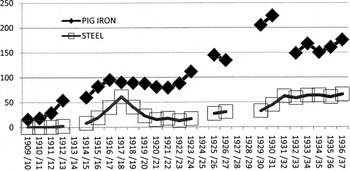
First, the basic features of the iron and steel market are collectively shown in Figures 1, 2 and 3, illustrating domestic production of pig iron and steel, their net demands, and self-sufficiency rates respectively from 1909/10 to 1936/37. In the case of pig iron, Figure 3 suggests that India achieved full self-sufficiency as early as the beginning of the 1920s. This was achieved by the joint production of four modern iron-producing companies: the Bengal Iron and Steel Company, the Indian Iron and Steel Company, Mysore Iron Works and TISCO. Besides meeting domestic demand, these four companies exported, for instance, 171,700 tons to Japan and 133,800 to the US in 1924/25, indicating a strong international competitiveness among the four Indian companies in the pig iron market during the colonial period.Footnote 9
Domestic production of pig iron (including pig iron for steel production in India) and steel, 1909/1910–1936/37 (1,000 tons).
Note: Data of pig iron includes those of TISCO, the Bengal Iron and Steel Company, and the Indian Iron and Steel Company only. Mysore Iron Works data was unavailable so its minor output is excluded, but does not affect the calculations shown in the graph.
Source: see footnoteFootnote 7

Net demand for pig iron (including pig iron for steel production in India) and steel, 1909/1910–1936/37 (1,000 tons).
Note: (1) Net demand = total domestic production + imports – exports. (2) The Annual statement of sea-borne trade of British India (hereafter ‘Annual statement’) contains data (quantity and value) of imported and exported iron (I), imported and exported steel (S) and a combination of both iron and steel (IS). Unfortunately, more than half the data is in the IS category. Individual figures for iron and steel were therefore calculated by assuming that the IS data could be divided in the same proportion between the I and S categories, i.e., estimated iron imports = I + (IS) * ((I) / (I + S)), and estimated steel imports = S + (IS) * ((S)/(I+S)). Exports were calculated in the same manner.
Source: see footnoteFootnote 8

Self-sufficiency rates for pig iron (including pig iron for steel production in India) and steel, 1909/1910–1936/37 (%).
Note: The self-sufficiency rate calculation is based on the figures shown in Figures 1 and 2.
Source: see footnoteFootnote 10

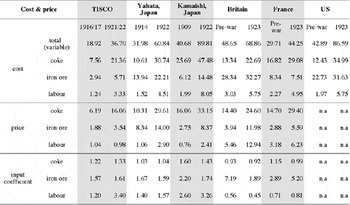
One possible reason why Indian pig-iron producers were highly competitive is shown in Table 1 (page 7) by the variable costs of pig iron production and the prices of major inputs and input coefficients of major iron producing countries at the time. TISCO, the biggest producer of pig iron in colonial India, enjoyed prices of coal and iron ore—two leading components in the production of pig iron—that were less than half those of other leading pig iron-producing countries in the 1910s and 1920s. TISCO thus, when starting up in the mid-1910s, had significantly lower manufacturing costs than did other leading iron-producing countries.Footnote 11 This could indicate that the competitiveness of Indian pig-iron producers could be attributed to lower input prices that fully compensated for its disadvantage in input coefficients.
International comparison of unit costs, input prices and input coefficients of pig iron (Rs.)

Source: see footnoteFootnote 12
Besides pig iron production, India increased its production of saleable steel from 20,000 tons in 1912/13 to 115,000 tons in 1922/23, 431,000 tons in 1932/33 and 728,000 tons in 1942/43.Footnote 13 India's self-sufficiency rate in steel also increased from 2 per cent in 1912/13 to 13 per cent in 1922/23, 58 per cent in 1932/33 and 66 per cent in 1936/37. As the only steel-producing company until the mid-1930s, TISCO accomplished steady progress in production, contributing to the gradual improvement of the self-sufficiency rate in colonial India.
Figure 3 also indicates a significant difference in performance in the production of pig iron and steel. The rate of self-sufficiency for pig iron exceeded 100 per cent in the early 1920s, whereas the corresponding figure for steel was only 10 per cent. The difference in these rates did not contract during the period of the figures but, with a few exceptions, widened in the 1930s.
Since pig iron is the most essential component in the manufacture of steel, production is usually a continuous process, which carries various advantages: low man-hours per ton of steel heated for conversion from iron to steel, greater ease in charging and drawing steel, high-heat area efficiency, high efficiency in controlling the rate of heating at all temperature levels, less trouble from temperature inequalities between each successive piece drawn, and so on.Footnote 15 Accordingly, continuous production processes were usually employed, even at the beginning of the twentieth century, enabling cheap pig iron producers to produce cheap steel. In TISCO's case, too, the world's cheapest molten iron produced in a blast furnace was always sent directly to the open hearth furnace where it was converted into steel after impurities were removed using iron ore and lime.
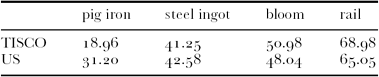
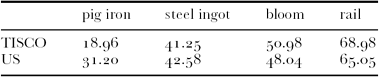
Despite using a continuous production process from the outset, TISCO failed to produce cheap steel, as is clearly shown in Table 2. This comparison of conversion costs from iron to steel between factories in the US and TISCO clearly indicates differences in performance in pig iron and steel production—a big challenge for TISCO throughout the colonial period.
Comparison between TISCO and US variable costs in 1922 (Rs.)
Source: see footnote14
TISCO's history during the colonial period can be seen as a series of sequential efforts to improve the low productivity of its steel production and to narrow the gap in competitiveness between pig iron and steel.Footnote 16 TISCO drastically enlarged production equipment in the early 1920s, started accumulating a depreciation fund at the expense of dividend payments to investors for the enlargement, and introduced a centralized recruitment and labour management centre in its first, full-scale attempt to become a modern manufacturing enterprise in India.Footnote 17 As a result, by the beginning of the 1930s, TISCO had improved its productivity, resulting in a rise in its self-sufficiency rate of steel, as shown in Figure 3 above.
Achievement of a high self-sufficiency rate for some types of steel materials
TISCO's failure to achieve full self-sufficiency in steel in general does not mean that it failed to achieve full self-sufficiency in every type of steel product. Instead, it gained a nearly full self-sufficiency rate in the production of some types of steel as early as the beginning of the 1930s. How some types of TISCO's steel achieved this is discussed below.
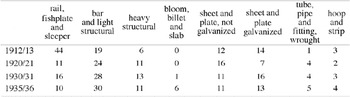
First, we will examine the type of steel demanded in India in the 1920s and 1930s. Table 3 suggests that the Indian steel market in the two decades following 1920/21 was dominated by ‘bar and light structural’ which was used mainly in the construction of bridges, railway stations, and buildings. The high dominance of this type of steel was probably in direct response to the steady increase in urbanization that started after the 1910s.Footnote 18 Next to ‘bar and light structural’, four other types of steel held similar shares: ‘heavy structural’, ‘sheet and plate, galvanized’, ‘sheet and plate, not galvanized’ and ‘rail, fishplate and sleeper’. The first three types were used mainly for construction purposes, while ‘rail, fishplate and sleeper’ was used in the railway industry. The share of ‘rail, fishplate and sleeper’ in the Indian steel market dropped sharply from 44 per cent in 1912/13 to approximately 10 per cent in the following two decades, probably jointly due to a policy of retrenchment on the railways after the 1920s and an increase in the consumption of other types of steel for construction purposes in urban centres.
Market share (demand base) of each type of steel (%)

Note: Categories of steels in the Annual report of TISCO and those of Annual statement are sometimes inconsistent, so the categories have been ‘reorganized’ as follows: (1) rail, fishplate and sleeper = ‘rail and fishplate’ + ‘sleeper and sleeper bars’ of Annual report of TISCO plus ‘rails and other sort of railways for private as well as government uses’ + ‘rails and fishplates’ of Annual statement. (2) bar and light structural = ‘bar and light structural’ + ‘tin bar’ of Annual report of TISCO plus ‘angle and tee’ + ‘bar other than cast steel’ of Annual statement. (3) heavy structural = ‘heavy structural’ of Annual report of TISCO plus ‘beams, channels, pillars, gilders and bridge work’ of Annual statement. (4) bloom, billet and slab = ‘blooms, billets and sheet bar’ of Annual report of TISCO plus ‘ingot, blooms, billets and slabs’ of Annual statement. (5) sheet and plate, not galvanized = ‘plates’ + ‘black sheets’ of Annual report of TISCO plus ‘sheets and plates, tinned as well as not galvanized’ of Annual statement. (6) sheet and plate, galvanized = ‘galvanized sheets’ of Annual report of TISCO plus ‘sheets and plates, galvanized’ of Annual statement. (7) tube, pipe and fitting, wrought = only ‘tubes, pipes and fittings, wrought’ of Annual statement. (8) hoop and strip = only ‘hoops and strips’ of Annual statement.
Sources: see footnoteFootnote 19
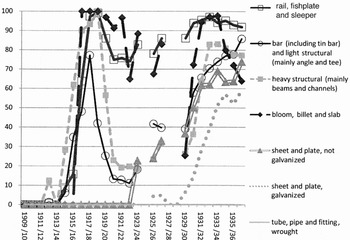
Figure 4 shows that the rate of self-sufficiency for ‘rail, fishplate and sleeper’ and ‘bloom, billet and slab’ exceeded 80 per cent as early as the mid-1920s.Footnote 20 Self-sufficiency rates of these two particular steel products crossed the 90 per cent mark in 1930/31 and then maintained a high ratio, which suggests a nearly full-scale import substitution of these railway-related steel products by the beginning of the 1930s.Footnote 21
Self-sufficiency of each type of steel (%).
Note: See Notes for Table 3 above.
Source: see footnoteFootnote 22

During the same decades, other types of steel also drastically increased their self-sufficiency rates. The rate of ‘bar and light structural’ increased from 6 per cent in 1914/15 to 13 per cent in 1920/21, 39 per cent in 1929/30 and 86 per cent in 1936/37, while that of ‘sheet and plate, not galvanized’ also progressed from 0 per cent in 1922/23 to 37 per cent in 1929/30 and 74 per cent in 1936/37. These gradual increases clearly indicate that India progressed steadily towards self-sufficiency in some types of steel products, although it failed to achieve similar progress for ‘tube, pipe and fitting, wrought’ and ‘hoop and strip’.
This apparent rise in self-sufficiency rates of some steel products implies that Indian steel producers came close to completing import substitution in the production of some steel products in the interwar period, and that the development of import substitution suddenly stopped progressing at just below 100 per cent of the self-sufficiency rate. Accordingly, next to be examined is why the steady growth of import substitution of some steel products did not lead to export of these products afterwards.
Improvement of self-sufficiency rate and tariff protection
To examine the cause why, except in a few cases, TISCO steel was not exported, we need first to study the difference in steel prices charged inside and outside India. Some scholars have considered that protective tariffs on steel products, introduced in 1925, promoted import substitution of steel in India, but deprived the Indian steel industry of the incentive to raise productivity to survive international competition.Footnote 24 If tariff protection did have this effect, it would be quite natural for TISCO not to explore external steel markets, even when it had achieved nearly full self-sufficiency in some steel products.
First, we will examine the selling price of TISCO's steel rail, which was nearly fully self-sufficient as early as the 1920s, as well as the delivery price of steel rail made in Britain as an index of international price. The British steel rail price is used as a benchmark because Britain was the biggest foreign supplier of steel rail to colonial India and because TISCO steel was of comparable quality (see below). These two factors resulted in these steels being direct competitors, not only in the Indian market but also outside India.
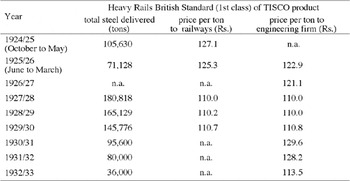
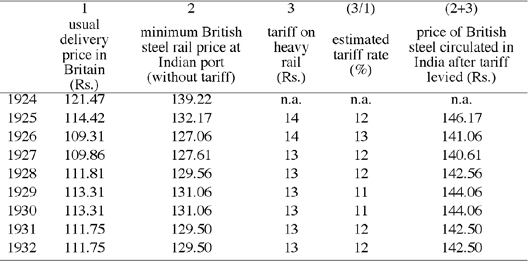
Tables 4 and 5 throw up the comparison between TISCO steel rail and British steel rail. Table 4 shows the amount of steel rail TISCO dispatched and its price. Table 5 shows the domestic price of steel rail in Britain, minimum British steel rail price at Indian port, the tariff duty levied on British steel rail by the Indian government, and an estimated price of British steel rail in the Indian market.

Price of British steel rail (heavy rail) in Britain and in India (Rs.)
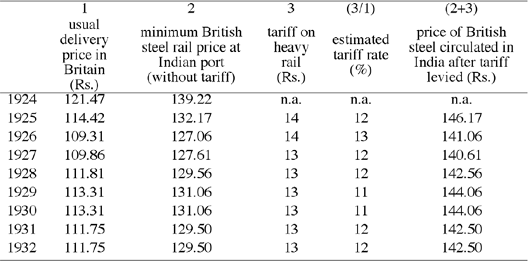
Note: (1) Column 2 (minimum British steel rail price at Indian port) equals to (delivery price in Britain + freight charge from British port to Indian port + landing charge).(2) On the basis of Sources mentioned below, landing charge per ton equals Rs. 2.75, while freight charge per ton is Rs. 15. (3) The Times Weekly Edition, on 12 October, 1933, reported that Freight from Europe to India was £1.5 = (Rs. 19.95), (ITB, Statutory enquiry, vol. 3., 1935), p. 120); thus, freight charge might have increased in the 1930s.
Source: see footnoteFootnote 25
The two tables collectively indicate that the price of TISCO's steel rail continued to be below Rs. 125 as early as the mid-1920s, except for a few years, while that of British steel rails at Indian port were over Rs. 125 in the same period, except in 1928, suggesting that TISCO's steel rail had a competitive selling price compared with British steel rail by the mid-1920s, even without tariff protection.
In the case of other steel products, the prices of TISCO steel were apparently higher than those of British steel. This is clearly seen in Table 6, which indicates (1) cif prices plus landing charges for British steel, (2) tariff duties and tariff rates, and (3) landed prices of British steel (the sum of (1) and (2)), and the prices realized for TISCO steel at Tatanagar (the nearest station from the TISCO factory). According to Table 6, cif prices plus landing charges for British steel in three categories (structural section, bar and plate) were at least five per cent cheaper than the realized price of TISCO steel, even at the beginning of the 1930s, which suggest that British steel retained a competitive edge in the Indian market.
Prices of leading steel products of Britain and TISCO (Rs.)

Note: (1) Price of structural section here is price of beam which is usually applied to heavy structural section, while price of light structural section is practically the same as bar. ITB, Se1933, Written evidence, vol. 1, (Delhi: Manager of Publications, 1934), p. 61. (2) From October 1932 onwards, the price is the result of an arrangement under the Ottawa Agreement. (3) Realized price for TISCO steel is data of October, 1924. (4) tariff = landed price – (cif + landed charge), while tariff rate = tariff / (cif + landing charge). (5) 1924/25 data is from July 1924 to March 1925. (6) On the basis of sources mentioned below, landing charge per ton equals Rs. 2.75.
Source: see footnoteFootnote 26
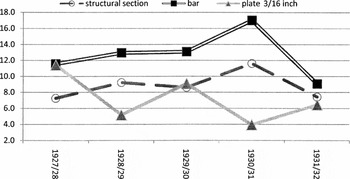
Table 6 additionally suggests that the difference in price between British structural, bar and plate, and TISCO's corresponding steels had been narrowing. Figure 5 shows that, in the cases of bar and plate, the rate of price difference between the cif plus landing charge of British steel, and the realized price of TISCO steel, contracted from almost 12 per cent to just 8 per cent within five years. The contraction is in exact accordance with the growth rate of self-sufficiency of these types of TISCO steel, as shown in Figure 4, suggesting that under tariff protection TISCO had been improving its international competitiveness in steel products other than steel rail after the 1920s.
Ratio of difference in price between TISCO and British steel, against British steel price (%).

Despite the achievement of price competitiveness in production of steel rail, and the gradual improvement of price competitiveness for other types of steel products, surprisingly TISCO did not explore sales of steel through foreign outlets in the following decades of the colonial period, the possible reasons for which are discussed in the next sections.
Segmentation of the steel market in India
Before clarifying the cause why hardly any TISCO steel was exported, a clear understanding of a key feature of the steel market in colonial India is required: segmentation of the market in accordance with quality of steel.
In brief, the steel market in colonial India was segmented into two submarkets: a large submarket for high quality steel, BSSS or ‘tested steel’; and a small submarket for NBSSS or ‘untested steel’. Responding to the dominant demand for BSSS in the Indian market, TISCO focused production only on BSSS, although demand for NBSSS occupied not a small part of the market outside India, except in countries under the influence of the British Empire.
The nature of the segmentation is explained simply by D. R. Dalal, a member of the Legislative Assembly, as follows:
Sir, there is another matter of considerable importance, and it is this. Untested steel cannot possibly sell at the same price in competition with tested steel. If the untested steel and tested steel are sold at the same price, the whole bazaar trade throughout India in untested steel will be ruined. So, in my opinion, there must be a difference of twelve annas per one cwt or at least Rs. 10 per ton between the selling price of untested steel and tested steel.Footnote 27
Besides Dalal, Dileep Wagle, a specialist in the history of the iron and steel industry in British India, referred to the nature of the segmentation on the basis of a report by the Indian Tariff Board as follows:
The 1926–7 ITB [Indian Tariff Board] departed from its previous practice by recommending a system of differential duties which discriminated between British and non-British steel. The Board justified its recommendation by pointing to the difference in quality between British (standard) steel and the continental products. . . . On economic grounds the argument was plausible. There was a distinction between British Standard (‘tested’) and Continental (‘untested’) steels.Footnote 28
The existence of quality differences between BSSS and NBSSS is also clearly pointed out by B. J. Padshah—a director of Tata Sons Ltd. in charge of TISCO. In a letter to A. E. Woolsey, the General Manager of TISCO in 1912/13–13/14, Padshah mentioned his views on the difference in quality between BSSS and steel from the Continent, especially from Germany, both of which were widely available in the Indian steel market. On the basis of his talks with C. P. Perin, Consulting Engineer of TISCO (American) as well as Dr McWilliam, government-appointed Metallurgical and Analytical Inspector of Steel in India (British),Footnote 29 Padshah wrote on 31 March, 1914:
the Germans. . . are used to a less rigorous specification in the manufacture of steel rails than the British, that therefore they may not perceive the seriousness of objections to a steel making practice which men like Dr. McWilliam used to the rigour of British specification would readily feel.Footnote 32
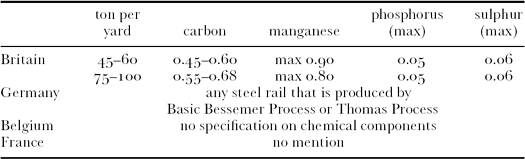
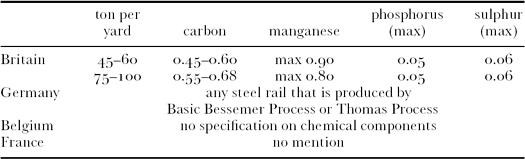
The difference in quality between BSSS and steels from the continental countries is clearly seen by the makeup in chemical components of their standard specification steels. Chemical component specifications for manufacture of steel rail in these steel-producing countries in 1941 are shown in Table 7 and indicate that British standard specifications demanded specific percentages of chemical components, while the standard specifications for Germany, Belgium and France did not.
Standard specification of steel rails of leading European industrial nations in 1941
Source: see footnote31
Additionally, archival evidence suggests that the Indian standard specifications applied by some Indian railway companies sometimes demanded a stricter specification in the early 1910s than the standard specifications employed in the US or in Britain in the late nineteenth century when these nations had achieved a high level of industrial development. The Indian State Railway, which controlled a part of Indian railways, stated in January, 1911 in Specification for Basic Open Hearth Steel Rails of Indian State Railway that steel rail must be of the following chemical composition: ‘Carbon 0.58 to 0.68 per cent, Manganese maximum 0.75 per cent, Phosphorous maximum 0.05 per cent, Sulphur maximum 0.05 per cent’. The Specification also stated that, ‘If the analyses of any casts do not comply with the specification, these casts must not be used’.Footnote 33 In the US and Britain, on the other hand, Beck reported the following chemical composition in 1880: US—Carbon 0.3 per cent, Manganese maximum 0.35 per cent, Phosphorous maximum 0.1 per cent, Sulphur maximum 0.04 per cent; Britain—Carbon 0.35 per cent, Manganese maximum 0.75 per cent, Phosphorous maximum 0.075 per cent, Sulphur maximum 0.10 per cent.Footnote 34 A low percentage of carbon seriously softens and affects the quality of the steel rail, while a high rate of other components also damages the quality. These differences in quality suggest that the US and Britain constructed their respective nationwide railway networks in the 1880s with lower quality steel rail than that used in colonial India in the 1910s.Footnote 35
Such market segmentation by quality can be seen in the statistical evidence also, shown by the difference in price between BSSS and NBSSS, as pointed out by Dalal. Table 8 shows that BSSS was more expensive than NBSSS by Rs. 30–40 throughout the period.
Prices of British Standard Steels and non-British Standard Steels

Note: (1) As mentioned above, the price of continental steel is used to indicate the price of non-British Standard steel. (2) The price of light structural is practically identical with that of bar steel. (3) From October 1932 onwards, prices were set under the Ottawa Agreement. (4) The landing charge is Rs. 2.75. ITB, Se1933, Written evidence, vol. 1, 1934, p. 61. (5) 1924/25 data is from July 1924 to March 1925.
Source: see footnoteFootnote 37
Although there is no separate statistical data showing the amount of BSSS/NBSSS demanded/supplied in the Indian market, an estimate can be made since BSSS was supplied exclusively by British steel manufacturers and TISCO, while European countries provided NBSSS only.Footnote 36
A true estimate of the amount of BSSS and NBSSS demanded/supplied in the Indian steel market would need country-wide statistical data on the supply of steel to India. Data on the domestic supply is listed in the Annual report of TISCO, the only steel producing company at that time. There is no specific data on steel export to India from foreign countries. However, annual data on the quantity and value of Indian imports of ‘iron and steel’ (not steel only) from all countries including Britain and European countries is available in the Annual statement of the sea-borne trade of British India. It can be reasonably assumed that ‘iron and steel’ import data was almost equal to ‘steel’ import data, since India only imported a limited amount of iron, due to her strongly competitive pig-iron production during the period. On that premise, it is possible to estimate data on the amount of BSSS and NBSSS separately.
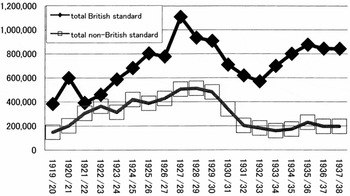
Figures 6 and 7 show the extent of BSSS/NBSSS demanded/supplied in the Indian steel market. In particular, Figure 6 shows the total amount of BSSS/NBSSS, while Figure 7 indicates the ratio of BSSS to sum of BSSS and NBSSS. The two figures taken collectively suggest that BSSS kept a market share of more than 60 per cent in 1919/20–1937/38, except for two years (1921/22 and 1922/23), which suggests a strong preference for BSSS throughout the period.
British Standard Steel and non-British Standard Steel (tons).
Source: see footnoteFootnote 38

Ratio of British Standard Steel to sum of British and non British Standard Steel (%).
Source: see footnoteFootnote 39

The cause of a strong preference for BSSS in the Indian steel market and the reaction of TISCO towards that preference
The Cause of a strong preference for BSSS in the Indian steel market
What caused the strong preference for BSSS by consumers of steel in colonial India? The question will be answered on the basis of analysis of the steel-purchasing policy of the Indian government and the railway companies, the two largest purchasers of steel products in colonial India.
Before clarifying the possible cause of the preference for BSSS, an examination of how the demand of the two largest purchasers dominated the total demand for steel, especially the demand met by TISCO, is required. Although there is no comprehensive statistical data on the amount of steel purchased by the two bodies, there is palpable evidence to show the amount of steel sold to the government and railway companies directly by TISCO during the 1920s. According to TISCO archival evidence, the Company sold 6,157 tons and 8,646 tons to the government in 1927/28 and 1929/30 respectively, while selling 199,898 tons and 160,660 tons to railway companies in the same years.Footnote 40 This means that TISCO's total sales amounted to 384,264 tons in 1927/1928 and 357,168 tons in 1929/1930 respectively, thus selling almost 50 per cent of its products directly to the two bodies in the 1920s, although the remaining 50 per cent went to engineering firms and dealers.
The strong preference for BSSS was largely due to its exclusive use by the Indian government and the railway companies.Footnote 41 Such exclusive use is shown, for instance, in a statement in 1929 by E. J. Turner, Secretary of the Economic and Overseas Department of India Office that, ‘a further stipulation in regard to locomotives and certain other railway material is that British standard specifications. . .must be strictly adhered to’.Footnote 42
The strict preference of public bodies for BSSS might have had a direct as well as an indirect influence on the choice of quality of industrial products by private enterprises, including TISCO. For instance, E. A. Procter, TISCO Chief Works Engineer, admitted a strong adherence of TISCO to BSSS products, in his letter to the General Manager of TISCO on 16 January, 1933. He wrote:
We must state that as regards the requirement of our own Works it is customary to insist on all tenders received on a basis of British Standard Specification or equivalent. . . . From our point of view where all machinery has to be of best quality and robust to stand day after day usage with as few stoppages as possible, nothing but A1 quality can be accepted and we should not consider the use of anything less than British Standard quality.Footnote 43
Naturally, such adherence to BSSS gave an advantage to British producers, who were accustomed to producing steel to this standard. This is clearly admitted by Turner who wrote in 1929, ‘the weight allowed to considerations of quality. . .resulted however to some extent in British goods being preferred over foreign goods’.Footnote 44
Probably for the purpose of providing an advantageous position in the Indian market to British industrial enterprise, the British Engineering Standards Association (the body that defined the British Standard Specification) did not allow any person with local knowledge of Indian technical and market conditions to represent his opinions at the association, although some Indian government officials felt such a voice was necessary and should have been granted. Turner wrote of the Association's position in 1927:
Simpson [a representative of the Indian office of the sectional electric committee of the British Standards Association] tells me that the British Engineering Standards Association are unwilling to communicate with any except British Departments, and do not apparently regard High Commissioners for India or the Dominions as coming under that category.Footnote 45
Turner shared Simpson's view and confessed to the India Office's ‘neutral’ position in 1931:
no doubt as you say it would be advantageous for India to be represented on some Committees of the British Engineering Standards Association by somebody having Indian experience as well as by members of the India Store Department. It is, however, hardly a matter on which the India Office is in a position to give an official opinion.Footnote 46
How necessary was it for an Indian steel consumer to use such high-quality steel intensively? The question could be answered by analysing the amounts of several types of steel with different quality which were produced and consumed world-wide during the first half of the twentieth century. If the analysis could prove that some developed countries used NBSSS intensively, it could reasonably be assumed that India consumed an unnecessarily high quality of steel during the colonial period.
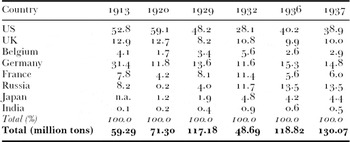
First, we have country-wide production data. Since specific countries generally produced steel of a specific level of quality that suited their own specifications, the name of country can give us reliable evidence of the levels of quality of steel produced in a particular country. Table 9 shows that NBSSS produced by Belgium, Germany and France dominated up to 20–30 per cent of the total world production of steel between 1913 and 1937.
World production of steel (share and total amount)

Note: (1) Data for Germany before 1919 includes the Saar district. (2) Data for Russia before 1919 includes Poland.
Source: see footnote47
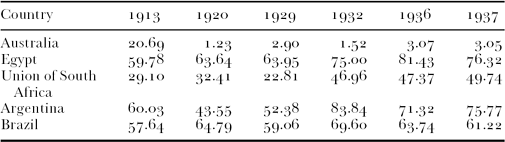
Table 10 indicates that the share of NBSSS of total steel imported was much higher in countries such as Argentina and Brazil, where economic development progressed faster than in India. Since Argentina and Brazil did not have full-scale steel plants at that time, the amount of steel imported roughly equals the steel consumed. This indicates NBSSS had sufficient quality to support a level of economic development that was attained by Argentina and Brazil during the period of this study.
Share of steel imported from Belgium, Germany and France (non-British Standard Steel) among total steel imported (%)
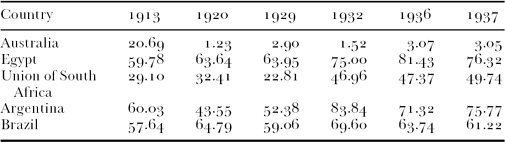
Source: see footnote48
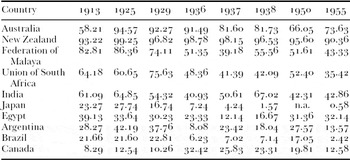
Records show that BSSS was principally consumed by Britain and the regions forming part of the British Empire. Such British influence is demonstrated in Table 11, which indicates the share of BSSS among total steel imported from four leading steel exporting countries (Germany, Belgium, the US and the UK). The share of BSSS was much higher in countries forming part of the British Empire: Australia, New Zealand, the Federation of Malaya, India and the Union of South Africa, than in countries such as Argentina and Brazil.Footnote 50
Share of steel imported from Britain among steel imported from four leading steel exporters (Germany, Belgium, the US and the UK) (%)

Source: see footnote49
According to Statistics of world trade in steel, even in Britain, the share of NBSSS to total net steel produced in Britain was 29–39 per cent by the end of the 1920s.Footnote 51 That share was, according to Figure 7, quite similar to the share of NBSSS in the Indian steel market, where the level of economic development was much lower than that in Britain.
Collectively, this evidence suggests that India did unnecessarily consume high-quality steel during the colonial period.Footnote 52
The reaction of TISCO towards the strong preference for BSSS in the Indian Market
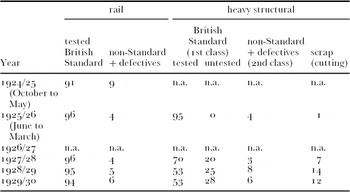
As there was strict preference towards BSSS in the Indian steel market, there was no choice for TISCO but to produce mainly BSSS. How TISCO struggled with this can be seen in Table 12 which shows the share of different types of quality of steel rail and heavy structural steel (two of TISCO's major steel products) produced and dispatched in the 1920s. Almost all the steel dispatched from TISCO was BSSS, although some was not officially tested. In the case of steel rail, tested BSSS occupied more than 90 per cent of the total dispatched.
Share of quality types of steel dispatched from TISCO: rails and heavy structural (%)

Source: see footnote53
The high percentage of BSSS production initially was not easily achieved by TISCO. Just after the beginning of production, C. R. Darlington, a member of Messrs Tata Sons Ltd in charge of TISCO, admitted the difficulty in a letter to the directors of Messrs Tata Sons Ltd, Bombay, on 26 May, 1913:
We are receiving very few orders at present for structural material and I'm afraid the report that Government have issued a Circular regarding our beams is already being felt. Such a report is very possible (in fact, I have been expecting) and our only satisfactory reply to it would appear to be to rigorously differentiate between our British Standard material and our continental material or else for the time being at any rate sell only British standard. . . . Mr. Wells [General Manager of TISCO in 1909–12] after mature discussion with the leading firms of Calcutta and the various Government officials interested came to the firm conclusion that to start with at any rate we should not sell any material that was not known to be up to B.S. [British Standard].Footnote 54
Darlington's opinion was strongly supported by Padshah in a letter from Tata Sons Ltd to Woolsey on 9 June, 1913:
Mr. Padshah has a private letter today from one of our large customers explaining that Government are unable to put orders for our steel. . .because officers are unable to trust that the steel had passed examination. . .it could not be to interest this company to make any ambiguity about the quality of the stuff that we put in the market. . .You are good enough to say that you would accept whatever is the Board's policy; this is the Board's policy. Nothing else could be the Board's policy in view of the relations of the Steel Company with the Government, the Railways, the Municipalities and other buyers.Footnote 55
These letters illustrate two interesting facts. Firstly, the quality of TISCO steel was unstable and failed to win the trust of its customers on quality, and secondly, TISCO's management considered that it did not have a strategic choice other than to produce BSSS.
TISCO's struggle to produce BSSS at the start is seen in its steel production report on steel ingots and steel rails. For example, the rail report for the week ending 5 July 1913 recorded:
Of 387 ingots produced or about 800 tons, 37 per cent or 143 or about 300 tons were rejected for low carbon or high phosphorous. . .the total rejection of rails was 324 by the Company's Inspector and 652 by the Government Inspector, or a total of 976 out of 1245 examined, which makes the shocking percentage of 78 for rejections altogether.Footnote 56
The failure of TISCO to produce steel to BSSS was serious because this gave the Indian government every reason to reject TISCO steel. Also, this failure damaged the interests of the company because, as implied in the quotation above, the Indian government circulated an unofficial notice about the unacceptable quality of TISCO's steel, giving a negative impression of its quality to possible private customers. In a letter on 16 June, 1913, to Woolsey, Padshah suggested that the Government had issued such a notice:
I endeavoured to obtain a copy of the Government Circular that has been issued but this is apparently confidential and has been issued by Simla probably at the instigation of the Indian Office. The circular is apparently vaguely worded and no definite allegation is made as far as I can find out, but it is worded in such a way as to leave an impression on the various Engineers that the quality of Tata steel cannot be relied upon and apparently some cases have occurred in which goods supplied have been found faulty.Footnote 57
Scholars of the modern economic history of India commonly consider that the Government positively supported the establishment of TISCO because of several measures it introduced, including an annual purchasing contract for 20,000 tons of steel rail ‘on a condition that TISCO could offer steel with quality equivalent to BSSS at not higher price than that of U.K.’ and by provision of a mining lease.Footnote 58 These positive measures could have been totally marred by the circular in 1913, since it might have persuaded every steel customer, including the railway companies, in India not to purchase TISCO steel products.
Therefore, TISCO had to control the quality of its products. It introduced a rigid inspection system around 1913. Before 1913, it had only a simple inspection that had started as early as 1911 when the business first produced steel ingots. TISCO had erected a Government Chemical Laboratory within its premises at its own expense under instruction from the Railway Board ‘for the purpose of analyzing and testing steel’.Footnote 59 But, it gradually became clear that such inspection was unsatisfactory and that an improved system was necessary. Two types of improvement were introduced around 1913. One was to replace ‘cheap’ Indian staff, who had limited knowledge of BSSS, with expensive but more skilful British staff.Footnote 60 The other was to change some parts of the American-style production process (in use because the main technical staff at TISCO were American) to the British style, despite its higher cost.Footnote 61
These efforts helped decrease rejection considerably, although adversely they increased the cost of steel. Regarding the improvement, Tata Sons Ltd wrote a letter to Woolsey, on 5 March, 1914:
We have been noticing with pleasure that the percentage of rejection by the Government Inspector of rails inspected has been consistently low for the past several weeks. . .only one ton rejected out of 1050 tons, that is nil percentage practically, the week before that showed only 0.4 per cent and the two weeks before that were practically nil rejection by Government Inspector.Footnote 62
The high rate of BSSS was maintained even in the 1920s as illustrated by the figures in Table 12, indicating that TISCO succeeded in keeping the improved rate of inspection after 1913.
The limited possibility of TISCO to export steel
Once TISCO concentrated its production on BSSS, producing NBSSS would have increased costs and risk, since NBSSS production not only required a change to part of the production process but also might have caused a deterioration in the reputation of the quality of TISCO's steel. This increased cost and risk was not easy for TISCO to take on, even in the 1920s, when the total demand for NBSSS grew. The Indian Tariff Board Report in 1933 wrote ‘the profit on the tested material [BSSS] is greater than on the untested [NBSSS]’.Footnote 63
This exclusive production of BSSS made it difficult for TISCO to explore foreign outlets, even in the 1930s when some of its steel actually succeeded in being internationally competitive. Why hardly any TISCO steel was exported will be examined, by considering how difficult it was for TISCO to explore markets in Britain and the British Empire, where BSSS was dominantly demanded, and why it had no choice but to try to penetrate the markets outside British influence. Then, we will consider TISCO's attempts to explore foreign outlets in countries outside British influence before examining how TISCO failed in the attempts.
TISCO had serious difficulties in exploring markets in Britain and areas under British influence. Firstly, the British government was ready to regulate the import of steel into Britain and countries under British influence, since it considered that imports from India had a negative influence on the development of the iron and steel industry in Britain. Such possibility of intervention by the British government is mentioned in a report on the working of the Ottawa Agreement. The report, at the beginning, pointed out the possibility for TISCO to be able to export steel as follows:
The development of the Indian steel industry had reached a stage when the export of steel rails and semi-finished steel in the shape of sheet bars and billets was beginning to be possible. If new impediments to the trade were not erected in the United Kingdom, important developments in this line were probably in the next few years. . . the creation of a new outlet for substantial quantities of sheet bars and billets would do much to compensate for the falling off in the demand for rails [after the Great Depression].Footnote 64
The report then mentioned TISCO's difficulty in exploring the British market as follows:
There was every reason to apprehend that new furnaces and new sheet bar mills would be established in [the] United Kingdom, and that as soon as these came into operation Indian iron and steel would become subject to duty under the Import Duties Act and India's market in the United Kingdom would be seriously affected. . .India could. . .secure free entry for her exports of iron and steel to the United Kingdom on certain conditions only.Footnote 65
The free hand of government in regulating imports must have led to TISCO having great difficulty in finding new outlets for its products, not only in Britain but also in areas under the influence of the British Empire where British steelmakers largely exported their products.
Secondly, in the 1930s, TISCO found it difficult to sell its steel products in markets under British influence at the cost of the interests of British steelmakers, since such an attempt by TISCO to ‘invade’ the markets could have provoked the government to reconsider giving an extension to the tariff protection on steel. Such a concern is implied in a letter, sent in 1934, by A. Dalal, resident director of TISCO, to N. B. Saklatvala, chairman of Tata Sons Ltd and of TISCO in 1931–1937 when an extension of the Steel Industry (Protection) Act of 1927 was under discussion at the Legislative Assembly. Dalal wrote:
Since the next session of the Assembly has been fixed for July, the Government of India may perhaps want to consult us before that, regarding our attitude in connection with co-operation with the British Industry prior to making their own proposals regarding our protection.Footnote 66
Thirdly, TISCO hesitated to explore markets under British influence to avoid the possible political risk of receiving attacks from Indian nationalists who might have considered TISCO's export of steel to Britain as a sign of its close relationship with the British government. Such risk was apparently pointed out by Padamji Ginwala, a director of TISCO, whose statement was summarized in the Minutes of the TISCO Board Meeting on 4 May, 1931, as follows:
He did not think that we would need to go to the stage of exporting rails to England which might be dangerous from the company's point of view owing to the misunderstanding which would be created in India and the public agitation that might arise.Footnote 68
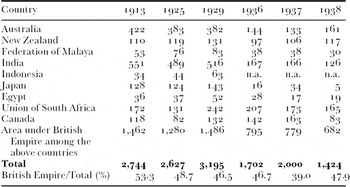
These are the reasons why TISCO did not explore markets under British influence, despite the relatively significant demand at these outlets. The size of these markets is clearly seen in Table 13, which indicates the amount of steel exported from Britain to Australia, New Zealand and the Federation of Malaya, where TISCO probably had an advantage in freight charges compared with British steelmakers. Total demand for British-made BSSS in these countries apparently surpassed the total amount of BSSS imported into India, indicating the existence of a huge market where TISCO could likely have had a price advantage. Despite this, TISCO hardly exported steel to these countries throughout the 1930s.
Steel export from Britain (1,000 metric tons)

Source: see footnote67
While TISCO perceived serious difficulties in exploring markets under British control, it was tireless in its efforts to explore foreign outlets outside these regions at the start of the 1930s. Such efforts were sanctioned by the Minutes of a Meeting of the Board of Directors on 4 May, 1931: ‘The Board. . .entirely approved of competing in foreign markets’.Footnote 69 TISCO attempted to explore markets in Japan as well as in Europe. However, almost all of these attempts failed. For instance, Padshah wrote in a letter to Messrs Tata Iron & Steel Co. Ltd, on 9 July, 1931 as follows:
I approached Messrs. Mitsui Bussan Kaisha with the idea of seeing if they could take up or negotiate for about 60,000 tons of sheet bar or tin bar and Merchant Mill billets. . .but their Japanese friends were not interested. A similar effort was made through the good office of Messer. Nursing & Co., with Senda & Co., who are their shippers also with no result. . . . On or about the same time that we were negotiating from Japan we received an enquiry from Messer. Maxwell, Dean & Murry for their Italian Agents, Messer. P.A. Obermann. . . . We offered them the nearest approximation of analysis that we could supply but have received no reply from them.Footnote 70
TISCO continued in its efforts to explore foreign markets, though none achieved a favourable result.
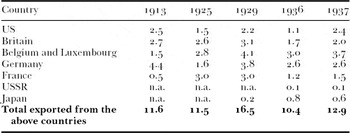
Why? It might be considered that the international steel trade had been seriously shrinking in the 1930s due to the Great Depression, leaving a limited market for foreign producers, which was allocated to members of a specific cartel. According to Table 14, the total amount of steel exports from leading steel exporters declined from 16.5 million long tons in 1929 to 10.4 million long tons in 1936, although the figure in 1936 recovered to the levels of 1925 and 1915 (11.5 and 11.6 million long tons respectively).
Export of semi-finished and finished steel from seven steel-producing countries (million metric tons)

Source: see footnote71
Although the shrinking international steel trade may partly explain the cause, another factor can explain it better: the higher price of TISCO's steel compared with other steel demanded at market outside British influence. This was a leading cause of TISCO's inability to explore the European market as is pointed out by J. R. D. Tata, Chairman of Tata & Sons and TISCO in 1937–93. Tata clearly stated his views on this disadvantage in a letter to R. Mather, sales manager of TISCO, on 22 March, 1932 as follows:
I received by this mail the usual bunch of Board Minutes in one of which Ginwala's statement [a director of TISCO] about an error which crept into his calculations about the minimum price at which semis [semi-finished steel]could be exported has drew my attention. . .it seems that as usual the Board have not bothered about the important aspect of the question and were primarily concerned with the question of who was to blame for the error. . . . In spite of an apparent wave of optimism mainly originating in England, business conditions in Europe seem as bad as ever and principally so in the case of the Steel Industry. I. . .expect that competition on the Continent is becoming if anything more desperate and that consequently prices will be lower than ever. If any sales by us are at all possible in Italy they will be at prices probably ever lower than what we anticipated. As a result therefore of Ginwala's recent announcement to the Board it is possible that you will want me to stop making any effort to sell in Italy.Footnote 72
In response to Tata's strong words, Mather wrote, ‘I think that for the time being at any rate we shall have to drop the idea of exporting semis [semi-finished steel] to any Continental country’.Footnote 73
The disadvantage of TISCO's prices compared with the prices of NBSSS was a serious hindrance for TISCO in exploring foreign outlets, not only in the beginning of the 1930s when the world economy was suffering from the Great Depression, but also at the end of the 1930s when the economy had recovered, as is seen in the rising amounts of world steel production and trade (see Tables 9 and 14).
There is written evidence of two reasons for TISCO's difficulties at the end of the 1930s implying that TISCO's BSSS had to compete with NBSSS in foreign outlets, and failed, due to the higher price of its BSSS.
Firstly, in a letter to The Director-General of Commercial Intelligence and Statistics, Calcutta, on 15 July, 1939, the Indian Trade Agent, Kabul, Afghanistan, wrote that an Indian trader in Kabul was asked by HRH Sardar Mohamed Hashim Kham, the Prime Minister of Afghanistan, to negotiate an agreement with TISCO for the supply of iron and steel material. The Agent additionally wrote that the iron and steel materials must be ‘at prices which might compare favourably with those charged by Continental countries like Belgium’.Footnote 74
Secondly, a request by the Council General for The Netherlands to dump a supply of iron and steel materials on The Netherlands East India government in 1939 as explained by the secretary of the Department of Commerce of the Indian government: ‘The prices in India are above the world rates and the question arose whether firms should not be induced to reduce their rates for export purposes’.Footnote 75 This evidence indicates that The Netherlands government probably had the price of NBSSS in mind, which was to the government ‘the world rates’ in his word, when asking TISCO for a dumping sale.
The dumping sale policy presented difficulties for TISCO. N. B. Saklatwala, Chairman of Tata Sons Ltd and of TISCO from 1931 to 1937, stated his views on the policy in ‘Circular on Production Programme 1931–32’ published in response to the opinion of Ginwala, who insisted on the advantages of a dumping sale.Footnote 76 Saklatwala wrote:
As regards the proposal to export steel, there are difficulties. . . . So long as the Company has to ask Government and the Assembly to grant an extra price for rails. . ., any export of rails at what would necessarily be a very low price might be so used by the critics of the Company as to imperil the grant of the extra price on Indian orders. The Agents, after discussion with the Sales Committee of the Board, are of opinion that it is not advisable to proceed with these proposals.Footnote 77
Collectively these writings indicate that TISCO did not explore foreign outlets in the 1930s because the price of its steel was higher than that of German or Belgian steel. In consequence, hardly any TISCO steel was exported in the 1930s, which limited the growth of the company and the self-sufficiency of steel in India for a decade.
Conclusion
This paper has attempted to clarify how TISCO had difficulty in exporting its steel abroad during the colonial period due to a strong preference by government and other Indian steel consumers for BSSS.
For clarification, the initial examination concerned the segmentation of the steel market in colonial India according to the difference in quality of steel meeting the British Standard Specification (BSSS) and steel that did not (NBSSS). BSSS was of higher quality than NBSSS, and thus commanded higher prices. The Indian government and the railway companies demanded BSSS, presumably to give British steelmakers an outlet into the Indian steel market. This exclusive demand by the Indian government and railway companies, overriding other steel consumers in the colonial period, resulted in the dominance of BSSS in the Indian steel market.
Then, it was considered whether this dominant demand for BSSS meant TISCO had no choice but to concentrate production only on BSSS to maintain the reputation of TISCO's steel as BSSS, and to avoid possible cost increases by simultaneously producing steels of different qualities. Because of the concentrated production of BSSS, TISCO lost the opportunity to explore foreign outlets for NBSSS, which dominated a relatively significant part of the world steel market, while facing serious difficulties in exporting BSSS to Britain and the British Empire where BSSS was predominant due to the British government's free hand in regulating TISCO's sale of steel in these markets in order to protect British steelmakers.
Since the limited possibility of steel export was one of the causes of the introduction of a planned economic policy after independence, the strict quality specification might be considered to have formed one of the grounds for employing the policy which shaped various aspects of independent India.