

Europeans owed their initial encounters with cinchona plants to the consolidation of Spanish imperial rule in the interiors of South America. As objects of commerce and knowledge, cinchonas had been made to travel from South America to various corners of Europe and beyond since the mid-seventeenth century.Footnote 3 However the mid-nineteenth century was particularly significant in the history of the cinchonas as the Dutch, British and French colonial governments began to express a new interest in these plants. The 1850s, as many historians have shown, witnessed the beginnings of organised attempts to collect and transport cinchona seeds and plants from ‘natural’ South American forests towards the sites of ‘experimental plantations’ in colonial Africa and the East and West Indies, particularly, Dutch Java, British India, Ceylon and Jamaica and French Algiers.Footnote 4
In the wider histories of colonialism, plants have figured variously as objects of collection, classification, profit, intrigues and collaboration,Footnote 5 as sources of military prowess,Footnote 6 as nodes of resistance,Footnote 7 as markers of geographical distinction and cultural difference,Footnote 8 as emblematic of rural social life, livelihoods, adaptations and reinventions,Footnote 9 and even as signifiers of memory amongst postcolonial refugees.Footnote 10 Plants have often been situated at the interstices of the histories of imperial science, evangelism, commerce and politics.Footnote 11 Drawing on these broader concerns, historians like Richard Drayton and Kavita Philip, who have commented on the establishment of colonial cinchona plantations, have shown how the globalised networks of economic botany, plantation capital and imperial ideology informed one another.Footnote 12
This chapter builds upon these existing histories to examine the ways in which the image of cinchonas as valuable plants were historically produced and maintained.Footnote 13 It follows the historical efforts to circulate and plant cinchonas in British India in the 1850s and 1860s to reveal how and why a set of material properties was ascribed to these plants. These decades marked, I argue, an occasion for the reconstitution of cinchonas as a political symbol, as a valuable commodity and as an object of botanical knowledge. The commodity status of cinchonas was reinforced through various ‘localised negotiations’.Footnote 14
Colonial geographers, planters, botanists and bureaucrats reaffirmed, shared and sustained amongst themselves the impression that the cinchonas were valuable plants through certain recurrent vocabulary, strategies and practices. The discourses, techniques and predicaments associated with circulating and planting cinchonas in British India during this time suggests the production of a colonial bureaucratic consensus about these plants. Further, this consensus was internalised beyond the confidential files of the imperial state. Interest in cinchonas was reflected not only in widely cited memoirs, unpublished travel narratives and routine bureaucratic correspondence, but also in the aspirations of private planters, local Rajas, distant newspaper reporters, contending vernacular advertisements, photographers and illustrators amongst others.
The commodification of cinchonas in British India of the 1850s and 1860s was achieved through the official detailing of the intense physicality of these plants. Cinchonas were projected not as vacuous, unresponsive objects but as variously living, surviving, changing, decaying, dying, corporeal entities. Cinchonas figured as rare, distant, alien, brittle, sensitive, delicate, feminine beings which were difficult to tame in British Indian plantations. Yet, the construction of cinchonas as invaluable rarities coalesced with programmatic visions about the plausibility of managing and naturalising cinchonas in British India, and these plants appeared suitably malleable. Thus in various plantation records in the 1860s, cinchonas could appear as both enchanting and profane, both exotic and accessible, as a symbol of the distant and also of the everyday.
The history of the imperial production of such a liminal plant can be variously meaningful. First, it makes possible an engagement of approaches in the cultural histories of (particularly botanical) knowledge production with insights available in the existing histories of commoditisation.Footnote 15 It also enables a deeper conversation with newer works, which have begun to analyse the historical ascriptions of lifelike properties to politically significant plants.Footnote 16 Efforts to commodify cinchonas were intimately linked to the assertions about their lively properties. Secondly, human and nonhuman assemblages enabled the making and sustenance of the cinchonas in British India. Cinchonas were as much shaped by some of the necessary constituents of the ‘material culture of colonial botany’ in the mid-nineteenth century like Wardian cases, steamers, small pots, herbariums, plantations, royal gardens and so on, as they were by the priorities of human actors like planters, bureaucrats, botanists and geographers.Footnote 17 Thirdly, circulation from one part of the world to another appears to have been a transformative experience for these plants. Cinchonas not only adapted to newer habitats, but also acquired newer experts, identities and functions. In what follows, cinchonas are revealed as a mutating entity rather than stable and unchanging. Finally, in various ways, cinchona plants and Empire shared a symbiotic relationship. The apparatuses and exigencies of imperial rule predominantly occasioned the status of cinchonas as valuable objects of plantation in the 1850s and 1860s. Efforts to plant cinchonas in British India, in turn, reinforced and sustained an imperial network of ideologies, protocols, travels, connections, botanical rivalries, correspondence, exclusions and prejudices.
Discovery of an Event
In 1820, French chemists Pierre Joseph Pelletier (1788–1842) and Jean Bienaime Caventou (1795–1887) claimed to have detected the presence of two distinctly different alkaloids in the grey, yellow and red varieties of cinchona barks. They named these two different ‘salifiable bases’, cinchonine and quinine. In 1820 it was uncertain whether this constituted a momentous achievement. Immediate responses from the scientific community in Paris were lukewarm. Pelletier had to wait for another five years before he was promoted. He became a professor at the School of Pharmacy in Paris in 1825. Formal recognition in the form of an award reached them after seven years in the form of the Montyon Prize, which they shared in 1827, the first and perhaps only award they ever received. Pelletier was made a member of the Academy of Sciences in Paris twenty years later in 1840. That was two years before he died at the age of fifty-four. Caventou was promoted to professorship fifteen years later in 1835.Footnote 18
Amongst contemporary studies on the chemistry of cinchona barks their accomplishment appeared significant but unexceptional. From the mid-eighteenth century cinchona barks had attracted the attention of many reputed continental phytochemists. Histories of these studies tend to be teleological success stories, dotted with big names.Footnote 19 Knowledge about the chemistry of cinchona barks has been shown in these narratives to proceed from one significant milestone to another, with each breakthrough tending to verify, build upon, refine or correct previous understandings. For instance, it has been shown how Pelletier derived hints from studies about morphine and opium by the Hanoverian apothecary F. W. Serturner (1783–1841) between 1806 and 1818.Footnote 20 It has been pointed out that in 1820 Pelletier and Caventou's success lay in ‘reinvestigating’Footnote 21 and correcting ‘a mistake’Footnote 22 in the chemical characterisation of cinchonine by Bernardino Antonio Gomes. Gomes, a Portuguese naval surgeon, had apparently treated a cinchona extract with caustic potash and obtained an alkaloid product, which he named cinchonino in 1810.Footnote 23 Gomes, in turn, was trying to ‘purify’Footnote 24 an almost similar vegetable substance detected in the bark of the cinchona trees by Andrew Duncan Junior (1773–1832) of Edinburgh. At the beginning of the nineteenth century, Duncan Junior called that vegetable substance cinchonin. Similar studies concerning the alkaloid-chemistry of different varieties of cinchona barks did not end in 1820. In 1829, Pelletier himself claimed to refine his earlier findings and suggested the presence of a third alkaloid aricine in the cinchona barks. In 1852, Louis Pasteur named two newer alkaloids as quinidine and cinchonidine. Pasteur suggested that quinidine had earlier been located in the cinchona barks by L. Henry and Auguste Delondre in 1833, while F. L. Winckler had ‘isolated’ cinchonidine in 1844.Footnote 25 By 1871, phytochemists had already traced the presence of around eleven such alkaloids in the barks of different varieties of cinchonas.Footnote 26 Besides, from the early 1840s considerable attention had been devoted towards analysing the constituents of the roots of the cinchonas.Footnote 27
In retrospect, amongst innumerable such analyses into the chemistry of cinchona barks since the late eighteenth century, the accomplishment of Pelletier and Caventou in 1820 stands out. Such recognition results from the extensive market response to quinine in particular. Commercial considerations had from the late-seventeenth century necessitated studies of cinchonas. A wide range of healing qualities was attributed to the barks of the cinchona trees in Europe since then. Physicians and pharmacologists had around this time begun analysing whether certain species of cinchona barks were more medically efficacious than others. It was hoped that by identifying particular cinchona species which were best endowed with therapeutic properties, these analyses would provide a rationale for the traders in making profitable choices. European traders dealing in cinchona barks, it was believed, could then invest in the most valuable trees.Footnote 28
The historian Andreas Holger Maehle has shown how the therapeutic properties of the barks were examined through in vitro and animal experimentations, chemical tests and microscopic observations, and clinical case histories in the hospitals, army, navy and private practices.Footnote 29 By the early eighteenth century some general criteria for the assessment of barks became known: considerable emphases were, for instance, laid on ‘colour, consistency and taste’ of the barks.Footnote 30
The belief that the curative potentials attributed to cinchona barks could most reliably be explained in terms of ‘an active principle’ emerged in the late eighteenth century. This was made possible by the gradual entrenchment of a new language of science, evident in the sustained confidence expressed by commercial interests in the emerging discipline of organic chemistry. It was suggested that the curative agent inherent in cinchona barks could be a chemical, an alkaloid or a salifiable base. In its ‘pure form’, it was hoped, it could be ‘chemically analysed’, ‘isolated’, ‘discovered’ by the phytochemists. Fifty years between 1779 and 1829 witnessed the publication of more than three hundred monographs about the chemistry of the cinchona barks.Footnote 31 These studies were published from various parts of Europe – including present-day France, England, Germany, Scotland, Russia, Sweden and Holland.Footnote 32 These appeared inseparably bound up with the necessities of commerce, especially in providing advice to investors in selecting more valuable species of cinchonas.Footnote 33 To ascertain the pharmaceutical properties inherent in different varieties of cinchona barks, the Harveian Society of Edinburgh ‘laudably decreed two prize medals’.Footnote 34
Late eighteenth century onwards, alkaloid chemistry had a symbiotic relation with the market. Traders in the cinchonas depended on phytochemists for ratification of their business decisions. At the same time, alkaloid chemistry established its legitimacy by deriving patronage from commercial interests. It is unsurprising then that some of the early breakthroughs in the field of alkaloid chemistry were attained in relation to articles which would eventually be considered commercially viable. The first alkaloid was claimed to be isolated in Paris in 1803. It was later named as narcotine. Morphine was isolated from opium in 1806; strychnine was isolated from Nux Vomica in 1818; caffeine was ‘found’ in 1821.Footnote 35
The disparate roles of alkaloid-chemist and trader often overlapped. It has been pointed out that most of the early researchers of alkaloids were pharmacists and many discoveries were made in their shops. Charles Deronse, who is attributed with the glory of isolating narcotine, was a French pharmacist. F. W. Serturner, a Hanoverian apothecary, isolated morphine. Pelletier followed the footsteps of his father in directing the Pelletier Pharmacy. K. E. W. Meissner (1792–1855), who ‘found’ sabadilline in the Cevadilla seeds, was a Prussian apothecary; F. F. Runge, who ‘found’ caffeine, was a German pharmacist.Footnote 36
The first and the most sustained effort towards propagating the virtues of quinine came from an experimental physiologist based in Paris, Francois Magendie, in the 1820s. It is hardly surprising that in successive texts he overtly addressed the market. In his Formulary, published first in 1821, he was inspiring druggists to initiate extensive manufactures of quinine. He however did not confine himself into advertising the virtues of quinine alone, and was equally emphatic in asserting the medicinal attributes of almost every other ‘newly isolated alkaloids’, such as iodine, bromine, morphine, strychnine, veratrine and emetine besides quinine.Footnote 37 This text went into several editions and was translated into several languages.
Even before the first North American edition of this book, which was translated by Dr Robley Dunglinson, was published in 1824, businessmen Farr and Kunzi had started selling quinine to customers at 16 dollars per ounce. In 1823, a company based in Philadelphia named Rosengarten and Sons claimed to manufacture quinine from cinchona barks on a commercial scale.Footnote 38 A physician, Dr John Sappington (1776–1856), who practiced medicine on a farm near Arrock Rock in central Missouri, claimed to sell pills of quinine sulphate as John Sappington's anti-fever pills. He is reported to have made a fortune out of such business.Footnote 39 In London, Luke Howard, a retail pharmacist since 1795, set up a quinine factory in 1823.Footnote 40 In the same year, a pharmacist named Pietro Peretti (1781–1864) set up a quinine factory in Rome.Footnote 41 In 1826, Riedel, a Swiss apothecary, began selling quinine at eight dollars an ounce in Berlin.Footnote 42 Thus, by the mid-1820s, drug manufacturers of varying statures, backgrounds and pedigrees in Europe and North America had started investing in quinine production.
In 1839, William Dawson Hooker, eldest son of the influential botanist William Jackson Hooker and brother of Joseph Dalton Hooker, the future director of the Royal Botanic Gardens at Kew, had applied for induction into the faculty of physicians and surgeons at the University of Glasgow. He wrote his inaugural dissertation on ‘Cinchonas, their history, uses and effects’. This dissertation explained the extensive currency of quinine in pharmaceutical businesses in the 1830s.Footnote 43 Hooker attributed ‘knowledge of the virtues of the Peruvian barks’ solely to ‘modern chemistry’. He suggested that modern chemistry brought precision and clarity of knowledge about the therapeutic properties of cinchona barks. Quinine, he argued, removed the uncertainties that characterised cinchona trade. By projecting quinine into the fore, it appears, ‘modern chemistry’ provided a definite indicator for measuring the values of each individual cinchona tree. Hooker suggested that quinine could be clearly measured, identified and distinguished from less valuable alkaloids by certain precise features.Footnote 44 He provided details of chemical tests to detect adulterated versions of quinine. He suggested separate tests (with sugar, sulphate of lime, boracic acid, margaric acid, stearine, starch etc) for detecting adulterations of quinine.Footnote 45
However, such promising laboratory manifestoes should be read with caution, as they do not necessarily indicate quotidian commercial practice. Existing histories have shown that different alkaloids inherent in cinchona barks were ‘in all practical possibilities’ indiscriminately referred to as quinine.Footnote 46 Many medics continued to believe that the combined effects of all the constituents of the cinchona barks made it an effective remedy.Footnote 47 Hooker himself suggested that quinine, cinchonine and aricine were closely similar alkaloids in their chemical composition. They seemed to minutely vary only in their content of oxygen.Footnote 48
It appears then that quinine, most generally, circulated in the market as well as in clinical practice as a convenient point of reference. Since the 1820s, quinine was projected to signify the collective virtues of cinchona plants. Quinine figured as a symbol, which defined enduring pursuits of a myriad of individuals, interests and institutions relating to the cinchonas. It emerged as an acceptable category around which different correspondences, negotiations, comparisons and competitions could revolve.
Quinine, since the mid-1820s, revealed considerable overlap between men of knowledge and men of commerce. The physician John Sappington, who made enormous money from selling pills of quinine in the early 1820s, eventually turned his medical business over to his sons in 1838 and began to devote more time in dealing in livestock, finance and land speculation. In 1844, he wrote a book called The Theory and Treatments of Fevers.Footnote 49 By 1826, Pelletier himself started manufacturing quinine on a commercial scale.Footnote 50
Botanical knowledge and commercial aspirations, however, converged most emphatically in the careers of different members of the Howard family in London. Throughout the nineteenth century the Howards were arguably the most influential business interests in quinine.Footnote 51 Luke Howard had been a retail pharmacist since 1795. However his main interest lay in meteorology and his work on cloud formations over London earned him a Fellowship of the Royal Society in 1821. In 1823, however, he claimed to have dissociated pure form of quinine from other less valuable alkaloids present in the cinchona barks.
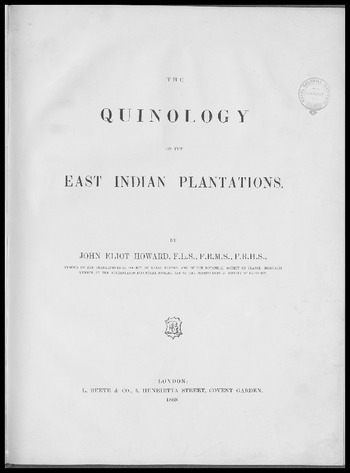
It was left to his son, John Eliot Howard, who initiated large-scale profitable manufacture of quinine on a commercial sense in the late 1850s (see Figure 1.1). By then, the Howards had advertised themselves as leading experts in England of knowledge about cinchona and its various extracts. Howard was in immediate correspondence with an elaborate network of travelling botanists from Europe who had ventured into the South American forests of Bolivia and Peru. He participated in an epistolary world of botanical knowledge production, and regularly exchanged letters and ideas with Hugh Algernon Weddell in Paris, Clements Markham in London and Hermann Karsten in Berlin.Footnote 52 In such an exclusive world the correspondents endorsed themselves as experts by referring to or citing from the works of one another.Footnote 53 In 1857, in recognition of his status as an expert on quinine he was inducted into the Linnean Society. In 1858 he purchased an entire collection of cinchona barks from Professor Pavon of Madrid. In 1862 Howard translated the professor's manuscript into English and edited a pictorial representation of his collections. He called it Illustrations of Neuva Quinologia of Pavon. It was considered amongst the most important works available on the subject in English, and this was one amongst the many books on the cinchonas that he would eventually write. Howard maintained close ties with the Royal Botanic Gardens at Kew. Neuva Quinologia of Pavon was dedicated to the then-director of the Kew Gardens, Hooker senior. Incidentally, he dedicated his subsequent work (see Figure 1.2) published in 1867, entitled The Quinology of the East Indian Plantations,Footnote 54 to Hooker's son who had by then become influential at Kew.
Photograph of a bottle of quinine bearing the label Howards and Sons, c.1860–1910.

Howard could also boast of thriving political connections. He acted as an advisor to the British Government in India for considerable lengths of time. Howard's nephew joined Howard and Sons in 1871.Footnote 55 He was the founder of Society of Chemical Industry as well as the Royal Institute of Chemistry. His son David Lloyd Howard joined the family business in 1888. He followed the footsteps of his predecessors and set up the Association of British Chemical Manufacturers, Drug and Fine Chemical Manufacturer's Association and Wholesale Drug Trade Association.Footnote 56 The successes of the family in the field of quinine manufacture and circulation can only be studied in reference to such interconnected networks amongst the worlds of chemistry, commerce and politics. Over much of the nineteenth century the Howards were recognised as amongst the leading authorities in the science of quinine manufacture in the British Empire. They were also predominant players in most of the commercial ventures involving that commodity. I will explore in Chapter 4 the ways in which this explicit nexus between pharmaceutical capital and botanical knowledge played itself out.
In the late 1850s and early 1860s, quinine began to attract the attention of colonial governments in French Algeria, Dutch Java and British India. Medical commerce and colonial rule had long shared an intimate relationship.Footnote 57 The establishment of experimental cinchona plantations at various locations in these colonies converged with attempts to write credible histories of cinchona trees. Such histories formed parts of memoirs written by officials who were associated with the transfer of cinchona seeds and plants from South America to these British, Dutch and French colonies. Clements Robert Markham's Travels in Peru and India and Gustav Planchon's Peruvian Barks are amongst the most detailed texts in this genre of writing.Footnote 58 These narratives revealed themselves as long hagiographies of quinine. Different episodes involving two centuries of European association with forests in South America were repackaged variously as stories, legends, facts, rumours and incidents associated with quinine. The ‘history’ of the Peruvian forests that emerged from such narratives effectively conveyed the impression of indispensability of cinchona barks in curing various maladies. Quinine emerged retrospectively in these narratives as the precise cause that made cinchona trees valuable. Existing anecdotes from the annals of Spanish colonisation of Latin America were retold in the mid-nineteenth century as necessary components of broader pre-histories of quinine. Even when medical science was unaware of its existence, it was suggested, patients had benefited from quinine.
‘An interval of only forty years intervened between the pacification of Peru and the discovery of its most valuable product’, Markham wrote.Footnote 59 A Jesuit priest's recovery in 1600 mentioned by J. de Jussieu at Malacotas was now attributed to the curative powers of quinine. Similarly, quinine was retrospectively recognised in the writings of Clements Markham or Gustave Planchon as the unknown agent which famously cured Don Juan Lopez de Canizares, the Spanish Corregidor of Loxa in 1630 and the wife of the Fourth Count of Chinchon at Lima in 1638. Nineteenth-century narratives rewrote the penetration of Jesuit Acuna's fraternity into the forests bordering on the upper waters of the Amazon and subsequent formation of settlements as disinterested explorations in search of quinine.Footnote 60 Different varieties of drugs attributed to the cinchona barks (i.e. salutary powder, Countess's Powder, Jesuit's Powder,Footnote 61 cinchona red, ‘sel essentiel febrifuge’)Footnote 62 were now appropriated within the expansive history of quinine. These were now recognised as imperfect and lesser versions of ‘pure, raw quinine’.Footnote 63
Quinine was also invoked to explain various contemporary political developments. Quinine was described as that medical wonder which could explain British military successes in expeditions in the Walcheren and along the river Niger, and the sustenance of troops from Peshawar to Pegu.Footnote 64 The use of quinine in earlier centuries, it was conjectured, could have ‘[change(d)] the history of the world’. Markham lamented that the ‘greatest and most patriotic of England’s rulers’ could have lived longer had the use of quinine been current: ‘Oliver Cromwell was carried off by ague’.Footnote 65 Even the death of Alexander the Great was explained in terms of the ‘want of a few doses of quinine’.Footnote 66 Such overemphasis on the glory of quinine often led to the renaming of the tree and the landscape with which it was associated. In the mid-nineteenth century cinchona trees were often referred to as ‘quinine trees’.Footnote 67 South American forests that were considered the natural home of cinchonas were designated as ‘quinine forests’.Footnote 68 The cinchona-growing provinces of South America began being mentioned as the ‘quinine region’.Footnote 69
At the same time, quinine was advertised as the cure for not only an extensive range of fevers, but also dysentery,Footnote 70 sore throat,Footnote 71 alarming head symptoms,Footnote 72 impotence,Footnote 73 and toothacheFootnote 74, amongst other conditions. In view of such prestige subsequently endowed on quinine, the accomplishments of Pelletier and his colleagues in 1820 began to be considered a moment of great discovery in the standard histories of medicine. Markham wrote, ‘This medicine, the most precious of all those known in the art of healing, is one of the greatest conquests made by man over the vegetable kingdom’.Footnote 75 The memory of the discovery of quinine in 1820 was carefully restored and magnified. To commemorate eighty years of the discovery a bronze statue of Pelletier and Caventou in their academic robes was erected in Paris in the Boulevard Saint Michel in 1900.Footnote 76 Figure 1.3 shows that Ernest Board celebrated the discovery again in the 1910s in an oil painting. Soon thereafter original samples of quinine and cinchonine attributed to Pelletier and Caventou began being displayed as a museum relic in exhibitions across London.Footnote 77 Further in 1970, a stamp was released to commemorate the 150th anniversary of the discovery of quinine.Footnote 78
Oil painting of Pelletier and Caventou discovering quinine by Ernest Board, c. 1910–20.

‘Pleasantest Episode of British Rule in India’Footnote 79
In the early 1860s, the event of discovery was invoked in many imperial narratives, which sought to justify the transfer of cinchona plants and seeds from various corners of South America towards possible destinations of colonial plantations in British India, French Algeria and Dutch Java. Published in 1862, Clements Robert Markham's Travels in Peru and India is one of the earliest and most widely cited amongst these accounts.Footnote 80 As a professional geographer, Markham was credited with having explored the forests of Peru and the frontiers of Bolivia much before the project had been conceived. In 1859, he was entrusted by the British government to lead an exploration into the interiors of the South American forests. The purpose of the expedition was to identify different species of cinchonas in their natural habitats. Seeds and plants belonging to these different varieties were then to be shipped towards the British ports in India. Markham spent most of his time exploring the forests of the Peruvian province of Caravaya. Botanists claiming almost equal experience in the region assisted Markham. Richard Spruce engaged himself in Chimborazo, Robert Cross explored New Grenada while G. J. Pritchett traversed the forests of Huanuco and Huamalies.Footnote 81 Existing works have already explored in great detail the challenges faced by them during this expedition.Footnote 82 This section closely reads from Travels in Peru and India to reveal the ways in which Markham was justifying efforts to establish cinchona plantations in British India. It argues that travel accounts like this reinforced the image of cinchonas as valuable items.
In Markham or Planchon's accounts these plants figured not only as objects of enduring botanical interest, but also as commodities which were in great demand in the 1850s. Cinchonas were described as sources of enormous revenue. For instance, Markham mentioned that from the four Bolivian ports of Arica, Islay, Payta and Guayaquil, the export of cinchona barks in 1859 amounted to around 912,900 lbs, which was valued at £59,076.Footnote 83 Such obvious commercial significance was further underscored by predictions that the world's only natural cinchona reserves (in South America) were on the verge of extinction. Markham blamed the Spanish governments in South America and the republics that succeeded them for their mismanagement of the only natural cinchona reserves in the world. These governments had allegedly failed to control an unbridled trade in cinchona barks.Footnote 84 This, he argued, had set the stage for the exhaustion of the cinchona trees. He projected the fear of the depletion of the cinchona trees altogether in view of enormous yearly exports of cinchona barks. Markham suggested that the British were not alone in their concern about the possibility of imminent extinction of the cinchona trees in their natural homeland. French, Dutch and Spanish explorers in the South American forests since the mid-eighteenth century (beginning with La Condamine, Humboldt and Ruiz) had supposedly predicted the exhaustion of cinchona trees.
Markham argued that many French, Dutch and British botanists and explorers, amongst his contemporaries, had proposed the cultivation of cinchonas in colonial plantations elsewhere as a means to protect these plants from extinction. Dr Forbes Royle, reporter on Indian Products to the East India Company, as early as 1839 in his Illustrations of Himalayan Botany, recommended the introduction of cinchona plants from South America to different parts in India.Footnote 85 Markham pointed out that similar experiments were recommended by botanists and explorers Dr Weddell, M. Delondre and M. Fee in the French colonies, particularly in Algeria in the 1840s, and that earlier amongst a host of Dutch botanists, Blume had insisted on the introduction of cinchona plants into Dutch Java.Footnote 86 Thus, Markham described the transplantation of cinchonas in the Dutch, French and British colonies as a response to a shared imperial anxiety.
The arrival of these valuable sources of quinine within a few years after the Sepoy mutiny of 1857, it was claimed, would initiate the ‘pleasantest episode of British rule in India’.Footnote 87 Cinchonas were upheld as objects which symbolised the benevolent transition of imperial power in British India from the East India Company to the Crown.Footnote 88 By being a part of the process of bringing cinchonas to India, Markham imagined himself as engaged in an everlasting service to the colonial poor in India:
Thus England will leave behind her by far the most durable monument of the benefits conferred by her rule. The canals and other works of the Moguls were in ruins before the English occupied the country; but the melons which the Emperor Baber, the founder of the Mogul dynasty, introduced into India, and which caused him to shed tears while thinking of his far-off mountain home, still flourish around Delhi and Agra. Centuries after the Ganges canal has become a ruin, and the great Vehar reservoir a dry valley, the people of India will probably have cause to bless the healing effects of the fever dispelling chinchona-trees, which will still be found on their southern mountains.Footnote 89
He suggested that the British imperial project of extracting cinchonas from the interiors of South American forests was not only justified, but also legitimate. Markham refused to view the introduction of cinchona plants from South America to South India as a radical break from the past. It appeared to be part of a longer history of continuous travel of commodities from South America and their subsequent domestication in India:
India owes to South America the aloes which line the roads in Mysore, the delicious anonas, the arnotto-tree, the sumach, the capsicums so extensively used in native curries, the pimento, the papaw, the cassava which now forms the staple food of the people of Travancore, the potato, tobacco, Indian corn, pine-apples, American cotton, and lastly, the chinchona: while the slopes of the Himalayas are enriched by tea-plantations, and the hills of Southern India are covered with rows of coffee trees.Footnote 90
At the same time, he dispelled apprehensions that the establishment of cinchona plantations in British, Dutch or French colonies would injure the cinchona trade controlled by Peru and Ecuador.Footnote 91 On the contrary, Markham argued that the setting up of the colonial plantations in distant parts of the imperial world was conceived as pedagogical measures, which would eventually benefit the South Americans themselves. Competitions with the barks produced in the Indian and Javanese plantations, he hoped, would teach them to appreciate the value of the cinchona trees more than ever before. This in turn would inspire them to carefully preserve and protect these trees in their immediate locales. Once the cinchona plantations in Java and South India bloomed, Markham envisioned, the South Americans would benefit from such experiences. Beyond the enclaves of naturally sprouted forests, Markham thought, the South Americans would then learn to grow and rear cinchonas within enclosed and manicured spaces of plantations. Therefore in the abstruse logic of colonial exchange, he eventually situated the South Americans as beneficiaries:
Hitherto they have destroyed the chinchona trees in a spirit of reckless short sightedness, and thus done more injury to their own interests than could have possibly arisen from any commercial competition; but it may be that the influence of peace and education will inaugurate a new system in time to come, that more enlightened views will prevail, and that they themselves may undertake the cultivation of a plant which is indigenous to their forests, but which up to this time they have most foolishly neglected. It will then be a pleasure to supply them with the information which will have been gained by the experience of cultivators in India, and thus to assist them in the establishment of plantations on the slopes of the eastern Andes.Footnote 92
Moreover, cinchonas were situated by Markham at the heart of an unwritten contract. He argued that the British government in India exercised a legitimate right over the cinchonas that grew in South America:
Under any circumstances the South Americans, who owe to India the staple food of millions of their people, and to the Old World most of their valuable products – wheat, barley, apples, peaches, sugar cane, the vine, rice, the olive, sheep, cattle, and horses- have no right to desire to withhold from India a product which is so essentially necessary to her welfare.Footnote 93
Representing the British Empire in South America, Markham could hardly afford to be sympathetic to the memory of Spanish colonialism. He dedicated three chapters in his Travels in Peru and India towards detailing the exploitative aspects of Spanish rule.Footnote 94 Markham claimed to read the minds of the Peruvian Indians better than their immediate or erstwhile rulers. He suggested that the Peruvians had communicated to him their will ‘to promote a friendly interchange of the products of the New and Old worlds’.Footnote 95 He explained that the many acts of resistance to these British, French and Dutch ventures were results of shrewd instigations engineered by short-sighted, local officials:
The foolish decree issued in Ecuador on the 1st of May, 1861, as well as the numerous obstructions thrown in my way in southern Peru, may be imputed either to the narrow minded selfishness of half educated officials; or to the ignorant patriotism of backwoodsmen. These are feelings that are not shared by either the educated few, or by the Indian population.Footnote 96
As an object of circulation, cinchona plants performed considerable commercial, epistemological and ideological functions for the British Empire in India in the late 1850s and early 1860s. In the memoirs of imperial handlers like Markham, these plants figured as what Harold Cook calls a ‘matter of exchange’, which South Americans could share with the wider imperial world in return for necessities, knowledge and goodwill.Footnote 97
Distant and Delicate
Travel memoirs, bureaucratic reports, sketches and paintings were amongst the sites where the journey of the cinchonas from South America to various parts of British India was narrated. These narratives entwined intimate descriptions of the fragile physicality of these plants with ceaseless suggestions about their exalted status as valuable commodities in British India. Detailed accounts of the hardships involved in transporting a delicate plant from a distant part of the world tended to underscore the exotic value of the cinchonas. To that extent, cinchonas were hardly exceptional amongst attention-seeking commodities in nineteenth-century British India. Drugs that were preferred as reliable in the official files were often projected as exotic items. Such items were shown to bear strains of travel from distant places. Colonial officials often reported on ‘local medicines’ circulating in the interior bazaars of India. These reports claimed that because these drugs remained confined within the immediate locality, the charm associated with them was often depreciated by quotidian access. Easy rejections of these conveniently accessible drugs were based on the claim that their uselessness had been revealed or exposed.Footnote 98 In contrast, drugs that were advertised as exotic confidently carried with them the untested promise of offering more effective cure. One of the most common tropes in Bengali medical advertisements in the 1850s, for instance, involved stating the names of distant places from where certain drugs were imported. Such advertisements even mentioned the names of the ships and vessels that carried them into British Indian ports. The value of drugs was often asserted by hinting at the journeys they had undertaken.Footnote 99
Similarly, the distant origins of cinchonas were recurrently reemphasised in course of the second half of the century. Increasing circulation across British Empire of sketches of the interiors of cinchona forests (see Figure 1.4) and maps of the extensive ‘cinchona region’ in South America converged with descriptions by geographers like Markham of various stages of the long, and often perilous journey which the plants underwent.Footnote 100
…When the unprecedented length of the voyages and the numerous trans-shipments are taken into consideration, the wonder is that any of the plants should have been successfully conveyed from the slopes of the Andes in South America to the Ghats in Southern India, over thousands of miles, through every variety of climate, subject to the risk of crossing the isthmus of Panama, of changing steamers at the island of St Thomas, at Southampton, at Suez, and at Bombay, and of the journey through Egypt…The most important introduction of plants into India…Footnote 101
Wood-engraving by Charles Laplante, c. 1867.

Such narratives of global travel revealed the cinchonas as invaluable and mortal. The physical stresses suffered by these plants in circulation were elaborated rather than concealed. The transformation of these cinchonas’ corporeal properties during transit upheld them as lively, responsive, sensitive organisms and not as eternally stable and vacuous objects. These travelling cinchonas were ascribed various anthropomorphic features in the official files: they often died, but when they didn't die, they lived; even if they barely survived, got injured, turned sickly and got their identities messed up.Footnote 102 At the same time, these hostilities encountered by the plants were indicative of the length of the difficult journey. For instance, Mr Pritchett, an agent engaged by Markham, had transmitted a ‘valuable assortment of seeds’, consisting of varieties denominated as cinchona micrantha, cinchona nitida and cinchona peruviana from Lima to Bombay. It was reported that the seeds had to wait at Lima for six weeks and at Bombay for another twenty-seven days, and in the process lost some of their vital properties. D. Macpherson, the Inspector General of Hospitals, on special duty at Ootacamund found it difficult to distinguish between them.Footnote 103
The reports conveyed a sense of precision involving the meagre numbers of plants that survived the journey. Such frequent reference to numbers reinforced the impression that cinchonas were not only therapeutically invaluable but also numerically rare and exotic items in British India. It was reported, for instance, that only 400 plants belonging to the Cinchona Calisaya species collected by Markham in South America made it to Ootacamund in South India. Even these died shortly thereafter. Amongst the first batch of plants and seeds shipped from South America by collectors Cross and Spruce only 463 of the Succirubra species and six belonging to the Calisaya species survived the journey and reached Ootacamund on 9 April 1861.Footnote 104 These indicated that plants which had shown extraordinary resilience to survive the vagaries of the journey were noteworthy, rare and valuable commodities, and commanded careful attention. Thus, the value of cinchonas seems to have been aggravated by awareness of the distance which they were made to traverse. The impression about the indispensability of the cinchonas in British India was produced and reconfirmed by the desperation of the government to access these plants despite such numerous difficulties.
Besides, the firmer recognition of cinchona in the official records as a valuable commodity was also closely linked to its feminisation. The ascription of feminine attributes to these plants was not restricted to William Dawson Hooker's description of the cinchonas as ‘the fairest of Peruvian maids’,Footnote 105 or to the designation of carefully showcased cinchona barks on display in London exhibitions as beautiful.Footnote 106 In bureaucratic correspondence they were often projected as delicate plants. This was the most recurrent trope to reinforce the femininity of the cinchonas. The value of cinchonas was reinforced by its representation as a delicate item. The word delicate could have multiple connotations: fragile and subtle; vulnerable and graceful. Thomas Anderson, the then Superintendent of the Botanic Gardens at Calcutta, for instance, seems to have had knowledge ‘of the difficulties attending the transporting of so delicate plants by long sea voyages and especially of the trying journey in the Red Sea [emphasis mine]’.Footnote 107 However, the cinchonas could as well display their delicate character whilst in transit through more tranquil waters. The image of cinchona as a delicate plant survived till the late 1860s. Captain W. J. Seaton, Conservator of forests, British Burma, informed: ‘A fresh batch of plants was received from Ootacamund, and the glasses, in crossing, were again broken and the plants killed…finally 12 only reached Tounghoo alive, most of them having been killed by over watering on the way up the Sittang river…Eight were at last planted in Bogalay [emphasis mine]’.Footnote 108 In view of the ‘delicate’ nature of cinchona plants, Anderson had prescribed strict instructions for carrying them during inland transit. ‘Each case requires eight men. It is of greatest importance that the plants should not be shaken in the transport, nor should be exposed to the sun [emphasis mine]’.Footnote 109 The delicate features of these plants were underscored by projecting them as ‘sensible’ to variations of temperature and altitude. ‘They are extremely sensible to a greater or lesser degree of heat, humidity, shade etc so that the slightest departure from the mean of these influences (for example, a height more or less elevated by 500 feet) exercises a visible influence on the condition of trees, and this sensibility varies with each species of the Cinchona [emphasis mine]’.Footnote 110
Cinchonas were designated as feminine plants, which required careful handling by imperial men almost at every step. The imperial gestures of possessing, rescuing, collecting, protecting, transporting and receiving cinchona plants, it was suggested, were chivalrous and masculine. The imperial projection of cinchonas as invaluable commodities was sustained and invigorated by the recurrent description of the physicality of these plants as distant, rare and delicate in myriad sources. The circulation of this ‘Peruvian maid’ to distant corners of the colonial world was advertised as an accomplishment more glorious than even the introduction of tea from China into India in 1849.
Geographies of Plantations: Anderson in Java
The imagining of cinchonas as rare and valuable was not restricted to narratives describing the journeys of these plants from South America to British India. Bags containing cinchona seeds and plants reached South India from different ports in Peru, Bolivia, Ecuador or New Grenada by the early 1860s.The construing of the physicality of cinchonas as distant, sensitive and delicate persisted through the course of the 1860s. The enduring impression that these exotic mortals survived only in certain specific geographical situations meant that they could not be planted just anywhere in British India. The selection of suitable sites for the cinchona plantations was a long, complex and contested process. It preoccupied botanical debates, bureaucratic travels and plantation experiments over much of the decade. Such elaborate efforts to ‘maintain’Footnote 111 cinchonas in British India conveyed the impression that these plants were not only fragile, but also invaluable.
The issue of where cinchona plantations could be established in British India became a contested topic. Thomas Anderson, the Superintendent of the Botanic Gardens in Calcutta, in an early official correspondence drafted in 1859, tended diligently to conform to the opinions of best known explorer-botanists in India who had visited the cinchona forests in South America.Footnote 112 This led to the search for localities in India that could be thought to resemble the landscapes and climates where cinchonas were ‘indigenous’. This was preceded by two puzzling questions. The one asked what the climates prevalent in the natural cinchona forests were like, and the other, how could the landscape that was supposed to support such forests be accurately described.
The opinions of botanists, explorers and agents who had visited the natural cinchona forests in South America were solicited. The perceived delicate physicality of the cinchonas, in turn, conferred on Markham, Cross, Spruce, Pritchett unforeseen authority. Their roles did not end with despatching different varieties of cinchona plants and seeds to India. Instead, their status graduated from bearers of seeds and plants to custodians of knowledge about the cinchonas in British India. They were entrusted with locating sites in British India, which apparently resembled South American forests closest. In this process, Markham emerged as one of the most influential figures associated with cinchona planting endeavours in South India in the 1860s. Markham's travel accounts bore elaborate justifications for selecting certain locations in the Madras presidency as suitable for the survival of the cinchonas.
Meanwhile cinchonas continued to acquire newer sets of authorities. The expertise of explorers like Markham in the geographies of cinchonas was effectively contested since Thomas Anderson's return from his deputation to Java in February 1862. It began as a clash over authority between explorers who had known the cinchonas in the ‘natural forests’ of South America and officials who were aware of the conditions in which artificial plantations in Dutch Java thrived. In 1862, Dutch Java was the only place in the world, other than South America, where cinchonas grew. Only in Dutch Java were cinchonas cultivated in plantations. In successive reports, Anderson revised his earlier opinions, emphasising the relevance of lessons acquired in the cinchona plantations in Java in deciding upon suitable sites in British India. Anderson was one of the very few British officials deputed to visit Java, and he underscored the relevance of this precious experience in determining the possible locations of plantations in British India.Footnote 113
Anderson reported that as early as 1862 about 8000 plants of Cinchona Calisaya and more than half a million plants of the species Cinchona Pahudiana were already thriving in the Javanese plantations. He further noted that some of those, which had been planted five or six years earlier, had already grown up to acquire a height of about 25 or 30 feet. The successes witnessed in these plantations were explained in terms of the exceptional characteristics of Javanese landscape and climate. In his travel account, the cinchonas reappeared as a valuable breed of plants because the terrain that housed the plantations in Java was relatively rare. Anderson's journeys in search of the cinchona plantations in Java brought him to the foothills of volcanoes, and his narrative showed his experience of the interiors of Java as an engagement with an active landscape. While travelling between plantations he appeared to be moving from one volcanic site to another.Footnote 114
The causes behind the proliferation of cinchona trees in Java, Anderson suggested, was inherent in the natural history of the region. The ‘meteorology, botany and geology’ of the Javanese mountains seems to have been characterised by strange blends. Such features appeared distant and different from Anderson's familiar world. These rare enmeshes, it was claimed, were typical of the regions where the cinchonas survived. The rarity of such regions in British India, it was suggested, made cinchonas a precious group of plants.
Anderson pointed out that the principal plantations were located on the Kendeng and Malabar range of mountains in the southern portion of the islands in the vicinities of the plateau of Bangdong. The altitude of such mountains varied from 2000 to 7000 feet above the sea. He found the landscape equally conducive for the sustenance of dense ‘natural forests’ and plantations. The ‘natural’ and the ‘agricultural’ conveniently merged to constitute the surrounding vegetations. Gigantic trees, typical of the Malayan archipelago, formed the bulk of the vegetations of these forests. Anderson thought that such trees were often 150 or 180 feet high. He found that ‘beautiful and extensive coffee plantations’ and craters of active volcanoes frequently broke continuities of these dense forests. Anderson noted that as he ascended along the plantations ‘through the dripping forests’, the eclectic features of the existing vegetations struck him. Tropical forms of trees appeared to intimately mingle with the temperate species like the rhododendrons. Trees ascribed to the American genus Gaylussacia and those apparently belonging to the Himalayan genus Astilbe appeared to closely coexist with ‘gregarious volcanic plants’.
Anderson noted that such curious blends could also be witnessed in the weather prevalent usually in the cinchona plantations of Java. Anderson found them similar to what Karsten had written about the Andes or the way Mr Pritchett described the forests of Huanaco. ‘At one moment, a raging tempest of rain and wind; at another, the calm, tranquil, laden atmosphere of chilling cloud and fog…’ ‘The misty regions of the Andes, where…constant rain is interrupted in the day by interchanging sun rays and fog clouds…’. It appears from Anderson's account that the weather prevalent in the Javanese plantations witnessed a constant interplay of light and shade: frequent rainfall, interrupted by dazzling beams of sunlight, followed once again by steady formations of gloomy clouds. The weather compatible with the sustenance of the cinchonas in the plantations, according to Anderson's engaging narrative, revealed such rigidly repetitive patterns.Footnote 115
In the travel narratives of this British Superintendent of the Botanic Gardens in Calcutta, Javanese cinchona plantations thrived on a landscape which bore the scars of numerous volcanoes. It was represented as a rare region where apparently contradictory features in weather and vegetations could conveniently coexist. These features, he claimed, conformed to his readings of what botanists and explorers wrote about the ‘natural cinchona forests’ in South America. Anderson attributed the successes of the cinchona plantations in Java to these exceptional features in its landscape. Anderson's narrative suggested that the cinchonas were not merely a distant and delicate group of plants. The landscape, the weather and surrounding vegetation, which sustained their survival, would be difficult to locate in British India. In the relative absence of such geographic characters, Anderson sounded uncertain about the prospect of cultivating cinchona in British India:
There can be no doubt that, on the whole, there will be greater difficulties to contend with introducing Cinchona into India than have been experienced by the Dutch in Java. Dense forests possessing a moist climate do not occur extensively in South India at elevations from 3000 to 6500 feet high, which may be taken roughly as the two extremes at which the cultivation of the species of Cinchona would be most successful.Footnote 116
Tours of Ambition
Thus, on his return from Dutch Java, Anderson questioned the selection of Dodabetta and Neddivattum as sites for cultivating cinchonas in the Nilgiris in South India by Markham and his associates. Anderson argued that these selections followed neither the lessons learnt from the ‘natural cinchona forests’ in South America nor the plantations in Dutch Java. Opinions varied as to what were the ideal conditions for cinchonas to thrive. Anderson's understandings often clashed with those of Markham, Spruce or Cross, and he emphasised the relevance of the knowledge learnt from Java over the experiences of those others. Anderson considered, for instance, the practice initiated by Markham of planting the cinchonas in the open, without any form of shade to guard them from the scorching rays of the sun, unacceptable. He confirmed from the writings of travellers into South America like Weddell and Karsten as well as the experiences of the Dutch in Java that cinchona plants only survived when they were accommodated within an existing ‘natural forest’. At Neddivattam, Markham had instructed the clearance of 50 acres of forest from trees to plant cinchonas without shade. Thus, Markham was about to deprive Neddivattam, feared Anderson, of one of the essential conditions for the survival of the cinchonas, that is, continuous luxuriant vegetation.Footnote 117
Anderson argued that the selection of Dodabetta and Neddivattum as sites for plantations were based on ‘a very erroneous idea of climate’. Unlike South American cinchona forests or the Javanese plantations, the vegetation in the Nilgiris, Anderson thought, suffered from long continued droughts. Here, Anderson missed the large luxuriant sections of Dendrobium, Cymbidium and Vanda, as well as the perennial terrestrial orchids of the moist Java forests. He found the climate in Dodabetta and Nedivattam ‘too dry’ in comparison to the data furnished by Markham himself on the Caravayan forests in South America. The altitudes of the selected sites, noted Anderson, were much higher than what suited these plants. He alleged that the site selected for planting Cinchona Calisaya at Ootacammund by Markham was 1500 feet above the highest elevation at which that species survived in Bolivia, and 2000 feet above the highest limit at which it had been possible to cultivate it in Java.
Anderson's prediction about the fate of those plants was precise: ‘The young plants will most certainly be lost’.Footnote 118 Similarly, he pointed out that plants belonging to the Succirubra species at the government garden at Ootacamund turned ‘sickly’. Those were planted ‘at least 2500 feet above their highest limit’, he reasoned.Footnote 119 Anderson argued that exposure to adverse climatic conditions were reflected in the poor health of these plants. It was suggested that in comparison to the plants grown in Java, the South Indian cinchonas suffered from a lack of vitality. After having received a group of cinchona plants each from Java and Ootacamund in Calcutta in August 1862, Anderson wrote:
Out of fifty nine plants obtained from Java only one death occurred, while of the 170 plants from Ootacamund no less than thirty were completely lost. This difference in the healthiness of the plants from the two places becomes more striking when it is known that the plants from Java were brought by Coolies from the mountains in the interior of the Island to Batavia and thence by steamer to Calcutta; while those from Ootacamund were transported in twelve hours by Railway over most of the land journey, and the Sea voyage only lasted three days. The plants from Java were in addition exposed for two months longer than the others to the confinement of small pots and wardian cases as they arrived in Calcutta two months before them…Footnote 120
Thus, Anderson's enchantment with cinchonas was, yet again, founded on the invocation of the delicate physicality of these plants. The puzzlement with locating suitable sites for rearing cinchonas in British India augmented them not only as an exclusive group of plants, but also as sensitive and living bodies which survived only in specific geographical conditions. The incorporation of the cinchonas within the colonial plantation economy, Anderson implied, was an intimately corporeal experience for these plants. As in the case of displaced indentured labourers, Indian soldiers in the British Indian army, or European colonisers, efforts to acclimatise cinchonas in an alien landscape was informed by concerns of preventing deaths and sickness, and ensuring ‘healthiness’ and productivity. I will continue to explore in the following section how mystification of cinchonas persisted with attempts to assist these plants to survive in an unfamiliar landscape.
Anderson's scathing remarks regarding the efforts of Markham performed other functions. Such acts of contrasting the climates and landscapes of South India with Java and South America were not disinterested exercises in comparative geography or a selfless clash of botanical opinions. It also reflected a clash of ambitions in a struggle over whose expertise was best suited to the management of the cinchonas in British India.Footnote 121 Thus, cinchonas revealed tensions within the botanical establishment in British India.
Anderson's remarks were carefully framed towards contesting Markham's claims as the leading authority of knowledge about the cinchonas in British India. Dr Junghuhn was the Principal Inspector of the cinchona cultivation at Dutch Java. In view of the highly advertised successes in the Javanese plantations, he had begun to command enormous prestige in the world of knowledge about the cinchonas. He wrote the following letter in support of Anderson's abilities. Anderson attached excerpts from this letter ahead of the detailed account of his trip of Java.
…Dr Anderson,…now understands the climate and the character of the forests in which the Cinchonas at Java grow in great fertility;…is acquainted more than any other person in British India with all the peculiarities of our method of cultivating and transplanting the Quinine trees in the forests, and…in consequence possesses all the necessary qualifications for the superintendence and general direction of the Quinine culture in British India.Footnote 122
In response, Spruce, one of Markham's associates in South America wrote from Guayaquil in 1862 defending the latter. He implicitly alleged Anderson for his ignorance of the ‘native conditions’ that reared the cinchonas in South America.
…Mr Markham's notions on the cultivation of Cinchonae entirely coincide with my own…If some empiric who has never seen the Cinchonae in their native country, has sufficient influence to inform the Indian government to attempt to cultivate Cinchona plants accordingly then let him be responsible for the result…Footnote 123
Hetero-Genus: Cinchona ‘Experiments’ in British India
Published in the same year, Markham's Travels in Peru and India was much less polemical. He was more interested in the eclectic facets of the landscapes through which he travelled in and around the Nilgiris. Each new spot in the Nilgiris reminded him of different places he had encountered during his extensive travels as an explorer. As he travelled from the port at Calicut towards Ootacamund he felt that ‘the whole scene bore a close resemblance to one of Sandwich or Society Islands’.Footnote 124 Further into the interior, rows of betel nut plants reminded Markham of palm trees on familiar settings in ‘the South Sea Islands or the forests of South America’.Footnote 125 On reaching Dawson's hotel at Ootacamund he found it difficult to persuade himself that he was ‘not again in England’. The hotel was located amidst gardens and plantations of Eucalyptus, with trees introduced from Australia around them.Footnote 126 However, such ‘English associations’ faded as he walked merely a few miles away from Ootacamund. Instead, ‘there was much’ that made him feel that he had returned amongst the Pajonales in the ‘Chinchona region of Caravaya’.Footnote 127
Bureaucratic exoticisation of cinchonas in British India converged with the realpolitik of plantations. In the process, the cultivation of cinchonas was projected as both difficult and yet plausible. Cinchona plants figured in the official files as both alien and yet increasingly adaptable in British Indian landscapes. Material properties of cinchonas as well as the textures of certain landscapes appeared suitably malleable.
In Markham's writings the Nilgiris figured as a landscape with myriad facets and possibilities, which the European investor could intervene and mould at his will. He mentioned that with the aid of ‘an East Indian foreman and labourers from the Mysore plains’, William G. McIvor, the Superintendent of the Botanic Gardens at Ootacammud, had converted ‘the wild mountain sides into a beautiful public garden’, consisting of English fruits, flowers, vegetables and grasses.Footnote 128 Similarly, Markham indicated how several extensive European estates of coffee had emerged near Coonoor. He therefore found no reason to doubt that the ‘English capitalist would make large and rapid profits’ by cultivating cinchonas in the Nilgiris.Footnote 129
Such hope converged with attempts to characterise the cinchonas as a widely heterogeneous family of plants. It has already been shown how official narratives presented the cinchonas as delicate plants. They were shown to grow in climates that were relatively unfamiliar to British officials in India. These plants appeared as rare and exotic in India. Such projections added to the aura associated with them. At the same time, officials continued to explore the possibility of cultivating cinchonas in British India. To that end, cinchonas figured as a botanical genus that comprised of different varieties of species, which survived in diverse conditions. Such understandings questioned the apparent rigidities within certain prevalent geographies of cinchona.
Official files mentioned at least twenty different varieties of cinchonas.Footnote 130 Basic physical attributes were supposed to vary extensively amongst the different species of cinchonas. Thomas Anderson was delighted to note the ‘profusion of flowers’ in certain varieties of cinchonas. He was, however, amazed by the absence of flowers in some others.Footnote 131 J. Broughton, the Government Quinologist at Ootacamund, pointed out a few years later that the vigour of growth, size of trees and content of quinine varied in the different varieties of cinchonas, adding that such qualities might manifest differently within the same species when exposed to different conditions.Footnote 132
In official correspondence, such inherent diversities were frequently invoked. This enabled officials to assert that different varieties of these plants thrived in an extensive range of climatic conditions.Footnote 133 There could hardly, then, be any specific locality in British India that could rear every variety of cinchonas within the shared space of a single plantation. However, different localities in British India, it was hoped, might prove suitable for the survival of different species of cinchona. The difficult task confronting the officials was to suggest comfortable localities for every species considered rich in quinine.
A report was solicited in September 1859 from W. Jameson, the Superintendent of the Botanic Gardens, North Western Provinces, on the ‘best localities for cultivating cinchonas in North Western Provinces’. He recommended a range of different sites suitable for each variety of cinchona.Footnote 134 Anderson was also drawn into these discussions and speculated on possible sites for different varieties:
There is an abundance of localities obtainable in the Neilgherries for the cultivation of the less temperate species of Cinchona, such as C Succirubra, C Calisaya, and probably C Nidita and Peruviana, as well as C Pahudiana. For the temperate species of which we now possess C Micrantha and C Lancifolia,…C Peruviana…that will almost withstand a slight fall of snow, we must look for a proper home in the moist region of Darjeeling and the damp deep inner valleys of Eastern Kumaon.Footnote 135
Such confident and precise recommendations were often followed by cautious caveats. Once again, various ‘idiosyncrasies’Footnote 136 of the material life of these plants were elaborated to suggest how the sustenance of cinchona plants in British India continued to be both plausible and difficult. Various reasons were extended to explain why the identification of suitable sites for cultivating different species of cinchonas in British India remained arduous. First, knowledge about the physical characteristics of different varieties of cinchonas was shown as far from clear. It made the search for suitable localities appear as difficult. For example, D. Macpherson, the Inspector General of Hospitals, Madras Presidency, was amazed by the striking differences amongst ‘authorities’ and ‘best informed writers’ regarding the altitude where the species Josephiana thrived.Footnote 137 The cinchona trees were described as extremely sensitive to changes in altitude. An error of 500 feet could have had an adverse impact on the health of the trees.Footnote 138 Such varied understandings of the altitude conducive to the survival of these plants, Macpherson predicted, would make the search for suitable sites in India prolonged and difficult. Secondly, these converged with considerable confusions involving the precise identities of the seeds and plants that were transmitted to British India. Such confusions were manifested in official accounts in different ways. Superintendents of different botanical gardens in India or Ceylon tended to doubt the projected identities of certain varieties of cinchonas they received. It appears from the official correspondence that different species of cinchonas were not always absolutely rigid, inflexible categories. Instead, these appeared more as subjective labels. The identities of different varieties of cinchonas could often be a subject of debate amongst contending officials.Footnote 139 Thirdly, it was suggested that the ‘vital properties’ of seeds and plants were often lost in transit. This was mainly caused by unexpected delays during the long journey from South America. As principal distinguishing features became obscured by these changes, the identities of different groups of seeds in bags or Wardian cases often blurred.Footnote 140 Finally, careless receiving officers in the Calcutta or Bombay ports were often warned against ignoring labels and mixing up different species of cinchonas together. These made the selection of suitable sites difficult as ‘the locality that suits one species may be quite unfitted for another’.Footnote 141
Government files therefore predicted inevitable delays in the selection of suitable sites for cinchona plantations. It was proposed that the planting of every variety would be tried in different locations.Footnote 142 Sites, which were found unsuitable for most species would be discarded, and the trials would shift to another location. These trials would be pursued until the most suitable sites for the different species of cinchonas were identified. These efforts to locate ‘suitable spots’ for cultivating different varieties of cinchonas in the 1860s were shown to constitute a series of ‘experiments’. As part of these experiments (see Figure 1.5), Anderson suggested the ‘immediate establishment of nurseries on all the mountain ranges…where large tracts of forests are available, such as the Khasia hills, Eastern Himalayas, the mountains extending from Chittagong down to the Malayan peninsula’.Footnote 143 He got sheds erected at three different altitudes in Darjeeling.
Sheds have been erected at the plantation at three different heights, at 3743, 2500 and 1760 feet above the sea. In these I have placed a considerable number of all species i.e. Succirubra 100, Officinalis 100, Micrantha 50, Calisaya 2, Pahudiana 21; a total of 273 plants…They will afford at the same time some data concerning the comparative rate of growth of the species at different altitudes.Footnote 144
Photograph of a cinchona nursery at Munsong in British Sikkim set up a few decades later.

In British Sikkim as well as the Nilgiris several sites were chosen and then discarded in the early 1860s. In search of compatible altitude, temperature, humidity, shade and vegetation, the ‘experiment’ travelled from Sinchan in British Sikkim to neighbouring Sinchal. ‘Cold of the winter’ enforced a shift from Sinchal to Lebong.Footnote 145 The plantations further moved to a more ‘suitable spot’ on the ‘south eastern slopes of a long spur from Sinchal’ in June 1864. It was called Rungbee.Footnote 146 Anderson and his colleagues kept exploring newer locations for the experiment in eastern and northeastern British India. Similar experiments were organised in the Nilgiris. The search for suitable sites began almost simultaneously in Dodabetta, Neddivattam, Avalanche, Mercara, Annamalai and Coorg forests.Footnote 147 Markham proposed similar ‘trials and experimental cultivation’ of cinchonas in Mahabaleshwar, the ‘high hills east of Goa’, Wynaad, the Shervaroys and ‘mountains between Tinnevelly and Travancore’.Footnote 148
Officials cautioned that such elaborate and widespread trials might involve a considerable length of time. Possible setbacks or definite delays figured in official reports as predictable and necessary costs of a long and difficult experiment. Thus, possible setbacks or delays could now appear as imminent and even necessary. These were foreseen as useful revelations in a long-standing scientific trial. These experiments, it was hoped, would be followed by more sustained and confident investments in the plantation of cinchonas; culminating eventually in the establishment of factories for the manufacture of quinine. Macpherson predicted that the project would require seven more years before it began to yield ‘remunerative returns’.Footnote 149 In 1862, Anderson referred to his conversations with the Dutch managers of the cinchona plantations in Java. They were not expecting ‘to obtain quinine in its full proportion until trees have acquired their full development in thickness as well as stature. That will not be attained under 40 or 50 years…’.Footnote 150
Thus, profitable re-colonisation of cinchonas in British India, not unlike the journey of these plants from South America, was foretold as a very long and tedious process. Such elaborate arrangements to govern and make sense of the cinchonas seem to have reconfirmed them as distant, delicate and difficult plants. The enigma about these recalcitrant plants was further magnified by the setting up of similar ‘experimental trials and cultivation’ not only in the Nilgiris, but also in various sites across the British Empire including Peradenia and Nuwera Ellia in Ceylon, Sikkim, Bhutan and Khasia Hills in the Eastern Himalayas, Yoonzaleen Hills in British Pegu and various spots in Trinidad and Jamaica.Footnote 151
‘Indian Plantations’
Experimental plantations also emerged as sites for the relative profanation of cinchonas. Here, through the everyday acts of handling, trenching, planting, carrying, shedding, enclosing, discarding and replacing them, the cinchonas gradually became more mundane in the mid-1860s.Footnote 152 Private investments in cinchona experiments began in 1862 in CeylonFootnote 153 and extended subsequently to Kangra valley, Assam,Footnote 154 DarjeelingFootnote 155 and Malabar.Footnote 156 The supposedly exclusive status of cinchonas was compromised when in the private estates these thrived in the intimate company of tea, teak and coffee plants.Footnote 157
Besides, expediencies of private planters revised the geographies of certain species of cinchonas. These plants (see Figure 1.6), it was now argued, could survive in more eclectic geographical conditions than it was previously assumed. Private experiments examined, for example, whether cinchonas could be accommodated within previously acquired tea estates. In such cases geographies of cinchonas began to follow the set trajectories of existing tea plantations. In contrast with conventional wisdom, which had set the ideal habitat of Cinchona Succirubra plants at altitudes varying from 2000 to 3000 feet, it was suggested that this species could thrive, as well, along with tea plants on the private Selim Tea Estate at the foot of the Terai hills in North Bengal at an altitude of 350 feet above the level of sea.Footnote 158 Thus, when confronted with the realpolitik of private plantations the physical attributes of the cinchonas began to surface as much more flexible. By managing to survive in diverse geographical terrains these plants exposed themselves as less delicate and more robust than previously imagined.
Photograph of a cinchona tree in British Ceylon, 1882.

At the same time, greater numbers of colonial officials were asserting themselves as spokespersons and experts of cinchonas. By the early 1870s, it was acknowledged on behalf of the government in British India that the phase of ‘fair, patient, attentive and prolonged trials’ was over.Footnote 159 Already in the mid-1860s government cinchona plantations had been set up at Rungbee (later renamed as Mungpoo) in British Sikkim and at various sites in the Nilgiris including Dodabetta, Neddivattam and Malkoondah. C. B. Clarke, who succeeded Anderson as the Superintendent of the Botanic Gardens in Calcutta and In-Charge of the Cinchona Cultivation in Bengal as well as his counterpart in Ootacamund, W. G. McIvor, asserted that these emerging ‘Indian plantations’Footnote 160 were sites where newer knowledge about the cinchonas was being produced. The establishment of cinchona plantations in globally dispersed sites across various European colonies had diversified the prevalent geographies of these plants. These officials rejected the tendency to describe cinchonas in general or universal terms. Instead, they insisted that knowledge about cinchonas should incorporate the specific experiences of the managers of these colonial plantations.
Whether debating the appropriate techniques or suitable altitudes for planting cinchonas, Clarke or McIvor claimed to correct or add nuance to the existing insights of established botanists like Howard, Hooker or Junghuhn.Footnote 161 Clarke and McIvor alleged that these existing authorities from their distant locations in London, The Hague or Dutch Java could not have immediate exposure to the specific vagaries experienced in the ‘Indian plantations’. These managers of the emerging plantations in British India contested some of their generalisations about cinchonas. For instance, Clarke wrote an engaging review of Howard's second major book about the cinchonas, The Quinology of East Indian Plantations in 1870. Clarke criticised Howard's ignorance of the conditions in which cinchonas thrived in Bengal, while questioning his speculations about the most suitable altitudes in which these plants could survive.
The conclusions, though stated as general do not in many important points hold as good as regards the Bengal plantations…Howard opens the discussion of the proper elevation at which to grow Cinchonas in India in these words: ‘Recent observations on this point may save the apparently useless attempt to cultivate these plants at a level below 4000 feet above the ocean’, Upon this I remark that the whole of the 1,000,000 plants of C Succirubra at Rungbee are below that level. The species appears to thrive best at about 2000 feet elevation, and grows very well down to the river at 800 feet elevation.Footnote 162
Thus, Indian plantations did not witness the straightforward application of instructions conveyed from the distant ‘centres of calculation’ in Europe or Dutch Java. Instead, these were emerging as sites where conventional wisdom about cinchonas could be reexamined, and where newer claims to knowledge about cinchonas could be asserted. Unsurprisingly, experiences derived by managers in these colonial plantations soon formed the basis of a series of books on the art of cultivating cinchonas.Footnote 163
By the late 1860s, ‘Indian plantations’ began to feature as new destinations for training future managers of neighbouring plantations. When cinchona experiments were about to be initiated in British Burma in 1868, officials who required training like the Conservator of Forests in Burma, Captain W. J. Seaton, were not made to travel to distant ‘natural’ cinchona forests in South America or the plantations in Dutch Java. Instead, Seaton was deputed to the South Indian plantations in Ootacamund and the Nellumboor Teak plantations in Malabar for receiving training and acquiring knowledge in the art of managing cinchonas.Footnote 164
‘A Botanical Curiosity’
Thus various cultures of plantations from the mid-1860s hinted at the gradual transformation of cinchonas into more tameable, accessible and everyday objects in British India. Still, the predominant image of the plants as invaluable rarities persisted. Cinchonas were constructed not only as objects of botanical knowledge and plantation capital, but also as materials which could arouse and sustain curiosities across an expansive imperial world. In course of the decade and beyond, these plants found themselves empowered to reinforce various imperial protocols, processes, desires and hierarchies.
Cinchonas were amongst the few objects which bound up the distant corners of the British Empire into a globally interconnected political entity. Cinchonas brought officials in British India into immediate contact with counterparts in other parts of the Empire. As we will see, the journeys of British officials posted in Burma like Captain Seaton were not exceptional events. Cinchonas necessitated correspondence between Anderson, the Superintendent of Botanic Gardens in Calcutta, McIvor, the Superintendent of the Botanic Gardens in Ootacamund in the Nilgiri hills, Mr Thwaites, the Director of the Royal Botanic Gardens of Peradenia, Dr Brandis, the Conservator of Forests in Pegu, and Mr N. Wilson, the Superintendent of the Botanic Gardens in Jamaica. Discussions concerning techniques of managing cinchonas were often followed by exchanges of plants as well as officials located at different sites.Footnote 165 In a letter Anderson thanked the Director of the Royal Botanical Gardens at Kew, William Hooker, for nominating Gustav Mann as the head gardener in charge of the cinchona experiments in Darjeeling. ‘Mann had just returned from the West Coast of Africa, where he had greatly distinguished himself in the capacity of Government Botanist…’.Footnote 166 These routine interactions between personnel inhabiting dispersed locations and disparate contexts were amongst the many ways the British Empire was crystallised not only as an ideological configuration, but also as an extensive machinery of governmental enactments.
At the same time, these exchanges were not confined within the British Empire. Figure 1.7 and Figure 1.8 indicate that cinchonas also figured as objects of exchange between empires. Such exchanges could take either the form of gifts or collaborations. In the early 1860s, different colonial governments exchanged cinchona seeds and plants as gifts. Cinchonas began to feature as valuable plants that symbolised good will. In the early 1860s, the English government reportedly placed up to 800 plants at the disposal of the French Governor General in Algeria.Footnote 167 Again in June 1866, a consignment of many thousands of cinchona seeds was despatched by the Madras Government to be sown in Mexico.Footnote 168 Similarly, the Dutch Government in Java presented cinchona seeds and plants to British India in different moments in the 1860s.Footnote 169 The Governor General of Dutch Java, for instance, wrote to the Governor General of British India from Buitenzorg in June 1861: ‘…The successful issue of the cultivation of the Peruvian bark in the Island of Java enables me to place at the disposal of the British Government 500,000 seeds, about 100 or 200 seedlings of the Chinchona Encumaefolia, and from 50 to 100 plants of the Chinchona Calisaya…’.Footnote 170 In April 1865, the Botanical Gardens in Calcutta was reported to have received an assortment of 200 seeds belonging to the Cinchona Calisaya variety from Dr Junghuhn, the Principal Inspector of the cinchona cultivation at Dutch Java. Anderson revealed a brief history of those seeds; the seeds were produced in Java in one of the cinchona trees Junghuhn had brought from the Botanic Gardens in Leiden. Those trees, it was claimed, had been raised from seeds presented to the Dutch Government in the early 1850s from Bolivia by Weddell, the French botanist.Footnote 171 Such gift giving was often reciprocated by the British Indian officials.Footnote 172
A sample of Cinchona Pahudiana from Java cultivated in Nilgiris, 1877.

A sample of Cinchona Officinalis from Madras cultivated in Java.

Cinchonas enabled collaborations between competing empires. From the early 1860s senior officials from British India travelled into Dutch Java to study proliferating cinchona plantations. Most significant amongst them were Thomas Anderson, the Superintendent of the Botanical Gardens in Calcutta and D. Macpherson, the Inspector Generals of Hospitals, Madras Presidency. In his account of his trip to Java, Anderson devoted an entire section towards acknowledging the support he received from the Dutch government in Java. He claimed to have received assistance ‘at every step’: These included arrangement of rest-houses in the interiors, supply of ‘ample relay of coolies’, ‘trained plant collectors’, ‘servants’, horses and wardian cases. He recounted how he received generous logistical support from the Acting Governor General of Netherlands India, The Resident of the Preanger Regencies and the Regent of Bandong. In his journeys into the interiors of Dutch Java, Anderson was joined by the Geologist to the Prussian embassy in Java, Baron Von Richthofen, as well as leading Dutch experts of the Javanese plantations, de Vrij and Junghuhn. These Prussian and Dutch officials accompanied Anderson almost ‘on all occasions satisfying’ his ‘curiosity on every point’. Anderson claimed to benefit from the inputs he received about the possible geographies of cinchona plantations from these officials. On his return in February 1862, he reported to have brought 40000 seeds and 412 plants belonging to the Cinchona Calisaya, Cinchona Pahudiana and Cinchona Lancifolia species from Dutch Java which were distributed in the Botanical Gardens in Calcutta and Ootacamund.Footnote 173
Such journeys, however, were not unidirectional. J. E. de Vrij, Superintendent of Chemical Researches in Dutch Java, published a book entitled On the Cultivation of Quinine in Java and British India in 1865. Markham wrote the preface to the English edition of the book. He claimed that de Vrij had visited the sites of experimental plantations in South India in the early 1860s and ‘made a very satisfactory analysis of cinchona bark grown on the Nilgiri hills’.Footnote 174 Thus cinchonas occasioned the convergence of an eclectic set of botanists, chemists and travellers representing different imperial formations into a collaborative network. The Ecuador Land Company, for instance, was formed in 1859 to enable the French and British governments to collectively explore the cinchona forests in Ecuador. The company was to extend help in transplanting the cinchona trees from Ecuador to the British India and French Algiers. The suggestion was seriously considered although it did not materialise.Footnote 175 Besides, authorities in Dutch Java often advised the Government of India on a range of issues involving cinchonas.Footnote 176 As I have noted already, Dutch experts on cinchona plantations often wrote generous letters of reference in support of certain British Indian officials.Footnote 177 One cannot confirm whether such instructions were immediately acted upon, but the act of instruction was seldom contested. Therefore, much like cinchona plants and seeds, botanical officials, administrative instructions, and proposals for collaborations travelled beyond particular imperial boundaries. Planting cinchonas in the colonies seem to have been a shared project where the delineating protocols of imperial formations went blur. At the same time, however, such cultures of exchanging gifts and efforts of collaboration between designated imperial officials reinforced the French, Dutch and British Empires as distinctively tangible entities. These recurrent rituals of trans-imperial exchanges and collaborations, in turn, contributed in sustaining the image of cinchonas as invaluable plants.
Within British India, enthusiasm about cinchonas was not confined to the botanical establishments and the planters’ communities within Madras and Bengal presidencies. By 1862 different provincial governments within British India had begun to consider organising cinchona experiments a matter of dignity. They often hankered for their share of cinchona seeds and plants even when supplies were not forthcoming. For instance, W. Jameson, the Superintendent of the Botanical Gardens in North Western Provinces, wrote to his counterpart in Calcutta, Dr Thomas Anderson, soliciting some cinchona plants in a ward's case. He received no reply. Jameson wrote again, this time to Mr A. Grote, a member of the Sudder Board of Revenue in Calcutta. Grote turned his request down. Thereafter, Jameson made similar requests to the Madras government. Jameson claimed that he had located suitable sites for experimental cultivation in the province, long before any seeds were promised to him.Footnote 178 In these letters, Jameson mentioned that two sites selected for the experiment in the province belonged to the territory of one Tiree Raja. Apparently, the Raja had agreed to ‘make land available’ for experiments. One cannot be sure from Jameson's letters whether the Raja willingly volunteered to be part of the project.
However, cinchona plants and seeds had emerged widely amongst local Rajas of the native states as objects of collections in the 1860s. The Madras government in June 1866 published a long list of individuals and agencies who on request, were distributed samples of cinchona plants growing in the Nilgiris.Footnote 179 The list, amongst other suggestive information, reveals that the Rajas of Travancore and Poonganoor had requested and were then supplied with cinchona plants from the emerging plantations in the Nilgiris. A closer study of the list suggests that cinchonas had by the mid-1860s aroused the curiosities and commercial ambitions of a range of individuals and institutions located in distant sites. Requests for cinchonas were received not only from different stations within British India particularly South India, Central Provinces, Punjab, Cachar and Assam, but also from places situated as far as Rangoon, Java, Melbourne, Wellington, Mauritius, Reunion, Algiers and Jamaica. Amongst the applicants were those we have already encountered in this chapter: noted botanists Dr Thomas Anderson, Superintendent of the Botanical Gardens in Calcutta, Dr W. Jameson, the Superintendent of the Botanic Gardens in North Western Provinces, and Dr Junghuhn, the Principal Inspector of cinchona cultivations at Java. Requests appeared to have been made on behalf of institutions of state as well as private business groups, for example, Royal Gardens at Mauritius, French government at Algiers, Messrs Thompson Shaw and Company amongst others. Similar applications were also received from the Governor Generals of Java and Goa, Governors of Vizagapatanam, Bombay and Madras, Chief Commissioner of Nagpore, Collectors of Belgaun and Honore. The list bore names of hundreds of other individuals. Those names were preceded by a wide range of titles: Mr, Professor, Dr, Reverend, Colonel, Captain, Major, General and so on. These suggest that individuals interested in acquiring cinchonas could be private individuals or personnel employed in different positions in the colonial military establishments or civil administrations. They could be academics, physicians or missionaries.Footnote 180 It appears that collecting cinchonas had emerged as an obsession across the colonial world. Possessing cinchonas figured not only as a symbol of significant status and prestige, but also as an expression of many attributes of Victorian respectability ranging from commercial enterprise and scientific inquisitiveness to benevolence.
Unsurprisingly therefore British Indian cinchonas attracted the attention of antiquarians, artists and keepers of imperial museums. Since very early in the 1870s different varieties of cinchonas growing in India appeared to make their ways as ‘botanical curiosities’Footnote 181 to museums and exhibitions in Europe and the United States.Footnote 182 Cinchonas also began to circulate as objects of contemporary global news. Apart from recurrently finding expression in the sketches by Anglo-Indian artists (see Figure 1.9 and Figure 1.10), the progress of ‘Indian plantations’ was commented on in newspapers published from places as distant as Singapore, Brisbane and Wellington in the 1870s.Footnote 183 In vernacular medical marketplaces across British India, for example in Bengal, the arrival of cinchonas witnessed many publications in its praise as well as a series of advertisements about indigenous substitutes for quinine.Footnote 184 The establishment of cinchona plantations in the eastern Himalayas provided one of many occasions in which the Bengali bhadraloks came in immediate contact with the interiors of British Sikkim. Over time, destinations like Mungpoo became conceivable as locations for bhadralok livelihood, memoirs and nostalgia.Footnote 185
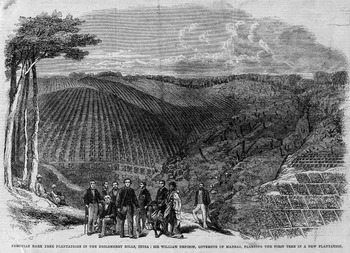
Wood-engraving showing ‘Balmadie's Cinchona Plantation Near Dolcamund, Madras Presidency’ from the Illustrated London News, (10 February 1872), 132.

Earliest photographic images (see Figure 1.11 and Figure 1.12) of cinchona plantations show keen local inhabitants engaged in voluntary labour in the misty landscapes of British Sikkim or Peradeniya in Ceylon. However, these photographic projections about eager labourers framed by the colonial state need to be read with caution. It is possible to argue that these photographs captured individuals who were often described in the published official correspondences as members of dispossessed ‘hill tribes’, discredited ‘jhoom cultivators’, ‘Nepalese coolies’, ‘Lepchas’ and convict labourers.Footnote 186 Introduced in South Asia in the immediate aftermath of the munity of 1857 as a hallmark of humanitarianism, these plants quite soon found themselves implicated within broader histories of dispossession and incarceration.
Reproduced by kind permission of the Syndics of Cambridge University Library. Royal Commonwealth Society Library, Photograph collection of John Abercromby Alexander. (No infringement of copyright intended.) Shelfmark: RCS/Y303E_46. Circa 1880–1896.

Photograph of local inhabitants labouring at Munsong cinchona plantations in British Sikkim, India.

Conclusion
The history of circulating and planting cinchonas in British India in the initial decades of 1850s and 1860s reveals the imbrications of imperial governance, botanical knowledge, materiality of plants and processes of commodification. Collapsing the distinction between biographical objects and public commodities proposed by Janet Hoskins, I have argued that the bureaucratic construction of cinchonas as a commodity was founded on assertions about their intense physicality.Footnote 187 This could take two apparently contradictory forms. At one level, cinchonas figured as lively objects which were sensible, delicate and feminine. Because they were projected as exotic and fragile beings, it was predicted that it would be difficult for them to be transported to and to thrive in British India. At the same time, the exigencies of economic botany shaped the projection of cinchonas as plausible objects of plantation, which could survive, grow and proliferate in British India. The physical properties of cinchonas were upheld as suitably malleable. Cinchonas appeared adaptable to the textures of landscapes, and the emerging expertise of planters, botanists, labourers and bureaucrats in British India.
The history of cinchonas in British India unfolded in the wider context of extensive engagement of British imperial actors with a range of plants. These engagements were often structured by the interactions between metropolitan institutions like the Royal Botanic Gardens at Kew, on the one hand, with emerging plantations and botanical gardens in distant corners of the colonial world, on the other.Footnote 188 The entanglement of imperial power, botanical knowledge and plantation economy, as explored in this chapter, bears resonance with what existing histories have indicated in relation to other botanical commodities including indigo, cotton and rubber in South Asia and beyond.Footnote 189
While imperial rule predominantly occasioned and mediated the sustenance of the commodity status of cinchona in British India in these decades, Empire itself, following an expression of Donna Haraway, was ‘becoming with’ cinchonas.Footnote 190 It is possible to suggest that various organisms, materials and institutions which shaped the history of cinchonas in the late 1850s and 1860s (for example, plants, barks, trees, bottles, photographs, sketches, bureaucratic correspondence, travel narratives, wardian cases, steamers, herbariums, nurseries or plantations) were as much tools of a preordained Empire as they were ingredients of an imperial apparatus in the making.
While being shaped as objects of governance and knowledge, as commodities and as materials, cinchonas, as I have noted, held together an extensive imperial network of bureaucrats, botanists, explorers, private planters, local Rajas, distant newspaper reporters, contending vernacular advertisements, photographers and illustrators amongst others. In the process, cinchonas consolidated as well as revealed fissures within what Richard Drayton calls an ‘improving plantocracy’.Footnote 191 Apart from figuring as subjects of routine bureaucratic correspondence, cinchonas also engendered more spectacular circulation of personnel, gifts and ideas within and between the British, Dutch and French Empires. These plants emerged as one of the various objects which crystallised the British Empire as a globally dispersed and yet interconnected machinery of administrative predicaments and enactments.Footnote 192
Cinchonas exposed not only some of the commercial temptations of British Empire, but also featured as amongst Empire's many ideological justifications. Particularly, in the immediate aftermath of the Sepoy mutiny of 1857, cinchonas were upheld as emblematic of benevolent Victorian governance. The arrival of cinchonas in British India was presented as ushering in ‘the pleasantest episode of British rule’ which would be characterised by the charitable dispensation of medical relief to the colonial poor.
Such ideological talk about colonial munificence, however, was linked intimately with the reinforcement of a series of imperial prejudices and violence. The early efforts of planting cinchonas in British India reveal how in imperial history processes of anthropomorphism and dehumanisation happened hand in hand. Cinchonas were ascribed with lively as well as human-like attributes of being sensible,Footnote 193 delicate,Footnote 194 feminineFootnote 195 and idiosyncratic.Footnote 196 Resonating with the wider literature about indentured labourers, colonising administrators and soldiers, it was feared that these plants turned ‘sickly’ while undergoing acclimatisation in an alien climate.Footnote 197 At the same time, the beginning of cinchona experiments provided an excuse to label the Peruvian Indians of South America, or ‘hill tribes’ in British India or colonial ‘primitives’ more generally as lesser humans. Apart from being accused of ‘barbarous meddling’,Footnote 198 they were often denounced variously as people associated with ‘rude cultivation’,Footnote 199 or as inhabitants of the ‘state of nature’,Footnote 200 who deserved colonial tutelage because of their ‘reckless short-sightedness.’Footnote 201 The planting of cinchonas in British India, it was hoped, would sustain the transformation of ‘wild mountain sides into beautiful public garden(s)’.Footnote 202 Underscoring the deeper commercial and symbolic relevance of these plants, such aesthetic appeal appeared to justify the enforced employment in the emerging Nilgiri plantations of Chinese convict labour from the Straits Settlements,Footnote 203 and the displacement of Nepalese coolies and Lepchas from forest lands and traditional livelihoods to make room for the plantations in British Sikkim.Footnote 204 Thus, like most other objects of plantations the cinchonas were entangled within broader regimes of marginalisation. The augmentation of these plants to the status of lively valuable beings was founded upon the persistence of dehumanising colonial prejudices reflected in expressions such as primitives, wild, hill tribes and barbarous.Footnote 205
A new geography of cinchonas emerged by the 1860s. Between the late seventeenth and early nineteenth centuries, the history of cinchonas was shaped, to a considerable extent, by explorers, traders, apothecaries, alkaloid chemists and pharmacologists across the Atlantic.Footnote 206 As objects of knowledge and commerce, the cinchonas were confined predominantly (if not exclusively) to the networks of circulation between ‘natural forests’ in Spanish America and sites within Europe and North America. With the integration of the cinchonas into the emerging global plantation economy in the mid-nineteenth century, comparable to the case of rubber transplantation, these plants began to circulate more widely than ever before.Footnote 207 Their circulation now extended to the distant corners of the colonial world engendered by British, French and Dutch Empires. Colonial plantations in Java, Ceylon, Jamaica, St Helena, Chiffa in Algeria,Footnote 208 Bhutan and Khasia Hills in the Eastern Himalayas; Yoonzaleen Hills in British PeguFootnote 209 emerged as new homes of cinchona plants. Those associated with planting cinchonas in Bengal and Madras presidencies in British India were locked increasingly in correspondence with institutions and individuals located across the Indian Ocean world and beyond in Jamaica, Java, Wellington, Mauritius, Algiers, Ceylon, Reunion and Rangoon.Footnote 210 In the next chapter, I will explore corresponding shifts in the geographies of the disease, which the cinchonas were most consistently attributed to heal. Projected shifts in the geographies of malaria appeared to coincide with relocations within geographies of the cinchonas.

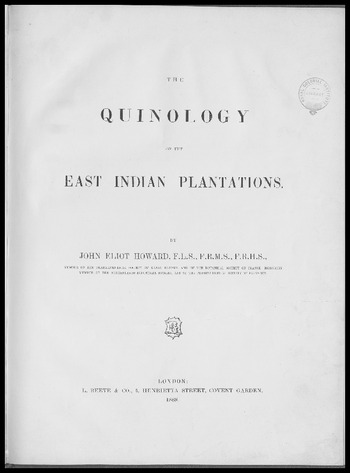


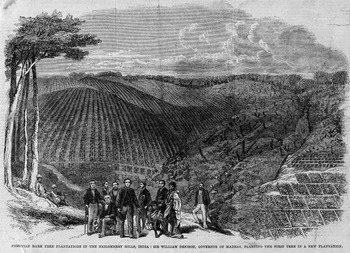


 Open access