Introduction
The number of people with dementia is growing dramatically due to increased life expectancy, and about 70% of these people receive in-home care provided by family members (Thorpe et al., Reference Thorpe2006). The demands of caregiving take a heavy toll on dementia caregivers’ (DCGs’) physical and emotional health, often leading to more hospitalizations, higher medication usage, and greater mortality rate compared to non-caregiving peers (Vitaliano et al., Reference Vitaliano, Zhang and Scanlan2003). Dementia caregivers’ health problems are often neglected and overshadowed by those of their care recipient until a crisis occurs. However, DCGs’ health and well-being are important to caregivers and their care recipient because they might impact the quality of care DCGs provide, the timing of nursing-home placement of the care recipient, and overall healthcare costs (Vitaliano et al., Reference Vitaliano, Zhang and Scanlan2003).
Multiple detrimental effects of caregiving on physical health have been brought to light previously in a meta-analysis that proposed to consider caregiving a health hazard (Vitaliano et al., Reference Vitaliano, Zhang and Scanlan2003). The conclusions from that meta-analysis included the need for more research assessing physiological effects of caregiving. A decade later, the current review summarizes evidence highlighting the effects of dementia caregiving on health that has accumulated since 2003.
It is becoming clear that the DCGs’ vulnerability to health decline is not just due to caregiving duties but rather due to the chronic stress of caregiving. Indeed, compared to non-caregiving peers, caregivers in general and DCGs in particular typically experience significantly more stress (Gouin et al., Reference Gouin, Glaser, Malarkey, Beversdorf and Kiecolt-Glaser2012), which might be still underestimated depending on the assessment context because DCGs tend to report lower stress levels when assessed in a clinic than they do at home where they are providing care (Fonareva et al., Reference Fonareva, Amen, Ellingson and Oken2012).
The current review focuses on health changes in DCGs compared to the trajectory of health changes in non-caregiving peers. Non-caregiving peers were chosen as a comparison group for DCGs due to these reasons: (1) this work aimed to assess effects of increased stress due to caregiving duties on health and function. Though DCGs have more caregiving demands due to unpredictable nature of dementia and thus have higher risk for developing health problems, we believe that many caregiver stressors are common for different types of caregiver groups (e.g. caregivers to cancer patients, parent caregivers of chronically ill children etc.). Therefore, it might be difficult to disentangle the influence of dementia caregiving from the effect of other type of caregiving on health, but the effect of caregiving stress can be more readily observed when comparison is a peer group without caregiving duties. (2) It was important to have the comparison group that is close in age to DCGs because age has a strong influence on physiologic and cognitive health. Many caregiver groups (e.g. caregivers to cancer patients etc.) are too heterogeneous on this variable.
Caring for a relative with any health problem might negatively affect caregiver's health; however, family caregivers of dementia patients are a growing population who face additional caregiving challenges associated with the chronic, debilitating, and incurable nature of the disease along with the progressive mental loss in their care recipient (Vitaliano et al., Reference Vitaliano, Zhang and Scanlan2003). The diverse sources of DCG stress include excessive time constraints, increased chores, behavioral management issues of the person with dementia (PWD), and anticipatory grieving.
The primary goal of this review is to increase researchers’ and clinicians’ awareness of physical and psychological risks associated with dementia caregiving. To avoid potential bias associated with self-reported subjective measures, the major emphasis of this review is on addressing changes in DCG health and function assessed objectively (i.e. not self-reported). This review also discusses mediating and moderating factors that have emerged from DCG research to date.
Methods
Data sources and search strategy
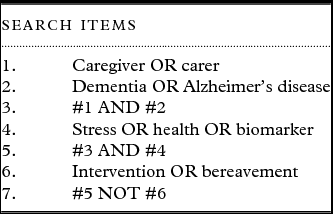
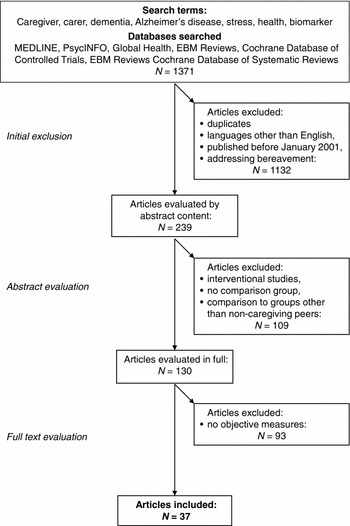
Electronic searches were conducted using MEDLINE, PsycINFO, Global Health, Evidence-Based Medicine (EBM) Reviews Cochrane Database of Controlled Trials, and EBM Reviews Cochrane Database of Systematic Reviews databases to identify relevant papers published between January 2001 and January 2012. The search terms are described in Table 1. The search was limited to publications in English, with duplicates removed. As Figure 1 indicates, the initial search yielded 239 publications. The abstracts of the publications encompassed by the search were reviewed by both authors for the content. The details of the search flow are presented in Figure 1.
Search strategy for the systematic review

Note: MEDLINE, PsycINFO, Global Health, Evidence-Based Medicine (EBM) Reviews Cochrane Database of Controlled Trials, and EBM Reviews Cochrane Database of Systematic Reviews were searched. The search was limited to publications in English, with duplicates removed. Only studies including dementia caregivers and non-caregiver peers were considered.
Systematic review search flow diagram.

Study eligibility
To be included, the studies had to meet the following criteria: (1) caregivers of patients with dementia were assessed, (2) DCGs were compared to age- and gender-matched non-caregiving controls, and (3) study outcomes included objective (i.e. not self-reported) measures. Studies focusing on bereavement issues, interventional studies, and studies published in languages other than English were excluded. Next, relevant publications were cross-referenced for additional articles on the topic yielding the total of 37 publications included in the review.
Data extraction
The data extracted from the reviewed publications included: (1) study author names, (2) publication dates, (3) study designs (e.g. cross-sectional, longitudinal) and follow-up period for longitudinal studies, (4) group sample sizes, (5) mean age or age ranges for the groups, (6) gender distributions, (7) percentage of spousal caregivers in the DCG group, (8) primary objective outcomes used (e.g. biological samples, sleep architecture, cognitive functioning), (9) secondary outcomes, objective or subjective, and (10) results of analyses assessing between-group differences on most relevant outcomes and factors affecting the relationship between caregiving and health.
Results
Study characteristics
The review identified 37 studies describing data from 4,145 participants including 749 DCGs and 3,396 non-DCG peers or controls (CTLs). The majority (n = 35) of the studies included in the review were conducted in the USA; one study was completed in the Netherlands, and one in Brazil. The studies included in the review were published between 2003 and 2012. Twenty-two of the selected 37 studies demonstrated significant differences between DCGs and CTLs in objective measures of health, sleep, or cognition, with DCGs affected in a detrimental way. Additionally, secondary analyses in the included studies indicated moderating and mediating factors associated with detrimental health or cognitive changes in DCGs.
Outcome measures assessed in the included studies
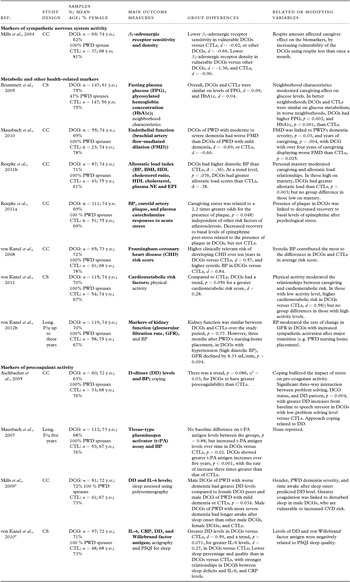
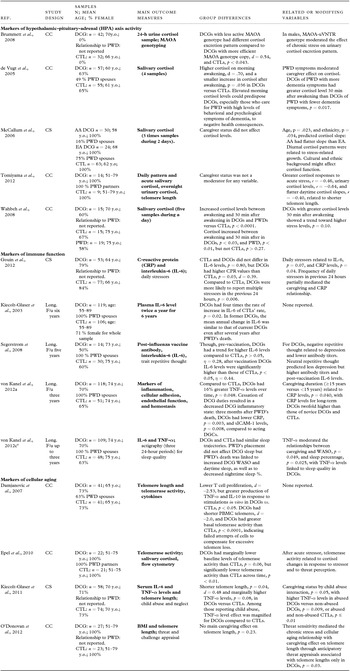
Physiological markers indicative of stress and associated with health problems were assessed as primary outcomes in 23 of the reviewed studies (Kiecolt-Glaser et al., Reference Kiecolt-Glaser2003; Mills et al., Reference Mills2004; Aschbacher et al., Reference Aschbacher2005; Brummett et al., Reference Brummett2005; de Vugt et al., Reference de Vugt2005; McCallum et al., Reference McCallum, Sorocco and Fritsch2006; Damjanovic et al., Reference Damjanovic2007; Mausbach et al., Reference Mausbach2007; Brummett et al., Reference Brummett2008; Segerstrom et al., Reference Segerstrom, Schipper and Greenberg2008; von Kanel et al., Reference von Kanel2008; Wahbeh et al., Reference Wahbeh, Kishiyama, Zajdel and Oken2008; Epel et al., Reference Epel2010; Mausbach et al., Reference Mausbach2010; Kiecolt-Glaser et al., Reference Kiecolt-Glaser2011; Roepke et al., Reference Roepke2011a; Reference Roepke2011b; von Kanel et al., Reference von Kanel2011; Gouin et al., Reference Gouin, Glaser, Malarkey, Beversdorf and Kiecolt-Glaser2012; O'Donovan et al., Reference O'Donovan2012; Tomiyama et al., Reference Tomiyama2012; von Kanel et al., Reference von Kanel2012a; Reference von Kanel2012b). The specific categories of physiological markers evaluated in the reviewed studies included markers of (1) sympathetic nervous system activity, (2) health and metabolism, (3) coagulant activity, (4) hypothalamic-pituitary-adrenal (HPA) axis activity, (5) immune function, and (6) cellular aging. Objectively evaluated sleep parameters were primary outcomes in four of the selected studies (McKibbin et al., Reference McKibbin2005; Rowe et al., Reference Rowe, McCrae, Campbell, Benito and Cheng2008; Castro et al., Reference Castro2009; Fonareva et al., Reference Fonareva, Amen, Zajdel, Ellingson and Oken2011). Three studies evaluated both physiological markers and sleep parameters as outcome variables (Mills et al., Reference Mills2009; von Kanel et al., Reference von Kanel2010; von Kanel et al., Reference von Kanel2012c). Performance on cognitive tests or diagnosis of cognitive impairment were used as outcome measures in seven of the selected studies (Caswell et al., Reference Caswell2003; Vitaliano et al., Reference Vitaliano2005; de Vugt et al., Reference de Vugt2006; Vitaliano et al., Reference Vitaliano2009; Norton et al., Reference Norton2010; Oken et al., Reference Oken, Fonareva and Wahbeh2011; Palma et al., Reference Palma2011). Specific outcome measures and major findings for each study are described in Tables 2 and 3 (studies assessing physiological markers), Table 4 (studies assessing sleep variables), and Table 5 (studies assessing cognitive function).
Studies assessing effects of dementia caregiving on physiologic biomarkers
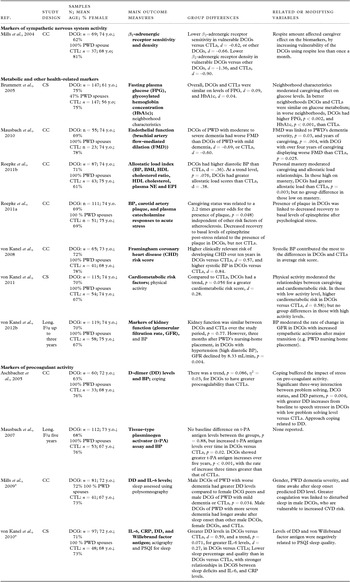
BMI = body mass index; BP = blood pressure; CC = case control; CS = cross-sectional; CHD = coronary heart disease; CRP = C-reactive protein; CTL = control, non-caregiving peers; CVD = cardiovascular disease; DCG = dementia caregivers; DD = D-dimer; FMD = flow mediated dilation; F/u = follow-up; IL-6 = interleukin-6; NE = norepinephrine; EPI = epinephrine; PSQI = Pittsburgh Sleep Quality Index; PWD = person with dementia; Ref. = reference; y.o. = year old.
aAlso in Table 4.
Notes: Cohen's d estimated using pooled standard deviation. p values are presented when Cohen's d could not be calculated from the available data. Primary objective measures are highlighted in bold font.
Studies assessing effects of dementia caregiving on markers of HPA activity, immune function, and cellular aging
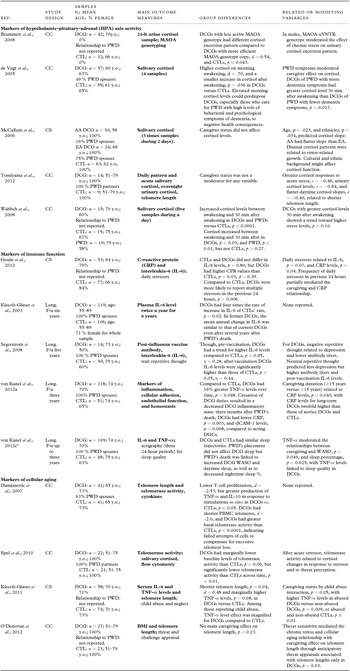
AA = African American; BMI = body mass index; BP = blood pressure; CC = case control; CS = cross-sectional; CRP = C-reactive protein; CTL = control, non-caregiving peers; DCG = dementia caregivers; EA = European American; F/u = follow-up; MAOA = monoamine oxidase A; MCI = mild cognitive impairment; NPI = neuropsychiatric inventory; PBMC = peripheral blood mononuclear cell; PWD = person with dementia; Ref. = reference; SES = socioeconomic status, sICAM = soluble intercellular adhesion molecule, TNF-α = tumor necrosis factor-α.
aAlso in Table 4.
Notes: Cohen's d estimated using pooled standard deviation. p values are presented when Cohen's d could not be calculated from the available data. Primary objective measures are highlighted in bold font.
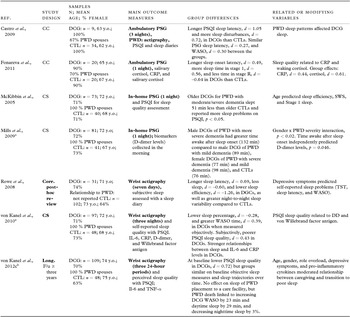
Studies assessing objective sleep measures in dementia caregivers
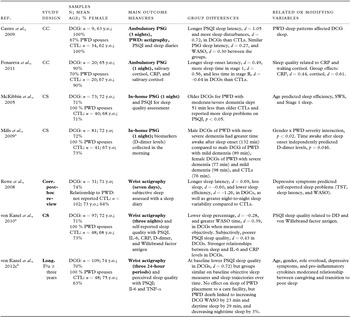
CC = case-control, Corr. = correlational, CRP = C-reactive protein, CS = cross-sectional, CTL = controls, non-caregiving peers, DCG = dementia caregivers, DD = D-dimer, F/u = follow-up, IL-6 = interleukin-6, Long. = longitudinal, PSG = polysomnography, PSQI = Pittsburgh Sleep Quality Inventory, PWD = person with dementia, Ref. = reference, SWS = slow wave sleep, TST = total sleep time, WASO = wake after sleep onset.
aAlso included in Table 2.
bAlso included in Table 3.
Notes: Cohen's d estimated using pooled standard deviation. p values are presented when Cohen's d could not be calculated from the available data. Objective sleep measures are highlighted in bold font.
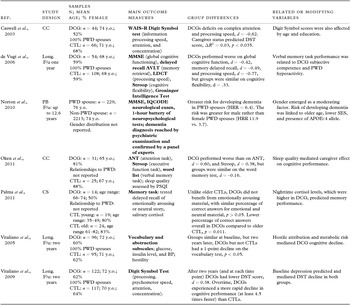
Studies assessing effects of dementia caregiving on cognitive function
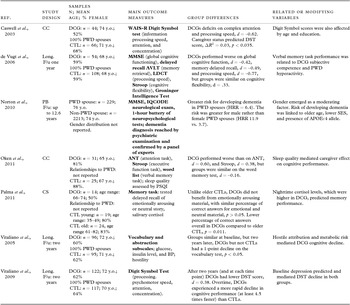
ANT = Attention Network Task, AVLT = Auditory Verbal Learning Test, BP = blood pressure, DCG = dementia caregivers, DST = Digit Symbol Test, CC = case-control, CS = cross-sectional, CTL = controls, non-caregiving peers, F/u = follow-up, HRR = Hazard Rate Ratio, IQCODE = Informant Questionnaire for Cognitive Disorder in Elderly, LDCT = Letter Digit Coding Test, Long. = longitudinal, MMSE = Mini-Mental State Exam, PB = population based, Ref. = reference, SES = socioeconomic status, Stroop = Stroop Color-Word Test, TICS = Telephone Interview of Cognitive Status, WAIS-R = Wechsler Adult Intelligence Scale-Revised.
Notes: Cohen's d estimated using pooled standard deviation. p values are presented when Cohen's d could not be calculated from the available data. Cognitive measures are highlighted in bold font.
Quality assessment of the included studies
Study design
Study designs of the selected studies included case control (n = 18), cross-sectional (n = 8), population-based (n = 1), correlational post hoc review (n = 1), or longitudinal (n = 9) studies. Follow-up periods for DCGs in longitudinal studies ranged between one and six years.
Sample size
Median sample size was 44 for DCGs and 63 for non-DCG peers. Some of the data described in the studies came from the same sample. Therefore, some of the observations from the research conducted to date are not independent.
Participant selection, confounding, and bias
Recruiting DCGs for research studies is difficult due to time constraints in this population. Therefore, DCGs participating in the research are typically high functioning and generally healthy individuals and might not be representative of the general DCG population. Most of the studies included in the review assessed primarily female DCGs. Only one study included exclusively males (Brummett et al., Reference Brummett2008), and one study assessed the role of gender in changes associated with caregiving (Mills et al., Reference Mills2009).
The age of DCG participants included in the studies ranged between 50 and 89 years, with the majority of studies evaluating DCGs in 60s and 70s. Only one study investigated age effects in producing changes associated with caregiving (Palma et al., Reference Palma2011). Furthermore, the majority of DCGs were spouses or partners of the PWD, making it difficult to generalize the findings to DCGs who are children or other PWD relatives.
Other important factors that are likely to influence health and well-being of DCGs including the severity of the PWD symptoms, length of caregiving, frequency of using respite care, and socioeconomic status (SES) were not consistently evaluated by the majority of the studies included in this review.
Dementia caregiving effects on physiological markers of health
Several categories of physiological biomarkers and health risk factors have been compared between DCGs and CTLs. The reviewed physiological biomarkers are often linked to the conditions of a particular concern in DCGs compared to general population, such as hypertension, cardiovascular disease (CVD), hyperglycemia, immune dysfunction, and overall mortality (von Kanel et al., Reference von Kanel2008). Tables 2 and 3 contain information about the studies described in this section evaluating differences between DCGs and controls on physiological markers.
Markers of sympathetic nervous system activity
Sympathetic nervous system is one of the first to activate in response to stress, causing downstream effects on blood pressure (BP), catecholamine levels, and β2 adrenergic receptors. These markers are affected in DCGs, according to several studies included in the review.
DCGs have higher systolic (von Kanel et al., Reference von Kanel2008) and diastolic (Roepke et al., Reference Roepke2011b) BP than controls (effect sizes between 0.36 and 0.84 using Cohen's d) even though more DCGs use antihypertensive medications (von Kanel et al., Reference von Kanel2008). Additionally, BP moderates the rate of change in glomerular filtration rate in DCGs with increased sympathetic activation after major transition such as PWD nursing-home placement (von Kanel et al., Reference von Kanel2012b). Other markers of sympathetic nervous system activation, β2 adrenergic receptor sensitivity and density, are typically lower in DCGs reporting greater DCG stress (Mills et al., Reference Mills2004). In particular, lymphocyte β2 adrenergic sensitivity and density are significantly reduced in vulnerable DCGs who provide over 12 hours of daily care with less than one hour of respite care in the previous six months, but not in DCGs who use respite care once or more per month (Mills et al., Reference Mills2004).
Markers of health and metabolism
Biomarkers of metabolism, hepatic function, and endothelial function are often affected in DCGs. The risk for presence of carotid plaque is significantly greater in DCGs and is twice that of controls (Roepke et al., Reference Roepke2011a). Dementia caregivers also have a higher clinically relevant risk of developing coronary heart disease over ten years than CTLs with a medium size effect of 0.57 using Cohen's d (von Kanel et al., Reference von Kanel2008). Some studies report group differences between DCGs and CTLs in allostatic load scores (Roepke et al., Reference Roepke2011b) and cardiometabolic risk (von Kanel et al., Reference von Kanel2011) that fall short of conventional statistical significance but indicate a trend with low to moderate effect sizes (Cohen's d between 0.28 and 0.38).
Several of the reviewed studies suggest variables that can increase DCGs’ vulnerability to developing health problems. For example, glucose metabolism markers such as fasting plasma glucose and glycosylated hemoglobin are elevated in DCGs who reside in neighborhood they perceive as unsafe, compared to CTLs living in similar neighborhoods, but DCGs living in better neighborhoods are no different from CTLs on these measures (Brummett et al., Reference Brummett2005). Dementia severity of the PWD also impacts DCG health markers. An endothelial function measure, brachial artery flow-mediated dilation, is impaired in DCGs of a spouse with moderate to severe dementia but not in DCGs of a spouse with mild dementia or controls (Mausbach et al., Reference Mausbach2010). Some new markers such as glomerular filtration rate have also been tested. Though not different between DCGs and CTLs, this marker decreases after major life transition in DCGs with high BP (von Kanel et al., Reference von Kanel2012b).
Markers of coagulant activity
Procoagulant activity is linked to risk for future cardiac events, and, given DCGs’ vulnerability to CVD, several investigations focused on coagulation markers in DCGs, highlighting significant changes in coagulant activity due to DCG stress. D-dimer, a commonly used marker of fibrin formation and degradation, is typically higher in DCGs than non-DCGs (Aschbacher et al., Reference Aschbacher2005; von Kanel et al., Reference von Kanel2005). Several studies indicate that D-dimer levels relate to gender, PWD dementia severity, DCG sleep quality, and coping methods used by DCG (Aschbacher et al., Reference Aschbacher2005; Mills et al., Reference Mills2009; von Kanel et al., Reference von Kanel2010).
Another coagulant activity marker, plasma levels of tissue-type plasminogen activator antigen, a risk factor for coronary heart disease, shows a significant increase in DCGs over five years, and the rate of increase in the level of this marker is three times greater in DCGs than CTLs (Mausbach et al., Reference Mausbach2007). This increase is significant even after controlling for body mass index, BP, age, gender, and CVD medications (Mausbach et al., Reference Mausbach2007).
Research suggests that the acute procoagulant stress response might constitute a dynamic mediator of allostatic load, a measure of dysregulation and cumulative cost of stressors presented to an organism linked to increased risk of CVD; and allostatic load is higher in DCGs than non-DCGs (Roepke et al., Reference Roepke2011b).
Markers of HPA axis activity
Hypothalamic-pituitary-adrenal axis is a part of the neuroendocrine system mediating reactions to stress. Its function is assessed using measures of cortisol reactivity and circadian patterns. Circadian cortisol patterns, particularly cortisol awakening stress response, are different in DCGs compared to non-DCGs, with medium to moderate effect size of 0.70 using Cohen's d (de Vugt et al., Reference de Vugt2005; Wahbeh et al., Reference Wahbeh, Kishiyama, Zajdel and Oken2008). Additionally, DCGs have increased cortisol levels at 10 pm compared to non-DCGs, and such elevated bedtime cortisol levels are associated with performance deficits on a memory task (Palma et al., Reference Palma2011).
Cortisol levels in DCG population are affected by many factors, such as age, PWD symptom severity, telomere length, and overall health (de Vugt et al., Reference de Vugt2005; McCallum et al., Reference McCallum, Sorocco and Fritsch2006; Tomiyama et al., Reference Tomiyama2012). Ethnicity also emerges as a predictor of cortisol slope: African-American DCGs have a flattened diurnal cortisol secretion patterns (linked to subclinical disease and increased mortality from cancer) compared to European-American DCGs (McCallum et al., Reference McCallum, Sorocco and Fritsch2006).
Recent efforts to identify genetic factors linked to stress result in proposing candidate genes linked to HPA function in males (Brummett et al., Reference Brummett2008). Specifically, male DCGs with monoamine oxidase-A gene promoter-uVNTR alleles linked to less transcriptional activity have cortisol activity patterns indicative of HPA blunting compared to DCGs with more active alleles and to CTLs (Brummett et al., Reference Brummett2008).
Markers of immune function
Natural aging effects on immune function are amplified by chronic stress, and thus immune markers are important to study in DCGs. Four out of five reviewed studies assessing immune function markers as primary outcomes indicate significant changes in DCGs’ immune function compared to CTLs (Kiecolt-Glaser et al., Reference Kiecolt-Glaser2003; Segerstrom et al., Reference Segerstrom, Schipper and Greenberg2008; Gouin et al., Reference Gouin, Glaser, Malarkey, Beversdorf and Kiecolt-Glaser2012; von Kanel et al., Reference von Kanel2012b). For example, DCGs experience more stressors within a 24-hour period than non-DCGs, and this occurrence of multiple daily stressors is linked to increased serum interleukin (IL)-6 and C-reactive protein (CRP) levels (Gouin et al., Reference Gouin, Glaser, Malarkey, Beversdorf and Kiecolt-Glaser2012). Moreover, DCG rate of increase in IL-6 levels is four times larger than that of non-DCGs, and this IL-6 increase is sustained in DCGs even after the PWD death (Kiecolt-Glaser et al., Reference Kiecolt-Glaser2003). Further, DCGs show a prolonged increase in IL-6 levels compared to CTLs after receiving influenza vaccine, and the IL-6 levels are predicted by negative repetitive thoughts (Segerstrom et al., Reference Segerstrom, Schipper and Greenberg2008). Overproduction of IL-6 is linked to many age-related problems including CVD, diabetes, cancer, and Alzheimer's disease functional decline (Kiecolt-Glaser et al., Reference Kiecolt-Glaser2003; Segerstrom et al., Reference Segerstrom, Schipper and Greenberg2008). Not all studies observe differences in IL-6 levels between DCGs and CTLs (Mills et al., Reference Mills2009; Fonareva et al., Reference Fonareva, Amen, Zajdel, Ellingson and Oken2011), but there is more agreement about CRP levels being increased in DCGs with moderate effect sizes between 0.39 and 0.44 using Cohen's d (Fonareva et al., Reference Fonareva, Amen, Zajdel, Ellingson and Oken2011; Gouin et al., Reference Gouin, Glaser, Malarkey, Beversdorf and Kiecolt-Glaser2012).
Further, there is also a tendency for DCGs to have greater tissue necrosis factor-alpha (TNF-α) levels compared to CTLs (Damjanovic et al., Reference Damjanovic2007; Kiecolt-Glaser et al., Reference Kiecolt-Glaser2011). Over time DCGs may have a 16% increase in TNF-α levels compared to non-caregiving CTLs (von Kanel et al., Reference von Kanel2012b). Moreover, cessation of DCG duties results in a decreased inflammatory state: three months after PWD's death inflammation in former DCGs is lower compared to that of acting DGCs (von Kanel et al., Reference von Kanel2012b). TNF-α also moderates the relationships between caregiving and sleep quality parameters, with DCGs displaying high TNF-α levels suffering from poorer sleep quality compared to DCGs whose TNF-α levels are higher (von Kanel et al., Reference von Kanel2012c).
Markers of cellular aging
Telomere length and telomerase activity are markers of immune cell aging. Chronic stress affects these markers and speeds up the process of cellular aging (Tomiyama et al., Reference Tomiyama2012). Dementia caregivers have lower T cell proliferation and higher production of immune-regulatory cytokines than CTLs in response to stimulation in vitro (Damjanovic et al., Reference Damjanovic2007). Further, DCGs have shorter telomeres and higher basal telomerase activity than non-caregiving peers, suggesting an unsuccessful attempt of cells to compensate for the excessive loss of telomeres (Damjanovic et al., Reference Damjanovic2007). The reviewed studies suggest a moderate to high effect size (Cohen's d between 0.48 and 2.0) for group differences in telomere length (Damjanovic et al., Reference Damjanovic2007; Kiecolt-Glaser et al., Reference Kiecolt-Glaser2011).
In addition to telomeres being generally shorter in DCGs than in CTLs, (Damjanovic et al., Reference Damjanovic2007; Kiecolt-Glaser et al., Reference Kiecolt-Glaser2011), telomerase activity in DCGs is lower across time compared to CTLs (Epel et al., Reference Epel2010). These effects of chronic DCG stress on markers of inflammation and cell aging can be magnified by childhood exposure to abuse or adversity (Kiecolt-Glaser et al., Reference Kiecolt-Glaser2011). Additionally, caregiving exerts an indirect effect on telomere length through anticipatory threat appraisal that is greater in DCGs exposed to acute stressor (O'Donovan et al., Reference O'Donovan2012). Recent research demonstrates that telomerase activity is sensitive to acute stressors, linked to cortisol changes, and can be affected by psychological response to tasks (such as threat perception) (Epel et al., Reference Epel2010).
Overall, the majority (14 out of 26) of reviewed studies indicate that physiological markers of health are more negatively affected in DCGs than CTLs. The strongest evidence is available, according to this review, for the markers of immune function and cellular aging, as well as for cardiovascular risk factors.
Functional changes due to caregiving stress
In addition to changes in physiologic markers that might not be apparent to DCGs without special testing on biological samples, several noticeable changes in functioning including changes in sleep quality and cognitive performance are typical in DCGs when compared to non-caregiving peers.
Sleep quality
Poor sleep quality is a common complaint in DCGs, who report more sleep problems than CTLs and rate their sleep quality similar to that of those having insomnia (Fonareva et al., Reference Fonareva, Amen, Zajdel, Ellingson and Oken2011). Some of the reviewed studies suggest that DCGs misperceive severity of PWD's and their own sleep problems (Castro et al., Reference Castro2009; von Kanel et al., Reference von Kanel2012c). However, DCG sleep deficits have been confirmed with objective sleep assessments, using actigraphy and polysomnography, indicating that DCGs have decreased sleep efficiency, longer sleep latency, and spend less of their sleep time in more restful sleep stages (Rowe et al., Reference Rowe, McCrae, Campbell, Benito and Cheng2008; von Kanel et al., Reference von Kanel2010; Fonareva et al., Reference Fonareva, Amen, Zajdel, Ellingson and Oken2011). Sleep latency, in particular, in two of the reviewed studies, has been shown to have effect sizes ranging from 0.49 to 0.69 using Cohen's d, indicating moderate effects. In one study, however, the groups did not differ on objectively assessed sleep latency, with Cohen's d of 0.27 (Castro et al., Reference Castro2009). The largest effect size of 1.26 using Cohen's d in the reviewed studies has been reported for sleep efficiency (Rowe et al., Reference Rowe, McCrae, Campbell, Benito and Cheng2008), but this finding has not been corroborated by other studies.
Predictors of sleep quality include DCG-related factors such as age, gender, symptoms of depression, physical function, levels of inflammatory markers, and stress, as well as tendency to use criticism as a behavioral management strategy (McKibbin et al., Reference McKibbin2005; Rowe et al., Reference Rowe, McCrae, Campbell, Benito and Cheng2008; Mills et al., Reference Mills2009; Fonareva et al., Reference Fonareva, Amen, Zajdel, Ellingson and Oken2011). Factors related to PWDs such as dementia severity (Mills et al., Reference Mills2009) and PWD sleep disturbances (Castro et al., Reference Castro2009) also affect DCG sleep. Sleep problems of PWD are often cited among major reasons for seeking permanent PWD institutionalization; however, PWD placement does not always lead to improvements in DCG sleep, and PWD death can lead to greater severity of DCG sleep disturbances (von Kanel et al., Reference von Kanel2012c) indicating that sleep is affected by many factors. More information about the studies assessing DCG sleep quality with objective measures is available in Table 4.
Cognitive function
Cognitive health is important for DCGs’ quality of life and well-being and vital for PWD care quality. Therefore, it is of concern that the reviewed studies show that DCGs perform worse than age-matched CTLs on cognitive tasks of general cognitive processing, delayed verbal recall, and executive function, with the effects sizes (Cohen's d) ranging from 0.38 to 0.49, indicating small to medium effects (de Vugt et al., Reference de Vugt2006; Oken et al., Reference Oken, Fonareva and Wahbeh2011). Performance on measures assessing attention, concentration, and processing speed is significantly affected in DCGs in four of the reviewed studies (Caswell et al., Reference Caswell2003; de Vugt et al., Reference de Vugt2006; Vitaliano et al., Reference Vitaliano2009; Oken et al., Reference Oken, Fonareva and Wahbeh2011), with the effect sizes ranging from 0.38 to 0.77 using Cohen's d, indicating moderate to large effects. Additionally, compared to the general population, DCGs are at increased risk of developing dementia, according to a population-based study of over 1,000 couples. This study suggests that spouses of dementia patients are at an increased risk of developing dementia compared to non-caregiving spouses, after controlling for gender, age, Apolipoprotein E (ApoE) genotype, and SES (Norton et al., Reference Norton2010). Furthermore, male DCG spouses have about a 12-fold increase in risk and female DCG spouses have about a four-fold increase in risk for developing dementia than CTLs (compared to about five-fold increase in this risk due to the presence of 2 ApoE ε4 alleles) (Norton et al., Reference Norton2010).
Even minimal cognitive problems in DCGs affect their ability to provide adequate care (de Vugt et al., Reference de Vugt2006; Vitaliano et al., Reference Vitaliano2009). For example, DCGs’ low performance on verbal memory tasks is related to decreases in caregiving competency, which may lead to increases in PWD dementia behavioral symptoms, such as hyperactivity (de Vugt et al., Reference de Vugt2006). Greater PWD behavioral problems lead to greater DCG stress, which, in turn, may cause more cognitive deficits. This can become a viscous cycle. Of interest, all seven studies assessing cognitive function included in the review showed a significant vulnerability of DCGs cognitive function compared to that of age-matched CTLs. Though the reviewed studies used heterogeneous cognitive assessments, measures of attention and processing speed have been tested in more than one study and seem to be particularly affected by caregiving. Table 5 contains information about the studies assessing DCG cognitive function.
Proposed moderators and mediators of stress-related health consequences
In addition to comparisons between DCG and CTL samples on objective measures of health and function, several factors that can influence the relationship between caregiving stress and health have emerged. Below we briefly review some of the known risk and protective factors that affect relationship between caregiving and health, along with the evidence available from the reviewed studies.
Risk factors
DCG characteristics
Several of the reviewed studies indicate that DCGs’ vulnerability to developing health and functional problems can be affected by age, gender, ethnic and cultural background, residence neighborhood, childhood experiences of abuse, physical activity level, and utilization of respite care (McCallum et al., Reference McCallum, Sorocco and Fritsch2006; Mausbach et al., Reference Mausbach2008; Segerstrom et al., Reference Segerstrom, Schipper and Greenberg2008; Kiecolt-Glaser et al., Reference Kiecolt-Glaser2011; von Kanel et al., Reference von Kanel2011). One study suggests that DCGs’ genetic make-up might predispose some DCGs to a greater risk for developing health problems in the face of stress (Brummett et al., Reference Brummett2008). While some of these factors are unchangeable, some, such as physical activity and respite care utilization, could be changed in DCGs.
PWD characteristics
Severity of the PWD symptoms is among the most important contributors to a DCG burden. Current review indicates that PWD characteristics including duration of illness, dementia severity, behavioral symptoms, and sleep patterns (de Vugt et al., Reference de Vugt2005; Castro et al., Reference Castro2009; Mills et al., Reference Mills2009; Mausbach et al., Reference Mausbach2010) can increase DCGs risk for developing health and functional problems. Pharmacological therapies for a PWD for sleep and behavioral problems might be advantageous to the DCG well-being. Regular use of coping strategies, especially problem-focused strategies, by DCGs is also associated with slower disease progression in PWD (Tschanz et al., Reference Tschanz2013). Therefore, educating a DCG of a newly diagnosed PWD with this information might be beneficial to both the DCG and PWD.
DCG depression
Vulnerability to major depressive disorder, the most documented risk factor for increased health problems, is common in DCGs (Vitaliano et al., Reference Vitaliano2009), with prevalence of depression in DCGs reaching 30%–80% compared to 6%–9% in general population of adults over 55 (Schoenmakers et al., Reference Schoenmakers, Buntinx and Delepeleire2010). However, symptoms are underreported, which leads to a lack of treatment and results in diminished quality of life. Only 25% of DCGs acknowledge being depressed when interviewed, yet when assessed with a depression scale, about 55% in the same DCG sample receive a score indicative of clinical level of depression (Clark et al., Reference Clark, Nicholas, Wassira and Gutierrez2011). According to the study included in the review, depressed mood mediates slowing of cognitive processing in DCGs (Vitaliano et al., Reference Vitaliano2009). Other cognitive function mediators in DCGs emerging from the reviewed studies are hostility, metabolic risk, self-perceived distress, and sleep impairment (Caswell et al., Reference Caswell2003; Vitaliano et al., Reference Vitaliano2005; Oken et al., Reference Oken, Fonareva and Wahbeh2011).
Protective factors
Recently the focus of research has been expanded to include not only risk factors for health problems in DCGs but also to identify factors that buffer negative effects of DCG stress.
Of most interest are the factors, including DCG traits and skills, that can be changed through education or training. For example, personal mastery, a concept similar to self-efficacy, reflecting one's belief in the ability to manage life's obstacles, negatively correlates with norepinephrine reactivity to acute psychological stressor in DCGs (Roepke et al., Reference Roepke2008). However, greater DCG mastery was also linked to a greater allostatic load score (Roepke et al., Reference Roepke2008), so more studies are needed to fully understand the role of personal mastery and self-efficacy in DCG health.
Lifestyle factors such as diet and physical activity are also important. One of the reviewed studies indicates that physical activity can moderate the relationship between DCG status and cardiometabolic risk (von Kanel et al., Reference von Kanel2011). Additionally, the effects of DCG stress might be influenced by relationship closeness between DCG and their PWD, with greater baseline closeness associated with better functioning and lower depression in the early phases of caregiving but with greater losses in functioning later on (Fauth et al., Reference Fauth2012).
Physiological effects of caregiving are more related to perceived stress than the work of being a DCG (Epel et al., Reference Epel2010). Relationships between caregiving and health might be affected by stress reactivity that is often linked to DCG status: e.g. neuroticism, a trait related to increased stress reactivity, is higher in DCGs than CTLs (Oken et al., Reference Oken, Fonareva and Wahbeh2011). Another construct related to reactivity to stress, the non-judgmental mindfulness (i.e. not associating a negative emotion to an event) also differs between DCGs and CTLs (Oken et al., Reference Oken, Fonareva and Wahbeh2011). The DCG and non-caregiver differences in these traits indicate that aspects of stress reactivity are altered by environmental influences and can be targeted in interventions.
Discussion
The results of this review demonstrate that there has been substantial research documenting effects of chronic DCG stress on health-related outcomes and cognitive function, and the evidence has accumulated significantly since the prior review (Vitaliano, Reference Vitaliano, Zhang and Scanlan2003). The objective outcome measures used in the reviewed studies include markers of sympathetic, HPA axis and coagulant activity, measures of metabolic and immune functioning and cellular aging. Additionally, some of the reviewed studies investigated DCG function by objectively measuring DCG sleep quality and cognitive performance. Overall, the majority of reviewed studies indicate that physiological markers of health as well as cognitive function and sleep quality are more negatively affected in DCGs than CTLs. The strongest evidence to date is available for measures of immune and cellular aging markers, cardiovascular risk factors, sleep quality, and cognition.
One of the most important outcomes of this review is the presence of obvious deficits in DCGs compared to CTLs on several cognitive domains including processing speed, attention, memory, and executive functions (de Vugt et al., Reference de Vugt2006; Vitaliano et al., Reference Vitaliano2009; Oken et al., Reference Oken, Fonareva and Wahbeh2011). It is alarming that DCGs perform worse than CTLs on several cognitive tasks because optimal cognitive health is critical for DCGs who, in addition to managing their own affairs, also assume responsibility for the PWD welfare. Even more alarming, one study reported that compared to general population, DCGs are at increased risk of developing dementia (Norton et al., Reference Norton2010). Though there are shared environmental risk factors for married couples, including SES, diet, education, and activity levels, the contribution of direct physiological effects of DCG burden and stress on cognition needs to be evaluated as a potential mediator, and the intriguing finding of DCG increased risk for developing dementia needs to be confirmed by future studies.
Another important outcome of this review is the list of potential factors that can modify DCG effect on health and function. Understanding factors affecting relationships between caregiving stress and health can help design and target optimal interventions.
Several characteristics common in DCGs emerge as moderating or mediating factors. In addition to previously known influences of age, SES, and PWD characteristics on DCG health, studies in this review show that access to respite and physical activity levels can also affect the relationship between DCG stress and health (Mills et al., Reference Mills2004; von Kanel et al., Reference von Kanel2011). Other factors (lifestyle factors) are also of interest and need to be assessed in the future. Caregiving involves constant supervision of the PWD, which requires countless amounts of time and energy, and DCGs often neglect their own health, diet, sleep, and exercise routines. More research evaluating effects of these factors on caregiving and health is warranted. Further, resilience traits such as self-efficacy and mastery might buffer detrimental effects of chronic DCG stress and need to be investigated further as potentially promising for future interventions. Another interesting finding from a single study that emerges from the review is potential genetic influences on DCG stress reactivity (Brummett et al., Reference Brummett2008). This finding needs to be confirmed and extended in future research.
A common DCG issue not addressed in the reviewed studies is social isolation. Caucasian DCGs are especially prone to social isolation compared to African-American or Latino DCGs who traditionally rely on extended family networks (Schoenmakers et al., Reference Schoenmakers, Buntinx and Delepeleire2010). Both ethnicity factors and isolation are critical to assess in the future as they might increase the risk of DCG depression (Schoenmakers et al., Reference Schoenmakers, Buntinx and Delepeleire2010). Further, though this review mentioned depression as a common DCG risk factor, efficacy of depression treatments in the context of the chronic stressor of dementia caregiving and best treatment approaches for depression in DCGs remained beyond the scope of this review and should be addressed in future work.
Knowledge of DCGs’ vulnerabilities as well as mediating and moderating factors, both increasing and decreasing risk of developing health problems in DCGs, is critical for improving DCG treatments and for optimizing DCG quality of life. Targeting PWD problematic behavior, as well as DCG sleep, physical activity, and support, including access to respite care, might be promising. Next, interventions influencing DCG stress reactivity and resilience traits are of great interest and potential.
Limitations and future directions
There are several limitations to this review. First, the literature search included only papers written in English, leaving out relevant work published in other languages. Next, some papers could possibly have been omitted due to the specifics of the search strategy: studies describing DCG interventions were excluded from this review even if objective measures were evaluated. The reasons for this exclusion were: (1) the aim of this review was to assess effects of dementia caregiving on health and physiology rather than assess changes resulting from interventions, and (2) we were not able to locate interventional studies where DCGs were compared to non-DCGs. The studies focusing on issues associated with bereavement after PWD death were also excluded, but potential synergistic effects of chronic DCG stress and bereavement are targets for future research.
Another limitation is the observational nature of the reported studies since it is not feasible to assign participants to DCG and CTL conditions randomly. Thus, there is a risk of bias in the studies comparing DCGs and non-DCGs that diminishes the level of evidence obtained from the research studies.
Most of the reviewed studies were observational case-control or cross-sectional studies along with several longitudinal studies. This prevents conclusions regarding causal effects of caregiving. Also, in most cases, the designs of the reported studies did not include assessor's blinding to the DCG status, potentially biasing the outcome assessments. Next, many of the reported studies were conducted by few laboratories interested in DCG issues, potentially affecting the generalizability of the summarized findings.
Furthermore, the majority of the reported studies recruited primarily female participants, with only a small number of studies assessing the effect of gender on the relationship between caregiving and health. Therefore, the findings reported in this work are relevant to female DCGs, but it is unclear how they can generalize to male DCGs. Similarly, the majority of the reviewed studies were conducted in the USA with Caucasian participants, and the generalizability of the reported findings to other ethnic and cultural groups remains unknown.
Further, this review focused on published studies and did not include any data from unpublished theses or abstracts relevant to the topics of interest. There is a known positive result publication bias and, therefore, this review might be skewed in favor of the studies demonstrating significant differences in DCGs compared to non-caregivers.
The choice of DCG comparison group is another potential limitation. In this review we chose to discuss comparisons between the groups of DCGs and non-caregiving peers. Comparing DCGs and caregivers of people with conditions other than dementia is an important topic for future reviews.
Lastly, unlike the previous review by Vitaliano (Reference Vitaliano, Zhang and Scanlan2003), this review did not include meta-analysis thus preventing many generalized conclusions from the evidence. The authors did not believe that using meta-analytic techniques for this work would be appropriate for the studies in this review due to heterogeneity in the outcome measures (e.g. physiological assays vs. sleep architecture vs. cognitive performance) and due to differences in sensitivity among the outcome measures used for assessing a specific function (e.g. using different cognitive tests to test cognitive health).
The current work highlighted the importance of investigating the extent of cognitive deficiencies in DCGs and their risk for developing dementia in future studies. Since there is worse cognition among DCGs compared to CTLs, future efforts should be directed to understanding the mechanism of cognitive decline due to caregiving. Future research should also assess the validity of the current findings for male DCGs and DCGs of ethnic and cultural backgrounds other than white representatives of Western culture. It is important to continue identifying individual DCG characteristics affecting the relationship between caregiving stress and health. Specifically, continuing assessment of candidate mediating and moderating factors that are amenable to change in DCG is critical for designing effective interventions.
Conclusions
Despite the above limitations, this review highlights the current state of research dedicated to understanding the effects of dementia caregiving on DCG health.
There is a growing recognition that chronic stress experienced by DCGs is linked to many physiological changes and changes in behavior and function. Clinicians often consider DCGs healthy adults not requiring special care. Dementia caregivers also often neglect their own health by limiting their visits to care providers for their own needs and failing to obtain vaccinations (Thorpe et al., Reference Thorpe2006). Accumulating evidence points to the fact that it might be useful to start viewing caregiving as a health hazard, as originally proposed by Vitaliano and colleagues (Reference Vitaliano, Zhang and Scanlan2003). The public, clinicians, DCG families, and DCGs need to be educated about the risks involved in dementia caregiving to allow for timely intervention or prevention of the potential problems in DCGs. Societal resources, which are always limited, need to be optimally allocated to maximize the health and well-being of DCGs.
Conflict of interest
None.
Description of the authors’ roles
Both authors contributed equally to the study concept and design including formulating research review questions, determining research strategy, reviewing and summarizing data, and writing the manuscript.
Acknowledgments
This work was supported by the National Institutes of Health (T32AT002688, K24AT005121, F31AT006647, and P30AG008017).