In August 1935, Lt. Col E.T. Burke, the chief Medical Officer in the City of Salford's venereal disease clinic, wrote to the Ministry of Transport, the Ministry of Health, and the Home Office with what he felt was a grave concern. For a number of years he had been keeping statistics on his male patients and had discovered that lorry drivers constituted a disproportionate and growing number of those who visited the clinic. As roadways began to approach railways in their importance to commercial transport, and lorries began to eclipse trains as the prime movers of consumer goods and supplies, the percentage of lorry driver patients at the clinic had climbed from 12.5 percent to 25 percent. “There is some factor operating which has the effect of rendering those engaged in road transport work specially liable to acquire venereal infection,” Burke concluded. His subsequent interviews with over seven hundred patients, in his words, “brought to light the existence of the class of woman whom I have termed the ‘lorry girl.’”Footnote 1 Burke's impassioned and even melodramatic letters to various government departments were written to impress upon them “the reality of the danger which these girls constitute on the roads of this country.”Footnote 2 Dissatisfied with the initial government response, Burke also published a letter in several major newspapers.
The popular press proved keen to advertise the Medical Officer's concerns. In October 1936, the News Chronicle's headline warned of “The Menace of the Lorry Girl” and reported that “hundreds of drivers on the road today are suffering from general paralysis of the insane which makes a driver more dangerous at the wheel than a drunken man.”Footnote 3People on Sunday noted that the lorry girl is “an ever growing menace.”Footnote 4 The News of the World dubbed them “Vampires of the Shadows.”Footnote 5 For three years, lorry girl coverage continued sporadically, and Burke continued on his campaign.
The Home Office for its part was ambivalent, arguing behind closed doors that much of the lorry jumping done by young women was harmless and did not involve sexual exchange, and that Salford's clinic, which attracted many lorry drivers from around the country, was a likely exception to the national rule.Footnote 6 Nonetheless, by 1938 concerns about these hitchhiking young women had reached Parliament, and Home Secretary Samuel Hoare had to respond to questions from MPs about what precautions the police and the Home Office were taking to prevent young girls from being picked up on the road, taken to London or other cities, and stranded there.Footnote 7
The lorry girl menace had all the makings of the kind of short-lived and sexually charged media panic that was so common in the popular press in the interwar years. Unsurprisingly, Hoare largely elided the questions put to him, while another MP retorted to the original inquirer that “the lorry drivers resent this implication.”Footnote 8 After about four years of discussion among the Home Office, concerned Medical Officers of Health, and the Ministries of Transportation and Health, the issue seemed to fade from view. However, while the “lorry girl” and her relationship with lorry drivers took a backseat to other kinds of female sexual transgression and different concerns about venereal health in wartime during the 1940s, by the 1950s she had reappeared, transformed but every bit as troublesome.
The new “lorry girl” emerged through court cases and newspaper reports, her habitats the Approved Schools and the bustling motorways of postwar, consumer-society Britain. In November 1953, newspapers reported that two young women, sixteen and seventeen years of age, had snuck away from their afternoon's instruction, hopped the fence that surrounded an Approved School for Girls in Bridgend, Glamorgan, and made for the nearby motorway in the rain.Footnote 9 They stood by the side of the road in their matching blue overalls and flagged down a bright red lorry that was part of the newly minted—and short-lived—British Road Services fleet.Footnote 10 Reginald Godfrey, twenty-nine, and Ronald Cavender, twenty-four, were the lorry drivers who picked them up and who were eventually charged with aiding their abscondment. In their defense, they claimed to have told the pair that they should return to their school, but these young women were nothing if not determined. There had been 220 cases of absconding from the two approved schools in the Bridgend area alone in the past year or so, even though the schools housed only forty students. As for the lorry drivers, the sympathetic image they attempted to paint in court proved unsuccessful, and they were fined ten pounds each. “I was soft to have done it,” Godfrey told the police.Footnote 11
The Glamorgan Approved School for Girls was not alone in its troubles. St. Joseph's Approved School in Wiltshire was in the newspapers a few weeks before, and, as in the Glamorgan case, the lorry driver who picked the girls up was tried and fined. During the trial, the police prosecution stated that they had “no hesitation in saying that the assistance given by lorry drivers is a contributory factor to a number of girls trying, and in many cases, succeeding, to get away.”Footnote 12 Soon the issue of the “lorry girl” was back on the political table, and the Approved Schools Central Advisory Committee at the Home Office called a meeting to determine the best course of action.Footnote 13 The attendees at the meeting were keen to point out not only the troubling nature of the problem but also its historical depth. “The ‘lorry girl’ menace is not of merely post-war origin,” one commentator pointed out. “It was widely recognized in 1935” when it was found that
the menace of the lorry girl was a real one and existed in varying degrees in most areas. The girls might be absconders from Approved Schools or girls of loose morals who preferred this type of vagrant prostitution to having a regular beat, or possibly girls of an adventurous but more reputable type who simply wanted a cheap way of getting to another area. It most cases it was assumed that the girl would “accommodate the driver” in return for the lift.Footnote 14
As the Approved Schools Central Advisory Committee discovered in 1954, the lorry girl and her two moments of infamy can be meaningfully compared. This article will explore the changing story of the mid-twentieth-century “lorry girl,” through examining the figure of the lorry girl as well as that of the lorry driver and the discussions surrounding his occupation. The article will also examine how the lorry girl panic fit within the new cultural geographies of the developing roadways in Britain and, finally, the efforts made by government officials and private companies to respond to the problems associated with these panics in both the 1930s and the 1950s, just before the rise of hitchhiking as part of a new youth counterculture during the “permissive” era of the 1960s and 1970s.
While historical attention to the development of the motor vehicle and the roadway has been growing, the social and policing problems associated with motorized transport have really only been examined in relation to the response to road traffic offenses: speeding, impaired driving, obstruction, and dangerous driving, for example. In this area, motor transport is seen as an important if contested area into which the state, the court, and the police extended their control in the twentieth century. Historical debates focus upon the use of court and police resources, the success with which regulation was imposed upon largely middle-class drivers, and the political and cultural discussions surrounding the place of the motorcar and roadway within British society.Footnote 15 There are also some economic and business history examinations of the regulation and development of long-distance road haulage in this period.Footnote 16 However, few historians have looked at how the state and the police coped with other social and moral problems associated with the roads. For instance, while the growth of hitchhiking as a social and cultural practice has been examined in some popular histories and personal memoirs, particularly from the United States, there remains little academic exploration of the phenomenon over time and the various meanings and problems attributed to it in Britain or elsewhere.Footnote 17 The story of the lorry girl and her curious kind of “immoral traffic” represents a fascinating case study of the development of motor transport and roadways in Britain: their gendered danger, their possibilities for free movement, and their new and troubling cast of characters.Footnote 18
The lorry girl also helps us to make important connections between juvenile delinquency and discourses on sexual trafficking by inviting us to explore questions of mobility, sexual deviance, and sexual labor.Footnote 19 The story of the “menace of the lorry girl” touched on themes out of which discourses about “the immoral traffic in women” were constructed, and yet for all her mobility and sexual vulnerability, the lorry girl could not be neatly mapped onto “white slavery.” Meanwhile, in an era that was coming to be more politically concerned about immigration and race, the lorry girl—and her habit of hitchhiking—reminded her observers that internal migration and gendered mobility could be equally problematic. The case study of the lorry girl also provides a more concrete way to examine what historians have recognized as growing concerns about “the promiscuous amateur,” as she came to be known, and the spread of venereal disease.
There is also a significant lacuna in the historiography of sexuality and prostitution regarding the buyers of sex. I argue that, for all the contemporary and historical attention paid to women who sold sex or had sex promiscuously, the figure of the lorry driver demonstrates how male mobility, labor, and sexual consumption could also provoke popular concern about morality and health.Footnote 20 Romanticized, monitored, and marginalized, lorry driving became one of the chief problematic male professions, even as it also became one of the most important to the functioning of modern consumer economies.
Finally, as the image of the lorry girl changed over time, efforts to control her, her aiders and abettors, and the spaces they occupied also took shape. Nevertheless, even as the criminal justice system and regulatory technologies of the state expanded in this period, policymakers, private companies, and police forces were compelled to cobble together imperfect and sometimes futile strategies, always aware of the limitations of power and control in an increasingly mobile and consumer society.
“UNFORTUNATE OR DEPRAVED WOMEN”: THE LORRY GIRL
The lorry girl occupied a troubling and foggy-edged social category, to which the “dollymops” and “flash girls” of the late nineteenth century, the “amateur prostitutes” of the First World War, and the “good-time girls” of the Second World War also all belonged. Lorry girls, like these other characters, were young women who were defined by their sexualized social transgression; their rejection of the domestic roles of wife, mother, or daughter; and their disregard for social institutions like family, church, school, or reform home. Their defining feature was invariably their willingness not only to have sex out of wedlock and promiscuously but frequently to do so as part of an exchange: for nights out, “good times,” gifts, or, in our case, a ride to the nearest city in the cab of a lorry. Occasionally, they would even accept money.
As Pamela Cox has pointed out, concerns about promiscuity, delinquency, and “modern girls” appeared and reappeared in British popular culture over the nineteenth and twentieth centuries, and they came profoundly to influence policies about girls and young women in government care institutions.Footnote 21 Penny Tinkler and Carolyn Jackson, meanwhile, highlight the enduring and cyclical nature of concerns over “girls,” comparing our period's contemporary “laddette” (itself a relatively short-lived media concern) with other manifestations of “troublesome young femininity.”Footnote 22 These categories of problem girls and promiscuous or badly behaved young women were, as we shall see in the case of the lorry girl, intimately linked to young women's employment as well as their sexuality.Footnote 23
The lorry girl fits into a chronology that has been well documented by social and gender historians, who point out that, either starting from or accelerated by the First World War, there was a growing concern that dividing the “prostitute” from the promiscuous woman was becoming increasingly difficult and that, to make matters worse, it was promiscuous “amateurs” and not seasoned prostitutes who were the most significant vectors for venereal disease.Footnote 24 This posed serious challenges to attempts to define and control prostitution and sounded the death knell for any arguments, which had been reinvigorated during the war, that the regulation of prostitutes helped to prevent the spread of sexually transmitted infection: as the Report of the Royal Commission on Venereal Disease had put it in 1917, “[T]he ‘amateur’ class presents an even greater problem . . . and there is no effective check on their activities.”Footnote 25 In the 1930s sociologist Gladys Mary Hall also argued in her pioneering study of prostitution that “[i]t seems abundantly evident that to omit to include, in a study of present-day prostitution, the non-commercial form of promiscuous sex relationships, would be to falsify all conclusions which might be drawn; for not only will it appear that the non-commercial may be substituted for the commercial but it is, in addition, difficult to know where the commercial form begins.”Footnote 26 As Pamela Cox has observed, the “strategic use of sex by girls and young women” was seen by many in the early twentieth century as “a mark of modernity.”Footnote 27 The lorry girl, with her ambiguous sexual status and her use of motorized forms of transportation, was modern indeed.
Unsurprisingly, there are many contemporary interpretations of precisely who these lorry girls were and what motivated them. According to E.T. Burke, the lorry girl of the 1930s fit into one of two categories. First, there were “those of no occupation but who exist ‘on the road.’ They travel all over the country on lorries, with or without the permission of the drivers.” These women, Burke explained, “constitute a new type of prostitute—one who is more intrigued by a life of travel than with financial gain. They “oblige” drivers for the ride from one town or another and for their meals on the journey.” The second type of lorry girl was less mobile: she might be locally employed and live nearby, and she “confines her activities to one area where there is a road transport café and a parking place where vehicles and drivers remain for the night.” These lorry girls were more “prostitutes in the older sense that they are out for gain.” This kind of woman also solicited private motorists “on lonely stretches of road.”Footnote 28 The News Chronicle put it more succinctly: “[L]orry girls are young women who haunt the wayside cafés of the main lorry routes, causing trouble for drivers and themselves.”Footnote 29
While Burke's characterizations made the lorry girl into either an amateur or a professional prostitute, and while he credited himself with coining the term “lorry girl,” the practice known as “lorry jumping” predated his inquiries, and these women occupied a vaguer place in sociosexual taxonomy than he allowed. Gladys Hall mentioned the phenomenon in her 1933 study on prostitution: the “custom known as ‘lorry-jumping,’” she wrote, is “frequently adopted by young girls when anxious to get from one town to another. What it actually amounts to is a free ride on a commercial lorry, which is begged by the girls, often on the roadside. Payment is sometimes offered or demanded in a sexual form.”Footnote 30
The Metropolitan Police supplied the relevant government offices with some rough statistics to complement these more qualitative descriptions. Prompted by the government inquiry into the matter, they had discovered that, of the young women who had come to the attention of the police after arriving in London between 1937 and 1938, at least fifty-six had come by lorry and that all of these women were less than twenty years of age, with twenty-two being under sixteen.Footnote 31 The Church of England Advisory Board on Moral Welfare Work administered a questionnaire in 1936, which recorded the circumstances of the hundred or so women found stranded in major conurbations around England, and discovered that just under a quarter were “seeking or returning from work away from home,” half were “running away from home or work,” and just over a quarter were “on the spree.”Footnote 32 The connections between rural out-migration, sexual transgression, and the lure of the city, and London especially, were well recognized, and so too were the consequences of these flights of fancy. Twenty-eight of the girls found in London were destitute, and twenty-three of them were judged to be “in moral danger.”Footnote 33 Nineteen of the young women from the second survey were pregnant.Footnote 34
Alison Neilans of the Association for Moral and Social Hygiene, an interwar organization dedicated to the reform of laws on prostitution and “a single moral standard,” explained the lorry girl phenomenon in more straightforward economic terms in a special pamphlet called “Moral Problems of the Road”: “For various reasons connected with the lack of work in depressed areas, girls move about from town to town looking for jobs or return home from domestic service posts, to which they have been sent by the local Unemployment Exchange, because they are homesick or because they are lacking in determination and cannot persevere in the new work. These girls ask lorry drivers for lifts and what happens depends both on the character of the driver and of the girl.”Footnote 35
Dr. Drummond Sheils, writing for a special issue on the lorry girl in the British Social Hygiene Council's (hereafter BSHC) organ Health and Empire, felt that the lorry girl problem was created when young women “felt the urge to get to towns where they thought employment was possible, many of them being keen to get to London.” This led to “an unofficial and irregular traffic of women, mostly young, making their way from place to place by means of the favor of the transport workers.” This traffic, Sheils was keen to note, was made up of “not just the unemployed but the adventurous and reckless as well, [characteristics] which are marked in a number of young people today.”Footnote 36 All of these commentators were keen to point out the sexual danger of lorry jumping, and yet they also had to admit in one way or another that the practice remained primarily a way for women to get around cheaply when they were seeking work or entertainment, or visiting family and friends. It is almost certain that an oral history of lorry jumping and hitchhiking in this era would reveal a very different history indeed, and it is not hard to imagine that working-class communities that normalized this kind of informal transportation were much less concerned about the phenomenon than was Lt. Col. E.T. Burke or the News of the World. The voices of lorry girls and lorry drivers are, admittedly, relatively absent from this account, but I would posit that if more firsthand accounts were considered, the narrative would be overwhelmingly one of labor and social networks, rather than promiscuity and sexual commerce.
Indeed, despite the relative lack of lorry girl perspective, commentators in positions of authority do demonstrate that worries about women's labor and unemployment in an era of economic depression underwrote the panic surrounding lorry jumping. While male unemployment remained, ostensibly, the chief concern of government, unemployment among females drastically affected their own, their families' and their communities' experiences in this period.Footnote 37 As Barry Hill argues in his study of interwar Birmingham, the dark figures of uncounted and unregistered unemployed women would have greatly inflated official statistics had they been included.Footnote 38 Unemployed women had significantly less recourse to any benefits during unemployment, and they were more than twice as likely to be refused when they made claims.Footnote 39 The unemployment problems of women were simply “not taken seriously” by the government, as historian Keith Laybourn puts it, and it is unsurprising that popular concern about these women manifested itself in other ways.Footnote 40
In the context of economic depression, the lorry girl phenomenon was also a sign of troubling internal geographic inequalities. In Birmingham, for instance, of the three hundred girls who had arrived by lorry in the past five years, almost all had come from the “depressed areas,” the Northern Counties.Footnote 41 The same was found of London: “[W]hen lorries have been stopped,” the Met noted, “it is found that the women come from or proceed to the Northern Counties.”Footnote 42 A Church of England moral welfare worker also reported that in his experience, “a certain number of girls travel from the distressed areas in the North of England, genuinely seeking work in London and the South, and some of these return home on lorries when they are homesick or unsuccessful.”Footnote 43 This kind of internal migration remained profoundly troubling even as governments turned their attention to the movement of people into rather than within affluent countries after the First World War.Footnote 44
Underlying all of these explanations for the behavior and mobility of lorry girls was concern about their role in the spread of sexually transmitted infection. In the 1930s especially, as Burke's crusade made plain, the media, transport workers’ unions, venereal disease officers, and the government remained chiefly concerned with the harm that the lorry girl brought upon the lorry driver as a vector for venereal disease. As the BSHC put it, lorry girls presented “a new and great national danger of the serious spread and increase of VD which are infecting men on the road.”Footnote 45
Yet despite the degree of havoc she was assumed to wreak, the lorry girl proved an elusive figure. In order to learn more about her, in 1936 the Church of England Advisory Board for Moral Welfare Work drew up a questionnaire and sent it to refuges and maternity homes, “to elicit information as to the prevalence of these free rides and the harm, if any, resulting from them.”Footnote 46 The result, which the board reported to the Ministry of Health, was not promising: “Apparently very little actual evidence of lorry riding by girls comes into the hands of moral welfare workers.” These inquiries revealed that “No girls had been admitted to homes, nor sought for help, on that account.” This, they felt, did not mean that the lorry girl did not exist but rather that “girls who seek lifts in lorries for immoral purposes are not likely to ask their help.”Footnote 47 This anonymity and untraceability was, of course, a significant part of the problem: these women were considered particularly dangerous because, though “VD amongst them must be high,” they did not seek treatment.Footnote 48
In the 1940s, connections continued to be made among school absconders, mobility, and venereal disease, augmented by the Second World War and the presence of American troops in London. A troublesome absconder was thought to be “likely to acquire the disease either because she has absconded with the object of finding sexual excitement or because she is driven to immorality as the easiest means of finding maintenance while at large.”Footnote 49 In the postwar era, however, there was not so much popular discussion of venereal disease in connection with the lorry girl, in part certainly because syphilis itself had become much less of a problem with the advent of antibiotic treatments.Footnote 50 What is perhaps even more interesting is that we begin to see a reversal of roles in terms of the agent of infection. “It is an undoubted fact that Approved School girls who accept lifts from lorry drivers expose themselves to considerable risk of infection,” it was announced at the Approved Schools Committee meeting in 1954. “[A] large percentage of long distance lorry drivers have VD.”Footnote 51
Likewise, the mobility and the motivations of the lorry girl who reemerged in the 1950s were also framed in different ways. She still fit within the discourse on promiscuity and prostitution, of course, and represented another facet of what Carolyn Jackson and Penny Tinkler have called “troublesome young femininities,” though the overtly commercial side of her sexual trading was significantly downplayed in an era during which prostitution and promiscuity were increasingly thought of separately.Footnote 52 These lorry girls may have traded sex for rides at times, but they were considered less a “new kind of” prostitute (as Burke had defined them) and more as errant young women who were at risk of heading down various paths of sexual transgression.Footnote 53 These young women also appeared to be seeking adventure more often than work. Fitting less within a discourse on unemployment and venereal disease, these new lorry girls were part of discussions about juvenile delinquency that had escalated in Britain in the affluent postwar era.Footnote 54
Instead of being tied to geographic inequalities in the depressed North, these hitchhiking women in the 1950s were connected to failures within the approved schools system. The postwar period had seen renewed attention to juvenile delinquency in the context of the changing criminal justice and education systems, and approved schools were at the center of many of these debates. Meanwhile, as historians like Pamela Cox, Louise Jackson, and Abigail Wills have shown, the question of juvenile delinquency and reform was also heavily gendered.Footnote 55 In this context, it was not the migration pattern of North to South that drew attention but the more nebulous way in which the new roadways connected rural and purposely isolated young women (in the process of being “reformed”) from the temptations of the big city. These connections between Approved School absconders and lorry girls were reiterated in the slang used by lorry drivers to describe them, including the term “scrubber,” meaning both a borstal girl and a road prostitute. Today the word continues to mean a promiscuous young women who also tramps around.Footnote 56
As Stanley C. Jones, of the Shaw Classifying School, in Appleton, Warrington, explained to an assistant undersecretary of state in October 1953, lorry drivers—along with the proximity of the London Road—helped to create a significant and self-perpetuating inconvenience to school headmasters and police officers alike: “The School has been troubled by abscondings of girls who leave in twos or threes, usually in the late afternoon, and find a ready means of escape by obtaining lifts on lorries belonging to the British Road Services. The main London road runs alongside the school grounds and there are scores of south-bound vehicles passing.” Indeed, in August, the school had to seek police help in chasing down three girls who were found in Daventry and Piccadilly Circus, and less than a week before another three absconders were found and held by the police in Barnet (presumably just shy of their intended destination). Jones felt that some action had to be taken, for “[t]he expense of sending escorts to bring the girls back is very heavy, and on their return the idea of easy escape by British Road Service vehicles and the ‘good time’ enjoyed by all, is passed on to other girls who are thus unsettled.”Footnote 57 In this case, it was the young women's infectious sense of adventure—their whispered dorm-room stories of Piccadilly Circus at midnight—rather than venereal disease that was the most serious contagion. Jones's complaints were echoed by others. “Three went off again [in a lorry] on Monday,” William May of a Glamorgan school complained, “and one of them reached Bristol by the same means.”Footnote 58
Just as the 1930s lorry girl resonated within wider conversations about women's unemployment, the lorry girl of the 1950s was imbued with meaning by discussions surrounding female juvenile delinquency and the reputation of young women's reformatories, which were increasingly seen as underfunded, ineffectual, and lacking in control. Government was keen to change the image of reform schools, and media attention to the rising number of abscondments was deeply troubling, particularly in the context of a more general rising youth crime rate in the mid-1950s.Footnote 59 But while some excellent historical investigation has been made of approved schools and juvenile delinquency, very little has been written on the specific issue of abscondment.Footnote 60
Like the lorry girl of the 1930s who wound up stranded and in “moral danger” in the dodgier parts of London, the lorry girl of the 1950s was also firmly tied to the problems of poor East End neighborhoods after the Second World War. As the crusading “Reverend Joe” of St. Paul's Church in Stepney declared in his ongoing campaign to improve the housing and moral condition of the Blitz-damaged area, “[W]e have developed into an area of low level café clubs for drugs, drink, gambling, and women. Long distance lorry-drivers bring girls from all over the kingdom.”Footnote 61 The Police agreed: “At one time very little soliciting by prostitutes in the streets took place on H Division [Whitechapel] but in recent years this has increased,” they explained. “Some of the increase is, undoubtedly, due to the large commercial vehicle park in the Commercial Road. The drivers of these commercial vehicles form a considerable part of the clientele of prostitutes.”Footnote 62 The women soliciting were “foreign girls, girls from all over the country, borstal and approved school absconders who make their way to the all night transport cafés in Stepney where they are harboured without question.”Footnote 63 Many of these young women would be found by police and returned to the school or to their homes, but others could find themselves more permanently errant, stranded among the bombed-out houses and lorry terminuses of London's beleaguered East End.Footnote 64
Throughout the whole debate on the lorry girl, however, her status as villain or victim was never made entirely clear, just as the lines between delinquency and neglect were blurred in government policies toward troubled youth.Footnote 65 In the 1930s, it fell largely to voices from the wilderness to articulate the fact that the lorry girl might be in significantly more danger while hitchhiking than the lorry driver was in picking her up. “Our press-cuttings are full of cases of men charged with criminal or indecent assaults on girls casually met to whom they have offered a lift or have taken out for a drive,” Alison Neilans of the Association for Moral and Social Hygiene wrote.Footnote 66
The BSHC sent significantly more of a mixed message in its pamphlet on “lorry drivers and a matter of health.” While warning drivers not to take advantage of a down-and-out woman because she is “somebody's daughter and somebody's sister,” it also characterized the girls as, alternately, “unfortunate or depraved women” who either “through the criminal folly of other men, or through their own fault, have been driven into a wandering and irregular life.”Footnote 67 By the 1950s, it was more common for the welfare of the lorry girl to be considered than that of the lorry driver, but neither of these characterizations of the lorry girls fit comfortably with the dominant image of young women engaged in migrant sexual labor. The lorry girl did represent, quite literally, a kind of “immoral traffic”: she was young, on the move, and she was engaged in—and often economically compelled into—sexual labor. But, owing to her moving within a country rather than crossing national borders, her willful facilitation of her own mobility, her refusal of domestic employment or government reform, and her conscious and individualistic trading of sex, her story could not comfortably be mapped onto the narrative of white slavery. The lorry girl moved within the country rather than into it or out of it; she willingly enticed her traffickers on roadsides; and she was not kidnapped or coerced but rather compelled by the failures of the capitalist and government welfare systems. What is more, her “traffickers” were also her clients, and far from being the dastardly villains of white slavery legend, despicable criminals who lurked at the edges of society, the lorry drivers were not only central to the workings of British commerce but also seen to suffer from significant social and economic problems of their own.
“OF PECULIAR IMPORTANCE TO THE NATION”: THE LORRY DRIVER
If the lorry girl represented the difficulties of defining the dangerous and endangered young woman, then the lorry driver equally confounded attempts to characterize or control male working-class subculture and sexual consumption. The lorry driver first started capturing public attention in the late 1920s, at the same time as motor transport, thanks to technological advancements in both motorization and road construction, which had begun to eclipse the railways as the most common way to move goods and supplies (with the exception of coal) within the nation. With the promise of seamless door-to-door transport and the reduction of breakage and loss, by the early 1930s lorries were forming an increasing percentage of both short- and long-distance haulage.Footnote 68 Lorry driving became an important and common profession, and there was a growing fascination with this new category of male worker.
A special correspondent for The Times attempted to capture some of the distinct culture of long-distance lorry drivers in the mid-1930s in a series called “England on the Road.” “Here is a class of man as separate and distinctive as the stage coach driver of a century ago, and as tough,” he wrote.Footnote 69 These thoughts are echoed by Howard Cooper in the Journal of Popular Culture, who writes that “the long distance lorry driver belonged to a group with its own history, ritual, language, and life-style, a culture separate from, although closely linked to, the main industrial culture.”Footnote 70
Despite the analogy of The Times correspondent, the lorry driver was in many ways more like the merchant sailor of previous centuries rather than the stage coach man; he was the mobile foot-solider of the new transport and commodities age. These men, like the sailors who went before them, were also on the move, away from home and hearth, from the family, wives, and children who were seen to mitigate their baser instincts toward male lust, social disorder, and the consequent contracting of venereal disease.Footnote 71 But, like sailors, they also evoked a kind of romance: “These stalwarts, and their impregnable charges,” wrote The Times special correspondent, “still await the Kipling who can fittingly celebrate them.”Footnote 72
Underneath these comfortable images of working-class masculinity lay a great deal of anxiety. Indeed, quite apart from their association with the immoral traffic of lorry girls, lorry drivers constituted a social problem in their own right, and like the lorry girl herself, the lorry driver also excited profound concerns about labor in the mid-twentieth century. While The Times reporter's picaresque visions of the new culture of the roadway were designed for innocuous popular interest, they did hint at some of the poor conditions with which transport workers had to deal. Road hauliers were the victims of a largely unregulated and rapidly growing industry, where basic pay and benefits were not guaranteed or defined. Lorry drivers were frequently shortchanged by the exploitative contracts of the haulage companies and the clearinghouses, and they were forced to work overtime in order to secure a decent wage (often up to eighty hours a week). No provisions were made for their rest or refreshment while they were on the road. Meanwhile, the lorry drivers’ unions held relatively little sway and many men remained nonmembers.Footnote 73
This awareness of the exploitation within the long-distance road haulage industry was precisely what lent gravitas to the warnings of men like E. T. Burke, who were able to attract the attention of government officials and newspapers to the “menace of the lorry girl” precisely because the position of the lorry driver had already established itself as an area of public and political concern. Only a few short years before the panic about the lorry girl emerged, in the late 1920s the Long-Distance Road Haulage Committee and the Royal Commission on Transport had sat to examine some of these issues. On the heels of this committee, the government had attempted to limit the hours lorry drivers could drive consecutively and to improve the terms of their contracts in the Road and Rail Traffic Act of 1933, but it was generally recognized that this did little to ameliorate the lorry drivers’ very poor working conditions.Footnote 74 Historians Peter Scott and Chris Reid argue that, in the interwar period, lorry drivers were “exploited as subcontractors, consistently paid less than they needed, and frequently indebted to the larger companies.” Lorry drivers also had notorious difficulty in breaking contracts, leading one contemporary to describe their work as “the white slavery of the motor world.”Footnote 75 It seems that prostitution and lorry driving were connected in more ways than one.
When not being celebrated by contemporary Kiplings or fretted over as exploited workers, lorry drivers made the news when their rigs spontaneously caught fire, when they drove off bridges or struck cyclists and pedestrians, and most of all when they aided and abetted wayward young women in their escapes, their sexual misbehaviors, and their spreading of venereal disease. Just as the First World War era had revealed that promiscuous women as well as prostitutes contracted and spread venereal disease, after 1914 commentators were becoming increasingly aware that there were other categories of men aside from those in the military or the merchant marines who were at a higher risk of contracting and passing on these diseases. Men of what was termed “the mobile professions” were thought to be at much greater risk of contracting a venereal infection than were working men of a more sedentary type. According to the BSHC, the lorry driver's profession could “rapidly upset the habit of orderly conduct of life,” leading to the use of prostitutes and sex with immoral young women: “Perhaps at a moment of personal tiredness or weakness [he] is likely to come across one of those unfortunate girls or women” and give her a lift, “in return for payment other than by cash.”Footnote 76 The BSHC also pointed out that lorry drivers who were married risked “carrying disease and unhappiness to their wives and children.” The mobile professions were not only adept at catching venereal disease but also ideally placed to spread it.Footnote 77
This was an enduring pathology. As early as the mid-nineteenth century, it was politically recognized that soldiers and sailors on the move were prone to socially and economically costly sexual infection.Footnote 78 A century later, the psychologist T. C. N. Gibbons, who had been awarded research funding to investigate the purchase of sex in the late 1950s, found in his interviews with 270 white male patients at a London venereal disease clinic that many “belong[ed] to the vulnerable professions—sailors, commercial travellers, lorry drivers, and so on. . . . [A] third of all the men had jobs involving mobility and half of this group fell into these three professional groups.”Footnote 79 These men from “vulnerable professions,” Gibbons explained, were disproportionately represented not only because of the nature of their jobs but also because the “problems of adjustment which have led them to prefer these roving professions” were the same ones that led them to seek out prostitutes and promiscuous sex, which in turn led them to catch venereal disease.Footnote 80 These comments fit within a larger discourse that was also used to discuss sailors, soldiers, and the lorry girls themselves—one that was both fascinated and troubled by those who were compelled by a certain spirit of adventure to run away from home, school, and regular labor. The lorry girl and the lorry driver were, in other words, seen as united in their problematic ramblings, just as their economic exploitation was understood to underwrite the social problems that they caused.
The transport firms were ambivalent about the role or even the existence of the lorry girl. When the panic about the lorry girl first broke in the 1930s, private lorry firms like Vauxhall and Bedford hurried to set the record straight. They reported to the Home Office that they had a list of three hundred rest houses (run privately, and not by either company) and had received no complaints from their workers about these young women, neither could the men “constantly engaged on night work” give any information about the practice of lorry jumping.Footnote 81 The Bedford Drivers’ Club argued that the problem “did not appear to be as serious as had been supposed. . . . [I]t had died down.”Footnote 82 Even the Transport Workers’ Union claimed to have only been made aware of the problem in the early 1930s. These denials were belied by a witness at the Home Office's inquiry into the matter, who told them that “all drivers know, of course, of certain establishments where prostitutes could be met and there may be soliciting in the parking places at night.”Footnote 83 Yet all the transport firms had a stake in preventing an overregulation of the road services industry and were keen to downplay the social and moral problems in which they were largely complicit.
The stakes, after all, were high. Burke's report pointedly centered not on the damages caused to the men's bodies by the diseases in and of themselves but on their potential consequences to men's ability to drive. He went to great pains to emphasize the ways that syphilis could compromise road safety, introducing a new facet to the discussion about venereal disease and national efficiency, as well as playing upon the growing attention to problems of risk and safety in the interwar years.Footnote 84 As Burke put it in his original letter to the newspapers, the lorry driver with tertiary syphilis was “more dangerous at the wheel than a drunken man.” This approach had a particularly serious ring in an era that was increasingly dependent on road haulage and increasingly aware of public safety issues on the roadway, and where—thanks in part to the efforts of Italy and Germany on their Autostrade and Autobahn—a well-functioning and safe motorway was seen as vital to the growth, strength, and modernity of a nation.Footnote 85 As the BSHC articulated, transport service was “of peculiar importance to the nation,” and lorry drivers should “keep themselves fit in body and mind.”Footnote 86 Here was an interesting case in which the language of national duty and fitness, usually reserved for the military, was transferred onto the economic and industrial sector outside of wartime.
Despite all this concern, the lorry girl problem dissipated politically—at least for the time being—when further government inquiries at other clinics in the late 1930s revealed that Burke's figures for infected lorry drivers had been inflated and that in other areas the numbers were far lower. In a questionnaire sent by the Ministry of Transport to twenty-nine venereal disease clinics around the country, it was found that of the 4,511 male cases of venereal disease in the first year of infection, 120 were “workers on motor vehicles used primarily for long-distance transport of goods.” Thirty-nine of these were stated to have been “infected by passengers on their vehicles” and “at halting places during their period of rest,” but seven could be excluded because they were buying sex from their private automobiles at the time. The rest reported that they caught their infections from “wives” and “friends.” “The enquiry has disclosed a far lower proportional incidence of VD in long distance motor drivers than Colonel E. T. Burke's report on the VD scheme of Salford would have led one to expect,” the Ministry of Health concluded. “Even the returns from Salford show that lorry drivers are a lower proportion than he had stated.”Footnote 87 It is of course difficult for the historian to separate discourse from epidemiological reality, particularly for venereal disease and particularly in an era before reliable testing was universally available. However, the difficulty that other investigators had in replicating Dr. Burke's initial results do call them into question and suggest that the issue was more one of moral, rather than medical, concern. Ultimately, the Home Office and the Ministries of Transport and Heath enigmatically concluded that the lorry girl problem was “not so serious” but was “sufficiently serious.”Footnote 88
These less than overwhelming statistics did not seriously change the nature of the public debate because the chief discussion centered not around the number of men who had venereal disease but around who was responsible for the disease and the social problem in the first place. While Burke and the newspapers had pointed the finger firmly at the “menace of the lorry girl,” there were many indicators that something more complex was taking place. For one, the findings of the Ministry of Health revealed that sex buying or trading existed for the drivers on a spectrum of sexual activity that included wives, girlfriends, casual pickups, lorry girls, and “professional” prostitutes. The Metropolitan Police, for their part, also pointed out that the women who hitched rides in and around London “do not accost the drivers” but rather “the drivers stop and hail the women.”Footnote 89 Alison Neilans of the Association for Moral and Social Hygiene was more unequivocal about the role of the lorry driver in the whole fiasco. In the 1937 pamphlet “Moral Problems of the Road,” she pleaded for “a single moral standard,” and she was quoted in the News Chronicle as asking, “Why is it that the women alone are blamed? Surely they don't go up to drivers and force their company on them!” She explained that “it is not only women who infect men” and argued that the problem was “the equal responsibility of the lorry driver.”Footnote 90
Unsurprisingly, Neilans was subsequently attacked and ridiculed by lorry drivers who were reportedly “up in arms” about her pointing the finger at their behavior.Footnote 91 The British Transport Workers Union responded vociferously, announcing that its workers resented the implication that they were inclined to seek out promiscuous sex.Footnote 92 Others sought to deflect the blame through pathos rather than indignation. In the article “How a Lorry Driver Sees It” by “A Man on the Road,” which appeared in the BSBC's Health and Empire, a model lorry driver counseled his fellows (who were gathered round a pleasant log fire in a lorry stop) about the dangers of going with lorry girls. “There is no doubt that a good many transport men, when they are bored and at a loose end, find it difficult to resist the attraction of these girls, some of whom are quite pretty, and either very lively and bright or very melancholy and down on their luck,” he admitted, but he asked his readers to consider “how hard a driver's life is and how worrying all the new rules and regulations are.” The solution, according to this allegedly typical “man on the road” was not sexual continence for lorry drivers but rather that lorry girls “must be kept off the road, as they are a danger to themselves and to us, and it is not fair to our fellows that they should have to face the extra risks which these flighty maidens bring.”Footnote 93
Other men's blame laying took on significantly darker shades of realism. A café owner told Alison Neilans, for instance, that the men saw intercourse with lorry girls as a usual practice, and, giving “no thought to hygiene . . . blame the women when they get ill.”Footnote 94 Another lorry driver wrote to Dr. Burke in 1935 to congratulate him for bringing the problem of the lorry girl to light and to tell him about a girl named “Billy,” who was notorious for having given a married man syphilis at a wayside café in the late 1920s. He explained that the man was looking for Billy in order to kill her in revenge and that he was feeling equally murderous because of what Billy had “done” to his “pal”: “Had I seen this ‘Billy,'” he wrote in his letter, “I would have run her down with pleasure.”Footnote 95
In the same year that Parliament briefly discussed the lorry girl, it also passed the 1938 Road Haulage Wages Act, which made allowances for basic wages, night pay, subsistence pay, overtime, and holidays, but it was generally agreed the legislation was very imperfect and many of the exploitations and problems of the lorry driver continued.Footnote 96 After the war, British motor transport was briefly nationalized (between 1946 and 1953) and was more carefully monitored under the British Transport Commission.Footnote 97 The industry and the occupation underwent many changes during this period that extended into its subsequent years of denationalization in the mid-1950s. But by 1958, the lorry driver was still considered to lead a “lonely and upside-down existence” that connected him to errant and mobile young women, and put him and his family in sexual and moral danger.Footnote 98
However, when journalist Jeremy Bugler of New Society wrote his feature on lorry drivers in the mid-1960s, he discovered that the “semi-legend of the Lorry Driver as the home-based dry-land seaman venturer” was less accurate than it had been in the past and that the old association between lorry drivers and lorry girls was fading. On the night trunk to Liverpool, he was told by one driver that “floozing's a thing of the past. . . . [Y]ears ago, at Max's Café, you could get a blow-through for a dollar, any time you wanted. There used to be dozens of Cows there,” but, he reiterated, “there are no floozies on the road now. You don't have the time.” Another assured him that “the scrubbers only exist when the television thinks they do. Before the war, yes. Some of the lads used to hire out their furniture vans as brothels.”Footnote 99
To Bugler, this disassociation of lorry drivers from lorry girls was profoundly indicative of changed times. Likewise, the disappearance of the lorry girl, to Howard Cooper in the Journal of Popular History, was the ultimate proof that the days of romanticized lorry driving, with their sheepskin coat and caps, their roadside digs and uncomfortable drafty cabs, was an era that had ended. Alongside other modernizing trends, like the air-conditioned sleeper cab and the gentrified docklands, Cooper points out that “even Watling Street Clara and her sister ‘floozies’ only exist in the memories of night road drivers.”Footnote 100
But while the lorry drivers denied these practices in the 1960s just as they had in the 1930s, and chalked them up to media panic, there was a sense in their language that the idea held currency still. While Peter Hollowell's 1968 occupational sociology study of the lorry driver included no exploration of the lorry girl phenomenon, his short glossary included “scrubber: women, road prostitute” (for which the synonyms “queenie” and “smoker” were also offered) and also the word “gypsy,” explained to be “a particularly dirty specimen of scrubber.”Footnote 101 Bugler also reported that rumor had it that lorry drivers still formed a large portion of prostitutes’ customers in Commercial Road, Whitechapel (a fact supported by the complaints of Stepney residents in the 1960s), and along the docks in Liverpool. The lorry girl's connections to the lorry driver seem therefore to have persisted, in language and, however reduced, in practice as well. The lorry girl continued to be connected to problematic male sexuality and labor, while at the same time she helped to illustrate the romanticized legend of long-distance haulage on the open road.
“THE NATION'S ARTERIES”: SPACE, CULTURE, AND THE ROADS
Britain's roads have an ancient history and were always important to the transport of goods and people around the island, but motorization catapulted the system of roadways into a new era of complexity and importance. As George Charlesworth puts it in his History of Britain's Motorways (1984), the rise in prominence of motor vehicles, especially after the First World War, “fed concerns about road conditions which had been simmering for centuries.”Footnote 102 Charlesworth was of course referring to the actual physical conditions of the road, and he makes no mention of lorry girls or lorry drivers even in his attenuated consideration of “social and economic concerns”; however, his comments can easily be extended to the issue of lorry girls, lorry drivers, and hitchhiking. While women on the move, men's labor on the highways, and the social and sexual dangers of the road had long been a theme in social debate, the motor vehicle accelerated these discussions.
Concerns about the lorry girl happened against the backdrop of the expanding and modernizing road network, as the Great North Road and other trunk roads, and eventually the motorways, began to connect British villages, towns, and cities more effectively. While the motorways in Britain have not been imbued with the same cultural meaning as the highways of America, they nonetheless had an important role to play in both the functioning and the image of the nation.Footnote 103
At the same time, it was generally recognized that, like modernity more generally, “great developments in modern transport” had their dark side. They were, detailed Dr. Drummond Shiels, “almost like a battle ground, with the daily quotas of killed and wounded.”Footnote 104 This sentiment, as Shiels had intended, could easily be extended to dangers of a less tangible nature. Gladys Hall noted in her study that prostitution, frequently taking migratory forms, “adjusts itself to, and utilizes, altering circumstances and customs. . . . [T]he development of modern mechanical means of locomotion is a case in point.”Footnote 105 “The same drama is now being played on the road as was at one time so common with respect to docks, ships and sailors,” explained E. T. Burke: problems of mobility, venereal disease, and morality were taking place on a new kind of stage.Footnote 106
The roads that crisscrossed Britain had great economic significance, and in the early days of their development, road planning had been to a certain extent intended to connect distressed areas to the national economy, though these plans did not always come to fruition.Footnote 107 In any case, while linking distressed areas to larger conurbations—and the distressed North to the better-off South—was looked on favorably for the most part, the lorry girl revealed how these roads could also spread the perceived problems of distressed areas as well as relieve them. Because of the roadways, rural spaces became increasingly connected to the traffic and the problems of the city. Roadways evoked a new kind of freedom and were places where both drivers and passengers had a great deal of say in where, literally and metaphorically, they might be going. By the 1930s, the motor car had become invariably associated with glamor and possibility; this freedom became even more problematic when it was youth, and young working-class women in particular, who were making use of it.Footnote 108
This freedom also came along with a lack of possibilities for surveillance. In 1938, a Committee on the Social Welfare of Girls in London noted that it was growing increasingly difficult to determine how many unemployed young women made their way to London and where they ended up. While some arriving by train made contact with Travellers’ Aid Societies or the National Vigilance Association, “[a]t the present time . . . there is a great development in the use of motor transport, and this had created difficulties which have not as present been met. Travel by motor coaches is much cheaper than by rail, and motor coaches now run from the North and from Wales, areas which send most girls to work in London (where unemployment is highest).” It they noted, was “much harder to meet than trains”; it follows of course that vehicles that were not passenger coaches only worsened this problem.Footnote 109
In an age that was coming to be increasingly aware of the opportunities for control offered by points of entry—ferry ports, train stations, border crossings, and, by the 1950s, airports—the lorry and its hitchhiking passengers, snaking around the complex roadways, in and out of small towns, and eventually getting lost within the parking lots and access roads of the metropolis, were a reminder that internal mobilities were largely uncontrollable.Footnote 110 With rough and romantic names like the Bull, Cob Major, Matador, Titan, Dictator, and (suggestively) Invader, the lorries into whose cabs women pulled themselves were very new kinds of mobile environments. Historians have pointed out that rail stations were sites of liminality and danger, but I would argue that, once inside the train, between boarding and disembarking, passengers were imagined in stasis, hermetically sealed inside the train.Footnote 111 They could not leave until the train had stopped in a designated station, where possibilities for surveillance were high (for instance, in the form of women from Traveller's Aid Societies, trained to watch out for young women in sexual danger). The cab of a lorry, in contrast, was a simultaneously private and open space. It was a place where surveillance was not possible and a space that also bled into others—highways, roadsides, cafés and overnight stay places, and parking lots. It did not stop in designated areas, and the women traveling on it could not be assessed for vulnerability as they disembarked.
The roadways facilitated the movement of not only people but also, in this case, disease. Metaphors were frequently made connecting the health of the roads to the health of the nation. Congestion crises on roadways were often linked to improper blood circulation, a “congestion of the nations arteries,” as one British Road Federation booklet put it in the 1930s.Footnote 112 In the 1950s, congestion and inefficient roads were compared to a cancer that “started in the organs of this country, which are the urban areas and, like cancer, it has spread; it has got in the blood stream and is now evidenced in many places throughout the country.”Footnote 113 Concerns about venereal diseases that were spread by hitchhikers and transport workers mapped clearly onto these analogies. This public health crisis spread by way of the roads that also carried the consumer goods that were the life blood of the nation, wreaking untold and silent havoc in working-class homes in both rural and urban communities, like syphilis in the body's veins.
While this network of transportation was largely unrestricted and nebulous, certain areas and spaces did become nodal points for social and sexual deviance. Certain junctions became notorious for their seedy roadside cafés, certain roads became sites of solicitation, and certain neighborhoods, towns, and cities became the reception areas for stranded women. The most significant of these problems occurred at the London terminuses and turnpikes. Most lorry drivers in this era—when the upstream Port of London remained one of the busiest in the world—would begin and end their journeys in the parking lots of Stepney, nearby the docks where they would collect or unload their shipments (and where they would often have to wait two or three days).Footnote 114 Similarly, Uxbridge, where many lorry drivers would make one last stop before entering or leaving London, was known as an area where women solicited—and had sex with—lorry drivers from the roadside bushes.Footnote 115
Because so much motor transport was done at night and because lorry drivers could not waste time driving into city centers, the age of commercial long-distance road haulage also led to the creation of roadside cafés, many of which were open all night. These cafés offered bunks to those who did not wish to sleep in their lorries and refreshments as well as places to park (as Harold Cooper notes, the sleeper cabs that we associate with lorries today were unheard-of in the 1930s and rare in the 1950s, and it was technically illegal to sleep in the seats of the cab).Footnote 116 Our Times special correspondent offered a glimpse into these spaces in 1936: with their “unflinching light,” their “electric pianos,” their stained coffee and tea urns, and their makeshift seats, these cafés were of central importance to the lorry driver's social life while on the road and were the institutions that reinforced the camaraderie that was so important in an otherwise lonely occupation.Footnote 117 The cafés existed up and down all the major aerterial roads, and at nodal points where the shifts changed, “they take on the character of a club.” In the 1930s, the cafés were still “rudimentary . . . and had an improvised, rustic air . . . the pioneer note predominated . . . rather like a store in western films.” If the roadways of Britain were envisioned here as a new frontier, the cafés were its saloons. There was “Uncle Tom's Night Club: The Hotel Deluxe for the Transport Worker,” where converted double-decker buses had once acted as bunks. Like a typical Wild West town, there were also “rumours of houses dubious in a variety of ways.”Footnote 118
By the 1950s, the image of roadside cafés had changed, largely because the roads had. With the construction of the new motorways, there was a conspicuous effort to refashion the roadside rest stop into a more modern facility that catered to the needs of businessmen and motor tourists. This involved defining these spaces as separate from those that had been used by commercial drivers in the past. There were attempts in the 1960s, for instance, to sanitize the image of the Watford Gap service area to make it more private-motorist friendly and ensure that it “lost at least some of the stigma of having been started as primarily a commercial drivers’ facility.”Footnote 119 For the lorry drivers, however, the café remained their “social centre, the pub or the club of other men,” and they frequently detoured off the M roads to seek out the older cafés along the A roads as late at the 1960s.Footnote 120 Other associations persisted as well, for while new regulations had been put in place to ameliorate drivers’ working conditions, Jeremy Buglar reported in his 1964 New Society feature that “some [lodgings] are bad, others are worse.”Footnote 121 It seems that whatever effort had been put into managing the problems of lorry girl and lorry driver, these proved of limited success.
“THE SYSTEM IS SICK”: RESPONSES TO THE PROBLEM
Keith Sculle, a prominent historian of motor transport and highways in modern US history, noted in a recent review that “scholars of automotive highways often have privileged narratives of fulfilment wherein technology, culture, and legislation culminate in satisfactory outcomes” and that according to one bureaucrat in the 1950s, the highway has often been considered “one of the fundamental and controlling institutions of mankind.”Footnote 122 Many historians have come to see the highway as a more complex cultural and social construct. Clive Emsley points out, for instance, that the roadway in Britain remained an area where criminalization was contested, uneven, and discretionary.Footnote 123 The story of the lorry girl and the lorry driver continues to challenge, as Sculle and Emsley do, narratives of satisfactory progress and effective control, and demonstrates how the construction of the motorways was a contested technological, social, and cultural process.
When E. T. Burke brought his concerns to the Ministry of Transport, the Ministry of Health, and the Home Office, it was with the hope that these departments—especially Transport—should “institute an inquiry” and “banish the danger of the ‘lorry girl’ from the road.”Footnote 124 The assistant minister of transportation was significantly more pessimistic about their prospects. “I find it difficult to see what powers the Minister of Transport has to take any action which might be effective in this regard,” he replied.Footnote 125 Indeed, the Ministry of Transport routinely concluded that attempts to restrict or overregulate long-distance road haulage were ill-advised. The Long-Distance Road Haulage Committee of Inquiry firmly stated in 1929 that “[t]he convenience and demands of the general public cannot be met unless freedom of development and expansion is allowed to road motor transport. Cheap road transport is essential to the nation, and is only possible by the full and unhampered development. . . . It affects costs through innumerable phases of industry as well as throughout the whole process of distribution of foodstuffs and materials.” The committee unequivocally urged the subsequent Royal Commission on Transport not to impose any further restrictions or regulations on the road haulage industry.Footnote 126
The police, for their part, seemed entirely uninterested in adding a new kind of moral policing to their duty roster. E. T. Burke had complained that “there is a certain laxity upon the part of the police in certain areas in dealing with these highway-prostitutes and that certain transport café proprietors encourage the presence of lorry girls,” while a few years later a small inquiry into the matter found that police authorities often did not act to control “the conduct of roadside establishments in their areas, and more particularly to remove a certain type of woman from the roads.”Footnote 127 The police countered, saying that that they were largely powerless in this regard: “If a girl hails a lorry driver and asks him for a lift the police cannot interfere,” police representatives told the Home Office in 1935, also pointing out that this supposedly “immoral traffic” was in reality part of the ebb and flow of rural life. “It is a common practice for the village girls to call at the cafés and beg a lift to the nearest town,” they explained, “and in most cases no harm comes to them.”Footnote 128 The Metropolitan Police for their part suggested that “a system of licensing of coffee stalls and hostels should be instituted” in order to empower local authorities to prosecute unsanitary or disorderly premises.Footnote 129 Empowering local authorities through regulatory measures had the added benefit of removing the responsibility for prosecution from the police.
When the Ministry of Transport and local police force action fell short, some limited measures were attempted by the proprietors of roadside cafés themselves. The Woodly Transport Café in Staffordshire reported that it had “been pretty successful in keeping these girls out of the café and conveniences”; but it was nonetheless of limited use, because “neither threats nor police interference has kept them clear of parking grounds.” Moving them out of cabs and parking grounds, meanwhile, was “no pleasant job, for the moment they get on the footpath they tell us in lurid language their opinion of us.”Footnote 130 Another more proactive solution offered in this context was for private transport firms to set up their own chain of hostels, “where lorry drivers would be immune from the advances of women.” This “hostel war on lorry girls,” as the Daily Mirror put it, would “combat the menace of certain cafés and roadhouses frequented by girls of doubtful character.”Footnote 131 No such system appears to ever have been established, however, and despite the bold claim in the News Chronicle that “Officials of the Transport and General Workers Union, directors of road transport undertakings and social workers are united in their determination to drive the evil of the ‘lorry girl’ . . . from the roads of Great Britain,” very little official action was ever taken. Most attempts to “drive the evil of the lorry girl” from the streets consisted simply of firefighting at hotspots: police at Uxbridge, for instance, reported that some improvement had been achieved by discouraging parking near the roundabout and also by the local council clearing the roadside shrubbery where intercourse was known to take place.Footnote 132
Others felt it a problem better solved by company rather than state policy. Some suggested that it would be effective to fix it so that the insurance on vehicles would not cover passengers (so that the police could prefer charges under the Road Traffic Act) or simply to pass a regulation prohibiting women in goods vehicles.Footnote 133 Two large transport organizations in Lancashire took a conveniently cost-effective approach: arguing that “granting of monetary allowances to cover expenses on a long journey has been a contributory cause in encouraging the ‘lorry girl,’” they cut down on lorry drivers’ allowances.
Unsurprisingly, the BSBC had a more holistic view, arguing that “no one remedy will solve the problem.” Because “many lorry girls are young unemployed women who become associated with lorry drivers in a genuine attempt to get a free lift to London or some other employment centre,” they thought that “some system of free transport for labor might solve part of the difficulty.” They also suggested that “a fully equipped travelling cinema van might visit transport cafés and parking places for the purpose of enlightening those who are sufficiently interested to listen.”Footnote 134 But in the event that the lorry driver found himself unable to heed the wise words of the BSBC or make it to the makeshift screening, they also felt that a system needed to be put in place where he could seek treatment promptly and follow it to the end of the course: they suggested that a card to keep track of venereal disease treatments while on the move should be issued to ailing drivers.Footnote 135
Other solutions focused on ways to control and surveille the lorry girl herself. Dorothy Peto, who had just taken over as head of the new A4 women's branch, suggested “a mobile squad of men and women officers equipped with cars and covering the main roads between London and the big provincial towns. Working with the local police, they would get information about individual girls and women who habitually exist “on the road” and interrogate women and girls found on the road by night and, when facts permitted, deal with them for vagrancy or care or protection.”Footnote 136 This approach continued into the 1940s and 1950s, when police officers— especially women police officers—and school boards would ally themselves in order to chase down errant pupils. Upon their return, the girls would often be forcibly inspected for venereal disease, and many were committed to borstal for offenses while absconding, which offered “the opportunity to hold by physical restraints girls who cannot be persuaded to settle in approved schools.”Footnote 137 Finally, some success was achieved in using Sections 72 and 82 of the Children and Young Person's Act, which related to the assisting of persons to escape from approved schools and remand homes, allowing for a maximum fine of twenty pounds, or two years’ imprisonment.
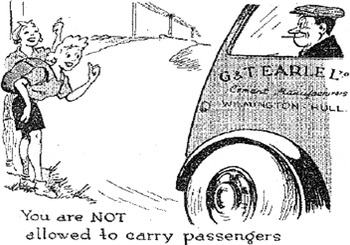
Despite the multipronged approach to the problem, in the 1950s the Ministry of Transport still noted that “no campaign against the lorry girl has been possible on a uniform, nation-wide basis” but that “most effective measures have been taken by the road haulage executive and the firms themselves, who forbid carrying passengers, employ supervisors, etc.” One such company was G & T Earle Ltd Cement Manufacturers of Hull, which issued very specific instructions to its employees in its Lorry Drivers’ Instruction Book in 1947. The book told employees that the company was concerned that drivers “live up to the high standard already set” and reminded them to “remember the log books, make refreshment stops short, [and] don't stay too long—nor stray too far.” But by far the most emphasized rule—occupying a full double-page spread—was that drivers “are not allowed to carry passengers other than those duly authorized by the company.” “We haven't got any shares in the bus company,” the instruction book jocularly put it, before more seriously pointing out in large font that “drivers are strictly forbidden to carry passengers. . . . [A]ny person riding on the vehicle in contradiction of this order will be regarded as a trespasser, and the Company will not be responsible for any loss or injury whatsoever, and the driver will render himself liable to instant dismissal.”Footnote 138 If the gist of what the company was getting at was not adequately communicated in words, the accompanying illustration, of two young blonde women in headscarves and shorts, merrily showing their thumbs to an oncoming lorry, drove the matter home.
Throughout the 1950s, more regulations and restrictions were placed on lorry drivers by legislation and especially by their companies. Some, like Reginald Godfrey and Ronald Cavender, were charged and fined for harboring school absconders. It is especially interesting that regulations controlling working-class lorry drivers and their lorry girl working passengers were formalized and extended just as the supposed “permissive” era dawned and hitchhiking became a staple image of a new kind of youth culture located as much within the middle class as the working class in Britain. This is just one more irony of permissiveness, or perhaps a function of it, that helps to challenge, as Frank Mort puts it, “progressivist accounts of sexual modernization.”Footnote 139 Just as the meaning of hitchhiking was changing, so too was the sexual geography of the road and the car, when gay cruising became a new social concern. While “lorry boys” must certainly have existed in the era of the “lorry girl,” male sexual transgression on the roadway was not really discussed until much later in the twentieth century.
Despite these new measures of control, the lorry driver was adept at overcoming or adapting to the increasing regulations surrounding the way he did his job. Drivers cooked log books to get more overtime, faked parking costs, and even left their back tires jacked up and in gear while they stopped at cafés in order to confound the time clocks installed by the company in their cabs.Footnote 140 Many also continued to give lifts to friends, family, and strangers despite the prohibitions. Overall, the primary pressure upon the lorry driver remained not the regulatory power of the law but the demands of the new affluent mass consumerism, which increasingly demanded its goods quickly and cheaply.Footnote 141 “Floozies,” the driver had told Bugler on the night trunk to Liverpool, were a thing of the past because the modern lorry driver didn't “have the time.”
Indeed, Jeremy Bugler noted in the 1960s that despite several decades’ attempts to regulate lorry driving and improve wages and conditions, there remained “little in a driver's life worth envying. . . . [M]ore than most, his life is controlled. . . . [H]e is conditioned, governed, manipulated by the structure of the industry he works in.” In another metaphor of mobility, labor, consumption, and public health, Bugler argued that “the driver is made for the system, and the system is sick.”Footnote 142
The story of the lorry girl and the lorry driver, the roads they traveled on, and the responses toward them allows for some telling insights into a strange kind of “immoral traffic.” Examining the image of the lorry girl contributes to our understanding of troublesome female sexuality, abscondment, gendered delinquency, and changing ideas about them. In addition, it adds a different dimension to discourses on sex and migration in this period. The lorry girl demonstrates that our discussions of migration and commercialized sex ought not to be limited to questions of sexual trafficking and immigration, and that mobility and prostitution need to be considered as a wide spectrum of activity and representation. Interestingly, concerns about lorry girls, lorry drivers, and venereal disease have shifted geographically in the present day to industrially developing regions of Africa and Asia, where epidemiologists note the worrying connections among male truck drivers, women's mobility and prostitution, and AIDS. In the present as in the past, prostitution is fundamentally linked to modern industrial development and the mobility of labor, both of the woman selling sex and the man buying it.Footnote 143
In a break with typical representations, the lorry girl was seen as firmly entangled with her aiders and abettors, in a rare instance when the male consumer of commercialized or promiscuous sexuality was problematized alongside the female. This is not to say that the lorry girl and the lorry driver received equal and consistent degrees of blame but only to suggest that deviant and commercialized sexuality could be linked in this period—in ideology and in reality—to the economic and social inequality of both men and women. Concerns about lorry jumping also reveal a different kind of narrative in the development of modern British roadways, which were not only tied to the health and efficiency of the nation but were also spaces of sexual danger, sites of social delinquency, and networks that spread the problems of urban and depressed areas to other parts of the country. Not only does this new look at the roadway offer a different perspective on the modernizing transport industry, but efforts to address the lorry girl and the lorry driver problem also challenge narratives of extending and improving state regulation and control in the twentieth century. Both the tactics of lorry girls—begging rides to pursue employment or escape from government institutions—and lorry drivers—with their back tires spinning at roadside cafes—suggest that the story of the “menace of the lorry girl” is as much about tactics of resistance to control as it is about its successful implementation.Footnote 144 Caught up with the demands of the consumer economy—the ultimate symbol of which was, after all, the motor car—and concerns over exploited labor, no concrete solution was ever offered to tackle the problem even as more rules and regulations were put in place to control both the roads and social behavior in the early twentieth century.
“The chief tale behind road haulage today in Britain is about how far men can be driven to earn a decent wage,” Bugler's New Society article concluded. Studies of commercial sex also suggest that this was the “chief tale” of many lorry girls as well.Footnote 145 However, “cheap road transport is essential to the nation,” the Long-Distance Road Haulage Committee had declared in 1929. Official policy was geared toward driving down the price of consumer goods and maintaining “an integral and indispensible component of the national structure,” and the lorry girl and the lorry driver alike struggled as laborers at the bottom of these mobile markets. Licit and illicit economies remained hopelessly entangled in the new motorized age.Footnote 146
“You are NOT allowed to carry passengers,” from G&T Earle Ltd Cement Manufacturers, Hull, Lorry Driver's Handbook, n.d. (c.1947), 11