Introduction
Prevention and treatment of mental illness are the most effective ways to alleviate the global burden associated with mental illness (Saxena et al., Reference Saxena, Jane-Llopis and Hosman2006). Most mental disorders can be treated effectively to reduce symptoms, increase social functioning and foster recovery (WHO, 2001). However, only about one-third of people with mental disorders in Europe and the USA received mental health services in the previous 12 months (Alonso et al., Reference Alonso, Angermeyer, Bernert, Bruffaerts, Brugha, Bryson, de Girolamo, Graaf, Demyttenaere, Gasquet, Haro, Katz, Kessler, Kovess, Lepine, Ormel, Polidori, Russo, Vilagut, Almansa, Arbabzadeh-Bouchez, Autonell, Bernal, Buist-Bouwman, Codony, Domingo-Salvany, Ferrer, Joo, Martinez-Alonso, Matschinger, Mazzi, Morgan, Morosini, Palacin, Romera, Taub and Vollebergh2004; Wang et al., Reference Wang, Lane, Olfson, Pincus, Wells and Kessler2005), with much lower rates in low- and middle-income countries (LMICs; Demyttenaere et al., Reference Demyttenaere, Bruffaerts, Posada-Villa, Gasquet, Kovess, Lepine, Angermeyer, Bernert, de Girolamo, Morosini, Polidori, Kikkawa, Kawakami, Ono, Takeshima, Uda, Karam, Fayyad, Karam, Mneimneh, Medina-Mora, Borges, Lara, de Graaf, Ormel, Gureje, Shen, Huang, Zhang, Alonso, Haro, Vilagut, Bromet, Gluzman, Webb, Kessler, Merikangas, Anthony, Von Korff, Wang, Brugha, Aguilar-Gaxiola, Lee, Heeringa, Pennell, Zaslavsky, Ustün and Chatterji2004; Eaton et al., Reference Eaton, McCay, Semrau, Chatterjee, Baingana, Araya, Ntulo, Thornicroft and Saxena2011; Thornicroft et al., Reference Thornicroft, Chatterji, Evans-Lacko, Gruber, Sampson, Aguilar-Gaxiola, Al-Hamzawi, Alonso, Andrade, Borges, Bruffaerts, Bunting, de Almeida, Florescu, de Girolamo, Gureje, Haro, He, Hinkov, Karam, Kawakami, Lee, Navarro-Mateu, Piazza, Posada-Villa, de Galvis and Kessler2017). Therefore, in 2008, the WHO developed the Mental Health Gap Action Programme (mhGAP) to bridge the gap between mental health needs and service use.
Help-seeking for mental health problems can be defined as any action or activity carried out by individuals who perceive themselves as needing personal, psychological, emotional or social support, care or service, with the purpose of meeting this need in a positive way (Barker, Reference Barker2007). Rickwood et al. (Reference Rickwood, Deane, Wilson and Ciarrochi2005) conceptualise help-seeking as a dynamic process, which begins with the awareness of problems that may require help, followed by the expression of symptoms and need for support, the identification of accessible help sources, and finally the willingness to seek help and disclose relevant information. This model of help-seeking supports a focus on three different processes, i.e. help-seeking attitudes, intentions and behaviours (Ajzen, Reference Ajzen1991). Sources of help can be categorised as formal, informal or self-help (Rickwood and Thomas, Reference Rickwood and Thomas2012).
Different factors have been identified as barriers to help-seeking for mental health problems, especially in terms of formal help. The World Mental Health Surveys (Andrade et al., Reference Andrade, Alonso, Mneimneh, Wells, Al-Hamzawi, Borges, Bromet, Bruffaerts, de Girolamo, de Graaf, Florescu, Gureje, Hinkov, Hu, Huang, Hwang, Jin, Karam, Kovess-Masfety, Levinson, Matschinger, O'Neill, Posada-Villa, Sagar, Sampson, Sasu, Stein, Takeshima, Viana, Xavier and Kessler2014) found that low perceived need and negative attitudes towards treatment were major reasons. Poor mental health literacy, which impairs problem recognition and perceived need, is another prominent barrier (Mojtabai et al., Reference Mojtabai, Olfson, Sampson, Jin, Druss, Wang, Wells, Pincus and Kessler2011; Jorm, Reference Jorm2012). In a population survey, shame and less perceived knowledge were associated with negative attitudes towards mental health service use (Rüsch et al., Reference Rüsch, Müller, Ajdacic-Gross, Rodgers, Corrigan and Rössler2014). Negative attitudes, poor mental health literacy and low perceived need predicted avoidance of service use over time (Bonabi et al., Reference Bonabi, Müller, Ajdacic-Gross, Eisele, Rodgers, Seifritz, Rössler and Rüsch2016). Recent systematic reviews concluded that mental illness stigma is a key barrier to help-seeking (Clement et al., Reference Clement, Schauman, Graham, Maggioni, Evans-Lacko, Bezborodovs, Morgan, Rüsch, Brown and Thornicroft2015; Schnyder et al., Reference Schnyder, Panczak, Groth and Schultze-Lutter2017) because public and self-stigma create embarrassment about help-seeking and fear of being labelled as mentally ill.
A number of programmes and approaches have been developed to address these barriers and promote help-seeking for mental health problems. Given social influences on help-seeking decisions, these interventions have not only targeted individuals with mental health problems who would seek help for themselves, but also families or significant others, primary care professionals or gatekeepers in communities that can support others in their help-seeking decisions. As the general public includes many people with mental illness, relatives and carers, interventions for the public may also be a reasonable way to increase service use. However, very few narrative or systematic reviews have been conducted to evaluate the efficacy of these kinds of interventions. Gulliver et al. (Reference Gulliver, Griffiths and Christensen2010) reviewed studies on help-seeking interventions for depression, anxiety and psychological distress and found that interventions improved help-seeking attitudes, but not behaviours. A systematic review (Kauer et al., Reference Kauer, Mangan and Sanci2014) found that online services did not increase help-seeking of young people. Hom et al.’s (Reference Hom, Stanley and Joiner2015) review found little evidence for the effectiveness of interventions to promote help-seeking and mental health service use among suicidal individuals. These reviews highlighted the need for more randomised controlled studies with robust designs, the use of behavioural outcomes and the evaluation of long-term effectiveness.
To the best of our knowledge, there is no meta-analysis on the effectiveness of help-seeking interventions for mental health problems. We therefore conducted a systematic review and meta-analysis to determine the effectiveness of interventions to promote help-seeking for mental health problems, specifically attitudes, intentions and behaviours in terms of formal, informal and self-help.
Methods
The protocol for this systematic review was registered on PROSPERO before starting this review (Xu et al., Reference Xu, Rüsch, Huang and Kösters2016; CRD: 42016045189). The systematic review was performed and reported in accordance with the Cochrane handbook (Higgins and Green, Reference Higgins and Green2011) and the PRISMA checklist (Liberati et al., Reference Liberati, Altman, Tetzlaff, Mulrow, Gotzsche, Ioannidis, Clarke, Devereaux, Kleijnen and Moher2009).
Eligibility criteria
We included randomised controlled trials (RCTs) and non-randomised controlled trials (CTs) that examined the efficacy of interventions to improve help-seeking for mental health problems. Study participants were any population group of any age. Interventions could target individuals who would seek help for themselves; or address relevant people in the environment of people with mental health problems, i.e. families or significant others, primary care professionals or gatekeepers, who would facilitate help-seeking; or the general population because, due to the high prevalence of mental disorders, this is one way to reach people with or at risk of mental health problems and their social environment.
In the protocol, we had defined that we would include studies with a stated or implicit aim to improve help-seeking as indicated by the inclusion of at least one help-seeking outcome. However, some studies measured help-seeking/service use as process indicators but did not report any study aim to improve service use. Since our goal was to determine the effectiveness of interventions designed to promote help-seeking, we only included studies with the explicit aim to improve help-seeking for mental health problems. Only prospective controlled trials with a parallel group design were eligible for this review. Included studies had to measure at least one help-seeking outcome, including help-seeking attitudes, intentions and actual behaviours. Articles published in English, German or Chinese were included. Studies that aimed to increase adherence or attendance of specific programmes/interventions were excluded.
Search strategy
Nine electronic databases (PubMed, PsycINFO, Social Science Citation Index, EMBASE, Cochrane Controlled Trials Register, clinicaltrials.gov, the German PSYNDEX and two Chinese databases [Chinese National Knowledge Infrastructure, WanFang]) were searched for potentially relevant abstracts published prior to December 2016. The following search strategy was used in English, German and Chinese: ‘help seek’ OR ‘service use’ OR synonyms AND ‘mental health’ OR ‘mental illness’ OR synonyms AND ‘randomized controlled trial’ OR ‘controlled trial’ OR synonyms. We first searched PubMed and then tailored the search strategy for each of the other databases. The full PubMed search strategy is available in online Supplementary Table S1. In case of incompletely reported data, we contacted study authors and asked them for data needed for our meta-analysis.
Study selection and data collection
Two authors independently screened studies in English (FH and ZX), German (TS and ZX) and Chinese (FH and ZX) for inclusion. First, titles and abstracts of publications identified from the search were reviewed for relevance. Second, full texts of relevant studies identified from title and abstract screening were subsequently assessed with respect to the eligibility criteria mentioned above. Disagreements were resolved through discussion.
Risk of bias assessment
Risk of bias was assessed using the Cochrane Collaboration ‘Risk of Bias’ tool (Higgins and Green, Reference Higgins and Green2011), which consists of seven domains (sequence generation, allocation concealment, blinding of participants, personnel and outcome assessors, incomplete outcome data, selective outcome reporting and other sources of bias). In each domain, overall risk of bias was rated as high, low or unclear. In addition, levels of risk for help-seeking outcome measures were evaluated using the following criteria (Clement et al., Reference Clement, Lassman, Barley, Evans-Lacko, Williams, Yamaguchi, Slade, Rüsch and Thornicroft2013): measures that were developed by the study authors with no psychometric information reported, measures with a Cronbach's α < 0.7, or unreferenced measures were judged to have a high risk of bias; measures which study authors reported had a Cronbach's α > 0.7, or referenced as being reliable or valid were rated as low risk; referenced measures with no statement on reliability or validity were rated as unclear risk.
Outcome categories
The primary outcomes were categorised as: ‘help-seeking attitudes’ (beliefs about help-seeking or willingness to seek help), ‘help-seeking intentions’ (plan or decision to seek help) and ‘help-seeking behaviours’ (observable help-seeking behaviour or mental health service use). Under these categories and according to the source of help, outcomes were further classified as formal help, which includes a wide range of professions such as mental health professionals, general practitioners, counsellors or traditional healers; informal help, which is help from informal social relationships including friends, family, partners, relatives, neighbours or colleagues; and self-help, which includes helping oneself through educational materials or taking part in programmes where people share their experiences (Knight, Reference Knight2006; Rickwood and Thomas, Reference Rickwood and Thomas2012). Secondary outcomes included mental health literacy, which refers to knowledge about mental illness that facilitates its recognition, management or prevention; and mental illness stigma, including perceived stigma (perception of public stigma), personal stigma (personal attitudes towards people with mental health problems) or stigma related to help-seeking for mental health problems, based on outcomes reported in the included studies.
Analysis
For continuous outcome measures (i.e. help-seeking attitudes and intentions, mental health literacy and stigma), we calculated standardised mean differences (SMDs) with 95% confidence intervals (CIs). For dichotomous outcome measures (i.e. help-seeking behaviours), odds ratios (ORs) with 95% CIs were calculated. When studies calculated effect sizes controlling for potential confounders (e.g. pre-test values, socio-demographic variables), adjusted effect sizes were used to calculate SMDs or ORs. In the protocol, we had planned to compute risk ratios (RRs), but this was not applicable because adjusted ORs were often reported and RRs cannot be calculated based on ORs. When studies reported multiple outcomes within one outcome category, we combined them into one average effect size (Borenstein et al., Reference Borenstein, Hedges, Higgins and Rothstein2009). In case of multiple comparisons within one study, we combined intervention or control groups to create a single pair-wise comparison for each study (Higgins and Green, Reference Higgins and Green2011). Where data were available, we compared interventions with an inactive or an active control, respectively. Positive SMD or OR>1 indicated that the intervention group was superior to the control group. Random-effect models were used in all analyses and calculated with Review Manager (RevMan, Version 5.3; 2014). The generic inverse variance method was used for meta-analysis based on SMDs or ORs and standard errors of each study. Statistical heterogeneity was assessed using I 2 and its 95% CI with R. Where meta-analyses were possible, we conducted sensitivity analyses to examine the effect of excluding non-randomised CTs.
We conducted pre-planned subgroup meta-analyses for primary outcomes between different delivery methods as well as short- (post-intervention) v. medium-/long-term (⩾4 weeks follow-up after intervention) effectiveness. In follow-up analyses, effect size was calculated at 1–5 months (medium-term) and longer than 6 months (long-term) follow-up based on the included studies. We did not predefine target groups of interventions and major intervention types. Post-hoc subgroup analyses were conducted to explore the effects on formal help-seeking behaviours among target groups, types of interventions and delivery methods, respectively. We also compared the effects on help-seeking behaviours at post-intervention among adults v. children or adolescents.
Results
Characteristics of included studies and participants
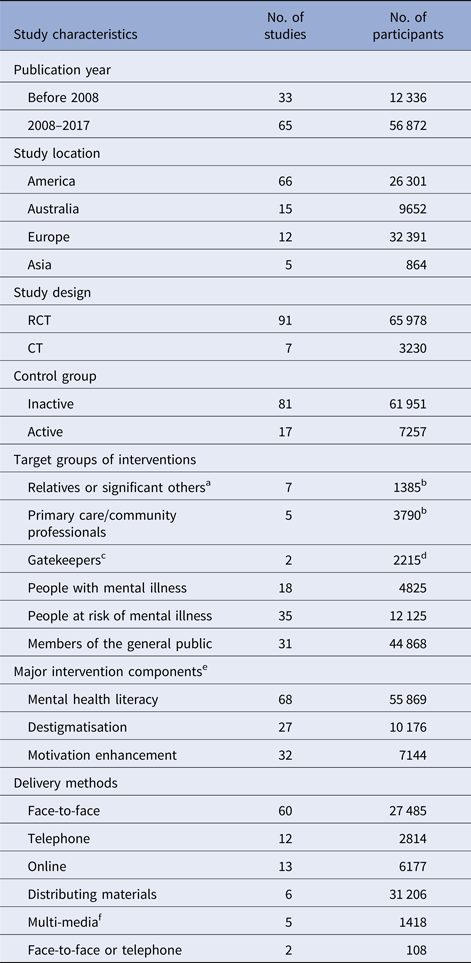
A total of 97 articles that represented 98 independent studies (69 208 participants) were included (Fig. 1 and online Supplementary Table S2). Table 1 provides summary characteristics of these studies. Ninety-five studies (97%) took place in high-income countries or regions, three in middle-income countries and none in a low-income country. Mean age of participants ranged from 2 (interventions for parents) to 82 years. While most studies recruited men and women in similar proportions, six and three studies had only female or male participants, respectively. Twenty-two studies focused on children or adolescents (n = 39 715).
Flow chart for selection of studies in the review.

Characteristics of included studies and interventions

a Relatives or significant others of people with/at risk of mental health problems.
b Number of people with/at risk of mental health problems.
c Resident advisors in college campuses or school teachers.
d College students or pupils.
e Studies commonly employed multi-component interventions.
f Interventions delivered via video or PowerPoint presentation.
Interventions and comparisons
For individuals who would seek help for themselves, most interventions used psycho-educational or cognitive behavioural strategies to improve mental health literacy, such as increasing the recognition of signs of mental health problems and perceived need, modification of dysfunctional beliefs about treatment and providing information on help-seeking sources. Motivational enhancement was often used, particularly for people with or at risk of substance use disorders and their family members or significant others. Nearly one-third of studies employed psycho-education, social contact or cognitive behavioural therapy to decrease mental illness stigma as a barrier to seeking help.
There were interventions that delivered collaborative care training to primary care or community-based agencies and jointly provided care for mental health problems, mostly for depression. For example, professionals in primary care settings or communities learned clinical management of depression, overcoming barriers to care and enhancement initiation and maintenance of treatment. Trainers included psychiatrists, psychologists and nurse care managers. Other interventions included case management, multidisciplinary collaborative care, providing efficient referral services and sending reminder messages before scheduled appointments.
Most studies combined different types of interventions. Interventions ranged in length from 5 min to 3 years and from 1 to 24 modules or sessions. The majority of studies compared interventions to inactive control conditions that involved treatment as usual or no treatment, while 17 studies compared interventions to active control conditions, e.g. psycho-education, empowerment, motivation enhancement or decision-making strategies. A summary of interventions can be found in Table 1.
Risk of bias
More than half of studies did not describe the method used to generate random sequences and allocation concealment, resulting in unclear risk of bias. A low risk was found in 50% of studies in terms of blinding of participants and personnel, in more than 60% of studies regarding blinding of outcome assessment, and in 70% of studies attrition bias. Nearly three-fourths of studies had an unclear risk of selective reporting bias because no study protocol or related materials were available. About half of studies (15 of 28) used validated scales to measure help-seeking attitudes, while 40% of studies (eight of 20) used validated intention measures. Regarding help-seeking behaviour measures used in 74 studies, most included dichotomous yes/no questions developed especially for the study without providing information on reliability or validity. Of the 12 studies (16%) that used standardised questionnaires to investigate actual behaviour, two used validated scales, whereas 10 used measures with no psychometric data reported. The overall risk of bias is presented in online Supplementary Fig. S1.
Effectiveness of help-seeking interventions
Attitudes towards help-seeking
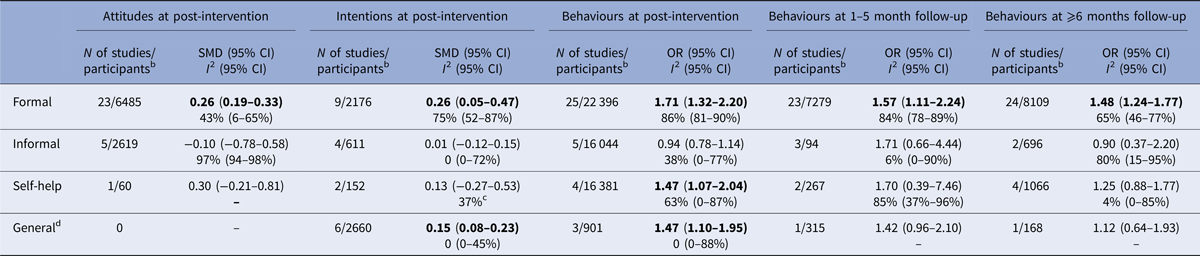
When compared with inactive control conditions, 23 studies yielded a small and statistically significant effect (SMD = 0.26, 95% CI 0.19–0.33, p < 0.001; Table 2) on attitudes towards formal help-seeking at post-intervention. Heterogeneity was substantial (I 2 = 43%, p = 0.02); the forest plot is shown in online Supplementary Fig. S2. Removing the only CT hardly changed the effect size (SMD = 0.25, 95% CI 0.18–0.33). This effect remained stable over 1–5 months follow-up (k = 4, n = 335; SMD = 0.23, 95% CI 0.01–0.44, p = 0.04), but disappeared after 6 months (k = 3, n = 1228; SMD = 0.10, 95% CI −0.03 to 0.24, p = 0.33).
Meta-analysis for intervention effects on primary outcomesa

a Interventions v. inactive control conditions.
b Number of participants contributed to the meta-analysis.
c 95% CI cannot be calculated.
d Formal, informal and/or self-help.
Regarding attitudes towards informal help, five studies with 2619 participants did not show an effect at post-intervention (SMD = −0.10, 95% CI −0.78 to 0.58, p = 0.78). There was only one long-term study, and it showed no effect at 1-year follow-up (SMD = 0). One study assessed attitudes towards self-help without significant effect. Three studies compared interventions with active control conditions and measured attitudes towards formal or informal help, without significant effects (SMD = −0.06, 95% CI −0.16 to 0.04, p = 0.27).
Intentions to seek help
All studies with intention outcomes compared interventions with inactive controls. For intentions to seek formal help, nine studies yielded a small significant effect at post-intervention (SMD = 0.26, 95% CI 0.05–0.47, p = 0.02; Table 2). Heterogeneity was high (I 2 = 75%, p < 0.01); the forest plot is shown in online Supplementary Fig. S3. At 1–5 months follow-up, five studies with 1181 participants showed no effect (SMD = 0.01). One study had a large effect at 6-month follow-up (SMD = 0.94, 95% CI 0.55–1.33, p < 0.001).
Four studies with 611 participants showed no effect on intentions to seek informal help at post-intervention (SMD = 0.01). Heterogeneity across studies was low (I 2 = 0%, p = 0.65). No effect was found in two small studies (total n = 63) at 1–5 months follow-up (SMD = 0) and in two others on self-help at post-intervention (SMD = 0.13, 95% CI −0.27 to 0.53, p = 0.52).
Help-seeking behaviours
Altogether 74 studies reported help-seeking behaviour outcomes, 61 studies with inactive and 13 with active intervention controls. Seventy studies measured formal, nine studies informal help, 10 self-help and four formal and/or informal help. Forty studies had follow-up periods of at least 1 month to give participants time to seek help.
Formal help
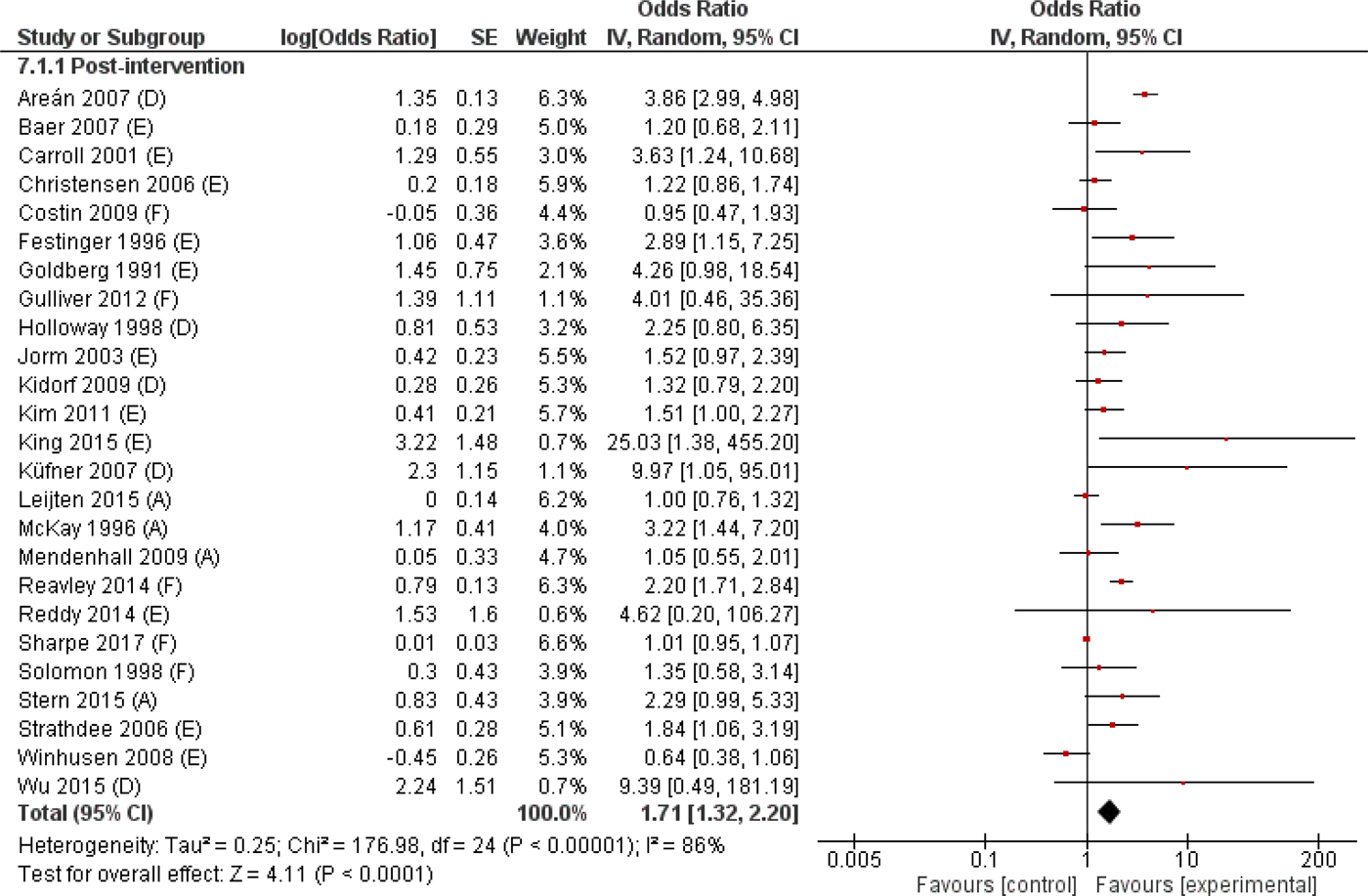
Twenty-five studies showed that at post-intervention the odds of seeking formal help were greater for participants in the intervention group than in the inactive control group (OR 1.71, 95% CI 1.32–2.20, p < 0.001; Fig. 2). Heterogeneity across studies was high (I 2 = 86%, p < 0.001). Removing one CT in a sensitivity analysis slightly decreased the effect size (OR 1.67, 95% CI 1.30–2.16). The effect was sustained over 1–5 months (OR 1.57, 95% CI 1.11–2.24; online Supplementary Fig. S4) and ⩾6 months (OR 1.48, 95% CI 1.24–1.77; online Supplementary Fig. S5).
Effect of interventions v. inactive controls on formal help-seeking behaviours at post-intervention. (A) Intervention targeted family members or significant others, (D) intervention targeted people with mental illness, (E) intervention targeted people at risk of mental illness, (F) intervention targeted members of the general public.

Compared with an active control group, interventions had no significant effect at post-intervention (OR 0.83, 95% CI 0.34–2.05, p = 0.69). However, marginally significant effects were found at 1–5 months (OR 1.77, 95% CI 0.95–3.31, p = 0.07) and ⩾6 months after intervention (OR 1.62, 95% CI 0.90–2.93, p = 0.11).
Informal help
No effect in favour of interventions v. inactive control conditions could be found at post-intervention (k = 5, n = 16 044; OR 1.48, 95% CI 0.29–2.21, p = 0.63), 1–5 months (k = 3, n = 94; OR 1.71, 95% CI 0.66–4.44, p = 0.27) and ⩾6 months after intervention (k = 2, n = 696; OR 0.90, 95% CI 0.37–2.20, p = 0.82). One study with an active control group showed no effect at 1-month (OR 1) and 7-month follow-up (OR 0.97).
Self-help
Four studies with 16 381 participants yielded a significant effect on self-help compared with the inactive control groups at post-intervention (OR 1.47, 95% CI 1.07–2.04, p = 0.02). However, there was no significant effect at 1–5 months (OR 1.70, 95% CI 0.39–7.46, p = 0.48) and ⩾6 months follow-up (OR 1.25, 95% CI 0.88–1.77, p = 0.22).
Of four studies comparing interventions with active control conditions, only one study measured self-help at post-intervention and found that the intervention was superior to control (OR 2.72, 95% CI 1.15–6.44, p = 0.02), while two studies showed no effect at 1–5 months post-intervention (OR 0.92, 95% CI 0.53–1.59, p = 0.77). Interestingly, three studies had ⩾6 months follow-up and yielded a significant effect in favour of the control group (OR 0.58, 95% CI 0.39–0.85, p = 0.005).
Subgroup analyses
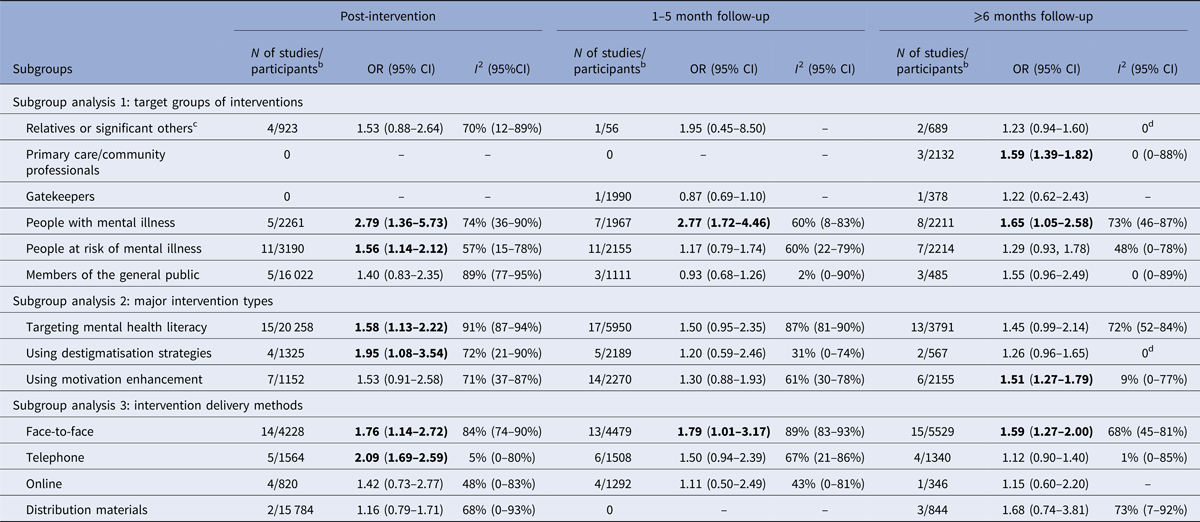
For interventions targeting families or significant others, primary care/community professionals, or gatekeepers in campuses or schools, help-seeking outcomes of people with mental health problems, college students or pupils were measured, respectively. Interventions targeting families or significant others did not significantly increase formal help-seeking behaviours of people with mental health problems (Table 3). Two studies provided interventions for resident advisors in campuses or school teachers as gatekeepers; neither showed significant effects for college students nor for pupils at 3-month and at 5-year follow-up, respectively (Table 3). Three studies with inactive controls trained primary care professionals to improve the quality of mental health services in primary care settings, which significantly increased help-seeking behaviours of their patients at ⩾6-month follow-up (OR 1.59, 95% CI 1.39–1.82, p < 0.001). Two studies compared interventions with active control conditions and did not show positive effects.
Pooled effect sizes on formal help-seeking behaviour by subgroupsa

a Interventions v. inactive control conditions.
b Number of participants contributed to the meta-analysis.
c Relatives or significant others of people with mental health problems.
d 95% CI cannot be calculated.
Among studies targeting individuals who would seek help for themselves, the pooled effect sizes were statistically significant in favour of the interventions targeting people with mental illness across all time points. Interventions were effective for people at risk of mental illness at post-intervention, but not at follow-up. There was no evidence that interventions increased help-seeking behaviours among the general public.
Pooled mean effect sizes were significant for interventions containing mental health literacy or destigmatisation components (Table 3). However, studies provided no evidence of medium- and long-term effects. Motivation enhancement was not effective at post-intervention and 1–5 months follow-up, while a long-term effect on help-seeking behaviours was observed. Face-to-face interventions had short- and long-term effects, whereas interventions delivered by telephone had only short-term effects. There was no evidence that interventions via the internet or educational materials significantly increased help-seeking behaviours.
Interventions improved help-seeking behaviours among adults (k = 19; OR 1.89, 95% CI 1.40–2.55, p < 0.001), but not among children or adolescents (k = 6; OR 1.20, 95% CI 0.93–1.53, p = 0.16) at post-intervention. The effects were significantly different across age groups (χ2 = 5.21, p = 0.02).
Mental health literacy
Of the 16 studies evaluating mental health literacy outcomes, 14 studies compared interventions with inactive control and showed a small and significant effect at post-intervention (SMD = 0.40, 95% CI 0.19–0.61, p = 0.002). The remaining two studies with active control conditions did not yield a significant effect after the interventions (SMD = 0.31, 95% CI −0.48 to 1.10, p = 0.45).
Mental illness stigma
Eleven studies reported stigma outcomes including personal stigma, perceived stigma and stigma related to help-seeking. Ten studies with inactive control groups showed small and significant effects on personal stigma at post-intervention (SMD = 0.21, 95% CI 0.08–0.35, p = 0.002). Two studies showed no effect on perceived stigma (SMD = −0.02). Three studies did not find a significant effect on stigma related to help-seeking at post-intervention (SMD = 0.25, 95% CI −0.13 to 0.63, p = 0.19). One study with an active control condition showed no effect on personal stigma (SMD = −0.01).
Discussion
According to our systematic review and meta-analysis of 98 studies, help-seeking interventions do improve attitudes, intentions and behaviours to seek formal help for mental health problems, as well as mental health literacy, and reduce the personal stigma of mental illness. The results demonstrate long-term benefits on formal help-seeking behaviours. Interventions had short-term effects on self-help behaviours, while there was no evidence that interventions improved informal help-seeking.
When looking at formal help-seeking outcomes, interventions with literacy or destigmatisation strategies led to short-term improvements. There was also evidence that interventions could increase mental health literacy and decrease personal stigma. This is consistent with previous findings that lack of knowledge and personal stigma are barriers to seeking professional help (Mojtabai et al., Reference Mojtabai, Olfson, Sampson, Jin, Druss, Wang, Wells, Pincus and Kessler2011; Bonabi et al., Reference Bonabi, Müller, Ajdacic-Gross, Eisele, Rodgers, Seifritz, Rössler and Rüsch2016; Schnyder et al., Reference Schnyder, Panczak, Groth and Schultze-Lutter2017). Interventions using motivation enhancement were only effective at long-term follow-up, possibly because it takes time to transfer acquired skills into real-life help-seeking decisions (Rubak et al., Reference Rubak, Sandbæk, Lauritzen and Christensen2005).
There was no evidence that interventions targeting relatives or significant others improved seeking professional help among people with mental health problems. As families and significant others can help to bring people with mental health problems in touch with services, interventions should not only increase knowledge and improve skills to encourage help-seeking, but also increase the self-efficacy of families and significant others as well as enhance family cohesion and functioning (Albright et al., Reference Albright, Goldman, Shockley, McDevitt and Akabas2012; Manuel et al., Reference Manuel, Austin, Miller, McCrady, Tonigan, Meyers, Smith and Bogenschutz2012; Stern et al., Reference Stern, Walsh, Mercado, Levene, Pepler, Carr, Heppell and Lowe2015). Primary care professionals increasingly play a role in providing mental health services (Angermeyer et al., Reference Angermeyer, van der Auwera, Carta and Schomerus2017). Some interventions provided training for primary care staff and for improved collaboration between mental health services and primary care, which had long-term effects on mental health service use among individuals in primary care settings (Ngo et al., Reference Ngo, Asarnow, Lange, Jaycox, Rea, Landon, Tang and Miranda2009; Wells et al., Reference Wells, Jones, Chung, Dixon, Tang, Gilmore, Sherbourne, Ngo, Ong, Stockdale, Ramos, Belin and Miranda2013). However, short- and medium-term effects of these interventions warrant further research. Teachers, school staff or youth workers are key gatekeepers to connect young people with services. A widely used gatekeeper training is Mental Health First Aid (Lipson et al., Reference Lipson, Speer, Brunwasser, Hahn and Eisenberg2014), which trains resident assistants in campuses to assess risk, encourage self-management and help-seeking. However, there was no evidence that campus-based gatekeeper training improved service use.
Interventions targeting people with, or at risk of, mental illness increased formal help-seeking behaviours. For the general population, however, interventions were not effective. This is consistent with the observation of Gulliver et al. (Reference Gulliver, Griffiths, Christensen and Brewer2012) that help-seeking behaviours would be expected if individuals experience symptoms and thus are likely to perceive the need for professional help. As interventions targeting the general population mainly aim to increase the willingness to seek help for possible future mental health problems, long-term follow-up is needed to detect behaviour change. Three studies yielded a trend in this direction at long-term follow-up. Additionally, as interventions for the general population usually focus on depression, anxiety or suicide prevention, many participants might consider the information irrelevant, resulting in low effect sizes (Costin et al., Reference Costin, Mackinnon, Griffiths, Batterham, Bennett, Bennett and Christensen2009). Therefore, future interventions might be more effective if tailored to specific target groups.
Although many mental disorders begin early in life, overall rates of treatment seeking in this age group are low (Gulliver et al., Reference Gulliver, Griffiths and Christensen2010; de Girolamo et al., Reference de Girolamo, Dagani, Purcell, Cocchi and McGorry2012) and interventions to improve help-seeking among children and adolescents are needed. Unfortunately, there was no intervention effect in this age group. Children depend on adults to determine whether and when to use services. Nearly 70% of interventions for this age group addressed parents, rather than children or adolescents themselves, and tried to improve parental knowledge about mental health and parents’ awareness of children's treatment needs as well as to provide information on help sources. Future interventions might need to reduce mental illness stigma among youth and family members (Kaushik et al., Reference Kaushik, Kostaki and Kyriakopoulos2016), increase youth's knowledge about symptoms (Rickwood et al., Reference Rickwood, Deane, Wilson and Ciarrochi2005) and address youth's desire for self-reliance (Gulliver et al., Reference Gulliver, Griffiths and Christensen2010).
The WHO (2009) asserts that informal community care and self-help are necessary to meet the full spectrum of mental health needs. Unfortunately, there was no evidence for intervention effects on informal help-seeking. Interventions appeared to facilitate the use of self-help programmes or materials, but further investigation of long-term effects is required (Rickwood and Bradford, Reference Rickwood and Bradford2012; Scott et al., Reference Scott, Webb and Rowse2015).
Most studies delivered traditional face-to-face interventions, and online interventions were not as effective as face-to-face for behavioural change (Wantland et al., Reference Wantland, Portillo, Holzemer, Slaughter and McGhee2004; Gulliver et al., Reference Gulliver, Griffiths and Christensen2010). Telephone-based interventions mainly provided brief sessions (e.g. one or two sessions of 30–60 min) or weekly short messages services (Bauer et al., Reference Bauer, Okon, Meermann and Kordy2013), which may be associated with short-term effects on behaviours. The lack of benefit from distributing educational materials is unsurprising, given the low intervention intensity (Sharpe et al., Reference Sharpe, Patalay, Vostanis, Belsky, Humphrey and Wolpert2017).
This review has a number of limitations. Study quality varied and heterogeneity was high, so findings need to be considered with caution. Many studies used outcome measures with unclear validity. Since most studies were conducted in high-income countries, our findings might not be generalisable to LMICs. Intervention effects may vary across diagnoses. Potentially relevant papers in other important languages were not included in this review.
Despite these limitations, the findings have practical implications. Interventions with integrative strategies that focus on several barriers to help-seeking may be advantageous. Psycho-education to improve literacy and perceived need may increase help-seeking. Changing stigma or negative attitudes towards help-seeking may involve more than psycho-education and employ cognitive behavioural strategies as well as in-person or video contact. Goal-directed motivational enhancement may improve readiness to engage in treatment, especially substance use services and suicide prevention. Collaborative care models, offering general medical and mental health care in primary care settings, and improvements in the quality of mental health care may improve service use. Gatekeeper training programmes may be more effective when supplementing high-quality and intensive training.
This study also highlights significant research gaps. High-quality RCTs with large representative samples and long-term follow-up assessments are needed to provide evidence for the efficacy of existing interventions. Future research is needed to determine active ingredients and cost-effectiveness of help-seeking interventions. Validated measures are required since most studies used just one question to assess the complex concept of help-seeking behaviour. As most research has focused on formal help, we need to know how interventions can improve informal help-seeking. Furthermore, most studies were conducted in the USA, Australia and other high-income countries. All studies from Asia were conducted in China and had small sample sizes. More research from LMICs is needed. Future research should examine the efficacy of specific interventions for a range of target groups, e.g. caregivers or suicidal individuals.
In summary, this review provides evidence that interventions can improve formal help-seeking for mental health problems. Help-seeking intervention research has grown rapidly since the mhGAP was launched (WHO, 2008), though more work is needed particularly in LMICs. Future studies should evaluate interventions for specific target groups, national and local conditions and provide more evidence of their long-term efficacy.
Supplementary material
The supplementary material for this article can be found at https://doi.org/10.1017/S0033291718001265.
Acknowledgment
The authors are grateful for the help of colleagues who provided additional data for our analyses.