

I. INTRODUCTION
For over a century, child health and well-being indicators have been linked to the emergence of the modern state and its ability to protect the population.Footnote 1 In particular, international comparisons of infant mortality have generated heated debates on the relative importance of social policies, economic growth, living conditions, immigration policies, and health measures in different contexts.Footnote 2 Although historical examination of the evolution and determinants of infant mortality are significant for developing countries today, such analyses have focused almost exclusively on Europe, North America, Australasia, and Japan; demographers and policymakers presume that Latin American, African and Asian experiences follow – with more or less lag time – the ‘Northern’ patterns. This study seeks to transcend this limitation through a case study of Uruguay, one of the few developing countries with reliable, comprehensive infant mortality series that date from the early twentieth century.
Beginning in the mid-nineteenth century, various Latin American countries passed laws calling for government collection of vital statistics (Peru and Mexico starting in the 1850s, Argentina in 1871, Brazil in 1888, among others). Even so, few of them (Cuba marking an exception) had national coverage until after World War II.Footnote 3 Uruguay's Office of General Statistics was created in 1874 and, in the context of early secularization,Footnote 4 the registration of births, marriages and deaths was transferred from religious parishes to the state with the establishment of the Civil Registry in 1879.Footnote 5 By 1900, the country was collecting, compiling and publishing reliable age- and disease-specific mortality data.Footnote 6 Uruguay presents a special case: not only were vital statistics available from an early date for the nation as a whole, and not just for the main cities (the more typical coverage for countries in Latin America at the time), the particular pattern of Uruguay's infant mortality rate (IMR) set it apart from that of virtually every other country in the world.
The Uruguayan tradition of comprehensive collection of social statistics is rooted in the nineteenth-century French practice of meticulous compilation of detailed data on everything from manufacturing and agricultural production to imports and exports, transportation, communications, education, social welfare, government revenues and activities, law and order, demographics and cultural activities (such as museum attendance), as typified by the Parisian statistical volumes issued from the 1880s under Louis Adolphe Bertillon and, especially, under his son Jacques.Footnote 7 Adolfo Vaillant, founder of the Uruguayan statistics bureau and himself a French immigrant, was influenced by these examples in conceiving Uruguayan data-collection practices.Footnote 8 Complementing these rich statistical materials are the innumerable writings of doctors, reformers and public health administrators, who studied and grappled with Uruguay's infant mortality situation starting from the early twentieth century. Thanks to these sources, Uruguay's historical infant mortality dynamics can be examined with the level of close attention heretofore reserved to developed countries.
At the turn of the twentieth century, Uruguay's infant mortality rate stood out as one of the lowest in the world: around 1900 it was less than 100 deaths per 1,000 live births, a level comparable to that of Norway and Sweden and lower than that of France, England and Wales and other countries with death registries at the time (see Figure 1). However, Uruguay did not retain its remarkably low infant mortality standing. Within a few years, while most other countries experienced steady infant mortality declines, Uruguay underwent a stagnation that lasted almost 40 years. Despite the implementation of multiple measures aimed at addressing the problem, Uruguay's infant mortality rate fluctuated at around 100 deaths per 1,000 live births until the late 1930s, when it finally resumed its descent.
The evolution of infant mortality rates (IMR) per 1,000 live births in Uruguay and selected countries, 1900–1950. (Sources: Uruguay: Series based on deaths and births published in Dirección de Estadística General, Anuarios estadísticos de la República Oriental del Uruguay (Montevideo, 1893–1944), and Dirección General de Estadística y Censos, Anuarios estadísticos de la República Oriental del Uruguay (Montevideo, 1945–1953); other countries: B. R. Mitchell, International historical statistics: Europe, 1750–2000 (5th edn; New York, 2003).)

The stagnation of infant mortality in Uruguay is perplexing in two senses. On one hand, it accompanied the birth and consolidation of the country's welfare state; on the other, it departed from demographic patterns of infant mortality declines in other settings. Historical demographic studies typically show that once an infant mortality descent has begun – regardless of the initial level – it continues until reaching low levels.Footnote 9 While this study cannot attest to precise infant mortality patterns before 1900 due to the uncertain quality and limited availability of data, we can infer that infant mortality likely underwent an initial decline in this period, making its subsequent levelling off all the more puzzling.
In this article we examine Uruguay's infant mortality pattern during the first half of the twentieth century, highlighting the most important causes of death – diarrhoeal and respiratory diseases – and their relation to social, economic and political conditions. The complexity of the circumstances surrounding the Uruguayan IMR stagnation motivates our integration of two methodological perspectives: a socio-demographic analysis of the official statistical series and a historical analysis of the ideas, practices and public health policies of the period.
II. THE POLITICAL, SOCIAL AND INSTITUTIONAL CONTEXT
Circa 1900 Uruguay was a society of paradoxes. The country was proud of its modern, democratic state and rapidly evolving social welfare policies regarding education, worker protection and benefits for the elderly, which were launched during the two presidencies of José Batlle y Ordóñez (1903–1907 and 1911–1915). Nonetheless, as Uruguay's economy was based on the export of agricultural products, particularly beef, this made it sensitive to international economic oscillations, which jeopardized the living conditions of disadvantaged groups and slowed the pace and full implementation of social legislation.Footnote 10
In 1908, Uruguay had a population of approximately one million inhabitants. Almost a third of the population resided in Montevideo, the port capital and main political, commercial, and financial centre of the country, which attracted both internal and international migrants. Uruguay's early urbanization, with 54 per cent of the population living in towns and cities in 1908, can be attributed to several factors. The indigenous population, a significant proportion of the rural population in many Latin American countries, was small, having been almost entirely wiped out during the first half of the nineteenth century. The country was peopled mostly by European immigrants – Spanish, Italian, French and others (plus a small population of descendants of African slaves) all of whom migrated into or through Montevideo. In economic terms, the principal industry – raising livestock – generated low demand for rural labour, and Uruguay never developed a (rural) peasantry; exporting hides and meat, by contrast, brought greater demand for (urban) meat-processing and port labourers.
Early on, the capital seemed prepared for the influx of migrants. With the inauguration of its piped water network in 1871, including wastewater to sewage connections, Montevideo became the first Latin American city with a comprehensive sanitation system.Footnote 11 By the 1880s other modernization and public health measures such as street paving, electric street lighting and garbage-collection services took hold, and within a few decades investments in housing led to safer and more hygienic living conditions.Footnote 12
Efforts to improve education – which had been declared free, secular and compulsory in the 1870s – led to substantial progress in primary-education coverage for both sexes. In 1900, 29 per cent of children between 6 and 14 years of age attended school, rising to over 50 per cent at the end of the 1930s, with accompanying significant increases in secondary education attendance.Footnote 13 In the early twentieth century, a slightly higher proportion of girls attended school than boys, a trend that accelerated through the century.Footnote 14
Around the same time, the country began a fast-paced process of medicalization, with the establishment of the Faculty of Medicine (1875), open to new European bacteriological and clinical developments, and a series of health and welfare institutions, such as the National Board of Hygiene (founded in 1895) and the National Public Assistance agency (1910).
Institutions for infant protection and maternal education included the longstanding Asylum for Foundlings and Orphans (which also oversaw the extramural care of infant orphans placed with wet nurses) and the Children's Hospital (1908). In 1908 the country's first milk depot was created in Montevideo. By 1927 the capital had 9 depots, with 24 more across the country's provinces; by the 1940s the nation had a total of 41 milk depots. These centres (based on the French gouttes de lait, serving infants and mothers of poor familiesFootnote 15) purveyed medical care, provided dietary and health education and distributed free milk to families in need.
Although the organization of and responsibility for child health and well-being were assumed by the state in the 1910s (modelled after France's Assistance Publique Footnote 16), several charities headed by upper-class ladies continued to play a pivotal role for several decades. For example, in 1915 a private women's association established a Maternity Home offering single pregnant women medical attention, legal assistance for establishing the paternity of their offspring and ‘moral guidance’.Footnote 17
In 1919 the Public Assistance agency set up an Infant Protection Service and Wet Nurse Office, centralizing many of these efforts. As with France's Roussel law, Uruguayan legislation prohibited a woman from becoming a wet nurse until her own child had reached six months of age.Footnote 18 In 1925 the Children's Home was founded, unifying the administration of the Foundlings and Infant Asylum, the Central Milk Kitchen and other services.
Amidst these institutional developments, Uruguayan public health and pediatric authorities recognized the stagnation in the infant mortality rate, debated its causes and heightened their interest in international approaches to infant health.Footnote 19 These doctors made sure that Uruguay adopted measure after measure, from maternal subsidies to visiting nurses, and they became active in Latin American and international debates over child health. In 1927, the world's first Institute for the Protection of Childhood was founded in Montevideo under the auspices of the Pan American Child Congresses, the League of Nations Health Organization, and the Uruguayan government.Footnote 20 Serving as a worldwide clearing-house and mouthpiece for child health and welfare developments, the Institute helped push Uruguay to address its infant mortality problem. In 1934 the Uruguayan Parliament approved a Children's Code, which offered a gamut of rights and services to Uruguayan minors, including rights to education, welfare and living conditions, health care and legal protection. While several other countries and the League of Nations adopted similar children's codes in this period, Uruguay was the first country to implement its code with concrete measures, under the umbrella of a national Children's Council. The Children's Code's rights and protections would prove a vital component of the mid-century expansion of Uruguay's welfare state, and of resolving the infant mortality stagnation.Footnote 21
Simultaneous to these developments, Montevideo experienced extremely rapid population growth. This was particularly explosive between 1908 and 1930 when the population more than doubled to 655,000 inhabitants.Footnote 22 Although housing stock and quality had improved in the late nineteenth century, after 1900 sanitary and housing conditions began to deteriorate, with mushrooming numbers of conventillos (tenements) housing the urban poor.Footnote 23 According to the 1908 census, over 10 per cent of Montevideo's population lived in overcrowded conventillos in the downtown core; many more lived outside the city centre in flimsy tin or wooden constructions, and working-class families crowded into ‘miserable huts’ (covachas).Footnote 24 Only in 1940 did public policies begin to address the housing problem.Footnote 25
With fast-paced urbanization, the water and sewage systems could no longer meet the population's needs. Around 1908, 46 per cent of Montevideo's houses had running water. Away from the city's oldest, central – and most affluent – areas, however, piped water reached less than one in every seven households.Footnote 26 Notwithstanding early advances, the extension and improvement of water and sanitation systems only resumed in 1928.Footnote 27 Throughout the rest of the country (referred to hereafter as ‘the Interior’), the situation was even worse, with infrastructural development taking place at a far slower pace than in Montevideo.
Moreover, in spite of the early promise of the Batllista state, the living conditions of wage-earners remained difficult.Footnote 28 From the late nineteenth century until the mid-1920s real wages stagnated (albeit with considerable fluctuations), with the worst years corresponding to World War I and its aftermath. From 1925 until the early 1930s, there was net growth in purchasing power, cut short by the effects of the Great Depression and a marked decline in urban wages.Footnote 29
These conditions began to turn around in the late 1930s, when the Uruguayan Parliament undertook an extensive study of working-class living conditions. This led to vastly expanded social welfare provisions in the 1940s: retirement pensions for all government employees, expanded coverage for workplace accidents and occupational illnesses, unemployment compensation for all union members, holiday pay, a ‘rural labourers’ statute', the creation of a Salaries and Wages Board and a family allowance system.Footnote 30 By the mid-twentieth century, the endpoint for our analysis, the growth rate in wages in real terms was the highest in the country's history, and Uruguay reached a level of social welfare comparable to that of some developed countries.Footnote 31
III. COVERAGE AND QUALITY OF URUGUAYAN VITAL STATISTICS: A METHODOLOGICAL NOTE
The series utilized for this study derive from official published vital statistics. For the entire first half of the twentieth century and on to the present, Uruguay has complete annual statistical series for births and deaths by age and cause of death. Causes were classified according to successive revisions of the International Classification of Diseases adopted by the country in 1901, 1926 and 1944 (those relevant to the 1900–1950 study period). Various analysts who have evaluated twentieth-century Uruguayan coverage of vital statistics agree that the country's data are reliable according to international standards and were reasonably good even at the beginning of that century.Footnote 32
Even so, because we have detected certain coverage problems in the birth registration series, we have made a revised estimate to correct for omissions, adding 12 per cent more births in the first years of the series, gradually descending to 4.5 per cent additional births in 1950.Footnote 33 If anything, this correction to the denominator makes the infant mortality stagnation more pronounced than it appeared to contemporary analysts, but the difference is small. With respect to the registration of deaths, we have decided to maintain the uncorrected series, since we cannot rely on alternative sources of information that could help us confirm the existence of a possible under-registration, and therefore determine its magnitude. Supporting our decisions regarding these two series is the widespread suspicion of analysts of the time that birth figures reflected under-registration (an observation validated by the jump in registrations experienced in the mid-1940s with the initiation of family allowances, which were contingent upon presentation of birth certificates) and also their unanimous belief in the accuracy of infant death registration figures.Footnote 34 Their confidence was derived from the Civil Registry's stipulation that burials could not take place without the filing of death certificates, which were issued free of charge to the poor. This rule was unlikely to have been violated because, in contrast to other Latin American countries, there is no evidence of clandestine cemeteries in Uruguay, in part due to its small size and geographic accessibility.
The Civil Registry's instructions for registering births and deaths were consistent through our study period. In urban areas medical certificates were required to accompany death registration, whereas in the rest of the country certification by a local official or two neighbours was sufficient. Births had to be registered within 10 days in urban areas and within 20 days in rural areas. Deaths had to be registered within 24 hours in urban areas (to comply with requirements that burials take place within one day of death), but in rural areas registration could take place up to 10 days following death.Footnote 35
Another key issue relates to how early deaths and stillbirths were defined. Uruguay's 1892 and subsequent civil registry manuals spelled out two possibilities: (a) an infant born without signs of life was not counted as a registered birth and was instead included in the list of stillbirths, or (b) if an infant died ‘moments, hours or days after being born but before the birth was registered’ it was considered a live birth and had to be issued both a birth certificate and a death certificate.Footnote 36 This differentiated Uruguay's rules from the French system of classifying early infant deaths as stillbirths (faux mort-nés, or false stillbirths).
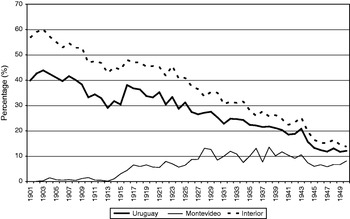
Without medical certification of death, Civil Registry instructions prohibited the inclusion of cause of death on the death certificate, requiring the Justice of the Peace to indicate ‘se ignora’ (unknown) instead.Footnote 37 In the statistical annuals these unknown causes of death were grouped together as ‘ill-defined’ (mal definidas).Footnote 38 At the beginning of the twentieth century, 45 per cent of infant deaths were registered without a specified cause of death. By 1950, infants who died of ill-defined causes represented 10 per cent of the total infant mortality. It is impossible to know what causes of death were most likely to have received this designation. According to the doctors of the day, ill-defined deaths were those that took place without medical care. Ill-defined deaths were thus an indicator of low levels of medicalization and of poverty; indeed, the trends in the rates of death from ill-defined causes corresponded with both rural location and rising urban misery, even as rates of ill-defined causes of infant mortality were far lower in Montevideo than in the rest of the country (see Figure 2).
The evolution of the percentages of infant deaths due to ‘ill-defined causes’ in Uruguay, Montevideo and Interior, 1893–1950.

For the purposes of this study, we have decided against proportionally redistributing the ill-defined causes according to patterns of defined causes because we have no evidence indicating that they would be distributed the same way. We believe that this decision does not affect the trend line of the different causes (because they remained stagnated even as ill-defined causes of death began to decline), but it does affect their level, lowering the apparent rates of death due to known causes.
IV. THE EVOLUTION OF THE INFANT MORTALITY RATE
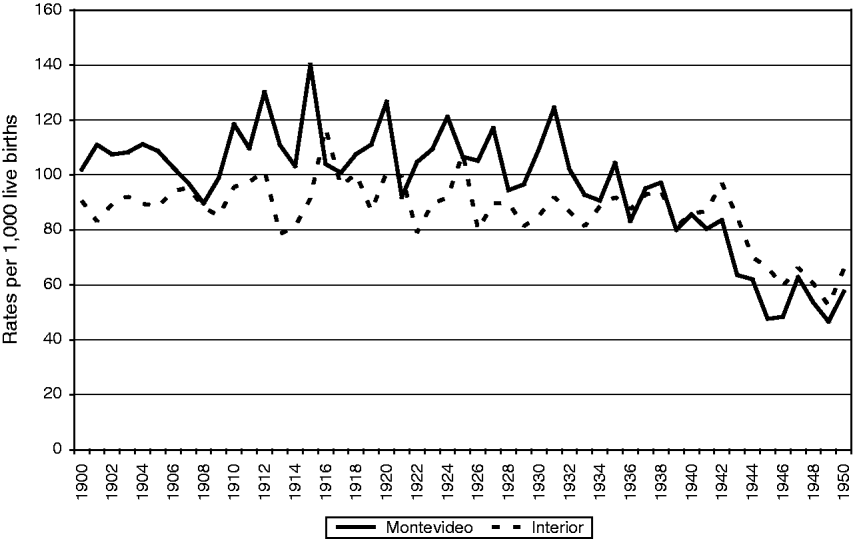
As mentioned above, Uruguay's IMR at the turn of the twentieth century (93 deaths per 1,000 live births), placed it among the countries with the lowest rates in the world, similar to the Norwegian rate (see Figure 1). In the early twentieth century, however, Uruguay had almost double the level of urbanization of Norway. Moreover, infant mortality circa 1900 was only slightly higher in Montevideo than in the Interior (which also included some town populations), a paradoxical situation in terms of the European axiom of higher infant mortality in urban than in rural areas.Footnote 39 As alluded to above, among the possible reasons for both Uruguay's and Montevideo's relatively low infant mortality was the early investment in urban hygiene and sanitation.
However, this advantageous situation did not last for long. Unlike other countries with records from this period, where the IMR experienced a continuous reduction until it reached low levels, infant mortality in Uruguay remained stalled at just under 100 deaths per 1,000 births until the late 1930s.Footnote 40 A rapid decline was registered in the 1940s, when Montevideo's infant mortality rate dipped below that of the Interior, halving the country's IMR to 50 per 1,000 by 1950 (see Figure 3). During the first four decades of the twentieth century the infant mortality rate went from being an achievement that elicited national pride to a cause for concern among the country's public health physicians and pediatricians, as well as among politicians.Footnote 41 As outlined above, multiple measures over several decades were aimed at combating the infant mortality problem, but they yielded little success.
Infant mortality rates per 1,000 live births in Montevideo and the Interior, 1900–1950. (Sources: As in Figure 2).

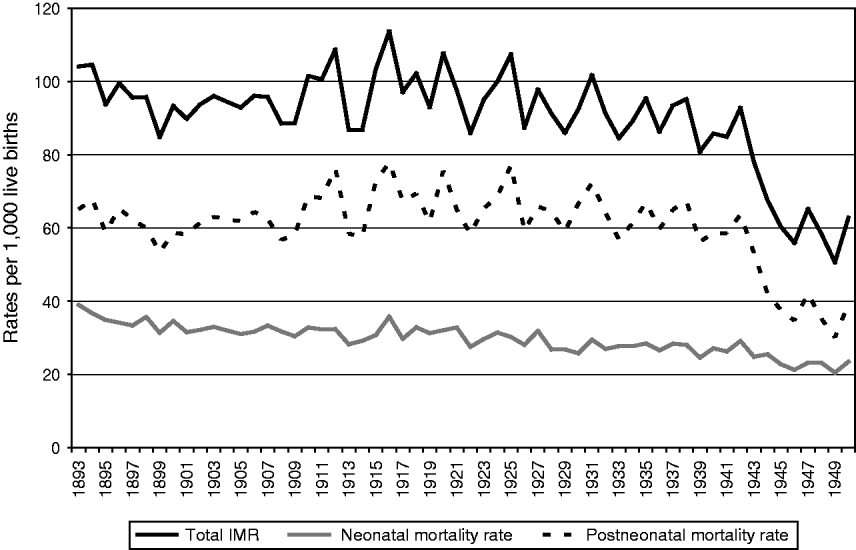
Analysis of infant mortality is typically divided into two phases according to the age of the deceased child: ‘neonatal’ mortality refers to deaths between birth and 28 days and ‘postneonatal’ mortality refers to deaths between 27 days and 364 days of life. Neonatal mortality is typically ascribed to endogenous causes, for example congenital anomalies, and perinatal conditions, while deaths in the postneonatal period are usually attributed to causes of an exogenous nature, associated with social conditions (infectious and parasitic diseases or respiratory ailments).
As can be seen in Figure 4, the IMR's main fluctuations between 1900 and 1950 were most closely linked to variations in postneonatal mortality and were thus likely to have been related to the social environment. As such, emergence from the stagnation can be explained almost entirely by the plunge in postneonatal mortality from 1942 onwards.
The evolution of total, neonatal and postneonatal infant mortality rates per 1,000 live births in Uruguay, 1893–1950. (Sources: As in Figure 2).

V. THE EVOLUTION OF INFANT MORTALITY BY CAUSE OF DEATH: A GENERAL OVERVIEW
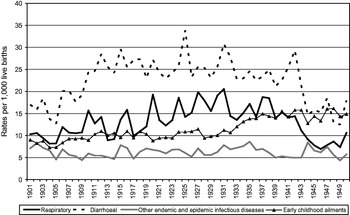
Infectious diseases were the main drivers of Uruguayan infant mortality during almost the entire first half of the twentieth century (see Figure 5). During this period, diarrhoeal diseases and respiratory ailments were the leading causes of death, forming between 45 and 65 per cent of infant deaths with a defined cause.Footnote 42 Until the 1940s, mortality due to other endemic and epidemic infectious ailments, while lower than the leading causes, also failed to show significant improvements, representing approximately 10 per cent of the specific causes of infant mortality during the first decades of the century.Footnote 43 Lastly, ‘early childhood ailments’ refers to a particular group of diseases that led to early infant death.Footnote 44 Until the 1930s, approximately 10 deaths per 1,000 live births were ascribed to this cause, rising to 15 per 1,000 from the late 1930s until the late 1940s.Footnote 45
The evolution of infant mortality by major causes of death in Uruguay, 1901–1950. (Sources: As in Figure 2).

In sum, until the early 1930s, infectious diseases such as diarrhoeal and respiratory diseases, among others, represented approximately 80 per cent of deaths with defined causes among children under one year of age. In this period the proportion of mortality due to ‘diseases of early infancy’ was just under 15 per cent. In the 1930s, when the relative role of infectious diseases in infant mortality declined, the proportion of deaths due to ‘diseases of early infancy’ rose, reaching 30 per cent by the late 1940s.
One complicating matter in the analysis of infant mortality is the proportion of deaths with unknown or ‘ill-defined’ causes: in other words, deaths that occurred without medical assistance (see Figure 2). As discussed above, the level of deaths due to an ill-defined cause was especially important outside of Montevideo, where certification of death – given the paucity of doctors – was frequently carried out by the local Justice of the Peace. Most infant deaths due to an ill-defined cause can thus be interpreted as reflecting the difficulty of access to medical care. This variable may also represent the overall level of development or infrastructure and not necessarily the role or efficacy of medical care in itself.
The two main causes of infant mortality during the 1900–1950 period were diarrhoeal and respiratory illnesses. Respiratory and diarrhoeal diseases shared various elements in the explanatory frameworks of early-twentieth-century public health physicians. These experts identified certain interactions between the diseases, for example the fact that the weakness generated by one led to susceptibility to the other, and recognized that both causes of death were linked to unfavourable socio-environmental conditions.
Gastrointestinal diseases were the main cause of death for infants until the mid-twentieth century (see Figure 6). The IMR due to diarrhea showed a sharp increase between 1901 and 1915, followed by a stagnation at approximately 25 deaths per 1,000 births until the late 1930s. This stagnation took place even as various countries achieved sharp reductions in diarrhoeal mortality in these very same years.Footnote 46 Uruguay's accentuated descent in infant mortality rates due to diarrhoea came only after 1943.
The evolution of the infant mortality rate by deaths due to diarrhoeal and respiratory diseases in Uruguay, 1901–1950. (Sources: As in Figure 2).

Illnesses of respiratory origin marked the second major cause of death in infants between 1900 and 1945. Figure 6 clearly shows an upward trend until the early 1930s with evident difficulties in controlling spikes in respiratory deaths, which returned periodically until the early 1940s. At this time mortality from respiratory illnesses entered a phase of sustained descent.
VI. DEEPENING THE EXPLANATION THROUGH THE PERSPECTIVE OF DOCTORS OF THE DAY
The following analysis incorporates the research findings, practical experiences and assertions made by early-twentieth-century doctors concerning the factors that had an impact on the evolution of infant mortality and its leading causes. Although these observers did not always have statistical evidence at hand, their role as actors and witnesses and their copious writings offer an invaluable contribution to understanding Uruguay's infant mortality conundrum, that is, why its level of infant mortality stagnated while that of other countries declined.
The generation of Uruguayan public health physicians who practised during the early twentieth century served simultaneously as clinicians promoting healthy child-rearing and treating sick children, demographers analysing the stagnation in infant mortality, epidemiologists trying to comprehend the factors associated with infant mortality, political players supporting and developing interventions aimed at improving socio-medical services for poverty-stricken populations and – additionally – as administrators of these very same services.Footnote 47 This extensive engagement generated a high level of debate, especially for a small country so distant from the centres of scientific development and economic power; given their wide social, political and public health panorama, the participants contemplated a wide range of explanatory factors, most of which are still relevant today.
VI.1 The likely causes of diarrhoeal mortality
Which factors did contemporary pediatricians and public health players identify as central in explaining the persistently high levels of infant mortality due to diarrhoea? Four main culprits were identified: (a) the combination of ‘milk and mothers’, (b) the climatic-ecological situation, (c) child nutrition and (d) increased medicalization.
a) Milk and mothers
Having acknowledged the infectious nature of gastrointestinal diseases, doctors identified milk as the main culprit. Like his Scandinavian colleagues, Dr Luis Morquio – founder of Uruguayan pediatrics and of the Montevideo-based International Institute for the Protection of Childhood, who was renowned worldwide for his research on infantile diseases – held that maternal breastfeeding served as a kind of infant social security.Footnote 48 However, as elsewhere, Uruguayan mothers were increasingly reliant on cow's milk, which was easily contaminated. At times the milk depots, which encouraged breastfeeding but also distributed milk, inadvertently exacerbated the problem.Footnote 49
Doctors identified two aspects of the issue of contaminated milk: first, milk distributed under sanitary conditions but contaminated subsequently, and second, milk contaminated prior to distribution. In the first of these scenarios, according to Uruguay's pediatricians, the mother's role in the infant feeding process was a prime concern since the milk could become contaminated in the home if not kept under hygienic conditions. Contemporaries frequently referred to the hazards caused by maternal ignorance regarding child care, hygiene and nutrition. Still, the physicians of the day also pointed to the milk depots as having a particular responsibility for educating mothers about food hygiene and infant care in general.Footnote 50 Some physicians believed that the majority of diarrhoeal diseases were directly linked to food problems, often appearing in breastfed or partially unweaned children once they began consuming foods other than breast milk, generally during the first six months of life.Footnote 51 Although such contamination could also take place in institutional settings, such as orphanages, doctors made little reference to this problem.
The quality of the milk that was distributed to the population, either directly or through the milk depots, was also problematic. Around 1913, 65 per cent of milk consumed in Montevideo came from rural dairy farms (tambos), located within a 100-kilometre radius of the city.Footnote 52 At the country's first Milk Congress (held in Montevideo in 1918) Morquio, supported by milk depot administrator Dr Julio Bauzá and other congress attendees, argued that all milk from dairy farms near Montevideo was of poor quality. Milked and bottled under unhygienic conditions, it reached homes only many hours later.Footnote 53 At the time, neither dairy farms nor the train cars that transported the milk had refrigeration systems.Footnote 54 In view of this, Morquio recommended that milk be consumed only from dairy farms within the city limits and that it be boiled immediately upon acquisition. He also pointed out the class dimensions of the milk and diarrhoea problem, with the poorer population typically consuming milk from rural farms while elites mostly drank milk from the city's dairy farms ‘as a custom and following the doctor's recommendation’.Footnote 55
During the 1920s several milk-processing plants were established in Montevideo, where careful hygienic and pasteurization measures were implemented, but it was only in January 1934 that a Montevideo ordinance made the pasteurization of milk compulsory.Footnote 56 In December 1935, the National Cooperative of Milk Producers (CONAPROLE) was founded. It centralized milk hygiene standards and inspection and put in place production controls for Montevideo's milk market. Beginning in 1937, the cooperative gradually displaced independent dairy farms and raw-milk sellers in Montevideo. By 1944, CONAPROLE produced an estimated 84 per cent of the capital's milk consumption.Footnote 57
Outside of Montevideo the milk hygiene situation was not favourable either, even though the transport time might be shorter. Rural inhabitants and townsfolk customarily purchased cow's milk from small milk vendors. The product was considered to be of low quality due to poor hygiene at the milking stage and inadequate cleaning of the milk bottles, which were repeatedly exchanged and re-used.Footnote 58 This situation would persist until the late 1940s.
b) The climatic-ecological situation
Contemporary observers stressed that the issue of milk quality was particularly accentuated in the summer because of the effects of high temperatures on milk contamination and infant infections. Summertime was also associated with a rise in the number of flies, which were believed to play a key role as vectors in the spread of infectious diseases.Footnote 59 Leading public health doctors became fixed upon this factor and created a Special Anti-Fly Commission in 1919, which mounted a large educational effort. The campaign lasted several years but offered few visible results.
c) Child nutrition
Another important factor cited by Uruguayan doctors was the nutritional state of a child prior to illness. The pediatric literature of the period emphasized the difference between the prognosis of diarrhoea among children with good nutritional status (referred to as ‘eutrophic’) and those with poor status or nutritional disorders (‘dystrophic’). Once children became infected, their nutritional status was crucial because the severity of the disease – and its lethality – depended on the child's level of resistance.Footnote 60
According to evidence from the late 1940s, over 90 per cent of all patients who died in infant wards were dystrophic.Footnote 61 Around the same time a study conducted on diarrhoeal samples of children who lived in three different settings and social milieus (a hospital, two public assistance clinics and various private clients) found a 14.5 per cent case-fatality rate among children presenting in hospital (hailing from the poorest population) and no deaths in the other settings. Researchers found that over three-quarters of children treated at the hospital were dystrophic, which linked the most severe cases and the consequent mortality of diarrhoea to nutritional factors among the most destitute.Footnote 62 Higher rates of schooling among upper- and middle-class women beginning around 1900 had likely increased their exposure to information about (and stimulated changes in practices regarding) household hygiene and infant nutrition, leading to these marked class differences.
d) Medicalization
The medical literature of the mid-1940s identified medical attention as an important factor in the sharp decline in diarrhoeal mortality. In Montevideo a number of significant improvements in preventive services and medical care reached all sections of the city. In addition to prophylactic services and the expansion of maternal–infant centres, the office hours of pediatric polyclinics were prolonged and a pediatric emergency service was created, enabling home visits from 1943 onwards.
In this service, which operated in conjunction with the milk depots, visiting nurses and social workers played a prominent role, providing timely assistance and guidance to mothers of sick infants. Inpatient declines in diarrhoeal case-fatality rates around this time were attributed in part to the earlier hospitalization of sick children.Footnote 63 Moreover, post-1943 declines were linked to specific medical campaigns against summer childhood diarrhoea.Footnote 64 The meagre progress in lowering diarrhoeal infant mortality outside of Montevideo, by contrast, was related, according to medical opinion, to the insufficient development of maternal and child-protection institutions. In previous decades, when infant mortality was higher in Montevideo than in the Interior, such a claim of course could not be justified.
A final relevant factor referred to by doctors towards the end of our study period was the use of new curative tools appropriate for the treatment of diarrhoeal infections. The classic dietary and nutritional treatment was supplemented in the late 1930s by the anti-infective action of sulfonamide therapy, in the mid-1940s by intravenous therapy and in the late 1940s by antibiotics.Footnote 65
VI.2 The likely causes of respiratory mortality
According to contemporary Uruguayan observers, a variety of infectious processes converged in the problem of respiratory-disease-related infant mortality. This confluence of factors, coupled with the precariousness of the diagnosis, place a cloak of doubt on the accuracy of the official infant death statistics categorized as ‘respiratory’ ailments. The large number of medical publications discussing the confusion between immediate and underlying causes of death suggests that at least part of the deaths registered in this category belonged to the ‘epidemic and infectious diseases’ category, where they would have been included if the statistics had been managed correctly.Footnote 66
During the 1930s, Victor Zerbino – head of the Children's Polyclinic, professor and chair of the Children's Clinic at the Faculty of Medicine and later Director of the Early Infancy Division of the Children's Council – cited bronchopneumonia as the dominant form of respiratory pathology in children under one year of age.Footnote 67 He estimated that between 60 and 80 per cent of children with bronchopneumonia died from it.Footnote 68
According to the medical literature of the time, mortality from bronchopneumonia among children and infants was the result of various kinds of infectious processes. These included the interaction between bronchopneumonia and diarrhoea and bronchopneumonia's association with other endemic–epidemic diseases in the country, particularly whooping cough and measles.
Until the advent of sulfonamides, introduced in Uruguay in 1938, the treatment of acute respiratory pathologies in infants – based strictly on the alleviation of symptoms – was largely ineffective. The only treatments were certain physical procedures (hot baths or mustard baths, poultices, hot or sweating wraps), and the only available drugs were expectorants.Footnote 69 Prophylactic measures were, according to contemporaries, the real ‘vaccines’ against bronchopneumonia: careful hygiene, protection against the cold, good housing and healthy food were considered the sole weapons that could be relied upon to prevent minor infections from turning into serious lung conditions.
Pediatricians repeatedly stressed the appalling living conditions of the poor and working class as a key element for understanding the high mortality rates from respiratory diseases. The urban conventillos and shacks (rancheríos) outside the city centre were identified as responsible for aggravating respiratory problems that had initially benign prognoses. ‘Bad housing causes bad broncho-pulmonary states’, noted Zerbino,Footnote 70 citing these ailments as the ‘dubious honour’ of those residing in wretched quarters in suburban areas. Poor housing conditions were also cited as one of the principal facilitators of respiratory complications subsequent to various diseases.Footnote 71 As well, in the wards of medical institutions, overcrowding was reported as an exacerbating factor in seasonal spikes in polymicrobial ailments (pneumococcal disease, influenza, measles and whooping cough).Footnote 72
Pediatricians identified nutritional deficiencies as a major aggravating factor for respiratory diseases. As Bauzá noted, the role of underlying nutritional conditions was a crucial determinant of the fate of a child suffering from pulmonary diseases, just as it was with diarrhoea. The ill-fed, dystrophic child had a far higher likelihood of dying once infected than his/her well food eutrophic counterpart.Footnote 73
DISCUSSION: WHY DID URUGUAY'S INFANT MORTALITY STAGNATE AND WHAT ENABLED ITS DECLINE AS OF THE LATE 1930s?
Although beyond the scope of this article, doctors looked to an even broader range of social factors to explain overall infant mortality patterns.Footnote 74 These included the circumstances of marginalization that exposed infants to perilous conditions and the relatively high rates of out-of-wedlock births compared to Europe.Footnote 75 Here we seek to synthesize information from demographic, medical eyewitness and social sources. The unusual pattern of Uruguayan infant mortality rates, coupled with the diversity of the evidence, led us to seek a complex, multi-causal explanation of the underlying factors. We believe that the inclusion of the ideas of contemporaries, who faced these problems in their daily work, has enabled us to critically interpret the official demographic statistics. Their ideas help clarify how medical and social factors perpetuated the stagnation in infant mortality rates until the 1940s and how medico-political factors ultimately enabled its decline.
In sum, the evolution of Uruguayan infant mortality was influenced by: urban infrastructural progress, stagnation and renewal; by poor quality of milk, followed by its substantial improvement, at least in Montevideo; by improvements in maternal education regarding infant hygiene, infant feeding and child care (thanks to overall improvements in female education and the specific role of the milk depots as well as other maternal and child health centres); by greater access to medical care as coverage expanded starting in the late 1930s; and, simultaneously, by improvements in overall living conditions, including a rise in real wages, better sanitation and public health, economic redistribution and favourable social and labour legislation.
The pace, interaction and effects of these factors changed over time. Population growth and the pressure it exerted on urban expansion and health infrastructure suggest that the ‘urban penalty’,Footnote 76 in terms of the problems of poverty, filth and overcrowding among others that accompanied urbanization, could have affected the increase and then stagnation of respiratory and diarrhoeal mortality in the first four decades of the twentieth century.
It is certainly plausible that rapid population growth in the capital may have stimulated the spread of infectious diseases and exacerbated the disadvantages of urban life, including overcrowding, substandard housing and inadequate sewage and water-supply systems. It is also important to consider the role of Uruguay's precocious infrastructural investments of the late nineteenth century, which predated the bulk of the urbanization trend and the arrival of new immigrant waves in the first decades of the twentieth century, and made the problem of urban living conditions seem to be a less urgent political concern precisely as urban population growth was accelerating.Footnote 77
Another factor that may have affected the infant mortality stagnation stems from the political reception of Uruguay's relatively low infant mortality rate compared to that of other countries, including most of Europe and the Americas. Uruguay maintained its advantageous position through the 1910s, even as infant mortality stagnated. The very same doctors who praised Uruguay's infant mortality achievement in 1900 only became alarmed after 1915, when the IMR had been stagnant for almost a decade. According to their own writings, it was not easy to convince the authorities that more drastic measures were needed.Footnote 78 Thus it is possible that the high level of expenditures necessary for an expansion of public health works took a back seat to other political priorities such as worker protections and old-age pensions during Uruguay's early construction of a welfare state. Perhaps the pride in being the first capital in Latin America to have an urban sanitary infrastructure, coupled with the country's notable infant mortality record in the early twentieth century, justified the relative disinvestment in broad public health measures.
Therefore, despite Uruguay's relatively low level of infant mortality circa 1900, it would take until the late 1930s for the subsequent stagnation to be reversed. First, various factors came together in affecting the decline of mortality from respiratory diseases; then, in the mid-1940s infant mortality began its definitive decline as diarrhoeal (by then classified as ‘gastrointestinal’) mortality finally began to subside. In other countries, where mortality from diarrhoeal diseases was reduced before advances in the medical treatment of infections, it is possible to evaluate the enormous effectiveness of social-hygienic efforts. This was the case in England and Wales,Footnote 79 which experienced a sharp reduction in mortality from gastrointestinal diseases as of 1911, and also in the closer South American example of the city of Buenos Aires, which also saw a systematic decrease in its diarrhoeal mortality after 1910.Footnote 80 The Uruguayan case is somewhat muddied by the simultaneity of the advent of new treatments such as sulphonamides and intravenous therapy. If anything, the combination of medical and socio-political measures was synergistic, with the effectiveness of each of these approaches separately amplified by the implementation of the other.
Still, Uruguay began its sustained infant mortality decline before the large-scale use of effective medical therapies. Improvement in living conditions and other preventive measures (such as mandatory milk pasteurization) were critical for the avoidance of both disease and death. Massive social and political redistributive efforts, starting in 1934 with the Children's Code and accelerating in the early 1940s with the advent of wage increases, family allowances, unemployment protection, housing codes, greater access to water and sanitary expansion – in addition to a prevention campaign against summer diarrhoea – led to a dramatic reduction in diarrhoeal and respiratory mortality, enabling the infant mortality rate to resume its downward trend after almost 40 years of stagnation.
At the beginning of this article the paradox of Uruguay's infant mortality stagnation despite the mounting of an early and relatively well-developed welfare state was highlighted. However, we might now ask whether there was a paradox at all, or if Uruguay's infant mortality conundrum could be explained simply as a lag effect of the welfare state. Uruguay's initial low infant mortality levels – when the population and urbanization effects were much smaller – stemmed from late-nineteenth-century investments in urban infrastructure and favourable nutritional conditions. In the wake of rapid population growth and growing inequalities in the early twentieth century,Footnote 81 more integrated and extensive interventions were needed, and in fact it took almost 40 years for the accumulation of social-protection measures to have an effect on infant mortality. Indeed, once the political pressure for large-scale redistribution translated into the extensive welfare-state measures of the late 1930s and 1940s, infant mortality underwent a swift decline.
ACKNOWLEDGEMENTS
This article was originally presented at a workshop entitled ‘Lives and livelihoods: economic and demographic change in modern Latin America,’ held at the University of Guelph, Ontario, in May 2006. The authors appreciate the helpful comments of workshop participants. We are also grateful to the anonymous reviewers and to Sandra Burgues and Dr Fernando Mañé Garzón, of the History of Medicine Department of the Faculty of Medicine at the University of the Republic of Uruguay, for their generous advice and feedback.
Support for the research and writing of this paper was provided by Grant 16813-01 of the National Institute on Aging, US National Institutes of Health, Grant 37962-02 of the US National Institute of Child Health and Human Development and National Institutes of Health, Bethesda, Maryland, and by the Canada Research Chairs programme.