Introduction
Psychotic disorders are of special interest due to the severity of their symptoms, the surrounding stigma and the consequences of dysfunction, discrimination and costs. The importance of functioning to psychotic disorders was reaffirmed when psychosis was described as an imprecise group of symptoms, of sufficient severity to disrupt everyday functioning (Petho and Ban, Reference Petho and Ban1988).
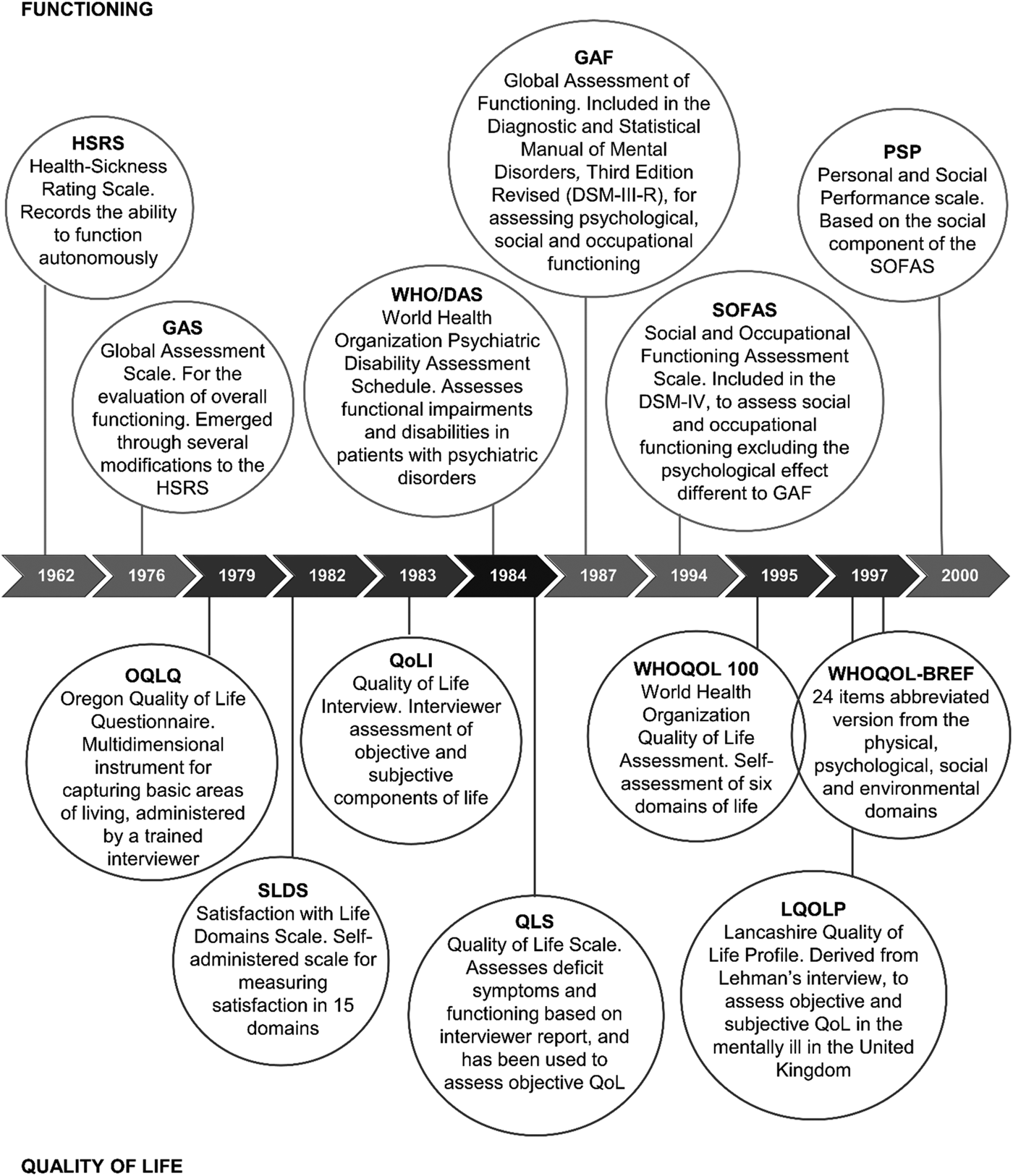
According to the International Classification of Functioning, Disability and Health (World Health Organization, 2001), functioning denotes the positive features of the relationship between a health condition and the environmental and personal context of the individual, while disability indicates negative features of that relationship. Thus, functioning is concerned with the ability of an individual to perform their roles and participate in life (Bowling, Reference Bowling2005). Global functioning should encompass the measurement of several types of functioning (Aas, Reference Aas2010). Since 1962, a number of instruments have been created to measure global functioning, as well as specific dimensions (or types) of functioning e.g., social functioning, executive functioning, etc. (see Fig. 1).
Timeline of functioning and quality of life instruments development.
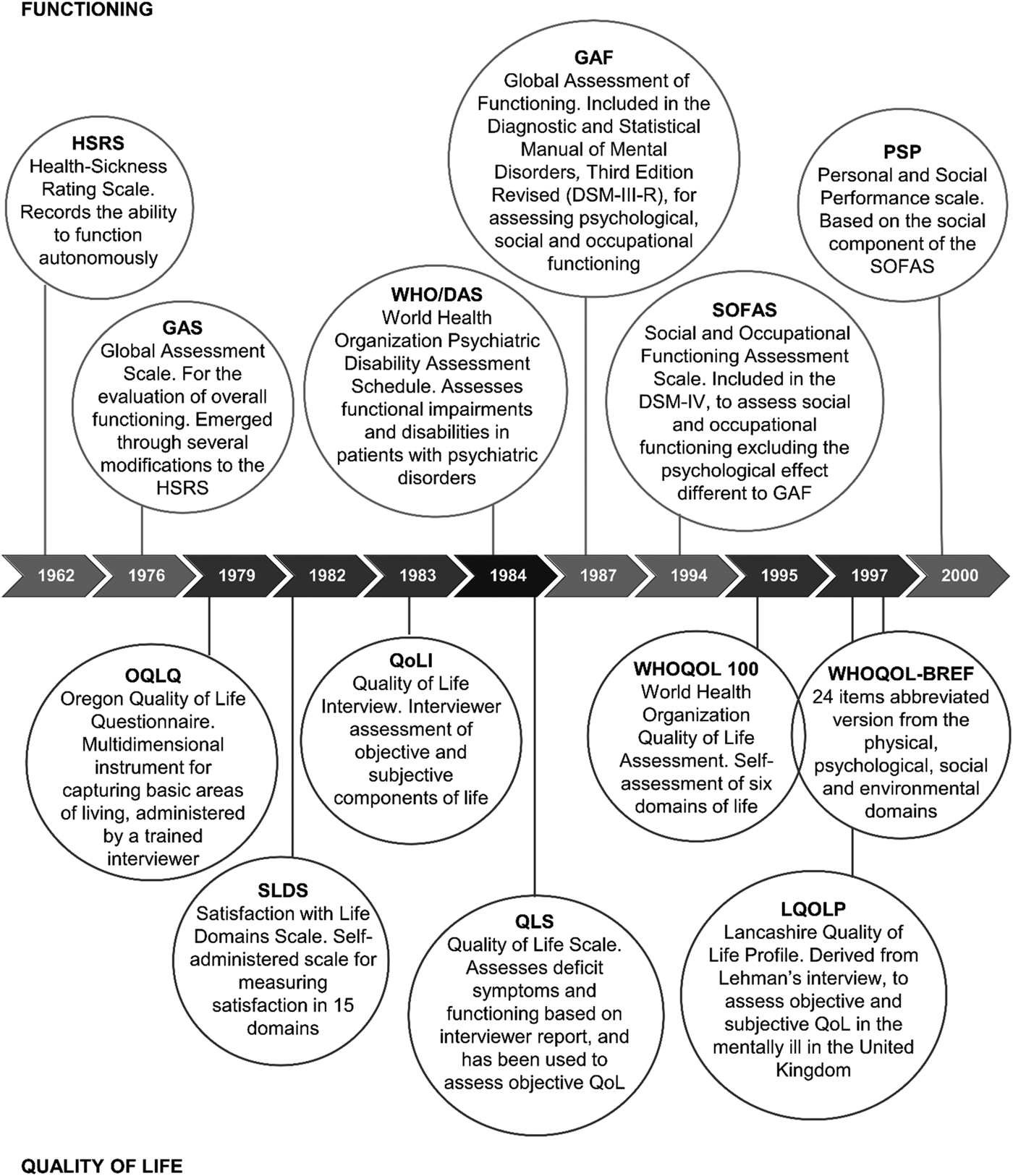
Almost parallel to the development of instruments to assess functioning, and shortly after quality of life (QoL) in health care was raised by Elkinton, when he asked: ‘What is the harmony within a man, and between a man and his world –the quality of life– to which the patient, the physician, and society aspires?’ (Elkinton, Reference Elkinton1966), interest in QoL as an outcome of people with psychosis began to emerge (Fig. 1). This interest occurred alongside the implementation of community support programmes after deinstitutionalisation (Baker and Intagliata, Reference Baker and Intagliata1982; Lehman, Reference Lehman1988). QoL has been defined as ‘an individual's perception of their position in life in the context of the culture and value systems in which they live and in relation to their goals, expectations, standards and concerns’ (World Health Organization, 1997). Despite this, there is no agreement on what aspects and how QoL should be assessed. More than 50 QoL instruments have been used in patients with mental disorders (Prigent et al., Reference Prigent, Simon, Durand-Zaleski, Leboyer and Chevreul2014).
Functioning and more recently QoL have thus been identified as important outcomes in people with psychosis. Reviews focused on the assessment of global functioning and QoL in people with psychotic disorders are scarce (Awad et al., Reference Awad, Voruganti and Heslegrave1997; Pinikahana et al., Reference Pinikahana, Happell, Hope and Keks2002) and the relationship between them has not been systematically assessed. As impairment in the global functioning of people with psychosis is expected, it is important to understand the impact of this impairment on QoL. Establishing the relationship between global functioning and QoL measures would support the future choice of instruments for the assessment of these outcomes and, in turn, identify strategies to diminish the societal burden of psychotic disorders.
The aim of the present study is to explore the presence and extent of associations between global functioning and QoL in people with psychotic disorders and establish whether this relationship is dependent on the instruments employed.
Methods
Selection criteria
This systematic review was conducted in accordance with the Preferred Reporting Items for Systematic Reviews and Meta-Analyses (PRISMA) (Moher et al., Reference Moher, Liberati, Tetzlaff and Altman2009). Studies included for data extraction were full-text articles with a cross-sectional design or a follow-up design that provided required information at baseline. Baseline information only was sought, as changes in the functioning of people with psychosis over time is well documented (Harvey and Davidson, Reference Harvey, Davidson, Davis, Charney, Coyle and Nemeroff2002; Ascher-Svanum et al., Reference Ascher-Svanum, Novick, Haro, Aguado and Cui2013; Harvey, Reference Harvey2014). Articles could be written in English or Spanish (given native English and Spanish speakers within the authorship team). The sample needed to comprise people with schizophrenia and schizophrenia spectrum disorders with or without people with mood disorders with psychotic symptoms (bipolar disorder type I, major or severe depressive disorder with psychotic symptoms) assessed according to the Ninth/Tenth Revision of the International Classification of Diseases (ICD 9/10) or the Diagnostic and Statistical Manual of Mental Disorders Fourth/Fifth Edition (DSM-IV/5), and aged between 18 and 64 years, in which associations between global functioning and QoL were assessed. There were no time-period restrictions.
Due to the lack of a universal definition of global functioning, instruments that assessed several dimensions of functioning as an inclusive outcome were deemed a global functioning instrument. Likewise, given the absence of a universally accepted definition of QoL, instruments reporting on a group of outcomes that contribute to an individual's satisfaction with life and/or overall health (Fayers and Machin, Reference Fayers and Machin2016) were accepted for inclusion in the review.
Intervention studies, reviews and meta-analyses were excluded as well as studies based on populations with organic or induced psychosis, psychosis due to other mental disorders or other medical conditions and populations at high risk of psychosis but not yet diagnosed. Intervention studies were excluded as functioning levels differ in artificial environments such as clinical trials (Patterson et al., Reference Patterson, Goldman, McKibbin, Hughs and Jeste2001; Bellack et al., Reference Bellack, Green, Cook, Fenton, Harvey, Heaton, Laughren, Leon, Mayo, Patrick, Patterson, Rose, Stover and Wykes2007; Ascher-Svanum et al., Reference Ascher-Svanum, Novick, Haro, Aguado and Cui2013).
Search strategy
In May 2016 Annual Reviews, Cochrane Library, CINAHL, EconLit, Embase, Medline, PsycARTICLES, PsycINFO, PubMed and ScienceDirect were searched using a two-phase identification process. Search terms were introduced with corresponding MeSH Terms, synonyms and stem words, as well as appropriate filters and use of Boolean operators. The detailed search strategy is available as Supplementary material.
Searches were divided into phases in order to identify potential publication bias. This approach was adopted because of concern that only strong associations would be reported in title and abstract. In Phase A, all keyword terms were searched in title and abstract. In Phase B, all keyword terms except functioning were searched in title and abstract, with stem ‘function’ then searched for in the main text.
Study selection
Two independent reviewers (ANF and AN) assessed studies for inclusion, with inconsistencies and disagreements resolved by consensus. After deletion of duplicates, Phase A records were screened for inclusion criteria in their titles and abstracts. Full-text articles of included studies were obtained and assessed in full for eligibility. A similar process was used for Phase B records, except that screening for inclusion included a search for functioning in the main text. Strengthening the Reporting of Observational Studies in Epidemiology (STROBE) statement (von Elm et al., Reference von Elm, Altman, Egger, Pocock, Gøtzsche and Vandenbroucke2007) was used to assess whether analytical observational studies reported STROBE elements determined a priori as essential. These items were 3, 7, 12, 16 and 18 (i.e., objectives, variables, statistical methods, main and key results).
Data extraction
Data extracted from each article encompassed basic descriptive data and correlation coefficients between global functioning and QoL instruments. Extraction was undertaken by ANF under the guidance of AN. After extraction, socio-demographic variables were coded for summarisation in frequency tables.
The correlation coefficients between global functioning and QoL extracted were: correlations between global functioning and other variables; and correlations between QoL and other variables comprising the domains and items covered for each instrument. This analysis reports on the strength of the correlation between global functioning and QoL and between global functioning and individual domains of QoL. Strength of correlation was assessed according to the specifications of Cohen (Reference Cohen1988) established as 0.10⩽r < 0.3 small effect, 0.3⩽r < 0.5 medium effect and 0.50⩽r large effect.
A narrative synthesis was performed given the heterogeneity in methodological approaches, including instruments employed in the assessment of global functioning and QoL, and statistical analyses employed. QoL instruments were defined as an objective if comprised objective items only (usually intended for interviewer-assessment), subjective if comprised subjective items only (usually intended for self-assessment), or subjective and objective. Results were reported with reference to the Meta-analysis of Observational Studies in Epidemiology guidelines (Stroup et al., Reference Stroup, Berlin, Morton, Olkin, Williamson, Rennie, Moher, Becker, Sipe and Thacker2000) and PRISMA standards.
Results
Search results
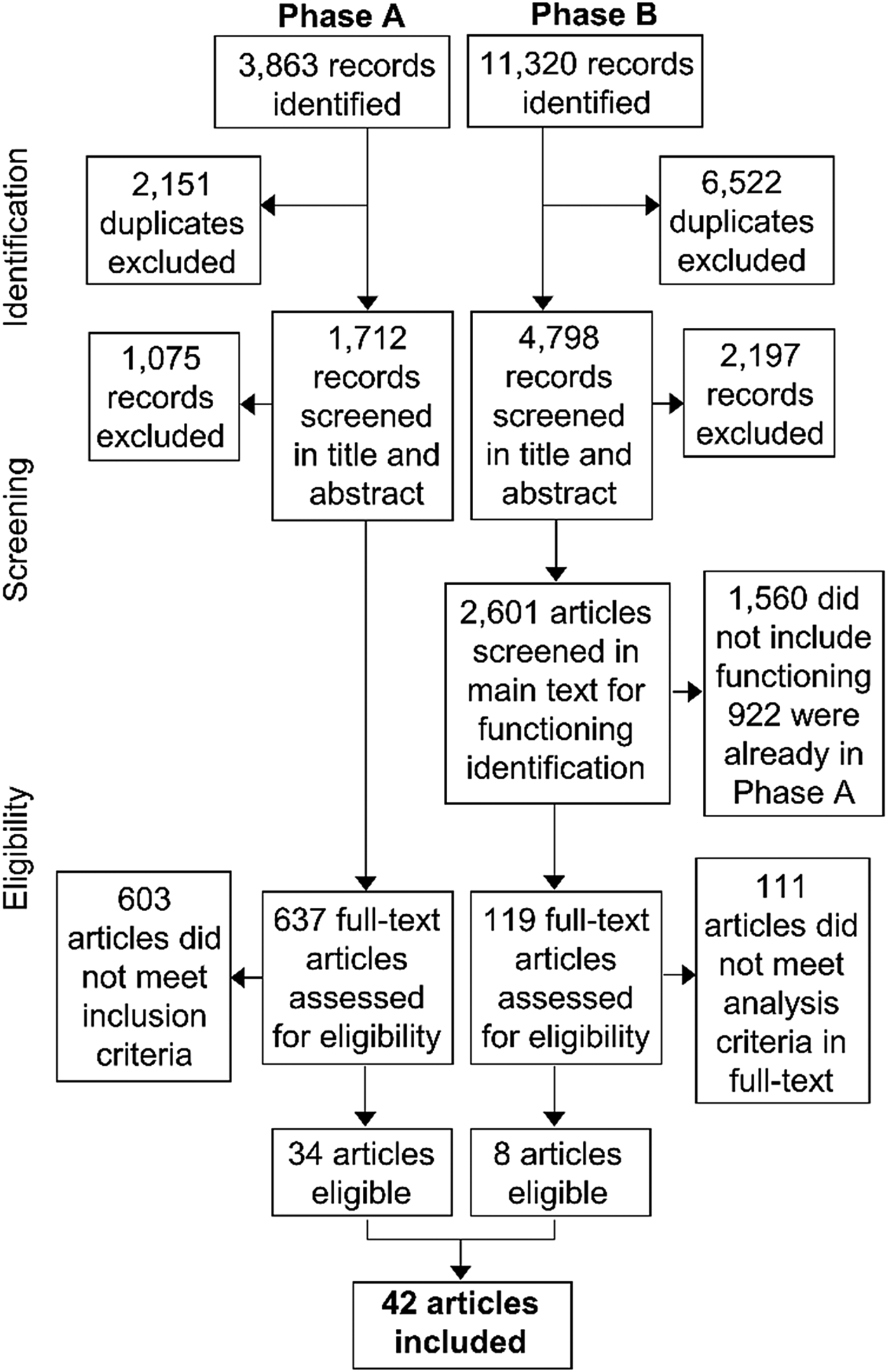
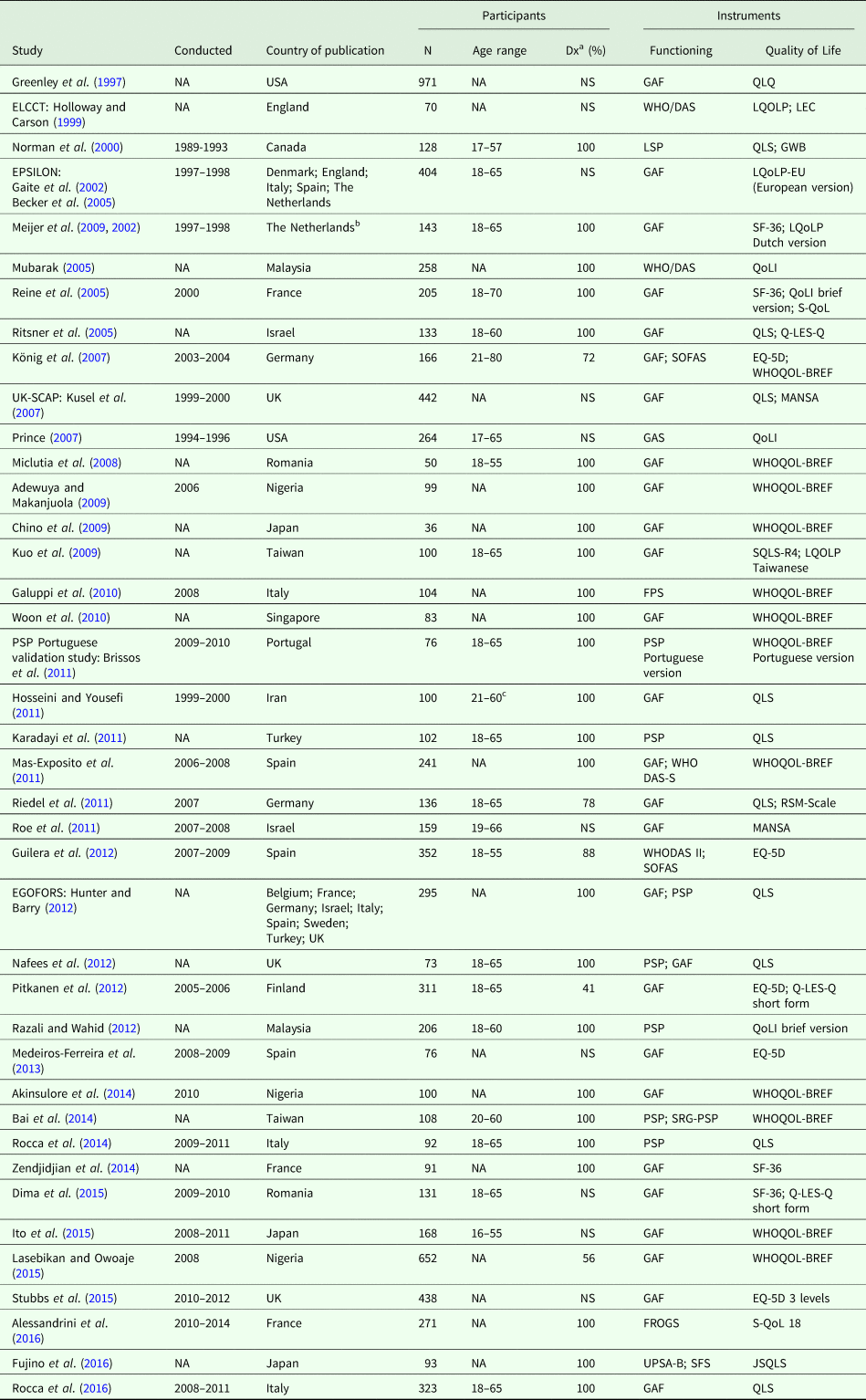
Across Phases A and B 15 183 records were initially identified, of which 8673 were duplicates and excluded from further review. In Phase A, upon screening of title and abstract, 637 articles were then assessed as requiring full-text review for eligibility, with 34 articles assessed as eligible. In Phase B upon screening of title and abstract, 2601 articles were assessed as requiring full-text screening for functioning, with 119 then identified as requiring full-text review for eligibility. Eight additional articles were identified as eligible for inclusion (see Fig. 2). Thus 42 articles were included in this review as listed in Table 1.
PRISMA flow diagram of Phase A and Phase B search.

Main characteristics of included studies
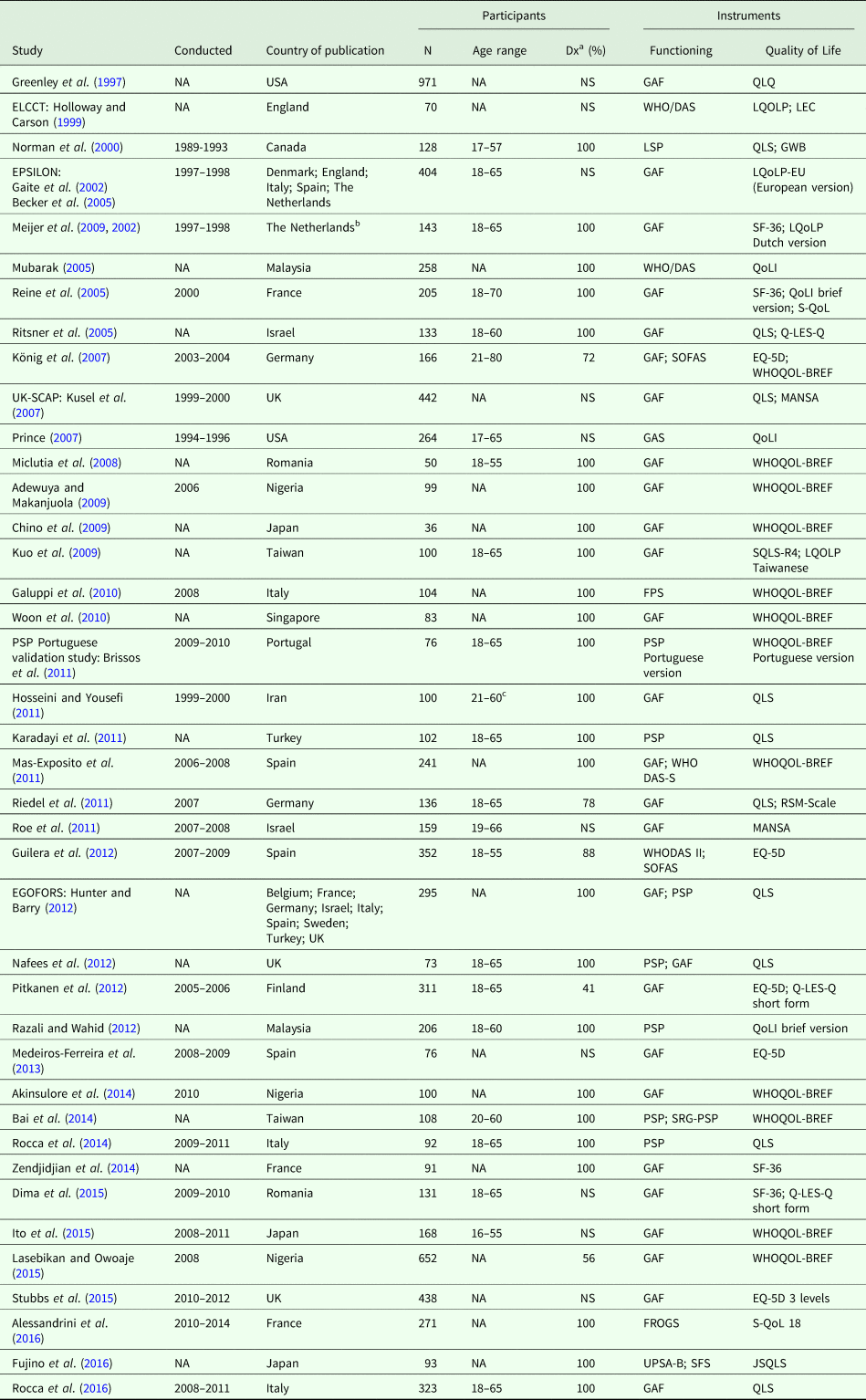
EGOFORS, European Group on Functional Outcomes and Remission in Schizophrenia study; ELCCT, East Lambeth Continuing Care Team study; EPSILON, European Psychiatric Services: Inputs Linked to Outcome Domains and Needs study; EQ-5D, EuroQol five dimensions questionnaire; FPS, Personal and Social Functioning Scale; FROGS, Functional Remission Of General Schizophrenia; GAF, Global Assessment of Functioning; GAS, Global Assessment Scale; GWB, General Well-Being Scale; JSQLS, Schizophrenia Quality of Life Scale Japanese version; LEC, Life Experiences Checklist; LQOLP, Lancashire Quality of Life Profile; LSP, Life Skills Profile; MANSA, Manchester Short Assessment of Quality of Life; NS, not specified; PSP, Personal and Social Performance scale; Q-LES-Q, Quality of Life Enjoyment and Satisfaction Questionnaire; QLQ, Quality of Life Questionnaire; QLS, Quality of Life Scale; QoLI, Lehman’s Quality of Life Interview; RSM-Scale, Riedel-Spellmann-Musil-Scale; SF-36, Medical Outcomes Study (MOS) 36-Item Short-Form Health Survey; SFS, Social Functioning Scale; SOFAS, Social and Occupational Functioning Assessment Scale; SQLS-R4, Schizophrenia Quality of Life Scale Revision 4 Chinese version; S-QoL, Schizophrenia Quality of Life; SRG-PSP, Self-reported version of the graphic PSP; UK-SCAP, United Kingdom Schizophrenia Care and Assessment Programme; UPSA-B, University of California, San Diego (UCSD) Performance-based Skills Assessment-Brief version; USA, United States of America; WHO DAS-S, World Health Organization Short Disability Assessment Schedule; WHO/DAS, World Health Organization Disability Assessment Schedule; WHOQOL-BREF, World Health Organization Quality of Life abbreviated version; NA, not available.
a Percentage of schizophrenia diagnosis.
b Including EPSILON's participants from Amsterdam and other participants from The Netherlands.
c Lower – Upper age of participants included in the study.
The articles
Articles were published between 1997 and 2016, all met the required STROBE criteria for inclusion. Three-fifths (25 articles) were from Europe. Four articles related to the European Psychiatric Services: Inputs Linked to Outcome Domains and Needs (EPSILON) study: Gaite et al. (Reference Gaite, Vazquez-Barquero, Borra, Ballesteros, Schene, Welcher, Thornicroft, Becker, Ruggeri and Herran2002) and Becker et al. (Reference Becker, Leese, Krumm, Ruggeri and Vazquez-Barquero2005) reported on the entire sample while Meijer et al. (Reference Meijer, Schene and Koeter2002) reported on the Amsterdam participants at baseline, and at 18 months follow up (2009), as part of a broader Netherlands’ study. Each of these articles undertook different analyses of the data and as there was no pooling of results, the results for each are reported to maximise the comprehensiveness of the narrative synthesis. Four more articles (Holloway and Carson, Reference Holloway and Carson1999; Kusel et al., Reference Kusel, Laugharne, Perrington, McKendrick, Stephenson, Stockton-Henderson, Barley, McCaul and Burns2007; Brissos et al., Reference Brissos, Balanza-Martinez, Dias, Carita and Figueira2011; Hunter and Barry, Reference Hunter and Barry2012) were published as part of larger studies. The systematic review thus comprised articles from 40 independent studies.
Data extracted overview
The median number of participants across all studies was 135, with the range 36–971. Schizophrenia was the single diagnosis in 26 articles (62%), only four articles (Greenley et al., Reference Greenley, Greenberg and Brown1997; Holloway and Carson, Reference Holloway and Carson1999; Lasebikan and Owoaje, Reference Lasebikan and Owoaje2015; Stubbs et al., Reference Stubbs, Gardner-Sood, Smith, Ismail, Greenwood, Patel, Farmer and Gaughran2015) (10%) included participants with bipolar disorder or depressive disorder with psychotic symptoms. Over half of the articles (57%) utilised one instrument for measuring functioning and one for measuring QoL. Six articles, employed two functioning instruments, 11 articles two QoL instruments and one article (Reine et al., Reference Reine, Simeoni, Auquier, Loundou, Aghababian and Lancon2005) three QoL instruments. Fujino et al. (Reference Fujino, Sumiyoshi, Sumiyoshi, Yasuda, Yamamori, Ohi, Fujimoto, Hashimoto, Takeda and Imura2016) utilised two instruments, which together assessed global functioning.
Within the included studies, we identified 14 instruments for measuring global functioning and 22 for QoL. The Global Assessment of Functioning (GAF) was the most utilised functioning instrument (29 articles) and the WHO Quality of Life Instruments (WHOQOL-BREF) together with its Portuguese version the most utilised QoL instrument (12 articles) (see Supplementary material).
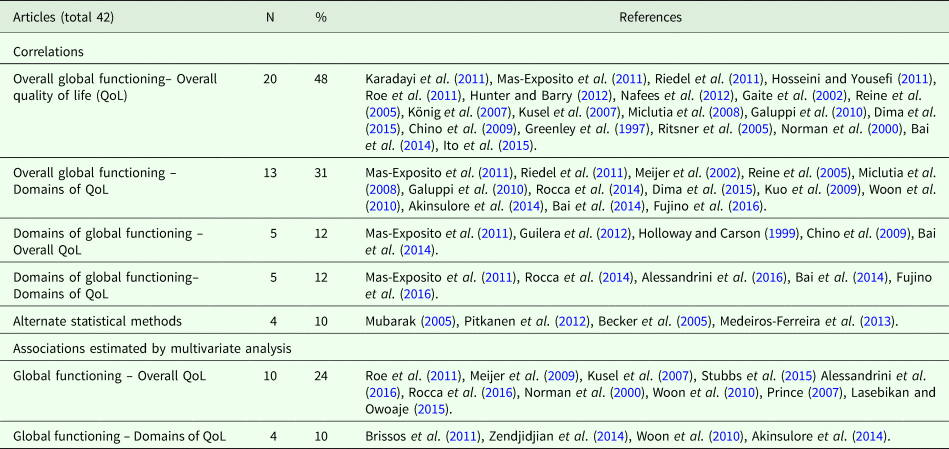
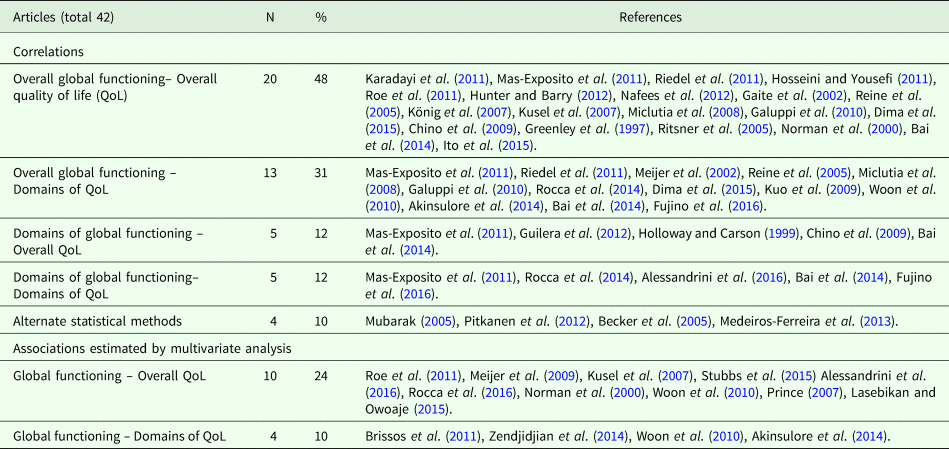
Of the 42 articles, 29 (69%) reported linear associations between global functioning and QoL overall scores and/or domain scores and presented correlation coefficients, four articles (10%) assessed associations between global functioning and QoL using alternate statistical methods; and 19 articles (45%) assessed predictors of QoL (Table 2). Outcomes for each are examined below.
Summary of associations provided by article
Linear associations between global functioning and QoL (overall scores)
Twenty articles (48%) provided correlations between overall scores of global functioning and QoL instruments. Two of these articles (Mas-Exposito et al., Reference Mas-Exposito, Amador-Campos, Gomez-Benito and Lalucat-Jo2011; Bai et al., Reference Bai, Hsiao, Chen, Huang, Lee, Hsu, Chen and Yang2014) also provided correlations between global functioning with QoL domains and among global functioning and QoL domains (Table 2).
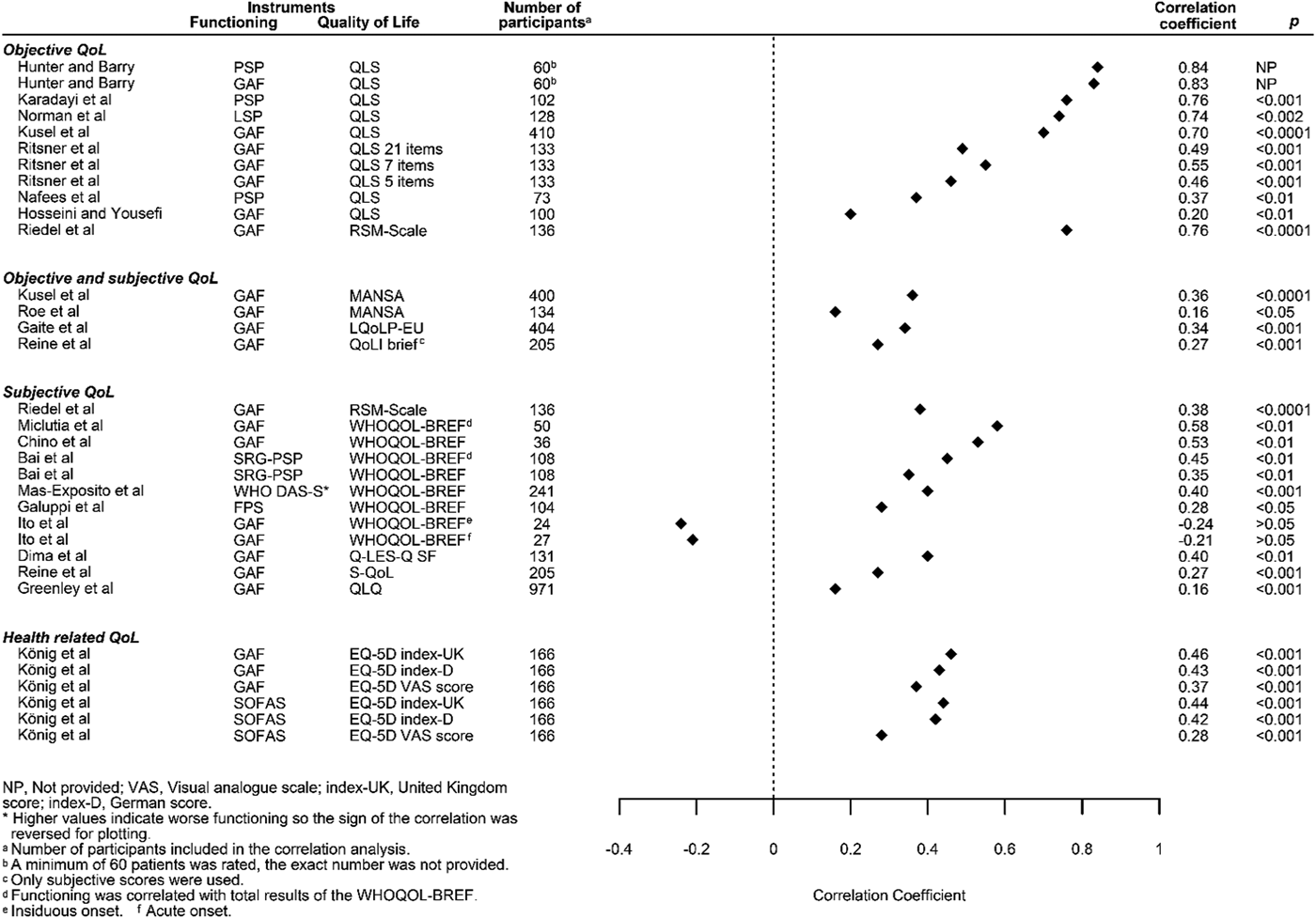
Correlations between overall scores ranged in strength from strong to weak with nearly half of the correlations reported as moderate (r = 0.34 to 0.49). Most moderate correlations involved the GAF which is consistent with the frequent use of the instrument. The two largest correlations assessed QoL using the QoL Scale (QLS), the largest assessed functioning with the Personal and Social Performance (PSP) (r = 0.84), the second largest with the GAF (r = 0.83). The smallest correlation reported as significant were for the GAF and the QoL Questionnaire (QLQ) and the GAF and Manchester Short Assessment of QoL (MANSA) (r = 0.16 for each) (Fig. 3).
Correlations between global functioning and quality of life.

Amongst the QoL instruments, nearly one-third of the correlations were assessed in relation to the QLS primarily the complete 21-item version, with the 7-item and 5-item versions also assessed in Ritsner et al. (Reference Ritsner, Kurs, Ratner and Gibel2005). Half the correlations were large, including that for the 7-item version. One-quarter of correlations were assessed in relation to the self-assessed WHOQOL-BREF. Correlations were reported for four domain scores and two separate scored items that assessed the individual's overall perception of QoL and health (World Health Organization, 1998; The WHOQOL Group, 1998) in Galuppi et al. (Reference Galuppi, Turola, Nanni, Mazzoni and Grassi2010), and just for overall QoL in three articles (Chino et al., Reference Chino, Nemoto, Fujii and Mizuno2009; Bai et al., Reference Bai, Hsiao, Chen, Huang, Lee, Hsu, Chen and Yang2014; Ito et al., Reference Ito, Nemoto, Tsujino, Ohmuro, Matsumoto, Matsuoka, Tanaka, Nishiyama, Suzuki, Kinoshita, Ozawa, Fujita, Shimodera, Kishimoto, Matsumoto, Hasegawa and Mizuno2015). Some articles reported correlations for the four domains and a total score (Miclutia et al., Reference Miclutia, Popescu and Macrea2008; Mas-Exposito et al., Reference Mas-Exposito, Amador-Campos, Gomez-Benito and Lalucat-Jo2011; Bai et al., Reference Bai, Hsiao, Chen, Huang, Lee, Hsu, Chen and Yang2014). Ito et al. (Reference Ito, Nemoto, Tsujino, Ohmuro, Matsumoto, Matsuoka, Tanaka, Nishiyama, Suzuki, Kinoshita, Ozawa, Fujita, Shimodera, Kishimoto, Matsumoto, Hasegawa and Mizuno2015) reported non-significant associations for the overall score in insidious onset and acute onset (r = −0.24, −0.21), respectively. Correlations observed for objective QoL measures such as QLS were consistently larger (r = 0.20 to 0.84) than those observed for subjective measures such as WHOQOL-BREF (r = −0.21 to 0.58). Interviewer-assessment was also associated with larger correlations than self-assessment as reflected in Riedel et al. (Reference Riedel, Spellmann, Schennach-Wolff, Obermeier and Musil2011).
Linear association between overall scores of global functioning and QoL domains
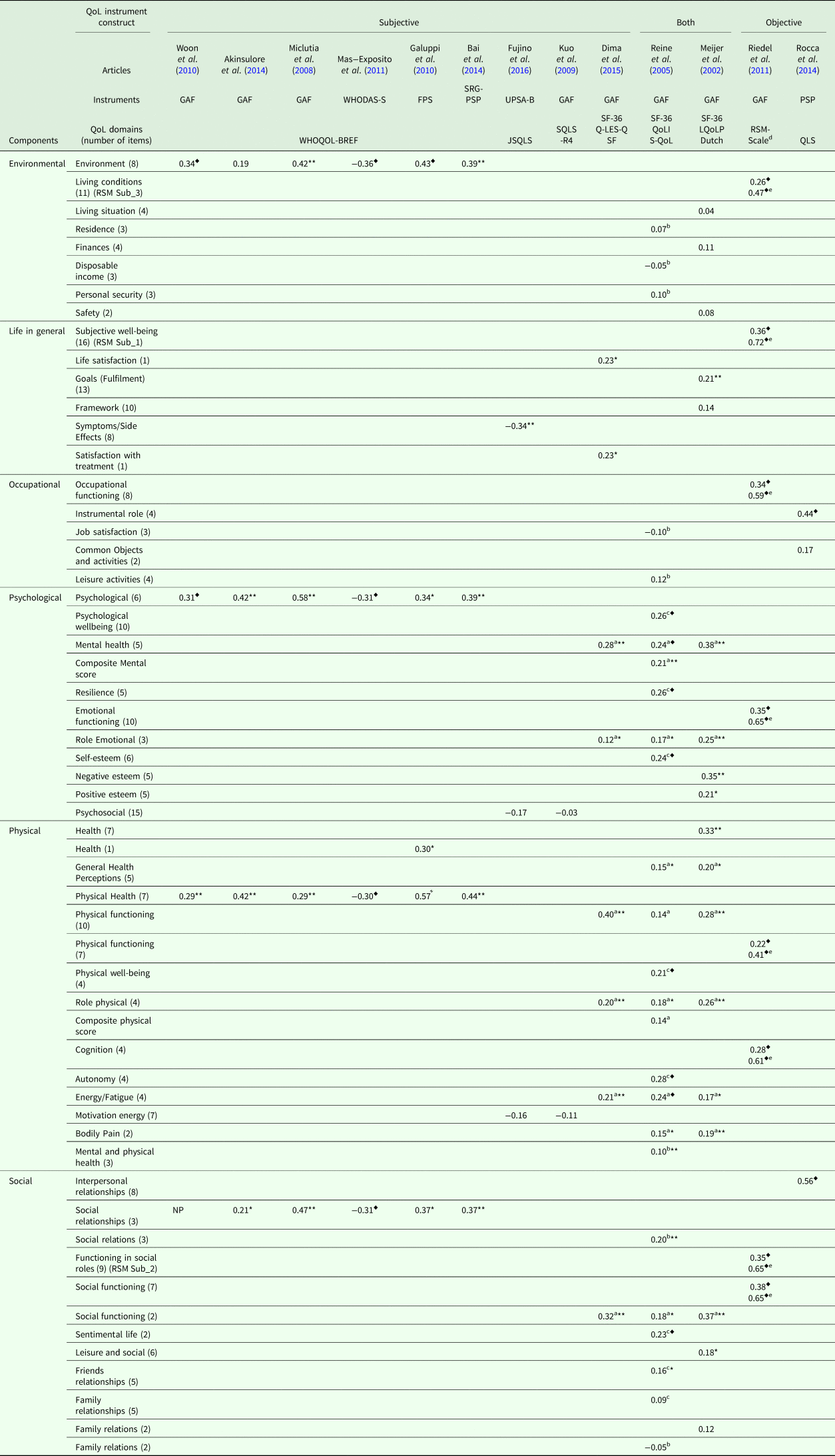
Thirteen articles (31%) provided correlations between global functioning and QoL domains, as listed in Table 3. Global functioning was measured with GAF in over half of the articles (62%), and with the exception of Bai et al. (Reference Bai, Hsiao, Chen, Huang, Lee, Hsu, Chen and Yang2014) which employed the self-reported version of the graphic PSP (SRG-PSP), the interviewer undertook all assessments of functioning. The most utilised QoL instrument was the WHOQOL-BREF, followed by the Medical Outcomes Study 36-Item Short-Form Health Survey (SF-36). Assessments of QoL were self-assessed, with four exceptions (Meijer et al., Reference Meijer, Schene and Koeter2002; Reine et al., Reference Reine, Simeoni, Auquier, Loundou, Aghababian and Lancon2005; Riedel et al., Reference Riedel, Spellmann, Schennach-Wolff, Obermeier and Musil2011; Rocca et al., Reference Rocca, Montemagni, Zappia, Pitera, Sigaudo and Bogetto2014).
Correlations between overall scores of global functioning and domains scores of quality of life

*p < 0.05, **p < 0.01, ͋ p < 0.005, ♦p < 0.001.
Note: Quality of life domains were extracted from each of the QoL instruments. The number of items for the assessment of every domain is within parenthesis.
NP, not provided.
a SF-36.
b QoLI brief. Only subjective items were used.
c S-QoL.
d RSM-scale allocates their 36 items into the five-dimensions model, it also assigns the items to three subscores: Items 1–16 (Sub_1), items 17–20, 23, 32–35 (Sub_2), items 21–22, 24–31, 36 (Sub_3).
e Interviewer-assessment.
In total, we recorded 100 correlation coefficients across 39 domains within included QoL instruments. The strength of correlations varied widely and were primarily weak (48%). Just over one-quarter of correlations were presented in a single article (Reine et al., Reference Reine, Simeoni, Auquier, Loundou, Aghababian and Lancon2005), with the GAF compared with three different QoL instruments, the SF-36, Schizophrenia QoL (S-QoL) and Lehman's QoL Interview brief version (QoLI brief) (subjective items). All associations reported in this study were weak and in some instances lower than for other comparable assessments.
The largest correlation coefficient (r = 0.72) was between functioning assessed with GAF and ‘subjective wellbeing’ assessed by the interviewer with the Riedel-Spellmann-Musil-Scale (RSM-Scale) (Riedel et al., Reference Riedel, Spellmann, Schennach-Wolff, Obermeier and Musil2011). The next four highest correlations were also assessed between these instruments (r = 0.61 to 0.65) (Riedel et al., Reference Riedel, Spellmann, Schennach-Wolff, Obermeier and Musil2011). The smallest significant correlation (r = 0.10) was between functioning assessed with GAF and interviewer-assessed ‘mental and physical health’ of the QoLI brief, subjective items only (Reine et al., Reference Reine, Simeoni, Auquier, Loundou, Aghababian and Lancon2005).
Most correlations between global functioning and QoL domains were positive. Exceptions were for Mas-Exposito et al. (Reference Mas-Exposito, Amador-Campos, Gomez-Benito and Lalucat-Jo2011), which employed the WHO Short Disability Assessment Schedule (WHO DAS-S) for evaluating functioning, and Fujino et al. (Reference Fujino, Sumiyoshi, Sumiyoshi, Yasuda, Yamamori, Ohi, Fujimoto, Hashimoto, Takeda and Imura2016) and Kuo et al. (Reference Kuo, Ma, Kuo, Huang and Chung2009), which employed the Schizophrenia QLS Japanese version (JSQLS) and Revision 4 Chinese version (SQLS-R4) to assess QoL respectively. For each of these three instruments lower scores signify better outcomes.
Correlations for the WHOQOL-BREF tended to be larger than those for the SF-36. The WHOQOL-BREF gave rise to correlations that were primarily moderate in strength for each of the four domains of the instrument, although large correlations were also reported for the physical (Galuppi et al., Reference Galuppi, Turola, Nanni, Mazzoni and Grassi2010) and psychological domains (Miclutia et al., Reference Miclutia, Popescu and Macrea2008). In regard to the SF-36, of the 24 correlations all were small except for four correlations from two of three articles: one correlation for the physical domain (Dima et al., Reference Dima, Vasile, Rogozea, Zia-Ul-Haq, Bukhari and Moga2015), one for the mental health domain (Meijer et al., Reference Meijer, Schene and Koeter2002) and two for the social domain (Meijer et al., Reference Meijer, Schene and Koeter2002; Dima et al., Reference Dima, Vasile, Rogozea, Zia-Ul-Haq, Bukhari and Moga2015).
The three most frequently assessed domains of QoL were the physical, psychological and social components. The vast majority of correlations for the physical component were small (70%), half were small for the psychological component and 45% small for the social component. Around a third of these small correlations were assessed in Reine et al. (Reference Reine, Simeoni, Auquier, Loundou, Aghababian and Lancon2005) which reported just over a quarter of all correlations. Over half (56%) of the correlations reported for occupational and environmental issues, as well as for components related to treatment and satisfaction with life, in general, were small.
When correlations were limited to broad domains (i.e., included several items), over half of the correlations were moderate for the environmental, psychological and social components and small for over half the correlations for physical components.
Over two-thirds of the total correlations between global functioning and QoL domains were self-assessed and nearly half were small (r = −0.03 to 0.29). The remaining 29 correlations were interviewer-assessed and over half were small (r = 0.10 to 0.21).
Associations resulting from alternate statistical approaches
In the four articles assessing associations between global functioning and QoL using alternate statistical methods, four separate approaches were used. Mubarak (Reference Mubarak2005) which compared means of dysfunction with a dichotomisation of QoL found that people with high dysfunction (low functioning) had low QoL. Pitkanen et al. (Reference Pitkanen, Valimaki, Endicott, Katajisto, Luukkaala, Koivunen, Kuosmanen and Hatonen2012) which compared medians of QoL with a dichotomisation of functioning reported that lower functioning indicated poorer QoL. Becker et al. (Reference Becker, Leese, Krumm, Ruggeri and Vazquez-Barquero2005) which compared the means of QoL across three levels of functioning showed an increase in the mean of QoL across levels of functioning from low to high. Medeiros-Ferreira et al. (Reference Medeiros-Ferreira, Obiols, Navarro-Pastor and Zuniga-Lagares2013) which compared the means of HRQoL and functioning in subgroups of people with or without metabolic syndrome reported no association.
Functioning as a predictor of QoL
Nineteen articles (45%) assessed predictors of QoL. Of these, Fujino et al. (Reference Fujino, Sumiyoshi, Sumiyoshi, Yasuda, Yamamori, Ohi, Fujimoto, Hashimoto, Takeda and Imura2016) and Rocca et al. (Reference Rocca, Montemagni, Zappia, Pitera, Sigaudo and Bogetto2014) did not include global functioning as an initial predictor, 13 modelled global functioning as a predictor in their final models and four (Gaite et al., Reference Gaite, Vazquez-Barquero, Borra, Ballesteros, Schene, Welcher, Thornicroft, Becker, Ruggeri and Herran2002; Adewuya and Makanjuola, Reference Adewuya and Makanjuola2009; Kuo et al., Reference Kuo, Ma, Kuo, Huang and Chung2009; Razali and Wahid, Reference Razali and Wahid2012) did not include it in the final models (Table 2).
Of the 13 articles that modelled global functioning as a predictor of QoL, nine considered QoL overall and three specific domains of QoL. Woon et al. (Reference Woon, Chia, Chan and Sim2010) tested both. Global functioning predicted QoL overall in most analyses (Norman et al., Reference Norman, Malla, McLean, Voruganti, Cortese, McIntosh, Cheng and Rickwood2000; Kusel et al., Reference Kusel, Laugharne, Perrington, McKendrick, Stephenson, Stockton-Henderson, Barley, McCaul and Burns2007; Meijer et al., Reference Meijer, Koeter, Sprangers and Schene2009; Woon et al., Reference Woon, Chia, Chan and Sim2010; Roe et al., Reference Roe, Mashiach-Eizenberg and Lysaker2011; Lasebikan and Owoaje, Reference Lasebikan and Owoaje2015; Alessandrini et al., Reference Alessandrini, Lançon, Fond, Faget-Agius, Richieri, Faugere, Metairie, Boucekine, Llorca, Auquier and Boyer2016; Rocca et al., Reference Rocca, Montemagni, Mingrone, Crivelli, Sigaudo and Bogetto2016). Exceptions were Stubbs et al. (Reference Stubbs, Gardner-Sood, Smith, Ismail, Greenwood, Patel, Farmer and Gaughran2015) and Prince (Reference Prince2007).
Discussion
This systematic review is the first to explore the presence and extent of associations between global functioning and QoL in people with psychotic disorders. The appraisal proved difficult given a lack of similarities between studies, and differences in methodological approaches including instruments employed, and inconsistencies in results for given instruments. Despite these difficulties, we found that most of the included articles reported positive associations between higher global functioning and better QoL, and through a narrative review, we were able to clarify the extent of these associations alongside important explanatory factors.
Our results showed that the strength of the association was primarily dependent on the QoL instrument used and whether QoL was being objectively or subjectively assessed. The largest correlations were given by objective QoL instruments completed by an interviewer, the RSM-Scale in particular. The RSM-Scale covers social, occupational and psychological functioning and includes physical functioning and subjective well-being (Riedel et al., Reference Riedel, Spellmann, Schennach-Wolff, Obermeier and Musil2011). The other objective QoL instrument, the QLS, covers social (interpersonal relations), occupational (instrumental role) and psychological domains (intrapsychic foundations) as well as common objects and activities (Heinrichs et al., Reference Heinrichs, Hanlon and Carpenter1984). Thus, domains covered by both objective QoL instruments, overlap with domains encompassed by measures of global functioning, which account for the strong associations observed. Furthermore, both, objective QoL instruments and measures of global functioning were assessed by the one interviewer leading to further consistency in assessment. In contrast, subjective QoL instruments are intended to be completed through self-assessment and given that the patient's perspective can differ from an evaluator's (Sainfort et al., Reference Sainfort, Becker and Diamond1996; Atkinson et al., Reference Atkinson, Zibin and Chuang1997; Bengtsson-Tops et al., Reference Bengtsson-Tops, Hansson, Sandlund, Bjarnason, Korkeila, Merinder, Nilsson, Sørgaard, Vinding and Middelboe2005), the resulting differences will affect the strength of the correlation.
Even with the application of the same instruments, correlation coefficients will vary as a result of sampling variation. This was evident for studies that used the GAF and MANSA (Kusel et al., Reference Kusel, Laugharne, Perrington, McKendrick, Stephenson, Stockton-Henderson, Barley, McCaul and Burns2007; Roe et al., Reference Roe, Mashiach-Eizenberg and Lysaker2011). A smaller correlation was found when participants were all living in a psychiatric rehabilitation residential facility in Israel (Roe et al., Reference Roe, Mashiach-Eizenberg and Lysaker2011) than recruited from inpatient and outpatient settings in the UK (Kusel et al., Reference Kusel, Laugharne, Perrington, McKendrick, Stephenson, Stockton-Henderson, Barley, McCaul and Burns2007). Likewise, the importance of country and in turn differences in cultural and possibly health system structure and functioning is arguably reflected in Hosseini and Yousefi (Reference Hosseini and Yousefi2011). Two-thirds of participants in this study lived in an Iranian institution, and while QoL was measured with an objective QoL instrument (QLS), a small correlation was assessed. In comparison strong to moderate associations were assessed in other studies using the QLS from Europe (Kusel et al., Reference Kusel, Laugharne, Perrington, McKendrick, Stephenson, Stockton-Henderson, Barley, McCaul and Burns2007; Karadayi et al., Reference Karadayi, Emiroglu and Ucok2011; Hunter and Barry, Reference Hunter and Barry2012; Nafees et al., Reference Nafees, van Hanswijck de Jonge, Stull, Pascoe, Price, Clarke and Turkington2012), Canada (Norman et al., Reference Norman, Malla, McLean, Voruganti, Cortese, McIntosh, Cheng and Rickwood2000) and Israel (Ritsner et al., Reference Ritsner, Kurs, Ratner and Gibel2005).
Variation in QoL of people living with psychosis based on sociodemographic characteristics is well documented (Browne et al., Reference Browne, Roe, Lane, Gervin, Morris, Kinsella, Larkin and O'Callaghan1996; Chan et al., Reference Chan, Ungvari, Shek and Leung2003; Caron et al., Reference Caron, Lecomte, Stip and Renaud2005). Ethnicity has also been acknowledged as a contributor to the QoL of people with psychosis within a given cultural setting (Lehman, Reference Lehman1995; Ben-Zur et al., Reference Ben-Zur, Duvdevany and Saffoury Issa2014), which may in part be due to the impact of racism and discrimination on an individual's expectations (Lehman, Reference Lehman1995; Prince, Reference Prince2007). Religious beliefs and spirituality may also contribute directly to a better QoL (Cohen et al., Reference Cohen, Jimenez and Mittal2010; Grover et al., Reference Grover, Davuluri and Chakrabarti2014; Caqueo-Urízar et al., Reference Caqueo-Urízar, Urzúa, Boyer, Williams, Caqueo-Urízar, Urzúa and Williams2016). It is thus evident that social and demographic issues will affect associations between global functioning and QoL of people living with psychosis.
Our results support respondent burden as a potential confounder in the assessment of associations between functioning and QoL (Ulrich et al., Reference Ulrich, Wallen, Feister and Grady2005; Fricker et al., Reference Fricker, Yan and Tsai2014). We observed small correlations only when three QoL instruments were employed (Reine et al., Reference Reine, Simeoni, Auquier, Loundou, Aghababian and Lancon2005), and predominantly small correlations when two QoL instruments were employed (Meijer et al., Reference Meijer, Schene and Koeter2002; Dima et al., Reference Dima, Vasile, Rogozea, Zia-Ul-Haq, Bukhari and Moga2015).
We also observed that some authors (Miclutia et al., Reference Miclutia, Popescu and Macrea2008; Mas-Exposito et al., Reference Mas-Exposito, Amador-Campos, Gomez-Benito and Lalucat-Jo2011; Bai et al., Reference Bai, Hsiao, Chen, Huang, Lee, Hsu, Chen and Yang2014) reported a total score for the WHOQOL-BREF when there is no such approved score for this instrument. The WHOQOL-BREF generates four domain scores and two separately scored items (overall perception of QoL and health) (World Health Organization, 1998; University of Washington, 2011). As the appropriate use of an instrument is essential for a valid outcome, all results pertaining to the WHOQOL-BREF total score are not considered reliable. In another study (Medeiros-Ferreira et al., Reference Medeiros-Ferreira, Obiols, Navarro-Pastor and Zuniga-Lagares2013), standard scoring techniques for the EQ-5D were not applied. Reine et al. (Reference Reine, Simeoni, Auquier, Loundou, Aghababian and Lancon2005) reported the physical and mental composite scores of the SF-36, and while assessed (Ware et al., Reference Ware, Kosinski, Bayliss, McHorney, Rogers and Raczek1995), it has been suggested they provide an imprecise summary of profile scores (Taft et al., Reference Taft, Karlsson and Sullivan2001). For these reasons, results of these studies were not considered reliable, reinforcing the importance of the proper use of an instrument, and the necessity of adhering to standardised scoring protocols.
Another important finding was that the domains covered by an instrument are key to the associations obtained. Further, the items included within an instrument will lead to differences in correlations as reflected in the results for the three variations of the QLS (the complete 21 items and abbreviated 7 and 5 items). We consider that in the assessment of QoL of people with psychosis it is important to include items that broadly encompass the mental or psychological domain, otherwise, the outcome will not fully reflect the potential experiences of this population. Thus, the assessment of mental health in the EQ-5D is considered problematic given that the dimension comprises a single item regarding the presence of anxiety and/or depression. In turn, while moderate correlations were obtained between the EQ-5D and global functioning, correlations themselves should not be considered sufficient in determining a reliable and valid QoL instrument.
Findings regarding the strength of the associations between global functioning and QoL domains highlighted social components. These had the highest correlations, with more than half moderate or higher even when subjectively assessed. However, the breadth of domains also impacted correlations and was smaller for narrow domains. As with comparisons between overall scores, the QoL instrument was the primary determinant of the strength of the correlations between global functioning and QoL domains.
Our systematic review has highlighted the extensive array of instruments for the assessment of QoL, and to a lesser extent global functioning in people living with a psychotic disorder. Further, given that both outcomes are commonly used, our systematic review provides the framework to understand the different findings reported in the literature, and inform the future choice of instruments by researchers and/or clinicians.
We found no patterns in the use of instruments in regard to either year, a country where studies were conducted, diagnostic criteria or other characteristics. This variability could be in part due to the absence of a universal definition of global functioning and QoL. However, the diversity is likely at least in part driven by cultural issues leading to modification of available instruments. Also limiting study findings was the need to undertake a narrative review given the heterogeneity of study findings. We did not include articles published in other than English or Spanish. All articles identified employed English, although over three-quarters were from non-English speaking countries. Therefore, it is considered that this limitation will have minimal impact if any on our findings. We did not register our protocol with PROSPERO: International prospective registered systematic reviews (University of York, 2011) as we considered our review fell under stated exclusion criteria: ‘looking at the reporting of and/or use of outcomes in research would not be included’.
We believe that clearer and precise definitions of global functioning and QoL are required so these outcomes can be concisely and uniformly measured, and we can identify the domains of life that need to be targeted for improving these outcomes. Further, only by having standard/homogeneous instruments, can we consistently assess the impact of interventions aimed at improving these outcomes, and thereby contribute to the ongoing development and implementation of strategies for improving global functioning and QoL in people living with psychotic disorders.
Overall, most articles identified reported moderate and positive associations between global functioning and QoL. The strength of correlation was dependent upon the instruments employed and the respondent (e.g., a clinician or the individual living with psychosis). However, the moderate associations between global functioning and QoL reassure that interventions that improve functioning in people with a psychotic disorder will have a positive impact on their QoL. Policy makers and clinicians should make improvement of QoL of people with psychosis a priority alongside symptom remission. Happiness and satisfaction, fulfilment of goals and expectations, are essential to people living with psychotic illness.
Supplementary material
The supplementary material for this article can be found at https://doi.org/10.1017/S2045796018000549
Acknowledgements
None.
Financial Support
This research received no specific grant from any funding agency, commercial or not-for-profit sectors.
Conflict of Interest
None.
Availability of Data and Materials
Data supporting our findings can be available under request.