Introduction
Corn distillers dried grains with solubles (DDGS) is a by-product of ethanol production plants that use corn for manufacturing (Aines et al., Reference AINES, KLOPFENSTEIN and STOCK1986). During yeast fermentation in ethanol plants, corn is ground, mixed with water, cooked and the liquefied starch from this process is hydrolysed and fermented to produce ethanol and CO2 (Rosentrater, Reference ROSENTRATER2005). As a result the non-fermentable components of this process which are rich in essential nutrients such as protein, fat, fibre, vitamins and minerals are recovered in a highly concentrated form (approximately 3 fold) as distillers dried grains with solubles (NRC, 1994; Weigel et al., Reference WEIGEL, LOY and KILMER1997; AAFCO Reference AAFCO2002). The rapid increase of ethanol production from corn in recent years, especially in the US, has been accompanied by enormous amounts of DDGS generated from this process. The United States is a leader in corn production holding approximately 50% of the total grain corn in the world (URL 1). In 2008, total US distiller grains production reached approximately 22 million metric tonnes, representing a major agricultural commodity in the US. The DDGS produced in the US has been utilized in feeding livestock domestically, and as well approximately 20% of DDGS has been exported to other countries with the potential of future export market expansion, especially to Asia (URL 2).
Although distillers dried grains have been used by the poultry industry for some time, recently a renaissance in the use of DDGS has been observed in the US and also around the world. This is due to the rapid escalation in its production as well as its improved quality when derived from the new generation ethanol plants that have been built since mid 1990's in the US for the purpose of biofuel production. There has been an abundance of information about DDGS composition and utilization presented in various forms. However, only approximately 100 scientific publications regarding the application of corn DDGS for poultry have been published so far. Therefore, in the light of the large production of corn DDGS entering the US and other overseas markets, and its utilization as a constituent in poultry diets, the aim of this review is to provide a compendium of information available regarding the use of corn DDGS for poultry including its nutritive value, variability, the effect on poultry production, as well as to point out the potential impact on the environment when feeding DDGS to poultry.
Nutrient contents and availability of DDGS for poultry
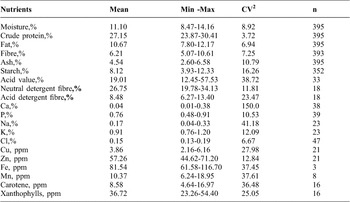
Corn DDGS contain all the nutrients from grain in a concentrated form (Babcock et al., 2008) except for the majority of the starch, which has been utilized in the fermentation process (Table 1). Therefore, it can be a rich source of crude protein (CP), amino acids, P and other nutrients in poultry diets (Swiatkiewicz and Koreleski, Reference SWIATKIEWICZ and KORELESKI2008). Reliable values for the nutrient content of feed constituents are essential to create more precise diet formulations. However, several factors affect the nutritional and physical characteristics of DDGS causing variability. This includes the variability of nutrient levels in the corn sources, proportion of distiller's soluble added to DDG before drying (Martinez-Amezcua et al., Reference MARTINEZ-AMEZCUA, PARSONS, SINGH, SRINIVASAN and MURTHY2007), efficiency of converting starch to ethanol, and temperature and duration of drying (Carpenter, Reference CARPENTER1970; Olentine, Reference OLENTINE1986). Although the nutrient content of DDGS is relatively consistent within the same processing source (Noll et al., Reference NOLL, BRANNON and PARSONS2007), the main problem in the use of DDGS as a feed component is the high variability of nutrient concentration and quality among different DDGS sources. Thus, the complete chemical analysis of each source of DDGS in accordance with a standardized method (Spiehs et al., Reference SPIEHS, WHITNEY and SHURSON2002; AFIA, Reference AFIA2007) should be performed before formulating diets for poultry.
Chemical composition of the US corn DDGS imported to Korea during 2006-20091.

1Analysed data in our laboratory (as-fed basis), 2Coefficient of variation, (%), n = number of samples tested.
metabolizable energy content
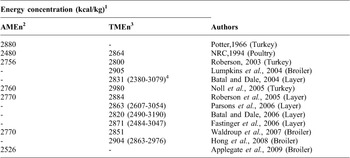
Several studies provide estimates of the metabolizable energy (ME) content of DDGS for poultry (Table 2). Lumpkins et al. (Reference LUMPKINS, BATAL and DALE2004) reported that the TMEn content of a single DDGS sample was 2,905 kcal/kg. In a later study, the same group determined the TMEn content of 17 different DDGS samples representing products from six different ethanol plants. They determined that the TMEn contents ranged from 2,490 to 3,190 kcal/kg with a mean value of 2,820 kcal/kg and an associated coefficient of variation of 6.4% (Batal and Dale, Reference BATAL and DALE2006). Fastinger et al. (Reference FASTINGER, LATSHAW and MAHAN2006) concluded that the TMEn content of DDGS averaged 2,871 kcal/kg and had considerable variation among the samples. Furthermore, a large variation in TMEn values of DDGS were also reported by Parsons et al. (Reference PARSONS, MARTINEZ, SINGH, RADHAKRISHMAN and NOLL2006), who determined the mean TMEn value of 20 DDGS at 2,863 kcal/kg ± 224 kcal/kg.
Concentrations of energy from corn DDGS fed to poultry.

1Everage energy concentrations were calculated from the pooled data of the article, 2Apparent metabolizable energy, 3True metabolizable energy, 4Minimum and maximum values for energy concentration are presented in brackets.
It was hypothesized that energy in corn DDGS would not vary if samples were derived from ethanol plants using similar production technologies and corn that is grown in a proximate geographical location (Stein, Reference STEIN2009). Based on the four sources of DDGS drawn from ethanol plants younger than 10 years and located within 250 km from each other, they concluded that ME content varied between 3575-3975 kcal/kg DM among these plants, and therefore factors other than corn growing region contribute to the variability of energy in DDGS.
Waldroup et al. (Reference WALDROUP, WANG, COTO, CERRATE and YAN2007) suggested that nutritionists can use a TMEn value of 2,851 kcal/kg for DDGS, based on a survey of published TMEn values in the literature. However, if the proximate composition of DDGS is known, then a prediction of TMEn could be made by regression analysis. For example, predicting TMEn based on the fat, fibre, protein and ash [TMEn = 2732.7 + 36.4 (fat) -76.3 (fibre) + 14.5 (protein) -26.2 (ash)] gives the accuracy of R2 = 0.45 (Batal and Dale, Reference BATAL and DALE2006).
Roberson et al. (Reference ROBERSON, KALBFLEISCH, PAN and CHARBENEAU2005) determined the AMEn for laying hens of a single DDGS sample to be 2,770 kcal/kg. This value was about 4% lower than the TMEn value determined for the same DDGS sample using cockerels, similar to the relationship between AMEn and TMEn in corn grain. The AMEn and TMEn values in DDGS vary due to oil and protein content (Batal and Dale, Reference BATAL and DALE2006), the degree of lightness (L* values; Fastinger et al., Reference FASTINGER, LATSHAW and MAHAN2006) as well as the method of estimation.
According to Noll et al. (Reference NOLL, BRANNON and PARSONS2007), the solubles contain over three times as much oil as the wet grains and the rate of soluble addition during the DDGS manufacturing process is directly related to the DDGS TMEn content. The oil content of corn DDGS has been reported to vary from 2.5% to 16% in DDGS samples (Batal and Dale, Reference BATAL and DALE2006; Parsons et al., Reference PARSONS, MARTINEZ, SINGH, RADHAKRISHMAN and NOLL2006), with potential variation in TMEn content. Noll et al. (Reference NOLL, BRANNON and PARSONS2007) showed a strong inverse correlation between the degree of lightness (L* values) of DDGS and the rate of solubles addition, suggesting that darker DDGS have a greater content of TMEn. However, Fastinger et al. (Reference FASTINGER, LATSHAW and MAHAN2006) reported a moderate linear relationship between the degree of lightness and the TMEn content of DDGS. Therefore, the relationship between L* and TMEn values is not a reliable indicator of energy content in DDGS (Babcock et al., 2008).
A high level of fat in corn DDGS is associated with high gross energy content, but energy digestibility is variable and may be affected by non-starch polysaccharide content (Swiatkiewicz and Koreleski, Reference SWIATKIEWICZ and KORELESKI2008). On the other hand, most of the starch in the grain is converted to ethanol during the fermentation process and only a small amount of starch is left in DDGS (Table 1). The fibre content, especially, NDF and ADF in corn, is not converted to ethanol, and as a result DDGS contains approximately 35% insoluble and 6% soluble dietary fibre (Stein and Shurson, Reference STEIN H.H. and SHURSON2009). The apparent total tract digestibility of dietary fibre is 43.7% in a monogastric animal (Stein and Shurson, Reference STEIN H.H. and SHURSON2009), and results in a low digestibility of dry matter. It is also the reason why the digestible energy in DDGS is low as compared with many other feed ingredients. Therefore, nutritionists should be cautious of the fibre content and sources of data for DDGS ME values, as well as energy variability when formulating diets for poultry (Adeola and Ileleji, Reference ADEOLA and ILELEJI2009).
amino acid content
Dale and Batal (Reference DALE and BATAL2005) reported that CP content of corn DDGS can vary from 24% to 29%. In our laboratory we assessed CP content on 395 corn DDGS samples imported to Korea from the US, and the average CP content was 27.15% (23.87-30.41) with 3.72% coefficient of variation (Table 1). Similar results were obtained by other researchers (Batal and Dale, Reference BATAL and DALE2006; Fastinger, et al., 2006). In their study the CP content of DDGS ranged between 23% and 32%. Spiehs et al. (Reference SPIEHS, WHITNEY and SHURSON2002) have evaluated nutrient level of DDGS originating from 10 new ethanol plants in Minnesota and South Dakota, and also found that the CP accounted for 30.2%, and lysine and methionine for 0.85% and 0.55%, respectively.
The high variability among DDGS sources was found mainly for the two limiting amino acids for poultry, lysine and methionine (Spiehs et al., Reference SPIEHS, WHITNEY and SHURSON2002; Fastinger et al., Reference FASTINGER, LATSHAW and MAHAN2006). This variation likely occurs due to differences in the protein content of the corn varieties grown in various geographical locations that are used to produce DDGS, proportion of grain vs. soluble during the production process, and due to the differences in residual starch content (diluting the concentrations of protein and other nutrients) caused by differences in fermentation efficiency and processing techniques (Belyea et al., Reference BELYEA, RAUSCH and TUMBLESON2004; Martinez-Amezcua et al., Reference MARTINEZ-AMEZCUA, PARSONS, SINGH, SRINIVASAN and MURTHY2007; Babcock et al., 2008). Reese and Lewis (Reference REESE and LEWIS1989) showed that corn produced in Nebraska in 1988 varied in CP from 7.8 to 10%, and 0.22 to 0.32% in lysine content. This variation was not surprising since nutrients in DDGS become more concentrated due to fermentation of starch during the ethanol production process, and since this process is variable, their concentration in the DDGS by-product is more variable.
Differences in production technology provide almost as much variation within one source of corn as there is between different plants (Spiehs et al., Reference SPIEHS, WHITNEY and SHURSON2002). For example, the amount of solubles or syrup added back to the wet distillers grain before drying provides additional inconsistency of DDGS as syrup contains a higher content of protein and lower content of fibre (29% and 4%, respectively), as well as less digestible lysine (Tangendjaja, Reference TANGENDJAJA2008). Parsons et al. (Reference PARSONS, BAKER and HARTER1983) conducted five trials that aimed to evaluate the protein quality of DDGS and concluded that when DDGS is fed to growing chicks as the sole source of dietary protein, tryptophan closely followed by arginine are the second and third limiting amino acids respectively, after lysine. Although DDGS was limiting in tryptophan and arginine it was found that the overall protein quality of DDGS could be improved greatly by lysine supplementation for growing chicks (Parsons et al., Reference PARSONS, BAKER and HARTER1983).
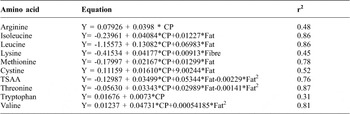
An attempt was made to predict essential amino acid content base on proximate values of moisture, crude protein, fat and fibre (Fiene et al., Reference FIENE, YORK and SHASTEEN2006). It resulted in creation of regressions with r2 value ranging from 0.31 to 0.87, suggesting that some amino acids (isoleucine, leucine, methionine, TSAA, threonine and valine) can be predicted more accurately than the others (arginine, cystine, lysine and tryptophan) (Table 3). The authors concluded that this variation in accuracy appeared to be largely due to the variable consistency of amino acid to protein ration in the samples tested (Fiene et al., Reference FIENE, YORK and SHASTEEN2006).
Prediction of essential amino acid contents of DDGS from proximate values of crude protein, fat and fibre (Fiene et al., Reference FIENE, YORK and SHASTEEN2006).

Information about total amino acid content in DDGS is important; however, it is more essential for a nutritionist to know its’ digestibility by the particular species when formulating diets. Differences in processing procedure can be responsible for a substantial amount of the variability in the nutritional value of DDGS (Cromwell et al., Reference CROMWELL, HERKELMAN and STAHLY1993), and temperature has been identified as the most crucial factor that can affect amino acid digestibility. During the drying process of DDGS products, the material is exposed to temperatures of 260 to 1150ºF depending on the ethanol plant (US Grains Council, Reference US GRAINS COUNCIL.2008). This adverse effect of excess heat on amino acid availability, especially on lysine, has been well recognized (Warnick and Anderson, Reference WARNICK and ANDERSON1968).
Due to a high susceptibility to heat damage, lysine level and digestibility is a main concerns in the use of DDGS as a feed component for monogastric animals. Parsons et al. (Reference PARSONS, MARTINEZ, SINGH, RADHAKRISHMAN and NOLL2006) reported that lysine digestibility can range between 59 and 84%. More recently, Pahm et al. (Reference PAHM, SCHERER, PETTIGREW, BAKER, PARSONS and STEIN2009) estimated a standardized digestibility (SDD) value for lysine using 45 week old cecectomized Single Comb White Leghorn roosters. Seven different sources of corn DDGS showed that the mean digestibility was 61.4% which was within the range reported by Parsons et al. (Reference PARSONS, MARTINEZ, SINGH, RADHAKRISHMAN and NOLL2006). Batal and Dale (Reference BATAL and DALE2006) investigated amino acid digestibility of DDGS also using cecectomized Single Comb White Leghorn roosters and showed a similar (81.7%) digestibility coefficient for all amino acids across all samples. They also found that digestibility was lowest for lysine, cystine, and threonine (69.6, 73.9, and 74.5%, respectively), and digestible lysine averaged at 0.51% and broadly ranged from 0.18 to 0.66%. Ergul et al. (Reference ERGUL, MARTINEZ-AMEZUCA, PARSONS, WALTERS, BRANNON and NOLL2003) reported mean digestible lysine content for DDGS at 0.53% based on 22 samples, which ranged from 0.38 to 0.65%. Pahm et al. (Reference PAHM, SCHERER, PETTIGREW, BAKER, PARSONS and STEIN2009) demonstrated that in 5 of 7 sources of DDGS the concentration of SDD lysine did not differ from the bioavailable lysine. They concluded further that the concentration of SDD lysine in DDGS does not overestimate the concentration of bioavailable lysine for poultry and values for reactive lysine, a technique which measures accessibility of the ε-amino group to reagents, may be used to estimate the concentration of SDD lysine.
The different assay techniques employed in lysine digestibility is another factor that contributes to the reported variable lysine digestibility. Lysine digestibility values for DDGS determined with caecectomised White Leghorn roosters have been reported at 82% (Parsons et al., Reference PARSONS, BAKER and HARTER1983) and 75% (Lumpkins et al., Reference LUMPKINS, BATAL and DALE2005), which is higher than the average lysine digestibility value of 70% noted by Batal and Dale (Reference BATAL and DALE2006). The use of Immobilized Digestibility Enzyme Assay (IDEA) to estimate the amino acid digestibility for poultry resulted in the r2 value of 0.88 based on 28 samples of DDGS (Tangendjaja, Reference TANGENDJAJA2008). A very high value of r2 = 99.3 for lysine digestibility was obtained using a Front Face Fluorescence spectroscopy which is a new technique that uses fluorescent light to measure the nutritional content of feedstuffs (Urriola, Reference URRIOLA2006). However, these techniques require specialized equipment and are more time consuming.
It was demonstrated that dark DDGS has a lower lysine digestibility than golden DDGS (Cromwell et al., Reference CROMWELL, HERKELMAN and STAHLY1993). Therefore, colour analysis might be a quick and reliable method of estimating the amino acid digestibility, particularly of lysine, in DDGS for poultry (Batal and Dale, Reference BATAL and DALE2006). Yellow (golden) colour of DDGS originates from carotenoids in corn. However, other factors such as the amount of solubles added to grains before drying, drying time, drying temperature (Stein et al., Reference STEIN, GIBSON, PEDERSEN and BOERSMA2006; Fontaine et al., Reference FONTAINE, ZIMMER, MOUGHAN and RUTHERFURD2007), generation of Maillard reaction products (Babcock et al., 2008), and total lysine content (Fastinger et al., Reference FASTINGER, LATSHAW and MAHAN2006), influence the natural colour of DDGS originally caused by feedstock grain used. Fastinger et al. (Reference FASTINGER, LATSHAW and MAHAN2006) observed a moderate correlation (r2 = 0.52) between SDD lysine and L* value. Batal and Dale (Reference BATAL and DALE2006) reported a high correlation of r2 = 0.87 between the same parameters. In the light of this variability in colour it has been recommended to select DDGS with L* values higher than 55-57 in order to obtain a better quality feedstuffs for monogastric animals (Batal and Dale, Reference BATAL and DALE2006). Therefore, lightness and yellowness of colour of DDGS appear to be reasonable predictors of digestible lysine content among golden corn DDGS sources for poultry (Ergul et al., Reference ERGUL, MARTINEZ-AMEZUCA, PARSONS, WALTERS, BRANNON and NOLL2003), and care should be taken to use amino acid values and digestibility values obtained from different sources of DDGS during feed formulation.
mineral composition
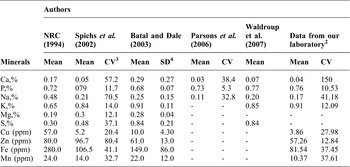
Several studies regarding mineral composition of DDGS have been published and showed a variable concentration of these nutrients (Table 4). In our laboratory the analysis of corn DDGS from the US showed that DDGS can be a good source of P (0.76%), Zn (57.26 ppm), K (0.91 ppm), and other minerals (Table 1). Phosphorus is an important mineral in chicken diets as broilers are extremely sensitive to its deficiency. Phosphorus content in DDGS has been reported at 0.72% (NRC, 1994) and varies widely from 0.48 to 0.91% (Table 1). Similarly, Spiehs et al. (Reference SPIEHS, WHITNEY and SHURSON2002) and Stein et al. (Reference STEIN, GIBSON, PEDERSEN and BOERSMA2006) reported the P variation in DDGS ranged from 0.59 to 0.95%. This large difference in P content derives partially from its variation in corn grain and amount of starch residue in DDGS (Martinez-Amezcua et al., Reference MARTINEZ-AMEZCUA, PARSONS and NOLL2004). However, the technological process of ethanol production can also significantly contribute to its content and variation. It has been suggested that the total P content may be even higher than 0.72% in some sources of DDGS if produced in new ethanol plants (Shurson, Reference SHURSON2003). Moreover, the rate of addition of solubles to the wet grains prior to drying affects the P content, because the solubles contain more than three times as much P as do the wet grains (Martinez-Amezcua et al., Reference MARTINEZ-AMEZCUA, PARSONS, SINGH, SRINIVASAN and MURTHY2007; Noll et al., Reference NOLL, BRANNON and PARSONS2007). An interesting observation was made by Noll et al. (Reference NOLL, STANGELAND, SPEERS, PARSONS and BRANNON2002, Reference NOLL, BRANNON and PARSONS2007) that the addition rate of solubles to DDGS is highly correlated with the DDGS colour and phosphorus content (r2 = 0.96 - 0.98). The darker the colour (lower L* values) the greater the P content. This observation can be used as an indicator of P content in the DDGS.
Mineral composition of DDGS from different sources (as-fed basis)1.

1Composition was calculated from the pooled data of the article, 2From Table 1, 3Coefficient of variation (%), 4Standard deviation.
The bioavailability of P for poultry is important as it is an essential nutrient affecting growth and metabolism. Moreover, it is one of the most expensive nutrients in poultry diets (Kim et al., Reference KIM, MARTINEZ-AMEZCUA, UTTERBACK and PARSONS2008). However, similar to its concentration in DDGS, phosphorus bioavailability is also highly variable (Singsen et al., Reference SINGSEN, MATTERSON and TLUSTOHOWICZ1972; Kim et al., Reference KIM, MARTINEZ-AMEZCUA, UTTERBACK and PARSONS2008). Lumpkins and Batal (Reference LUMPKINS and BATAL2005) reported that the relative bioavailability of P in a DDGS sample containing 0.74% total P was 68 and 54% in two different trials. Similarly, Martinez-Amezcua et al. (Reference MARTINEZ-AMEZCUA, PARSONS and BAKER2006) found a relative P bioavailability of 62% in a sample of DDGS containing 0.67% total P. Martinez-Amezcua et al. (Reference MARTINEZ-AMEZCUA, PARSONS and NOLL2004) reported P bioavailability of 82% with a range between 69-102% relative to K2HPO4 which is considered as 100% available when formulating diets for poultry. The relative availability of P in DDGS from corn has been estimated at 77% (NRC, 1998).
The bioavailability of P from DDGS is higher than from cereal grains (Lumpkins and Batal, Reference LUMPKINS and BATAL2005) as most of the phosphorus in grains is bound in the form of phytate (Nelson et al., Reference NELSON, FCRRARA and STORER1968), which is not well utilized by chickens due to the lack of enzyme phytase to free the phytate phosphorus (Nelson, Reference NELSON1967). This higher bioavailability of P from DDGS may be partially caused by the fermentation involved in ethanol production, and temperature during drying process. It is presumed that some amounts of phytase are produced by yeast, thus converting phytin P to a more available form (Dale and Batal, Reference DALE and BATAL2005). Also increased heat processing may increase P bioavailability from some plant ingredients (Carlson and Poulson, 2003). Martinez-Amezcua et al. (Reference MARTINEZ-AMEZCUA, PARSONS, SINGH, SRINIVASAN and MURTHY2007) conducted an experiment to investigate the effect of heat damage of DDGS on P bioavailability. The researchers performed a controlled heat damage of DDGS and concluded that increasing the drying temperature of the DDGS increased phosphorus bioavailability from 69% in the control samples to 91% in the oven dried samples. However, although the increased heating had positive effects for P bioavailability, it also had a significantly negative impact on amino acid digestibility. The same researchers reported that the bioavailability of P was increased by supplementation of the diet with 3% citric acid, or with microbial phytase enzyme (Martinez-Amezcua et al., Reference MARTINEZ-AMEZCUA, PARSONS and BAKER2006). These two compounds increased the release of P in DDGS from between 0.04-0.07%, which represented approximately 20-28% of the non-bioavailable P in DDGS. The effect of DDGS particle size on P digestibility was researched by Martinez-Amezcua and Parsons (Reference MARTINEZ-AMEZCUA and PARSONS2007). The results indicated that grinding and feeding of DDGS that had particle size between 542-837μm did not affect P bioavailability.
Sodium is another mineral which is also highly variable in DDGS. Batal and Dale (Reference BATAL and DALE2003) showed that Na ranged from 0.09 to 0.44% in 12 samples of DDGS with the mean value of 0.23%. The same authors pointed out that the source of this broad variability in Na content of DDGS is not well defined, and they suggested that nutritionists need to take this under consideration prior to incorporation of DDGS into balanced diets for poultry. Poultry can tolerate high levels of Na in the diet (Klasing and Austic, Reference KLASING and AUSTIC2003). However, high levels of this nutrient may cause a higher level of water consumption and consequently increase the incidence of wet litter and dirty eggs (Leeson et al., Reference LEESON, DIAZ and SUMMERS1995; Klasing and Austic, Reference KLASING and AUSTIC2003). Spiehs et al. (Reference SPIEHS, WHITNEY and SHURSON2002) demonstrated substantial in-plant variation of Na in DDGS and concluded that it would be difficult to characterize the Na content of a single plant by a few analyses. The authors recommended that frequent Na assays of the product received in feed mills should be made in order to meet the requirements for poultry of this nutrient (Waldroup et al., Reference WALDROUP, WANG, COTO, CERRATE and YAN2007).
The content of other minerals such as Ca, K and S in corn grain are low (Babcock et al., 2008). Due to the fact that approximately 2/3 of the weight of corn grain is converted into CO2 and ethanol during fermentation process (Batal and Dale, Reference BATAL and DALE2003), it would be expected that the concentration of all the nutrients that have not been utilized in the fermentation process would increase 3 fold. This is true when Ca and K are concerned. However, S content is greater from what could be expected from corn grain (0.3-1%). The elevated levels of S in DDGS derive from yeast, well water, and H2SO4 added in the production process (Babcock et al., 2008). Poultry, contrary to other species, can tolerate higher levels of dietary S (Leeson and Summers, Reference LEESON and SUMMERS2005), therefore increased levels of S in DDGS is not detrimental when applied in poultry diets. Still, S may interfere with the absorption of Ca and other minerals and consequently the quality of eggs or bone strength of the chicken can be affected (Leeson and Summers, Reference LEESON and SUMMERS2001, Reference LEESON and SUMMERS2005). In summary, nutritionists should continuously examine the composition of the corn grain for minerals in order to avoid any unexpected effects on the quality of poultry products.
Essential trace elements are a group of minerals required by poultry in minute amounts. They catalyze many important physiological and biochemical processes and when deficient in the diet, the animals may result in loss of appetite, reduced growth and productive performance, as well as reduced reproductive performance (Underwood and Suttle, Reference UNDERWOOD and SUTTLE1999). In general, trace element requirements and their function in poultry have been extensively researched. However, limited information is available in the trace mineral content in DDGS. Batal and Dale (Reference BATAL and DALE2003) reported that the average composition of many of the other minerals in DDGS (except Ca and S) agree with projected values based on a 3-fold increase levels found in yellow corn grain going through the fermentation process. However, there is a significant variation in their concentration caused by many factors. Spiehs et al. (Reference SPIEHS, WHITNEY and SHURSON2002) conducted a study to evaluate the nutrient content and variability of DDGS deriving from less than 5 year old ethanol plants in Minnesota and South Dakota. They concluded that year-to-year differences appear for Mn, Zn, and Cu contents, and these differences in nutrient levels were likely the result of differences in corn crop and adjustments to fermentation processes in the plants during production.
Work in our laboratory on imported corn DDGS from the US received between 2006 and 2009 showed that the average trace mineral contents for Cu, Zn, Fe, and Mn were 3.86, 57.26, 81.54 and 10.37 ppm, respectively (Table 1). These values were lower than those reported by Spiehs et al. (Reference SPIEHS, WHITNEY and SHURSON2002) and Batal and Dale (Reference BATAL and DALE2003). The coefficient of variation also ranged broadly between the studies. For example, the coefficient of variation for Zn (80.4%) was higher than other trace minerals reported by Spiehs et al. (Reference SPIEHS, WHITNEY and SHURSON2002). Our results showed the coefficient of variation of Zn at 12.84% (Table 4).
Although trace element requirements for poultry can be managed by supplementation with mineral premixes, knowledge of the contribution of DDGS to trace element amount is important because over dosage may result in a significant increase of trace elements in the litter and consequently, become a potential risk for contamination of soil and water. Moreover, supplementing trace elements may affect vitamin content because of their oxidizing ability. More research should be conducted on the trace element content in DDGS deriving from different ethanol plants in order to monitor their variability and measure the effect on other nutrients stability, especially after long transportation times to many overseas customers. Transport conditions can contribute significantly to the concentration of trace minerals and stability of the other nutrients.
pigments content
Carotenoids are a class of naturally occurring pigments ranging from yellow to red in colour that play a critical role in various biological processes (Isler, Reference ISLER1971). They are highly susceptible to light, oxygen and temperature (Kerrer and Jucker, Reference KERRER and JUCKER1950). Avian and mammalian species do not possess the ability to synthesize carotenoids and therefore, fully depend on their influx from the diet (Goodwin, Reference GOODWIN1984). In poultry, deposition of carotenoids in skin, adipose tissue or egg yolk causes yellow coloration which makes it more acceptable by the consumers (Perez-Vendrell et al., Reference PEREZ-VENDRELL, HERNANDEZ, LLAURADO, SCHIERLE and BRUFAU2001; Leeson and Caston, Reference LEESON and CASTON2004). Corn grain contains about 20 ppm of xanthophylls (Leeson and Summers, Reference LEESON and SUMMERS2005) and it is expected that corn DDGS may by a good source of xanthophylls (lutein and zeaxanthin) pigment, due to their concentration of the pigment during the production process. However, the actual xanthophylls content may be lower in DDGS because of heat destruction during drying.
Roberson et al. (Reference ROBERSON, KALBFLEISCH, PAN and CHARBENEAU2005) Analysed two DDGS samples and observed 29.75 ppm of xanthophylls in one of the samples, but only 3.48 ppm in another, dark coloured sample which was considered to be heat damaged. By analyzing 16 samples of DDGS deriving from US in our laboratory, we showed that the average concentration of carotene and xanthophylls was 8.58 and 36.72 ppm, respectively (Table 1). These values were higher than reported by Roberson et al. (Reference ROBERSON, KALBFLEISCH, PAN and CHARBENEAU2005), indicating variable levels of these pigments in DDGS. Since the typical corn and soybean-based commercial poultry diet does not supply the necessary amount and type of xanthophylls to produce the deep yellow colour in the egg yolk and skin, DDGS can be a good source of these pigments as long as they have not been overheated during the production process.
other nutrients
DDGS is not only a good source of energy, amino acids and minerals but also can be a rich source of water soluble vitamins (specially thiamine, riboflavin and others) and other nutrients that are present in the corn used for the ethanol production (Morrison, Reference MORRISON1954). D'Ercole et al. (Reference D'ERCOLE, ESSELEN and FELLERS1939) reported that DDGS is a good source of riboflavin and thiamine. Sloan (Reference SLOAN1941) identified that most of the riboflavin in DDGS come from the solubles fraction. DDGS also contain some biologically active substances such as nucleotides, mannan oligosaccharides, β-1, 3 or 1, 6 glucan, inositol, glutamine and nucleic acids, which have a beneficial effect on immune responses and the health of animals (Swiatkiewicz and Koreleski, Reference SWIATKIEWICZ and KORELESKI2008). An early use of distiller grains in feeds for poultry was mainly as a source of ‘unidentified growth factors’ (Tsang and Schaible, Reference TSANG and SCHAIBLE1960), an active substance(s) that promoted growth and hatchability. However, the factor(s) themselves as well as the mode of their action were not clear and may simply be accounted by changes in food palatability, quality or improvement in the balance of available nutrients (Alenier and Combs, Reference ALENIER and COMBS1981). Fatty acid concentration, another class of important nutrients, is in agreement with the general rate of increase of 3:1 in DDGS. DDGS that are produced under conventional conditions contain also a small amount of 22:6n-3 (docosahexaenoic acid), that are completely absent in the corn grain (Martinez-Amezcua et al., Reference MARTINEZ-AMEZCUA, PARSONS, SINGH, SRINIVASAN and MURTHY2007).
In spite of the abundance of various nutrients in DDGS that can be of benefit for poultry, very little attention has been given to the research in this area. Although these micronutrients can be easily supplemented with premixes it is important to properly identify their levels in DDGS as well as how the production factors impact their concentration and quality, in order to satisfactorily formulate the diets and avoid potential deficiency or toxicity.
mycotoxins
Mycotoxins are metabolites of fungi that colonize crops, and when ingested can cause numerous adverse health effects in poultry such as liver damage, decreased productivity and increased susceptibility to diseases (Wyatt, Reference WYATT1991). There are five major mycotoxins present in corn: fumonisin, aflatoxin, deoxynivalenol (vomitoxin), zearalenone, and ochratoxin (Wu and Munkvold, Reference WU and MUNKVOLD2008), that can occur in DDGS. As reported by Rodrigues (Reference RODRIGUES2008), 99% of DDGS samples from her research tested positive for at least one mycotoxin and 96% of these samples showed a simultaneous contamination of two or more mycotoxins. Although Krogh et al. (Reference KROGH, HALD, GJERTSEN and MYKEN1974) observed complete degradation of ochratoxin A in barley during the malting and brewing processes, it is generally believed that during fermentation and distillation of corn a small amount of degradation of mycotoxins occurs (Wu and Munkvold, Reference WU and MUNKVOLD2008). Moreover, the fermentation and distillation steps concentrate the previously existing mycotoxin levels in corn up to three times in the DDGS (Murthy et al., Reference MURTHY, TOWNSEND, MEERDINK, BARGREN, TUMBLESON and SINGH2005), and if not neutralised they enter the feed chain and could result in economic loss for the livestock industry (Wu and Munkvold, Reference WU and MUNKVOLD2008).
Various studies on mycotoxins carried out by feeding companies and research institutions have shown variable results in the mycotoxin type and level. Tangendjaja (Reference TANGENDJAJA2008) reported that in the study conducted by Biomin on mycotoxins content in DDGS, it was found that aflatoxin B1, zearalenone, deoxynivalenol, trichothecene and fumonisin were present in concentrations of 24, 333, 2130, 596 and 113 ppb, respectively, based on 113 samples. In the survey conducted by Alltech on a small number of samples (3-17), the levels of aflatoxin B1, zearalenone, deoxynivalenol, trichothecene and fumonisin were 27, 1260, not detected and 1718 ppb, respectively. The Iowa State University study on ~25 batches of DDGS shipped to Taiwan reported that aflatoxin, trichothecene, deoxynivalenol, zearalenone were below the detectable levels and fumonisin was present only in a small concentration. This variation in mycotoxin levels can be accounted for by the differences in contamination of the corn grain that is the source for ethanol production, as well as the detection technique and sampling procedure (Babcock et al., 2008; Shurson and Alghamdi, Reference SHURSON and ALGHAMDI2008).
Generally, the risk of mycotoxin contamination of corn DDGS is very low because of the implemented surveillance system at various points from the farm through ethanol plants to animal feed (Wu et al., Reference WU, LIU and BHATNAGAR2008). Many ethanol plans routinely monitor incoming corn and reject contaminated deliveries (Shurson and Alghamdi, Reference SHURSON and ALGHAMDI2008). Moreover, to date there has not been any published evidence demonstrating an apparent decline in animal health and production caused by mycotoxins in DDGS (Wu et al., Reference WU, LIU and BHATNAGAR2008). However, in order to secure the rapidly growing biofuel industry and efficient utilization of its by-products multiple strategies have been implemented to control the quality of DDGS. Rotation of corn with other crops, proper handling and storage of corn, constant monitoring of moisture and temperature as well as insect control are the basic methods employed in mycotoxin control (Wu et al., Reference WU, LIU and BHATNAGAR2008). Moreover, production of genetically engineered corn that is directly resistant to various diseases and mycotoxins (Ali et al., Reference ALI, TAYLOR, JIE, SUN, WILLIAM, KASHA, REID and PAU2005), as well as a transgenic insect resistant corn that is indirectly less susceptible to insect damage and consequently mycotoxin accumulation, has been well advanced (Munkvold, Reference MUNKVOLD2003). Any approach that can reduce the mycotoxins in corn and improve the quality and safety of the rapidly growing DDGS production as a source of livestock feed has an invaluable importance (Wu and Munkvold, Reference WU and MUNKVOLD2008).
Use of DDGS for laying hens
The inclusion of DDGS in diets fed to laying hens has been reported from several experiments as presented in Table 5. In the past, the use of DDGS in poultry diets had been low (approximately up to 5%) due to limitations such as supply and pricing of the product (Waldroup et al., Reference WALDROUP, OWEN, RAMSEY and WHELCHEL1981), as well as variability in nutrient content and digestibility (Noll et al., Reference NOLL, STANGELAND, SPEERS and BRANNON2001). Early studies showed that DDGS could be used at 5 - 20% in laying hen diets without an adverse affect on egg production and egg weight (Matterson et al., Reference MATTERSON, TLUSTOHOWICZ and SINGSEN1966; Harms et al., Reference HARMS, MORENO and DAMRON1969; Jensen et al., Reference JENSEN, FALEN and CHANG1974). Later, Alenier and Combs (Reference ALENIER and COMBS1981) found that using DDGS up to a 10% inclusion level increased feed intake in laying hens. On the contrary, Scheideler et al. (Reference SCHEIDELER, MASA'DAH and ROBERSON2008) showed that egg production, feed consumption, and body weight gain were not affected by the dietary DDGS inclusion up to 25%. The same authors also found that egg weights were lower when the diets contained 20% and 25% of DDGS, due to amino acid deficiency. Therefore, it has been recommended that lower levels of DDGS should be used when first introducing DDGS to the layer diet (Roberson et al., Reference ROBERSON, KALBFLEISCH, PAN and CHARBENEAU2005).
Lumpkins et al. (Reference LUMPKINS, BATAL and DALE2003) reported on the use of DDGS from new generation plants in layers from 21 to 43 wk of age and found no detrimental effect on egg production or quality of the egg or shell and egg yolk colour, due to feeding of 15% DDGS in the diet. Roberson et al. (Reference ROBERSON, KALBFLEISCH, PAN and CHARBENEAU2005) conducted two trials to investigate the effect of feeding DDGS also at 15% level and lower (0, 5 and 10%) using Hy-line W36 laying hens ranging from 48 to 67 wk of age. The authors observed inconsistent treatment effects during certain time periods of the feeding trial. They found that as DDGS level increased, egg production (52-53 wk of age), egg weight (63 wk of age), egg mass (51 wk of age) and specific gravity (51 wk of age) decreased linearly. They found a positive effect of corn DDGS on egg yolk colour and reported that yolk colour intensified rapidly in birds fed a 10% DDGS diet and more slowly when fed a diet containing 5% DDGS. In contrast, Lumpkins et al. (Reference LUMPKINS, BATAL and DALE2005) reported no effects of DDGS supplementation on egg yolk colour parameter in their study with the layer diet contained 15% DDGS.
The egg interior quality, as measured by Haugh units, and the eggshell quality, as indicated by the shell breaking strength or specific gravity of the eggs, was not affected by dietary DDGS inclusion (Lumpkins et al., Reference LUMPKINS, BATAL and DALE2005; Roberson et al., Reference ROBERSON, KALBFLEISCH, PAN and CHARBENEAU2005). On the other hand, Lilburn and Jensen (Reference LILBURN and JENSEN1984) reported that the incorporation of 20% corn fermentables into laying hen diets resulted in a significant improvement of Haugh units. Similarly, Jensen et al. (Reference JENSEN, CHANG and WILSON1978) also observed improved egg quality with the addition of corn fermentables in layer diets.
In our laboratory, two layer feeding trials were conducted using various levels of DDGS up to 20%. In the first trial, Cheon et al. (Reference CHEON, LEE, SHIN, JANG, LEE, LEE, LEE and SON2008) investigated the effects of corn DDGS (0, 10, 15 and 20%) on egg production and quality, and reported that the use of DDGS up to 20% in layer diets did not exert any influence on feed intake, laying rate, total egg mass, mean egg weight and feed efficiency, but the yolk colour and linoleic acid content were significantly increased by DDGS supplementation. Cheon et al. (Reference CHEON, LEE, SHIN, JANG, LEE, LEE, LEE and SON2008) concluded that the golden colour DDGS could be used up to 20% in layer diets without any harmful effect on laying performance. More recently, in another trial, Rew et al. (Reference REW, SHIN, LEE, JO, LEE and LEE2009) researched the effects of corn DDGS (0, 10 and 20%) on production performance and economics in laying hens and observed very similar results as obtained by Cheon et al. (Reference CHEON, LEE, SHIN, JANG, LEE, LEE, LEE and SON2008). In both studies, high quality DDGS turned out to be an economically viable feed ingredient in the Korean feed market, replacing corn and soybean meal.
Use of DDGS for broilers
Corn DDGS have been a constituent of broiler diets since it became available, and recently it has attracted more attention after the expansion of ethanol plants and subsequent rapid increase in DDGS production. The effect of inclusion of DDGS in diets fed to broiler chicks has been described in several studies (Table 6). Waldroup et al. (Reference WALDROUP, OWEN, RAMSEY and WHELCHEL1981) reported that up to 25% of DDGS could be used in broiler diets if dietary energy was constantly maintained. Lumpkins et al. (Reference LUMPKINS, BATAL and DALE2004) performed two experiments to evaluate the use of DDGS in broiler diets. In the first experiment, they fed 0 and 15% DDGS to 18 d-old Cobb-500 broilers and found no adverse effects on body weight gain or feed utilization. Similarly, in their second experiment they supplied 0%, 6%, 12% and 18% DDGS to the same broiler chicken of 42 days of age and showed that, body weight gain and feed utilization were not affected by feeding up to 12% DDGS, however body weight gain was lowered when broilers were fed 18% DDGS. The authors attributed this effect to an amino acid deficiency such as lysine in the starter diet, and concluded that DDGS from modern ethanol plants are an acceptable feed ingredient for broilers which could be safely fed at a 6% level in the starter period and 12-15% in the grower and finisher periods. Batal and Parsons (2002a, b) elaborated that due to the high fibre content and low amino acid digestibility of DDGS, feeding diets containing 25% to 30% DDGS during the two weeks after hatch is not recommended.
Wang et al. (Reference WANG, CERRATE, COTO, YAN and WALDROUP2007b) observed a trend towards decreasing body weight during the initial two weeks after hatch in broilers which were fed diets containing 30% DDGS compared to 0% or 15%. Therefore, many separate studies show that inclusion of high levels of DDGS in the diet of growing poultry leads to amino acid deficiencies because its digestibility in DDGS is too low, and consequently, affects chicken performance In another study by the same research group (Wang et al., Reference WANG, CERRATE, COTO, YAN and WALDROUP2007c), they reported that dressing percentage of broilers appeared to decrease linearly with increased DDGS content in the basal diet. They also showed that, compared to the control diet, the dressing percentage was lower when broilers were fed diets containing 15% and 25% DDGS, but not in diets containing 5%, 10%, and 20% DDGS. Lumpkins et al. (Reference LUMPKINS, BATAL and DALE2004) showed that, despite decreased growth performance in broilers fed 18% DDGS, breast meat yield and other meat cuts were unaffected by the dietary treatments regardless whether they were measured on a gram/bird basis or as a percentage of carcass weight (Lumpkins et al., Reference LUMPKINS, BATAL and DALE2004). Similarly, Wang et al. (2007a, b) found no effects on carcass quality when broilers were fed up to 15% DDGS however when birds were fed a diet containing 30% DDGS, a lower breast meat yield was observed. The authors speculated that this effect was observed in both studies because tryptophan, isoleucine and arginine levels may have been marginal or deficient when 30% DDGS were included in the diets. Therefore, further studies are needed to evaluate optimum levels for some amino acids in diets that include high levels of DDGS content for broilers.
In a recent study, Corzo et al. (Reference CORZO, SCHILLING, LOAR II, JACKSON, KIN and RADHAKRISHNAN2009) reported that DDGS supplementation has no effect on colour, pH, cooking loss, shear force values of broiler thigh and breast meat and consumer acceptability, but fatty acid composition varied slightly between treatments (0 and 8% DDGS). They also reported that DDGS treatment had a greater percentage of linoleic and total polyunsaturated fatty acids, indicating that DDGS supplementation may cause higher susceptibility to oxidation. Similarly, results from a study in our laboratory using DDGS imported from the US, showed that growth performance, colour score, and hardness of breast and thigh muscle of broilers, were not affected by the addition of DDGS (Choi et al., Reference CHOI, LEE, SHIN, CHEORUN, LEE and LEE2008). However, when the DDGS level in the diet increased, the concentration of unsaturated fatty acids in meat increased significantly. The conclusion drawn was that the use of DDGS in broiler diets up to 15% could decrease feed cost by replacing a part of corn and soybean meal, without any negative effect on growth performance and meat quality (Choi et al., Reference CHOI, LEE, SHIN, CHEORUN, LEE and LEE2008). Therefore, further research has been suggested to determine whether there is any effect on carcass quality if fatty acid composition is maintained at similar levels between the treatments that had different levels of DDGS in the broiler diets (Corzo et al., Reference CORZO, SCHILLING, LOAR II, JACKSON, KIN and RADHAKRISHNAN2009).
Use of DDGS for turkeys
The inclusion of 5% DDGS in the diet had a positive effect on turkey growth performance, increasing it by 17-32% (Couch et al., 1957). Potter (Reference POTTER1966) found that even inclusion of 20% of DDGS in turkey diets did not have detrimental effects on body weight or feed conversion as long as lysine and ME values were adjusted properly to the required level. More recently, Noll and Brannon (Reference NOLL and BRANNON2005) reported that up to 20% of DDGS can be included in turkey tom grower or finisher diets however dietary protein level may be of importance. They concluded that when high protein levels are fed, 15% of DDGS could improve turkey performance.
Roberson (Reference ROBERSON2003) conducted two experiments with turkey hens fed DDGS containing diets from 56 to 105 days of age. In the first experiment, when the diets were formulated based on a digestible amino acid basis and contained up to 27% DDGS, body weight decreased linearly with increasing DDGS inclusion. It was concluded that the observed results were due to a deficiency in digestible lysine which was caused by a lower than predicted lysine digestibility value. In the second experiment, the inclusion up to 10% DDGS in the grower or finisher diets for turkey hens did not have any negative effects on body weight gain or feed conversion. Similarly, Noll et al. (Reference NOLL, STANGELAND, SPEERS, PARSONS and BRANNON2002) reported no adverse effect on breast meat yield by feeding DDGS to turkey toms as long as amino acid levels were well balanced in the diet. In another experiment, Noll et al. (Reference NOLL, BRANNON and STANGELAND2004) found no negative effects on body weight gain and feed conversion when DDGS was fed to market toms in up to 20% of the diet during the grower and finisher period. They also showed that inclusion of 10 or 15% DDGS in a protein rich diet positively affected body weight gains of turkey. Therefore, DDGS can be incorporated up to 10% in turkey diets with confidence. However, a long term feeding trial should be conducted to examine the effect of various levels of DDGS inclusion during different growing stages of turkey on their performance and meat quality (Noll, Reference NOLL2004).
Environmental issues regarding the inclusion of DDGS in poultry diets
The rapid increase in ethanol production from corn was accompanied by enormous amounts of co-product generated from this process, which if not utilized by livestock would have created a large amount of land fill and significantly impacted the environment. In 2008, total distiller grains production in the US reached approximately 22 million metric tonnes which was utilized by ruminants and monogastric livestock domestically, as well as exported to various countries across the world (URL 3). Although all of the co-products of ethanol production are utilized by livestock, there may be some indirect environmental ramifications associated with feeding a high rate of DDGS to poultry. Nitrogen excretion is one of the most controversial matters. In general, CP levels in diets based on corn or soybean meals for laying hens ranges between 15-17%; however, a balanced diet including 50% corn DDGS will contain over 20% CP. This excess of protein is excreted as uric acid in the manure where there it is converted to ammonia (NH3) by the manure microbes (Pineda et al., Reference PINEDA, ROBERTS, KERR, KWAKKEL, VERSTEGEN and BREGENDAHL2008).
A correlation between the amount of the DDGS in the diet, and both consumption of N and excretion by the birds has been reported by Roberts et al. (Reference ROBERTS, XIN, KERR, RUSSELL and BREGENDAHL2007b). The correlations were high and positive with r2 values of 0.99 and 0.91, respectively. Therefore, the higher manure N content may negatively impact the environment by reducing air quality, increasing ground water contamination or eutrophication, as well as negatively impact on workers’ health (Pineda et al., Reference PINEDA, ROBERTS, KERR, KWAKKEL, VERSTEGEN and BREGENDAHL2008). However, the inability to properly digest fibre by poultry may provide environmental benefits when feeding DDGS. Undigested fibre deriving from DDGS included in poultry diets is fermented by microbes in the large intestine producing short chain fatty acids which in turn lower the manure pH. This lowered manure pH results in the production of a less volatile ammonium form of N that does not evaporate and consequently has less adverse effect on air quality (Babcock et al., 2008; Bregendahl et al., Reference BREGENDAHL, ROBERTS, KERR and HOEHLER2008). Therefore, it appears that dietary DDGS has a weakening effect on NH3 emission (Roberts et al., Reference ROBERTS, XIN, KERR, RUSSELL and BREGENDAHL2007a) by remaining in the manure and may increase the economic value of the manure if applied correctly on the field (Babcock et al., 2008).
Corn DDGS contains a relatively high amount of S and when this S is excreted from poultry it may lead to elevated hydrogen sulphide emissions. Both hydrogen sulphide and NH3 emissions can have a negative impact on egg production (Pineda et al., Reference PINEDA, ROBERTS, KERR, KWAKKEL, VERSTEGEN and BREGENDAHL2008). Contrary to S, the levels of P in poultry diets supplemented with DDGS could be higher to reduce the costs of supplementation with this expensive microelement, consequently reducing the need for supplementing diets with inorganic P (Lumpkins and Batal, Reference LUMPKINS and BATAL2005). Therefore, feeding DDGS to poultry appears to have positive environmental implications not only because it reduces land fill but also does not negatively affect air quality. However, the application of poultry manure has to be conducted with care in order to prevent soil and ground water contamination.
Conclusions and recommendations
In spite of the great amount of variation in nutritional properties of corn DDGS originating from various sources, the nutrient content of DDGS is relatively consistent within the same processing source. Therefore, in order to maintain the consistency of DDGS quality it is recommended to obtain DDGS from a specific processing plant.
Amino acid level and digestibility, ME content, and bioavailability of P are the predominant factors that affect the suitability of DDGS in poultry diets. Thus nutritionists need to characterize the composition of these nutrients of DDGS in accordance with a standardized protocol before formulating balanced diets for poultry. Although measuring the colour score of DDGS may provide a rapid indication about general quality of DDGS, it has to be exercised with caution as it is not a precise estimation of the nutrient content.
High quality corn DDGS can be fed to broilers, laying hens and turkeys without adverse effect on growth and performance. Moreover, the high content of xanthophylls in DDGS can enhance yolk colour making it more appealing to the consumers.
Contamination of DDGS with mycotoxins is of great concern and any approach that can reduce their content in corn and improve the quality and safety of the DDGS has an invaluable importance. On the other hand, the risk of mycotoxin contamination of corn DDGS is very low because many ethanol plants routinely implement a surveillance system at various points and reject contaminated products.
Feeding DDGS to poultry has a positive influence on the production environment by reducing ammonia emission from manure and causing a better utilization of organic P. Therefore, feeding DDGS to poultry appears to have positive environmental implications. However, the application of poultry manure has to be conducted with care in order to prevent soil and ground water contamination.
Good quality corn DDGS, especially when derived from new generation plants, can be a beneficial constituent in poultry diets, providing an economical source of protein, energy, available P, xanthophylls, and other nutrients that can replace corn.
Acknowledgements
The authors would like to thank Dr. Carolyn Fitzsimmons for linguistic assistance in preparation of this manuscript.