Case C-528/16, Confédération Paysanne, ECLI:EU:C:2018:583
Deliberate release of genetically modified organisms into the environment – Mutagenesis – Directive 2001/18/EC – Articles 2 and 3 – Annexes IA and IB – Concept of “genetically modified organism” – Techniques/methods of genetic modification conventionally used and deemed to be safe – New techniques/methods of mutagenesis – Risks for human health and the environment – Discretion of the Member States when transposing the directive – Directive 2002/53/EC – Common catalogue of varieties of agricultural plant species – Herbicide-tolerant plant varieties – Article 4 – Acceptability of genetically modified varieties obtained by mutagenesis for inclusion in the common catalogue – Human health and environmental protection requirement – Exemption
I Introduction
The gene editing technologies that triggered Case C-528/16, Confédération paysanne, are spearheading a breakthrough in the life-sciences.Footnote
1
CRISPR/CAS9, for example, allows genes in organisms quickly and with a high degree of precision to be edited, without leaving traces of foreign genetic material. The applications of gene editing are virtually endless, not least commercially, as are therefore the possible implications in terms of a host of (social, ethical, safety, environmental and security) risks.Footnote
2
The Court of Justice of the EU (“Court of Justice” or “the Court”) in this case resolved that Directive 2001/18/EC (“Deliberate Release Directive”)Footnote
3
applies to these new mutagenesis technologies, notwithstanding the fact that the Directive pre-dates directed mutagenesis, and that a literal interpretation of Annex IB, which in conjunction with Art 3(1) of the Directive exempts “mutagenesis”, suggests otherwise.
The Directive requires notifications and prior risk assessments for Genetically Modified Organisms (GMOs) and, as experience shows, constitutes a very considerable hurdle for the small and medium sized enterprises currently riding the crest of innovation CRISPR/CAS9 has set in motion.Footnote
4
Although there can be little doubt that this judgment is a brake on innovation in crucial areas of medicine and agriculture, that fact alone of course is irrelevant for the purpose of determining the legal pedigree of the Court’s reasoning. In addition to analysing the specific questions raised in this case, however, we should also discuss a number of related more fundamental issues which this judgment brings to the fore.
Worth discussing in settings where novel scientific phenomena shrouded in scientific uncertainty require legal conceptualisation, first, are the implications of dealing with science as “issues of fact” (section II). This may ultimately imply that national courts’ monopoly on determining which facts matter for a preliminary reference shifts the task of categorising scientific phenomena under existing legal concepts significantly to national courts in such instances.Footnote
5
This prospect is real, as connoisseurs of the precautionary principle will attest, because the very notion of a “scientific fact” is deeply problematic in worlds where scientific uncertainty, ambiguity and even ignorance rule. The logic behind the preliminary ruling procedure has not caught up with this insight, however. If as a result a central tenet of the authority of EU law is compromised, ie the Union’s power to determine which rules apply to any given case brought before it, even if this is only subtly so, there is every reason to pay attention.
Constitutionally, second, questions arise about the limits of the Court’s judicial powers to edit the Deliberate Release Directive, notwithstanding the fact that this is to secure its effet utile, ie its continued relevance in light of ongoing technological developments (section III.1). Legislation may have become outdated when it fails to control new risks that have become manifest after adoption of an EU act, as in the present case, but also when it continues to constrain technologies that since the adoption of legislation have proved to be safe (“false negatives”). Different judicial responses appear appropriate, depending on what kind of regulatory disconnection we are dealing with.
A related point of interest is the role of the precautionary principle in such instances. The literature on precaution is vast, but mostly deals with the mandate it provides for the Union legislator and executive to engage uncertain risk and, to a lesser degree, with its practical operationalisation in risk assessment and risk management. At the heart of this particular case, however, is the somewhat different but equally important question whether precaution serves to legitimise the Court in a teleological quest to secure regulatory connection with new technological developments, effectively by updating legislation predating those developments.
Although there is no reason to think that the precautionary principle cancels out the distinction between judicial interpretation and judicial law making, the principle may affect the critical point at which the former turns into the latter. This is so if precaution systemically affects the “tilt” of secondary legislation, in the sense of establishing a presumption of risk and a concomitant need for EU regulatory action. Courts guided by the intentions of precautionary legislators, in this logic, can therefore teleologically “update” existing regulatory frameworks without necessarily overstepping their judicial mandate. Unless such interpretations are obviously ultra vires, the Court cannot easily be accused of having strayed into the contested world of judicial law making.
The judgment also fuels discussions, third, about different visions of the internal market entertained by the Union legislator and the Court, at least in the politically and ethically-charged field of biotechnology (section III.2). Earlier, Brüstle (where an autonomous and uniform interpretation of the concept “human embryo” was deemed a necessary consequence of the internal market) was premised on high degrees of legal convergence,Footnote
6
whereas Directive 2015/412/EC (“Opt-Out Directive”), allowing regulatory divergence in the cultivation of GMOs, pulled in an opposite direction.Footnote
7
Confédération paysanne now suggests that the pendulum has swung back towards Brüstle.
To be sure, the decision that the Deliberate Release Directive covers new mutagenesis techniques reflects a prioritisation of harmonised paralysis over diverging national manifestations of decisiveness. The paralysis that has plagued the deliberate release regime from its inception persuaded the Union legislator, in 2015, to break the internal market mold, and to adopt an Opt-Out Directive that empowers Member States to act individually.Footnote
8
In contrast, Confédération paysanne means that GMOs obtained through new mutagenesis techniques are regulated uniformly, but that the endemic paralysis of the Union legislator will delay or even halt their development and deployment.
Finally, Advocate General Bobek’s invocation of the precautionary principle goes well beyond establishing a structural regulatory tilt allowing the Court to “reconnect” secondary legislation with the technological state-of-the-art. He suggests that precaution can breathe life into an action to challenge the validity of outdated legislation, in both senses distinguished above, under Art 263 or Art 267 TFEU. In view of the importance the Court attaches to upholding the integrity of the system of remedies, and the availability of the action for failure to act under Art 265 TFEU, we may wish to reserve judgement as to whether the Court should think likewise in future cases (section III.3).
II National courts: facts, science and legal concepts in the preliminary ruling procedure
The important issues introduced above arose as preliminary questions in the context of French proceedings brought by an agricultural union and eight associations concerned with the protection of the environment and the dangers of GMOs. In essence, the plaintiffs sought to overturn the French Prime Minister’s refusal to revoke legislation implementing the Deliberate Release Directive. Almost literally transposing the relevant provisions of that Directive, French legislation excludes “mutagenesis” from the definition of techniques giving rise to genetic modification. Interestingly, persuaded by the language of the Deliberate Release Directive, the plaintiffs themselves conceded (prematurely, as we now know) that “the obligations laid down in Directive 2001/18 do not apply to those varieties”.Footnote
9
The NGOs sought a ban on the cultivation and marketing of herbicide-tolerant rape varieties obtained by mutagenesis, and a moratorium on herbicide-tolerant plant varieties obtained by mutagenesis. Believing that the Deliberate Release Directive did not apply to GMOs obtained through new mutagenesis techniques the plaintiffs, understandably, underscored the (alleged or real) risks of crops obtained through these techniques. They thereby put the spotlight on the precautionary principle, which not only disciplines the French legislator and competent authorities in implementing the Deliberate Release Directive, but also fuels a claim for its annulment.
The referring court makes a number of factual claims that, as will soon become apparent, appear to have had a very considerable impact on the Court’s reasoning. One such claim, which the Court replicated almost word by word, is that:
“As regards, in particular, the mutations obtained by the new directed mutagenesis techniques, the direct modification of the genome that they involve would result in the same effects as the introduction of a foreign gene, specific to transgenesis. In addition, since the development of the new techniques of mutagenesis allows the production of modifications of the genetic heritage to increase at a rate out of all proportion to the modifications likely to occur naturally or randomly, the possibility of harm occurring as a result of unintentional modifications of the genome or of the properties of the plant thus obtained would be increased”.Footnote
10
Regardless whether the French court’s scientific assessment of the risks of directed mutagenesis techniques is accurate, the authority of that claim is prima facie questionable in light of that court’s own admission that:
“It is (…) impossible to determine with certainty the existence and extent of the risks presented by those new herbicide-resistant varieties for the environment and human and animal health, the only risk assessments thus far being carried out in the context of the marketing authorisation procedure for the plant protection products to which those varieties have been made resistant”.Footnote
11
The important point here is that, accurate or not, the Court will have to make do with whatever comes its way from national courts as “factual” statements because, in the context of a preliminary ruling procedure, it is for the national court and not for the Court to establish such facts.Footnote
12
Advocate General Bobek accepts this as a given: “I emphasise at the outset that although one may harbour some doubts as to some of the assertions made by the referring court, it is not the role of the Court to engage in factual debate”.Footnote
13
We do not need to dwell on the reasons for that division of tasks, or on the question why transgressions of these respective spheres of competence are potentially deeply unsettling for the stability of the EU legal order. More pertinent for our purposes is the question what this judicial division of labour means for the locus of judicial gravity in the EU legal order in cases such as Confédération paysanne, which at their core concern the categorisation of scientific facts under the headings of legal concepts.
The insight that under circumstances of scientific uncertainty it is misleading even to coin the phrase “scientific fact” is ultimately what justifies and necessitates the precautionary principle.Footnote
14
However, it is far from easy to translate this advancement in our substantive understanding of reality articulated in the precautionary principle, ie that the divide between the factual and the normative under conditions of scientific uncertainty is fuzzy and somewhat arbitrary, into a workable procedural form. That this challenge is tenacious manifests itself in regulatory settings when the Commission and WTO dispute resolution bodies continue to operate a hard distinction, for example in the context of the SPS Agreement, insisting that the precautionary principle must exclusively operate in the normative risk management phase, and not in the scientific risk assessment phase.Footnote
15
Similarly, in the judicial space of the preliminary ruling procedure scientific facts are simply “facts” devoid of any normative charge. What a referring court advances as scientific fact hence falls outside the purview of the Court of Justice.
The justification for this somewhat theoretical detour is that the asymmetry between our increased abilities to understand reality and our capacity to translate these into workable procedural forms could impact on the outcome of cases like Confédération paysanne. As we will see, the normative consequences of the Deliberate Release Directive attach to organisms obtained through certain technologies, rather than to organisms with specified intrinsic qualities. “Technology” loosely referring to the application of scientific facts for practical purposes, it would logically appear that national courts’ monopoly on furnishing the Court of Justice with scientific facts therefore elevates them to a position in which they, rather than the Court of Justice, may decide the legal categorisation of a crop as GMO.
With that in mind, we can now turn to the four questions for which the Conseil d’État requested a preliminary ruling.
The first question seeks to ascertain (a) whether organisms obtained through the use of new directed mutagenesis techniques, ie developed after the coming into force of the Deliberate Release Directive, qualify as a GMO and, if so (b) whether the exemption provided for in Annex IB to the Directive generically referring to “mutagenesis” also applies to GMOs obtained through such new techniques post-dating the Directive.
Second and similarly, the Conseil d’État wishes to know if crop varieties obtained through directed mutagenesis techniques constitute GM varieties within the meaning of Directive 2002/53/EC, or whether these are exempt from the obligations laid down for the inclusion of GM varieties in the common catalogue of agricultural plant species.
Third, in respect of the exemptions provided in Annex IB, the Conseil d’État asks if this constitutes a “full harmonisation measure” prohibiting Member States from imposing obligations on GMOs obtained by mutagenesis.
Fourth and finally, the French court asks whether Articles 2 and 3 of and Annexes IA and IB to the Deliberate Release Directive breach the precautionary principle so as to call into question their validity.
Essentially, the Court must first decide whether to perform corrective judicial surgery on the Deliberate Release Directive, to reconnect it with directed mutagenesis techniques developed after 2001.Footnote
16
The tool at its disposal is conventional teleological interpretation, with the precautionary principle being prominently present to assist. This first question is pivotal, because it largely dictates the outcomes of the second and fourth questions, whilst it ought to impact significantly on the third.
If the Court decides to perform the procedure, all secondary legislation with references to the Deliberate Release Directive will undergo an identical make-over, which answers the second question. The fourth question, whether the Directive should be declared invalid on account of the precautionary principle, then becomes moot.
The third question asks whether Member States can adopt measures for mutagenesis techniques or whether, alternatively, the relevant provisions pursue total harmonisation. This question reflects the NGOs’ presumption, based on a literal interpretation of the Deliberate Release Directive, that new mutagenesis techniques like conventional techniques are excluded from the scope of the Directive. In that case, the denial of the preemptive effect of those provisions frees Member States to engage unregulated human and environmental health risks posed by directed mutagenesis techniques. If, conversely, the Court reconnects new mutagenesis techniques with the Deliberate Release Directive (as the outcome of the first question), and the former become subject to EU law, denial of preemptive effect will raise eyebrows. This will be so because the Deliberate Release Directive is based on Art 95 EC (internal market), which carries the implication that the case for residual Member State powers is tenuous.
As we will see, by performing the surgery and simultaneously ruling that the Directive only partially regulates mutagenesis, the Court has unwittingly created an awkward legal creature.
III The Court of Justice: the perils of judicial fixes for Regulatory Disconnections
1 Fixing regulatory ageing processes with corrective judicial surgery: success not guaranteed
For the reasons outlined above, we can deal with the first two questions in tandem. For a proper understanding of the issues involved, it is necessary first to situate them in their legal and technological context.
a First question
The first part of the all-important first question asks if organisms obtained with new directed mutagenesis techniques, ie those developed after the coming into force of the Deliberate Release Directive, qualify as GMOs. This is fundamental because, as becomes clear from Art 1, “GMO” is the concept that triggers the obligations flowing from the Deliberate Release Directive.Footnote
17
Establishing the legal fact of a GMO, in the system of the Directive, hinges on genetic changes realised in a way that does not occur naturally by mating and/or natural recombination (my emphasis).Footnote
18
The Directive thereby appears process-based, as it is not the intrinsic genetic identity of a final product, but the way in which it is yielded that determines its final legal conceptualisation. Because technological development is continuous, this process-based approach is likely also to perpetuate future questions whether organisms that have been genetically modified are “GMOs”.
Scientists, mercifully, do not lose much sleep over legal conceptualisations. For a scientist a screwdriver is a screwdriver, regardless how it has been manufactured, or to what end it is used. In similar vein, scientists use “mutagenesis” as an umbrella term for all techniques changing genetic information in an organism, which are expressed as (useful or harmful) mutations.
Mutagenesis occurs in nature too, which is why we have evolution, but mutagenesis technologies can accelerate and manipulate such evolutionary processes. Techniques such as CRISPR/CAS9, ie directed mutagenesis techniques post-dating the Deliberate Release Directive, do not randomly alter organisms in the hope that some modifications will turn out to be of use, but quickly and predictably give rise to targeted mutations. What these new techniques have in common with older mutagenesis techniques, is that they do they do not leave traces of foreign genetic material in host organisms and, in the language of Art 2(2) of the Directive, that identical mutations could also occur in nature by mating and/or natural recombination. Although this latter fact is legally largely irrelevant in view of the process-based nature of the Deliberate Release Directive, scientists and industry are likely to attach weight to it.
Random mutagenesis has been used for many years, and is exempted from the Directive by Art 3(1) in conjunction with Annex IB, entitled “Techniques Referred to in Article 3”.Footnote
19
The scope of this exemption takes centre stage in the second part of the first question. Annex IB superficially perhaps appears unconditionally to exempt GMOs obtained by using “mutagenesis”, but this is not quite true. Only those mutagenesis techniques that “do not involve the use of recombinant nucleic acid molecules” benefit from the exemption. This qualification is important, because it contradicts claims that the Union legislator, at the time of adoption of the Deliberate Release Directive, has failed to cater for the future.
b Genetic manipulation by mutagenesis gives rise to GMOs
Equipped with this legal and technical luggage, it is not hard to see why the Court should have ruled that organisms yielded with mutagenesis techniques are GMOs in the sense of Art 2(2) of the Deliberate Release Directive. Factually correct and, as explained, legally crucial, the Court underscores that certain mutagenesis techniques/methods involve the use of chemical or physical mutageneous agents, and others involve the use of genetic engineering; all those techniques/methods alter the genetic material of an organism in a way that does not occur naturally, within the meaning of that provision.Footnote
20
As additional argument, the Court explains the significance of Parts 1 and 2 of Annex IA. Part 1 lists techniques which “at least” give rise to genetic modification, Part 2 lists those that “do not” yield GMOs. Mutagenesis techniques do not feature in Part 1, but that is no reason to conclude that it thereby also does not result in genetic modification. This is because Part 1 clearly does not exhaustively list the techniques that yield GMOs, as becomes clear from the uses of “at least” in Art 2(2)(a), and “inter alia” in the Annex itself.Footnote
21
A more difficult obstacle for the Court’s finding that mutagenesis yields GMOs would appear to be constituted by Annex IB, which exhaustively lists the techniques excluded from the Directive, and on which “mutagenesis” features. The Court is correct, however, that this exclusion from the Directive is despite the fact that mutagenesis gives rise to GMOs; the Annex literally refers to “Techniques/methods of genetic modification”.Footnote
22
For these reasons, the Court correctly concludes that organisms obtained with mutagenesis techniques are GMOs within the meaning of the Directive, which faithfully reflects the prohibitive regulatory tilt established by precautionary principle, alluded to in Art 1 of the Deliberate Release Directive.Footnote
23
c GMOs obtained by means of new techniques of mutagenesis not exempted
The Court’s answer to the first part of the first question makes the second part, ie the question whether GMOs obtained by means of new techniques/methods of mutagenesis benefit from the exemption of Art 3(1) in conjunction with Annex IB, all the more crucial.Footnote
24
As I have not avoided spoilers in the introducing pages, it will not cause additional frief first to cite the Court’s answer, and only then to gauge the legal pedigree of its reasoning. The Court ruled:
“In those circumstances, Article 3(1) of Directive 2001/18, read in conjunction with point 1 of Annex IB to that directive, cannot be interpreted as excluding, from the scope of the directive, organisms obtained by means of new techniques/methods of mutagenesis which have appeared or have been mostly developed since Directive 2001/18 was adopted. Such an interpretation would fail to have regard to the intention of the EU legislature, reflected in recital 17 of the directive, to exclude from the scope of the directive only organisms obtained by means of techniques/methods which have conventionally been used in a number of applications and have a long safety record”.Footnote
25
The root cause for the regulatory disconnection between the Deliberate Release Directive and the advent of new mutagenesis techniques resides in Art 3(1) of the Directive, which in conjunction with point 1 of Annex IB excludes mutagenesis from the scope of the Directive.Footnote
26
For the Court to state that Annex IB “cannot” be interpreted as excluding new mutagenesis techniques from the scope of the Directive is rather bold, given that this is precisely what a literal interpretation would suggest it should do. The Court’s interpretation style of course is always contextual, and this case is no exception. Yet, even then, the justifications the Court advances in support of its teleological interpretation, ie one that does not religiously adhere to the ordinary meaning of words but is driven by the (precautionary) objectives of the Deliberate Release Directive, are tenuous. It comes to its conclusion based on (1) the wording and (2) the context of the Directive.Footnote
27
Regarding the wording the Court, somewhat rhetorically, argues that although Annex IB refers generically to “mutagenesis”, this does not provide any conclusive guidance as to the types of techniques/methods that the EU legislature intended specifically to exclude from the scope of the Deliberate Release Directive (my emphasis).Footnote
28
The most important doubt that arises in respect of this argument is that Annex IB, in contrast to what the Court alleges, does not “generally” refer to mutagenesis, but specifically only exempts mutagenesis techniques that “do not involve the use of recombinant nucleic acid molecules”. The whole point of this qualification, one must assume, is that the Union legislator wished to anticipate future technological developments.
There is of course little to be said against the Court’s preposition that as a provision derogating from the requirement to subject GMOs to the obligations laid down in the Deliberate Release Directive, Art 3(1) read in conjunction with point 1 of Annex IB to that Directive, must be interpreted strictly.Footnote
29
However, by completely ignoring a crucial qualification purposefully included by the legislator, the Court’s interpretation lacks authority.
As regards context, the Court relies heavily on recital 17,Footnote
30
which reads:
“This Directive should not apply to organisms obtained through certain techniques of genetic modification which have conventionally been used in a number of applications and have a long safety record”.
This leads the Court to the conclusion that the Deliberate Release Directive covers directed mutagenesis techniques, because these do not have a long safety record.
Recital 17 hence is the Court’s substantive fix for the disconnection of the Deliberate Release Directive with these new techniques. Yet, just as there is a limit to what duct tape can do in the construction business, there comes a point that a single recital will succumb to a Directive’s counterveiling forces, which in this case are considerable. First, recital 17 was drafted and inserted by the Commission before the mutagenesis exemption was even considered in subsequent stages of the legislative process, and it was therefore never designed to qualify Annex IB.Footnote
31
Second, the Union legislator itself flatly contradicts the Court’s reading of the intended function of recital 17. At the hearing the Commission, too, said that it was a “mere statement”, the Council confirmed that the EU legislature had had no intention to regulate mutagenesis techniques, irrespective of their safety,Footnote
32
and the European Parliament stressed that the legislator does not sufficiently lack in humility to pronounce once and for all on the safety of all mutagenesis techniques.Footnote
33
We will argue below that to ignore the intentions of the Union legislator is a recipe for an unproductive reconnection of the Deliberate Release Directive with new directed mutagenesis technologies (section IV).
Finally, the distinction between techniques that have a proven safety record and those that do not does not feature anywhere amongst the many different categorisations the operational provisions of the Directive create.
All this leads Advocate General Bobek to conclude that “recital 17 simply cannot be used for the interpretation of Article 3(1) and Annex IB”.Footnote
34
Yet, the Court finds further support for its insistence that new mutagenesis techniques, unlike older techniques, are covered by the Deliberate Release Directive in its objectives.Footnote
35
Whilst this is a perfectly accepted way to approach the interpretation of provisions of directives, it is disconcerting that the Court, in invoking Art 1 for that purpose, exclusively recounts the protection of human health and the environment and in the process, strikingly, omits to mention the internal market.Footnote
36
The implications of this denial of the Directive’s internal market pedigree are considered below when we deal with the third preliminary question, ie whether the exceptions provided in Annex IB constitute full harmonisation. Here, we must briefly discuss one final important general question related to the Court’s use of the precautionary principle, mentioned in Art 1, as a driving force behind its surgical reconstruction of the Deliberate Release Directive.
It is fundamental to acknowledge that the precautionary principle establishes discretionary powers for the Union legislator to engage uncertain risk, but that it does not create an obligation to regulate such risks. We might more properly say that the precautionary principle constrains the discretion usually enjoyed by the Union legislator not to act. A general precautionary obligation to act would be plainly impossible to uphold since the category of uncertain risks, even though hypothetical risks clearly are not included in that category, far exceeds the legislator’s capacity to act.
This also means that the principle does not establish a carte blanche or Kompetenz-Kompetenz for the Court of Justice to reconnect directives with new technological developments. Rather, the Court must respect the primacy of the Union legislator, and only when certain conditions appear to be satisfied, further elaborated in section III.3 below, should it conclude that a failure to act can be judicially repaired. We need not compromise on this basic constitutional principle for fear of leaving potential risks unregulated, because EU environmental policy is a shared competence, and Member States have a clear responsibility here. In fact, the Deliberate Release Directive, in Art 4(1), obliges Member States to take all appropriate steps to control risks associated with GMOs.
A factor of considerable weight in this debate is the fact that the regulation of GMOs in the EU, because of deep political divides between Member States, is in a state of paralysis. This means that failures to act are less a sign of negligence on the part of the Union legislator, than evidence of insufficient political support for any sort of action.Footnote
37
It therefore does not seem proper for the Court, absent clear evidence of risk, to step in as substitute legislator. This the more so because, in light of the continuing paralysis, in practice the Union legislator is not in a position to overrule the Court’s edits, which therefore acquire a high degree of de facto finality. Our analysis suggesting that the Court in this instance actually has ignored the intentions of the Union legislator, as well as of the Commission which initiated the legislation, the latter point is a very serious one.
d Second question
The Deliberate Release Directive constitutes a general point of reference for a host of related specific legislation. The outcome of this case therefore is of direct importance for, in particular, Regulation (EC) 1829/2003,Footnote
38
Regulation (EC) 1830/2003,Footnote
39
Regulation (EC) 178/2002,Footnote
40
Directive 2004/35/CE,Footnote
41
and in this particular case Directive 2002/53/EC on the common catalogue of varieties of agricultural plant species.Footnote
42
Directive 2002/53, according to its Art 1(1), concerns the acceptance for inclusion in a common catalogue of varieties of agricultural plant species of those varieties of beet, fodder plant, cereal, potato and oil and fibre plant the seed of which may be marketed. Important in this case is Art 4(4) of Directive 2002/53 which provides:
“In the case of a genetically modified variety within the meaning of Article 2(1) and (2) of Directive 90/220/EEC, the variety shall be accepted only if all appropriate measures have been taken to avoid adverse effects on human health and the environment”.
Art 7(4)(a) of Directive 2002/53 further provides that for genetically modified varieties an environmental risk assessment must be carried out. Identical issues arise in the context of Directive 2002/53 as were addressed by the Court in the first question, ie whether varieties obtained with new mutagenesis techniques qualify as GMOs and, if so, whether these are exempted by virtue of Art 4(4) analogous with Art 3 and Annex IB of the Deliberate Release Directive. Because the latter provides the framework for the former, it is only logical that the Court should answer the questions identically:
“… genetically modified varieties obtained by means of techniques/methods of mutagenesis such as those at issue in the main proceedings, with the exception of varieties obtained by means of techniques/methods of mutagenesis which have conventionally been used in a number of applications and have a long safety record, come within the scope of Article 4(4) of Directive 2002/53 and the obligations with regard to the protection of health and the environment laid down in that provision for the purpose of acceptance for inclusion of the varieties in the common catalogue”.Footnote
43
2 Taking the bandages off and regretting the intervention – the third question
a Admissibility
The third question regards the scope of harmonisation pursued by Art 3 in conjunction with Annex IB. Concretely, the French court wishes to know whether Member States can adopt measures in respect of mutagenesis or if, alternatively, those provisions preempt such action (total harmonisation).
Before turning to the substance, the Court had to discharge doubts expressed by the Commission about the admissibility of this question, which it felt might be hypothetical. The Court underlined the doctrine of “presumption of relevance” enshrined in established case law,Footnote
44
and also had little difficulty in finding that, for the purpose of subsequent national procedures, the Conseil d’État actually had a concrete interest in ascertaining the national discretion to adopt measures in respect of mutagenesis techniques exempted by Art 3 in conjunction with Annex IB.Footnote
45
b Substance
It is when the Court deals with the merits of the third question that the Deliberate Release Directive’s bandages are removed, and we get to experience the result of the judicial surgery performed by the Court in the second part of the first question. In all frankness, what is revealed is not pretty. NGOs present to witness the spectacle had perhaps hoped for enhanced environmental pedigree. Industry and scientists undoubtedly were looking forward to more pronounced features promoting the internal market and innovation. Yet, from whatever perspective one looks at the Deliberate Release Directive, under the bright light emitted by the answer to the third question, it looks awkwardly unattractive.
Like the Commission,Footnote
46
the Court finds in rather straightforward fashion that Member States retain powers to regulate mutagenesis that falls outside the scope of the Directive:
As held in paragraph 54 of the present judgment, organisms obtained by means of techniques/methods of mutagenesis which have not conventionally been used in a number of applications and do not have a long safety record come within the scope of Directive 2001/18 and are, therefore, subject to the obligations arising from that directive.
By contrast, organisms obtained by means of techniques/methods of mutagenesis which have conventionally been used in a number of applications and have a long safety record do not come within the scope of that directive, in accordance with Art 3(1) of that directive, read in conjunction with point 1 of Annex IB thereto.
Consequently, and to the extent to which the EU legislature has not regulated those organisms, Member States have the option of defining their legal regime by subjecting them, in compliance with EU law, in particular the rules on the free movement of goods set out in Arts 34–36 TFEU, to the obligations laid down by Directive 2001/18 or to other obligations.Footnote
47
To rule otherwise, ie that Member States have lost all powers to regulate mutagenesis, would imply that the Union legislator at the time of adopting the Deliberate Release Directive considered all techniques prima facie safe. For various reasons, including the legislative history recounted by the Commission, the Council of Ministers and the European Parliament, as well as the precautionary principle, this would be an impossible position to maintain.
Art 3(1) in conjunction with Annex IB hence only partially regulates mutagenesis and consequently allows Member States to regulate mutagenesis techniques not covered by the Deliberate Release Directive. Because the Court revamped the Directive to exclude from its scope mutagenesis with a long safety record, but to include new techniques that have not yet proved themselves safe, the consequences are only little short of bizarre. Concretely, Member States:
(a) can adopt measures in respect of mutagenesis techniques that have a long safety record, and for which therefore there is hardly any justification;
(b) cannot adopt measures in respect of mutagenesis techniques that have no safety record, even though there is a need for such measures due to the Union legislator’s paralysis in this field.
In conclusion, within the limits of primary EU law, in particular Arts 34 and 36 TFEU, and Art 22 of the Directive, national measures that serve no obvious purpose are allowed to compromise the internal market, and environmental protection is allowed to suffer because potentially risky techniques are likely to remain unregulated.Footnote
48
It is hard to see how to square this outcome with the general context and purpose of the Deliberate Release Directive, which the Court claimed guided it in performing its judicial surgery on the Directive. Clearly, the Court’s decision to attach independent legal significance to recital 17 to justify an outcome that brings new mutagenesis techniques that do not have a long safety record under the Directive’s control has come back to haunt us.
Although undoubtedly meant to serve the imperatives of human and environmental health, even from that perspective the judgment is mistaken. Had the Court simply stuck to the wording of Annex IB, and refrained from selectively omitting parts of the Annex and equally selectively elevating recital 17 to perform a function it was clearly never designed to serve, environmental and health goals probably would have been better guaranteed. Partial harmonisation would not only have allowed Member States to regulate new mutagenesis techniques, they quite arguably would have been compelled to do so. Specifically, the Deliberate Release Directive in Art 4(1) provides that:
“Member States must, in accordance with the precautionary principle, ensure that all appropriate measures are taken to avoid adverse effects on human health and the environment which might arise from the deliberate release or the placing on the market of GMOs. GMOs may only be deliberately released or placed on the market in conformity with part B or part C respectively”.
It is not too far-fetched to argue that, in respect of GMOs obtained by new mutagenesis techniques, on account of the precautionary principle, Member States must ensure that all appropriate measures are taken. The second limb of Art 4(1), by virtue of Art 3(1) and Annex IB then does not apply to such GMOs. This also is more in tune with the spirit of the time, encapsulated in the Opt-Out Directive as regards the possibility for the Member States to restrict or prohibit the cultivation of genetically modified organisms (GMOs) in their territory.Footnote
49
3 Clinical alternatives: precautionary judicial amputation – the fourth question
The fourth question, concerning the validity of the Deliberate Release Directive in light of the precautionary principle, lost its relevance because of the Court’s decision to bring new mutagenesis techniques under the ambit of the Directive. The Court therefore felt no need to answer the last question referred to it by the Conseil. Yet, in view of our conclusion that the Court’s attempt judicially to reconnect new mutagenesis techniques with the Deliberate Release Directive was a mistake, we must consider alternative options for controlling the undisputed uncertain risks of those techniques.
One preferable option, tabled above, would have been to leave the business of regulating those risks to Member States. A second option, discussed in part by Advocate General Bobek, is to challenge the validity of the Deliberate Release Directive because it is out of step with the technological state of the art. The Union legislator must then act to repair the Deliberate Release Directive. We should therefore briefly discuss the precautionary principle as a ground for annulment of EU acts.
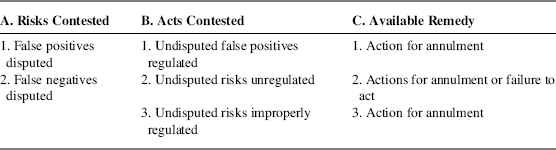
Plaintiffs may consider such a precautionary course of action for a variety of reasons. A relevant distinction is between (a) disputes about the risk and (b) disputes about the act. As for contested risks, plaintiffs may claim (i) false positives (an alleged risk does not exist), or (ii) false negatives (an alleged risk is ignored). In addition, plaintiffs may contest an EU act because (1) an undisputed non-risk is regulated as a risk, (2) an undisputed risk is regulated as non-risk, or (3) an undisputed risk is regulated in a way that is not fit for purpose.
In no small measure due to the referring court’s monopoly in providing factual context, the Court in this case accepts the uncertain risks posed by new mutagenesis techniques as undisputed.Footnote
50
Neither were these risks, during the hearing, contested by the plaintiffs, Commission, Council or the European Parliament. In the above table Confédération paysanne is therefore located in square B2: the validity of the Deliberate Release Directive is contested because undisputed uncertain risks attributed to new mutagenesis techniques remain unregulated.
It is common knowledge that the Court’s preparedness to invalidate EU acts, irrespective of whether this is in the context of preliminary rulings or annulment proceedings, depends on the discretion enjoyed by the Union legislator in a particular instance. Where the range of regulatory choices open to it is wide, the Court will not normally annul EU legislation on substantive grounds such as breach of a general principle, unless some manifest error attaches to the act (eg erroneous use of a legal basis).
As suggested earlier, in the context of actions for annulment or failure to act the precautionary principle is best understood as disciplining the Union legislator’s discretion not to engage uncertain risk. Of the scenarios in Table 1, the precautionary principle fetters the legislature’s discretion most in cases of type B1, where undisputed false positives remain regulated. The Court in such instances should feel no qualms about invalidating the act.
Table 1Remedies for contested risks and contested acts
The argument is essentially the same for cases of type B2, however. Although obligations to bring an undisputed uncertain risk under an existing regulatory umbrella such as the Deliberate Release Directive may involve slightly more discretion than the simple act of removing an undisputed non-risk, that difference in practice is negligible.
The Directive’s recitals, used improperly by the Court to justify its judicial surgery, are actually most productively advanced to dispel any lingering doubts in that respect. Recital 17, stating that the Directive should not apply to organisms obtained through certain techniques of genetic modification which have conventionally been used in a number of applications and have a long safety record, usurps the legislator’s discretion to allow B1 cases to persist. Recital 55 impels Member States and the Union “to follow closely the development and use of GMOs” and thus instructs the legislator to bring to an end both B1 and B2 cases. Finally, recital 63 must be added to this list, which instructs the Union legislator that “[t]he regulatory framework for biotechnology should be reviewed so as to identify the feasibility of improving further the consistency and efficiency of that framework. Procedures may need to be adapted so as to optimise efficiency, and all options which might achieve that should be considered”.
In conclusion, much the better option in Confédération paysanne would have been to avoid the kind of corrective surgery the Court so over-enthusiastically performed. The regulation of undisputed risks associated with new mutagenesis techniques would then have become a task for national legislators. Alternatively and preferable to corrective surgery, would have been judicially to amputate Annex IB under 1, which is the part of the Deliberate Release Directive directly responsible for the B2 scenario.
Non-privileged applicants, for reasons of locus standi, would be ill advised to pursue the procedural avenues of Arts 263 or 265 TFEU. The latter appears an option in theory, but the case law on actions for failure to act has turned this provision into all but a dead letter.Footnote
51
The preliminary ruling procedure hence provides the most appropriate arena for EU citizens to ensure that the EU’s regulatory regime remains connected with our volatile techno-society.
IV Conclusion
Confronted with claims of disconnection between an EU act and new (scientific, technological or other) phenomena, as in Confédération paysanne, the Court essentially must choose one of four options:
(a) establish reconnection, by assigning the regulatory responsibility to Member States;
(b) establish reconnection, by teleologically bringing new scientific or technological phenomena under an the existing EU regime;
(c) establish reconnection, by invalidating parts of the disconnected EU act (under Arts 263 or 265 TFEU) and giving a concrete regulatory task to the EU legislator; or
(d) establish structural disconnection judicially, by ruling that the new phenomenon does not fall within the sphere of EU law.
For reasons that do not need to be repeated here, in this particular case the most appropriate course of action would have been (a) followed by (c). Option (b), the path followed by the Court, not only is the least desirable option in this instance, but actually seems the wrong option.
A one-dimensional understanding of the precautionary principle, mentioned prominently in Art 1 of the Deliberate Release Directive, may have clouded the Court’s judgement. It almost seems as if the Court has taken the quality of the precautionary principle to empower the Union to regulate uncertain risk to mean that uncertain risk must be regulated by the Union. In that false logic, it is understandable for the Court to pursue option (b), and interpret Annex IB in such a way that new mutagenesis techniques do not benefit from the exemption.
Precaution also works in support of option (a), however, if precaution is acknowledged as a general principle of EU law. It supports option (a) also if we are not yet ready to grant the principle that status. The Directive implores Member States to honour the principle in the implementation of the Deliberate Release Directive. Art 4(1) unambiguously instructing them to ensure that, “in accordance with the precautionary principle, all appropriate measures are taken to avoid adverse effects on human health and the environment which might arise from the deliberate release or the placing on the market of GMOs”, this surely includes GMOs obtained with new mutagenesis techniques (my emphasis).
Finally, if – as we have suggested – the precautionary principle should also be understood as limiting the Union legislator’s discretion not to act (to control uncertain risk), precaution also serves to eat into the Court’s conventional reserve to annul general legislative acts (option (c)), above all in cases when these fail to take account of undisputed new uncertain risks.
Judicial connection may be unlawful if it is ultra vires. We have suggested the Court’s pursuit of option (b) lacks authority, which may actually amount to an ultra vires interpretation of Art 3(1) in conjunction with Annex IB.
Short of being unlawful, however, judicial reconnection (options (a)–(c)) or disconnection (option (d)) may be unproductive. It is productive when the Union legislator, on its own volition, would have invested (legislative) resources to achieve an identical result. It is unproductive if the Court’s judgment does not reflect the EU legislature’s intention, so that it needs to invest legislative resources to mitigate the consequences of the Court’s judgment.
There are solid reasons to suspect that the outcome in Confédération paysanne does not reflect what the legislator had in mind when it drafted Art 3(1) and Annex IB. If that is the case, then the Court’s act of reconnecting the Deliberate Release Directive by bringing new mutagenesis techniques within its scope, if not unlawful, at the very least is unproductive. The fact of the matter is that it is most unlikely, at least in the near future, that the Union legislator will muster the critical mass necessary legislatively to correct the Court. For that reason, too, productive reconnection could have been best achieved by assigning Member States the responsibility, in accordance with the precautionary principle, to take all appropriate measures to control GMOs yielded with new mutagenesis techniques.






Case C-528/16, Confédération Paysanne, ECLI:EU:C:2018:583
Deliberate release of genetically modified organisms into the environment – Mutagenesis – Directive 2001/18/EC – Articles 2 and 3 – Annexes IA and IB – Concept of “genetically modified organism” – Techniques/methods of genetic modification conventionally used and deemed to be safe – New techniques/methods of mutagenesis – Risks for human health and the environment – Discretion of the Member States when transposing the directive – Directive 2002/53/EC – Common catalogue of varieties of agricultural plant species – Herbicide-tolerant plant varieties – Article 4 – Acceptability of genetically modified varieties obtained by mutagenesis for inclusion in the common catalogue – Human health and environmental protection requirement – Exemption
I Introduction
The gene editing technologies that triggered Case C-528/16, Confédération paysanne, are spearheading a breakthrough in the life-sciences.Footnote 1 CRISPR/CAS9, for example, allows genes in organisms quickly and with a high degree of precision to be edited, without leaving traces of foreign genetic material. The applications of gene editing are virtually endless, not least commercially, as are therefore the possible implications in terms of a host of (social, ethical, safety, environmental and security) risks.Footnote 2
The Court of Justice of the EU (“Court of Justice” or “the Court”) in this case resolved that Directive 2001/18/EC (“Deliberate Release Directive”)Footnote 3 applies to these new mutagenesis technologies, notwithstanding the fact that the Directive pre-dates directed mutagenesis, and that a literal interpretation of Annex IB, which in conjunction with Art 3(1) of the Directive exempts “mutagenesis”, suggests otherwise.
The Directive requires notifications and prior risk assessments for Genetically Modified Organisms (GMOs) and, as experience shows, constitutes a very considerable hurdle for the small and medium sized enterprises currently riding the crest of innovation CRISPR/CAS9 has set in motion.Footnote 4 Although there can be little doubt that this judgment is a brake on innovation in crucial areas of medicine and agriculture, that fact alone of course is irrelevant for the purpose of determining the legal pedigree of the Court’s reasoning. In addition to analysing the specific questions raised in this case, however, we should also discuss a number of related more fundamental issues which this judgment brings to the fore.
Worth discussing in settings where novel scientific phenomena shrouded in scientific uncertainty require legal conceptualisation, first, are the implications of dealing with science as “issues of fact” (section II). This may ultimately imply that national courts’ monopoly on determining which facts matter for a preliminary reference shifts the task of categorising scientific phenomena under existing legal concepts significantly to national courts in such instances.Footnote 5 This prospect is real, as connoisseurs of the precautionary principle will attest, because the very notion of a “scientific fact” is deeply problematic in worlds where scientific uncertainty, ambiguity and even ignorance rule. The logic behind the preliminary ruling procedure has not caught up with this insight, however. If as a result a central tenet of the authority of EU law is compromised, ie the Union’s power to determine which rules apply to any given case brought before it, even if this is only subtly so, there is every reason to pay attention.
Constitutionally, second, questions arise about the limits of the Court’s judicial powers to edit the Deliberate Release Directive, notwithstanding the fact that this is to secure its effet utile, ie its continued relevance in light of ongoing technological developments (section III.1). Legislation may have become outdated when it fails to control new risks that have become manifest after adoption of an EU act, as in the present case, but also when it continues to constrain technologies that since the adoption of legislation have proved to be safe (“false negatives”). Different judicial responses appear appropriate, depending on what kind of regulatory disconnection we are dealing with.
A related point of interest is the role of the precautionary principle in such instances. The literature on precaution is vast, but mostly deals with the mandate it provides for the Union legislator and executive to engage uncertain risk and, to a lesser degree, with its practical operationalisation in risk assessment and risk management. At the heart of this particular case, however, is the somewhat different but equally important question whether precaution serves to legitimise the Court in a teleological quest to secure regulatory connection with new technological developments, effectively by updating legislation predating those developments.
Although there is no reason to think that the precautionary principle cancels out the distinction between judicial interpretation and judicial law making, the principle may affect the critical point at which the former turns into the latter. This is so if precaution systemically affects the “tilt” of secondary legislation, in the sense of establishing a presumption of risk and a concomitant need for EU regulatory action. Courts guided by the intentions of precautionary legislators, in this logic, can therefore teleologically “update” existing regulatory frameworks without necessarily overstepping their judicial mandate. Unless such interpretations are obviously ultra vires, the Court cannot easily be accused of having strayed into the contested world of judicial law making.
The judgment also fuels discussions, third, about different visions of the internal market entertained by the Union legislator and the Court, at least in the politically and ethically-charged field of biotechnology (section III.2). Earlier, Brüstle (where an autonomous and uniform interpretation of the concept “human embryo” was deemed a necessary consequence of the internal market) was premised on high degrees of legal convergence,Footnote 6 whereas Directive 2015/412/EC (“Opt-Out Directive”), allowing regulatory divergence in the cultivation of GMOs, pulled in an opposite direction.Footnote 7 Confédération paysanne now suggests that the pendulum has swung back towards Brüstle.
To be sure, the decision that the Deliberate Release Directive covers new mutagenesis techniques reflects a prioritisation of harmonised paralysis over diverging national manifestations of decisiveness. The paralysis that has plagued the deliberate release regime from its inception persuaded the Union legislator, in 2015, to break the internal market mold, and to adopt an Opt-Out Directive that empowers Member States to act individually.Footnote 8 In contrast, Confédération paysanne means that GMOs obtained through new mutagenesis techniques are regulated uniformly, but that the endemic paralysis of the Union legislator will delay or even halt their development and deployment.
Finally, Advocate General Bobek’s invocation of the precautionary principle goes well beyond establishing a structural regulatory tilt allowing the Court to “reconnect” secondary legislation with the technological state-of-the-art. He suggests that precaution can breathe life into an action to challenge the validity of outdated legislation, in both senses distinguished above, under Art 263 or Art 267 TFEU. In view of the importance the Court attaches to upholding the integrity of the system of remedies, and the availability of the action for failure to act under Art 265 TFEU, we may wish to reserve judgement as to whether the Court should think likewise in future cases (section III.3).
II National courts: facts, science and legal concepts in the preliminary ruling procedure
The important issues introduced above arose as preliminary questions in the context of French proceedings brought by an agricultural union and eight associations concerned with the protection of the environment and the dangers of GMOs. In essence, the plaintiffs sought to overturn the French Prime Minister’s refusal to revoke legislation implementing the Deliberate Release Directive. Almost literally transposing the relevant provisions of that Directive, French legislation excludes “mutagenesis” from the definition of techniques giving rise to genetic modification. Interestingly, persuaded by the language of the Deliberate Release Directive, the plaintiffs themselves conceded (prematurely, as we now know) that “the obligations laid down in Directive 2001/18 do not apply to those varieties”.Footnote 9
The NGOs sought a ban on the cultivation and marketing of herbicide-tolerant rape varieties obtained by mutagenesis, and a moratorium on herbicide-tolerant plant varieties obtained by mutagenesis. Believing that the Deliberate Release Directive did not apply to GMOs obtained through new mutagenesis techniques the plaintiffs, understandably, underscored the (alleged or real) risks of crops obtained through these techniques. They thereby put the spotlight on the precautionary principle, which not only disciplines the French legislator and competent authorities in implementing the Deliberate Release Directive, but also fuels a claim for its annulment.
The referring court makes a number of factual claims that, as will soon become apparent, appear to have had a very considerable impact on the Court’s reasoning. One such claim, which the Court replicated almost word by word, is that:
“As regards, in particular, the mutations obtained by the new directed mutagenesis techniques, the direct modification of the genome that they involve would result in the same effects as the introduction of a foreign gene, specific to transgenesis. In addition, since the development of the new techniques of mutagenesis allows the production of modifications of the genetic heritage to increase at a rate out of all proportion to the modifications likely to occur naturally or randomly, the possibility of harm occurring as a result of unintentional modifications of the genome or of the properties of the plant thus obtained would be increased”.Footnote 10
Regardless whether the French court’s scientific assessment of the risks of directed mutagenesis techniques is accurate, the authority of that claim is prima facie questionable in light of that court’s own admission that:
“It is (…) impossible to determine with certainty the existence and extent of the risks presented by those new herbicide-resistant varieties for the environment and human and animal health, the only risk assessments thus far being carried out in the context of the marketing authorisation procedure for the plant protection products to which those varieties have been made resistant”.Footnote 11
The important point here is that, accurate or not, the Court will have to make do with whatever comes its way from national courts as “factual” statements because, in the context of a preliminary ruling procedure, it is for the national court and not for the Court to establish such facts.Footnote 12 Advocate General Bobek accepts this as a given: “I emphasise at the outset that although one may harbour some doubts as to some of the assertions made by the referring court, it is not the role of the Court to engage in factual debate”.Footnote 13
We do not need to dwell on the reasons for that division of tasks, or on the question why transgressions of these respective spheres of competence are potentially deeply unsettling for the stability of the EU legal order. More pertinent for our purposes is the question what this judicial division of labour means for the locus of judicial gravity in the EU legal order in cases such as Confédération paysanne, which at their core concern the categorisation of scientific facts under the headings of legal concepts.
The insight that under circumstances of scientific uncertainty it is misleading even to coin the phrase “scientific fact” is ultimately what justifies and necessitates the precautionary principle.Footnote 14 However, it is far from easy to translate this advancement in our substantive understanding of reality articulated in the precautionary principle, ie that the divide between the factual and the normative under conditions of scientific uncertainty is fuzzy and somewhat arbitrary, into a workable procedural form. That this challenge is tenacious manifests itself in regulatory settings when the Commission and WTO dispute resolution bodies continue to operate a hard distinction, for example in the context of the SPS Agreement, insisting that the precautionary principle must exclusively operate in the normative risk management phase, and not in the scientific risk assessment phase.Footnote 15 Similarly, in the judicial space of the preliminary ruling procedure scientific facts are simply “facts” devoid of any normative charge. What a referring court advances as scientific fact hence falls outside the purview of the Court of Justice.
The justification for this somewhat theoretical detour is that the asymmetry between our increased abilities to understand reality and our capacity to translate these into workable procedural forms could impact on the outcome of cases like Confédération paysanne. As we will see, the normative consequences of the Deliberate Release Directive attach to organisms obtained through certain technologies, rather than to organisms with specified intrinsic qualities. “Technology” loosely referring to the application of scientific facts for practical purposes, it would logically appear that national courts’ monopoly on furnishing the Court of Justice with scientific facts therefore elevates them to a position in which they, rather than the Court of Justice, may decide the legal categorisation of a crop as GMO.
With that in mind, we can now turn to the four questions for which the Conseil d’État requested a preliminary ruling.
The first question seeks to ascertain (a) whether organisms obtained through the use of new directed mutagenesis techniques, ie developed after the coming into force of the Deliberate Release Directive, qualify as a GMO and, if so (b) whether the exemption provided for in Annex IB to the Directive generically referring to “mutagenesis” also applies to GMOs obtained through such new techniques post-dating the Directive.
Second and similarly, the Conseil d’État wishes to know if crop varieties obtained through directed mutagenesis techniques constitute GM varieties within the meaning of Directive 2002/53/EC, or whether these are exempt from the obligations laid down for the inclusion of GM varieties in the common catalogue of agricultural plant species.
Third, in respect of the exemptions provided in Annex IB, the Conseil d’État asks if this constitutes a “full harmonisation measure” prohibiting Member States from imposing obligations on GMOs obtained by mutagenesis.
Fourth and finally, the French court asks whether Articles 2 and 3 of and Annexes IA and IB to the Deliberate Release Directive breach the precautionary principle so as to call into question their validity.
Essentially, the Court must first decide whether to perform corrective judicial surgery on the Deliberate Release Directive, to reconnect it with directed mutagenesis techniques developed after 2001.Footnote 16 The tool at its disposal is conventional teleological interpretation, with the precautionary principle being prominently present to assist. This first question is pivotal, because it largely dictates the outcomes of the second and fourth questions, whilst it ought to impact significantly on the third.
If the Court decides to perform the procedure, all secondary legislation with references to the Deliberate Release Directive will undergo an identical make-over, which answers the second question. The fourth question, whether the Directive should be declared invalid on account of the precautionary principle, then becomes moot.
The third question asks whether Member States can adopt measures for mutagenesis techniques or whether, alternatively, the relevant provisions pursue total harmonisation. This question reflects the NGOs’ presumption, based on a literal interpretation of the Deliberate Release Directive, that new mutagenesis techniques like conventional techniques are excluded from the scope of the Directive. In that case, the denial of the preemptive effect of those provisions frees Member States to engage unregulated human and environmental health risks posed by directed mutagenesis techniques. If, conversely, the Court reconnects new mutagenesis techniques with the Deliberate Release Directive (as the outcome of the first question), and the former become subject to EU law, denial of preemptive effect will raise eyebrows. This will be so because the Deliberate Release Directive is based on Art 95 EC (internal market), which carries the implication that the case for residual Member State powers is tenuous.
As we will see, by performing the surgery and simultaneously ruling that the Directive only partially regulates mutagenesis, the Court has unwittingly created an awkward legal creature.
III The Court of Justice: the perils of judicial fixes for Regulatory Disconnections
1 Fixing regulatory ageing processes with corrective judicial surgery: success not guaranteed
For the reasons outlined above, we can deal with the first two questions in tandem. For a proper understanding of the issues involved, it is necessary first to situate them in their legal and technological context.
a First question
The first part of the all-important first question asks if organisms obtained with new directed mutagenesis techniques, ie those developed after the coming into force of the Deliberate Release Directive, qualify as GMOs. This is fundamental because, as becomes clear from Art 1, “GMO” is the concept that triggers the obligations flowing from the Deliberate Release Directive.Footnote 17 Establishing the legal fact of a GMO, in the system of the Directive, hinges on genetic changes realised in a way that does not occur naturally by mating and/or natural recombination (my emphasis).Footnote 18 The Directive thereby appears process-based, as it is not the intrinsic genetic identity of a final product, but the way in which it is yielded that determines its final legal conceptualisation. Because technological development is continuous, this process-based approach is likely also to perpetuate future questions whether organisms that have been genetically modified are “GMOs”.
Scientists, mercifully, do not lose much sleep over legal conceptualisations. For a scientist a screwdriver is a screwdriver, regardless how it has been manufactured, or to what end it is used. In similar vein, scientists use “mutagenesis” as an umbrella term for all techniques changing genetic information in an organism, which are expressed as (useful or harmful) mutations.
Mutagenesis occurs in nature too, which is why we have evolution, but mutagenesis technologies can accelerate and manipulate such evolutionary processes. Techniques such as CRISPR/CAS9, ie directed mutagenesis techniques post-dating the Deliberate Release Directive, do not randomly alter organisms in the hope that some modifications will turn out to be of use, but quickly and predictably give rise to targeted mutations. What these new techniques have in common with older mutagenesis techniques, is that they do they do not leave traces of foreign genetic material in host organisms and, in the language of Art 2(2) of the Directive, that identical mutations could also occur in nature by mating and/or natural recombination. Although this latter fact is legally largely irrelevant in view of the process-based nature of the Deliberate Release Directive, scientists and industry are likely to attach weight to it.
Random mutagenesis has been used for many years, and is exempted from the Directive by Art 3(1) in conjunction with Annex IB, entitled “Techniques Referred to in Article 3”.Footnote 19 The scope of this exemption takes centre stage in the second part of the first question. Annex IB superficially perhaps appears unconditionally to exempt GMOs obtained by using “mutagenesis”, but this is not quite true. Only those mutagenesis techniques that “do not involve the use of recombinant nucleic acid molecules” benefit from the exemption. This qualification is important, because it contradicts claims that the Union legislator, at the time of adoption of the Deliberate Release Directive, has failed to cater for the future.
b Genetic manipulation by mutagenesis gives rise to GMOs
Equipped with this legal and technical luggage, it is not hard to see why the Court should have ruled that organisms yielded with mutagenesis techniques are GMOs in the sense of Art 2(2) of the Deliberate Release Directive. Factually correct and, as explained, legally crucial, the Court underscores that certain mutagenesis techniques/methods involve the use of chemical or physical mutageneous agents, and others involve the use of genetic engineering; all those techniques/methods alter the genetic material of an organism in a way that does not occur naturally, within the meaning of that provision.Footnote 20
As additional argument, the Court explains the significance of Parts 1 and 2 of Annex IA. Part 1 lists techniques which “at least” give rise to genetic modification, Part 2 lists those that “do not” yield GMOs. Mutagenesis techniques do not feature in Part 1, but that is no reason to conclude that it thereby also does not result in genetic modification. This is because Part 1 clearly does not exhaustively list the techniques that yield GMOs, as becomes clear from the uses of “at least” in Art 2(2)(a), and “inter alia” in the Annex itself.Footnote 21
A more difficult obstacle for the Court’s finding that mutagenesis yields GMOs would appear to be constituted by Annex IB, which exhaustively lists the techniques excluded from the Directive, and on which “mutagenesis” features. The Court is correct, however, that this exclusion from the Directive is despite the fact that mutagenesis gives rise to GMOs; the Annex literally refers to “Techniques/methods of genetic modification”.Footnote 22
For these reasons, the Court correctly concludes that organisms obtained with mutagenesis techniques are GMOs within the meaning of the Directive, which faithfully reflects the prohibitive regulatory tilt established by precautionary principle, alluded to in Art 1 of the Deliberate Release Directive.Footnote 23
c GMOs obtained by means of new techniques of mutagenesis not exempted
The Court’s answer to the first part of the first question makes the second part, ie the question whether GMOs obtained by means of new techniques/methods of mutagenesis benefit from the exemption of Art 3(1) in conjunction with Annex IB, all the more crucial.Footnote 24 As I have not avoided spoilers in the introducing pages, it will not cause additional frief first to cite the Court’s answer, and only then to gauge the legal pedigree of its reasoning. The Court ruled:
“In those circumstances, Article 3(1) of Directive 2001/18, read in conjunction with point 1 of Annex IB to that directive, cannot be interpreted as excluding, from the scope of the directive, organisms obtained by means of new techniques/methods of mutagenesis which have appeared or have been mostly developed since Directive 2001/18 was adopted. Such an interpretation would fail to have regard to the intention of the EU legislature, reflected in recital 17 of the directive, to exclude from the scope of the directive only organisms obtained by means of techniques/methods which have conventionally been used in a number of applications and have a long safety record”.Footnote 25
The root cause for the regulatory disconnection between the Deliberate Release Directive and the advent of new mutagenesis techniques resides in Art 3(1) of the Directive, which in conjunction with point 1 of Annex IB excludes mutagenesis from the scope of the Directive.Footnote 26 For the Court to state that Annex IB “cannot” be interpreted as excluding new mutagenesis techniques from the scope of the Directive is rather bold, given that this is precisely what a literal interpretation would suggest it should do. The Court’s interpretation style of course is always contextual, and this case is no exception. Yet, even then, the justifications the Court advances in support of its teleological interpretation, ie one that does not religiously adhere to the ordinary meaning of words but is driven by the (precautionary) objectives of the Deliberate Release Directive, are tenuous. It comes to its conclusion based on (1) the wording and (2) the context of the Directive.Footnote 27
Regarding the wording the Court, somewhat rhetorically, argues that although Annex IB refers generically to “mutagenesis”, this does not provide any conclusive guidance as to the types of techniques/methods that the EU legislature intended specifically to exclude from the scope of the Deliberate Release Directive (my emphasis).Footnote 28 The most important doubt that arises in respect of this argument is that Annex IB, in contrast to what the Court alleges, does not “generally” refer to mutagenesis, but specifically only exempts mutagenesis techniques that “do not involve the use of recombinant nucleic acid molecules”. The whole point of this qualification, one must assume, is that the Union legislator wished to anticipate future technological developments.
There is of course little to be said against the Court’s preposition that as a provision derogating from the requirement to subject GMOs to the obligations laid down in the Deliberate Release Directive, Art 3(1) read in conjunction with point 1 of Annex IB to that Directive, must be interpreted strictly.Footnote 29 However, by completely ignoring a crucial qualification purposefully included by the legislator, the Court’s interpretation lacks authority.
As regards context, the Court relies heavily on recital 17,Footnote 30 which reads:
“This Directive should not apply to organisms obtained through certain techniques of genetic modification which have conventionally been used in a number of applications and have a long safety record”.
This leads the Court to the conclusion that the Deliberate Release Directive covers directed mutagenesis techniques, because these do not have a long safety record.
Recital 17 hence is the Court’s substantive fix for the disconnection of the Deliberate Release Directive with these new techniques. Yet, just as there is a limit to what duct tape can do in the construction business, there comes a point that a single recital will succumb to a Directive’s counterveiling forces, which in this case are considerable. First, recital 17 was drafted and inserted by the Commission before the mutagenesis exemption was even considered in subsequent stages of the legislative process, and it was therefore never designed to qualify Annex IB.Footnote 31 Second, the Union legislator itself flatly contradicts the Court’s reading of the intended function of recital 17. At the hearing the Commission, too, said that it was a “mere statement”, the Council confirmed that the EU legislature had had no intention to regulate mutagenesis techniques, irrespective of their safety,Footnote 32 and the European Parliament stressed that the legislator does not sufficiently lack in humility to pronounce once and for all on the safety of all mutagenesis techniques.Footnote 33 We will argue below that to ignore the intentions of the Union legislator is a recipe for an unproductive reconnection of the Deliberate Release Directive with new directed mutagenesis technologies (section IV).
Finally, the distinction between techniques that have a proven safety record and those that do not does not feature anywhere amongst the many different categorisations the operational provisions of the Directive create.
All this leads Advocate General Bobek to conclude that “recital 17 simply cannot be used for the interpretation of Article 3(1) and Annex IB”.Footnote 34
Yet, the Court finds further support for its insistence that new mutagenesis techniques, unlike older techniques, are covered by the Deliberate Release Directive in its objectives.Footnote 35 Whilst this is a perfectly accepted way to approach the interpretation of provisions of directives, it is disconcerting that the Court, in invoking Art 1 for that purpose, exclusively recounts the protection of human health and the environment and in the process, strikingly, omits to mention the internal market.Footnote 36
The implications of this denial of the Directive’s internal market pedigree are considered below when we deal with the third preliminary question, ie whether the exceptions provided in Annex IB constitute full harmonisation. Here, we must briefly discuss one final important general question related to the Court’s use of the precautionary principle, mentioned in Art 1, as a driving force behind its surgical reconstruction of the Deliberate Release Directive.
It is fundamental to acknowledge that the precautionary principle establishes discretionary powers for the Union legislator to engage uncertain risk, but that it does not create an obligation to regulate such risks. We might more properly say that the precautionary principle constrains the discretion usually enjoyed by the Union legislator not to act. A general precautionary obligation to act would be plainly impossible to uphold since the category of uncertain risks, even though hypothetical risks clearly are not included in that category, far exceeds the legislator’s capacity to act.
This also means that the principle does not establish a carte blanche or Kompetenz-Kompetenz for the Court of Justice to reconnect directives with new technological developments. Rather, the Court must respect the primacy of the Union legislator, and only when certain conditions appear to be satisfied, further elaborated in section III.3 below, should it conclude that a failure to act can be judicially repaired. We need not compromise on this basic constitutional principle for fear of leaving potential risks unregulated, because EU environmental policy is a shared competence, and Member States have a clear responsibility here. In fact, the Deliberate Release Directive, in Art 4(1), obliges Member States to take all appropriate steps to control risks associated with GMOs.
A factor of considerable weight in this debate is the fact that the regulation of GMOs in the EU, because of deep political divides between Member States, is in a state of paralysis. This means that failures to act are less a sign of negligence on the part of the Union legislator, than evidence of insufficient political support for any sort of action.Footnote 37 It therefore does not seem proper for the Court, absent clear evidence of risk, to step in as substitute legislator. This the more so because, in light of the continuing paralysis, in practice the Union legislator is not in a position to overrule the Court’s edits, which therefore acquire a high degree of de facto finality. Our analysis suggesting that the Court in this instance actually has ignored the intentions of the Union legislator, as well as of the Commission which initiated the legislation, the latter point is a very serious one.
d Second question
The Deliberate Release Directive constitutes a general point of reference for a host of related specific legislation. The outcome of this case therefore is of direct importance for, in particular, Regulation (EC) 1829/2003,Footnote 38 Regulation (EC) 1830/2003,Footnote 39 Regulation (EC) 178/2002,Footnote 40 Directive 2004/35/CE,Footnote 41 and in this particular case Directive 2002/53/EC on the common catalogue of varieties of agricultural plant species.Footnote 42 Directive 2002/53, according to its Art 1(1), concerns the acceptance for inclusion in a common catalogue of varieties of agricultural plant species of those varieties of beet, fodder plant, cereal, potato and oil and fibre plant the seed of which may be marketed. Important in this case is Art 4(4) of Directive 2002/53 which provides:
“In the case of a genetically modified variety within the meaning of Article 2(1) and (2) of Directive 90/220/EEC, the variety shall be accepted only if all appropriate measures have been taken to avoid adverse effects on human health and the environment”.
Art 7(4)(a) of Directive 2002/53 further provides that for genetically modified varieties an environmental risk assessment must be carried out. Identical issues arise in the context of Directive 2002/53 as were addressed by the Court in the first question, ie whether varieties obtained with new mutagenesis techniques qualify as GMOs and, if so, whether these are exempted by virtue of Art 4(4) analogous with Art 3 and Annex IB of the Deliberate Release Directive. Because the latter provides the framework for the former, it is only logical that the Court should answer the questions identically:
“… genetically modified varieties obtained by means of techniques/methods of mutagenesis such as those at issue in the main proceedings, with the exception of varieties obtained by means of techniques/methods of mutagenesis which have conventionally been used in a number of applications and have a long safety record, come within the scope of Article 4(4) of Directive 2002/53 and the obligations with regard to the protection of health and the environment laid down in that provision for the purpose of acceptance for inclusion of the varieties in the common catalogue”.Footnote 43
2 Taking the bandages off and regretting the intervention – the third question
a Admissibility
The third question regards the scope of harmonisation pursued by Art 3 in conjunction with Annex IB. Concretely, the French court wishes to know whether Member States can adopt measures in respect of mutagenesis or if, alternatively, those provisions preempt such action (total harmonisation).
Before turning to the substance, the Court had to discharge doubts expressed by the Commission about the admissibility of this question, which it felt might be hypothetical. The Court underlined the doctrine of “presumption of relevance” enshrined in established case law,Footnote 44 and also had little difficulty in finding that, for the purpose of subsequent national procedures, the Conseil d’État actually had a concrete interest in ascertaining the national discretion to adopt measures in respect of mutagenesis techniques exempted by Art 3 in conjunction with Annex IB.Footnote 45
b Substance
It is when the Court deals with the merits of the third question that the Deliberate Release Directive’s bandages are removed, and we get to experience the result of the judicial surgery performed by the Court in the second part of the first question. In all frankness, what is revealed is not pretty. NGOs present to witness the spectacle had perhaps hoped for enhanced environmental pedigree. Industry and scientists undoubtedly were looking forward to more pronounced features promoting the internal market and innovation. Yet, from whatever perspective one looks at the Deliberate Release Directive, under the bright light emitted by the answer to the third question, it looks awkwardly unattractive.
Like the Commission,Footnote 46 the Court finds in rather straightforward fashion that Member States retain powers to regulate mutagenesis that falls outside the scope of the Directive:
As held in paragraph 54 of the present judgment, organisms obtained by means of techniques/methods of mutagenesis which have not conventionally been used in a number of applications and do not have a long safety record come within the scope of Directive 2001/18 and are, therefore, subject to the obligations arising from that directive.
By contrast, organisms obtained by means of techniques/methods of mutagenesis which have conventionally been used in a number of applications and have a long safety record do not come within the scope of that directive, in accordance with Art 3(1) of that directive, read in conjunction with point 1 of Annex IB thereto.
Consequently, and to the extent to which the EU legislature has not regulated those organisms, Member States have the option of defining their legal regime by subjecting them, in compliance with EU law, in particular the rules on the free movement of goods set out in Arts 34–36 TFEU, to the obligations laid down by Directive 2001/18 or to other obligations.Footnote 47
To rule otherwise, ie that Member States have lost all powers to regulate mutagenesis, would imply that the Union legislator at the time of adopting the Deliberate Release Directive considered all techniques prima facie safe. For various reasons, including the legislative history recounted by the Commission, the Council of Ministers and the European Parliament, as well as the precautionary principle, this would be an impossible position to maintain.
Art 3(1) in conjunction with Annex IB hence only partially regulates mutagenesis and consequently allows Member States to regulate mutagenesis techniques not covered by the Deliberate Release Directive. Because the Court revamped the Directive to exclude from its scope mutagenesis with a long safety record, but to include new techniques that have not yet proved themselves safe, the consequences are only little short of bizarre. Concretely, Member States:
(a) can adopt measures in respect of mutagenesis techniques that have a long safety record, and for which therefore there is hardly any justification;
(b) cannot adopt measures in respect of mutagenesis techniques that have no safety record, even though there is a need for such measures due to the Union legislator’s paralysis in this field.
In conclusion, within the limits of primary EU law, in particular Arts 34 and 36 TFEU, and Art 22 of the Directive, national measures that serve no obvious purpose are allowed to compromise the internal market, and environmental protection is allowed to suffer because potentially risky techniques are likely to remain unregulated.Footnote 48 It is hard to see how to square this outcome with the general context and purpose of the Deliberate Release Directive, which the Court claimed guided it in performing its judicial surgery on the Directive. Clearly, the Court’s decision to attach independent legal significance to recital 17 to justify an outcome that brings new mutagenesis techniques that do not have a long safety record under the Directive’s control has come back to haunt us.
Although undoubtedly meant to serve the imperatives of human and environmental health, even from that perspective the judgment is mistaken. Had the Court simply stuck to the wording of Annex IB, and refrained from selectively omitting parts of the Annex and equally selectively elevating recital 17 to perform a function it was clearly never designed to serve, environmental and health goals probably would have been better guaranteed. Partial harmonisation would not only have allowed Member States to regulate new mutagenesis techniques, they quite arguably would have been compelled to do so. Specifically, the Deliberate Release Directive in Art 4(1) provides that:
“Member States must, in accordance with the precautionary principle, ensure that all appropriate measures are taken to avoid adverse effects on human health and the environment which might arise from the deliberate release or the placing on the market of GMOs. GMOs may only be deliberately released or placed on the market in conformity with part B or part C respectively”.
It is not too far-fetched to argue that, in respect of GMOs obtained by new mutagenesis techniques, on account of the precautionary principle, Member States must ensure that all appropriate measures are taken. The second limb of Art 4(1), by virtue of Art 3(1) and Annex IB then does not apply to such GMOs. This also is more in tune with the spirit of the time, encapsulated in the Opt-Out Directive as regards the possibility for the Member States to restrict or prohibit the cultivation of genetically modified organisms (GMOs) in their territory.Footnote 49
3 Clinical alternatives: precautionary judicial amputation – the fourth question
The fourth question, concerning the validity of the Deliberate Release Directive in light of the precautionary principle, lost its relevance because of the Court’s decision to bring new mutagenesis techniques under the ambit of the Directive. The Court therefore felt no need to answer the last question referred to it by the Conseil. Yet, in view of our conclusion that the Court’s attempt judicially to reconnect new mutagenesis techniques with the Deliberate Release Directive was a mistake, we must consider alternative options for controlling the undisputed uncertain risks of those techniques.
One preferable option, tabled above, would have been to leave the business of regulating those risks to Member States. A second option, discussed in part by Advocate General Bobek, is to challenge the validity of the Deliberate Release Directive because it is out of step with the technological state of the art. The Union legislator must then act to repair the Deliberate Release Directive. We should therefore briefly discuss the precautionary principle as a ground for annulment of EU acts.
Plaintiffs may consider such a precautionary course of action for a variety of reasons. A relevant distinction is between (a) disputes about the risk and (b) disputes about the act. As for contested risks, plaintiffs may claim (i) false positives (an alleged risk does not exist), or (ii) false negatives (an alleged risk is ignored). In addition, plaintiffs may contest an EU act because (1) an undisputed non-risk is regulated as a risk, (2) an undisputed risk is regulated as non-risk, or (3) an undisputed risk is regulated in a way that is not fit for purpose.
In no small measure due to the referring court’s monopoly in providing factual context, the Court in this case accepts the uncertain risks posed by new mutagenesis techniques as undisputed.Footnote 50 Neither were these risks, during the hearing, contested by the plaintiffs, Commission, Council or the European Parliament. In the above table Confédération paysanne is therefore located in square B2: the validity of the Deliberate Release Directive is contested because undisputed uncertain risks attributed to new mutagenesis techniques remain unregulated.
It is common knowledge that the Court’s preparedness to invalidate EU acts, irrespective of whether this is in the context of preliminary rulings or annulment proceedings, depends on the discretion enjoyed by the Union legislator in a particular instance. Where the range of regulatory choices open to it is wide, the Court will not normally annul EU legislation on substantive grounds such as breach of a general principle, unless some manifest error attaches to the act (eg erroneous use of a legal basis).
As suggested earlier, in the context of actions for annulment or failure to act the precautionary principle is best understood as disciplining the Union legislator’s discretion not to engage uncertain risk. Of the scenarios in Table 1, the precautionary principle fetters the legislature’s discretion most in cases of type B1, where undisputed false positives remain regulated. The Court in such instances should feel no qualms about invalidating the act.
Remedies for contested risks and contested acts
The argument is essentially the same for cases of type B2, however. Although obligations to bring an undisputed uncertain risk under an existing regulatory umbrella such as the Deliberate Release Directive may involve slightly more discretion than the simple act of removing an undisputed non-risk, that difference in practice is negligible.
The Directive’s recitals, used improperly by the Court to justify its judicial surgery, are actually most productively advanced to dispel any lingering doubts in that respect. Recital 17, stating that the Directive should not apply to organisms obtained through certain techniques of genetic modification which have conventionally been used in a number of applications and have a long safety record, usurps the legislator’s discretion to allow B1 cases to persist. Recital 55 impels Member States and the Union “to follow closely the development and use of GMOs” and thus instructs the legislator to bring to an end both B1 and B2 cases. Finally, recital 63 must be added to this list, which instructs the Union legislator that “[t]he regulatory framework for biotechnology should be reviewed so as to identify the feasibility of improving further the consistency and efficiency of that framework. Procedures may need to be adapted so as to optimise efficiency, and all options which might achieve that should be considered”.
In conclusion, much the better option in Confédération paysanne would have been to avoid the kind of corrective surgery the Court so over-enthusiastically performed. The regulation of undisputed risks associated with new mutagenesis techniques would then have become a task for national legislators. Alternatively and preferable to corrective surgery, would have been judicially to amputate Annex IB under 1, which is the part of the Deliberate Release Directive directly responsible for the B2 scenario.
Non-privileged applicants, for reasons of locus standi, would be ill advised to pursue the procedural avenues of Arts 263 or 265 TFEU. The latter appears an option in theory, but the case law on actions for failure to act has turned this provision into all but a dead letter.Footnote 51 The preliminary ruling procedure hence provides the most appropriate arena for EU citizens to ensure that the EU’s regulatory regime remains connected with our volatile techno-society.
IV Conclusion
Confronted with claims of disconnection between an EU act and new (scientific, technological or other) phenomena, as in Confédération paysanne, the Court essentially must choose one of four options:
(a) establish reconnection, by assigning the regulatory responsibility to Member States;
(b) establish reconnection, by teleologically bringing new scientific or technological phenomena under an the existing EU regime;
(c) establish reconnection, by invalidating parts of the disconnected EU act (under Arts 263 or 265 TFEU) and giving a concrete regulatory task to the EU legislator; or
(d) establish structural disconnection judicially, by ruling that the new phenomenon does not fall within the sphere of EU law.
For reasons that do not need to be repeated here, in this particular case the most appropriate course of action would have been (a) followed by (c). Option (b), the path followed by the Court, not only is the least desirable option in this instance, but actually seems the wrong option.
A one-dimensional understanding of the precautionary principle, mentioned prominently in Art 1 of the Deliberate Release Directive, may have clouded the Court’s judgement. It almost seems as if the Court has taken the quality of the precautionary principle to empower the Union to regulate uncertain risk to mean that uncertain risk must be regulated by the Union. In that false logic, it is understandable for the Court to pursue option (b), and interpret Annex IB in such a way that new mutagenesis techniques do not benefit from the exemption.
Precaution also works in support of option (a), however, if precaution is acknowledged as a general principle of EU law. It supports option (a) also if we are not yet ready to grant the principle that status. The Directive implores Member States to honour the principle in the implementation of the Deliberate Release Directive. Art 4(1) unambiguously instructing them to ensure that, “in accordance with the precautionary principle, all appropriate measures are taken to avoid adverse effects on human health and the environment which might arise from the deliberate release or the placing on the market of GMOs”, this surely includes GMOs obtained with new mutagenesis techniques (my emphasis).
Finally, if – as we have suggested – the precautionary principle should also be understood as limiting the Union legislator’s discretion not to act (to control uncertain risk), precaution also serves to eat into the Court’s conventional reserve to annul general legislative acts (option (c)), above all in cases when these fail to take account of undisputed new uncertain risks.
Judicial connection may be unlawful if it is ultra vires. We have suggested the Court’s pursuit of option (b) lacks authority, which may actually amount to an ultra vires interpretation of Art 3(1) in conjunction with Annex IB.
Short of being unlawful, however, judicial reconnection (options (a)–(c)) or disconnection (option (d)) may be unproductive. It is productive when the Union legislator, on its own volition, would have invested (legislative) resources to achieve an identical result. It is unproductive if the Court’s judgment does not reflect the EU legislature’s intention, so that it needs to invest legislative resources to mitigate the consequences of the Court’s judgment.
There are solid reasons to suspect that the outcome in Confédération paysanne does not reflect what the legislator had in mind when it drafted Art 3(1) and Annex IB. If that is the case, then the Court’s act of reconnecting the Deliberate Release Directive by bringing new mutagenesis techniques within its scope, if not unlawful, at the very least is unproductive. The fact of the matter is that it is most unlikely, at least in the near future, that the Union legislator will muster the critical mass necessary legislatively to correct the Court. For that reason, too, productive reconnection could have been best achieved by assigning Member States the responsibility, in accordance with the precautionary principle, to take all appropriate measures to control GMOs yielded with new mutagenesis techniques.