From antiquity up to the middle of the 20th century, with few exceptions, childhood psychiatric disorders were at best ignored and at worst considered manifestations of ‘badness’ or poor upbringing. Thus, it is not surprising that the treatments administered were generally of little clinical benefit or, applying today's standards, more akin to punishment than treatment. In this context, the initial use of electroconvulsive therapy (ECT) in young people in the 1940s provided a welcome breakthrough. ECT was first used in children and adolescents early in that decade by Heuyer and colleagues in Paris, with positive results Reference Heuyer, Bour and Feld(1), but what remains the largest published cohort of young recipients of the treatment was that reported by Lauretta Bender in 1947 Reference Bender(2). In that year, Bender described the use of ECT at New York's Bellevue Hospital in 98 children younger than 12 years of age and, while acknowledging that complete remission occurred in only a few patients, Bender suggested that ECT was of benefit in all but two or three of the young recipients. Bender considered the children as having ‘childhood schizophrenia’. However, using contemporary criteria, they would more likely qualify for a diagnosis of developmental disorder or disruptive behaviour disorder.
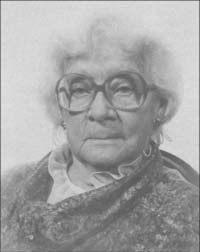
Lauretta Bender (1897–1987) was an important figure in the child and adolescent psychiatry field (Fig. 1), who inspired others such as Stella Chess but she is arguably best known for her work in language disorders and for developing the Bender Visual-Motor Gestalt Test, which accesses children's perceptual problems and inner thoughts by asking them to copy different shapes. Her contributions to the treatment of childhood schizophrenia were more controversial, especially the administration of hallucinogens [lysergic acid diethylamide (LSD) 25] to young sufferers in an effort to alleviate symptoms. However, it should be noted that at that time LSD 25 had briefly become a fashionable treatment for schizophrenia. Although praised for her contribution to biological psychiatry, for which she won prestigious awards, Bender was also mindful of the importance of environmental factors in the aetiology of psychiatric disorders. For example, she suggested that inconsistent and impersonal institutional care in childhood could lead to psychopathic personality.
Lauretta Bender (1897–1987).

What became of ECT as a treatment modality after its inaugural use by Heuyer's group and then Bender in the 1940s? It would appear that, while ECT was initially embraced because of a paucity of other available treatment options, its subsequent use declined because of a combination of (unsubstantiated) fears about the treatment's potential effects on the developing brain, the antipsychiatry movement, negative media depictions and the emergence of new psychotropic drugs Reference Rey and Walter(3). Yet, in recent years, ECT seems to have attracted renewed interest, in large part due to the less than dramatic effectiveness of antidepressant drugs in the young and medication side-effects.
The status quo in 2010 is that, essentially, ECT in young persons and adults is similar in all respects, apart from the frequency of use. In the absence of controlled trials in children and adolescents, ECT appears to be an effective treatment for young people with severe mood disorders in particular, where those disorders have proved resistant to other treatments Reference Walter and Rey(4). Furthermore, side-effects of ECT in the young, as in adults, are common but minor and usually transient. There is no clear evidence that ECT has a negative impact on long-term cognitive functioning. Perhaps somewhat surprisingly, ECT is viewed favourably by young recipients Reference Walter, Koster and Rey(5) and their parents Reference Walter, Koster and Rey(6), in contrast to the prevailing negative community attitudes towards this treatment in the young Reference Walter, Koster and Rey(5). It should be borne in mind, however, that the above findings pertain principally to adolescents and that although Bender's published cases were all younger than 12 years of age, there have been comparatively far fewer reports on ECT in preadolescents, and our knowledge about the treatment in the younger age group remains very limited.
Beyond the specific subject of ECT in the young, the work of Bender and others in the 1940s raises the more general issue of when it is appropriate to study and use novel treatments in young persons. Should emerging treatments only be trialled in the young after thorough evaluation in adults, or does such an approach deny or delay young persons' access to potentially effective and safe treatments? Bearing this in mind, it is worth noting that in recent years newer treatments such as transcranial magnetic stimulation (TMS) have been studied in young persons with psychiatric illness and that the results, while preliminary, are encouraging Reference Bloch, Grisaru and Eiran(7). With appropriate checks and safeguards, modern researchers could do worse than follow the example of pioneers like Lauretta Bender.
Acknowledgement
We thank Elsevier for permission to republish the photograph of Lauretta Bender, that originally appeared in Biological Psychiatry 1987;22:1040.