1. Introduction
The Organisation for Economic Co-operation and Development (OECD) defines creativity as one of the core competencies required for the 21st century (OECD, 2015). Accordingly, during the past decade, creativity has emerged as a major education focus of attention in many countries. Creativity is believed to be a critical skill that will enable members of younger generations to solve everyday problems and thrive in the new millennium (Csikszentmihalyi, Reference Csikszentmihalyi2014). According to Csikszentmihalyi (Reference Csikszentmihalyi2014), creativity is not limited to the world’s few geniuses. Instead, fostering creativity is important for everyone because it makes life worth living and helps people attain self-realization.
Formal language education, however, often imposes restrictions on creativity and focuses more on “control and containment than expression and discovery” (McCallum, Reference McCallum2012: 31). This situation is exacerbated in foreign language (FL) classrooms: students in such classes are so occupied with learning grammar and vocabulary and functional communicative competence that little room remains for creativity. In recent years, language teachers and researchers have increasingly come to recognize the importance of creativity and have endeavored to integrate creativity into English as a foreign language (EFL) classrooms. Regardless, research in this area remains scarce (Baleghizadeh & Dargahi, Reference Baleghizadeh, Dargahi and Tomlinson2016).
Another concern facing current EFL classrooms is the discrepancy between students’ daily activities and literacy practices in schools (Sandberg, Reference Sandberg2013). Outside of the classroom, mobile and gaming technologies have become a platform for many students’ activities, including socializing and learning. Indeed, as Sundqvist (Reference Sundqvist2009) noted, students are getting more opportunities to be engaged in extramural English – that is, learning English outside the walls of English classrooms. Sylvén and Sundqvist (Reference Sylvén and Sundqvist2012), Sauro and Sundmark (Reference Sauro and Sundmark2016), and Sauro (Reference Sauro2017) also found that extramural English significantly contributed to students’ learning during gaming and fanfiction writing. School literacy practices, however, have not yet embraced these informal types of creative practices, thereby leaving little room for student creativity. A disconnect between the preferred typical activities of students and their daily literacy practices causes students to feel disengaged and unmotivated in current EFL classrooms (Lee, Reference Lee2017).
With a view to bridging the gap between students’ daily activities and school literacy practices, the current study examines students’ motivation during an innovative learning project and assesses the resulting creativity in student writings. The study uses Her Story, an interactive murder mystery game in which a player randomly views a suspect’s testimonial videos to solve the mystery (the game is also available on personal computer [PC] platforms). The goal of the game is to identify the murderer and discern the entire story via a nonlinear, fragmented narrative. Her Story was selected because its fragmented and ambiguous narrative provides a springboard for creative writing. Based on the game plot and setting, and using the same characters from the source material, 25 Korean university students reimagined the stories in a creative writing assignment.
2. Literature review
2.1 Creativity and creative writing
Creativity is a complex concept that involves identifying problems, making inferences and new connections, generating new ideas, and communicating results (Torrance, Reference Torrance and Sternberg1988). Due to the complex nature of creativity, many scholars regard it as a set of abilities composed of various constructs rather than as a single ability. Among many others, Torrance (Reference Torrance and Sternberg1988), one of the most widely recognized creativity scholars, delineated four constructs of creativity: originality (generation of a new idea), fluency (the number of new ideas), flexibility (the number of categories of new ideas), and elaboration (the degree of detail and precision of the idea).
Previous research has found that creativity and creative thinking are positively correlated with both first and FL learning. In first language learning, Vygotsky (Reference Vygotsky1986) affirmed the close relationship between language development and creative thinking skills. Piaget (Reference Piaget2002) also noted a positive connection between creative thinking and both reading and writing abilities. Creativity is consistently associated with the abilities required for reading and writing (McVey, Reference McVey2008; Sturgell, Reference Sturgell2008), also in FL studies. Marashi and Dadari (Reference Marashi and Dadari2012) argued that the development of creativity is central to writing and that task-based writing benefited EFL learners’ creativity. Wang and Cheng (Reference Wang and Cheng2016) found that creativity was influential to students’ motivation in second language performance and learning achievement. More specifically, the work of Nosratinia and Razavi (Reference Nosratinia and Razavi2016) shows that the degree of EFL learners’ creativity significantly affected their writing complexity, accuracy, and fluency. Wang (Reference Wang2007, Reference Wang2012) discovered that, in particular, the creative ability of elaboration was correlated with English reading and writing scores in standard metrics. Creativity in these previous studies, however, is confined to linguistic creativity – that is, a learner’s ability to use the target language creatively and to “construct and understand an infinite variety of new utterances” (Bell, Reference Bell2012: 191). In other words, these existing studies consider learners’ abilities to express what they did not yet know beyond formulaic expressions or to express what they already knew (Bell, Reference Bell2012; Tin, Reference Tin2011, Reference Tin2013). In sum, creativity studies in EFL have focused primarily on linguistic creativity in a narrow sense, focusing on language proficiency rather than on creativity in terms of ideas and content (Wang & Cheng, Reference Wang and Cheng2016).
In addition, writing and creativity are deeply intertwined, mutually enhancing one another. Insofar as writing requires authors to express fresh ideas and imaginations “that did not exist before … all writing is creative writing” (McVey, Reference McVey2008: 289). Because writing is an active learning process that elicits creative thought (Baleghizadeh & Dargahi, Reference Baleghizadeh, Dargahi and Tomlinson2016), writing can be an effective tool to promote student creativity. Grainger, Goouch and Lambirth (Reference Grainger, Goouch and Lambirth2005) defined writing as a creative process requiring originality of ideas and imagination. Scholarly literature also emphasizes the importance of creative writing. According to Randolph (Reference Randolph, Perren, Losey, Popko, Perren, Piippo and Gallo2011), creative writing is “a vital tool and a natural bridge for good academic writing” (Randolph, Reference Randolph, Perren, Losey, Popko, Perren, Piippo and Gallo2011: 70), and therefore is a key element for language learning. Maley (Reference Maley2012) observed that creative writing fosters language development at all levels, from vocabulary to discourse. Additionally, in relation to affective problems, creative writing can be a breakthrough because it helps in “developing … love for and an interest in writing” (Randolph, Reference Randolph, Perren, Losey, Popko, Perren, Piippo and Gallo2011: 70) and in “experiencing a more intimate interaction between language and students’ personal interests and needs” (Carrasquel, Reference Carrasquel1998: 11). A good example is fanfiction, a form of creative writing in which students craft or rewrite stories based on popular media (Sauro, Reference Sauro2017; Thorne, Sauro & Smith, Reference Thorne, Sauro and Smith2015). In doing so, student writers have a platform to demonstrate their literary ability and personal interests. Hence creative writing can be enjoyable for students to the extent that it increases motivation and provides a strong sense of confidence and self-esteem (Maley, Reference Maley2012).
Unfortunately, however, very few EFL curricula include creative writing (Lee, Reference Lee2017). Arguably, superficial issues, such as lexico-grammatical errors, remain the primary concern of both teachers and students. As McVey (Reference McVey2008) stressed, EFL students typically encounter two types of difficulties in creative writing: problems of ability (technical problems in writing) and problems of engagement (lack of motivation and enjoyment). In other words, writing is not an enjoyable activity for most EFL students. Instead, writing involves considerable effort and is a difficult skill to acquire. Because EFL writing classrooms are primarily occupied with skill-based proficiency training, very few studies on creative writing in EFL have been conducted. What is more, most of the existing studies focus on creative writing as an effective way to develop language proficiencies rather than as a means to promote creativity or generate content (Dai, Reference Dai2010; Feuer, Reference Feuer2011; Reichelt, Reference Reichelt1999).
2.2 Digital games and language learning
Digital game-based learning (DGBL) has gained considerable attention in the field of education in recent years. Broadly referring to “the use of video games to support teaching and learning” (Perrotta, Featherstone, Aston & Houghton, Reference Perrotta, Featherstone, Aston and Houghton2013: 5), DGBL, it has been argued, promotes many cognitive skills and core competencies required for the 21st century, including critical and strategic thinking, problem-solving, creativity, flexibility, and media literacy (Romero, Usart & Ott, Reference Romero, Usart and Ott2015). Hsiao, Chang, Lin and Hu (Reference Hsiao, Chang, Lin and Hu2014) emphasized that creativity can be cultivated by education and that DGBL is an effective learning tool for fostering student creativity. Jackson et al. (Reference Jackson, Witt, Games, Fitzgerald, von Eye and Zhao2012) investigated the relationship between students’ use of information technology and their creativity levels by means of multidimensional measures of creativity based on the four constructs of Torrance. This research demonstrates how playing video games is related to multiple dimensions of creativity, regardless of the type of video game. Additionally, DGBL can enhance abilities central to creativity, such as flexibility and adaptability skills (Romero, Usart & Ott, Reference Romero, Usart and Ott2015), and can aid individuals in developing multiple and flexible perspectives (Kangas, Reference Kangas2010). Kangas (Reference Kangas2010) stressed that DGBL can increase learner creativity by engaging learners in a “framework of creation, exploration, narration, imagination, collaboration, and play” (p. 2). Other scholars also consider narration – a key element of game design – to be an important aspect of meaning making and creative learning (Birdsell, Reference Birdsell2013; Dickey, Reference Dickey2006, Reference Dickey2011; Checa-Romero, Reference Checa-Romero2016). Pannese, Hallmeier, Hetzner and Confalonieri (Reference Pannese, Hallmeier, Hetzner and Confalonieri2009) found that the use of storytelling and games enriches learner creativity.
A number of studies have confirmed that DGBL enhances learner motivation, particularly intrinsic motivation (Przybylski, Rigby & Ryan, Reference Przybylski, Rigby and Ryan2010; Ryan, Rigby & Przybylski, Reference Ryan, Rigby and Przybylski2006), by engaging learners in the fictional world of the game and increasing their interest and enjoyment in the learning process (Cornillie & Desmet, Reference Cornillie and Desmet2013; Lieberoth, Reference Lieberoth2015; Checa-Romero, Reference Checa-Romero2016). According to the work of Przybylski et al. (Reference Przybylski, Rigby and Ryan2010), players are highly intrinsically motivated to play games because games are inherently enjoyable and fun. In particular, game narrative leverages motivation in diverse ways. Narrative, along with other elements such as rules, challenges and interactions, is a major factor in sustaining intrinsic motivation in players. A narrative is “a story that is created in a constructive format … that describes a sequence of fictional or non-fictional events” (Wu, Hsiao, Wu, Lin & Huang, Reference Wu, Hsiao, Wu, Lin and Huang2012: 269). Digital game narratives, comprising setting, characters and action, typically relate to exploration. According to Dickey (Reference Dickey2011), exploration is a key element of game design, curiosity is a precondition for exploration, and curiosity initiates exploration. In other words, a good narrative sustains curiosity, and curiosity, in turn, motivates a gamer to continue the game. In another study, Dickey (Reference Dickey2006) argued that narrative context promotes challenge, fantasy, and curiosity. Narrative is therefore an essential element, framing the cycle of curiosity–exploration–motivation–exploration, which a player experiences during a game for optimal satisfaction.
In language learning, DGBL has been found more effective than traditional teacher-centered instruction (Kao, Reference Kao2014). DGBL provides a meaningful and engaging context for language learning wherein the learner has an authentic opportunity to use language rather than merely engaging in drills and practice (Chiu, Kao & Reynolds, Reference Chiu, Kao and Reynolds2012). In reviewing the CALL literature on adventure and role-playing games, Cornillie, Jacques, de Wannemacker, Paulussen and Desmet (Reference Cornillie, Jacques, de Wannemacker, Paulussen, Desmet, de Wannemacker, Clarebout and de Causmaecker2011) claim that these types of games stimulate “the integrative development of the four language skills” (p. 132), and that games provide immersive contexts for language learning in which learners can acquire vocabulary and grammar on an incidental basis. Further, one experimental study by Cornillie and Desmet (Reference Cornillie and Desmet2013) shows that the inclusion of fantasy (comprising narrative elements) in mini-games designed for grammar practice increased students’ intrinsic motivation. According to Dondlinger (Reference Dondlinger2007), the narrative context of games allows contextualized and situated learning. While playing a game, the player is immersed in the game reality; consequently, the player becomes an active constructor of and participant in the game reality, as opposed to being simply a passive agent in an abstract process (Herodotou, Winters & Kambouri, Reference Herodotou, Winters and Kambouri2015). Additionally, DGBL can lower affective filters and increase motivation and self-confidence in FL classrooms (Reinders & Wattana, Reference Reinders and Wattana2015; Zheng, Young, Brewer & Wagner, Reference Zheng, Young, Brewer and Wagner2009).
Until now, however, little empirical evidence has been presented on the potential of DGBL to stimulate student creativity (Hsiao et al., Reference Hsiao, Chang, Lin and Hu2014). Existing literature in fact acknowledges the importance of creativity in writing and language education. Unlike in the context of first language development, however, the concept and practice of creativity in FL writing classrooms is often limited to linguistic creativity and not expanded to creative ideas. Moreover, due to inherent limitations in the teaching of second languages, most of the existing research on creativity in EFL investigates linguistic creativity as it relates to learners’ language proficiency in contrast to creativity in a broader sense (Wang & Cheng, Reference Wang and Cheng2016). Thus the present study explores EFL students’ creativity in terms of ideas and content in writing in a DGBL context and addresses the following two questions:
1. How does the digital game Her Story motivate EFL students and facilitate their learning experiences in writing?
2. How does the incorporation of a digital game in a creative EFL writing class promote student creativity?
3. Description of the game
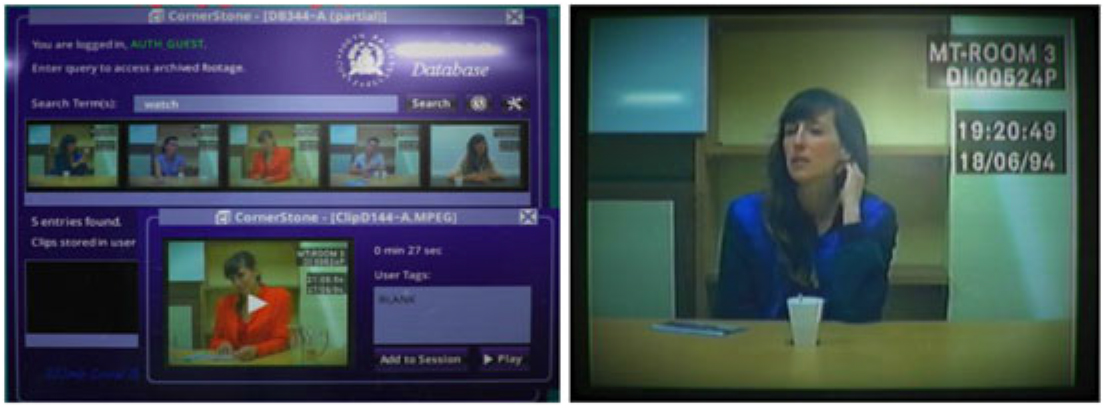
Her Story is a single-player video game in which players interact with a fictional story that deals with a murder mystery. The game consists of 271 short interview video clips of a young woman named Hannah. Hannah, the protagonist, is videotaped in a detective’s office talking about her husband (Figure 1), who is missing and who is later found murdered. In order to discover facts about the murder, the player can randomly retrieve videos from an archive through a keyword search. In addition to narrative, realism is used as a game device to appeal to the game audience. The story is set in 1994; consequently, the game developer created video clips that appear similar to videotapes from dated video home system (VHS) technology to enhance the sense of realism.
Game screenshots
Her Story was selected for the current study because of its ease of use and its attention-captivating narrative. The interface of Her Story is sufficiently simple so that even a novice game player can easily play Her Story. Moreover, Her Story is a non-educational, vernacular game, the sole purpose of which is fun – as opposed to learning – unlike educational or serious games. Arguably, this makes Her Story more engaging for students in this context. The nonlinear storytelling of Her Story is particularly rich and complex, with layers of intrigue that not only capture the player’s attention but also serve as an effective scaffold for student creativity.
Another reason for using Her Story is that the format provides rich language input to the extent that the interview videos contain a considerable amount of authentic English. To play the game, the player must understand the protagonist’s interviews. If the player does not understand a video, he or she can watch it repeatedly or turn on subtitles for help regarding meaning.
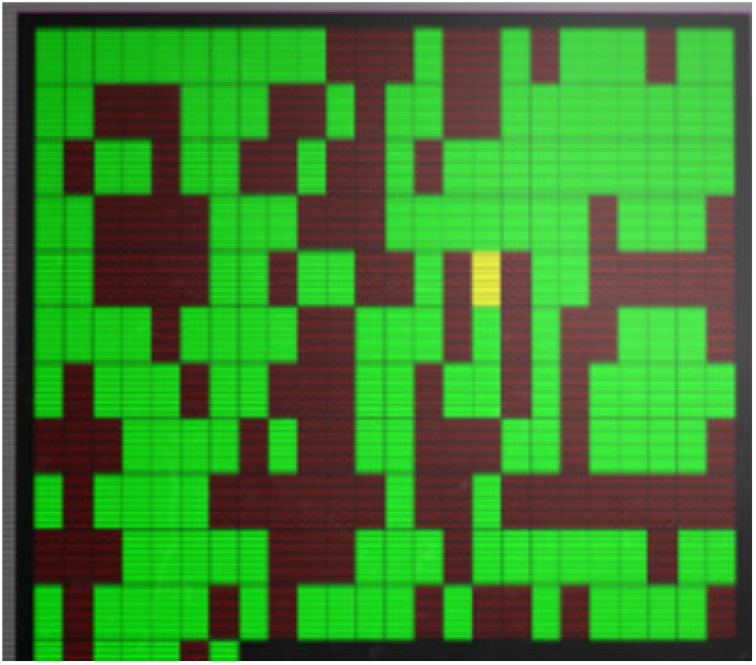
Video clip lengths range from 20 to 80 seconds, but total playtime varies depending on the playing style of individual players. Players can check the number of clips that they viewed using the game log (Figure 2).
Game log screenshot

4. Method
4.1 Project (writing task) and participants
The project was implemented in a multimedia-assisted language-learning course in a four-year university program in Korea, and was conducted over eight weeks. Study participants comprised 25 students majoring in English (eight sophomores, 13 juniors, and four seniors; 16 females and nine males). The overall English proficiency of the students was advanced intermediate, with minor variations. None of the students had previously played Her Story, and creative writing was also new to them. The purposes of the project were (1) to improve the students’ language skills, particularly listening and writing, in an authentic context, (2) to provide an opportunity for the students to exhibit their creativity, and (3) to enhance the students’ interest and motivation regarding language learning. The students played the game both within and outside of the classroom, using PCs or mobile phones. The course was taught by the author.
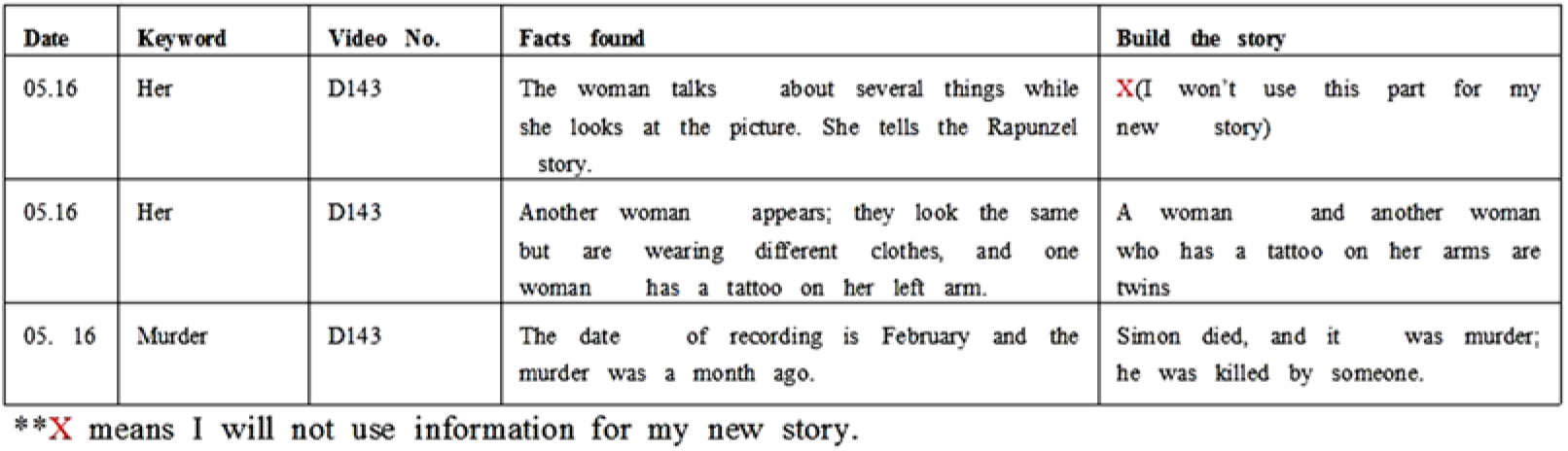
Project requirements involved viewing at least 60% of the archived videos, maintaining a log journal, reconstructing the story, and producing a piece of creative writing based on the game. Because the students could view the videos on a random basis only, recording their progress in a journal log was intended to help them organize the videos and their ideas (Figure 3). The project was a media transfer project based on the students transforming one media format (game) to another (writing). After playing the game, the students wrote a two-page piece of creative writing. Students were allowed to completely recreate their own stories and to select whatever genre and viewpoint appealed to them.
Sample of a student log

4.2 Data collection and analysis
Collected data included the students’ creative writing papers, their two-page reflection papers, and their responses to pre-project and post-project surveys. Content analysis was used to assess the students’ writing and reflection papers. Content analysis is “a method for systematically describing the meaning of qualitative data” (Schreier, Reference Schreier and Flick2014: 170) such as texts, narrative responses, and open-ended surveys. This method is particularly useful for identifying themes and classifying text into categories that represent similar meanings (Hsieh & Shannon, Reference Hsieh and Shannon2005). It is also a good tool for identifying the presence of certain words, concepts, and themes within texts (Schaefer, Reference Schaefer2016). Accordingly, content analysis was the most valid method for examining both the students’ creative writing and reflection papers. Content analysis of the students’ writing pieces was conducted by axial coding and targeted the relatedness of their writing to the game story and to three constructs of creativity: originality, flexibility, and elaboration. Omitted from the analysis was Torrance’s fourth construct of creativity, namely fluency, which can only be measured within a specific frame of time. Because this was not a timed task, the construct of fluency was not included as a measure of students’ creativity. Subsequently, the writing pieces were coded using the indicators of each category of creativity (see the Appendix). Analysis of the reflection papers began with open coding until themes emerged. Of the emerging themes, the most significant and frequently appearing themes were selected for axial and selective coding. Frequently appearing words were compared with keywords associated with DGBL, with overlap in descriptions such as “motivating,” “flow,” “curious,” “interesting,” and “engaged” between student reflections and the literature on DGBL (Huizenga, Admiraal, Akkerman & ten Dam, Reference Huizenga, Admiraal, Akkerman and ten Dam2009; Jenkins, Reference Jenkins, Wardrip-Fruin and Harrigan2004; Prensky, Reference Prensky2001; Ronimus, Kujala, Tolvanen & Lyytinen, Reference Ronimus, Kujala, Tolvanen and Lyytinen2014; Thorne & Watters, Reference Thorne and Watters2013; Wang & Cheng, Reference Wang and Cheng2016). Additionally, the students’ reflections on the process of writing were compared with their creative writing products.
The pre-project survey contained seven questions to obtain a self-assessment of the students’ creativity. The post-project survey included 14 questions asking the students about their experiences with the project in terms of their level of interest, motivation, creativity, and language learning. Descriptive analysis was employed for both surveys. The surveys provided additional information about the students’ overall attitudes toward the project. Both the surveys and the reflection papers were collected anonymously.
5. Results and discussion
5.1 Students’ experience of the game as a springboard for writing
The majority of the students responded that the project was both interesting (79.5%) and motivating (76.1%). The project required the students to watch at least 60% of the videos, but more than half of the students watched over 90% of the videos, and 32% of the students watched all the videos. This result indicates that the students played the game out of genuine interest and not because it was an assignment.
The reflection papers were consistent with the survey results. The most frequently appearing words were “enjoy,” “interesting/interested,” “motivating,” and “curiosity.” This result aligns with findings from the work of Lieberoth (Reference Lieberoth2015) and Herodotou et al. (Reference Herodotou, Winters and Kambouri2015), in which student enjoyment, interest, and motivation levels for learning tasks are shown to be significantly increased under DGBL conditions. All the students in the present study responded that the project was very interesting, as demonstrated by the following student comments:
The game itself was really fascinating. The super-interesting short episodes stimulated my curiosity and imagination and made me watch to the end of the game. I was also really interested in this project. It was definitely different from assignments in other classes, like reading books and summarizing them. (HS)
I voluntarily and actively participated in the Her Story project. I watched most of the videos, and I tried hard to determine the suspect and make the story logical. (LM)
The core design goal of DGBL is to create a learning environment that supports and promotes students’ intrinsic motivation and engagement (Aguilar, Holman & Fishman Reference Aguilar, Holman and Fishman2018; Cornillie & Desmet Reference Cornillie and Desmet2013). Moreover, game narrative has a considerable impact on students (Dickey, Reference Dickey2011) insofar as narrative arouses motivation and curiosity in students, and subsequently sustains these feelings to push students forward toward learning goals. Specifically, in Her Story, the murder mystery narrative combined with its detective-story structure and layers of intrigue generated an immersive narrative environment for the students. Consequently, the students’ interest in identifying the murderer and their curiosity about the ending became major driving forces to maintain the students’ motivation during the project. Consistent with findings in the work of Aguilar et al. (Reference Aguilar, Holman and Fishman2018) and Dickey (Reference Dickey2011), the game environment generated the students’ motivation and curiosity, which were maintained and reinforced through the narrative.
The game interface also heightened the students’ motivation and immersion. To identify the criminal, the students retrieved videos, gathered information and evidence about the case, and pieced together clues in a manner similar to real-world detective protocol. In their reflection papers, students reported having adopted the role of a detective/interrogator while playing the game. As one student wrote, “During the project, I felt like a detective who was sitting in front of her. Finding pieces of information one by one was really interesting and exciting.”
Camera angles and the cinematic composition of the game further deepened the students’ feelings of immersion. In the videos, the female actor looks directly at the camera while speaking. Consequently, during the game, the students felt as if they were listening to her with an imaginary camera between them. The actor’s eye contact is an effective cinematography strategy that generates a compelling experience for the audience:
The video recording style felt like the point of view of the game. I could catch small changes in her facial expression and read her mind. This method also made me much more immersed in the game. I felt like I was the detective on the case. I even imagined what questions I should ask her during the game. (SW)
Putting themselves either in the detective’s or the protagonist’s position clearly enhanced the students’ feelings of immersion in the game, helping them to create their own stories. As one student reflected, “At first I was worried about how to reconstruct and write the story by myself; however, as time passed, I became addicted to the story and could write my own story.” While some of the students identified themselves as detectives during the game, others positioned themselves more in the role of the protagonist(s) by imagining what was occurring to the characters and attempting to understand their behaviors and emotions. The following reflection illustrates an interesting case in which the student positioned herself as the protagonist and compared Hannah’s situation with her own when creating her own story:
I tried to picture myself in the protagonist’s emotions – to understand Hannah’s feelings. Fortunately, I have a younger sister, so I can put myself in Hannah’s shoes easily. The question that emerged was: How and what I would do if I were in Hannah’s situation? I wouldn’t forgive either of them. In fact, I would forgive my sister because she and I are family, but not my husband. Hannah would think like I do, I would guess. (SH)
McCallum (Reference McCallum2012) asserted that creativity does not originate from inner resources, but from external reality “to give it shape and meaning relevant to one’s own life” (p. 13). In this regard, student SH carved out a unique point of view and voice for Her Story, which incorporated both the game reality and her actual life. In other words, she built her own fictional world using her own words, thereby interlacing the two. By doing so, she created meaning that made more sense to her than the original story.
As demonstrated earlier, the students’ heightened levels of interest, curiosity, and feelings of game immersion ultimately served as motivation in writing their own stories. The students recounted that they “became more interested in writing after playing the game.” The game functioned as a springboard for writing. According to Adams (Reference Adams1999), “a good story hangs together the way a good jigsaw puzzle hangs together when you pick it up, every piece locked tightly in place next to its neighbor” (Conclusion, para. 2). This notion was echoed in the following remark by a student:
After the first few tries at the game, I realized it was a game that I knew wasn’t easy to crack … it seemed like a new and modern puzzle concept. I spent a few days retrieving the scattered hints and ideas hidden within the labyrinth of information. I realized that this game was deeper than I initially thought. (SJ)
The formalist literary critics of Russia distinguished between plot and story. According to this distinction, plot represents “the totality of formal and stylistic materials” in films or novels, including “all the systems of time, space, and causality actually manifested” (Bordwell, Staiger & Thompson, Reference Bordwell, Staiger and Thompson2003: 11). In contrast, story refers to the reader’s or viewer’s mental construct of the chronological sequence of events. From this perspective, it is evident that the students reformulated the plot of the game to create their own stories. Furthermore, as one student wrote, the open-ended narrative structure and realism of the game provided “wonderful raw material for writing” and “helped [me] produce a more accurate and plausible story.” Most importantly, as another student said, the game “ignited [my] creativity” and became a narrative space that cultivated imagination and play (Dickey, Reference Dickey2011; Jenkins, Reference Jenkins, Wardrip-Fruin and Harrigan2004).
5.2 Creativity in the students’ writing
The students’ writings displayed their creativity in diverse ways. Although the students constructed their stories from their interactions with the game rather than from scratch, two aspects ensured that sufficient space remained for student creativity and creation. First, the game adopts the nonlinear structure of classic detective stories, in which readers gradually discover information as they progress through narrative developments. The narrative development of Her Story is radically out of sequence, even for a detective story format, because the viewing sequence is determined entirely by the player rather than by the author. This requires an “active process by which viewers assemble and make hypotheses about likely narrative developments on the basis of information drawn from textual cues and clues” (Jenkins, Reference Jenkins, Wardrip-Fruin and Harrigan2004: 126). While playing Her Story, the players must significantly reformulate their mental maps about the events, or (to use the term employed by Russian formalist literary critics) the story.
Second, the game narrative is developed on the basis of the iceberg theory, a minimalist writing style coined by Ernest Hemingway, often called omission theory. Writing that is based on this theory describes only surface elements – typically events – with little context or interpretation. Hence each individual reader must fill in the gaps while reading, resulting in different interpretations of the writing. Similarly, the students attempted to arrange the puzzle pieces of the game to understand what was happening to the protagonist(s) and, based on their understanding and imagination, created their own stories. The following sections examine creativity in the students’ writing with regard to originality, flexibility, and elaboration.
5.2.1 Originality
Originality, the key element of creativity, is the ability to generate new ideas, concepts, methods, and connections (Torrance, Reference Torrance and Sternberg1988). The students’ originality was observed both in their interpretations of the source story and in the writing of their own reimagined stories. In Her Story, a female named Hannah is interrogated in a detective’s office about the murder of her husband. She relays her story from her childhood through the present day. A synopsis of Her Story is as follows:
Hannah is the wife of a missing husband. Her father, who was a mushroom expert, died of mushroom poisoning. One day, Hannah accidentally found a girl, Eve, who looked exactly like her and who lived just across from Hannah’s house. Eve is Hannah’s twin sister, and was said to have died at birth. A war widow named Florence assisted Hannah’s mother during childbirth, stole one of the twins, and raised her in the attic. Eve found Florence’s diary and learned the secret. Later, Florence fell down a staircase and died. Hannah and Eve became friends, but Hannah later discovered that Eve had dated her boyfriend, Simon. Hannah and Simon got married, but Hannah became furious again when she found a mirror that was a present from Simon to Eve. Subsequently, Simon was found dead.
The game does not clearly define the events, relationships, or an ending to the narrative. Instead, multiple interpretations are possible. For instance, it is unclear whether Hannah and Eve are truly twins. Hannah states that they are, but Hannah could be lying. Some of the students accepted Hannah and Eve as twins, whereas others perceived the characters to be one person tormented by multiple personalities. In fact, because Hannah is the only narrator telling the audience everything they know, it is possible that Hannah is manipulating the information. The viewer must decide how to interpret her words and what to believe.
Because the students interpreted the main character(s) in different ways, their writing varied even in terms of basic plot – specifically in terms of who killed Simon and why. Some example conclusions regarding the murderer: (1) Hannah killed Simon (and Eve), (2) Eve killed Simon, (3) the twins conspired to kill Simon, and (4) no one killed Simon (Simon is actually still alive). The motives for Simon’s death also varied in the students’ interpretations, including speculation that Simon was killed (1) deliberately, out of jealousy; (2) accidentally; (3) to protect the twin sister; and (4) so Hannah could live happily ever after with the baby. Consequently, different endings were found in the students’ writing, including (1) it was all Hannah’s dream; (2) only one of the twins survived with her baby; (3) all three characters – the twins and Simon – lived happily ever after; (4) both twins, after committing the crime and framing one another, encountered one another in prison; and (5) following the crime, the twins conspired because of the baby. In fact, the motive and ending are inconclusive in the game, but the students were able to fill in the gaps using their imaginations. In reconstructing the story, some of the students attempted to make their stories match the original narrative as closely as possible, whereas others based their stories only loosely on the original. In both cases, the game functioned as a stimulus for writing, or, to use Jenkins’ (Reference Jenkins, Wardrip-Fruin and Harrigan2004) term, as a “narrative hook” (p. 122), by providing the characters and setting as starting points for new creative fiction.
In addition, the students created new titles for their stories because the stories differed from the original source material. The titles were indicative of how the students interpreted the original story in the context of a new genre. Some examples of student titles are “The Mirror,” “Untold,” “The Better Half,” “Hannah’s Diary,” “Fairytales Do Not Always Have Happy Endings,” “No One Knows: About 6 Hours on the Road,” and “A [D]oorbell is Ringing.” These titles hint that the stories were newly constructed based on the students’ imagination, each original in its own way. In their reflection papers, the students wrote that they deliberately invented titles that best represented and epitomized their stories, while differentiating them from the original source material of the game.
5.2.2 Flexibility
In addition to showing originality, the various viewpoints and genres employed in the students’ writings also revealed flexibility. Flexibility is defined as the ability to adopt different or multiple perspectives (Carter, Reference Carter2004). In the students’ writing herein, the viewpoints and genres often appeared to be connected. For example, many students wrote diaries for Hannah from Hannah’s point of view. In writing, particularly in narrative, point of view is an important technique because the reader sees, hears, feels, and experiences the events through the narrator’s point of view. Students who used Hannah’s point of view in their writings may have intended to help their readers become immersed in the story and to understand and sympathize with Hannah. In the game, Hannah provides superficial facts, revealing little about her actual, deeper, emotions. Moreover, the audience is uncertain whether she is telling the truth, remaining puzzled and curious during much of the story. In contrast, the students who created diaries for Hannah revealed imagined information underlying the superficial facts, which is not otherwise known. The students described Hannah’s inner thoughts, intentions, and feelings from her point of view so that the reader could understand why Hannah acted in certain ways. Some of the students chose Eve’s point of view, despite the fact that Eve’s very existence was uncertain. In these stories, the information that Eve relayed often contradicted what the audience had heard from Hannah’s interviews, implying that Hannah had lied. The points of view of both Hannah and Eve (both in the first-person perspective) appeared in some students’ writings in both diary and short-story genres.
Whereas some students used subjective points of view, such as the points of view of Hannah and Eve, other students took more objective points of view, such as the perspectives of secondary characters who were not directly involved in the case. One of these characters was the detective. In fact, the detective does not appear in the game at all, but the audience assumes that he/she exists and that Hannah is speaking to him/her in his/her office. The students who chose the detective as the narrator of their stories unraveled the story mainly on the basis of the evidence gathered from the game. In these stories, the narrator analyzes the events and evaluates Hannah’s statements (rather than simply believing Hannah’s account), and then reaches a conclusion. The reader, from the detective’s perspective, is also in a position to examine the case more objectively. Even though the detective’s point of view is relatively objective, it remains vulnerable to subjectivity in reaching conclusions and judging Hannah. A couple of the students made their stories even more objective by employing multiple points of view. For instance, student DK divided his story into three parts – the diary of Hannah’s father, the diary of Florence, and the detective’s note (epilogue) – thus illuminating the multifaceted nature of the case by using different voices. Overall, this approach helped the reader to view the case more objectively. The detective’s viewpoint was represented in various genres, including reports, notes, memoirs, and plays.
A highly creative and interesting point of view was found in student SY’s writing. In her piece, Hannah’s grown daughter narrated the story 10 years following the death of her mother. The point of view employed in TM’s writing was wildly imaginative and innovative – the narrator was Hannah’s fetus, describing what she heard while inside Hannah’s womb, including conversations between her mother and father, as well as quarrels between her mother and aunt. Without being able to see or interact with the world outside, the fetus depicted and evaluated the people and events based solely on what she had heard and guessed.
The students’ writings demonstrated the conscious selection of content and form. The students tended to reinvent point of view for their writing and to reframe the story in new genres, rather than merely adopting the original perspective from the game. As Bakhtin (Reference Bakhtin1981) explained, point of view (voice) is not only a style of speech but also “a stance toward the world (in this case, the fictionworld), a situated consciousness with attitudes and values” (Doyle, Reference Doyle1998: 32). The students appeared to understand that an important step in successful writing was to find an appropriate voice for their stories (Doyle, Reference Doyle1998). They used various points of view in their writing that well matched their chosen genre. Through the creative transformation process, they reimagined Hannah’s story, giving it new meaning and transforming it into their own worlds.
5.2.3 Elaboration
Elaboration, the process of embellishing an idea by adding details, helped the students expand and organize their ideas and articulate their thoughts through the writing process (Sitorus & Masrayati, Reference Sitorus2016). Because the game is based on the iceberg theory, the audience must make assumptions to understand the entire story. In reconstructing their stories, the students elaborated on the events and characters of the original story in considerable detail. In their stories, the students made assumptions, expanded their ideas using their imaginations, and executed their imaginings via skills of elaboration. The elaboration process also helped the students create new meanings (Carter, Reference Carter2004). Similar to the claim of McVey (Reference McVey2008) that writing should be promoted for its “endless creative possibilities” (p. 294), writing became an invaluable means through which the students were able to exercise their creativity.
Student DK’s writing is a good example of elaboration. DK generally followed the original plot, but created a more complete and detailed version by depicting the characters and events in extensive detail. DK unraveled the story from three different viewpoints – Hannah’s father, Florence, and the detective – none of which are heard during the game. Writing from the points of view of people whose voices are not heard in the game is a complicated process that involves filling in gaps, adding details, and elaborating. In fact, DK’s writing included considerable detail. For example, in his diary, Hannah’s father recorded every significant event of her life with an exact date and described his feelings about her and the event. Consider the following examples:
1980 – 14 years old
7.11 Hannah got a bruise on her face. She told that she got it from bumping into a tree, but I don’t believe it. I just hope it’s not from bullying.
7.15 Her bruise gets bigger and then smaller.
As illustrated here, DK not only used his imagination to create details around original events but also analyzed the video clips and carefully organized the events, reassembled them, and elaborated on the story. Consequently, none of the events or facts of the source material was misrepresented in his writing. DK understood that if newly added details did not fit into the story like puzzle pieces, it would disturb the reader’s understanding of and immersion in the story. In his reflection paper, he wrote that he expended considerable effort to create a story that was “as realistic and convincing as possible,” so that the reader would be “immersed in the story and sympathetic to Hannah.” In fact, the details DK used to embellish the story made it more realistic. In his creativity model, Sternberg (Reference Sternberg1999) proposed that a creative work is the result of a combination and balance of synthetic, analytic, and practical thinking. From this perspective, DK’s writing is a creative work that contains all three types of thinking. DK first analyzed and critically evaluated Hannah’s interview, rather than believing everything she said (analytic thinking). He then generated new ideas and connected them to the original story (synthetic thinking), and finally, DK created a strong story for his readers (practical thinking).
Another good example of elaboration is found in SH’s story, which is told from Hannah’s point of view. This student described the protagonist’s emotions in greater depth, as illustrated in the following excerpt:
Preparing for a party always makes me happy. Eve and I didn’t have any experience with having parties since my mum and dad didn’t like parties. So, Eve and I feel excited about having a party with other neighbors.
Maybe, after 5 months, I will see a baby that resembles my special sister. It will be the happiest day I’ve ever had. For lunch, I made pasta and ordered pizza for my sis and Simon. Everything was perfect except for Simon. Simon’s face was not as happy as usual all day long, so I asked him, “What’s wrong, honey, is there anything bothering you?” Simon shook his head softly and hugged me. “No, sweetheart. It’s just a headache. Don’t worry.” (SH)
The game did not include this party scene; SH richly imagined it to demonstrate tension among the characters and their intense emotions. A remarkable example of this student’s elaboration skills is found in the characters’ dialogue, which illuminates the events and makes her writing more vivid and lifelike. Consequently, this scene helps to pull the reader into the story. SH also successfully used dialogue to allude to future events. She reported that she endeavored to use “specific and detailed” vocabulary in her writing to further depict the characters’ emotions beyond those revealed in the game, adding that “creation was really tough work.” To a certain degree, the game absolved students from the pressure of creating an entirely new setting and characters. Similar to the experience of writing fanfiction (Black, Reference Black2005), however, writing about and expanding upon the game’s central narrative were challenging tasks that demanded a considerable amount of creativity.
5.2.4 Survey results on students’ creativity
Overall, the Her Story project offered a valuable learning opportunity for students, differing from tasks experienced in other language classrooms. In their pre-project survey responses, only 32.2% of the students reported that they considered themselves to be creative. Moreover, only 20.8% responded positively when asked whether they were able to use creativity in their language learning classes. Nevertheless, more than half of the students (51.4%) indicated that they wanted to engage in more creative tasks. The post-project survey revealed an entirely different picture. Approximately 75% of the students reported that they felt they had been very creative during the project. The majority of the students indicated that even though reconstructing and writing a story was difficult (50.3%), the project was very interesting (75%) and motivating (68.8%) because it raised their curiosity (62.8%) and enhanced their creativity (78.3%). The following remarks by one student illustrate the transformation of the group into more creative writers via the DGBL project, beyond the constraints of traditional notions of what is correct:
… all that mattered was showing my creativity. There was no fixed answer in this project. Most assignments in other classes require closed answers, which restrains my creativity, and I’ve become used to it. Therefore, I thought I was lacking creativity and originality. Throughout this project, however, I was amazed by my ideas and by the fact that I could write a story. (MJ)
6. Conclusion
The current paper addresses several challenges commonly encountered in EFL classrooms, including students’ lack of motivation and engagement and limited opportunities for creativity. The students in the current study expressed a variety of positive emotions related to the DGBL project. The majority of the students were curious, motivated, interested, and excited during the project, and these positive affective factors likely resulted in better learning outcomes. Due to resemblance to the daily activities of a typical Korean university student – the playing of games and use of mobile phones – the game-based learning project was an enjoyable activity for the students. Despite the proliferation of digital media in current students’ lives, many EFL classrooms have not yet capitalized on this trend and on related practices. As Wang (Reference Wang2012) asserted, creativity can be unlocked through learning activities, especially reading and writing. Indeed, the present study demonstrates that students’ creativity can emerge through learning experiences. Even though the majority of this study’s student participants initially expressed concern about lacking creativity and being unable to recreate a narrative, the students exercised their creativity with rather impressive results. Given that creativity does not emerge in a vacuum but instead “acts on existing materials to bring something new into being” (McCallum, Reference McCallum2012: 32), Her Story deserves credit for serving as a pivotal stimulus and for facilitating the students’ transformative process.
The findings of this paper also suggest that creative writing can be an effective conduit for invoking and fostering creativity. Creativity is essential to learners’ self-esteem and growth as writers (Craft, Reference Craft2005); thus, students cannot produce excellent writing without the deliberate practice of creativity (McVey, Reference McVey2008). Creative writing involves “flexible, playful, dialogic and imaginative practices” (Baleghizadeh & Dargahi, Reference Baleghizadeh, Dargahi and Tomlinson2016: 189) through which students can generate new ideas, refine how they think, develop their voices, and reshape their points of view, as in the present study.
The current study has some limitations. The main limitation is that it does not include fluency, one of Torrance’s four constructs of creativity. Accordingly, it will be fruitful for future studies to set up a timed task to measure fluency in the generation of new ideas among students. Another limitation is that even though the majority of the students enjoyed the project, some students were difficult to engage. The current study did not further examine the reasons for this lack of motivation in certain participants. It is also worthwhile to explore student creativity in the use of different genres of games, such as role-playing games. In addition, collaborative writing (instead of individual writing) may further enhance student creativity and writing for EFL students. Accordingly, further research is required in this field. Writing in an FL is no easy task. The endeavor of fostering creativity in FL writing is even more daunting. Regardless, with proven benefits in emerging methods such as DGBL, teachers should not avoid cultivating creativity in language classrooms because both creativity and language abilities are indispensable competencies in the current era.
Ethical statement
In keeping with the guidelines put forth by the Korean Research Foundation, informed consent was secured from participants. The focus group interview and data analysis were carried out only after the conclusion of the course and after grades had been assigned. There was no conflict of interest in this study.
Appendix
Analysis sample of students’ writing

About the author
Sangmin-Michelle Lee is professor of Global Communication at Kyung Hee University, Korea. Her current interests include technology-supported language learning, multimodality, and creativity. She is the author of Creativity and English Education.
Author ORCIDs
Sangmin-Michelle Lee, https://orcid.org/0000-0002-7686-3537