An explorer and natural scientist, Paolo Emilio Botta was not yet a medicinal doctor when he was taken aboard a French ship as a surgeon. His voyage to the Far East continued until 1829. After this voyage, Botta continued his studies in medicine, completed his doctorate in 1830, and started to work as a doctor in the service of Mehmet Ali Pasha, the governor of Egypt. Having been a natural scientist for a long time, Botta started to work at the French consulate through the connections of his friends and was sent to Mosul as the consul in 1842.Footnote 1 Excavations that can be considered as a milestone in Assyrian archaeology started with his arrival at Mosul. Jules Mohl, who was a family friend and an orientalist, had encouraged Botta before he left for Mosul to explore the huge mounds on either bank of the Tigris river, which were believed to represent the remains of the Assyrian Empire (Buckingham Reference Buckingham1851: 52).Footnote 2 It has been reported that Mohl,Footnote 3 who had considerable influence in scientific circles in Paris at the time, was instrumental in Botta's appointment to this post (Larsen Reference Larsen1996: 21).
Botta's experience in Arab countries and the fact that he could speak Arabic fluently motivated Mohl to choose him. Botta repeatedly reported that his mission had been pointed out by Mohl (Larsen Reference Larsen1996: 22). After his arrival at Mosul, Botta explored the city and its vicinity and the mounds of Qoyunjuk/Kuyunjik and Nebi Yunus for months. Letters and drawings he sent to Mohl described his discoveries. He even described the details of the first Assyrian palace he had discovered in the letters he wrote to him and to Layard (Mohl Reference Mohl1845; Larsen Reference Larsen1996: 24). Mohl presented Botta's reports to academia and this activity attracted attention in France (McGovern – McGovern Reference McGovern and McGovern1986: 112). After his explorations around Mosul and at Kuyunjik and Nebi Yunus, Botta first had several workers investigate ancient stone foundations at Nebi Yunus,Footnote 4 where a village was located. However, he had to give up this work as a result of strong opposition from Muhammed/Mehmed Pasha and local religious leaders, who were worried that the prophet Yunus's tomb and the mosque would be demolished or harmed. After the difficulties he experienced at Nebi Yunus, Botta began working at Kuyunjik with a group of workers in December 1842 (Buckingham Reference Buckingham1851: 54–56; Hilprecht Reference Hilprecht1903: 74; Larsen Reference Larsen1996: 11–12).
When Botta's workers began to work at Kuyunjik, someone visiting from the village at Khorsabad,Footnote 5 some 25 km from Mosul, mentioned stones decorated with reliefs and inscriptions on a hill. At first Botta did not take this story seriously, but frustrated by three months of arduous and inconclusive work at Kuyunjik, he became curious about the truth behind the story and sent a group of his workersFootnote 6 to Khorsabad to begin excavations around March 20, 1843 (Botta – Flandin Reference Botta and Flandin1850: 5; Bonomi Reference Bonomi1857: 12). He was informed of the discovery of reliefs and inscriptions three days after the start of the excavations. Numerous Assyrian reliefs and other finds were found in this area through surface work (McGovern – McGovern Reference McGovern and McGovern1986: 110–111; Larsen Reference Larsen1996: 14–20). Botta was still skeptical and sent one of his men to make drawings of one the inscriptions. Eventually he realized that the finds were real and decided to continue his work at Khorsabad.Footnote 7 He wrote about his finds in a letter he sent to Paris on April 5th, 1843 (Mohl Reference Mohl1843: 61–72; Buckingham Reference Buckingham1851: 56–57; Hilprecht Reference Hilprecht1903: 75–76; Larsen Reference Larsen1996: 13). He mentioned that the letter he sent to Mohl on May 2nd, 1843, to which he attached copies of the inscriptions, was very important (Botta – Flandin Reference Botta and Flandin1850: 5).
Botta seems to have had some problems after his work at Mosul started. The Pasha of the province in particular seems to have caused various obstructions. The Pasha was in fact curious about what Botta was looking for, and had excavated metal finds brought to him for inspection to see if they were made of gold. The absence of such gold objects led him to think that Botta was being cunning. Thus he threatened Botta's workers with prison and torture in order to pressure them into revealing hidden treasures (Botta – Flandin Reference Botta and Flandin1850: 7; Buckingham Reference Buckingham1851: 58; Hilprecht Reference Hilprecht1903: 78). This situation went on until the Pasha ordered the suspension of the excavations around October 5–12, 1843 (Botta – Flandin Reference Botta and Flandin1850: 9). Botta had built a residential house in Khorsabad. The Pasha wrote a report to Istanbul claiming that the house that Botta built with his permission was in fact a fortress from which the area could be dominated and taken (Botta – Flandin Reference Botta and Flandin1850: 7; Hilprecht Reference Hilprecht1903: 78). He seems to have been unable to understand Botta's task and reason for working. It has been reported that Botta did not have an excavation permit, let alone a permit to ship any finds to France (Larsen Reference Larsen1996: 28). Botta wrote a letter to the embassy in Istanbul on October 15th to explain the situation.Footnote 8 However while he was waiting for the response from the embassy, Mehmed Pasha sent the Kadı to Khorsabad for inspections. The plan of the house, which was drafted with measurements like a fortress and a map were sent to Istanbul together with a report (Buckingham Reference Buckingham1851: 59; Bonomi Reference Bonomi1857: 15–16; Larsen Reference Larsen1996: 28).
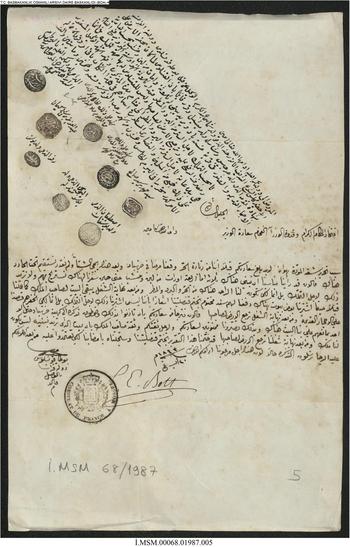
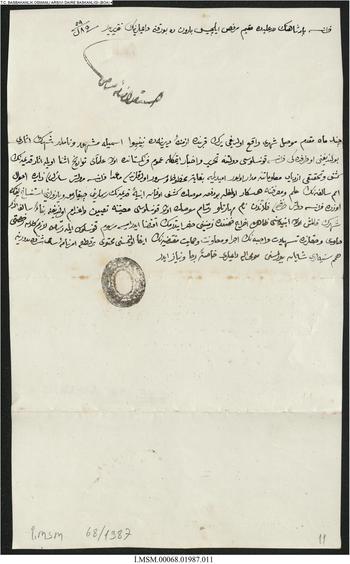
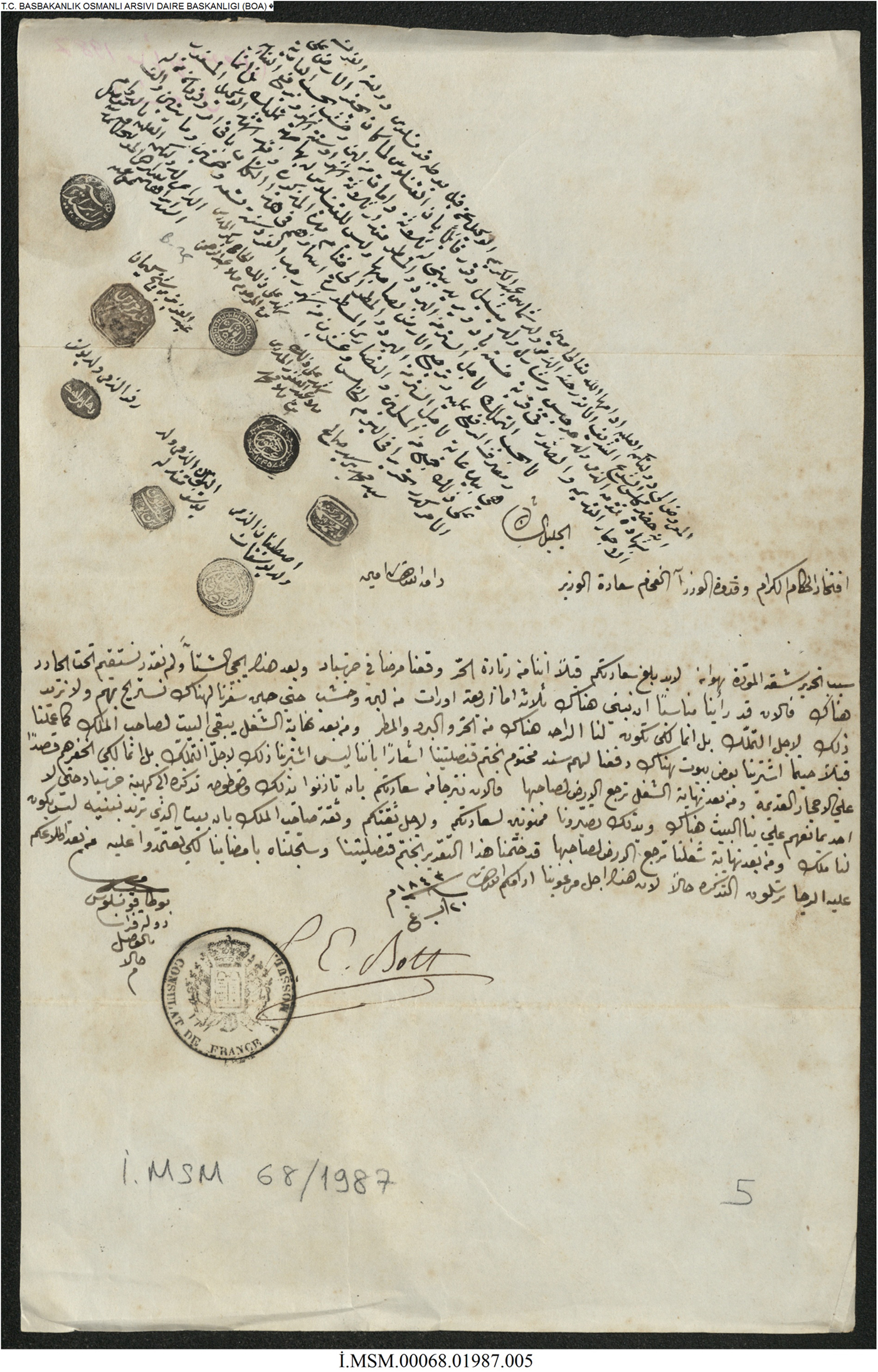
With the research we have done at the Ottoman Archive of the Prime Minister's Office on the subject we were able to access documents related to the problems Botta experienced at Khorsabad, the conditions of the excavation permit and construction of an excavation house, the plan of the excavation house that was drawn as if it were a fortress, and petitions of villagers opposing Botta's work and his excavation house.Footnote 9 The earliest document is dated April 20th, 1843, and includes Botta's application for the construction of the excavation house. The application was addressed to the Pasha of Mosul and carried the seal of the consulate as P. E. Botta, the French consul in Mosul, and reads as follows (Fig. 3, Document 1):
To the Grand Vizier. The reason for penning this letter is: I was sick during the excavation at Khorsabad. The winter is about to arrive, therefore I thought it suitable to construct a building of wood and mud with three or four rooms for us to rest until our work here is finished. This way we can avoid the effects of the sun, the rain and the cold. This house can be the land owner's after our work is completed. Just like we have bought some houses here in exchange for a deed with the seal of the consulate. As stated in this consulate deed, we did not buy the houses as property, but only with the intention to carry out excavations and unearth ancient stones. After the excavations are completed, the land will be left to its owners. Here I request your permit on this matter and a tezkire Footnote 10 stating that no one will interfere with the building we will construct. I can assure both you and the land owner that the building we will construct will not be our property. It will be the land owner's after our work here is finished. I end this takrir Footnote 11 of mine with the seal of our consulate.
This letter of Botta also includes a witness record dated 25 Receb 1259/August 21 1843. According to this record, Hasna ez-zımmi veled-i Şamaş Abdülkerim, deputy to the consulate of the state of France, Koma veled-i Cercis ez-zımmi and Şarl veled-i Mişel were present at the District Assembly as witnesses:
The consul wants to build a temporary three-room house of wood and mud in order to protect against rain and cold during his excavations for ancient stones and decorated stones in the village of Hastaabad. When the excavations end in three to six months the house will be removed and he will be responsible for the cost of removal also. The land will be returned to its owner. The land will not be the property of the consul, the excavation house will serve the purpose to get protection from rain and cold only until the end of the excavation. The Christian and Muslim witnesses mentioned,Footnote 12 as well as the consul mentioned are witnesses.Footnote 13
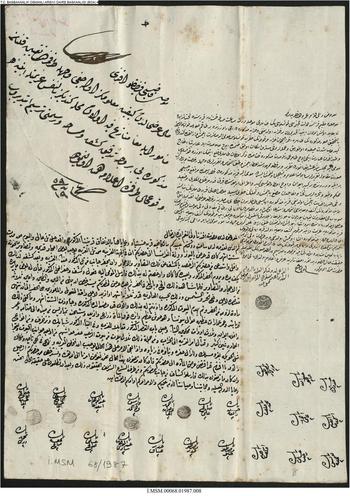
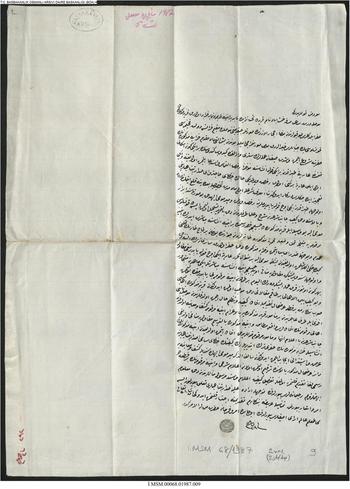
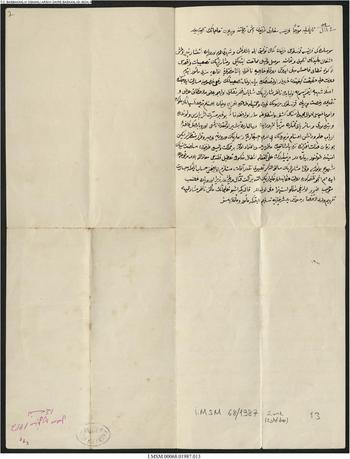
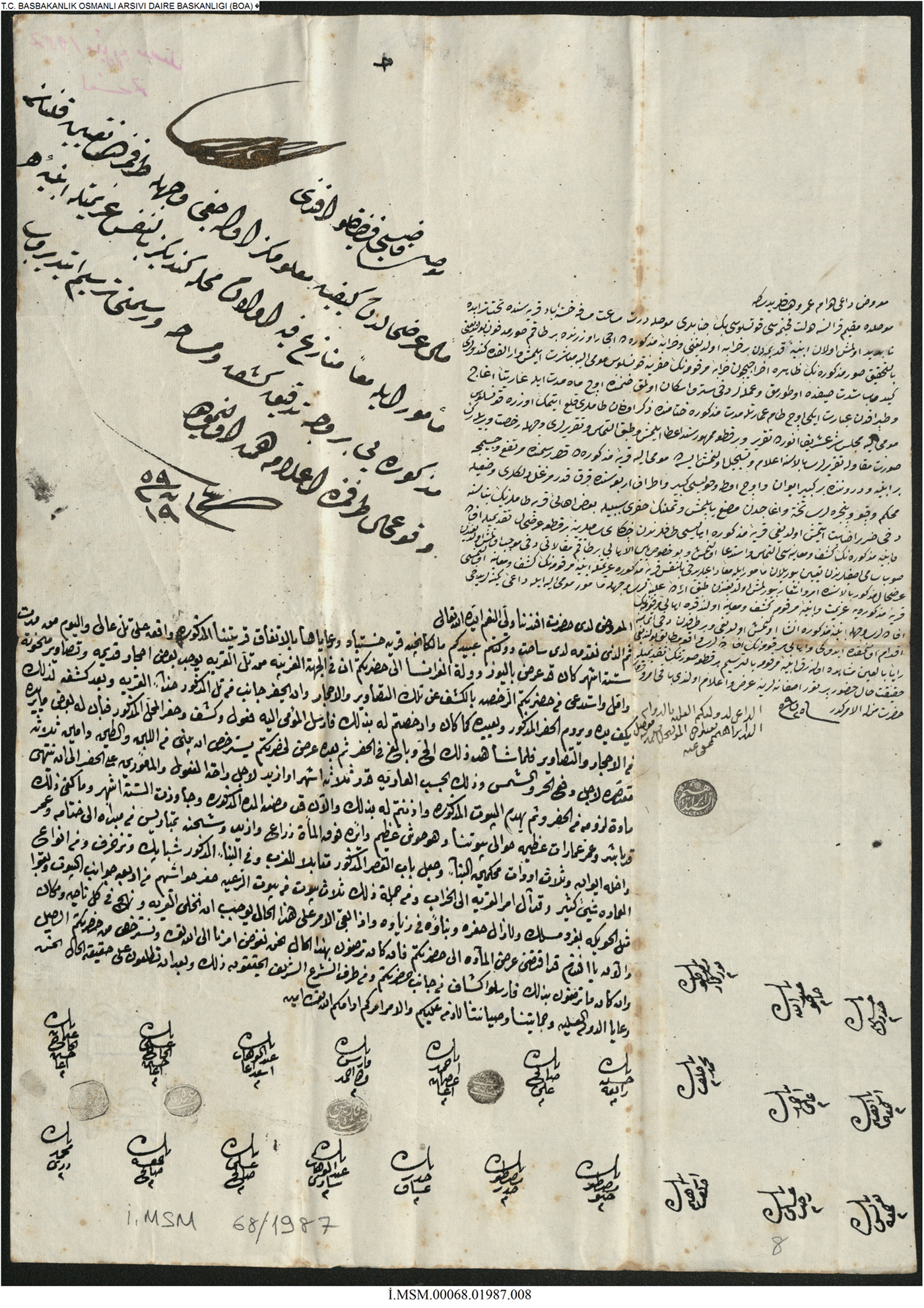
However, problems concerning the excavation areas and the construction of the excavation house begin to arise after a while. Villagers from KhorsabadFootnote 14 wrote about their complaints and problems in a petition (Fig. 4, document 2):
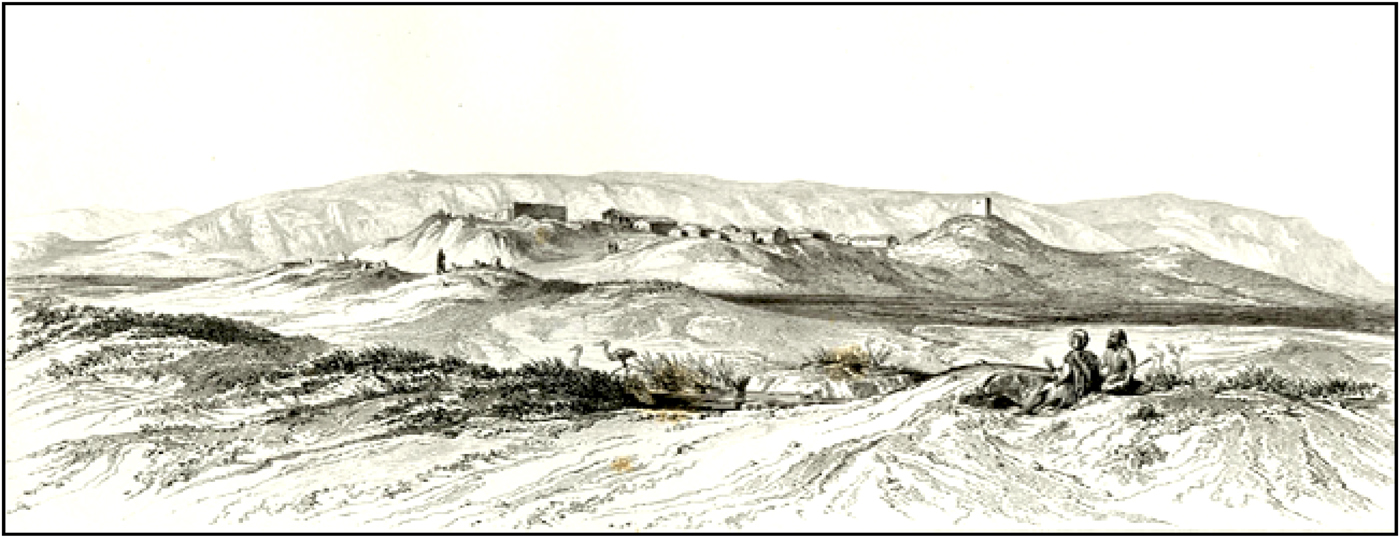
Our village is located on a high hill (Fig. 1 – ed.). To tell the truth, the envoy of the French state told to our lord six months ago that there are some ancient and decorated stones on the western part of the hill on which the village is located. He requested permission from his Highness to investigate those stones and excavate the hill by the village. He eventually was granted this permit. The said envoy was sent to this area. He started the excavation of the said place, and exploration and other activities. He went too far in this excavation work. Then he requested from his Highness permission to build a house out of mud. This house was built for only three months for protection from the sun and the heat. He said that it would a place for those who work in the excavations to rest also. He declared that he would demolish the said house at the end of the excavations. He was granted this permit. However he built such a large house around our houses that it had a huge, round courtyard, larger than 100 zir'a (64 meters) at its center. He built an iwan within it. This building had three strong rooms. On the western side of the building he had a gate that is like palatial gates. This building had many windows. The matters of our village began to get ruined. Three or four houses of the villagers were among them. The courtyards of these houses were dug out on their four sides and these were left as pits. If the excavations continue in this manner and the number of buildings increase we will have to leave our village. Our request from his highness is this: Send a fact-finding mission and let an investigation be done by the court of justice. If you agree with this situation we will leave our situation to Allah. The truth of the matter will be learned after that.
Drawing of the Khorsabad hill and village by Flandin (Botta - Flandin Reference Botta and Flandin1849: Plate I)

The Pasha considers the complaints of the villagers and reports to the Kadı of Mosul: “as you will see in the petition, please go to the place under dispute yourself together with the official we send and inspect the said buildings, take their measurements and illustrations and send them to us.”Footnote 15
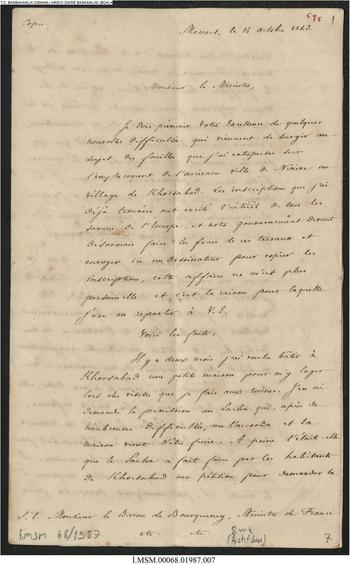
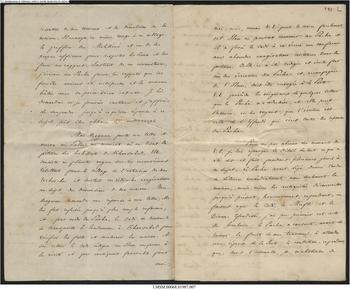
After complaints about his excavations, the excavation house he built and his purchase of houses in the excavation area and the like, Botta wrote a detailed letterFootnote 16 to the French ambassador, Baron de Bourqueney, on October 14, 1843 and described the problems he experienced.Footnote 17 Botta begins his letter writing about some new recent problems related to his excavations at the village of Khorsabad. He writes that the inscriptions he found aroused interest all over Europe, and requests a draftsmen to copy them.Footnote 18 He wrote that he had wanted to build a small house two months before to stay in during his visits to the ruins at Khorsabad. He asks for the Pasha's permission for this, but the Pasha begins to cause problems when the house nears completion. The Pasha writes a petition to stop the excavations and demolish the house with the help of the inhabitants of the village. The Pasha also sends the Kadı and one of his officials to the village for inspection and reports. Upon learning about the situation, Botta writes to the Pasha to remind him that the excavations and the construction of the house started with his explicit permission. He requests the continuation of the excavations and suggests taking a break on the matter until the Pasha hears back from Istanbul.
Botta did not understand the letter of complaint by the villagers. He wrote that these complaints consist of inconveniences in the village after the extension of his research and especially ridiculous exaggerations of the dimensions of his house. The Kadı of Mosul is sent to Khorsabad the next day to measure the house and confirm the facts. The Kadı writes a factual ilam (judgement). The ilam written by the Kadı is not convenient for the Pasha, so he pressures the Kadı to write a text that is consistent with the ridiculous exaggerations in the petition. Thus, a draft written by a scribe of the Pasha was sent to the Sublime Port along with the Kadı’s ilam.
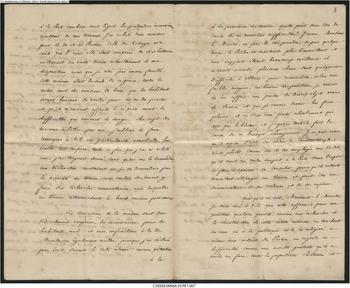
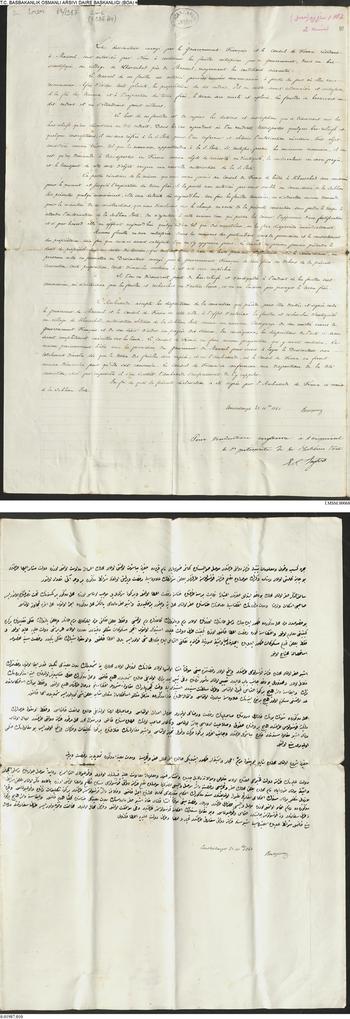
Botta suspends his work as he has promised the Pasha and waits for permission from the Sublime Port.Footnote 19 He writes that the adobe construction he built at Khorsabad was presented as if it was a fortress. He stresses that they acted to make the Sublime Port think this, so they increased the dimensions of the house in the petition. He writes that he started the excavations with explicit written permission from the Pasha, that he obtained permission to build the house, and he also obtained written permission from the Pasha when he needed to purchase some houses in the village in accordance with the wishes of the villagers. At this point Botta described the general situation of the house that was the subject of the complaint that it had been built as if it was a fortress (Fig. 5.4, Document 3/6–7):
… and I obtained, finally, an order for an unlimited time, on condition that the house did not contain but two or three rooms and was built with mudbricks. These conditions, for the appreciation of Your Excellency, were fulfilled to the letter and it is at this moment to give the precise dimensions of this purported citadel. It has three rooms, one kitchen and one courtyard for the horses, in which my intention was, apart from that, to better assemble the pieces of the antiquities -- preserved while awaiting the moment of transport and so that they would be sheltered from all danger. Incidentally, it is all built of mudbricks like all the houses of the village, and, with the courtyard, is 70 feet long by 50 wide. The walls are six feet tall.
I ask Your Excellency's pardon for stopping on these miseries, but it is necessary for my defense, the Pasha having certainly the intention to represent everything in a false or exaggerated manner. It was certified by the judge that the house has windows, that one of the rooms is tiled with bricks, that its walls are properly covered with a coating of clay, that the walls in the courtyard, according to the universal custom of the country, have this type of …, that at the door there is a stone for mounting a horse, etc. etc. All of these obligations have the aim of proving that this house is not destined for temporary usage, but permanent.
As for the inconveniences resulting for the village, I would say that the inhabitants are foreign to this whole affair; the complaints were made according to the injunction of the Pasha himself.
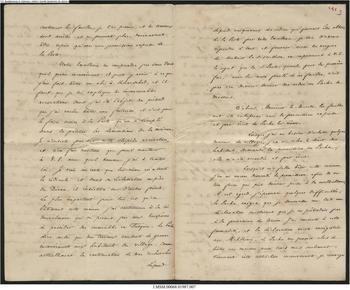
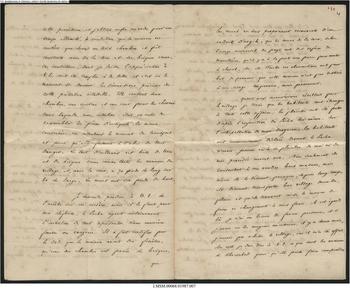
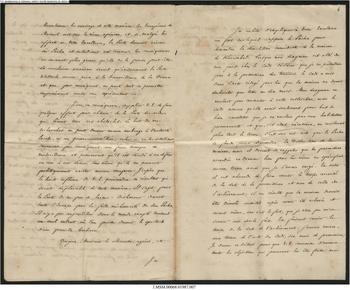
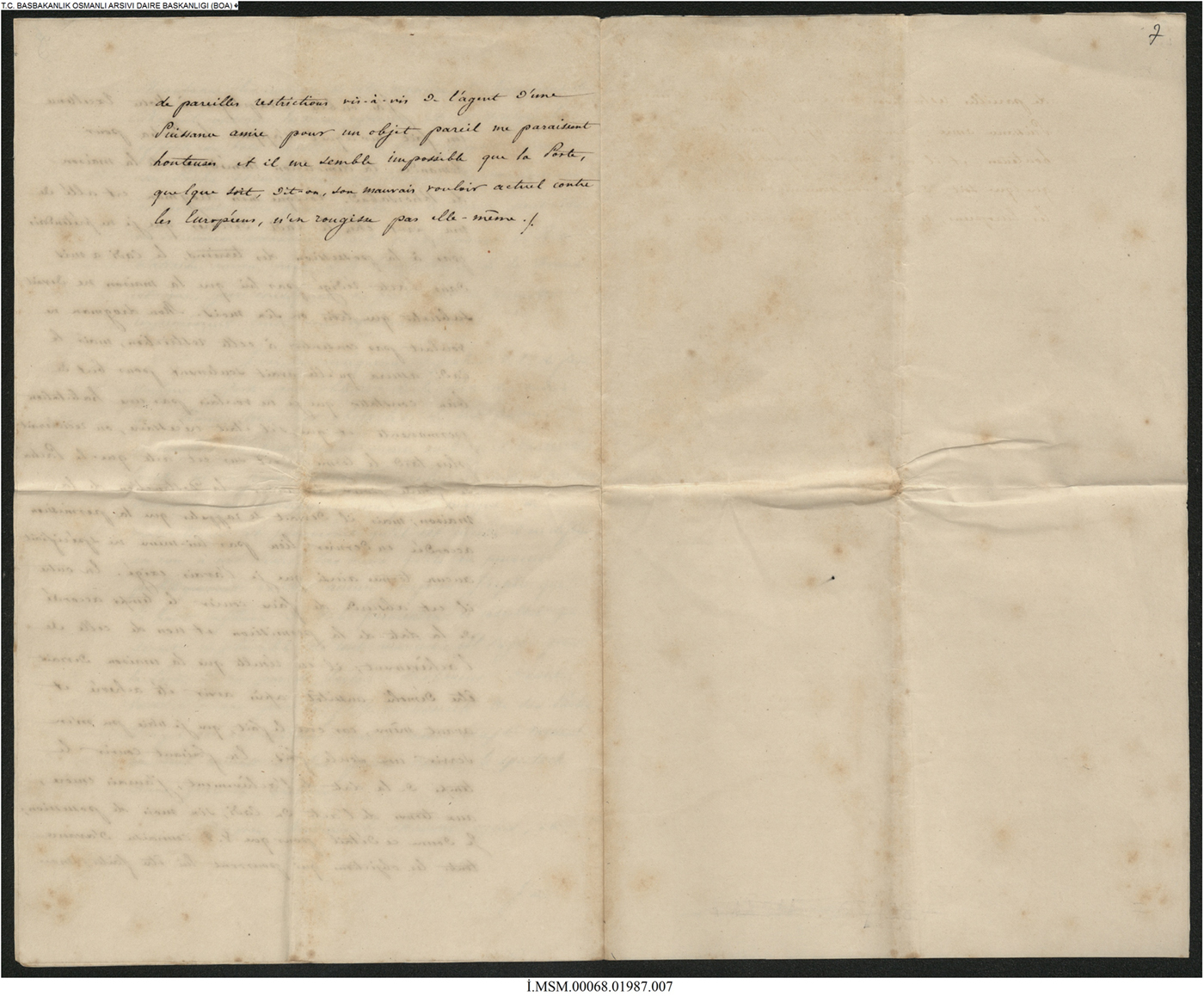
Botta writes that he only purchased the houses of the villagers who wanted move their village to the plain, but did not purchase the land as property.Footnote 20 He writes about three houses that he bought for 15, 30 and 40 kurush, and says that only for the village manager's house he paid 700 kurush. He writes that he established friendly relations with the Pasha, he offered to give him some of the various objects that came from France, that there was nothing that could have upset him, and that he does not fully understand what the reasons could be for this impolite change. Botta does not believe that these problems were the result of instructions from Istanbul, but may have been because of Pasha's fears that foreigners would be witnesses of his “violence and his plunders”. Botta warns the embassy, stating that the consequences would be more serious than they may think in case the Sublime Port sides with the Pasha and prohibits the excavations, writing (Fig 5.6, Document 3/11):
I dare, consequently, beg Your Excellency to make some efforts to obtain from the Porte the orders that lift all these obstacles. The object of my research can give no umbrage to the local authority, nor to the Turkish government; this here, in forbidding it, would consequently give a pure mark of malice and would prove that it is decided to require nothing of our desires, even if they cannot politically incite any suspicion. I hope that the great influence of Your Excellency will prevent this result, which would be deplorable anyway. For the Porte, it should be about not letting itself be dishonored before all of Europe by the crazy malice of its Pasha. In the world today, there is not one place besides Mosul where one can give spectacle to a similar barbarity.Footnote 21
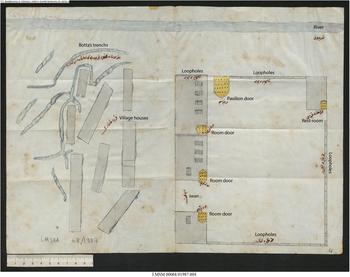
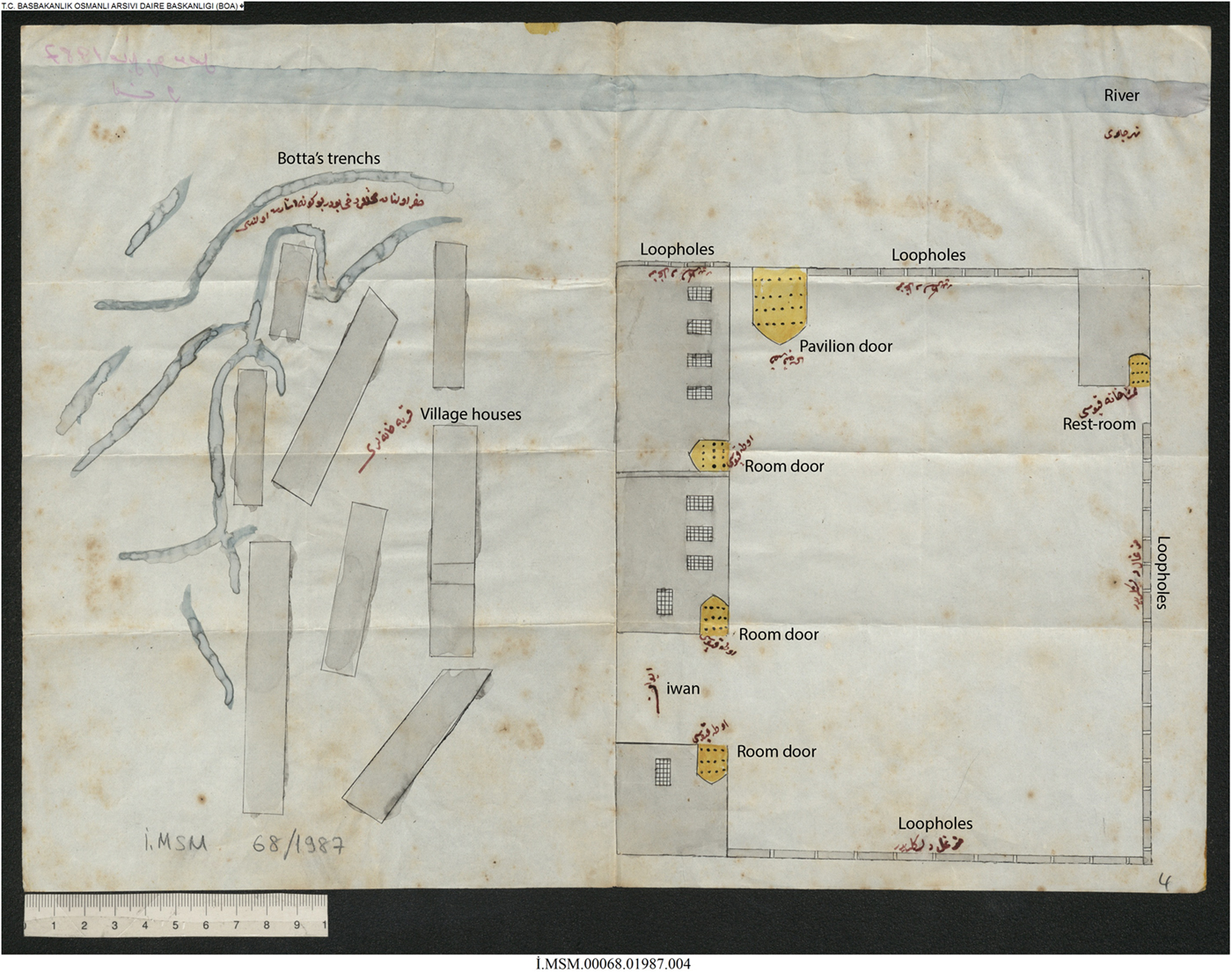
The issue was the subject of a report dated 25 Ramazan 1259/October 19, 1843, that is five days after Botta's letter. The report read that there were ruins of old buildings lost under the ground in the village of Hastaabad, 4 hours from Mosul, that there were some figures on stones in these ruins and the consul had started excavations to unearth them. The consul had reported to relevant authorities his wish to build two or three sheds out of wood and dirt to stay in the heat of the summer during his visits and for the workers to rest during three months and that he would demolish these sheds at the end of this period. The consul had reportedly submitted a sealed document, and his request was granted and approved, but had constructed a tall and large building like a mansion in this village. This building was said to have included a large iwan, three rooms, a large courtyard and about forty embrasures all around it. Its strong doors and windows were reported to have been made of wood. The villagers submitted a request for an inspection of this place, since they were worried that the construction of the sheds for the excavation of their own property would harm them. An official was sent to inspect this place and the building. The official reported that the building was constructed just as described by the villagers and was about to be finished and attached a drawing to his report.Footnote 22
This attached plan (Fig. 2) shows Botta's excavation house, the areas he had excavated, as well as the village houses and a stream above them. Eight village houses and the excavated areas around them were shown. The excavation house next to the village houses was drawn quite large compared to the village houses and was presented as a structure resembling a fortress with embrasures. The rectangular-plan house consisted of a large courtyard and three rooms and a toilet around it. The entrance door was called Kasr Kapısı. The plan was drawn with great care, like the work of an artist. Botta's fortress-like excavation house, the village houses and the excavated areas around them were colored in grey. The doors of the excavation house were colored in yellow, with even the decorative nails above the door depicted. The windows of the rooms with their parapets were shown in the plan. The embrasures on the walls of the excavation house were emphasized.
The plan of Botta's excavation house in Khorsabad, drawn by the order of the Pasha (İ.MSM. 68/1987/4)
Botta's application for the construction of the excavation house – Document 1, İ.MSM 68/1987/5.
Complaint petition of Khorsabad villagers – Document 2, İ.MSM 68/1987/8.
Botta's letter to the French ambassador Baron de Bourqueney – Document 3/1–7.
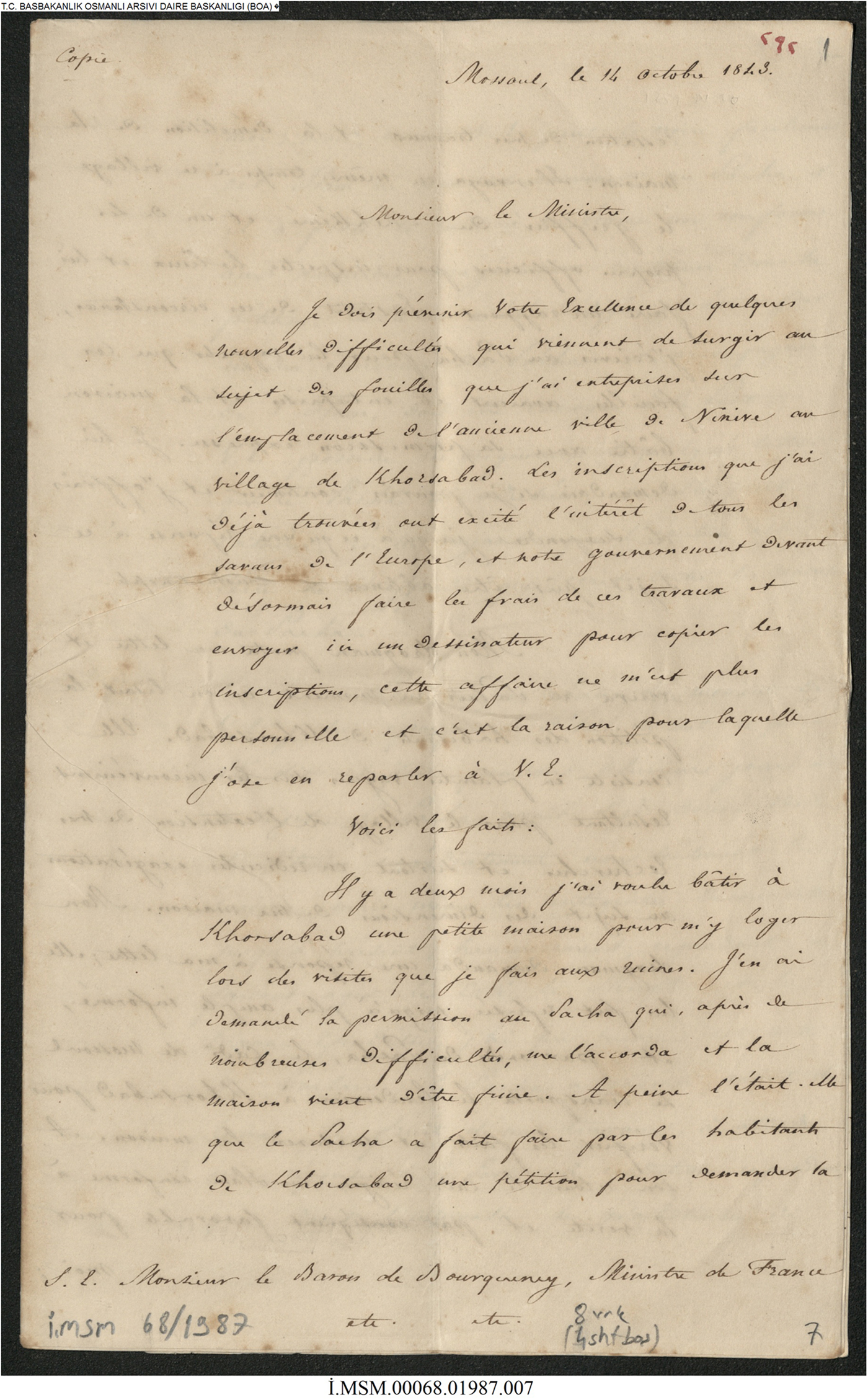
Fig 5.2

Fig 5.3

Fig 5.4
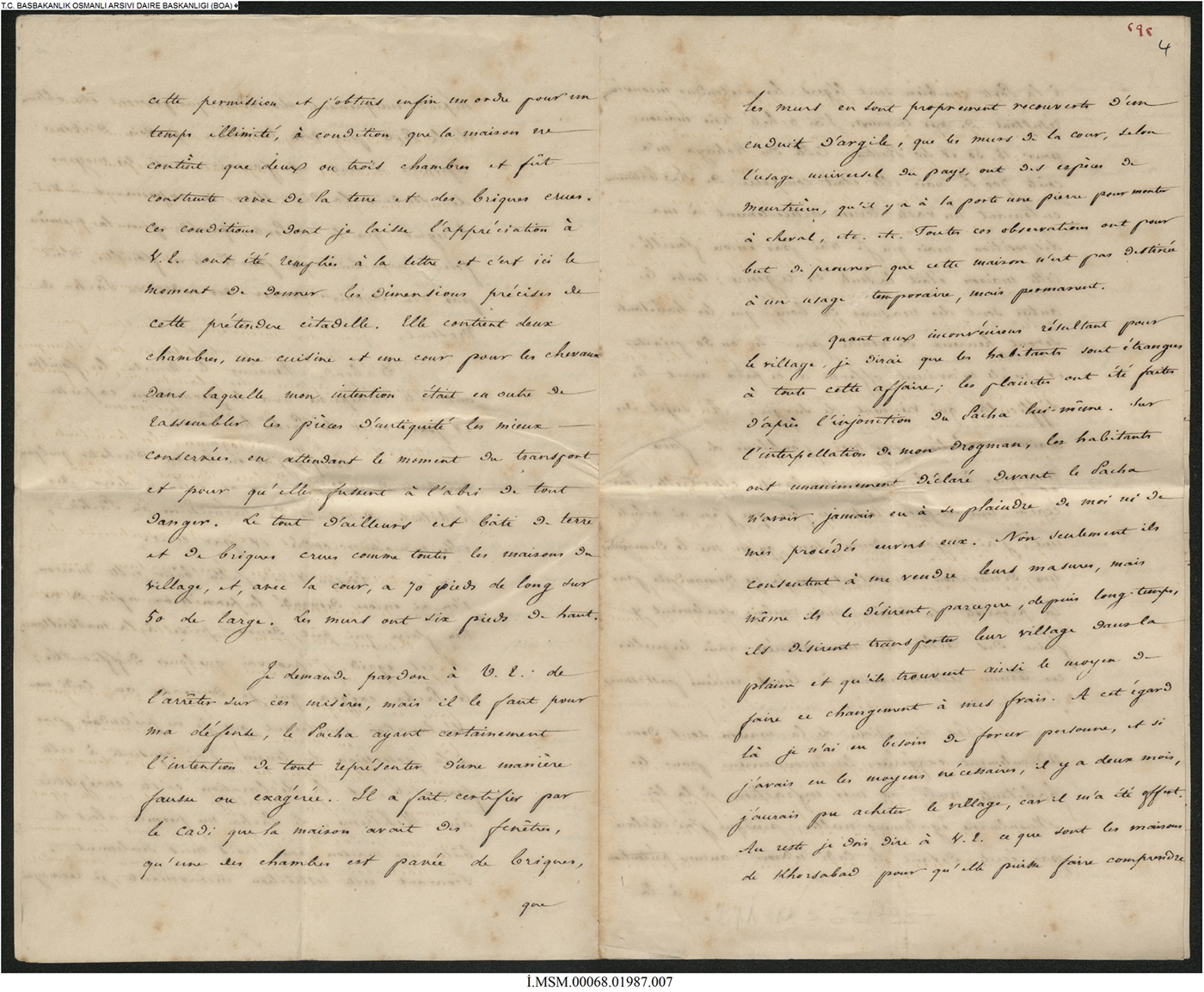
Fig 5.5
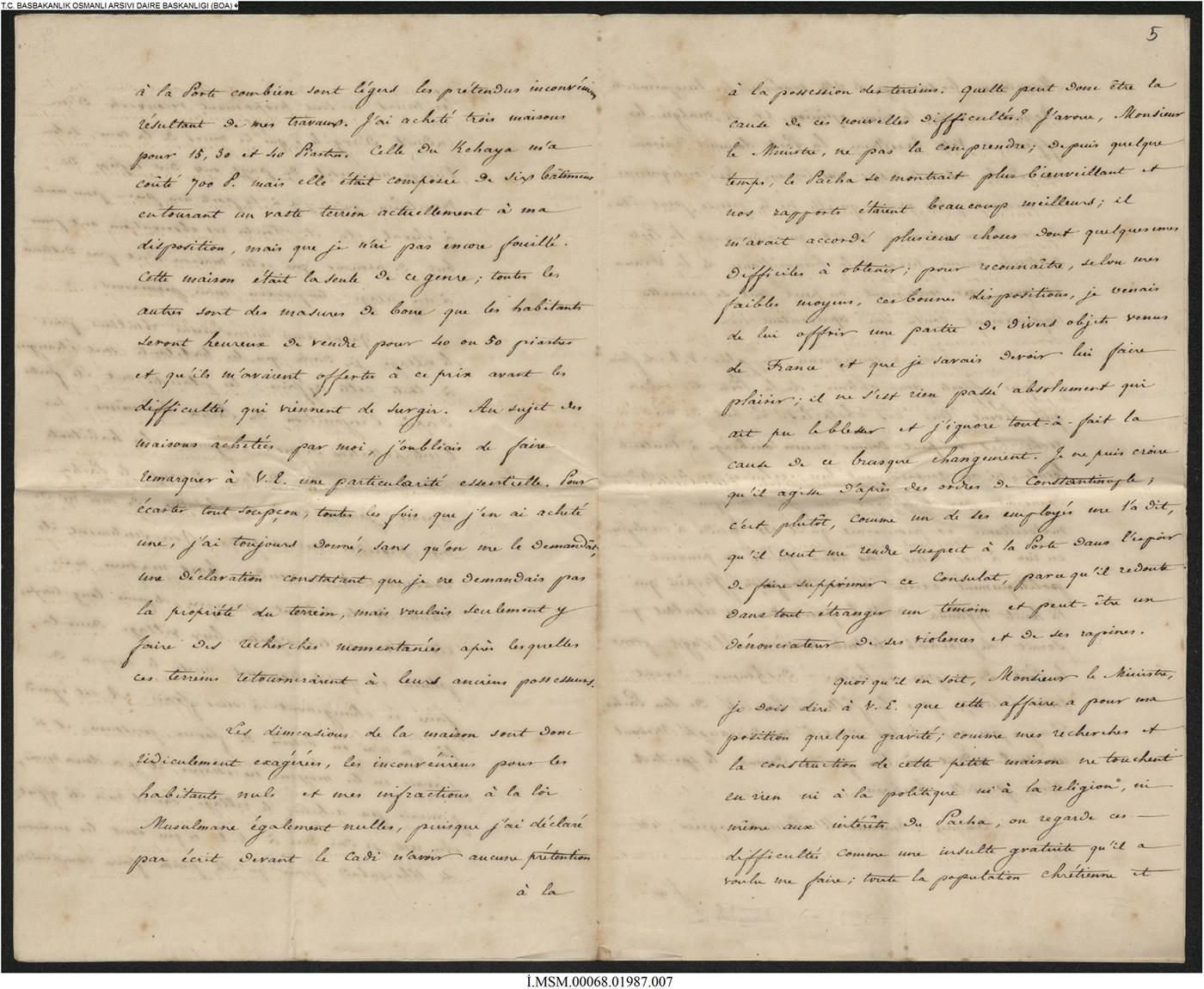
Fig 5.6
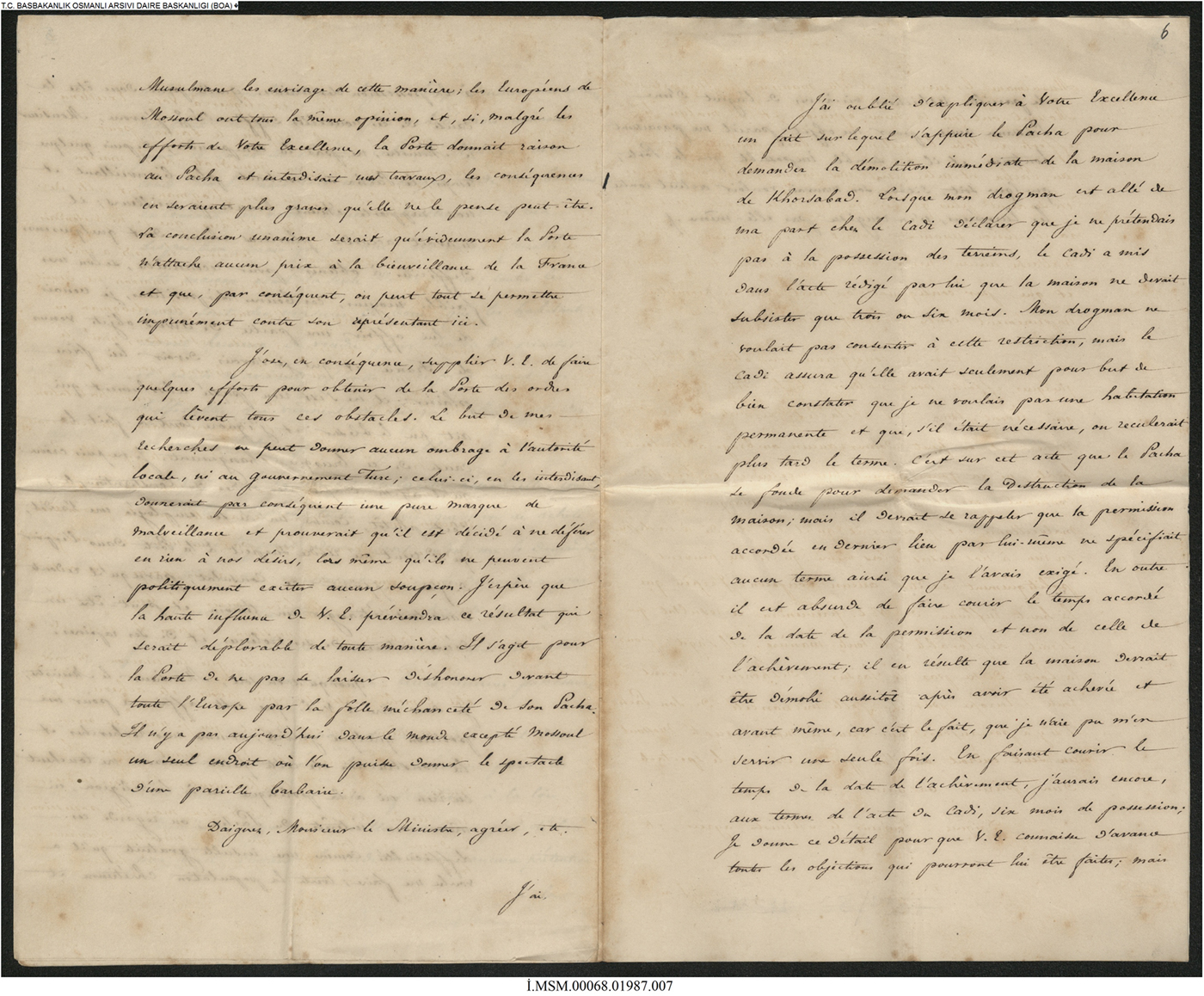
Fig 5.7

Another report dated 29 Ramazan 1259/October 23, 1843 noted that (Fig. 6, Document 4):
Stones with various figures came out of water wells dug on ruins under the ground in the village of Hastaabad, four hours from Mosul. The French consul working there had started excavations of the ruins to unearth these stones about 5–6 months ago. However, although he was granted permission to build a place for the workers to rest in the heat of the summer, which would be demolished at the end of the work, the consul started a very large construction in the village. This work is reported to damage and demolish the foundations of some of the houses in its vicinity.Footnote 23
Report on damage to the villagers caused by Botta's excavations – Document 4.

The king of France wrote in a memorandum that he sent to the ambassador in Istanbul, Baron de Bourqueney on 8 Şevval 1259/November 1, 1843 (Fig. 7, Document 5):
… that remains from the city of Ninive were found a few months earlier in the city of Mosul as reported to him by the French consul. Scholars of history were happy with the hope that the investigations of the remains would add to their knowledge. In order to make drawings of these ancient buildings and draft their plans and copy their inscriptions, France would send an artist named Flandin to accompany the consul in Mosul. It was stated that if excavations would be necessary to unearth the buildings of this city, the necessary permits should be granted to the consul and the artist and they should be helped.Footnote 24
Translation of the letter sent by the King of France to Baron de Bourqueney, the Istanbul ambassador – Document 5.
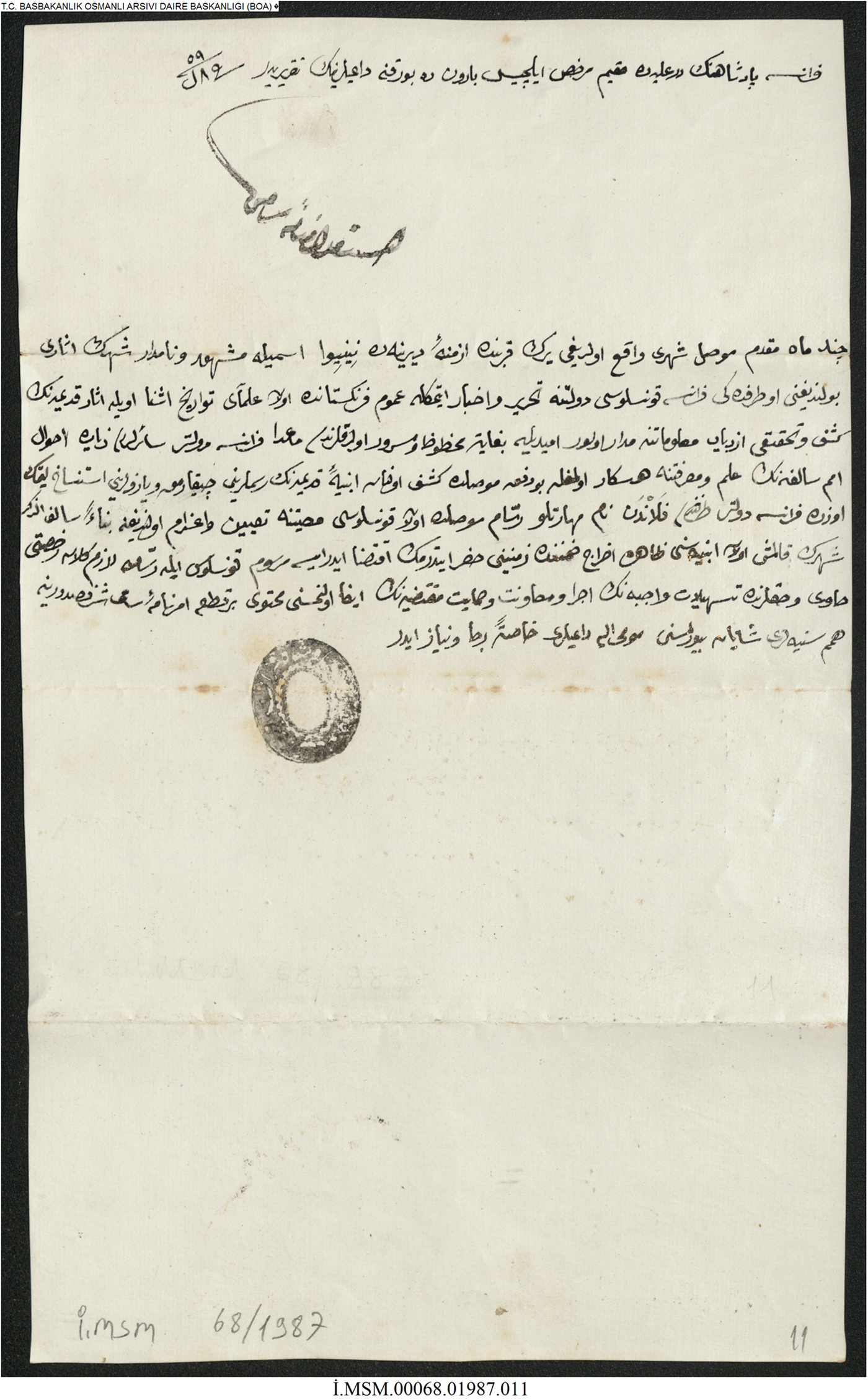
Instructions that the French consulate gave to its chief translator (Fig. 8, Document 6) read that this scientific work, which had been started by the French consul in Mosul and had become famous all around Europe, was being obstructed by the governor of Mosul. The extreme attitude of the governor exposed a large error, in their view. Although there was no doubt in their minds that the Ottoman State would do what was necessary to obviate this fundamentalism, some points needed to be brought to the attention of the Minister of Foreign Affairs, Rıfat Pasha (Fig. 8, Document 6):
The old, decorated stones unearthed by the efforts of the consul will illuminate the history of the ancient nations of Asia. This has been heralded as great news in the European capitals like Paris, London, and St Petersburg. Scholars in Europe are impatiently waiting for these stones to be unearthed and brought. I do not dare to calculate what great disasters a governor would cause if, god forbid, the news that he obstructed this work is spread in these cities This situation would also cause the wrath of those in Europe. It is your task to relate the contents of this order to the Minister of Foreign Affairs and present him with a copy of it.
A letter from the French consulate to the Ministry of Foreign Affairs on resolving the problems in Mosul – Document 6.
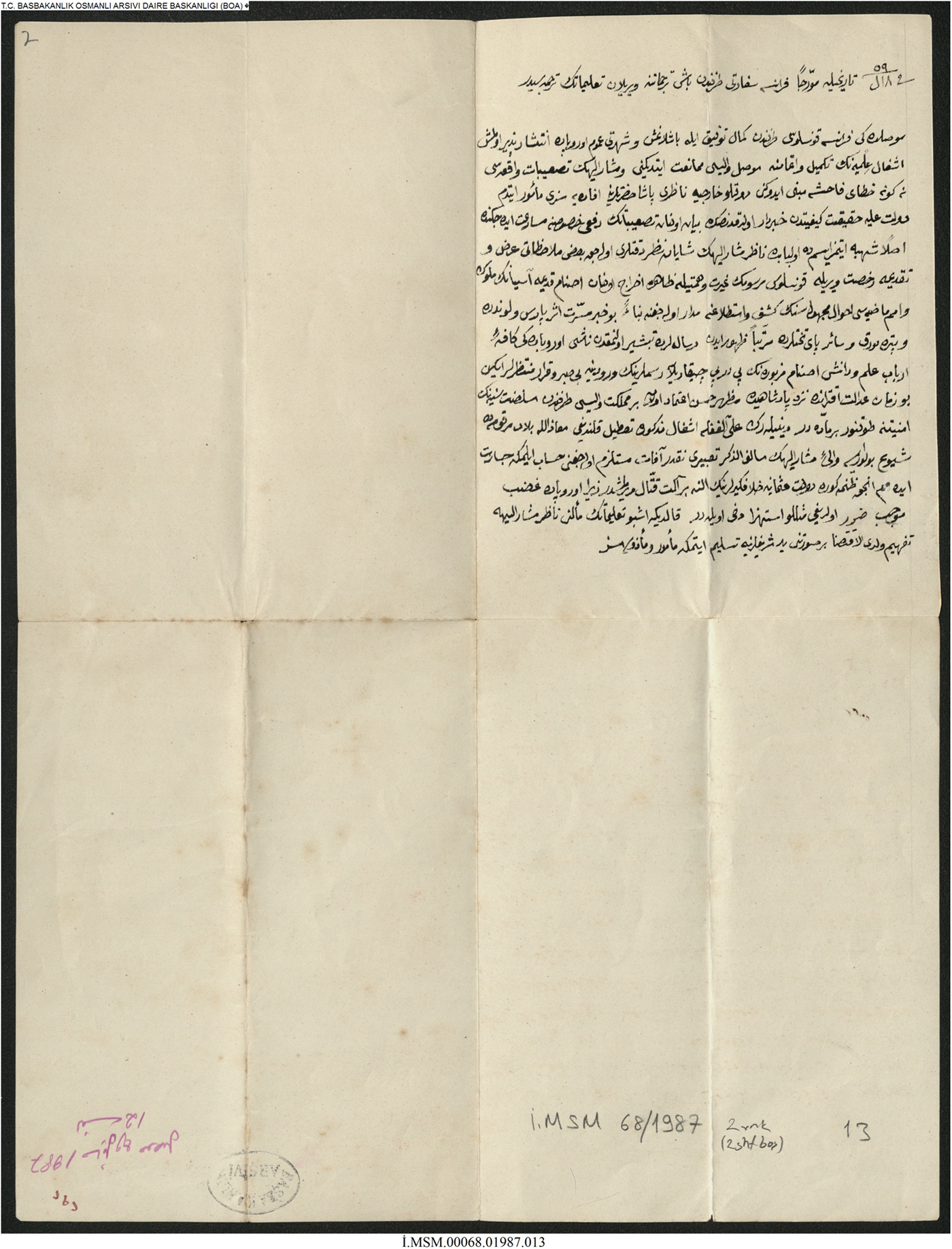
Such content was similarly included in a letter in French that is dated November 10, 1843 and signed by the Istanbul ambassador Baron de Bourqueney. It meant to draw the attention of Rıfat Pasha, the Minister of Foreign Affairs, to the matter. It reads that this work was periodically published in Paris, London, St Petersburg and other capitals and informed the public. The importance of Botta's work and the expectations in Europe were mentioned and a solution was expected. De Bourqueney writes specifically: “I really do not dare to calculate the destructive nature of such expressions. I call this giving weapons to the enemies of the Ottoman State, ridicule harms as much as anger in Europe.”Footnote 25 De Bourqueney also asks that his words be shared with Rıfat Pasha and that a copy be given to him if necessary.
Upon the correspondence of the French king and consulate, the Ottoman State attempts to bring the issue to a close in the following manner. Reports from the governor of Mosul, Mehmed Pasha, were evaluated and his obstructions to the excavations and the construction of the building there were discussed. The situation was reported to the embassy by the consulate and the obstructions were asked to be removed:Footnote 26
The excavation of this place and the construction of temporary buildings should be tied to some conditions and time. The consulate has requested that the artist who has come to Istanbul should be given a bailiff to accompany him and sent to Mosul, with necessary costs covered by relevant parties. It is inappropriate of the governor to first grant a permit and then to cause obstructions. If this issue is ended here and the artist is sent together with a bailiff the consul will be spoilt and the prestige of the governor will be harmed. If no permissions are granted at all then this will cause reaction in Europe according to the translated documents from the embassy, therefore an official from the engineer school should be appointed and the situation should be reported to the governor. With regards to the sending of the artist, it is inappropriate for it to be first reported to the embassy, given a permit and then to be obstructed.
If the obstructions are repeated the embassy will continue to insist. A official should be appointed, whose costs should be paid by the governor, and excavations and research elsewhere or extension of the time given for the excavations that have already started should not be permitted even if images or antiquities are found. The start date of the excavations should be recorded in place.
As a result of all these correspondences and complaints, the excavation period and conditions were identified in a permit document from the Ottoman State to the French consul, dated 23.10.1843 and written in French and Ottoman TurkishFootnote 27 and the problem was addressed as follows (Fig. 9, Document 7):Footnote 28
Permission was granted to the artist who came here from France and the French consul in Mosul with some additional conditions to continue the work at the site of the excavations started by France in the village of Horsabad in Mosul, and these conditions are as follows:
1- Permission is granted for the excavated site for 1 year from the start of the excavations. There will be no complaints or fuss, and depending on the will of the owner if this place is in the possession of anybody. Thus after one year passes and the work ends, the excavated places will be leveled without any remaining pits or hills and the excavation will be limited to that place and definitely will not extend to another place.
2- Drawing the images and writing on decorated stones that are unearthed on paper is permitted, but the granting of the permission for the stones that they want to transport should be dependent on the situation of the stones. However, things like coins belong to the Great State. However, if in the case of the discovery of some ancient coins they wish to take them to France as samples or antiquities they should pay for their price and request permission for each item.
3- The necessary parts of the temporary house built on the excavation area should be left and problematic parts that are not covered by our permission should be identified by the appointed official to be demolished. There should be no requests to leave this building after the excavations are completed and it should be demolished promptly. There should be no construction of additional buildings, and if things that are like fortifications are observed they should be demolished immediately.
4- No pits should be dug within houses without the permission and consent of the owners, they should not be obstructed if the owners consent, nothing should be done except for what is stated in the contract and the areas excavated by the consul should be left to their owners afterwards.
5- If no decorated stones or antiquities are found in excavated areas, no permission will be granted to excavate or investigate other places or to extend the excavation period.
6- Because of the warm relations between France and our state, requests of France will be accepted and the excavation of some places at Khorsabad around Mosul with decorated stones and antiquities will be permitted. Articles of the contract including some conditions mentioned above, which will be signed by the governor of Mosul and the French consul at Mosul, have been found appropriate by the embassy. These articles will be applied completely and the consul will not propose otherwise in any way. The house built temporarily based on the permit granted by the governor of Mosul to accommodate a draftsman at Khorsabad will be demolished completely and no requests to spare it will be taken into consideration. The articles of this contract have been found appropriate by our consul. Any opposition will be banned immediately through the embassy. This contract that includes many conditions has been written and signed by the embassy of the state of France and submitted to the Great State”Footnote 29 (Document 7).
The first excavation permit document given to the consulate of France by the Ottoman State – Document 7.

The date on the permit document, 23.10.1843, is not the date of the drafting of the document itself. The statement “a period of one year from the start of the excavations has been given” in article 1 of the permit document is important in this respect. Botta continued excavations until the end of October 1844. It seems that the permit document covers the one-year period from October 1843, when problems between Botta and Mehmed Pasha arose at Khorsabad and the excavations stopped, up until October 1844.Footnote 30 Thus it appears that the permit document was dated retrospectively following the various correspondence and after problems were resolved. According to the date on the permit document, the excavations would continue for one year from the time when they were halted.
Another document concerning Botta includes the correspondence sent from the Foreign Ministry to the governor of Mosul.Footnote 31 It reads that excavations were carried out in the village of Khorsabad near Mosul based on the permission of the French consul in Mosul. It reported that a few inscribed and decorated bricks were found and that they would be harmed by moisture and the sun unless they were repaired and covered. The French embassy thus asked that in case such bricks were discovered, care should be taken to protect the inscriptions and pictures on them. It seems they would request to transport the bricks, it reported, and asked if they needed protection where they are found, and if there is any reason to give it to them. In particular, the French Embassy asks that the Ottoman government take precautions for the preservation of artifacts such as decorated or inscribed bricks excavated in Khorsabad. The effort to apologize to Botta for the problems he experienced in Mosul and the difficulties that such an apology would create are the subjects of a correspondence that is dated 4 Ramazan 1260/17 September 1844.Footnote 32
Conclusion
The documents we present above concerning the excavations Botta carried out at Khorsabad and the excavation house he built show the difficulties that Botta experienced in detail. Although it has been supposed that Botta did not have an excavation permit (Larsen Reference Larsen1996: 28; Bahrani Reference Bahrani, Bahrani, Çelik and Eldem2011: 132, 141), reports and letters, as well as the signed contract concerning the excavation period, excavation areas and conditions (Fig. 9, Document 7) clearly show that Botta did have a permit. Likewise, the villagers state in their letters of complaint that Botta asked for a permit to excavate the hill by the village and was granted the permit by the Pasha. Botta continued his work based on the permits from the governor of Mosul, Mehmed Pasha, and on 20 April 1843 he asked for a separate permit for the excavation house he wanted to build at Khorsabad. He stated that he would give the houses he bought on 21 August 1843 back to their owners, with the villagers named on his letter of request acting as witnesses.
However after the excavations started and the excavation house was built, the villagers started to complain. People from Khorsabad mentioned Botta's excavations in their letter of complaint, and said that the courtyard of the excavation house was larger than 64 m2 and its rooms were fortified and robust. They said they were harmed by the excavation and asked for an inspection of the site. An inspection team was sent, reports were commissioned from the Kadı and the plan of the house was drafted.
Botta on the other hand wrote to the French ambassador Baron de Bourqueney and reported his problems, the issues he had and their causes. He detailed how the Pasha made the excavation house look like a castle and the obstacles he created and gave the dimensions of the house (ca. 21 × 15 m). The walls were nearly 2 meters high. The reports dated 19 October 1843 and 23 October 1843 read that the consul had started a large construction, built a large building like a mansion that included a large iwan, three rooms, a large courtyard and about forty embrasures on its four sides. They also reported that this work had harmed or destroyed the foundations of some houses. The official sent to the area for inspection reported that the building was made just like the villagers had described and attached a detailed plan of the excavated areas, the village houses and the excavation (Fig. 2). These details were shown on the plan we found at the Ottoman Archives of the Office of the Prime Minister. According to the plan, the house had three rooms, a toilet and courtyard, as well as about forty embrasures on its exterior walls. The doors and the windows of the rooms, the entrance to the courtyard were clearly shown. The detailing of the embrasures in particular emphasized the perception of the building as a defensive structure. The emphasis that the courtyard is larger than 64 meters was similarly related to this perception. The plan also showed the layout of some of the houses at Khorsabad and the areas that Botta excavated (Fig. 2). This plan, which was drafted as if it was a fortress or defensive structure, was actually the first excavation house of Mesopotamia. The fact that Botta constructed this house to protect ancient objects from various hazards during the process of their assembly, joining and transportation affirms this definition.
A report dated November 1, 1843 requested a permit from the Ottoman State for Botta to excavate at Khorsabad. It threatened the Foreign Ministry that more serious problems would arise if the obstacles that the governor of Mosul created were heard at European capitals such as Paris, London and St Petersburg. The Ottoman State thus began to resolve the issue. The fact that the Pasha first gave permission and then created obstacles was deemed to be an inappropriate situation. The conditions for the excavations and the situation with the excavation house were revised and the necessary permit was granted to Botta. The appointment of an official whose costs would be covered by the governor and the view that there would be no permission to excavate or survey other areas or to extend the permit period were particularly emphasized. Through the agreement arranged between the Ottoman State and France the excavation period and conditions were identified and the problem was solved. This order for the Khorsabad excavations can be said to be the first permit granted for excavations on Ottoman soil.Footnote 33
After this problem was solved as a result of the efforts of the French ambassador Baron de Bourqueney and through a special agreement, Botta continued his work from where he left off. Flandin on the other hand was quite late and could only arrive at Mosul around May 4, 1844 (Botta – Flandin Reference Botta and Flandin1850: 10; Parrot Reference Parrot1946: 40). Botta's house, which had caused controversy, was permitted to remain until the end of his work. The excavations immediately restarted as Flandin brought a permit for 7–8 months with him. Thus Botta continued his work with about three hundred workers for about six months from mid-May 1844 to the end of October 1844 (Botta – Flandin Reference Botta and Flandin1850: 12). Botta wrote a letter in August to Layard and told him about their success and the skills of Flandin.
Flandin and Botta worked well together; as they found reliefs Flandin drew them with great care and worked the plans of the buildings. Botta and Flandin unearthed a large portion of the palace using large teams of workers when compared to the standards of the time and through excavations carried out in haste. Of course the palace was not unearthed completely. The outer town was almost completely untouched. Botta excavated 14 halls and some exterior façades on the northern part of the buildings (Buckingham Reference Buckingham1851: 58–65; Hilprecht Reference Hilprecht1903: 78–79; Larsen Reference Larsen1996: 29).
After the visit by Henry Ross, an English merchant from Mosul, Botta decided to end the excavations in October 1844. Khorsabad was located at a distance from rivers that were suitable for ships and the heavy and large stone blocks had to be carried to Mosul, 25 km away. The transport of Assyrian reliefs and sculpture was achieved with great difficulties. These huge objects were carried to and loaded on rafts and sent first to the Persian Gulf through the Tigris and then to France. Botta used the transportation methods used by the Assyrian architects. He had large carts built to carry the reliefs to Mosul. The Pasha had given some of the oxen to pull these carts, but he immediately took them back. As the transportation was done in the rainy season, the wheels sank into the mud. Botta thus had to leave one of these oxen on the way from Khorsabad to Mosul. The transport of all the objects to the river bank continued until June 1845. After the carts arrived at Mosul, sculptures were loaded on large rafts made of hundreds of inflated sheep skins and taken first to Baghdad and then to the Persian Gulf. The objects were loaded on a French ship at Basra and sent first to Le Havre and then to Paris. Exactly four years after Botta started excavations at Khorsabad, on May 1, 1847, the first collection of Assyrian objects was put on display at the Louvre (Buckingham Reference Buckingham1851: 67–69; Hilprecht Reference Hilprecht1903: 79–80; Larsen Reference Larsen1996: 32).