Introduction
Older adults are less likely to utilize conventional mental health services for depression and anxiety disorders compared to middle-aged adults with these disorders (Klap et al., Reference Klap, Unroe and Unützer2003; Crabb and Hunsley, Reference Crabb and Hunsley2006; Karlin et al., Reference Karlin, Duffy and Greaves2008). They may also be less likely to receive appropriate medication treatment for depression and anxiety (Colenda et al., Reference Colenda2003; Beck et al., Reference Beck2005; Blalock et al., Reference Blalock2005). However, it is not clear whether a similar age-related pattern exists in the utilization of complementary and alternative medicine (CAM) for mental health-related reasons.
The term complementary and alternative medicine (CAM) refers to health services and products that are generally considered outside the purview of conventional medicine and that are used either as an augmentation (complement) or replacement (alternative) for conventional services or products. The five general categories of CAM recognized by the National Center for Complementary and Alternative Medicine (2007) are “alternative medical systems” (i.e. acupuncture, homeopathy, naturopathy), “biologically based therapies” (herbal remedies, dietary supplements), “manipulative and body-based methods” (chiropractic and massage), “mind-body medicine” (relaxation, yoga), and “energy therapies” (qi gong, Reiki). Examples of CAM modalities that are commonly used for mental health reasons include practitioner-delivered or assisted services such as acupuncture, massage therapy, and yoga and non-prescription health products such as St. John's wort and valerian (Druss and Rosenheck, Reference Druss and Rosenheck2000; Grzywacz et al., 2006).
Among adults in all age groups, self-reported anxiety or depression is associated with an increased likelihood of using CAM for any reason and specifically for the treatment of mental health concerns (Druss and Rosenheck, Reference Druss and Rosenheck2000; Unützer et al., Reference Unützer2000; Kessler et al., Reference Kessler2001; Grzywacz et al., 2006). Given older adults’ relatively low utilization rates of conventional specialty mental health services relative to middle-aged adults, we might also expect to see correspondingly low rates of mental health-related CAM use in older relative to middle-aged adults. However, available data suggest that rates of CAM use specifically to treat mental health problems in older adults may be comparable to rates in younger adults. In a population-based sample of nearly 6,000 adults aged 65 years and older, 17.9% of CAM users with self-reported anxiety or depression reported having used CAM specifically for mental health reasons (Grzywacz et al., 2006), a figure consistent with the rate of 15% of CAM users reporting mental-health related CAM use in a representative survey of adults of all ages (Unützer et al., Reference Unützer2000). It is possible that the factors that differentially limit older adults’ utilization of conventional mental health services (e.g. stigma, lack of providers specially trained to work with older populations) are not as applicable to CAM, or perhaps even that older adults seek informal treatments for mental health concerns in the context of experiencing barriers to conventional service use. However, a lack of direct age-related comparisons makes it difficult to be certain that age differences do not exist or to speculate on why this may be the case.
The purpose of our study was to compare mental health-related CAM use across age groups, while statistically accounting for other relevant sociodemographic and health and mental-health related factors that may influence the likelihood of CAM use. We used survey data from a large, nationally representative Canadian sample to examine age-related rates of utilization of conventional and complementary mental health care services and associated medications and products among middle-aged (45–64 years), younger-old (65–74) and older-old adults (75 years and older).
Methods
Data source
The Canadian Community Health Survey (CCHS), Cycle 1.2, is a cross-sectional survey that provided nationwide estimates on various issues related to mental health and well-being, including rates of mental disorders and utilization of mental health care services. Approximately 37,000 individuals aged 15 years and over residing in communities across the ten Canadian provinces were surveyed between May and December 2002, excluding individuals living in certain remote regions or residing in institutions (Statistics Canada, 2004). Sampling was accomplished by means of a multistage stratified design that covered approximately 98% of the community-dwelling population aged 15 and over across the ten provinces. The subsample selected for the present study consisted of 10,762 individuals aged 45–64, 4,113 individuals aged 65–74, and 3,623 individuals aged 75 years and older. Further details on the objectives, development, and conduct of the CCHS 1.2 are available in the documentation accompanying the data set (Statistics Canada, 2004).
Variables
Utilization of conventional mental health services
Respondents were asked whether they had consulted any of the following healthcare professionals for problems with emotions, mental health, or use of alcohol or drugs at any time in the past 12 months: psychiatrist, family doctor or general practitioner, other medical doctor, psychologist, nurse, social worker, counselor, or psychotherapist, religious or spiritual advisor, or other professional. In the current analyses, conventional mental health services included those delivered by specialty mental health providers (psychiatrist, psychologist, or social worker) and those delivered by non-specialty mental health care providers (general practitioner, other MD, or nurse).
Utilization of Complementary and Alternative Services (past 12 months)
Respondents who indicated that they had consulted with “other professionals” for an emotional or mental health concern were asked to indicate what kind(s) of professional(s) they had seen or talked to. Their responses were classified according to the following categories: acupuncturist, biofeedback teacher, chiropractor, energy healing specialist, exercise or movement therapist, herbalist, homeopath or naturopath, guided imagery specialist, massage therapist, relaxation, yoga or meditation teacher, dietician, or other.
Respondents were asked about their use of other complementary services for mental health-related issues in the past 12 months, specifically use of telephone crisis lines, self-help groups, and internet chat rooms for mental health-related issues. In our analyses, these data are examined separately from the CAM provider data.
Medication use (past two days)
Respondents were asked to produce containers for all medications used in the past two days. The generic name of each medication as indicated on the container's label was recorded and translated into its corresponding Anatomic Therapeutic Chemical (ATC) code, which allowed accurate classification of individual drugs according to relevant sub-categories. According to the ATC system, antidepressant medications included selective serotonin reuptake inhibitors (SSRIs; sertraline, fluvoxamine, fluoxetine, paroxetine, and citalopram), a selective norepinephrine reuptake inhibitor (SNRI; venlafaxine), monoamine oxidase inhibitors (MAOs; nialamide, phenelzine, moclobemide), tricyclic antidepressants (TCAs) (desipramine, imipramine, clomipramine, trimipramine, amitryptyline, and doxepin) and “other” antidepressants (trazodone, nefazodone, mirtazepine, tranylcypromine, isocarboxazid, bupropion, and tryptophan). Analyses reported here do not include a class-by-class breakdown according to antidepressant subtype due to small cell sizes for some subtypes. In order to provide some indication of why they might have been prescribed, benzodiazepines were subclassified according to the ATC system as those with a primarily anxiolytic effect (diazepam, chlordiazepoxide, medazepam, oxazepam, potassium clorazepate, lorazepam, and bromazepam) and those with a primarily sedative or hypnotic effect (flurazepam, nitrazepam, flunitrazepam, estazolam, and zopiclone). Given longstanding questions about the nature of benzodiazepine use among older adults (e.g. Colenda et al., Reference Colenda2003), this distinction is retained in all analyses.
Insurance for prescription medications
Insurance for prescription medications was assessed as a categorical variable (having vs. not having insurance to help offset the cost of prescription medications). This variable was included due to its hypothesized relation to the likelihood of using conventional medications.
Utilization of alternative products (past 12 months)
Respondents were asked to report on their past-12 month utilization of non-prescription health products for problems with emotions, alcohol or drug use, energy, concentration, sleep, or ability to deal with stress. Responses were categorized as follows: St. John's wort, valerian, chamomile, ginseng, kava kava, lavender, chasteberry, black cohosh, gingko, NeuRecover-DA, vitamins, and other.
Predictor variables
Socio-demographic characteristics
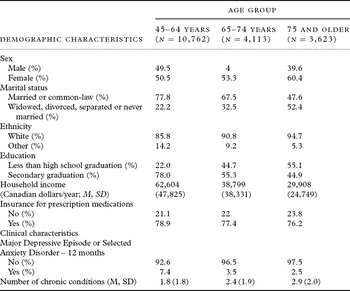
To assess age-related patterns in conventional and CAM service use, the sample was subdivided into middle-aged (45–64 years), younger-old (65–74 years), and older-old (75 years and over) groups. The number of respondents aged 85 years and older was very small when cross-tabulated with the dependent variables, and thus it was not possible to report estimates among the oldest-old (i.e. those aged 85 years and older). These age categories were chosen to be consistent with previous age-related analyses of CCHS Cycle 1.2 (Crabb and Hunsley, Reference Crabb and Hunsley2006). Additional sociodemographic characteristics included sex, marital status, ethnicity, education, and 12-month household income. Marital status was assessed as a dichotomous variable (married or common-law vs. widowed, divorced, separated, or never married). Although details on specific ethnic groups were provided in the survey data, the number of non-White respondents was so small in each age group (approximately 15% in the 45–64 age group and under 10% in the 65–74 and 75 years and over groups; see Table 1) that it was not possible to use specific ethnic groups within the non-White categorization as predictor levels in regression analyses. Thus, ethnicity was assessed as a dichotomous variable (White vs. non-White). Education was assessed as a categorical variable based on graduation from secondary/high school (less than secondary graduation vs. secondary graduation or higher). Household income in the 12 months prior to the survey, after taxes and deductions, was re-coded into thousands of Canadian dollars to facilitate the interpretation of odds ratios associated with this variable.
Demographic and clinical characteristics of survey respondents according to age group

Mental disorders
The World Mental Health – Composite International Diagnostic Interview (WMH-CIDI) was used to identify probable cases of major depressive episode and selected anxiety disorders (panic disorder, agoraphobia, and social phobia), occurring in the 12 months prior to interview, with the diagnostic criteria given by the ICD-10 and the DSM-IV (Kessler and Ustün, Reference Kessler and Üstün2004). Diagnoses of any past-12-month mood or anxiety disorder based on the WMH-CIDI had good concordance with blinded diagnoses using a clinician-administered structured clinical interview for DSM disorders (SCID) in a large multinational study (Haro et al., Reference Haro2006).
Physical health status
In order to obtain an index of general physical health, we derived a variable indicating the number of chronic physical health conditions (i.e. conditions that had been diagnosed by a health care professional and were expected to last six or more months) reported by each respondent (cf. Crabb and Hunsley, Reference Crabb and Hunsley2006). Conditions included: food allergies, other allergies, asthma, fibromyalgia, arthritis, back problems, high blood pressure, migraine headaches, diabetes, epilepsy, heart disease, cancer, stomach/intestinal ulcers, stroke, Crohn's disease, cataracts, glaucoma, thyroid problems, chronic fatigue syndrome, multiple chemical sensitivities, chronic bronchitis, and emphysema.
Statistical analysis
The proportion of missing data was less than 1% for all variables in the current analyses, with the exception of income for which 21% of cases had missing data. Missing values on income were imputed using a regression model based on age, sex, education, and province of residence. Cases with missing data for any variable in an analysis were excluded from that particular analysis.
Cross-tabulations and χ2 statistics were used to obtain and compare point estimates for utilization of conventional and alternative products and services according to age group and depression/anxiety disorder caseness. Logistic regression analyses were used to determine odds ratios for utilization of mental health services and medications or products according to levels of predictor variables. Direct logistic regression procedures, with all variables entered simultaneously, were used because our main interest was in identifying the strength of association between age group and utilization in the context of other putatively important predictor variables. All point estimates reported in text and tables were calculated with SPSS 13.0, using population weights to adjust for unequal probability of selection for the study due to factors such as household non-response and provincial buy-ins. Tests of significance were calculated using BOOTVAR, a statistical software program that uses bootstrap resampling methods to adjust for stratification and clustering in the sampling design. It should be noted that because the resampling software includes a correction to adjust for clustering and stratification in chi square tests, degrees of freedom associated with chi square comparisons frequently have non-integer values (Rao and Scott, Reference Rao and Scott1984).
Results
Demographic and clinical characteristics of sample
The survey's final participation rate was 86.5% at the household level, 89.0% at the person level and 77.0% overall. Table 1 summarizes demographic and clinical characteristics of survey respondents according to age group. Compared to the 45–64 age group, respondents in the two older age groups were more likely to be female, White, have a lower level of educational attainment, be widowed, divorced, separated, or never married, have lower incomes and have a greater number of chronic physical health conditions. Age was not significantly related to having insurance to help cover the cost of prescription medications.
Utilization of conventional and complementary services
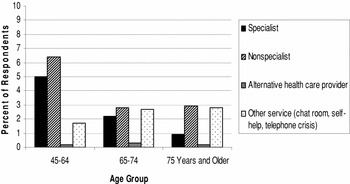
Figure 1 illustrates age-related rates of utilization of conventional, complementary, and other mental health services over the past 12 months in the whole study sample. Compared to middle-aged adults, significantly smaller proportions of younger-old and older-old adults reported having utilized any conventional mental health services in the past 12 months (8.7, 4.2, and 3.0% for the three age groups, respectively; χ 2 (1.55, N = 18,383) = 57.96, p < 0.0001). Age was significantly associated with consultations with both specialty (5.0%, 2.2%, and 0.9%, respectively; χ 2 (1.37, N = 18,401) = 29.89, p < 0.0001) and non-specialty providers (6.4%, 2.8%, and 2.9% respectively; χ 2 (1.82, N = 18,392) = 86.09, p < 0.0001). As is evident in Figure 1, the ratio of non-specialty to specialty mental health consultations is greatest in the 75+ group (approximately 3:1) compared to the same ratio in the younger two groups (approximately 5:4).
Percentage of respondents reporting 12-month mental health-related utilization of conventional vs. complementary or alternative health care services in whole sample.

Among all respondents, the proportion who reported consulting any CAM provider for mental health-related reasons in the past 12 months was very small and did not differ significantly across age groups (0.2%, 0.3%, and 0.2% for the three age groups, respectively; χ 2 (1.87, N = 18,421) = 1.98, p = 0.45). Compared to the middle-aged adults, a slightly larger proportion of younger-old and older-old adults reported utilization of self-help groups in the past year for mental health-related reasons; 1.5%, 2.6%, and 2.6% for the three age categories respectively (χ 2 (1.78, N = 18,422) = 10.84, p < 0.01). The proportion of respondents who reported past-year use of an internet chatroom for mental health-related reasons did not differ significantly according to age group (0.2%, 0.9%, and 0.2% for the three age categories, respectively; χ 2 (1.07, N = 18,421) = 0.73, p = 0.42). Although the proportion of respondents who reported past-year use of a telephone helpline for mental health-related reasons did differ significantly according to age group, the statistical test only met significance at the 0.05 level, indicating a relatively small effect given the large sample size (0.2%, 0.3%, and 0.3% for the three age categories, respectively; χ 2 (1.87, N = 18,424) = 6.42, p < 0.05).
Among respondents meeting caseness criteria for major depression or a selected anxiety disorder, a smaller proportion of younger-old and older-old adults reported using any conventional mental health service in the past 12 months in relation to middle-aged adults (46.4%, 37.8%, and 23.4% for the three age groups, respectively; χ 2 (1.96, N = 1,034) = 8.60, p < 0.05). In this subgroup, the raw numbers of respondents in younger-old and older-old age groups who reported consulting CAM providers for mental health reasons or using other mental health-related services (self-help groups, internet chatrooms, telephone helplines) were so small that weighted estimates and statistical comparisons from these cross-tabulations are not considered reliable enough for release according to Statistics Canada standards. Thus, it was not possible to obtain accurate prevalence estimates of mental health-related CAM service use among those with major depression or a selected anxiety disorder.
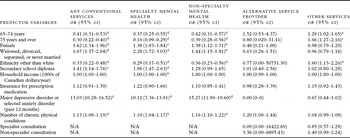
Table 2 displays the results of logistic regression analyses for the utilization of conventional, complementary and other mental health services over the past 12 months. After adjusting for all other sociodemographic and clinical characteristics, older age was associated with significantly decreased odds of consulting either a specialty or non-specialty conventional health care provider for mental health or emotional concerns in the past 12 months. In addition to age, other significant predictors of consulting any conventional mental health care provider were female sex, White ethnicity, being widowed, divorced, separated or never married, having a secondary school diploma, meeting criteria for major depression or a selected anxiety disorder, and having a higher number of chronic physical health conditions. Predictors were similar for consultations with specialty and non-specialty providers, with the exception of education, in that having a secondary school diploma was associated with an increased likelihood of consulting a specialty mental health care provider but was not associated with the likelihood of consulting non-specialty mental health care providers.
Logistic regression analyses for predictors of use of conventional, alternative, and other mental health services

ap < 0.05.
bp < 0.01.
cp < 0.001.
dp < 0.0001.
However, age was not a significant predictor of consulting a CAM provider for mental health or emotional concerns. In fact, none of the proposed predictors of CAM service use was significant, possibly due to the very low numbers of respondents who reported mental health-related consultations with CAM providers. Older age was associated with significantly increased odds of using other services for mental health or emotional concerns, largely due to the effects of self-help group involvement. Compared to middle-aged adults, younger-old adults were 29% more likely and older-old adults were 66% more likely to report mental health-related utilization of such services. In addition to an association with older age, utilization of other mental health-related services was associated with belonging to an ethnic minority group (i.e. non-White).
Utilization of conventional and complementary products
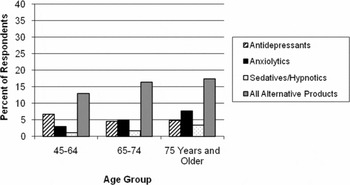
Figure 2 displays age-related rates of utilization of conventional psychoactive medications commonly used for anxiety and depression vs. utilization of complementary products for mental health reasons among the whole study sample. Compared to middle-aged adults, significantly smaller proportions of younger-old and older-old adults reported utilization of antidepressants in the past two days (6.7%, 4.6%, and 4.8% for the three age groups, respectively; χ 2 (1.96, N = 18,279) = 22.07, p < 0.0001), and significantly greater proportions reported using anxiolytics (2.9%, 4.8%, and 7.7%, respectively; χ 2 (1.91, N = 18,279) = 63.92, p < 0.0001) and sedative-hypnotics (1.2%, 1.7%, and 3.5%, respectively; χ 2 (1.74, N = 18,279) = 33.03, p < 0.0001). Compared to middle-aged adults, significantly larger proportions of younger-old and older-old adults reported past 12-month mental health-related utilization of alternative products (13.0%, 16.4%, and 17.4%, respectively; χ 2 (1.94, N = 18,416) = 20.23, p < 0.0001).
Utilization of conventional medications and alternative products in whole sample.

Among respondents meeting criteria for major depression or a selected anxiety disorder, significantly smaller proportions of younger-old and older-old adults reported using antidepressant medications compared to middle-aged adults (35.4%, 23.3%, and 23.2% for the three age groups, respectively; χ 2 (1.92, N = 1,034) = 5.95, p < 0.05). In contrast to the results for the whole sample, age was not significantly related to the proportion of respondents with major depression or a selected anxiety disorder who reported using anxiolytic (12.4%, 15.2%, and 18.6%, respectively; χ 2 (1.97, N = 1,034) = 1.52, p = 0.46) or sedative/hypnotic medications (6.2%, 12.2%., and 18.6%, respectively; χ 2 (1.43, N = 1,034) = 3.99, p = 0.079). Age group was also not significantly related to mental health-related utilization of complementary or alternative products (13.7%, 11.8%, and 17.7%, respectively; χ 2 (1.51, N = 1,034) = 0.36, p = 0.73). Although the utilization rates presented in these analyses appear to differ by age group, the very small numbers of respondents meeting criteria for major depression or a selected anxiety disorder in the older age groups may have contributed to non-significant statistical results.
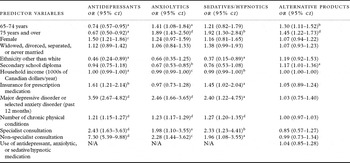
Table 3 presents the results of logistic regression analyses for utilization of conventional psychoactive medications over the past two days and mental health-related utilization of complementary products over the past month. After accounting for all other sociodemographic and clinical predictors, older age was negatively associated with utilization of antidepressant medications and positively associated with utilization of anxiolytic and sedative/hypnotic medications. Significant predictors of all three types of medication utilization were meeting 12-month criteria for major depression or a selected anxiety disorder, having a higher number of chronic medical conditions, and consulting either a specialty or non-specialty mental health provider in the past 12 months. Income was significantly associated with all three types of medication use, although the odds ratio's absolute value of 0.99 and confidence interval including the value 1.00 indicates that the effect of income is relatively limited. Additional significant predictors of antidepressant medication use were female sex and White ethnicity. The only additional significant predictor of anxiolytic medication use was having attained secondary graduation. Additional significant predictors of sedative/hypnotic medication use were White ethnicity and having insurance to help offset the cost of prescription medications.
Logistic regression analyses for predictors of use of conventional psychoactive medications commonly used for depression and anxiety and alternative products used for mental health

ap < 0.05.
bp <0.01.
cp <0.001.
dp <0.0001.
After accounting for other sociodemographic and clinical factors, age was significantly related to mental health-related utilization of alternative health products. Compared to adults aged 45–64, adults aged 65–74 years were 30% more likely and adults aged 75 years and older were 45% more likely to use alternative health products for mental health reasons. Apart from age, the only factor significantly associated with utilization of alternative products was having attained secondary school graduation.
Discussion
In this large Canadian sample, age-related patterns in mental health-related use of complementary and alternative medicine (CAM) did not directly correspond to age-related patterns in conventional mental health care utilization. Consistent with the results of previous community surveys (Young et al., Reference Young, Klap, Sherbourne and Wells2001; Klap et al., Reference Klap, Unroe and Unützer2003; Blalock et al., Reference Blalock2005; Blazer et al., Reference Blazer, Hybels, Fillenbaum and Pieper2005; Karlin et al., Reference Karlin, Duffy and Greaves2008), older adults were less likely to use conventional mental health services, less likely to use antidepressant medications, and more likely to use anxiolytic or sedative-hypnotic medications relative to middle-aged adults. In contrast, mental health-related utilization of practitioner-based CAM services in the whole sample was very low and did not differ according to age. Older adults were slightly more likely than middle-aged adults to report mental health-related use of other complementary services, including self-help groups and telephone crisis lines. Older adults were also slightly more likely than middle-aged adults to report mental health-related use of CAM products in the whole sample, and the likelihood of mental health-related CAM product use was significantly greater in older age groups after accounting for other relevant sociodemographic and clinical characteristics.
Our data indicate that consulting a CAM provider specifically to treat a mental health or emotional problem was a relatively rare phenomenon, reported by less than 1% of adults aged 45 years and older. In comparison, the rate of consulting a CAM practitioner in the past 12 months for any health problem among Canadian adults aged 18 and older appears to be increasing over time, from 15% in the 1994/1995 National Population Health Survey (NPHS) to 20% in the 2003 CCHS, Cycle 2.1 (Millar, Reference Millar2001; Park, Reference Park2005). Among adults aged 50 years and older who had participated in both the 1996/97 and the 1998/99 NPHS, 17% reported using practitioner-based CAM services for any reason (Votova and Wister, Reference Votova and Wister2007). Other studies also demonstrate the infrequency of mental health-related CAM service use relative to overall CAM service use. For example, among persons with self-reported mental health conditions in a nationally representative American survey, 9.8% reported a formal, paid visit to a CAM provider in the last year and only 4.5% reported such a visit specifically to treat their mental health condition (Druss and Rosenheck, Reference Druss and Rosenheck2000).
The relatively high rates of mental health-related CAM product use among older adults in our sample are to be expected given high rates of CAM product use for all purposes among older adults, estimated at 27.4% in an American sample of adults 75 years and older (Nahin et al., Reference Nahin, Fitzpatrick, Williamson, Burke, DeKosky and Furberg2006), 19.1% in a Swedish sample of adults aged 60 years and older (Sjernberg et al., Reference Sjernberg, Berglund and Halling2006), and 51% in an Ontario sample of adults aged 60 and older (Levine, Reference Levine2009). Herbal products are one of the two most commonly used forms of CAM among adults 65 years and older (along with chiropracty; Astin et al., Reference Astin, Pelletier, Marie and Haskell2000; Foster et al., Reference Foster, Phillips, Hamel and Eisenberg2000) and utilization of herbal products has been found to be greater among adults aged 36–75 compared to both adults in both younger and older age groups (Singh and Levine, Reference Singh and Levine2006). Rates of CAM product use have been found to exceed those of CAM service use (e.g. Grzywacz et al., 2006) due to the ease of obtaining these products at a pharmacy, health food store, or general grocery store without the assistance of a provider.
Age group appears to have a complicated association with mental health-related CAM use. In our study, older adults were slightly more likely than middle-aged adults to use CAM products and self-help groups, but no more or less likely to use practitioner-based CAM services. These results stand in contrast to other data indicating that older adults are less likely than middle-aged adults to use CAM for any reason (Eisenberg et al., Reference Eisenberg1998; Millar, Reference Millar2001; Park, Reference Park2005; Singh and Levine, Reference Singh and Levine2006). Additionally, whereas the rate of CAM use specifically for mental health purposes was less than 20% in a sample of older adults with self-reported anxiety or depression (Grzywacz et al., 2006), the rate in a similar sample of adults of all ages was over 60% (Kessler et al., Reference Kessler2001). In a sample of individuals meeting criteria for major depression, Wang et al. (Reference Wang, Patten and Russell2001) reported a significant interaction between age and gender in consultations with CAM providers for any purpose. In depressed women, rates of CAM use peaked in the 30–44 age group and were somewhat lower in the 45–64 and 65 and older age groups. In depressed men, rates of CAM use were considerably lower than for women and peaked in the 45–64 age group, with a considerable drop in the 65 and older group. In our study, the low number of participants aged 85 years or greater may have limited our ability to detect lower rates of use among the oldest-old, and the very low rates of CAM use specifically for mental health purposes may have limited our ability to discern other predictors of use.
Significant predictors of general CAM use (services and/or products) in previous studies have included being middle-aged, female and White, having a level of education, residing in western states and provinces, reporting more pain, and having a greater number of chronic physical conditions and self-reported anxiety and depression (Astin, Reference Astin1998; Eisenberg et al., Reference Eisenberg1998; Unützer et al., Reference Unützer2000; Millar, Reference Millar2001; Simon et al., Reference Simon2004). In our analyses, no sociodemographic or clinical characteristics were associated with mental health-related CAM service use and only two (age and education) were associated with mental health-related CAM product use. This is generally consistent with other research examining CAM use in relation to mental health conditions. Among persons with self-reported depression and anxiety, no sociodemographic characteristics have been found to be significantly associated with CAM use (Kessler et al., Reference Kessler2001). Grzywacz and colleagues (2006) reported that, among adults aged 65 years and older with self-reported depression or anxiety, the only significant predictors of using any CAM for treatment of a mental health condition were age and education; however, in this subsample, they found any CAM use decreased with age and was less among persons with college degrees in contrast to persons with less than high school education.
Given their low rates of outpatient mental health service use relative to middle-aged adults, it is possible that older adults’ use of CAM products for mental health-related reasons may in some cases reflect systemic or provider-related barriers to obtaining conventional mental health care. Accordingly, in an American study of underserved ethnic minorities that included older adults, lack of adequate insurance coverage for health care was predictive of using CAM for mental health reasons (Bazargan et al., Reference Bazargan2008). Other systemic barriers to obtaining conventional mental health care, such as inadequate time and resources to adequately assess and treat older adults’ mental health problems in primary care settings (Callahan, Reference Callahan2001), may also motivate older adults to seek CAM treatments instead of or in addition to conventional mental health care. Low rates of conventional mental health care use are also related to patient factors, such as older adults’ lesser likelihood to perceive a need for mental health treatment (Klap et al., Reference Klap, Unroe and Unützer2003; Karlin et al., Reference Karlin, Duffy and Greaves2008) and greater likelihood to perceive a stigma in seeking treatment (Areán et al., Reference Areán, Alvidrez, Barrera, Robinson and Hicks2002). CAM, because of its ease of accessibility and availability outside of mainstream medical facilities, may represent an acceptable alternative for some older persons with mental health concerns.
However, utilization of CAM appears to be more complementary than alternative, considering data showing that CAM users are more likely to be users of conventional mental health services than non-users of CAM (Kessler et al., Reference Kessler2001). It is likely that a wide range of factors motivate use of CAM for mental health reasons, and that “push” factors (i.e. those that prevent or dissuade people from using conventional care, such as lack of adequate coverage) and “pull” factors (i.e. those that persuade or encourage people to use complementary and alternative therapies, such as a self-care approach to health) vary depending on characteristics of respondents and the health care system they rely on. Among older adults in a nationally representative Canadian survey (the National Population Health Survey), the strongest predictors of general CAM service use were a higher level of spirituality and belief in a self-care approach to health (Votova and Wister, Reference Votova and Wister2007). Our data source, the CCHS 1.2, did not provide data on respondents’ beliefs about health and health care, thus we were unable to assess the extent to which “pull” factors may influence who uses CAM services and products for mental health reasons.
Nevertheless, our finding that mental health-related CAM use did not reflect established age-related patterns in conventional mental health service use suggests that using CAM for mental health and emotional concerns is at least as acceptable for older adults as it is for middle-aged adults. Overall rates of CAM use appear to be growing over time (Park, Reference Park2005), and older adults’ use of CAM for mental health reasons can be expected to increase likewise. Moreover, future cohorts of older adults may be even more likely use CAM for mental health reasons considering the high rates of conventional mental health service use among adults who are currently middle-aged relative to the current generation of older adults.
Coordination between conventional and CAM mental health providers will be important to prevent unintended treatment interactions and enhance patients’ motivation to engage in treatment. A common reason for patients’ non-disclosure of CAM use to their conventional medical providers is a belief that their physician does not need to know, or will not understand their use of CAM (Eisenberg, 2001). Therefore, conventional health care providers are advised to inquire about CAM use for mental health-related reasons and take steps to integrate conventional and complementary or alternative care. For example, a primary care physician who learns that an older patient is taking valerian for anxiety might be advised to inquire about the factors that have motivated the patient's preference for this mode of treatment, assess for possible herbal-drug interactions with the patient's medication regimen, and coordinate care with the patient's herbalist.
Strengths and limitations
The CCHS 1.2 survey sample was limited to persons residing in the community, meaning that the present results cannot be generalized to individuals who are homeless, or who reside in remote areas, on reserves, or in institutions such as nursing homes. Another limitation concerns the range of CAM modalities surveyed. CCHS 1.2 respondents were asked about consultations with a range of CAM providers and use of various CAM products but were not asked about other various practices often considered to be part of CAM, such as prayer and healing, which are frequently reported by older adults in other studies (e.g. Grzywacz et al., 2006). Moreover, the relatively small number of individuals in all age groups who used mental health-related CAM services makes it difficult to draw broad conclusions about age-related patterns in their utilization. Finally, the data were collected in 2002 and it is possible that patterns of mental-health-related CAM use may have changed over the past eight years. Given that CAM services for all purposes appears to be increasing over time (Park, Reference Park2005), it is reasonable to expect that this trend will also apply to CAM service use for mental health-related purposes. It is also possible that observed differences between older and middle-aged groups may change substantially as those respondents who were in middle age at the time of data collection reach their later years. In analyses of future data sets, researchers may well be able to detect greater differences among age groups in CAM service use.
Despite the above-noted limitations, the present results are based on data from a very large and geographically diverse community sample that includes people who have untreated or unidentified depression and selected anxiety disorders. Whereas most other studies combine utilization of CAM services and products into overall CAM utilization, we examined service and product use separately, which allowed us to comment on discrepant rates of CAM service and product use.
Conclusions
In contrast to the relatively low rates of conventional mental health care use in older compared to middle-aged adults, older Canadian adults were equally (un)likely to visit CAM providers and slightly more likely to use CAM products for mental health reasons relative to middle-aged adults. This finding suggests that older adults find using CAM products to be an acceptable means of addressing mental health problems or promoting mental health and well-being. This comparison is important in broadening our understanding of the multitude of ways in which older adults recognize and respond to their own mental health concerns. Health and mental health care professionals are encouraged to inquire about CAM use in order to obtain a comprehensive picture of their older patients’ mental health, well-being, and motivation for treatment.
Conflict of interest
None.
Description of authors' roles
Dr. Crabb contributed to conceptualization and design, data analysis and interpretation, and writing of the paper. Dr. Hunsley contributed to conceptualization and design, data interpretation, and paper revision.
Acknowledgments
The research was supported by a Research Studentship grant from the Ontario Mental Health Association. The authors sincerely thank the staff at Statistics Canada's Carlton, Ottawa, Outaouais local Research Data Centre (COOL-RDC) for their support with navigation of the database and analysis, with special thanks to Jean-Michel Billette. This work was also supported by the Office of Academic Affiliations, Special Fellowship Program in Advanced Geriatrics, Department of Veterans Affairs.