INTRODUCTION
Trichotillomania (TTM), otherwise known as hair pulling disorder, typically involves an overwhelming compulsion or urge to pull out one’s own hair, and is associated with high levels of psychological distress. Several theories and models of TTM have been proposed and all rely heavily on a biological predisposition or biological pathogenesis; the biopsychosocial model (Franklin, Tolin, & Diefenbach, Reference Franklin, Tolin and Diefenbach2006), the stimulus regulation model (Penzel, Reference Penzel2003, Reference Penzel2008), the ethological model (Swedo, Reference Swedo1989), and the Affect regulation, Behavioral addiction, and Cognitive control model for habit disorders more generally (Stein, Chamberlain, & Fineberg, Reference Stein, Chamberlain and Fineberg2006).
In a review of neuropsychological research in TTM, Stein and colleagues (Stein, O’Sullivan, van Heerden, Seedat, & Niehaus, Reference Stein, O’Sullivan, Van Heerden, Seedat and Niehaus1998) concluded that both obsessive compulsive disorder (OCD) and TTM demonstrate cortical striatal involvement. In another review, it was acknowledged that evidence of brain regions associated with TTM was limited to either single studies or conflicting multiple studies; the authors of that review surmised that the cognitive domains of visuo-spatial learning and response inhibition were impaired in a proportion of people with TTM while set shifting appeared intact (Chamberlain, Odlaug, Boulougouris, Fineberg, & Grant, Reference Chamberlain, Odlaug, Boulougouris, Fineberg and Grant2009).
Six studies that explored neuropsychological function in TTM were reviewed by Walther, Ricketts, Conelea, and Woods (Reference Walther, Ricketts, Conelea and Woods2010). While acknowledging contradictory findings, the authors noted that impaired cognitive flexibility is consistent with repetitive habitual motor patterns in TTM. Other reviews were more critical of the collected evidence. Duke, Keeley, Geffken, and Storch (Reference Duke, Keeley, Geffken and Storch2010), and Flessner, Knopik and McGeary (Reference Flessner, Knopik and McGeary2012) could draw no clear conclusions given the diverse findings. Inconsistencies in both the neuropsychological and neuroimaging studies were highlighted, including conflicting results regarding inhibitory control and set shifting tasks, and mixed support for the involvement of frontal striatal circuits, the basal ganglia, and cerebellum (Flessner et al., Reference Flessner, Knopik and McGeary2012).
Finally, in the most recent reviews addressing the biological underpinnings of TTM, Johnson and El-alfy (Reference Johnson and El-alfy2016) used a systematic search in which only three primary studies using either imaging or neuropsychological measures meet their selection criteria. A consistent theme of published reviews exploring the imaging and neuropsychological literature of TTM is the contradictory evidence, and/or sparse evidence in need of replication (Chamberlain et al., Reference Chamberlain, Odlaug, Boulougouris, Fineberg and Grant2009; Flessner et al., Reference Flessner, Knopik and McGeary2012; O’Sullivan et al., Reference O’Sullivan, Keuthen, Christenson, Mansueto, Stein and Swedo1997; Stein et al., Reference Stein, O’Sullivan, Van Heerden, Seedat and Niehaus1998; Woods et al., Reference Woods, Flessner, Franklin, Wetterneck, Walther, Anderson and Cardona2006). No systematic review has been conducted to summarize neuropsychological and neuroanatomical research in TTM. The aim of the current review was to provide an up-to date systematic review of neuropsychological and neuroimaging studies in TTM.
METHOD
Literature Search
A literature search strategy was designed to detect published studies and was finalized before conducting the search. Studies were identified by searching electronic databases, and searching the references of included studies. A wide range of databases were searched using EBSCOhost, including: CINAHL; Health Source: Nursing/Academic Edition; Academic search Complete; Psychology and Behavioral Sciences Collection; Social Work Abstracts; ERIC; and SocINDEX (EBSCOhost, 2015). Search terms were: (trichotillomania OR hair pulling OR hairpulling OR hair-pulling) AND (neuropsych* OR attention OR neuroimaging OR fMRI OR neuropsychology OR neuropsychological OR biology OR neurobiology OR cognition OR cognitive).
Study Selection
Records were saved in a word document and the preferred reporting items for systematic reviews and meta-analyses (PRISMA; Moher, Liberati, Telzlaff, Altman, & PRISMA Group, Reference Moher, Liberati, Telzlaff and Altman2009) were followed. Once duplicates were removed, abstracts were screened and the inclusion criteria applied. Studies that clearly did not meet the inclusion criteria were rejected. For the rest, the full text was acquired to obtain adequate information about the inclusion and exclusion criteria. The references of studies in the full text appraisal assessment were searched. Reasons for excluding studies at the abstract and full text level were recorded.
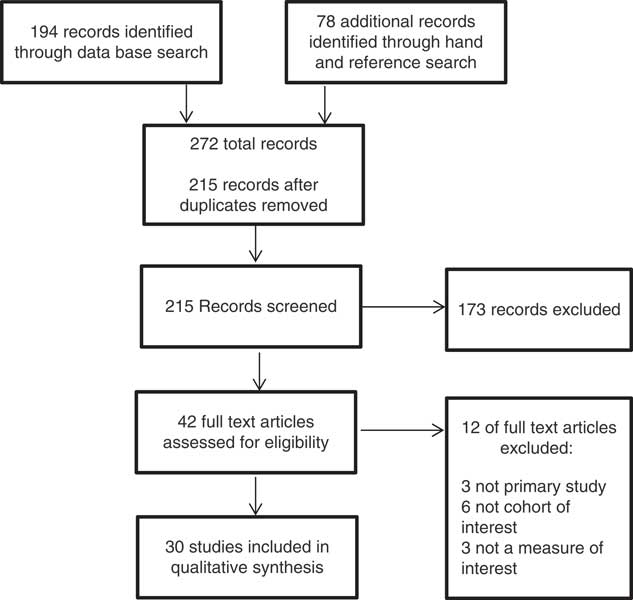
Search results with duplicates removed were assessed independently by two reviewers for adherence to inclusion/exclusion criteria. The inclusion criteria were: (1) the study must have reported primary research; (2) participants diagnosis of TTM confirmed by an appropriate healthcare professional; (3) data were quantitative; 4) the study used neuroimaging techniques, neuropsychological measures, or tasks measuring attention. Exclusion criteria were: (1) reviews and meta-analyses; (2) qualitative research; (3) the inclusion of children in the cohort. No limitations were made regarding quality of included studies, nor the design used so that an accurate picture of published research could be developed. The flow of studies through the screening process is presented in the PRISMA flow chart (Figure 1). When significant differences between TTM and healthy control (HC) groups were reported the effect sizes were calculated using Cohen’s d; or Hedges’ g for groups with different sample sizes. Effect sizes were considered: small ≤0.20, 0.20≤ medium <0.50, and large ≥0.80 (Cohen, Reference Cohen1992).
PRISMA Flow chart from search results.

RESULTS
Two researchers (R.S. and M.R.) found 100% agreement for 30 studies that met inclusion criteria. One hundred and ninety-four search records were found through database searches, and 78 through hand searches and reference checks. After duplicates were removed 215 studies remained of which 42 full text articles were assessed for eligibility. Thirty studies, with a combined total of 591 participants with TTM, 372 HCs, and 225 participants in other types of control groups were included in this systematic review. Ten studies used an OCD comparison group, one study included a group of skin picking, one study a group of first degree unaffected relatives, and one study included a group of mixed anxiety disorders. This count was made on face value of reported numbers. In practice, one participant or an entire cohort may have participated in multiple studies , for example, (Chamberlain, Blackwell, Fineberg, Robbins, & Sahakian, Reference Chamberlain, Blackwell, Fineberg, Robbins and Sahakian2006; Chamberlain, Fineberg, Blackwell, Robbins, & Sahakian, Reference Chamberlain, Fineberg, Blackwell, Robbins and Sahakian2006; Chamberlain et al., Reference Chamberlain, Fineberg, Blackwell, Clark, Robbins and Sahakian2007). One study pooled participants from multiple studies (Odlaug, Chamberlain, Schreiber, & Grant, Reference Odlaug, Chamberlain, Schreiber and Grant2013). The majority of studies were conducted with female participants from hospitals or specialist clinics, in the United States of America.
Neuropsychological Tests
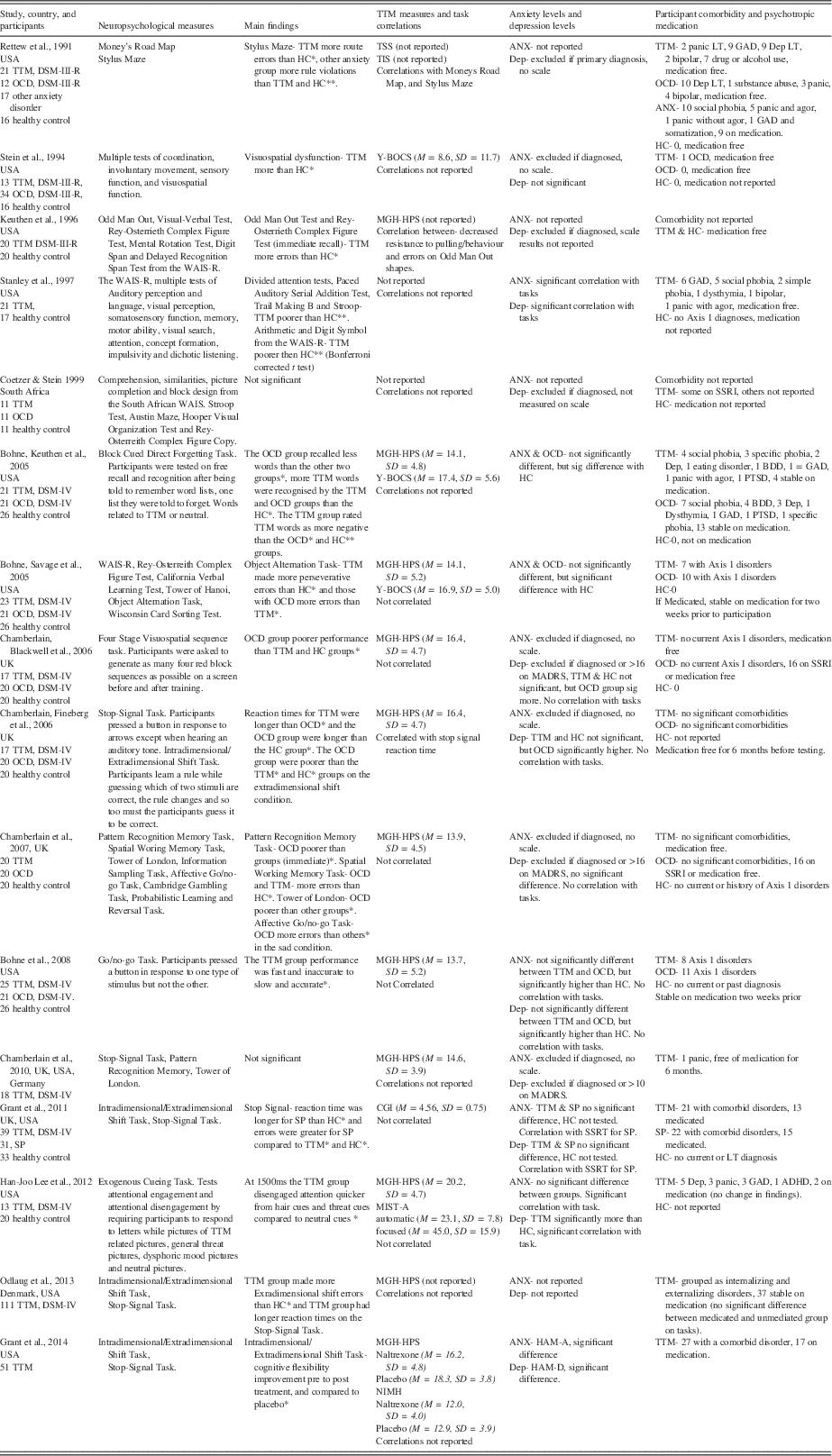
Of the 16 studies that used neuropsychological measures, 12 compared TTM participants (n=11 to 25) to HC groups (n=11 to 26). Two studies used a within groups design to explore the effects of modafinil and naltrexone on neuropsychological performance. One study compared a cohort with TTM to skin picking. Table 1 summarizes these articles.
Studies with neuropsychological measures

Note. All studies adequately controlled for age of participants; TTM=trichotillomania; OCD=obsessive-compulsive disorder; HC=healthy control; ANX=anxiety; GAD=generalized anxiety disorder; Dep=depression; BDD=body dysmorphic disorder; PTSD=post-traumatic stress disorder; ADHD=attention deficit/hyperactivity disorder; agor=agoraphobia; SP=skin picking; LT=life time diagnosis; SSRI=selective serotonin reuptake inhibitor; DSM=Diagnostic and Statistical Manual of Mental Health Disorders; TSS=Trichotillomania Symptom Severity Scale; TIS=trichotillomania impairment scale; WAIS-R=Wechsler Adult Intelligence Scale Revised; MGH-HPS=Massachusetts General Hospital Hairpulling scale; MIST-A=Milwaukee Inventory for subtypes of Trichotillomania Adult version; Y-BOCS=Yale-Brown Obsessive-Compulsive scale; NIMH=National Institute of Mental Health Trichotillomania Symptom Severity Scale. CGI=Clinical Global Impressions Scale; MADRS=Montgomery-Asberg depression Rating Scale; HAM-D and HAM-A=Hamilton Depression and Anxiety Rating Scales; M=mean; SD=standard deviation.
* Significant at α=.05.
** Significant at α=.001.
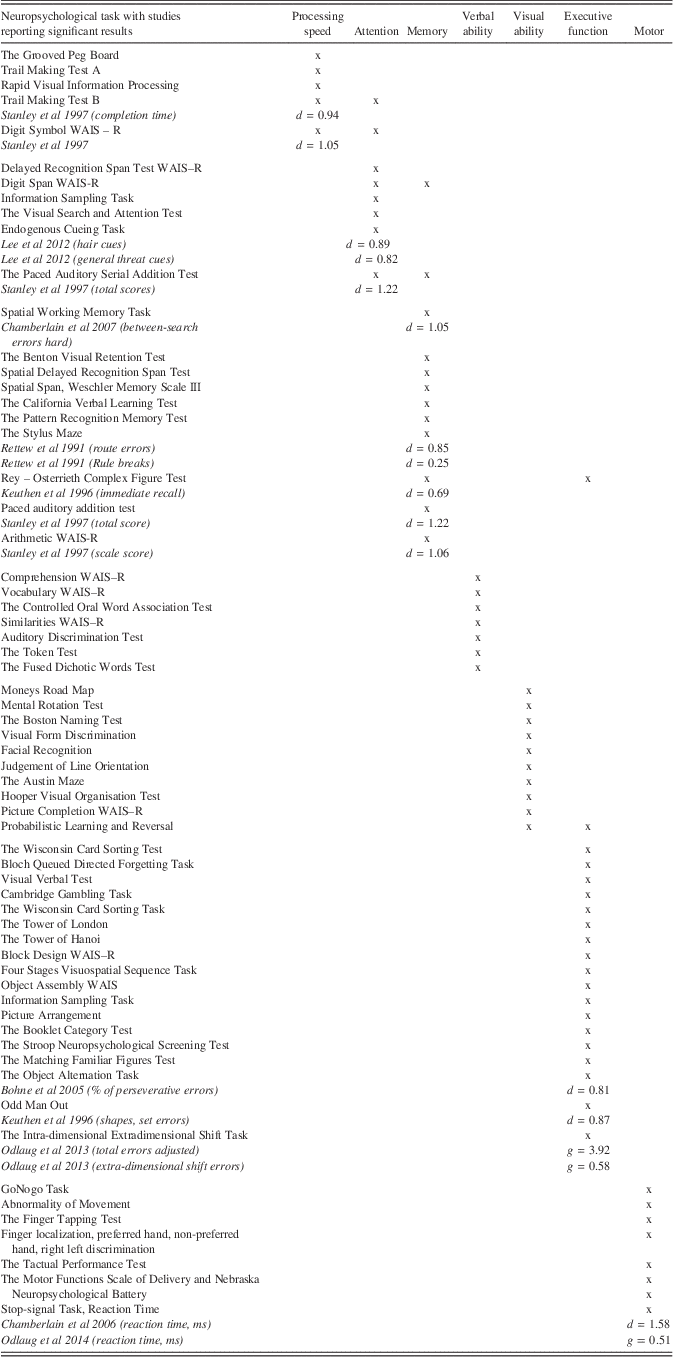
All neuropsychological measures were allocated to a cognitive domain for the purpose of organizing and making sense of the diverse measures used across studies. Domains were based on a prior neuropsychological review in OCD (Leopold & Backenstrass, Reference Leopold and Backenstrass2015), to which we added neuropsychological tasks that had been used specifically in TTM studies. The domains were: processing speed, attention and vigilance, memory, verbal ability, visual ability, executive function, and motor and somatosensory function, as shown in Table 2.
Domains in which neuropsychological measures have been discussed and studies reporting significant results between groups with associated effect sizes

Note. WAIS-R=Wechsler Adult Intelligence Scale-Revised; d= Cohen’s; g=Hedges’ g; Effect sizes were calculated for between trichotillomania groups and HC groups when significant differences were reported; x=indicates the domain in which the test has been discussed.
DISCUSSION
Processing Speed
The most comprehensive exploration of processing speed was by Stanley, Hannay, and Breckenridge (Reference Stanley, Hannay and Breckenridge1997) who reported statistically significant differences of approximately one standard deviation for: Trail Making B measured by trial time (TMT-B), and Weschler Adult Intelligence Scale - Revised (WAIS-R) Digit Symbol measured by the number of correct symbols. Confidence in these significant results is weakened by the number of participants with comorbid diagnoses and levels of anxiety, illustrated by a significant correlation between anxiety and TMT-B. People with TTM did not show a deficit in basic processing speed compared to controls when measured by the Trail Making Test A, or in processing speed associated with motor control, as measured by the length of time per trial of the Grooved Peg Board (Stanley et al., Reference Stanley, Hannay and Breckenridge1997).
In the single study that explored the effects of modafinil on neuropsychological function in TTM, no effect was found on visual processing speed or sustained attention, as measured by the Rapid Visual Information Processing Task (Chamberlain, Grant, Costa, Müller, & Sahakian, Reference Chamberlain, Grant, Costa, Müller and Sahakian2010). It is worth noting that the two processing speed measures that have been associated with TTM (TMT-B, WAIS-R Digit Symbol) are influenced by divided attention and were potentially confounded by substantial comorbidity. While it is possible that speed of processing is compromised in TTM when attentional resources are challenged, the majority of evidence does not show processing speed impairments in TTM.
Attention and Vigilance
All studies discussed under Attention and Vigilance were conducted on TTM cohorts with numerous comorbidities, limiting the strength of conclusions that can be made. However, cohorts including multiple comorbid diagnosis more closely reflects TTM’s actual clinical presentation and the consistency of findings across multiple studies increases confidence that conclusions are applicable to a wide general clinical group. No deficits were found on measures of focused attention: WAIS-R Delayed Recognition Span Test, Visual Search, the Attention Test (Stanley et al., Reference Stanley, Hannay and Breckenridge1997), and WAIS-R Digit Span (Bohne, Keuthen, Tuschen-Caffier, & Wilhelm, Reference Bohne, Keuthen, Tuschen-Caffier and Wilhelm2005; Bohne, Savage, Deckersbach, Keuthen, & Wilhelm, Reference Bohne, Savage, Deckersbach, Keuthen and Wilhelm2008; Bohne, Savage, et al., Reference Bohne, Savage, Deckersbach, Keuthen, Jenike, Tuschen-Caffier and Wilhelm2005; Keuthen et al., Reference Keuthen, Savage, Sullivan, Brown, Shera, Cyr and Baer1996; Stanley et al., Reference Stanley, Hannay and Breckenridge1997). This was not the case for divided attention, for which Stanley et al. (Reference Stanley, Hannay and Breckenridge1997) reported deficits on: WAIS-R Digit Symbol, Paced Auditory Serial Addition Test (total score), and TMT-B.
Using an Endogenous Cueing Task, evidence was found that people experiencing TTM tend to use attentional disengagement at late stages of attentional processing when confronted with an image related to hair or general threat. The magnitude of attentional avoidance was large and related to TTM severity (Lee, Franklin, Turkel, Goetz, & Woods, Reference Lee, Franklin, Turkel, Goetz and Woods2012). Disengaging from emotional cues, and cues related to hair, may interfere with the encoding of memories.
Memory
Short-term verbal memory was not abnormal in TTM when measured using the WAIS-R Digit Span (Bohne, Keuthen, Tuschen-Caffier, & Wilhelm, Reference Bohne, Keuthen, Tuschen-Caffier and Wilhelm2005; Bohne et al., Reference Bohne, Savage, Deckersbach, Keuthen and Wilhelm2008; Bohne, Savage, et al., Reference Bohne, Savage, Deckersbach, Keuthen, Jenike, Tuschen-Caffier and Wilhelm2005; Keuthen et al., Reference Keuthen, Savage, Sullivan, Brown, Shera, Cyr and Baer1996; Stanley et al., Reference Stanley, Hannay and Breckenridge1997) or the California Verbal Learning Test (Bohne, Savage, et al., Reference Bohne, Savage, Deckersbach, Keuthen, Jenike, Tuschen-Caffier and Wilhelm2005; Stanley et al., Reference Stanley, Hannay and Breckenridge1997). Also, visual memory did not appear problematic in TTM. For example, people experiencing TTM did not differ from HCs on the Pattern Recognition Memory Test (Chamberlain et al., Reference Chamberlain, Fineberg, Blackwell, Clark, Robbins and Sahakian2007), a particularly rigorous study that controlled for sex, age, verbal IQ, education, impulsivity, and depression; the Rey-Osterrieth Complex Figure Test (RCFT; Bohne, Savage, et al., Reference Bohne, Savage, Deckersbach, Keuthen, Jenike, Tuschen-Caffier and Wilhelm2005; Coetzer & Stein, Reference Coetzer and Stein1999; Stanley et al., Reference Stanley, Hannay and Breckenridge1997; Stein, Coetzer, Lee, Davids and Bouwer, Reference Stein, Coetzer, Bouwer and Davids1997); or on the Benton Visual Retention Test (Stanley et al., Reference Stanley, Hannay and Breckenridge1997). Additionally, modafinil did not influence the Pattern Recognition Memory Test (Chamberlain, Grant, et al., Reference Chamberlain, Grant, Costa, Müller and Sahakian2010).
There were some exceptions, specifically, three studies conducted with cohorts of TTM with multiple comorbidities. First, when the Stylus Maze was used as a measure of spatial memory, people with TTM made more errors and more rule violations than HCs, and performance on the Stylus Maze improved with a decrease in symptoms after clomipramine treatment (Rettew, Cheslow, Rapoport, Leonard, & Lenane, Reference Rettew, Cheslow, Rapoport, Leonard and Lenane1991). The second exception was found with the immediate recall condition of the RCFT, whereby individuals with TTM had poorer performance than a normal control group (Keuthen et al., Reference Keuthen, Savage, Sullivan, Brown, Shera, Cyr and Baer1996). Furthermore, impairment on the RCFT was found to be associated with decreased left caudate volumes in those with TTM, however, tests between groups on the RCFT were not reported (Stein, Coetzer, et al., Reference Stein, Coetzer, Bouwer and Davids1997; see below for a discussion of caudate involvement in TTM).
There is also mixed evidence regarding working memory impairment in TTM. Evidence supporting such a deficit was found in two studies, the WAIS–R Arithmetic, the Paced Auditory Serial Addition Test (Stanley et al., Reference Stanley, Hannay and Breckenridge1997), and the Spatial Working Memory Task (Chamberlain et al., Reference Chamberlain, Fineberg, Blackwell, Clark, Robbins and Sahakian2007). However, evidence for intact performance was reported for the Spatial Delayed Recognition Span Test (Keuthen et al., Reference Keuthen, Savage, Sullivan, Brown, Shera, Cyr and Baer1996), the Spatial Span, and the Weschler Memory Scale-III (Bohne et al., Reference Bohne, Savage, Deckersbach, Keuthen and Wilhelm2008).
To summarize memory related findings, two studies found a spatial memory deficit in TTM compared to HCs (Keuthen et al., Reference Keuthen, Savage, Sullivan, Brown, Shera, Cyr and Baer1996; Rettew et al., Reference Rettew, Cheslow, Rapoport, Leonard and Lenane1991), and one study found a deficit compared to OCD (Chamberlain et al., Reference Chamberlain, Fineberg, Blackwell, Clark, Robbins and Sahakian2007). A deficit in working memory in TTM was found by Stanley et al. (Reference Stanley, Hannay and Breckenridge1997). Effect sizes ranged from medium to large. However, the majority of evidence points to no memory deficits in TTM when traditional memory tasks are used. None of the reviewed memory tasks used stimuli associated with TTM, such as images of hair or words associated with hair pulling. Novel TTM-relevant stimuli may be required to activate the emotional and cognitive bias that elicit memory deficits in TTM.
Verbal Abilities
There is strong evidence to suggest that verbal abilities are not impaired in TTM, including when tests of general verbal ability or of specific verbal skills are used. No differences have been found between control groups and individuals with TTM or OCD when using such general measures of verbal ability as Vocabulary, Comprehension, and Similarities from WAIS–R (Bohne, Keuthen, et al., Reference Bohne, Keuthen, Tuschen-Caffier and Wilhelm2005; Bohne et al., Reference Bohne, Savage, Deckersbach, Keuthen and Wilhelm2008; Bohne, Savage, et al., Reference Bohne, Savage, Deckersbach, Keuthen, Jenike, Tuschen-Caffier and Wilhelm2005; Coetzer & Stein, Reference Coetzer and Stein1999; Stanley et al., Reference Stanley, Hannay and Breckenridge1997; Stein, Coetzer, et al., Reference Stein, Coetzer, Bouwer and Davids1997). Similarly, specific tests of language (The Auditory Discrimination Test, The Token Test, The Diffused Dichotic Words Test, and the Controlled Oral Word Association Test) were not impaired in people with TTM (Stanley et al., Reference Stanley, Hannay and Breckenridge1997). This is not surprising considering the essential elements of TTM do not include verbal IQ or language deficits (American Psychiatric Association, 2013).
Visual Abilities
Of the TTM studies reviewed, no deficits were reported in visual abilities. Measures of complex visual perception, Visual Form Discrimination, Facial Recognition, and The Boston Naming Test, did not detect any deficits regardless of level of control for confounding variables (Chamberlain, Grant, et al., Reference Chamberlain, Grant, Costa, Müller and Sahakian2010; Coetzer & Stein, Reference Coetzer and Stein1999; Keuthen et al., Reference Keuthen, Savage, Sullivan, Brown, Shera, Cyr and Baer1996; Rettew et al., Reference Rettew, Cheslow, Rapoport, Leonard and Lenane1991; Stanley et al., Reference Stanley, Hannay and Breckenridge1997; Stein, Hollander, et al., Reference Stein, Hollander, Simeon, Cohen, Islam and Aronowitz1994). Spatial orientation tested by The Judgement of Line Orientation Test, and visual search abilities tested by the Visual Search and Attention Test were also found to be intact (Stanley et al., Reference Stanley, Hannay and Breckenridge1997).
Similarly, performance in visual spatial ability using the Austin Maze and the Hooper Visual Organization Test did not appear abnormal in people with TTM (Coetzer & Stein, Reference Coetzer and Stein1999; Stein, Coetzer, et al., Reference Stein, Coetzer, Bouwer and Davids1997); nor was spatial rotation when measured by the Moneys Road Map and The Mental Rotation Test (Keuthen et al., Reference Keuthen, Savage, Sullivan, Brown, Shera, Cyr and Baer1996; Rettew et al., Reference Rettew, Cheslow, Rapoport, Leonard and Lenane1991). No abnormalities of visual spatial function were found when assessed with the face-hand test, left-right confusion or the drawing of a cube (Stein et al., Reference Stein, Hollander, Simeon, Cohen, Islam and Aronowitz1994), and the ability to perceive missing visual information, measured by WAIS–R Picture Completion (Coetzer & Stein, Reference Coetzer and Stein1999; Stanley et al., Reference Stanley, Hannay and Breckenridge1997; Stein, Coetzer, et al., Reference Stein, Coetzer, Bouwer and Davids1997), was not compromised. Furthermore, visual processing speed was not affected by modafinil (Chamberlain, Grant, et al., Reference Chamberlain, Grant, Costa, Müller and Sahakian2010).
Executive Function
Measures of perseveration have been widely used in TTM neuropsychological research due to the purported correspondence between repetitive behavior in TTM and rituals in OCD. However, the majority of studies reported no difference between individuals who experience TTM and HCs on measures of perseveration and set shifting. No deficits were found in a TTM cohort using the Wisconsin Card Sorting Test (Bohne, Savage, et al., Reference Bohne, Savage, Deckersbach, Keuthen, Jenike, Tuschen-Caffier and Wilhelm2005; Stanley et al., Reference Stanley, Hannay and Breckenridge1997), the Stroop (Coetzer & Stein, Reference Coetzer and Stein1999; Stanley et al., Reference Stanley, Hannay and Breckenridge1997; Stein, Coetzer, et al., Reference Stein, Coetzer, Bouwer and Davids1997), with initiating or set shifting measured by the Visual–Verbal Test (Keuthen et al., Reference Keuthen, Savage, Sullivan, Brown, Shera, Cyr and Baer1996), or when The Probabilistic Learning and Reversal Task was used (Chamberlain et al., Reference Chamberlain, Fineberg, Blackwell, Clark, Robbins and Sahakian2007). In contrast, participants with TTM made more perseverative errors than HCs on the Object Alternation Task, though it is unclear how this finding relates to TTM as the number of perseverative errors were not correlated with symptom severity (Bohne, Savage, et al., Reference Bohne, Savage, Deckersbach, Keuthen, Jenike, Tuschen-Caffier and Wilhelm2005). Also of uncertain relationship to TTM was the finding of set shifting deficits with shapes but not letters on the Odd Man Out Test (Keuthen et al., Reference Keuthen, Savage, Sullivan, Brown, Shera, Cyr and Baer1996).
Cognitive inhibition was not found to be problematic in TTM when tested using a Block Queued Direct Forgetting Task, even though the words in the task were clearly of an emotionally negative valence (Bohne, Keuthen, et al., Reference Bohne, Keuthen, Tuschen-Caffier and Wilhelm2005). However, conflicting results have been found when cognitive flexibility and perseveration were investigated using The Intra-dimensional Extradimensional Shift Task. Two studies reported no deficits (Chamberlain, Fineberg, et al., Reference Chamberlain, Fineberg, Blackwell, Robbins and Sahakian2006; Grant, Odlaug, & Chamberlain, Reference Grant, Odlaug and Chamberlain2011) whereas Odlaug et al. (Reference Odlaug, Chamberlain, Schreiber and Grant2013) later reported deficits in extradimensional shift, though again no correlation was found between task performance and symptom severity. Furthermore, naltrexone increased cognitive flexibility, that is, reduced total errors on the Intra-extradimensional Shift Task, but did not influence reaction time (Grant, Odlaug, Schreiber, & Kim, Reference Grant, Odlaug, Schreiber and Kim2014).
The majority of evidence exploring planning, problem solving, learning, and decision making in TTM supports the conclusion that these executive functions are intact in people with TTM. The aforementioned executive functions were not found to be problematic in TTM when measured using the Tower of Hanoi (Bohne, Savage, et al., Reference Bohne, Savage, Deckersbach, Keuthen, Jenike, Tuschen-Caffier and Wilhelm2005); the Tower of London (Chamberlain et al., Reference Chamberlain, Fineberg, Blackwell, Clark, Robbins and Sahakian2007), including when modafinil was administered (Chamberlain, Grant, et al., Reference Chamberlain, Grant, Costa, Müller and Sahakian2010); the RCFT (Bohne, Savage, et al., Reference Bohne, Savage, Deckersbach, Keuthen, Jenike, Tuschen-Caffier and Wilhelm2005; Coetzer & Stein, Reference Coetzer and Stein1999; Keuthen et al., Reference Keuthen, Savage, Sullivan, Brown, Shera, Cyr and Baer1996; Stanley et al., Reference Stanley, Hannay and Breckenridge1997; Stein, Coetzer, et al., Reference Stein, Coetzer, Bouwer and Davids1997); the WAIS–R Block Design (Bohne, Savage, et al., Reference Bohne, Savage, Deckersbach, Keuthen, Jenike, Tuschen-Caffier and Wilhelm2005; Coetzer & Stein, Reference Coetzer and Stein1999; Stanley et al., Reference Stanley, Hannay and Breckenridge1997; Stein, Coetzer, et al., Reference Stein, Coetzer, Bouwer and Davids1997); The Probabilistic Learning and Reversal Task (Chamberlain et al., Reference Chamberlain, Fineberg, Blackwell, Clark, Robbins and Sahakian2007); or when using the Object Assembly and Picture Arrangement Test from WAIS–III (Stanley et al., Reference Stanley, Hannay and Breckenridge1997).
There is no evidence to suggest that once a strategy has been taught to people with TTM they have difficulty implementing it, as measured by the four stages of the visuospatial sequence task (Chamberlain, Blackwell, et al., Reference Chamberlain, Blackwell, Fineberg, Robbins and Sahakian2006). Moreover, the conceptual ability of using categories, as measured by the Booklet Category Test, was found to be intact in TTM participants (Stanley et al., Reference Stanley, Hannay and Breckenridge1997), as was decision making when measured by the Information Sampling Task and the Cambridge Gambling Task (Chamberlain et al., Reference Chamberlain, Fineberg, Blackwell, Clark, Robbins and Sahakian2007).
Impulsivity has been proposed as a psychological construct underlying TTM (Flessner et al., Reference Flessner, Knopik and McGeary2012), yet no differences were found between those with TTM and a control group with the Matching Familiar Figures Test (Stanley et al., Reference Stanley, Hannay and Breckenridge1997), or with the Information Sampling Task (Chamberlain et al., Reference Chamberlain, Fineberg, Blackwell, Clark, Robbins and Sahakian2007). These tests measure the dimension of reflection–impulsivity.
In summary, significant findings related to executive function require replication. The small number of studies reporting significant differences between groups within the domain of executive function may well reflect the 5% error rate inherent by the traditional use of α=0.05 to distinguish statistical significance. Furthermore, all tests found to have a significant difference between groups were not supported by correlations with symptom severity.
Motor
Studies in which motor functions were measured using a range of assessment methods reported no deficits in TTM (Stanley et al., Reference Stanley, Hannay and Breckenridge1997; Stein et al., Reference Stein, Hollander, Simeon, Cohen, Islam and Aronowitz1994). However, a different picture emerged in studies using a narrower range of measures. The ability to suppress automatic motor reactions to an already triggered response was found to be impaired in TTM when measured using the Stop-Signal Task, (SST, Chamberlain, Fineberg, et al., Reference Chamberlain, Fineberg, Blackwell, Robbins and Sahakian2006; Odlaug, Chamberlain, Derbyshire, Leppink, & Grant, Reference Odlaug, Chamberlain, Derbyshire, Leppink and Grant2014) whereas, results from Grant et al. (Grant et al., Reference Grant, Odlaug and Chamberlain2011) were inconclusive, with the TTM group performing midway between HCs and those with skin picking. Moreover, modafinil and naltrexone were found to have no bearing on reaction time associated with the SST compared to placebo control groups with TTM (Chamberlain, Grant, et al., Reference Chamberlain, Grant, Costa, Müller and Sahakian2010; Grant et al., Reference Grant, Odlaug, Schreiber and Kim2014).
Motor inhibition was not impaired when tested using a GoNogo Task, although the correlation between reaction time and errors for those with TTM differed from HC and OCD groups (Bohne et al., Reference Bohne, Savage, Deckersbach, Keuthen and Wilhelm2008). Of interest, when the influence of emotion was added to motor inhibition using an Affective GoNogo Task, participants with TTM did not show impaired motor inhibition (Chamberlain et al., Reference Chamberlain, Fineberg, Blackwell, Clark, Robbins and Sahakian2007). This is surprising given that emotion regulation has been touted as an underlying function of hair pulling in TTM (Arabatzoudis, Rehm, Nedeljkovic, & Moulding, Reference Arabatzoudis, Rehm, Nedeljkovic and Moulding2017; Diefenbach, Mouton-Odum, & Stanley, Reference Diefenbach, Mouton-Odum and Stanley2002).
Critical Summary of Neuropsychological Studies
With a focus on studies using control groups, several systematic problems were identified in the reviewed literature on neuropsychological studies of TTM. Perhaps one of the more difficult limitations to overcome given the prevalence and secrecy of TTM, is that of small sample size. Not only may small sample sizes contribute to frequent type II errors it may also contribute to the lack of replicated results. Lack of replication is particularly striking when TTM is explored using neuropsychological measures. Indeed, replication of a statistically significant result when comparing those with TTM and HCs was only found on a single neuropsychological measure. Individuals with TTM were found to have impaired response inhibition during the SST compared to HCs (Chamberlain, Fineberg, et al., Reference Chamberlain, Fineberg, Blackwell, Robbins and Sahakian2006; Odlaug et al., Reference Odlaug, Chamberlain, Derbyshire, Leppink and Grant2014); replication by an independent research group may clarify the magnitude of this impairment.
Neuropsychological tests often measure more than one cognitive process, and may span more than one domain with the same outcome measure. Grouping tests together based on targeted cognitive processes can help make sense of the results in relation to TTM, even though neuropsychological domains have not been statistically defined in TTM. For future research, a factor analysis of primary test results could help clarify which tests belong in various domains. Multiple tests of the same cognitive process could strengthen findings. In this review, results from primary studies were overwhelmingly not statistically significant in all cognitive domains with a few exceptions in processing speed, divided attention, visual and working memory, executive function, and motor response inhibition. Of the statistically significant tests comparing TTM and HC groups, effect sizes ranged between 0.25 and 1.58.
Neuroimaging Studies
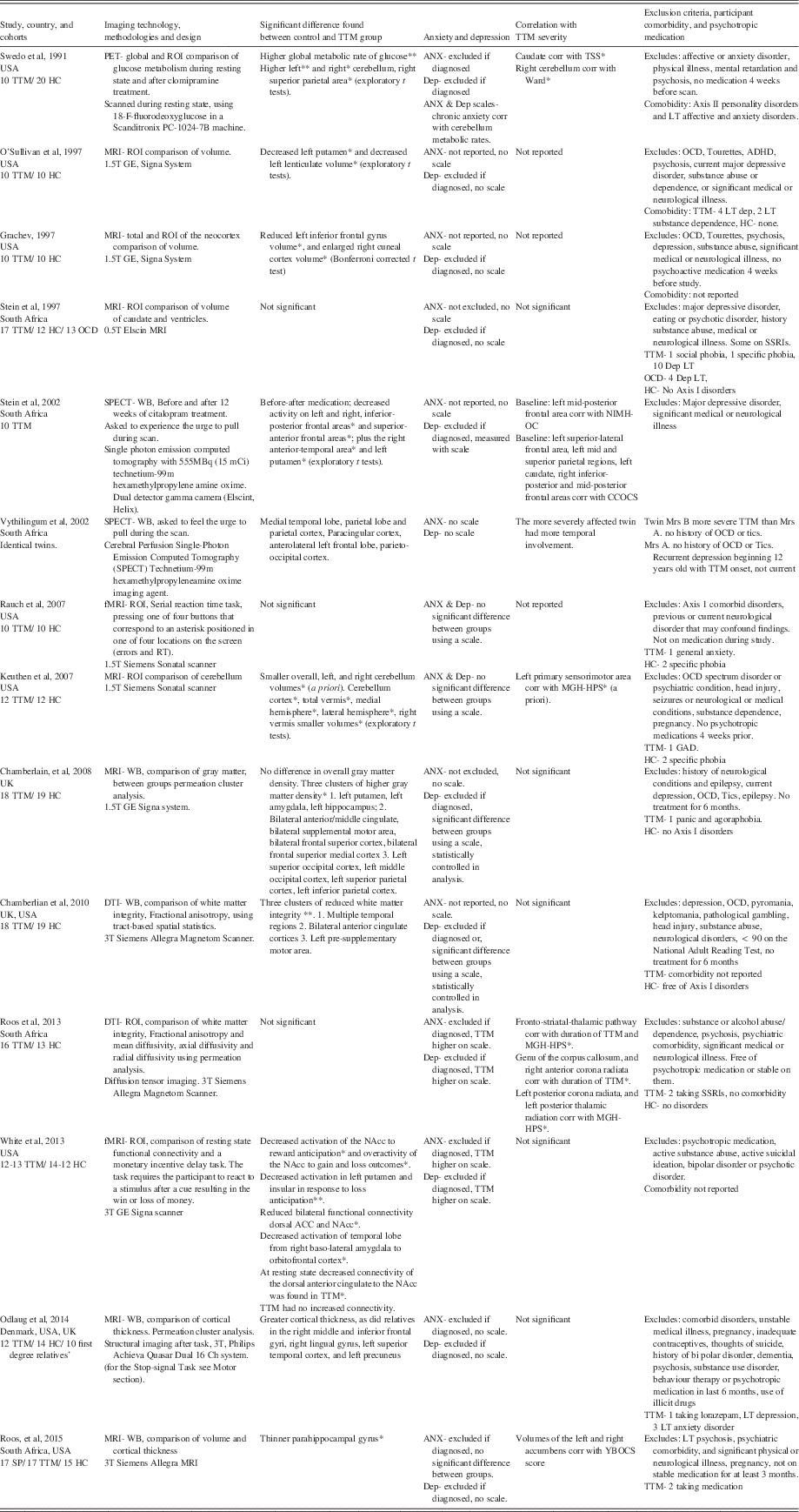
Fourteen published studies used neuroimaging techniques to examine patients with TTM. In controlled studies, the number of participants per study ranged from 10 to 18 in the TTM group and 10 to 20 in the HC group, one study comprised of a set of monozygotic twins and one study used a repeated measures design with 10 participants. Of the 11 studies that attempted to correlate imaging data with symptom severity, only five found a relationship (Table 3). Results are discussed below beginning with regions associated with fast automatic processing, and concluding with regions associated with complex cognition.
Imaging studies, cohorts, imaging methodologies and design, and significant findings

Note. TTM=trichotillomania; HC=healthy control; OCD=obsessive-compulsive disorder; ANX=anxiety; Dep=depression; ADHD=attention deficit/hyperactivity disorder; GAD= generalised anxiety disorder; SP=skin picking; LT= Life time diagnosis; corr=a correlational relationship; WB= whole brain; ROI= region of interest; RT= reaction time; TSS=Trichotillomania Symptom Severity Scale; MGH-HPS=Massachusetts General Hospital Hairpulling scale; YBOCS=Yale Brown Obsessive-Compulsive Scale; CCOCS=Clinician Challenge Obsessive-Compulsive Scale; Ward=Ward obsessive-compulsive disorder rating of hair pulling severity; NIMH-OC=Mental Health-Obsessive Compulsive Scale; SSRI=selective serotonin reuptake inhibitor; NAcc=nucleus accumbens; ACC=anterior cingulate cortex; DTI=diffusion tensor imaging; PET=positron emission tomography; fMRI=functional magnetic resonance imaging; MRI=magnetic resonance imaging; SPECT=single photon emission computed tomography.
* Significant at α=.05.
** Significant at α=.001.
Nucleus Accumbens
In response to the Monetary Incentive Delay Task, the nucleus accumbens (NAcc) has been found to show decreased activation to reward anticipation and overactivity to gain and loss outcomes in TTM when compared to HCs (White et al., Reference White, Shirer, Molfino, Tenison, Damoiseaux and Greicius2013). Even during resting state, the connectivity between the NAcc and the dorsal anterior cingulate was lower in those with TTM than a HC group (White et al., Reference White, Shirer, Molfino, Tenison, Damoiseaux and Greicius2013). However, no relationship was found between NAcc function and symptom severity, participant comorbidity was not reported, and the TTM group experienced higher anxiety and depression than the HCs, which was not accounted for by the analyses. In contrast, left and right NAcc volumes were found to correlate with TTM symptom severity when TTM was measured by the Yale Brown Obsessive-Compulsive Scale and NAcc volume was measured in a whole brain analysis (Roos, Grant, Fouche, Stein, & Lochner, Reference Roos, Grant, Fouche, Stein and Lochner2015).
Dorsal Striatum
The dorsal striatum is made up of the putamen and caudate nucleus. The first structural magnetic resonance imaging (MRI) study involving a TTM cohort is the only one to report deceased left putamen volumes, relative to HCs, using a region of interest (ROI) approach (O’Sullivan et al., Reference O’Sullivan, Keuthen, Christenson, Mansueto, Stein and Swedo1997). Study limitations included a small sample size, possible confounding clinical level anxiety and subclinical depression, and the use of uncorrected tests for multiple comparisons. In contrast, a more rigorous study using a whole brain approach and powerful statistics found an increase in gray matter density in the left putamen (Chamberlain et al., Reference Chamberlain, Menzies, Fineberg, Del Campo, Suckling, Craig and Sahakian2008).
Decreased activity in the left putamen was found in those experiencing TTM using single-photon emission computed tomography (SPECT) after selective serotonin reuptake inhibitor (SSRI) medication (Stein et al., Reference Stein, van Heerden, Hugo, van Kradenburg, Warwick, Zungu-Dirwayi and Seedat2002), and decreased activation of the left putamen was found in response to loss anticipation using functional MRI (fMRI) (White et al., Reference White, Shirer, Molfino, Tenison, Damoiseaux and Greicius2013). Neither of these studies correlated the putamen with TTM symptom severity. Another study, which controlled for subclinical depression and anxiety, found that the serial reaction time task did not elicit functional differences between those with TTM and HCs in the cortical-striatal pathway (Rauch et al., Reference Rauch, Wright, Savage, Martis, McMullin, Wedig and Keuthen2007).
Regarding the caudate nucleus, left caudate volume was significantly correlated with symptom severity on the Clinician Challenge Obsessive-Compulsive Scale, albeit structural and functional differences between TTM and HCs were not reported (Stein, Coetzer, et al., Reference Stein, van Heerden, Hugo, van Kradenburg, Warwick, Zungu-Dirwayi and Seedat2002, 1997). Furthermore, a significant correlation between glucose metabolism in the caudate and The Trichotillomania Symptom Severity Scale was reported by Swedo and colleagues (Swedo et al., Reference Swedo, Rapoport, Leonard, Schapiro, Rapoport and Grady1991). Additional complexity was added to the question of the role of the dorsal striatum in TTM by the findings of Roos, Fouche, Stein, and Lochner (Reference Roos, Fouche, Stein and Lochner2013). TTM severity was shown to correlate with white matter integrity of the internal capsule. The internal capsule projects through the caudate nucleus and putamen; it relays sensory and motor information from the cortex to the brainstem, and extends as the corona radiata. White matter damage or disorganization of the internal capsule, which passes through the ventral and dorsal striatum, was positively correlated with symptom severity using the Massachusetts General Hospital Hair Pulling Scale (MGH-HPS; Roos et al., Reference Roos, Grant, Fouche, Stein and Lochner2015).
Hippocampus
Chamberlain et al. (Reference Chamberlain, Menzies, Fineberg, Del Campo, Suckling, Craig and Sahakian2008) found that participants with TTM had increased gray matter density in the left hippocampus compared to HCs. Furthermore, mixed evidence has been reported regarding the parahippocampal gyrus. Roos et al. (Reference Roos, Grant, Fouche, Stein and Lochner2015) found it to be thinner on the right in people with TTM compared to HCs whereas others have found no such difference (Grachev, Reference Grachev1997; Odlaug et al., Reference Odlaug, Chamberlain, Derbyshire, Leppink and Grant2014). Roos et al. did not report statistical corrections for multiple analysis which may have influenced this result. A functional study also failed to find significant differences in hippocampus activation in those with TTM compared to HCs (Rauch et al., Reference Rauch, Wright, Savage, Martis, McMullin, Wedig and Keuthen2007).
Amygdala
Two studies reported significant findings regarding the amygdala in TTM. Using MRI to explore gray matter density, Chamberlain et al. (Reference Chamberlain, Menzies, Fineberg, Del Campo, Suckling, Craig and Sahakian2008) found that those with TTM showed higher gray matter density in the left amygdala. White et al. (Reference White, Shirer, Molfino, Tenison, Damoiseaux and Greicius2013) found that during resting state the baso-lateral amygdala had decreased connectivity to the reward network in participants with TTM. Specifically, decreased activation of the connection between the right baso-lateral amygdala and the orbitofrontal cortex (White et al., Reference White, Shirer, Molfino, Tenison, Damoiseaux and Greicius2013).
Cingulate
Only the anterior, not posterior, cingulate has been associated with significant findings in the literature. During resting state, decreased connectivity of the dorsal anterior cingulate to the NAcc was found in individuals with TTM (White et al., Reference White, Shirer, Molfino, Tenison, Damoiseaux and Greicius2013). Also, reduced white matter integrity between the orbital frontal cortices and anterior cingulate cortices have been reported (Chamberlain, Hampshire, et al., Reference Chamberlain, Hampshire, Menzies, Lara, Garyfallidis, Grant and Sahakian2010). Not only is it possible that the connecting fibers of the cingulate contribute to TTM by disrupting communication to the orbital frontal cortices, increased gray matter density of the anterior and middle cingulate may further disrupt information processing (Chamberlain et al., Reference Chamberlain, Menzies, Fineberg, Del Campo, Suckling, Craig and Sahakian2008).
Yet the main fiber tract running the length of the cingulate gyrus, the cingulum, did not differ in activation after a reduction in symptoms post citalopram treatment (Stein et al., Reference Stein, van Heerden, Hugo, van Kradenburg, Warwick, Zungu-Dirwayi and Seedat2002). Nor were there activation differences in the left and right posterior cingulate cortex during an implicit sequence learning task (Rauch et al., Reference Rauch, Wright, Savage, Martis, McMullin, Wedig and Keuthen2007). Last, there were no differences in glucose metabolism of the anterior cingulate in TTM (Swedo et al., Reference Swedo, Rapoport, Leonard, Schapiro, Rapoport and Grady1991). However, a correlation between left anterior cingulate glucose metabolism and symptom improvement measured by a clinician rated scale after clomipramine treatment was reported (Swedo et al., Reference Swedo, Rapoport, Leonard, Schapiro, Rapoport and Grady1991).
Occipital Regions
Some studies report volume and density abnormalities in the occipital cortex in TTM. The left superior and middle occipital cortex areas were found to have increased gray matter density compared to HCs along with the left superior and inferior parietal areas with whole brain cluster analysis (Chamberlain et al., Reference Chamberlain, Menzies, Fineberg, Del Campo, Suckling, Craig and Sahakian2008). The right cuneal cortex and lingual gyrus was reported as enlarged in those with TTM in a study using a ROI approach to measure cortical volume, although comorbidity and anxiety were not reported in the study (Grachev, Reference Grachev1997). Of interest, in a whole brain comparison of cortical thickness, first degree relatives of those with TTM had an even thicker lingual gyrus than those with TTM (Odlaug et al., Reference Odlaug, Chamberlain, Derbyshire, Leppink and Grant2014). A study which did not include participants with any clinical level comorbidity and which used an ROI approach reported no differences in the degree of damaged or disorganized white matter measured by fractional anisotropy, axial diffusivity, and mean diffusivity. However, the left posterior corona radiata did correlate with the MGH-HPS (Roos et al., Reference Roos, Fouche, Stein and Lochner2013). The posterior corona radiata projects from the brainstem to the parietal and occipital cortex.
Temporal Lobe
Using single SPECT, Stein et al. (Reference Stein, van Heerden, Hugo, van Kradenburg, Warwick, Zungu-Dirwayi and Seedat2002) reported decreased activity in right anterior temporal lobe after citalopram treatment in 10 participants with TTM. Yet post-treatment increased activity in the right medial-temporal area was found while participants allowed themselves to experience the urge to pull; this increase in activity was correlated with TTM symptom severity (Stein et al., Reference Stein, van Heerden, Hugo, van Kradenburg, Warwick, Zungu-Dirwayi and Seedat2002). In the study of a set of twins with TTM, poor perfusion was found in both temporal lobes using SPECT, with wider areas of decreased perfusion in the left lobe of the twin with more severe TTM (Vythilingum et al., Reference Vythilingum, Warwick, van Kradenburg, Hugo, van Heerden and Stein2002).
Parietal Regions
Abnormal structure and function of the superior parietal lobe would make logical sense in TTM as it includes the primary sensory cortex where the bulk of sensory information is processed. Indeed, the behavior of hair pulling involves fine-tuned tactile information from fingertips and the sensory experience of the hair leaving the skin. Abnormal white and gray matter has been reported as significantly different from HCs in those with TTM. Disrupted white matter integrity in the left primary somatosensory cortex has been found (Chamberlain, Hampshire, et al., Reference Chamberlain, Hampshire, Menzies, Lara, Garyfallidis, Grant and Sahakian2010), although a subsequent study did not support white matter differences in this area (Roos et al., Reference Roos, Fouche, Stein and Lochner2013).
Gray matter abnormalities of left superior parietal cortex and left inferior parietal cortex (Chamberlain et al., Reference Chamberlain, Menzies, Fineberg, Del Campo, Suckling, Craig and Sahakian2008) have been described. In addition, the precuneus cortical thickness has been reported as significantly thicker than HCs (Odlaug et al., Reference Odlaug, Chamberlain, Derbyshire, Leppink and Grant2014). Finally, the earliest study included in this review reported a higher ratio of glucose metabolism in the right superior parietal area compared to HCs using positron emission tomography (PET) (Swedo et al., Reference Swedo, Rapoport, Leonard, Schapiro, Rapoport and Grady1991). A decease in activity of the left mid and superior parietal regions correlated with clinician ratings of TTM severity before treatment (Stein et al., Reference Stein, van Heerden, Hugo, van Kradenburg, Warwick, Zungu-Dirwayi and Seedat2002).
Motor Areas
The cerebellum is heavily involved in adjusting postural muscles, and programming and fine-tuning motor control; little surprise then that evidence of its involvement in TTM has been reported. A well-controlled study with no differences between groups on scales of anxiety and depression, and with a focus solely on the cerebellum, reported significant findings. Smaller overall cerebellum volumes were found in those experiencing TTM compared to HCs; as were left and right cerebellum volumes (Keuthen et al., Reference Keuthen, Makris, Schlerf, Martis, Savage, McMullin and Rauch2007). Within the cerebellum, smaller volumes of the functional area of the left primary sensorimotor cluster were associated with more severe TTM.
Group differences were found for the vermis and medial and lateral hemispheres. It was also shown that, for those with TTM, volumes of the right thermal subterritory were smaller than in a HC group (Keuthen et al., Reference Keuthen, Makris, Schlerf, Martis, Savage, McMullin and Rauch2007). These volumetric measures of the cerebellum support previous findings that the cerebellum may play a role in TTM. Specifically, Swedo et al. (Reference Swedo, Rapoport, Leonard, Schapiro, Rapoport and Grady1991) reported that glucose metabolism was higher in both the left and right cerebellum in those with TTM compared to HCs, and a correlation was found between symptom severity and activity in motor areas. However, Swedo et al. also reported a correlation between cerebellum metabolic rates and chronic anxiety, a possible study confound.
While correlations have been found between functional and volumetric measures and symptom severity with the cerebellum, this is not the case for other areas of the brain involved in motor function. Whole brain analysis has shown increased gray matter in the bilateral supplemental motor area in people with TTM compared to HCs (Chamberlain et al., Reference Chamberlain, Menzies, Fineberg, Del Campo, Suckling, Craig and Sahakian2008), and white matter integrity in the connections with the left supplementary motor area were also compromised (Chamberlain, Hampshire, et al., Reference Chamberlain, Hampshire, Menzies, Lara, Garyfallidis, Grant and Sahakian2010), even though volumetric differences with an ROI approach have not been found (Grachev, Reference Grachev1997). Structural differences between groups have been reported in brain areas associated with movement, but the lack of correlation with TTM symptom severity demonstrates that these structural differences cannot be accounted for by TTM symptoms, with the exception of the cerebellum.
Prefrontal Cortex and Frontal Lobe
Several studies have compared the volume of the frontal lobe or prefrontal cortex between those with TTM and those without. ROI approaches to volume measures have reported mixed results; Grachev et al. (Reference Grachev1997) reported left inferior frontal gyrus volumes in those with TTM compared to those of HCs, while Stein, Coetzer, et al. (1997) found no difference at all. Other findings using whole brain analysis indicate greater cortical thickness (Odlaug et al., Reference Odlaug, Chamberlain, Derbyshire, Leppink and Grant2014). Doubt is cast on the idea of frontal gyrus volume contributing to TTM due to the lack of correlation with symptom severity.
Increased gray matter density was found in the bilateral frontal superior cortex and bilateral frontal superior medial cortex in TTM patients compared to HCs (Chamberlain et al., Reference Chamberlain, Menzies, Fineberg, Del Campo, Suckling, Craig and Sahakian2008). White matter integrity was reduced in the bilateral orbital frontal cortices (Chamberlain, Hampshire, et al., Reference Chamberlain, Hampshire, Menzies, Lara, Garyfallidis, Grant and Sahakian2010). While the finding of reduced white matter integrity was not replicated in the orbital frontal cortices, the level of white matter integrity in the right anterior corona radiate was subsequently found to be correlated with the duration of TTM (Roos et al., Reference Roos, Fouche, Stein and Lochner2013).
Using SPECT, decreased activity in several frontal areas was found after treatment with SSRI medication compared to baseline (Stein et al., Reference Stein, van Heerden, Hugo, van Kradenburg, Warwick, Zungu-Dirwayi and Seedat2002). In parallel with the reviewed literature of parietal areas, the only study to report correlations with symptom severity was Stein et al. (Reference Stein, van Heerden, Hugo, van Kradenburg, Warwick, Zungu-Dirwayi and Seedat2002). Decreased activity indicated by SPECT findings of the left mid-posterior frontal area were found to correlate with the National Institute of Mental Health-Obsessive Compulsive Scale. Decreased activity in the left superior-lateral frontal area, the right inferior-posterior, and mid-posterior frontal areas of SPECT measures while experiencing the urge to pull correlated with clinician ratings of symptom severity before citalopram treatment (Stein et al., Reference Stein, van Heerden, Hugo, van Kradenburg, Warwick, Zungu-Dirwayi and Seedat2002). While before treatment a decrease in activation was correlated with severity, after treatment, an increase of activation was correlated with severity. The left-inferior lateral, inferior posterior, mid-posterior, and superior posterior frontal areas correlated with symptom severity (Stein et al., Reference Stein, van Heerden, Hugo, van Kradenburg, Warwick, Zungu-Dirwayi and Seedat2002).
Critical Summary of Imaging Findings
Based on studies using an HC comparison group, weak or no evidence was found for caudate nucleus and temporal lobe involvement in TTM (Roos et al., Reference Roos, Fouche, Stein and Lochner2013; Stein, Coetzer, et al., Reference Stein, Coetzer, Bouwer and Davids1997; Sullivan et al., Reference Sullivan, Rauch, Breiter, Grachev, Baer, Kennedy and Jenike1997; Swedo et al., Reference Swedo, Rapoport, Leonard, Schapiro, Rapoport and Grady1991). Initial findings addressing reward circuity and the nucleus accumbens in TTM point to an area of research which may, in the future, shed light on the underlying motivation for hair pulling, for example, negative emotions that are perceived as punishing, and the respite of which is perceived as rewarding (White et al., Reference White, Shirer, Molfino, Tenison, Damoiseaux and Greicius2013).
Single studies have shown that volume, gray matter, and activity of the putamen differ from HCs, and have reported activation and structural abnormalities of the anterior cingulate and amygdala (Chamberlain et al., Reference Chamberlain, Menzies, Fineberg, Del Campo, Suckling, Craig and Sahakian2008; Chamberlain, Hampshire, et al., Reference Chamberlain, Hampshire, Menzies, Lara, Garyfallidis, Grant and Sahakian2010; Sullivan et al., Reference Sullivan, Rauch, Breiter, Grachev, Baer, Kennedy and Jenike1997; White et al., Reference White, Shirer, Molfino, Tenison, Damoiseaux and Greicius2013). Mixed evidence was found for structural abnormalities of the hippocampal area in those with TTM (Chamberlain et al., Reference Chamberlain, Menzies, Fineberg, Del Campo, Suckling, Craig and Sahakian2008; Grachev, Reference Grachev1997; Odlaug et al., Reference Odlaug, Chamberlain, Derbyshire, Leppink and Grant2014; Roos et al., Reference Roos, Fouche, Stein and Lochner2013). In the occipital regions, volume and density structural differences were reported, with the exception of white matter integrity (Chamberlain et al., Reference Chamberlain, Menzies, Fineberg, Del Campo, Suckling, Craig and Sahakian2008; Grachev, Reference Grachev1997; Roos et al., Reference Roos, Fouche, Stein and Lochner2013).
Single studies have also reported gray matter and volume differences in several areas of the parietal lobe (Chamberlain et al., Reference Chamberlain, Menzies, Fineberg, Del Campo, Suckling, Craig and Sahakian2008; Odlaug et al., Reference Odlaug, Chamberlain, Derbyshire, Leppink and Grant2014). Within the parietal lobe, conflicting evidence was found regarding white matter dysregulation of the somatosensory cortex (Chamberlain, Hampshire, et al., Reference Chamberlain, Hampshire, Menzies, Lara, Garyfallidis, Grant and Sahakian2010; Roos et al., Reference Roos, Fouche, Stein and Lochner2013). Some evidence was found regarding cerebellum volume differences in TTM, including a relationship to symptom severity (Keuthen et al., Reference Keuthen, Makris, Schlerf, Martis, Savage, McMullin and Rauch2007). Structural differences have been identified in other motor areas but without volume changes and correlations to TTM symptoms (Chamberlain et al., Reference Chamberlain, Menzies, Fineberg, Del Campo, Suckling, Craig and Sahakian2008; Chamberlain, Hampshire, et al., Reference Chamberlain, Hampshire, Menzies, Lara, Garyfallidis, Grant and Sahakian2010; Sullivan et al., Reference Sullivan, Rauch, Breiter, Grachev, Baer, Kennedy and Jenike1997). Finally, mixed evidence was found for frontal lobe volume differences with HCs, and some evidence for structural anomalies were reported (Chamberlain et al., Reference Chamberlain, Menzies, Fineberg, Del Campo, Suckling, Craig and Sahakian2008; Chamberlain, Hampshire, et al., Reference Chamberlain, Hampshire, Menzies, Lara, Garyfallidis, Grant and Sahakian2010; Odlaug et al., Reference Odlaug, Chamberlain, Derbyshire, Leppink and Grant2014; Roos et al., Reference Roos, Fouche, Stein and Lochner2013; Stein, Coetzer, et al., Reference Stein, Coetzer, Bouwer and Davids1997; Sullivan et al., Reference Sullivan, Rauch, Breiter, Grachev, Baer, Kennedy and Jenike1997).
Overall, the pool of available imaging literature in people with TTM was small, precluding robust conclusions. Seven studies used MRI to explore the volumes of various brain structures (Chamberlain et al., Reference Chamberlain, Menzies, Fineberg, Del Campo, Suckling, Craig and Sahakian2008; Grachev, Reference Grachev1997; Keuthen et al., Reference Keuthen, Makris, Schlerf, Martis, Savage, McMullin and Rauch2007; Odlaug et al., Reference Odlaug, Chamberlain, Derbyshire, Leppink and Grant2014; Roos et al., Reference Roos, Grant, Fouche, Stein and Lochner2015; Stein, Coetzer, et al., Reference Stein, Coetzer, Bouwer and Davids1997; Sullivan et al., Reference Sullivan, Rauch, Breiter, Grachev, Baer, Kennedy and Jenike1997). As each of these studies reported differing positive results and used different methodology, conclusions about structural volumes in TTM remain uncertain. Other studies were focused on the cerebral cortex, the results of which were markedly dissimilar (Chamberlain et al., Reference Chamberlain, Menzies, Fineberg, Del Campo, Suckling, Craig and Sahakian2008; Grachev, Reference Grachev1997; Odlaug et al., Reference Odlaug, Chamberlain, Derbyshire, Leppink and Grant2014; Roos et al., Reference Roos, Grant, Fouche, Stein and Lochner2015). Two studies that explored white matter integrity using DTI also reported discrepant findings (Chamberlain, Hampshire, et al., Reference Chamberlain, Hampshire, Menzies, Lara, Garyfallidis, Grant and Sahakian2010; Roos et al., Reference Roos, Fouche, Stein and Lochner2013). Finally, knowledge of brain function and biological activity in TTM was restricted to five studies that used three techniques between them: PET (Swedo et al., Reference Swedo, Rapoport, Leonard, Schapiro, Rapoport and Grady1991), SPECT (Stein et al., Reference Stein, van Heerden, Hugo, van Kradenburg, Warwick, Zungu-Dirwayi and Seedat2002; Vythilingum et al., Reference Vythilingum, Warwick, van Kradenburg, Hugo, van Heerden and Stein2002), and fMRI (Rauch et al., Reference Rauch, Wright, Savage, Martis, McMullin, Wedig and Keuthen2007; White et al., Reference White, Shirer, Molfino, Tenison, Damoiseaux and Greicius2013).
All studies adequately matched age, gender, and handedness and included either the Structured Clinical Interview or the Mini International Neuropsychiatric Inventory for screening comorbid disorders. More generally, confounds were more rigorously controlled in imaging studies compared to studies using neuropsychological measures. Yet, control for comorbid depression and anxiety varied greatly between studies with various combinations of binary measures, scale measures, and the use of statistics to address anxiety and depression levels.
CONCLUSIONS
Our findings support previous conclusions that neuropsychological studies in TTM are sparse (Chamberlain et al., Reference Chamberlain, Odlaug, Boulougouris, Fineberg and Grant2009; O’Sullivan et al., Reference O’Sullivan, Keuthen, Christenson, Mansueto, Stein and Swedo1997; Stein et al., Reference Stein, O’Sullivan, Van Heerden, Seedat and Niehaus1998; Woods et al., Reference Woods, Flessner, Franklin, Wetterneck, Walther, Anderson and Cardona2006), yet some patterns in the literature are beginning to emerge. The evidence reviewed here suggests that a substantial number of neuropsychological functions are intact in TTM, including processing speed, verbal abilities, visual abilities, focused attention, short-term memory, perseveration and set shifting, planning, problem solving and decision making, and general motor functions. However, some areas were found to show a deficit or consist of mixed results and would be worthwhile areas for future research, for example, divided attention, visual memory, working memory, and the ability to suppress automatic motor reactions. Replication is also required of the one study that found a tendency to use attentional disengagement when confronted with visual cues associated with hair pulling.
Some areas of the brain in TTM have been shown to have differences in either the structure or function compared to control groups without a correlation to TTM symptom severity, such as the putamen, hippocampus, and anterior cingulate. In other areas, such as the ventral striatum, caudate, amygdala, occipital lobe, cerebellum, and frontal lobe, reports of both differences between groups on structure or function and correlations with symptoms were reported, albeit not always within a study and with the same imaging technique. Yet research on most areas did not provide convincing evidence of involvement in TTM.
Future research involving neuropsychological testing would benefit from multi-center collaboration to increase sample size. Maintaining consistent data collection between sites may prove easier with neuropsychological testing than with imaging technology due to the complex settings and various models of scanning equipment. The existing neuropsychological literature would benefit from new research exploring various aspects of attention, motor impulse control, and memory using hair pulling related stimuli, as would future fMRI studies.
Acknowledgments
No authors have a conflict of interest. This research is supported by the Ian Scott Scholarship from Australian Rotary Health.