I INTRODUCTIONFootnote 1
Pesticides have helped to increase agricultural production throughout the world by protecting plants from harmful pests. However, ever since Rachel Carson’s Silent Spring Footnote 2 was published in 1962, it has been increasingly recognised that many pesticides may cause serious risks to public health. In addition to domestic consequences, agricultural use of pesticides and the presence of pesticide residues in food also raise significant issues in international trade. Nevertheless, not all pesticides are equal. Pesticides differ in the risks which they pose to plants, insects, animals including human beings, and the natural environment; hence they vary in the balance, if any, to be established between the benefits and the disadvantages of their use. Such “weighing and balancing”, in different forms and according to different logics, is common to the scientific assessment of the risks of pesticides and to the legal regulation of pesticides and pesticide residues domestically and in international trade.
All countries use pesticides, but farmers in China use a particularly high level of agrochemicals.Footnote 3 In 2012, according to the World Bank, “China used 647.6 kilograms (1,427 pounds) of fertilizer per hectare of arable land …, compared with 131 kilograms (289 pounds) in the United States and 124.3 kilograms (274 pounds) in Spain”.Footnote 4 The use of pesticides in Chinese agriculture, despite substantial regional variation,Footnote 5 accounts for one-third of the world total, proportionately more than either China’s proportion of world population (18.72)Footnote 6 or of world arable land (10–11 per cent)Footnote 7 might lead one to expect.Footnote 8
Recently a group of distinguished Chinese scientists identified eight pesticides for special attention, focusing specifically on risk assessment of pesticide residues.Footnote 9 The eight pesticides are (in alphabetical order) bifenthrin, chlorpyrifus, diazinon, dimethoate, methidathion, omethoate, phosmet and phosphamidon. They fall into two groups: organophosphates and pyrethroids. Organophosphates comprise a range of pesticides which act on the enzyme acetylcholinesterase in insects, animals or humans; this enzyme is essential to nerve function, in both insects and animals, including human beings.Footnote 10 Here they include chlorpyrifos, diazinon, dimethoate, methidathion, omethoate, phosmet, and phosphamidon. Pyrethroids, which usually are less toxic, are a synthetic version of natural pyrethrins extracted from the flowers of pyrethrums (Chrystanethmum cinerarifolium).Footnote 11 Here they include only one pesticide: bifenthrin.
In this article we recount a tale of eight pesticides and the law, focusing on China. We focus on the use of these eight pesticides in agricultural production, not on their residues in the food we consume. We adopt a broad legal perspective, considering norms, institutions and legal processes. We also deploy perspectives from public health and economic sociology. The first perspective helps us to understand the risks posed by the active chemical ingredient in each pesticide and how international and national public health bodies have classified these risks. The second perspective enables us to trace the value chain or market structure for the manufacture, supply and use of each pesticide and on this basis to make economically informed, realistic policy recommendations. We consider the main characteristics of these pesticides, their use in agricultural production and how the uses of these pesticides in agricultural production are currently regulated in Chinese law. Our purpose is to highlight the health risks associated with these pesticides, to analyse the regulation of these risks and to identify specific policy implications.
The article is divided into three main sections. The first main section introduces the eight pesticides. The second main section discusses the use of these and similar pesticides in agricultural production in China. A third main section discusses the current Chinese normative framework for regulating the risks potentially posed by these pesticides. This broad-based approach, drawing on science, economics and law, will provide a foundation for conclusions and recommendations concerning risk regulation of the entire value chain of these pesticides.
II EIGHT PESTICIDES
1 Introduction
This section of the article provides general information about each of the eight pesticides. After sketching briefly how the risks of the use of pesticides in agricultural production are assessed and classified, we consider first the pesticides in the organophosphate group and then the sole pesticide in the pyrethroid group. The pesticides in each group are discussed in alphabetical order. We try to present the data so far as possible in ordinary language, explaining technical terms where necessary, so that the analysis is easily comprehensible.
2 Risk assessment of agricultural pesticides
The active ingredient of each pesticide can be assessed in terms of its toxicity, including for mammals. The risks posed by pesticides are usually determined by experiments on laboratory animals, generally mice or rats, whose metabolism is similar to that of human beings. For each pesticide, a No Observed Effect Level (NOEL) is assessed in terms of mg of pesticides per kg of body weight per day. MacBean’s classic compendium defines NOEL as “the highest dose in an animal toxicology study at which no biologically significant increase in frequency or severity of an effect is observed”.Footnote 12 A 100-fold uncertainty factor is applied to extrapolate the NOEL for human beings: it includes a 10-fold inter-species uncertainty factor to take account of the fact that humans may be more sensitive than animals, and a 10-fold intra-species uncertainty factor to take account of the fact that some human beings are more sensitive than others; an additional 10-fold uncertainty factor may be added, for example for children. This allows calculation of an oral reference dose (RfD), which is “an estimate, with uncertainty spanning perhaps an order of magnitude, of a daily oral exposure to the human population (including sensitive subgroups) that is likely to be without an appreciable risk of deleterious effects during a lifetime”.Footnote 13 This is the amount of oral pesticide intake which does not produce any observable effects. It does not take account of other types of contact with the pesticide, or of unobservable effects, or the possible effect of an accumulation of different pesticides.
International, regional and other governmental organisations classify each pesticide according to toxicity.Footnote 14 The World Health Organization (WHO) estimates the acute toxicity of pesticides according to the following scale: “Ia Extremely hazardous, Ib Highly hazardous, II Moderately hazardous, III Slightly hazardous, U Product unlikely to present acute hazard in normal use, O Not classified … and FM Fumigrants, not classified under WHO”.Footnote 15 The United States Environmental Protection Agency (EPA) classifies pesticides into four classes, with Class I being the most toxic and Class IV being the least toxic. A signal word for labelling is associated with each class; for example, “Danger” is associated with Class I, “Warning” with Class II and “Caution” with Classes III and IV. The EU classifies pesticides according to a system of nine risk symbols, running from “Corrosive” to “Harmful”, combined with a system of almost 50 associated risk phases.Footnote 16
Pesticides are also classified by several international non-governmental organisations (NGOs). The most extensive, most prominent and most influential NGO in the field is the Pesticide Action Network (PAN), established in 1982 and now comprising more than 600 organisations in more than 90 countries.Footnote 17 The PAN Pesticide Database classification of a pesticide as a “Bad Actor Chemical”Footnote 18 is used to designate “chemicals that are one or more of the following: highly acutely toxic, cholinesterase inhibitor,Footnote 19 known/probable carcinogen, known groundwater pollutant or known reproductive or developmental toxicant[whether it is mutagenic,Footnote 20 genotoxic,Footnote 21 or teratogenicFootnote 22 ] …. Because there are no authoritative lists of Endocrine Disrupting (ED) chemicals,Footnote 23 EDs are not yet considered PAN Bad Actor chemicals”.Footnote 24
3 Organophosphates
a. Chlorpyrifos
Chlorpyrifos (CAS Registry Number 2921-88-2Footnote 25 ) is an organophosphate insecticide that was introduced by Dow Chemical Company in 1965.Footnote 26 As of 2012, it was produced by numerous manufacturers.Footnote 27 Chlorpyrifos is an active ingredient in numerous products.Footnote 28 Today Alibaba lists 409 suppliers of chlorpyrifos in China.Footnote 29
A risk assessment for chlorpyrifos results: “Acute oral NOEL for humans 1.0 mg/kg b.w. daily; acute dermal NOEL for humans 5.0 mg/kg b.w. daily”. It is non-teratogenic, meaning that it does not cause birth defects.Footnote 30 It has also been assessed as “Not genotoxic in range of in vitro and in vivo studies”.Footnote 31
WHO classifies chlorpyrifos as moderately hazardous.Footnote 32 The EPA classifies chlorpyrifos formulation in Class II, “Warning”,Footnote 33 but for the time being it is registered by the US EPA;Footnote 34 EPA registration means that currently the pesticide can be sold or distributed in the United States.Footnote 35 However, chlorpyrifos has become increasingly controversial to the point that the EPA is currently deciding whether or not to ban it.Footnote 36 The EU previously classified chlorpyrifos as toxic, toxic in contact with skin, concentration dependent: very toxic to aquatic to aquatic organisms and may cause long-term effects to aquatic environment, and toxic to bees.Footnote 37 Current legislation maintains this classification but in different terms, according to which chlorpyrifos is classified as “Acute Tox. 3 *, Aquatic Acute 1, Aquatic Chronic 1”.Footnote 38 According to the PAN Pesticide Database, chlorpyrifos is not on the list of approved biocidal active substances in the EU under Directive 98/8/EC or Regulation (EU) No 528/2012.Footnote 39
The PAN Pesticide Database classifies chlorpyrifos as a “Bad Actor Chemical”.Footnote 40 The PAN Pesticide Database classifies chlorpyrifos as highly toxic for honeybees.Footnote 41 With regard to human beings, it considers chlorpyrifos to be of moderately acute toxicity,Footnote 42 though not a likely carcinogen.Footnote 43 However, it classifies chlorpyrifos as a highly toxic cholinesterase inhibitorFootnote 44 and also as a suspected endocrine disruptor.Footnote 45
b. Diazinon
Diazinon (CAS Reference Number 333-41-5), also called dimpylate,Footnote 46 is an organophosphate insecticide and acaricide. It was introduced in 1953 by JR Geigy SA (now Syngenta AG).Footnote 47 Diazinon was produced as of 2012 by numerous manufacturersFootnote 48 and sold under numerous product names.Footnote 49 Currently the Alibaba website lists 92 suppliers of diazinon in China.Footnote 50
For plants, diazinon is “[n]on-phytotoxic when used as directed. Russeting may occur on green and yellow apple varieties”.Footnote 51 As to mammalian toxicology, diazinon is classified by WHO as moderately hazardous; by EPA (formulation) as Class II Warning or Class III Caution, and by the EU as Harmful [FS: lowest category of risk], harmful if swallowed, dangerous for the environment, “very toxic to aquatic organisms, may cause long-term adverse effects in the aquatic environment”.Footnote 52 It is highly toxic to bees.Footnote 53
PAN classifies diazinon as a Bad Actor Chemical.Footnote 54 The pure chemical ingredient is of moderately acute toxicity; this does not necessarily reflect the toxicity of individual products.Footnote 55 According to the PAN Pesticide Database, diazion is not a likely carcinogen,Footnote 56 but recently the International Agency for Research on Cancer recently concluded to the contrary: that diazinon was a probable carcinogen, linked to non-Hodgkin lymphoma, leukemia and lung cancer.Footnote 57 It is a highly toxic cholinesterase inhibitorFootnote 58 and is on the Extoxnet list.Footnote 59 It is a potential ground water contaminant,Footnote 60 a highly toxic developmental or reproductive toxinFootnote 61 and a suspected endocrine disruptor.Footnote 62
c. Dimethoate
Dimethoate (CAS Reference Number 60-51-5), called fosfamid in Russia,Footnote 63 is an organophosphate insecticide and acaricide. According to MacBean, it was “[i]ntroduced by American Cyanamid Co (who sold rights to Wilbur-Ellis Co), by BASF AG and Boehfinger Sohn (both now BASF SE), and by Montecatini SpA (now Isagro SpA)”.Footnote 64 As of 2012 it was manufactured by a large number of companies in China and elsewhereFootnote 65 as sold under various product names.Footnote 66 Alibaba currently lists 96 suppliers in China.Footnote 67
Dimethoate has been described as “Non-phytotoxic when used as directed, except to some varieties of lemon, peach, fig, olive, walnut, hop, tomatoes, bean, cotton and pine. Russetting is possible with Red Delicious and Golden Delicious apples, and with some ornamentals. Phytotoxicity is dependent on crop variety and climate”.Footnote 68
In terms of mammalian toxicology, MacBean reports a NOEL (39 d) for human volunteers at 0.2 mg/kg bw daily. WHO classifies dimethoate as moderately hazardous, EPA (formulation) classifies it as moderately hazardous and the EU classifies it as harmful, harmful if in contact with skin or if swallowed, harmful and danger of serious damage to health and if swallowed.Footnote 69 Dimethoate is acutely toxic to birds and toxic to bees.Footnote 70 However, it “degrades with short half-life in soil, water and plants. When used correctly, exposure of the population through air, food or water is negligible”.Footnote 71 Dimethoate has a “[l]ow potential of leaching to groundwater because of rapid degradation in soil”.Footnote 72
PAN classifies dimethoate as a Bad Actor Chemical.Footnote 73 According to the PAN Pesticide Database, dimethoate is acutely toxic.Footnote 74 It is a possible carcinogenFootnote 75 and a highly toxic cholinesterase inhibitor;Footnote 76 MacBean and Extoxnet also classify dimethoate as a cholinesterase inhibitor.Footnote 77 PAN lists dimethoate as a potential ground water contaminant,Footnote 78 a high toxicity developmental or reproductive toxinFootnote 79 and a suspected endocrine disruptor.Footnote 80 It is on the EU list of endocrine disruptors.Footnote 81
d. Methidathion
Methidathion (CAS Reference Number 950-37-8Footnote 82 ) is an organophosphate insecticide and acaricide. It was introduced by JR Geigy (now Syngenta). As with other pesticides, it was manufactured by several companiesFootnote 83 and sold under various product names.Footnote 84 Currently, the website Made-in-China.com lists 18 products from about 12 manufacturers and supplies in China;Footnote 85 Alibaba lists a single supplier.Footnote 86
Methidathion is designed as a cholinesterase inhibitor.Footnote 87 As for the NOEL, “Human volunteers tolerated daily oral doses of up to 0.11 mg/kg for at least 42 d without reaction”.Footnote 88 Methidathion is classified by WHO as an Acute Hazard 1b Highly HazardousFootnote 89 and by US EPA as Highly ToxicFootnote 90 (formulation as highly hazardous/extremely hazardous – Warning, and by the EU as very toxic; harmful and very toxic if swallowed; harmful in contact with skin and dangerous for the environment, “very toxic to aquatic organisms”, “may cause long-term adverse effects in the aquatic environment”.Footnote 91 It may cause serious harm to birds, bees and earthworms.Footnote 92
PAN classifies methidathion as a Bad Actor ChemicalFootnote 93 with acute toxicity.Footnote 94 It is listed by Extoxnet as a cholinesterase inhibitor,Footnote 95 by US EPA as a possible carcinogenFootnote 96 and by PAN Pesticide Database as a potential groundwater contaminant.Footnote 97
e. Omethoate
Omethoate (CAS Reference Number 1113-02-6)Footnote 98 is an organophosphate insecticide and acaricide. It was introduced by Bayer AG about 1959, and rights to it were acquired in 2015 by Arysta LifeScience Corp,Footnote 99 which in the same year was bought by the American-based specialty chemical products producer Platform Specialty Products.Footnote 100 When searched for “omethoate in China”, the website Made-in-China.com lists 10 manufacturers and suppliers with 30 different products.Footnote 101
In 2012 omethoate was classified as a cholinesterase inhibitor.Footnote 102 With regard to mammalian toxicology, MacBean reported no data on humans, but the WHO classified omethoate as highly hazardous, the EPA (formulation) classified it as Extremely Hazardous (Warning) and the EU considered it to be toxic; toxic if swallowed; harmful in contact with skin; very toxic to aquatic organisms.Footnote 103 It is toxic to bees.Footnote 104
PAN classifies omethoate as a PAN Bad Actor ChemicalFootnote 105 of “Acute Toxicity”,Footnote 106 based on the pesticide being classified by WHO as either “Extremely hazardous” or “Highly hazardous”.Footnote 107 According to the PAN Pesticide Database, omethoate is a cholinesterase inhibitor;Footnote 108 it is on the Extoxnet list.Footnote 109 It is also a suspected endocrine disruptor (listed on the EU list).Footnote 110
f. Phosmet (Imidan)
Phosmet (CAS Reference Number 732-11-6), called phtalofos/phthalofos in Russia,Footnote 111 is an organophosphate insecticide and acaricide. It was “[i]ntroduced by Stauffer Chemical Co ([which] became Zeneca Agrochemicals) and now (as of 2012) was marketed by Gowan Co and others”.Footnote 112 Phosmet, as of 2012, was manufactured mainly by two companies in China but also by other companies, and it was sold under various product names.Footnote 113 Alibaba provides 21 suppliers for phosmet.Footnote 114
Phosmet is designated as a cholinesterase inhibitor.Footnote 115 It is “[n]ot carcinogenic or teratogenic”.Footnote 116 It is classified by WHO as moderately hazardous, by the US EPA (formulation) as Class II (Warning) and by the EU as harmful; harmful for the skin and if followed: dangerous for the environment; very toxic to aquatic organisms and may cause long-term adverse effects in the aquatic environment (concentration dependent).Footnote 117 The USA EPA considers use of phosmet to present “suggestive evidence of carcinogenicity, but not sufficient to assess human carcinogenic potential.Footnote 118
PAN classifies phosmet as a Bad Actor ChemicalFootnote 119 of moderately acute toxicity.Footnote 120 Phosmet is considered to be a highly toxic cholinesterase inhibitor;Footnote 121 it is on the Extoxnet list.Footnote 122 It is a potential ground water contaminant.Footnote 123 Regarding the impact on the environment in general, MacBean described phosmet as follows: “In plants, phosmet is rapidly broken down to non-toxic metabolites … Rapidly broken down in the soil”.Footnote 124
g. Phosphamidon
Phosphamidon (CAS Reference Number 13171-21-6)Footnote 125 is an organophosphate insecticide and acaricide. First reported in 1956, it was “[i]introduced by Ciba AG ([which] became Novartis Crop Protection AG, who ceased to manufacture or market it)”.Footnote 126 As of 2012, MacBean listed several principal manufacturersFootnote 127 and also other manufacturers for specific named products.Footnote 128 ChemNet lists one supplier for China.Footnote 129 Chemical Register, The Online Chemical Buyer’s Guide, lists 14 suppliers in China.Footnote 130
Phosphamidon is a cholinesterase inhibitor.Footnote 131 WHO rates it as Acutely Hazardous 1a.Footnote 132 The US EPA gives it an Acute rating: Highly toxicFootnote 133 (formulation) to be labelled I “Danger” and the EU rating is “very toxic”, “very toxic in contact with skin and if swallowed”, “dangerous for the environment”, “possible risk of irreversible effects” very toxic to aquatic organisms”, “May cause long-term effects in the aquatic environment”.Footnote 134 Phosphamidon is “highly toxic to crustaceans”, “highly toxic to bees”.Footnote 135
PAN classifies phosphamidon as a Bad Actor Chemical,Footnote 136 with acute toxicity.Footnote 137 PAN considers it to be a possible carcinogenFootnote 138 and a highly toxic cholinesterase inhibitor;Footnote 139 phosphamidon is also on Extoxnet list.Footnote 140 Phosphamidon is a potential ground water contaminantFootnote 141 and a suspected endocrine disruptor.Footnote 142
4 Pyrethroids
a. Bifenthrin
Bifenthrin (CAS Reference Number 82657-04-3)Footnote 143 is a pyrethroid insecticide and acaricide. The only pyrethroid discussed in this article, it was introduced 1984 by FMC Corp.Footnote 144 For bifenthrin, as of 2012 MacBean listed numerous manufacturersFootnote 145 and selected products and mixtures by these and other manufacturers.Footnote 146 Today, Alibaba lists 407 suppliers in China;Footnote 147 and Made-in-China.com lists 61 bifenthrin manufacturers and suppliers in China.Footnote 148
The toxicity of bifenthrin is rated by WHO as moderately hazardous and by EPA (formulation) as Class II “Warning”.Footnote 149 The EU classification is toxic, “harmful if swallowed”, “harmful by inhalation”, “may cause sensitisation on skin contact”, dangerous for the environment, “very toxic to acquatic organisms, may cause long-term adverse effects in the aquatic environment”,Footnote 150 but ecotoxicology: “Low solubility in water and high affinity for soil contribute to produce little impact in aquatic systems under field conditions”.Footnote 151
PAN classifies bifenthrin as a Bad Actor Chemical.Footnote 152 This pesticide is classified as being of moderately acute toxicity,Footnote 153 a possible carcinogen,Footnote 154 a high toxicity developmental or reproductive toxinFootnote 155 and a suspected endocrine disruptor.Footnote 156 MacBean states that bifenthrin is non-teratogenic in rats and rabbits.Footnote 157
5 Summary of risks
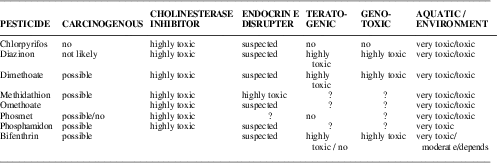
Taking due account of the risk assessments presented above, Table 1 summarises the effects of these pesticides, so far as we are able to do with available scientific data.
Summary of the Effects of the Eight Pesticides

III VALUE CHAINS, AGRICULTURAL USE AND (BRIEFLY) RESIDUES
1 Value chains for pesticides in China
This section discusses the value chains and use of the eight pesticides in China. We do not have specific data on the value chain or market structure for each of the eight pesticides. Consequently, we present both general and specific data.
The number of pesticide manufacturers in the world is very limited. In 2011, six manufacturers accounted for more than 76 per cent of world sales.Footnote 158 Four Chinese companies figured among the top 20 as of 2014.Footnote 159 The recently agreed acquisition by ChemChina of the Swiss group Syngenta, the world’s leading pesticide producer,Footnote 160 will significantly increase Chinese companies’ share of the world pesticide manufacturing market; recently the merger has been approved conditionally by the EU competition authorities.Footnote 161
In addition to the domestic market, in 2012 China exported 402 pesticides, of which 12 accounted for more than US$ 100 million and 19 more accounted for more than US$ 50 million. The former group included chlorpyrifos with US$ 162.86 million, bifenthrin with US$ 54.85 million and another 87 pesticides’ export volume reached more than US$ 10 million. This included dimethoate and diazinon.Footnote 162
As of 2004, there were “about 2600 pesticide producers (including those producing public health insecticides) in China, with a production capacity of 850 000 tons (counted in 100 percent) of over 600 varieties, 800 000 tons of formulation”.Footnote 163 A 2008 OECD study reported that multinational companies comprised about 25 per cent of the market, with the remainder produced by approximately 2,000 Chinese companies.Footnote 164 In 2010, there were about 1800 producers. The 12th Five-Year Plan (2010–2015) proposed to reduce the number by 30 per cent by mergers and acquisitions, but it seems that only 18 companies had left the market by 2015.Footnote 165 The 13th Five-Year Plan (2016–2020) was reported to aim for another 30 per cent reduction by 2020, leaving the leading 20 companies to account for half of total sales. According to the specialist trade publication Agrow, however, “[t]he country’s two state-owned chemical giants, ChemChina and Sinochem, each own stakes in some of the country’s largest pesticide companies, and have as yet been unable to consolidate all of these businesses into one single entity”.Footnote 166 The current 13th Five-Year Plan simply refers generally to strengthening control of excessive pesticide use and seeking to achieve “zero growth” in the use of pesticides.Footnote 167
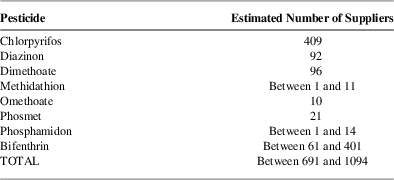
The current number of suppliers in China of each of the eight pesticides, so far as we have been able to calculate, is shown in Table 2.
Number of Suppliers of the Eight Pesticides

For this calculation, we conducted a thorough search of Google and then leading Chinese internet service providers, particularly Alibaba,Footnote 168 based on the search terms “China / [name of pesticide active ingredient, eg chlorpyrifos/ Alibaba / China [active ingredient] manufacturers and suppliers directory / products / [active ingredient] / mainland China / suppliers”. We also compared the results with those provided by professional industrial websites, such as Made-in-China,Footnote 169 ChemNet,Footnote 170 Online Chemical Buyer’s Guide Footnote 171 and AgroNews. Footnote 172 In addition, we consulted “China’s Regulatory News & Database” ChemLinked,Footnote 173 as well as UN and OECD publications.Footnote 174 Given the structure of the Chinese economy, it is likely that many suppliers are limited to specific provinces or areas. Each supplier of a specific pesticide is counted once, so if a single supplier provides all eight pesticides, it would be counted as eight suppliers. This list includes only legal suppliers; for obvious reasons, illegal suppliers do not appear on publicly available lists.
The numbers of wholesalers and retailers are much larger. Moreover, China today has more than 200 million (221,080,000) farmers.Footnote 175 In 2012 “0.679 billion ton[s of v]egtables are produced by about one hundred million small scale farmers”, and “a total of 39.50 million tons [of] apples are produced by about thirty five million small scale farmers”.Footnote 176 The complexity and diversity of the pesticides value chains, the decentralised and cellular nature of the Chinese economy,Footnote 177 the sheer scale of China’s agricultural sector and the large number of small farmers, as the 2008 melamine infant formula crisis demonstrated,Footnote 178 pose severe problems for social regulation.
2 Pesticides in agricultural production
In this section we review relevant previous research which has been conducted on the use of agrochemicals in Chinese agriculture and its implications for public health. This research covers production and marketing of fruit, vegetables and other products and includes pesticides and pesticide residues. It treats the two general categories of pesticides (organophosphates and pyrethroids) and several specific pesticides, but it is very fragmented and unsystematic. In order to be as accurate as possible in presenting research findings, we refer to this work in chronological order, if possible according to when the research was carried out or otherwise according to the date of publication. We draw on available published research, as indicated in footnotes, but we do not have detailed information for each of the eight pesticides. Consequently we indicate expressly any research which refers to one or more of the eight pesticides.
Regarding the use of pesticides in agricultural production, an American Insect Control Delegation which visited China in 1975 reported that, before 1949, “diseases and insect pests were severe”, despite the use of local biological controls. Significant use of pesticides followed in the 1950s; the most widely used pesticides were DDT and benzene hexachloride (BHC),Footnote 179 both now long prohibited. This led to increased resistance on the part of insects and other pests, and “[t]he use of pesticides increased until their costs amounted to 25 per cent of the production costs of [apples]”, for example. At the time Chinese farmers made very effective use of “often unique” forms of environmentally-friendly integrated insect control for pest management.Footnote 180 However, heavy dependence on pesticides continued.Footnote 181
Between 1991 and 2001, pesticide poisoning affected between 53,000 and 123,000 per year; deaths averaged about 10,000 per year, declining to less than 4,000 in 1996, including “about 300-500 deaths due to improper and over use of pesticide in crop production in normal years”.Footnote 182 Several years later, empirical research on the use of pesticides in vegetable production in Zhejiang Province about 2004 showed that almost 24 per cent of sampled farmers used highly toxic pesticides; most such users were older, less well-educated, unspecialised farmers, who sold their products to handlers rather than at wholesale markets or to agricultural product processing enterprises.Footnote 183 In 2004 the Chinese Development and Reform Commission estimated that “500,000 Chinese suffer from pesticide poisoning every year and that the death toll from pesticides may exceed 500. For fruits and vegetables, scattered tests show that often up to 30 per cent of samples of vegetables have residue in excess of the norm”.Footnote 184 Average use efficiency for pesticides in 2000 was only about 30 per cent, with (depending on the pesticide) consequent heavy pollution of soil and water.Footnote 185
Research published in 2005 reported that “In 1983, the use of DDT and HCH was formally banned in China, yet small amounts of DDT [1,1,1,-trichloro-2,2-bis (p-chlorophenyl) and HCH[1,2,3,4,5,6-hexachlorocyclohexane] … are still being produced as raw materials for other chemicals or for export”.Footnote 186 Endosulfan, a highly toxic pesticide which has been used in apple production in China since 1998,Footnote 187 is on the list of banned pesticides recently notified by China to the WTO. In 2012 it was described as “a currently used organochlorine insecticide [which] has been extensively used for over 30 years on a wide variety of food crops, such as grains, tea, fruits, and vegetables, and on non-food crops ... [but as an insecticide for apples only since 1998], though still present in the soil”.Footnote 188 As recently as January 2017, the United Nations Development Program (UNDP) in China reported that endosulfan is still used in cotton and tobacco production in China, though it has been banned in China for use on fruit and tea trees since 2002 and “has been phasing out globally due to its acute toxicity, potential for bioaccumulation, and its role as an endocrine disruptor that can cause cancerous tumors, birth defects, and other developmental disorders”.Footnote 189
A World Bank study in 2006 coordinated by Cornelius van der Meer found that “Some 70 percent of all pesticides [used in China] are the organic phosphorus pesticides, and 70 percent of these are highly toxic. Most monitoring results show that methamidofos (one of the organic phosphorus pesticides) is the main noncompliance item”.Footnote 190 Subsequently, an empirical research project in Guangdong, Jiangxi and Hubei Provinces studied the use of pesticides between 2009 and 2012, involving 183 varieties of pesticides, mainly organophosphates (such as omethoate, a highly toxic pesticide that is one of the eight pesticides on our list), pyrethroids (a group of median toxic pesticides) and others. Published in 2015, the research reportedly was “the first to comprehensively examine the human health effects of frequent pesticide exposure in China”. It found “that there were extensive long-term and short-term health effects in farmers exposed to pesticides. The former involved peripheral nervous system, white blood cells, liver, electrolytes, and the latter involved blood cells, liver, kidney, electrolytes and peripheral nervous system”.Footnote 191
3 Pesticide residues
In general, the use of pesticides in agriculture is often closely related to the extent of pesticide residues in food, though this depends on the pesticide in question. A 2002 study showed that, although the use in agriculture of highly toxic organochlorine pesticides (HCH: hexachlorocylohexanes, and DDT: dichlorodiphenyltrichlorethane) had been banned for more than 20 years, pesticide residues could still be detected in dietary products, including fruit, from Shaanxi Province, indicating continued misuse of these pesticides. The authors remarked that residues were below national maximum residue limits (MRLs), but the MRLs were “relatively higher because large amounts of HCH and DDT were widely used as pesticides in China” in the past.Footnote 192
However, another study, published in 2005, concluded that while fenpropathrin, a type of pyrethroid, was widely used in Shaanxi Province apple production, the application of the pesticide conformed to national standards and the pesticide residue in apple juice met maximum residue limits in China.Footnote 193 This study did not consider fresh fruit. Similar conclusions were reached in a study of pesticide residues in fruits and vegetables in Xiamen, though the authors recommended continued monitoring and “tighter regulation”.Footnote 194 A similar, much more recent study of pesticide residues in fresh apples in Hebei Province concluded that pesticide residues, including chlorpyrifos, were limited and did not have a negative effect on the safety and quality of the fruit;Footnote 195 chlorpyrifos is included in our list of eight pesticides. Some recent monitoring of vegetable products shows a decline in pesticide use and pesticide residues.Footnote 196
More recent research, unfortunately, has produced less salutary results. A 2010 study of market vegetables in Shaanxi Province found that residues of omethoate, phorate, chlorpyrifos, methidathion and ethoprophos exceeded the MRLs;Footnote 197 omethoate, chlorpyrifos and methidathion are included on our list. As of 2013 it seems that organophosphorus and carbamate pesticides accounted for about 70 per cent of total pesticides applied in Chinese agriculture.Footnote 198 Pesticide residues reportedly remain “among the most common causes of food poisoning in China”.Footnote 199
More broadly, the risk of substantial pesticide residues in food resulting from the use of toxic pesticides in agricultural production may have a serious impact on China’s international trade, precisely because of the feared health effects on people in importing countries. For example, after Japan revised its MRL for the pesticide chlorpyrifos in 2002, exports of spinach from China dropped from more than US$ 33 million in 2001 to less than US$ 4 million in 2003.Footnote 200 In 2016, the US FDA rejected more than 45 fruit products from China because of pesticide residues.Footnote 201 In the EU, exports from China received 258 notifications between 28 November 1989 and 26 November 2016, including 103 concerning pesticide residues, notably chlorpyrifos.Footnote 202 To give only one recent example, the United Kingdom in July 2015 rejected imports of Chinese broccoli containing chlorpyrifos and chlorfenapyr.Footnote 203 Chlorpyrifos is on our list of eight pesticides.
IV RISK REGULATION
1 The labyrinth
To study the regulation in China of agricultural use of pesticides and the presence of pesticide residues in food is to enter a veritable labyrinth. Data is often scattered, incomplete, not always up-to-date or not easily available. Among the more specific obstacles are the specific characteristics and complexity of the Chinese administrative legal system, lack of coordination among different types of norms, the sheer number and scientific complexity of standards, frequent lack of data about current status and implementation of rules and the extent of compliance with rules of different types. This generalisation may be true everywhere, but it is especially appropriate in the Chinese context, because of the size of the country, the complexity of economic relations and a frequent lack of transparency about relations between business and government. Nevertheless, this section presents selected data as is available to us about the regulation of the eight pesticides in China. Further information to improve our analysis would be welcome.
China has a long history of pest management in agriculture.Footnote 204 From a legal perspective, regulation of pesticide use in China is a prime example of extreme legal pluralism. Here we focus mainly on Chinese national domestic law, regulations and standards, with some attention to selected provincial measures; a separate article will discuss international agreements, international standards, provincial and municipal measures and norms from other sources.Footnote 205
2 Two regulatory paths
A simple conceptual model will be helpful in understanding the dialectics between use and regulation of pesticides. We can conceive of the regulation of pesticides as involving two regulatory paths,Footnote 206 each being composed of various types of norms and each having different primary regulatory targets (regulated actors or regulatees). The first regulatory path focuses on the use of pesticides in agricultural production. It concerns pesticides the use of which is legally prohibited or restricted, whether generally, or for specific products, or in other ways. The second regulatory path focuses on consumer protection. Pesticides in this category may be used in agricultural production, either generally or according to specified restrictions. However, once these pesticides become part of an edible agricultural product, their residue is subject to regulation further along the value chain. Such regulation may take the form of an MRL, a reference dose (RfD) or an acceptable daily intake (ADI), any two of these, or all three. The two regulatory paths are analytically and legally distinct, but nonetheless they are intimately related and interconnected in practice. One example of the interconnection is the reciprocal relationship between recent changes in farming practice, on the one hand, and consumer (and producer) preferences for unpolluted food, green food, or organic food, on the other hand.Footnote 207 In this article, for reasons of the logic and coherence of our general argument and policy recommendations, as well as considerations of space, we focus principally on agricultural use of pesticides, so here we deal mainly with the first regulatory path; in separate articles we discuss the second regulatory path.Footnote 208
3 Normative framework
a. National rules
In China, the first regulatory path consists of three general measures, two legislative and one administrative. Together, they comprise the general normative framework in China for regulation of toxic pesticides. Following the hierarchy of norms in Chinese law, we first discuss legislation in chronological order and then turn to administrative regulations and recent reforms.Footnote 209
First, the 2006 Law on the Quality and Safety of Agricultural Products (Law on Agricultural Product Quality Safety)Footnote 210 applies to edible agricultural products. It states that agricultural producers “shall rationally use chemical products, such as … pesticides … in order to avoid contaminating the production places of agricultural products” (Article 19). An administrative permission system is to be applied to “such pesticides … as may impair the quality and safety of agricultural products” (Article 21, paragraph 1). The Ministry of Agriculture and lower-level agricultural departments are responsible for conducting regular supervision and spot checks on pesticides and other inputs, and publishing the results of spot checks (Article 21, paragraph 2).
The second legislative measure is the 2015 Food Safety Law (FSL 2015).Footnote 211 Previously, under its predecessor the 2009 Food Safety Law,Footnote 212 edible agricultural products were regulated almost entirely by the Agricultural Law, except for standards development and communication of food safety information. Now, however, FSL 2015 brings edible agricultural products more fully under its scope, that is, within the administrative regulatory jurisdiction of the Ministry of Health rather than that of the Ministry of Agriculture. It applies to agricultural inputs (Article 2(6), see also Article 11, paragraph 2).
FSL 2015 states, for example, that pesticides can be used only “in accordance with food safety standards and relevant State provisions and [farmers must] strictly adhere to the regulations on the intervals for application and withdrawal, and shall not use the agricultural inputs clearly prohibited by the State” (Article 49, paragraph 1). The State is to apply a strict management system to pesticide use, “accelerate elimination of hyper toxic, highly toxic and highly residual pesticides”;Footnote 213 stimulate research and development of substitutes and encourage the use of pesticides with “high efficiency, low toxicity and low residual” (Article 11, paragraph 2). The use of hyper toxic or highly toxic pesticides is prohibited in production of vegetables, fruits, teas, Chinese medicinal herbs and other specified crops (Article 49, paragraph 1). FSL 2015 provides for specific sanctions for use of hyper topic or highly toxic pesticides (Article 123, paragraph 6(2))Footnote 214 and for producing or trading food in which “pathogenic microorganisms, pesticide residues, veterinary drug residues, biological toxins, heavy metals and other polluting substances, as well as other substances harmful to human health exceed the limits prescribed by food safety standards” (Article 124, paragraph 1(1)).Footnote 215
The third measure is the Chinese State Council Regulations on Pesticide Administration.Footnote 216 Also known as the Regulation for the Control of Agrochemicals, the Pesticide Regulations define “pesticide” to mean:
“any substance or mixture of substances chemically synthesized or originating from biological and other natural substances and the formulations made from these substances used for preventing, destroying or controlling diseases, pests, weeds and other harmful organisms inimical to agriculture and forestry and for regulating the growth of plants and animals”.Footnote 217
These Regulations set out rules for the production of pesticides, establish a pesticide registration system, provide for the distribution of pesticides and establish rules for use. A pesticide must be registered before it can be manufactured, sold or used. New products must obtain a certificate for field test before being granted a temporary registration certificate which allows further tests and trial sale and eventually a Pesticide Registration Certificate to allow production and distribution.Footnote 218 Pesticide use must conform to State rules on “safe and rational use of pesticides” (Article 27, paragraph 1). “Extremely and highly toxic pesticides shall not be used for the prevention and control of insects harmful to public health nor on vegetables, melons, fruits, tea and Chinese medicinal herbs” (Article 27, paragraph 2). More specific administrative measuresFootnote 219 govern GLP accreditation of pesticide laboratories;Footnote 220 manufacturing of pesticides;Footnote 221 rules for obtaining a production licence from AQSIQ for pesticides for which China has established a national or industrial quality standard;Footnote 222 residue testing facilities for pesticide registration;Footnote 223 registration of new, generic and other pesticides;Footnote 224 the registration, use, marketing and supervision of pesticides;Footnote 225 pesticide labels and user manuals;Footnote 226 advertisement of pesticides;Footnote 227 the restriction of pesticide use;Footnote 228 and maximum residue limits on pesticides in food.Footnote 229
According to the Measures for Implementing the Regulation on Pesticide Administration,Footnote 230 the Ministry of Agriculture is responsible for supervision of registration and use of pesticides, and the Institute for the Control of Agrochemicals under the Ministry of Agriculture (ICAMA)Footnote 231 is responsible for the implementation of pesticide registration. All these regulations and other rules are national measures and apply throughout China.
As a result of the disastrous explosion of a chemical storage facility in Tianjin in August 2015,Footnote 232 the Chinese Government has taken wide-ranging measures to control use of hazardous chemicals, including toxic pesticides. The State Council on 29 November 2016 issued a “Comprehensive Action Plan on the Safety Control of Hazardous Chemicals” (危险化学品安全综合治理方案)”.Footnote 233 It provided guidelines for governmental authorities in dealing with hazardous chemicals. The Ministry of Agriculture on 28 December 2016 submitted to the General Office of the State Council the “Implementation Plan for the Integrated Management of Hazardous Pesticides”. It foresaw the promulgation, within a year, of two important measures. First, a “List of Restricted Pesticides”, based on the pesticides included in the Chinese Catalogue of Hazardous Chemicals,Footnote 234 would categorise pesticides according to magnitude of risk. Second, “Measures for the Operation License Management of Pesticide”, which would severely restrict marketing of pesticides, because restricted pesticides would be sold only by designated shops on the basis of a real name purchase system.Footnote 235
On 8 February 2017 the State Council adopted a draft of revised Regulations on Pesticide Administration. It provides that the Ministry of Agriculture is to be the sole regulatory authority with “complete control of both pesticide production and management” to avoid the current fragmentation of administrative responsibility, introduces a new system of business licenses, seeks to discourage the use of pesticides by reducing the overall volume used during production and introduces measures for more stringent supervision of highly toxic pesticide. It also makes manufacturer and suppliers responsible for “the safety and efficiency” of pesticides and increases sanctions on production and sale of fake pesticides.Footnote 236 The revised Regulations are expected to be issued in the near future.Footnote 237
b. Provincial and municipal rules
In addition to national legislation and administrative regulations, a host of provincial and municipal rules govern the agricultural use of pesticides. Provinces differ, however, in the extent to which they rely on national rules or enact their own provincial rules. For example, Shaanxi Province appears to rely mainly on national rules. Nevertheless, Provincial Regulations on Pesticide Administration provides specific sanctions for production or marketing of pesticides without authorisation or the registration of which has been cancelled.Footnote 238 The city of Xi’an sets fees for registration of pesticides and has issued a notice to reduce the production of highly toxic pesticides and to encourage high-tech companies to produce new low-risk pesticides.Footnote 239
In contrast, Shandong Province has adopted numerous provincial orders. The Shandong Regulations on Pesticide AdministrationFootnote 240 seek to localise the State Council Regulations on Pesticide Administration. The Agricultural Product Quality Regulation (Provincial Order No 277) is intended to improve coordination of government departments, provide guidelines for sanctions, and improve the quality of pesticides.Footnote 241 Shandong Province has also promulgated the Shandong Pesticide Management in Supervision and Spot-Checking RegulationFootnote 242 to facilitate supervision of pesticide use and the Shandong Registration of Pesticide Selling AdministrationFootnote 243 to govern registration of pesticide sales. A coastal province, Shandong has adopted the Shandong Import Agricultural Product Administration (Provincial Order No 189) which encourages the use of foreign standards as a criterion for selection and use of pesticides.Footnote 244 It has also promulgated rules on management of the Volume of High-Risk Pesticides; the list includes omethoate, methidathion and dimethoate.Footnote 245 It has issued a notice requiring improvement of plowed land, designed to reduce pesticide residues.Footnote 246
4 Implementation, enforcement and compliance
The eight pesticides with which we are concerned here can be situated clearly in this normative framework, if we also include very specific Ministerial announcements, notices or other measures taken according to the basic legislation, administrative regulations and standards. Some toxic pesticides are banned in agricultural production. A pesticide which is banned cannot be manufactured, marketed or used. The agricultural use of phosphamidon was banned in 2008 because of its high toxicity.Footnote 247 Then in 2015 the Ministry of Agriculture on 2 July 2015 revoked the registration of methidathion, a pesticide on our list, for use in the production of oranges and tangerines. The use of methidathion was prohibited as of 1 October 2015 in the production of “vegetables, fruit, melon, tea, sugarcane and medicinal herb”.Footnote 248 ICAMA then requested many provinces, including the main pesticide-producing provinces of Jiangsu and Shandong, to carry out risk reviews on dimethoate and other pesticides as of August 2015.Footnote 249
Based on the Chinese government list of banned pesticides, the Pesticide Action Network (PAN) International reported that as of July 2015 China reported that 46 pesticides are banned in China, including methidathion, omethoate and phosphamidonFootnote 250 which are on our list of eight pesticides. The agricultural use of certain other pesticides is restricted. The use of omethoate is prohibited on cabbage and citrus trees due to its high toxicity.Footnote 251 This data is inconsistent with the PAN classification, but it appears from other sources that omethoate is currently used, for example, in wheat production;Footnote 252 it is on our list. For chlorpyrifos, one of the eight pesticides on our list, new registration for use on vegetables was stopped on 9 December 2013, registration for use on vegetables was cancelled as of 31 December 2014, and use in vegetable production was banned as of 31 December 2016 because of the dietary risks of excessive residues.Footnote 253
In summary, the following four of the eight pesticides are currently banned from being used legally in agricultural production or are highly restricted: chlorpyrifus, methidathion (at least for many agricultural uses and perhaps for all), omethoate and phosphamidon. The use of three of the eight pesticides in agricultural production seems, however, to be permitted without restrictions: bifenthrin, diazinon and phosmet. Bifenthrin is used in the production of peaches.Footnote 254 The registration of diazinon was approved in May 2015.Footnote 255 Dimethoate, as noted above, is currently being reviewed. In 2011, ICAMA invited public comment on a proposed MRL for phosmet.Footnote 256
Attempts to enforce such bans or restrictions appear to take two main forms: administrative measures or recourse to courts. Administrative measures may concern either the first or the second regulatory path. Concerning administrative measures, if a pesticide is banned, the Ministry of Agriculture is to withdraw registration of the pesticide. In addition, it may limit points of sale. For example, the Ministry of Agriculture in 2015 issued a notice which permits the sale of highly toxic pesticides in certain locations and on a provisional basis. It applies to Hebei, Zhejiang, Jiangxi, Shandong, Shanxi, Jiangsu, Hunan and Sichuan provinces. The notice expressly states that the sale of highly toxic pesticides is banned in areas where vegetables, fruits, tea leaves and Chinese herbs are mainly produced.Footnote 257 More recently, the Agricultural Bureau of Dongying City [东营市] in Shandong Province reduced the number of stores permitted to sell highly toxic pesticides from 44 to 20 and introduced measures to improve the traceability of highly toxic pesticides.Footnote 258 These kinds of measures concern the first regulatory path, which seeks to govern the use of pesticides in agricultural production.
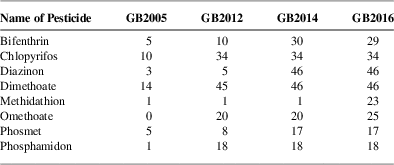
Finally, the NHFPC can introduce MRLs for a specific agricultural product. This administrative method acts on the second regulatory path in the expectation that the newly introduced or reduced MRL will affect the first regulatory path, in other words agricultural use of the pesticide. Table 3 shows the number of crops for which an MRL has been set for each pesticide in successive revisions of the national food safety standard for MRLs.Footnote 259 It indicates that considerable progress has been made in the introduction of MRLs for the eight pesticides for various crops.
Progress in Introduction of MRLs

A second route is by recourse to the courts.Footnote 260 Litigation concerns the first regulatory path, referring to the use of pesticides in agricultural production. The pkudata (北大法宝) legal database includes nearly 1,000 cases concerning pesticides between 1997 and 2017. The Ministry of Agriculture reported about 3,750 cases concerning pesticides in 2015 alone. Cases concern civil law (eg contract disputes involving pesticides, tort, intellectual property rights), administrative law (mainly focusing on governmental behaviour) or criminal law (eg economic loss caused by fake pesticides).Footnote 261 They range from the Supreme People’s Court level to local court level. For example, there were more than 20 intellectual property cases concerning pesticides in China in 2005, including two won by Bayer Crop Science China against counterfeit brands and packaging.Footnote 262 Numerous administrative law cases concern failure to register or label pesticides. Many criminal cases brought in local or provincial courts involve charges under Article 147 of the Criminal Law; civil cases concern Criminal Law as alleged crimes of undermining the socialist market economy order by manufacturing or selling fake or shoddy goods.Footnote 263
Law and legal processes are important from the normative standpoint and potentially may lead to significant improvements in agricultural practices. Unfortunately, however, they are not always respected in reality. An important empirical study based on research conducted between 2006 and 2011 stated that
“The Chinese government has banned the use of highly toxic, highly residual, carcinogenic, teratogeneric, and/or mutagenic pesticides and has required rigid adherence to safe application standards and rational application guidelines of pesticides. However, banned/prohibited pesticides continue to be used in actual agricultural production, and pesticide abuse violating the safe application standards and rational application guidelines of pesticides remains widespread”.Footnote 264
A good example is carbofuran, which is a highly hazardous pesticide that has been banned in China since 2002. However, as of October 2014 a team from the Institute for the Control of Agrochemicals of the Ministry of Agriculture reported that carbofuran, which was banned or restricted in some countries, was one of “twelve highly hazardous pesticides still in use in China” and was used in 183 registered products.Footnote 265 This example shows that, in some instances at least, national prohibitions on the use of highly toxic pesticides remain ineffective.
Two more important recent studies shed further light on implementation, enforcement and compliance. The first study, following an extensive literature review, was based on extensive interviews in Shaanxi Province between July and December 2011. It found that most farmers used unrestricted pesticides but some applied restricted pesticides, such as methidathion and omethoate, both included in our group of eight pesticides; others were asomate, phorate, isocarbophos, methomyl. The key factor affecting farmers’ choice of pesticide was the advice of retailers; lack of knowledge of pesticides and lack of education were also important.Footnote 266 The second study, which focuses on vegetable farmers in Hunan Province, elucidates the range of variables which influence compliance with the regulatory regime, including provincial rules. It shows that a large proportion of farmers avoid highly toxic pesticides. It also found, however, that compliance tended to vary with farm size or organisation, that pesticide retailers played an important role in influencing pesticide use and that lack of resources and unclear rules influenced enforcement and compliance.Footnote 267
It is useful, however, to note that illegal use of toxic pesticides continues, because these observations support our policy recommendations that further action is necessary. Knowledge and regulation of toxic pesticides is increasing, but implementation of and compliance with law remains a problem. It is reported that banned pesticides are sold illegally and continue to be used.Footnote 268 Many banned pesticides are available in the countryside, especially in small and remote stores. Once farmers show an interest in banned pesticides such as methamidopos,moncrotophos and chlordimeform (banned even in 1993), the stores will contact farmers and send pesticides to their home. In addition, those stores work with illegal manufacturers who produce banned pesticides; for example, in the name of insecticidal cream, they are actually selling chlordimeform. Such stores sometimes use as a selling mode called product mix (bundling). Farmers buy one kind of pesticide which is allowed, and the store will send another free of charge. The latter appears most of time to be banned pesticides, though often this may not be noticed by farmers.Footnote 269 This practice is strictly illegal and is sanctioned under the Regulations on Pesticide Administration.Footnote 270
V ANALYSIS
This article focused on eight pesticides and the law. The eight pesticides are chlorpyrifos, diazinon, dimethoate, methidathion, omethoate, phosmet and phosphamidon, all of which are organophosphate pesticides, and bifenthrin, which is a pyrethroid pesticide. The article concentrated mainly on the regulation of their use in agricultural production. The law discussed here was mainly Chinese national law, administrative regulations and standards, leaving international law and provincial and municipal norms for another occasion. Our purpose has been to bring together widely accepted scientific data, scattered available research on agricultural practices, and aspects of Chinese domestic law so as to illuminate the relationship between the use and regulation of pesticides, and thus to contribute to improvements in public health in China. From this brief tale, we can draw several conclusions.
First, all eight pesticides considered here are on the PAN list of Highly Hazardous Pesticides (HHPs).Footnote 271 Scientific knowledge, including medical research, is constantly evolving, and the practices of pesticide manufacturers, suppliers, users and regulators are also changing and may differ in different contexts. In addition, risk assessments of a pesticide may be dose-dependent; they do not necessarily take account of the effects of accumulation of the same pesticide over time or of the effects of interaction between different pesticides. Moreover, risk assessments do not necessarily determine the form of risk regulation, even though they should and usually do inform governmental policy regarding the evaluation and to some extent the communication of risks.
Second, we note that Chinese regulatory law on the books concerning the use of these pesticides in agricultural production compares favourably with that of China’s main trading partners. For example, diazinon is banned in the EUFootnote 272 but approved for agricultural use in China,Footnote 273 RussiaFootnote 274 and the United States.Footnote 275 Methidathion is banned in ChinaFootnote 276 and the EUFootnote 277 but allowed in RussiaFootnote 278 and the United States.Footnote 279 Phosmet is banned in RussiaFootnote 280 and the United StatesFootnote 281 but approved in ChinaFootnote 282 and the EU.Footnote 283 The Chinese government today aspires to make rapid progress in the regulation of toxic pesticides, participates very actively in international standards bodies and chairs the Codex Alimentarius Committee on Pesticide Residues.Footnote 284 Clearly, its policies recognise the close link between agricultural use of pesticides and the presence of pesticide residues in food, in other words between domestic public health policy and trade. The interconnection between domestic public health policy and international trade has become increasingly important in conjunction with China’s economic transformation and very significant role in international food trade.
Third, formidable obstacles still exist to the development of adequate regulation of pesticides.Footnote 285 These observations highlight general issues about the gap between “law on the books” and “law in action”. Such a gap is universal, but its particular form tends to vary from one country to another. Historical factors, legal culture and constraints related to financial resources, trained personnel, appropriate equipment, available time and conflicting priorities inevitably affect government policy. So too do the size and per capita income of the country. Inevitably, special factors may apply to the implementation of law in China. Vague laws and standards, lack of capacity, bureaucratic competition and lack of coordination, and overly close relations between government and regulated enterprises are particular problems.Footnote 286 A 2015 study remarked, for example, that for pesticides “the Ministry of Agriculture monitors field use, the state planner and the Commerce Ministry grant production licenses, the Ministry of Health is responsible for setting maximum residue levels, and the State Environmental Protection Administration monitors environmental impacts”.Footnote 287 The Chinese government is seeking gradually to overcome or minimise the effects of the principle of “one supervision link subject to the supervision of one department” (“regulation by segment”) established in 2004.Footnote 288 It is less easy to confront specific organisational characteristics such as the tension between vertical and horizontal relations in the organisation of Chinese government.Footnote 289 Recent reforms may alleviate these concerns.
Fourth, there appears to be a real problem of the coherence and integration of different types of norms. For example, withdrawing registration of a pesticide, on the one hand, and restricting but allowing sale, on the other hand, may appear to be contradictory, unless the latter is temporary. In addition, it is reported that “a number of small-scale chemical factories continue to produce counterfeit products, sometimes in small quantities”,Footnote 290 which may undermine public health.Footnote 291 As one author has written, however, the implementation of law in China “can be understood to arise as a result of an adjustment to expectations internal and external to regulatory officials. These expectations vary widely from the regulatory norms generally espoused in law … These shared understandings are the true normative framework underlying administrative regulation not reflected by explicit legal doctrine”.Footnote 292
VI POLICY RECOMMENDATIONS
On the basis of the discussion thus far, it is possible to identify specific implications for government policy. We propose the following:
-
(1) A high priority should be to phase out these highly toxic and toxic pesticides. The 2015 Food Safety Law provides an essential baseline for these reforms. The recently released draft revised Regulations on Pesticide Administration are an important step in this direction, because they clarify regulatory authority and improve supervision of highly toxic pesticides.Footnote 293 Recent provincial and municipal policies and rules concerning toxic pesticides signal important progress. Following the Chinese practice of adaptability and experimental governance,Footnote 294 different provinces and cities frequently use different normative instruments. Especially impressive are measures taken recently in Shaanxi and Shandong Provinces and by Xi’an City. For example, Shaanxi Province has put in place progressive policies to reduce highly toxic pesticides by 2020. Xi’an People’s Government Executive Office has adopted an executive order concerning registration fees to supervise, control and reduce the use of pesticides and fertilisers. Shandong Province has enacted regulations on pesticide administration and selling; the Shandong Regulations on Pesticide Administration and Management (Provincial Order No 121) includes dimethoate, methidathion and omethoate on the list of high-risk pesticides.Footnote 295
-
(2) Regulatory policies should now focus on the value chains of these eight pesticides. An optimum strategy would be to concentrate first on smaller groups of regulatees (manufacturers, suppliers), and then on increasingly larger groups of regulatees (retailers, farmers).The first priority, therefore, should be stricter supervision of manufacture and registration of pesticides. The second priority should be increased control of the supply of pesticides. The third priority should be on more effective supervision and management of retailers; an important recent study identified the advice of retailers as the most important determinant of farmers’ use of pesticides.Footnote 296 The fourth priority should be improvement of extension education and training of agricultural producers in the use of less toxic pesticides, including wearing protective clothing,Footnote 297 and in active development of integrated insect control as far as possible.Footnote 298 This is despite the facts that manufacturers and suppliers are both more likely to resist change and perhaps more likely to embrace change than are farmers.Footnote 299 This order of priority is based on three reasons. The first reason is that regulation of pesticides in China operates in a context of severely limited reasons. Moreover, responsive regulation, involving both regulator and regulatee, is likely to be more effective than command-and-control regulation. In addition, powerful regulatees have more to gain by effective regulation because of the effects on their reputation, though this depends partly on consumer awareness and the role of the media. In other words, concentrating first on farmers may be the least efficient and least effective regulatory strategy, even though it may seem at first glance to be the most easily available strategy.
-
(3) Consideration should be given to using different normative instruments with regard to each group of regulatees. The framework is legally binding legislation (Food Safety Law 2015, Law on Agricultural Product Quality Safety) and administrative regulations (Pesticide Regulations). New recent reforms also involve legally binding provincial or municipal measures. In addition, however, further work should be done on the possibility of using guidelines or other forms of soft law, such as ISO standards or ChinaGAP, to regulate retailers and farmers.
-
(4) Pesticide manufacturers and suppliers should be required to develop standards higher than national standards. Such standards would be soft law guidelines, based on governmental instructions or another ministerial normative document following the practice of administrative specification of law (falu de jutihua).Footnote 300 The guidelines themselves would not be legally binding but could be even more effective than legally binding standards if they are set in a suitable institutional context and supported by larger manufacturers and producers. The application of these standards should be supervised, monitored and certified by a third party certification body. This system of accountability, combined with other accountability mechanisms such as certification and labelling,Footnote 301 would benefit the entire pesticide value chain, in particular farmers and consumers. The adoption of enterprise standards higher than national standards is encouraged by China’s Food Safety Law and policy. It may also be easier to adopt and to implement than legally binding standards. If successful, it would have a very significant constraining effect on downstream parts of the value chain.
-
(5) A unified system of regulation of pesticides should be established and put on the internet. The 2015 Food Safety Law already provides a legal basis for such a system. Its Article 118 provides that “The state shall establish a unified food safety information platform and adopt a uniform food safety information release system”. Manufacturers, suppliers, exporters, agricultural producers and consumers thus would have easily accessible information concerning pesticides and pesticide residues. Such “public transparency” would also help to reassure consumers in China and elsewhere.Footnote 302
-
(6) The Food Safety Law 2015 and continuing reform of the Pesticide Regulations already address the long-standing question of regulatory competition among ministries and ministry-level organisations of central government and among central government and local government. With the example of pesticides expressly in mind, but also taking account of other aspects of food safety regulation, specific State Council measures, including soft law, should be taken to avoid unnecessary competition which might hinder the enforcement of rules concerning pesticides.
-
(7) China should work with its main trading partners, including the BRICS, and with non-governmental organisations to phase out these eight pesticides. The historical development of pesticides suggests a continual search for a better balance between plant protection and human health.Footnote 303 More attention deserves to be paid to the integrated insect control.
-
(8) The entire value chain, including manufacturers, suppliers, exporters and farmers, including specialist food producers, as well as the general public of consumers should be engaged in support of application, compliance and enforcement of the law, regulations and other measures concerning pesticides. Often today, highly toxic pesticides are used to produce food even after being heavily regulated or banned. Article 23 of the 2015 Food Safety Law provides a legal basis for this form of “society co-governance”.Footnote 304 A broad social consensus about the importance of ensuring public health is likely to be the most effective means of limiting abusive and harmful use of pesticides. The governance of pesticides should be addressed not in isolation but instead in the broader context of public health.Footnote 305 The flouting of pesticide rules cannot be isolated from other unintentional or intentional attacks of public health. A broad-based education campaignFootnote 306 for companies and citizens regarding the dangers of toxic pesticides is required. Pesticide regulation is likely to be most effective if it is part of a broader programme to protect public health.
VII CONCLUSION
In this article we have focused on the use and regulation in China of eight toxic pesticides in agricultural production: bifenthrin, chlorpyrifus, diazinon, dimethoate, methidathion, omethoate, phosmet and phosphamidon. Adopting perspectives from public health, economic sociology and law, we considered the principal characteristics of these pesticides, the main health risks associated with their use in agricultural production and how these pesticides in agricultural production currently are regulated in Chinese law. On this basis, we identified a series of policy implications and made specific policy recommendations concerning risk regulation of these eight pesticides.
The tale of eight pesticides is far from being finished. Scientific and medical research, agricultural technology, economic structures and processes, and forms of social regulation all continue to develop, often rapidly. In this changing context, our modest hope is that this article may contribute to improvements in public health in China.