

Introduction
The seasonal melting of sea ice in the Arctic Ocean, which has been confirmed for several summers and is widely documented, has become a major topic in the media. Global warming has induced major changes across the globe in recent years. Among these, the melting of Arctic sea ice contributes to speculation about the future of navigation and therefore, raises the question of Canada's sovereignty over its Arctic territory. Shipping activity in the Arctic is definitely increasing, including tourism and exploration activities, necessitating the need for reliable communication and monitoring. However, despite all the scenarios of a future commercial maritime highway through the northwest passage (NWP) it appears that over-optimistic ‘scenarios for the development of marine traffic in the Arctic remain highly speculative and are not based on an analysis of ship owners’ perceptions’ (Lasserre and Pelletier Reference Lasserre and Pelletier2011: 1465).
Projecting scenarios of accelerated ice reduction, the media frequently used phrases when describing prospects for Arctic tourism such as ‘an abundance of cruises in the next few years’ (Basuyau Reference Basuyau2011), ‘fast growing market’ (Verdonnet Reference Verdonnet2007), ‘a well-established market’ (Désiront Reference Désiront2005) as well as ‘fast increase’ (Ryder Reference Ryder2009) sustained by a ‘demand that should expand rapidly’ (Désiront Reference Désiront2008). Researchers also emphasised the issue, using phrases depicting the ‘cruise industry's inevitable growth’ in the Arctic (Stewart and others Reference Stewart, Howell, Draper, Yackel, Tivy, Hall and Saarinen2010), ‘now entering a maturing phase’ (Stewart and others Reference Stewart, Howell, Draper, Yackel and Tivy2007), with a ‘trend toward a more sustained Arctic cruise industry in Canada (Stewart and Dawson Reference Stewart and Dawson2011), whereas others underline that growth is in fact more moderate than the common picture (Jørgensen Reference Jørgensen2010). As cruise ships visit certain Arctic communities in Canada more often, concern is also growing about the impacts of these increased visits.
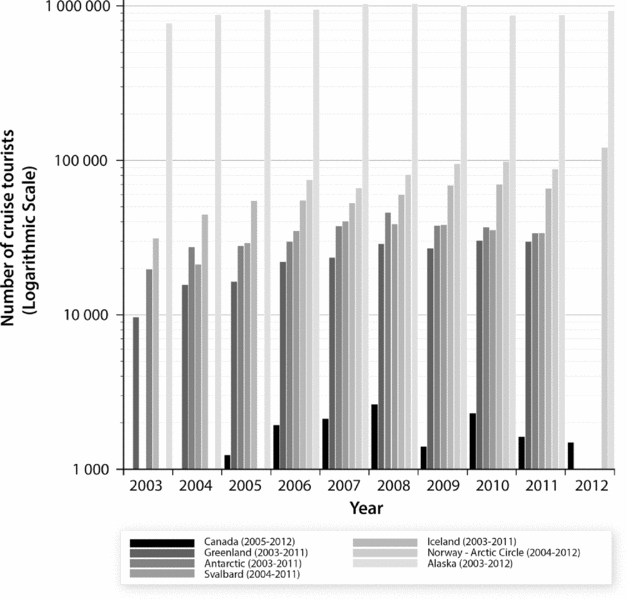
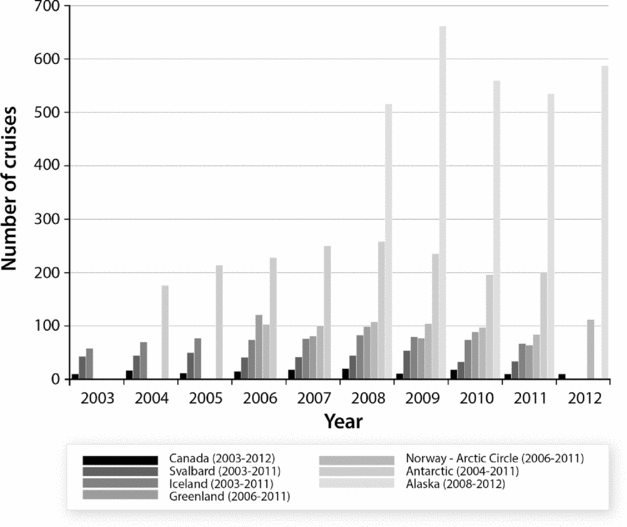
The literature shows that there is an impressive amount of documents on both the social and the environmental dimensions of cruise tourism in the Canadian Arctic as well as on the need to develop an integrated management and monitoring strategy of cruise tourism in order to contribute to its safe development (Lamers and Amelung Reference Lamers, Amelung, Luck, Maher and Stewart2010; Lemelin and others Reference Lemelin, Dawson and Stewart2012; Grenier and Müller Reference Grenier and Müller2011; Fay and Karlsdottir Reference Fay and Karlsdottir2011; Hall Reference Hall2011; Stewart and Dawson Reference Stewart and Dawson2011; Blangy and others Reference Blangy, McGinley and Lemelin2010). The necessity of tight navigation regulations and their enforcement was highlighted, especially for the polar cruise industry, by recent ship grounding and engine failures in the Arctic and Antarctic, and by the sinking of the MS Explorer in November 2007 in Antarctic waters (Stewart and Draper Reference Stewart and Draper2008; Dupré Reference Dupré and Lasserre2010; Stewart and Dawson Reference Stewart and Dawson2011). However, the question of the development of Arctic shipping remains controversial as experts’ analyses do not converge (Howell and Yackel Reference Howell and Yackel2004; Gedeon Reference Gedeon2007; Loughnane Reference Loughnane2009; Lasserre and Pelletier Reference Lasserre and Pelletier2011). The popularised scenarios of the northwest passage as a maritime highway fail to take into account the extreme variability of the navigable season, the costs associated with the construction and operation of ice-strengthened ships, as well as marketing constraints, especially for container shipping, that reduce the attractiveness of Arctic routes (Lasserre and Pelletier Reference Lasserre and Pelletier2011; Hall and Saarinen Reference Hall and Saarinen2010; Hall and others Reference Hall, James and Wilson2010; Lasserre Reference Lasserre and Lasserre2010c; Stewart and others Reference Stewart, Howell, Draper, Yackel and Tivy2007), although a growing but modest transit and destinational traffic is emerging along the northeast passage thanks to the services offered by the Northern Sea Route Administration. However, considering the whole Arctic region, a rapid expansion of cruise tourism was observed from its beginnings in the late 1990s, and confirmed as seen here from 2003 until about 2009 for all Arctic destinations. In the Canadian Arctic, growth indeed took place but with a much more modest market (Figs. 1 and 2). There is an apparent discrepancy, not so much in the market trend that is similar, but in the market size of cruise tourism between the Canadian Arctic and other regions that witnessed sustained cruise traffic, such as Greenland, Svalbard and northern Norway. Canada's market share of polar cruise tourism remains very small indeed. To what extent are cruise ship operators interested in developing their activities in the Canadian Arctic region and the northwest passage? Is cruise traffic likely to increase rapidly in the Canadian archipelago? We suggest that operators are reluctant to expand their operations because of logistic and technical constraints presented by navigation in these waters, and because of the lack of marine infrastructure.
Evolution of tourist numbers in selected polar destinations.

Evolution of cruise numbers in selected polar destinations
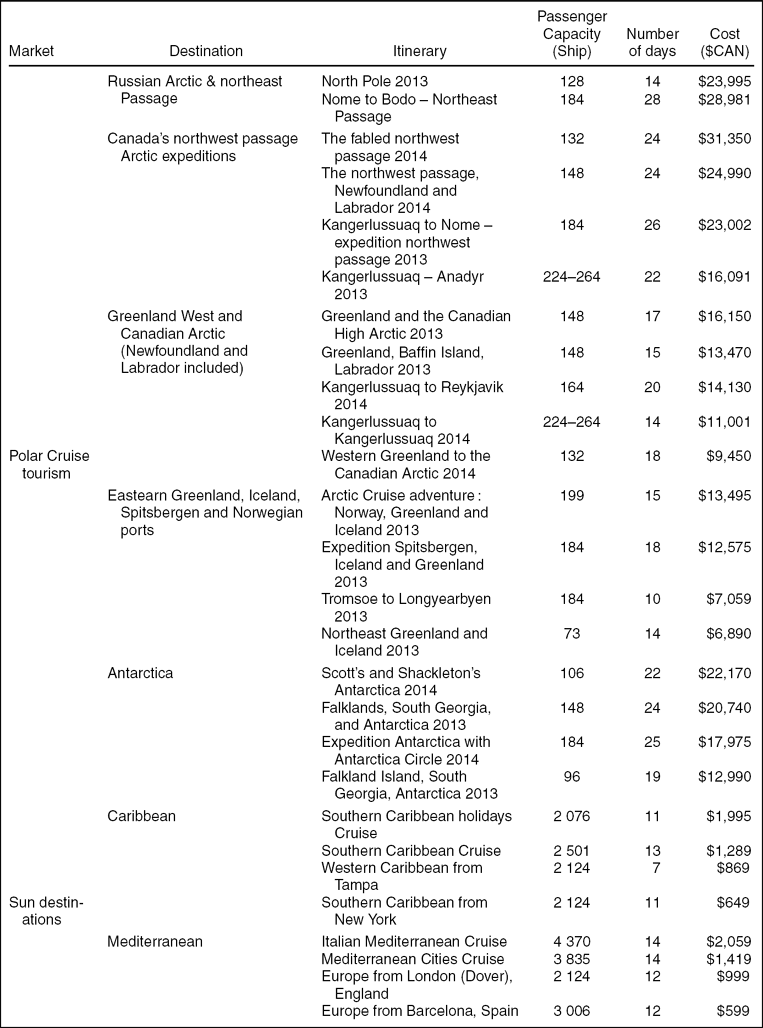
Cruise tourism experienced a steady growth in all polar markets, Arctic and Antarctic, despite average prices that are much higher than for classical cruises (Table 1). Canada saw the number of tourists increase between 2005 and 2008 (+28.5% per year) but merely attracted 2 633 tourists in 2008, the smallest Arctic market considered. Greenland (+24.5%/yr 2006–2008), Svalbard (+19.5%/yr 2003–2007), Iceland (+12.2%/yr 2003–2010) and Antarctica (+13.7%/yr 2004–2008) also experienced strong growths. Alaska at 5.8%/yr (2003–2008) and Northern Norway (+7%/yr 2006–2010) saw more modest expansions, but are more mature markets. All markets, however, peaked between 2008 (Canada, Svalbard, Alaska and Antarctica) and 2010 (Greenland, Iceland, northern Norway). Some recovered quickly like northern Norway, where the 2010 peak was surpassed in 2012, but most are still confronted with a sluggish market that may be short-term and is most likely linked to the general economic downturn. The Canadian market, for instance, shrank by 43% since 2008
Comparison of prices for polar and sun cruises.
Source: author compilation form travel agencies and cruise websites.
The first objective of this paper is to explore the prospects for expansion of cruise tourism in the Canadian Arctic in terms of cruise ship operators, using semi-structured qualitative interviews designed to specify the motivations of companies. The second is to provide a current portrait of both cruise vessels itineraries and visited communities in order to improve our knowledge of the spatial distribution of economic cruise tourism activities in the Canadian Arctic
Assessing the Arctic cruise market: methodology
Cruise tourism operators interviews
For the study, 66 cruise tourism operators, that operate either their own or chartered ships, were surveyed; 70% (46 operators) responded to our questions. They were divided into four categories: those already present in the Canadian Arctic (9 operators); operators in the European and Russian Arctic (Arctic Expedition Cruise Operators, AECO - sample of 12 members); operators in Antarctica (International Association of Antarctica Tour Operators - sample of 19 members); members of the Cruise Line International Association (CLIA) that operate on traditional cruise destinations (sample of 21 members) and those considered as not affiliated with an organisation, mainly British companies (sample of 5 members).
The cruise industry is very complex and there are many companies across the globe. It was necessary to confine our research to a sample as representative as possible. The AECO and IAATO represented the two main organisations present in polar regions, the AECO in the Russian and European Arctic and IAATO in Antarctica. On the other hand, the CLIA was chosen because its members, who are the biggest players in terms of ships and loading capacity, are potential operators that might opt for a diversification of their activities that would bring new players and more passengers to the Arctic.
Cruise operators of AECO, IAATO, CLIA and those not affiliated with an organisation were identified online. The identification of cruise operators already present in the Canadian Arctic was conducted from various sources, mainly Vessel Traffic Reporting Arctic Canada Traffic Zone (Nordreg), because there is no association federating them. The number of passenger vessels and their movements in Canadian Arctic waters from 2005 to 2012 was obtained from Nordreg. Second, operators were selected from lists set up in Lück and others (Reference Lück, Maher and Stewart2010, Reference Lück, Maher and Stewart2011) and Stewart and others (Reference Stewart, Howell, Draper, Yackel and Tivy2007). Data were processed, confirmed and updated with the lists of the 2011 northwest passage vessels provided by J. Splettstoesser, Advisor to IAATO, and R.K. Headland, Scott Polar Research Institute, University of Cambridge.
From December 2011 to March 2012, directors and executives of cruise tourism companies were contacted. Companies already present in the Canadian Arctic were invited to answer the following questions (semi-directed interview): ‘Do you intend to expand your business activities in the Canadian Arctic? Why?’ A total of 9 answers were compiled. Polar Star Expedition is part of this survey but is now out of business. Companies active in other locations than the Canadian Arctic were invited, in turn, to answer the following questions: ‘Do you intend to enter the cruise tourism market of the Canadian Arctic? Why?’ A total of 37 answers were compiled. For both categories, responses to the first question were divided into three categories: yes, no and maybe; quantitative results to the first directed question were computed, and qualitative answers to the open ‘Why’ question were compiled.
Current portrait of cruise vessels itineraries and visited communities
In order to better understand the spatial dispersion of cruise ship itineraries in the Canadian Arctic, we mapped cruise ship movements in the Canadian Arctic. The Nordreg database was used in combination with ArcGIS mapping software.
Results: an expansion of cruise tourism, but less so in Canada
Cruise tourism operators interviews: mitigated interests
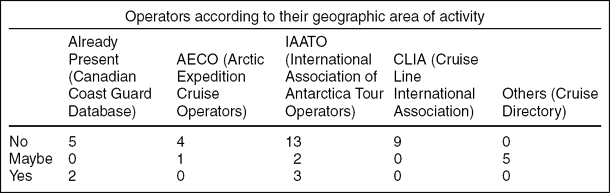
Operators surveyed were classified according to their geographical area of activity as explained previously: those already present, AECO, IAATO, CLIA and those identified as ‘others’ (See Table 2).
Cruise tourism operator's interest for the Canadian Arctic: outcome of the investigation. Question. Do you intend to expand your business activities in the Canadian Arctic?
Among the companies expressing an interest in the Canadian Arctic, two companies already present, Silversea Cruise and La Compagnie des Îles du Ponant, and a third, a yachting operator and member of IAATO, Eyos Expedition, expressed their interest in the northwest passage/Canadian archipelago market. These three firms are currently active in both the Russian/European Arctic, in Antarctica and in other non-polar destinations. All three indicated their intention to expand their business activities in the Canadian Arctic cruise market.
The vast majority of the 47 companies that agreed to participate indicated little interest in the Canadian Arctic cruise market. Two operators also stepped out of the Canadian Arctic market in 2012, Quark Expeditions and Polar Star Expeditions. However, a closer look at the data by geographic area of activity highlights the priorities and divergent interests of cruise operators with this respect, and the regional specialisation they tend to opt for. For example, among the four AECO members interviewed, three companies mentioned a lack of interest for the Canadian Arctic cruise tourism market, and one was undecided. In general, they stated that their customers preferred the Russian and European Arctic, and would thus continue to focus their operations in these areas. Thirteen companies of IAATO were also not interested in entering the Canadian arctic market, with the exception of one undecided response and three positive responses. Finally, no company from the CLIA, and no company among those classified as ‘others’, was interested in the Canadian Arctic. It thus seems unlikely that many more operators will decide to enter the Canadian Arctic cruise market; what may take place is that those already present will step up their presence and increase the number of cruises they offer.
The responses to the question ‘why?’ provided key information on priorities and divergent interests of cruise operators and their future needs in terms of investment and research and development.
The expansion of cruise tourism in the Canadian Arctic: operators’ perspectives
Only five operators in our survey intended to increase their activities in the Canadian Arctic, with two undecided and three potential newcomers from IAATO. This contrasts with the optimistic scenarios of a booming Arctic cruise sector in Canada, often depicted by researchers and, in particular, the media. Indeed, there is a growing interest in polar cruises from both tourists as well as communities, even if economic return on visits is debatable (Têtu and Lasserre, Reference Têtu, Lasserre, Lemelin, Maher and Liggett2013; Stewart and others Reference Stewart and Dawson2011; Stewart and others 2012; Stewart and Draper Reference Stewart and Draper2006). Silversea Expeditions which operates the MV Silver Explorer mentioned:
As a company we have decided to expand our operations in Canada from 2013 onwards. Our expedition vessel, the Silver Explorer, will perform a series of voyages around Baffin Island, the Hudson Strait and Hudson Bay. We plan to take advantage of local conditions and offer landing opportunities at various sites and visit local communities (Silversea, personal communication, 13 May 2011).
A diversification of the ports of call is expected in the near future according to statements made by many operators. La Compagnie du Ponant, a French luxury yachting company, expects a strong and growing demand for the northwest passage and planned to implement a Canada-Japan itinerary in 2013, but such a project did not materialise in the 2013 catalogue, and was replaced by a northwest passage crossing between Kangerlussuaq (Greenland) and Anadyr (Russia). La Compagnie du Ponant and Silversea told us they intended, in future itineraries, to focus more on calls at local communities. With respect to the perspective of growing cruise activities in these areas, La Compagnie du Ponant intends to sell two of their own ships, Le Diamant (effectively withdrawn from the 2013 catalogue) and Le Ponant, in order to procure two new ships between 2013 and 2015, both equipped with strengthened hulls (Compagnie du Ponant, personal communication, 25 February 2012); in 2013, the company will indeed exploit 2 new ships in the Arctic, both ice class 1C, Boréal (launched in 2010) and Soléal (launched in 2013).
Aurora Expeditions, Cheesemans Ecology and Travel Dynamics are also interested in the northwest passage but do not have enough ships available and must therefore postpone their projects: the lack of adequate, ice-strengthened passenger ships thus appears to be a major constraint for these three operators. Besides the two companies that favour increasing activities, two others, Adventure Canada, which is already present and still operating, and Arctic Odyssey, an IAATO member, highlighted the cost of fuel and the global economic crisis as barriers to growth. Despite a few divergent opinions among operators, respondents in this study generally appear to be quite sceptical about a possible ‘unprecedented’ expansion of cruise tourism in the Canadian Arctic. Statistics (see Table 3) point indeed to a moderate growth in cruise shipping traffic, even to stagnation in recent years that may be partly explained by the economic difficulties in western economies. But growth in other Arctic cruise markets would question this explanation.
Number of cruise ships present in the Canadian Arctic, number of voyages

Data compiled from the Canadian Coast Guard, Nordreg, Iqaluit. Ships present refers to the number of different cruise ships that appeared in the Canadian Arctic defined as the Nordreg zone. The number of voyages depicts their movements within the Nordreg zone: a voyage begins when a ship enters the Nordreg zone and ends when it exits. Thus, several cruises may take place within the same voyage in the sense Nordreg gives to this statistic.
Cruise ship movements: strong spatial disparities
Where do ships go? Itineraries within the Canadian Arctic
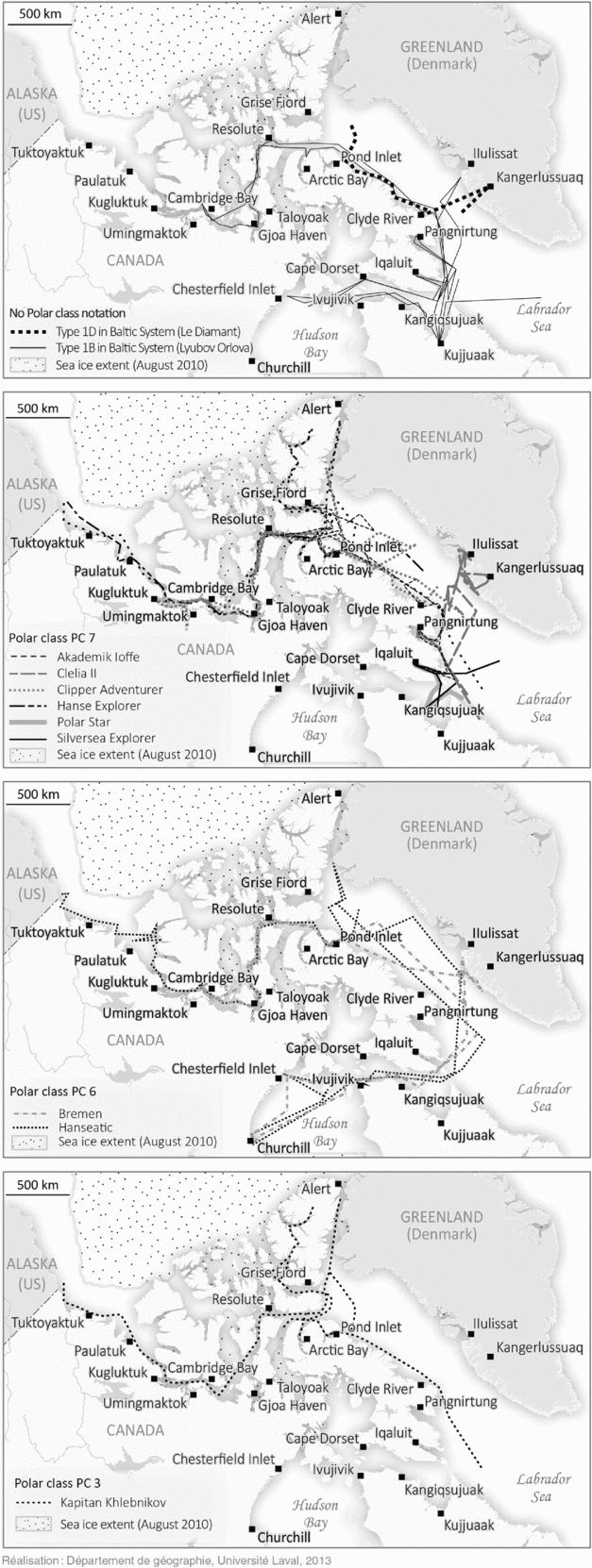
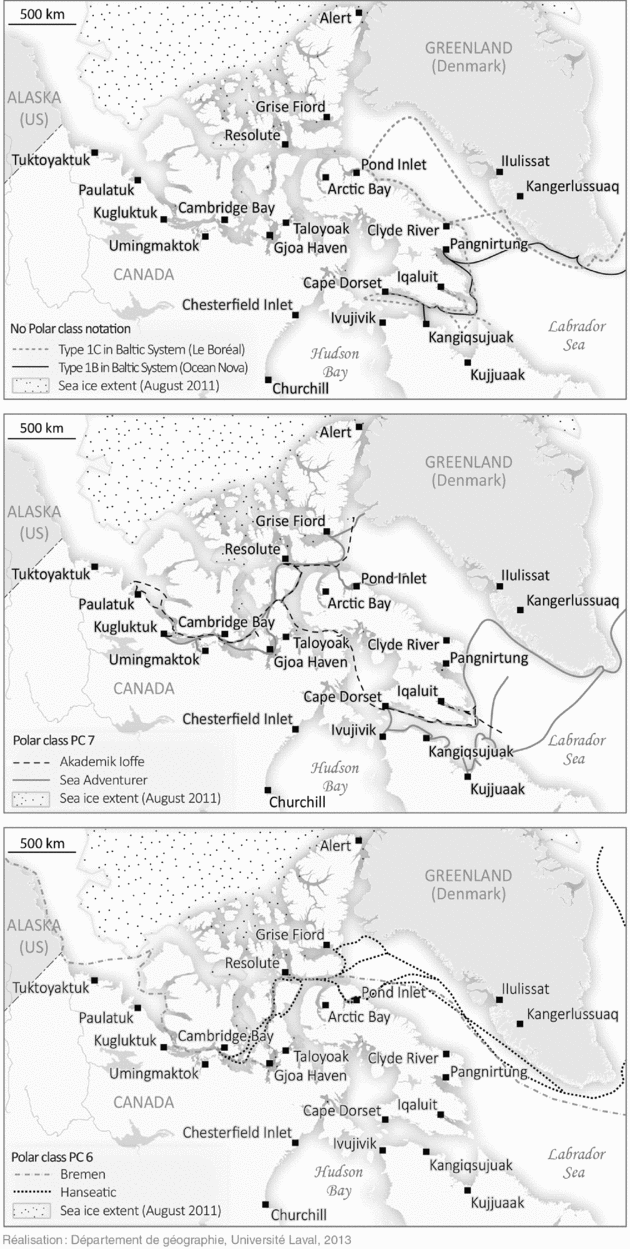
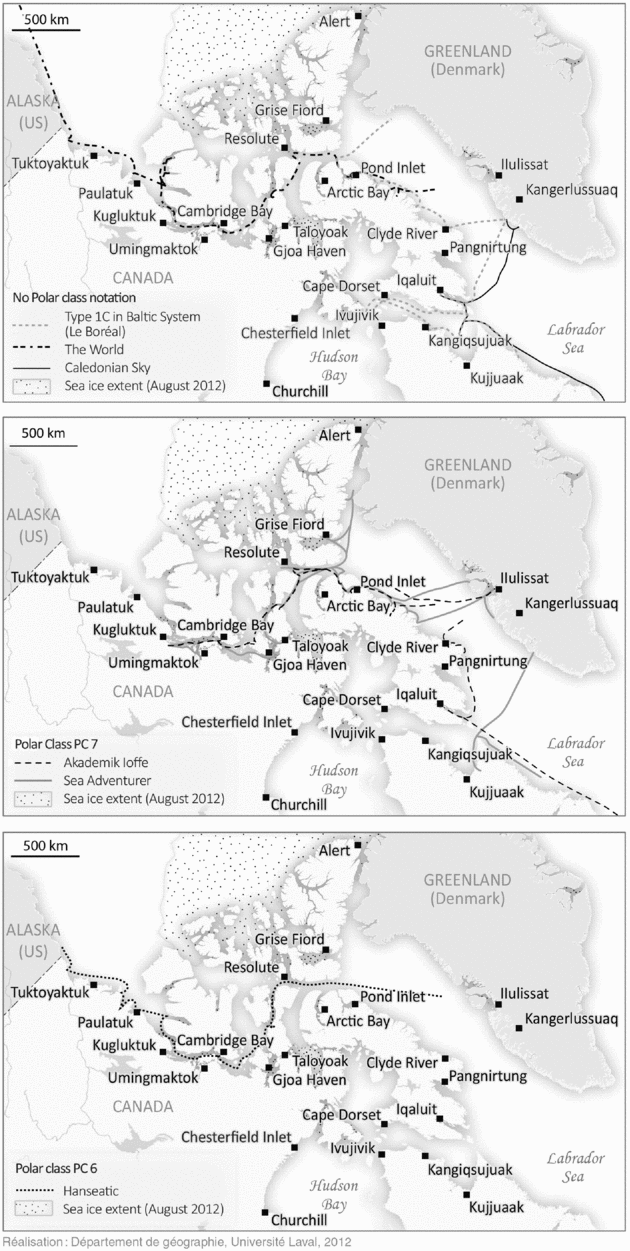
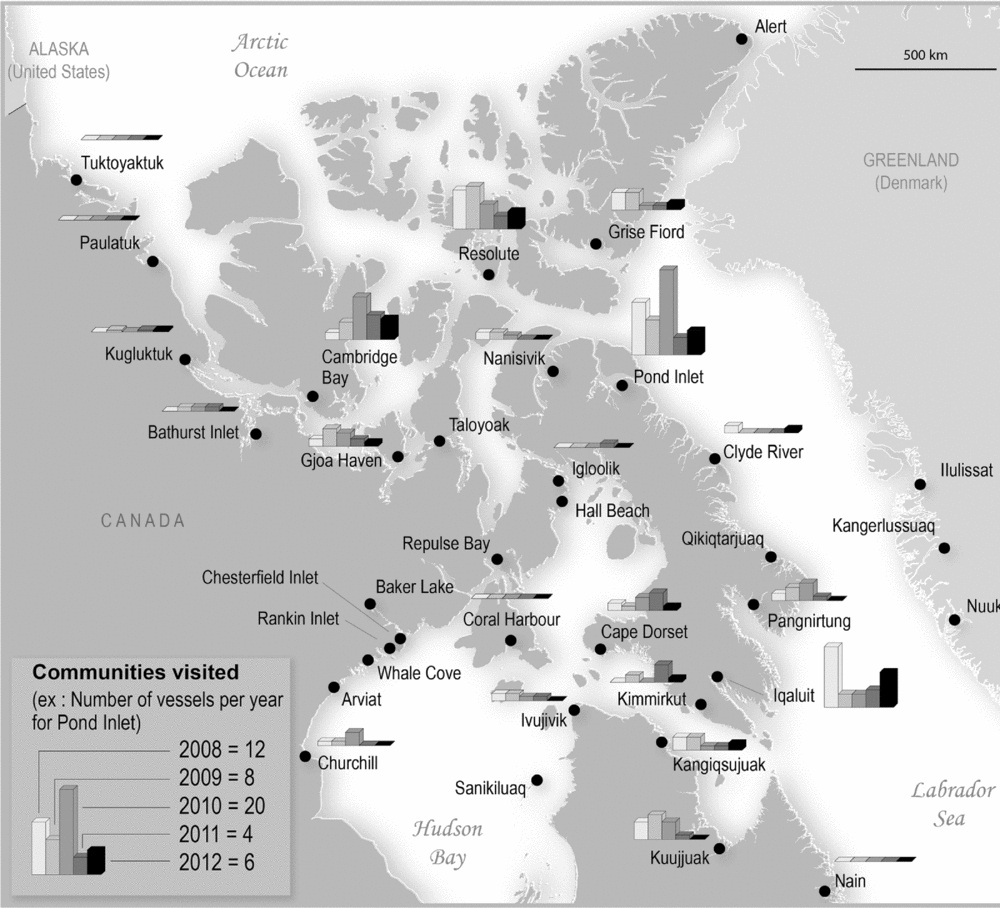
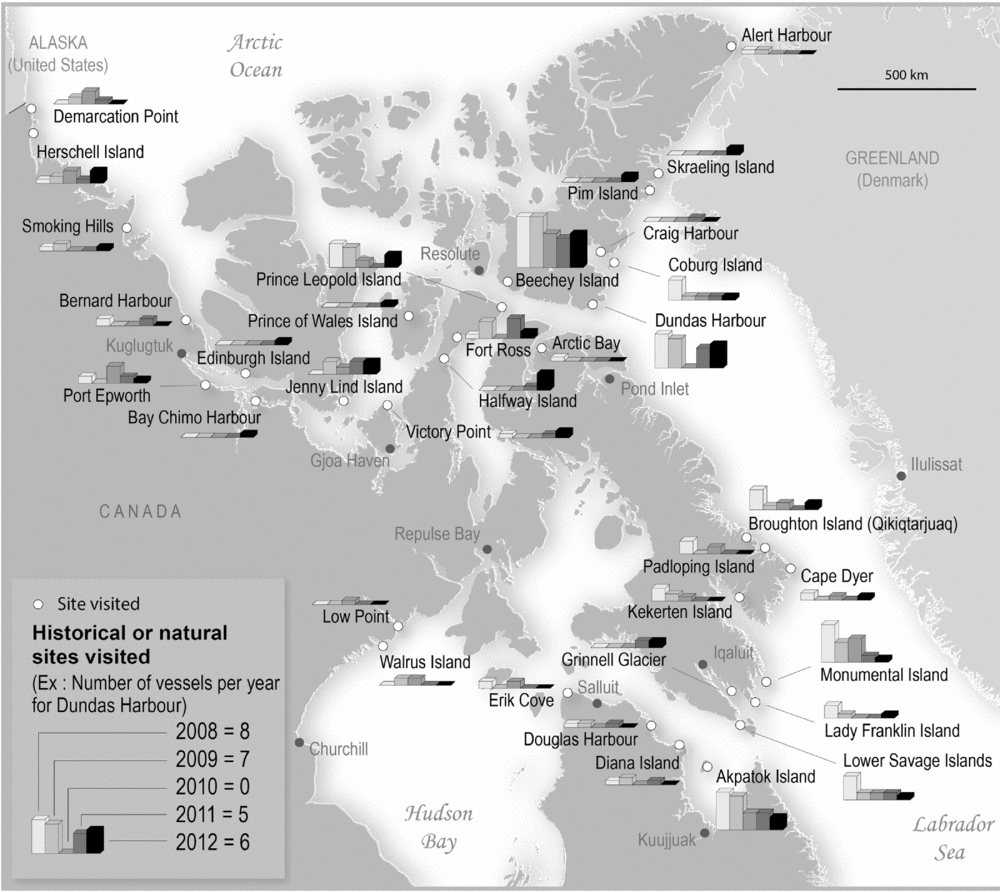
The cruise ships in the Canadian Arctic waters in 2010 followed three main itineraries. Of eleven vessels, only three transited the NWP: Hanse Explorer and Hanseatic from east to west and Kapitan Khlebnikov, from west to east. Clipper Adventurer/Sea Adventurer, Akademik Ioffe, Lyubov Orlova (now out of service) and Bremen all sailed into Baffin Bay and entered the NWP up to Resolute or Cambridge Bay. Other ships like Le Diamant, Clelia II, Polar Star (now out of business) and Silversea Explorer plied the Hudson Strait and waters south of Baffin Island, but also cruised Baffin Bay. A diversified geography of visits emerges, already highlighted by Dupré (Reference Dupré2009, Reference Dupré and Lasserre2010) and Stewart and Dawson (Reference Stewart and Dawson2011): stopovers are concentrated in the eastern Arctic (Baffin Island and Northern Quebec) and central Arctic (mostly Resolute and vicinity, to a lesser extent Cambridge Bay and Gjoa Haven, and along the straits of Victoria and McClintock, seldom west of Cambridge Bay), with sites and villages in the western Arctic (Tuktoyaktuk, Paulatuk, Kugluktuk, Bathurst Inlet) welcoming very few ships (Figs. 3 to 7).
Vessels itineraries in the Canadian Arctic, 2010
Vessels itineraries in the Canadian Arctic, 2011
Vessels itineraries in the Canadian Arctic, 2012
Visited communities in the Canadian Arctic, 2008–2012.
Visited natural or historical places in the Canadian Arctic, 2008–2012.
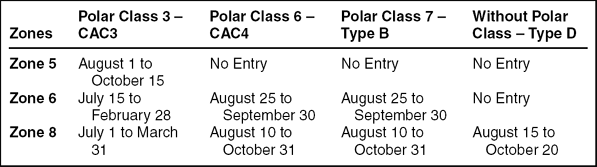
What can explain this pattern of stopovers? Communities that are the most visited by cruise ships are those where sea-ice conditions are not a constraint according to the Artic Shipping Pollution Prevention Regulations (ASPPR) Zone/Date System that is around Resolute (Zone 13) and near Iqaluit and Kuujjuaaq (Zone 15) (see Figure 2 and Table 4). Under the ASPPR Zone/Date System the Canadian government has implemented, the Canadian Arctic is divided into sixteen zones where the sea ice is permanently analysed by the Coast Guard: the ice class of the vessels (see Annex 1) compared with the nature and extent of the ice determines whether the vessels meet the necessary requirements to enter a particular zone. The system is completed by the Arctic Ice Regime Shipping System (AIRSS), which involves comparing the actual ice conditions along a route to the structural capability of the ship (Canada 2010, 2012a, 2012b).
Vessel types in the Canadian Arctic waters in 2011 and authorisation according to the Zone/Date System (Z/DS).
Examples of ice class:
PC3 – Kapitan Khlebnikov
PC6 – Hanseatic and Bremen
PC7 – Clipper Adventurer, Hanse Explorer, Akademik Ioffe, Clelia II, Polar Star and Silversea Explorer
Without IACS PC notation – Caledonian Sky (100A1 Lloyd's), Le Diamant (Type 1D in the Baltic System), Boréal and Soléal (1C); Lyubov Orlova (1B).
The analysis of NORDREG's ship movements shows that cruise ships operating in the Canadian Arctic are all ice-strengthened and thus comply with basic Canadian regulation and IMO guidelines for ships operating in polar waters, but their ice-class is not necessarily strong and this constitutes a serious limitation to their autonomy, as they cannot enter specific zones depending on their ice class and the prevalence of sea ice in a specific area. Lyubov Orlova, for instance, is only ice-class 1B, Le Diamant 1D (barely ice-strengthened therefore); MS World, Boréal and Soléal, all ice-class 1C, will also be lightly ice-strengthened but will nevertheless navigate Baffin Bay and the NWP. Sea Voyager (present in 2011) and Caledonian Sky, present in 2012, are Lloyd's ice class 100A1, which is even less than the Baltic System class 1D. Most others are either PC 7 or PC6, with the exception of the icebreaker Kapitan Khlebnikov (PC3) removed from cruise service in March 2012 (Quark Expeditions 2010). It should be replaced by 50 Years of Victory (PC1) for a cruise to the North Pole in 2013 from Murmansk, but Quark Expeditions no longer offers Arctic cruises in Canada, focusing instead on Greenland, Iceland and Svalbard in their 2013 catalogue.
On the other hand, we observe that some communities located in both zone 5 and 6 did not record any cruise ship movements, whereas technically they could. Ice therefore could not be the only factor in the design of the itineraries. Ships venture further and further north: in September 2012, Clipper Adventurer (PC7) sailed into Nares Strait, where up to recently a lot of thick ice remained even late in the summer. It is likely the acceleration of the ice melt will provide operators with a larger choice of destinations.
Dupré (Reference Dupré2009, Reference Dupré and Lasserre2010) also underlined that cruises do not merely stop over at communities, but also frequently at landmark or historical points (Beechey Island for instance, where members of the 1845 Franklin expedition are buried). Tourists like to see spectacular scenery or witness Arctic fauna; places like Bylot Island, Monumental Island, Grinnel Glacier, where fjords bear glaciers cascading down to the sea, where high cliffs are beaten by the waves or where large Arctic animals such as walruses, bears, seals can often be observed; are attractive places. Dramatic scenery is less prevalent in the western Arctic, flatter and almost devoid of glaciers. This aspect could certainly favour stopovers in the eastern Arctic archipelago, and thus shape itineraries, except when the marketing of a cruise focuses on historical aspects like the NWP or the lost Franklin expedition. On the other hand, selling complete transits across the NWP could be appealing to a western market, sensitive to the myth of the quest for the NWP to Asia. Cruise companies have offered at least one such transit every year since 1992, but there is no trend presently toward a strong increase in this submarket (Table 5)
Complete northwest passage transits (from Baffin Bay to Beaufort Sea) by cruise ships and icebreakers acting as cruise ships, 2000–2012.

Source: ‘NWP Transits’, Canadian Coast Guard, Nordreg, Iqaluit.
When size matters. Regional disparities in the size of vessels
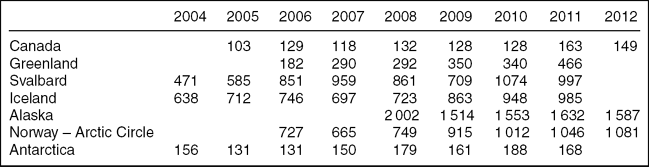
Spatial disparities can also be observed regarding the average size of ships. In Greenland, Svalbard, large (above 700 passengers) and small cruise ships share the market (WWF 2004; Greenland 2012), and the same is true for Antarctica (Roura Reference Roura, Hall and Saarinen2010; IAATO 2012). The average number of tourists per ship sheds light on disparities with this regard (see Table 6), although averages tend to mask the disparities within a single destination. The two destinations that display low averages are not structured the same way: if Antarctica attracts both large and much smaller cruise ships, in Canada most ships do not transport much more than the average, illustrating this structural characteristic of cruise tourism in Canada: ships are small, usually ice-strengthened, and offer several onshore excursions, sometimes several a day. In Svalbard, Greenland, northern Norway and Iceland, there is a marked trend towards larger ships: the average number of tourists per ship went from 471 in 2004 in Svalbard to 997 in 2011; from 182 in 2006 in Greenland to 466 in 2011; from 638 in 2004 in Iceland to 985 in 2011; from 727 in 2006 in northern Norway to 1081 in 2012. An opposite trend is witnessed in Alaska, although the industry remains largely dominated by large ships, with the average decreasing from 2002 in 2008 to 1587 in 2012.
Evolution of average number of tourists per cruise ship, 2004–2012
Sources: Same as Fig. 1
Notes on cruise ship data:
Antarctica, Alaska, Canada, Svalbard: number of voyages.
Iceland: number of cruises that stop at Reykjavik, ‘95% of the cruise ships that visit Iceland berth in Reykjavík’ (Iceland 2012: 2).
Northern Norway: highest among the number of stopovers in Arctic Norwegian ports or sites. Usually it is either North Cape or Tromsø.
Greenland: ‘number of cruises which included at least one call in Greenland’.
Russia: data is extremely difficult to get. Nine cruise vessels were set for a port call in Murmansk in 2011 (Barents Observer 2011).
Sources: Svalbard: Viken Reference Viken and Baldacchino2006; Svalbard, 2006; Norway 2012b.
Greenland: Greenland 2010.; AECO 2012; Greenland 2012; Kaae and Rabede Reference Kaae, Rabede, Maher, Stewart and Lück2011.
Canada: Canadian Coast Guard, Nordreg.
Iceland: Iceland 2012; E. Huijbens, Director, Icelandic Tourism Research Centre, personal communication, 24 November 2012.
Norway: Cruise Norway 2012.
Antarctic: IAATO 2012.
Logistical constraints to traffic expansion
Contrary to what was expected by the media and several analysts, despite growth in the number of vessels and passengers to most Arctic destinations, the development of the Canadian Arctic as a major arctic cruise tourist destination is much more modest.
The survey of cruise operators showed that only two out of eleven operators already present intended to expand their presence in the Canadian Arctic. With regard to operators present in other regions, only three out of nearly 51 surveyed operators intended to enter the Canadian Arctic market.
This lack of enthusiasm on the part of operators is due, in part, to major navigational constraints which stem, mainly, from the sea-ice that requires ice-strengthened vessels as, unlike other Arctic destinations, like southern Alaska, southern Greenland or Iceland, ice is still relatively prevalent in Canadian waters. But this is not the only reason, for other destinations also experience drifting ice and are very popular, Svalbard or the western coast of Greenland for instance. The lack of maritime infrastructure and the strong regulations in the Canadian Arctic waters are often cited as factors limiting the expansion of traffic.
Sea ice and ice-strengthened ships: a major constraint
The lack of available ice-strengthened vessels imposes limits on expansion. Aurora Expeditions, Cheesemans Ecology and Travel Dynamics, three companies that operate cruise itineraries in Antarctica as well as in the Russian and European Arctic, confirmed their interest in developing new itineraries in the NWP but were unable to implement their projects as they could not find adequate ships. In the same vein, the fact that Polar Star Expeditions no longer operates, that Quark Expedition's Kapitan Khlebnikov suspended its cruise tourism activities for mining purposes and that Lyubov Orlova was seized at St John's, Newfoundland because of a debt of US$ 251,000 owed to the charterer, also decreases the number of vessels cruising in Canadian Arctic. As drifting sea ice is still very prevalent in the Canadian Arctic archipelago, and as icebergs and bergy bits are more frequent in Baffin Bay because of the melting of the Greenland ice sheet (Lasserre Reference Lasserre and Lasserre2010b; NAIS 2012), it remains mandatory, and much safer, for cruise companies to operate passenger vessels with reinforced hulls, vessels that are usually carrying no more than 100 passengers and thus limits all forms of mass tourism.
Besides, the operating mode of tourist landings in the Canadian Arctic consists in zodiacs shuttling back and forth from the passenger ship and transporting the tourists to land: if possible for about 100 passengers up to a few hundreds (it was used at times during the cruise of the MS The World in 2012 with 508 passengers (Toomey and Splettstoesser Reference Toomey and Splettstoesser2013). This mechanism is unthinkable several times a day for larger ships with more passengers. The value-added cruise tourism developed in Arctic Canada consists in multiple landings, and, given the state of infrastructures, this makes smaller ships compulsory. Operators must therefore find or order rather small (and thus more costly to operate given the limited economies of scale) and ice-strengthened passenger ships for Canadian Arctic cruises. Cruise tourism is faced with a choice regarding its operating method: either cruises with large ships that can accommodate a large number of tourists, but that will rarely enable them to go ashore; or cruises with smaller ships, at times ice-classed but with limited economies of scale, that can reasonably organise landings on a twice-daily basis if wished. Markets like Svalbard, Greenland and Antarctica, as seen in table 6, see both types of operating mode; Alaska definitely is organised on large cruise ships that rarely come ashore; Canada welcomes mostly small ships with frequent onshore excursions through zodiac landings.
Therefore, the entry into the Canadian Arctic market by players who own large vessels often with a low ice class, like the no-ice class P&O Aurora (1 975 passengers), AIDA Aura (1 300 passengers) or Costa Delicioza (2 260 passengers) that visited Greenland in recent years, a trend that can also be observed in Iceland or the Svalbard, proves more difficult. Apart from Kapitan Khlebnikov (PC3), no ship can sail freely in the Canadian arctic waters in the summer without major regulation constraints justified by the prevalence of sea ice and its erratic distribution from year to year, whereas ice conditions are often much less of a constraint in southern Greenland, Iceland or the western part of Svalbard in the summer, as attested by ice maps published by the National Snow and Ice Data Center (NSIDC). Vessels without a polar class notation, like Caledonian Sky (100A1 in Lloyd's System), Le Diamant (1D class in the Baltic System); MS The World, Boréal (both 1C) and Lyubov Orlova (1B) are severely restricted in their activities. The strong shipping regulations and the limitations due to drifting ice make ice strengthened ships mandatory; the lack of polar class (PC) vessels constitutes a major constraint to cruise shipping in the Canadian Arctic that limits the diversification of itineraries.
Lack of maritime infrastructure: a barrier to growth for communities?
The lack of port infrastructure in Nunavut is obvious. There are only three ports with berths in the Canadian Arctic, Deception Bay/Raglan, Nanisivik and Churchill, the first two are only industrial and the second is far from classical cruise itineraries. All other places are serviced with barges and provide no facility for ships to dock. For instance, it is expected that the construction of a deep water port in Iqaluit and Rankin Inlet as well as small craft harbours in the communities are initiatives that, once completed, might increase the attractiveness of certain locations and might promote the development of tourist shipping (Stewart and others 2012: 13). In addition, we think that improved maritime infrastructure would facilitate cruise ship calls in ports of communities that received no ship visit in 2009–2010, and would also facilitate stopovers by private yachts. A deep water port in Rankin Inlet would thus increase the potential attractiveness of the Hudson Bay region and neighboring communities and consequently would allow Chesterfield Inlet, Clyde River, Kugaaruk and Repulse Bay to expect visits from cruise ships and further develop their touristic services.
Operators disagree on the impact of poor infrastructure on the Arctic cruise market growth in Canada. La Compagnie du Ponant does not see the lack of maritime infrastructure in the Canadian Arctic as a major constraint since part of their broader business strategy is to offer a unique experience to their guests through zodiac excursions. On the other hand, Adventure Canada does quote this as another limiting factor for the introduction of larger ships: if the logistics of having 100 passengers shuttling back and forth with zodiacs is feasible, it is not be the case with 2000 passengers: it is complicated and increases the risk of forgetting a tourist onshore, something that could prove dramatic outside a village. Besides, other companies such as One Ocean Expedition which are already present in the region see the lack of deep water ports with fuel and water bunkering facilities as a major limitation to the expansion of their activities.
A similar opinion has been obtained from CLIA and AECO members Holland America and Silversea. They claim that there is not enough available fuel, that marine infrastructure in the region is inadequate to berth large passenger vessels, and finally that adequate infrastructure for search and rescue operations is lacking.
Once new infrastructure is completed, it is possible that tourism will expand, as was witnessed in the case of Greenland and Svalbard. Indeed, Greenland, Svalbard, Iceland, Norway and Alaska all can accommodate large passenger vessels (≥1000 passengers) as these ships can be exploited thanks to existing maritime infrastructure. Our data shows that many of the cruise operators surveyed signal the lack of maritime infrastructure as a barrier to increasing their activities and organising the itineraries of large capacity vessels. The Canadian Arctic cruise tourism industry market, in order to increase the number of vessels and tourist visitors to parity with other Arctic destinations, seems to need expanded maritime infrastructure. Indeed, economics tells us that the current cruise prices are limiting the growth of demand for these cruises. The development of maritime infrastructure in the Canadian Arctic could stimulate the interest of companies which own large capacity vessels with reduced exploitation costs per passenger, and that presently operate in the Russian or European Arctic. The literature underlines that the success and development of the cruise activity in an area of navigation depends on various factors: attractive port of departure/or arrival of the cruise, as well as that of the area included in the route, the seasonality of the area concerned, the presence of infrastructure (ports with passenger terminals) and the purchasing power of people living in the area concerned (Fournier Reference Fournier2011). Destinations looking to expand their market share need to consider issues such as where their potential tourist markets are located and to what extent their location is easily accessible for those markets (Nelson Reference Nelson2013): this is entirely contingent upon the transportation system. In the European Arctic (Greenland, Iceland, Svalbard and Russia), the cruise companies often start their trips from a port that is well connected to air services (for example, Helsinki, Murmansk, Reykjavik or Tromsø). In the Canadian Arctic, there is no public port with berths except Churchill; air connections do exist to most communities, but air fares are very expensive, and this is another limiting factor.
Canada's legislation over Arctic waters in the archipelago: an obstacle to the growth of the cruise industry?
The socio-political issues around access to the NWP and the desire of Canada to protect its sovereignty are reflected in the cruise tourism industry. Indeed, several operators have underlined the negative effect of Canadian legislation with respect to navigation in its waters. In this regard, the Director of Expedition Cruises of Silversea emphasises that the Coasting Trade Act ‘prohibits foreign vessels to operate from a voyage embarking in one Canadian port (1 day of cruise) and ending that same voyage in Canadian Waters without leaving the territory'was a major constraint to the expansion of its activities (Silversea, personal communication, 13 May 2011). With regards to the sustainable development of local communities, he affirms that he ‘would like to offer a series of shorter voyages, which would benefit us as a company and the local communities. . .’. Similarly, One Ocean Expedition Company that operated the Russian icebreaker cruise ship emphasized the limitations of the Canadian Border Service Agency (CBSA) clearances and the constraining costs of inspections, which make the Canadian Arctic a costly place in which to operate. It can also be pointed out that ‘challenged with work permits for the Russian crew on the ship we operate, all of our voyages start and end in Greenland. This means instead of putting all our money into the Canadian Arctic, we spend half in Canada and half in Greenland’ (One Ocean Expedition, personal communication, 13 May 2011).
In this respect, it seems that while Canadian Arctic laws such as the Coasting Trade Act focus on the protection of the environment, the specific application of the Zone/Date System (Z/DS) described under the Arctic Shipping Pollution Prevention Regulations (ASPPR), under the Arctic Waters Pollution Prevention Act (AWPPA), which stipulates the opening and closing dates for each of the 16 zones of the Canada Arctic, appeared to limit the possibility of a diversification of visited places, and consequently could question the socio-economic development tourism can provide. To reflect evolving ice conditions because of climate change, the Canadian Government introduced the Arctic Ice Regime Shipping System (AIRSS), a system that takes into account both the characteristics of the ship (mainly its ice class) and the real ice conditions at the time of intended navigation. The AIRSS thus involves comparing the actual ice conditions along a route to the structural capability of the ship: it is therefore more flexible than the Z/DS, but recent research demonstrated the need to update both the fixed Z/DS navigation system and the AIRSS calculation method, since these systems are reproached with not reflecting long term trends and inter-annual variability of ice conditions (Timco and others Reference Timco, Collins and Kubat2009; Timco and Kubat Reference Timco and Kubat2007).
However, the venturing into Canadian Arctic waters of ships with little or no ice-strengthening, like Caledonian Sky, attests to the flexibility the Canadian legislation offers. Shipping in Arctic waters is regulated by the Ministry of Transportation (Transport Canada). As the ship held less than 453 m3 of fuel, it was not forced to abide by AWPPA that provides for the Z/DS and the AIRSS, although she had to register with Nordreg as it presented more than 300 grt. If the cruise ship had borne more than that amount of fuel, it would have had to respect AWPPA and could have faced a denial. Thus, cruise ships can take advantage of the legislation tolerance although they are not particularly suited for Arctic waters.
This unintended flexibility may be cause for concern, as the recent record of cruise ship accidents in polar waters attests to the need for strong regulations, including regarding crews. On 19 June 1989, Maxim Gorkiy underway from Iceland to Svalbard entered a field of drifting ice. The ship did not reduce speed, collided with an ice floe and sank. Fortunately, a Norwegian Coast Guard vessel arrived on the scene within few hours and rescued the passengers and crew. In August 1996, Hanseatic grounded in Simpson Strait in the Canadian Arctic. In July 1997, the same Hanseatic grounded north of Spitsbergen Island in Svalbard. In January 2007, Nordkapp grounded in the entrance to Deception Island in Antarctica. On 23 November 2007, Explorer hit a growler and sank, without casualty, in Antarctic waters. In December 2007, Fram drifted during two hours after a propulsion system failure in Antarctic waters. In February 2009, Ocean Nova grounded in Marguerite Bay in Antarctica. In December 2009, Clelia II grounded in Antarctica. In August 2010, Clipper Adventure grounded in the NWP. In January 2011, Polar Star grounded in the Antarctic Peninsula. Is it a miracle that no one died given this long series of accidents, but the list underlines the need for strong regulations for shipping and crews, including cruise shipping, in the Arctic, especially in poorly charted waters. Only 6% of the Arctic waters are charted to international standards and 11% is mapped (Trauthwein Reference Trauthwein2012). In the Antarctic, it is all the more important for ships to be operated by competent crews as no law enforcement authority patrols these waters.
Besides, the Canadian regulation may be considered severe by cruise operators, but Canada is not the only market where regulations are tight. Norway recently announced mandatory piloting would be enforced in the Svalbard waters as of 2013 for large cruise vessels (Norway 2012a). Section 5 of the recent Danish Maritime Authority regulation for Greenland imposes a qualified navigator and Section 7 hints at possible ice-class regulations (Denmark 2009). Canada is not the only Arctic region where regulation is aimed at securing traffic, but limits the freedom of navigation of cruise operators.
Conclusion
The summer melting of sea ice has fuelled scenarios of an impending explosion in traffic in the Arctic, including in cruise shipping in the region. However, although marine traffic in the Russian or Canadian Arctic seems to be definitely increasing, this is far from being an explosion. In addition, although a few cargo voyages in the northeast passage have recently attracted a lot of media coverage, the increase is not in transit traffic but rather in destination traffic, the growth being fuelled by vessels servicing local communities and natural resource exploitation activities.
Similarly, it is unlikely that cruise tourism in the Canadian Arctic will experience the rapid growth predicted by some researchers and by the media. Most of the operators surveyed communicated their disinterest in expanding their business activities or to enter the Canadian cruise tourism market, with only three signalling their interest. Several underlined what appears to them to severely hinder growth potential. To summarise, an advisor to the sales manager of Beluga Expedition and Adventure's made an interesting remark with regards to the Canadian cruise tourism market: ‘It is not really a grow(ing)-market, but more (of) a steady one’ (Beluga Expedition and Adventure, personal communication, 25 February 2012). Similarly, we consider that a diversification of cruise itineraries and a modest increase in cruise tourism activities in the future are more realistic expectations, yet we might not witness the actualisation of these expectations without significant development of marine infrastructures and a revision of regulations in the Canadian Arctic waters.
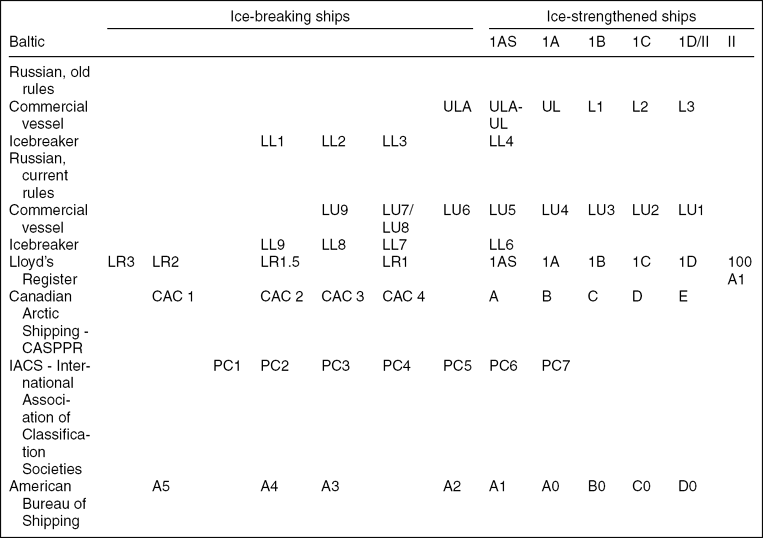
In the literature and on the Transport Canada website, many ice-class systems coexist, and the equivalence among these different systems proves to be complicated, especially for shipping firms and insurance companies: let us mention the Canadian ice-class system (CAC1, CAC2, CAC3, CAC4, Type A, B, C, D, E), the well-known Baltic system (1AS, 1A, 1B, etc.), Lloyds, Russian, Japanese, American, etc. (Lasserre Reference Lasserre and Lasserre2010a). The Canadian Arctic Class (1995) was developed in consultation with the International Association of Classification Societies (IACS) (United States 2007). The International Maritime Organization Guidelines. . .(IMO 2002, 2009) are both recommendatory only in nature. The IMO is developing a mandatory polar code. Parallel to IMO efforts to implement unified guidelines for shipping in polar waters, the International Association of Classification Societies (IACS) set up unified criteria for ice classification in 2006 (IACS 2006). The Canadian Arctic Class (CAC) classification should be replaced by the IACS/Polar Class (PC) notation (Canada 2009). Approximate equivalence of ice class classification systems: