Introduction
The balsam gall midge Paradiplosis tumifex Gagné (Diptera: Cecidomyiidae) is an important pest of the Christmas tree industry in Québec, Canada but also in eastern Canada and the United States of America. Despite its importance, its seasonal ecology and relation with its host tree has only been sporadically studied over the recent decades (see review by Osgood et al. Reference Osgood, Bradbury and Drummond1992). This also applies to the community of natural enemies associated with its gall, especially its specific inquiline Dasineura balsamicola (Lintner) (Diptera: Cecidomyiidae), which was initially mistaken for the gall-maker itself (Osgood and Gagné Reference Osgood and Gagné1978; Lintner Reference Lintner1888). Studying this system is difficult due to the complex, linked population dynamics of these two intimately interacting species, and their numerous parasitoids (Osgood et al. Reference Osgood, Bradbury and Drummond1992; Mailhot Reference Mailhot2006), but other factors such as microparasites (viruses) and plant resistance could play an important role (Hanski Reference Hanski1987). Short epidemic episodes of fir needle galling, followed by long periods (up to seven years) where local densities are very low (Osgood et al. Reference Osgood, Bradbury and Drummond1992), leave little opportunity and time to study these insects and develop complex experimental setups when they are sufficiently abundant.
In southern Québec, the galling species P. tumifex is univoltine and completes its development on needles of balsam fir (Abies balsamea (Linnaeus) Miller (Pinaceae)) and Fraser fir (Abies fraseri (Pursh) Poiret (Pinaceae)), thus being responsible for aesthetic damage in commercial plantations grown as Christmas trees when its density is high, by causing needle discolouration and premature senescence (Cloutier et al. Reference Cloutier, Mailhot and Brodeur2006). Adult females lay eggs in the spring on fir needles at the opening bud stages (Osgood et al. Reference Osgood, Bradbury and Drummond1992). Eggs soon hatch into white larvae that position themselves lengthwise to feed at the base of needles, where they initiate gall formation (West and Shorthouse Reference West and Shorthouse1982). During summer, larval development goes through three instars, to mature in early fall, where larvae leave galls and migrate to the litter to overwinter as prepupae, without spinning a cocoon (Osgood and Gagné Reference Osgood and Gagné1978). Pupation occurs the following spring, ending with the emergence of a new generation of adult midges.
The inquiline species D. balsamicola is incapable of inducing gall formation on its own, thus the intimate and early association with P. tumifex is specific and obligatory (Osgood and Gagné Reference Osgood and Gagné1978). Inquiline midges emerge and lay eggs on buds around the same time as those of its host P. tumifex. Following hatching, D. balsamicola larvae actively search for P. tumifex larvae in the process of gall initiation, and position themselves closely behind to eventually become enclosed within the developing gall of its host (Akar and Osgood Reference Akar and Osgood1987). Larvae of both species then feed and develop together in the gall, in close synchrony for most of the summer period. Eventually, P. tumifex development is strongly limited by that of the inquiline, and in the end, only the D. balsamicola larva will survive and leave the gall in the fall to overwinter in the litter, in this case within a diapausing cocoon (Osgood and Gagné Reference Osgood and Gagné1978). Similar to its host, the inquiline completes pupal development in the following spring with the emergence of the adult midges.
In the context of climate change, especially under temperate latitudes with an average temperature increase and reduction of snow cover (Intergovernmental Panel on Climate Change 2013), the organisms in this and similar complex systems are most likely to be perturbed at various stages of their development. Currently, there is insufficient information available to predict possible outcomes for the tightly interacting midge species of the fir needle gall, despite the galler being a pest whose dynamics directly involve the inquiline species as a key mortality agent (Osgood et al. Reference Osgood, Bradbury and Drummond1992). Other factors such as coincidence in space and time apply both to their establishment on host trees in the spring during emergence and egg laying, and availability to higher trophic levels (parasitoids) as hosts (Berg et al. Reference Berg, Kiers, Driessen, van der Heijden, Kooi and Kuenen2010). For example, spring asynchrony between midges of both species, or with bud break of host trees (Yukawa Reference Yukawa2000; Robinet and Roques Reference Robinet and Roques2010; Singer and Parmesan Reference Singer and Parmesan2010, Klapwijk et al. Reference Klapwijk, Ayres, Battisti and Larsson2012) could occur at the time of adult emergence and gall induction, especially as the adult midges of both species are extremely short lived (i.e., one to two days at most) (Giese and Benjamin Reference Giese and Benjamin1959). Successful overwintering, from leaving the gall in fall to reach the superficial litter and enter diapause, and to midge emergence in the spring, also depends on critical life history events that are sensitive to climatic conditions, and which could be altered specifically. For example increased average temperatures could lead to elevated base metabolism during diapause, thus burning energy reserves more quickly than normal (Bale and Hayward Reference Bale and Hayward2010), potentially leading to reduced fitness of adult midges, or giving them mixed environmental signals, and consequently perturbing key lifecycle events. Most importantly, the consequences cannot be assumed to be similar in the two species, despite their close and probably ancient association.
The present study had two main objectives. The first objective is to clarify knowledge about P. tumifex ecology in relation with its host tree A. balsamea, and with its inquiline D. balsamicola, in Christmas tree plantations and native forests where balsam fir is abundant and could serve as a source of galler midges to invade plantations. The second objective is to experimentally manipulate overwintering conditions in the laboratory to obtain data on how temperature might affect both the galler and inquiline survival during the long overwintering period of their life cycle.
For the first objective, we focussed on better understanding the life history dynamics of the two species and their parasitoids in relation to host tree phenology, which could indirectly be useful to tree growers, and help them manage galler infestations. This was achieved by sampling in the field at four field locations including two commercial Christmas tree plantations and two native balsam fir stands, during the recent P. tumifex epidemic episode recorded in southern Québec. For the second objective, we created experimental climatic scenarios to which maturing larvae collected in the late season were exposed at all stages of overwintering (pre-diapause, diapause, and post-diapause). We hypothesised that prolonged or shortened winter duration in combination with slower/faster patterns for fall/spring temperature change could affect larval, and ultimately adult fitness as measured by diapausing initiation strategy, stage specific survival, and body mass change.
Our results indicate possible spring asynchrony between fir host trees and P. tumifex, with however limited effect on its summer populations under epidemic conditions. We found that natural overwintering habitats and strategies differ between the two species, which could impact the current pest control practices of Christmas tree growers. Experimental diapausing conditions affected both species differentially, with possible impact on midge sex ratio, and ultimately on population dynamics.
Materials and methods
Field study sites
Field sampling was performed in 2012 and 2013, at the peak of the last widespread epidemic outbreak of P. tumifex in southern Québec, Canada. Sampling was performed in two commercial plantations and two native forest sites, located in three regions: Capitale-Nationale, Chaudière-Appalaches, and Estrie. Commercial plantation sampling sites with well-established P. tumifex infestation were chosen to correspond to different pest management strategies: one located in Saint-Julien (46.02744°N, 71.55958°W) under conventional pest control with chemical insecticide applications and the other located in Saint-Fortunat (45.96778°N, 71.59962°W), with no pest management (natural control). In both plantations, trees were six to nine years old balsam fir averaging 2 m in height. The two natural forest sites with a stand of mature balsam fir were within 150 km of the commercial plantations, and were mainly selected for study because they were experimental forest sites where no pest control was applied. The first one was the Forêt Montmorency site (47.30784°N, 71.1621°W), a forest station belonging to Université Laval; and the second one was an experimental forest station jointly operated by the Québec and Canadian governments, located in Armagh (46.76753°N, 70.65729°W).
Spring field emergence and synchrony of Paradiplosis tumifex with balsam fir bud break
Spring emergence of P. tumifex adults from the litter under trees was monitored in 2012 and 2013 at the Saint-Julien commercial plantation site, which was possible at this site due to a high level of infestation, ensuring sufficiently abundant captures. Emergence traps (n=7; inverted plant pots with a collecting jar at the top, covering 571.5 cm2 of litter each) were set up at the base of trees showing previous-year damage caused by P. tumifex. Sampling was performed twice a week during the entire emergence period, and emerging cecidomyiid midges were identified as P. tumifex (or D. balsamicola, when present) and sexed. Presence of known parasitoids of P. tumifex (see Osgood et al. Reference Osgood, Bradbury and Drummond1992) among emerging insects was also recorded. Simultaneously, for both years, 15 current-year shoots per sampling period were collected to perform an egg and larval count on terminal and subterminal buds, in relation to tree phenology (bud development stages). Balsam fir bud development was divided into five stages, following Osawa et al. (Reference Osawa, Shoemaker and Stedinger1983). At stages 1–2, the bud is entirely or partially covered with a membrane, while new needles are entirely exposed from stage 3 and up. Topsoil samples (n=10; 30×20×5 cm) were also collected in 2013 and incubated in the laboratory under controlled conditions (20 °C, 65% relative humidity, 16 light:8 dark hours photoperiod) in insect rearing cages, to closely monitor sex ratio of newly emerged midges and their fresh weight using an XP2U ultra micro balance (Mettler Toledo, Mississauga, Ontario, Canada).
Spring emergence of inquiline Dasineura balsamicola and pupation habitat
Spring emergence of D. balsamicola was monitored in 2013 at the Armagh native forest site, where sufficiently high levels of inquilinism were observed in 2012. Emergence cages (n=7) were set up, and topsoil samples (n=10) were collected at this site, similar to what was done at the Saint-Julien plantation site. In addition, fir branches (n=30) were collected and set up in water cups inside translucent plastics bags in the laboratory, to monitor possible emergence from galled needles remaining on fir shoots, and from other potential pupation sites on branches (i.e., base of nodes, bark, lichen). Branch sampling was added here based on preliminary data indicating very low overwintering of D. balsamicola larvae in the litter under trees, as opposed to what was previously reported (Osgood and Gagné Reference Osgood and Gagné1978). It was hypothesised that branches, especially on naturally growing trees, could provide alternate overwintering sites to the forest litter for the inquiline D. balsamicola.
Shoot sampling of Christmas trees and natural balsam fir trees
Unless specified otherwise, sampling of P. tumifex and D. balsamicola was consistently performed during larval development within galled needles. The sampling unit was a shoot cut from the apex of a branch, and more precisely defined as all fir needles along the complete terminal shoot originating from a terminal bud of the previous year, and from two nodal shoots from subterminal buds. Additional subterminal buds/shoots were excluded from the sample (see Powell Reference Powell1982). Shoots (n=15) were sampled every two weeks from May to November at all sites to get a complete scope of the lifecycle of both insects during their residence in galls. Shoot sampling was performed randomly within a plantation or a native forest, one shoot being collected per tree at around 1.5 m above ground, and with a minimum 3 m distance between sampled trees. At four monthly intervals, fir branches (n=5) were also collected during the winter (diapausing) period in 2013 (December 2012 to March 2013) at the Armagh native forest site.
Shoot infestation level and gall density
Shoots were examined in the laboratory to determine level of galler infestation, as well as inquiline and parasitoid incidence. For each shoot (terminal plus two nodals, when present) length was noted, as well as the number of needles bearing galls. Level of infestation was calculated as the number of sampled shoots carrying at least one active gall as determined by the presence of live larvae. Gall density for each sampled shoot (number of galls per cm of shoot; terminal and two nodals) was obtained when shoot elongation was complete as shown by terminal bud presence.
Parasitism and inquilinism
When possible, up to nine needles with galls were randomly selected on each sampled shoot, and were dissected to assess gall content, empty galls being excluded, to obtain rates of parasitism and inquilinism. As parasitism is difficult to detect in the early stages of P. tumifex development, especially for endoparasitoids such as Platygaster Latreille (Hymenoptera: Platygastridae) species, which can attack eggs and first instars before gall formation (Osgood et al. Reference Osgood, Bradbury and Drummond1992), parasitism rates were not measured until the second instar. It is also known that several Eulophidae and Encyrtidae (Hymenoptera) parasitoids attack P. tumifex larvae within the gall later in summer and early fall (Osgood et al. Reference Osgood, Bradbury and Drummond1992; Mailhot Reference Mailhot2006).
Laboratory experiment: insects
In fall 2012, mature larvae leaving galls for overwintering were collected at the Saint-Julien site in late September (P. tumifex) and the Armagh site in late October (D. balsamicola). Over a period of one week, collecting trays (45×30×10 cm) half filled with water were placed on the soil at the base of infested trees to trap falling P. tumifex, traps being renewed every 48 hours. This method proved to be efficient to collect a large number of P. tumifex larvae, which dropped to the ground once exiting the gall, and often exhibited saltation behaviour. As for D. balsamicola, due to freezing temperatures occurring in the late fall, collection was performed using whole branches from infested trees (about 45 cm in length) instead of water trays. They were brought back to the laboratory to be incubated at 4 °C and monitored for exiting larvae in translucent plastic boxes. Unlike P. tumifex, D. balsamicola larvae did not exhibit saltation and were mostly found crawling along the shoots once exiting the gall.
Laboratory experiment: experimental design of climatic scenarios
Mature larvae of both species were randomly placed in Petri dishes (100×15 mm, Fisher Scientific Company, Ottawa, Ontario, Canada) with a peat moss based pupation substrate (Fafard, Saint-Bonaventure, Québec, Canada), at 10 individuals per Petri dish. Larvae were then randomly allocated to three experimental climatic scenarios (treatments, full description below). For P. tumifex, a total of 30 Petri dishes per treatment (n=300 larvae) were set up at 12 °C as the entry overwintering temperature, which approximated field mean temperatures at the time of gall exiting (late September). For D. balsamicola, 13 Petri dishes per treatment were set up (n=130 larvae) with an overwintering entry temperature set at 4 °C, since larval maturation (i.e., exiting the gall) for this species occurs later than P. tumifex (Osgood and Gagné Reference Osgood and Gagné1978; Mailhot Reference Mailhot2006).
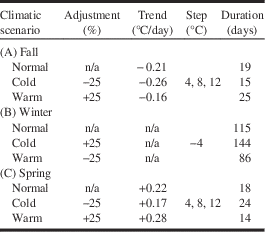
Three climatic scenarios (normal, cold, and warm) were programmed in Conviron plant growth chambers (Controlled Environments Limited, Winnipeg, Manitoba, Canada). Available meteorological data for the last 30 years from Thetford Mines (Environment Canada; 46.1°N, 71.35°W), which is located near sampling sites (<100 km range), was used to build an average “normal” overwintering scenario considering the whole period from early fall to late spring. The slope of the best fitting regression curves for recorded field temperature decrease/increase in the fall/spring at Thetford Mines was used as the normal reference pattern. The experimental cold and warm scenarios were defined by adjusting the normal slope of fall cooling or spring warming by +25% (warmer) or −25% (colder) (Table 1A).
Parameters for simulated climatic scenarios during experimental overwintering of the balsam fir needle galler Paradiplosis tumifex and its inquiline Dasineura balsamicola.

To simplify insect handling and programming of the experimental growth chambers, decreasing steps of 4 °C were used in all the fall cooling scenarios (from 12 °C or 4 °C to 0 °C). Once reaching 0 °C, the overwintering scenario entered the winter phase, and the experimental temperature was lowered to −4 °C to simulate moderate freezing conditions of the organic soil layer under a snow cover (Goodrich Reference Goodrich1982). Normal winter duration (below freezing point) was based on the mean (30 years) number of days with average temperatures below 0 °C, and alternate scenarios (cold and warm) were based along the same criteria of relative adjustment as above, i.e. a 25% decrease or increase in duration of the winter phase (Table 1B).
Temperature warming in the spring phase of each experimental scenario was modelled in the same manner as cooling in the fall, involving increasing 4 °C steps once average temperatures reached above the freezing point (Table 1C).
Laboratory experiment: observations and data collection
Observations were made every two weeks beginning at initial experimental entry, during fall, winter and spring phase, where two randomly selected Petri dishes for each treatment were taken out of the experiment for P. tumifex, and one for D. balsamicola. Sampled individuals were delicately retrieved from substrate using a sieve (600 μm openings) and characterised for pupation status (absence or presence of silken cocoon), survival (mostly indicated by turgor, normal colour and body contractions in reaction to handling), and fresh weight, which was determined on an ultra micro balance. Observations were carried out until the end of the experimental spring phase when the first signs of pupation were observed. Remaining Petri dishes were then kept to follow adult emergence, where final overwintering survival, sex ratio, and fresh weight of midges were measured.
Statistical analyses
Data obtained by field monitoring of spring emergence and overwintering experiments was analysed with SAS 9.3 (SAS Institute, Cary, North Carolina, United States of America) for both P. tumifex and D. balsamicola, with the following procedures: PROC GLM was used for emerging adult weight from samples collected in the field, with sex as a fixed effect; PROC MIXED was used for larval weight from laboratory experiments, where fixed effects were climatic scenario (normal, cold, warm), phase (fall, winter, spring), cocoon (presence or absence), and random effects were sampling date nested within phase and petri dish nested within sampling date×temperature×phase; PROC GLIMMIX was used for cocoon spinning incidence with climatic scenario (normal, cold, warm) as a fixed effect and petri dish as random. For larval survival through overwintering period, fixed effects were climatic scenario (normal, cold, warm), phase (fall, winter, spring), cocoon (presence or absence), with sampling date nested within phase and petri dish nested within sampling date×temperature×phase, as random effects. Lastly, for survival at time of adult emergence, fixed effects were climatic scenario (normal, cold, warm), and petri dish as random.
Results
Spring field emergence and synchrony of Paradiplosis tumifex with balsam fir bud break
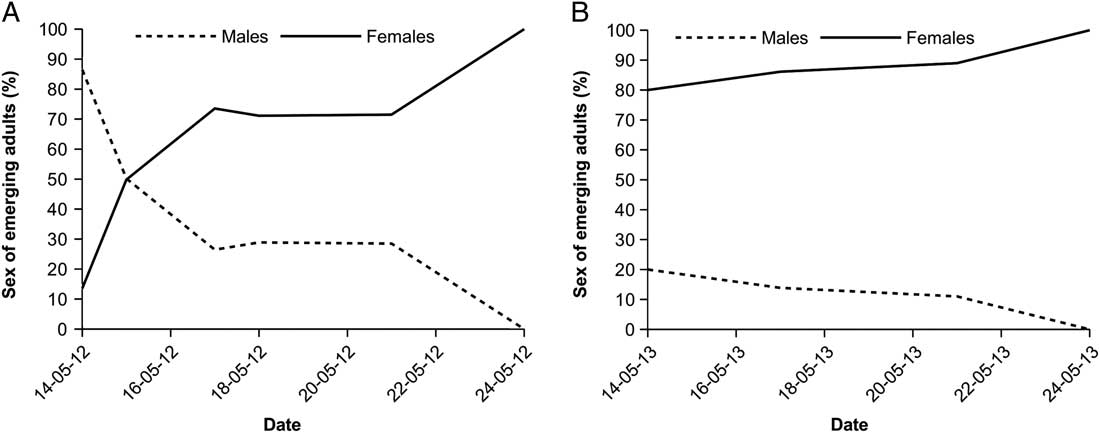
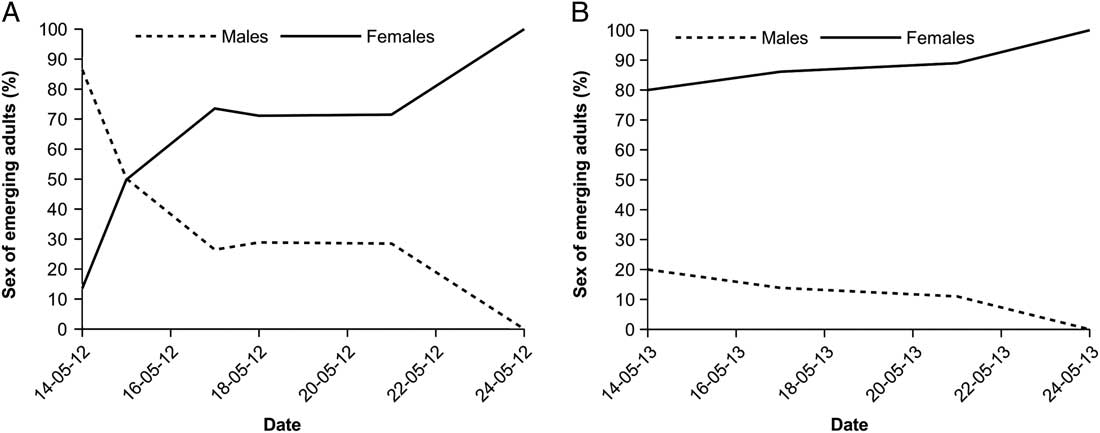
The emergence traps operated at the Saint-Julien plantation site captured 2036 P. tumifex adult midges in 2012, and only 185 individuals in 2013, which corresponds to an overall 91% decrease in spring abundance over one year period. This corroborates the end of this epidemic episode as observed in different Québec regions (see infestation levels at experimental sites below). Globally, distribution of sex at emergence was markedly female biased, though it differed between years: 68.1% of emerged adults were female in 2012, and 87.0% in 2013. Sex ratio also appeared to vary consistently over the emergence sequence, going from male biased to female biased (Figs. 1A, 1B), suggesting sequential protandry in the spring emergence of the galler. Using this setting of emergence traps on the ground, only a few inquiline D. balsamicola midges (n<5) were collected, over the two years sampling period. Parasitoids were also collected for both years, consisting mostly of endoparasitoid Platygaster species. The mean fresh weight (±SE) of emerged P. tumifex adults from topsoil samples in 2013 (n=129) was higher (F(1,127)=26.52, P<0.0001) for females (0.3649±0.0149 mg) than males (0.1789±0.0228 mg), indicating marked body size dimorphism in P. tumifex adults. Interestingly, retrieved pupae from topsoil samples using a sieve also showed that P. tumifex do spin a cocoon in the natural litter.
Sex distribution of Paradiplosis tumifex adults trapped in emerging cages set on the ground at the Saint-Julien plantation, from 14 May 2012 to 24 May 2012 (A), and from 14 May 2013 to 24 May 2013 (B).
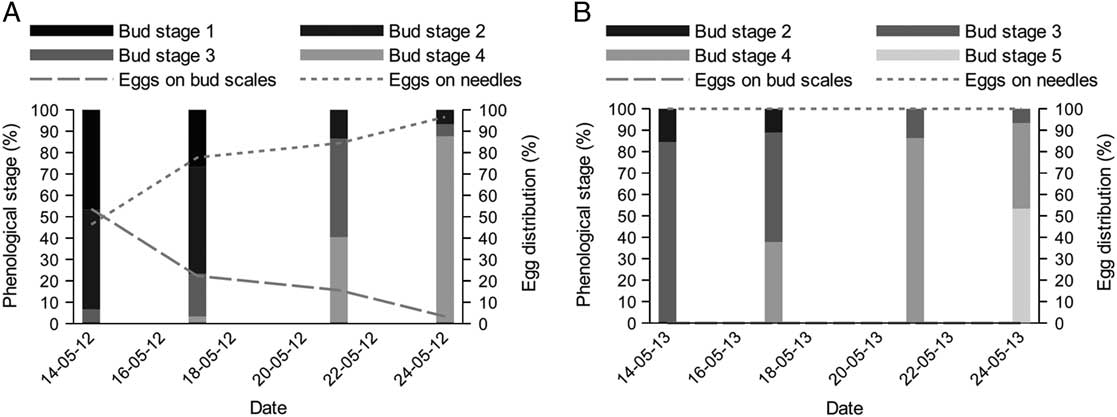
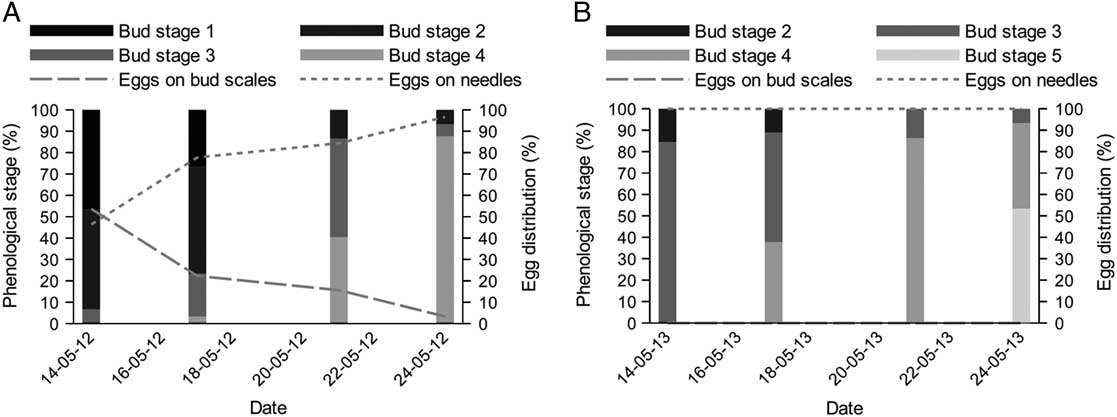
In spring 2012, P. tumifex midge emergence was asynchronous with host tree bud development. At the beginning, balsam fir buds were still at stages 1–2, resulting in suboptimal conditions for P. tumifex egg laying, with eggs being often laid on scales of unopened buds (Fig. 2A). During late galler midge emergence, which occurred at bud stages 3–4, most eggs were laid between the fresh needles of opening buds, allowing direct access to feeding sites for newly hatched larvae. In 2013, midge emergence seemed to better match optimal phenological development of trees, with no eggs laid on bud scales (Fig. 2B).
Spring synchrony of Paradiplosis tumifex egg laying distribution on opening buds in relation with Abies balsamea bud development stages (1–5; as defined by Osawa et al. Reference Osawa, Shoemaker and Stedinger1983), at the Saint-Julien plantation in 2012 (A) and 2013 (B).
Spring emergence of inquiline Dasineura balsamicola and pupation habitat
At the Armagh forest site, emergence traps collected no D. balsamicola midges despite high inquilinism levels in the sampling area, and very few P. tumifex. This however might be expected with traps set on the ground, as this location was a native forest site with mature fir, where tree density is lower, as opposed to a commercial plantation, and based on observed differences in larval locomotion behaviour between these species. Branch samples, however, provided emerging D. balsamicola individuals, as opposed to no P. tumifex. These observations indicate different overwintering substrate for the mature larvae of the inquiline (tree branches) and the galler (ground litter). As for P. tumifex, inquiline sex ratio at emergence was clearly female biased (79.0% females), but total captures (n=16) were insufficient to form a strong estimate. Although not statistically tested, mean fresh weight (±SE) of emerging D. balsamicola was 0.1432±0.0198 mg for females, and 0.1340±0.0326 mg for males, being globally half the measured P. tumifex weight, and with no sign of body size dimorphism between sexes.
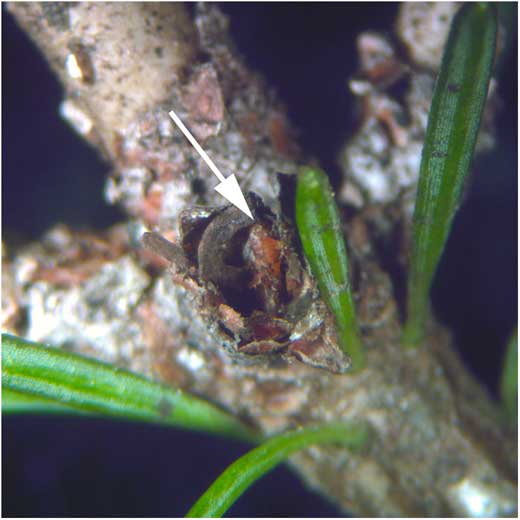
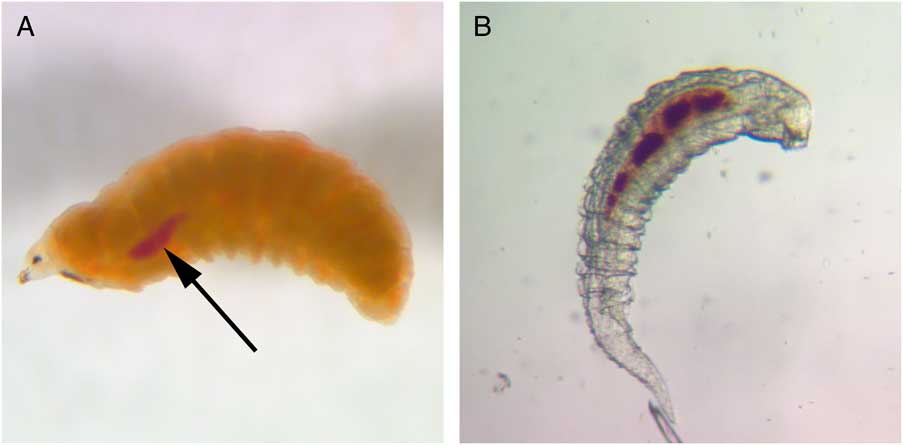
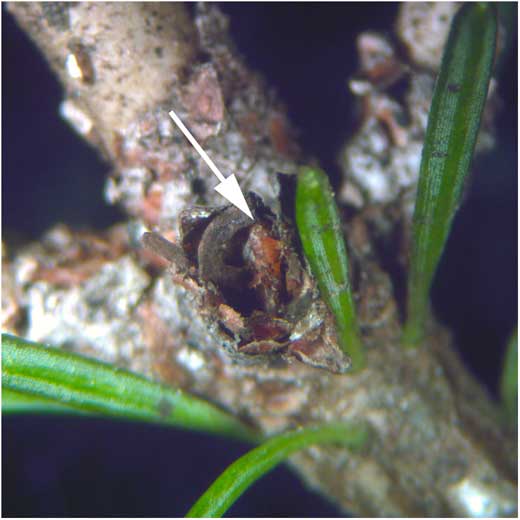
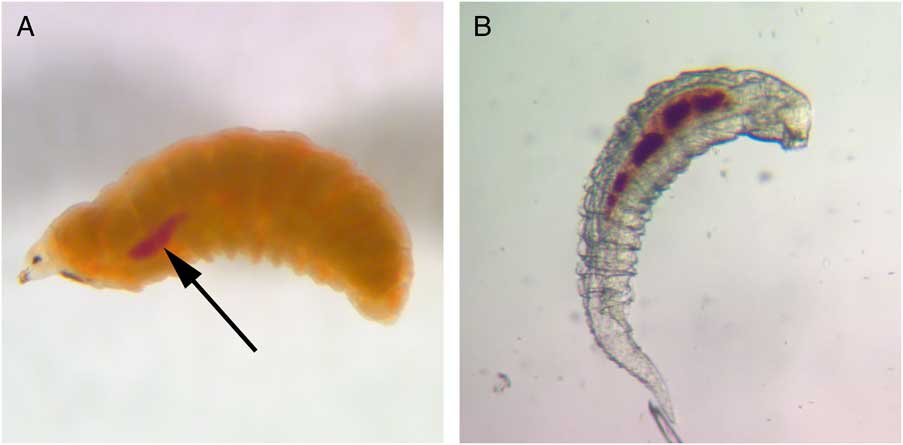
Balsam fir branches sampled during winter at the Armagh forest site and examined for the presence of overwintering P. tumifex and D. balsamicola larvae confirmed that the inquiline overwintered above ground on shoots (see Fig. 3). No diapausing larvae of either species were found in dissected galls still present on the remaining needles (n=407). However, D. balsamicola cocoons were frequently found at the base of examined shoot nodes (n=768), with 18% of them carrying one or more inquiline cocoons. These were also frequently found within bark interstices and among lichens. On several occasions and unexpectedly, cocoon dissections revealed parasitised D. balsamicola overwintering mature larvae (Fig. 4A) harbouring caudate endoparasitoid larvae (Fig. 4B). Parasitised inquiline larvae kept in rearing until emergence allowed the identification of these endoparasitoids as Encyrtidae, but it was not possible to confirm them either as a known encyrtid parasitoid of P. tumifex (MacGown Reference MacGown1979; see also Mailhot Reference Mailhot2006), a new species, or even a hyperparasite.
Inquiline Dasineura balsamicola overwintering cocoon on a balsam fir shoot, hidden at the base of a node.
Parasitised inquiline Dasineura balsamicola larva (A), and caudate endoparasitoid larva from overwintering inquiline larva (B).
Shoot infestation level and gall density
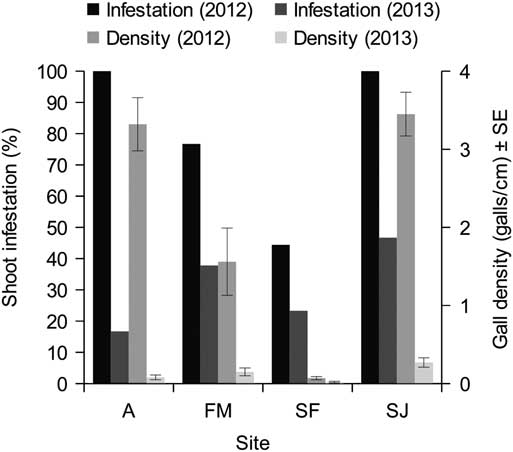
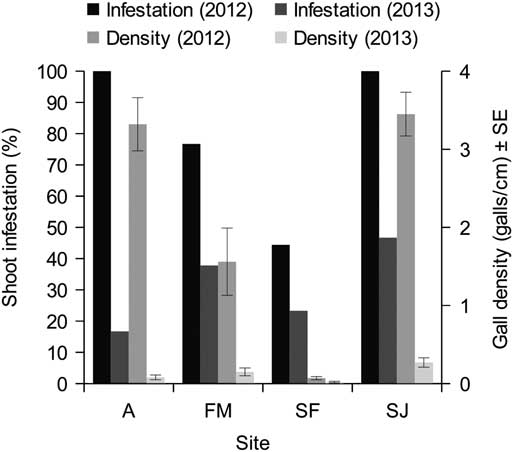
Sampling at all four sites for the two-year period (Fig. 5) coincided with the end of a widespread epidemic episode in southern Québec (personal observations from distant sites), infestation being at its highest in both the native forests and the commercial plantations in 2012 and decreasing drastically in 2013. However, infestation levels remained moderate in 2013 in the one commercial plantation that was managed with insecticides (Saint-Julien). In the other plantation (Saint-Fortunat) with no chemical pest control, infestation level was moderate for both years based on the percentage of shoots bearing galls, but was much lower based on gall density.
Proportion of infested balsam fir shoots, and gall density standardised per unit of shoot length, for 2012 and 2013, at the four study sites: Armagh natural forest (A), Forêt Montmorency natural forest (FM), Saint-Fortunat plantation without insecticide treatments (SF), Saint-Julien plantation with insecticide treatments (SJ). Primary Y-axis (left) refers to shoot infestation, and secondary Y-axis (right) to gall density.
Parasitism and inquilinism
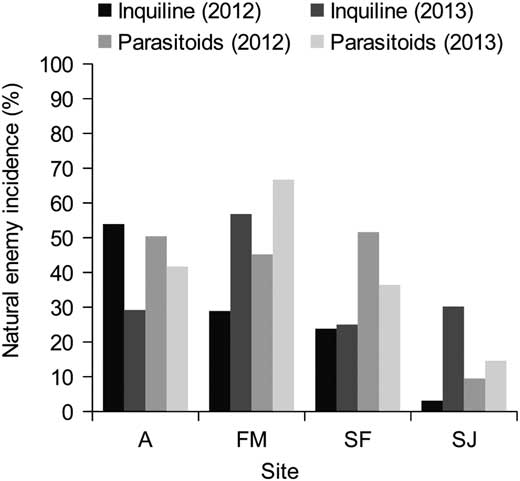
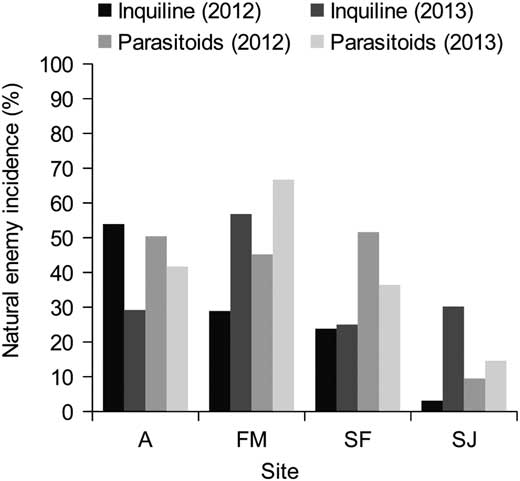
Gall dissection allowed estimating levels of inquilinism and parasitism of P. tumifex (Fig. 6). Inquilinism by D. balsamicola was present at all sampled sites, but at varying levels. The same is true for P. tumifex parasitism rates, here attributed solely to an endoparasitoid Platygaster species. No ectoparasitoids of the galler were found during the summer sampling period. For all sites, inquilinism and endoparasitism (Platygaster species) levels remained high for both years, except in the Saint-Julien commercial plantation (with insecticide treatments), where observed levels were consistently low. However, inquilinism levels dramatically increased in Saint-Julien in 2013 over 2012. In the Saint-Fortunat commercial plantation with no insecticide intervention, levels of these natural enemies changed little between the two-year study, as was also observed in the native forest locations, where they remained relatively high.
Overall incidence of inquiline Dasineura balsamicola and Platygaster species parasitoids in galls of balsam fir needles, for 2012 and 2013, at the four study sites: Armagh natural forest (A), Forêt Montmorency natural forest (FM), Saint-Fortunat plantation without insecticide treatments (SF), Saint-Julien plantation with insecticide treatments (SJ).
Shoot sampling during late summer and fall also revealed a low incidence of parasitoids other than Platygaster species in all sampled locations, consisting mostly of ectoparasitoids (data not shown), and eulophid wasps activity on galls.
Experimental climatic scenarios: cocoon spinning and survival
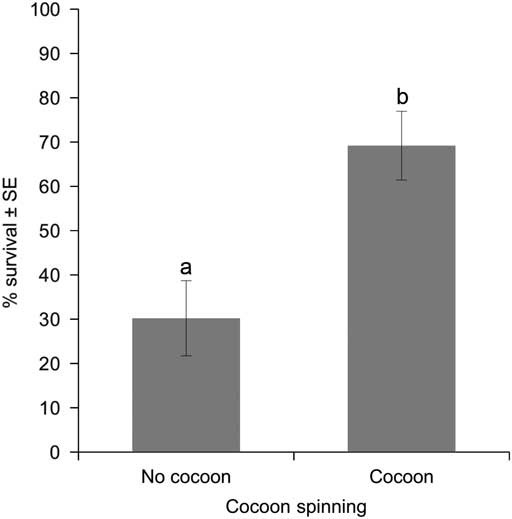
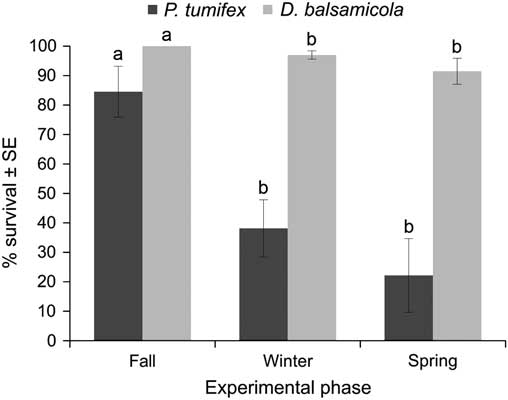
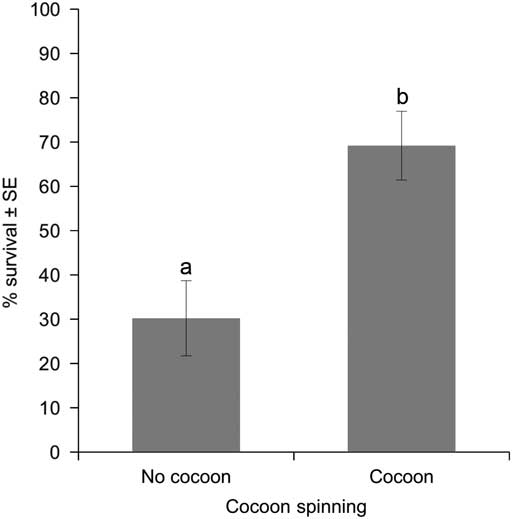
Interestingly, galler P. tumifex larvae set under experimental conditions spun an overwintering cocoon at relatively high rates in the peat moss substrate during the fall phase. As cocoon spinning is theoretically possible at any time during the fall phase, until temperature reaches the freezing point, its mean rate (±SE) was not measured until the beginning of the winter experimental phase. Cocoon spinning was similar among climatic scenarios (F(2,393)=1.11, P=0.3313), even though it appeared 10% higher under normal condition (78.69±5.08%) than cold (67.82±5.80%) or warm conditions (68.32±7.95%). Interestingly, overwintering survival was highly correlated to cocoon spinning, those larvae with cocoons surviving more than twice as much as the naked ones (F(1,682)=31.61, P<0.0001; Fig. 7). Survival gradually decreased over the three phases of experimental overwintering (F(2,17)=5.41, P=0.0152; Fig. 8), but with no evidence of impact of climatic scenarios (F(2,64)=0.00, P=0.9990) or interactive effects of any kind. Fresh weight of overwintering larvae was not affected by the presence of a cocoon (F(1,331)=0.60, P=0.4388), nor by climatic scenario (F(2,59)=0.67, P=0.5130), phase (F(2,17)=0.55, P=0.5883), or their interactions.
Larval survival of Paradiplosis tumifex under experimental overwintering conditions (see text for details), in relation to cocoon spinning.
Survival of galler Paradiplosis tumifex and inquiline Dasineura balsamicola larvae across overwintering experimental phases. For each species, different letters indicate a significant difference between the experimental phases, where α=5%.
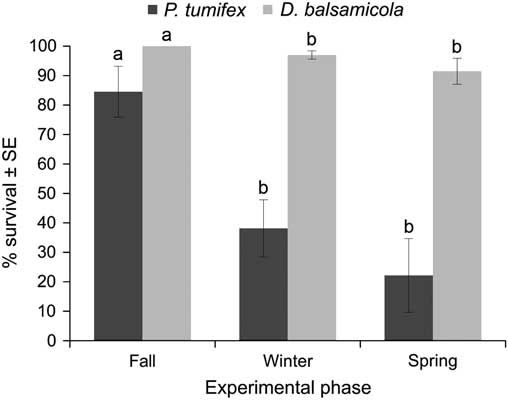
In similar experimental conditions, D. balsamicola larvae did not spin a cocoon during the fall phase in the tested pupation substrate, irrespective of treatment, thus this factor was excluded in data analysis. In contrast to P. tumifex, survival of inquiline larvae was very high during experimental overwintering (Fig. 8). For the fall phase, 100% survival was observed for all climatic scenarios, and survival remained high during both winter and spring, with no significant differences between phases (F(1,12)=2.19, P=0.1644) or climatic scenarios (F(2,304)=0.13, P=0.8758). Inquiline larval fresh weight remained stable across experimental phases (F(2,14)=0.51, P=0.6123) and was not affected by climatic scenarios (F(2,329)=1.53, P=0.2175), or their interactions.
Experimental climatic scenarios: adult midge emergence
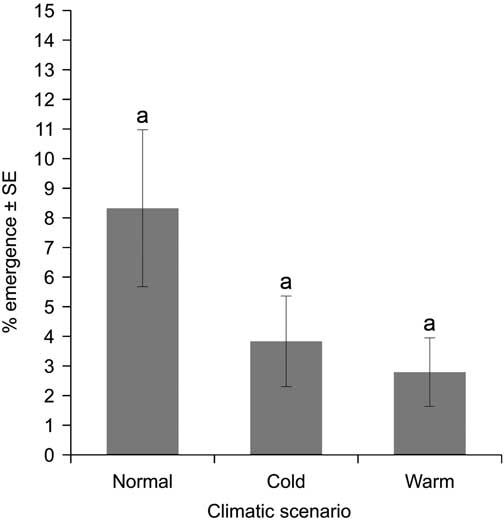
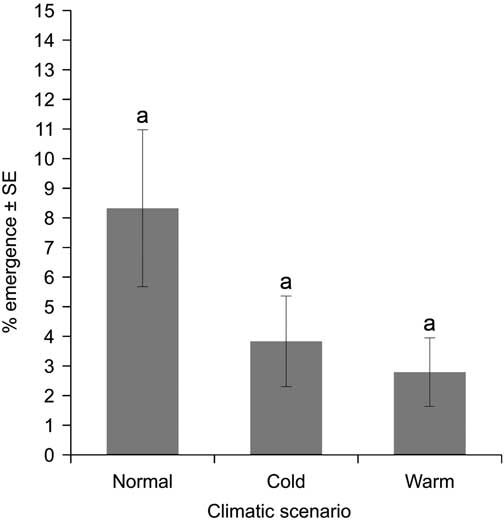
Experimental climatic scenarios resulted in no significant differences between treatments at the time of spring emergence of P. tumifex adult midges (F(2,621)=2.47, P=0.0857), emergence rates actually being very low. A trend was however observed, emergence being slightly lower for the cold and warm regimes than the normal regime (Fig. 9). Sex ratio was strongly biased, with males being completely absent in all treatments, possibly suggesting that males were more affected than females by pupal mortality in this experiment. However, data was insufficient to test for a possible effect of climatic scenarios on adult emerging weight. All unemerged and presumably dead individuals were examined for viability and no live diapausing larvae/pupae were observed.
Emergence levels of Paradiplosis tumifex adult midges in relation to experimental climatic scenarios.
Although larval D. balsamicola survival was very high (near 100%) across all experimental scenarios and phases, and globally far superior to P. tumifex, pupation at the end of the spring experimental phase was problematic. High mortality was recorded during this phase, resulting only in sporadic and incomplete midge emergence in all scenarios. As in the case of P. tumifex, no males were observed, and data was insufficient to perform a statistical analysis for the effects of treatments on adult emerging weight.
Discussion
Monitoring of spring emergence of P. tumifex over only a two-year period showed that spring asynchrony between the galler and its host tree can exist and might be problematic by increasing mortality at the egg and early instar stages. It could result from inherent differential accumulation of growth-promoting degree-days in both organisms during progressive warming in the spring. Buds and shoots of fir trees are exposed to warmer fluctuating ambient air temperature, while overwintered P. tumifex in the litter at the pupal stage, are likely exposed to a colder and more stable spring temperature regime. Asynchrony with fir bud break could then result in suboptimal egg laying for P. tumifex adult females. While delayed egg laying relative to bud break may not be reproductively limiting as open buds and spreading needles are accessible to the midge ovipositor (although needle quality and structure could change over time), egg laying by midges emerged early while buds are still unopened and covered with scales could be an issue. This is a situation we frequently observed during the first sampling year. Eggs laid on the unopened bud, or on outer scales of a partly opened bud are much more exposed to abiotic stress, parasitism and predation. Eggs laid outside the bud also represent an additional challenge to a newly hatched larva, with low mobility, but in need to reach the base of a young needle and position itself to initiate the gall (West and Shorthouse Reference West and Shorthouse1982). This was observed by Ozaki (Reference Ozaki1998), on another shoot galler system (Adelges japonicus (Monzen) (Hemiptera: Adelgidae), on Picea Dietrich (Pinaceae) species), where bud burst before egg hatching was not a problem, contrary to the opposite scenario when egg hatching of the galler occurred first. However, in our study, conducted in a period of high P. tumifex infestation, high fecundity and prolonged midge emergence over a two-week period may have counterbalanced asynchrony, as it did not seem to limit gall forming and infestation level during the summer. As bud break also occurs differentially between trees, a range of optimal and suboptimal stages is often available simultaneously. Spring emergence asynchrony at low densities could however prove to have an impact on P. tumifex populations. Thus, this system seems to match a pattern II synchronisation scenario, as described by Yukawa (Reference Yukawa2000), where the galler emergence and reproductive maturation takes place during a short amount of time relative to bud break, and where shoots remain available for oviposition for a longer period. This pattern has the advantage to offer longer optimal conditions to a short-lived galler midge with variable, premature or delayed emergence, though extreme cases could be problematic. This would suggest that for P. tumifex spring emergence asynchrony with balsam fir bud break is tolerable to a certain extent, though more extreme events resulting from climate change could affect this relation.
Besides synchrony, midge emergence monitoring allowed to characterise P. tumifex adult sex ratio, which was significantly female biased, as often found in other cecidomyiid species. Still, biased field sex ratios may result from sampling artefacts, as many cecidomyiids are monogenous, i.e., a mated female produces exclusively male or female progeny, although global field sex ratio is expected to be 1:1 (see Tabadkani et al. Reference Tabadkani, Khansefid and Ashouri2011). Whether P. tumifex is monogenous has yet to be established. However, the observed sex ratio seemed to vary across years and sites (personal observation), which suggests that ecological factors are at play. Our data also indicate that P. tumifex is protandrous, as reported by Tabadkani et al. (Reference Tabadkani, Ashouri and Qolizadeh2012) for Aphidoletes aphidimyza (Rondani) (Diptera: Cecidomyiidae), potentially leading to sex-differential mortality and continuous change in sex ratio through time during spring emergence, from male biased to female biased. Sex-biased mortality could also occur during the larval diapausing stage due to differential responses to overwintering stresses (Tabadkani et al. Reference Tabadkani, Ashouri and Qolizadeh2012; see also discussion on experimental climatic scenarios below). Finally, infections by endosymbiotic Wolbachia Hertig (Rickettsiaceae) bacteria, which are widely known to induce female biased sex ratios, could possibly affect sex ratio in the balsam gall midge, as reported in the Asian rice gall midge Orseolia oryzae Wood-Mason (Diptera: Cecidomyiidae) (Behura et al. Reference Behura, Sahu, Mohan and Nair2001).
Overwintering habitat and conditions for both species were found to partly differ from what was previously reported by Osgood and Gagné (Reference Osgood and Gagné1978). We observed that exiting mature larvae of P. tumifex do spin a cocoon in the natural litter, as well as in a standard peat moss substrate under laboratory conditions, as opposed to Osgood and Gagné (Reference Osgood and Gagné1978) findings. The inquiline D. balsamicola also spun cocoons in the field (not in the laboratory), but its diapausing habitat differed from what was previously known. Rather than the litter, the inquiline cocoons were commonly found on fir branches, in the crevices and interstices at the base of nodes (previous years buds), as well as under bark peelings and within lichens growing on branches of older trees (native forest). The fact that the inquiline can be attacked by hymenopteran endoparasitoids is also a novel finding, as this species was generally observed to be less prone to parasitism than P. tumifex, with only a few observed cases of ectoparasitism (see Cloutier et al. Reference Cloutier, Mailhot and Brodeur2006; Mailhot Reference Mailhot2006).
These findings give new perspectives on the potential of D. balsamicola as a specialised natural enemy that should be privileged to favour natural control of P. tumifex populations on Christmas trees. Inquiline spring emergence from overwintering microhabitats located high above ground on tree branches seems incompatible with the use of large spectrum insecticide treatments sprayed on trees in early spring to control P. tumifex and other major pests such as the balsam twig aphid Mindarus abietinus Koch (Hemiptera: Aphididae). Early insecticide use in commercial plantations is likely to prevent establishment of colonising D. balsamicola in response to P. tumifex recrudescence, by systematic elimination of founding individuals and thus favouring P. tumifex population growth at the beginning of an epidemic episode, potentially sustaining and prolonging it. Our study design was not specifically set up to address the effect of cultural practices with sufficient replication. However our data from different sites suggest that insecticide applications could indeed impair D. balsamicola establishment, maintain low levels of inquilinism and inversely high levels of galler infestation, when elsewhere, under management favouring natural control management, the epidemic episode is regressing and coming to an end. Consistently, the fact that no insecticide applications targeting P. tumifex or aphids were performed in 2013 at the Saint-Julien commercial plantation (under conventional pest management) might explain the local significant increase of D. balsamicola levels over 2012, despite globally low natural enemy levels. However, it should be noted that P. tumifex also has multiple hymenopteran natural enemies that could also provide natural control. These are not associated with fir branches as their pupation habitat (Osgood et al. Reference Osgood, Bradbury and Drummond1992), and thus may not be as susceptible to insecticide treatments as the inquiline midges.
Experimental climatic scenarios in the overwintering experiment in the laboratory proved to have different impacts on both cecidomyiids, showing the importance of cocoon spinning as an overwintering strategy. For P. tumifex, spinning a diapausing cocoon increased survival across all three overwintering phases. This behaviour seemed to be optional for D. balsamicola, but the very low emergence that we observed could result from absence of cocoon spinning, which might be expressed under natural conditions.
Although requiring more observation and statistical support, our results indicate a decreasing trend in the incidence of cocoon spinning in P. tumifex from shorter to longer fall-cooling periods, probably by reducing the time available to prepupae for spinning, and/or a behavioural response to mixed signals provided to the insect about conditions to follow. A pre-diapause cocoon can also be a barrier for pathogens and predators present in soil habitat, or parasitic nematodes, which were frequently found in P. tumifex collected field samples (personal observation). The diapause cocoon could also prevent desiccation during the long winter by retaining moisture, or protect from direct exposure to ice crystals in the diapausing site, thus explaining reduced mortality observed in individuals with cocoons.
Opposite to the galler, inquiline D. balsamicola survival remained very high throughout the experimental winter. The absence of cocoon spinning did not impact survival across the long overwintering period under freezing temperatures, which suggests relying on antifreeze compounds. However, high winter survival contrasted with spring mortality during the pupal stage. This might be attributable to a suboptimal experimental overwintering substrate, based on what we found to be its natural pupation habitat on fir branches, as mentioned above. Experimental exposure to freezing in the winter phase was probably much less stressing than what is expected above ground in natural conditions, where air temperature can reach −20 °C or less for prolonged periods in Québec. Different adaptations to freezing temperatures in relation to a contrasted overwintering habitat (above versus below ground) could be the source of differential survival in the two species.
High P. tumifex mortality was observed at emergence in our experiment, indicating that spring pupation remains a most critical step in the galler life cycle. This suggests that a global increase in spring temperatures or frequency of extreme events in the spring could mostly impact pupation and adult emergence of the galler, as well as its synchrony with the host, as discussed earlier. Despite limited data, a most interesting fact is that all emerging adults from all treatments were females. Even though sex ratio may be naturally female biased, the total absence of emerging males here could be explained by insufficient male diapause reserves compared to females. Males are lighter than females, which would be consistent with male-biased differential mortality, as already suggested for other gall midges (Smith and Lamb Reference Smith and Lamb2004; Tabadkani et al. Reference Tabadkani, Ashouri and Qolizadeh2012). Under stressful spring conditions, males would be the less likely to survive, leading to highly female-biased sex ratios. The absence or rarity of males could thus contribute, with other possible factors like inquilinism and parasitoids (Osgood et al. Reference Osgood, Bradbury and Drummond1992; Mailhot Reference Mailhot2006), to the cyclic population collapse of the galler. Similarly, the high mortality at emergence obtained with D. balsamicola in the experiment, despite high larval survival during winter in this case, correlated with no emerging males across all experimental conditions.
In summary, the P. tumifex/A. balsamea complex of fir needle galls appears to be relatively resilient to asynchrony that could arise more often with upcoming climate changes. Other factors than those studied here, such as mortality due to parasitism, or strongly biased sex ratio associated with monogeny could also play an important role in population dynamics. Whether these factors are susceptible to climate change has yet to be examined. However, our study reveals how the relation between the galler and inquiline at the population level could be markedly affected at the time of spring emergence and egg laying by midges, by differential overwintering habitats and inherently different ambient temperatures.
Acknowledgements
The authors thank Jérôme Bérubé, Simon Boudreault, and Alexandre Langlois for contributions to this project, as well as all the students who helped with the field work and insect rearing: Édouard Morin, Xavier Prairie, and Lukas Seehausen. They thank André Pettigrew and Dominique Choquette from the Ministère de l’Agriculture, des Pêcheries et de l’Alimentation du Québec (MAPAQ-Estrie) for positive input during the project. They also thank the Christmas tree growers who kindly allowed them to perform sampling in their plantations. This study was supported by the MAPAQ – Programme de soutien à l’innovation en agroalimentaire (PSIA) grant #810254 to Conrad Cloutier.