


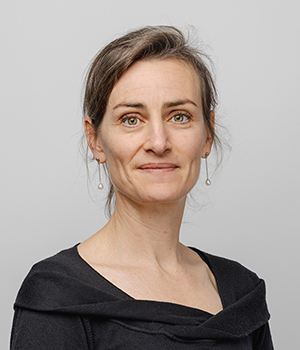
 Dr Cordula Droege is Director of International Law, Movement and Partnerships at the International Committee of the Red Cross (ICRC). She joined the ICRC in 2005 and has since served as Head of the Legal Division and Chief Legal Officer, Chief of Staff to the President, and Head of Legal Advisers to Operations, in locations including Sri Lanka and Israel and the Occupied Territories. She has worked in the field of international law and human rights at the International Commission of Jurists, the Inter-American Court of Human Rights and the Max Planck Institute for International Law. She holds a PhD and a law degree from the University of Heidelberg and an LLM from the London School of Economics.


In September 2024, Brazil, China, France, Jordan, Kazakhstan and South Africa joined forces with the International Committee of the Red Cross [ICRC] and launched the Global Initiative to Galvanize Political Commitment to International Humanitarian Law [Global IHL Initiative]. In January 2025, your team was set up within the ICRC to support States in this process, in particular on the seven workstreams discussed within the Initiative. Could you introduce us to the objectives of the Initiative and the contents of the workstreams?
Cordula Droege: The overarching objective of the Global IHL Initiative is to strengthen respect for international humanitarian law [IHL]. At its core lies a simple premise: improving compliance requires both strong political commitment and clear, shared expectations regarding what compliance entails in practice.
The Initiative therefore operates along two complementary tracks. At the political level, it seeks to elevate IHL as a strategic priority for States, encouraging commitments at the highest levels of government. It is also a reminder that compliance with IHL is not a matter of convenience – the rules must be applied universally, uniformly and in good faith. At the technical level, the seven workstreams aim to translate this commitment into concrete guidance by clarifying how existing IHL rules should be understood and applied in contemporary armed conflicts.
These two tracks are closely interconnected: political commitment to complying with legal obligations without practical guidance risks remaining rhetorical, while technical discussions without political backing lack the leverage needed to drive change. Together, the two tracks aim to ensure that commitment is both meaningful and actionable.
The Global IHL Initiative started with six States, but with the ambition to be universal. How have other States mobilized since its launch?
Anne Quintin: The mobilization has been very encouraging. At the beginning of the Initiative, we received positive reactions to the geographic diversity of the founding members, which signalled from the outset that respect for IHL is a cross-regional priority capable of uniting States.
We have also been encouraged by the number of States that proactively reached out to support the Initiative, including by volunteering to serve as co-chairs of the workstreams. In parallel, the number of States that have formally joined the process steadily increased throughout the Initiative, bringing the number of States to 115 as of June 2026 – and this number is likely to continue increasing as more States have expressed their intent to join.
You say that 115 States have joined the Initiative. What does this mean concretely? What are they committing to?
Anne Quintin: For us, joining the Global IHL Initiative means that States agree with the starting point of the Initiative and its objectives – that is, they support the idea that collective action from States is needed to improve respect for IHL and the protection of persons during armed conflict. In other words, it is a reaffirmation of shared humanitarian values and a commitment to upholding humanity in war.
In addition, joining the Initiative also carries an expectation of active involvement in the substance of the workstreams – and indeed, most of the States that have joined were present in the consultations. The number of States having joined the Initiative should be read together with the number of States that have attended the consultations, as we always ensured that all States would be able to participate on the substance, regardless of whether they had formally joined the Initiative.
Over 150 States from all regions have taken part in the consultations, with many contributing consistently across multiple rounds. This has also brought a remarkable diversity of perspectives to the table, including from States that have not traditionally been at the forefront of IHL discussions. This has considerably enriched the process.
Speaking about State engagement, can you expand on the role played by the co-chairs?
Cordula Droege: A key feature of the Global IHL Initiative is that it is co-led between several States and the ICRC. In addition to the six founding States, twenty-seven States are serving as co-chairs for the seven workstreams.Footnote 1
In practical terms, co-chairs have led the design of their respective workstreams, meeting regularly to shape both scope and outcomes. Throughout the process, they have played an important role in raising awareness on the contents of their workstreams, highlighting in particular the humanitarian challenges faced on the ground and the good practices that need to be strengthened to enhance protection. They have also mobilized other States around their workstreams, for instance by organizing supporting events to bring the discussion to different places across continents. Some workstreams also gathered States around joint statements, building key milestones along the process. One example is the Protection of Civilian Infrastructure Workstream, where the co-chairs delivered a joint statement on behalf of fifty-eight States during the humanitarian affairs segment of the United Nations [UN] Economic and Social Council in June 2025,Footnote 2 followed in March 2026 by a more substantive statement during the UN Human Rights Council, joined by 113 States.Footnote 3
Importantly, all co-chairing States have also worked closely with the ICRC in co-drafting the outcome documents of their workstreams.Footnote 4 We are truly thankful to the representatives of the co-chairing States for all the in-depth discussions we have had during our workshops – this has genuinely been a process of collective reflection.
Maybe one parallel aspect to flag is that the co-chairs reflect a wide diversity of geographic backgrounds and experiences. They include States with strong legal expertise, States that have led diplomatic processes and States with direct experience of armed conflict, bringing valuable operational perspectives.
Have other stakeholders been able to have a voice in the process?
Cordula Droege: The Global IHL Initiative is first and foremost an initiative by States and for States, reflecting the fact that the primary responsibility to respect and ensure respect for IHL lies with States. Having said this, while the Initiative is primarily addressed to States, it was important for us to ensure a multi-stakeholder approach to the process. We wanted to make sure that those with relevant expertise on the subject matters of the workstreams would be able to share that expertise.
In practice, a wide range of actors have contributed their expertise through consultations and expert meetings, including academia, international organizations, regional organizations and National Red Cross and Red Crescent Societies [National Societies], as well as non-governmental organizations. For example, Médecins Sans Frontières has been a key contributor to discussions on the protection of hospitals.Footnote 5 In the Prevention Good Practices Workstream, a group of five National Societies – the Australian Red Cross, Costa Rican Red Cross, Italian Red Cross, Qatar Red Crescent and Senegalese Red Cross – led consultations with forty-five National Societies across the globe to feed into the workstream.Footnote 6 Another example is the involvement of several tech companies in the information and communications technology [ICT] workstreams, with Microsoft, WithSecure and other companies joining discussions on upholding IHL in the use of ICTs in armed conflict.
In addition, we also sought to engage other actors outside of the consultations, such as parliamentarians. One example in this respect is the joint declaration of support for the Initiative adopted by the parliamentarians from the Geopolitical Group of Latin America and the Caribbean [GRULAC] on the margins of the General Assembly of the Inter-Parliamentary Union in October 2025.Footnote 7
One obvious category of actors in armed conflicts, including contemporary ones, is of course non-State armed groups. Does the Global IHL Initiative engage with them?
Anne Quintin: Importantly, the ICRC has been able to integrate perspectives drawn from engagement with non-State armed groups, and to feed them into the process. One way to do this was through the ICRC’s long-standing collection of practice by non-State armed groups. We integrated into the discussions some results of previous studies done by the ICRC, including of codes of conduct, as well as practices observed by our teams in several contexts. In addition, as part of our ongoing bilateral dialogue with armed groups, a few ICRC delegations included a questionnaire related to some specific workstreams of the Initiative, namely on prevention of violations, on the protection of civilian infrastructure and hospitals and on IHL and peace. Even if this direct engagement could only be carried out with a small number of selected groups with which we already have a dialogue on IHL, it was still very useful to ensure that the preliminary findings from the consultations on these workstreams were also operationally relevant and practically implementable by armed groups.
In this process, given that the Global IHL Initiative is primarily addressed to States, the idea was not to bring non-State armed groups to the same table as States; rather, the ICRC collected views of groups and relayed them to co-chairing and other States so that discussions within the workstreams could reflect operational realities and be informed by the practices of all parties to armed conflict. Importantly, doing this responded to a clear ask from many States: we heard on many occasions during the consultations that the outcomes of the workstreams should address all parties to armed conflict, as a way to acknowledge that armed groups also have a key role to play in enhancing respect for IHL.
Turning now to the substance of the Initiative, can you explain how the themes of the workstreams were selected and how they relate to one another?
Anne Quintin: The topics of the workstreams were selected in coordination with the six founding States in 2024. They represent critical and emerging areas of IHL that must be addressed in order to curb the escalation of current armed conflicts and to help ensure that future ones are conducted with greater respect for IHL. Two workstreams focus on improving respect for IHL, looking specifically at good practices in preventing violations and at strengthening national IHL committees as domestic mechanisms that play a key role in promoting a culture of respect. Four workstreams then address some of the most devastating effects of contemporary and future conflicts, dealing with the protection of civilian infrastructure, the protection of medical facilities, the use of ICTs in armed conflict, and naval warfare. A final workstream examines how respect for IHL can contribute to the conditions necessary for a sustainable return to peace. The workstreams also aim to foster shared understandings of existing rules that remain faithful to their humanitarian object and purpose, thereby ensuring that IHL continues to function as an effective framework for protection in armed conflict. What has been striking is how recent developments have unfortunately confirmed the relevance of these choices, for instance in areas such as naval warfare, the protection of hospitals and the protection of essential services.
One last point: in hindsight, we realize that it was ambitious to work on seven workstreams in parallel! These workstreams tackle pressing humanitarian and legal challenges, and all of them were needed – however, precisely because States recognized the importance of engaging on all these topics, this created a heavy workload for everyone. And yet the level of engagement, with over forty consultations, around thirty supporting events worldwide, and more than 150 States participating in the discussions, has made this a uniquely dynamic process – again, reflecting the fact that the choices were highly topical.
You said that the workstreams will result in documents that provide guidance for future implementation. Can you walk us through the process for drafting these documents and what they intend to achieve?
Anne Quintin: The drafting process was highly consultative. We hosted three initial rounds of consultations on each of the seven workstreams, inviting all States and other stakeholders to share their understandings of how existing rules should be applied, their practices on specific issues and their proposals for strengthening respect for IHL. For each round of consultations, the ICRC and the co-chairing States prepared guiding questions and invited States to deliver statements during the consultations addressing these questions. As mentioned before, over 150 States, representing all continents, attended these consultations, allowing us to collect an incredible wealth of views, experiences and good practices.
On the basis of the first three rounds, the co-chairs and the ICRC prepared draft outcome documents which were then reviewed through two additional rounds of consultations. States and other stakeholders provided detailed feedback, both orally and in writing, helping refine the content.
Following those two additional rounds, the co-chairs and the ICRC will prepare a final version of the outcome documents, to be released around October 2026. The final documents are intended as practical reference tools for implementation, combining legal and humanitarian analysis with concrete measures aimed at supporting implementation.
How did you manage diverging views?
Cordula Droege: First, it is important to stress that the outcome documents reflect or build on measures that were proposed by States during the consultations. In a limited number of instances, diverging views were indeed expressed, and when that happened, the co-chairs sought solutions that found a balance between reflecting the breadth and diversity of the conversations and proposals, and creating common ground for the largest number of States. In particular, they sought to capture the views and proposed measures that were more broadly supported by States and that were the most likely to fulfil the objectives of promoting better respect for IHL and better protection for those affected by wars.
Overall, these outcome documents are the result of a process of collective creation, during which States worked together to design tools that will be useful for them for future implementation.
Can you give us examples of concrete measures identified through the workstreams?
Anne Quintin: To take an example that has a very concrete impact on the ground, the Protection of Hospitals Workstream includes guidance on ensuring continued access to medical care, for instance recommending that parties to armed conflict establish coordination platforms with medical providers that can guide and inform armed forces on the location of health facilities and the essential services that enable their functioning (such as water, fuel and electricity systems and supply routes), and ensuring that curfews and other measures do not unduly affect the movement of medical personnel, patients and supplies so that medical facilities remain accessible.Footnote 8 The workstream also presents practical measures to ensure that the warning that must be issued when a hospital is being used for acts harmful to the enemy is effective. These measures include providing sufficient details on the alleged harmful acts and setting a reasonable deadline for them to cease, communicating the warning directly to the opposing party as well as to health authorities and the medical personnel responsible for the facility, and verifying, using reasonably available information, whether the warning has been heeded.
Another example can be taken from the IHL and Peace Workstream, which provides guidance on integrating IHL into mediation and ceasefires.Footnote 9 This guidance can be used by mediators to generate discussions between the parties to an armed conflict on the operationalization of IHL obligations. It provides a ready-to-use tool for mediators and parties to conflict to continue to comply with IHL obligations even when they start negotiating towards peace.
Cordula Droege: What happened during the process was also a discussion on how States generally understand existing rules of IHL – and this also has a direct impact on the ground. For instance, in the Protection of Civilian Infrastructure Workstream, most participating States emphasized that objects which do not exhibit a sufficiently close connection to the fighting, such as war-sustaining objects and economic targets that do not make an effective contribution to military action, cannot satisfy the definition of military objective.Footnote 10 Similarly, many participating States agreed with the notion that parties to armed conflict cannot attack large infrastructure just because one or more buildings or other objects comprising the infrastructure satisfies the definition of military objective. The majority of participating States agreed that the principle of distinction and the prohibition against indiscriminate attacks require dividing such complex infrastructure into the smallest practically distinguishable objects before determining whether each one satisfies the definition of military objective. Similar views were expressed in the workstream on civilian infrastructure, but also in the one on the protection of hospitals – for instance, if one small part of a hospital is used as a military objective, it does not mean that the entire hospital can be attacked.
Anne Quintin: I would add that a recurring theme of the consultations was the need to reinforce accountability for serious violations of IHL as essential to upholding the credibility and effectiveness of the law. In that respect, the Prevention Good Practices Workstream offers several measures that can be taken at the domestic level to ensure that violations are investigated, prosecuted and punished.Footnote 11 In parallel, the Protection of Hospitals Workstream also recommends that States make use of existing neutral and independent mechanisms such as the International Humanitarian Fact-Finding Commission, for instance to document incidents of attacks against medical facilities and present its findings to the parties, or to use its good offices to facilitate the restoration of an attitude of respect for IHL.Footnote 12
Nearly two years after the launch of the Global IHL Initiative, and ahead of the final conference scheduled for 7 December 2026, would you say that the Initiative has already achieved some results?
Cordula Droege: It has, both in terms of substantive outputs and the process itself.
The process itself has already produced important results. The Initiative has seen an incredible level of engagement with IHL, at a time when we need unity around IHL. Across all workstreams, States have expressed concern over the persistent violations of IHL in contemporary conflicts and at the same time, they have firmly recalled that the consistent upholding of its rules remains the only viable path to safeguarding human dignity during war. Across the board, there has been a very high level of support for the idea that it is the collective responsibility of all States to ensure that wars do not spiral further out of control.
One of the defining features of the Global IHL Initiative has been to remain decontextualized and non-politicized throughout the process. In practice, this has meant that we have created a neutral space for dialogue, where all States can come together to discuss contemporary issues. In a way, this process has united participating States around a common purpose: it has brought States from across political divides around the same table, including States in conflict with each other, while always ensuring that the discussions remain constructive and respectful. This in itself has been a remarkable result.
In addition, the development of comprehensive outcome documents is an achievement. We did not do this alone, but in collaboration with States. The process resulted in practical recommendations on how to prevent IHL violations in the first place and improve compliance by giving States tools on prevention good practices, how to further explore the potential of national IHL committees, and how respect for IHL can contribute to a return to sustainable peace. On ICTs in armed conflict, we made progress since our last discussion with States on the issue at the 34th International Conference of the Red Cross and Red Crescent in 2024;Footnote 13 on the protection of civilian infrastructure and hospitals, we produced some shared understandings of the related IHL obligations and practical measures to protect these facilities during hostilities; and on naval warfare our document is actually quite groundbreaking, considering that there has not really been a State-led discussion on naval warfare in decades.
Anne Quintin: States have shared with us that the process has also resulted in strengthened interministerial coordination within States. For the consultations, ministries of foreign affairs, ministries of defence and in some cases ministries of justice or others worked closely together in drafting statements that would reflect the positions of their States.
The process also had a capacity-building dimension, strengthening the awareness of many State representatives on key humanitarian issues and on the applicable rules, as well as strengthening peer exchanges among States. Furthermore, the process encouraged States to develop national positions, in particular on the use of ICTs in armed conflict or on naval warfare.
Finally, I would say that the process has generated political momentum, reflected in numerous joint statements and declarations across different forums, by the six founding States,Footnote 14 by the founding and co-chairing States togetherFootnote 15 and by groups of States rallying around specific humanitarian issues.Footnote 16 One key milestone was the media stakeout held in New York in May 2026 on the margins of the UN Security Council, during which over eighty States called for urgent political action to uphold IHL.Footnote 17 The Global IHL Initiative has also received support in parallel forums: in addition to the previously mentioned joint declaration by the GRULAC parliamentarians, other examples include the declaration of the Interparliamentary Union in 2025Footnote 18 and the communiqué by the Peace and Security Council of the African Union in 2025,Footnote 19 which both welcomed the Initiative.
The Initiative aims to remain decontextualized. How do you balance this with the need to address real-world challenges?
Cordula Droege: Maintaining this balance is not easy, especially in a highly polarized global context. However, States have generally shown restraint and a genuine willingness to engage constructively.
The need to avoid politicization has however not turned the consultations into abstract discussions. Everyone who participated in them often had several specific contemporary conflicts in mind. We discussed the protection of civilian infrastructure and hospitals at a time when you would hear accounts of these facilities being attacked in Gaza, Sudan, Ukraine, Myanmar and other places; we discussed naval warfare at a time when we were seeing a marked increase in hostilities in the maritime domain, including of course lately in the Persian Gulf and Strait of Hormuz, but also in many other places; and we discussed the links between IHL and peace when peace negotiations were ongoing in the Democratic Republic of the Congo, Ukraine, Lebanon and so on.
So while the discussions have always been decontextualized, they have always been informed by real-world situations. The issues addressed, such as attacks on hospitals or disruptions to essential services, are anything but abstract. If anything, the main challenge was rather the gap we sometimes felt between the good practices presented by States during consultations and the actual state of respect for IHL by parties to armed conflict on the ground.
This is an important point: was there a risk of States using the Global IHL Initiative for political posturing?
Cordula Droege: Yes, this was a key concern. We did not want the Initiative to become a simple performative platform. To mitigate this problem, we worked simultaneously on securing high-level political commitment and on grounding discussions in concrete practices and in technical detail on what compliance actually looks like.
Even where there is a gap between discourse and practice, the public reaffirmation by States of what constitutes lawful and unlawful behaviour is critical, as it makes the violations we see on the ground more visible and less justifiable. In a way, this process has contributed to increasing the political cost of violating IHL, which often seems to us to be much too low.
With all this in mind, what does the final outcome look like?
Anne Quintin: The six founding States, the twenty-seven co-chairs of the workstreams and the ICRC have agreed that the Global IHL Initiative should result in two key outcomes: a concise and compelling political outcome and a set of workstream documents providing detailed guidance on how the existing rules of IHL can be implemented in a manner consistent with IHL’s protective purpose.
On the latter, the workstreams’ outcome documents reflect a genuinely State-led process, involving broad and cross-regional participation. They are designed as practical tools to support future action, grounded in existing practice and areas of shared understanding. As we go into the final stage, they constitute a solid milestone from which to lead into a successful political outcome.
Will this be sufficient? What impact do you expect?
Cordula Droege: There is no single solution to ensuring compliance with IHL, and the Initiative is not a “magic wand” that will enable us to achieve IHL compliance overnight. However, the process has already achieved, and will continue to achieve, several things.
First, the consultations have demonstrated that there are many examples of States integrating IHL into their systems and applying it to protect persons affected by armed conflicts. This is particularly important to recall at a time when the very credibility of IHL is being put into question. The workstream outcomes provide concrete measures that States themselves have proposed as good practices; in other words, they are not merely aspirational ideals but are practical steps that are already being taken in various parts of the world. If violations persist, they cannot be blamed on the rules of IHL being obsolete, insufficient or unrealistic – rather, they are the result of a lack of political will on the part of those who violate those rules.
Second, the momentum that the Initiative has created is very encouraging. The Initiative has already contributed to elevating IHL as a political priority; we are far from where we want to be because we are aiming so high, but we have made significant progress. At a time of heightened geopolitical tensions, having States from all regions galvanized around a unified commitment to better compliance with IHL will be a significant achievement.
Third, the workstream outcomes will also help translate political commitment into practical implementation over time. They provide ready-to-use tools for implementation, and in that sense they set clear expectations on what needs to be done to effectively make IHL a political priority so that the words of political commitment do not remain empty shells. They can also be used as indicators against which to assess whether States have effectively done everything they can to improve compliance.

 Open access

