

We, as a country, lost the opportunity to create the nation we could have been … This history and its aftermath [is not] an Aboriginal problem; it's a Canadian one.
Justice Murray Sinclair (Mizana Gheezhik)Introduction
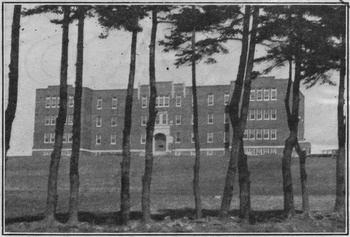
This article speaks to what Justice Murray Sinclair refers to as the “Canadian problem” by arguing that the Dominion of Canada envisioned, forged and secured a pan-territorial residential school system ideal with an express understanding that “Indian”Footnote 1 education could be used as a vector of violence to control Indigenous peoples and their lands. First laid out in the early years after Confederation, the Dominion's dream of attaining a geographically national residential school system, initially referred to as a system of boarding and industrial schools, persisted through to the opening of the Shubenacadie Residential School. Established in 1930 on treaty-protected Mi'kmaw lands at Sip Kne'Katik, the school in the Maritimes was part of a second wave of the system's expansion and its final regional frontier.
Tracing out the creation of the Shubenacadie Residential School and its early years of operation, the analysis addresses questions that have never before been asked, specifically, why was the formation of a distinctly pan-territorial residential school system important? What conditions set the stage for its realization? And what can we discern about the relationship between the shaping of the residential school system's geographically universal character and Canadian modern state formation?
Taking up these questions, the analysis makes three interlocking arguments supported by documentary evidence deriving from on-site research in a dozen archives, public and private, across four provinces, as well as an extensive search of digital resources in Canada and abroad.Footnote 2 First, the potential for residential schools to be used as vectors of violence against Indigenous peoples, including Indigenous children, was embedded in the pan-territorial system's raison d’ête. Second, aligning with this violent logic, the road to the creation of the Shubenacadie Residential School and (at least until) its early years of operation saw the Dominion's selective use of Indigenous children as human shields in its efforts to lay claim to Indigenous lands. Third, the pan-territorial residential school system was a field over which the Dominion of Canada sought to quell Indigenous resistance and to secure recognition as a modern nation state.
In developing these arguments, the assessment takes an approach to history inspired by Walter Benjamin's “principle of montage” (Reference Benjamin1999: 461; see also Benjamin, Reference Benjamin and Zohn1937). Montage contrasts with historical positivism's understanding of the past as stories lying in wait to be exposed. Positivism assumes linearity and connects the past and present along a trajectory of greater enlightenment. Benjamin called this orderly and unifying stance “the strongest narcotic of the … century” (cited in Buck-Morss, Reference Buck-Morss1991: 218). The inescapable blind spot in positivist history is that it is “determined by history … [because] our comprehension of historical facts is … a product of the objective course of history, which penetrates our social being” (Quotation is reference to Theodor W. Adorno's thought in Stoner and Melathopoulos, Reference Stoner and Melathopoulos2015: 56; see also Buck-Morss, Reference Buck-Morss1991: 19). Positivist histories lean towards the victor's justificatory claims of advancement. Benjamin sought to pull away from that narrative.
The principle of montage is a not a method but rather an analytical orientation. By juxtaposing historical fragments from different places and times, montage provides a basis for ascertaining meaning through allegorical reflection. A key aim of montage is to retrieve remnants of everyday experience that clash with dominant modes of thought (Buck-Morss, Reference Buck-Morss1991: 18, 67, 74, 77), such as the almost ubiquitous contemporary view that Canada's residential school system was a well-intentioned but now recognized as horribly misguided attempt to assimilate Indigenous peoples into Euro-Western ways of living and being. Through montage we find “discarded and forgotten histories” that expose state-sanctioned violence embedded in the pan-territorial residential school system ideal and the pursuit of its materialization. Buried because they were and remain so “little use to those in power,” these histories offer alternative visions for “the collective, political will for change” (Buck-Morss, Reference Buck-Morss1991: x-xi).
Silent on the connection between the residential school system and modern state formation are march-of-progress histories highlighting a flowering post-World War I nationalist sentiment that set Canada on a path towards independence from Britain. Such enlightenment mythologies have, nevertheless, come under greater scrutiny in recent years (Webber, Reference Webber2015; Woo, Reference Woo2011). Leading constitutional historian Jeremy Webber argues that it is a mistake “to assume that Canada was always set on the road to complete independence.” Even into the 1930s the character of Britain's transforming relationship with its Dominions remained uncertain (Reference Webber2015: 28). However, by failing to adequately address how Indigenous peoples rejected the Dominion's assertions of modern statehood at that time, Webber reinforces the misconception that Indigenous peoples resisted Canadian state authority only beginning in the 1960s. Remaining unspoken, therefore, is the story of the political salience of the residential school system, its relationship to violence against Indigenous peoples, and its centrality to the Dominion's quest for legitimacy as a modern state.
By placing the creation of the Shubenacadie Residential School in the milieu of nascent modern statehood, this analysis unsettles taken-for-granted understandings of residential school system violence. Abuse at the schools is widely assumed to be a product of neglect and mismanagement (Canada, 2015a, 2015b; Miller, Reference Miller1996; Milloy, Reference Milloy1999). The Truth and Reconciliation Commission of Canada did not challenge this premise when it argued that the system was driven by “a conscious policy of cultural genocidal.” The cultural genocide lens underscores among other things, how residential schools diminished the historical government-to-government relationship between the Dominion and Indigenous peoples (Canada, 2015a, 2015b; see also Regan, Reference Regan2010); however, it does not address the state-sanctioned violence at the core of the residential school system. This form of violence becomes visible when the singular salience of the pan-territorial character of the system is closely evaluated.
Bringing forward the geopolitical importance of the Shubenacadie Residential School, the assessment makes sense of the otherwise inexplicable reason for the emergence of the second wave of residential school expansion. There was certainly no demographic imperative for opening a Maritimes school. Many Indigenous children living east of Quebec, relatively few in number, had access to day schools (Benjamin, Reference Benjamin2014: 508–33; Walls, Reference Walls2010: 263). The Maritimes residential school's first student cohort would come mainly from provincial institutions for orphaned and neglected children. Provincial children's institutions were inherently assimilative in their work. Funded at a per student rate from the national government (“Natural Resources”; 1929), they were, like day schools, a much less costly venture than building and running a residential school would be.
In the early twentieth century, before World War I, the national government had no appetite for expanding the system, which had grown rapidly over the latter years of the nineteenth century in close partnership with churches, especially Anglican and Roman Catholic churches (Canada, 2015b: 4; 2015b: 25; Miller, Reference Miller1996; Milloy, Reference Milloy1999). By that time, the national government recognized the residential system was failing in its assimilation objectives. It was being publicly derided for abuses, illnesses and deaths in the schools (Benjamin, Reference Benjamin2014: 737; Bryce, Reference Bryce1922). Communicable diseases were killing children at such high rates that an Anglican Church lawyer surmised that the Dominion was coming “within unpleasant nearness to the charge of manslaughter” (as quoted in Abley, Reference Abley2013: 1043). Consequently, the Dominion started replacing some residential schools with on-reserve day schools (Titley, Reference Titley1986: 89). Given this setting, it is not surprising that F. C. Ryan, a Roman Catholic priest from New Brunswick, was turned down when he asked the Dominion in 1911 to set up a residential school in the Maritimes (McLean, Reference McLean1911: 2049).
Contemporaneously with the emergence of an understanding of modern statehood, a dramatic reorientation occurred in the trajectory of residential school development. After World War I, the national government began stressing the need for extending the residential school system into the Maritimes. Deviating from the norm, whereby religious orders made their cases for new schools, officials in Ottawa spearheaded the cause for a facility in the eastern region (Canada, 2015b: 56; Milloy, Reference Milloy1999: 56–57). With great urgency and resolve, Dominion authorities pursued the Roman Catholic Archdiocese of Nova Scotia to manage the school's day-to-day operations. Even before obtaining a commitment from ecclesiastical authorities, the Dominion had chosen the Mi'kmaw lands at Sip Kne’ Katik for the school's location (Boyd, Reference Boyd1927; Scott, Reference Scott1927a, Reference Scott1927b). This shift is comprehensible when we recognize the significance of the pan-territorial ideal, which gave the Maritimes region unique political significance in the residential school system imaginary.
This assessment documents and interprets how the pan-territorial residential school system was envisioned, forged and secured. It begins by showing how the ideal was envisioned in relation to John A. Macdonald's militaristic National Policy launched in 1878. It then illustrates how the ideal's post-World I revival aligned with considerations pertaining to Indigenous rights within emerging definitions of modern statehood. The assessment then turns to how the ideal materialized with the opening of the Shubenacadie Residential School. The school's official image as a civil, benevolent, and progressive endeavor clashed with the violent realities within. When the truth of this violence threatened to pierce the sanitized veneer, Dominion officials took sustained steps to secure the modern ideal. Not only failing to protect those under their charge, authorities to the office of the prime minister were complicit in egregious acts of violence against Indigenous children. When read together, these three historical fragments expose the geo-political significance of the pan-territorial residential school system ideal, its relationship to purposive state violence, and its centrality to Canadian modern statehood.
Envisioning
To grasp the significance of the pan-territorial residential school system ideal, we need to have some sense of how the British North America Act (1867) (hereafter the “BNA Act”) shaped the Dominion of Canada's role in “Indian” education. The BNA Act altered the relationship with Indigenous peoples that the Crown had declared for itself in the Royal Proclamation (1763). Issued by King George III, the Royal Proclamation established a government-to-government relationship, although without Indigenous peoples’ consent. According to the proclamation, only through treaties would British subjects be able to occupy Indigenous peoples’ lands legally. This requirement was often ignored as the Dominion asserted a presumed right to Indigenous lands (Beaulieu, Reference Beaulieu2013, Reference Beaulieu and Belmessous2014). Again, without Indigenous peoples’ consent, the BNA Act created a new sphere of shared Dominion-British legislative jurisdiction by giving Canada's national government responsibility for “Indians, and Lands reserved for Indians” and jurisdiction for treaty making (Clark, Reference Clark1990: 106).
With the passing of the Indian Act, formally referred to as The Act to Amend and Consolidate the Laws Respecting Indians (1876) (the “Indian Act”) (Binnema, Reference Binnema2014: 5–39) the Dominion set a key frame for its role in education. The act established a connection between the category “status Indians” and the allocation, use and governance of reserve lands. Reserve lands were “tracts of land set apart by treaty or otherwise for the use or benefit of or granted to a particular band of Indians, of which legal title [was held] in the Crown, but which [was] unsurrendered” (Indian Act, 1876). The Indian Act disallowed the sale of reserve lands without Crown consent and provided the means by which national funding would be allocated for “schools frequented by Indians,” including off-reserve boarding-out schools, on-reserve day schools and provincial government schools (Indian Act, 1876: sections 59 and 86; Leslie and Macguire, Reference Leslie and Maguire1978; Titley, Reference Titley1986: 48; Walls, Reference Walls2010 29).
It was against this backdrop that the vision for a pan-territorial residential school system was first introduced shortly after the mounting, in 1878, of John A. Macdonald's militaristic National Policy (Canada, 1883: 1107–08; Macdonald, Reference Macdonald1880; Sutherland, Reference Sutherland1934). At the time, Indigenous peoples were resisting the Dominion's attempts to control their territories after the purchase of Rupert's Land from the Hudson's Bay Company. Indigenous peoples had never ceded these lands and their resistance stood in the way of the National Policy objectives to settle the West and create a national railway line (Green, Reference Green1995: 92). Treaty making became a Crown priority, although treaties were often made without the consent of Indigenous peoples or based on promises the Dominion would later break (Miller, Reference Miller1989, ch. 9; Miller, Reference Miller2008, Reference Miller2009). Between 1871 and 1877, seven of what would become, by 1921, eleven “numbered treaties” were signed, each of which included provisions for schools or teachers (Canada, 2013; Regan, Reference Regan2010: 98).
By the time the National Policy was formulated, the Dominion proved willing to use force and lethal tactics against non-Treaty “Indians” through military readiness (Green, Reference Green1995: 92), bribes and abject violence (Morin, Reference Morin2005: 18). In Clearing the Plains: Disease, Politics of Starvation, and Loss of Aboriginal Life, James Daschuk argues that the “sinister character” of Dominion policies was self-evident. The clearing process included denying food rations “until the Indians were on the verge of starvation.” Even as Indigenous peoples began dying of hunger, food was allowed to rot in storage (Reference Daschuk2013: 134, 184).
The pan-territorial residential school system ideal, introduced by Nicholas Flood Davin in his 1879 Report on Industrial Schools for Indians and Half-Breeds (the “Davin Report”), extended the Dominion's already proven violent propensities. Macdonald had commissioned Davin to report on the use of the system already in place in the United States (Canada, 2015a: 151–58).
Davin recommended that the Dominion follow the United States, where the boarding out system of schools was “soon [to] be universal.” He described how south of the border, such schools were part of an “aggressive civilization” policy that included laying a presumed claim to Indigenous lands by consolidating “Indian” reservations, abolishing “tribal” relations and educating “Indians” in “the arts of civilization” (Davin, Reference Davin1879: 1). While he called for the immediate opening of only four schools in the Dominion, he made clear that an “extensive application of the principle of boarding schools” would have been advisable forthwith had it not been for “Indians” being “so largely migratory” (2, 9–11).
The rationale for the pan-territorial residential school system ideal hinged upon two key objectives. The first related to a plan for assimilation that construed so-called Indians as hindrances to the pursuit of civilization. They could “be taught to do a little at farming, and at stock-raising, and to dress in a more civilized manner, but that [was] all,” Davin said. He added that their children “learn[ed] little and what little [they] learn[ed]” would be “soon forgotten” and would not combat the “aversion to toil” (2).
A second rationale rested upon considerations of military statecraft, whereby residential schools were to be part of a “large statesmanlike policy with bearings on immediate and remote issues.” This logic was premised upon an understanding of Indigenous peoples as politically dangerous. The potential development of the “petulant character of the demagogue” (10) of the chief was a primary concern. Such chiefs, Davin wrote, believed they “had some right to a voice regarding the character and management of schools” promised in treaties (11). For these reasons and more, Davin concluded: “unsettled Bands demanded serious consideration” (9).
Plainly recognizing a benefit to be gained by using children as political pawns, Davin noted that parents might be given an “additional ration of tea and sugar” for sending their children to school (15). Subsequent years would leave no doubt that Dominion authorities construed Indigenous children at boarding schools as potentially useful as human shields. Historian John Milloy recorded that in 1885 one official said that parents would regard boarded-out children “as hostages given to the whites.” They would “hesitate to commit any hostile acts that might endanger their children's well-being,” he said. Around the same time, the inspector of schools for the North West asserted it would be unlikely that “any Tribe or Tribes would give trouble of a serious nature to the Government whose members had children completely under Government control” (Milloy, Reference Milloy1999: 32).
While the swift growth of the residential school system began to peter out in the very late nineteenth century, Dominion authorities, including John A. Macdonald, continued to favour setting up a school in the Maritimes (Benjamin, Reference Benjamin2014: 743). Officials also persisted in viewing so-called Indians as politically dangerous. Duncan Campbell Scott was a leading proponent of this view. Scott was a lifelong civil servant. He had been recruited as a clerk at the age of 17 by his family friend, John A. Macdonald, and rose up the ranks to the position of Deputy Superintendent of Indian Affairs, a post he would hold from 1913 to 1932. In 1910, one year into his role as the Superintendent of Education, Scott echoed Davin's remarks from 40 years before: “Without education and with neglect the Indians would produce an undesirable and often a dangerous element in society” (Titley, Reference Titley1986: 34; emphasis added). The pan-territorial ideal similarly endured into the twentieth century. “When we have [a residential] school” established in the Maritimes, Scott said, “one of the desires of my official life will have been accomplished” (as quoted in Milloy, Reference Milloy1999: 102–03).
Forging
The second wave of residential school expansion took hold when the Dominion was angling for greater constitutional autonomy from Britain after World War I. The outcome was far from clear. In 1926, for instance, Britain's highest court and the Dominion's final court of appeal, the Judicial Committee of the Privy Council (JCPC), unilaterally altered a Dominion law passed thirty-eight years before. The law had abolished criminal appeals to the JCPC. Legal analyst Christopher Moore has argued the law's revocation was commensurate with Britain's desire to maintain a measure of control over the Irish Free State, formed in 1921 but part of the British Commonwealth until 1949. Canada's constitutional status had served as the model for Ireland's, except Britain wanted the JCPC to hear the Irish Free State's final appeals. This meant that Canada's independent appeal process became a problem and, suddenly, the JCPC determined “that Canada's [abolition of] criminal appeals to [it] had always been ultra vires” (Moore, Reference Moore2014: 83–84).
Even after the passing of the Statute of Westminster (1931), legislative autonomy from Britain was not a certainty. The statute gave the Dominions, other than Canada upon its request, “the power to repeal or amend imperial statutes applying to them” (Hogg, Reference Hogg1992: 253). As a result, until the coming into force of the Constitution Act (1982), amendments to the British North America Act (1867) required Britain's approval (Russell, Reference Russell2004: 56–57, 64). Moreover, well into the thirties there were serious discussions over the possible “co-ordinating policy” role for a British Commonwealth of Nations. Like other Dominions, Canada wanted to be “part of an imperial club and … influencing imperial policy but was not keen on being influenced” (Webber, Reference Webber2015: 28).
Meanwhile, the founding of the League of Nations in 1919, based as it was upon ideas laid out in Woodrow Wilson's Fourteen Point Plan, gave nascent recognition to the rights of Indigenous peoples. Articulating an understanding of international affairs grounded upon control over national territories by consent of historically recognized national peoples, Wilson stressed that covenants of “justice and law and fair dealing” rather than “‘mastery’ over other peoples” would be the measure of political legitimacy for a lasting peace. Speaking about occupied territories in Europe, he made a case for self-determination through “guarantees of political and economic independence and territorial integrity” according to “historically established lines of allegiance and nationality” (emphasis added, Wilson, Reference Wilson1918; Woo, Reference Woo2011: 77–86).
Importantly, under Article 22 of the Treaty of Versailles, the League of Nations linked Indigenous rights to the provision of education. Member states were called upon to adhere to “the principle that the well-being and development of … [Indigenous peoples was] a sacred trust of civilization.” “Tutelage,” it was stated, would be the best approach for dealing with “Indigenous populations” who were “not yet able to stand by themselves under the strenuous conditions of the modern world” (Treaty of Versailles, 1919: Article 22; see also Covenant of the League of Nations, Article 22).
For the Dominion of Canada, the ramifications of acknowledging a modicum of Indigenous rights in the emerging international system of states would have been far from self-evident. Even though, in 1888 the JCPC had affirmed the Crown's assumed right to determine Indigenous land title (St. Catharine's Milling and Lumber Co. v. R.), one thing was clear: modern statehood was now indelibly tied to the presumed proper treatment of Indigenous peoples, and specifically through education. In this regard, as already discussed, the Dominion had an established track record of failure.
The uncertain implications of the emerging acknowledgement of Indigenous rights were brought into sharp relief with the founding of another league, the League of Indians, which, as an expression of pan-Indigenous resistance, challenged the Dominion's claims to be governing a national territory in the name of a national people by consent. Spearheaded in 1919 by veteran of World War I and member of the Six Nations, Frederick Olgilvie Loft, the League mobilized against revisions to the Indian Act made in 1911 and 1919. The revisions gave the Dominion unilateral authority to seize Indigenous peoples’ reserve lands. The League left no room for misunderstanding. Borrowing language directly from Wilson's fourteen points, the League declared Indigenous peoples right to “absolute control” over “possession or dispensation” of Indigenous lands through “justice and fair dealing,” not “force or coerce[ion]” (Kulchyski, Reference Kulchyski1988: 101).
When placed in this wider political context, we can see how a newly redefined and extended Dominion role in “Indian” education aligned with efforts to curb Indigenous resistance. First, the Indian Act was altered in 1920 to remove “from the Indian parent the responsibility for the care and education of his child” and to establish mandatory school attendance provisions on pain of parental imprisonment or fines (Canada, 1921: 13). Other changes to the act directly undermined Indigenous self-rule, specifically those concerning the tightening of coercive penal codes and new terms for involuntary loss of Indian status (Kulchyski, Reference Kulchyski1988: 107). Duncan Campbell Scott, by then the Deputy Superintendent of Indian Affairs, made the purposes clear. “Our objective,” he said, “is to continue until there is not a single Indian in Canada that has not been absorbed into the body politic, and there is no Indian question, and no Indian Department” (Canada, 2015b; Titley, Reference Titley1986: 50).
Second, with 15 industrial and 58 boarding schools operating in every region other than the Maritimes (Canada, 1921: 27; Neu and Therrien, Reference Neu and Therrien2006: 103), the Dominion reignited the pan-territorial residential school ideal by focusing on (at least) two areas, one in the north along the Mackenzie River and the other in the Maritimes at the heart of Mi'kmaw territory. Each area was witnessing heightened Indigenous resistance. Positioned in diametrically opposite regions of the outer extremities of Canada's presumed legal land base, the areas also shared another common trait. Neither was covered by a land secession treaty. In the north, the Tlicho (Dogrib) had been long on the Dominion's radar. In 1909, Bishop Gabriel Breynat argued that a treaty was necessary to give the Dominion “more power to [patrol] the country and protect the white men in the discovery of mines.” He expressed anxieties over Indigenous peoples’ lack of “respect…towards the police,” their willingness to “reclaim the country” as their own, and their rejection of the legitimacy of Dominion law (Breynat, Reference Breynat1909: 9). In 1920, negotiations with the Tlicho (Dogrib) began for what would become Treaty 11, the last of the numbered treaties, which included provisions for teachers. The treaty was soon followed by the creation, in 1927, of the Shingle Point Residential School, situated near the edge of Canada's most north-eastern presumed legal boundary on the Beaufort Sea (Anglican Church of Canada, 2011).
The Mi'kmaw were on the Dominion's radar for invoking a 1752 peace and friendship treaty to assert land and resources rights (Parenteau and Kenny, Reference Parenteau and Kenny2002: 67; Wicken, Reference Wicken2012: 788, 1487, 1493, 1501). Peace and friendship treaties established mutual obligations and promises to end hostilities. They did not cede land (Canada, 2015c). The 1752 treaty stated that the “said Tribe of Indians shall not be hindered from, but have free liberty of Hunting and Fishing as usual” (Treaty of 1752). It had been signed with the understanding that the King of England would recognize Mi'kmaw rights to “settle [with their] Wives & Children upon the River Shibenacacdie,” and that “no person [would] hinder [them], nor … meddle with the lands” (Hopson, Reference Hopson and Akins1752). The new residential school, situated on Sip Kne'Katik lands, would directly contravene the treaty and symbolize the Dominion's presumed sovereign right.
Dominion officials justified the so-called “Indian” school system's expansion as essential to ensuring that the “Indian ceases to be a ward” and until such time that “the department ha[d] come into contact with all Indians in the country.” This moment, it was said, was “rapidly approaching” (Canada, 1921: 7). The numbers would soon speak volumes. Between 1912 and 1932, enrollment increased at residential schools by 110 per cent, from 3,904 to 8,213 children (Titley, Reference Titley1986: 90). Highlighting the importance placed on projecting an image of the residential school as territorially national in form, in 1923, the Dominion rebranded the totality of boarding and industrial schools as “residential schools” (Miller, Reference Miller1996: 141). That same year officials began a count of children that would attend a Maritimes residential school (Memorandum to Ferrier, 1923).
The Dominion's revived pursuit of the pan-territorial residential school ideal went hand-in-hand with further coercive acts against Indigenous peoples. Perhaps nowhere was this clearer than with respect to the Dominion's punitive treatment towards the Six Nations in the mid-1920s. Chief Deskaheh (Levi General), the Six Nations hereditary chief, was invoking the decolonization concept of “home rule” to challenge the erosion of Indigenous self-governance under the revised Indian Act (“Canadian Indians Demand,” 1923: 4; Deskaheh, Reference Deskaheh1925). Hinging upon a view of sovereignty as divisible and consistent with the rights of colonized peoples, the home rule cause in Ireland paved the way to the 1916 Easter Uprising. Deskaheh crossed the Atlantic to remind European leaders of their peace, friendship and respect obligations under the Two Row Wampum Treaty. The treaty had been struck between the Haudenosaunee and the Dutch in 1613, and the Six Nations regarded it as applicable to all Europeans (Lyons, Reference Lyons2013). Deskaheh found support from Estonia, Netherlands, Panama, Persia and, perhaps not surprisingly, Ireland. Along with Britain, Canada insisted that Deskaheh's cause was a domestic concern and the League of Nations agreed, consequently refusing to take up the matter (Belanger, Reference Belanger2007; Sanders, Reference Sanders1983: 14; Veatch, Reference Veatch1975: 98).
Dominion officials responded aggressively to Deskaheh and the Six Nations. In 1924, the Royal Canadian Mounted Police arrested and imprisoned “peaceful and unarmed” protesters who were supporting home rule on the reserve. Officials confiscated Deskaheh's land and possessions and dissolved the established hereditary government, which deprived Deskaheh the right, under Canadian law, to speak for his people (Sanders, Reference Sanders1983: 14). By court order, Dominion authorities also stole the Two Row Wampum in a process overseen by the superintendent of the reserve, whose gun-toting ways was a reminder that the Dominion was willing to use lethal force (“Letter from Chief Accountant,” 1934; Canada, nd; Hall, Reference Hall2003: 492; Johansen, Reference Johansen2010: 82; Morgan, Reference Morgan1925; Titley, Reference Titley1986: 125).
The residential school system figured in this aggression. In April 1925, the Six Nations reserve superintendent forcibly relocated a group of children to the Chapleau residential school, 900 kilometers away. The children were taken without advance warning, without opportunity for goodbyes, and without parental consent (General, Reference General1925). Describing the incident in a letter to a member of British and Foreign Anti-Slavery Society and Aborigines Protection Society, Emily General (evidently a relation to Deskaheh) said the children “screamed to the tops of their voices” as they were taken away (General, Reference General1925). Chapleau was a harsh choice. In 1921, parents with children boarded at the school called for an investigation into “acts of cruelty and unkindness” (Milloy, Reference Milloy1999: 151–52). Sending the children to Chapleau also contravened the Indian Act, which stipulated that children were to attend “the nearest available school of the kind required” (An Act to Amend the Indian Act, S.C. 1919–1920). According to General (Reference General1925), 11 day schools were nearby the reserve, which was also close to the Mohawk Institute Residential School.
The Shubenacadie Indian Residential School

The children's forced relocation seemed plainly retaliatory. Facing criticism, the reserve superintendent (Morgan, Reference Morgan1925) never explained the necessity of sending the children hundreds of kilometers away. However, at the time of the abduction, the Dominion was seeking control over a parcel of Six Nations lands for oil and gas development (Six Nations Land and Resources, 2008). The Six Nations had resisted, General said, because they believed it “a trap” (General, Reference General1925). A few weeks after the children were taken, on May 20, 1925, the Six Nations surrendered to Senator Edward Michener their “oil and gas rights under [reserve] so that a twenty-year lease for the same could be granted” (Six Nations Land and Resources, 2008). Whether the abducted children were exchanged for this submission is unclear but the context of compulsion aligned with an established logic of the residential school system, namely that Indigenous children could be used as political pawns to assert Dominion control.
Securing
Four interconnected stories show that the violence that characterized the pan-territorial ideal and the path forged towards it over the 1920s endured with the Shubenacadie Residential School's founding and early years of operation. The first story was that of the nationalist, capitalist and modern nation-state dream. At the core of this narrative was the presumption that Indigenous peoples, as individuals and collectivities, would be subsumed within an imagined homogenous “Canadian” people. This cultural genocide story was opportune for the Mackenzie King Liberals. The Liberals faced the possibility of going head to head with an R.B. Bennett Conservative party at a time of unprecedented regional political divisions (Forbes, Reference Forbes1979: 20, 182; Frank, Reference Frank, Forbes and Muise1993: 256). The wealthy Bennett, who became a leading contender in the 1927 Conservative party leadership race, personified the nationalist and capitalist ideal. Bennett had been born and raised in New Brunswick but had lived in Alberta for 30 years. He spoke French but had been outside the 1917 conscription crisis that alienated Francophone Quebeckers. As the acting superintendent of Indian Affairs during the Conservative government's short reign in 1926, Bennett had also been a stalwart of the modernist project (Titley, Reference Titley1986: 154).
The building of the Shubenacadie Residential School gave the Liberals a tool to meet what was likely to be (and indeed would be) the Bennett challenge. Set upon a “hill overlooking the Shubenacadie village” (Canada, 1934a: 2), the school had broad visibility in Hants-Kings County, one of two Liberal-held seats in Nova Scotia. It was on the main road between Nova Scotia and New Brunswick and on the Canadian National Railway line (Morrison, Reference Morrison1959: 5). To those doubting, the establishment of the school offered tangible proof that Mackenzie King's government wanted all regions to share in the national wealth promised by Confederation. For those living in the triangle bordered by Amherst, New Glasgow, and Halifax, where people were suffering acute joblessness, the building of the school offered jobs (Frank, Reference Frank, Forbes and Muise1993: 235), although not for Indigenous peoples. Partnering with the Archdiocese of Nova Scotia in its quest to Christianize “Indians,” the Dominion was also pandering to the Roman Catholic vote, which comprised roughly 20 per cent of the province's electorate. Indigenous peoples, of course, had no right to vote.
A second story asserted the Dominion's presumed sovereign right on unceded Sip Kne’ Katik lands (Power, Reference Power1956: 233). The land upon which the school was built was at the heart of what would become a landmark ruling, R. v. Syliboy (1929). The case involved the Grand Chief of the Mi'kmaq, Gabriel Syliboy. Charged with hunting out of season, the Grand Chief defended himself by arguing that Dominion law did not override the 1752 treaty. Appeal court judge George Patterson sided with the Dominion, setting a precedent that stood until Simon v. The Queen (1985) (Wicken, Reference Wicken2012: 100–16). Syliboy was one of the last cases to be heard before, in 1927, the Indian Act was modified to stymie Indigenous peoples’ ability to mount legal challenges to assert their rights (An Act to Amend the Indian Act, S.C. 1926–1927, c. 32; Kulchyski, Reference Kulchyski1988: 111; Titley, Reference Titley1986: 59).
A third story concerned the lived realities of Indigenous peoples shaped by the Dominion's early twentieth-century resource management laws. These laws hinged upon Indigenous peoples’ “exclusion, via the introduction of closed seasons and bag limits, the banning of traditional harvesting methods, the creation of parks and conservation areas and the closing of the commons” (Hall and Parenteau, Reference Hall and Parenteau2014: 5–6). These restrictions and the effects of the massive influx of non-Indigenous migrants exacerbated conditions of poverty for Indigenous peoples. During the Depression, one high-ranking official confirmed that “the Indian ha[d] been [at times] boycotted from day labour” (McGill, Reference McGill1933a: 119). This barrier occurred in both the public and private spheres (Cloney, Reference Cloney1993: 122–26). In 1924, at a time when intense commercial exploitation of the region's woodlands was underway, Ottawa officials imposed a three-month income relief “holiday” on Indigenous peoples in the Maritimes who were considered capable of working (Shewell, Reference Shewell2004: 107–08). Local businesses were known to price gouge and withhold full relief payments to Indigenous peoples; the Dominion said its hands were tied to resolve this problem (McGill, Reference McGill1933a: 120–21).
In this setting of extreme hardships, many Indigenous communities no doubt erroneously believed that the new Maritimes residential school would give their kin security they would otherwise not have, but the school conveyed a fourth story, that of the continuance of state-sanctioned violence operating through the residential school system.
In 1930, less than seven months after the school opened its doors, Chief Dan L. Francis of the Cambridge Reserve in central Nova Scotia sounded the alarm of abject abuse. In a letter to the Department of Indian Affairs he said: “I thought that School was built for Indian children to learn [to] read and write, not for slaves and prisoners” (Francis, Reference Francis1930: 2166–68). He told of one boy “laid up for [seven] days” after a beating and another child “blistered from work[ing] with a shovel.” He reported that the children were dirty, malnourished, subjected to hard labour and covered in lice (Prince, Reference Prince1930). Dominion officials summarily dismissed the complaint (MacKenzie, Reference MacKenzie1930: 2173).
The conditions identified by Chief Francis were the tip of a massive iceberg of violence that included murderous designs and effects. For example, in 1933, the school's doctor, Daniel Finlayson MacInnis, wrote to the Department of Indian Affairs concerning the death of an 11-year old girl. He reported that girl had a medical crisis that had needed immediate attention, which was refused by the school's principal, the Roman Catholic priest, Patrick Jeremiah Mackey. The priest also admitted to the doctor that his actions were a quid pro quo for the department's failure to carry out “recommendations made [after the students’ medical] examinations” (MacInnis, Reference MacInnis1933a: 244–46). The message was clear. The doctor was accusing the priest of letting the girl die as payback for the government's fiscal parsimony.
Demanding “a thorough investigation,” the doctor threatened to have the local Liberal Member of Parliament raise “the matter on the floor of the House [of Commons]” (MacInnis, Reference MacInnis1933a: 244–46). The child's death record (Nova Scotia, Reference Scotia1933) supported the physician's account. Ignoring the facts, Dominion authorities whitewashed the affair and absolved the priest of guilt (MacInnis, Reference MacInnis1933b: 279). A year later, in 1934, another girl died under similar circumstances. The school physician once more sent a letter to the department. He wrote: “I know from my experience with [the last] case it is futile to report.” He added the government “probably feel[s] the same” as the superintendent: “they go to Heaven, [so] it is not worthwhile trying to keep those poor Indian children alive” (MacInnis, Reference MacInnis1934a: 392–94).
Widespread sexual harm against even very young children began almost immediately. The records show “eight children [were] being treated twice a week” for syphilis in 1934 (Mackey, Reference Mackey1934). This figure was roughly 5 per cent of the school's enrolment, but no doubt a conservative estimate. Three years earlier, in Reference Mackey1931, the principal-priest Mackey was ordering such large quantities of supplies to treat venereal disease that the medical superintendent of Indian Affairs asked if it were an error (Stone, Reference Stone1931). By spring 1932, Dominion officers were asking the Government of Nova Scotia for aid in managing the syphilis outbreak. Revealing that the disease was contained within the school, officials said the goal was to curtail further infections among “pupils [and] staff” and to “protect the health of the province at large” (MacKenzie, Reference MacKenzie1932a: 54). No mention was made of how the staff might have become infected.
All of the evidence pointed to Mackey and his minions as sexual predators, although the school principal, Department of Indian Affairs staff, and the deputy superintendent of Indian Affairs asserted that children suffered congenital infections (McGill, Reference McGill1933a: 120). With syphilis transmitted only rarely outside of sexual contact, a 1934 letter from the school's physician was especially revealing. Tacitly alerting Ottawa authorities to the logical conclusion to be drawn, MacInnis reported cases where “evidence of either acute or chronic venereal disease” was only apparent “by the blood tests” (MacInnis, Reference MacInnis1934b: 443). This meant recent infections. It was implausible that children were spreading the disease among themselves given the “fanatical segregation” of girls and boys at the school and indeed across the system (Miller, Reference Miller1996: 219; Power, Reference Power1956: 233). Over the years, Mackey would make many sojourns to the Halifax Infirmary. In 1932, he became a patient in the midst of the school's syphilis epidemic. He remained there for at least two months (Mackey, Reference Mackey1932a: 167). During that time, he continued making decisions for the school with the blessing of the Dominion (Mackey, Reference Mackey1932b: 124), which turned a blind eye to the obvious.
Dominion authorities showed utter disregard for children's welfare when Mackey began openly withholding children's syphilis treatments. The school's doctor was “anxious to go on with [infected children's] further treatment,” Mackey wrote in 1932. “[I told him] to leave the matter,” he added (Mackey, Reference Mackey1932c: 73). In 1933, he terminated treatment for at least two children. These cases “require[d] a very long time to clear up, if … at all,” he explained (Mackey, Reference Mackey1933: 318). With syphilis potentially fatal and otherwise causing many lifelong serious side effects, these were chilling confessions. To this, a Department of Indian Affairs official did little more than shrug, advising the principal to continue treatment (MacKenzie, Reference MacKenzie1934a). There is no evidence that sufficient and necessary resources for treating the disease were ever forthcoming. Nothing suggests any attempt was made to protect the children from the obvious harms being inflicted upon them. Anticipating questions being raised, the Dominion gave Mackey a script: If it were “represented … that it [was] not safe to keep these children in school among the other pupils [it was the Dominion's] attitude … that pupils who are known to have syphilis and are under treatment are relatively safe to associate with” (MacKenzie, Reference MacKenzie1932b: 92).
Directly involved in this violence was the Deputy Superintendent of Indian Affairs, Harold McGill, who had replaced Scott in 1932. McGill was a former physician, a one-time Conservative member of the Alberta legislature, and a long-time R. B. Bennett friend. Writing about his 1933 visit to the Maritimes residential school and nearby reserves, he referred to Indigenous peoples as “Arrogant Parasites,” an “idle, worthless lot,” some of whom “show[ed] evidence of negro blood.” He expressed disdain for what he saw as the “indigent, immoral and arrogantly persistent Indian beggar … educated, medicated and nourished at the people's expense.” McGill showed a propensity for the use of brute force and flouting the law. After concluding that dogs were being fed on the North Devon reserve in New Brunswick, he ordered, “under penalty of relief being withheld,” that every canine be destroyed. “This was done of my own volition and without benefit of law,” he said. He added that “it worked well” and suggested the tactic be adopted “as a general policy” (McGill, Reference McGill1933a: 123).
McGill visited the Shubenacadie Residential School. According to his diary, he visited “different rooms” and found the “livestock…in good condition.” His diary is silent on the children's suffering (McGill, Reference McGill1933b), but his actions spoke volumes. He returned from his Maritimes tour in 1933 and immediately cancelled the physician's semi-annual medical exams (MacInnis, Reference MacInnis1933a: 244). While limited in scope, these exams had provided a modicum of care to children and, in effect, offered some independent oversight of the school's principal. The next year, McGill's office refused the school physician's request for a supply of “bismuth [and] mercury preparations for treatment of syphilis” (MacKenzie, Reference MacKenzie1934b: 441). Frank Mack, the founder of modern urology in Nova Scotia, had suggested these provisions be available at the school so that infected children could be properly treated. By rejecting the request, Dominion officials ensured greater suffering and the inevitable exacerbation of long-term effects.
McGill and his staff sought to cover up for their diabolical actions by falsely claiming that the Dominion was providing appropriate medical care to treat syphilis. The Department of Indian Affairs Annual Report for 1933 stated that officials were “endeavor[ing] to bring under treatment every known case of syphilis” and that the “measures [being] taken appear[ed] to have resulted in a substantial improvement” (Canada, 1933: 12). In July 1935, the Director of Medical Services for Indian Affairs, E. L. Stone, glowingly noted in The Canadian Medical Association Journal that the Dominion had “[carried] on a sustained attack on syphilis…and the results appear[ed to be] gratifying.” At the Shubenacadie Residential School, the attack was clearly on the children and not the disease. Leaving no doubt that the highest reaches of the public service were complicit in this cover up, a footnote in the paper stated that the paper had been “published by permission of Harold W. McGill, M.C., M.D., Deputy Superintendent General, Department of Indian Affairs” (Stone, Reference Stone1935: 82–83).
The Prime Minister, R. B. Bennett, joined in this violence by responding to the floggings of 19 boys with willful disregard for their welfare. The floggings had come to light after some of the boys escaped and reported the grim facts to the local Indigenous community (“Alleged Flogging,” 1934: 1; “Ask Immediate Probe,” 1934: 20; “Charges Unfounded,” 1934: 6; “Indian Boys Claim,” 1934, 10–11; “Indian Pupils Admit Thefts,” 1934; “Indian School Probe,” 1934: 3; “Lashing Indians Fully Vindicated,” 1934: 1, 5; “Punishment of Indian Boys Found Justified,” 1934: 1, 4; “Thrashing of Indian Boys,” 1934; “Whipping Indian Boys is Upheld,” 1934: 9; “Will Investigate,” 1934: 11). The press reported that money went missing and Mackey rounded up suspected transgressors to mete out confessions, among them a 12-year-old recovering from a kidney removal (Canada, 1934a: 8). The priest had the boys’ heads shaved, ordered them to strip to their waists and to place their hands over their heads. The school's carpenter-engineer then flogged each child with a vinegar-drenched seven-thronged strap. Over several days and two rounds of beatings, the children were denied food and water. The deep wounds left permanent physical scars (Knockwood, Reference Knockwood1992: 146–154).
Within days of the story breaking and being discussed on the floors of the Senate and House of Commons (Canada, 1934b: 1–4; Canada, 1934c: 290), Bennett selected Louis Arthur Audette, a retired judge with impeccable racist credentials, to head up a Royal Commission of Inquiry into the matter. In 1916, as chair of the Royal Commission on Pelagic Sealing, Audette ascertained compensation for people “damnified by reason of the [1911] Pelagic Sealing Treaty.” Ignoring the importance of sealing to Indigenous peoples’ livelihoods, he cut their compensation by half (Canada, 1916: 7, 12–14; Irwin, Reference Irwin2015: 58, 67). According to historian Mary-Ellen Kelm (Reference Kelm1998: 107), Audette had been horrified to hear that an Indigenous witness suffering from tuberculosis was working in a cannery that distributed food to non-Indigenous communities. He refused to allow the witness to touch the Bible while being sworn in. That same year, in his recommendation to remove the Mi'kmaq from the King's Road Reserve in Sydney, Nova Scotia (Wicken, Reference Wicken2012: 4023–4180), Audette reasoned: “No one cares to live in the immediate vicinity of the Indians” (Indian Reserve…D.L.R. 314, 1916).
Bennett surely had confidence that the retired judge would resolve the matter with dispatch, which he did, as summed up by The New York Times that October: “Whipping Indian Boys is Upheld in Canada—Commissioner Contends School Punishment Was Just and Richly Deserved” (1934: E7).
Audette convened two days of public hearings in the Shubenacadie Village focusing on whether the floggings were “reasonable and adequate under the circumstances,” as was allowable under the Criminal Code (Canada, 1934a: 18). The horror expressed by the local non-Indigenous and Indigenous peoples, as well as by some elected officials, provided a clear answer to the question of reasonableness (“Alleged Flogging,” 1934; Canada, 1934b: 555–56; Canada, 1934c: 290). Even acceptance of the practice of corporeal punishment had been eroding in Canada (Cliche, Reference Cliche2014), as it was in some other countries (Meriam, Reference Meriam1928). In some circles, floggings demonstrated the illegitimacy of British colonial rule (“British Rule in India,” 1934; “Ex-M.’S.P. [sic] Expose Indian Terror,” 1934; Indian League, 1933).
Audette reasoned it would be wrong to “overlook … the complex intelligence of [the] boys who [had] all been brought up in the life of the Indian.” Musing about the fortitude of different skin types and how “Indians” were only “just emerging from barbarism,” he accepted the heinous facts as they were reported in the press and confirmed in the hearings. He then praised the principal for maintaining discipline. There was “no harm in punishment by the infliction of physical pain,” he said. After all, “all human governments rest in the last resort upon physical pai[n] and it is mere cant to pretend that it does not” (Canada, 1934a: 15–16).
Accepting Audette's assessment, Bennett gave the Dominion's blessing to violence against Indigenous children. Outside of the Indian Act itself, Audette's report was the first national statement on disciplinary procedures for residential schools. It would be 1953 before new disciplinary procedures were codified (Canada, 2015b: 62, 102–105).
Bennett's response cannot be reduced to narrow partisan calculations. The national political party system aligned with the modern nation-state ideal and its cultural genocide presumption of so-called Indians vanishing into relics of the past, fading from view in the march of progress, a primary vehicle of which was “Indian” schooling. This story was one to be internalized by Indigenous peoples in the process of assimilation, mirrored in the image of the modern nation state, and accepted by a voting populace, whose racial, ethnic and class divisions were subsumed in a homogeneous national identity. And yet, even though the inquiry provided a veneer of due process, officials plainly recognized the indefensibility of Audette's findings. This is the likely explanation for why the report was almost completely struck from the historical record. Only two of the original hard copies are known to have survived. Canada's national archive never held a copy.
This self-evident whitewash of abject violence against Indigenous people aligned with the intrinsic logic of the pan-territorial ideal. In the process, the Dominion communicated its long-standing position: Indigenous lives were expendable. Faced with this truth, Indigenous leaders contemplated assassinating the school's principal. Fearing that such an act might further place children in harm's way, they decided against the plan (Knockwood, Reference Knockwood1992: 153–156). In this we see that Indigenous children had once again, in effect, served as human shields.
Conclusion
The juxtaposition of different spatial and temporal events relating to the pan-territorial residential school system ideal and its materialization brings into visibility the violent logic and realities at the core of Canadian modern statehood. We saw how a pan-territorial residential school system ideal took form in the late nineteenth century as part of militaristic objectives. Indigenous peoples stood in the way of the Dominion's goal of controlling Indigenous peoples and their lands. Residential schooling offered a means to force submission, including by using children as political pawns. We found that more than two decades after many of the residential schools had already been established, a second wave of expansion took form. It was the post-World War I setting. A new world order was surfacing that defined the modern nation-state as an entity governing a homogenous people over a national territory by consent. Canada remained subordinate to Britain, which asserted its constitutional muscle well into the 1930s. The Dominion also faced resistance from Indigenous peoples, which placed the matter of consent into doubt. In this setting, “Indian” education emerged once more as a key tool to force Indigenous peoples into submission, especially in areas that were not covered by land treaties.
We have seen how the Shubenacadie Residential School, built as it was on Indigenous territory, was tied to a net of laws, policies and practices that sought to control Indigenous peoples, often violently and with impunity. A context of brute violence against children emerged immediately upon the school's opening. Rather than protecting the children, the Dominion of Canada, by all means possible, attempted to guard its modernist claims. Turning blind eyes, denying facts, burying evidence, constructing justifications, discrediting complainants, silencing whistleblowers, withholding medical treatment and refusing justice, Dominion authorities up to the prime minister's office were complicit in unspeakable cruelties against children, including sexual violence and deathly acts.
The violent attempt to control Indigenous peoples and their lands through so-named Indian schooling was aligned with the Dominion of Canada's quest to gain recognition as a modern state. Here we see how profoundly misguided it is to tacitly or overtly represent Indigenous peoples’ resistance as surfacing only in the 1960s. Indigenous sovereignty was articulated in Loft and the League of Indian's pan-Indigenous movement, as it was in the Tlicho’s refusal to accept the authority of Dominion law, and just as it was in Chief Deskaheh's defense of his people's right to home rule. Gabriel Syliboy asserted the Mi'kmaq's treaty rights and the Shubenacadie Residential School children exercised individual and collective self-determination by opposing violent acts inflicted upon them in the name of modernity. In all of these cases, the Dominion proved willing to force submission by, expressly or in effect, using children in the residential school system as political pawns.
The once supposed vanquished have always spoken, refused, and fought back. Striking yet another blow to the presumed victors, these memories illuminate on alternative pathways but also on how violence was internal to the pan-territorial residential school system's design and manifestation, which in turn was inextricably tied to the Dominion of Canada's pursuit of modern statehood. The cultural genocide lens speaks to the predominant contemporary narrative concerning the misplaced objectives of assimilation, but it leaves unexamined the intrinsic state-sanctioned violence that shaped the system. These two logics were intertwined in the pan-territorial ideal.
Recognizing the inherent violence within the pan-territorial residential school system ideal's logic and realization has implications for Justice Murray Sinclair's question about what Canada might have been or might yet be. It is a question that cannot be addressed without confronting state-sanctioned violence against Indigenous peoples. This past violence endures in the present because it is internal to the Canadian modern state. This is the quintessential Canadian problem: people have and do benefit from this violence. They don't or won't see it. Failing to reckon with it, they remain complicit in it: the violence within.