Introduction: ideological and geographical constraints
Throughout history different claims have been made as to what constituted Europe. Herodotus had already constructed an opposition between Persians and Greeks as representing two fundamentally different regimes and modes of thought – democracy versus absolutism, Europe versus Asia. To the Greeks ‘Europa’ was the daughter of the Phoenician king Agenor. Zeus abducted her in the shape of a bull and took her to Crete, where she gave birth to Minos, and thus founded a royal dynasty. Subsequently she gave name to the geographical entity called Europe, the name employed by Herodotus as one of the three main continents that made up the known world, besides Asia and Libya (Africa). However, the Greek perception of Europe was geographically limited, and throughout antiquity the gravity of civilization was the lands around the Mediterranean, to which temperate Europe represented a dangerous periphery that from time to time would overrun the civilized world, leading to Dark Ages, as happened after 1200 B.C., when the Mycenaean and the Hittite kingdoms collapsed. Later the Celts would make their impact in Italy and the Greek world in the 5th and 4th centuries B.C., and finally the Visigoths and other Germanic tribes would overrun and destroy the Western Roman Empire a thousand years later. Since antiquity we have therefore seen two ideological constructions of Europe: one that considered the Near East and later the Mediterranean as the cradle of civilization to which Europe formed a barbarian periphery, only to rise to dominance after the Renaissance, and one that considered Europe as the vitalizing counterweight to Oriental despotism, introducing democracy and later humanism and science (Rowlands 1989; Kristiansen 1998, chapter 1.2). These two ideological constructs merged during the later 19th and earlier 20th centuries to form an ideological cocktail under the banner of the newborn nationalism. It created a national framework for incorporating the Near East as an original cultural inspiration that was later succeeded and vitalized after the Roman Empire by European societies rooted in prehistory, which finally reached their historical high point in the present nation states. This model was in some countries linked to a racist ideology that considered Indo-European-speakers to belong to an Aryan race of strong and independent people, who should govern the world. Consequently Oriental, Jewish and other people were considered lower races, and in Germany this racist construction was taken to its ultimate extreme. After the Second World War it served as a terrifying example of the use of the past in the construction of present ideologies and politics (Gramsch 2006; Jensen 1988; Wiwjorra 1996).
It is therefore impossible to discuss the concept of Europe without considering this historical and ideological baggage and the ways it has been reworked, as it is still with us, to which the post-colonial critique is a response (Thomas 2004; Gosden 2003). Today historical and archaeological knowledge is still used to construct modern identities, whether local, national, or European (Jones, Jones and Gamble 1999; Gramsch 2005). And although there seems to exist a trend from a national towards a European framework, this proposition needs to be critically examined. Or as formulated by the organizers of this Round Table session: is there anything coherently ‘European’ about a European archaeology – or rather, about the ‘archaeology of Europe’ – or is it simply a modern political construct with no meaning in the ancient past?
Here archaeology has the potential to go beyond a historical time frame and make an explicit prehistoric contribution to what may or may not constitute a European past (Renfrew 1994; Rowlands 1994). However, a prehistoric counterweight to such ideological constructs cannot escape their influence, but it can scrutinize and discuss them, as I shall do in the following. In that process one should also question the historical validity of the concept of Europe, or at least make an attempt to create a more explicit definition of its use, including its geography. Thus the geographical entity called Europe has played different roles during the prehistory and history of the region – from a periphery to the Near East as the cradle of civilization to the centre of Western capitalism and industrialization. Or, on the contrary, we might consider all the regions of Europe independent historical entities whose histories have unfolded overwhelmingly due to local conditions and only marginally under external influences. Both models have their followers, and both models are deeply inscribed into the above ideological constructs of Europe. However, it is only by considering Europe within the larger geographical framework of both the Mediterranean, including North Africa, and western Asia/the Near East, also called Eurasia, that we can evaluate the historical role of Europe, whether defined by regions or by the larger geography of the continent. Only then can we hope to answer the question formulated by this Round Table session if the attempt to be inclusive within Europe actually becomes exclusive by focusing on a bounded Europe.
In the following I shall discuss how European archaeology has been informed and formed by the ideological and geographical constraints above. I shall do this by selectively tracing their influence on archaeological conservation (heritage), thinking (theory/interpretations), and publication and teaching. In doing so I shall employ a historical perspective, as I believe it is necessary to trace variations and regularities in the use of the past in archaeological practice. Only in this way can we hope to understand the current situation and make well-founded predictions and informed choices about the future. I have been aided by three publications that present in-depth case studies of the archaeologies of Europe, to which I refer for further readings: Hodder (1991), Kobylinski (2001) and Biehl, Gramsch and Marciniak (2002); and three books on archaeology and nationalism: Atkinson, Banks and O'Sullivan (1996), Diaz-Andreu and Champion (1996), and Kohl and Fawcett (1995).
Archaeological conservation: the ideological meaning of terminology
Terminology may often act as a sensitive barometer of the ideological fabric of research and conservation. This proposition can be further substantiated if one takes a closer look at the role and meaning of changing terminologies within archaeological preservation. Before the 1960s conservation terminology was still deeply anchored in a perception of the past based on museums and their role as curators of the movable past. ‘Museum inspector’, ‘conservator’ and even ‘antiquarian’ were commonly employed terms for archaeologists working within this sector. In Sweden and Norway the State Antiquarian was and still remains the official term for the director general of the national heritage, including historical building and landscapes. It was of course linked to the term ‘antiquities’, which was the then common term for archaeological objects preserved in museums. The title ‘State Antiquarian’ originated with aspiring nationalism in Sweden during its rise to great power in the late 17th and early 18th centuries, and during this period antiquarians were people interested in and working with past antiquities, mostly as a hobby (Diaz-Andreu 2007, 53 ff.; Schnapp 1996, chapters 2–3).
The official title ‘State Antiquarian’ lends a certain (obsolete) historical aura to the administration of national antiquities in a modern society, and therefore most countries have followed the changes in terminology introduced by changing ideological and political interests. These terminological changes were typically introduced during periods of rapid economic and political change in Western society, which also affected the archaeological heritage. Therefore they were typically introduced in those countries were the changes were most profound, just like the situation in Sweden and France during the late 17th and early 18th centuries, which saw great political upheavals leading to the formation of the two interlinked concepts of nationalism and the right of the people to take part in government, as part of national independence.
However, with the expansion of museums during the late 19th and early 20th centuries, professionalization demanded more modern concepts. ‘Museum inspector’ and ‘conservator’ were in line with other developing professions, were the term ‘inspector’ was added to the title – think of the many professions that have used the term ‘inspector’: police, land registration, railways and so on; ‘conservator’ was in the same vein a term employed in the several related fields of nature conservation and preservation of threatened species. In this way the new museums and their archaeological practitioners inscribed themselves into the dominant industrial ideology, and could consequently be considered part of modernity. Similarly, their exhibitions were modelled after the presentation of industrial commodities in the new stores in the capitals of Europe. This rise of modern museums and the protection of the movable archaeological heritage, mostly from burials, represented the first transformation of archaeology that integrated it into modern society. However, in some countries the return to a more romantic perception of nature and culture between the two world wars led to the creation of new titles, such as ‘monument curator’ (Bodendenkmalpfleger, in German), and the old term ‘antiquarian’ was reintroduced in some countries, while ‘folk culture’ and local histories took priority on the research agenda in the historical and archaeological disciplines throughout Europe.
The next big change took place during the 1960s, with its rapid expansion of towns and infrastructure leading to massive destruction of historical environments and archaeological sites and monuments. By this time settlements had become known as an archaeological category in need of preservation and research. Regional and national inventories had during the early and mid-20th century demonstrated not only the archaeological potential of settlement sites in the landscape, but also their destruction through modern ploughing and, not least, urban development. The new understanding of the rich archaeological heritage of settlement sites and other non-visible archaeological structures, such as cemeteries, roads and so on, led to a new concern with quantification and landscape archaeology. Archaeology was inscribed into the new planning regimes of the expanding welfare society, and ‘cultural resource management’ became the new mantra or term to accommodate this ideological and organizational transformation of archaeological preservation. It was introduced and developed in the USA (Schiffer and Gumerman 1977), and was soon taken on-board in England and other European countries (Cleere 1984). Archaeologists became planners and managers, and thus retained their ideological bonds with modernity and industrial efficiency, also reflected in the expanding use of heavy machinery in excavations of settlement sites. Archaeological sites were now considered a cultural resource that could be preserved either through management planning (as a cultural or archaeological park) or through excavation. The historical values of landscapes were quantified (number of monuments and sites) and such maps were employed in both local and regional planning.
New legislation, in combination with the employment of digitized archaeological maps in the planning process, paved the way for this economic and ideological transformation of archaeology, which led to the largest boom in archaeological excavations and research since the museum wave and its transformation and preservation of movable heritage. Now non-movable heritage was preserved, mostly through excavation paid for by the developer. This can be considered the second transformation of archaeological preservation and research (Cleere 1989). It was accompanied by a generalizing perception of the past that could be studied and compared worldwide in order to gain insight into the historical regularities of human societies and their organization. In this way archaeological research came closer to the theoretical and methodological idioms of natural science. A newly gained respect for both archaeological research and preservation thus characterized this second transformation of archaeological preservation, which at least indirectly aimed at freeing preservation from national ideology.
During the last 25 years we have witnessed an ideological retreat from this newly gained position of scientific respectability, and a return to a more national and local ideology of archaeological research and preservation. Again it is reflected in a change of vocabulary from cultural resource management to heritage management, or simply from conservation to heritage. The concept of ‘heritage’ would have been politically impossible to introduce during the 1950s or 1960s when archaeology demarcated a distance from everything ‘national’ and everything linked to ‘origins’. Heritage was thus a politically tainted concept after the Second World War, as it was seen to be linked to the role of cultural and ethnic origins that prevailed during the first half of the 20th century in historical and archaeological interpretations in Europe, taken to their extreme in Germany.
However, by the 1980s the ideological climate had changed, and the concept of heritage could be reintroduced by a new generation without historical memory. It happened in England during the early 1980s under the Thatcher regime as part of a strategy of privatizations that also includes the Inspectorate or National Agency of Ancient Monuments, which was given a more independent position and renamed English Heritage. Soon after, Scotland and Ireland followed suit, and suddenly heritage was the accepted terminology that was employed in the European Charter on Heritage Management from 1992 (Cleere 1993). By the late 1980s cultural heritage was discussed as a human right that was granted to every ethnic group, including cultural minorities, and it entered the agenda of UNESCO in their report on culture from 1996. This is not to deny that heritage was contested; on the contrary, the archaeological and historical heritage was seen as a battlefield of competing interests (Tunbridge and Ashworth 1996). But there was also a general consensus that the newborn focus on an English heritage was linked to its decline from imperial power. Its history could now be marketed under the new banner of English Heritage for an increasing cultural tourism that was international. While heritage presentations became a growing international economic force, the national role of heritage was strengthened throughout Europe. Culture and history became the new mobilizing force to attract both tourists and new inhabitants from local communities to nations (Ashworth and Larkham 1994; Horne 1984).
We can sum up the changes in terminology during the last 40 or 50 years in the following way:
• 1960s–1970s: cultural ressource management
• 1980s–?: heritage management
This change was accompanied by
• a move from quantification to qualification,
• from objective to subjective evaluations, and
• from history to origins and from national to local history.
In an attempt to focus on the archaeological heritage of a shared European past, the Council of Europe introduced the ‘Bronze Age Campaign’ in 1993, which led to a Europe-wide presentation of the Bronze Age, as a first golden age in Europe. This represented a new concern with a common European past, also reflected in new European conventions and charters on the archaeological heritage from the same period (Tzanidaki 2000; Willem 1999). This can be seen as the first attempt to break away from a national framework, and it was most strongly represented by the formation of the European Association of Archaeologists (EAA). Both initiatives were responding to the changed political conditions after the fall of the Iron Curtain in 1991, and to the revival of national heritage throughout Europe.
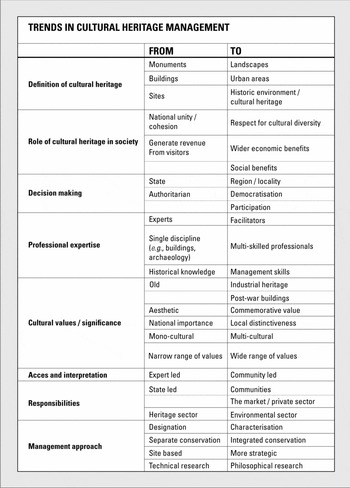
The revived focus on historical origins, from local communities to nations, encapsulated in the term ‘heritage’, was accompanied by a major reorientation of the conceptual and methodological framework of heritage management. This shift in theoretical framework is summarized in figure 1. It will be noted that in many aspects it parallels similar profound changes in archaeological theory under the banner of postprocessualism. In recent years much attention has been paid to the ideological role of the nation state during the late 19th century and the 20th, and its impact upon archaeology, especially archaeological heritage and presentations for the public, is reflected in the international journal Public archaeology. Less attention had been paid to its consequences for research programmes in the present. It is apparently assumed that modern archaeology has freed itself from such national and ethnocentric constraints. I propose that this is not the case.
Trends in cultural heritage management during the last 25 years (after Olivier and Clark 2001).

To sum up: the terminology employed by archaeological conservation during the last 150 years can be seen as an ideological barometer of its political role in society, which has tended to swing like a pendulum between local, national and international perspectives. The international expansion of archaeological heritage presentations during the last 25 years was accompanied by a renewed focus on historical origins and local histories within the framework of national history, despite claims of cultural diversity as the preferred framework in some countries (see figure 1). This was counterbalanced by the first attempts to create a European framework for archaeological research and heritage (the Bronze Age Campaign and EAA). Cultural heritage was increasingly considered a human right that was granted to all people and all nations, and under this ideological banner it achieved a new progressive status.
The ideological constraints of archaeological theory
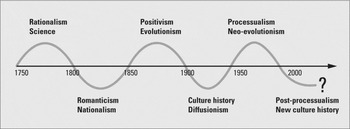
While there exists a general agreement that theory is neither a neutral category nor a neutral practice, but represents present concerns and interests (discourses), there has been surprisingly little interest in analysing this relationship historically, with the exception of Bruce Trigger's major treatment (Trigger 2006; also Kehoe 1998 for a polemic account), and most recently Margarita Diaz-Andreu's impressive political/ideological presentation of the 19th-century global expansion of archaeology (Diaz-Andreu 2007). What has been critically analysed and documented, however, is the relationship between nationalism and archaeology, as previously noted. Here the larger European framework tends to drown, and I shall therefore begin by painting the big historical picture of changing discourses to create a frame of reference. Figure 2 is based upon an application of Jonathan Friedman's (1996) analysis of global changes in cultural/ideological climate applied to a long-term historical cycling with added archaeological concepts. I first used this cycle to describe long-term changes in archaeological/anthropological paradigms in the early 1990s (Kristiansen 1996; 1998, figure 14), but Andrew Sherratt and Bruce Trigger have also applied the concepts (Sherratt 1996; Trigger 1996). The figure shows how the ideological climate has swung between rationalism and romanticism, and it is further suggested that these changes have had a profound impact on the cultural disciplines. Periods of romanticism favoured the particular in local and national histories while periods of rationalism favoured generalizing interpretations, often on a larger scale. Although highly simplified, as all models, I find it useful if one wishes to understand the dominant changes in archaeological theory and interpretation, and in the following I shall add some empirical flesh and blood to characterize it. However, the model does not explain how and why changes take place when we move from one cycle to the next. To provide this we need to analyse in more detail the conditions of such changes in concrete case studies.
Model of the dominant theoretical or discursive cycle of rationalism and romanticism applied to archaeology.

In a study of the ‘Birth of Ecological Archaeology’ in Denmark during 150 years I observed some recurring interdisciplinary correlations between periods of innovation and periods of consolidation in the study of the Neolithization process (Kristiansen 2002). I summarize them below:

Periods of innovation were generally short, and two such globally innovating periods could be defined, which preceded a rationalistic cycle: from 1850 to 1860, and from 1940 to 1950. The first period saw the formation of modern geology, biology/zoology (Darwin's The Origin of Species from 1859) and archaeology (the definition of the Early and Late Stone Age by Worsaae and Mortillet). These achievements were in part the result of interdisciplinary cooperation and inspiration between the main actors of the time, whether they worked in France, England or Denmark. It had been preceded by the publication in English of Thomsens three-age system and Sven Nilsson's evolutionary history of mankind, which were widely read internationally, among others by Henry Morgan, who applied some of Nilsson's terminology. New excavation methods inspired by geology introduced stratigraphy, just as economic models were also forwarded, exemplified by a debate between J.J.A. Worsaae and Jaepethus Steenstrup in the first Kitchen-Midden Commission in the 1850s about the interpretation of the Stone Age (Fischer and Kristiansen 2002, chapters 3 and 4). Soon after, a systematic typological approach, inspired by biology, was applied to archaeology, exemplified in the work of Oscar Montelius.
The second period saw the development of modern pollen analysis and its application in the reconstruction of vegetation history by Johannes Iversen during the 1940s (Fischer and Kristiansen 2002, chapter 13), the invention of C14 by Libby in 1950, which revolutionized archaeological dating and preceded the global use of nuclear energy. Social evolution and economic approaches were reintroduced and from the 1950s onwards they dominated archaeological research, exemplified by the works of Graham Clark (1952) and Gordon Childe (1963 (1951)). Soon after, the new C14-based chronologies were employed by Colin Renfrew to forward a new European prehistory based on internal evolution. The following question now poses itself: are we at a similar moment in time, where new natural-science-based innovations pave the way for new global knowledge and interpretations? Before we can attempt to answer this question we must analyse some of the dominant trends in archaeological research during the last 25 years, in order to determine archaeology's position in the present postprocessual cycle.
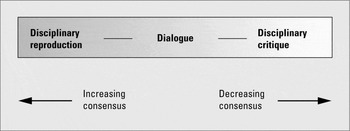
Figure 3 can be used as a barometer to determine where in the theoretical cycle we are at present. It can be done by citation analyses of various kinds from journals and books, of which we already have some examples, although much more could be done (Cherry 2004; Glørstad 2006; Petterson 2007). I propose that the conditions of theoretical dialogue and interpretation are determined by one's own historical position in the cycle. No dialogue is possible between researchers situated at two opposing poles of the cycle. The intermediate phase when the cycle is about to change is an interesting period where there will be more openness and pragmatism (Hegmon 2003; Johnson 2006; Kristiansen 2004), and we may be on our way towards such a phase at present. Such prophecies were recently presented by Bruce Trigger (2006, chapter 9) and Kent Flannery (2006), and in the following I shall substantiate them empirically as this has implications for the perception of a European past.
Barometer to determine archaeology's position within the theoretical cycle.

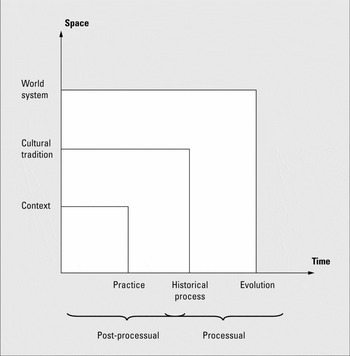
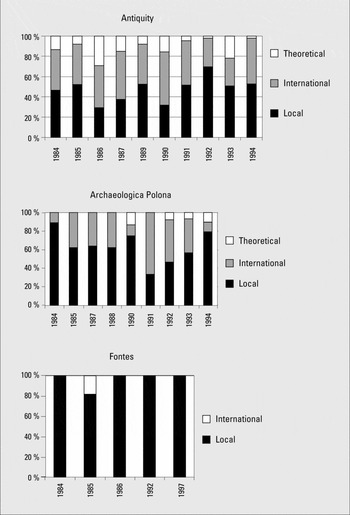
I suggested recently that different interpretative strategies were often linked to different time/space scales (Kristiansen 2004, figure 7). I exemplify this relationship in a more direct way in the present figure 4. It follows from this that such different interpretative strategies imply different methodological strategies as they deal with different properties of material evidence. A survey of archaeological journals makes it clear that the last 25 years have seen a preoccupation with interpretative strategies linked to individual sites and the region or local area as the main frame of research reference. This trend is demonstrated in figure 5. During the same period methodological rigour declined, as the need to look over and analyse large quantities of data declined with the narrowing of geographical perspective, just as quantification was considered a processual obsession not needed in the hermeneutic understanding and mediating of data.
Model of the theoretical relationship between time/space and interpretative strategies.

Analysis of three journals – one international (Antiquity), one national with international scope (Archaeologica Polona), and one regional (Fontes). The articles were divided according to research perspective analysed at intervals between 1984 and 1997 (after Nyqvist, Eikeland and Estrich 2004). It demonstrates the strong impact of local presentations even in international journals, and the limited role of theory.

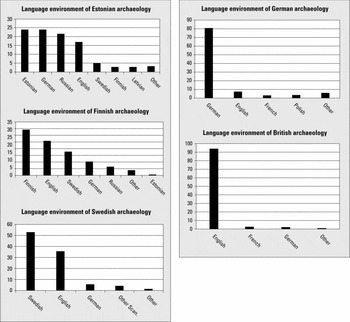
The postprocessual focus on context has provided many new interpretative perspectives at the local level and in understanding individual sites, which has turned out to be useful also in cultural heritage and public presentations. During the same period archaeological heritage experienced one of its biggest expansions ever and this may have influenced the interpretative concern with local contexts and individual sites in research. A final, but ignored, consequence of this narrowing of the interpretative field is the decline in knowledge outside one's own region or nation. This is demonstrated in figure 6. Large nations especially, such as Germany, France and England, with international language claims, have tended to become monolingual in their readings and references, while smaller countries, such as the Scandinavian and Baltic states, demonstrate familiarity with more languages and readings outside their own borders (Kristiansen 2001; for in-depth bibliometric analyses of Scandinavian and Spanish archaeology see Cornell, Fahlander and Kristianen 1998; Kristiansen and Cornell 2002; Rodriguez Alcalde et al. 1996).
Language analysis of references in leading archaeological journals in Germany and England (large languages) compared to Sweden, Finland and Estonia (small languages). After Lang (2000).

We may summarize the dominant factors at work during the last 25 to 30 years in the following way:
• dominance of a local perspective/site perspective in interpretation,
• decline in readings outside one's own language and national borders and
• expansion of archaeological heritage management and of nationalism.
From this we may conclude that archaeology has strengthened its national position at the expense of its international position, with some exceptions, such as Palaeolithic research. Are these factors related? I believe so: it is no mere coincidence that the local and national focus has dominated theoretical perspectives, heritage and much national politics during the same period. It is a consequence of the humanities' role as critical interpreters of the present that historical disciplines are also following suit. However, the narrowing of the interpretative space to local and national studies has left archaeology in a weaker position in two important respects: it has lost in academic prestige and subsequently in political support. This is exemplified in the global decline of museum-based research at the expense of public presentation and a constant demand for new exhibitions. It corresponds to a period where archaeology abstained from using the museums' collections for systematic research, but rather employed new excavations, which was also the departure for reconstructed prehistoric environments that took over much of the role of public presentation during this period. Thus popularization expanded in numerous new ways while at the same time academic prestige declined. The reason for this loss of scientific credibility, I suggest, is that archaeology and the humanities in general have abstained from the big questions that concern most people, such as the relationship between climate, culture and environment, which demand grand historical narratives. It may be no coincidence that the two most-debated and best-selling archaeological books during the last decade were written by a biologist, Jared Diamond, and were dealing with just these questions (Diamond 1997; 2005). Other big questions of the present are those of migration and warfare, which are now slowly entering the archaeological research agenda.
Archaeology may be more popular than ever before in the media, and may have achieved an economic foundation in rescue excavations that had never existed before the 1970s, but at the same time it has increasingly left some of the big questions to natural science, for example DNA research into human origins, such as Jared Diamond. I propose that these tendencies are the first signs of a retreat from the present postmodern and postprocessual cycle towards a more science-based, rationalistic cycle of revived modernity, which of necessity also implies a larger geographical perspective in order to understand the historical forces at work.
Thus there is much to suggest that recent innovations in DNA analysis, strontium isotope analysis and climate research are about to change the focus and the direction of archaeological research towards larger, more global, problems, even when studied in a local or regional context. I also predict that regional, supra-national studies in tandem with larger historical narratives will become more popular in the future, supported by a more systematic use of analytical and quantitative methods. Mobility and migration as well as ethnicity and warfare will dominate this research. In his new edition of A history of archaeological thought Bruce Trigger devotes one of the final chapters to a discussion of the future direction of archaeological theory, and predicts a period of ‘theoretical pragmatism, characterised by an expansion of the theoretical and methodological repertoire’, and refers to The rise of Bronze Age society (Kristiansen and Larsson 2005), among other works, as an example of this new approach (Trigger 2006, 580 ff.). Such attempts, however, raise debate, as exemplified by reviews of Peter Bellwood's ‘First Farmers: the Origins of Agricultural Societies’ (Bellwood 2007), as well as of The rise of Bronze Age society (Nordquist and Whittaker 2007; Kristiansen and Larsson 2007).
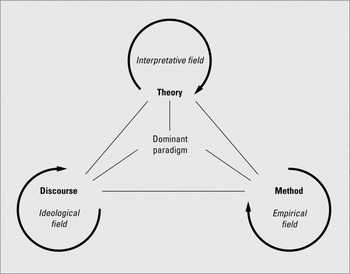
To conclude, the last 25 years have seen a parallel development in the expansion of archaeological heritage and postprocessual theory, both stressing local and national frameworks for interpretation. They are to be considered related responses to similar ideological conditions, by some called postmodernism. Opposing trends stressing macrohistory, historical regularities and a larger geographical frame of reference can also be observed. We may thus be entering a period of competing paradigms, which will profoundly influence the role of a larger European perspective in archaeological research and conservation. In Figure 7 I summarize the dominant forces at work in the formation of research paradigms, discussed above.
The forces at work in the formation of research paradigms.

The national constraints of archaeological publications and teaching
Despite predictions that archaeological interpretations and publications are becoming more international and European in scope, this is not supported by an analysis of the geographical perspective of interpretations, nor is it supported by the present publication structure within archaeology (Kristiansen 2001; Lang 2000; Navarrete 2001). Finally, basic teaching programmes at many universities are predominantly national in scope.
The European Science Foundation has carried out a documentation and classification of journals in the humanities, in a project called the European Reference Index for the Humanities (ERIH – available at www.esf.org). The aim is to identify excellence in humanities scholarship and create a European benchmark of outstanding journals that can eventually be used for future citation indexing. The archaeology list contained originally more than five hundred titles, more than any other discipline, which shows the level of publication in the discipline. It was then reduced to 419 journals, under pressure from the ESF, who found that archaeology had too many titles compared to other disciplines. It should be stressed, though, that the coverage included all periods and regions in the world, from prehistory to classics and historical archaeology, and also some journals on archaeological science. The coverage is global, but most are based in Europe and the USA. The UK scored highest with 84, followed by France with 45, Germany with 39, Italy with 37, the USA with 28 and Poland with 20.
The journals were divided into three categories: A, B and C. Category A includes journals that were truly international in scholarly level, readership and impact. This high ranking indicates a strong reputation and regularly citation all over the world. Category B includes journals with a standard international reputation among researchers in the field in different countries. Category C covers high-quality journals with mainly a local or regional scope in Europe. The most remarkable feature of the archaeological list, however, is the fact that only a very small group of journals have a title that signals a thematic, non-geographical or non-specialist content. They are journals like Antiquity, World archaeology, the Journal of social archaeology, and Praehistorische Zeitschrift, to name but a few. They numbered 47 according to my knowledge of the journals, as a member of the archaeology expert committee of ERIH. Journals with a larger supra-regional geographical perspective number no more than 30. They include journals such as the Journal of Mediterranean archaeology, the European journal of archaeology, and American antiquity. The rest, more than 80% of all archaeological journals, are national and local or regional in scope, or are linked to a national research institute, whether at home or abroad. What does this tell us about the structure of archaeological knowledge?
Firstly, it tells us that there is a strong need for regular national and local or regional publications of new archaeological material from excavations, as many journals are devoted to this task. It reflects the unique position the production of empirical evidence holds in archaeology, compared to most other disciplines in the humanities and social sciences. It adds a heavy financial and curatorial burden to the archaeological infrastructure, which is often difficult to comprehend by other non-archaeological disciplines. Secondly, it tells us that that the national and regional organization of archaeology is extremely dominant in the publication structure and consequently also in the geographical scope of research and knowledge, as demonstrated in the previous section. This I will characterize as an unintended consequence of the national organization of archaeological heritage and research. However, it is the result of the history of archaeology in Europe, and therefore not easily changed. Here Europe is very different from the United States, with one dominant society, the Society of American Archaeology with more than seven thousand members, and a dominant journal, American antiquity.
Most journals in Europe are published by an archaeological society, often national (Proceedings of the Prehistoric Society, Aarbøger for Nordisk Oldkyndighed) or they are linked to a learned society or academy (Journal of the Royal Society of Antiquaries of Ireland, Bulletin de la Société préhistorique française, Acta archaeologica Academiae Scientarum Hungaricae), a national or regional museum (Jahrbuch der Römisch-Germanischen Zentralmuseums Mainz, Fontes archaeologici Posnanienses). In addition there is a whole group of journals linked to foreign European institutes in the countries of the Mediterannean and the Near East (Annals of the British School at Athens, Archäologische Mitteilungen aus Iran und Turan). They demonstrate that the Mediterranean and the Near East are considered a historical part of the archaeological heritage of Europe. However, their archaeology is often studied under the banner of classical archaeology, and thus mostly separated from European prehistory. The ideological contradictions of the 19th and 20th centuries are still institutionally intact, although under critical scrutiny.
Such a publication structure, deeply rooted in the national and local organization of archaeology, is not likely to change overnight. It reflects the strength of a grounded local and national support structure, whether in the form of archaeological societies, often with many members who pay for the journal, or in the form of regional and national academies with good finances. However, in this field digital publications may also hold some unforeseen future consequences (Rundqvist 2007). It is interesting to note that some of the most successful journals are those who have managed to change their profile from a regional to an international one, such as Antiquity or Norwegian archaeological review. With such a publication structure, it may come as no surprise that not only articles, but also university teaching, has become increasingly national and regional in scope.
A summary of the constraints of archaeological publications:
• Of more than four hundred archaeological journals listed in ESF's reference index for the humanities, only 47 are truly international in scope, and only 30 cover a supra-regional geographical persepctive.
• The rest, more than three hundred journals, are national and local in scope. Consequently reading lists for first- and second-years students in archaeology are predominantly national and monolingual.
An analysis of the reading lists for undergraduate teaching in the Scandinavian archaeology departments demonstrated that most of the literature was confined within the national borders of one's own country, supplemented by other Nordic countries and only marginally including the rest of Europe (Grave-Müller and Hjalmarsson 2004).
An analysis of the themes of BA essays over a 30-year period in Sweden further demonstrated that most essays were local in scope, in most cases the region of the home university (Toft and Sanglert 2004; von Arbin and Svensson 2004). Thus teaching programmes in Scandinavia have over the last 25 or so years increasingly narrowed in geographical scope to the nation state, but have often added a brief introduction to world prehistory rather than European prehistory. Based on my personal knowledge of some European departments, added with a brief Internet search, I suggest that similar analyses in other European countries would demonstrate the same trend; that is, a concentration on a national or regional curriculum when it comes to geographical coverage. This evidence is perhaps not so surprising when we take into consideration that research themes during the same period have also been national or regional in scope, as demonstrated in the previous section, and that readings in other languages have been on the decline during the last 25 years. The teaching programmes after all reflect the research horizon of the lecturers. On the positive side one may observe that programmes on heritage and the role of archaeology in contemporary society are now widespread, as are courses on archaeological theory and method. So in the end there is a limit to how much can be squeezed into a rather short BA programme, and theory and heritage may well be worth the sacrifice of a broader geographical knowledge of prehistory. Or, have universities lowered their ambitions regarding what can be demanded of students and lecturers today compared with 30 years ago? But then, national borders were rarely the cultural borders of prehistoric societies, and by accepting a national framework for teaching, research and publications we have accepted a distorted perspective on the past.
Some will say this is the price archaeology has to pay for being enrolled into modern Eropean Union (EU) standardized teaching programmes, where hundreds or in some countries thousands of students each year will pass through a first-year course only to move on to something else. A generation ago (my own generation) archaeology was in many European countries still an exclusive subject that could only be studied at an MA or Ph.D. level, and it had a huge European curriculum, but then it only educated a few candidates per year in each country. Now hundreds pass their BA every year in many countries, and the universities are producing increasing numbers of MA and Ph.D. graduates with all types of archaeological skills and specialities for a large and highly versatile job market. Archaeology has skilfully succeeded in enlarging the archaeological field from a strictly museum-based activity of the late 19th and early 20th centuries to an all-encompassing concern in modern society where archaeological jobs are to be found in a whole new range of institutions, from municipalities and counties to private companies and agencies. From this perspective, then, we may talk of a success story. But my critical question remains: is it really necessary to feed young students with a basic knowledge that is historically distorted by a modern national framework?
In summary, the publication structure of archaeology is predominantly national and regional in scope, but research themes and bibliographies in journals are also predominantly local and national (including a strong tendency towards monolingual readings). Finally, and not surprisingly, teaching programmes at undergraduate level are also predominantly national in scope and increasingly monolingual or bilingual (local language plus English).
And from here on . . .
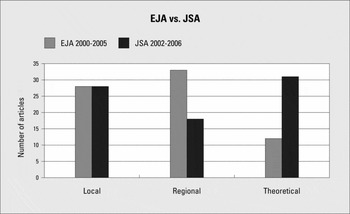
So far my analysis is not encouraging for the archaeology of Europe. During the last 30 years we have rather moved away from a European perspective and narrowed it to a national and regional framework in research and teaching. I contend that this represents a dangerous decline of learning, and although there may be some positive trends towards a better theoretical knowledge this cannot compensate for a decline in basic academic skills. I take ‘basic’ to imply that a university lecturer, and for that matter any professional archaeologist, should master several European languages, should read all the relevant literature for the prehistoric communities under study, and should not be limited only to national journals in one's own language, as the situation is today. However, there are also opposing trends, which support a wider international and European frame of reference for archaeological research. The number of journals with a general, non-geographical theme, such as the Journal of material culture, the Journal of social archaeology, World Archaeology and so on, are more numerous today than they were 30 years ago, although they are still few in number. At the European level the formation of the European journal of archaeology and the European Association of Archaeologists may be taken to support a trend away from archaeology of nations, although their impact is still restricted. However, an analysis of the articles published in the European journal of archaeology, compared to the Journal of social archaeology, demonstrates that the EJA has significantly more articles that cover larger geographical areas than does the JSA. This is perhaps unexpected, but the main thrust of the articles in the JSA is postprocessual, and they are therefore more local in perspective. This observation raises once again the question of cause and effect for the decreasing geographical scope of archaeological research and teaching programmes during the last 25 to 30 years. Are they due to an inherent national organization of archaeology or are they rather due to the ideological impact of postmodern discourse in the arts, humanities and social sciences? And can we expect that the trend observed in some recent books, and articles in the European journal of archaeology, towards a wider European and even global perspective will prevail in the future?
The answer is yes, in due time, if the cycle continues, and looking back to the previous modern or rationalistic cycle may give some hope for the future. The origin and spread of modern humans (the Palaeolithic revolution), the Neolithic revolution, and the Bronze Age/urban revolution were complex prehistoric transformations taking place at a supra-regional scale affecting whole continents or world systems. Childe was right in granting them a special status as revolutions in the sense that they transformed the conditions of human history and existence in every local area in revolutionary ways compared to what went before, although more gradually than Childe thought. And they forced research out of its national paradigm to become truly international and interdisciplinary. It is symptomatic of the present postmodern era of local and national agendas in the cultural sciences that such major archaeological narratives went out of fashion, with few exceptions (Hodder 1990; Kristiansen 1998; Renfrew 1987; Sherratt 1997). But Childe's revolutions are on their way back, though in revised form (Gamble 2007; Renfrew 2007), and there are more grand narratives appearing now than previously, although they are debated, as noted above. Therefore I propose that it is about time to reintroduce some of these earlier grand research objectives, supported by the new European Research Council, in an attempt to create a truly European and international archaeology that can supplement if not replace the present national archaeologies of Europe.
A thematic comparison between the European journal of archaeology and the Journal of social archaeology.

Considering that many national borders have changed in Europe, that nations have disappeared and arrived during the last hundred years, it may come as a surprise that the national idiom still prevails, and is stronger than ever before, as reflected in the publication structure of archaeological journals. But that is the situation. The European Association of Archaeologists, founded 14 years ago, does not have more members than many national archaeological societies. So there is a long way to go before Europe will be perceived as a natural unit of reference for most archaeologists working in the region.
To me there is no doubt that for the foreseeable future the ‘archaeology of Europe’ is caught up in the contradiction between the national organization of archaeology and the supra-national aims of prehistory. This tension is linked to the fact that archaeology is serving two demanding but very different mistresses: the conservation and presentation of the national heritage on the one hand and the reconstruction and explanation of a European and global prehistory without borders on the other. However, due to the strong organizational and ideological impact of the nation state during the 20th century, the focus of research has increasingly narrowed down to become that of the nation state and its surrounding regions, supported by the ideological impact of postmodernism in the arts, humanities and social sciences during the last 25 to 30 years. This is nothing unique to archaeology. The humanities have during the same period increasingly come to serve the role of reproducing the national academic tradition, be it history, literature or language, although often from a critical standpoint based on postcolonial theory. While this is certainly also needed the claim I wish to make is that the humanities, including archaeology, are today losing academic and political impact precisely because of this narrowing of their role. They have largely left the European and global scene to such other disciplines as the environmental sciences, the social sciences and political economy, which more effectively address the big questions that face humanity and politics today.
My answer to the questions raised by this Round Table are thus in the affirmative as part of a wider non-nationalistic agenda for archaeology:
• We need an archaeology without borders that is based upon a study of the forces of history as they unfolded locally, regionally and as world history, from the Palaeolithic to the medieval/historical period.
• To get there, we need a European archaeology to replace the prevailing national archaeologies of Europe. However, it must be an archaeology that situates Europe within the wider Eurasian and Mediterranean regions of which it is geographically and historically a part. It should further employ those regional geographies that shaped prehistoric societies and their interaction as a frame of reference, such as the Atlantic seaboard, the Baltic region, the Danube or the steppe corridor.
• In order to achieve this we need a reorientation of archaeological publications and teaching so that they become more thematic, interdisciplinary, international and European in scope. It should combine the previous autonomous disciplines of classical, prehistoric and historical archaeologies in new, interesting ways. Such a development has already begun in some countries.
• To support these objectives the new European Research Council comes to play an important role, by supporting projects that are truly supra-national in scope. In recent years we have seen a few of these, such as AREA (Archives of the European Archaeology, www.area-archives.org), and my own The Emergence of European Societies, four interlinked and internationally run projects in Sicily, Hungary, Galicia and Sweden (www.eoec.org). In the future there should be many more.
Thus there is scope for an archaeology that addresses fundamental historical problems and long-term histories of the various geographically and culturally interlinked regions of Europe, such as the Atlantic seaboard, the Baltic region, the steppe corridor, the Danube or the Mediterranean. These supra-national regions were during long periods of prehistory interlinked by common historical trajectories supported by networks of exchange. In addition they were linked to wider regions in the Near East, North Africa and western Asia (Kohl 2007). The prehistory and early history of Europe are thus of interconnected worlds from local to regional and global. And they shared many of the same problems we are faced with today, such as human impact upon the environment, the role of demography and population movements, famine and diseases, all of which now can be studied with the aid of new scientific methods. Finally, we should use our understanding of the relationship between ideology, politics and archaeology to promote a research agenda that actively contributes to the formation of critical knowledge about the conditions for heritage and research in contemporary society. Only then can we hope to steer free of the most blatant misuses of the past in the future. In this way we can make better-founded research priorities, and maintain an archaeological research environment that can detect, and defend itself against, political exploitation. As there exist no research priorities that are not exclusive of something else I simply find Europe and its regions a far better and less exclusive frame of reference than the dominant local and national framework.