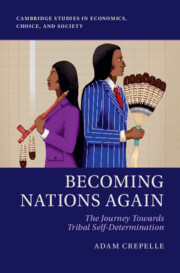


Perhaps the simplest yet most difficult means of improving life in Indian country is changing the narrative on Indigenous history and culture. Most Americans receive minimal to no exposure to Indians throughout their formal education. When tribes are mentioned in textbooks, the references are almost always to tribes over a century ago. Accordingly, a relatively small portion of the United States understands even basic aspects of contemporary tribal existence. Likewise, lessons about Indians focus on their living in harmony with nature as simple, noncommercial, egalitarian peoples – usually in teepees. Not only are these depictions inaccurate, but these stereotypical images were designed to justify the dispossession and subjugation of Indians. The continued use of these tropes serves to reinforce the past and ongoing injustices Indians endure.
19.1 The Education System
The most obvious place to help fill the knowledge gap is the education system. Now is a particularly good time to start. Textbooks are being altered to excise references to racism. Parents are trying to ban their children from seeing photos from the civil rights movement on the basis they do not want their children to see racism.Footnote 1 However, racism is a part of the United States’ history. Ignoring the past does not erase injustice. Teaching about historical oppression does not mean members of one group should feel superior or guilty. Teaching the past, and all its unpleasantness, helps better understand the world as it is today. Educating about the legalized racism that endured for most of the United States’ history serves as an important warning about the dangers of vesting majorities with power over minorities.
Indians are a prime example of how ignorance of the past can undermine present-day rights. A small percentage of Americans grasp even the most basic tenets of Indian history; thus, people commonly make statements like, “Sure. The United States committed genocide and stole Indian land, but now Indians have casinos.” Hence, casinos are commonly viewed as reparations, when in reality, a tribe’s choice to permit casinos within its borders is no different than a state’s choice to permit casinos within its borders. That is, tribal casinos are a sovereign prerogative rather than a federal act of contrition. Failure to grasp the difference leads people to oppose casinos and other endeavors on tribal lands while simultaneously having no problem with Nevada permitting gaming within its borders.
Teaching Indian history could help prevent these uninformed attacks on tribal sovereignty. Educating students that the Americas were populated by people who operated sovereign nations with vibrant cultures long before 1492 will help people better understand why tribal sovereignty exists today. Similarly, educating students that Europeans and the United States recognized tribes as sovereigns in numerous treaties will help the public better understand why tribal sovereignty exists today. United States citizens should also know racial discrimination extended to Indians too. Indians were not legally “persons” until 1879, and Indians endured legalized discrimination well into the twentieth century. For example, citizens of the United Houma Nation were required to attend segregated Indian schools until 1969. Education should also mention the contributions Indians made to the United States’ laws, culture, and survival during the early days of its independence.
Adding elements of Indigenous history to K-12 education is not a radical idea. Washington State enacted legislation in 2005 requiring Indian education in its K-12 curriculum. Washington’s Since Time Immemorial: Tribal Sovereignty in Washington State was endorsed by each of the twenty-nine federally recognized tribes within the state’s borders.Footnote 2 Thanks to the curriculum, students are taught about tribal culture, economies, and governance.Footnote 3 Montana takes Indian education a step further as the state’s constitution explicitly recognizes the importance of teaching students about tribal sovereignty.Footnote 4 Whether Montana lives up to the lofty ideal espoused in its constitution is the subject of litigation;Footnote 5 nonetheless, the Indian education clause shows Montanans viewed tribal history as important to understanding the history of Montana. Other states can follow these examples.
19.2 Recognizing a Civil Rights Trailblazer
Like other groups, Indians have had their own civil rights struggles. Billy Frank, Jr. engaged in civil disobedience to assert his tribe’s treaty-guaranteed fishing rights. The Poarch Band of Creek Indians blocked school buses until the state permitted their children to attend public schools. Numerous other unsung Indian civil rights heroes exist. But the most iconic – even if little known – Indian civil rights leader is Chief Standing Bear of the Ponca Tribe.
Chief Standing Bear’s sagaFootnote 6 began when the United States negligently gave the peaceful Ponca Tribe’s treaty-guaranteed land, located in present-day Nebraska and South Dakota, to the Sioux in the 1868 Treaty of Fort Laramie.Footnote 7 The Ponca protested,Footnote 8 but a decade later, the United States forced the Ponca into the Indian Territory, now the state of Oklahoma. A significant portion of the Ponca died during their removal, and ill health was rampant among the Ponca in their new homeland. Within eighteen months, disease killed a quarter of the Ponca,Footnote 9 including Chief Standing Bear’s son, Bear Shield. Before Bear Shield passed, he expressed his fear of wandering the afterworld alone.Footnote 10 Thus, Chief Standing Bear promised to bury Bear Shield among his ancestors. After Bear Shield’s death, Standing Bear embarked on a journey to the Ponca homeland with his son’s deceased body and twenty-nine other Ponca. The contingent was arrested for leaving the reservation without federal permission.
The peaceful Ponca were sympathetic figures to the general public; plus, Chief Standing Bear’s journey off reservation was for a noble purpose. Accordingly, Chief Standing Bear’s arrest and detention made headlines. As a result, two lawyers volunteered to represent Standing Bear and proceeded to file a writ of habeas corpus challenging the legality of his detention.
To file a habeas corpus, the most basic requirement is that the petitioner must be a “person.” The United States opposed Chief Standing Bear’s petition by arguing Indians were not citizens of the United States nor were they persons.Footnote 11 On the first account, the United States was unquestionably right. The Fourteenth Amendment granted everyone born within the border of the United States citizenship except for Indians. Indians could only become citizens through treaty provisions or by an act of Congress. No treaty or federal legislation made the Ponca United States citizens. Consequently, Chief Standing Bear was forced to contend that he – and by implication every other Indian – was a person.
At trial, Chief Standing Bear was summoned to testify as to whether he was a person. The United States objected to Chief Standing Bear’s testimony asking Judge Dundy, “Does this court think an Indian is a competent witness?”Footnote 12 Judge Dundy permitted Chief Standing Bear to testify, answering, “The law makes no distinction on account of race, color, or previous condition.”Footnote 13 This was a historic ruling. It marked the first time an Indian was allowed to testify in a federal courtroom.Footnote 14 At the conclusion of the trial, Chief Standing Bear rose and addressed the court through an interpreter. Slowly raising his hand,Footnote 15 Chief Standing Bear proclaimed:
My hand is not the color of yours, but if I pierce it, I shall feel pain. If you pierce your hand, you also feel pain. The blood that will flow from mine will be the same color as yours. I am a man. The same god made us both.Footnote 16
When Chief Standing Bear finished his speech, those in the courtroom were moved to tears and applause.Footnote 17
Ten days after the hearing concluded, Judge Dundy issued an opinion in favor of Chief Standing Bear. Judge Dundy opened his opinion by noting, “During the fifteen years in which I have been engaged in administering the laws of my country, I have never been called upon to hear or decide a case that appealed so strongly to my sympathy as the one now under consideration.”Footnote 18 Judge Dundy next described the Ponca as “a few of the remnants of a once numerous and powerful, but now weak, insignificant, unlettered, and generally despised race.”Footnote 19 After some legal meandering, Judge Dundy resorted to a dictionary and reasoned:
Webster describes a person as “a living soul; a self-conscious being; a moral agent; especially a living human being; a man, woman, or child; an individual of the human race.” This is comprehensive enough, it would seem, to include even an Indian. In defining certain generic terms, the first section of the Revised Statutes, declares that the word “person” includes copartnerships and corporations. On the whole, it seems to me quite evident that the comprehensive language used in this section is intended to apply to all mankind – as well the relators as the more favored white race.Footnote 20
Therefore, Judge Dundy held the Ponca could not be compelled to return to their reservation in Oklahoma.Footnote 21 Free from federal custody, Chief Standing Bear laid his son’s bones among his ancestors.Footnote 22
In 2019, Chief Standing Bear received long overdue recognition when Nebraska placed a statue of him in Statuary Hall in the United States Capitol.Footnote 23 Then Speaker of the House of Representatives, Nancy Pelosi, welcomed the statue by stating, “Our nation takes another step forward as we honor a man of extraordinary courage, perseverance, and strength, Chief Standing Bear of the Ponca Tribe. With this statue, we honor all native peoples who met injustice and intolerance with dignity and determination.”Footnote 24
A visit to Statuary Hall should not be required to learn about Chief Standing Bear. His struggle tells the sordid tale of federal malfeasance against Indians; however, the saga also shows the law can provide protection to the most marginalized of groups. Chief Standing Bear’s struggle shows the courage and fortitude of a single individual can make a difference. Chief Standing Bear’s noble quest would be a valuable addition to the school curriculum.
19.3 Legal Education and Tribal Sovereignty
Regardless of whether one believes Indian history should be included in the K-12 curriculum, federal Indian law should be included in the law school curriculum. Indians are embedded in the fabric of the Constitution, from the debates surrounding its ratification to its very text. Nonetheless, most law school graduates lack an embryonic understanding of tribal sovereignty. As a result, federal judges deciding Indian law issues usually have no background knowledge of the subject and have not delved into the history surrounding federal Indian law’s development. This puts tribal interests at a significant disadvantage because they have to educate the judge not only about the immediate issue before the court but oftentimes about the very meaning of tribal sovereignty. For this reason, Canada’s Truth and Reconciliation CommissionFootnote 25 recommended law schools require students to take a course on Indigenous rights. Mandating American law students take a seminar exploring the basics of federal Indian law would go a long way toward increasing awareness and understanding of tribal sovereignty. This is clear from recent Supreme Court jurisprudence.
Three current Supreme Court Justices have a deep understanding and appreciation of tribal sovereignty. Justice Neil Gorsuch served on the federal Tenth Circuit Court of Appeals which routinely hears Indian law cases. Justice Sonia Sotomayor had no Indian law experience before joining the Supreme Court. Accordingly, she made it a point to independently study federal Indian law.Footnote 26 Justice Elena Kagan also had limited exposure to Indian law prior to serving on the Supreme Court. However, while dean of Harvard Law School, Justice Kagan said, “Federal Indian law is an important and rapidly expanding field, and I believe Harvard has an obligation to support research and teaching in this area.”Footnote 27 These Justices have consistently issued opinions respecting tribes’ existence as governments.
Two recent tribal treaty rights cases evince these Justices’ respect for tribal sovereignty. In 2019, a case reached the Supreme Court about whether Wyoming’s statehood terminated the Crow Tribe’s treaty rights to hunt in Wyoming.Footnote 28 Justice Sotomayor summarized how tribal treaty rights operate:
[T]he crucial inquiry for treaty termination analysis is whether Congress has expressly abrogated an Indian treaty right or whether a termination point identified in the treaty itself has been satisfied. Statehood is irrelevant to this analysis unless a statehood Act otherwise demonstrates Congress’ clear intent to abrogate a treaty, or statehood appears as a termination point in the treaty.Footnote 29
Congress had never expressly abrogated the treaty nor did any other event terminate the Crow’s hunting rights. Therefore, Justice Sotomayor and four other Justices, Gorsuch and Kagan among them, ruled in favor the Crow.Footnote 30
Justice Gorsuch authored a historic affirmation of tribal sovereignty with his 2020 opinion in McGirt v. Oklahoma.Footnote 31 The facts of the case are terrible. Jimcy McGirt sexually assaulted a young child and was convicted of the crime by Oklahoma. McGirt subsequently appealed. The basis of his appeal was not innocence; rather, he contested the state’s jurisdiction to prosecute him. As an enrolled citizen of the Seminole Nation of Oklahoma, McGirt argued his crimes were committed within the borders of the Muscogee Reservation as set forth in an 1866 treaty with the United States, so as an Indian the state lacked jurisdiction because McGirt was an Indian within Indian country.
While the case only immediately addressed which government could prosecute a pedophile, the implications of the decision were substantial. Recognizing the Muscogee Reservation would affirm all the tribes in eastern Oklahoma have reservations meaning all of eastern Oklahoma is reservation land. To be clear, much of eastern Oklahoma was already Indian country; however, historical practices in the state had de facto diminished tribal authority. Oklahoma and others opposed to tribal interests claimed recognizing the existence of reservations would result in chaos due to Indian country’s peculiar jurisdictional rules.
The Muscogee Nation prevailed at the Tenth Circuit because under established precedent only Congress has the power to disestablish a reservation. The leading case on reservation disestablishment set forth three considerations to make the determination: the text of the relevant legislation governing the reservation, contemporary events, and demographics.Footnote 32 The Muscogee Nation, who unfortunately was forced to use a pedophile as their plaintiff, argued no act of Congress ever disestablished the reservation. Oklahoma conceded as much but claimed combining all the historical anti-Indian legislation resulted in reservation disestablishment through “death by a thousand cuts.”Footnote 33 Similarly, Oklahoma noted that when the relevant legislation was passed, the popular belief was Indian tribes would disappear in the near future. Oklahoma also emphasized nearly 90 percent of the people who call eastern Oklahoma home are non-Indians. Most boldly, Oklahoma pasted a picture of the Tulsa skyline to assert skyscrapers and contemporary industries do not belong on Indian reservations.Footnote 34
Four Justices, including Sotomayor and Kagan, joined Gorsuch’s opinion affirming the existence of the Muscogee Reservation. The opinion begins by declaring, “On the far end of the Trail of Tears was a promise.”Footnote 35 Justice Gorsuch walked through the history and the law. Justice Gorsuch recognized Congress performed several actions antithetical to Creek sovereignty, “But whatever the confluence of reasons, in all this history there simply arrived no moment when any Act of Congress dissolved the Creek Tribe or disestablished its reservation.”Footnote 36 Justice Gorsuch said Oklahoma was attempting to “substitut[e] stories for statutes”Footnote 37 and concluded his opinion by stating:
The federal government promised the Creek a reservation in perpetuity. Over time, Congress has diminished that reservation. It has sometimes restricted and other times expanded the Tribe’s authority. But Congress has never withdrawn the promised reservation. As a result, many of the arguments before us today follow a sadly familiar pattern. Yes, promises were made, but the price of keeping them has become too great, so now we should just cast a blind eye. We reject that thinking. If Congress wishes to withdraw its promises, it must say so. Unlawful acts, performed long enough and with sufficient vigor, are never enough to amend the law. To hold otherwise would be to elevate the most brazen and longstanding injustices over the law, both rewarding wrong and failing those in the right.Footnote 38
With those words, a majority of the Supreme Court chose to uphold the law rather than giving way to the “‘practical advantages’ of ignoring the written law.”Footnote 39 An appreciation of history and Indian law led to a tribal victory.
However, the Supreme Court abandoned historical context and fundamental principles of Indian law two years later in a McGirt sister case.Footnote 40 The Court’s shift is explained by Justice Ruth Bader Ginsburg’s passing and replacement by Justice Amy Coney Barrett. Justice Barrett had little Indian law experience prior to joining the Supreme Court; accordingly, she was seen as the swing vote. The Indian law community hoped Justice Gorsuch’s expertise in the field would influence her. After all, Justice Gorsuch was appointed by the same president as Justice Barrett. Nonetheless, she fell in line with the four McGirt dissenters in Oklahoma v. Castro-Huerta.Footnote 41
Castro-Huerta arose because Oklahoma opposed the Court’s recognition of tribal sovereignty. In response, Oklahoma filed forty-five petitions to overturn McGirt. All were declined. However, the Court granted one of the petitions to address a single issue: Does Oklahoma have concurrent jurisdiction with the United States to prosecute non-Indians who commit crimes against Indians within Indian country?
The answer was obviously “no.” The Supreme Court had said as much on multiple occasions. Every Indian law treatise said states lack jurisdiction over reservation crimes absent federal legislation to the contrary. Moreover, Oklahoma declared in its 2020 brief opposing McGirt that if the Muscogee Reservation was affirmed, “The State would lack jurisdiction to prosecute any crime involving an Indian (whether defendant or victim) in eastern Oklahoma.”Footnote 42 Following McGirt, Oklahoma dedicated a webpage to the case and posted: “In 2020 the U.S. Supreme Court overturned the conviction of child rapist Jimcy McGirt on the grounds that the Creek Nation’s reservation was never disestablished for criminal jurisdiction. State courts no longer have the authority to prosecute crimes committed by or against Oklahomans who are also tribal members.”Footnote 43 The dearth of legal authority for Oklahoma’s position prompted Justice Gorsuch to ask Oklahoma during oral argument, “[A]re we to wilt today because of a social media campaign?”Footnote 44
Notwithstanding, Justice Kavanaugh, writing for four other Justices, sided with Oklahoma. The majority abandoned Worcester’s guide star that state authority is presumptively invalid on reservations by declaring, “Since the latter half of the 1800s, the Court has consistently and explicitly held that Indian reservations are ‘part of the surrounding State’ and subject to the State’s jurisdiction ‘except as forbidden by federal law.’”Footnote 45 This statement ignores the plain text of the Constitution, treaties, and federal policies going back to George Washington. This statement reveals five Justices do not know or are unbothered that during the latter half of the 1800s, the United States was actively attempting to destroy tribal governments and Indigenous cultures – a policy expressly repudiated with the Indian Reorganization Act of 1934. Furthermore, every president and Congress since 1975 has sought to empower tribal self-government – an ideology at odds with the assertion that tribes are simply part of the surrounding state. However, the majority seemed to care less about history or the law than expanding state authority over tribal governments.
In dissent, Justice Gorsuch excoriated the majority, writing, “Where our predecessors refused to participate in one State’s unlawful power grab at the expense of the Cherokee, today’s Court accedes to another’s.”Footnote 46 Justice Gorsuch noted the majority’s opinion was detached from history or any legal authority. He pointed out the majority’s erroneous holding was premised on a fundamental misunderstanding about what tribes are: “Tribes are not private organizations within state boundaries. Their reservations are not glorified private campgrounds. Tribes are sovereigns.”Footnote 47 According to Justice Gorsuch, the majority’s failure to acknowledge black letter law and more than 200 years of history makes Castro-Huerta “an embarrassing new entry into the anticanon of Indian law.”Footnote 48
19.4 Legal Ethics
The Supreme Court’s opinion in Castro-Huerta is part of a larger issue. Federal Indian law remains trapped in the 1800s. During the 1800s, federal Indian policy was designed to obliterate tribal existence and was driven by the sentiment “The only good Indian is a dead Indian.”Footnote 49 Nevertheless, courts unblinkingly cite cases predicated on antiquated ideas about Indians and tribes. Many federal Indian law practitioners know this.
For example, in 2011, then Acting Solicitor of the United States, Neal Katyal, addressed the Federal Bar Association’s Indian Law Section. Katyal noted the Solicitor General’s Office has a long history of involvement in Indian affairs, and “it is also important to remember that we in the SG’s office have made mistakes.”Footnote 50 Katyal pointed out two examples of malfeasance in the Solicitor’s 150-year history of Indian law cases. The first case he mentioned was United States v. Sandoval;Footnote 51 he stated, “[T]he government employed gross stereotypes to disparage the intelligence and competency of the Pueblo Indians.”Footnote 52 Next, Katyal discussed the Solicitor’s role in Tee-Hit-Ton Indians v. United States.Footnote 53 Katyal quoted the following passage from the Solicitor’s argument against Indian property rights: “[T]he concept of title by discovery was based upon the idea that lands occupied by heathens and infidels were open to acquisition by the Christian nations.”Footnote 54 The United States Supreme Court ultimately adopted the Acting Solicitor’s position in both cases. Katyal said, “For our office, these cases serve as a reminder that there are limits to the extent of our advocacy for the government and that we must never cross the line into prejudice and racism.”Footnote 55 Despite the attorney who argued the cases admitting both decisions are based upon lies and stereotypes, Sandoval and Tee-Hit-Ton remain binding precedent.
Relying on racist precedent violates lawyers’ ethical obligations. Lawyers are forbidden from engaging in false and deceptive behavior. Lawyers are required to correct false information when they become aware of the information’s falsity; moreover, lawyers cannot knowingly incorporate a false statement into their argument. Even an omission can constitute a breach of the lawyer’s duty to seek the truth. Ethical duties prevent lawyers from engaging in behavior that discriminates on the basis of race or national origin because such conduct “is prejudicial to the administration of justice.”Footnote 56 Judges have similar ethical obligations as they must “strive to maintain and enhance confidence in the legal system.”Footnote 57
Based upon ethical obligations adopted by bar associations throughout the United States, tribes engaged in litigation should call out the factual errors and racism in federal Indian law jurisprudence. For example, if someone cites Oliphant to argue against tribal jurisdiction, the tribal representative should point out the factual inaccuracies in the opinion. Likewise, tribal proponents should ask their adversaries if they actually believe the descriptions of Indians provided in the Johnson, Cherokee Nation, and Worcester, Rogers, Crow Dog, Kagama, and other foundational cases. Assuming the opposing council does not believe Indians actually fit the depictions of them provided in the jurisprudence, the opposing council should be forced to explain why it is okay to rely on a case rooted in anti-Indian racism. Until courts acknowledge federal Indian law jurisprudence is filled with errors and sentiments that would be impermissible in any other line of cases, tribes will face a significant barrier to justice.
Congress’ assertion of plenary power over Indian affairs is a prime example of the trouble with Indian law jurisprudence. In 1886, the Supreme Court’s decision in KagamaFootnote 58 expressly rejected the Constitution’s Commerce Clause as a source of authority over internal tribal affairs. Kagama instead permitted Congress to assert authority over tribes because of Indians’ weak, helpless, and dependent status. But a century later, the Supreme Court reversed itself, declaring, “[T]he central function of the Indian Commerce Clause is to provide Congress with plenary power to legislate in the field of Indian affairs.”Footnote 59 The Court blithely goes along with this sentiment although there is no textual support for this understanding of the Commerce Clause. The Court should be compelled to explain when and how the plain text of the Commerce Clause transformed into a grant of plenary power over Indian tribes.
Justice Clarence Thomas appears to want an explanation for Congress’ plenary power over Indian tribes. Justice Thomas is not known for being a supporter of Indigenous rights, but he has raised ethical questions relating to the Court’s revisionist reading of the Indian Commerce Clause in three separate concurrences. Justice Thomas has said, “The Court utterly fails to find any provision of the Constitution that gives Congress enumerated power to alter tribal sovereignty.”Footnote 60 More recently, Justice Thomas wrote, “[U]ntil the Court rejects the fiction that Congress possesses plenary power over Indian affairs, our precedents will continue to be based on the paternalistic theory that Congress must assume all-encompassing control over the ‘remnants of a race’ for its own good.”Footnote 61 While Justice Thomas is certainly correct, his solution to the Court’s ahistorical reading of the Commerce Clause and tribal sovereignty is likely to eliminate tribes – the judicial equivalent of amputating an arm to remedy a broken fingernail.
Justice Gorsuch appears to have an issue with relying on racist jurisprudence in the twenty-first century. He made this point in United States v. Vaello Madero.Footnote 62 The case was about whether the Constitution requires Congress to provide Puerto Rican citizens with the same Social Security benefits as state citizens. The Court determined it did not based on precedent. Justice Gorsuch agreed but penned a concurrence questioning the jurisprudence governing the American Territories. He noted the precedent on the territories, known as the Insular Cases, “can claim support in academic work of the [late 1800 and early 1900s], ugly racial stereotypes, and the theories of social Darwinists.”Footnote 63 He concluded by declaring, “[T]he time has come to recognize that the Insular Cases rest on a rotten foundation. And I hope the day comes soon when the Court squarely overrules them.”Footnote 64 Perhaps Justice Gorsuch can convince his fellow Justices the same is true for contemporary federal Indian law jurisprudence.
✦✦✦
Many of the challenges tribes face are a consequence of ignorance. As people learn about tribal history, tribes will be viewed as nations, and individual Indians as citizens of tribal governments rather than as a racial group. This is particularly important for judges because their perception of whether tribes are governments alters tribal sovereignty and the opportunities available to those in Indian country. Furthermore, those engaged in Indian law litigation should be cognizant of the stereotypes embedded in federal Indian law jurisprudence. If the tropes underscoring the decision are unacceptable according to contemporary standards, it may be time to reassess the merits of the case.

 Open access