


Mercenary captains are either excellent men of arms or not: if they are, you cannot trust them because they always aspire to their own greatness, either by oppressing you, who are their patron, or by oppressing others contrary to your intention; but if the captain is not virtuous, he ruins you in the ordinary way.
Machiavelli, The Prince, XII
Rulers govern in an environment characterized by foreign and domestic threats, and must provide for their security if they are to survive in power. The state must therefore rely on a coercive force—one that specializes in dealing with foreign adversaries and another that focuses on internal ones or, as for most of history, one that could be used for either—an agent powerful enough to cope with these challenges, a “guardian” of the government. This existential imperative gives rise to one of the oldest dilemmas of governing, for a guardian strong enough to protect the government is also strong enough to impose its own preferences on the polity. Paradoxically, the attempt to cope with some types of threats can generate a new, and often very serious, threat. This Guardianship Dilemma can be resolved in two ways: the government either creates the forces it needs and takes its chances that they may turn on it or avoids that danger altogether by leaving itself exposed to the other threats. The more grave these other threats are, the more likely is the government to accept the risks of guardianship and opt for the creation of a military force (Feaver Reference Feaver1999; Huntington Reference Huntington1957; Svolik Reference Svolik2012).
The unfortunate tradeoff for regime security implied by the Guardianship Dilemma is seen as a fundamental feature of civil-military relations, to the point where it has become an unstated assumption. As a result, most research on the subject explores the ways in which governments can maintain the necessary forces without running the risks of becoming their servant or getting eliminated altogether. The remedies suggested range from institutional checks and balances with countervailing forces to placing limits on budgets or the competence of military leaders, and from imposing organizational straight-jackets through manipulating the chain of command, recruitment, or interagency communications to the fostering of a separate apolitical professional culture in the military (Egorov and Sonin Reference Egorov and Sonin2011; Finer Reference Finer1988; Pilster and Boehmelt Reference Pilster and Boehmelt2011; Quinlivan Reference Quinlivan1999).
But is the ancient logic underlying the Guardianship Dilemma compelling? We present a model of the interaction between the government and its military force that is starkly reduced to the barest essentials identified by the dilemma and show that, as commonly posed, the dilemma is flawed because it fails to account for the effect of the threat environment on the incentives of the guardians to interfere with politics. Because armed forces that intervene in politics must both successfully execute a coup and fend off other challengers, grave threats to the existing government can induce military loyalty. While the Guardianship Dilemma predicts that rulers are at greatest risk of a coup when some threat forces them to strengthen their militaries, we show that when these leaders are aware of the extent of this threat, it is, in fact, precisely the serious threat that permits them to pour resources into the military without fearing that it will become disloyal. This finding is consistent with the pathbreaking work of Desch (Reference Desch1999), who argues that large external threats help political leaders maintain control of the armed forces. In contrast to Desch, however, our model also reveals that when rulers know the threat’s severity, it is possible to devise a combination of benefits that increase the military’s value of remaining loyal and constraints that hinder its ability to fight, such that military loyalty is assured under all conditions. The dilemma is always resolved in favor of regime stability regardless of the size of the threat, although sometimes this happens at the expense of the military’s effectiveness.
This indicates that to trigger the full power of the dilemma, another factor needs to be considered: something that prevents rulers from succeeding in the delicate balancing act between having an overweening military that might overthrow them and having an impotent one that might be useless against the threat. We argue that this necessary factor is asymmetric information about the threat environment, a type of uncertainty inherent in civil-military relations. When the military is better informed about the extent of the threat facing the polity than the rulers—a discrepancy that could arise for a variety of reasons, as we explain below—the delicate balancing act can become well-nigh impossible.
We show that under general conditions rulers must end up with one of two unpleasant realities. If they decide that the threat is likely to be small, the military is endowed with just enough resources to deal with small threats. Whereas this ensures the military’s loyalty in all circumstances, the military will be woefully unprepared if the politicians were too optimistic and the actual threat turns out to be large. If, on the other hand, rulers decide that the threat is likely to be large, they are hit with a double whammy: in their fear of a coup, rulers still handicap the military and reduce its effectiveness in dealing with the large threat, but because they are also fearful of the threat itself, rulers still endow the military with enough resources to induce its disloyalty if the threat happens to be small. In this case, the military is both ineffective against the serious threat and a danger to the regime if the rulers’ estimates prove to be too pessimistic.
Thus, the Guardianship Dilemma arises because of a mismatch between the military’s strength and the threat it is supposed to deal with—if the military is underfunded, it will be loyal but deficient, and if it is overfunded, it will be effective but potentially disloyal—and the mismatch itself is caused by the divergent beliefs about the seriousness of the threat among the political and military leaders. This divergence can be a product of the military’s specialization in dealing with threats, which entails access to superior intelligence and information processing when it comes to estimating potential dangers to the polity. The closer the rulers get to the military’s own estimates about the threat, the narrower the belief gap, and the weaker the dilemma.
Our model, reduced though it is, allows us to qualify some of the claims that are often made in studies of civil-military relations. For example, it is often argued that in making military appointments, nondemocratic leaders prefer to select for loyalty rather than competence, and that as a result their armed forces are frequently quite ineffective on the battlefield. We explain why this line of reasoning is problematic. Competence and resources are both means to an end—higher probability of success in a military confrontation, be it with the threat or in a coup. But while competence is “free” from the perspective of the rulers, resources most certainly are not. Thus, it is always preferable to improve the efficiency of the military by hiring competent officers and reducing its resources than to hire incompetents who may be loyal but who will also squander valuable resources. We provide empirical evidence for our argument by examining the fate of high-ranking officers in Saddam Hussein’s military in the aftermath of the Iran-Iraq War.
THE GUARDIANSHIP DILEMMA
The Guardianship Dilemma has plagued regimes for centuries, and has proven a tough challenge even during the last century, when militaries deposed more rulers than all other forms of political instability combined. Between 1945 and 2002, more than two-thirds of the extraconstitutional leadership changes in dictatorships were caused by coups d’etat (Svolik Reference Svolik2009). Even among all leaderships changes between 1919 and 2004, the 260 coups represent nearly 9% (Goemans, Gleditsch, and Chiozza Reference Goemans, Gleditsch and Chiozza2009).
The Guardianship Dilemma depends on the threat environment faced by states’ political regimes: stronger external threats increase the need for a powerful military, but the more powerful the military, the more dangerous it can be to the regime’s political autonomy and even its survival (Acemoglu, Ticchi, and Vindigni Reference Acemoglu, Ticchi and Vindigni2008; Feaver Reference Feaver1999; Finer Reference Finer1988; Huntington Reference Huntington1957; Svolik Reference Svolik2012).
Some exceptional studies do hold that the strong foreign threats can enhance civilian control of the armed forces. Desch (Reference Desch1999) argues that civil-military relations depend on the nature of the threat environment faced by the state. Civilians have greatest control over the military when the state faces grave international threats, and least control when the state must deal with domestic challenges. Staniland (Reference Staniland2008) adds that this relationship depends on the extent to which the regime is deemed legitimate and is adequately institutionalized. It is not, however, clear why one should expect militaries to have the least influence over policy when their services are in highest demand, or why domestic and international threats should have such dramatically different effects on civil-military relations.
Rulers who worry about their own militaries do have another option at their disposal: they can purposefully limit the strength of their armed forces, leaving them too weak to mount a coup but also making them grossly ineffective against the external threat (Feaver Reference Feaver1996; Svolik Reference Svolik2013, 154). At its most extreme, this strategy could deprive the state of a military altogether, as it has done in Costa Rica and some remote island states such as Kiribati and Samoa. More realistically though, most rulers must content themselves with finding ways of maintaining reasonably useful guardians without becoming their victims. This is what nearly all studies of civil-military relations investigate as well. Strategies discussed vary from institutional constraints involving limitations on the autonomy of military organizations and the creation of parallel armed forces, to efforts to control the disposition of military agents by providing patronage or by fostering a professional culture among military personnel (Finer Reference Finer1988; Pilster and Boehmelt Reference Pilster and Boehmelt2011; Powell Reference Powell2012; Quinlivan Reference Quinlivan1999).
A key strategy for ensuring the loyalty of militaries is to control the membership of the officer corps. The calculus for rulers in this context is straightforward: where the loyalty of potential guardians might be questionable, appoint those for whom the status quo is most profitable and who will therefore have the weakest incentives to overthrow the ruler. These privileged groups are generally among the regime’s “communities of trust” (Enloe Reference Enloe1975; Quinlivan Reference Quinlivan1999). Saddam Hussein, for instance, pulled heavily from his minority Sunni-Arab ethnoreligious group when selecting personnel for the Iraqi security apparatus (al-Marashi Reference al-Marashi2002). Scholars have often argued that making these personnel decisions on the basis of implied loyalty rather that competence can seriously erode the military effectiveness of the armed forces (Brooks Reference Brooks1998; Gaub Reference Gaub2013; Huntington Reference Huntington1957, 231–2). Some have even gone as far as suggesting that rulers might actually recruit less competent officers on purpose as a means of ensuring their loyalty (Egorov and Sonin Reference Egorov and Sonin2011). We shall have an occasion to address these particular claims.
While the logic of the Guardianship Dilemma serves as the foundation of our existing understanding of civil-military relations, one must wonder if this logic is convincing. Most of the work that explores this logic explicitly suggests that the problem turns on the ability of the rulership to commit to resource transfers or policy concessions to the military. A failure to manage the dilemma then reflects features of the social, political, or economic environment that prevent rulers from making credible promises to their guardians. Besley and Robinson (Reference Besley and Robinson2010) argue that if social conflict over public spending is serious enough, rulers cannot commit to paying a wage that is sufficiently high to ensure military loyalty when the armed forces are optimally sized. The ruler’s best response is to limit the size of the armed forces and avoid a coup altogether at the cost of having a weaker military. Leaving aside the question of why authoritarian rulers would be unable to secure sufficient resources for the military, the theory cannot explain why coups occur; after all, the equilibrium probability of a coup is zero.
Acemoglu, Ticchi, and Vindigni (Reference Acemoglu, Ticchi and Vindigni2008) do tackle this question head on. In their view, the transition from autocracy to democracy can end in a coup because the incoming democratic regime no longer needs a well-paid military for internal repression. Since the democratic government cannot credibly commit not to reform the military after it comes to power, the military has incentives to prevent the transition. It is, however, unclear why the government would not be able to make such a commitment: since the military cannot be disbanded overnight, the continuing threat of a coup should give the government enough reasons to maintain the high wages.
Other studies suggest that the problem arises from political or military elites holding private information about relevant features of the strategic environment. Informational asymmetries are common in civil-military politics, reflecting the functional differentiation in tasks between political and military actors, and are troublesome to the extent that militaries and political regimes have dissimilar preferences over outcomes (Brooks Reference Brooks2008). Svolik (Reference Svolik2013, Reference Svolik2012) argues that militaries leverage their coercive power to demand favorable policies from the regime. Coups can occur when the military believes that the ruler has reneged on their agreement, which can happen because the military lacks complete information about the government’s activities. However, even though some policies might be opaque to the military, most large issues—such as the military’s budget or regulations affecting the armed forces—tend to be highly visible and the policies themselves formulated with the active participation of the military.
In this respect, Egorov and Sonin’s (Reference Egorov and Sonin2011) assumption that the ruler’s agent (“vizier”) has private information about the threat environment is much more plausible. A competent agent is more likely to observe whether the enemy is weak, and so its incentive to betray the ruler by doing nothing to counter that threat is higher. To counter this, the ruler hires a less competent agent and since the expected loyalty is higher, the required pay is lower. The only reason the ruler does not hire total dolts is because their inability to distinguish whether the enemy is weak would cause them to squander valuable resources. One might wonder about a notion of competence that is unrelated to the agent’s ability to defeat the enemy. After all, if the enemy is more likely to prevail in the presence of an incompetent vizier, the ruler’s money-saving imperative that drives down his desire to hire a competent agent will be, well, much less imperative.
In order to assess the logic of the Guardianship Dilemma, we distill the dilemma to the most essential characteristics identified by previous research: (1) The leaders of political regimes must defend against external threats. Unfortunately for them, the guardians appointed to defend the state can also be a threat to the regime. (2) Rulers have the “power of the purse,” and manage the flow of resources to the armed forces in response to both external threats and the risk of a coup. (3) Rulers control who is charged with running the state’s armed forces, and may select these agents on the basis of both competence and their affiliation with a social, political, or economic group. (4) The more competent the military agents, the more likely they are to prevail against the external threat and against the ruler should they choose to execute a coup.
MODEL
Consider a model with two players, R (ruler of the political regime) and G (general).Footnote
1
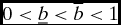
The status quo distribution of benefits in this society privileges certain groups over others, and may be based on ethnicity, religion, geography, or other cleavages within the state. In South Africa during Apartheid, for example, a racial divide between whites and nonwhites determined access to social, political, and economic opportunities (Thompson Reference Thompson2001). For the sake of parsimony, we abstract away from the precise nature of these cleavages and assume simply that the benefit a member of some group i derives from the status quo is
 $b_i\in [\underline{b},\overline{b}]$
such that
 $0<\underline{b}<\overline{b}<1$
. Some groups have higher status quo benefits than others, so their incentive to overthrow the regime will be weaker. Ugandan ruler Milton Obote was a Northerner, and knew that for fellow Northerners, a coup to address ethnic grievances would be unnecessary. The loyalty of the alienated Southerners, in contrast, was far more questionable (Horowitz Reference Horowitz1985, 488, 501). These status quo benefits are normalized such that 0 represents obtaining nothing (e.g., because one is dead or in prison) and 1 represents the maximal benefit of personal rule. We shall further normalize R’s competence to 1, and her security resources to 1.
The timing of the game is as follows. The ruler chooses the group from which to pick the general, bi
, his level of competence,
 $\theta \in [0,\overline{\theta }]$
, and the amount of military resources to make available to him, m ⩾ 0. The marginal cost of giving the general a unit of military resource is 1. All these parameters are observable by the ruler when making her choices, and known to the general selected.
Powerful, well-endowed military forces are more likely to succeed in battle against an external threat. However, if the military attempts a coup, strong forces are also more likely to overcome the defenses that protect the regime, such as paramilitary units and progovernment militias, and can more easily capture strategic targets and members of the government (Powell Reference Powell2012, 1024). Furthermore, the ability of competent military leaders to marshal forces effectively is vital when the government faces external threats, but can be particularly dangerous if cunning generals turn against the regime. Returning again to the case of Uganda, Milton Obote began to fear General Idi Amin’s wiles. When the threat posed by Amin to the regime became clear enough, Obote demoted the general in an attempt to limit his influence (Horowitz Reference Horowitz1985).
We represent the probability that an actor of competence θ in control of military resources m 1 prevails against an opponent—here, either the external threat or the ruler’s own defenses—with resources m 2 with the familiar ratio contest-success function:
 \begin{equation*}
p(m_1,m_2;\theta) = \frac{\theta m_1}{\theta m_1 + m_2}.
\end{equation*}
Following the ruler’s choice of a general and military resources, the selected general decides whether to execute a coup or remain loyal. If he executes a coup, he takes over with probability p(m, 1; θ), in which case his eventual benefit goes to 1, and he is defeated with complementary probability, in which case his benefit goes to 0. The coup is costly for the general: c > 0.
After the coup decision, the external threat of size T > 0 is realized. It is important to note that by “external” threat, we mean any threat from outside of the government—whether foreign or domestic—that threatens the survival of the rulership.Footnote 2 If the general is still around when this threat is faced (because he remained loyal or after a successful coup), he defeats this threat with probability p(m, T; θ), in which case he obtains his benefit (bi if he was loyal to the ruler and 1 if he took over in a coup), and he is defeated with complementary probability, in which case his benefit is 0. If the general was removed after an attempted coup, the ruler herself faces the external threat, and defeats it with probability p(m, T; 1), in which case she retains power with a benefit of 1, and is herself defeated with complementary probability, in which case her benefit is 0.
The highest expected payoff from a coup in the absence of an external threat is when there is no risk: 1 − c. If G would not want to execute a coup even when a favorable outcome is certain, then he will always remain loyal irrespective of his competence and resources. To make the model interesting, we shall assume that G’s loyalty is not so easily ensured:
Assumption 1
Every general is a would-be ruler:
 $\overline{b}+c<1$
.
We also make several additional assumptions because we want to focus on the basic tension between security against external threats and security against the force that is supposed to defend against these threats. Some are made for technical convenience and have no bearing on the results, while others can be defended on empirical grounds.
First, the benefit of membership in some group, bi , is fixed and not borne by the ruler. We can think of this parameter as the consequence of social, economic, and legal institutions underpinning the order in the polity, and as such not really available to the ruler for private consumption. It is the “cost of doing business” and it is not the case that if the ruler picks a general from a less advantaged stratum then she would be saving on that cost.
Second, the ruler pays the cost of resources she transfers to the general but there is no budget constraint. It is highly unlikely that any particular general would be so expensive to get as to trigger a budget constraint, or that rulers are particularly constrained by budgets when it comes to their desire to endow the military with resources. If we were to assume that there was a hard budget constraint, then we might find that the ruler limits the size of the military because of poverty, and not because of any security issues, which is the goal of our analysis. As a result, even if one wanted to introduce a budget constraint, one would have to argue that it would bind, and even when it does bind all it will do is introduce a cap on military allocations, suppressing the mechanism we have in mind. We do assume that these transfers are costly, so there is a disincentive to put too much into the military, but as we shall see this is not going to be the concern in general.
Third, the ruler pays no cost if a coup occurs. Alternatively, the ruler can be assumed to pay a cost if a coup occurs without altering anything in the analysis except carrying another parameter across all calculations. The fact that a coup can depose her with positive probability is already an inducement for her to want to avoid it. Adding extra costs simply strengthens an incentive that is already present (and, as we shall see, quite strong). We do want to consider costs for the general, however, because he has to make a decision about executing a coup, and because these costs might represent institutional features of the existing regime that need to be taken into account.
Fourth, neither the ruler nor the general pay any costs when they fight the external threat. This assumption is consistent with the structure of the model, which allows for no choice to avoid that threat: the ruler simply must deal with it. Since the size of the threat already allows us to capture just how bad it could be for her, there is no need to introduce additional costs.Footnote 3
Fifth, both the ruler and the general are constrained in that they can only use the available military forces m to deal with the external threat (in effect, the ruler’s internal security designed to deal with coup attempts is not useful against external threats). This might appear too restrictive because it seems to disregard strategies the ruler could use to decrease the incentives for a coup. Such coup-proofing tactics could involve increasing the resources devoted to internal security, making it difficult for military units to coordinate and communicate without passing through centralized channels, dispersing units or staffing them with nonlocals, and others. These measures would decrease the probability of coup success at any level of military resources and increase the costs of launching one.
While our cost parameter can capture some aspects of these tactics, it cannot capture others. We could model the effect of such tactics on the probability of coup success with the resources available to the ruler’s internal security forces or her competence, but we have normalized them both. The results will not change if we were to use variables instead as long as we take them as given. In other words, if we think of the Guardianship Dilemma in the context of the ruler having done everything possible to minimize the internal dangers, our analysis follows without any changes. The only downside is that one could not take the model to data where these coup-proofing measures vary without some straightforward modifications that will not alter any of the substance of our argument.
This assumption might also be criticized on grounds that internal security forces may improve the state’s ability to defeat an external threat by augmenting the might of the regular military. We could account for this possibility by incorporating the ruler’s own internal security resources in the probability of success against T. Because this merely involves adding a constant, however, our analysis will not change. We are also doubtful about whether this addition would be appropriate. For instance, one might follow Svolik (Reference Svolik2012), who makes an empirical claim that the army is only generally useful for dealing with mass revolts or foreign forces. In most states—especially dictatorships—the day-to-day security is managed by another apparatus, whose personnel are generally not useful for large-scale operations. One could also point out that some coup-proofing measures (e.g., making it difficult for the commanders to coordinate) might actually have a detrimental effect on the state’s ability to defeat the external threat.
Sixth, the resources given to the military are equally useful for a coup and for fighting the external threat. One might question this on two grounds: it could be that resources are not fungible, and even if they are, they might be useful only in one of the two situations. For example, salaries, health and pension benefits, and payments to civilian contractors are certainly included in military budgets, but they are not likely to increase the fighting ability directly. Spending on some types of technologies could improve the fighting ability when it comes to the external threat without being very useful in a coup. Submarines and fighter jets might belong to that category.
Although both points are doubtless correct, they have only tangential bearing on the Guardianship Dilemma. Since the first type of spending will affect the incentive to launch a coup through the benefits derived from the existing regime, its effects can be approximated by the benefit parameter bi . The only difference, of course, is that since these payments are part of the budget, they would be costly to the ruler. Under the no budget constraint assumption, this would merely result in another parameter being subtracted from the ruler’s payoff, necessitating further assumptions about the marginal costs of these funds, and perhaps restrictions that ensure an interior solution. That solution, however, is not going to produce any difference in the dynamics we study.
Finally, one might wonder about the assumption that more resources given to the military must necessarily increase its ability to prevail in a coup, as built into the functional form of p(·). From the perspective of any coup-plotters, there are some fundamental problems that they would need to overcome before having any chance of success: collective action and coordination problems that arise from incentives to renege on the plot and the necessity of conducting preparations in secrecy, as well as the absolutely critical question about securing the cooperation or at least neutralizing the units in the armed forces that were not privy to the coup (Luttwak Reference Luttwak1979). Very plausibly, these problems, and especially the latter, might be quite aggravated by the size and complexity of the armed forces. In other words, it could be that beyond some level, the larger and more organizationally complex the military, the harder it is for any general to organize a coup. (Such a dynamic could account for the political quiescence of the armies of the Soviet Union, North Korea, and China.) While this is certainly an intriguing possibility, we believe that such a “pacifying” dynamic would have to be quite exceptional as most countries do not have the population base to maintain large armies. Note also that an attempt to construct and maintain an army of sufficient size would probably run afoul of resource constraints.
In the end, ours is emphatically not a general model of coups. We do not study how coups are organized and how they succeed (Sutter Reference Sutter2000). Our interest is in the fundamental Guardianship Dilemma, which has to be analyzed prior to dealing with any strategies for ameliorating its effects. To this end, we have stripped the model of any factors that are not essential to the dilemma, and whose presence might obscure rather than clarify its logic.
KNOWN EXTERNAL THREAT
We shall begin our analysis with the case where T > 0 is common knowledge. If R does not hire a general, then there is no threat of a coup, so R’s payoff is p(m, T; 1) − m; i.e., she simply has to meet the threat with her own competence and the resources she has allocated. Maximizing this payoff yields
 $\widetilde{m}=\max (0,\sqrt{T}-T)$
. In any equilibrium in which G gets hired, R’s expected payoff must exceed the baseline of
 $p(\widetilde{m},T;1)-\widetilde{m}$
. This immediately implies that no coup can occur in equilibrium. In such an equilibrium, R’s expected payoff would be
 \begin{eqnarray*}
&& p(1,\theta m;1)p(m,T;1)-m<p(m,T;1)\\
&& \quad -m\le p(\widetilde{m},T;1)-\widetilde{m},
\end{eqnarray*}
which means that she would strictly prefer not to hire a general in the first place. The only equilibrium possibilities, then, are that either no coup occurs at all or one occurs with positive probability less than 1. The following result (all proofs are in Online Appendix A) shows, among other things, that a coup can never occur in equilibrium.
Lemma 1 In any equilibrium, G remains loyal if, and only if, T ⩾ T* i (m, θ), where
 \begin{equation}
T_i^*(m,\theta)=\left(\frac{\theta m}{c}\right)\left[\frac{\theta m}{\theta m+1}-(b_i+c)\right],
\end{equation}
with T* i increasing in both parameters whenever it is non-negative.□
This immediately tells us that if G would remain loyal in the absence of an external threat, then he will remain loyal in the presence of such a threat irrespective of its size. If, on the other hand, G would be disloyal in the absence of an external threat, then he will execute a coup in the presence of an external threat only if this threat is not too large T < T* i (m, θ). In this sense, sufficiently grave external threats can discipline even a potentially disloyal general and deter him from executing a coup, a sort of “circling the wagons” effect. This effect is due to the fact that the general only wants to take the risks and pay the costs of a coup when he is sufficiently confident about surviving the conflict with T, since survival is necessary to reap the benefits of ruling the state. In turn, as T increases, the loyalty-inducing effect of this external threat allows the ruler to pour additional resources into the military without triggering a coup.
Moreover, since R would not hire a general if a coup is certain, and Lemma 1 shows that G must remain loyal when indifferent, it follows that in equilibrium the probability of a coup must be zero. This leads to the following result.
Lemma 2
Fix any social group bi
. If R’s choices ensure G’s loyalty, then R always picks the most competent general from this group,
 $\overline{\theta }$
, and endows him with
 \begin{equation*}
m_i^*(T) = \left\lbrace \begin{array}{@{}l@{\quad }l@{}}\max \left(0,\sqrt{T\big /\,\overline{\theta }}-T\big /\,\overline{\theta }\right)&\text{if } S(T)\le S_i^*(T)\\
S_i^*(T)\big /\,\overline{\theta }&\text{otherwise,} \end{array}\right.
\end{equation*}
where
 \begin{equation}
S_i^*(T)=\frac{b_i+c+cT+\sqrt{(b_i+c-cT)^2+4cT}}{2[1-(b_i+c)]}
\end{equation}
is the maximum level of disloyalty that would not provoke a coup, and
 \begin{equation}
S(T)=\sqrt{\overline{\theta }T}-T
\end{equation}
is the level of disloyalty for the most competent G with resources optimally provided to deal with the external threat.□
This tells us how R would allocate military resources if doing so would preserve the loyalty of the general. We now show when R would prefer to hire a general given that she would have to ensure his loyalty.
Lemma 3 In equilibrium,
-
(i) R never hires G if the maximum competence is worse than her own:
 $\overline{\theta }<1$
;
-
(ii) R always hires G with
$\overline{\theta }>1$
when the external threat is sufficiently large: T ⩾ 1;
-
(iii) R may or may not hire G with
$\overline{\theta }>1$
when T < 1, depending on the costs of a coup (c) and the benefits from the status quo (bi). In particular, if both are sufficiently small, then R will not hire anyone.□


We have now established that the ruler will never hire anyone less competent than herself and that whenever she chooses to hire a general, she picks the most competent one she can find. Moreover, if the external threat is sufficiently serious, the ruler always hires a general although she might have to ensure his loyalty by providing him with fewer resources than what is optimal for dealing with that threat.
Cases (i) and (iii) of Lemma 3 are substantively unlikely. The former essentially means that no potential general is more competent than the ruler, a highly unlikely scenario (well, except perhaps if the ruler is Napoleon, but even then there might be a potential Wellington!). The latter requires that the external threat be negligible, in which case it is very easy to trigger the disloyalty of any general, which is why the decision to hire depends only on the benefits of the status quo and the costs of a coup. Since the ruler’s incentive to hire a general turns on a looming external threat and the need to get someone competent to deal with it, this case is irrelevant for our purposes. Consequently, we shall exclude these substantively unappealing scenarios from further consideration:
Assumption 2 (Preference for Hiring)
There always exist generals more competent than the ruler (
 $\overline{\theta }>1$
), and the external threat is never negligible (T ⩾ 1).
Under Assumption 2, Lemma 3 implies that R will always hire a general in equilibrium. The following result shows that, generally speaking, the ruler will give preference to the privileged groups when it comes to selecting a general.
Lemma 4
Let b* be the unique solution to S*
i
(T) = S(T). If
 $\overline{b}\le b^*$
, then R strictly prefers to pick G from
 $\overline{b}$
; otherwise R is indifferent among any
 $b_i\in (b^*,\overline{b}]$
, and strictly prefers any of them to any bi
< b*.□
Thus, R will either choose from the most privileged group or from among the few most privileged (when each of them provides enough benefits to ensure the loyalty of generals drawn from them). Moreover, R will always pick the most competent G she can although she might have to handicap the general resource-wise in order to ensure his loyalty. We can state the main result somewhat loosely as follows:
Proposition 1 If the extent of the external threat is common knowledge and Assumptions 1 and 2 are satisfied, then in any subgame-perfect equilibrium, the ruler picks the most competent general. If there are groups that derive sufficient benefits from the status quo to ensure the loyalty of a general selected from them at the allocation that is militarily optimal to deal with the external threat, then the ruler chooses from any among them, and endows the general with the optimal resources (the equilibria are payoff-equivalent). If no such group exists, the ruler selects the general from the most privileged group, and endows him with just enough resources to ensure his loyalty. No coups occur in equilibrium, but the external threat is not properly met when the ruler is forced to handicap the general.□
We have thus established that when the size of the threat is known, the Guardianship Dilemma is, in principle, solvable: militaries remain loyal in equilibrium, and the ruler’s strategy always privileges domestic political survival over dealing with the external threat. The government hires competent generals, but controls resource flows to the armed forces in order to ensure military loyalty. The more privileged the groups from which the generals are selected, the less biting the trade-off between stability (risk of a coup) and security (risk from the external threat). Since the costs of the coup act as a substitute for benefits, the more effective anticoup measures, the less biting the trade-off becomes and the less pressing the need to privilege the military. In this way, “coup-proofing” works much as previous studies suggest.
The very solvability of the dilemma and especially the fact that whenever the trade-off between stability and security exists it is always resolved in favor of stability are puzzling given the frequency of military interventions in politics. If rulers have levers for controlling their armed forces, why are defections by military forces such a regular occurrence?
ASYMMETRIC INFORMATION ABOUT THE EXTERNAL THREAT
Let us now assume that only G observes the actual external threat T, whereas R is only imperfectly informed about it. As before, subgame perfection implies that given an allocation m, a general of competence θ who obtains status quo benefits bi
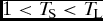
will execute a coup if, and only if, the condition in Lemma 1 is not satisfied; i.e., if the threat T is not sufficiently large to deter him. This suggests that it will be sufficient to analyze the case with two types of threats: small and large, with
 $1<T_{\text{S}}<T_{\text{L}}$
(notice that we are maintaining Assumption 2). The ruler believes that the threat is
 $T_{\text{S}}$
with probability q ∈ (1, 0) and
 $T_{\text{L}}$
with complementary probability.
From the comparative statics on T, we know that when threats become sufficiently large, the marginal costs of military allocations begin to outweigh their usefulness, so R responds by decreasing m even though there is no danger of a coup. We consider it highly implausible that a ruler will be so hampered by these marginal costs that she would respond to more serious threats by reducing her spending on security. Instead of introducing a parameter for marginal costs and requiring it to be sufficiently small given the maximum threat magnitude, we shall simply restrict the threat to ensure that the optimal allocation is strictly increasing in its size. This is already true when R constrains G, so this really only affects the unconstrained allocation.
Assumption 3 (Reasonable Costs of Security)
The marginal costs of security are not so high as to cause larger threats to require smaller countermeasures under complete information:
 $m_i^*(T_{\text{L}})>m_i^*(T_{\text{S}})>0$
.
If R does not hire a general, her expected payoff is
 \begin{equation*}
U_{\text{A}}= m\left(\frac{q}{m+T_{\text{S}}} + \frac{1-q}{m+T_{\text{L}}}\right) - m,
\end{equation*}
which has a unique optimal allocation that results in a strictly positive payoff.
When R hires a general, any allocation can result in one of three outcomes: a certain coup, no coup, and a coup only if the threat is small. To see this, fix some m and observe that if G stays loyal under TS given that allocation, he must certainly do so under TL as well. Conversely, if he executes a coup under TL , then he must also do so under TS as well. The sole remaining possibility is that he executes a coup under TS but remains loyal under TL .
We begin by ruling out the possibility that the ruler will hire anyone when she believes that doing so would result in an inevitable coup (this parallels the complete-information case).
Lemma 5 There is no equilibrium in which R hires G when she expects a coup to occur with certainty.□
Thus, in any equilibrium in which R hires a general, the general’s loyalty is either certain or else only in doubt conditional on the actual size of the threat. The following result shows two things. First, the ruler will never hire anyone less competent than herself. Second, the ruler’s strategy depends on her prior belief about the magnitude of the threat. If she is sufficiently convinced that the threat is large (i.e., q is small), then she allocates more resources to G even though she knows that G will execute a coup if the threat is, in fact, small. The allocation is not, however, optimal for meeting
 $T_{\text{L}}$
either because the possibility that it will be used in a coup against her forces the ruler to curtail it a bit. In this situation, the ruler faces a positive probability of a coup and does not have enough forces to deal with the large threat. If R is sufficiently convinced that the threat is small (i.e., q is high), then she plays it safe: she allocates just enough resources to ensure the loyalty of G under the assumption that the threat is small. While this does ensure that no coup takes place, the ruler will find herself severely handicapped if the threat turns out to be large.
Lemma 6
Fix a social group bi and a level of competence θ. In any equilibrium, R hires G only if
 $\theta >\max (1,T_{\text{S}})$
. In the unique equilibrium in which R hires G, there exists a unique q* ∈ (0, 1) such that
-
• if q ⩽ q*, then R allocates
$\min (m_{\text{C}}(q),m_i^*(T_{\text{L}}))$
, where
$m_{\text{C}}(q)$
is the unique unconstrained maximizer of R’s expected payoff, and G executes a coup if the threat is
$T_{\text{S}}$
but remains loyal otherwise (risky strategy);
-
• if q > q*, then R allocates
$m_i^*(T_{\text{S}})$
, and G remains loyal (safe strategy).


When R plays the risky strategy, she not only faces a positive probability of a coup from a general with substantial resources, but may also fail to provide adequate resources to deal with the large threat. When R plays the safe strategy, she certainly fails to provide adequate resources for the large threat.□
Having established what resources R will allocate once she has chosen G with some competence θ from some class bi
, we now ask how she makes these selections. Since Lemma 6 shows that hiring can only occur if
 $\theta >\max (1,T_{\text{S}})$
, we shall assume that
 $\overline{\theta }$
satisfies this condition.
Lemma 7
Fix a social group bi
. In any equilibrium, R hires the most competent G she can (
 $\overline{\theta }$
).□
Finally, we need to consider the social group from which R selects the general. We first show that R’s payoff is nondecreasing in bi
if she pursues the riskless strategy. In particular, it is constant in bi
if the complete-allocation optimum against
 $T_{\text{S}}$
is unconstrained, and strictly increasing otherwise. Thus, starting with a very low bi
the payoff will not change, and increasing bi
eventually causes it to start increasing.
Lemma 8
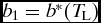
Let b*(T) denote the unique solution to S(T) = S*
i
(T). And let
 $b_1=\min (b^*(T_{\text{S}}),b^*(T_{\text{L}}))$
and
 $b_2=\max (b^*(T_{\text{S}}),b^*(T_{\text{L}}))$
. If
 $\overline{b}\le b_1$
, then R strictly prefers to pick G from
 $\overline{b}$
. If
 $\overline{b}\in (b_1,b_2)$
, then R strictly prefers to pick G from
 $\overline{b}$
for q > q* if
 $b_1=b^*(T_{\text{S}})$
, and for q ⩽ q* if
 $b_1=b^*(T_{\text{L}})$
, and is indifferent among any
 $b_i\in [b_1,\overline{b}]$
for any other q (but strictly prefers any of them to bi
< b
1). If
 $\overline{b}\ge b_2$
, then R is indifferent among any
 $b_i\in [b_2,\overline{b}]$
(but strictly prefers any of them to bi
< b
2).□
We can now state the main result under asymmetric information.
Proposition 2 If only the general knows the extent of the external threat, then in the essentially unique equilibrium the ruler picks the most competent general from the most privileged strata in society. If the ruler is sufficiently sure that the threat is small, she provides the general with only enough resources to meet that threat (even these might be constrained), and the general remains loyal regardless of the extent of the threat. If the ruler is sufficiently sure that the threat is large, she provides the general with resources that balance the risk of a coup with the risk of failing to meet the large threat with adequate resources (even these might be insufficient for the large threat). The general remains loyal if the threat is large but executes a coup if the threat is small.□
Proof The result follows immediately from lemmata 6, 7, and 8. The equilibrium is essentially unique because R might be indifferent among many values of bi as long as they are sufficiently high. Each of these corresponds to a different equilibrium but they are all payoff-equivalent.■
DISCUSSION
External Threats and Military (Dis)Loyalty
Although it appears to make perfect sense, the Guardianship Dilemma turns out to be incomplete. It begins with the premise that the threat environment will create the need for armed forces, which in turn will pose yet another risk for the regime, but fails to consider what effect this environment will have on that new risk. At best, the Guardianship Dilemma offers a straightforward linear extrapolation: the worse the threat environment, the greater the need for armed forces, and, if this need is met, the larger the risk they will pose.
What is missing in this logical chain, however, is the simple fact that if the military does execute a coup and take over the government, the original threat is not going to magically disappear. The new rulers will have to face many, if not all, of the same problems and dangers that had confronted the old ones. The Malian regime of Amadou Toumani Toure, for example, was overthrown in a military coup d’etat in March 2012. Even though the regime had been deposed by the military, the state was still forced to deal with an ongoing rebellion by Tuareg fighters (Nossiter Reference Nossiter2012). Similarly, Syria experienced no fewer than eight successful coups d’etat between 1950 and 1970, when Hafez al-Assad assumed power (Pipes Reference Pipes1989; Powell and Thyne Reference Powell and Thyne2010). Despite the frequent changes in rulership during this period, relations between the Arab state and its primary opponent, Israel, remained tense (Neff Reference Neff1994).
The persistence of threats across regimes is a very real and important consideration for military agents who are considering whether or not to intervene in politics. Because these forces must both overthrow the regime and face the threat, external foes help to induce loyalty by a state’s military forces. This “circling of the wagons” effect is shown in Figure 1 a, where we focus on threats that are at least moderately large (T > 1).Footnote 4 If the external threat is grave enough (T ⩾ T* i (m, θ)), rulers can devote the optimal allocation to defense without triggering a coup. In the case of Iraq, President Saddam Hussein was able to relax constraints on the Iraqi military during the Iran-Iraq War principally because these forces were fighting for the survival of the state (Hiro Reference Hiro1991; Pelletiere and Johnson Reference Pelletiere and Johnson1991). However, rulers in this context must also defeat a stronger threat, which discounts the probability of survival (see Figure 1 b).
Military Endowment and Regime Stability with Known Threats

Alternatively, allocating the optimal amount of resources for defense would trigger a coup when T < T* i (m, θ), leading to a strictly lower chance of survival for the rulership. In this case, the ruler is safer by reducing the amount of resources that she devotes to defense to the coup-constrained amount, even though this will handicap the military. Muammar Qaddafi of Libya, for example, led a regime that faced only moderate levels of external threat for most of his 42 year rule. When it came to managing the military, Qaddaf—who himself had taken power in a coup—purposefully limited its power in order to improve regime security (Lutterbeck Reference Lutterbeck2013, 40).
By identifying circumstances under which rulers will withhold resources from their militaries, our study builds on the work of Besley and Robinson (Reference Besley and Robinson2010), who demonstrate that rulers will sometimes keep their militaries smaller than optimal in order to ensure their loyalty. The mechanisms driving these constraints, however, are quite different. Constraints in the Besley and Robinson (Reference Besley and Robinson2010) model are a consequence of social conflict over public spending, which prevents the regime from credibly committing to resource transfers. Because the military’s loyalty cannot be purchased under such conditions, constraints on the strength of the armed forces are necessary to prevent defection. In contrast, our model shows that constraints can be a function of the threat environment even when rulers can make credible commitments (in our model the resources are given before the coup choice). Rulers can leave the military unconstrained so long as the external threat is sufficiently large, but must impose limitations on their armed forces when faced with intermediate threats.
In one way, these theoretical results are consistent with the basic claim of Desch (Reference Desch1999): militaries are less willing to intervene when external threats loom large. However, our model reveals that with a known external threat, the loyalty of the military does not depend on the size of that threat. The ruler can always remain safe from a coup, whether the external threat is small or large, by controlling the power of the armed forces. This suggests that the mechanisms studied by Desch cannot account for the dilemma despite identifying the loyalty-inducing effects of larger threats. The risk of military disloyalty is not due to variation in the threat environment, but is instead triggered by another factor, one that prevents rulers from calculating and appropriating the correct level of military resources for the given environment. This factor is the asymmetric information that the military and the ruler might have about the seriousness of the threat.
Disagreements about the Threat Environment
Delegating the responsibility for defense to the armed forces creates a less obvious, but, in many ways, more vexing problem for rulers. Militaries are maintained because they possess specialized skills and tools for assessing and combating the state’s enemies. This specialization means that militaries will possess private information about the nature of the threat environment—information that we show is key for rulers who are trying to navigate the Guardianship Dilemma. Rulers’ beliefs about the threat environment determine the amount of resources they devote to the military, which, in turn, drives both the risk of a coup and the ability to defeat external threats.
Figure 2 shows that when the ruler believes the threat to be small (q > q*), she allocates a relatively low level of resources to the military, which ensures its loyalty whether the threat is actually small or large. However, if the ruler mistakenly underestimates the threat, she will allocate too few resources for facing the large threat. While the ruler remains safe from a coup, the regime is more vulnerable to external foes. This danger is illustrated in Figure 3, which shows the probability of regime survival as a function of the ruler’s belief.
Threat Estimates and Resource Allocation

The Divergence of Threat Estimates and Regime Security

Alternatively, when the ruler believes the threat to be large (q ⩽ q*), she allocates a level of resources that will trigger a coup if the threat is actually small, but helps the regime defend against large threats. Because rulers are strictly worse off in a coup, the risk of overestimating the threat is the most dangerous possibility facing their regimes. As a result, even at this high tier of resource allocation, the ruler hedges against the risk of a coup by imposing slight constraints on the military unless she is absolutely certain that the threat is large. So when the ruler must deal with uncertainty, she faces the possibility of either overestimating the threat and risking a coup, or underestimating it and leaving the state exposed to enemies. Rulers are safer when responding appropriately to the given threat environment, and safest when facing a definite small threat.
These findings complement the work of researchers like Svolik (Reference Svolik2012) and Brooks (Reference Brooks2008), who posit that informational asymmetries can complicate the civil-military relations within states as well as the response of regimes to external threats. While Svolik (Reference Svolik2012, Reference Svolik2013) focuses on the case in which military agents are asymmetrically informed about the policies instituted by a regime, we outline the difficulties that arise from the private information that militaries gain while fulfilling their responsibilities as guardians of the state. In this way, we characterize the essence of the dilemma inherent in civil-military relations: the competencies that make military agents effective also make them a threat.Footnote 5
Relating the Model to Empirical Work
A small, but growing, body of scholarship analyzes correlations between coups and variables that could be interpreted in terms of our model. We now discuss how one might account for these empirical regularities with the mechanism it identifies, while also highlighting the additional assumptions one would need to make and the difficulties with positing some of the direct relationships suggested by these studies.
The model predicts that external threats help to induce military loyalty, though civilian control ultimately depends on whether or not the ruler possesses accurate information about the threat environment. In this context, it is useful to consider the empirical results of two studies that find that the probability of coups is lower if the country is involved in a war and even in a crisis (Arbatli and Arbatli Reference Arbatli and Arbatli2014). The explanatory mechanisms these studies offer are different (although not necessarily incompatible) argue that when the military is engaged in a war there are fewer opportunities for a coup and more uncertainty about who will join it, whereas Arbatli and Arbatli (Reference Arbatli and Arbatli2014) argue that crises allow rulers to commit credibly to transfers to the military and to generate rally-around-the-flag effects. Even though either one or both of these mechanisms could be relevant, it is worth noting that our model could produce these predictions in a very straightforward manner.
Since the key variable is the extent of disagreement about the severity of the threat, which is difficult to measure directly, one might wish to conceptualize the uncertainty about the threat in terms of factors that make it more or less likely for such disagreements to arise. For instance, an ongoing war would be indicative of a fairly serious threat that neither the military nor the ruler could possibly be in doubt about. Moreover, since longer wars can potentially reveal more information (Slantchev Reference Slantchev2003), the longer the war, the less likely disagreement should be. Analogously, a crisis could indicate a somewhat less severe threat with some possible disagreements because of diverging estimates about the likely outcome of the crisis. When the country is at peace and not involved in a crisis, on the other hand, there is no clear evidence that could force the political and military estimates to converge: since all threats are purely hypothetical at that point, the possibilities for different opinions relying on difference pieces of information would proliferate. The longer the peace spell, the more likely are these differences to become serious disagreements.
In other words, one might think of disagreement as a continuous variable, proxied by how long the country has been at peace, whether it is involved in a crisis, and whether it is actively fighting. The model would then predict that coups are most likely when there is peace (and the longer the peace spell, the higher the probability of a coup), significantly less likely when the country is involved in a crisis, and quite unlikely when it is involved in a war (and the longer the war, the lower the probability of a coup). Thus, our model can account for the correlations found by both of these analyses without having to resort to different explanatory mechanisms.
While uncertainty about the severity of the threat has a straightforward direct effect, its role as a mediator for the effects of other variables is more complex. Consider, for instance, the problem of relating the military’s endowment to the probability of a coup, which is the subject of a study by Powell (Reference Powell2012). Using an expected utility framework, Powell (Reference Powell2012, 1021) notes that the military would be more likely to execute a coup if it anticipates high benefits from doing so, and if it believes that it has a high probability of success. He then argues that higher (or increasing) levels of funding per soldier will lower the probability of coups (Hypothesis 1) but make coups more likely to succeed (Hypothesis 5), which he considers a paradox (Powell Reference Powell2012, 1025).
Relating these two hypotheses to variables in our model is not as easy as one might think because of the way they treat military resources. The model’s basic assumption is that Hypothesis 5 is correct: this is built into the functional form of the probability of success, which increases in the amount of resources controlled by the military. Furthermore, the model also assumes that these resources cannot be used to increase directly the benefit of a coup, as the reasoning behind Hypothesis 1 would have it. On the other hand, the model does allow the ruler to select generals from more privileged groups, which decreases the potential gains from a coup, but does not allow this to influence the probability of success. We think that there are substantial analytical benefits to be had from keeping these effects separate. After all, even if resources are in the infinitely fungible medium of money, it is not a simple matter to explain how they could create the supposed paradox: higher salaries would not necessarily translate into better training, while purchasing better military equipment would not necessarily yield the military higher benefits from the status quo.
Since Powell’s (Reference Powell2012) statistical analysis uses the government’s military expenditures, which include everything from salaries to equipment—not to mention cases where a significant chunk of the military budget goes to civilian contractors and employees, which increases neither the status quo benefits of the military nor its ability to prevail in a coup—to measure the resources made available to the military, it is not possible to map the findings to the model. Unfortunately, neither it is possible to draw the conclusions he does from that analysis. For instance, one of the findings is that contrary to Hypothesis 5, larger expenditures do not increase the probability of coup success. This would be just as stunning if the spending was on better training, better equipment, and better organization, as it would be trivial if it was on better salaries, health and pension benefits, and other perks. In other words, without disaggregating military expenditures to distinguish between spending that could potentially improve the capabilities from spending that is designed to improve the status quo benefits of the military, one cannot take this finding as contradicting the assumption of our model that resources designed to improve capabilities would increase the probability of success. Instead, the model’s clear conceptual distinction highlights a vague and under-theorized aspect of the explanatory mechanism that generates Hypothesis 5.
It is perhaps even more interesting to attempt to relate Hypothesis 1 to the model, at least when it comes to the causal mechanism. (Obviously we cannot make much of the correlation findings here either for the reasons discussed above.) Powell’s (Reference Powell2012) hypothesis is that better-endowed militaries (or those that enjoy an increase in resources) should be less likely to stage a coup. Since under complete information about the threat the probability of a coup is constant at zero in equilibrium, any variation has to come from the asymmetric information case, where the relationship between resources and coup probability is mediated by the extent of disagreement about that threat.
On one hand, Figure 2 seems to predict precisely the opposite relationship to the one stated in Hypothesis 1: the only positive risk of a coup happens when the ruler is sufficiently convinced that the threat is large and so provides the military with a lot of resources (q ⩽ q*). Since in all other cases the ruler opts for the small allocation and no risk, one might be tempted to conclude that militaries with more resources are more likely to execute a coup. However, if we consider the dynamics in the range of the parameter space where a risk of a coup exists, we find something different. As the plot shows, the military’s allocation is increasing in the ruler’s belief that the threat is large. Recall now that in equilibrium the military executes a coup only when the threat is actually small and assume that the ruler is not deluded on average (meaning that as her belief that the threat is large goes up, the actual probability that it is small is also going down). In this situation, we would expect the probability of a coup to be decreasing as the resources increase. Overall, the model would lead us to expect that militaries with fewer resources do not generally engage in coups, but also that when coups do occur, militaries with more resources are less likely to have caused them. While the latter is consistent with Powell’s (Reference Powell2012) findings, we should not read this as some sort of unequivocal support for the model: after all, our mechanism does depend on the crucial intervening variable of the degree of disagreement, and this is naturally absent in the estimations that take a completely different mechanism as their hypothesized data-generating process.
Some of the most influential work on civil-military relations emphasizes the importance of structural determinants of military disloyalty (Zimmermann Reference Zimmermann1983). When the regime lacks legitimacy, the economy is bad, or the culture is permissive of military interference in politics, the likelihood that the military will seize power is said to increase (Finer Reference Finer1988; Londregan and Poole Reference Londregan and Poole1990). Additionally, Powell (Reference Powell2012, 1030) also argues that institutional coup-proofing measures—such as having parallel military or paramilitary forces, or an extensive security and domestic surveillance apparatus—would reduce the likelihood of coup success and finds not only that they do but that they also reduce the risk of coups.
One parameter in our model can represent some of these factors: the costs of executing the coup that the general pays. Although these costs do not affect the probability of prevailing if the coup is executed, they do affect the incentive to launch a coup because they determine the overall expected benefit of doing so. The effect of this parameter is indirect and transmitted through the way it affects the optimal resource allocation. The complete-information allocation is nondecreasing in these costs: if m* i (T) is at the unconstrained optimum, then it is independent of the costs, and if it is at the constrained optimum, it is strictly increasing because S* i (T) is. In other words, when the structural factors increase the costs of a coup, the ruler can safely provide the military with larger allocations, which are helpful against the external threat.
It can be demonstrated that this means that both the safe and the risky payoffs are nondecreasing and that q* is nonincreasing. This means that under asymmetric information an increase in the costs of a coup results in generally larger allocations for the military and an expansion of the range where the ruler opts for the safe strategy (so a decrease in the ex ante risk of a coup). Thus, the expectations derived from the model are consistent with the empirical findings about the importance of structural variables.
Selecting the Generals, Part 1: Privilege
The model provides a rationale for leaders who select from privileged social groups when filling key military positions, corroborating the work of scholars who emphasize the importance of social, economic, or political ties as determinants of military recruitment and promotion. Members of groups receiving relatively lucrative benefits from the status quo political arrangement have less incentive to overthrow the regime, making them attractive candidates for positions within the military. It can be shown that increasing these benefits has essentially the same effect as increasing the costs of a coup. Thus, increasing
 $\overline{b}$
allows the ruler to provide more resources to the military without increasing the risk of a coup. Under asymmetric information, this results in nondecreasing payoffs from both the safe and the risky strategies, as well as nonincreasing q* (that is, an expanding region where the ruler opts for the safe strategy).
The model leads us to expect that rulers who engage in exclusionary selection practices and choose their military from a restricted group of privileged elites will face a lower risk of a coup and will do better against external threats. Conversely, rulers who for some reason are unable to limit their selection to such a group but must admit representatives of other, less privileged, groups would have a higher risk of a coup and will generally perform worse against external threats.
It is not difficult to find examples of rulers engaging in exclusionary practices when it comes to their militaries. After the 1965 coup and 1966 dissolution of the monarchy in Burundi, most of the 17 military officers in the National Revolutionary Council came from the ruling Tutsi minority, while only three belonged to the Hutu ethnic majority (Kaufman and Haklai Reference Kaufman and Haklai2008, 752). In South Africa during Apartheid, whites dominated the military leadership and were the only group allowed to fulfill combat roles. Nonwhites serving in the military were relegated to supporting positions, such as making food or fixing equipment, that did not provide direct access to coercive force (Enloe Reference Enloe1975, 24).
It is perhaps more interesting to compare the model’s expectations to an empirical study that uses a different explanatory mechanism to derive its hypotheses. Roessler (Reference Roessler2011) argues that coups in sub-Saharan Africa are triggered by an internal security dilemma that arises out of the inability of elites to commit to cooperating with each other to maintain their hold on power. Rulers suspicious of the loyalty of some elites take precautionary coup-proofing measures that increase the anxiety of these elites, which makes them more prone to violence. If the ruler succeeds in excluding these elites from the coercive apparatus, this violence takes the form of a civil war, but if the ruler fails to exclude them, the violence takes the form of a coup. Because rulers cannot observe loyalty directly, they use ethnicity as an informational shortcut, “an expedient mechanism to eradicate perceived enemies at a time of high uncertainty” (Roessler Reference Roessler2011, 313).
Our model has no concept of loyalty as an attribute of the potential general. Instead, loyalty is represented by the decision not to execute a coup, making it an endogenous quantity that is determined by the incentives generated from the combination of resources, competence, benefits, and threat environment. Thus, the model does not allow for the use of ethnicity as a cue for loyalty. If, however, ethnicity is a proxy for privilege (as it would be in most cases), the model rationalizes exclusionary ethnic practices simply as a way to ensure higher status quo benefits for the general.Footnote 6 In this way, the model yields predictions that are remarkably similar to the internal security dilemma story: rulers will attempt to select the commanders of their coercive apparatus mostly from their own ethnic group (which would be privileged in other ways), and in those cases they will be at a lower risk of a coup.
One might also want to think of some additional insights provided by our mechanism. For instance, Roessler (Reference Roessler2011, 314–6) makes a compelling argument that while ethnic exclusion can “terminate the internal security dilemma. . .it leaves the regime vulnerable to a future civil war.” One might wonder why rulers would make such a trade-off, especially because Roessler (Reference Roessler2011, 314–5) simply asserts that civil war somehow “poses less of a threat to their political supremacy.” In contrast, our model suggests straightforward reasons for such a substitution effect. If elites are known to be disgruntled following their exclusion, they will represent a larger known threat to the regime. As we have seen, under these circumstances, the ruler will respond with increased military spending while simultaneously facing a lower risk of a coup from within. Because the larger threat has a “circling the wagons” effect that lowers the incentives for a coup, the ruler can counter the external threat more effectively. A simple extension of our model that allows the ruler to exacerbate that threat shows that the ruler does have a very strong incentive to do so (McMahon Reference McMahon2014). In other words, our mechanism can explain a crucial trade-off that is not part of the internal security dilemma mechanism and as such needs to be asserted to make that explanation work.
Selecting the Generals, Part 2: Competence
Many studies suggest that agents chosen on the basis of their ties to the ruler are less effective, since perceived loyalty is emphasized over merit and competence during the selection process (Brooks Reference Brooks2008; Gaub Reference Gaub2013; Quinlivan Reference Quinlivan1999). As we noted above, we regard loyalty as a consequence rather than an attribute, although one might wish to consider the use of a privileged group as a measure of ties to the ruler. The model very clearly shows that the commonly argued trade-off between loyalty and competence imposes a false choice on rulers, whose optimal strategy is to select the most competent general while simultaneously increasing the probability that he will remain loyal.Footnote 7 Moreover, it is precisely the agent’s ties to the regime that permit rulers to endow the military with additional resources. One should not be surprised to learn that when the Syrian military received advanced T-72 tanks, these weapons systems were distributed first to units deemed to be closest to the Assad regime because they were led by co-ethnic Alawites and sometimes even by members of the Assad family (Bennett Reference Bennett2001; Quinlivan Reference Quinlivan1999, 147). Since more competent agents that command more resources are better positioned to deal with external threats, the model also contradicts the notion that these militaries must be of low quality.Footnote 8
Since a key hypothesis that emerges from our analysis is that rulers always want to hire the most competent generals, we should like to take a closer look at a famous instance that seems to contradict that claim: Saddam Hussein’s choice of high-ranking military officers. As we noted above, the Iraqi president exerted control over the appointments of his military commanders, giving priority to groups with close ties to the regime. In particular, Hussein favored those with whom he shared common traits—mainly fellow Ba’athists and Sunni-Arabs, as well as privileged men from the area around his hometown of Tikrit—when choosing personnel for particularly sensitive tasks (al-Marashi Reference al-Marashi2002).
When Iraq invaded Iran in September 1980, many of these loyalist officers proved to be incompetent military leaders, resulting in a painstakingly slow advance into Iranian territory. The sluggish pace of the advance allowed the Iranian military, still reeling in the aftermath of the 1979 Islamic Revolution, the time to coalesce into a force capable of pushing the Iraqis backwards (Hiro Reference Hiro1991; Pelletiere and Johnson Reference Pelletiere and Johnson1991). Hussein reacted by replacing many of these commanders, and as a result the performance of the Iraqi armed force markedly improved.
It would be easy to use this case as an example of a ruler privileging loyalty over competence when selecting military agents, and the deleterious effects of this type of decision-making calculus. However, it is important to dig a bit deeper to understand the decision-making calculus of the Hussein regime, and the consequences of these decisions for military effectiveness. First of all, evidence suggests that Saddam Hussein was selecting for both competence and privilege when appointing officers to military positions prior the war. Woods et al. (Reference Woods, Murray, Nathan, Sabara and Venegas2011, 14) write that “At the war’s outset, Saddam was heavily influenced by Ba’ath ideology. He believed that any Ba’ath leader could, at the same time, be a competent military commander.” In fact, the regime had a famous slogan: “al-askari al-jayyid huwa al-Baathi al-jayyid,” which means “the good military man is the good Baathist” (Parasiliti and Antoon Reference Parasiliti and Antoon2000, 134).
In other words, not only did Hussein not regard the selection from the privileged Baathist elite as some sort of substitute for competence, he seems to have thought that membership in the party was a good indicator of high military competence. His behavior is thus in line with the model’s expectations.
As it turned out, Hussein was mistaken about the direct relationship between membership in the privileged group and competence. Since our model assumes that competence is directly observable, it does not allow for such mistakes. In its present form, the model cannot account for Hussein’s initial choice. However, if our model is right, then Hussein’s intention must have been to select competent generals. This implies that upon realizing that he had made a mistake, Hussein should immediately have moved to correct it by making appropriate replacements. Since performance in war can be regarded as a direct test of competence, the fact that Hussein did replace unsuccessful commanders with successful ones can be taken as evidence that supports our model. Moreover, the fact that Hussein continued to select from the privileged group lends further support to our model and undermines the idea of a trade-off between loyalty and competence.Footnote 9
We can take our analysis further and turn Hussein’s apparent mistake to our analytical advantage. Some studies suggest that while the loyalty-competence trade-off is real, large external threats can swamp the fear of a coup and cause the ruler to focus more on competence rather than loyalty (Talmadge Reference Talmadge2013). If such a decision is conditional on the level of threat, then the choice of competent commanders must be transient: The diminution of the threat must cause the ruler to revert to form. In this instance, after the war’s end Hussein would be expected to replace the competent, but now dangerous, generals with incompetent cronies. Our model, on the other hand, would lead us to expect precisely the opposite outcome because the incentive to select the most competent general is independent of the level of threat. Since performance in the war has allowed him to identify the competent commanders, Hussein would be expected to retain them after the war’s end.
In order to assess these divergent expectations, we identify the senior leaders of the Iraqi armed forces—members of the high command—during the last two years of the Iran-Iraq War (1987 and 1988). The high command is inclusive to a variety of senior military leadership positions, from commander-in-chief Saddam Hussein and the minister of defense to the commanders of the navy and the seven army corps (Bengio Reference Bengio, Rabinovich, Shaked and Ayalon1989, Reference Bengio, Ayalon and Shaked1990). After determining the individuals who held these key posts, we tracked their career trajectories for the first few years after the war to determine if they were purged.
In all, we were able to track the postwar career trajectories for 23 of the 27 members of the 1987/88 military high command (see Online Appendix B). We excluded Hussein himself (the 28th commander) from this analysis. The data reveal that Hussein continued to employ a sizable majority of his senior military leaders after the war. As is shown in Table 1, almost three-quarters of the generals continued to hold the same position or were promoted by the regime. This evidence, while it is only suggestive, provides support for the predictions of our theory: Hussein kept his war-proven military commanders after the war. There is no postwar information for four of the generals who served in the high command, possibly because they were purged by the regime. Yet even if we were to assume that all four were purged, it would mean that Hussein retained 76 percent of the still-living members of the high command from 1987/88 for at least two years after the war.
1987–88 Iraqi Military High Command After Iran-Iraq War

Notes: Career trajectories for the men who held positions in the Iraqi military high command during 1987 or 1988. Outcomes determined by the status of each individual between the end of the Iran-Iraq war and 1990/1.
Hussein’s actions clearly demonstrate a ruler who was seeking both to maximize competence and ensure loyalty while selecting military officers. The Iraqi regime used the crucible of war to identify competent commanders, and then continued to rely on these individuals after the fighting had ended. While our evidence is limited to the senior leadership of the Iraqi armed forces, we believe that the calculus driving the decisions of rulers like Hussein is most evident among these individuals, who are both highly influential and visible within the state. Focusing on the high command also allows us to avoid confusing political calculations with the downsizing that occurs among the ranks of most militaries following long and costly wars.
CONCLUSION
Examining the Guardianship Dilemma allows us to make several contributions to the study of political instability in general, and civil-military relations more specifically. First, the same threats that necessitate the creation of a military for defense also help to keep this force loyal. Ultimately, the pernicious effects of the Guardianship Dilemma are due primarily to rulers’ uncertainty about the threat environment, rather than the severity of these threats. Second, rulers in coup-prone states are better off by staffing their militaries with persons from privileged groups, since regimes can actually increase the fighting power of their armed forces through selective appointments. If individuals with a higher status quo benefit have less incentive to overthrow the regime, they can be trusted with more coercive power. Third, rulers also select generals on the basis of their competence, since a competent commander can more effectively manage the state’s military resources. While this competence increases the likelihood that a coup will succeed if attempted, rulers prefer to manage the generals’ loyalty by restricting the resources that flow to militaries, rather than by appointing dolts who will waste what they are given.
While the model enables us to characterize the most basic features of the dilemma, further research is necessary to extend and refine these insights. A useful first step would be to examine whether the Guardianship Dilemma depends on the source of the threat facing the state, especially in the context of foreign versus domestic enemies. While previous research predicts that civil-military relations differ drastically on the basis of whether the threat comes from within or outside of states’ borders (Desch Reference Desch1999), the dynamics we outline exist in the presence of any threat that endangers the government. Dissimilar threats may, however, differentially affect the variables that impinge upon the dilemma, changing the extent to which rulers must relax or impose constraints on their armed forces. There may also exist levels of uncertainty about the strategic environment that vary systematically across unlike threats. While these differences are likely to be manifest in the empirical record, it would be worthwhile to explore whether or not this variation in behavior is due to the same underlying mechanism.
Another step would be to analyze an extension to the model in which the interaction between military and political elites takes place over multiple periods. The game in our model ends when the external threat is faced. In practice, of course, whoever is in charge of the state must continue to rule. If the military has been endowed with the resources to face a threat, the sudden termination of this loyalty-inducing threat could put the regime in grave danger, leading rulers to prefer enduring hostilities with opponents. In this, it may be possible to develop a civil-military logic for the cultivation of rivalries. One could also explore how the actions of rulers might change if the competence of potential generals is hard to observe, as it was initially for Saddam Hussein. The model reveals that knowing the competence of the military leadership is important for rulers who are calibrating an appropriate response to external threats and the risk of a coup, and that, consequently, uncertainty about competence could potentially be costly or dangerous (or both!) for the regime. As a result, we may identify rulers who invest in military academies, conduct exercises, or use the process of fighting in conflict to separate the types of military officers in their armed forces.
Supplementary Materials
To view supplementary material for this article, please visit http://dx.doi.org/10.1017/10.1017/S0003055415000131


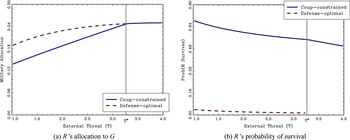
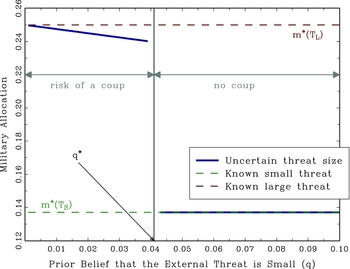
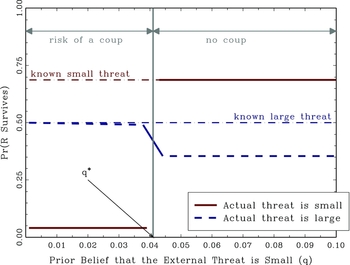




Comments
No Comments have been published for this article.