Introduction
In 2017, there were 258 million migrants worldwide, including 25.9 million refugees (Abubakar et al., Reference Abubakar, Aldridge, Devakumar, Orcutt, Burns, Barreto and Zimmerman2018; United Nations, 2017). Furthermore, it has been estimated that refugee minors, i.e. refugee children below 18 years, constitute half of the refugee population worldwide (Gadeberg, Montgomery, Frederiksen, & Norredam, Reference Gadeberg, Montgomery, Frederiksen and Norredam2017), and this group has continued to increase (Fazel, Reference Fazel2018; Kien et al., Reference Kien, Sommer, Faustmann, Gibson, Schneider, Krczal and Gartlehner2018). During 2015–2017, around one million asylum-seeking children were registered in the European Union (EU), of whom one in five arrived unaccompanied by a caregiver (World Health Organization, 2018).
A large proportion of refugee youth has experienced traumatic events in their country of origin or during their flight to the host country (Giacco, Laxhman, & Priebe, Reference Giacco, Laxhman and Priebe2018). Such experiences may be more harmful to mental health in refugee youth than adults, as they are enduring these adversities during their formative years (Kien et al., Reference Kien, Sommer, Faustmann, Gibson, Schneider, Krczal and Gartlehner2018). Consequently, refugee youth may have an elevated risk of mental disorders compared to non-refugee youth, predominantly common mental disorders such as post-traumatic stress disorder (PTSD), depressive and anxiety disorders (Fazel, Reference Fazel2018; Fazel, Reed, Panter-Brick, & Stein, Reference Fazel, Reed, Panter-Brick and Stein2012; Kien et al., Reference Kien, Sommer, Faustmann, Gibson, Schneider, Krczal and Gartlehner2018; Manhica, Almquist, Rostila, & Hjern, Reference Manhica, Almquist, Rostila and Hjern2017; Montgomery, Reference Montgomery2011; Norredam, Nellums, Nielsen, Byberg, & Petersen, Reference Norredam, Nellums, Nielsen, Byberg and Petersen2018). However, to date, studies investigating the long-term risk (follow-up into young adulthood) of mental disorders in refugee youth are sparse (Barghadouch, Carlsson, & Norredam, Reference Barghadouch, Carlsson and Norredam2018; Manhica et al., Reference Manhica, Almquist, Rostila and Hjern2017; Norredam et al., Reference Norredam, Nellums, Nielsen, Byberg and Petersen2018), especially when it comes to examining specific types of mental disorders (Kien et al., Reference Kien, Sommer, Faustmann, Gibson, Schneider, Krczal and Gartlehner2018).
The literature is even more restricted regarding longitudinal studies investigating mental disorders of unaccompanied and accompanied refugee youth (Barghadouch et al., Reference Barghadouch, Carlsson and Norredam2018; Norredam et al., Reference Norredam, Nellums, Nielsen, Byberg and Petersen2018). The term unaccompanied refugee minor refers to forcibly displaced children and youths under the age of 18 who are ‘separated from both parents and […] not being cared for by an adult who by law or custom has the responsibility to do so’ (UNHCR, 2019). A few studies found that unaccompanied youth are particularly at risk with respect to anxiety disorders and PTSD (Barghadouch et al., Reference Barghadouch, Carlsson and Norredam2018; Norredam et al., Reference Norredam, Nellums, Nielsen, Byberg and Petersen2018). These differences have among others been explained by the high levels of trauma exposure, loss and forced separation and lack of family support in unaccompanied compared to accompanied refugee youth. (Bean, Derluyn, Eurelings-Bontekoe, Broekaert, & Spinhoven, Reference Bean, Derluyn, Eurelings-Bontekoe, Broekaert and Spinhoven2007).
With respect to specific mental disorders, some epidemiological studies have shown an increased risk of schizophrenia and other non-affective psychotic disorders in refugees and other immigrant youth when compared to the host population (Barghadouch et al., Reference Barghadouch, Carlsson and Norredam2018). Here, slightly higher risk in unaccompanied refugees compared with accompanied refugee youth has been reported (Norredam et al., Reference Norredam, Nellums, Nielsen, Byberg and Petersen2018). On the other hand, recent studies have shown that refugee youth, as well as non-refugee immigrants, seem to have a lower risk of substance use disorders when compared to their counterparts in the host population (Harris, Dykxhoorn, Hollander, Dalman, & Kirkbride, Reference Harris, Dykxhoorn, Hollander, Dalman and Kirkbride2019) as well as a lower risk of suicidal behavior (Saunders et al., Reference Saunders, Lebenbaum, Stukel, Lu, Urquia, Kurdyak and Guttmann2017). Studies examining other mental disorders, such as bipolar disorder and personality disorders are lacking to date. There has been emerging evidence linking these mental disorders to trauma, suggesting higher rates of e.g. bipolar disorder and personality disorders in refugees (Buhmann, Reference Buhmann2014), but research is scarce.
Immigrant populations are of course very heterogeneous and studies comparing mental health in refugees and non-refugees have shown a higher likelihood of mental health problems in refugees (Hollander, Bruce, Burström, & Ekblad, Reference Hollander, Bruce, Burström and Ekblad2013). Here it is possible to compare refugees with non-refugee migrants from the same countries of origin, as in previous studies using Swedish register data (Hollander et al., Reference Hollander, Bruce, Burström and Ekblad2013; Niederkrotenthaler, Mittendorfer-Rutz, Mehlum, Qin, & Björkenstam, Reference Niederkrotenthaler, Mittendorfer-Rutz, Mehlum, Qin and Björkenstam2020). It might be hypothesized that higher levels of traumatic experiences in refugees than in non-refugee migrants might have a stronger effect on mental health care consumption than their similarities such as being born and raised in the same countries. It is unclear, though, whether this also applies to younger individuals. According to a recent report from the World Health Organization (WHO), children in different immigrant subgroups differ considerably with respect to their mental health (World Health Organization, 2018). Moreover, most studies to date have been carried out on young refugees and their risk of mental disorders (Fazel et al., Reference Fazel, Reed, Panter-Brick and Stein2012; Montgomery, Reference Montgomery2011) and less is known whether they actually also utilize health care for their mental health complaints. Still, refugees are known to experience considerable barriers when accessing care, particularly regarding mental health and specialized health care (Barghadouch et al., Reference Barghadouch, Kristiansen, Jervelund, Hjern, Montgomery and Norredam2016; Satinsky, Fuhr, Woodward, Sondorp, & Roberts, Reference Satinsky, Fuhr, Woodward, Sondorp and Roberts2019). These barriers include restrictions to health care in the host country, stigma related to mental disorders and language problems (Barghadouch et al., Reference Barghadouch, Kristiansen, Jervelund, Hjern, Montgomery and Norredam2016; Fazel et al., Reference Fazel, Reed, Panter-Brick and Stein2012; Satinsky et al., Reference Satinsky, Fuhr, Woodward, Sondorp and Roberts2019). Moreover, differences in the experience, expression and perceived stigma related to mental disorders prevailing in the country of origin and unfamiliarity with the completely new health care system in the host country might contribute to lower levels of health care seeking of refugees with mental health complaints. It is, therefore, crucial to study diagnosis-specific psychiatric health care consumption in young refugees.
Some longitudinal studies of refugee children and youth have shown that the risk of psychiatric care utilization tends to increase with longer duration of the residency (Manhica et al., Reference Manhica, Almquist, Rostila and Hjern2017). It has further been shown that use of psychotropic medication such as antidepressants appears to increase with longer duration of residence (Björkenstam et al., Reference Björkenstam, Helgesson, Norredam, Sijbrandij, de Montgomery and Mittendorfer-Rutz2020; Brendler-Lindqvist, Norredam, & Hjern, Reference Brendler-Lindqvist, Norredam and Hjern2014). On the other hand, rates of health care use due to stress-related disorders, including PTSD seem to decrease with time spent in the host country (Björkenstam et al., Reference Björkenstam, Helgesson, Norredam, Sijbrandij, de Montgomery and Mittendorfer-Rutz2020). Related to that, also the age at arrival matters (Myers, Gao, & Emeka, Reference Myers, Gao and Emeka2009). Studies have shown that a younger age at arrival is predictive of a favorable socioeconomic outcome regarding adult achievement (Myers et al., Reference Myers, Gao and Emeka2009). Early integration in the school system of the host country might have positive implications for social integration, language skills and therefore socio-economic trajectories. These trajectories, in turn, have a strong impact on occupational attainments, such as attachment to the labor market, which in turn has an effect on the development of mental disorders. Still, to date, surprisingly few studies have examined psychiatric care utilization due to specific mental disorders among refugee youth including the effect of duration of residency and age at arrival as well as labor market attachment.
Overall and specific aims
The current study aimed to examine differences in psychiatric care utilization, defined as a psychiatric inpatient or specialized outpatient care, in young refugees who came to Sweden as unaccompanied or accompanied minors, compared with that of non-refugee immigrant youth and young individuals born in Sweden. In addition, we examined if the rates and risks differed depending on types of mental disorders and whether the duration of residency and age at arrival modified the association between refugee status and subsequent psychiatric care utilization.
Methods
Study population
The study population was defined as all individuals, between 19 and 25 years, alive and residing in Sweden on 31 December 2009 (n = 852 768). We excluded immigrants with incomplete information on their reason for settlement in Sweden (n = 28 437, 3.3%) and those for whom information on year of immigration was missing (n = 471, 0.1%). Immigrants who arrived in Sweden when they were between the ages of 18 and 25 were excluded (n = 43 859, 5.3%). We also excluded individuals utilizing psychiatric care at baseline, i.e. in 2009 (n = 30 534, 3.9%) in order to enable us to investigate incident cases. Last, of the non-refugee immigrants, we only included those who came from the same countries as the refugees, i.e. excluding another 2779 (0.4%) individuals. Applying these exclusion criteria, the final study population comprised 746 688 individuals, whereof 32 481 refugees and 32 151 non-refugee immigrant youth.
We used the unique (de-identified) Swedish personal identity number to link information from several population-based registers. The Longitudinal Integration Database for Health Insurance and Labor Market Studies (LISA) includes data from the labor market and from the educational and social sectors. The Longitudinal Database for Integration Studies (STATIV) holds migration-related information, including reasons for settlement, e.g. refugee status. The National Patient Register (NPR) includes information on inpatient care since 1987 and for specialized outpatient care since 2001. Diagnoses in NPR are coded according to the International Classification of Diseases version 10 (ICD-10). The Cause of Death Register (CDR) comprises information on all deaths of Swedish residents since 1952. Families were linked together through the Multi-Generation Register, which contains all known relationships between children and parents (born 1932 or later) since 1961.
Measures
Refugee status
In this study, a refugee was defined as an individual receiving a residence permit in Sweden as a refugee (according to the Geneva Convention of Refugees), or an individual who had been granted residence permit due to ‘in need of protection’ or on ‘humanitarian grounds’ (Sweden has ratified the UN declaration so it is included in the legislative text: Immigration Act chapter 4 1§ regarding refugees). Refugees were further classified as unaccompanied or accompanied. The refugees were categorized as accompanied if they obtained residency because they were related to a family member who was a refugee, according to the register, or had at least one parent in the Multi-Generation Register who had received residency in Sweden the same year or 1 year before the young refugee. Young refugees who did not fulfil either of these two criteria were categorized as unaccompanied. In total, 2896 refugees came as unaccompanied minors (before they turned 18 years) and 29 585 came as accompanied. All other immigrants (with similar countries of birth as refugees) were categorized as non-refugee immigrants. The third comparison group included people born in Sweden.
Outcomes
The individuals were followed from 1 January 2010 until 31 December 2016 to track first psychiatric care utilization in terms of psychiatric diagnosis (ICD-10 codes F00–F99), during inpatient or specialized outpatient care. Moreover, the following types of disorders were studied separately (ICD-10 codes): substance abuse disorders (F10–19), schizophrenia and other non-affective psychotic disorders (F20–29), bipolar disorder (F30–31), depressive disorders (F32–34), anxiety disorders (F40–42), reaction to severe stress and adjustment disorders including PTSD (F43), PTSD as a separate category (F43.1), personality disorders (F60–69), autism spectrum disorders (ASD) (F84), and behavioral and emotional disorders with onset occurring in childhood and adolescence (F90–98), attention-deficit/hyperactivity disorder (ADHD) as a separate category (F90).
Duration of formal residency in Sweden was categorized into three groups
0-5 years, 6–10 years and >10 years.
Age at arrival was categorized as follows: 0-6, 7–13, 14–16 and >16 years. This choice of categorization reflects the years for different levels of schooling in Sweden.
Covariates
A range of potential covariates with known associations with both migration status and mental disorders, measured in 2009, was considered. We adjusted for age, sex, family situation, type of residential area and in the sensitivity analyses also for the country of birth (Table 1). Adjustments were also made for somatic morbidity at baseline, defined as an inpatient or specialized outpatient care with the main diagnosis for a somatic disease, or utilization of certain prescribed medications. For diagnoses, all ICD-10 codes were considered, with the exception of codes related to mental disorder (ICD-10: F00–F99), codes related to single childbirth (i.e. ICD-10: O80), and symptoms, signs and abnormal clinical and laboratory findings (ICD-10: R00-R99). For prescribed medication use, the following drugs were considered: antidiabetics (ATC: A10) and antiepileptic medication (ATC: N03A, excluding mood stabilizers). Individuals could be included in more than one group. Sickness absence, disability pension and unemployment, measured in 2009, were used as indicators of labor market marginalization.
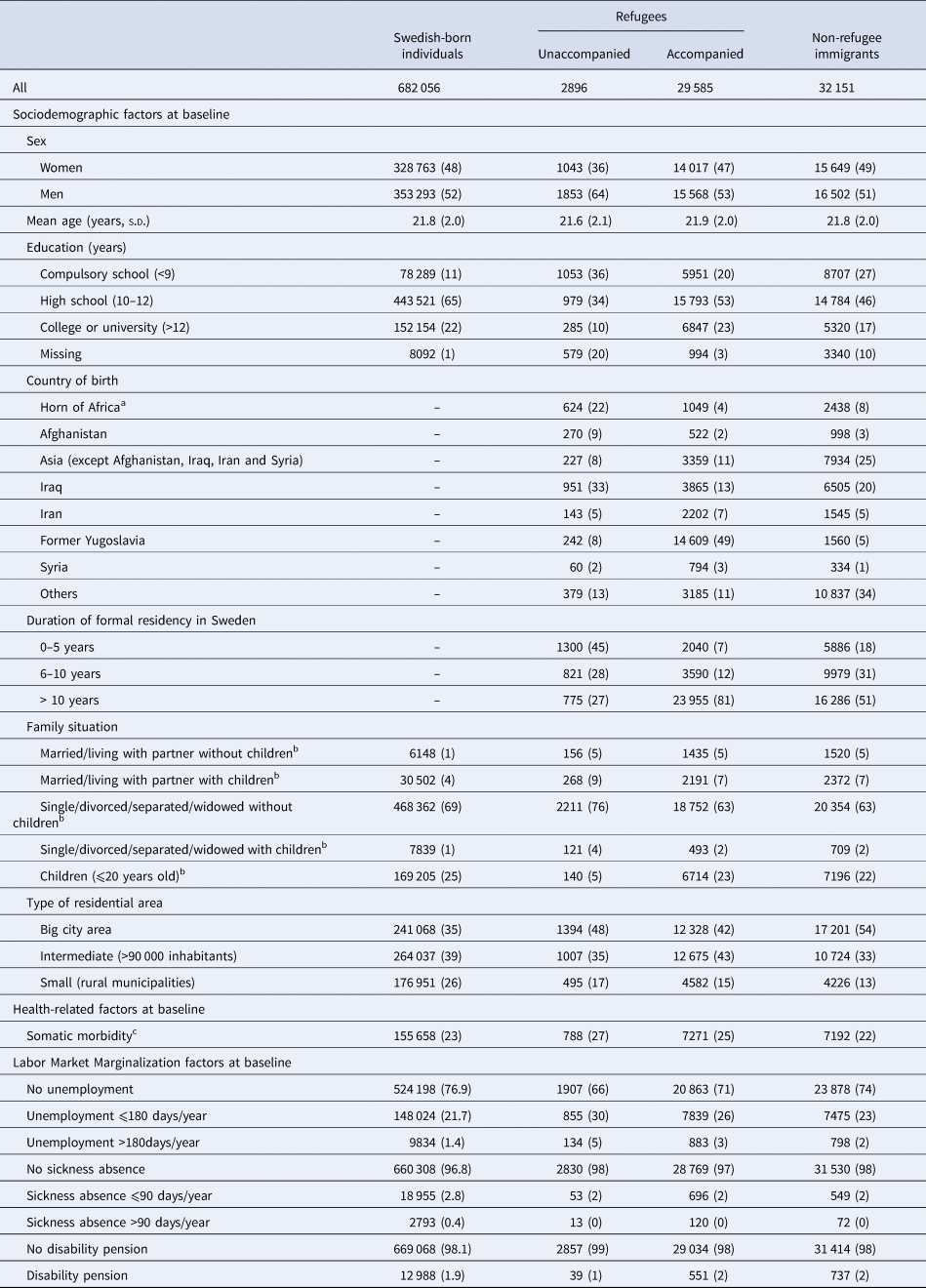
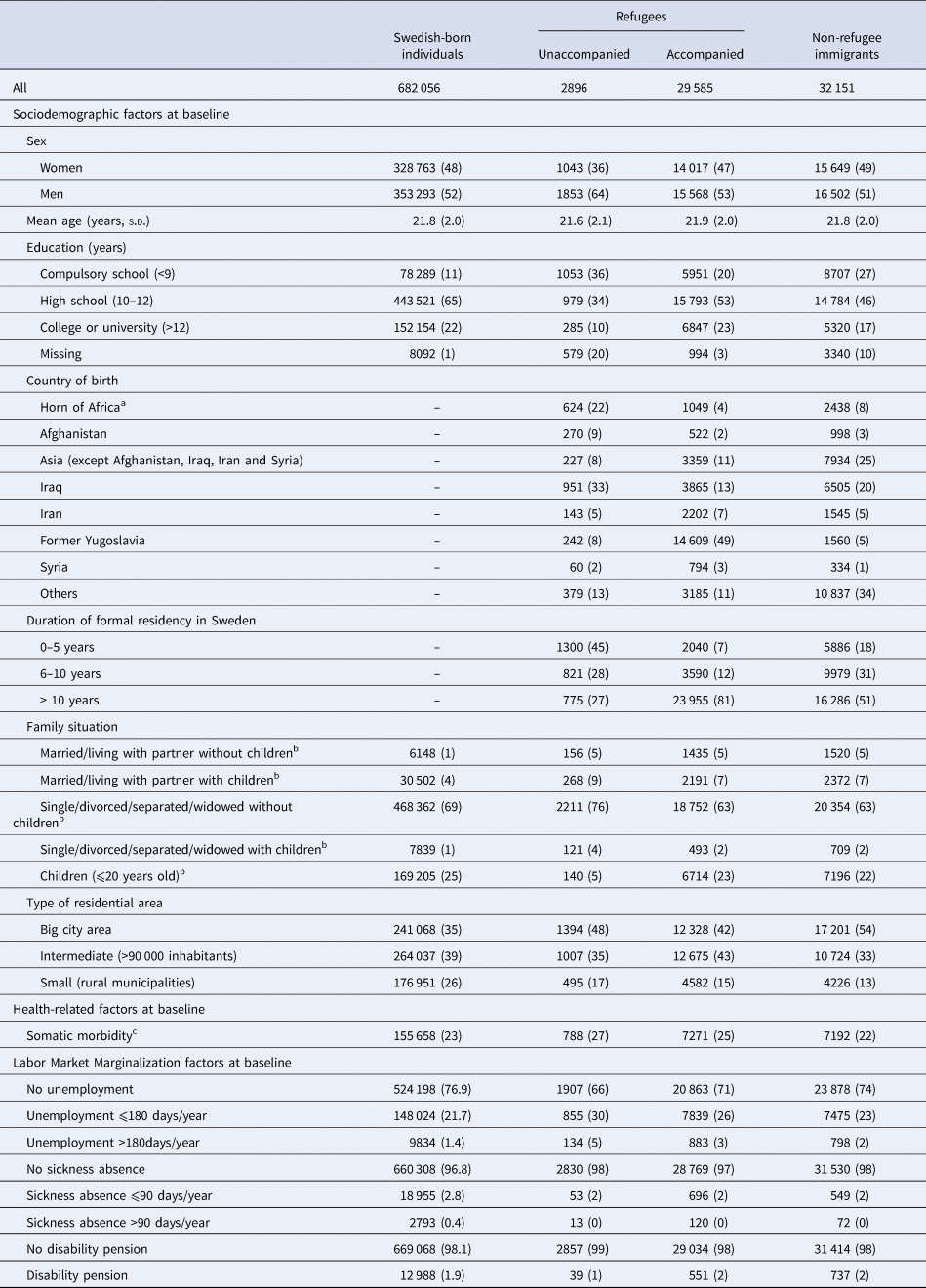
Cohort characteristics, by refugee status, in individuals aged 19–25 years old residing in Sweden in 2009
a Somalia, Eritrea and Ethiopia.
b Living at home.
c Defined by Atomic Therapeutic Chemical Classification (ATC)-codes for diabetes medication (A10), antiepileptics (N03A excluding mood stabilizers); and/or any International Classification of Diseases version 10 (ICD-10) code, excluding codes for mental disorders (F00–99), single childbirth (O80) as well as ‘symptoms, signs and abnormal findings’ (R00–99).
Statistical analyses
Statistical analyses were conducted using SAS, v.9.4. Crude and multivariate analyses were performed using Cox regression models of time to first hospital admission date or date of the first visit in specialized psychiatric outpatient care during follow-up. We assessed person-years at risk by totaling the years that the individuals were living in Sweden during the follow-up period. The entry date was defined as 1 January 2010, and the exit date as the date of first outcome, date of death, date of emigration or the end of follow-up (31 December 2016). Separate analyses were performed for each diagnostic group. We examined the associations between refugee status and each outcome in one crude and one adjusted regression model. Model 2 was adjusted for age, sex, education, family situation, type of residential area, factors reflecting labor market marginalization and somatic morbidity at baseline. Results are presented as crude and adjusted hazard ratios (HRs and aHRs) with 95% confidence intervals (CIs).
Sensitivity analyses
We conducted a sensitivity analysis, in which individuals who were granted residence permits due to ‘in need of protection’ and on ‘humanitarian grounds’ were excluded from the refugee category. In another sensitivity analysis, we only included refugees and compared unaccompanied with accompanied refugees, also adjusting for the country of birth and duration of residence. Last, we compared the estimates in analyses including individuals with psychiatric health care consumption at baseline with those excluding them.
Ethics
The study was approved by the ethical committee in Stockholm, Sweden (dnr: 2016/1533–32). Informed consent was waived by the board because the study was strictly register-based. The authors assert that all procedures contributing to this work comply with the ethical standards of the relevant national and institutional committees on human experimentation and with the Helsinki Declaration of 1975, as revised in 2008.
Results
Characteristics of the study population
Cohort characteristics of the study population, stratified by refugee status are presented in Table 1. Of the 32 481 refugees, 9% (n = 2896) arrived in Sweden as unaccompanied refugee minors. Compared to Swedish-born and non-refugee immigrants, refugees were more often males. In terms of education, both refugee and non-refugee immigrants more frequently had low, i.e. compulsory education level than Swedish-born youth. With respect to the country of birth of refugees, 46% (n = 14 851) came from former Yugoslavia and 15% (n = 4816) from Iraq, whereas, among non-refugee immigrants, a large proportion came from Asia (25%, n = 7934) and Iraq (20%, n = 6505). Unemployment was more common in refugees compared to the other groups. On the other hand, Swedish-born youth were more often on sick-leave. Among refugees, compared to accompanied youth, unaccompanied were more likely to come from the Horn of Africa [22% (n = 624) v. 4% (n = 1049)] or Iraq [33% (n = 951) v. 13% (n = 3865)] and to have a shorter duration of formal residency in Sweden (mean duration 7.5 years v. 14.3 years).
Differences in psychiatric care utilization by refugee status
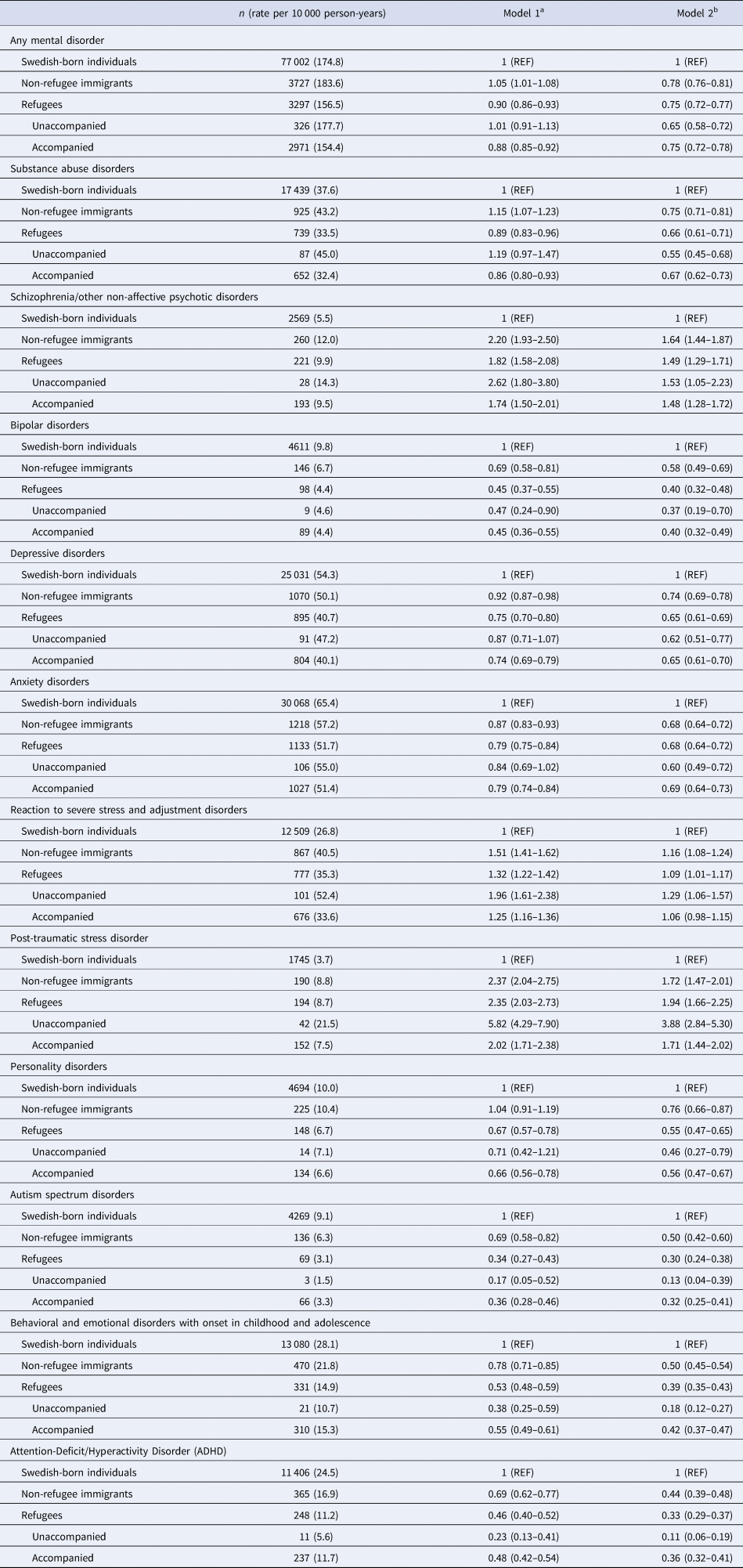
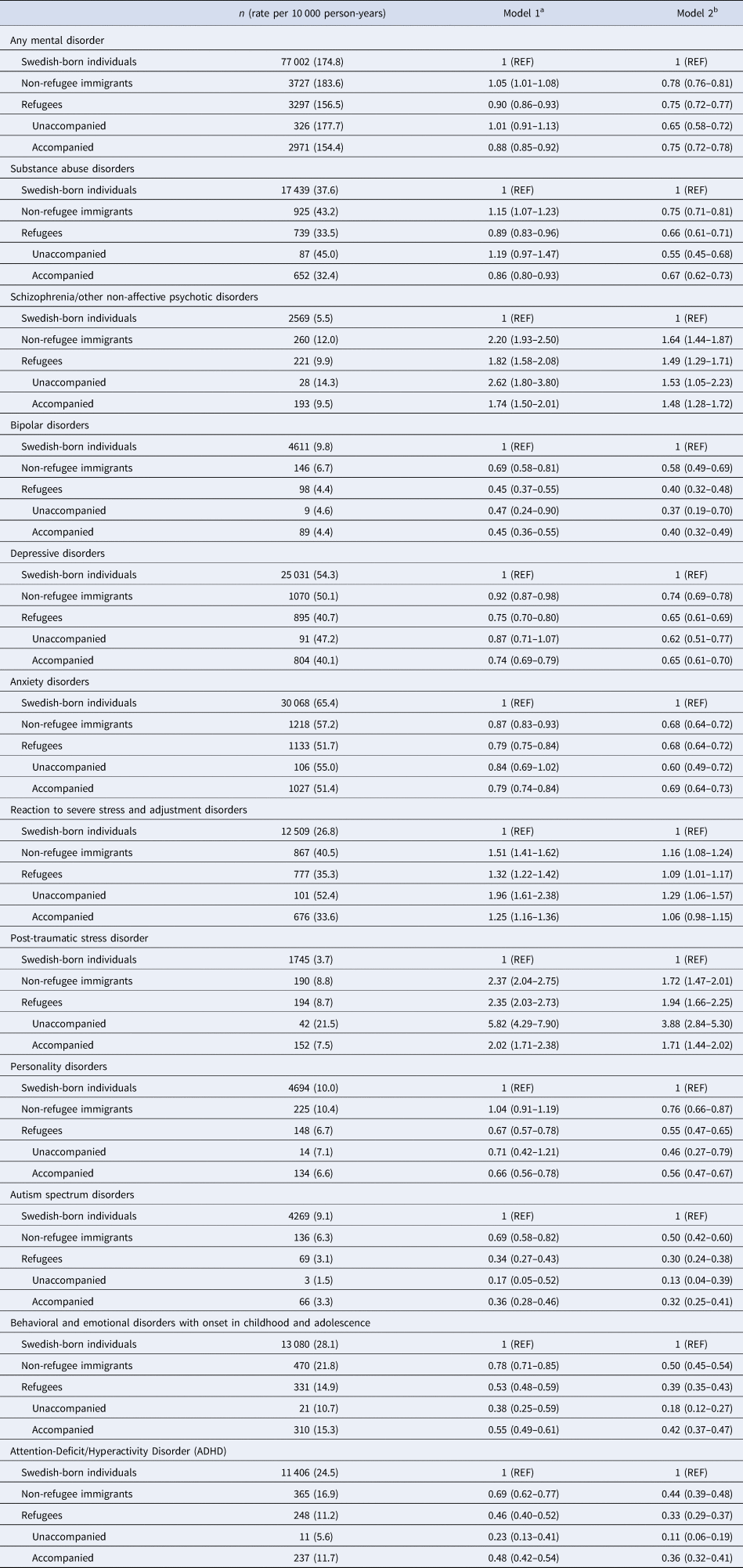
During the follow-up period, 11% (n = 77 002) of Swedish-born individuals, 10% (n = 3297) of refugees and 11% (n = 3727) of non-refugee immigrants utilized psychiatric care (Table 2). Refugees had the lowest rate for overall psychiatric care utilization (156.5 per 10 000 person-years). Table 2 further shows that the adjusted HRs for psychiatric care utilization due to any mental disorder was significantly lower in both non-refugee and refugee immigrants when compared to Swedish-born [aHR for non-refugee immigrants: 0.78 (95% CI 0.76–0.81); aHR for refugees: 0.75 (95% CI 0.72–0.77)]. These are HRs where adjustments were made for among others sociodemographics and labor market marginalization factors. Within the refugee group, unaccompanied had a slightly lower adjusted risk for overall psychiatric care utilization compared to accompanied [aHR for unaccompanied: 0.65 (95% CI 0.58–0.72); aHR for accompanied: 0.75 (95% CI 0.72–0.78)], with Swedish-born being the reference group.
Risk of psychiatric care utilization, by refugee status. Individuals aged 19–25 years old residing in Sweden in 2009. Hazard ratios (HRs) with 95% confidence intervals (CIs)
a Model 1: Crude.
b Model 2: Adjusted for age, sex, education, family situation, type of residential area, unemployment, sickness absence, disability pension and somatic morbidity at baseline.
When we examined specific mental disorders (Table 2), the risks for all disorders were lower in both non-refugee and refugee immigrants compared to Swedish-born, with three exceptions: for schizophrenia/other non-affective psychotic disorders, both non-refugee and refugee immigrants had an elevated risk of care utilization compared to Swedish-born [aHR for non-refugee immigrants: 1.64 (95% CI 1.44–1.87); aHR for refugees: 1.49 (95% CI 1.29–1.71)]. HRs were similar across refugee subgroups with slightly higher aHR in unaccompanied. Immigrants also had higher rates and risk for reaction to severe stress/adjustment disorders and particular PTSD. Here, refugees and unaccompanied refugees, in particular, had a higher risk compared to Swedish-born [aHR for PTSD in unaccompanied: 3.88 (95% CI 2.84–5.30)].
Lowest risk estimates for both immigrant groups were observed for ADHD [for non-refugee immigrants, aHR: 0.44 (95% CI 0.39–0.48); for refugees, aHR: 0.33 (95% CI 0.29–0.37)]. Here, accompanied refugee youth had slightly higher HRs compared to unaccompanied. Except for anxiety disorders and PTSD, the aHRs for non-refugee immigrants were slightly higher than the aHRs for refugees across all types of mental disorders.
Differences in psychiatric care utilization by refugee status and duration of formal residency in Sweden
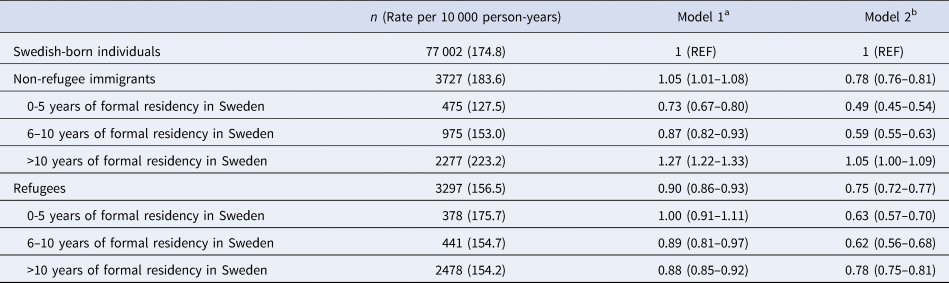
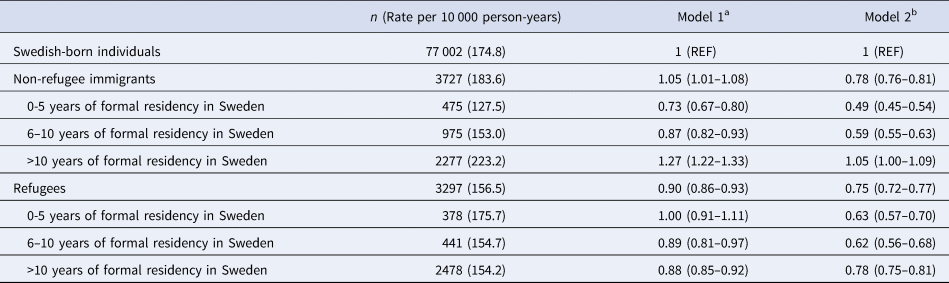
Table 3 presents crude and adjusted HRs with 95% CIs for psychiatric care utilization by refugee status and duration of the formal residency. In both non-refugee immigrants and refugees, those residing 10 years or more in Sweden had the highest aHR for psychiatric care utilization [for non-refugee immigrants, aHR: 1.05 (95% CI 1.00–1.09); for refugees, aHR: 0.78 (95% CI 0.75–0.81)].
Risk of psychiatric care utilization (any mental disorder) by refugee status and duration of formal residency in Sweden. Individuals aged 19–25 years old residing in Sweden in 2009. Hazard ratios (HRs) with 95% confidence intervals (CIs)
a Model 1: Crude.
b Model 2: Adjusted for age, sex, education, family situation, type of residential area, unemployment, sickness absence, disability pension and somatic morbidity at baseline.
When we examined these associations for specific mental disorders (see online Supplementary Table S1) we observed differences for non-refugee immigrants and refugees. For non-refugees, the rates and HRs for all types of disorders increased with increasing duration of the formal residency. For refugees, on the other hand, decreasing HRs were observed for stress-related disorders and in particular for PTSD. For example, refugees with less than 6 years of formal residency had a 3-fold elevated risk of care utilization due to PTSD [aHR: 3.31 (95% CI 2.40–4.56)] whereas the aHR for refugees with 10 years or more of formal residency was 1.52 (95% CI 1.25–1.85).
Psychiatric care utilization by refugee status according to age at arrival in Sweden
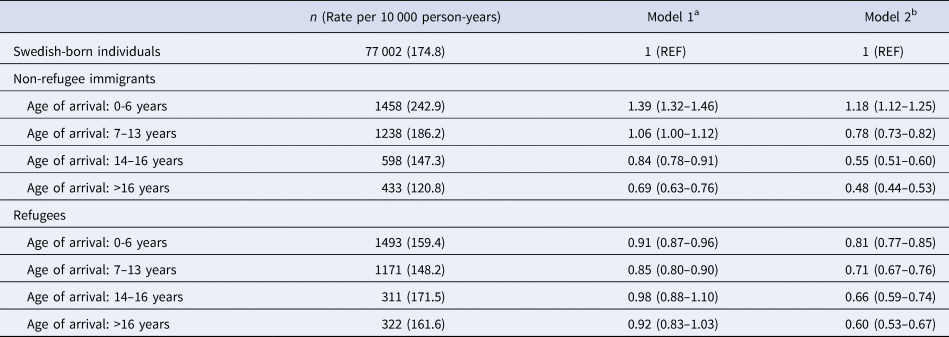
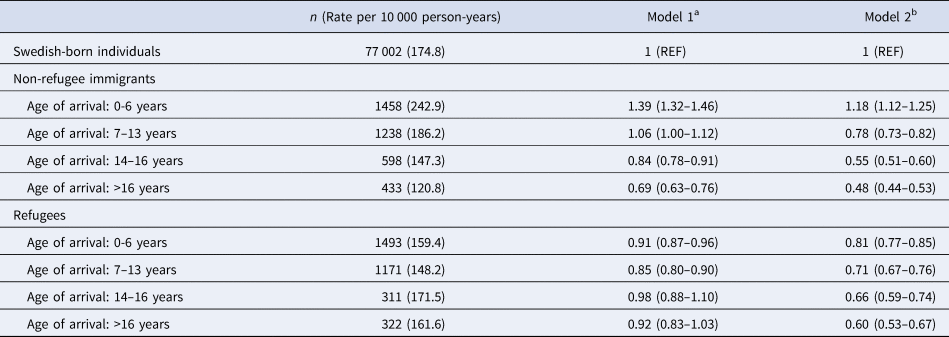
Similar to the patterns observed for the duration of residency, trends regarding age at arrival were found for both refugees and non-refugee immigrants. Arrival in Sweden before the age of 7 years was associated with the highest HRs for psychiatric care utilization with somewhat higher risk estimates in non-refugee immigrants (HR 1.18, CI 1.12–1.25) than in refugees (HR 0.81, CI 0.77–0.85), when compared to the reference group Swedish born (Table 4). These patterns were similar for all diagnostic groups except for reaction to severe stress/adjustment disorders and PTSD for refugees, where the highest risk estimates were found for refugees entering Sweden after being 16 years of age (see online Supplementary Table S3).
Risk of psychiatric care utilization (any mental disorder) by refugee status and age of arrival in Sweden. Individuals aged 19–25 years old residing in Sweden in 2009. Hazard ratios (HRs) with 95% confidence intervals (CIs)
a Model 1: Crude.
b Model 2: Adjusted for age, sex, education, family situation, type of residential area, unemployment, sickness absence, disability pension and somatic morbidity at baseline.
Sensitivity analyses
In a sensitivity analysis, we excluded Swedish-born youth and reran the main analysis for the immigrant subgroups, adding a regression model where we also adjusted for country of birth and duration of the formal residency (online Supplementary Table S2). The results showed that these covariates had little effect on the estimates. In the sensitivity analysis where we excluded individuals who were granted a residence permit on ‘humanitarian grounds’ or ‘in need of protection’, results were similar to the main analyses. Last, sensitivity analyses including individuals with psychiatric health care utilization at baseline, revealed marginally higher estimates for refugees than in the main analyses, as expected. As this paper intended to investigate incident outcome measures, we report estimates derived from the study population excluding those individuals.
Discussion
Summary of findings
The present study examined associations between refugee status and diagnosis-specific psychiatric care utilization and the role of duration of residency and age at arrival, using a large cohort of 682 056 Swedish-born youth, 32 481 refugees and 32 151 non-refugee immigrants. Our findings showed that, compared to Swedish-born youth, non-refugee immigrants and refugees had a lower risk of overall psychiatric care utilization, a pattern that was true for most specific mental disorders. However, both immigrant sub-groups had an elevated risk of health care use due to schizophrenia/other non-affective psychotic disorders, reaction to severe stress/adjustment disorders and especially PTSD. The risk of psychiatric care utilization appeared to increase with years spent in Sweden in both immigrant groups and for most types of disorders. However, in refugees, the risk of care due to severe stress/adjustment disorders and particularly PTSD was highest in those resettling after being 16 years of age.
Overall psychiatric care utilization
Our first finding that both non-refugee immigrants and refugees in general utilized psychiatric care to a lesser extent than Swedish-born individuals is consistent with a few earlier studies (Barghadouch et al., Reference Barghadouch, Kristiansen, Jervelund, Hjern, Montgomery and Norredam2016; Bean, Eurelings-Bontekoe, Mooijaart, & Spinhoven, Reference Bean, Eurelings-Bontekoe, Mooijaart and Spinhoven2006; Satinsky et al., Reference Satinsky, Fuhr, Woodward, Sondorp and Roberts2019). In our study, non-refugee immigrants had slightly higher rates of psychiatric care utilization compared to refugees. Within the refugee subgroup, the overall risk was similar for unaccompanied and accompanied refugee youth. Given that studies have indicated higher psychiatric morbidity in these groups than in the general population (Fazel et al., Reference Fazel, Reed, Panter-Brick and Stein2012; Montgomery, Reference Montgomery2011), our findings may illustrate that both refugee and non-refugee immigrant youth's mental health status is not reflected in their use of health care services (Bean et al., Reference Bean, Eurelings-Bontekoe, Mooijaart and Spinhoven2006). Several studies have reported gaps between mental health care needs and psychiatric care utilization in refugees, attributing these gaps to barriers to health care (Barghadouch et al., Reference Barghadouch, Kristiansen, Jervelund, Hjern, Montgomery and Norredam2016; de Montgomery, Petersen, & Jervelund, Reference de Montgomery, Petersen and Jervelund2020; Satinsky et al., Reference Satinsky, Fuhr, Woodward, Sondorp and Roberts2019). Such barriers may include a lack of knowledge about the health care system, but also language difficulties, which may be especially challenging for unaccompanied refugee youth (Brendler-Lindqvist et al., Reference Brendler-Lindqvist, Norredam and Hjern2014). These language barriers might be particularly limiting when expressing mental health problems and emotions. Adequate care in young immigrants might also be hampered by differences in the clinical manifestation and symptomatology of the underlying disease and consequently in its diagnostics and treatment (Brendler-Lindqvist et al., Reference Brendler-Lindqvist, Norredam and Hjern2014; Satinsky et al., Reference Satinsky, Fuhr, Woodward, Sondorp and Roberts2019). Moreover, contextual and cultural determinants might have an influence on the manner young immigrants experience and express mental health problems, and consider seeking mental health care. For these reasons, implementation of health literacy programs and education for health care staff in transcultural medicine are important elements in the aim to decrease these strong gaps in health care utilization of young immigrants (Na, Ryder, & Kirmayer, Reference Na, Ryder and Kirmayer2016). Here improvements in knowledge of staff not only in secondary but also in primary health care settings is crucial, as inadequate treatment and referral bias is possible (Kirkbride & Jones, Reference Kirkbride, Jones, Bhugra and Gupta2011).
Differences in psychiatric care utilization for different types of mental disorders
When stratifying psychiatric care utilization by type of diagnosis, the lower risk of psychiatric care utilization in both immigrant groups was also observed for most disorders with a few exceptions. Both young non-refugee immigrants and refugees had an elevated risk of care due to schizophrenia/other non-affective psychotic disorders when compared to Swedish-born youth. These findings are consistent with previous studies (Barghadouch et al., Reference Barghadouch, Carlsson and Norredam2018; Hollander et al., Reference Hollander, Dal, Lewis, Magnusson, Kirkbride and Dalman2016). They are also in line with the finding that traumatic experiences could increase the risk of schizophrenia and non-affective psychoses among refugees (Kirkbride & Jones, Reference Kirkbride, Jones, Bhugra and Gupta2011). Moreover, the very nature and severity of schizophrenia and non-affective psychosis might lead to seeking specialized psychiatric health care rather than primary health care. This, in turn, results in a relatively higher likelihood of having information on such health care visits, compared to e.g. affective disorders, which are often treated in primary health care.
Some studies have further shown that the risk is slightly higher in refugees compared to non-refugee immigrants (Hollander et al., Reference Hollander, Dal, Lewis, Magnusson, Kirkbride and Dalman2016). In the general analyses, refugees had slightly lower HRs than non-refugee immigrants did in the crude analyses. However, when adjustments were made for important covariates, these differences were no longer observed. One potential explanation for these discrepancies is that prior studies have focused on all ages whereas our study examined young individuals exclusively. Moreover, our study only included non-refugee immigrants from the same countries as refugees, which potentially could affect our findings. Moreover, differences were found for specific mental disorders and duration of stay/age at arrival for non-refugee immigrants and refugees.
Compared to Swedish-born youth, non-refugee and refugee immigrants also stood out with respect to health care use due to PTSD, where an elevated risk was observed, especially among refugees. Previous studies have reported high prevalence rates of PTSD in this group (Fazel, Reference Fazel2018; Giacco et al., Reference Giacco, Laxhman and Priebe2018; Huemer et al., Reference Huemer, Karnik, Voelkl-Kernstock, Granditsch, Dervic, Friedrich and Steiner2009; Kien et al., Reference Kien, Sommer, Faustmann, Gibson, Schneider, Krczal and Gartlehner2018). Unaccompanied refugee youth were at particularly high risk for utilizing psychiatric care due to PTSD with a 4-fold elevated risk after adjustments were made for important confounders and labor market marginalization factors. This elevated risk also remained in our sensitivity analysis, where we in a subset of immigrants only adjusted for country of birth and duration of the formal residency. These findings call for a specific focus on unaccompanied refugee youth in early intervention and treatment in order to reduce posttraumatic stress symptoms. Among potential explanations to the high risk of health care use due to PTSD in unaccompanied refugee youth, experiences of extreme traumatic events, forced separation from their family and the associated loss of major supports have been proposed (Bean et al., Reference Bean, Derluyn, Eurelings-Bontekoe, Broekaert and Spinhoven2007; Huemer et al., Reference Huemer, Karnik, Voelkl-Kernstock, Granditsch, Dervic, Friedrich and Steiner2009).
Duration and age at arrival
We found that newly resettled refugee youths (⩽5 years) were less likely to have psychiatric health care consumption than their counterparts who resettled over 10 years ago. This was particularly the case for those who resettled after they turned 16. This is in line with previous studies of lower treatment initiation of newly resettled refugees (Brendler-Lindqvist et al., Reference Brendler-Lindqvist, Norredam and Hjern2014). Our findings might be due to culturally determined stigmatizing beliefs that a mental disorder is a personal weakness, which might be stronger in those only recently resettled (Jung, Cho, Rhee, & Jang, Reference Jung, Cho, Rhee and Jang2020). Attitudes towards mental disorders might then be altered with time spent in the new host country as immigrants assimilate and adapt new beliefs. Besides changing attitudes towards mental disorders over time, a longer stay may also be related to a better knowledge of the organization of the health-care system and different health-seeking behavior.
For all specific mental disorders, we could find similar or mainly even higher estimates of psychiatric health care utilization in young immigrants (particularly non-refugees) resettling before their 6th birthday, than in the Swedish host population. To the best of our knowledge, this has not been shown previously and adds important knowledge to the current knowledge base. This lends support to the assumption that – given young immigrants enter a high-income host country like Sweden in preschool age – that the development of many specific mental disorders is not only driven by traumatic exposure in the home country and during flight but also difficult psychosocial and socio-economic circumstances during upbringing and potential discrimination. Most likely the mental health situation of their parents also effects their preschool children's risk for subsequent development of mental disorders. Previous studies could show that the effect of parental mental ill-health is most detrimental if experienced early in the life course (Niederkrotenthaler, Floderus, Alexanderson, Rasmussen, & Mittendorfer-Rutz, Reference Niederkrotenthaler, Floderus, Alexanderson, Rasmussen and Mittendorfer-Rutz2012). The fact that our findings showed considerable differences between young refugees and non-refugee immigrants resettling in preschool-age regarding subsequent psychiatric health care utilization is puzzling and needs further investigations.
Strengths and limitations
This study has several strengths, particularly the completeness and validity of register data allowing individual information of high quality on a considerable number of variables over a long time span. Moreover, methodological problems related to recall bias and loss to follow-up are rare. Worldwide, Sweden is one of few countries with both relatively large populations of young refugees and available register data, which enables analyses for specific diagnostic groups and for groups with different age at arrival/duration of stay. The study has also limitations. The National Patient Register includes only information on specialized health care and information on primary health care is not included in this study. For this reason, only medically more serious cases are considered in this study. Also, data on treatment such as psychotherapy are lacking, and thus, it is possible that young immigrants were more likely to be referred to psychotherapy. Still, this study intended to investigate specialized psychiatric health care utilization in specific and – given the stigma attached to psychotherapy in young immigrants and the lack of widely available treatment facilities – a higher proportion of psychotherapeutic treatment in young immigrants than in the Swedish main population is unlikely. Further, it is possible that some unaccompanied minors came with a family member other than a parent or came to join other family members already residing in the new host country Sweden. This potential non-differential misclassification might have led to a dilution of the effect and the difference between unaccompanied and accompanied refugees.
Conclusion
Psychiatric health care utilization in young refugees and non-refugee immigrants is overall lower than in their Swedish-born peers, with exception of care for schizophrenia/non-affective psychotic disorders, reaction to severe stress/adjustment disorders and PTSD. Utilization is strongly influenced by the duration of stay and age at arrival. The results suggest that refugee youth face barriers to care that can be detrimental to their mental health. The generally lower psychiatric health care utilization raises concerns on gaps between mental health care needs and psychiatric care utilization in refugees, which are rooted in the experience of different barriers to health care. In order to overcome these gaps, implementation of health literacy programs and education for health care staff in transcultural medicine, and the delivery of culturally adapted mental health interventions in primary and community health care, are important elements in the aim to decrease these strong gaps in health care utilization of young immigrants.
Supplementary material
The supplementary material for this article can be found at https://doi.org/10.1017/S0033291720003190
Authors contributions
EB and EMR conceptualized and designed the work. All authors were responsible for the acquisition, analysis or interpretation of data. EB drafted the manuscript. Critical revision of the manuscript for important intellectual content was done by all authors. EB performed the statistical analysis. EMR obtained funding.
Acknowledgements
This study was funded by the Swedish Research Council (dnr 2018-05783). The funders of the study had no role in study design, data collection, data analysis, data interpretation, or writing of the report. The corresponding authors had full access to all of the data and the final responsibility to submit for publication.
Conflict of interest
No conflicts of interest.