According to the influential cognitive model put forward by Clark and Wells (Reference Clark, Wells, Heimberg, Liebowitz, Hope and Schneier1995), socially anxious individuals develop a series of problematic assumptions about themselves and their social world that are maintained by a series of vicious circles. Three stages of distorted processing can be distinguished: (1) the anticipatory processing phase, (2) the in-situation processing phase, and (3) the post-event processing phase. Although the role of in-situation and post-event processing in maintaining social anxiety has been extensively investigated (for a review, see Steinman, Gorlin, & Teachman, Reference Steinman, Gorlin, Teachman and Weeks2014), the relationship between social anxiety and anticipatory processing has received surprisingly little attention. In this article we sought to further understand the link between social anxiety and anticipatory processing with reference to the role of positive metacognitive beliefs.
Anticipatory processing (AP) is a prolonged ruminative process that precedes anxiety-provoking situations. In particular, before entering a social interaction, individuals with social anxiety tend to ruminate about the interaction in a manner that is consistent with their biases. This process is particularly problematic because it may actually enhance recollections of past failures and may lead to formation of negative self-images and expectations of poor performance and rejection. Another negative consequence of AP is that it sometimes leads the socially anxious individual to avoid the event completely (Clark & Wells, Reference Clark, Wells, Heimberg, Liebowitz, Hope and Schneier1995).
Consistent empirical support has been found for the association between AP and social anxiety symptoms. In one of the first studies to examine anticipatory processing, Vassilopoulos (Reference Vassilopoulos2004) found a positive association between AP and social anxiety. Further, socially anxious participants reported engaging in ruminations about an upcoming social event that tended to be recurrent, uncontrollable and intrusive, increasing individuals’ state anxiety and interfering with concentration. Hinrichsen and Clark (Reference Hinrichsen and Clark2003) also investigated AP and found that high socially anxious individuals were more likely than low socially anxious individuals to: (1) dwell on ways of avoiding, or escaping from, the social situation; (2) catastrophise about what might happen in the situation; (3) engage in anticipatory safety behaviours; and (4) generate negative, distorted observer-perspective images. Follow-up studies have provided additional support for the association between social anxiety symptoms and anticipatory processing (Grant & Beck, Reference Grant and Beck2010; Mills, Grant, Lechner, & Judah, Reference Mills, Grant, Lechner and Judah2013; Vassilopoulos, Reference Vassilopoulos2005, Reference Preacher and Hayes2008; Wong & Mounds, Reference Wong and Moulds2011). Despite this growing number of studies supporting the association between anticipatory processing and social anxiety symptoms, there is currently no study that has investigated the underlying metacognitive processes that may lead a socially anxious individual to engage in excessive and negative AP.
The metacognitive model put forward by Wells (Reference Wells1995, Reference Wells2000) has increased our understanding of the development and maintenance of anxiety disorders in general and of generalised anxiety disorder (GAD) in particular. It is based on the central premise that a combination of positive and negative beliefs about worry creates and sustains anxiety. Worry refers to a chain of catastrophising thoughts that is experienced as intrusive and uncontrollable, and that is associated with a motivation to prevent or avoid potential danger (Wells, Reference Wells2000). According to Wells (Reference Wells2002), individuals with GAD use worry to cope with anticipated danger or threat. However, once activated, positive metacognitive beliefs about the worry process (e.g., ‘If I worry I will be prepared’, ‘My worrying helps me cope’) lead individuals with GAD to continue the execution of worry sequences until potential strategies for dealing with perceived threat are generated. Thus, positive beliefs about worry prime the use of worry as a strategy for coping with or avoiding future negative outcomes. In line with this proposition, positive beliefs have been found to be associated with increased tendency to engage in worry processes and to be associated with symptoms of GAD (Borkovec & Roemer, Reference Borkovec and Roemer1995; Wells, Reference Wells, Davey and Wells2006).
Despite increasing focus on the application of metacognitive theory and therapy to the conceptualisation and treatment of anxiety disorders (Wells, Reference Wells2009), only a few studies — to the authors’ knowledge — have systematically examined the relationship between positive metacognitive beliefs and social anxiety symptoms. Furthermore, no study exists that examines the potential role of positive beliefs about anticipatory processing as a metacognitive process that may underlie the tendency to engage in anticipatory processing. This relative paucity of research is surprising in view of the commonalities observed in worry and AP (e.g., intrusiveness, perceived uncontrollability, contemplation of potentially dangerous situations, catastrophising thoughts; see also Vassilopoulos, Reference Vassilopoulos2004, Reference Preacher and Hayes2008). Understanding the extent to which the metacognitive theory applies to AP may assist clinicians in developing effective cognitive interventions for social anxiety.
As outlined, there are a few studies demonstrating that socially anxious people hold positive metacognitive beliefs about rumination. In one of them, Wong and Moulds (Reference Wong and Moulds2010) used a modified version of the Positive Beliefs about Rumination Scale (PBRS; Papageorgiou & Wells, Reference Papageorgiou and Wells2001) to assess positive beliefs about rumination following social situations. The authors report a positive association between social anxiety and positive metacognitive beliefs about rumination. Similarly, Fisak and Hammond (Reference Fisak and Hammond2013) reported a psychometric study in which they developed a scale that measures the relationship between positive beliefs about post-event processing and social anxiety. They found positive beliefs about post-event processing to be associated with social anxiety and the tendency to engage in post-event processing. Post-event processing was also found to mediate the relationship between positive beliefs about post-event processing and social anxiety. Taken together, these results demonstrate that socially anxious individuals hold positive metacognitive beliefs about the advantages of rumination and provide a potential account of why socially anxious individuals engage in post-event processing.
Although valuable as initial first steps in extending the metacognitive theory to social anxiety, both the studies reported by Wong and Moulds (Reference Wong and Moulds2010) and Fisak and Hammond (Reference Fisak and Hammond2013) are somewhat limited in that they concentrate on positive beliefs about rumination that may follow social interactions (post-event processing). However, as said before, Clark and Wells (Reference Clark, Wells, Heimberg, Liebowitz, Hope and Schneier1995) also predict that socially anxious individuals tend to engage in ruminative processes prior to a threatened social interaction with often deleterious effects for their subsequent performance. It remains to be seen whether positive metacognitive beliefs about anticipatory processing are associated with anticipatory processing and social anxiety symptoms.
Consequently, the purpose of the current study was to develop and preliminary validate a measure specifically designed to measure positive beliefs about AP. It was expected that the Positive Beliefs about Anticipatory Processing Questionnaire (PB-APQ) would exhibit sound psychometric properties. In addition to adequate reliability, this measure was expected to exhibit adequate criterion validity, as it was expected to be significantly associated with measures of social interaction anxiety and anticipatory processing. The PB-APQ was also expected to exhibit adequate incremental validity, by predicting variance in anticipatory processing and social interaction anxiety after controlling for other metacognitive variables (such as positive beliefs about worry or rumination). We also expected that the PB-APQ would exhibit discriminant validity such that it would not explain unique variance in depressive symptoms, after controlling for social interaction anxiety and other metacognitive variables. Finally, it was anticipated that anticipatory processing would mediate the relationship between positive beliefs about anticipatory processing and social anxiety symptoms.
Method
Participants
Participants were 301 undergraduate students at the University of Ioannina, of whom 40 (13.3%) were male and 261 (86.7%) were female. On average, participants were 20.0 years old (SD = 1.8, range: 18–37; two did not report their age), single (95.7%), and Christian Orthodox (93.4%). All students were White Europeans, and completed Greek-language versions of all measures.
Measures
Positive Beliefs about Anticipatory Processing Questionnaire (PB-APQ)
Our new 21-item PB-APQ uses a 5-point Likert-type rating scale, ranging from 1 (disagree) to 7 (agree). PB-APQ items were rationally generated and designed to exclusively assess the positive beliefs that individuals hold about the benefits of engaging in anticipatory processing. Specifically, items assessed recent social interactions, thoughts about the interaction before it occurred, and motivation for ruminating over the anticipated social interaction. After 1 item was removed because it did not load significantly on the single factor, the 20 remaining items are listed in the Appendix. Information on psychometric properties is provided below.
Social Interaction Anxiety Scale (SIAS; Mattick & Clarke, Reference Mattick and Clarke1998)
The SIAS is a 20-item measure used to assess anxiety related to social interactions with various partners. Items are rated on a 0–4 Likert-type scale. Past research has shown that the SIAS displays good to excellent internal consistency, good construct validity, and that it converges with other measures of social anxiety (for a review, see Heimberg & Becker, Reference Heimberg and Becker2002). The three reverse-scored items were omitted based on evidence suggesting that removing these items improves the psychometric properties of the scale (Rodebaugh, Woods, & Heimberg, Reference Rodebaugh, Woods and Heimberg2007). In the current sample, Cronbach's alpha for the straightforward items was good (α = .90).
Beck Depression Inventory II (BDI-II; Beck, Steer, & Brown, Reference Beck, Steer and Brown1996)
The revised BDI is a 21-item self-report instrument for measuring the severity of depression in adults and adolescents aged 13 years and older during the preceding 2 weeks. Each item is responded to by selecting from a set of statements related to a particular depressive symptom, scored from 0 to 3. Research has shown that the BDI-II has good internal consistency, reliability and validity (Beck, Steer, & Garbin, Reference Beck, Steer and Garbin1988). The questionnaire has been translated and validated for the Greek language (Mystakidou et al., Reference Mystakidou, Tsilika, Parpa, Smyrniotis, Galanos and Vlachos2007). In the current sample, Cronbach's α = .85.
Anticipatory Processing Questionnaire (APQ; Vassilopoulos, Reference Vassilopoulos2004)
The APQ is an 18-item, self-report questionnaire assessing the extent to which an individual engages in anticipatory processing, or a detailed review of what is going to happen during an impending anxiety-producing event, together with recurrent images of the self and recollections of past similar events. In the current study, the original visual analogue scale was changed to a 4-point Likert scale with anchors from 1 (none at all) to 4 (very much). Items are summed (apart from item 17, which has a yes/no response format) to give a total score for each individual. The APQ has been found to be reliable, showing high internal consistency (α = .91, Vassilopoulos, Reference Vassilopoulos2004). In the current sample, Cronbach's α = .85.
Positive Beliefs about Rumination Scale — Adapted for Social Anxiety (PBRS-SA; Wong & Moulds, Reference Wong and Moulds2010)
The PBRS-SA is a nine-item self-report questionnaire designed to measure the extent to which an individual considers recurrent thinking about social events/interactions to be a useful coping strategy. Each item is rated on a 4-point Likert type scale (1 = do not agree to 4 = agree very much). The PBRS-SA has good internal consistency (α = .88, Wong & Moulds, Reference Wong and Moulds2010). In the current sample, Cronbach's α = .84.
Metacognitions Questionnaire-30 (MCQ-30; Wells & Cartwright-Hatton, Reference Wells and Cartwright-Hatton2004)
The MCQ-30 is a 30-item self-report questionnaire that assesses individual differences in metacognitive beliefs, judgments, and monitoring tendencies. The five factors (derived by factor analysis) within the questionnaire include Cognitive Confidence, Positive Beliefs, Self-Consciousness, Uncontrollability, and Danger of Thoughts and Need to Control Thoughts. Items are scored on a 4-point Likert scale (1 = do not agree, 4 = strongly agree). The MCQ-30 is reported to have good internal consistency (Wells & Cartwright-Hatton, Reference Wells and Cartwright-Hatton2004). For the purposes of the current study, only the positive beliefs about worry subscale was used, and in the current sample, Cronbach's alpha was good (α = .85).
All the measures described so far (apart from PBRS-SA and MCQ-30) have been successfully used in many Greek studies. PBRS-SA and MCQ-30 were translated into Greek by the first author and back-translated by two independent bilingual psychologists. The back-translated questionnaires were then compared to the originals, and a few minor modifications were applied.
Design and Procedure
We collected all data in classroom settings. Participation in the study was voluntary and participants were informed that all results were confidential. After participants provided informed consent, they were administered a battery of self-report measures in a fixed order (SIAS, APQ, PB-APQ, MCQ-30, BDI-II, PBRS-SA). The survey took approximately 40 minutes to complete, and a member of the research team circulated in the class to ensure confidentiality and to answer participant questions.
Results
Scale Structure of the PB-APQ
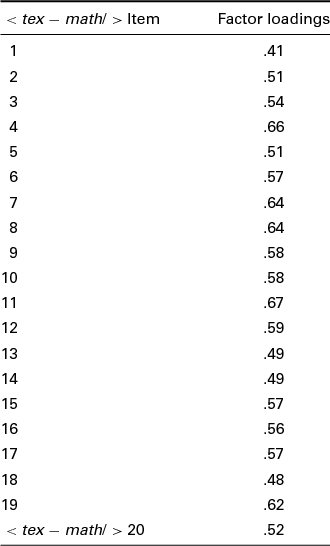
All 21 questionnaire items were factor-analysed to evaluate the psychometric properties of the measure. The Bartlett's test of sphericity was highly significant (p < .001), and the obtained Kaiser-Meyer-Olkin measure of sampling accuracy of .89 suggested that the correlation matrix was adequate for factor analysis. A principal axis analysis indicated that all items except for one (which was excluded from the subsequent analyses) loaded significantly (>0.4) on one large factor and accounted for 31.68 % of the variance. Thus, this component can be interpreted as the positive beliefs about the anticipatory processing factor. No more factors with eigenvalues greater than 1.5 emerged from the analysis, and the examination of the scree plot supported this single factor solution. The factor loadings are presented in Table 1. The internal consistency of the PB-APQ items was good (Cronbach's alpha = .89). Item-total correlations ranged from .35 to .60, and the deletion of items with the lowest item-total correlation values had minimal impact on the overall variability.
Factor Loadings for PB-APQ
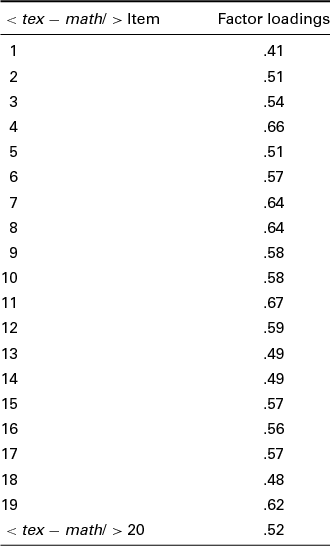
Note: Factor loadings < .30 are not listed.
Correlational Analysis
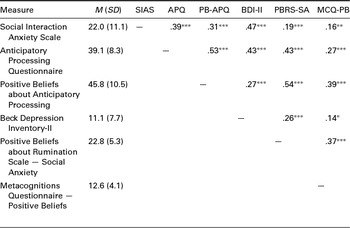
Table 2 presents the mean and standard deviations for the SIAS, BDI-II, PBRS-SA, APQ, and PB-APQ. Pearson correlation coefficients indicated that the SIAS was significantly associated with the PB-APQ, which indicated that high levels of social interaction anxiety were associated with stronger positive beliefs about anticipatory processing of social event. Gender was not significantly correlated with any study variable and therefore will not be considered further.
Means, Standard Deviations, and Intercorrelations of Study Measures

Note: *p ≤ .05. **p ≤ .01. ***p ≤ .001
Do Positive Beliefs About Anticipatory Processing of a Social-Evaluative Event Predict Unique Variance in Anticipatory Processing Beyond That Explained by Other Metacognitive Constructs?
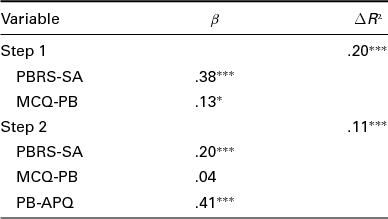
To test the incremental validity of our new measure, we conducted a hierarchical regression analysis to examine whether positive beliefs about AP would predict unique variance in anticipatory processing beyond the contributions of positive beliefs about rumination and positive beliefs about worry. Table 3 provides a summary of the results of this regression analysis. In a first step, we entered positive beliefs about rumination and positive beliefs about worry. Together, these variables explained 20.3% of the variance in AP, with both positive beliefs about rumination and positive beliefs about worry explaining unique variance, F(2, 298) = 37.84, p < .001. Crucially, positive beliefs about AP explained a further significant 11.1% additional variance in anticipatory processing when entered in the second step. At the second step, the overall model was significant, F(3, 297) = 45.23, p < .001. Moreover, positive beliefs about worry were no longer significant in the model, suggesting that positive beliefs about anticipatory processing had incremental validity.
Hierarchical Multiple Regression of Anticipatory Processing on Positive Beliefs about Rumination Scale-Social Anxiety, Positive Beliefs About Worry, and the Positive Beliefs About Anticipatory Processing Questionnaire
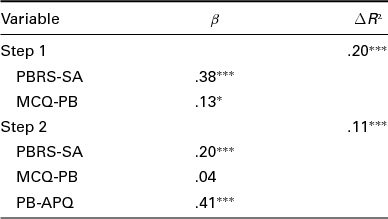
Note: PBRS-SA = Positive Beliefs about Rumination Scale — Adapted for Social Anxiety; PB-APQ = Positive Beliefs about Anticipatory Processing Questionnaire; MCQ-PB = Metacognitions Questionnaire — Positive Beliefs.
*p ≤ .05, **p ≤ .01, ***p ≤ .001
Do Positive Beliefs About Anticipatory Processing of a Social-Evaluative Event Explain Unique Variance in Social Interaction Anxiety?
We conducted a hierarchical regression analysis to determine whether the PB-APQ was uniquely associated with the SIAS when variance explained by depressive symptoms, tendency to engage in anticipatory processing and general trait rumination was removed. In the analysis, BDI-II scores were entered in the first step, APQ and PBRS scores were entered in the second step, and PB-APQ scores entered in the third step, with the SIAS as the criterion. This allowed us to test whether the PB-APQ uniquely predicted social anxiety symptoms over and above depressive symptoms, general positive beliefs about rumination, and the tendency to engage in anticipatory ruminations before a social event.
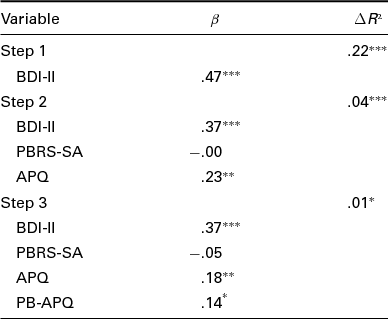
As can be seen in Table 4, the addition of depression scores into the model explained 22.0% of the variance in social interaction anxiety, ∆F(1, 299) = 84.47, p < .001. Adding APQ and PBRS-SA scores to the model explained a further 4.4% of variance, ∆F(2, 297) = 8.93, p < .001. Importantly, adding the PB-APQ contributed a further significant 1.1% variance to the prediction of SIAS beyond depressive symptoms, anticipatory processing, and rumination, ∆F(1, 296) = 4.62, p = .03. The full model (depression, anticipatory processing, rumination, and positive beliefs about anticipatory processing) accounted for 27.5% of the variability in social interaction anxiety scores, F(4, 296) = 28.19, p < .001.
Hierarchical Multiple Regression of the Social Interaction Anxiety Scale on Beck Depression Inventory-II, Positive Beliefs About Rumination Scale-Social Anxiety, Anticipatory Processing Questionnaire, and the Positive Beliefs about Anticipatory Processing Questionnaire
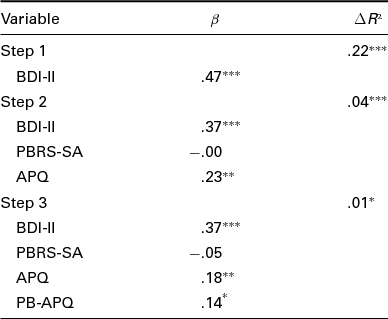
Note: BDI-II = Beck Depression Inventory ; PBRS-SA = Positive Beliefs about Rumination Scale — Adapted for Social Anxiety; APQ = Anticipatory Processing Questionnaire; PB-APQ = Positive Beliefs about Anticipatory Processing Questionnaire.
* p ≤ .05, **p ≤ .01, ***p ≤ .001
To examine the discriminant validity of the positive beliefs about anticipatory processing scale, we conducted a similar regression analysis with depressive symptoms as the outcome. Anxious symptoms were entered in the first step, positive beliefs about worry and rumination were entered in the second step, and positive beliefs about anticipatory processing were entered in the third step. After the first step, positive beliefs about worry and rumination explained an additional significant 3% of variance in social interaction anxiety, ∆F(2, 297) = 5.88, p = .003, although positive beliefs about rumination was a significant predictor, β = .17, p = .002, and positive beliefs about worry was not, β = .01, p = .87. When entered in the third step, positive beliefs about anticipatory processing did not explain significant additional variance, ∆F(1, 296) = 1.14, p = .29. Therefore, whereas positive beliefs about anticipatory processing predicted unique variance in social interaction anxiety, these beliefs failed to predict unique variance in depressive symptoms.
Does Anticipatory Processing Mediate the Association Between Positive Beliefs About Anticipatory Processing and Social Interaction Anxiety?
Finally, we evaluated our hypothesis that APQ scores would mediate the relation between positive beliefs about anticipatory processing (PB-APQ) scales and social interaction anxiety. Our previous regression analyses have established that positive beliefs about anticipatory processing predict unique variance in anticipatory processing, and that AP predicts unique variance in social interaction anxiety, after controlling for positive beliefs about rumination and positive beliefs about worry. Although these results support the possibility that AP may mediate the association between positive beliefs about anticipatory processing and social anxiety, we formally tested the significance of the indirect effect using Preacher and Hayes’ (Reference Preacher and Hayes2008) INDIRECT SPSS macro to generate bias-corrected and accelerated 95% confidence intervals for the magnitude of the indirect effect. In this analysis, we again entered positive beliefs about worry and rumination as covariates. Bootstrapping results revealed a significant indirect effect of positive beliefs about anticipatory processing on social interaction anxiety via anticipatory processing, 95% CI [.08, .22]. This significant indirect effect held when depressive symptoms were controlled, 95% CI [.02, .13]. These results confirm that AP partially mediates the association between positive beliefs about anticipatory processing and social interaction anxiety.
Discussion
The purpose of this study was to test the prediction that positive metacognitive beliefs about anticipatory processing are associated with the degree to which an individual reports engaging in AP and social interaction anxiety symptoms. To this end, a new measure of positive beliefs about anticipatory processing (PB-APQ) was developed and its psychometric properties were evaluated. PB-APQ was found to exhibit criterion validity, as it was associated with anticipatory processing and social interaction anxiety symptoms. Further, the measure exhibited significant incremental validity, as it was found to be a significant predictor of social interaction anxiety after taking into account similar metacognitive variables, including positive beliefs about worry, positive beliefs about rumination (adapted for social anxiety), and anticipatory processing. The measure also demonstrated discriminant validity because it did not predict significant unique variance in depressive symptoms in an otherwise equivalent regression analysis. Overall, findings from this initial study suggest that the new measure has promising psychometric properties.
Based on the findings reported by Fisak and Hammond (Reference Fisak and Hammond2013), it was also anticipated that anticipatory processing would mediate the relationship between positive beliefs about anticipatory processing and social anxiety. As expected, anticipatory processing was found to be a significant, partial mediator of this association. These findings provide initial support for the potential role of positive beliefs about anticipatory processing as a metacognitive process that may underlie the tendency to engage in anticipatory processing and that may be related to social interaction anxiety symptoms.
Previous studies have provided support for the relevance of anticipatory and post-event processing in relation to social anxiety (Abbott & Rapee, Reference Abbott and Rapee2004; Rachman, Gruter-Andrew, & Shafran, Reference Rachman, Gruter-Andrew and Shafran2000; Vassilopoulos, Reference Vassilopoulos2004, Reference Preacher and Hayes2008). The current study provides the first demonstration of underlying metacognitive processes that may motivate individuals to engage in AP and lead to social anxiety. These findings could also provide a potential account of why socially anxious individuals engage in anticipatory processing. Positive beliefs about rumination prime the use of anticipatory processing as a strategy for coping with an impending social situation (e.g., thinking about possible ways of dealing with anticipated problems, recalling past social interactions to prevent future mistakes). Anticipatory processing can, in turn, precipitate a range of negative and problematic cognitive and behavioural consequences (Clark, 1999). For example, anticipatory processing leads to elevated levels of state anxiety and predisposes the individual either to avoid the event completely or to enter the situation in a heightened self-focused processing mode. Taken together with the results reported by Fisak and Hammond (Reference Fisak and Hammond2013), both studies suggest that cognitive conceptualisations of social anxiety (Clark & Wells, Reference Clark, Wells, Heimberg, Liebowitz, Hope and Schneier1995; Rapee & Heimberg, Reference Rapee and Heimberg1997) might benefit from a slight modification; for example, by emphasising the role of metacognition as a maintenance factor for maladaptive ruminative processes and social anxiety symptoms.
The current findings add to the growing body of research indicating that positive metacognitive beliefs facilitate ruminative processes in internalising disorders such as GAD, depression, and social anxiety (Fisak & Hammond, Reference Fisak and Hammond2013; Wells, Reference Wells, Davey and Wells2006; Wong & Moulds, Reference Wong and Moulds2010). They are also consistent with theoretical conceptualisations of metacognitions as general causal/vulnerability factors in the development of many psychological disorders (Wells, Reference Wells2000, Reference Wells2009). Nevertheless, future studies would be needed to investigate whether there is a general mechanism supporting metacognitions independent of the disorder, or whether there are functionally distinct metacognitive processes that make independent contributions to specific psychological disorders.
There are also practical applications that follow from the current findings, which suggest that identifying and targeting positive metacognitive beliefs might help reduce social interaction anxiety symptoms. So far, interventions designed to reduce positive metacognitive beliefs have been successfully applied to depression and GAD (Wells, Reference Wells, Davey and Wells2006; Wells et al., Reference Wells, Fisher, Myers, Wheatley, Patel and Brewin2012) and generalisation of these treatment approaches to the treatment of social interaction anxiety would be a worthwhile endeavour. For instance, interventions targeting anticipatory and post-event processing in social anxiety might prove to be more effective if underlying positive metacognitive beliefs about these ruminative processes are also addressed.
Limitations of the current study should be acknowledged. First, the present data were obtained from an undergraduate sample. Although the findings are encouraging and consistent with the study's hypotheses, examining the generalisability of these findings to clinical samples (or replicating the mediation analyses in clinical samples) is an important next step in evaluating the psychometric properties of the PB-APQ. Further work with clinical samples would shed light on the real-life cognitive and behavioural impact of significant positive metacognitive beliefs, as well as the potential ameliorative consequences of therapeutic approaches that reduce these metacognitions.
Second, the correlational nature of the study precludes any causal inferences that could be drawn from the present findings. Future studies could induce positive beliefs about AP in high and low socially anxious individuals and examine their effect on the frequency and content of anticipatory processing as well as on social interaction anxiety symptoms. Third, only positive beliefs about AP were investigated, and future studies should also examine negative metacognitive beliefs about anticipatory processing and their link to social anxiety. Fourth, although the new measure demonstrated adequate reliability, construct, discriminative and incremental validity, future studies are needed to confirm its unifactorial structure as well as examine additional psychometric characteristics of the scale (e.g., test–retest reliability). Finally, there is preliminary evidence (Mills et al., Reference Mills, Grant, Lechner and Judah2013) suggesting that anticipatory processing might be better conceptualised as a two-factor process (preparation, avoidance), with the component of AP associated with escape-avoidance being more problematic than the anticipatory behaviours associated with planning and preparation. Thus, a refinement of the scale to clearly capture both facets of anticipatory processing might generate further research in this burgeoning literature.
In sum, the current study replicated previous research (e.g., Fisak & Hammond, Reference Fisak and Hammond2013), which demonstrates that positive metacognitive beliefs are associated with social anxiety symptoms. Importantly, the present findings extend these previous results by demonstrating that positive beliefs about anticipatory processing are associated with the degree to which an individual reports engaging in AP and the severity of social interaction anxiety symptoms. Further work in this area seems promising, not only with regard to cognitive behavioural formulations of social anxiety, but also with regard to clinical applications based on transdiagnostic and metacognitive therapeutic approaches.
Appendix Positive Beliefs About Anticipatory Processing Questionnaire

The recurrent thoughts I make before an impending social interaction help me . . .
1. Know if others might think I am weird or odd.
2. Know if there is something I can say or do to avert a possible failure.
3. Predict if I will appear witty.
4. Know if I will make a fool of myself.
5. Detect past mistakes and failures, in order to avoid repeating them.
6. Find ways to hide my anxiety and nervousness.
7. Know if I will make a good impression to others.
8. Develop a detailed plan about how exactly I am going to behave.
9. Being prepared for unpleasant or embarrassing situations.
10. Know what other people imagine about me or expect from me.
11. Find ways to save face in case I make a fool of myself.
12. Control my emotions and somatic reactions.
13. Find ways to initiate discussion with others.
14. Know if I will fit in well with others.
15. Know if they will ask me to reveal too much personal information.
16. Rehearse what I am going to say in the interaction
17. Know if I will find myself in an embarrassing situation.
18. Know with accuracy how things might turn out.
19. Develop an escape plan if the situation becomes extremely uncomfortable.
20. Remain vigilant and alert.
21. Decide whether I will avoid this event or not.