Introduction
Situated between the vast Eurasian Steppe, the Inner Asian Mountain Corridor and central China, Xinjiang was a central node in ancient trans-Eurasian exchanges. While best known for the historic-period Silk Roads trade that passed through its many oases, Bronze Age interactions across Eurasia and through Xinjiang foreshadowed these later regional connections (Sherratt Reference Sherratt and Mair2006; Millward Reference Millward2007; Doumani Dupuy et al. Reference Doumani Dupuy, Spengler and Frachetti2018). The associated translocation of plant domesticates and metals during the Bronze Age provides some of the clearest evidence that Xinjiang was an important contact zone for east–west exchange from the third millennium BC onwards (Betts et al. Reference Betts, Jia and Dodson2014; Linduff et al. Reference Linduff, Sun, Cao and Liu2017). The difficulties of conducting research on the ground in Xinjiang's Tian Shan Mountains, however, has left countless archaeological sites from these earlier periods inaccessible and under-explored (Caspari et al. Reference Caspari, Plets, Balz and Fu2017). Hence, research on Xinjiang's involvement in Bronze Age interactions has reasonably focused on the movement of materials, technologies and people through it, rather than on the region itself (e.g. Mei & Shell Reference Mei and Shell1999; Wang et al. Reference Wang, Chen, Wang, Qian, Mei, Martinón-Torres and Chen2019).
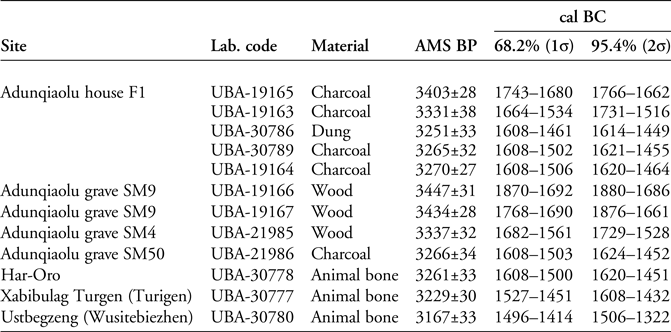
Across the Chinese border, in Kazakhstan's Tian Shan and Dzhungar Mountains, however, nearly two decades of archaeological research have uncovered approximately 5000 years of land use by some of Eastern Eurasia's earliest-known mobile (agro)pastoralists (Frachetti Reference Frachetti2008; Panyushkina et al. Reference Panyushkina, Chang, Clemens and Bykov2010; Doumani et al. Reference Doumani, Frachetti, Beardmore, Schmaus, Spengler and Mar'yashev2015). It is logical to presume, therefore, that vestiges of a connected past similarly mark the landscape on the south-eastern side of the mountains, in western Xinjiang. Indeed, recent excavations in Xinjiang's Ili River Valley show long-term residence from the Bronze Age in the form of large cemeteries with associated settlements, the latter with evidence for on-site metallurgy (Shao Reference Shao2009; Wang & Ruan Reference Wang and Ruan2016; XAI BRY 2017). Moreover, our own focus in the Bortala Valley in north-west Xinjiang, involving targeted excavations and ground surveys, has recovered ephemeral campsites, large areas of seasonal occupation, cemeteries and walled hilltops dating to the Middle and Late Bronze Ages (nineteenth–sixteenth centuries BC) (Table 1) (Jia et al. Reference Jia, Betts, Cong, Jia and Dupuy2017a & Reference Jia, Betts, Cong, Jia and Dupuyb; Jia Reference Jia2019). The archaeological complex in the Bortala Valley demonstrates diverse and regionally distinctive socio-political and cultural formations, while also confirming material and economic interconnection with contemporaneous societies of the Inner Asian Mountain Corridor and Eastern Eurasian Steppe. This robust archaeological record, now gathered on resident populations, presents an opportunity to document, for the first time, the local ceramic traditions of the Tian Shan Mountain populations in north-west Xinjiang, along with their more expansive Eurasian ties. Information now accumulated on the Bronze Age throughout Xinjiang encourages us to restate recent assertions that the region had its own distinct cultural trajectory (Linduff et al. Reference Linduff, Sun, Cao and Liu2017), rather than being simply a road to other places—a point that is well illustrated through ceramics and other materials.
Calibrated ranges (BC) of AMS dates from Bortala Valley sites with corresponding ceramic finds (after Jia et al. Reference Jia, Betts, Cong, Jia and Dupuy2017a: tab. 1, Reference Jia, Betts, Cong, Jia and Dupuy2017b: tab. 2). Calibrated using OxCal v4.2.4 and IntCal13 calibration curve (Bronk Ramsey Reference Bronk Ramsey2009; Reimer et al. Reference Reimer2013).

By 1200 BC, in the Late Bronze Age, Central Eurasia was inhabited by societies typically grouped as mobile pastoralists, but who also engaged in a range of lifestyles and supplementary subsistence practices that have encouraged the adoption of more nuanced descriptive terminology in recent scholarship (e.g. Lightfoot et al. Reference Lightfoot, Motuzaite-Matuzeviciute, O'Connell, Kukushkin, Loman, Varfolomeev, Liu and Jones2014). The documented range of economic modes demonstrates a breadth of complex behaviours among regional populations formerly portrayed as being essentially homogeneous (Doumani et al. Reference Doumani, Frachetti, Beardmore, Schmaus, Spengler and Mar'yashev2015; Motuzaite Matuzeviciute et al. Reference Motuzaite Matuzeviciute, Lightfoot, O'Connell, Voyakin, Liu, Loman, Svyatko, Usmanova and Jones2015). In taking into account the diversifying picture of Bronze Age Eurasian pastoralism, we must now examine the contemporaneous local examples of technological practice in materials such as ceramics and bronze. Comparative scientific analysis of site-based metallurgy has addressed this need in the context of the transfers of technology, ores and objects within and across Central Eurasia (Mei Reference Mei, Hanks and Linduff2009; Linduff et al. Reference Linduff, Sun, Cao and Liu2017; Wang et al. Reference Wang, Chen, Wang, Qian, Mei, Martinón-Torres and Chen2019), but comparatively little headway has been made by ceramics research.
Parallel research on ceramics is dominated by style-based studies that adhere to canonical culture-histories of the Bronze Age ‘Andronovo Culture’ and its forerunners (Kuz'mina Reference Kuz'mina1986) that spanned much of Eurasia's central steppe, mountain and desert regions. The organisation of ceramics into multiple distinct subgroups within the overarching Andronovo Culture (e.g. Fedorovo and Semirech'ye Culture groups) provides a series of benchmarks for scholars working in Xinjiang seeking to identify cultural affiliations between this region and its neighbours (Mei & Shell Reference Mei and Shell1999; Jia et al. Reference Jia, Betts and Wu2009). While we acknowledge that the decorative motifs and vessel forms recorded in the early literature held a certain importance for Bronze Age societies across these vast landscapes, we argue that there is a pressing need to examine site-specific traditions of practice for places such as north-west Xinjiang, where occupation and ritual histories remain relatively unknown. In the absence of such local scale data, scholars are left with little choice but to reference the macro-regional material classifications that oversimplify the local character of diverse Bronze Age societies.
Material scientific studies of metallurgy and subsistence show that, starting from the third millennium BC, these technologies and products were transferred over considerable distances of Eurasia. In contrast, studies of regional ceramics show less movement. Clay-sourcing analyses using broadly defined Andronovo Culture ceramics from outside of Xinjiang, for example, suggest little movement in pottery beyond the local range of material resource deposits (Loman Reference Loman1993; Doumani et al. Reference Doumani, Frachetti, Beardmore, Schmaus, Spengler and Mar'yashev2015; Rouse et al. Reference Rouse, Grillo, Piermartiri, Rotondaro, Cogo-Moreira, Bargossi and Cerasetti2019). Studies of the complete chaîne opératoire of site pottery assemblages from the Kazakh Dzhungar Mountains (Doumani Reference Doumani2014) further link ceramic production to non-specialist, household activities, therefore making it important to compare group behaviours across sites in which occupation histories are well documented. Given the scale of our research in the Bortala Valley of north-west Xinjiang, we now have the opportunity to study the connections between regionally pervasive ‘Andronovo Culture’ ceramics and local pastoralist material culture through a study of small-scale community craft-production behaviours. This new evidence has made it possible to describe, in detail, the local ceramic practices of Bronze Age north-west Xinjiang. It also reveals the unique contribution made by detailed research into ceramics practice for understanding Eurasian exchange and landscape use during this dynamic period of prehistory.
Bronze Age sites and ceramics of the Bortala Valley
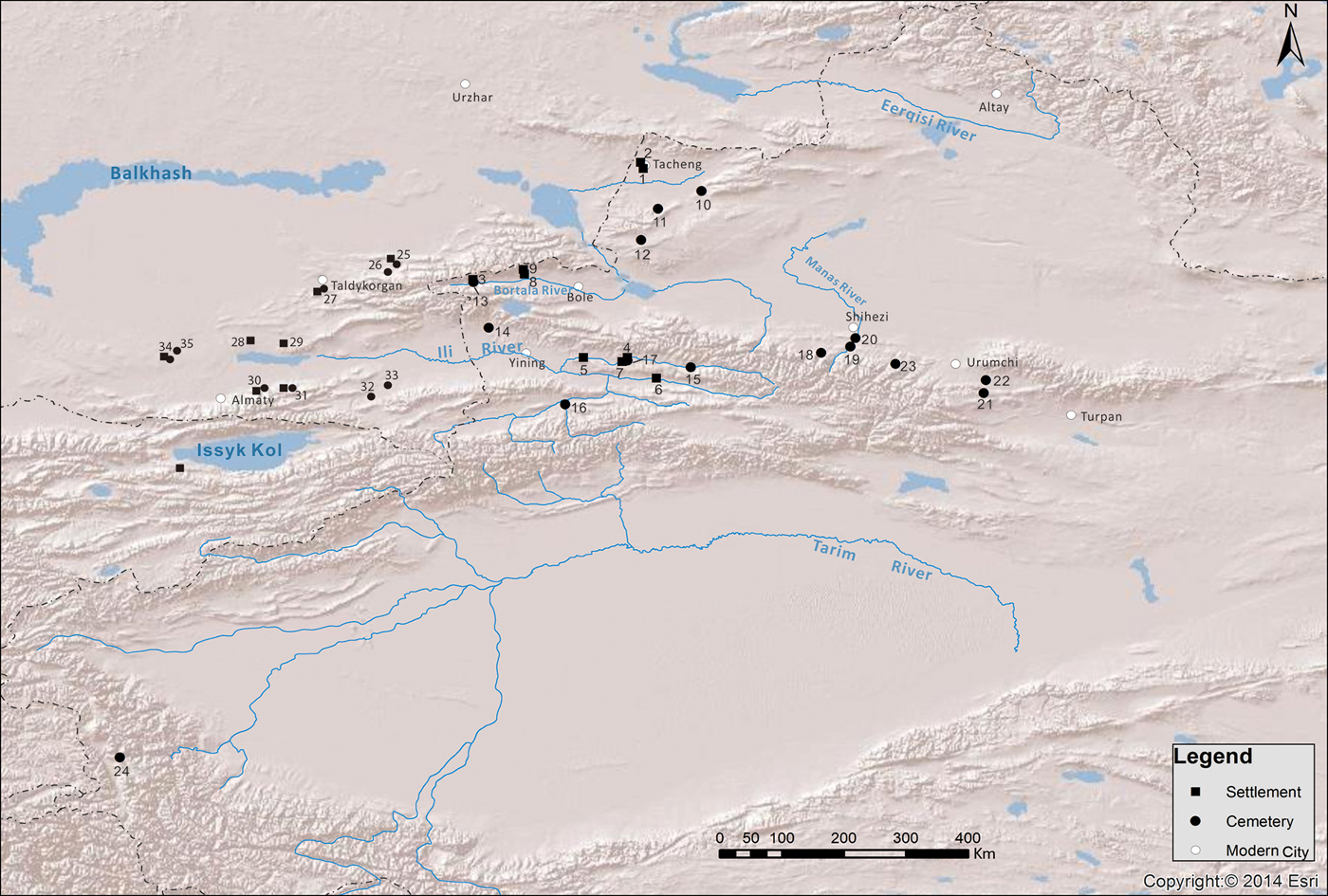
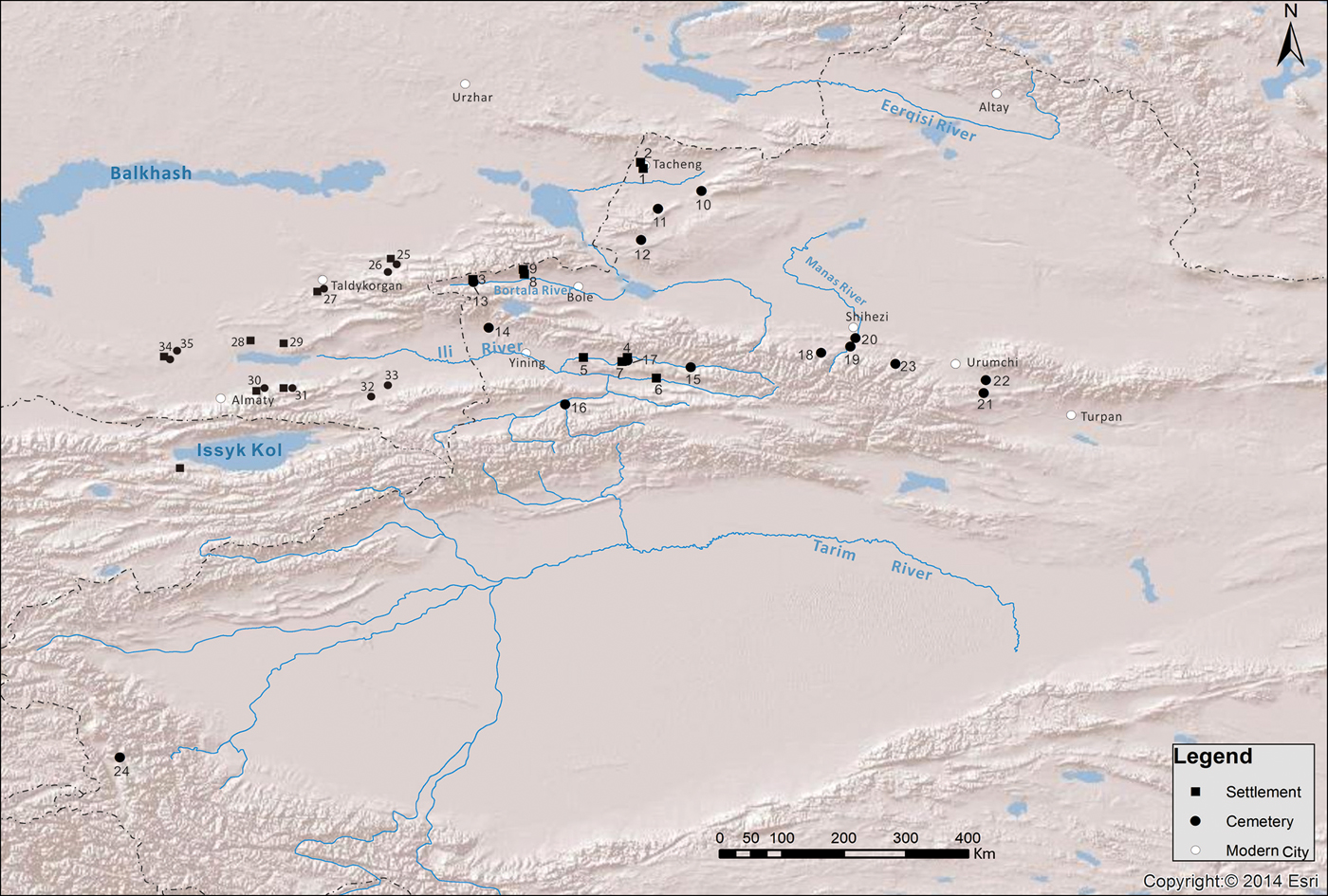
Our fieldwork in the Bortala Valley (~2300m asl) has revealed the multi-complex Bronze Age site of Adunqiaolu, as well as the walled hilltops of Har-Oro, Turigen and Bag-Husta, and outlying rock art (Figure 1; Jia et al. Reference Jia, Betts, Cong, Jia and Dupuy2017a & Reference Jia, Betts, Cong, Jia and Dupuyb; Jia Reference Jia2019). Adunqiaolu comprises residential structures and several graves located along a slope of the western Tian Shan, approximately 40km north-west of Wenquan township. House F1, measuring over 22 × 18m, is the largest of the structures and is remarkable for its stone foundations and complex plan, containing at least four internal habitation units (Jia et al. Reference Jia, Betts, Cong, Jia and Dupuy2017a: figs 5–6). Pits inside the house may have been used for storage. Several inhumation and cremation burials were located 2km from the residential structures (Jia et al. Reference Jia, Betts, Cong, Jia and Dupuy2017a: figs. 7–9). The inhumations featured bodies interred in stone-slab or timber graves marked by an above-ground rectangular or rounded stone enclosure. The house and cemetery architecture and materials are consistent with other Middle and Late Bronze Age sites in the Eastern Steppe zone and Inner Asian Mountain Corridor (e.g. Frachetti & Mar'yashev Reference Frachetti and Mar'yashev2007). The defensive architecture of the hilltop sites, however, is atypical of the smaller residential sites more often present in the wider region, and implies a host of complex socio-political formations intersected in this key part of Central Asia (Jia et al. Reference Jia, Betts, Cong, Jia and Dupuy2017b). Our comprehensive radiocarbon chronology dates the use of Adunqiaolu and associated hilltop sites to between the nineteenth and fifteenth centuries BC; the stratigraphy of house F1 shows 150 years of activity during that time frame, from the mid eighteenth to seventeenth centuries BC (Table 1).
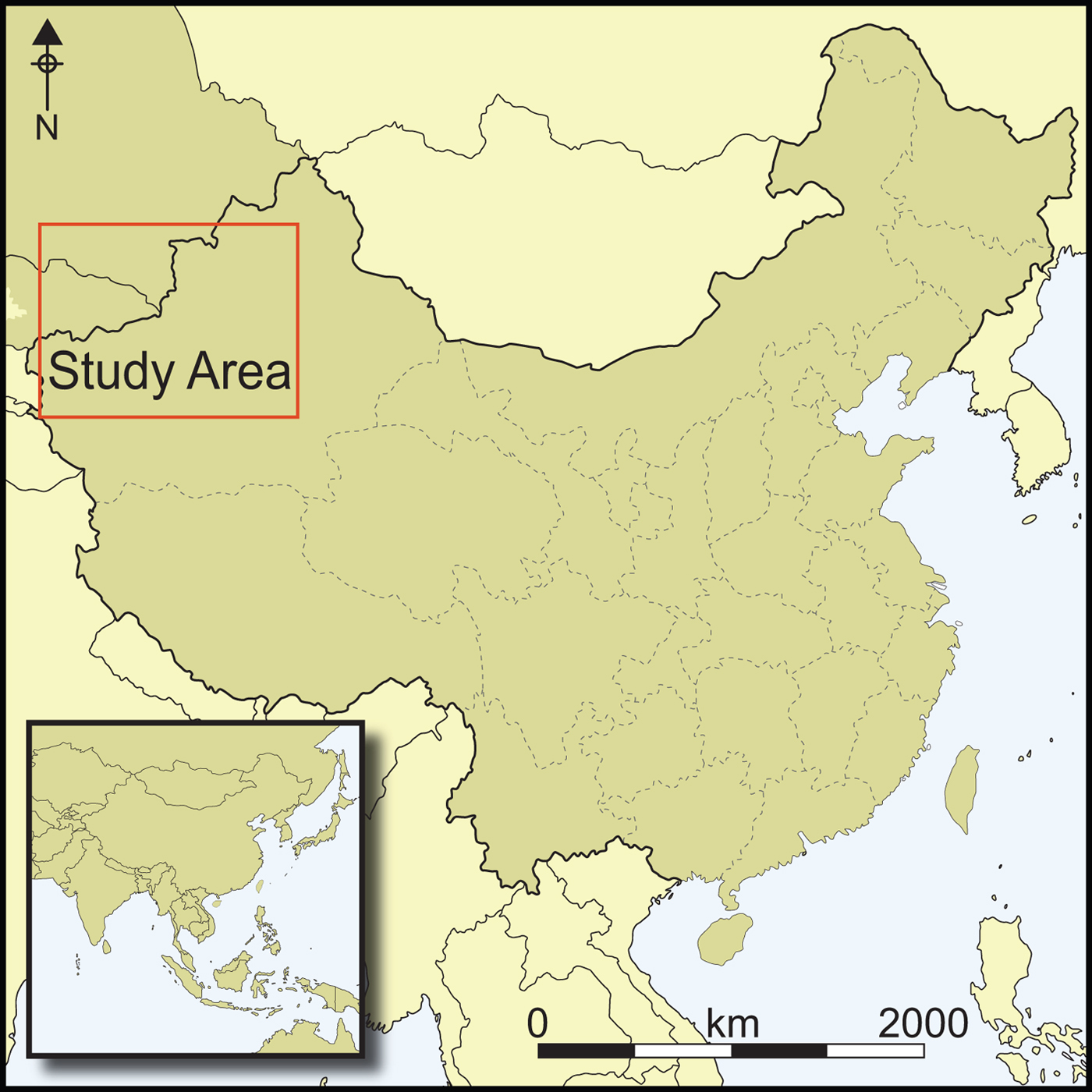
Map of Bortala Valley sites in relation to other sites containing material culture associated with the Andronovo Culture in Xinjiang, south-eastern Kazakhstan and Kyrgyzstan: 1) Tacheng Weixiao; 2) Xiakalangguer; 3) Adunqiaolu; 4) Qiongkeke; 5) Kalasu; 6) Ayousaigoukou; 7) Qialege'er; 8) Husta; 9) Har-Oro; 10) Huoji'erte; 11) Aletengyemule Reservoir; 12) Sazi; 13) Adunqiaolu cemetery; 14) Daxigou; 15) Tangbalasayi; 16) Kuokesuxi II; 17) Wutulan; 18) Ningjiahe Reservoir; 19) Shihezi; 20) Shihuiyao; 21) Sa'ensayi; 22) Chaiwopu; 23) Shimenzi; 24) Xiabandi; 25) Tasbas/Dali; 26) Kalakai; 27) Koksu Valley sites (e.g. Begash); 28) Arkharly; 29) Karachok; 30) Turgen; 31) Asy; 32) Uzunbulak; 33) Aksay; 34) Tamgaly; 35) Serektas.
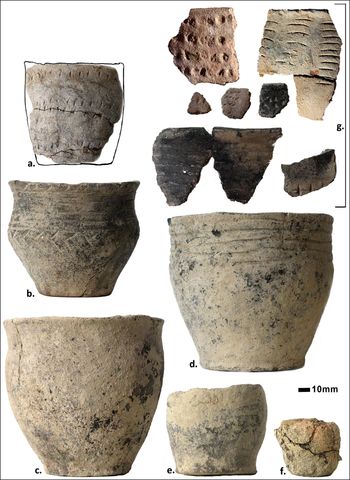
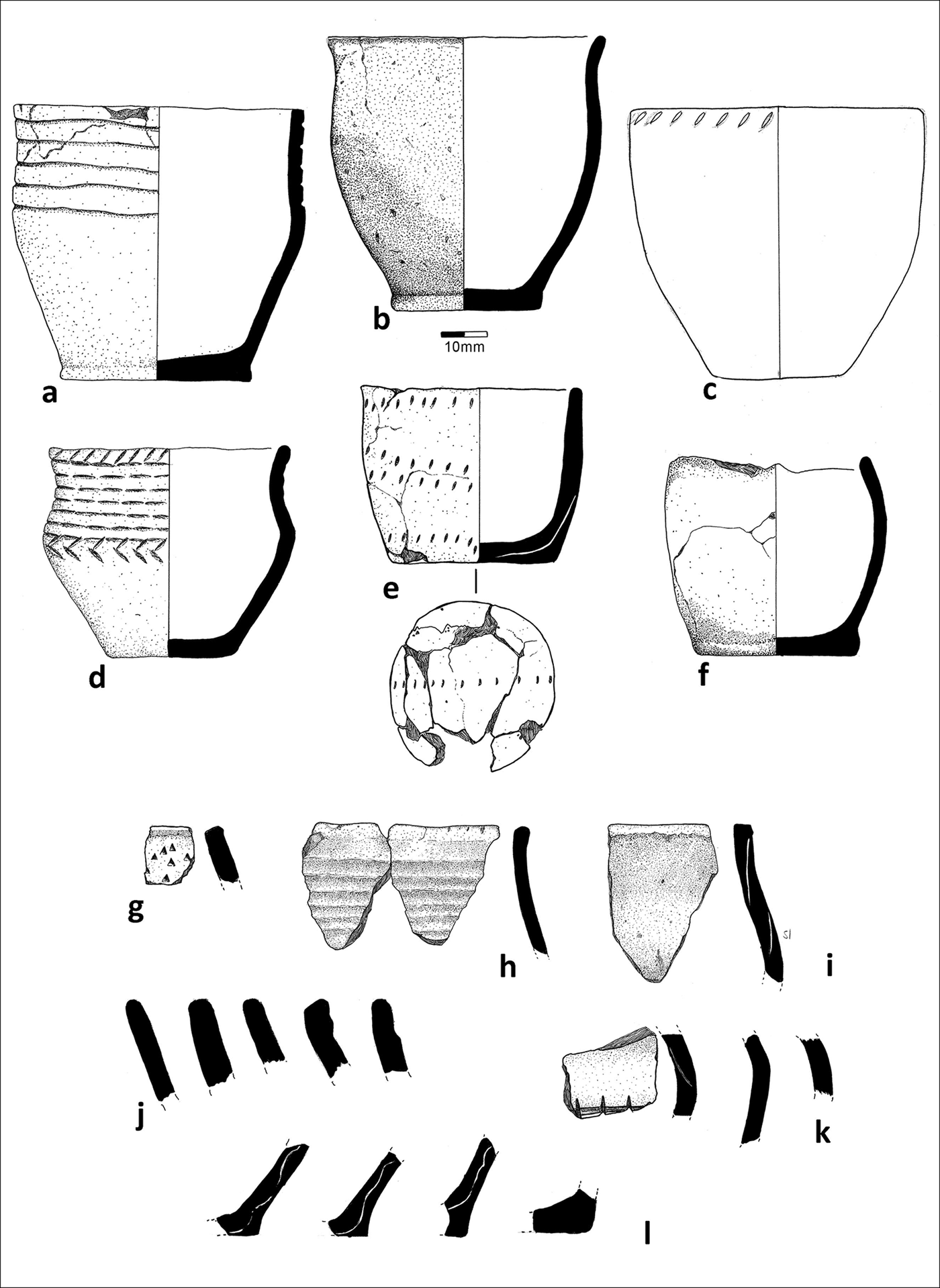
Excavations at Adunqiaolu house F1 yielded approximately 100 potsherds. The cemeteries and hilltop sites yielded 14 and 3 complete containers, respectively, along with additional ceramic fragments (Figure 2). Conducting the analyses on-site, we used a handheld digital microscope (30× magnification) to document the ceramics and their associated chaîne opératoire. The ceramics dataset broadly reflects styles associated with the eastern Fedorovo subgroup of the Andronovo Culture (Kuz'mina Reference Kuz'mina1986). Calibrated radiometric chronologies published on other Fedorovo-period sites are broadly contemporaneous with our own (Frachetti & Mar'yashev Reference Frachetti and Mar'yashev2007; Hanks et al. Reference Hanks, Epimakhov and Renfrew2007). Through an investigation of ceramic style and the steps involved in pottery manufacture in the Bortala Valley, we aim to:
1) Transform regional studies of ceramic typologies by bringing together the results of traditional, style-based studies with more recent materials analysis of locally produced ceramics.
2) Reassess how ceramics contribute to studies of Bronze Age Eurasian exchange in comparison to research on metallurgy and subsistence.
3) Demonstrate that north-west Xinjiang should be viewed as more than simply a road to other places and, rather, is a place deserving of study in its own right.
Ceramics (eighteenth to sixteenth centuries BC) from Adunqiaolu cemetery (a–f) and house F1(g): a) grave SM39; b) grave SM36; c) grave SM39; d) grave SM37; e) grave SM36; f) grave SM49.

Ceramic chaîne opératoire in the Bortala Valley
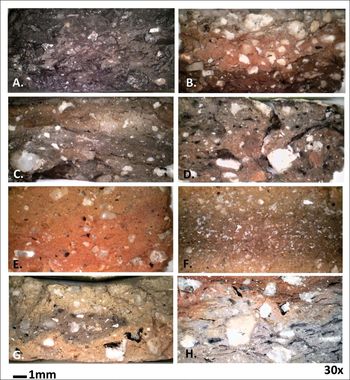
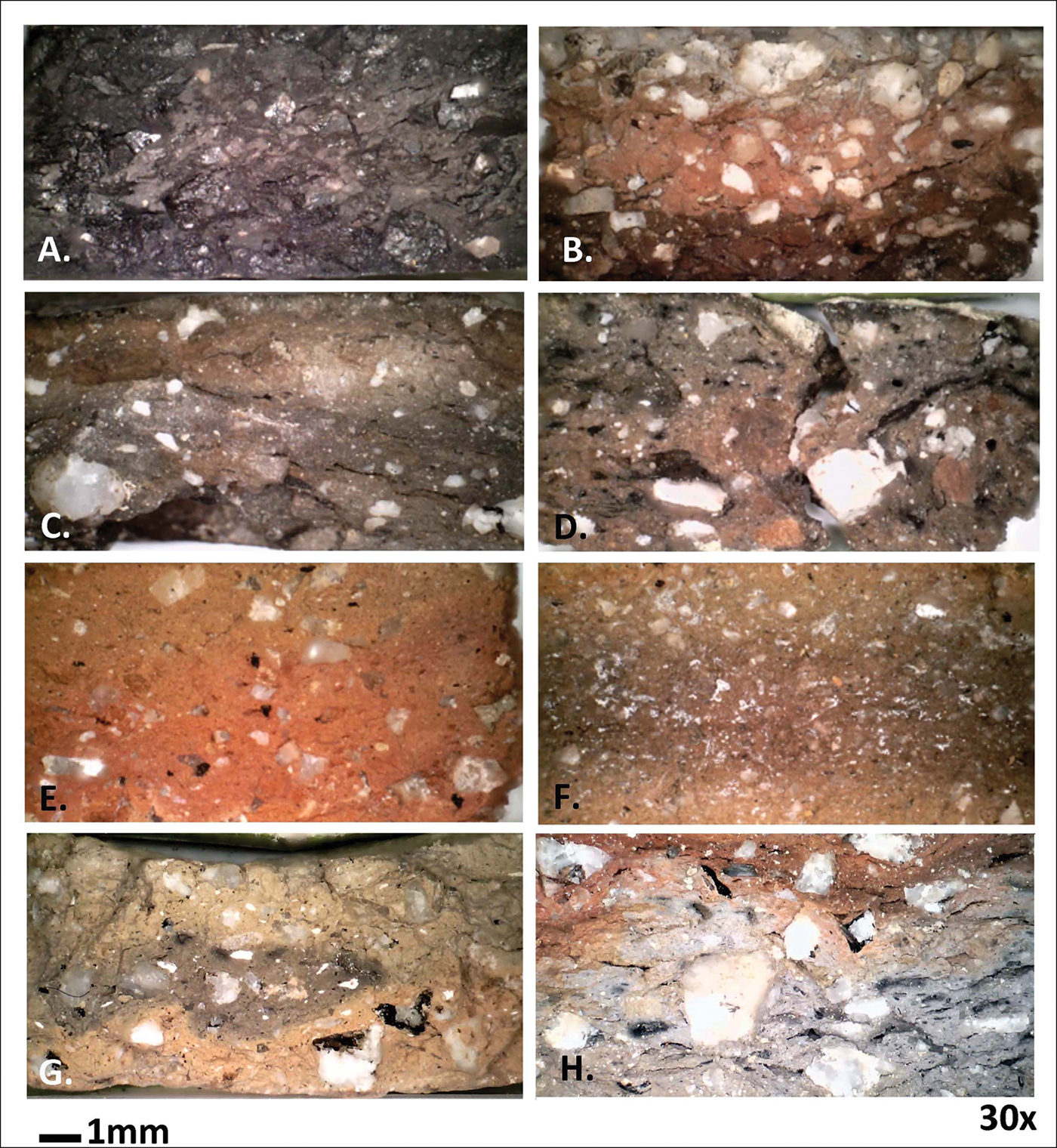
In the Bortala Valley, clay and other raw material procurement and preparation in the initial stages of ceramic production involved the addition of crushed rock temper as a key ingredient. The clay and granite mixture was worked into several kinds of ceramic pastes that varied in terms of their texture and colour, along with the addition of minor inclusions of pebbles (1–2mm in size) and organics (Figure 3). The resulting fabrics are hackly and contain substantial quantities of poorly sorted, angular rock fragments. A small subset of paste examples showing finer, more uniform textures indicates the production of additional, special-purpose containers. Whether naturally occurring or intentionally added to the clays, the common paste components outlined above highlight a consistent technological choice made by potters when preparing their domestic and funerary vessels.
Ceramic fabrics from Adunqiaolu house F1 and associated cemeteries. A–H indicate fabric examples from 13 paste groups (30× magnification, Dino-Lite Edge Digital Microscope): A) dark grey and black fabric with hackly texture, high quantity of granite inclusions (group 1); B) hackly texture, granite heavy with distinctive red-brown-grey mottled core (group 2); C) uniform brown core, moderate amounts of granite inclusions (group 3); D) hackly texture, granite and plant matter inclusions, sparse uniformly sized red/brown grog (group 4); E) bright red-brown paste with moderate amounts of multi-coloured granite fragments (group 5); F) finely textured brown fabric, moderate amounts of granite inclusions (group 6); G) poorly sorted granite inclusions, sparse quartz pebbles, light brown clay (group 8); H) hackly texture, grey-brown paste, medium levels of granite inclusions and vegetal matter (group 12).
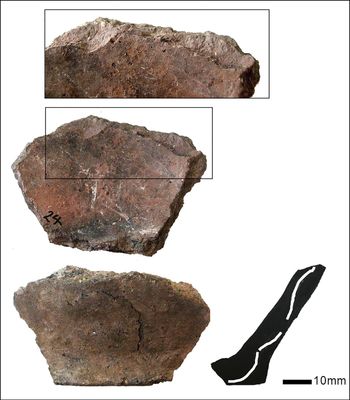
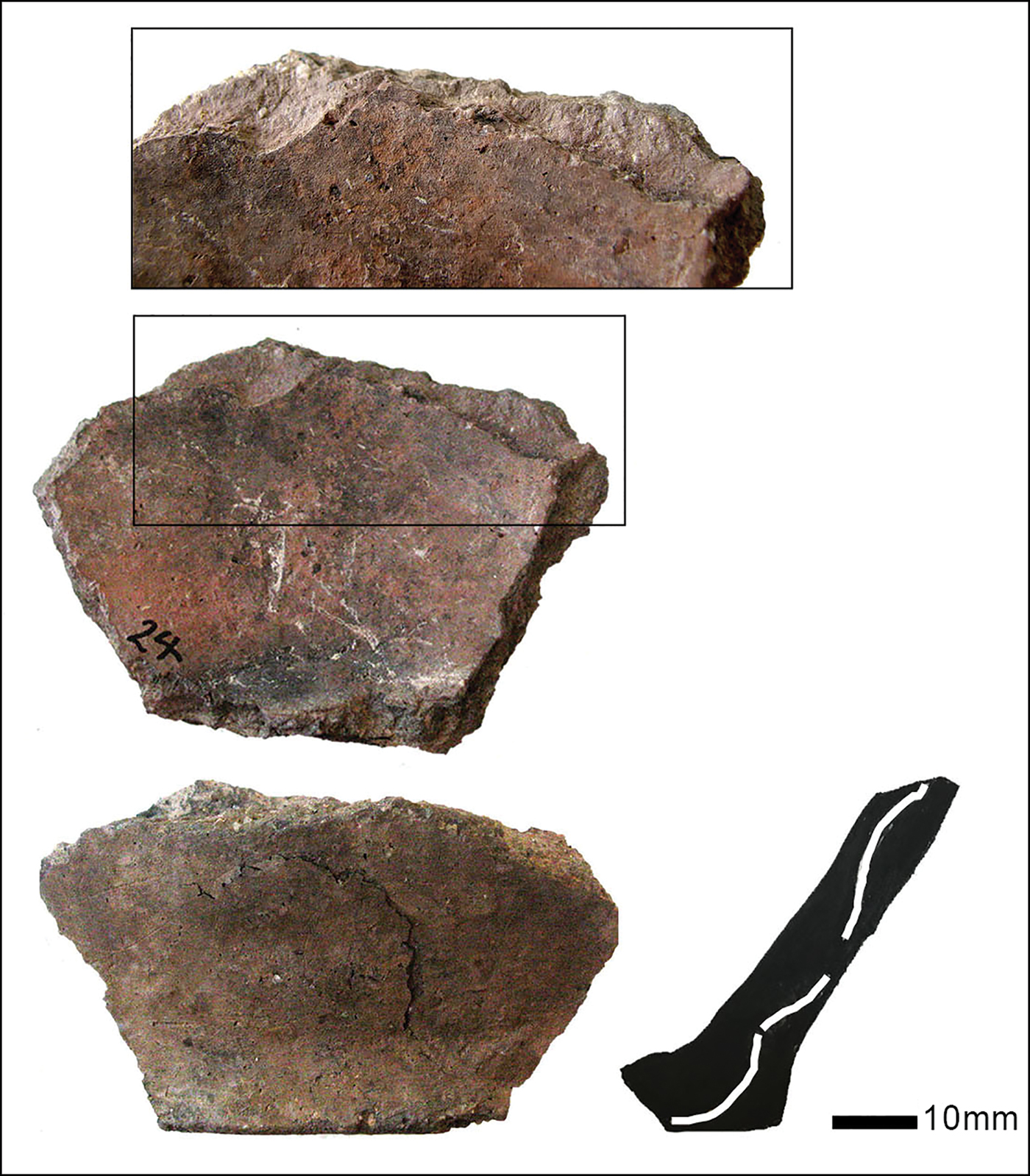
Ceramic vessels were constructed using two main hand-forming techniques: pinching (for ‘pinch pots’) and piece-building using clay slabs and wide coils. Pinching produced asymmetrical pots with preserved surface finger indentations, thickened bases, and walls of irregular height and thickness. Occasionally, patches of clay were added to vessel walls to strengthen them. Piece-building was detected by examining joins, fractures and particle orientations in the cross-sections of potsherds (Figure 4). Piece-built vessel bases and bodies comprise two sheets of clay compressed into layers, while rims show joins at intervals of approximately 20–30mm, indicating the use of fat coils or single-layered slabs to shape the upper body (Rye Reference Rye1981: 67). Piece-built vessels, while also lopsided in form, display finer finishing compared with the pinch pots. After forming, the vessels were left to dry, with the application of decoration to some containers at the leather-hard stage.
Adunqiaolu house F1 ceramic base photographed from both sides, with drawn profile. Slab break reveals two clay sheets compressed into layers.
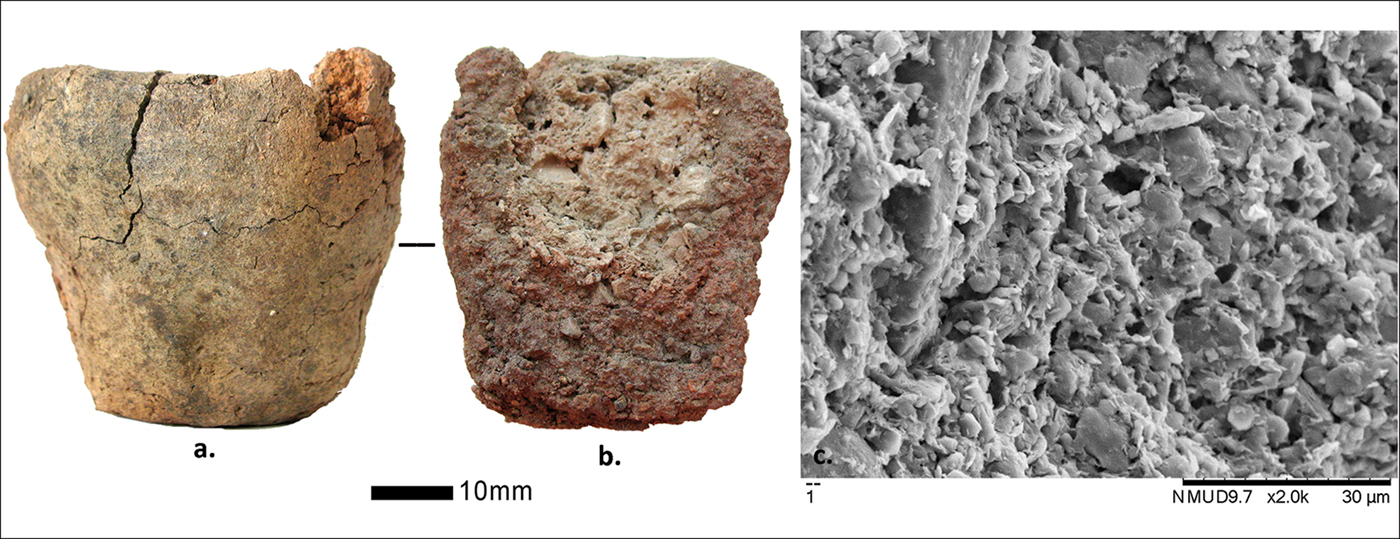
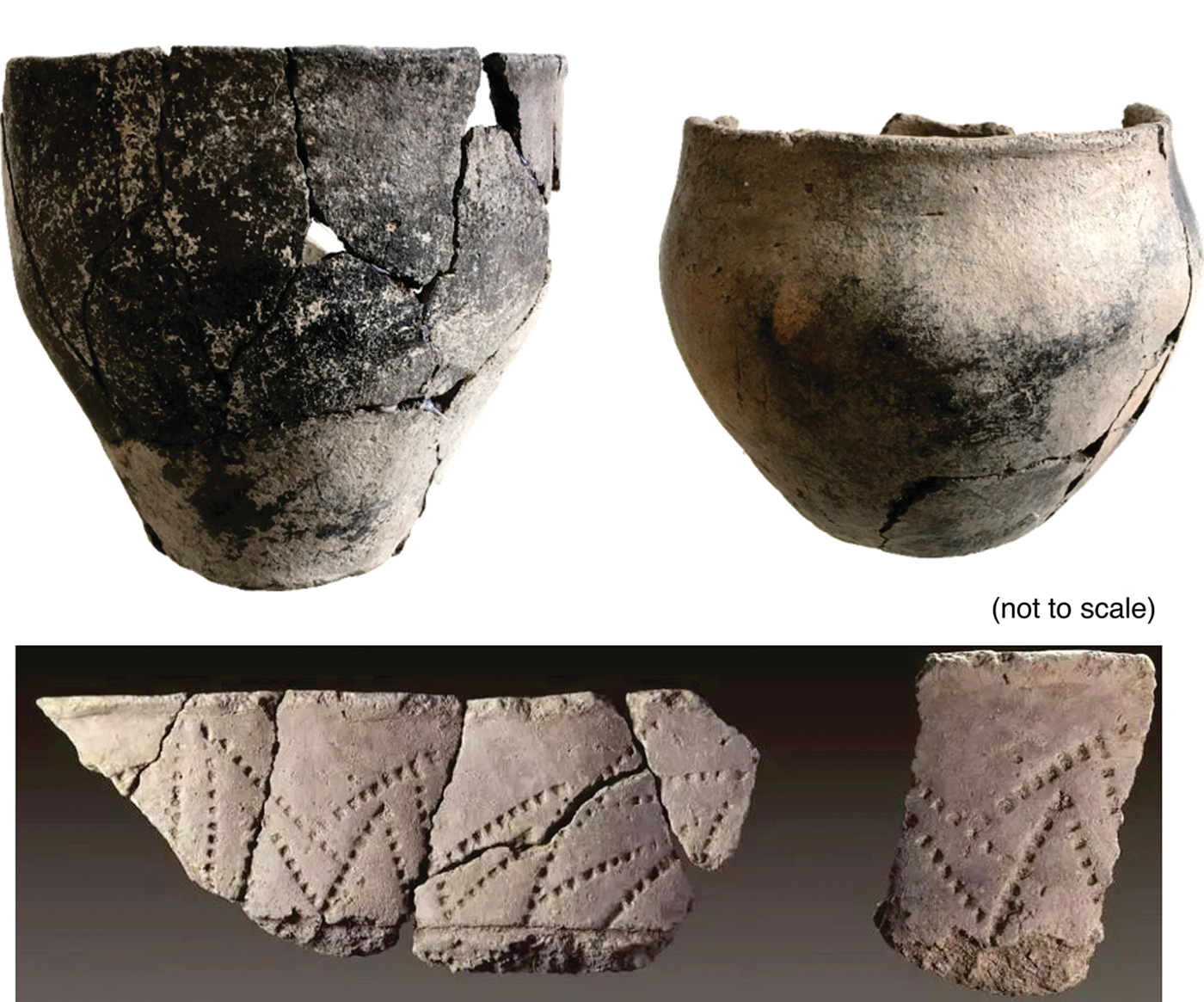
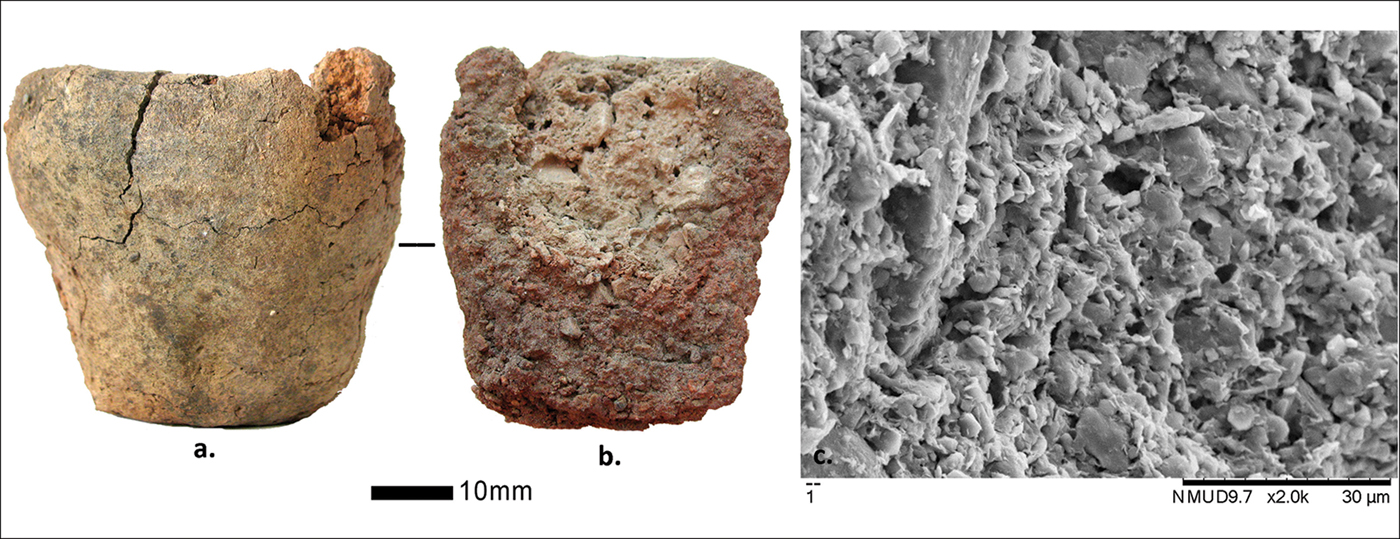
Decoration was applied with tools for incising, stamping and impressing (Figure 2). Styluses with triangular, oval, circular, rectangular and almond-shaped tips were pressed into or used to incise leather-hard clay in order to create geometric or abstract designs. Comb-stamps and fingernails were also used to impress decoration. All vessels, whether plain or decorated, were smoothed to a dull finish. Final surface and core colours lack consistency, ranging across tan, red, brown, grey and black, due to firing in a pit or bonfire. Firing was probably of only short duration, with overall temperatures remaining low and uneven. Scanning electron micrograph images of the fabrics from two pinch pots show very little, if any, vitrification during firing, indicating a low-temperature firing environment for these containers (Figure 5) (Rye Reference Rye1981: 111).
Miniature pinch pot (a–b) with scanning electron micrograph (c) of internal paste (Adunqiaolu, grave SM49).
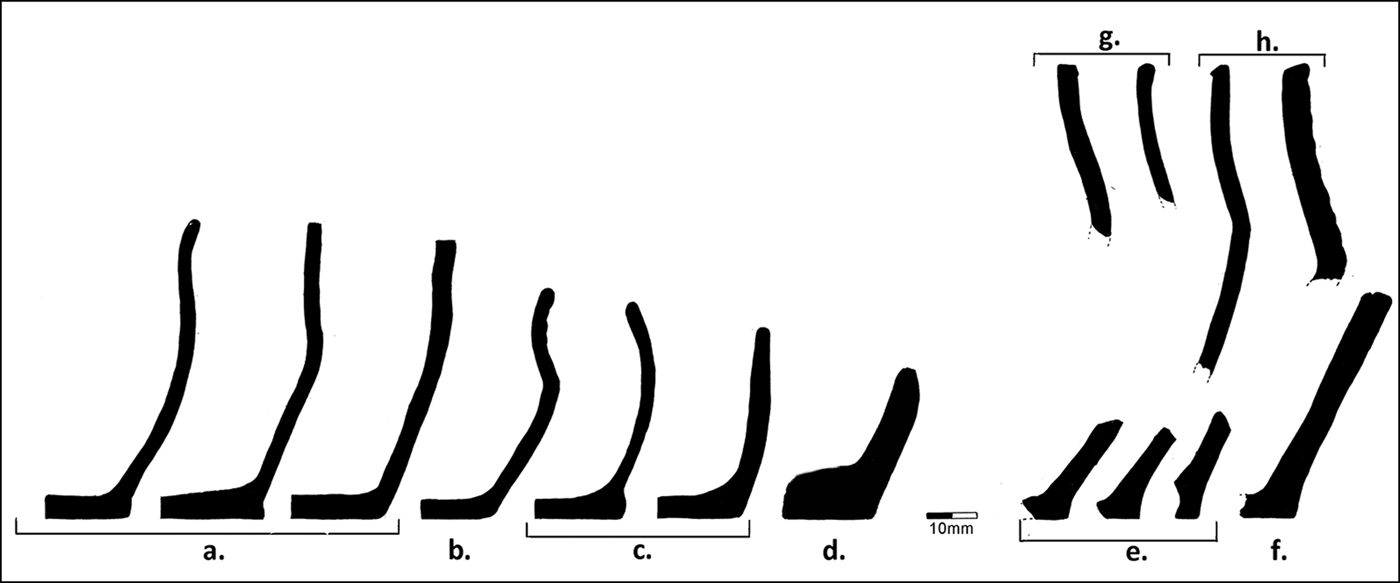
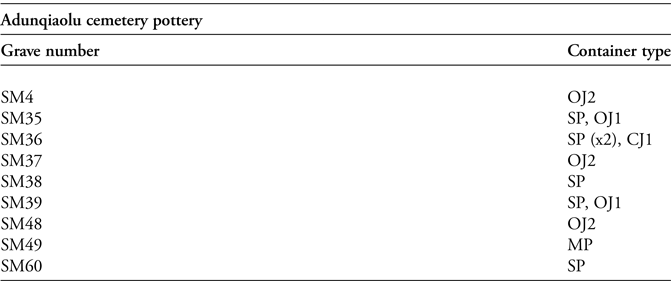
The Bortala Valley chaîne opératoire yielded a narrow assortment of pots and jars with flat bases (Figure 6). Pinch pots include miniature and small vessels. Miniature pinch pots are <50mm in height and fit in the palm of a small hand, whereas small pinch pots are slightly taller (70–90mm). While some of these pots contain straighter walls than others, the forms generally exhibit a wide base and mouth and gently curved profile. The jar assemblage shows more variation. We identified two open jar forms (OJ1 and OJ2) and a single closed form (CJ1) (Figure 6) from the Adunqiaolu cemetery. Standing just 90mm tall, CJ1 is narrow at the base with an angular profile, restricted neck and flared mouth. OJ1 is open, with gently rounded shoulders and nearly straight upper walls. OJ2 displays convex lower walls and slight restriction at the neck. All jars have a nearly even height/width ratio and a base diameter that is half that of the mouth. These open containers range between 90 and 130mm in height and width, demonstrating the diminutive size of the Adunqiaolu cemetery ceramics.
Jar profiles from Bortala Valley: Adunqiaolu cemetery: a) open jars (left: OJ1, centre & right: OJ2); b) closed jar (CJ1); c) small pinch pot (SP); d) miniature pinch pot (MP). Base fragments from Adunqiaolu house F1(e) and Har-Oro (f). Rim fragments from closed jar (CJ2) from Adunqiaolu house F1 (g) and Har-Oro (h).

The vessel fragments from the settlement suggest the presence of the same piece-built jar forms as seen in the cemetery. An additional closed jar (CJ2) type, however, is found within our settlement and hilltop site potteries, which we define on the basis of its larger size, longer neck and rounder shoulders (Figure 6). Notwithstanding, ‘large’ containers are nearly absent from the Bortala Valley assemblages, with examples consisting of just two fragments from house F1 (a rim, with >13mm diameter) and two from the hilltop site of Har-Oro (rims, with >25mm diameter) (Jia et al. Reference Jia, Betts, Cong, Jia and Dupuy2017b).
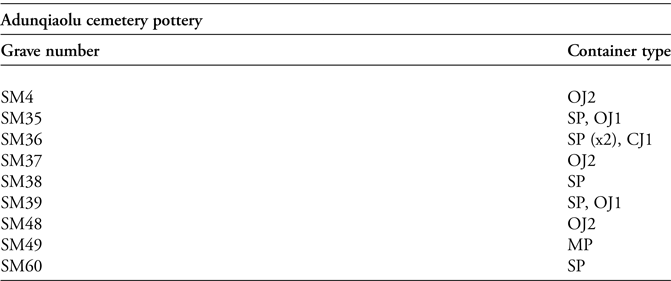
In the cemetery, pinch pots and jars are found together in individual graves (Table 2). The deceased were laid on their side in a flexed position, facing west, accompanied by pots and jars, animal bones and metal objects (Jia et al. Reference Jia, Betts, Cong, Jia and Dupuy2017a: 629, figs 3–4). Charred residues lining the interior walls of one ceramic container, found in grave 39-1, suggest that food preparation formed part of the burial rite. The quality of workmanship in the pottery deposited in graves varies; poorly fired, lopsided forms occur in the same graves as containers of sturdy fabric and symmetrical form. The contrast in skills represented across this small assemblage suggests participants of varying age or experience among the community's potters. Decorative marks made by a fingernail (<3mm wide) on a small pinch pot may support this hypothesis (Figures 2a & 7e). Two miniature pinch pots from grave 49 also stand out for their small and crooked form, again suggesting the participation of novice potters at Adunqiaolu (Figure 2f & 5a–b).
Container types recovered from nine graves at Adunqiaolu.
Given the small size of the cemetery assemblage, the decoration, including both the implements used and surface patterns achieved, are wide-ranging with few instances of repetition. Surface decoration usually appears as bands consisting of a single or compound pattern showing a common underlying structure (e.g. Figure 7a–b). Comb-stamping, for example, produced zigzag and triangle motifs, while fingernails made crescent-shaped stamps. Individual stamps were used to create clusters of small indents, and incising was used to form consecutive rows of horizontal bands around the neck. Surface designs were reserved for the area between the rim and shoulder in all but one small pinch pot, which exhibits patterning across its entire surface including the underside of the base (Figure 7e). The Bortala Valley pottery assemblage contains a rich inventory of designs that can be linked back to more than one type of site within a small geographic area.
Adunqiaolu pottery (early nineteenth to mid sixteenth centuries BC): cemetery (a–c: OJ1 & OJ2; d: CJ1; e–f: pinch pots); settlement (g–l).

Context and discussion
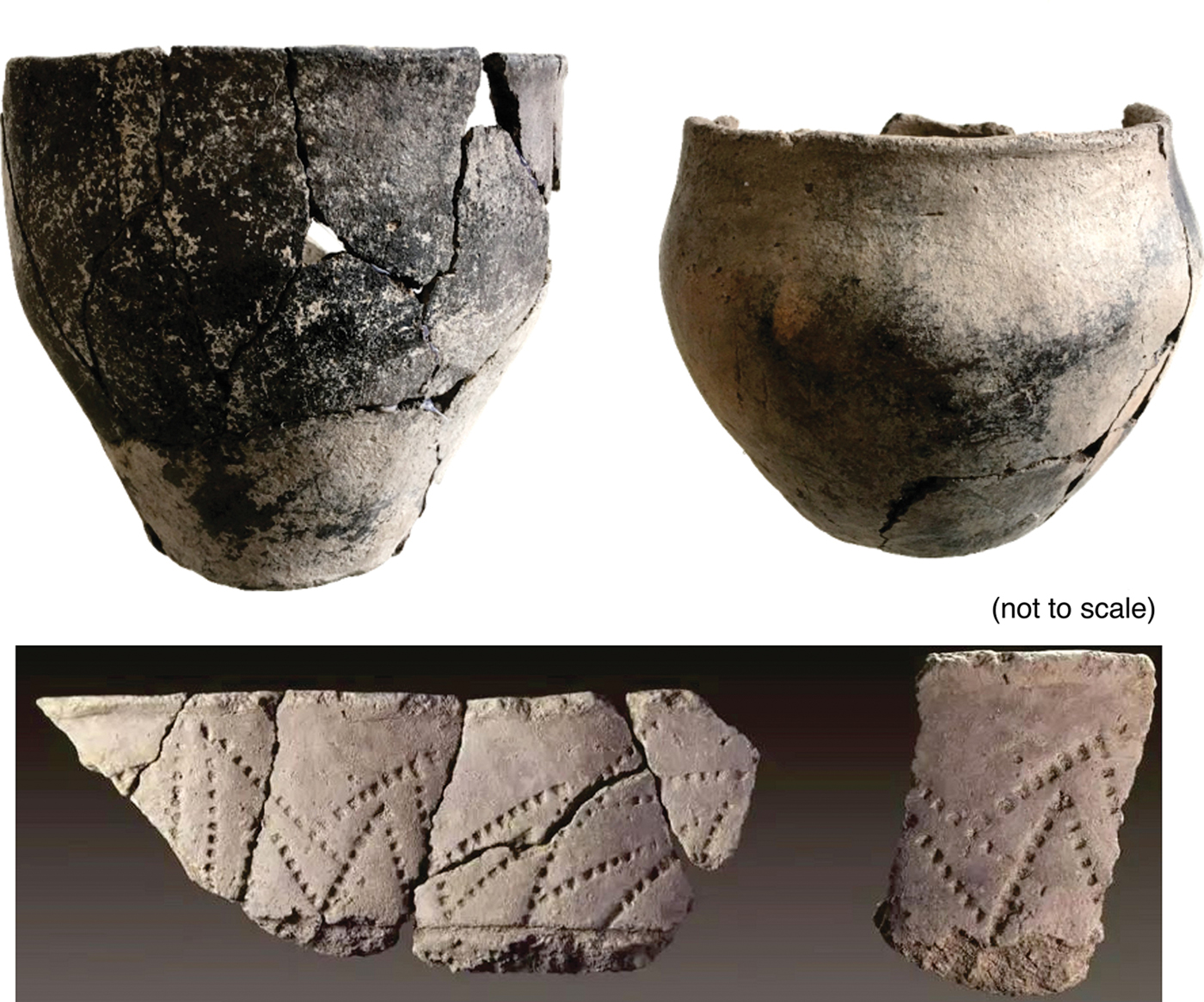
The ceramic technologies identified in our study do not appear to provide any direct correlation with populations having specific architectural or territorial systems in the Bortala Valley: the same ceramics appear at contemporaneous residential sites with substantial architecture, small-scale campsites, hilltop enclosures and among diverse grave styles. Comparative assessments of ceramic fabrics containing rock (granite) temper offer just one line of evidence in support of the interconnectivity of pottery-producing communities. The use of rock temper highlights a core component of paste-mixing styles across elevations spanning 1800–2300m asl in the Tian Shan Mountains of Xinjiang, and also at lower elevation sites (>500m asl) in the neighbouring Dzhungar/Tian Shan Mountains of Kazakhstan (Doumani Reference Doumani2014) (Figure 1). In both regions, clays and other raw material resources for the preparation of pastes were readily available from local streambeds and granite outcrops. Rock, and granite specifically, persists as a core resource for potters across low, middle and high elevation zones through the Bronze Age. Of the 10 paste groups identified at Adunqiaolu, for example, 7 also occur in the local hilltop site ceramics, which exhibit red and grey-brown fabrics interspersed with coarse granite, lesser amounts of vegetal matter, and, very infrequently (n = 1), grog (Figure 8; Jia et al. Reference Jia, Betts, Cong, Jia and Dupuy2017b: 6).
Bortala Valley hilltop site ceramics (sixteenth to fifteenth centuries BC) from Husta (top) and Har-Oro (bottom) (Jia Reference Jia2019).
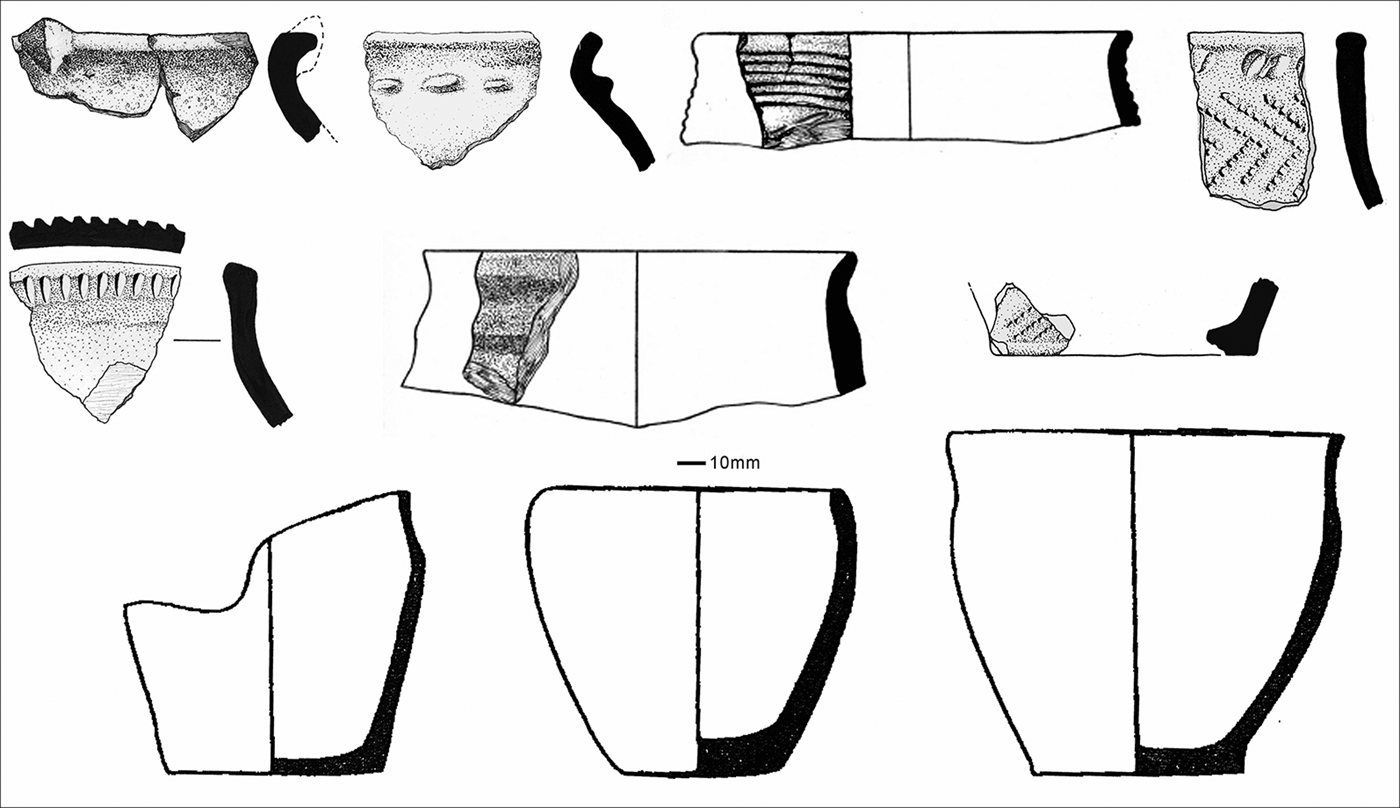
In the mountains of Kazakhstan, ceramics recovered from contemporaneous agro-pastoral campsites, such as Begash, Tasbas/Dali and others (Figure 9), are also predominantly rock-tempered, with moderate inclusions of sand and less frequent additions of chaff, bone and grog (Doumani Reference Doumani2014). Although ceramics display some heterogeneity in texture, colour and constituent admixtures across the aforementioned sites, the use of rock temper within this tiny area of the Inner Asian Mountain Corridor persisted as a core technological practice. Here, the ceramic-producing communities would probably have interacted periodically via their seasonal transhumance routes, or for larger social gatherings (Frachetti Reference Frachetti2008). Importantly, we have so far identified no sand or bone temper in the Bortala Valley ceramics, which suggests that some local variation developed upon the core potting techniques within the Dzhungar/Tian Shan Mountains. This finding shows the need for additional site-to-site comparisons of the complete ceramic chaîne opératoire that use high-resolution scientific analysis in order to uncover the potential nested levels of complexity at each stage of production.
Second-millennium BC pottery from the Dzhungar Mountains (Kazakhstan), exhibiting similar forms and decorative styles to the Bortala Valley assemblage: bottom row from Kizlbulak (Gor'yachev Reference Gor'yachev and Linduff2004); top and middle rows from Begash, Tasbas and Dali (Doumani Reference Doumani2014).

Determining how far shared aspects of the chaîne opératoire extended into Xinjiang will also require further analysis of pottery from earlier, small-scale discoveries of sites containing Andronovo Culture ceramics—specifically from the Yili River Valley, north-west Xinjiang, and as distant as Urumqi (Wang & Ruan Reference Wang and Ruan2016). The site reports are published, but they lack even cursory descriptions of the accompanying ceramics (Figure 1) (XAI BRY 2008 (Kalasu); Liu Reference Liu2011 (Qiongkeke); XAI 2012a (Tangbalesa'yi), 2012b (Aletengyemule Reservoir), 2012c (Kuokesuxi), 2012d (Xiabandi), 2013 (Ayousai-goukou), 2014a (Qialege'er), 2014b (Wutulan); XAI UR 2012 (Sa'ensayi); Ruan Reference Ruan2013 (Sa'erbulake-goukou, Huoerjite and Ningjiahe)). Additional sites with related ceramics also lack radiocarbon dates (e.g. Li Reference Li1991, Reference Li1992 (Weixiao); Zhang Reference Zhang1991 (Daxigou); XAI 1994 (Shihezi); XAI TR 1996 (Sazi); Yu Reference Yu1998 (Xiakalianggu'er)). Therefore, for now, we must continue to utilise culture-historical, style-based groupings. Most discoveries of Andronovo Culture ceramics in Xinjiang are from surface finds and burials that extend eastwards into the lowlands. Here, Andronovo Culture pottery represents a small fraction within local assemblages of second-millennium BC painted ceramics (Jia et al. Reference Jia, Betts and Wu2009; Shao Reference Shao2009; Tan Reference Tan2011). The lack of Chinese (painted) ceramics in western Xinjiang and the Tian Shan demonstrates a striking contrast and a potential material culture boundary. In fact, it is not until the Iron Age that painted pottery was adopted at agro-pastoral mountain sites (Jia et al. Reference Jia, Betts and Wu2009, Reference Jia, Betts and Wu2011; Han Reference Han2013). The fall-off in the distribution of Andronovo Culture pottery as one heads eastwards, combined with the paucity of Chinese (painted) pottery towards the west, alludes to the significance of locally made ceramic types, rather than vessels being circulated across long distances as commodities. This pattern contrasts with the other multiple patterns of exchange and mobility shown for Bronze Age metals, subsistence technologies and people (Betts et al. Reference Betts, Jia and Abuduresule2019).
An aim of this paper has been to update studies of the ceramic-producing cultures of Bronze Age Central Asia by uniting the contributions of traditional, style-based studies with more recent approaches to ceramics research. Bortala Valley ceramics are most consistent with Late Bronze Age Fedorovo assemblages, with comparative examples documented in the Altai and Dzhungar Mountains (Chernikov Reference Chernikov1960: tab. LIII; Sitnikov Reference Sitnikov and Kirushin1998: figs 1–2; Gor'yachev Reference Gor'yachev and Linduff2004; Doumani Reference Doumani2014). Isolated examples from Adunqiaolu, such as the small pinch pot with fingernail impressions (Figure 2a), also demonstrate the longevity of earlier, Altaic stylistic influences of the Middle Bronze Age Okunev and Qiemu'erqieke Culture ceramics (Maksimenkov Reference Maksimenkov1965; Jia & Betts Reference Jia and Betts2010; Kovalev Reference Kovalev2015). These similarities in ceramic styles are more apparent when considering the larger geographic area as opposed to individual sites, particularly when taken in conjunction with the diverse histories of the cultural groups being compared. Nevertheless, the existence of wide-ranging analogues highlights an unexplored component of culture-histories, beyond the traditional reliance on them as evidence for economic unification across vast areas of Eurasia. Ritual interment of ceramics in cist burials of the same period and with the same structural form, for instance, raises the question of whether ceramic styles, and potentially other funerary features (e.g. Frachetti & Bullion Reference Frachetti, Bullion, Boivin and Frachetti2018), were the product of broadly concurred inter-community approaches to materiality, while the production practices remained geographically restricted. The limited circulation of containers, contrasted with the greater mobility of social systems or people, opens a new avenue for research into the multi-scalar traditions of pastoralist materiality, that consider technological practice and visual style across domestic and ritual contexts.
Conclusion
The potential for undertaking archaeological research in Xinjiang has improved following the decline of the geopolitically imposed research restrictions and language barriers that formerly obstructed scholarly exchange between China, the Soviet Union and Western scholars. Although long-standing cultural ties between Xinjiang and the Eurasian Steppe were known, previous regional syntheses allude only briefly to the Bronze Age (e.g. Kuz'mina Reference Kuz'mina1986). Mei and Shell (Reference Mei and Shell1999) made a significant impact by reporting discoveries of graves and architecture that aligned with Andronovo Culture materials, and further proposing that north-west Xinjiang represented an entry point for the spread of steppe cultural influence into China during the Bronze Age. Other reports emerged around the same time, which emphasised the vast potential of archaeology awaiting further exploration (e.g. Li Reference Li1992; Debaine-Francfort Reference Debaine-Francfort1998; Mei et al. Reference Mei, Shell, Li and Wang1998; Jia et al. Reference Jia, Betts and Wu2009). Studies targeted grave contents, surface finds of metal items and ceramics reflecting styles from the Eurasian Steppe (Mei & Shell Reference Mei and Shell1999: fig 3.1). Following the recent increase in fieldwork activity and the availability of published data, the social history of Bronze Age Xinjiang has become more accessible to researchers. Whereas earlier descriptions framed the area as a marginal and peripheral zone, research over the past two decades has shown that Xinjiang was an active space of engagement and inclusivity for mountain communities.
Adunqiaolu, with its large burial ground and settlement complex, and the nearby hilltop sites in the Bortala Valley, provide securely dated pottery documenting local life in second-millennium BC north-west Xinjiang. Here, ceramic production shows nested levels of participation in regional stylistic traditions, along with localised traditions upheld by non-specialist potters consisting of various community members. We can now draw upon the growing record of comparative materials to examine daily life in greater detail and better place it in the context of expansive regional interactions. While conveying some stylistic uniformity as shown in earlier culture-histories, the ceramic complexes associated with mountain agro-pastoralists of the Tian Shan also highlight formerly undocumented ceramic production behaviours and the localised adoption of regional styles that demand greater attention to site-based craft-making during the Bronze Age. Additional research programmes that align features of technological practice and style will allow us to elaborate further on the social significance of ceramic production within and between population groups, while permitting further investigation of how the producers of ceramics served their Bronze Age communities.
Acknowledgements
Fieldwork in the Bortala Valley is a collaboration between the Institute of Archaeology, Chinese Academy of Social Sciences (Beijing), University of Sydney and Monash University. The Australian team are funded by the Australian Research Council (DP150100121), with additional support from the China Studies Centre and the University of Sydney, and in affiliation with the Centre for Classical and Near Eastern Studies, University of Sydney.