


Introduction
Pragmatic trials are clinical studies conducted in the context of usual care, designed to enhance the applicability and generalizability of study findings to a range of clinical practice settings and patient populations. Key pragmatic trial study design features include use of existing practice personnel, systems, and processes of care to support patient recruitment, intervention delivery, and data collection [Reference Loudon, Treweek, Sullivan, Donnan, Thorpe and Zwarenstein1]. Balancing pragmatism with rigorous participant and provider adherence to study protocols can be a challenge [Reference Glasgow, Gurfinkel and Waxmonsky2]. Provider flexibility in adherence to intervention protocol delivery is expected in pragmatic trials, and monitoring fidelity can be burdensome but necessary for “per protocol” analyses [Reference Dziura, Gilstad-Hayden and Coffman3]. The GetReal Consortium’s series on design and conduct of pragmatic trials outlined the need to minimize interference with clinical care while maintaining accurate and complete data collection, especially for outcomes not commonly collected in the course of routine care [Reference Meinecke, Welsing and Kafatos4, Reference Welsing, Oude Rengerink and Collier5]. Traditional informed consent models can also be considered infeasible, such that targeted consent or waivers of consent – especially for comparative studies of evidence-based practices – can be appropriate under certain circumstances [Reference Kalkman, van Thiel and Zuidgeest6]. Minimizing burden to practices participating in pragmatic trials – such as by actively engaging providers to ensure study protocols fit clinic workflows – is a recommended approach [Reference Tambor, Moloney and Greene7].
One of the most persistent issues in clinical trial conduct – participant recruitment – is as present in pragmatic and comparative effectiveness randomized control trials as it is in other types of trials [Reference Lin, Jochym and Merz8]. Physicians and nurses, historically tasked with pragmatic trial recruitment responsibilities, report role conflict between clinical practice and research recruitment [Reference Donovan, Paramasivan, de Salis and Toerien9]. A 2023 systematic review of barriers and facilitators to recruitment in general practice settings showed that concerns about randomization and scheduling burden limited recruitment, while an existing patient–provider relationship and opportunistic rather than systematic recruitment enhanced recruitment [Reference Moffat, Shi, Cannon and Sullivan10]. A conclusion of this review was the need for prioritization of studies on effective strategies for promoting trial recruitment in usual care settings. This paper describes a research implementation liaison role used to support the conduct of a pragmatic trial.
Novel and creative strategies - and evaluation of their impact – are needed to support participating clinical sites’ pragmatic trial recruitment and protocol adherence. Such strategies may include business and marketing techniques (e.g., value proposition design) to inform recruitment messages [Reference Dailey-Vail, Begum and Kwan11], leveraging clinical information systems (e.g., automated prompts) to alert practitioners to patient eligibility [Reference Gbinigie, Boylan, Butler, Heneghan and Tonkin-Crine12], and practice facilitation to support intervention implementation and study conduct broadly [Reference Cuthel, Rogers, Daniel, Carroll, Pham-Singer and Shelley13]. Collaboration with practice-based research networks (PBRNs) has been proposed as a strategy to address recruitment challenges at organizational, practice, and participant levels [Reference Axén, Björk Brämberg, Galaasen Bakken and Kwak14]. PBRN team members’ research and relationship-building skills and knowledge of practice and community context ensure clinically relevant research questions, personal contact, local adaptation of recruitment procedures, support for recruiters’ time, reminders, and rewards. These proposed strategies align with the Trial Innovation Network’s Recruitment Innovation Center’s research recruitment support and resources for clinical and translational science, including informatics solutions, community engagement, recruitment materials, and feasibility assessments [Reference Wilkins, Edwards and Stroud15] and the NIH’s “CARE for Health” initiative that is focused on moving clinical trials from academic health centers into PBRN-affiliated practices [Reference Bertagnolli16].
Home versus Office versus Telehealth for Medication Enhanced Recovery (HOMER) was a pragmatic, comparative effectiveness research study comparing treatment outcomes in primary care patients initiating long-term medication for opioid use disorder (MOUD) in different settings [Reference Fernald, Nease and Westfall17]. Funded by the Patient Centered Outcomes Research Institute, the HOMER study was conducted with practices associated with the PBRNs comprising the State Networks of Colorado Ambulatory Practices and Partners and the American Academy of Family Physicians National Research Network. The study began in July 2020 during the COVID-19 pandemic. Several recommended strategies were applied to support practice and patient participant recruitment and retention and data collection during this particularly challenging time for primary care [Reference Zittleman, Westfall and Sofie18]. Identifying the need for and the successful operationalization of these strategies relied heavily on a cadre of skilled, PBRN-affiliated research implementation practice and patient liaisons (RIPPL). We describe the RIPPL roles and experiences and evaluate the impact of the RIPPLs on the conduct of this trial.
Materials and methods
Pragmatic trial context and study design
The HOMER study was a pragmatic comparative effectiveness trial of home versus office versus telehealth induction of MOUD [Reference Fernald, Nease and Westfall17]. Consistent with a pragmatic trial, patients were identified, invited to participate, and received MOUD according to their assigned or chosen induction method in the course of routine care by primary care clinicians and staff [Reference Loudon, Treweek, Sullivan, Donnan, Thorpe and Zwarenstein1]. The study team conducted informed consent, randomization, and data collection procedures and limited oversight of practices’ MOUD induction procedure. Data collection included both practice-level measures (e.g., practice characteristics and culture surveys, implementation checklists) and patient-level measures (e.g., participant trackers, patient reported outcomes measures).
While the study design shifted over the course of the project, the final protocol reflected a comprehensive cohort design, with the three-armed, patient-level randomized group and a parallel, non-randomized or “choice” group. The original research proposal included two induction arms: in-office and home (self-guided) MOUD induction. In response to the outbreak of the COVID-19 pandemic, after notice of award but prior to launching the study, the funder approved addition of MOUD induction via telehealth (synchronous, observed by the clinic team) as a third induction arm. Participant enrollment started in April 2021. As described below, the funder later approved addition of a “non-randomized” group, permitting enrollment of patients who declined to be randomized (choice induction arm); enrollment of participants in the choice induction arm started in October 2022 and continued through the end of the trial in December 2023 [Reference Zittleman, Westfall and Sofie18].
Research implementation practice and patient liaison (RIPPL) evaluation approach
We used qualitative and quantitative methods to evaluate and describe the RIPPL roles, processes, and impact on research conduct outcomes. The overall HOMER study was approved by the Colorado Multiple Institutional Review Board (COMIRB Protocol #20-1692), and site-specific IRBs for practices participating in other states and health systems where required by the local institution. The RIPPL evaluation was not human subjects research.
RIPPL roles and processes
RIPPLs were study team members who served as liaisons between practices and the broader study team, designed to support practice fidelity to the research study protocol while minimizing practice burden. RIPPL objectives were to boost patient enrollment and referral, increase practice buy-in and understanding of the protocol, act as a liaison between the practice and the study team, and strengthen relationships with practices. The RIPPL scope of work included support for practice recruitment, documenting practices’ MOUD protocols, enrolling and consenting patients, completing baseline data collection, maintaining regular contacts with participating practices, regularly monitoring data collection, and recording data in study databases. RIPPLs were part of the staff infrastructure of the partnering PBRNs and were selected by the Principal Investigators. Experience interacting with clinicians, practice members, and patients or possession of the skills needed for successful interactions and relationship-building were primary criteria for selection. All RIPPLs completed institutional requirements for research professionals, including Health Insurance Portability and Accountability Act training, human subjects protection certification through the Collaborative Institutional Training Initiative Program and basic Research Data Capture (REDCap) training. Additionally, RIPPLs received general research training and orientation to the study from study leaders.
The RIPPL scope of work incorporated multiple aspects of traditional practice facilitation, such as managing connections with external MOUD expertise, supporting accountability for action and follow-through, assessing practices’ MOUD capabilities, connecting to MOUD training and resources, and documenting and communicating barriers to providing MOUD [Reference Knox and Brach19]. In addition to individual practice support, RIPPLs led or facilitated, both individually and as a group, study-wide practice engagement activities including in-person and virtual site visits, monthly drop-in study meetings, gift box distribution, and newsletters. RIPPLs were matched to practices based on PBRN membership and case load, and in some cases, geographic proximity (e.g., Colorado-based practices were typically matched with Colorado-based RIPPLs). The geographic distance between most practices and their matched RIPPLs, combined with COVID-related restrictions, necessitated a facilitation strategy that was predominately remote, using emails, video calls (e.g., Zoom, Webex), and phone calls, except where in-person visits were possible and welcomed. RIPPLs were available for 10 to 12 hours a day, Monday through Friday (excluding holidays) to monitor a phone hotline to consent and enroll patients as well as respond to patient and practice emails and phone calls regarding enrollment and data collection. This degree of coverage required a significant amount of funded effort from the RIPPLs but was essential to patient enrollment due to the time-sensitive nature of MOUD induction, which can happen on a rapid timeline from the patient seeking care to receiving treatment. This level of responsiveness ensured practices did not need to delay care in order for patients to participate in the study.
The RIPPLs’ work was monitored and evaluated through multiple mechanisms. The number of completed field notes helped monitor the quantity of interactions with assigned practices, and their content helped assess the nature of those interactions, including with whom the RIPPL had contacted, topics discussed, and resolutions to any issues. The study analyst generated missing data and data error reports to help monitor errors during enrollment and any survey administration. Further, weekly meetings with the RIPPLs and study investigators allowed opportunity to assess the quality of individual RIPPLs’ work and identify concerns.
Outcomes and data sources
RIPPL research conduct impact outcomes were defined as practice burden, patient willingness to participate, data completeness and quality, research protocol fidelity (e.g., clarifying eligibility criteria; adaptations to study design), communication, implementation and workflows. Several data sources from the HOMER study were used to evaluate outcomes. We used field notes and a brief open-ended survey to assess RIPPL processes, describe their experiences, and determine impact. We used project records to quantify and describe RIPPL practice engagement activities and changes in patient enrollment over the course of the study.
RIPPL field notes
RIPPLs completed structured monthly field notes to document information gleaned from regularly scheduled phone calls and emails with participating practices throughout the study (see Supplemental Material A). There were 871 complete field notes generated over the course of the study. To capture the full range of RIPPL experiences with practices, field notes included all practices, including those that did not continue on to enrollment in HOMER or later stopped or paused participation in HOMER. The mean number of field notes per practice was 11.5, with a range of 1 to 35 total notes during the study period, which varied by practice. Guided by open-ended field note questions, RIPPLs systematically gathered information from practices about delays, questions, and challenges related to identifying potential participants; total number of patients receiving MOUD at the practice; participant recruitment activities and corresponding patient responses; challenges and needed support related to study data collection; changes in individual study participation or treatment engagement; and unanticipated or adverse events. Field notes were primarily used to describe and summarize RIPPL interactions with practice members.
RIPPL survey
In July 2024, as follow-up with practices was nearing completion, RIPPLs were asked to complete a survey consisting of three open-ended items asking them to describe their role as a “study buddy” in terms of (1) specific activities, tasks, and functions, (2) challenges and barriers they faced in their role, and (3) specific strategies they deployed to overcome challenges, facilitate uptake of the study, and strengthen their relationships with practices. The survey was sent anonymously via Qualtrics web-based survey software (https://www.qualtrics.com, Provo, UT, USA) to all individuals who had served as a RIPPL throughout the duration of the study, regardless of whether they were still serving in that capacity for the study or not. Nine of 13 individuals serving in the RIPPL role at any point during the study (69% response rate) completed the survey.
Project records
Project management spreadsheets were used to track (1) patient enrollment overall and by practice each month and (2) all study-wide practice engagement activities. Monthly patient enrollment data and monthly engagement activity data were plotted on a graph to illustrate the co-occurrence between RIPPL activities and monthly enrollment.
Analysis
Monthly patient enrollment numbers and study-wide practice engagement activities were aggregated from April 2021 through January 2024 to coincide with the study patient enrollment window. Study-wide practice engagement activities were defined as activities that RIPPLs engaged in, led, or heavily contributed to, which were intended to boost patient enrollment or practice buy-in to the study. Examples included virtual, or where possible in-person, site visits, optional study-wide calls with study personnel, monthly newsletters, practice gift boxes, the addition of the choice-cohort, and an educational in-person HOMER Study Summit designed to provide continuing medical education to the study sites. Monthly patient enrollment and engagement activities were plotted for comparison and analyzed to explore causal relationships.
Iterative qualitative data analysis was used to describe and summarize field note data and open-ended RIPPL survey questions. Qualitative analysis was conducted by a master’s-trained (DF) study co-Investigator and a PhD-trained researcher (TH), each with more than a decade of qualitative research experience. For both data sources, a combination of template and editing coding strategies [Reference Addison, Miller and Crabtree20, Reference Crabtree, Miller, Miller and Crabtree21] were used to first segment data into topics (based on field note/survey questions) and then code inductively to identify emergent and ongoing concepts in the data until no new conceptual categories emerged (conceptual saturation). The analysts reviewed coded responses multiple times to refine codes to ensure that all responses were accurately categorized by the final coding structure, then reviewed responses by code to summarize survey findings. Periodic summaries of coded qualitative data were shared with the larger research team throughout the study period as checks on internal validity. Some coded field note data were quantitized [Reference Collingridge22] (as dichotomous presence/absence variables) to allow for the calculation of descriptive statistics to help characterize practice member interactions with RIPPLs across a large number of field notes. Structured response questions about study data assistance similarly allowed for descriptive statistics to be calculated from field note data.
Results
RIPPL staffing
A total of 14 individuals were employed by the research institutions as RIPPLs throughout the duration of the study, with most engagement with practices and patients occurring from July 1, 2020, to September 30, 2024. Although usage and deployment of RIPPLs at any given time varied by research institution, month, and study phase, at peak recruitment and engagement periods, nearly 5.0 FTE were devoted to RIPPLs, split across 11 RIPPLs with individual FTE ranging from 0.15 to 0.95. RIPPLs had variety of educational backgrounds (e.g., bachelor’s and master’s degrees) and previous practice support experiences, ranging from 0–1 years of experience to 20+ years. Three RIPPLs were located in the Denver, Colorado, metropolitan area and six were located throughout other rural and urban parts of Colorado and supported 25 practices in Colorado and one in Utah. Five RIPPLs were based in Leawood, Kansas, and supported 35 practices outside of Colorado. RIPPLs who left the study did so as a result of personal or institutional career changes.
RIPPL practice support activities
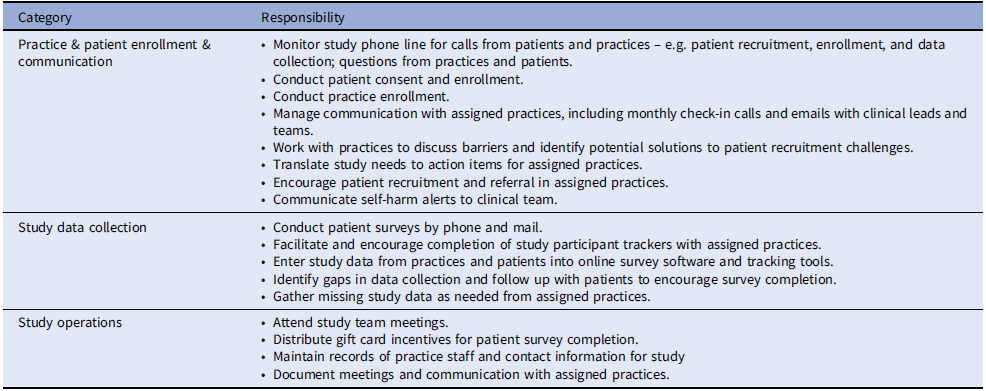
RIPPLs most commonly interacted with MOUD Program Coordinators (28% of all interactions) and physicians (25% of interactions); see Figure 1. According to the RIPPL survey and field note data, respondents identified three broad categories of activities when interacting with practices: practice and patient enrollment and communication, study data collection, and study operations; see Table 1 and details below.
Nature of RIPPL interactions with practice members. Note: Quantitized field note data from 871 field notes; named member roles were categorized to estimate percentages of roles engaging with RIPPLs throughout the study period. MOUD = medication for opioid use disorder; NA = not applicable.

RIPPL responsibilities across practice and patient support activities

Table 1. Long description
A table detailing responsibilities across three categories: Practice & patient enrollment & communication, Study data collection, and Study operations. The table has three columns: Category, Responsibility. The first category, Practice & patient enrollment & communication, includes responsibilities such as monitoring study phone lines, conducting patient consent and enrollment, managing communication with practices, translating study needs, encouraging patient recruitment, and communicating self-harm alerts. The second category, Study data collection, involves conducting patient surveys, facilitating completion of participant trackers, entering study data, identifying gaps in data collection, and gathering missing study data. The third category, Study operations, includes attending study team meetings, distributing gift card incentives, maintaining records of practice staff, and documenting meetings and communication with assigned practices.
(1) Practice and patient enrollment and communication
Practice and patient enrollment and communication activities included enrolling the practice and patients in the study, monitoring study phone lines, and managing various communications with both parties. RIPPLs documented consistently working with practice contacts to clarify study protocols and troubleshoot patient identification and enrollment strategies. Early in the study there were delays related to IRB approvals and practice concerns and questions about the study design, including randomization, which RIPPLs documented and conveyed back to the study team for troubleshooting. RIPPLs documented numerous instances of practices requesting or needing additional study resources, which they provided. This included printed study materials (surveys, flyers, signage, talking points, eligibility criteria); practice orientation “refreshers”; workflow suggestions to better identify patients including team approaches; ideas for patient outreach and awareness raising or “marketing” (including for referral partners); clarifications about patient eligibility; clarifications about how to refer patients to HOMER for enrollment; and offers to connect to HOMER physicians for consultation.
(2) Study data collection
RIPPLs administered practice and patient study surveys, routinely assessed or discussed expected data collection activities with practices, reviewed and completed patient tracker data, provided additional study materials, and re-sent survey links or paper surveys for completion. They also continually monitored study data completeness and fidelity; see Figure 2 for RIPPL reports of data missingness discussions. A common data collection challenge was completion of a practice-level survey on practice culture, the practice culture assessment. RIPPLs reported that they discussed details of patient tracking data and assisted by helping to update the patient tracker in real time during the contact, clarified confusion or questions about data entry, or helped troubleshoot tracker file downloads. After patients were enrolled in the study, RIPPLs assessed with practices how patients were engaging with the study including actual MOUD induction method (if different from randomization); documentation of patients with no known MOUD induction; discontinuation of MOUD; patients who dropped out of the study or were lost to follow-up; and where possible, documenting any known details or reasons for the disposition of patients in the study.
Percentage of field notes documenting discussion of missing or incomplete study data, by data source. MOUD = medication for opioid use disorder.

Field notes further detailed that when data were missing, practices discussed their intentions to complete the data collection request. Early field notes indicate data reviews comprised a notable proportion of contacts with practice members.
(3) Study operations
Study operations activities included attending study meetings, distributing incentives to patients, and maintaining records and documentation for practice staff contact information and practice meetings. Upon addition of the choice induction arm, RIPPLs discussed and answered practice questions about how to implement this change.
Identification of challenges and mitigation strategies
Challenges
In both surveys and field notes, RIPPLs described several challenges they encountered while conducting the study; see Table 2. Among these, difficulties with practice engagement and communication were commonly cited, including challenges establishing consistent communication that hindered understanding of study-related tasks and objectives and subdued practice buy-in. Communication challenges persisted throughout the study period. Changes to study design and patient eligibility criteria required modified workflows and repeated communication. Local IRB delays slowed initiation.
Challenges encountered by RIPPLs

Table 2. Long description
A table detailing challenges encountered by RIPPLs in a study, organized into categories such as practice engagement and communication, patient referral and recruitment, practice contextual factors, IRB processes, practice and patient data collection, and study changes. The table has six rows and five columns. Column headers are Category, Challenge, and Illustrative quotations. Each row provides specific challenges and illustrative quotations related to the category. For example, under practice engagement and communication, challenges include difficulty establishing solid communication and scheduling difficulties. Under patient referral and recruitment, challenges include patient referrals not materializing and difficulty connecting with patients. Practice contextual factors mention varying preferences for communication and enrollment procedures. IRB processes highlight delays in approvals. Practice and patient data collection note the need for extensive outreach. Study changes discuss adjustments to eligibility criteria and workflows.
Patient identification and enrollment were major ongoing topics for RIPPLs during practice contacts, especially early in the study when many practices still had questions about patient eligibility and workflows to identify patients. There were numerous reports of overall lower than expected patient volume or patients seeking new MOUD; provider or staff turnover, absences, changes, or short-staffing (including during acute COVID outbreaks); patients who were previously induced at a different facility, transferred treatment, or stable; challenges finding patients who were a good fit for the study or MOUD. Practice workflows to identify patients and offer participation in the HOMER study were still being developed and finalized. Respondents attributed challenges with patient recruitment and survey adherence to difficulties communicating with or contacting patients and the sensitive nature of some patient survey questions.
Strategies
RIPPL survey respondents detailed strategies used to overcome challenges and increase practice engagement and buy-in; see Table 3. To improve meetings and communications, respondents described frequent email and check-in with practices, using flexibility and adaptability to accommodate practices, and efforts to build rapport and genuine relationships with practice members across a range of practice roles. RIPPLs used direct and indirect strategies to improve fidelity to data collection, such as frequent meetings with practices to review and record study data, color coding to simplify identification of data needs and urgency and setting reasonable timelines for data deliverables. RIPPLs described efforts to tailor their interactions to the specific context of the practice, provide monetary or non-monetary study resources to incentivize practice participation and engagement, and acting as an advocate for their practice by relaying information to study leadership. Lastly, RIPPLs provided study materials, ideas, clarifications, and connections to resources as described above.
Strategies used by RIPPLs to overcome challenges

Table 3. Long description
A table with four rows and three columns detailing strategies used by RIPPLs to overcome challenges. The columns are labeled Category, Strategy, and Illustrative quotations. The categories include Meetings and communication, Recruitment & data collection, Tailoring & incentives, and Leadership and team input. Each category lists specific strategies and provides illustrative quotations. For example, under Meetings and communication, strategies include frequent emails, flexibility in scheduling, and building rapport. Under Recruitment & data collection, strategies include completed participant tracker and color coding. Tailoring & incentives involve understanding each practice’s capacity and providing rewards. Leadership and team input include relaying information from practices to study team leadership.
Impact of RIPPLs on pragmatic trial conduct
Correspondence between practice engagement activities and patient enrollment trends
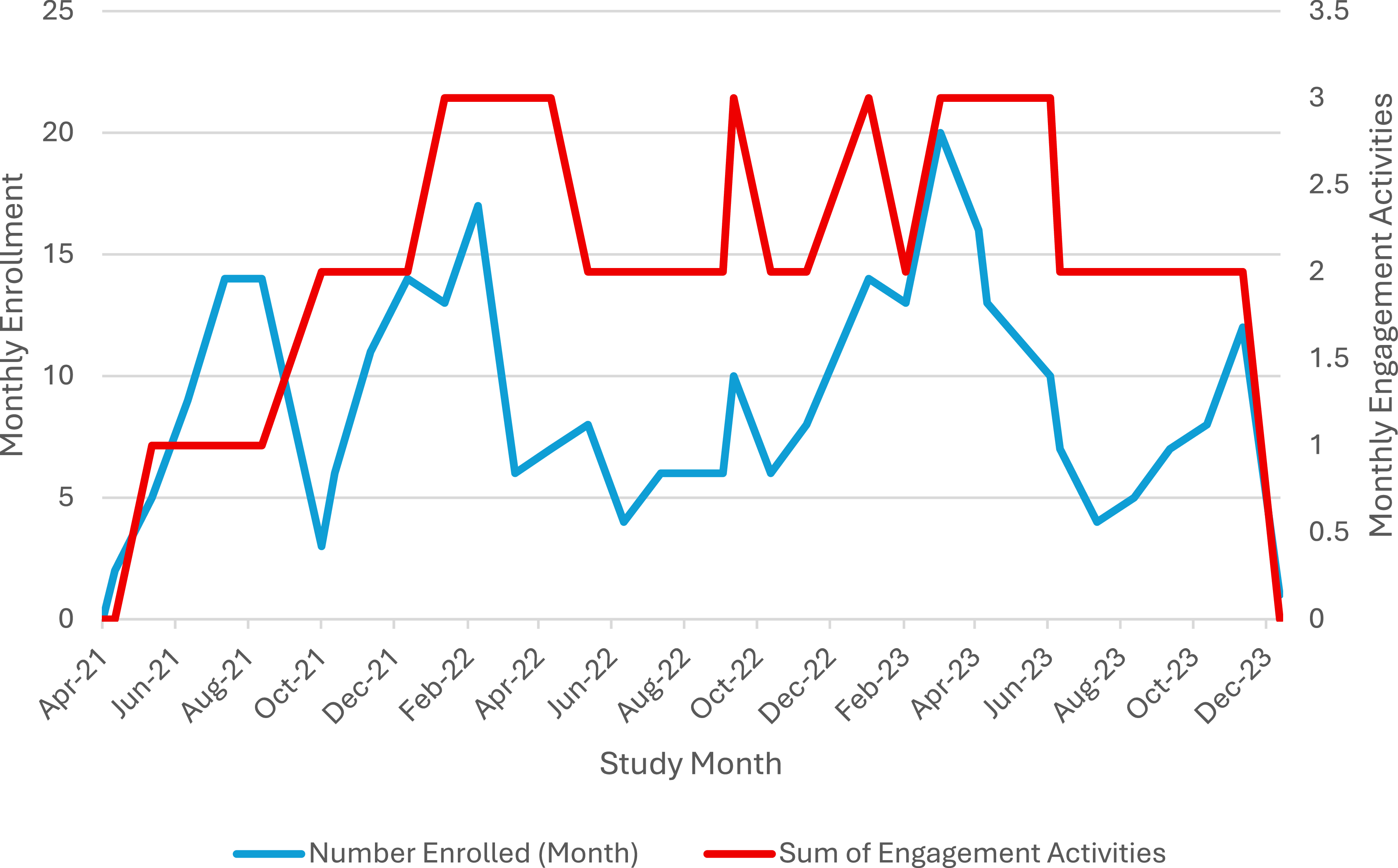
There were 295 patients enrolled in the HOMER study between April 2021 and December 2023. Enrollment over time ranged from one to twenty patients per month. During the 18 months leading up to design change, the average number of patients enrolled was 5.2 per month. During the 15 months following the design change, the average rose to 6.5 per month. Within this time, nearly 10 patients (9.6) per month enrolled over a 6-month surge, which was never achieved prior to the modification. There were 68 total practice engagement activities, the majority of which were done by the RIPPLs. Some practice engagement activities, such as study-wide monthly drop-in calls, were led by other study team members such as the principal investigators. Even when not leading drop-in calls, RIPPLs supported or informed what was discussed during the call. There were seven months during which in-person or virtual site visits occurred, 27 months during which study drop-in calls were conducted, 31 months during which newsletters were distributed, and one month each involving key study-wide practice engagement activities (i.e. gift box distribution, HOMER educational in-person meeting for continuing medical education, referred to as the HOMER study summit) and addition of the choice induction arm. Figure 3 shows total number of practice engagement activities per month overlaid on patient enrollment per month. By visual inspection, this graph shows that more RIPPL engagement activities tended to co-occur with periods of increased enrollment.
RIPPL engagement activities and patient enrollment over time.

RIPPL impact on protocol adaptations
Over the first 12–15 months of the study, the number of potential patient participants who declined to join the study due to lack of willingness to be randomized to induction method was greater than anticipated. Practices reported during monthly check-ins, monthly drop-ins, and site visits with RIPPLs that randomization disrupted the practice workflow for treatment with MOUD. The research team surveyed practices about this issue in 2022, and almost half of the practices that responded reported a strong patient preference for one induction method as a factor influencing some patients’ lack of interest in and eligibility for the study. This information led to the redesign of the study to include a comprehensive cohort design, which allowed participants to enroll as randomized or non-randomized participants, with the choice to choose their desired mode of induction (i.e. home, office, telehealth). RIPPLs were an important part of gathering the information necessary (via check-ins, drop-ins, and site visits) that led to this study design change.
Discussion
Studies involving multi-site pragmatic clinical trials or other complex interventions often employ practice facilitation to encourage implementation or study success [Reference Harvey, Loftus-Hills and Rycroft-Malone23–Reference Baskerville, Liddy and Hogg25]. However, onsite practice facilitation is costly [Reference Gold, Siman and Cuthel26–Reference Culler, Parchman and Lozano-Romero28], especially in large (20+ practice sites), national studies where sites are geographically dispersed across the United States and across a variety of settings (e.g., urban, rural). To bridge this gap, the HOMER study formed the RIPPL role to provide remote support that mirrored traditional practice facilitation.
Given their liaison role between the study team and practice sites, the key function of RIPPLs in HOMER was to act as a bidirectional extension between the central study team and the practice. RIPPLs’ emphasis on building relationships with practices and their commitment to sharing feedback with the central study team reflects this – in essence, acting as an advocate for the practice site. This emphasis on relationship was important because it established trust between the clinic and the RIPPL, and with the central study team which responded to clinic feedback and needs throughout the study. Furthermore, practice uptake of adaptations to COVID-related issues and other major study changes (e.g., addition of non-randomization arm) was high, which may be partially attributable to RIPPLs’ ability to support practices sites at an individual level and contextualize the changes to clinic needs and workflows. RIPPLs engaged in multiple activities all centered on relationship building, study protocol fidelity, patient recruitment and support, and data quality. However, our findings suggest that the benefits provided by RIPPLs were not only critical to study success, particularly due to the circumstances forced by the COVID-19 pandemic, but also are relevant and replicable in studies conducted under non-pandemic conditions, which often encounter challenges requiring adaptation in response to contextual and environmental factors [Reference Escoffery, Lebow-Skelley and Haardoerfer29,Reference May, Johnson and Finch30].
RIPPLs interacted with a wide range of practice member roles, including physicians and other clinicians, administrative leadership, behavioral health providers, and MOUD-specific roles when providing support to participating practices to promote adherence to research protocols and study data collection. Requests for information and support varied by practice and over time, requiring that RIPPLs react responsively with appropriate information and materials. RIPPL roles require flexibility in order to tailor support to the specific needs of each participating practice. RIPPLs served as a key linkage between practices and the larger study team, providing additional and more detailed communication than possible with a traditional study team structure. RIPPLs were integral to completing data collection from participating practices and gathering contextual information to understand loss of patients to follow-up and diversions from study protocol. This may have been enhanced by RIPPLs’ consistent assignment to the same practices throughout the study when possible, which allowed them to build and sustain existing long-term relationships with practices. RIPPLs conveyed critical information about practices’ recruitment of potential study participants and adherence to research protocols to the rest of the study team. This enabled the study team to promptly take action to better support participating practices through resources, education, and appropriate adaptation of study protocols to promote patient recruitment while maintaining rigor.
Pragmatic trials and practice-based research require a careful balance to ensure alignment with existing practice context while maintaining study rigor and fidelity. The RIPPL role builds on previous healthcare and research support roles by introducing a model of mostly remote practice-facilitation-like research support. RIPPLs differ from other healthcare and research support roles in several ways. Practice facilitators support implementation of evidence-based strategies and innovation in healthcare settings using quality improvement and educational strategies [Reference Harvey and Lynch31,Reference Dickinson, Nease and Rhyne32]. RIPPLs promote study engagement and adherence to research protocols, in contrast to practice facilitators’ focus on organizational change specific to healthcare delivery settings. Clinical research coordinators support the operations of clinical trials in academic medical centers by functioning as an intermediary between the study sponsor, site PI, patients, and study staff; with particular attention to regulatory requirements [Reference Buchanan, Goldstein, Pfalzer, Lin, Kang and Claassen33]. While clinical research coordinator roles require relationship building [Reference Merry, Gagnon and Thomas34], they do not generally interact with or work to engage external clinical teams in trials, a particularly important role of RIPPLs supporting practice-based research. Research facilitators provide mentorship and guidance to build clinicians’ research capacity throughout study development and implementation [Reference Flenady, Dwyer, Kahl, Sobolewska, Reid-Searl and Signal35], unlike RIPPLs, whose role was anchored in supporting study patient participants and practices. RIPPLs supported adherence to study protocols, data quality, practice and patient engagement and relationship development, and adaptations to study protocol to support study implementation, distinguishing them from other healthcare and research support roles.
The RIPPL role is aligned with Tambor and colleagues’ “Medium-Touch” pragmatic clinical trial recruitment model, in which research teams included carefully selected and trained research staff who build awareness and buy-in, identify clinic champions, understand operations and workflows, and adapt protocols to improve fit [Reference Tambor, Moloney and Greene7]. These “boots on the ground” staff have “medium-touch” contact with participants (including initial outreach and follow-up) and with clinicians (including study updates, reminders, coordination), and easy access to the research team. This approach is thought to allow clinicians to focus on where they are needed most: caring for and engaging patients in research expected to answer to clinically-relevant questions.
The RIPPL role was included in the research funding proposal. The role would not have been possible without dedicated funding. Researchers should include the RIPPL role distinctly in funding applications and request adequate support to ensure that responsibilities are well executed and not consolidated into project managers’ or other research team members’ scope of work.
Limitations
Study findings describe activities and perceptions of one cohort of RIPPLs in a single pragmatic trial. Efforts to support study recruitment and fidelity in this trial may not generalize to all primary care practices given varying levels of capacity for and experience with pragmatic research. The RIPPL role may function differently in practices less accustomed to practice-based research. Given participating practices in the HOMER trial were PBRN members, a more high-touch approach may be needed for research with unaffiliated practices. Additionally, findings rely in part on qualitative survey data which are not intended to be generalizable to all pragmatic trials. Finally, study findings rely on input from RIPPLs and project records, but we did not gather feedback from participating practices on RIPPL roles and support.
Conclusion
In response to persistent challenges with participant recruitment for pragmatic clinical trials, a practice-specific liaison role such as the RIPPL can effectively support pragmatic trial recruitment and protocol adherence. Findings demonstrate how RIPPLs’ activities supported recruitment and data collection for the HOMER study – a strategy that can be feasibly adopted in future pragmatic trials.
Supplementary material
The supplementary material for this article can be found at https://doi.org/10.1017/cts.2026.10833.
Author contributions
Bethany M. Kwan: Conceptualization, Writing - original draft, Writing – review & editing; Douglas Fernald: Data curation, Formal analysis, Project administration, Writing – original draft, Writing - review & editing; Linda Zittleman: Project administration, Supervision, Writing – original draft, Writing – review & editing; Tristen Hall: Data curation, Formal analysis, Methodology, Writing – original draft, Writing – review & editing; Donald E. Nease: Project administration, Writing – review & editing; Benjamin Sofie: Data curation, Writing – original draft, Writing – review & editing; Cory Lutgen: Conceptualization, Data curation, Project administration, Writing – original draft, Writing – review & editing.
Funding statement
This work was supported by the Patient Centered Outcomes Research Institute (PCORI) (award number IHS-2019C1-16167).
Competing interests
The authors report no conflicts of interest.





 Open access

